US to deploy F-22 Raptor jets in Europe
RT | August 25, 2015
The US Air Force said its F-22 Raptor stealth fighters will be sent to Europe to show “commitment to the security and stability” of its allies. The Air Force Secretary tied the move to the US’ “approach to Russia,” linking it to the crisis in Ukraine.
The deployment, slated to occur “very soon,” was described as part of the “European Reassurance Initiative,” Air Force Secretary Deborah Lee James said at a Pentagon briefing on Monday. She added that it was “to support combatant commander requirements” in the region.
James said Russia’s “military activity” in Ukraine continued to be of great concern to the US and its European allies, and that the deployment of the F-22s was “certainly on the strong side of the coin.” She also quoted Defense Secretary Ash Carter, who said last week, “Our approach to Russia needs to be strong and it needs to be balanced.”
James told reporters that, for operational security reasons, “we cannot share with you the exact dates or locations of this deployment.”
The F-22 stealth fighter is a fifth generation aircraft capable of dropping precision bombs on targets from up to 15 miles away.
A reporter asked if the announcement was a message the Air Force was delivering to Russian President Vladimir Putin.
General Mark Welsh said the deployment to Europe was “just a continuation of deploying the F-22s everywhere we can to train with our partners,” and that it “was primarily for a major exercise, training with our European partners.” However, he added that the deployment would put F-22s “into facilities that we would potentially use in a conflict in Europe.”
The F-22 fighter’s deployment in Europe was first floated in June, when Secretary James listed Russia as the “biggest threat on my mind” when asked about the greatest threat faced by the US Air Force by a reporter at a Paris Air Show.
In February and March, the Air Force sent two units of A-10 and F-15C jets to Europe along with about 300 airmen to spend six months flying missions across the continent, according to airforcetimes.com. The US currently has 65,000 active-duty service members stationed in Europe, with the majority made up of airmen and soldiers.
News of the deployment comes as the US military is engaged with 11 NATO member states in a month-long war game. About 5,000 soldiers are participating in simultaneous airborne operations. One of the most anticipated drills will take place on August 26, when NATO planes will drop more than 1,000 paratroopers in the Hohenfels training area in Germany.
In Moscow, a member of the Russian Duma’s defense committee, Franz Klintsevich, said the Russian military is “closely monitoring” the situation and is ready to react in the case of any aggression. He said Moscow has been taking note of NATO’s buildup up of forces, as well as all of the West’s rhetoric concerning “Russian aggression.”
Former US Secretary of State Henry Kissinger, meanwhile, told The National Interest in an interview last week that “breaking Russia has become an objective [for US officials]; the long-range purpose should be to integrate it.”
“If we treat Russia seriously as a great power, we need at an early stage to determine whether their concerns can be reconciled with our necessities,” he said.
Kissinger laid blame for sparking the Ukrainian conflict at the door of the EU, which he said had proposed a trade deal in 2013 without considering how it would alienate Moscow and divide the Ukrainian people.
READ MORE:
NATO conducting biggest beef up of defenses since Cold War – alliance chief
Western complicity in Yemen genocide met with media silence
By Finian Cunningham | RT | August 24, 2015
In the latest atrocity in Yemen, Saudi warplanes bombed a residential area, killing at least 65 people. Most of the victims are reported to be civilians from the Salah district of Taiz, Yemen’s third largest city.
The apparent war crime committed has tragically become an almost daily occurrence during five months of relentless aerial bombardment of Yemen by a Western-backed coalition of foreign powers.
In recent days, there were similar air strikes on civilian centers in the Red Sea port city of Hodeida and the northern province of Saada. In the Hodeida strike, which killed several dock workers, the British charity Save the Children said it believed the attack was a deliberate bid by the Saudis to sabotage aid supplies to the civilian population.
Surely, this should be front page news, with CNN, the BBC and France 24, among other big Western media outlets, splashing it as their top story. The onus is on them because their governments are implicated in grave crimes. However, there has been no news coverage of the tragic events. Aside from some brief, vague reports of a generalized humanitarian crisis, there has been a wall of silence as to how the Western-backed Saudi-led coalition is pulverizing Yemeni civilians and creating the crisis. That suggests a deliberate blackout by Western media.
To date, the death toll in the country has reached near 4,500, according to the World Health Organization. This week, the United Nations put the total number of children who have been killed at 400. Yemeni sources say the civilian casualties are much higher, but can’t verify because of the widespread mayhem.
Meanwhile, the International Committee of the Red Cross (ICRC) and the World Food Program say the country is on the brink of cataclysmic famine, with over 50 percent of the 24 million population at immediate risk.
Yemen was already the Arab region’s poorest country even before the US-backed and Saudi-led military coalition began bombing on March 26. In just five months, the country is crumbling into a “Syria-level crisis,” according to the ICRC.
What’s happening in Yemen cannot be described as anything less than “foreign aggression” on a sovereign country, where civilians are being slaughtered by American-supplied “precision bombs” and F-16 fighter jets. The systematic starvation of people by denying them food, water and medical aid as a result of an air and sea blockade on the country adds to the barbarity. This is genocide by any legal definition of the word.
Despite the horror and complicity of Western governments in that horror, the Western news media avoid providing informative reports on the carnage in Yemen. When the media do give occasional brief reports, they routinely distort the nature of the violence as if it is being perpetrated by two warring sides: on the one hand, “Saudi coalition forces”; and on the other, “Iranian-backed Houthi rebels”.
Let’s quickly dispense with that self-serving distortion. The Houthi rebels are not Iranian-backed. How could they be when Yemen is blockaded by Saudi and American forces? The Houthis are in alliance with the Yemeni national army and other rebel groups, called Popular Committees. Earlier this year, the revolutionary front kicked out the US and Saudi-backed puppet-president Abded Rabbo Mansour Hadi, taking over much of the country’s territory, including the capital Sana’a.
That is why the Saudis and their Persian Gulf Arab dictator cronies, plus the Egyptian dictatorship of Abdel Fattah el-Sisi, joined forces to bomb Yemen. They claim to be defending the “legitimate government of Yemen” represented by Hadi and his corrupt clique who are exiled in the Saudi capital Riyadh. No doubt the region’s dictatorships fear the spread of revolutionary contagion, as do the Western patrons of these despotic regimes.
Washington, along with Britain and France, is supporting the Saudi-led bombing coalition, not just politically and diplomatically, but with the supply of warplanes, missiles and logistics. The US has set up a fusion center in Saudi Arabia for the purpose of coordinating the Arab-piloted F-16s.
Germany is also implicated as, according to Der Spiegel, it is the fourth biggest arms supplier to Saudi Arabia, after France, Britain and Italy.
On the ground in Yemen, there are remnant supporters of the deposed Hadi regime. Clashes between these loyalists and the revolutionary forces have indeed contributed to the civilian death toll. But, again, Western media attempts at portraying the conflict as some kind of civil war are grossly misleading.
Among the pro-Hadi forces are troops from Saudi Arabia and the United Arab Emirates. Several Saudi and Emirati soldiers have been confirmed killed in recent battles in the southern areas around the port city of Aden, as well as in fire fights across Yemen’s northern border with Saudi Arabia. The Saudi-led coalition has expanded its involvement in the ground war over the past month with the arrival of artillery and armored vehicles and up to 3,000 Saudi and UAE troops, according to the Financial Times.
Also among the pro-Hadi forces are Jihadist mercenaries from across the region that have been trafficked into Yemen by the Saudis, according to Yemeni civilian and military sources. This is the same strategy that the Saudis and the Persian Gulf Arab regimes have been using in Syria over the past four years to overthrow the Assad government, along with covert support from Turkey, Jordan, Israel and Western governments.
Western media have, of course, given copious coverage of the Syrian war, with false narratives about “moderate rebels” fighting against a “despotic regime”. Syria gets covered because Washington, London and Paris want to implement regime change there for strategic reasons to do with undermining Assad’s allies in Russia and Iran. Whereas in Yemen “regime re-installation” of a corrupt exiled clique doesn’t quite have the same story appeal. Therefore, the Western media just ignore Yemen.
The jihadists fighting in Yemen are linked to the Sunni extremists of Al-Qaeda and the Islamic State network, specializing in suicide bomb attacks on mosques frequented by the Shia Houthis.
Washington and its Western allies are thus heavily involved in an illegal war of aggression against Yemen, prosecuted by Saudi Arabia and other Arab dictatorships working in collusion with Islamist terror networks. Adding “efficacy” to this state-sponsored terrorism is the humanitarian siege imposed on the population.
What is happening in Yemen is truly a heinous crime against humanity committed by Western governments. It is an unspeakable crime. And that is why the Western media will not dare talk about it. The Western media are obliged to ignore, obfuscate and distort the shocking truth of what their governments are committing in Yemen.
This makes the Western media just as complicit in the appalling criminality.
The Age of Imperial Wars
From Regional War, “Regime Change” to Global Warfare
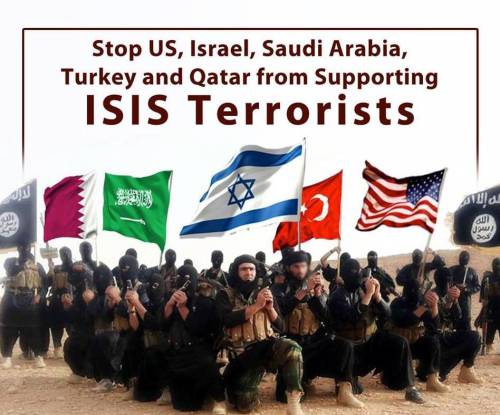
By Prof. James Petras | Global Research | August 22, 2015
2015 has become a year of living dangerously.
Wars are spreading across the globe.
Wars are escalating as new countries are bombed and the old are ravaged with ever greater intensity.
Countries, where relatively peaceful changes had taken place through recent elections, are now on the verge of civil wars.
These are wars without victors, but plenty of losers; wars that don’t end; wars where imperial occupations are faced with prolonged resistance.
There are never-ending torrents of war refugees flooding across borders. Desperate people are detained, degraded and criminalized for being the survivors and victims of imperial invasions.
Now major nuclear powers face off in Europe and Asia: NATO versus Russia, US-Japan versus China. Will these streams of blood and wars converge into one radiated wilderness drained of its precious life blood?
Living Dangerously: The Rising Tide of Violent Conflicts
There is no question that wars and military threats have replaced diplomacy, negotiations and democratic elections as the principal means of resolving political conflicts. Throughout the present year (2015) wars have spread across borders and escalated in intensity.
The NATO allies, US, Turkey and the EU have openly attacked Syria with air strikes and ground troops. There are plans to occupy the northern sector of that ravaged country, creating what the Erdogan regime dubs a ‘buffer zone’ cleansed of its people and villages.
Under the pretext of ‘fighting ISIS’, the Turkish government is bombing Kurds (civilians and resistance fighters) and their Syrian allies. On Syria’s southern border, US Special Forces have accelerated and expanded operations from their bases in Jordan on behalf of the mercenary terrorists – funded by the monarchist Gulf States.
Over 4 million Syrians have fled their homes as refugees and over 200,000 have been killed since the US-EU-Turkey-Saudi-sponsored war against the secular Syrian government was launched four years ago.
Dozens of terrorist, mercenary and sectarian groups have carved up Syria into rival fiefdoms, pillaged its economic and cultural resources and reduced the economy by over ninety percent.
The US-EU-Turkish military intervention extends the war into Iraq, Lebanon and…. Turkey – attacking secular governments, ethnic minority groups and secular civil society.
The feudal, monarchist Saudi Arabia and the United Arab Emirates have invaded Yemen with tanks, launching air strikes against a country without any air defenses. Major cities and towns are devastated. Saudi ground troops and armored carriers are killing and wounding thousands – mostly civilians. The brutal Saudi air and sea blockade of Yemen’s ports have led to a humanitarian crisis, as ten million Yemenis face starvation deliberately imposed by a grotesque and obscenely rich monarchy.
The Yemeni resistance fighters, driven out of the major cities, are preparing for prolonged guerrilla warfare against the Saudi monsters and their puppets. Their resistance has already spread across the frontiers of the absolutist Saudi dictatorship.
The brutal Israeli occupation troops, in collaboration with armed ‘settler’ colonists, have accelerated their violent seizure of Palestinian lands. They have stepped up the ethnic cleansing of Palestinians, Bedouins, Druze and Christian inhabitants replacing their communities with racist ‘Jews-only’ colonial settlements.
Daily assaults against the huge ‘concentration camps’ of Gaza accompany an armed blockade of land, air and water, preventing the reconstruction of the tens of thousands of homes, schools, hospital, factories and infrastructure, destroyed by last year’s Israeli blitzkrieg.
Israel’s continued annexation and ethnic cleansing of Palestinian territory precludes any diplomatic process; colonial wars have been and continue to be Israel’s policy of choice in dealing with its Arab neighbors and captive populations.
Africa’s wars, resulting from earlier US-EU interventions, continue to ravage-the Continent. Somalia, Sudan, Kenya, Libya are riven by bloody conflicts between US-EU backed regimes and armed Islamic and nationalist resistance movements.
Throughout North and Sub-Sahara Africa, US-EU backed regimes have provoked armed upheavals in Libya, Nigeria (Boko Harem), Egypt (ISIS, Moslem Brotherhood et al), Chad, Niger, South Sudan, Somalia and elsewhere.
Imperial client Egyptian and Ethiopian dictators rule with iron fists – financed and armed by their EU and US sponsors.
Imperial wars rage throughout the Middle East and South Asia. Hundreds of experienced Baathist Iraqi military officers, who had been expelled or jailed and tortured by the US Occupation army, have now made common cause with Islamist fighters to form ISIS and effectively occupy a third of Iraq and a strategic swath of Syria.
There are daily bombings in Baghdad undermining its US client. Strategic advances by ISIS are forcing the US to resume and escalate its direct combat role
The US-Baghdad retreat and the defeat of the US-trained Iraqi military in the face of the Baathist-Islamist offensive is the opening salvo of a long-term, large-scale war in Iraq and Syria. The Turkish air-war against the Kurds in Iraq will escalate the war in Northern Iraq and extend it into southeast Turkey.
Closer to ‘home’, the EU-US-backed coup (‘regime change’) in Kiev and the attempt to impose dictatorial-pro-West oligarchic rule in Ukraine have detonated a prolonged civil-national war devastating the country and pitting NATO’s proxies against Russian-backed allies in the Donbas.
US, England, Poland and other NATO powers are deeply committed to pushing war right up to Russia’s borders.
There is a new Cold War, with the imposition of wide-ranging US-EU economic sanctions against Russia and the organizing of major NATO military exercises on Russia’s doorsteps. It is no surprise that these provocations are met with a major counter-response – the Russian military build-up. The NATO power grab in Ukraine, which first led to a local ethnic war, now escalates to a global confrontation and may move toward a nuclear confrontation as Russia absorbs hundreds of thousands of refugees from the slaughter in Ukraine.
The US puppet regime in Afghanistan has faced a major advance of the Taliban in all regions, including the capital, Kabul.
The Afghan war is intensifying and the US-backed Kabul regime is in retreat. US troops can scarcely advance beyond their bunkers.
As the Taliban military advances, its leaders demand total surrender of the Kabul puppets and the withdrawal of US troops. The US response will be a prolonged escalation of war.
Pakistan, bristling with US arms, faces a major conflict along its borders with India and permanent war in its semi-autonomous Northwest frontier states with Islamist and ethnic Pashtu guerrilla movements backed by mass regional political parties. These parties exercise de facto control over the Northwest region providing sanctuary and arms for Taliban militants operating in Afghanistan and Pakistan.
Armed ethno-religious conflicts persist in western China, Myanmar and northern India. There are large-scale popular resistance movements in the militant northeast Thailand opposed to the current military-monarchist dictatorship in Bangkok.
In the 21st century, in South and Southeast Asia, as in the rest of the world, war and armed conflicts have become central in resolving ethnic, social, tribal and regional differences with central states: diplomacy and democratic elections have been rendered obsolete and inefficient.
Latin America – On the Verge
Burgeoning violent extra-parliamentary right-wing movements, intent on overthrowing or ‘impeaching’ elected center-left Latin American governments face major confrontations with the state and its mass supporters.
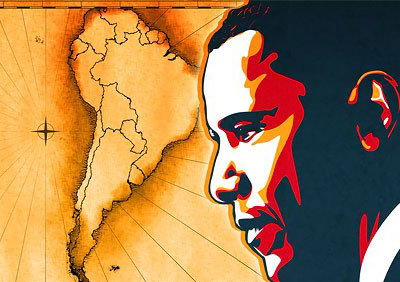 In Ecuador, Venezuela and Brazil, US-backed opposition groups are engaged in violent demonstrations, directed toward ousting the elected regimes. In the case of Ecuador, ‘popular sectors’, including some indigenous leaders and sectors of the trade union movement, have called for an ‘uprising’ to oust President Correa. They seem oblivious of the fact that the hard-right oligarchs who now control key offices in the three principal cities (Guayaquil, Quito and Cuenca) will be the real beneficiaries of their ‘uprisings’.
The resurgent Right envisions violent ‘regime change’ as the first step toward ‘wiping the slate clean’ of a decade of social reforms, independent regional organizations and independent foreign policies.
‘Civil war’ may be too strong a word for the situation in Latin America at this time – but this is the direction which the US-backed opposition is heading. Faced with the mess and difficulty of dislodging incumbent regimes via elections, the US and its local proxies have opted for the choreography of street violence, sabotage, martial law and coups – to be followed by sanitized elections – with US-vetted candidates.
War and violence run rampant through Mexico and most of Central America. A US-backed military coup ousted the popularly elected, independent President Zelaya in Honduras. The ensuing US-proxy regime has murdered and jailed hundreds of pro-democracy dissidents and driven thousands to flee the violence.
The 1990’s US-brokered ‘Peace Accords’ in El Salvador and Guatemala effectively blocked any agrarian reform and income redistribution that might have led to the rebuilding of their civil societies. This has led to over two decades of mass disaffection, the rise of armed ‘gangs’ numbering over 100,000 members and an average of six to ten thousand homicides a year with El Salvador becoming the ‘murder capital of the hemisphere’ on a per capita basis. The annual murder toll under the US-brokered ‘Peace Accords’ now exceeds those killed each year during the civil war.
The real ‘carnage capital’ of the hemisphere is Mexico. Over 100,000 people have been murdered during the decade-long, US-backed ‘war on drugs’ – a war which has become a state-sponsored war on the Mexican people.
The internal war has allowed the Mexican government to privatize and sell the crown jewels of the national economy – the petroleum industry. While thousands of Mexicans are terrorized and slaughtered, the US and EU oil companies are curiously shielded from the drug lords. The same Mexican government, its police, officials and military, who collaborate with the drug lords in dividing up the billions of drug dollars, protect foreign oil companies and their executives. After all, narco-dollars are laundered by banks in New York, Miami, Los Angeles and London to help fuel the speculation!
From Regional to Nuclear Wars
Regional and local wars spread under the shadow of a looming world war. The US moves its arms, planes, bases and operations to the Russian and Chinese borders.
Never have so many US troops and war planes been placed in so many strategic locations, often less than an hour drive from major Russian cities.
Not even during the height of the Cold War, did the US impose so many economic sanctions against Russian enterprises.
In Asia, Washington is organizing major trade, military and diplomatic treaties designed to exclude and undermine China’s growth as a trade competitor. It is engaged in provocative activities comparable to the boycott and blockade of Japan which led to the Second World War in Asia.
Open ‘warfare by proxy’ in Ukraine is perhaps the first salvo of the Third World War in Europe. The US-EU-sponsored coup in Kiev has led to the annexation of Western Ukraine. In response to the threat of violence toward the ethnic Russian majority in Crimea and the loss of its strategic naval base on the Black Sea, Russia annexed Crimea.
In the lead-up to the Second World War, Germany annexed Austria. In a similar manner the US-EU installed a puppet regime in Kiev by violent putsch as its own initial steps toward major power grabs in Central Asia. The military build-up includes the placement of major, forward offensive military bases in Poland.
Warsaw’s newly elected hard-right regime of President Andrzej Duda has demanded that Poland become NATO’s central military base of operation and the front line in a war against Russia.
Wars and More Wars and the Never-ending Torrents of Refugees
The US and EU imperial wars have devastated the lives and livelihoods of scores of millions of people in South Asia, North and Sub-Sahara Africa, Central America, Mexico, the Balkans and now Ukraine.
Four million Syrian refugees have joined millions of Afghan, Pakistani, Iraqi, Yemeni, Somali, Libyan, Palestinian and Sudanese refugees fleeing US-EU bombs, drones and proxy mercenaries ravaging their countries.
Millions of war refugees escape toward safety in Western Europe, joining the millions of economic refugees who have fled free market destitution in Lithuania, Latvia, Estonia, Bulgaria, Romania, Poland, the Balkans and other EU satellites.
Panic among the civilian population of Western Europe sets in as hundreds of thousands cross the Mediterranean, the Aegean and the Balkans.
Droves of refugees perish each day. Tens of thousands crowd detention centers. Local labor markets are saturated. Social services are overwhelmed.
The US builds walls and detention camps for the millions trying to escape the harsh consequences of imperial-centered free markets in Mexico, narco-terror and the fraudulent ‘peace accord’-induced violence in Central America.
As Western wars advance, the desperate refugees multiply. The poor and destitute clamber at the gates of the imperial heartland crying: ‘Your bombs and your destruction of our homelands have driven us here, now you must deal with us in your homeland’.
Fomenting class war between the refugees and ‘natives’ of the imperial West – may not be on the agenda . . . for now, but the future for ‘civil’ society in Europe and the US is bleak.
Meanwhile, more and even bigger wars are on the horizon and additional millions of civilians will be uprooted and face the choice of starving, fleeing with their families or fighting the empire. The ranks of seasoned and infuriated resistance fighters are swelling in Afghanistan, Iraq, Libya, Yemen, Ukraine and elsewhere.
The US and EU are becoming armed fortresses. US police deal with the marginalized citizenry as an occupying army, assaulting African-Americans, immigrants and dissidents – while looting poor communities . . . and protecting the rich…
Conclusion
War is everywhere and expanding: No continent or region, big or small, is free from the contagion of war.
Imperial wars have spawn local wars . . . igniting mass flights in a never-ending cycle. There are no real diplomatic success stories! There are no enduring, viable peace accords!
Some pundits may protest this analysis: They point to the recent US – Cuba rapprochement as a ‘success’. They conveniently forget that the US is still subverting Cuba’s biggest trading partner, Venezuela; that Washington’s major regional proxies are demanding regime change among Cuba’s allies in Ecuador, Brazil and Bolivia and that Washington is increasingly threatening Cuba’s alternative markets in Russia and China. The vision of the US flag flapping in the breeze outside its embassy in Havana does little to cover Washington’s iron fist threatening Cuba’s allies.
Others cite the US – Iran peace accord as a major ‘success’. They ignore that the US is backing the bloody Saudi invasion of neighboring Yemen and the massacre of Shiite communities; that the US has provided Israel with a road map detailing Iran’s entire defense system and that the US [Israel] and EU are bombing Iran’s Syrian ally without mercy.
As for the US – Cuba and Iranian agreements– are they enduring and strategic or just tactical imperial moves preparing for even greater assaults?
The war epidemic is not receding.
War refugees are still fleeing; they have no homes or communities left.
Disorder and destruction are increasing, not decreasing; there is no rebuilding the shattered societies, not in Gaza, not in Fallujah, not in the Donbas, not in Guerrero, not in Aleppo.
Europe feels the tremors of a major conflagration.
Americans still believe that the two oceans will protect them. They are told that placing NATO missiles on Russia’s borders and stationing warships off China’s shores and building electrified walls and laying barbed wire along the Rio Grande will protect them. Such is their faith in their political leaders and propagandists.
What a packet of lies! Inter-continental missiles can ‘rain down’ on New York, Washington and Los Angeles.
It is time to wake up!
It is time to stop the US – EU headlong race to World War III!
Where to start? Libya has been irrevocably destroyed; it is too late there! Syria, Iraq and Afghanistan are aflame. We are being plunged deeper into war while being told we are withdrawing! Ukraine sucks in more guns and more troops!
Can we really have peace with Iran if we cannot control our own government as it dances to the Israelis tune? And Israel insists on war – our waging war for them! As the Israeli war criminal General and Prime Minister Ariel Sharon once told some worried American Zionists: “Trouble with the US? We lead them by the nose…!”
Just look at the terrified families fleeing carnage in the Middle East or Mexico.
What is to be done?
When will we cut our losses and shake off the bonds of these war makers – foreign and domestic?
Rumour Mongering Surrounds MH17 Investigation as NATO War Games Barrel Ahead in Eastern Europe
By Roger Annis | CounterPunch | August 14, 2015
‘Could be.’ ‘Might be.’
‘Can’t show or prove anything, but maybe.’
Is there any wonder that with such language coming lately from the “official” but secretive investigation of the July 17, 2014 crash of Malaysian Airlines Flight 17, there is little reason for confidence in a final report? And lots of reason for concern of what a flawed or reckless final report could spark?
On August 11, the Dutch Safety Board and the ‘Joint Investigation Team’ investigating the MH17 crash issued a speculative statement saying they have discovered pieces among the debris they collected from the fields in eastern Ukraine where the plane came down that “possibly originate” from a spent Buk missile.
They say they can’t be sure. “At present, the conclusion cannot be drawn that there is a causal connection between the discovered parts and the crash of flight MH17.” And they can’t show us anything. But they are making the statement anyway.
The statement was reported widely by Western media along with predictable spin and wild interpretation. Western media has reported all along that the thinly-equipped self-defence forces in eastern Ukraine are the “likely” culprits in bringing down the MH17, “possibly” with backing coming from ‘somewhere’ in the Russian military command.
Manipulation and misreporting of the known fact of the crash of the plane is disrespectful toward the victims and their loved ones. Much more troubling is the fact that it disregards the deadly context of events surrounding the investigation, including the string of military exercises upon which NATO is embarked in eastern Europe and now the latest news that Ukraine is moving heavy artillery back to the front line of its war in eastern Ukraine, to be unleashed on the civilian population.
Here is how the European correspondent of Canada’s daily Globe and Mail, Mark MacKinnon, reports the Dutch investigators’ statement in a special, center-spread article in the newspaper on August 12:
“The recovery of the missile fragments adds to the bulk of evidence implicating pro-Russian fighters in the downing of the passenger jet, which killed 298 people. Moscow, which accuses the Ukrainian military of shooting MH17 out of the sky, recently used its veto at the United Nations Security Council to block the establishment of an international criminal tribunal to prosecute the case.”
Who needs an official investigation with such an apparent, open and shut case? The implications of such thinking and writing are becoming unthinkable considering the exceptionally dangerous context reported in the opening of the very same Globe article:
“War between Russia and the NATO alliance should be unthinkable. But a new study of recent military exercises suggests both powers are preparing for just that possibility.
“Researchers at a European think tank [the European Leadership Network] warned that while there was no evidence that either side intended to go to war, the increasing frequency and size of military exercises on both sides [sic] of the NATO-Russia border heighten the possibility of an unplanned incident that could spark a wider conflict (Read the report PDF). The finding raises the spectre of a continent-wide clash of conventional armies, the sort not seen since Russia and the Western allies combined to defeat Nazi Germany in the Second World War.”
The British government is piling on by announcing that it will double the number of Ukrainian soldiers and extremist militia members that it plans to train this year, from 1,000 to 2,000. Presently, Britain says it has 75 soldiers in the country.
Speaking in Kyiv on August 11, British Defense Secretary Michael Fallon described the conflict in eastern Ukraine as “red hot”.
Rebel forces in eastern Ukraine have been receiving vital humanitarian aid from the Russian government and from widespread citizen initiatives. They have also received important political/diplomatic support from the Russian government.
The Russian government makes the utterly evident argument that Kyiv should respect the terms of the Minsk-2 ceasefire agreement it co-signed signed on Feb. 12, 2015 and negotiate the grievances which the population of eastern Ukraine has expressed over Kyiv’s radical, extremist turn to a pro-Europe, anti-Russia and pro-austerity orientation for Ukraine.
The issuance of another unfounded, speculative accusation by the Dutch-led MH17 investigation, then seized upon and manipulated by reckless journalists and editors, is another reason why this investigation cannot be taken seriously.
The Dutch government is refusing demands by Dutch media that it release documentation pertaining to its response to the crash last year. A formal request to this effect was made by RTL Nieuws.
The government defends its refusal by saying that documents contain the names of individuals and that the release of the documents could have negative consequences for relations with other countries.
RTL Nieuws has said the following in response to the government’s decision:
“We think it unfortunate that the minister does not work harder to disclose more information. Of course, we understand that not every piece of information can be thrown into the street. But withholding basic facts and decisions? We will study the decision and decide if going to the courts is desirable and useful.”
Late last year, the Dutch news magazine Elsevier revealed some details of the secret agreement signed on August 8, 2014 by the four countries composing the so-called Joint Investigation Team investigating the disaster. The four are Holland, Belgium, Ukraine and Australia. (Malaysia was added to the JIT late last year following pressure and protest over its initial exclusion.) The secret agreement said that any one of the member countries of the JIT can veto release of any information gathered by the investigation.
The implications of an official report that ‘goes rogue’ by leaving vital questions unanswered and throwing anti-Russia speculation and prejudice to the wind are very serious.
The words ‘Russia’ and ‘Buk missile’ have been pounded out in tandem so frequently by Western governments and media during the past year that any speculative report of a “Buk” missile in relation to the MH17 crash just reinforces the ‘blame Russia narrative’ they have worked to establish.
A survey of the circumstances of the crash and the composition of the investigation underlines the danger of the situation.
The armed forces of Ukraine and quite possibly the extremist, right-wing militias allied with it possess the Buk missile system. The government in Kyiv failed to close the airspace over eastern Ukraine when it launched a war there in the spring of 2014. This flew in the face of decisions by the Federal Aviation Administration of the United States and major international airlines months before the MH17 crash to prohibit passenger planes from flying there.
Following the crash/shoot down, Ukraine ignored the July 21, 2014 resolution at the Security Council demanding that the investigation be given unfettered access to the crash site. Investigators were forced in and out of the area, according to the exigencies of the war which Kyiv declined to put on hold. To the point where parts of the plane and parts of bodies are still being randomly discovered today by visitors to the scene.
The circumstances of the crash should easily argue in favour of excluding Ukraine from the official, international investigation, or at the very least, they argue for including Russia since its border lies only a few dozen kilometers away from the crash site. But no, the JIT investigation is being conducted by governments that are hostile to Russia and to the pro-autonomy rebellion in eastern Ukraine.
Malaysia showed its colours last month when it introduced a resolution at the UN Security Council on July 29 proposing that a witchhunt-style tribunal be established by the Security Council to investigate matters. The resolution was a win-win for the anti-Russia crowd. A special tribunal could conduct an investigation without having to go through the motions of impartiality required of the JIT. The terms of the Dutch-led investigation is that it establish the facts, not search for guilt.
Russia vetoed the resolution. The Russian government argued that with two investigations already taking place, what was the purpose of adding a third? Russia’s suspicions were already on high alert given the fact that its offers to cooperate with the investigation have been rebuffed or treated at arm’s length.
Russia’s ambassador to Britain explained his country’s vote: “Our partners preferred to conduct a vote that is impossible to explain by any other motive than seeking a fresh pretext for pointing a finger at Russia.”
“Progress towards justice must be seen. So far, we have seen nothing.”
The vetoed Security Council resolution looked for all the world as a staged ‘aha’ moment. As in, ‘Aha, what is Russia trying to hide by vetoing a tribunal?’ That’s exactly how much of Western media and Western governments reported the veto.
Moscow-based writer John Helmer has been following and reporting the MH17 story closely and provided a comment about the latest developments:
“So far, as I have reported, the Dutch Safety Board (DSB) stands out for an investigation that has failed to bring to light and analyze the most obvious sources of data or explain why the Board, the Dutch police and prosecutors have failed to do this.
“For example, in public disclosure so far, there has been no analysis of U.S. satellite images, including infrared images, of the MH17 site just before, during, and just after the strike and crash, and no disclosure of whether the Dutch investigators requested this data, what they were told, or if the Dutch believe the data exist and is being withheld from the investigation.
“I’ve seen no DSB analysis of the silence on the last four seconds of the Cockpit Voice Recorder, and no explanation of how this is possible. There has been no published analysis of the Ukrainian air traffic control radar and radio tapes or confirmation of whether Kiev handed them over to the Dutch, and if they haven’t been handed over, why not. So far, too, there has been no disclosure of evidence from the autopsy and post-mortem data collected from the victims’ bodies.
“What is missing is obvious. So what to make of particles of evidence whose provenance, authenticity and authority of disclosure are far from obvious? The Dutch want to be thought of as careful, methodical, clean. Why so careless all of a sudden?”
Read also:
MH17 – ‘Buk plume’ burns witness – Part I, by Max van der Werff, July 26, 2015
Black boxes and black holes in the Malaysian Airlines Flight 17 investigation, by John Helmer, July 17, 2015
The website New Cold War: Ukraine and beyond contains an extensive dossier of articles on the July 17, 2014 crash of Malaysian Airlines Flight 17. These include the extensive writings on the subject by U.S. journalist Robert Parry.
Roger Annis is an editor of the website The New Cold War: Ukraine and beyond. On June 12, he gave a talk in Vancouver, Canada reporting on his visit to Donetsk, eastern Ukraine in April 2015 as part of a media tour group. A video broadcast of that talk is here: The NATO offensive in eastern Europe and the class and the national dynamics of the war in eastern Ukraine.
Six Years After Pro-European Revolution Moldova Is a ‘Captured State’
Sputnik – 11.08.2015
Six years after the so-called “Twitter Revolution” which ousted the ruling communist regime in Moldova and brought pro-Europeans to power, and one year since the ratification of the country’s association agreement with the EU, the country has found itself on the brink of ruin and in the tight grip of the oligarchs, according to a European official.
Six years of pro-European rule in Moldova has done little good for the country. Even though last year it signed and ratified an association agreement with the European Union, “corruption [in Moldova] remains endemic” and the state is “still in the hands of oligarchs, while punishingly low incomes have propelled hundreds of thousands of Moldovans to go abroad in search of a better life,” according to Thorbjorn Jagland, a former prime minister of Norway, who is the current secretary-general of the Council of Europe.
“The value of the Moldovan currency, the leu, has dropped, interest rates have rocketed and a recession looms,” he adds in his article in The New York Times.
The high-ranking politician however suggests that the remedy is “outside financing”.
“If the authorities fail to do what is needed to restore external support — and quickly — the country will face serious economic turmoil. Social programs for the poor and vulnerable will be cut just before the harsh winter months,” he therefore predicts.
“Alongside the urgent measures needed to fix the banks, the government must immediately begin purging corrupt officials from public bodies. As a start, the dozens of judges — some very high-profile — who have been accused of egregiously abusing their power should be investigated. Law enforcement agencies must also do everything they can to arrest the individuals responsible for the massive bank fraud.”
“In order to give people confidence that justice will be served in these cases, murky political interference must be eliminated from the judicial system. Legislation currently before Parliament that would guarantee the impartiality of state prosecutors should be implemented without delay. And to prove that no one is above the law, the current blanket immunity from prosecution enjoyed by members of Parliament should be reduced.”
It yet remains to be seen what reforms Moldova, which the politician calls a “captured state” will introduce in the nearest future.
Will Obama’s Clean Power Plan save consumers money?
By Dave Rutledge | Climate Etc. | August 10, 2015
On August 3, President Obama declared that “under the Clean Power Plan, by 2030, renewables will account for 28% of our capacity,” and “will save the average American family nearly $85 on their annual energy bill in 2030.”
In the accompanying EPA rule, the word renewables is not used consistently. Sometimes it includes hydroelectric power, sometimes not. Sometimes the focus is on wind and solar power, sometimes it is broader. As the readers are aware, capacity is not the same thing as generation, and for generation, prices vary widely during the day. This makes it unclear how we get from a 28% capacity to $85 in annual savings. It is common for energy analysts to use levelized costs to compare different sources, but a residential consumer is paying for 24/7 access to a working grid, not for electricity from individual sources.
Without any enabling legislation, President Obama plans to force the United States to make an enormous capital investment, of the order of a trillion dollars, in wind and solar power and the associated grid infrastructure. Politicians often talk about investments when they mean forced transfers, but this really would be an investment, and the goal of this post is to estimate the return for the consumer. The post was inspired by a post by Willis Eschenbach at What’s Up With That. I will not consider the health and climate impacts of the plan. Judy Curry started the discussion of these in her August 3 post.
If the residential electricity bills actually do go down $85 a year as President Obama promised, then that $85 would be the return on our investment. To evaluate an investment, we divide it by the annual return to get a payback time. The situation is different if the electricity bills go up. The return is negative. We are never paid back and we have also lost our investment. One can still calculate a payback time using the same formula but we get a negative payback time, which is worse than any investment with a positive payback time. The readers who are scientists and engineers may appreciate the analogy to negative-temperature systems that are hotter than any system with a positive temperature. Among those awful investments with negative payback times, the smaller the negative payback time the worse the investment.
One complication in assessing a return on wind and solar investments is that the primary subsidies for renewables in the United States are the 30% federal tax credit and the 2.2¢/kWh producer tax credit for wind. These subsidies are effectively paid for by the people who pay income taxes. The toll falls heavily on the upper 1% in income who pay 46% of net US income taxes. Another problem in assessing a possible return is that the US has not gotten very far in wind and solar power. They accounted for only 4% of the electricity generation in 2013.
Europe is a better place to evaluate an investment in wind and solar power. The primary subsidy in Europe is a feed-in-tariff. Who pays in the end is different from the US. The people who are well off enough to buy solar arrays effectively are paid by the people who are not well off enough to buy solar arrays. I will leave the question of whether this is good social policy or not to the Europeans, but for this post it is useful because it means that the residential electricity bills reflect the wind and solar installation costs. It also helps that Europe has installed more than twice as much wind and solar capacity as the US.
Our starting point is Figure 1, which shows a plot of residential electricity prices compared with the residential component of wind and solar capacity for OECD-Europe countries. The data and the figures for this post are available as an Excel file. Willis Eschenbach and Jonathan Drake also made price plots for EU countries. Our emphasis will be on the higher-income European countries that are members of the OECD. Some countries, like Norway and Switzerland, are in OECD Europe but not the EU, while Romania is in the EU, but not the OECD. BP deems that Estonia, Iceland, Luxembourg, and Slovenia are not significant enough to include in their electricity spreadsheets, and I omitted them also.
The residential component of the wind and solar capacity is calculated from the residential share of the final consumption reported by the IEA. At 15¢/kWh, Norway is an outlier, well below the other countries. It has a very large per-person residential consumption of electricity generated by hydroelectric power. Norway also provides profitable balancing services to the continent, consuming wind and solar electricity when the price is low and providing hydroelectric power when the price is high. Roger Andrews has an excellent post on this balancing. The trend line is calculated without Norway. Incidentally, the US residential price is 12¢/kWh, even lower than Norway. The US has low-cost natural gas and coal and the US emphasizes tax credits rather than feed-in-tariffs to subsidize wind and solar power. As Willis noted, higher wind and solar capacities are associated with higher prices. For European consumers the return on their wind and solar investment is negative.

Figure 1. Residential electricity prices vs the residential component of the per-person wind and solar capacity for OECD Europe Countries. The electricity prices are taken from the IEA, the capacities from BP, and the populations from the UN. Data are for 2013, except for the Spanish price, where I filled from 2011. The IEA prices are converted at the market exchange rates.
How negative is the return? I propose that we interpret the y-intercept of the trend line, 18.8¢/kWh, as the price of electricity without any wind or solar capacity. As a check, in Germany in 2000, when the wind and solar capacity were negligible, the price was 16.3¢/kWh, expressed in 2013 dollars with BP’s deflator. The difference between the actual price and the zero-wind-and-solar price becomes a per kWh surcharge for the wind and solar capacity.
If we multiply this by the annual residential consumption we get an annual per-person wind and solar surcharge. These are shown in Figure 2. Again there is a clear trend. More capacity is associated with a greater surcharge. The slope of the trend line in the figure is $1.14/y/W. If we divide this by the average cost of the cumulative wind and solar capacity, we get the return on the investment, which will be negative. I will take the average cost to be $4/W. Expressed as a negative payback time, this is 3.5 years. Expressed as a negative return, it is 29% per year.

Figure 2. Calculated annual per-person wind and solar surcharge vs the residential component of per-person wind and solar capacity for OECD Europe Countries. Hungary (11W/p, –$7/p/y) is omitted from the graph, but included in the trend calculation. The trend is constrained to go through the origin.
As investments, these are inconceivably bad and we would expect large opportunity costs at the national level. It is interesting that if we start on the right in our graphs and move left past Denmark and Germany, the big spenders are the PIIGS (Portugal, Italy, Ireland, Greece, and Spain) that have been in the financial doghouse in recent years.
For consumers, the high electricity prices discourage the use of electricity for increasing safety. During the great European Heat Wave of 2003, 70,000 people died, most of them indoors. This is a horrible way to die. The people who were indoors could have been saved by a $140 Frigidaire window unit, but only if they could afford to pay for the electricity.
Dave Rutledge is the Tomayasu Professor of Electrical Engineering at the California Institute of Technology.
No to GMO: Scotland to outlaw growing of GM crops
RT | August 9, 2015
Scotland says it will ban genetically modified crops on its soil. According to officials, the move will protect the environment. They are also taking advantage of new EU laws, allowing member states to decide whether they want to grow the crops or not.
Although the EU imports large quantities of GM crops from abroad, it is less sure about growing them on their own soil. Some environmental groups are worried about the impact they could have on the countryside, while there are also concerns over health issues for humans, despite producers of the crops insisting they are safe.
Only Monsanto’s maize MON810, which is cultivated in Spain and Portugal, is currently on sale for human consumption within the EU.
“Scotland is known around the world for our beautiful natural environment – and banning growing genetically modified crops will protect and further enhance our clean, green status,” Richard Lochhead, the Scottish government’s minister for the environment, food and rural affairs, said in a statement.
The politician also added there was no public demand for introducing GM crops.
“There is no evidence of significant demand for GM products by Scottish consumers and I am concerned that allowing GM crops to be grown in Scotland would damage our clean and green brand, thereby gambling with the future of our £14 billion ($22 billion) food and drink sector,” Lochhead added.
‘GM not the answer to food security’
The decision was taken by Scotland’s devolved parliament, with the UK’s legislative body in London having no say in the matter.
The move was welcomed by the Scottish Green MSP Alison Johnstone. In a statement on the party’s website, she said, “Opting out of growing genetically modified crops is the right move for Scotland. Cultivation of GM crops would harm our environment and our reputation for high quality food and drink.”
“GM is not the answer to food security, and would represent further capture of our food by big business. Scotland has huge potential with a diverse mix of smaller-scale producers and community food initiatives, and we need to see those grow further.”
However, the decision has not proved to be universally popular, with farmers saying they will lose out to competitors due to the ban being introduced.
“There is going to be one side of the border in England where they may adopt biotechnology, but just across the River Tweed farmers are not going to be allowed to. How are these farmers going to be capable of competing in the same market?” the National Farmers Union of Scotland vice-president Andrew McCornick told the Scotsman newspaper.
In April, the European Union gave the green light to start importing 10 new types of genetically modified crops for the first time since 2013. The crops, which include maize, soybeans, cotton and oilseed rape will be authorized for human food and animal feed for the next 10 years, the European Commission announced.
The Great Ukrainian Wall: Profanity the West Paid For
Sputnik – 07.08.2015
The ongoing construction by Ukraine of a separation wall on its border with Russia is sheer profanity, the head of the Russian parliament’s foreign affairs committee said on Thursday.
“The impenetrable wall [Ukrainian Prime Minister Arseniy] Yatsenyuk is building to “defend Europe against Russia” has always been a profanation and the West agreed to finance this ditch,” Alexei Pushkov wrote on his Twitter account.
The Ukrainian government had earlier approved a major new program to isolate the country from Russia by constructing an enormous barrier, equipped with anti-tank ditches and remote- controlled weapons stations.
The plan includes a project initially called ‘The Wall’ or ‘European bulwark’.
It’s estimated to be worth 4 billion hryvnias (about $200 million) and involves the construction of a barbed-wire fence with 17-meter high steelwork turrets.
There will also be four-meter wide, two-meter deep antitank ditches, a lateral route and a drag road, remote combat modules, fortified sectors, observation posts, CCTV cameras, communication towers and alarm systems.
Meanwhile, Kiev remains in negotiations over USD 19 billion in external debt, and is demanding that its creditors write off 40 percent of the principal value as well as freeze interest payments for 4-5 years.
Ukraine’s creditors have offered to write off 5 percent of Ukraine’s debt, according to Reuters, although this offer was rejected.
Nicaragua’s Canal: A Socialist Project for Economic Change
Tortilla Con Sal | July 29, 2015
The fundamental argument in favor of Nicaragua’s Interoceanic Canal is that it will change the structure of Nicaragua’s economy in such a way as to dramatically reduce poverty and so enable a reversal of the current destructive national and regional trends of impoverishment-driven environmental depredation.
Progressive and radical opinion in North America and Europe tends to skew discussion towards the Canal’s alleged potential environmental effects, generally ignoring both the urgent economic imperative of poverty reduction and the Canal’s wider regional and global significance.
The environmental argument in favor of the Canal is usually met with perplexed scepticism, blank incomprehension or, very often, deliberate misrepresentation.
Like almost all the articles that have criticized Nicaragua’s Canal, Truth Out’s recent article by Thomas J Scott,“Nicaragua’s Flirtation With Environmental Disaster” focuses largely on the Canal’s environmental aspects while omitting Nicaragua’s fundamental dilemma, one typical of impoverished countries. Namely, Nicaragua’s environmental sustainability requires significant new economic resources in the short term so as to reverse decades of poverty driven deforestation, contamination and inadequate water management.
Only massive structural investment in the economy will provide those resources. Some environmental impact from that level of investment is inevitable. But the resources generated by the investment will more than compensate for the initial limited local environmental impact by generating enough resources to finally enable adequate environmental recovery programs. Addressing environmental concerns, Thomas J. Scott’s account relies narrowly on other ideologically compromised media outlets highly critical of the Canal.
In doing so, Scott not only marginalizes the Canal’s fundamental economic logic, he also gets basic facts wrong.
Environment
Scott’s Truth Out article asserts, for example, that 120,000 people may be displaced by the Canal. That is completely untrue. The actual figure is around 7,000 families amounting to around 35,000 people along the Canal’s 275 kilometre length. Scott also asserts that the indigenous Rama-Kriol group may lose 40% of their land, referring to a negotiation process yet to be completed, a fact which undermines the very basis of the claim brought before the International Commission for Human Rights by the group’s lawyers, alleging lack of consultation. Similarly, Scott cites various environmental and scientific opinions against the Canal but fails to put them in context.
For example, he uncritically quotes a supposedly scientific calculation that up to a million acres of rainforest and wetlands could be destroyed by the Canal. Even a cursory look at that claim shows how nonsensical it is. The Canal is 278 kilometres long of which about 23km run from the Pacific Coast north of San Juan del Sur to Lake Nicaragua, known here as Lake Cocibolca. Then, 105km of the Canal route run across Lake Cocibolca. None of that part of the Canal or its related sub-projects affect any rainforest or wetlands, leaving 150km from the area of San Miguelito on the eastern edge of the lake to Punto Aguilar on the Caribbean coast.
Much of the area between San Miguelito and Punto Aguilar is already intervened by agricultural cultivation and cattle ranching and by often illicit timber activity. Here, the total area affected by the construction of the Canal itself is certainly not greater than about 150 square kilometres, equivalent to 37,500 acres. To guarantee adequate water for the canal and improve the region’s water management, an artificial lake will be created of about 395 square kilometres, equivalent to 98,750 acres. So the total affected land area of the Canal in this part of Nicaragua will be around 136,250 acres.
Even if one overstates that 70%-75% of that affected land area is vulnerable wetlands or forest, the total such area affected will be around 100,000 acres, equivalent to about 40,000 hectares, around one tenth of the area of one million acres mentioned by Scott in his article. The canal runs well south of the hugely important Bosawas reserve and well north of the equally important Indio Maiz reserve. Much smaller reserves like Cerro Silva may be directly affected, but these reserves are already suffering significant deforestation and contamination at the hands of the local population.
The canal projects have to reforest more than the forest it will displace over the five year period of its main construction, because the Canal depends on water conservation to be able to operate.
Currently Nicaragua is losing 65,000 to 70,000 hectares of forest a year to agricultural cultivation, cattle ranching and illicit timber felling. Under-resourced, government promoted reforestation programs only replace around 15,000 hectares a year
None of this information appears in Scott’s account in Truth Out or other similar anti-Canal reports. It puts in context the outrageous, nonsensical claim that a million acres of pristine rainforest may be destroyed by the project. It also highlights the truly urgent nature of Nicaragua’s environmental and economic dilemma.
The same is true in relation to the exaggerated claims that Lake Cocibolca may be destroyed by the huge dredging the project entails. The lake is already contaminated and suffering heavy sedimentation. But that information too is omitted from Truth Out, which alleges “The possibility the HKND environmental protection plan will mitigate the scientists’ concerns is questionable, given the scale and complexity of the project.” In fact, far more questionable is the wild speculation clearly underlying those often ideologically motivated scientists’ concerns and their own misleading interpretations of inadequate data.
The canal’s pre-feasibility studies by a Dutch company began in January 2013 and lasted six months. The complete feasibility studies by international specialist companies lasted 23 months from July 2013 until May 2015. The cost of these studies over almost two and a half years has been well over US$150 million. The canal company HKND puts the figure at around US$200 million.
By contrast, the environmental scientists critical of the canal can marshal no data remotely equivalent to these substantial, large scale, detailed, highly resource intensive and very expensive studies.
In any case, as the planning process for the canal has progressed, legitimate, relevant environmental concerns have indeed been taken into account. For example, the location of the proposed deep water port on the Pacific Coast has been moved so as to minimize damage to local mangroves. The final precise route of the Canal has been subject to similar change. So it is far from true that environmental and other concerns in relation to the Canal have not been heeded. But that fact too is completely missing from Truth Out’s article.
Politics and geopolitics
Shifting from the environment to political analysis, Scott’s article makes the completely ahistorical assertion that “Sandino led an armed resistance movement against US plans to build a canal in 1927.” Sandino campaign was not against US plans to build a canal in 1927. The US government had no plans to build a canal in Nicaragua in 1927. Sandino’s guerrilla was was very clearly and overwhelmingly against the US imperialist military occupation of his country. The US government already controlled and occupied the Panama Canal zone, invading Nicaragua only so as to consolidate its regional political and economic domination.
In his manifesto “The Supreme Dream of Bolivar”, Sandino himself wrote, “nothing is more logical, nothing more decisive and vital than the union of the twenty-one states of our America into a single unique Latin American Nationality, which may make possible, as an immediate consequence, the right to the route of an Inter-oceanic Canal through Central America.” The US military occupation of Nicaragua vetoed that right. In his Truth Out article, Scott himself proceeds to row back from his incorrect, ahistorical assertion ending up suggesting that critics of the canal have legitimate concerns about Chinese imperialism in Nicaragua.
But most of those same critics are people bought and paid for by US government money in one form or another. Right-wing opposition to the Canal comes from politicians who are explicit allies of the United States government. Currently those politicians and their political parties have around 8% support nationally. Social democrat opposition to the Canal comes from ex-Sandinista politicians now closely identified with US government and European Union policy. They currently enjoy under 1% support nationally. These critics have zero credibility when they express their clearly hypocritical concerns about Nicaragua’s sovereignty in relation to growing Chinese influence.
Nicaragua’s sovereignty over the canal and the rights of its population are protected by the legislation for the Canal and its sub- projects which place the overall project under the control of a government Commission. The government’s Minister for National Policy, has explained, “The incentives have to be strong because Nicaragua isn’t giving a sovereign guarantee….. After 50 years Nicaragua will already have 50% of the profits from the Canal. Then in the second 50 years the share goes up 60%, 70%, 80%, 90%. Finally Nicaragua will take over after benefiting by over 50% for 50 years. While considerable, that benefit is tiny compared to doubling the economy, and reducing poverty.”
Not only do decisions in relation to the canal have to be authorized by the government, but ownership of the Canal’s business will pass progressively to the Nicaraguan government on an already agreed schedule.
Scott’s inaccurate and misleading analysis of the canal and of the national context in Nicaragua extends equally to his article’s geopolitical analysis. He manages to write his article without once mentioning ALBA, the Community of Latin American and Caribbean States, or Mercosur. Scott completely ignores the diverse tensions between the Pacific Alliance countries (Chile, Colombia, Mexico and Peru) and their ALBA and Mercosur counterparts. Nor do US sponsored supra-national trade structures like the Trans Pacific Partnership and the Trans Atlantic Trade and Investment Partnership figure in their extremely superficial report.
But all of these are extremely and immediately relevant in any serious discussion of China’s growing world role, especially in Latin America and especially in relation to Nicaragua’s Interoceanic Canal. Perhaps the most astonishing omission in the Truth Out article’s geopolitical sketch of the meaning of Nicaragua’s Canal is the absence of China’s alliance with Russia India, Brazil and South Africa, in building a multipolar world. Scott still seems deeply invested in the long since discredited idea of Western, especially US, political, economic and moral global leadership.
The inaccuracies, falsehoods and omissions of Thomas J. Scott’s article about Nicaragua’s Canal are symptomatic of that intellectual and political narcissism, placing the US and its concerns at the center of every world trend.
In fact, the US government is increasingly losing influence in Latin America and the rest of the world as a result of its absurdly inept, aggressive foreign policy. Neither the US government nor its European Union allies have anything to offer countries like Nicaragua beyond the old neocolonial traps of onerous debt, inequitable trade and meager development aid.
The fundamental question Western progressives never pose, let alone answer, when criticizing the Interoceanic Canal is how Nicaragua will otherwise generate the enormous resources it needs to end looming poverty-driven environmental disaster. The Sandinista government has taken the strategic sovereign decision to prioritize the Interoceanic Canal so as to achieve the massive structural investment it needs in the short term to break out of low wage under-development. The decision itself is grounded in the vision of Simón Bolivar, one explicitly fought for by Sandino, of Latin American integration.
This vision underlies the Sandinistas’ historic program of political pluralism, a mixed economy and a non-aligned foreign policy. Inherently and necessarily, Nicaragua’s Canal is not just a national project but rather one that will multiply benefits in Central America and the Caribbean, generating trade and investment throughout the region. Likewise, in the global environmental picture, the Canal will encourage maritime shipping over air transport by shortening voyages. A study of the Nicaraguan Interoceanic Canal by Hong Kong academics argues, “Maritime transport will become more dominant in international trade by taking over from the air transport. To further take advantage of the low carbon opportunities, the shipping liners will use larger vessels and enjoy economies of scale for both economic and environmental benefits, while the hub and spoke system will be chosen to maximize the operation efficiency.”
In summary, the Nicaraguan Canal is a strategic national, regional and global development project based on the historic socialist program of Nicaragua’s Sandinista government. That program develops in harmony with the anti-imperialist vision of regional integration promoted by Nicaragua’s ALBA partners led by Cuba and Venezuela in the context of developing policy embodied in CELAC, where the US and Canada have neither voice nor vote. Primarily, Nicaragua’s Interoceanic Canal project is designed to resolve the threat posed to national environmental sustainability by the economy’s current slow incremental economic development. But the Canal will also contribute to resolving that wider environmental dilemma regionally and globally. It is an integral part of the changing pattern of global seaborne trade and the infrastructure needed for that change in a multipolar world. This process and its respective outcomes are under way now with or without the say so of the United States and its Western allies and regardless of ill-informed, inaccurate and misleading propaganda from Western neocolonial media.
‘Winning the Cold War with propaganda’: New Dutch-Polish ‘content factory’ to challenge Russia
RT | July 22, 2015
Poland and the Netherlands are joining forces to counter so-called “Russian propaganda” with a new Russian-language “content factory,” after US Senator John McCain insisted that propaganda is key to “winning the Cold War” without a single shot.
The Dutch-Polish news agency will offer TV, radio, and online content in the Russian-language across the countries of Russia and eastern Europe. It is planned that the agency will start working next year, with the Netherlands and Poland hoping that other EU States will join them.
The project will “give the tools and the capacities for Russian language [media] and Russian social media to work on the basis of objective information … with the exchange of different viewpoints”, said Bert Koenders, the Dutch foreign minister. Koenders added that that there was “broad support” for the endeavor from EU foreign ministers.
The new news agency will be “something which doesn’t use the language of propaganda or aggression, but which has real, reliable information,” said Polish Foreign Minister, Grzegorz Schetyna. He added that a donor conference for the initiative will kick off in Warsaw in September with the Hague hopefully hosting another fundraising later this year.
The idea to create a Russian-language news agency stems from a Dutch-funded study on counter-propaganda by the European Endowment for Democracy (EED). The EED, a “brainchild of the Polish government,” as the Carnegie institute calls it, was established in October 2012 to support pro-democracy activists and organizations in Eastern Europe. In December 2014, EDD decided to expand their reach into Russia.
In May the organization recommended creating a “news hub” to exchange news material among leading Russian language media and launch a “content factory,” as well as a research center to study audience behavior.
A source within the project at EED told the EU observer that the new agency will be a “content factory” working as “a kind of European BBC”. The publication also reports that foreign service agencies from other EU states are also “taking action” since March to “challenge Russia’s … disinformation campaigns.”
So far five experts, from the Czech Republic, Denmark, Estonia, Latvia, and the UK, have been employed to lead a new communications cell called East StratCom Team.
In an interview with Carnegie Europe, Jerzy Pomianowski, the EDDs executive director said that the organization is working with a group of 90 experts and media representatives to analyze their target audience and “what kind of content is needed.”
“With the support of a grant from the Dutch government, we have launched a feasibility study on Russian-language media initiatives. This is about providing Russian-language alternatives to Russian state broadcasting for societies in the Eastern Partnership countries and beyond,” Pomianowski said in March.
Meanwhile at stateside, US Senator John McCain has once again called on Washington and the US Broadcasting Board of Governors (BBG) to spread its outreach to counter Russian messaging. In June, McCain co-sponsored a bill requesting $728.2 million for the BBG to carry out international communications campaigns. That is in an addition to BBG’s $15.4 million request in April to expand its Russian-language programming and social media content projects.
“I love our folks in Prague and Radio Free Europe and all that, but we have got to catch up. We’ve got to catch up and understand that this is also a message of loyalties and truth. And we’re going to need to do a lot more,” McCain said in a speech to the Hudson Institute.
The Senator stressed that Russia’s news outreach could be countered by propaganda means alone, something that was done during the Cold War.
“One of the key elements of winning the Cold War without firing a shot… is the propaganda – the message, the social networking,” he said. “My friends, there is an inundation today in the Baltic, in Moldova, in Romania, and Poland even of Russian constant, incessant sophisticated messages that we have to counter.”
Russia’s Foreign Ministry earlier criticized EU drafted information warfare initiatives to target so-called Russian propaganda. According to the ministry such activity is “clearly aimed at pushing out Russia’s presence in the international media field.”
Last month it was reported that EU has drafted a plan to counter what it sees as “Russian disinformation activities” calling for the promotion of EU policies in the post-Soviet space and the implementation of measures against Russian media, including RT.
READ MORE:
EU drafts plan to counter Russian media ‘disinformation’, targeting RT
For propaganda & ‘democracy promotion’: State Dept seeks budget to counter RT
Europeans No Longer Believe Western Accusations Against Russia – Diplomat
Sputnik – 22.07.2015
The West violates international law by plunging the world into chaos, Russia’s onetime envoy to Rome wrote in an article carried by an Italian magazine.
“Those who accuse Russia of annexing Crimea are destroying the rules of peaceful coexistence countries stuck to even during the Cold War era,” Felix Stanevsky wrote in his think piece, titled “Who breaks international law? Russia and wars of the West”, that appeared in the July 2, 2015 issue of Limes magazine.
Stanevsky mentioned the wars in Yugoslavia and Iraq and the breakup of Libya as examples of Washington’s aggressive policy.
By meddling in the internal affairs of Syria, European and North American countries also resorted to the use of force instead of trying to seek diplomatic solutions to regional problems as called for by international law, thus making war part of everyday Western reality, Stanevsky noted.
The United States has used military force ten times over the past 25 years, and it does not look like this practice is going to end anytime soon, the ex-envoy wrote, adding that examples of Western noncompliance with internationally-recognized norms of peaceful coexistence are too many to ignore.
“Given all these breaches of international law that have been going on for so long, who can really believe all these Western accusations against Russia regarding Crimea and Donbass?”
Stanevsky continued by saying that it is the West which is “waging war after war, killing and destroying, plunging whole regions into chaos and destroying international law.”
Europeans are losing faith in their governments’ declared adherence to peace, demonization of Vladimir Putin and accusations being brought against Russia, Felix Stanevsky wrote in conclusion.
Featured Video

Dan Dicks with James Corbett on Solutions Watch
or go to
Aletho News Archives – Video-Images
From the Archives
MMR (Measles, Mumps and Rubella) – Vaccine Risk Statement
MMR Vaccine (Measles, Mumps, and Rubella) Is It Safer Than Measles, Mumps and Rubella?
Physicians for Informed Consent | December 2024
… It has not been proven that the MMR vaccine is safer than measles, mumps, and rubella. The vaccine package insert raises questions about safety testing for cancer, genetic mutations, and impaired fertility. Although VAERS tracks some adverse events, it is too inaccurate to measure against the risk of measles, mumps, and rubella. Clinical trials do not have the ability to detect less common adverse reactions, and epidemiological studies are limited by the effects of chance and possible confounders. Safety studies of the MMR vaccine are particularly lacking in statistical power. A review of more than 60 MMR vaccine studies conducted for the Cochrane Library states, “The design and reporting of safety outcomes in MMR vaccine studies, both pre- and post-marketing, are largely inadequate.”19 Because permanent sequelae (aftereffects) from measles, mumps, and rubella are so rare (especially in children with normal levels of vitamin A and infected after birth),6,15-17 the level of accuracy of the research studies available is insufficient to rule out the possibility that the MMR vaccine causes greater death or permanent disability than measles, mumps, and rubella. – Read full article
Blog Roll
 Aletho News
- Moscow issues warning to NATO over Russian exclave
- Yes, the Iran war has destroyed Trump’s presidency
- The fallacy of US delusions about Iran’s economic collapse
- Hezbollah denies Syria cell link, warns of Israeli plan to sow discord
- The legacy of US sanctions, war, and occupation in Iraq
- Iraqi resistance group rejects disarmament, vows to maintain support for Lebanon
- Sheikh al-Asadi warns of Iraqi government compliance with US demands
- How to MAKE THE CONSPIRATORS PAY for their crimes! Dan Dicks with James Corbett on Solutions Watch
- There’s a drought in academia: A drought in honest research on the subject of drought and other weather extremes
- Department of War Awards $20.7 Billion Contract to Raytheon for Air-to-Air Missiles
- If Americans Knew
- Israeli Attacks Kill Ten Palestinians in Gaza
- Massacre at Minab: The School That Became a Grave
- Israeli media: The IDF Shows It Doesn’t Turn a Blind Eye; It Actively Emboldens Settler Havoc
- As settlers ravage West Bank, Israeli forces kill 10 in Gaza – Daily Update
- New Report: “Scholasticide and Genocide in Gaza: Assessment, Testimonies and Legal Analysis”
- Ex-Biden officials are desperate for a Gaza scapegoat
- Israeli “settlers” Invade Al-Aqsa; Pour Boiling Water on 75-Year-Old
- Israel Has Kidnapped Another American Teenager
- US arms sales to Israel worth $21.6 billion in 20 months
- Three Palestinians Killed in Israeli Attacks on Gaza
- No Tricks Zone
- Green Energy Debacle: German Expert Professor Fritz Vahrenholt Warns Of Severe Economic And Social Consequences
- Two More Paleo Reconstructions Affirm Meters-Higher Sea Levels Across Ireland, Brazil 7000-6000 Years Ago
- New Study: Earth And Venus Surface Warmth Largely Explained By Convection And Lapse Rate, Not CO2 Or Radiation
- 2025 Nature Paper Claiming Worsening Global Drought Gets RETRACTED …Heavily Flawed
- New Study: ‘Global Drought Shows No Detectable Recent Acceleration Under Climate Warming’
- Economic Masterminds: German Socialists Suggest Taxing Productivity Gains Stemming From Using AI
- The South China Sea Has Not Been Cooperating With The Climate Change Narrative
- Energy Crisis: Germany Enters Heating Season With Historically Low Gas Reserve Fill Levels
- New Study: The Antarctic Ice Sheet Gained Mass From 2020-2024 Due To Staggering Snow And Ice Accumulation
- Study: Ocean Heating Rates From Thousands Of Years Ago ‘Dwarf’ Modern Ocean Heating Rates

