Western European powers are facing major problems
By Mohammed Amer – New Eastern Outlook – September 5, 2025
The policies of major Western European countries are not understood by the majority of the population of these states because they do not serve their national interests. In fact, they have led to an economic recession and threaten a serious deterioration in the standard of living of many segments of the working population.
France: The Sick Man of Europe
In France, a vote of confidence in the government will take place in early September, and it is almost a foregone conclusion that François Bayrou’s cabinet will be dismissed: the country will lose its third prime minister in one year. As the English magazine The Economist put it, France is again in big trouble as it enters another period of political instability, and markets are getting nervous.
Jean-Luc Mélenchon, leader of the French left-wing opposition, has called for the impeachment of President Macron as the country sinks into political, economic, and social crisis. Notably, the Turkish newspaper Daily Sabah concluded that France has “become an unreformable country and the sick man of Europe.”
Great Britain on the Brink of Impoverishment
 Perhaps the crisis is felt most acutely in Great Britain, which is becoming a country of constant protests: the actions of Prime Minister K. Starmer are being increasingly harshly criticized. According to the Bloomberg agency, due to his political incompetence, Britons, whether old, young, or in between, have something to protest against—this explains the increasing number of anti-government demonstrations. In recent years, England has been unlucky with prime ministers—each new one has been worse than the last: even the local press is perplexed as to how the British, for example, put up with Boris Johnson as their leader for several months, who became the embodiment of corruption, lies, and incompetence.
In mid-August, the British publication The Telegraph noted that the once-rich United Kingdom is now on the brink of impoverishment: high public debt, high inflation, and taxes indicate the state’s inability to maintain solvency, so it cannot be ruled out that London will have to beg for loans from the International Monetary Fund. Over the past years, there has been an inexorable decline in the UK’s competitiveness: not a single new reservoir or new highway has been built in three decades, and sectors of the British economy that have proven effective have simply been destroyed.
“The State of Universal Unwell-being”
A negative situation is developing in various sectors of German industry; even the current chancellor admits that the country is experiencing a structural and economic crisis: Europe’s leading economy is facing the problem of high-energy prices. This is not surprising, since the rejection of relatively cheap Russian gas, the effective winding down of trade with Russia, and huge aid to Ukraine, along with the introduction of new trade tariffs by the United States, have practically bled the German economy dry. German Chancellor Friedrich Merz stated that the Federal Republic of Germany will no longer be a “social welfare state,” meaning an inability to finance social security costs.
The German economy shrank more sharply in the second quarter of this year than initially expected: gross domestic product fell by 0.3% compared to the previous three months, and investment also fell by 1.4%.
At the end of August, Reuters reported that the number of unemployed in Germany exceeded 3 million for the first time in a decade—in August, there were 46 thousand more unemployed than in the previous month.
Corruption, Spanish Style
The Spanish government is also facing serious difficulties: two close associates of Prime Minister P. Sánchez have been accused of corruption. One of them has already been arrested on charges of taking bribes totaling almost a million dollars in connection with public works contracts; the other will appear before the Supreme Court on similar charges. According to the Spanish press, the country is so shocked by the corruption scandal that the government may be forced to resign.
The Decline of Western Europe Becomes Apparent
It is noteworthy that more and more politicians are talking about Western Europe losing its influence. Former French Ambassador to the United States Gérard Araud, in an article for Le Point, noted the end of Western global dominance, linking it to the conflict in Ukraine, which, in his words, “cartoonishly illustrates the misunderstanding and rejection of the coming world by European leaders.”
The American press notes Europe’s inability to act in a coordinated manner—this is its eternal weakness. Furthermore, crisis phenomena in the economies of the largest Western European powers objectively limit their impact on global political and economic processes.
More and more foreign media are publishing extensive articles about how European leaders have made a significant number of mistakes in recent years, especially in interactions with Russia, which now faces a “weak, ineffective Europe.” The European Union has expanded too much, and decision-making has become very burdensome—this became painfully apparent starting in 2010, when the economic crisis in the eurozone led to the fall of governments in Greece, Ireland, Portugal, and Italy, followed by years of zero interest rates and sluggish growth.
Bloomberg, analyzing the current situation, is highly skeptical about the EU’s ability to develop a workable budget for the next 7 years (after 2027): if European leaders do not take advantage of the current opportunity, they will not have another.
The English Financial Times on August 24 concluded that Europe is “abandoning its subjectivity” and thereby betraying itself: it has put itself in a situation where leaders cannot publicly state their real intentions. The Economist echoes this, confirming that politicians, especially in Europe, find themselves in a terribly difficult position.
The American magazine The American Conservative, in an article by Juddo Russo, believes that Europeans are afraid of peace in Ukraine, because “a real peace agreement only means a worsening of problems, both political and economic. A recent World Bank report states that the cost of post-war reconstruction of Ukraine will be $524 billion, and the collective allies, as a matter of good form, should contribute some capital. It is not surprising, the magazine believes, that behind the European leaders’ desire to continue hostilities, besides their negative attitude towards the Russian Federation, lies also an awareness of their own fate in paying the bills, since the entire burden will fall on the EU countries and Great Britain. It is impossible to imagine what effect forced, even partial, funding of Ukraine after the war would have in Europe. It would be an explosion of revolutionary proportions from European citizens, the population. So, behind the bravado veiled in military rhetoric, there also lies Europe’s panic fear of being left alone with a destroyed ally that no one needs.”
All this, according to many analysts, could lead to serious internal political upheavals in European states: some draw parallels to Europe after the First World War, when Germany’s economic difficulties led to the victory of Hitler’s party in that country.
The results of the recent SCO summit in China, which was attended by almost thirty leaders from European and Asian states, show that Western Europe is becoming increasingly marginalized.
Mohamed Amer is a Syrian political analyst.
Follow new articles on our Telegram channel
Ukraine “sanctioning” Hungary and Slovakia with terror and military provocations
Zelensky believes his country has the right to punish countries that cooperate with Russia
By Lucas Leiroz | September 5, 2025
Ukraine’s deliberate and unjustified provocations against sovereign European countries that refuse to support it in the current war are becoming one of the biggest sources of tension in recent times. Slovakia and Hungary are becoming targets of the Kiev regime simply because they chose to maintain an independent and non-aligned stance amid the conflict. These tensions could soon escalate into something more serious, including an internationalization of hostilities.
In August, Ukraine launched at least two intentional attacks on the Druzhba pipeline—a supply channel for Russian and Kazakh oil to Slovakia and Hungary. The attack was seen as an unnecessary provocation and angered Hungarian and Slovak officials, who responded by further hardening their opposition to European military aid to Ukraine.
These provocations are nothing new. Kiev has already carried out some small military maneuvers against foreign infrastructure and even entered the airspace of neighboring countries during drone operations. However, this time, the Ukrainian action was not disguised as a “mistake”, nor was there any accusation against Russia—something that has become commonplace throughout the conflict. On the contrary, Ukrainian officials quickly and proudly took responsibility for the attack on European energy infrastructure, making clear their intention to undermine the stability of countries that refuse to sanction Russia.
Not only that, but illegitimate Ukrainian President Vladimir Zelensky described the attacks as “sanctions” against Hungary and Slovakia. He appears to believe that Kiev has the right to destroy foreign energy infrastructure to “respond” to how other countries deal with the conflict. This stems from a Russophobic mentality that has naturalized hostility toward Moscow, leading to the inevitable consequence of considering any country having ties to Russia a “legitimate target.”
Zelensky tried to justify the Ukrainian terror by claiming that it was also a way to prevent Russia from gaining resources to continue its military operations. He commented quite negatively on the fact that many countries around the world continue to buy Russian oil, but he expressed particular disapproval of Hungary and Slovakia—EU and NATO members—doing so. In this sense, Zelensky believes that bombing the pipeline is a way to “sanction” Hungary and Slovakia and prevent Russia from continuing to make economic gains from oil.
“Among others, there are two countries [cooperating with Russia], we know that these are Hungary and Slovakia (…) [Ukrainian attacks] reduce the possibilities of [Hungary and Slovakia] obtaining the corresponding oil (…) Therefore, you see, Ukraine has found these types of sanctions.” he said.
A curious detail is that Zelensky’s words were said during a joint conference with French President Emmanuel Macron. Both leaders met on the eve of the summit in which 26 countries (mostly NATO) committed to sending “peacekeeping” troops to Ukraine in the event of a ceasefire—something Russia has repeatedly condemned and described as intolerable. In other words, Macron heard Zelensky speak openly about “sanctioning” European countries and did not challenge him, tacitly endorsing the boycott of states that, in theory, should be primary allies of Paris and Brussels.
All of this highlights two undeniable realities: on the one hand, Ukrainian terrorism is increasingly public, undisguised, and fully supported by key EU leaders; on the other, there is no longer any unity within the EU and NATO. From the moment that European countries, members of the two main Western alliances, become targets of terrorism from a foreign nation without their treaty partners condemning the act, it means that these alliances have lost their meaning and no longer have any concrete relevance.
Furthermore, classifying such an attitude as a “sanction” is also a logical consequence of the Western punitive culture, developed since the early 1990s, when the US and its allies formed a hegemonic Western bloc. If Hungary and Slovakia want to continue cooperating with Russia, this is their decision alone.
Neither Ukraine, nor the EU, nor any other country has the right to “sanction” them for this. “Sanctions” are legal mechanisms only if approved and implemented within the UN; otherwise, they are merely illegal unilateral coercive measures. Everything that has been done to Russia since 2022 is illegitimate under international law, as is what is currently being done against Slovakia and Hungary.
Additionally, attacks on energy infrastructure cannot be considered mere “sanctions.” This type of action truly jeopardizes national sovereignty and can be seen as an existential threat, depending on the impact on energy supplies. Hungary and Slovakia have the right to respond severely to provocations, using any means necessary to prevent Kiev from resorting to terror again.
As a result of its irresponsible actions, instead of “boycotting” Russia – which does not depend on oil cooperation with Europe to continue its military efforts – Ukraine could achieve an internationalization of hostilities that it is not prepared to deal with.
Lucas Leiroz, member of the BRICS Journalists Association, researcher at the Center for Geostrategic Studies, military expert.
You can follow Lucas on X (formerly Twitter) and Telegram.
No conflict over shared values
By Ramona Wadi | MEMO | September 4, 2025
EU Foreign Policy Chief Kaja Kallas has partly blamed the US for the bloc’s losing political leverage in Gaza. “If America is supporting everything that the Israeli government is doing, then the leverage they have is there; the leverage we have is in another place,” Kallas said at the annual EU Institute for Security Studies (EUISS) conference on Wednesday this week.
Yet Kallas’s focus on the “humanitarian crisis” in Gaza is too narrow to put the EU completely at odds with the US. The US and the EU have diverged on the distribution and accessibility of humanitarian aid, but the EU, like the US, is largely silent on Israel’s genocide in Gaza.
When Israel announced its intention to obliterate Gaza, the EU brandished its so-called principles and stood by Israel’s security narrative. It was only after the humanitarian deprivation became impossible to ignore that the EU pretended to shift its stance and focus on humanitarian aid without focusing on ending the genocide. How is the US impeding EU leverage in Gaza if the ultimate aim is Israel’s colonial survival?
It is true, as Kallas stated, that the EU is not united on its stance regarding Gaza. Several EU countries debated whether to apply the International Criminal Court’s arrest warrants for Israeli Prime Minister Bejamin Netanyahu and former Defence Minister Yoav Gallant. Calls for a weapons embargo have not been heeded. The hype building up to the EU discussing whether it should partially suspend Israel’s participation in the Horizon Europe research programme died down the minute no consensus was reached and failed to even state that Israel is committing genocide in Gaza. All the report stated was “indications that Israel would be in breach of its human rights obligations under Article 2 of the EU-Israeli Association Agreement.” Since, according to the EU, there are only “indications”, why should Israel be punished? And since this is another rehashed version of US rhetoric regarding Israel, how is the EU impeded by the US from using its leverage? The EU is not even impeding itself – Israel’s survival remains a top priority for the bloc.
The EU made the most of ridiculing the first presidency of Donald Trump, attempting to make inroads by pitting itself against the US on several stances, while still failing to act. The US “deal of the century” was particularly magnified as the two-state diplomacy suffered a setback. With the Biden administration, under whose presidency Israel received the green light for genocide, the EU was in agreement. A change of presidency in the US will no longer be a convincing argument for Kallas to use. In varying degrees of colonialism and imperialism, the EU and the US are aligned.
In the latest EU meeting held in Copenhagen, there was no consensus once again over “initial punitive action” against Israeli start-ups. Almost two years into Israel’s genocide in Gaza and the EU is still trying to figure out which section of Israel’s economy it can symbolically target in its politics of pretence. Several governments are now speaking of taking initiatives on a national level – also belatedly. Both the US and the EU do not want to punish Israel; they are happy to stand by and let Israel complete its colonial project. “Shared values”, after all, are hard to come by.
Bulgaria debunks von der Leyen jet claims
RT | September 4, 2025
There is no evidence Russia interfered with European Commission President Ursula von der Leyen’s airplane during her recent flight to Bulgaria, the country’s authorities have said. The European Commission earlier claimed Bulgarian authorities had confirmed the incident.
On Sunday, upon landing in Plovdiv, von der Leyen’s pilots allegedly reported issues with their navigation systems. Brussels later told the Financial Times that her flight was “forced to circle for an hour” and claimed that Moscow had “blatantly interfered” with the aircraft, supposedly trying to jam its GPS signal.
However, Bulgarian Prime Minister Rosen Zhelyazkov has outright contradicted Brussels’ claim, telling parliament on Thursday that no evidence of a Russian attack had been found and that von der Leyen’s plane did not suffer any serious issues, only short-term signal degradation which is common in densely populated areas.
Seyed M. Marandi: Iran’s ‘End of Time’ Missile Ready for New War
Glenn Diesen | August 31, 2025
Seyed Mohammad Marandi is a professor at Tehran University and a former advisor to Iran’s Nuclear Negotiation Team. Prof. Marandi argues that another Israeli/US attack is likely coming, and Iran has prepared itself by developing new and more powerful missiles. Prof. Marandi also argues that the only influence the EU had over Iran was the threat of using the snap-back sanctions, and Iran will no longer listen to the EU, as the decision has been made to impose these sanctions.
Germany “in conflict” with Russia – Merz
By Lucas Leiroz | September 2, 2025
The Russophobic madness of European leaders is leading them to make increasingly controversial statements. Now, the German Prime Minister claims that his country is “in conflict” with Russia, making clear Berlin’s bellicosity and his government’s willingness to maintain an escalatory hostility stance against the Russian Federation. The consequences of such statements could be serious, as they legitimize practical actions that directly impact the war between NATO and Moscow in Ukraine.
According to German Chancellor Friedrich Merz, Germany is “already in conflict” with Russia. He said that Moscow is “destabilizing” Germany and Europe through tactical actions such as cyberattacks and disinformation campaigns, which would be a form of hybrid warfare. Furthermore, Merz suggested that Russia plans to attack EU countries to regain former Soviet territories, again spreading the myth of an “imminent Russian invasion.”
During an interview with the French broadcaster LCI, Merz commented on French President Emmanuel Macron’s recent statement, calling Russian leader Vladimir Putin “an ogre who always wants to eat more.” Merz said he completely agrees with this assessment and sees Putin in precisely the same light as Macron. Merz links Putin’s alleged “hunger” to a supposed Russian ambition for more territory, describing Russia as an expansionist country that “destabilizes European democracies.”
“That’s how I see Putin. He destabilizes large parts of our country. He is interfering everywhere, particularly on social media (…) So we are already in a conflict with Russia,” he said.
As expected, Merz presented no evidence to support his arguments. It has become commonplace for European leaders to publicly accuse Russia and Putin of various crimes without presenting any evidence to support their allegations. Merz’s claims, though serious and provocative, ultimately come across as just another instance of weak rhetoric in the EU’s broader information campaign against Moscow.
However, by stating that Germany is already in conflict with Russia, Merz takes a dangerous step forward in the tense relations between the two countries. This is a serious statement, and, when made by a head of government, it has strong and direct consequences for real policy. Russia has simply been warned by the Germans that the authorities in Berlin consider themselves in conflict with it. If German decision-makers believe they are at war with Russia and implement policies with this in mind, then the Russians must be prepared for a possible escalation of hostility.
In fact, this isn’t the first time a German official has stated that Europe is embroiled in a conflict with Russia. In 2023, then-German Foreign Minister Annalena Baerbock openly and directly stated that Europeans are “fighting” against the Russians. She also stated that the correct way to fight this war is through the systematic sending of weapons to Ukraine, seeking a total “Ukrainian victory” against Russia. At the time, she was severely criticized by several leaders for this statement, but Baerbock never regretted her words, which were endorsed by the bloc’s Russophobic elites.
“We are fighting a war against Russia (…) Yes, we have to do more to defend Ukraine. Yes, we have to do more also on tanks. But the most important and the crucial part is that we do it together, and that we do not do the blame game in Europe, because we are fighting a war against Russia, and not against each other (…) Obviously, Ukraine needs more military support, but not only by one country like mine or the US, by all of us. We can fight this war only together”, she said at the time.
Both the former top German diplomat and the current chancellor agree that Ukraine must continue to be armed to keep the “war against Russia” away from European borders. Their narrative is that if Ukraine falls, Russia will “invade” the EU, making it vital that support for Kiev be increased to prevent the EU’s collapse. This narrative has been central to legitimizing the sending of billion-dollar military and financial aid packages to the neo-Nazi regime in the eyes of the European public, although fewer and fewer people are believing this fallacious rhetoric.
The “arm Ukraine until victory” plan, however, has already failed. The Ukrainian army is almost completely collapsed, and Russian troops are advancing deeply on the ground, making Moscow’s total victory a mere matter of time. When Russia wins the war in Ukraine and no “invasion” occurs in Europe, the narratives of leaders like Merz, Macron, and Baerbock will be refuted, and European authorities will lose all value among European citizens, triggering a major crisis of legitimacy throughout the bloc.
Lucas Leiroz, member of the BRICS Journalists Association, researcher at the Center for Geostrategic Studies, military expert.
You can follow Lucas on X (formerly Twitter) and Telegram.
Claim of Russian GPS blocking of von der Leyen’s plane false – Flightradar
RT | September 1, 2025
Flight-tracking website Flightradar24 has refuted allegations made by several media outlets and EU officials that the plane of European Commission President Ursula von der Leyen was subjected to GPS signal jamming.
The aircraft that carried the EU Commission chief to Bulgaria on Sunday showed good GPS signal quality along its entire route, the monitoring service wrote on X on Monday. The flight arrived only nine minutes later than scheduled, the service said, noting that some media reports erroneously claimed that “the aircraft was in a holding pattern for 1 hour.”
“The aircraft’s transponder reported good GPS signal quality from take-off to landing,” it added.
The alleged GPS issues were first reported by the Financial Times, which cited unnamed sources who claimed the pilots experienced signal blackouts so severe that they had to use “paper maps” for landing. The sources also suggested Russia was to blame for the alleged incident. Reached for comment by the FT, Kremlin spokesman Dmitry Peskov said the reported allegations were untrue.
The claims were made official on Monday. Both the EU and Bulgarian authorities pointed the finger at Moscow.
“We can indeed confirm that there was GPS jamming, but the plane landed safely in Bulgaria. We have received information from the Bulgarian authorities that they suspect that this was due to blatant interference by Russia,” EU Commission spokeswoman Arianna Podesta told a press conference in Brussels.
The Bulgarian government also appeared to corroborate the claims the pilots had to rely on alternate navigation tools while landing at Plovdiv International Airport.
“During the flight carrying European Commission president Ursula von der Leyen to Plovdiv, the satellite signal transmitting information to the plane’s GPS navigation system was neutralized,” the government said in a statement. “To ensure the flight’s safety, air control services immediately offered an alternative landing method using terrestrial navigation tools,” it added.
Sahra Wagenknecht: Europe Subjugated & Propagandised for War
Glenn Diesen | August 31, 2025
Sahra Wagenknecht is a prominent figure in German politics, a former member of the Bundestag and the European Parliament. Wagenknecht discusses Europe’s suborindation to the US, the need for an external enemy, the demonisation of Russia, and war enthusiasm that is destroying Europe.
‘Unacceptable’: Spain condemns US visa ban on Palestinian officials
MEMO | August 30, 2025
Spain on Saturday condemned the US decision to revoke visas for Palestinian President Mahmoud Abbas and 80 other officials, calling it “unacceptable” and urging the EU to take a leading role in defending Palestinian representation at the UN, Anadolu reports.
Spain’s Foreign Minister Jose Manuel Albares talked to reporters ahead of an informal meeting of EU foreign ministers in Copenhagen.
“It is unacceptable that the Palestinian delegation or Mahmoud Abbas couldn’t attend the UN General Assembly … its protection, its immunity is worldwide and the European Union must be at the forefront of those that defend it. That should also be a clear message from today’s meeting.”
Albares used the announcement to reiterate Spain’s call for urgent EU action on the Israeli-Palestinian conflict, warning that words alone were no longer sufficient.
“The EU is doing too little, too late and doing nothing. Haven’t achieved anything. So the time of declaration is really over. We have to move forward,” he said, detailing a Spanish-proposed action plan.
“The European Union can only relate to Israel through human rights, and if there is a massive violation, as the report of the Commission has clearly indicated, we must act. This is not anymore the time of war. It’s the time for action, action to stop the war, action to break the blockade of famine from Israel to Gaza,” he added.
“Spain has proposed an action plan with things that, by the way, are nothing extraordinary. It’s just fulfilling and complying with our own European legislation or international legislation, that’s all and certainly, we are going to continue pushing forward,” he added.
Albares outlined four key measures for the EU.
“First to impose an arms embargo on selling weapons to Israel from the EU. Secondly, to enlarge the list of people that are being sanctioned, to anyone, absolutely anyone, that wants to spoil the two-state solution… Third, we have to back financially, very heavily, the Palestinian National Authority.”
“And fourth, we have to enforce and comply with all the rulings and all the advisory opinion of the International Court of Justice, for instance, stopping all trade with products coming from the illegal settlements, and also we propose the full suspension of that agreement into the EU and Israel,” he added.
Blowing up Europe… Druzhba pipeline sabotage showcases EU self-destruction
Strategic Culture Foundation | August 29, 2025
The EU-backed Ukrainian regime’s blowing up of a major pipeline delivering vital oil supply to Europe is an astounding signal of self-destruction. It demonstrates how insane the European Union’s leadership has become in its obsession with defeating Russia, no matter the cost. The insanity means that the interests of EU member states and European citizens are willingly sacrificed. Russophobic Eurocrats who have shunned all diplomatic engagement with Moscow are in effect funding the destruction of Europe.
In another development, as Russian airstrikes on Kiev this week hit European Union and British government sites in the Ukrainian capital, EU and British politicians were outraged, condemning Russia for “barbaric attacks” on their delegations. Yet it is these same European and British politicians who are pushing conflict to the brink of no return as they insist on arming a NeoNazi regime to continue striking Russian civilian targets and refuse to listen to Russia’s historic grievances about how this conflict evolved.
The Ukrainian regime, bankrolled by EU taxpayers, launched multiple drone and missile attacks on the Druzhba pipeline, which supplies EU member states Hungary and Slovakia. The pipeline supplies those states with about 50 percent of their oil imports. The attacks knocked out pipeline infrastructure in Russian territory. Hungary and Slovakia were cut off from crude oil supplies for several days. Budapest and Bratislava angrily protested to the European Union leadership that the sabotage was an unacceptable assault on the sovereign, vital interests.
However, the European Commission in Brussels responded with remarkable indifference, noting that Hungary and Slovakia’s 90-day emergency stockpiles of oil were sufficient to carry the countries over the interruption in supply. The complacency of the EU leadership is extraordinary. So, a non-EU state cuts off the energy supply of EU members, and there is no reprimand for the sabotage. The insouciance is tantamount to giving the Ukrainian regime a green light to carry out more such attacks.
The background is even more sinister. Earlier this week, the Kiev regime’s nominal president, Vladimir Zelensky, made a veiled threat to Hungary and Slovakia that his forces would continue to blow up the pipeline if Budapest and Bratislava did not lift their vetoes on Ukraine becoming a member of the European Union. To their credit, Hungary and Slovakia have both consistently opposed Ukraine joining the bloc, warning that such a move will exacerbate the conflict with Russia and destabilize internal markets from cheap Ukrainian imports. They have also opposed doling out more EU taxpayer funds for military weapons and prolonging a slaughter.
In other words, Hungary and Slovakia have become an obstacle to the proxy war against Russia. That is not merely annoying to the Kyiv cabal and its war racket; it also, more importantly, frustrates the Eurocrat elites’ desire to expand the war, with the Russophobic obsession of defeating Russia.
The Kiev regime has for a long time been haranguing Hungary and Slovakia to terminate all oil imports from Russia, and get in line with the rest of the EU. Ukraine accuses Hungarian and Slovakian leaders of buying Russian oil with blood money and fueling the war. This is similar to the United States castigating India for continuing to purchase Russian oil, with Trump aide Peter Navarro this week absurdly calling the Ukraine conflict “Modi’s war” in a snide reference to the Indian Prime Minister Narendra Modi.
Hungary, Slovakia, India, and others retort that it is their national prerogative to buy oil from Russia. They say it is not up to the Kiev regime or the United States to determine from whom they obtain their vital energy supplies. The Kiev regime and Washington are acting like bandits and mafia. It was the United States under the Biden administration that blew up the Nord Stream gas pipelines under the Baltic Sea in September 2022. That act of terrorism cut off Germany from Russia’s natural gas supply and led to the destruction of the German economy.
The Kiev regime shut down unilaterally the Brotherhood natural gas pipeline to the rest of Europe at the end of 2024 because it decided not to renew a decades-old transit contract with Russia. Later, the Kiev regime attacked the Turk Stream gas pipelines linking Russian gas to southern Europe. Now the regime is bombing that last oil pipeline into Europe from Russia. And all this banditry holding Europe hostage is countenanced by the Eurocrat leadership.
Where is European sovereignty here? Where is European leadership insisting that the basic rule of law must be respected and vital civilian infrastructure must not be interfered with, especially when that interference amounts to blatant acts of terrorism? Incredibly, the European Commission and the governments of Germany and Denmark, among others, continue to ignore the Nord Stream terror attacks by their American ally as if those crimes never happened. Every so often, the EU authorities find some ridiculous scapegoat to blame, like low-level Ukrainian saboteurs.
The fact is, the European elites do not care that the vital interests of European citizens are being destroyed by the Americans or the puppet regime in Kiev.
Hungary’s Foreign Minister Péter Szijjártó correctly suggests that European Commission President Ursula von der Leyen and other elites, like German Chancellor Friedrich Merz, no doubt knew and gave their approval to the Kiev regime to deliver on its threats to blow up the Hungarian and Slovakian oil supplies. For these elites, some of whom have Nazi Third Reich heritage in their veins, their obsession with defeating Russia is all that matters, Über alles!
Of course, they will support a fascist regime in Kiev before the democratic needs of European citizens. The same mentality has led Europe to self-destruction in two world wars. Here we go again, if they have their way.
The genocide in Gaza is now destabilising European politics: Dutch FM resigns, shaking his government apart
By Ricardo Martins – New Eastern Outlook – August 29, 2025
The resignation of the Dutch foreign minister over the Gaza genocide exposes Europe’s moral paralysis and highlights the power of conscience against complicity in genocide.
A Crack in Europe’s Wall of Silence and Inaction
On Friday, something extraordinary happened in Europe — something almost unthinkable within the European Commission or across the Atlantic. Caspar Veldkamp, the Dutch Foreign Minister, resigned from office rather than continue serving in a government that refused to sanction Israel for war crimes in Gaza and the West Bank.
Within hours, his entire party — the New Social Contract (NSC), including Deputy Prime Minister Eddy van Hijum, the Interior and Education ministers, the Health minister, and several state secretaries — followed him out of the fragile coalition.
This was no symbolic gesture. Veldkamp is not an unknown backbencher; he is a seasoned diplomat, a former ambassador to Israel itself. Few Europeans know Israel more intimately. He witnessed the apartheid system from inside, and now the genocide in Gaza, all while the international community remains paralysed in action, but with some strong words of condemnation. Confronted with a cabinet unwilling to act, he chose conscience over complicity.
Explaining his decision, Veldkamp told reporters:
“I felt resistance in the cabinet against more measures as a result of what is happening in Gaza City and the occupied West Bank… I saw efforts to meet me halfway, but in the end the concessions were insufficient… I have too little confidence that in the coming weeks and months I could act responsibly if I am restricted from pursuing the policy I deem necessary.”
A sitting European foreign minister walked away, saying he could no longer act “responsibly” while famine raged in Gaza. That is a political earthquake.
Why It Matters
Veldkamp’s resignation matters for three reasons.
First, it exposes what many in power have sought to hide: Western governments know what Israel is doing. They know it bluntly violates international law. And yet, they succumb to pressure and choose paralysis, or even false neutrality. Veldkamp’s break makes that complicity explicit.
Second, his career makes him a devastating witness. He was no enemy of Israel; he was its ambassador, its partner, its friend. If even he resigns, it signals the moral bankruptcy of Europe’s position.
And third, this was not just one man’s choice. It was an entire party withdrawing from government, destabilising an already weakened caretaker coalition. Gaza’s genocide is no longer just a humanitarian catastrophe abroad. It is shaking European politics at home.
The Immediate Trigger: Boycotts, Arms, and Famine
The resignation was sparked by a cabinet debate over boycotting goods from Israel’s illegal West Bank settlements. Veldkamp pushed hard, arguing the Netherlands could not condemn settlements while continuing to import their products. But coalition partners — the centre-right VVD and the populist Farmer-Citizen Movement — blocked him, insisting such a boycott should only be pursued “at the European level.” Others flatly opposed any new measures.
The day before, parliament had also voted down a motion to stop Israeli-linked arms sales to the Dutch military. Even in the face of genocide, even in the week that famine in Gaza was officially declared by UN-backed experts, Veldkamp’s government, led by Dick Schoof, refused to act. For him, that crossed a moral line.
This timing matters. His resignation coincided precisely with the famine declaration — one of only four famines officially recognised in two decades. Children skeletal, mothers unable to breastfeed, families clawing at crumbs. This famine is not a natural disaster. It is solely deliberately provoked by Israel.
When Veldkamp said he was “insufficiently able to take meaningful additional measures,” he was talking about famine and mass starvation. His cabinet refused to treat the deliberate starvation of Palestinians as reason enough to act. So he walked.
The Shadow of The Hague
There is a deeper hypocrisy here. The Netherlands hosts the International Criminal Court in The Hague. This is where global justice is supposed to be enforced. It is also the city where 150,000 Dutch citizens marched in June — the largest protest in two decades — demanding sanctions and accountability.
That contrast is brutal: a government in The Hague refusing to sanction genocide while its people fill the streets, while the world’s top tribunal sits only a few blocks away. The ICC investigates genocide elsewhere — Darfur, Myanmar, and South Sudan. But when genocide is committed by Israel, backed by the U.S., Germany, and other European partners, Europe paralyses itself.
Veldkamp’s resignation exposes that contradiction. The Dutch government now stands, with Berlin and Washington, on the wrong side of history — complicit in crimes against humanity while preaching international law.
Pressure From Below
The protests mattered. Veldkamp himself acknowledged that citizens’ demands for action influenced his decision. About 150,000 people marched in The Hague — the largest mobilisation since the Iraq War. That mattered. It showed politicians that silence is not free.
This is the lesson: protest cannot always stop bombs, but it can break walls of complicity. It can make ministers resign.
Europe’s Geopolitical Paralysis
Meanwhile, Europe as a whole remains paralysed. Ursula von der Leyen, previously Olaf Scholz, and now Friedrich Merz double down on “Israel’s right to defend itself,” even after more than 60,000 Palestinians are dead and famine is officially declared. Coalition partners in the Netherlands — VVD and BBB — blocked sanctions, refusing even a boycott of settlement goods.
This is not neutrality. It is an obstruction of an action against apartheid and genocide. And it is proof of Europe’s impotence. The EU, once a self-proclaimed “normative, moral power,” now reveals itself incapable of defending the very norms it enshrines in law.
Compare with America
Across the Atlantic, silence is even deeper. Congress continues to authorise billions in military aid to Israel, blocks ceasefire resolutions at the UN, and welcomes Netanyahu as an honoured guest. Donald Trump promises to go further, boasting he would let Israel “finish the job.”
No U.S. cabinet minister has resigned. No member of Congress has said what Veldkamp said: that they cannot act responsibly under such conditions. The silence in Washington is bipartisan and total.
Europe is no better — but cracks are now visible. And those cracks matter.
A Former Ambassador Breaks Ranks
Do not underestimate the symbolic power of this break. Veldkamp was once an ambassador to Israel. He knows its system intimately: the apartheid, the settlements, the 2018 supremacist law declaring Israel a “Jewish nation-state.” He cannot be dismissed as naïve or antisemitic.
When he resigns, he carries that credibility with him — leaving his government exposed, discredited, morally bankrupt, and aligned with genocide supporters. It also leaves Europe humiliated: the Netherlands, seat of the ICC, is now complicit in the very crimes its institutions were created to judge.
The Lesson of History
Resignations over Israel’s actions are almost unheard of in Europe. Condemnations, yes. Symbolic motions, yes. But ministers sacrificing office? Rarely. That is why this moment belongs in history.
Years from now, when Gaza’s famine is remembered, when historians count the dead, they will ask, Who spoke? Who resigned? Who refused complicity? Caspar Veldkamp’s name will be among the answers.
Conscience or Complicity?
This story is not just about Dutch politics. It is about the cracks forming in the West’s unconditional defence of Israel. It is about how famine and apartheid, once denied, are now destabilising European governments and credibility. It is about the power of protest to force moral lines.
Veldkamp said it plainly: Israel is violating international law. His government refused to act. So, he left.
The choice is now ours: conscience or complicity. What do we want our children, grandchildren, and students to read about us in the history books?
Featured Video
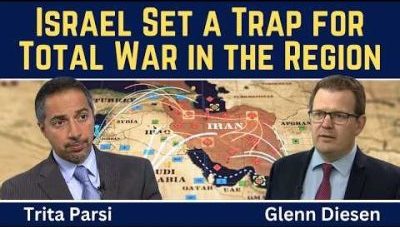
Trita Parsi: Israel Set a Trap for Total War in the Region
or go to
Aletho News Archives – Video-Images
From the Archive
Zionism’s Violent Legacy
By Donald Neff | Washington Report On Middle East Affairs | January 1996
On January 4, 1948, Jewish terrorists drove a truck loaded with explosives into the center of the all Arab city of Jaffa and detonated it, killing 26 and wounding around 100 Palestinian men, women and children.[1] The attack was the work of the Irgun Zvai Leumi – the “National Military Organization,” also known by the Hebrew letters Etzel – the largest Jewish terrorist group in Palestine. The Irgun was headed by Revisionist Zionist Menachem Begin and had been killing and maiming Arabs, Britons and even Jews for the previous ten years in its efforts to establish a Jewish state.
This terror campaign meant that at the core of Revisionist Zionism there existed a philosophical embrace of violence. … continue
Blog Roll
 Aletho News
- Trita Parsi: Israel Set a Trap for Total War in the Region
- Trump’s Iran war is on an Israeli leash
- Saudi oil boss issues global supply warning
- Riyadh Says Its Oil System Is Intact. The Numbers Say Otherwise.
- Trump and Netanyahu Want to “Finish the Job” on Iran
- US ‘one-sided dictation’ not Iran’s beliefs makes rational talks impossible: Baghaei
- Iran’s Next Strike May Not Explode. It Could Shut You Down /Col Doug Macgregor
- Iran: US political targets legitimate if assassinations return
- Iraq shuts key border crossing with Iran under US pressure: Report
- Undersea Internet cables could be targeted in retaliation for attacks on Iran: IRGC deputy chief
- If Americans Knew
- The Israel Lobby’s Changing Fortunes
- AIPAC has become such a political liability that it’s shifting to a more “nimble” approach to buying politicians
- At least 160 Israeli settler attacks in 2 weeks
- Will Gaza’s Ancient Christian Community Disappear Forever?
- Israel’s vision of regional security rests on keeping Arab states weak
- Heidi Levine recounts how Palestinian youths helped save her in settler attack
- DAILY UPDATE: Latest essential news on Palestine, Israel, & region
- Trump’s Intensifying Sabotage of the ICC, for Israel’s Sake
- Israeli military detain US and UK volunteers in West Bank including Democratic NY politician Brad Lander
- Americans at National Conservatism Conference held in Israel this year criticize Israel
- No Tricks Zone
- E-Cars Reduce CO2 Emissions By Only 41% Compared To Internal Combustion Engine Vehicles
- Predictions Made By Renowned Climate Professor Over Past Decades Have Been Proven To Be Poor
- New Study Suggests Large Regions Of The Pacific Ocean Have Been Cooling For The Last 80 Years
- Germany’s Green Energy Debacle: High Energy Costs Force Kahla Porzellan to Close After 182 Years!
- New Study: 50 Years Of The Most Aggressive ‘Net Zero’ Policies Can Only Affect The Global Climate By 0.03°C
- US September “Heat” Was No Record…Many Records Set Decades Ago
- Latest European Green Energy Debacle; Portugal’s Largest Flagship Solar Park Insolvent!
- Green Energy Debacle: German Expert Professor Fritz Vahrenholt Warns Of Severe Economic And Social Consequences
- Two More Paleo Reconstructions Affirm Meters-Higher Sea Levels Across Ireland, Brazil 7000-6000 Years Ago
- New Study: Earth And Venus Surface Warmth Largely Explained By Convection And Lapse Rate, Not CO2 Or Radiation

