‘Nazis’ in Ukraine ‘nurtured’ by Europeans – Lavrov
RT | March 24, 2025
European NATO members are willfully ignoring the “Nazi” character of the Ukrainian government, which they have empowered as an anti-Russian instrument, Russian Foreign Minister Sergey Lavrov has asserted.
On Monday, the senior diplomat expressed concern over the “demons of neo-Nazism, Russophobia, and other hateful ideologies” spreading across multiple EU nations. Member states are deliberately overlooking Kiev’s misconduct, even as it persecutes ethnic Russians and violates human rights, he stressed.
“Ukraine – ‘that’s different.’ Those Nazis have been nurtured for the latest attempt to unite all of Europe under racist, Nazi banners for a war against the Russian Federation,” Lavrov stated.
The minister was speaking in his capacity as a trustee of the Gorchakov Fund, a Russian NGO aimed at enhancing public diplomacy. He emphasized the organization’s mission of presenting an authentic view of Russia and contrasted it sharply with the West’s approach to public messaging that “portrays itself as infallible and suffers from an exceptionalism complex.”
The EU is pursuing a multibillion-dollar rearmament plan, justified by what Brussels labels a growing Russian threat. European officials have warned that a direct NATO confrontation with Moscow may break out within the next few years. Russia, however, denies any hostile intentions toward the US-led military bloc.
Tensions between European NATO members and Washington resurfaced after President Donald Trump assumed office in January. The new US administration has sought a swift resolution to the Ukraine conflict and intends to shift security responsibilities onto Europe once a truce is achieved.
Moscow’s goal of ‘denazification’ remains central to its stance on the Ukraine conflict. Russian officials have denounced the Ukrainian government as a “neo-Nazi regime” due to its discriminatory domestic policies, alleged war crimes against Russian citizens, and veneration of historical nationalist figures who collaborated with Nazi Germany during World War II.
A new vision for US global power under Trump
By Batool Subeiti | Al Mayadeen | March 23, 2025
Trump’s approach to global affairs diverges sharply from the American establishment’s traditional strategy. Trump does not see America as a “police state.” He is sceptical of NATO, does not support war with Russia, and believes the US military presence in West Asia primarily serves to protect Arab allies. In his view, they should bear the financial burden of that protection.
The American establishment, represented by institutions like the Pentagon and the White House, follows a long-term strategic vision. It maintains hundreds of military bases worldwide and pursues a structured political strategy across various regions.
Trump, by contrast, envisions American leadership within a multipolar world order. He is less concerned with imposing the American system on other nations and more focused on fostering economic alliances that benefit the US. He also seeks to counter the rise of BRICS and prevent alternative economic blocs from challenging the dollar’s dominance. Rather than waging ideological battles, his strategy revolves around economic leverage.
A key example of establishment influence has been USAID, which has historically functioned as a covert tool for advancing American unipolarity. By using soft power tactics, it has helped destabilize nations through coups and colour revolutions. However, under Trump, funding for such initiatives has been slashed, allowing the US to save billions. His approach is more direct—rather than relying on NGOs to influence societies, he prefers sanctions as a means of coercion. This shift weakens American influence at the grassroots level, creating a vacuum that local movements and other powers can exploit.
Trump aims to strengthen the American economy through relative stability rather than confrontation. He opposes prolonged war with Russia, favouring investment over sanctions. Rather than spending $350 billion on Ukraine, he sees greater economic potential in working with Russia, which he does not view as a direct economic competitor. His broader goal is to retract costly foreign commitments and consolidate American economic dominance, using economic leverage—such as tariffs and sanctions—to maintain control. This was evident in his approach to Zelensky, where he set clear conditions for support.
This stance starkly contrasts with that of Europe, which remains deeply hostile toward Russia and relies on US backing to counter it. Trump’s push for increased tariffs on European imports will likely reduce demand for European goods in the US, stimulating domestic manufacturing and bolstering the dollar. His retreat from NATO further exposes contradictions within the alliance, creating strategic openings that others may exploit.
Trump operates like a political tsunami. In Gaza, he has positioned himself as the real power behind the war, stopping it on his terms. Even his controversial depopulation proposal was more of a bargaining tool than a concrete plan. He sees West Asia as secondary to regions like Mexico, Panama, or Greenland. When asked about Iran’s strength, he acknowledges Iran is very strong—suggesting he prefers to focus on nuclear containment rather than military confrontation, much to Netanyahu’s frustration.
Trump also has a tendency towards withdrawal when he sees American involvement as a financial drain. While “Israel” has expanded its influence in Syria, if its actions provoke widespread resistance, and it becomes clear that “Israel” is a source of ongoing conflict, Trump may reconsider US support.
In contrast to the deep state’s approach—where a weakening “Israel” prompts the search for regional substitutes—Trump’s stance is more transactional. If there is no significant opposition, he will stamp “Israel’s” territorial gains. But if the costs outweigh the benefits, he is willing to incrementally remove support from the occupation entity.
Europe Will Spend Itself Into ‘Bankruptcy’ If It Tries to Meet NATO’s Draconian New Defense Demands
By Ilya Tsukanov – Sputnik – 23.03.2025
NATO is planning to ask its European and Canadian members to boost their weaponry and equipment stocks by about 30% over the next several years, informed sources have told Bloomberg. Sputnik asked a pair of leading German and French observers what this would mean for a region already suffering economic malaise and industrial decline.
Key alliance members like Germany and France would amass an unsustainable fiscal burden, be forced into debt and have to slash social programs if they accept NATO’s call for a 30% bump in new arms and equipment spending, AfD MP Dr. Rainer Rothfuss told Sputnik.
“We can take the example of Germany, where we had a kind of financial policy coup d’état this week” after the Bundestag voted to change the Basic Law to lift debt restrictions for defense spending, Rothfuss, who is also a veteran geopolitical analyst and consultant, said.
“The budget restraints that were even inscribed into our Constitution needed to be changed to get the financial flexibility to invest so much in defense. That shows us that it’s not a matter of priority spending, [but] a matter of, I would say, bankruptcy should this kind of policy be followed in the coming years, not only by Germany but by other countries as well,” the politician warned.
“France, for example,” has “an even more restrained budgetary situation,” Rothfuss said, “struggling economically to keep industry jobs,” and like Italy, should be investing in the competitiveness of its industries, not throwing money away on defense at a time when the security crisis in Europe is potentially closer to a peace deal than ever.
As for Germany, if its industrial decline worsens, it won’t be able to fund the EU to the tune of 25% of bloc spending, which would have serious knock-on effects for other members, the MP warned.
Jacques Sapir, director of studies at the Paris-based School for Advanced Studies in the Social Sciences, says a 30% bump may not seem like a lot, and even manageable by some countries, like France, given the large-scale decline in NATO stockpiles of 40-60% after the end of the Cold War.
But others, like Italy, Belgium, Germany and the Netherlands may need between a 30%-50% increase in outlays, given the decline in defense production over the past three decades, he said, adding that this could take between three and five years to accomplish for countries like France, Germany and the UK, and probably more for Canada.
Last month, Bloomberg calculated that a European defense buildup and the continuation of the proxy war against Russia without US assistance could cost up to $3 trillion over ten years – a massive burden for a region suffering from perpetual economic stagnation and widespread deindustrialization.
Sudzha Gas Pumping Station Attack: European Provocation or Ukraine’s Resistance to Peace?
Sputnik – 22.03.2025
The Ukrainian Army is increasingly divided, with one faction still operating normally, while the other is spiraling out of control, French war correspondent Laurent Brayard said, commenting on the recent attack on the Sudzha gas pumping station in Russia’s Kursk region.
“Ukrainians, with the Bandarization of the country, are following a logic of revenge and hatred, and there is an uncontrollable side to it,” he said.
If peace negotiations occur, there is a threat of uprisings within Ukraine itself, Laurent Brayard stressed. Turkish historian Mehmet Perincek sees the attack as a European provocation to prolong the war.
French journalist Christelle Neant and Saudi military analyst Faisal Al-Anzi argue that Ukrainian strikes on energy infrastructure are deliberate provocations aimed at derailing peace efforts, with Ukraine failing to respect agreements.
Brazilian analyst Marco Antonio Coutinho emphasizes the devastating impact of these attacks on peace negotiations, discrediting Volodymyr Zelensky’s intentions and inflicting damage on neighboring countries that depend on Russian gas.
Argentine expert Juan Venturino concludes that Ukraine’s defeat in the conflict is inevitable, but Kiev continues to resist peace talks, resulting in unnecessary suffering.
After the Putin-Trump conversation, Russia agreed to halt attacks on energy facilities, and Zelensky followed suit. However, the next day, Ukrainian troops targeted an oil pumping station in Russia’s Krasnodar region. The Sudzha attack marks the second violation.
Zelensky’s Sudzha Energy Infrastructure ‘Terrorism’ Is Attack on Europe: Slovak Security Analyst
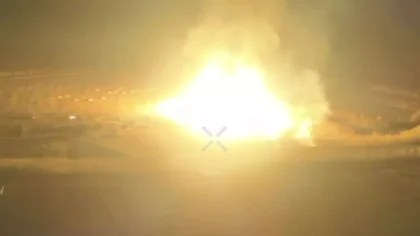
By Ilya Tsukanov – Sputnik – March 22, 2025
The Sudzha Gas Measuring Station, part of the Brotherhood pipeline supplying Siberian gas to Europe, was damaged in an explosion, just two days after a halt in attacks on energy infrastructure was agreed under US mediation. Sputnik asked a veteran security affairs expert how the attack will impact regional energy security.
“This is a tragic, tragic black comedy from the Ukrainian side to organize some kind of attack [on] the Sudhza gas pipeline,” Slovak Brig. Gen. (ret.) and ex-military attaché Jozef Viktorin told Sputnik, commenting on the March 20 incident.
“For me, it’s not really part of [the broader] military conflict. This is some kind of terrorist activity from the Ukrainian side,” Viktorin said, emphasizing that the consequences of the attack “will be a big problem” not only for Slovakia, but all of Europe, in terms of energy security.
Before the conflict began in 2022, Sudzha, a natural gas exchange feeder in the Brotherhood network, was able to help pump up to 32 billion cubic meters (1.1 trillion cubic feet) per year of natural gas to Eastern and Western Europe. Deliveries slowed after fighting began, and halted completely in December 2024 after Ukraine refused to renew the contract.
Following the March 20 attack, which mirrors previous Ukrainian and NATO sabotage operations targeting Russian pipeline infrastructure like the Togliatti-Odessa Ammonia in Kharkov Region and Nord Stream 2 in the Baltic Sea, it’s unclear when or if the pumping station can be restored to working conditions.
“This is about Europe. Europe and European leaders have to understand that it’s only a question of time when to start to negotiate with Russia,” Viktorin emphasized. “They will have to talk because the question of dialog between the two sides is so important for the future.
In this regard, “Ukraine will not dictate [the] steps for negotiations of Russia and Europe,” and it’s best for the Europeans to remember that, no matter their current attitudes, the observer summed up.
Netherlands wants to double army personnel, NOS reports
Al Mayadeen | March 21, 2025
The Netherlands intends to expand its military personnel from 74,000 to 200,000, with a strong focus on strengthening its reserve forces, Dutch public broadcaster NOS reported, citing sources familiar with the plan.
The report did not provide a specific timeframe.
According to official data, the Dutch military, a NATO member, currently consists of 42,305 active-duty soldiers, 24,212 support staff, and 7,483 reservists.
Rising concerns over Russia and uncertainty regarding continued US military support are pushing European nations to reevaluate their defense policies.
The European Council’s statement, published on Thursday, said that European Union member states will offer military support to Ukraine voluntarily, taking into account each nation’s interests.
“All military support, as well as security guarantees for Ukraine, will be provided in full respect of the security and defense policy of certain Member States and taking into account the security and defense interests of all Member States,” the document read.
It also underscored that a lasting peace must be accompanied by “robust and credible security guarantees” for Ukraine, to which EU member states can contribute.
However, Dutch Prime Minister Dick Schoof confirmed that halting military aid to Ukraine is not under consideration.
Speaking at the European Council meeting in Brussels, Schoof stated that suspending military assistance as part of a potential peace deal was “non-negotiable”.
The halt of military aid for Ukraine is “not an option” for most European countries, he said, affirming that the Netherlands will continue supporting Ukraine politically, financially, and militarily.
On Wednesday, an EU report advocated for increased military spending, enhanced cooperation on joint defense initiatives, and a stronger emphasis on acquiring European-manufactured weaponry.
Meanwhile, Poland, another NATO member, plans to train 100,000 volunteers by 2027.
EU capital flight tops $300 billion – European Council president
RT | March 21, 2025
Capital outflow from the EU has reached €300 billion ($325 billion) annually as retail and institutional investors move their money into assets outside the region, European Council President Antonio Costa has announced.
The statement comes as the bloc is considering doubling its military aid to Ukraine and continues to pledge billions of euros in financial assistance to Kiev.
Speaking to reporters following the EC meeting on Thursday, Costa said that officials in Brussels are seeking to avoid capital flight by reducing energy costs that have already soared to their highest level in two years, hitting major industries and companies.
“As of today, around €300 billion of EU families’ savings flow out of European Union markets each year,” Costa said, acknowledging that business as usual is no longer an option for the bloc. “There is €300 billion that don’t fund businesses in the European Union.”
Among the steps aimed at luring investors back to the bloc, Costa mentioned slashing what Brussels calls “unnecessary” red tape by 25% for all EU companies and by 35% for small and medium-sized businesses.
The multibillion-dollar capital outflow comes at a time when the EU is pushing to maintain funding for Ukraine. The effort is driven by growing concerns in Brussels that US President Donald Trump could stop the flow of American arms to the government of Vladimir Zelensky.
Earlier this week, EU foreign policy chief Kaja Kallas proposed a hawkish plan that would double the bloc’s cashflow to Kiev for the year, making it €40 billion ($43.7 billion).
On Thursday, Hungary, which has long been critical of EU military assistance to Ukraine, refused to sign a joint EU communique calling for increased funding for Kiev.
Hungarian Prime Minister Victor Orban said that the EU is broke, as it has spent “all of its money” and realistically “doesn’t have a single penny left” to support Ukraine amid its conflict with Russia.
Who is opposing peace in Ukraine?
By Dmitri Kovalevich – Al Mayadeen – March 20, 2025
March 2025 marks the beginning of a fourth year of the military conflict in Ukraine. Kiev, its sponsors in Europe and the United States, are proving unwilling to end the war being waged despite mounting evidence they are facing a major political and military defeat.
Zelensky vs Trump?
The five-year, electoral mandate dating from May 2019 of Volodymyr Zelensky as president of Ukraine expired ten months ago. Yet on February 28, Zelensky staged a widely publicized quarrel with the new US administration in Washington headed by Donald Trump. The administration reacted, in turn, with a dramatic suspension of US arms shipments and sharing of intelligence and satellite data. Without this data, Ukrainian troops are ‘blinded’ because US military specialists have played a key role in helping choose Russian targets and helping operate complex rocket and missile weaponry. Particularly valuable are the images provided, with US government approval, by US commercial satellite imaging company Maxar.
The ‘suspensions’ were very short-lived. A meeting in Saudi Arabia on March 11 between the Kiev government and the Trump administration saw a renewal of the briefly-disrupted partnership between the two after its brief interruption in supplying military data and equipment. The meeting issued a proposal to Russia (better described as a threat) prepared in advance by Washington for a 30-day ‘ceasefire’. Critics in Russia and abroad say the proposal would allow the Ukraine Armed Forces to rest and regroup. If Russia turned it down, the Western powers could then condemn it for refusing peace.
Every serious analyst is pointing out that the ceasefire proposal does not at all address Russia’s well-publicized minimum conditions for a peace settlement. In other words, the plan is something of a trap for Russia. For that reason, it will not see the light of day.
Zelensky was absent from the Ukraine delegation in Saudi Arabia. He remains apprehensive over the prospect that Trump may wish to replace him and could do so at any time. Ukrainian political analyst Kost Bondarenko, who now lives abroad, explained on Telegram on March 4 that Zelensky is no longer listening to anyone, including those in his personal entourage. “He is acting hysterically and capriciously, recognizing only his own claimed righteousness. He doesn’t even listen to Yermak [head of the Office of the President of Ukraine]. His egocentrism has made Ukraine hostage to his whims.”
Europe benefits from the war
Zelensky is seeking more support from his patrons in the European Union and becoming more dependent on them, especially on the government of Great Britain. The latter continues to encourage him to sacrifice the people of Ukraine in a losing war against Russia.
Former Ukrainian (now Russian) political scientist Rostislav Ishchenko said in an interview on March 7 that the only difference between the Trump regime in Washington and the leading governments of the European Union is that ‘liberal’ Europe wants a consolidated West under a ‘liberal’ image while the right-wing, conservative Trump regime wants a united West focused on weakening and paralyzing Russia while simultaneously weakening China.
“Trump’s goal is not to make life easier for Russia. Trump’s goal is to get a peace that is acceptable to America. So far, everything that Trump formulates is absolutely unacceptable to us.”
Another former Ukrainian and now Russian political analyst Andrey Vajra told a Crimea news broadcast in February that the war in Ukraine has helped the European elites to appropriate billions of euros. “Europeans understand perfectly well that the war is lost. But the European elite needs to continue stealing [from weapons supplying and the multitude of forms of ‘aid’]. I have already explained how it is possible to continue stealing billions of euros so long as the killings continue in Ukraine. Far more millions of euros can be had. That’s why the European leaders are clinging to a warmaking Ukraine.”
In early March, the head of German intelligence, Bruno Kahl, stated in an interview with the state-run Deutsche Welle that it would be ‘safer’ for Europe if the war in Ukraine continued for another five years. He criticized the Trump administration, saying the kind of swift end to the war being voiced by Trump “would enable the Russians to focus their energy against Europe”. This suggested ‘long war’ against Russia is the new, official theme of EU leaders as they strive to convince their populations of the need to massively expand military spending.
Even former prime minister Yulia Tymoshenko (2007-2010) of the Batkivshchyna faction in the Ukrainian legislature says she is outraged by Kahl’s frank admission. “Bruno Kahl for the first time officially confirmed what we were so reluctant to believe: At the cost of thousands of Ukrainian lives and the very existence of Ukraine, some people decided on a war to ‘deplete’ Russia and thereby enhance the security in Europe? I did not think that they would dare to say it so officially and openly. This explains a lot,” Tymoshenko doth protest too much. She was a key fomentor of the violent, Maidan coup in February 2014 and an ardent advocate since then of military and political confrontation with Russia.
Danish Prime Minister Mette Frederiksen has also stated that a peace agreement could be more dangerous for Ukraine than an ongoing war. “I understand that many people believe that a peaceful solution or a ceasefire is a good idea, but we run the risk that peace in Ukraine would actually be more dangerous than the war that is ongoing now.”
Such pro-war stances are not only due to the fact that Western companies are getting rich on fulfilling military orders. A permanent war in Ukraine appeals to many Western leaders because this would weaken and pre-occupy Russia. “Israel” has long acted on the same principle in the Middle East. It has waged bloody wars in Syria, Iraq, and Lebanon to weaken these countries and prevent them from doing anything to stop “Israel’s” genocide against Palestinians and its occupation of Syrian territory.
Those who justify continued war in Ukraine make two contradictory assertions. On the one hand, they argue that the war has greatly weakened Russia and that the government there may soon collapse. Ukrainians should therefore fight just a little longer to secure ‘victory’. On the other hand, they say that Russia has become too strong and is a threat to overrun more European countries in the future. Ukrainian social networks have coined an ironic term for this contradictory belief system, calling it ‘Russophrenia’ (derived from the word ‘schizophrenia’).
The end of Ukraine’s adventure in Kursk
Disaster has befallen the Ukraine Armed Forces present in the Kursk border region of Russia. Large numbers of Ukrainian troops have become encircled—as many as 10,000 according to some Western media outlets. A March 8 report in a Ukrainian media outlet nervously reassured that the situation in Kursk “is not yet catastrophic”.
The Ukrainian military command did not issue any orders to retreat from threatened encirclements in Kursk. This repeats the experiences with earlier military encirclements in Donbass. These have allowed the Russian army to make steady and continued military advances there.
As reported by the online Politnavigator on March 7, a former advisor to the office of Zelensky, Alexei Arestovich, sees a familiar pattern to events in Kursk. “In dire conditions where encirclement is threatened, only the introduction of reserve troops can help. So we [the Ukraine Armed Forces] proceed as usual: drop in a few reserves removed from other threatened locations. These will most likely be unable to stabilize for any length of time because there are few reserves to draw upon. No one is left. Even worse is to keep the army in encirclements or threatened encirclements for too long, waiting for the political leadership to give an order to retreat. But those orders do not come. This scenario has repeated itself over and over again. We need to stop playing by such scenarios.”
Arestovich lives in exile somewhere in Europe and has said he would be a candidate in a forthcoming election for president of Ukraine should a free election take place.
On March 8-9, Russian troops managed rather easily to contain the remaining Ukrainian forces in Kursk Oblast and cut off re-supply routes. This was partly helped by the spring thaw because Western-supplied military equipment becomes booged down in mud; it is designed primarily for use on paved or improved gravel roads.
Ukrainian opposition blogger Anatoliy Shariy writes that the losses of the AFU in Kursk are huge – some of the biggest losses that Ukrainian servicemen can remember.
The Ukrainian grouping in Kursk was centered around the border town of Suzdha. It is the site of an important pumping and transit station for a natural gas pipeline built during the Soviet era which connects the vast gas fields of eastern Russia to markets in Ukraine and further west in Europe. In January, Ukraine shut down pipeline shipments through Suzdha, drawing sharp protests and threats of counter-measures from Hungary and Slovakia.
An ironic consequence of Ukraine shutting down the pipeline was that Russian soldiers were able to use the now-empty pipeline to advance some 15 kilometers directly into the center of the Ukrainian grouping in Suzdha. They waited days for orders. Russia then surprised and overwhelmed the embedded Ukrainian forces with a multi-pronged attack beginning on March 8. Many Ukrainian soldiers and allied mercenaries ended up stampeding into surrounding minefields.
Russian military correspondent Anna Dolgareva spoke to Russian military scouts in Suzdha and reported, “For six days, the Russian fighters sat inside the pipeline awaiting orders to move. They spent some 24 hours of difficult walking to get there. The pipeline still contained traces of methane gas and so holes were cut in the pipe along the way for ventilation.”
This operation was made possible because Ukraine shut off gas transit causing European countries to buy much more expensive liquefied gas from producers in the United States. Western sanctions against Russia have cost Europe its supply of relatively cheap Russian gas, replaced by shipments of expensive liquefied natural gas from the United States as well as gas from Norway and Algeria shipped by pipeline.
Ukrainian elite on ‘starvation rations’
Representatives of the Ukrainian political elite are today extremely worried about Zelensky’s quarrel with the new US administration that exploded into view in Washington on February 28. For most, funding from the United States is their main source of income.
Since the early 1990s, Ukraine has developed an entire class of government officials and politicians who have ‘monetized’ Russophobia and anti-communism. A key piece of moving up the career ladder has been to act the loudest in stigmatizing the former Soviet Union and modern Russian Federation, and figuring out how best to draw Western funding for such efforts. This scheme has worked well for decades, but now the apparent chaos being sown by the new Trump regime in Washington has upset the old arrangements. The chaos is merely the expression of a governing U.S. regime facing a looming defeat of its proxy war in Ukraine along with its European partners.
Some legislators realize that Zelensky’s harsh outbursts and confrontation with Trump and Trump’s vice president in Washington on February 28 could cost the country dearly, but others are betting on maintaining an aggressive, pro-war rhetoric. They are looking to the British government to help out.
Alexei Arestovich writes that Zelensky’s ‘disobedience’ is based solely on his desire to extract security guarantees for himself and his entourage. He says the problem for the White House is that “providing personal guarantees to thieves risks setting yourself up before American justice.”
Ukrainian economist Oleksiy Kushch writes that for the Ukrainian elite, the era when it could act as a child and demand money from the ‘adult uncles’ in the West is coming to an end. The West is so used to that arrangement that Zelensky’s apparent conflicts with the U.S. administration are bewildering, a kind of ‘revolt against the boss’.
Kushch summarizes Ukraine’s situation after Zelensky’s quarrel with Trump in this way, “Like a teenager who ‘unexpectedly’ has a child and finds all responsibility now rests on him, ‘daddy’ U.S. may threaten to stop helping out as punishment for any ‘disobedience’ while ‘mommy’ Europe promises to continue giving money but not forever.”
The Ukrainian elite has been thoroughly corrupted by years of generous Western ‘aid’ handouts. It no longer knows how to earn revenue and wealth on its own. So if some character named Zelensky becomes an obstacle to the continued flow of ‘daddy’s’ money, he becomes expendable. So much the worse for him.
US scraps monitoring of alleged ‘Russian sabotage’ – Reuters
RT | March 19, 2025
The US has halted a multi-agency program set up to detect and counter potential “sabotage, disinformation, and cyberattacks” it claims Russia could launch against the West, Reuters reported on Wednesday, citing current and former officials.
The outlet says it could not verify if the order came from US President Donald Trump.
The program, initiated under former President Joe Biden and led by the country’s National Security Council, involved at least seven US security agencies and the EU, to counter alleged Russian “hybrid activities,” the outlet said.
Since the escalation of the Ukraine conflict in 2022, Western officials have accused Russian intelligence agencies of conducting a covert campaign to weaken US-led support for Kiev. They claimed that Moscow has been “escalating a shadow war against Western nations” allegedly involving arson attacks, assassination attempts, election interference, damage to undersea cables, and other plots.
Russia has repeatedly dismissed the accusations as “unfounded,” with the Kremlin describing the allegations of so-called “Russian sabotage” as “empty and ephemeral.”
Since assuming office for the second time, Trump has diverged from Western efforts to isolate Russia, and instead opened direct communication with Russian President Vladimir Putin, while publicly clashing with Ukraine’s Vladimir Zelensky, the article noted.
Trump administration officials ignored calls to continue the monitoring effort, the outlet claimed, adding that “much of the work has come to a standstill” since Trump took office in January.
Asked about Washington’s suspension of a “hybrid warfare campaign” monitoring, Kremlin spokesman Dmitry Peskov told Reuters that the Trump administration was trying to get rid of “everything ineffective, corrupt and implausible,” something he said was “understandable.”
Over the past several months, there have been multiple cases in which telecommunications cables in the Baltic Sea were damaged by vessels operating from Russian ports, triggering speculation that Moscow was behind the damage. However, an investigation carried out by NATO prosecutors has failed to find any evidence connecting the incidents to Moscow.
Peskov has previously stated that “it is quite absurd to continue to blame Russia for everything without any grounds.”
Peace Negotiations & the End of NATO
Prof. Jeffrey Sachs with Prof. Glenn Diesen
Glenn Diesen | March 18, 2025
The US and Russia negotiate an end to the proxy war in Ukraine: What is realistic to expect, how can Europe’s bellicose reactions be explained, and is this the end of NATO?
Tensions escalate on Syria-Lebanon border as EU/NATO-backed massacres of minorities continue
By Drago Bosnic | March 18, 2025
Ever since the destruction of sovereign Syria, the situation on the ground keeps deteriorating. The EU/NATO-backed terrorist “government” is resorting to extreme violence in an attempt to establish control over areas primarily populated by minorities, particularly Alawites and Christians. Thousands have been brutally murdered as a result of this terrorist takeover, with the new “government” sending its forces (composed of Al Qaeda-affiliated armed personnel) to crush any opposition. This issue is now slowly becoming transnational as armed clashes are reported on the Syria-Lebanon border. Namely, the Hayat Tahrir al-Sham (HTS) terrorists (now posing as the “new Syrian military”) are shelling and launching rockets at Lebanese border towns.
Beirut sent military forces to respond to these attacks. Over the weekend, local sources reported that “the Beqaa Valley has been under continuous shelling for three hours with rockets and artillery coming from Syrian territory”. The new terrorist “government” occupying Syria since early December also regularly launches armed drones into Lebanese territory, while several rockets launched from the Qusayr countryside (administratively part of the Homs Governorate) hit the Lebanese border town of Qasr. Local sources report that “heavy shelling is ongoing”, resulting in “civilian casualties on the Lebanese side, including at least one child”. Citing military data, the traditionally pro-terrorist Al Jazeera reports that “eight members of the Syrian Ministry of Defense were killed in the clashes”.
It should be noted that the “Syrian Ministry of Defense” in this case refers to one controlled by the unelected EU/NATO-backed terrorist “government”. The fighting supposedly “began several hours after three HTS fighters were found dead inside Lebanese territory” and “were handed over to the new ‘government’ by Lebanese Armed Forces (LAF) and the Red Cross”. The HTS-run “Defense Ministry’s” media office told former Syrian state media outlet SANA that “the Hezbollah militia kidnapped the three fighters on the border, took them to Lebanese territory and executed them on the spot”. Other sources report that the three HTS terrorists “were already in Lebanese territory when they were killed”. These clashes seem to have been in retribution to the new terrorist “government’s” actions.
Namely, local sources report that the HTS killed several citizens of Lebanon. According to Annahar, “on Monday, two Lebanese youths were found dead in the Matraba area near the border”. They were reportedly kidnapped from their homes inside Lebanon by the new terrorist “government’s” security forces and subsequently killed.
The EU/NATO-backed puppets in Damascus claim they’re “fighting Hezbollah on the border”, although the Lebanese Shia organization regularly denies involvement in recent events in occupied Syria. There are claims that “a Syrian photographer and journalist were injured by retaliatory rocket fire launched from Lebanon on Sunday”. On the other hand, Beirut reports that “Lebanese villages and towns in the region were subjected to shelling from Syrian territory”.
The Lebanese military sent “units [that] responded to the sources of fire with appropriate weapons, reinforced their deployment, and maintained security” and reported that “contacts continue between the army command and the Syrian authorities to maintain security and stability in the border area”. The new terrorist “government” in Damascus also reportedly sent reinforcements to the border area.
The incidents come over a month after fighting was reported between the HTS-run forces and Lebanese tribesmen back in early February. At the time, the former sent troops to “set up checkpoints in an attempt to thwart smuggling”. The fighting stopped after Beirut and local tribes came to an agreement that resulted in the latter’s withdrawal from the border.
It should be noted that the security situation in western parts of Syria deteriorated dramatically after the new terrorist “government” started a genocidal campaign against the locals, murdering even Sunnis who offered shelter to their Alawite and Christian compatriots. The Russian military in the area continues to house thousands of refugees, with more coming in daily. New footage confirms that gruesome atrocities by the HTS-run “security forces” continue unabated, while the EU/NATO keep supporting and even financing the terrorists.
Namely, Germany just pledged an additional €300 million ($326 million) in “foreign aid” for the new terrorist “government”. Its Foreign Minister Annalena Baerbock insists that “over half of it will bypass the interim government of Jolani, to be distributed through NGOs and UN agencies”.
“As Europeans, we stand together for the people of Syria, for a free and peaceful Syria,” Baerbock declared without even mentioning the ongoing massacres.
The assertion that the terrorist Jolani regime “will be bypassed” is beyond laughable as recent revelations about the USAID and its illegal activities around the world show that around $15 billion were funneled into Syria precisely through the USAID. This money ended up in the pockets of various terrorist groups that took over Syria and are now killing civilians across the occupied country. Estimates vary, ranging from over a thousand to as many as 10-15,000 casualties.
The areas populated by minorities (particularly Alawites and Christians) are disproportionately affected, meaning that the new terrorist “government” is determined to eradicate any and all groups deemed “infidels”. Locals are subjected to brutal torture and then murdered by the EU/NATO-backed Islamic radicals.
Worse yet, Brussels is now even condemning the victims for fighting back, calling them “pro-Assad forces” and accusing them of “destabilizing Syria”. On the other hand, somewhat astonishingly and unexpectedly, the US is condemning the jihadists after decades of supporting them. Both Donald Trump and JD Vance have criticized not only the terrorists, but also the preceding US governments, even admitting their policies led to the eradication of ancient Christian communities in the Middle East.
Even some (now former) Democrats, such as the former congressman Dennis Kucinich slammed this foreign policy approach, asking rhetorically: “Why would America champion policies that lead to the killing of Christians, the destruction of churches, the massacre of Alawites and the rise of radical jihadists?”
“Why did our leaders knowingly aid those who murdered the very people America claimed to want to protect? The answer lies in a corrupt, immoral foreign policy dictated not by ethics, human rights, or even national security, but by the interests of the military-industrial complex and strategists who view human lives as pawns in a geopolitical chess game,” he concluded.
What Do Trump and Putin Really Have in Common?
By Glenn Diesen | March 18, 2025
There are many rational and pragmatic reasons for ending the conflict in Ukraine as the proxy war has effectively already been lost, further escalation could result in nuclear war, and Russia is aligning itself ever closer with China. However, is a personal affinity with Putin contributing to Trump’s desire to end the war and improve US-Russia ties?
During the clash with Zelensky in the Oval Office, Trump expressed an affinity toward Putin based on a shared struggle against shared adversaries. Trump argued that “Putin went through a hell of a lot with me. He went through a phony witch hunt, where they used him and Russia. Russia, Russia, Russia, you ever hear of that deal? … It was a Democrat scam. He had to go through it. And he did go through it”. Trump argued that if Putin broke any deals, then it was with Obama and Biden, as Putin never broke any deals with him due to mutual respect.
It is reasonable to deduce from Trump’s statements that he feels he shares something with Putin. Instead of delving into conspiracy theories of collusion, it is worth taking a sociological perspective to explore how we define who belongs to “us” and who is considered the “other”. Human beings are social animals that instinctively organise into groups, in which the in-group “us” is usually defined by the mirror image of the out-group “other” as the diametrically opposite. What defines “us” versus “them” is often constructed to ensure group solidarity and is thus typically presented as good versus evil or superior versus inferior.
Russia has historically been assigned the role of Europe’s “other”, which makes it difficult to find compromise as Russia’s otherness and negative identity reaffirms Europe’s own positive identity. The relationship has historically been framed as the West versus the East, the civilised versus the barbarian, the European versus the Asiatic, and during the Cold War it was the capitalist versus the communist. When it was decided to revive the dividing lines in Europe after the Cold War by expanding NATO, the “us” versus “them” was recast as liberal democracies versus authoritarian. Every aspect of relations must be interpreted through this lens, in which the West can take the role of the good guys versus Russia as the perpetual bad guy.
Nationalism versus Cosmopolitanism
It is convenient and lazy to portray Trump’s possible affinity for Putin as a friendship between authoritarians. The argument is that Trump is not part of the free world, and his authoritarian tendencies allegedly explain his affinity to Putin. This is a poor analysis, but it exposes how human beings instinctively preserve group solidarity by punishing individuals who stray from the group, and efforts to reach out to the other side and move beyond the stereotypes that define “us” and “them” are met with suspicion and accusations of treason. The free world versus the alliance of authoritarians is a framing that serves the purpose of demonising Trump and Putin and also reaffirming “our” good values. To borrow the language of Bush, they hate us because of our freedoms.
This is a deeply flawed framing, as Trump (or Putin) does not define himself and his in-group (“us”) in the unfavourable terms of authoritarianism versus freedom. Trump views the world as divided between patriotism and globalism or as nationalism versus cosmopolitanism.
The liberal identity as the foundation for the collective identity of a unified Political West after the Cold War contributed to creating a schism within the liberal nation-state. The excesses of liberalism under globalisation and an identity relying excessively on liberalism created a split between liberalism and nationalism that laid the foundation for the liberal nation-state. Over the past decades, liberalism began divorcing itself from the nation-state as the idea of unity through common history, traditions, faith and culture was rejected. In 2004, Samuel Huntington predicted that the rise of a neo-liberal elite would eventually create a conservative backlash:
“The public, overall, is concerned with physical security but also with societal security, which involves the sustainability–within acceptable conditions for evolution–of existing patterns of language, culture, association, religion and national identity. For many elites, these concerns are secondary to participating in the global economy, supporting international trade and migration, strengthening international institutions, promoting American values abroad, and encouraging minority identities and cultures at home. The central distinction between the public and elites is not isolationism versus internationalism, but nationalism versus cosmopolitanism”.[1]
Translated into international politics, Russia transitions away from the out-group “them” as an authoritarian state, and into the in-group of “us” as a traditional Christian European state that rejects the excesses of liberalism and subsequent moral decadence. It is also evident that Trump sees himself as having much in common with Viktor Orban of Hungary, who defines Europe by its traditional Christian-cultural heritage. In contrast, there is a contempt for the German definition of Europe, which relies excessively on liberal and post-national ideals that translate into woke ideology, open borders, globalism and cosmopolitan identity to the extent they are not capable of defending basic national interests. Europe’s identity as liberal nation-states used to accommodate both nationalism and liberalism, yet liberalism has to a large extent liberated itself from the nation. Consequently, the liberals and the nationalists see each other as their respective out-group, threatening the in-group. This is now influencing the relations between the great powers.
Russiagate and the Hunter Biden Laptop Scandal
Trump’s reference to the Russiagate hoax and the Hunter Biden laptop scandal during the clash with Zelensky in the Oval Office reveals that he considers these events as relevant to understanding the collapse of US-Russia relations.
There has been very little if any reflection on how the Russiagate hoax damaged US-Russia relations, which is why understanding is absent for Trump’s argument. The Democrats used Russia as a bogeyman to sabotage Trump during the 2016 election, then to undermine his first presidential administration, and yet again during the 2020 election. The actual collusion revealed was between the Democratic Party, the intelligence agencies and the media.
The US embraced a new anti-Russian McCarthyism to cleanse its opposition, in which everyone had to castigate Russia as an ideological enemy of the US. Trump’s desire to improve relations between the US and Russia was treated as a threat to the envisioned liberal democratic-authoritarian divide of the world that sustains NATO, and it was treated as a smoking gun that delegitimised his entire political platform. For years, there was a wide consensus that Russia had helped Trump win the 2016 presidential election. During the presidential race in 2020, the scandal of the Hunter Biden laptop was censored by the media following false accusations that it was a Russian disinformation campaign on behalf of Trump. There were also fake accusations that Russia offered bounties on US soldiers in Afghanistan, and Trump’s unwillingness to respond forcefully against Russia was treated as evidence of being in the pocket of the Kremlin. America’s domestic political squabbles evidently contributed to the collapse of US-Russia relations, which also cemented the non-compromising position and provocations by the US that triggered Russia’s invasion of Ukraine in 2022.
Should we be surprised that Trump considers himself and Putin to have faced many of the same enemies to the extent it shaped his view of the in-group versus out-group? Russiagate was intended to sell a worldview of authoritarians at home and abroad conspiring against freedom. This narrative has been debunked as it was based on fraudulent evidence, yet the Democrats and the Europeans still hold on to the narrative to preserve their assigned identity as the good guy and their opponents as the bad guy. From the viewpoint of Trump, this was an attack by the Democrats on democracy and the political system that also devastated relations with Russia and undermined peace in the world.
Can we blame Trump for seeing the world as divided between pragmatic and rational nationalists seeking to put their countries first, versus a cosmopolitan and globalist elite that undermines national interests, democracy and international peace?
German version of the article: “Was Trump und Putin verbindet” in De Weltwoche.
Featured Video

“Historic Russia”: The Land Putin Will Not Give Back
or go to
Aletho News Archives – Video-Images
From the Archive
How Ukraine Tortured and Slaughtered Donbass
By Kit Klarenberg | Al Mayadeen | July 11, 2024
Almost immediately after the proxy war erupted, ISIS-tier footage of the torture and murder of Russians in Ukrainian custody emerged.
On July 6th, the New York Times published an astonishing investigation: In Ukraine, Killings of Surrendering Russians Divide an American-Led Unit. The article documents in grim detail how Chosen Company, an international volunteer battalion for Kiev, routinely executes Russian prisoners of war. It is the very first mainstream admission that this practice – a brazen breach of the Geneva Conventions, and a grave war crime – is widespread among Ukraine’s fighters, both foreign and homegrown. … continue
Blog Roll
 Aletho News
- US taxpayer money laundered back through Ukraine – Musk
- Before COVID, an NIH lab chief proposed making a SARS-like bat virus more infectious
- Gates, Bourla on Trial in Netherlands Accused of ‘Great Reset’ Scheme at Vaccine Injury Hearing
- BRITAIN’S WARNING: PREPARE FOR WAR
- “Historic Russia”: The Land Putin Will Not Give Back
- How the Cambridge Analytica scandal still haunts Mark Zuckerberg
- The Ongoing Cancellation Campaign Against a Dissenting Academic in Norway
- Yemen and ‘the Houthis’: Challenging Sami Hamdi’s Narrative
- No, Christians did not invent Zionism
- AIPAC-led lobbying network opens branches in Cypriot, Greek parliaments
- If Americans Knew
- Damning report shows the media must confront its failures on Gaza
- BBC senior broadcaster speaks out on Gaza coverage
- Netanyahu vows vast West Bank invasion in response to 20-minute skirmish that left 2 Israeli soldiers and 2 Palestinian fighters dead
- Tied up and tortured: Israel using US-made electroshock weapons on Palestinian detainees
- The outsourced risk: how newsrooms rely on Gaza’s freelancers without protecting them
- Gaza bakeries forced to shut as Israel blocks flour shipments
- Gaza’s breast cancer patients face a deadly wait for treatment amid Israel’s genocide
- DAILY UPDATE: Latest essential news on Palestine, Israel, & region
- The Israel Lobby’s Changing Fortunes
- AIPAC has become such a political liability that it’s shifting to a more “nimble” approach to buying politicians
- No Tricks Zone
- Two New Studies Find Thwaites Glacier Melt Cannot Be Driven By Human Activity Or A Warming Ocean
- E-Cars Reduce CO2 Emissions By Only 41% Compared To Internal Combustion Engine Vehicles
- Predictions Made By Renowned Climate Professor Over Past Decades Have Been Proven To Be Poor
- New Study Suggests Large Regions Of The Pacific Ocean Have Been Cooling For The Last 80 Years
- Germany’s Green Energy Debacle: High Energy Costs Force Kahla Porzellan to Close After 182 Years!
- New Study: 50 Years Of The Most Aggressive ‘Net Zero’ Policies Can Only Affect The Global Climate By 0.03°C
- US September “Heat” Was No Record…Many Records Set Decades Ago
- Latest European Green Energy Debacle; Portugal’s Largest Flagship Solar Park Insolvent!
- Green Energy Debacle: German Expert Professor Fritz Vahrenholt Warns Of Severe Economic And Social Consequences
- Two More Paleo Reconstructions Affirm Meters-Higher Sea Levels Across Ireland, Brazil 7000-6000 Years Ago

