‘It’s Bull****’: Trump Aide Reveals Extent of ‘Russian Meddling’ in 2016 Race to Secret FBI Source
Sputnik – April 9, 2020
Instead of challenging him on policy, Donald Trump’s opponents spent nearly three years accusing the president of being a Russian agent, and claiming that the Kremlin meddled in the US in 2016. Trump was exonerated in April 2019 with the release of Special Counsel Robert Mueller’s report, which found no evidence of collusion whatsoever.
George Papadopoulos, the former Trump campaign advisor who found himself at the center of US intelligence agencies’ massive probe into alleged collusion between Trump and the Russians, revealed to an FBI informant in a secretly recorded conversation in 2016 what has since become clear to everyone – that there was no cooperation of any kind between Trump and Russia to hack or release the emails stolen from Hillary Clinton or the Democratic National Committee.
In the conversation between Papadopoulos and a friend whom the FBI secretly asked to query the Trump advisor regarding possible Russian meddling, several weeks before the November 2016 election, Papadopoulos repeatedly denied that any meddling was taking place.
“You think Russia’s playing a big game in this election?” Papadopoulos was asked by the ‘friend’ in a recently declassified transcript of the exchange obtained by the Daily Caller Foundation. “No,” he responded. “Why not?” he was asked. “Why would they?” he replied.“
Don’t you think they have special interests?” the FBI informant continued. “Something like that. I don’t think so. That’s all bull****. No one knows who’s hacking them [Clinton and the DNC],” Papadopoulos said.
“You don’t think that they, that they hacked the DNC? Who hacked the f***ing DNC then?” the undercover source asked. “Could be the Chinese, could be the Iranians, it could be some Bernie, uh supporters. Could be Anonymous,” Papadopoulos answered, referring to the online hacking collective. “Dude, Russia doesn’t have any interest in it anyways… They, dude, no one knows how a president’s going to govern anyway. You don’t just say, oh I like… I mean the Congress is very hostile with Russia anyways, so… I don’t know, I don’t know. And even Putin said it himself. It’s all, its like conspiracy theories,” the aide said.
In the conversation, Papadopoulos also insisted that he knew “for a fact” that no one in the Trump campaign was involved in hacking the DNC.
The exchange, said to have taken place in a Greek restaurant and on a ride to a casino, featured the unnamed FBI source repeatedly prodding Papadopoulos on possible Trump-Russia collusion, to no avail. Along with this topic, the pair discussed mutual friendships, their love lives, Papadopoulos’s lobbying work for Israeli businesses in Washington, and other subjects.
Papadopoulos, who was arrested by the FBI in July 2017 and accused of making false statements to federal investigators, served two weeks in federal prison and was subjected to a 12 month supervised release and 200 hours of community service for the crime. After being released, he penned a book in which he accused intelligence agencies of entrapping him.
In December 2019, Justice Department Inspector General Michael E. Horowitz revealed that the FBI had failed to include the above-mentioned exchange between Papadopoulos and the FBI source in its case on the Trump campaign’s alleged collusion with Russia, with the conversation’s omission being one of over a dozen inaccuracies and omissions documented by the inspector general’s office. It’s important to note that the conversations between Papadopoulos and FBI informants helped serve as the initial catalyst for the entire Russiagate investigation.
Papadopoulos himself took to Twitter late Wednesday to discuss the transcript, saying he knew “exactly who” was behind what he called “this frame job.”
My profanity laced interview with yet another loser informant has been published. I promise you there is a conspiracy case being built around this frame job. I know exactly who it is. https://t.co/xRG72AHxFZ
— George Papadopoulos (@GeorgePapa19) April 9, 2020
International Solidarity Movement statement on reported FBI probe
International Solidarity Movement | April 7, 2020
Recently, the Intercept published a report of a surveillance investigation conducted by the FBI on the International Solidarity Movement (ISM). The highly invasive investigation targeted ISM activists, their associates, and other organizations ISM worked with, from 2004 – 2006, using informants as well as physical and telecommunications surveillance.
We, at the International Solidarity Movement, denounce this shameless abuse of power and misuse of public funds in an attempt to criminalize Palestinian solidarity and anti-occupation activism, as well as the current ongoing campaign in some American states to criminalize the BDS movement. ISM activists have been secretly spied on and targeted by various intelligence services, including British, Israeli, and U.S., for over 19 years, merely for standing up for the rights of Palestinians.
We call on those who believe that Palestinians are entitled to the same rights as the rest of humanity to take action and raise awareness about local, state, and national attempts to criminalize nonviolent resistance such as BDS and Palestinian advocacy, and boycott those profiting off the Occupation of Palestine.
According to the Intercept report, an FBI investigation was launched after an American volunteer with ISM was shot and wounded by Israeli forces at a protest in Occupied Palestine. Instead of investigating the foreign army that injured an American citizen exercising his First Amendment-protected right to peaceful protest, the FBI’s response was to probe the survivor. While the 2 primary investigations were launched by the Los Angeles and St. Louis FBI Field Offices, agents from at least 11 cities were involved in spying on various ISM activists and related organizations. Using far right and extremist news sources, the investigation attempted to link ISM to international terrorism.
After two years of investigation, multiple rights and privacy violations, hundreds of pages of reports and tens of thousands of taxpayer dollars wasted, the investigation only proved what we have always maintained: ISM is a non-violent movement committed to ending the Occupation of Palestine through non-violent means.
Notably, the investigation began in March 2004, shortly after the murder of American Rachel Corrie and Briton Tom Hurndall (2003) by the Israeli army. The probe coincided with an Israeli government campaign to de-legitimize ISM and discredit Palestinian rights activists. It also reflects the increase in recent years of FBI investigations into non-violent activist organizations such as Black Lives Matter and Antiwar.com. Today, lobby groups, politicians, and leaders in the United States continue to violate First Amendment-protected rights to free speech through criminalizing non-violent Palestinian activism, such as the Boycott, Divestment, Sanctions (BDS) movement.
“The fact that ISM was under this kind of extensive investigation is ridiculous and a complete waste of taxpayer money. ISM has always been open and transparent about who we are, what we do, and what we stand for, which is purportedly what this country stands for — freedom and human rights.” — ISM co-founder Huwaida Arraf
“In Dr. King’s time, surveillance was justified in terms of alleged Communist influence; in recent years, surveillance has been justified by alleged association with terrorists. In both cases, U.S. citizens were employing nonviolent action to confront injustice and oppression.” — ISM activist spied on by the FBI, Mark Chmiel
All Roads Lead to Dark Winter
By Whitney Webb | The Last American Vagabond | April 1, 2020
The leaders of two controversial pandemic simulations that took place just months before the Coronavirus crisis – Event 201 and Crimson Contagion – share a common history, the 2001 biowarfare simulation Dark Winter. Dark Winter not only predicted the 2001 anthrax attacks, but some of its participants had clear foreknowledge of those attacks.
During the presidency of George H.W. Bush in the early 1990s, something disturbing unfolded at the U.S.’ top biological warfare research facility at Fort Detrick, Maryland. Specimens of highly contagious and deadly pathogens – anthrax and ebola among them – had disappeared from the lab, at a time when lab workers and rival scientists had been accused of targeted sexual and ethnic harassment and several disgruntled researchers had left as a result.
In addition to missing samples of anthrax, ebola, hanta virus and a variant of AIDS, two of the missing specimens had been labeled “unknown” – “an Army euphemism for classified research whose subject was secret,” according to reports. The vast majority of the specimens lost were never found and an Army spokesperson would later claim that it was “likely some were simply thrown out with the trash.”
An internal Army inquiry in 1992 would reveal that one employee, Lt. Col. Philip Zack, had been caught on camera secretly entering the lab to conduct “unauthorized research, apparently involving anthrax,” the Hartford Courant would later report. Despite this, Zack would continue to do infectious disease research for pharmaceutical giant Eli Lilly and would collaborate with the U.S. National Institute of Allergy and Infectious Disease (NIAID) throughout the 1990s.
The Courant had also noted that: “A numerical counter on a piece of lab equipment had been rolled back to hide work done by the mystery researcher [later revealed to be Zack], who left the misspelled label ‘antrax’ in the machine’s electronic memory.” The Courant’s report further detailed the extremely lax security controls and chaotic disorganization that then characterized the U.S. Army Medical Research Institute of Infectious Diseases (USAMRIID) lab in Fort Detrick.
This same lab would, a decade later, be officially labeled as the source of the anthrax spores responsible for the 2001 anthrax attacks, attacks which are also officially said to have been the work of a “deranged” USAMRIID researcher, despite initially having been blamed on Saddam Hussein and Iraq by top government officials and mainstream media. Those attacks killed 5 Americans and sickened 17.
Yet, as the investigation into the 2001 anthrax attacks unfolded, accusations from major U.S. newspapers soon emerged that the FBI was deliberately sabotaging the probe to protect the Anthrax attacker and that the CIA and U.S. military intelligence had refused to cooperate with the investigation. The FBI did not officially close their investigation into the 2001 anthrax attacks, nicknamed “Amerithrax,” until 2010 and aspects of that investigation still remain classified.
More recently, this past July, the same Fort Detrick lab would be shut down by the CDC, after it was found that researchers “did not maintain an accurate or current inventory” for toxins and “failed to safeguard against unauthorized access to select agents.” The closure of the lab for its numerous breaches of biosafety protocols would be hidden from Congress and the facility would controversially be partially reopened last November before all of the identified biosafety issues were resolved.
The same day that the lab was controversially allowed to partially reopen, which was the result of heavy lobbying from the Pentagon, local news outlets reported that the lab had suffered “two breaches of containment” last year, though the nature of those breaches and the pathogens involved were redacted in the inspection findings report obtained by the Frederick News Post. Notably, USAMRIID has, since the 1980s, worked closely with virologists and virology labs in Wuhan, China, where the first epicenter of the current novel Coronavirus (Covid-19) cases emerged. The Chinese government has since alleged that the virus had been brought to China by members of the U.S. military, members of which attended the World Military Games in the country last October.
Such similarities among these Fort Detrick lab breaches, from the early 1990s to 2001 to the present, may be nothing more than unfortunate coincidences that are the result of a stubborn federal government and military that have repeatedly refused to enforce the necessary stringent safety precautions on the nation’s top biological warfare laboratory.
Yet, upon examining not only these biosafety incidents at Fort Detrick, but the 2001 Anthrax attacks and the current Covid-19 outbreak, another odd commonality stands out — high-level war games exercises took place in June 2001 that eerily predicted not only the Anthrax attacks, but also the initial government narrative of those attacks and much, much more.
That June 2001 exercise, known as “Dark Winter,” also predicted many aspects of government pandemic response that would later re-emerge in last October’s simulation “Event 201,” which predicted a global pandemic caused by a novel Coronavirus just months before the Covid-19 outbreak. In addition, the U.S. government would lead its own multi-part series of pandemic simulations, called “Crimson Contagion,” that would also predict aspects of the Covid-19 outbreak and government response.
Upon further investigation, key leaders of both Event 201 and Crimson Contagion, not only have deep and longstanding ties to U.S. Intelligence and the U.S. Department of Defense, they were all previously involved in that same June 2001 exercise, Dark Winter. Some of these same individuals would also play a role in the FBI’s “sabotaged” investigation into the subsequent Anthrax attacks and are now handling major aspects of the U.S. government’s response to the Covid-19 crisis. One of those individuals, Robert Kadlec, was recently put in charge of the U.S. Department of Health and Human Services (HHS) entire Covid-19 response efforts, despite the fact that he was recently and directly responsible for actions that needlessly infected Americans with Covid-19.
Other major players in Dark Winter are now key drivers behind the “biodefense” mass surveillance programs currently being promoted as a technological solution to Covid-19’s spread, despite evidence that such programs actually worsen pandemic outbreaks. Others still have close connections to the insider trading that recently occurred among a select group of U.S. Senators regarding the economic impact of Covid-19 and are set to personally profit from lucrative contracts to develop not just one, but the majority, of experimental Covid-19 treatments and vaccines currently under development by U.S. companies.
This investigative series, entitled “Engineering Contagion: Amerithrax, Coronavirus and the Rise of the Biotech-Industrial Complex,” will examine these disturbing parallels between the 2001 anthrax attacks and the current scandals and “solutions” of the Covid-19 crisis as well as the simulations that eerily preceded both events. By tracing key actors in Dark Winter from 2001 to the present, it is also possible to trace the corruption that has lurked behind U.S. “biodefense” and pandemic preparedness efforts for decades and which now is rearing its ugly head as pandemic panic distracts the American and global public from the fundamentally untrustworthy, and frankly dangerous, individuals who are in control of the U.S. government’s and corporate America’s response.
Given their involvement in Dark Winter and, more recently, Event 201 and Crimson Contagion, this series seeks to explore the possibility that, just like the 2001 anthrax attacks, government insiders had foreknowledge of the Covid-19 crisis on a scale that, thus far, has gone unreported and that those same insiders are now manipulating the government’s response and public panic in order to reap record profits and gain unprecedented power for themselves and control over people’s lives.
A Dark Winter Descends
In late June 2001, the U.S. military was preparing for a “Dark Winter.” At Andrews Air Force Base in Camp Springs, Maryland, several Congressmen, a former CIA director, a former FBI director, government insiders and privileged members of the press met to conduct a biowarfare simulation that would precede both the September 11 attacks and the 2001 Anthrax attacks by a matter of months. It specifically simulated the deliberate introduction of smallpox to the American public by a hostile actor.
The simulation was a collaborative effort led by the Johns Hopkins Center for Civilian Biodefense Strategies (part of the Johns Hopkins Center for Health Security) in collaboration with the Center for Strategic and International Studies (CSIS), the Analytic Services (ANSER) Institute for Homeland Security and the Oklahoma National Memorial Institute for the Prevention of Terrorism. The concept, design and script of the simulation were created by Tara O’Toole and Thomas Inglesby of the Johns Hopkins Center along with Randy Larsen and Mark DeMier of ANSER. The full script of the exercise can be read here.
The name for the exercise derives from a statement made by Robert Kadlec, who participated in the script created for the exercise, when he states that the lack of smallpox vaccines for the U.S. populace means that “it could be a very dark winter for America.” Kadlec, a veteran of the George W. Bush administration and a former lobbyist for military intelligence/intelligence contractors, is now leading HHS’ Covid-19 response and led the Trump administration’s 2019 “Crimson Contagion” exercises, which simulated a crippling pandemic influenza outbreak in the U.S. that had first originated in China. Kadlec’s professional history, his decades-old obsession with apocalyptic bioweapon attack scenarios and the Crimson Contagion exercises themselves are the subject of Part III of this series.
The Dark Winter exercise began with a briefing on the geopolitical context of the exercise, which included intelligence suggesting that China had intentionally introduced Foot and Mouth disease in Taiwan for economic and political advantage; that Al-Qaeda was seeking to purchase biological pathogens once weaponized by the Soviet Union; and that Saddam Hussein of Iraq had recruited former biowarfare specialists from the Soviet Union and was importing materials to create biological weapons. It further notes that a majority of Americans had opposed a planned deployment of U.S. soldiers to the Middle East, which was also opposed by Iraq, China and Russia. The script also asserts that the soldiers were being deployed to counter and potentially engage the Iraqi military. Later, as the exercise unfolds, many of those Americans once skeptical about this troop deployment soon begin calling for “revenge.”
Amid this backdrop, news suddenly breaks that smallpox, a disease long eradicated in the U.S. and globally, appears to have broken out in the state of Oklahoma. The participants in Dark Winter, representing the National Security Council, quickly deduce that smallpox has been deliberately introduced and that this is the result of a “bioterrorist attack on the United States.” The assumption is made that the attack is “related to decisions we may make to deploy troops to the Mid-East.”
Not unlike what is unfolding currently with the Covid-19 crisis, in Dark Winter, there is no means of rapid diagnosis for smallpox, no treatments available and no surge capacity in the healthcare system. The outbreak quickly spreads to numerous other U.S. states and throughout the world. Hospitals in the U.S. soon face “desperate situations” as “tens of thousands of ill or anxious persons seek care.” This is compounded by “grossly inadequate supplies” and “insufficient isolation rooms,” among other complications.
Since this exercise occurred in June 2001, the heavy hinting that Saddam Hussein-led Iraq and Al Qaeda are the main suspects is notable. Indeed, at one point in one of the fictional news reports used in the exercise, the reporter states that “Iraq might have provided the technology behind the attacks to terrorist groups based in Afghanistan.” Such claims that Iraq’s government was linked to Al Qaeda in Afghanistan would re-emerge months later in the aftermath of the September 11 attacks, and would be heavily promoted by several Dark Winter participants such as former CIA Director James Woolsey, who would later swear under oath that Saddam Hussein was involved in 9/11. It would, of course, later emerge that Iraq’s connections to Al Qaeda and the 9/11 attacks were nonexistent as well as the fact that Iraq did not possess biological weapons or other “weapons of mass destruction.”
Notably, this insertion into one of the Dark Winter news clips was not the only part of the exercise that sought to link Saddam Hussein and Iraq to biological weapons. For instance, during the exercise, satellite imaging showed that a “suspected bioresearch facility” in Iraq appeared to be expanding an “exclusionary zone” in order to limit civilian activity near the facility as well as a “possible quarantine” area in the same area as this facility. Previously in the exercise, Iraq was one of three countries, along with Iran and North Korea, who were “repeatedly rumored” to have illicitly obtained Soviet smallpox cultures from defecting scientists and Iraq was alleged to have offered employment to a leading smallpox scientist who had worked on the Soviet bioweapons program.
Then, at the end of the exercise, a “prominent Iraqi defector” emerges who claims Iraq had arranged the bioweapons attack “through intermediaries,” which is deemed “highly credible” even though “there is no forensic evidence to support this claim.” Iraq officially denies the accusation, but vows to target the U.S. in “highly damaging ways” if the U.S. “takes action against Iraq.” It is thus unsurprising that, as will be shown later in this report, key participants in Dark Winter would heavily promote the narrative that Iraq was to blame for the 2001 Anthrax attacks. Other participants, including Robert Kadlec, would then become involved in the FBI’s “sabotaged” investigation once the Bureau began to focus on a domestic, as opposed to an international source.
In addition, as part of Dark Winter, mainstream media outlets, including the New York Times and others, were sent anonymous letters that threatened renewed attacks on the U.S., including anthrax attacks, if the U.S. did not withdraw its troops from the Middle East. In this simulation, those letters contained “a genetic fingerprint of the smallpox strain matching the fingerprint of the strain causing the current epidemic.” During the Anthrax attacks that would occur just a few months after Dark Winter, Judith Miller – who participated in Dark Winter – and other U.S. reporters would receive threatening letters with a white powder presumed to be Anthrax. In Miller’s case, the powder turned out to be harmless.
Other aspects of Dark Winter appear more notable now than ever, particularly in light of recent pandemic simulations that were conducted by the Johns Hopkins Center for Health Security (Event 201) and the Trump administration (Crimson Contagion) in 2019, as well as the federal government’s current options for responding to Covid-19.
For instance, Dark Winter warns of “dangerous misinformation” spreading online selling “unverified” cures and making similarly “unverified” claims, all of which are deemed as posing a threat to public safety. Such concerns over online misinformation/disinformation and narrative control have recently surfaced in connection with the current Covid-19 crisis. Notable, however, is the fact that the “Event 201” simulation held last October, which simulated a global pandemic caused by a novel coronavirus, also greatly emphasized concerns about such misinformation/disinformation and suggested increased social media censorship and “limited internet shutdowns” to combat the issue. That simulation was co-hosted by the Johns Hopkins Center for Health Security, which is currently led by Dark Winter co-author Thomas Inglesby.
Dark Winter further discusses the suppression and removal of civil liberties, such as the possibility of the President to invoke “The Insurrection Act”, which would allow the military to act as law enforcement upon request by a State governor, as well as the possibility of “martial rule.” The Dark Winter script also discusses how options for martial rule “include, but are not limited to, prohibition of free assembly, national travel ban, quarantine of certain areas, suspension of the writ of habeas corpus [i.e. arrest without due process], and/or military trials in the event that the court system becomes dysfunctional.”
The exercise later includes “credible allegations” that those deemed “suspicious for smallpox” by authorities were illegally arrested or detained and that these arrests largely targeted low income individuals or ethnic minorities. In terms of current events, it is worth pointing out that U.S. Attorney General William Barr and the Department of Justice he leads have recently requested new “emergency powers” that are allegedly related to the current Covid-19 outbreak. That request specifically references the ability to indefinitely detain Americans without right to a free trial.
Weaving a narrative

After examining Dark Winter, it then becomes important to examine the events the exercise seemingly predicted, namely the 2001 anthrax attacks. This is particularly crucial for two reasons: first, that the source of the anthrax was later traced to a domestic source, allegedly the USAMRIID lab in Fort Detrick; and second, the mode of attack and the initial narrative of those attacks were straight out of the Dark Winter playbook. Furthermore, key players in the government response to the anthrax attacks, including those with apparent foreknowledge of the attacks, as well as those who sought (falsely) to link those attacks to Saddam Hussein and Al Qaeda were also participants in Dark Winter.
Weeks before the first Anthrax case would be discovered, on the evening of September 11, 2001, then-Vice President Dick Cheney’s staff was told to start taking injections of the antibiotic Cipro in order to prevent Anthrax infection. In addition, at least one member of the press, journalist Richard Cohen – then at the Washington Post – had also been told to take Cipro soon after September 11 after receiving a tip “in a roundabout way from a high government official.” Who exactly in the Bush administration and in the Beltway began taking Cipro weeks prior to the anthrax attacks and for how long? Unfortunately, the answer to that question remains unanswered. Yet, it has since been revealed that the person who had told these officials to take Cipro was none other than Dark Winter participant Jerome Hauer, who had previously served for nearly 8 years at the U.S. Army Medical Research and Development Command (USAMRDC), which oversees the USAMRIID lab at Fort Detrick.
Hauer, on September 11, 2001, was the managing director of Kroll Inc., a private intelligence and security company informally known as the “CIA of Wall Street,” a company that French intelligence had accused of acting as a front for the actual CIA. Kroll Inc., at the time of the attacks was responsible for security at the World Trade Center complex, yet Hauer was conveniently not present at his World Trade Center office on the day of the attacks, instead appearing on cable news. More on the series of “conveniences” that have followed Hauer throughout his career, especially over the course of 2001, and the massive amounts of money he stands to make off of the current Covid-19 epidemic will be discussed in detail in Part II of this series.
Then, on September 12, Donald Kagan of the neoconservative think tank the Project for a New American Century (PNAC), whose members populated key posts in the Bush administration, made an odd comment (for the time, anyway) about the September 11 attacks and anthrax. Speaking on Washington DC radio, Kagan – after suggesting that the U.S. should invade Afghanistan, Iraq and Palestine in retaliation for September 11 – asks “What would have happened if they had anthrax on that plane?” That same day, James Woolsey, himself a PNAC member and also a Dark Winter participant, claimed that Iraq was to blame for September 11 during a cable news interview.
A week later, another PNAC member and advisor to the Bush White House– Richard Perle – told CNN that the next terror attack is likely to involve “chemical or biological weapons.” Soon after, Jerome Hauer re-emerges, claiming that the government now has a “new sense of urgency” regarding bioterrorist threats and asserts that “Osama Bin Laden wants to acquire these [biological] agents and we know he has links to Saddam and Saddam Hussein has them.” Of course, Saddam Hussein did not actually possess these biological weapons, although he did during the fictional Dark Winter exercise in which Hauer had actively participated. Just days after Hauer made these bold claims, ABC News reported that the alleged 9/11 hijackers may have intended to modify crop dusters to disperse Anthrax.
All of this took place several days before the first anthrax victim, photojournalist Bob Stevens, would even begin to show symptoms and over a week before doctors would even begin to suspect that his condition had been caused by anthrax poisoning.
On October 2, as Stevens’ health began to rapidly deteriorate, a new book co-written by journalist Judith Miller of the New York Times was released. Entitled “Germs: Biological Weapons and America’s Secret War,” the book asserted that the U.S. faced an unprecedented bioterrorism threat from terrorist groups like Al Qaeda. It further alleged that such groups may have teamed up with countries such as Iraq and Russia. Miller, who had participated in Dark Winter months prior, had conducted numerous interviews with senior White House officials for the book, particularly Dick Cheney’s chief of staff I. Lewis “Scooter” Libby.
Libby, although he had not personally attended Dark Winter, was greatly impacted by the exercise when he learned of it, so much so that he had personally arranged for Cheney to watch the video of the entire Dark Winter exercise on September 20, 2001. Cheney took the contents of Dark Winter to the National Security Council the very next day. It would later be reported in New York magazine that, “a few days after 9/11,” the principal authors of Dark Winter – Randall Larsen, Tara O’Toole and Thomas Inglesby – would personally meet with Cheney and members of the administration’s national security staff about the exercise.
Larsen, who worked closely with Robert Kadlec throughout the 1990s, allegedly smuggled a test tube of weaponized Bacillus globigii, “almost genetically identical to anthrax,” into the meeting, according to that report. It is unclear when this meeting took place in relation to when Cheney had watched the video of the Dark Winter exercise.
The same day that Miller’s “Germs” was released, October 2, another odd occurrence took place. A former scientist at the USAMRIID lab at Fort Detrick, Dr. Ayaad Assaad, received a call from the FBI after someone who intimately knew Assaad’s work history and career in great detail (and who also claimed to have previously worked with Assaad) had anonymously accused him of being a “potential biological terrorist” with a deep-seated hatred of the U.S. government. At the time the letter was received by the FBI, neither the public nor the FBI were aware of any anthrax cases. Assaad, who was then working for the Environmental Protection Agency, told the FBI that he believed he was being framed by former co-workers. The FBI deemed this to be credible and never contacted Assaad in connection with the case again.
It later emerged in the Hartford Courant that Assaad had been the target of extensive harassment by a clique of co-workers at the USAMRIID lab in the early 1990s. One of those co-workers who had harassed Assaad would leave the lab disgruntled as a result of the controversy over Assaad’s harassment allegations. He would later return to the lab to conduct unauthorized, late night research on anthrax and be tied to several missing specimens of anthrax and other pathogens – Lt. Col. Philip Zack.
Zack, in 2001, was working for the U.S. biotechnology company Gilead Sciences. Though he first began working for Gilead in 1999, he was “handpicked” in 2001 to lead the establishment of “a new Project Management Department in conjunction with a complete restructure of R&D [Research and Development].” Donald Rumsfeld, another member of PNAC, became the chairman of Gilead Sciences in 1997 and he served as chairman of that company up until he became George W. Bush’s Secretary of Defense in early 2001.
Rumsfeld would later announce on September 10, 2001 that $2.3 trillion had gone “missing” from the Pentagon’s budget. The Pentagon’s accounting office, whose staff was attempting to locate these missing trillions, would be destroyed on September 11, 2001. Though planes being flown into the Pentagon would later be described by government officials as “unimaginable” and “unthinkable” after the attacks, a simulation of planes being flown into the Pentagon had been conducted less than a year prior to September 11.
Terror Redux
On October 4, 2001, Bob Stevens’ anthrax poisoning diagnosis was made known to the FBI and CDC and the public was then informed via a press conference. The second anthrax case was declared soon after and was a co-worker of Stevens’, who had worked for the Florida-based newspaper, the Sun.
A day later, White House officials began to immediately pressure then-FBI Director Robert Mueller to prove that the anthrax attacks were linked to Al Qaeda, despite there being no evidence to make such a link. “They really wanted to blame somebody in the Middle East,” a then-senior FBI official would later tell the New York Daily News of the meetings.
Over the next few weeks, suspicious letters containing fine, white powder were sent to well-known American journalists, including NBC’s Tom Brokaw and The New York Times’ Judith Miller, though the powder in the letter addressed to Miller was found to be harmless. Notably, Miller and other New York Times journalists wrote a total of 27 articles specifically about anthrax and its potential use as a bioweapon between September 12, 2001 and the day before Stevens was diagnosed with anthrax poisoning.
Letters containing anthrax were also received by Senators Tom Daschle, Russ Feingold and Patrick Leahy, all of whom were – at the time – preventing the US Patriot Act from quickly passing through the Senate and who were resisting administration attempts to ram the legislation through with little to no debate. Several of the letters included the date “9-11-01” and the phrases “Death to America, Death to Israel, Allah is great” in neatly-printed block letters.
Soon after, a suspicious letter was found in the office of then-Congressman and current Vice President Mike Pence. Media Roots noted the following about Pence’s subsequent press conference in a 2018 podcast that examined the timeline of the 2001 anthrax attacks:
“… Mike Pence, who once hosted an AM talk show describing himself as ‘Rush Limbaugh on decaf,’ conducts a press conference outside the Capitol proclaiming revenge and biblical style justice to whoever conducted the anthrax attacks. His family–with news cameras in tow–gets tested for anthrax at the hospital after it is allegedly found in his office.
No news outlets questioned his grandstanding or odd performance of going to the hospital with his family, and unlike Senators Daschle and Leahy in their press appearances, Mike Pence alluded to the anthrax letters being connected to the larger ‘war on terror.’”
As public panic swelled, more letters continued to be found, not just in the United States but around the world, with anthrax and/or hoax letters being found in Japan, Kenya, Israel, China and Australia, among others. Simultaneously, efforts to link the anthrax attacks to Saddam Hussein and Iraq began to emerge and quickly grew in intensity and number.
The media push to link the attacks to Iraq began first with The Guardian and then was followed by U.S. media outlets like The Wall Street Journal. Those early reports cited unnamed “American investigators” and defense officials and largely centered on the false claim that alleged 9/11 mastermind Mohammad Atta had met with an Iraqi diplomat in Prague in late 2000 as well as similarly false allegations that members of Al Qaeda had recently obtained vials of anthrax in the Czech Republic.
A key person in disseminating that false Prague story was Dark Winter participant and PNAC member James Woolsey. It was also revealed in late October 2001 that Woolsey was serving as the personal emissary of Paul Wolfowitz, Iraq War “architect” and then-Deputy Secretary of Defense, in “investigating Iraqi involvement in the September 11 attacks and anthrax outbreaks.”
Beyond the Pentagon, foreign “experts” soon began to assert that there was a link between the anthrax attacks and Iraq, including former Israeli military intelligence officer Dany Shoham. Shoham recently resurfaced this past January after claiming that Covid-19 was developed by the Chinese government as a bioweapon.
These assertions were soon followed by a report from ABC News’ Brian Ross, who (again falsely) claimed that some of the anthrax used in the attacks had contained bentonite. Ross claimed that bentonite “is a trademark of Iraqi leader Saddam Hussein’s biological weapons program” and that “only one country, Iraq, has used bentonite to produce biological weapons.” Ross asserted this information had come from three “well-placed but separate sources,” which later grew to four. Yet, no tests conducted during the Anthrax investigation ever found any bentonite at all, meaning the story was an invention from the very start. ABC and Brian Ross never retracted the story.
Glenn Greenwald, then writing at Salon, would state the following about Ross’ sources in 2008:
“Ross’ allegedly four separate sources had to have some specific knowledge of the tests conducted and, if they were really “well-placed,” one would presume that meant they had some connection to the laboratory where the tests were conducted — Ft. Detrick. That means that the same Government lab where the anthrax attacks themselves came from was the same place where the false reports originated that blamed those attacks on Iraq.
It’s extremely possible — one could say highly likely — that the same people responsible for perpetrating the attacks were the ones who fed the false reports to the public, through ABC News, that Saddam was behind them. What we know for certain — as a result of the letters accompanying the anthrax — is that whoever perpetrated the attacks wanted the public to believe they were sent by foreign Muslims. Feeding claims to ABC News designed to link Saddam to those attacks would, for obvious reasons, promote the goal of the anthrax attacker(s).”
Soon, media reports began noting the contradictory messaging of the U.S. government with regards to the anthrax attacks, messaging which has striking parallels to the Trump administration’s messaging on Covid-19. In one such report, written by Matthew Engel for The Guardian, states:
“Those in charge have compounded the problems by sending out confused messages. Was the anthrax weapons-grade or not? Should Americans be alarmed or relaxed? Has President Bush himself been tested? The signals keep changing. Mr. Thompson suggested early on that Bob Stevens, the first anthrax victim, might have drunk from an infected stream.”
During the 2001 anthrax attacks, there was no shortage of contradictory actions either, such as the government’s failure to mandate that postal workers take Cipro or even take the simplest precautions even though members of the Bush administration had been taking Cipro weeks before the anthrax attacks were known to the FBI and the public. Even worse, the Bush administration waited an extremely long time to close post offices for anthrax testing, waiting until numerous postal workers had already become infected and some had already died. In addition, Ernesto Blanco – a Florida mail room worker who later recovered from Anthrax poisoning – and his family were left confused about the refusal of the Center for Disease Control and Prevention (CDC) to diagnose him with anthrax poisoning while he was in dire condition. Blanco’s family later claimed that his diagnosis had been kept a secret for political reasons.
BASIS for surveillance and control
The contradictory response of the Bush administration to the anthrax attacks and the panic that ensued was also paralleled by an equally contradictory sensor system, one which had been installed just a few months before the anthrax attacks in thirty cities throughout the U.S. despite a dubious record of accuracy.
Just as the fictional scenarios proposed in Dark Winter were being written, American scientists were developing a sensor system for the detection of anthrax and botulinum toxin called BASIS (Biological Aerosol Sentry and Information Systems). Months before anthrax would cause extreme panic and target American Senators, scientists from Los Alamos and the Lawrence Livermore National Laboratory were testing the biological sensing device at the Dugway Proving Ground in Utah, inside the Special Programs Division of what was once the site of the U.S. biological weapons program and where anthrax samples used at Fort Detrick are often produced.
It is worth noting that Dugway, not unlike Fort Detrick, has longstanding issues with biosafety lapses that have resulted in numerous mishaps, such as their accidental shipment of live anthrax over 70 times to 86 different labs throughout the world from 2005-2015. Independent analyses conducted after the FBI closed its investigation into the attacks have suggested that Dugway may have been the source of the anthrax used in the attacks, as opposed to Fort Detrick.
Returning to BASIS, the results of the tests conducted on this new sensor system in 2001 showed that it was highly prone to generating false positives and was, therefore, worthless beyond the ability to “induce the very panic and social disruption it is intended to thwart“, according to the Livermore Laboratory, which nevertheless marketed BASIS as a tool to “guard the air we breathe.” Vice President Cheney, following his September 2001 briefing on Dark Winter, decided to install the system in the White House.
Days after Senator Tom Daschle’s press conference that revealed he had been targeted by the anthrax attacker, President Bush was in Shanghai attending the Asia-Pacific Economic Cooperation (APEC) summit when he received a call from Dick Cheney on Airforce Two. Cheney delivered a chilling message — the President and Secretaries Condoleezza Rice and Colin Powell, who were with Bush in China, might have been exposed to the ultra-lethal botulinum toxin at the White House.
BASIS had returned two positive results for the deadly neurotoxin and – if the tests held true – three of the U.S.’ highest ranking officials were “toast.” Yet, once again, BASIS had lived up to its reputation as a great panic-inducing mechanism when the supposed botulinum toxin hits were determined to have been false positives. Apparently, this “unintended” feature was a real selling point, as proven by George W. Bush’s subsequent deployment of the system in thirty cities throughout the country under the auspices of the newly-minted Department of Homeland Security as part of a program called Bio-Watch.
Given the events described, it is noteworthy that BASIS relies on the CDC’s Laboratory Response Network (LRN) to identify the biological agents trapped by its sensors. The 150 state and local laboratories that make up the LRN use a polymerase chain reaction (PCR-based) analysis, which is ill-equipped to detect the aforementioned botulinum toxin. In addition, the Bio-Watch program is plagued by bureaucratic and logistical problems, which further undermine any potential public health benefits.
DHS was fully aware of the program’s limitations from the start and issued requests for proposals (RFPs) for the development of autonomous sensor technology that would eliminate the need for manual sample collection. The Bioagent Autonomous Networked Detector (BAND) program was then initiated by HSARPA (Homeland Security Advanced Research Projects Agency) in September of 2003 and, in 2008, awarded a multi-year contract for its development to MicroFluidic Systems, Inc., a company founded by Allen Northrup. Northup is also co-founder of Cepheid, a diagnostic testing company that received FDA approval for a 45-minute Covid-19 test less than two weeks ago.
In tandem with the development of BASIS shortly before 9/11 and the 2001 anthrax attacks, DARPA was sponsoring a surveillance program to collect data on U.S. citizens without their knowledge or consent by using their medical records. The ostensible purpose of that program was to develop algorithms that could detect a bioweapons attack based on real-time data input. The Bio-Event Advanced Leading Indicator Recognition Technology, or Bio-ALIRT, is at the heart of what Dark Winter co-author, Dr. Tara O’Toole, calls the “information supply chain.”
“We need to have a disciplined flow of information during epidemics that goes to the people who need to know what they need to know,” O’Toole recently told Ira Pastor in an interview. “That’s different from this cosmic surveillance system, that captures all the possible information all the time and tells us, in advance when an epidemic is coming. We need a supply chain of information to manage the epidemic.” O’Toole, who now works for the CIA’s venture capital arm In-Q-Tel, and her longstanding promotion of mass surveillance in the name of “public health” will be discussed in a subsequent installment of this series.
DARPA’s partners in this Orwellian endeavor were, perhaps unsurprisingly, recurring actors in the arena of biological attack simulations, from Johns Hopkins to the University of Pittsburgh – the Biosecurity centers of which were both previously run by O’Toole – and defense industry giants, General Dynamics and IBM.
Hovering over these draconian innovations floats the overarching narrative, which the 2001 anthrax attacks were supposed to activate in popular consciousness. Though the attacks would be pinned on USAMRIID scientist Bruce Ivins, the highly questionable investigative and prosecutorial methods employed in Ivins’ case, not to mention his timely pre-trial suicide, may instead offer clues regarding a botched false flag operation that had originally been designed to bolster the creation of a new geopolitical chessboard pitting the U.S. against its same perpetual enemies.
Covering up the real conspiracy

From its earliest moments, the FBI’s “Amerithrax” investigation into the 2001 anthrax attacks was clearly botched, sabotaged and even farcical. For instance, the letter sent to Dr. Ayaad Assaad would obviously have been a clear starting point for any honest investigation, as whoever wrote it had obvious foreknowledge of the attacks, connections to USAMRIID and was attempting to frame someone else for a crime that – at the time it was sent – had yet to be committed. Yet, The Hartford Courant noted in late 2001 that “the FBI is not tracking the source of the anonymous letter, despite its curious timing, coming a matter of days before the existence of anthrax-laced mail became known.” Why would the FBI not be interested in who wrote that letter, when it presents a clear lead on someone who, at the very least, knew a bioterrorism attack would soon take place and that the attacker’s profile would fit that of Assaad (i.e. Muslim and a former USAMRIID scientist).
In addition, in the early days of the investigation on October 12, 2001 – just one week after the attacks had claimed their first victim, the FBI called the University of Iowa and demanded that they destroy their entire database on the Ames strain of anthrax, the strain that would later be revealed to have been the very strain used in the attacks.
Both the FBI and the university officially claimed that the database’s destruction was ordered in order to prevent its potential use by terrorists in the future and was thus a “precaution,” despite greatly hampering the capacity of the investigation to determine the origins of the anthrax used in the attacks. Dr. Francis Boyle, an American law professor who drafted the Biological Weapons Anti-Terrorism Act of 1989, later asserted that the FBI’s decision to order the destruction of the Ames strain database was an “obstruction of justice, a federal crime,” adding that “… That collection should have been preserved and protected as evidence. That’s the DNA, the fingerprints right there.”
Can the destruction of the Ames strain database and the decision to not pursue any leads related to the anonymous letter framing Dr. Assaad be written off as merely “missteps” made in the earliest and arguably most crucial days of the investigation? The fact that the Bush administration, as previously mentioned, was strongly pressuring then-FBI Director Robert Mueller to find a connection to “someone in the Middle East” at the same time these decision were made instead suggests that the investigation was highly politicized and manipulated by top government officials from the very beginning.
The FBI investigation continued to be marred by similarly obstructive actions. For instance, the anthrax sample that was in the envelope addressed to Senator Patrick Leahy had been found to contain traces of human DNA, a crucial finding that the FBI laboratory deliberately concealed from the agency’s own investigators. The FBI lab then declined to search for a match to this human DNA sample, despite the fact that doing so would – in all probability – lead to the actual attacker.
Due to all the obstruction and deliberate sabotage that took place, the investigation progressed slowly as crucial clues were ignored or outright discarded, apparently in order to keep FBI investigators off of the real trail. After coming under political and media pressure to at least name a suspect, the FBI began to focus on former USAMRIID researcher Stephen Hatfill.
Despite lacking any good reason to pursue Hatfill, the FBI – accompanied by TV crews – raided Hatfill’s apartment in biohazard suits and then-Attorney General John Ashcroft later publicly named him a “person of interest” in the case. The FBI pressured Hatfill’s then-employer to fire him and refused to clear his name years after the Bureau knew full well that he had no connection to the crime. Hatfill first sued the government in 2003 and the Department of Justice settled with Hatfill five years later, paying him $4.6 million in damages.
Though it was eventually settled, Hatfill’s lawsuit initially resulted in some odd claims from FBI investigators, with Richard Lambert – the FBI official in charge of the Amerithrax investigation, claiming that the lawsuit “could jeopardize the probe and expose national secrets related to U.S. bioweapons defense measures.” He also claimed it would “make public the vulnerabilities and capabilities of U.S. government installations to bioweapons attacks and expose sensitive intelligence collection sources and methods.” Lambert would later file a federal whistleblower lawsuit where he accused the Bureau’s Washington field office and FBI headquarters of having “greatly obstructed and impeded the investigation.”
The Department of Justice, which oversees the FBI, would make a similar argument when Maureen Stevens, the wife of the first anthrax victim Bob Stevens, sued the federal government over the lax security measures in place at the USAMRIID lab where the anthrax used in the attacks was alleged to have originated. Stevens’ lawyer said the lawsuit was also filed due to “the government’s stonewalling tactics,” which included “taking months to turn over an autopsy report, denying them access to DNA tests and even denying them money from the Sept. 11 Victims Compensation Fund.” Citing “national security concerns,” federal attorneys sought to delay Stevens’ lawsuit, arguing that the litigation “would pose a significant risk of disclosing classified or sensitive information relating to the acquisition, development and use of weapons of mass destruction such as anthrax.”
In 2008, soon after Hatfill was cleared and the lawsuit with him settled, the FBI began to focus on another USAMRIID researcher, Dr. Bruce E. Ivins. Ivins, who had previously helped the FBI analyze the anthrax used in the letters sent to politicians, journalists and others, was aggressively targeted by the FBI through aggressive surveillance and what can only be described as extreme harassment.
As Glenn Greenwald noted in Salon in 2008, “the FBI investigation was so heavy-handed that it actually entailed showing gruesome photographs of the anthrax victims to Ivins’ adult children, telling them that their father is the one who did that, while trying to entice them to turn on him with promises of a reward.” It was also revealed that addiction counselor Jean Duley, whose restraining order against Ivins was used by the media as “proof” that he was deranged and a likely “lone wolf” terrorist, had actually been egged on by none other than the FBI to seek that very restraining order.
The FBI, as it ramped up its targeting of Ivins, leaked much of its evidence to media outlets, which – for the most part – uncritically reported it. However, it eventually became clear that the case was shoddy and would never hold up in court as it was built on circumstantial evidence and questionable scientific analyses.
It was then announced on July 29, 2008 that Ivins, whose life and career had been left in ruins by the FBI’s aggressive tactics, had committed suicide just as the federal government was set to charge him as the sole culprit behind the Anthrax attacks. Few chose to question the suicide narrative despite there being legitimate reasons to do so, such as the lack of a suicide note at the scene and the fact that no autopsy was ever performed on Ivins’ corpse.
Former FBI agent Richard Lambert’s whistleblower lawsuit would later reveal that the FBI had intentionally withheld a “wealth” of evidence that proved Ivins’ innocence and further charged that the DOJ and FBI had “crafted an elaborate perception management campaign to bolster their assertion of Ivins’ guilt” that included “press conferences and highly selective evidentiary presentations which were replete with material omissions.”
After Ivins’ suicide, questions continued to arise regarding the FBI’s case against the deceased scientist, with several journalists and even Senator Patrick Leahy – who had been sent an Anthrax letter – insisting that the FBI’s case against Ivins, particularly the charge that he had acted alone, was implausible. A former co-worker of Ivins and one of the country’s top biowarfare experts, Richard Spertzel, asserted in The Wall Street Journal that Ivins couldn’t have been the culprit because Ivins did not know how to make anthrax of the quality used in the attacks as only 4-5 people in the entire country, Spertzel being one of them, knew how to do so. Spertzel asserted that one of those 4-5 people would have needed at least a year as well as a full lab and a staff dedicate to the task in order to produce the Anthrax used.
In an attempt to mollify mounting criticism, Mueller announced in September 2008 that a panel from the National Academy of Sciences (NAS) would independently review the FBI’s “smoking gun” scientific analyses that had led them to accuse Ivins. However, the FBI abruptly closed the case in 2010, well before the panel could conclude its review, and stood by its controversial assertion that Ivins had acted as a “lone wolf” and that anthrax from a flask in Ivins’ lab was “conclusively identified as the parent material to the anthrax powder used in the mailings.”
When the National Academy of Sciences (NAS) did release its review of the FBI’s scientific findings a year later in 2011, it found that the Bureau’s “smoking gun” scientific evidence against Ivins was actually very inconclusive and they also identified several still, unresolved issues with the FBI’s analyses for which the Bureau could not provide an explanation.
However, because Ivins had died before the FBI’s scientific case could go to trial, the FBI’s claims would never be challenged in court. David Relman, vice chairman of the National Academy study committee, later told ProPublica that Ivins’ trial would have been the only way the FBI’s claims “could have been weighed and challenged by experts.”
The NAS study was not the only independent report that challenged the FBI’s case against Ivins after his apparent suicide. In 2014, the Government Accountability Office (GAO) released its own analysis of the FBI investigation and concluded that the FBI’s approach lacked consistency, adequate standards and precision. The GAO report ultimately supported the NAS’ conclusion that the scientific evidence did not definitely prove Ivins to be the culprit.
The conclusions of both the NAS and GAO reports show that the FBI’s “smoking gun” against Ivins – its scientific analyses – were hardly a smoking gun as they were just as circumstantial as the rest of the Bureau’s evidence against the scientist. This, of course, makes the timing of the FBI’s decision to close the case, a year before any independent analysis of its evidence against Ivins could be completed, significant.
A familiar cast of characters
Key players in Dark Winter would also end up playing a role in the FBI Amerithrax investigation and Bush administration efforts to link them to a foreign, rather than a domestic, source. For instance, as increasingly desperate efforts were made to link the anthrax attacks to Al Qaeda in early 2002, an “independent” team from the Johns Hopkins Center for Civilian Biodefense Strategies argued that the anthrax attackers were linked to Al Qaeda, citing a diagnosis made by a Florida doctor in June 2001 that alleged 9/11 hijacker Ahmed al-Haznawi had a skin lesion that was “consistent with cutaneous anthrax.”
Yet, this team from Johns Hopkins was – in reality — far from independent, as it was led by Dark Winter co-authors Tara O’Toole and Thomas Inglesby. However, their association with Dark Winter and their September 2001 meeting with Dick Cheney went unmentioned as media outlets ran with O’Toole and Inglesby’s assertion that al-Haznawi’s allegedly anthrax-related lesion “raises the possibility that the hijackers were handling anthrax and were the perpetrators of the anthrax letter attacks.” Other scientists and analysts as well as the FBI challenged and rejected their claims.
Another Dark Winter figure involved in the Amerithrax case was current Assistant Secretary for Preparedness and Response (ASPR) at the U.S. Department of Health and Human Services (HHS), Robert Kadlec, who became an adviser on biological warfare to the Rumsfeld-led Pentagon in the days after 9/11. Kadlec’s official biography states that he “contributed to the FBI investigation of the anthrax letter attacks,” though it’s unclear exactly what those contributions were, beyond having met at least once with scientists at Fort Detrick in November 2001. Whatever his contributions were, Kadlec has long been an emphatic supporter of the official narrative regarding Bruce Ivins, who he has referred to as a “deranged scientist” and the sole culprit behind the attacks. Kadlec has also used the official narrative about Ivins to assert that bioweapons have been “democratized,” which he argues means that weaponized pathogens can be wielded by essentially anyone with “a few thousand dollars” and enough time on their hands.
Notably, Kadlec isn’t the only key figure in the current U.S. government response to Covid-19 to have ties to the botched FBI investigation as current HHS Secretary Alex Azar was also involved in the FBI investigation. In addition, Azar stated at a White House press briefing in 2018 that he had been “personally involved in much of managing the response [to the anthrax attacks]” as then-General counsel to HHS.
Yet, given that the FBI investigation into the anthrax attacks and the government response to them were so disastrous and heavily criticized by independent and mainstream media alike, it is surprising that Azar and Kadlec would so proudly tout their involvement in that fiasco, especially considering that the scientific analyses used in that investigation were fatally flawed and, by all indications, led to the death of an innocent man.
While such credentials in a “normal” world would be grounds for exclusion from public service, they apparently have the opposite effect when it comes to post-2001 HHS policy and U.S. biodefense policy, which – especially following 2001 – has championed the interests and profits of corporate pharmaceutical companies and the apocalyptic vision of bioweapons held by war hawks and perpetual Cold Warriors. This latter category, of course, includes members of the now-defunct PNAC, who infamously referred to racially-targeted bioweapons as a “politically useful tool” in a now infamous 2001 document, and their ideological descendants.
As the next installment of this series will show, Dark Winter participant and 2001 anthrax attack insider Jerome Hauer epitomizes this merging of perpetual hawkishness and corporate pharmaceutical interests, as he has long held (and continues to occupy) key board positions of the very pharmaceutical company that not only sold tens of millions of anthrax vaccine doses to HHS following the 2001 anthrax attacks, but is now a partner in the development of the majority of vaccines, drugs and experimental treatments currently under development in the United States for the treatment of Covid-19.
WHY IS CROWDSTRIKE CONFUSED ON ELEVEN KEY DETAILS ABOUT THE DNC HACK?
By Larry C Johnson | Sic Semper Tyrannis | March 17, 2020
Here is the bottom-line—despite being hired in late April (or early May) of 2016 to stop an unauthorized intrusion into the DNC, CrowdStrike, the cyber firm hired by the DNC’s law firm to solve the problem, failed abysmally. More than 30,000 emails were taken from the DNC server between 22 and 25 May 2016 and given to Wikileaks. Crowdstrike blamed Russia for the intrusion but claimed that only two files were taken. And CrowdStrike inexplicably waited until 10 June 2016 to reboot the DNC network.
CrowdStrike, a cyber-security company hired by a Perkins Coie lawyer retained by the DNC, provided the narrative to the American public of the alledged hack of the DNC, But the Crowdstrike explanation is inconsistent, contradictory and implausible. Despite glaring oddities in the CrowdStrike account of that event, CrowdStrike subsequently traded on its fame in the investigation of the so-called Russian hack of the DNC and became a publicly traded company. Was CrowdStrike’s fame for “discovering” the alleged Russian hack of the DNC a critical factor in its subsequent launch as a publicly traded company?
The Crowdstrike account of the hack is very flawed. There are 11 contradictions, inconsistencies or oddities in the public narrative about CrowdStrike’s role in uncovering and allegedly mitigating a Russian intrusion (note–the underlying facts for these conclusions are found in Ellen Nakashima’s Washington Post story, Vicki Ward’s Esquire story, the Mueller Report and the blog of Crowdstrike founder Dmitri Alperovitch):
- Two different dates—30 April or 6 May—are reported by Nakashima and Ward respectively as the date CrowdStrike was hired to investigate an intrusion into the DNC computer network.
- There are on the record contradictions about who hired Crowdstrike. Nakashima reports that the DNC called Michael Sussman of the law firm, Perkins Coie, who in turn contacted Crowdtrike’s CEO Shawn Henry. Crowdstrike founder Dmitri Alperovitch tells Nakashima a different story, stating our “Incident Response group, was called by the Democratic National Committee (DNC).
- CrowdStrike claims it discovered within 24 hours the “Russians” were responsible for the “intrusion” into the DNC network.
- CrowdStrike’s installation of Falcon (its proprietary software to stop breaches) on the DNC on the 1st of May or the 6th of May would have alerted to intruders that they had been detected.
- CrowdStrike officials told the Washington Post’s Ellen Nakashima that they were, “not sure how the hackers got in” and didn’t “have hard evidence.”
- In a blog posting by CrowdStrike’s founder, Dmitri Alperovitch, on the same day that Nakashima’s article was published in the Washington Post, wrote that the intrusion into the DNC was done by two separate Russian intelligence organizations using malware identified as Fancy Bear (APT28) and Cozy Bear (APT29).
- But, Alperovitch admits his team found no evidence the two Russian organizations were coordinating their “attack” or even knew of each other’s presence on the DNC network.
- There is great confusion over what the “hackers” obtained. DNC sources claim the hackers gained access to the entire database of opposition research on GOP presidential candidate Donald Trump. DNC sources and CrowdStrike claimed the intruders, “read all email and chat traffic.” Yet, DNC officials insisted, “that no financial, donor or personal information appears to have been accessed or taken.” However, CrowdStrike states, “The hackers stole two files.”
- Crowdstrike’s Alperovitch, in his blog posting, does not specify whether it was Cozy Bear or Fancy Bear that took the files.
- Wikileaks published DNC emails in July 2016 that show the last message taken from the DNC was dated 25 May 2016. This was much more than “two files.”
- CrowdStrike, in complete disregard to basic security practice when confronted with an intrusion, waited five weeks to disconnect the DNC computers from the network and sanitize them.
Let us start with the very contradictory public accounts attributed to Crowdstrke’s founder, Dmitri Alperovitch. The 14 June 2016 story by Ellen Nakashima of the Washington Post and the October 2016 piece by Vicki Ward in Esquire magazine offer two different dates for the start of the investigation:
When did the DNC learn of the “intrusion”?
Ellen Nakashima claims it was the end of April:
DNC leaders were tipped to the hack in late April. Chief executive Amy Dacey got a call from her operations chief saying that their information technology team had noticed some unusual network activity. . . . That evening, she spoke with Michael Sussmann, a DNC lawyer who is a partner with Perkins Coie in Washington. Soon after, Sussmann, a former federal prosecutor who handled computer crime cases, called Henry, whom he has known for many years. Within 24 hours, CrowdStrike had installed software on the DNC’s computers so that it could analyze data that could indicate who had gained access, when and how.
Ward’s timeline, citing Alperovitch, reports the alert came later, on 6 May 2016:
At six o’clock on the morning of May 6, Dmitri Alperovitch woke up in a Los Angeles hotel to an alarming email. . . . late the previous night, his company had been asked by the Democratic National Committee to investigate a possible breach of its network. A CrowdStrike security expert had sent the DNC a proprietary software package, called Falcon, that monitors the networks of its clients in real time. Falcon “lit up,” the email said, within ten seconds of being installed at the DNC: Russia was in the network.
This is a significant and troubling discrepancy because it marks the point in time when CrowdStrike installed its Falcon software on the DNC server. It is one thing to confuse the 30th of April with the 1st of May. But Alperovitch gave two different reporters two different dates.
What did the “hackers” take from the DNC?
Ellen Nakashima’s reporting is contradictory and wrong. Initially, she is told that the hackers got access to the entire Donald Trump database and that all emails and chats could be read. But then she is assured that only two files were taken. This was based on Crowdstrike’s CEO’s assurance, which was proven subsequently to be spectacularly wrong when Wikileaks published 35,813 DNC emails. How did Crowdstrike miss that critical detail? Here is Nakashima’s reporting:
Russian government hackers penetrated the computer network of the Democratic National Committee and gained access to the entire database of opposition research on GOP presidential candidate Donald Trump, according to committee officials and security experts who responded to the breach.
The intruders so thoroughly compromised the DNC’s system that they also were able to read all email and chat traffic, said DNC officials and the security experts. . . .
The DNC said that no financial, donor or personal information appears to have been accessed or taken, suggesting that the breach was traditional espionage, not the work of criminal hackers.
One group, which CrowdStrike had dubbed Cozy Bear, had gained access last summer (2015) and was monitoring the DNC’s email and chat communications, Alperovitch said.
The other, which the firm had named Fancy Bear, broke into the network in late April and targeted the opposition research files. It was this breach that set off the alarm. The hackers stole two files, Henry said. And they had access to the computers of the entire research staff — an average of about several dozen on any given day. . . .
CrowdStrike is continuing the forensic investigation, said Sussmann, the DNC lawyer. “But at this time, it appears that no financial information or sensitive employee, donor or voter information was accessed by the Russian attackers,” he said.
The DNC emails that are posted on the Wikileaks website and the metadata shows that these emails were removed from the DNC server starting the late on the 22nd of May and continuing thru the 23rd of May. The last tranche occurred late in the morning (Washington, DC time) of the 25th of May 2016. Crowdstrike’s CEO, Shawn Henry, insisted on the 14th of June 2016 that “ONLY TWO FILES” had been taken. This is demonstrably not true. Besides the failure of Crowdstrike to detect the removal of more than 35,000 emails, there is another important and unanswered question—why did Crowdstrike wait until the 10th of June 2016 to start disconnecting the DNC server when they allegedly knew on the 6th of May that the Russians had entered the DNC network?
Crowdstrike accused Russia of the DNC breach but lacked concrete proof.
Ellen Nakashima’s report reveals that Crowdstrike relied exclusively on circumstantial evidence for its claim that the Russian Government hacked the DNC server. According to Nakashima:
CrowdStrike is not sure how the hackers got in. The firm suspects they may have targeted DNC employees with “spearphishing” emails. These are communications that appear legitimate — often made to look like they came from a colleague or someone trusted — but that contain links or attachments that when clicked on deploy malicious software that enables a hacker to gain access to a computer. “But we don’t have hard evidence,” Alperovitch said.
There is a word in English for the phrases, “Not sure” and “No hard evidence”–that word is, “assumption.” Assuming that the Russians did it is not the same as proving, based on evidence, that the Russians were culpable. But that is exactly what CrowdStrike did.
The so-called “proof” of the Russian intrusions is the presence of Fancy Bear and Cozy Bear?
At first glance, Dmitri Alperovitch’s blog posting describing the Fancy Bear and Cozy Bear “intrusions” appears quite substantive. But cyber security professionals quickly identified a variety of shortcomings with the Alperovitch account. For example, this malware is not unique nor proprietary to Russia. Other countries and hackers have access to APT28 and have used it.
Skip Folden offers one of the best comprehensive analyses of the problems with the Alperovitch explanation:
No basis whatsoever:
APT28, aka Fancy Bear, Sofacy, Strontium, Pawn Storm, Sednit, etc., and APT29, aka Cozy Bear, Cozy Duke, Monkeys, CozyCar,The Dukes, etc., are used as ‘proof’ of Russia ‘hacking’ by Russian Intelligence agencies GRU and FSB respectively.
There is no basis whatsoever to attribute the use of known intrusion elements to Russia, not even if they were once reverse routed to Russia, which claim has never been made by NSA or any other of our IC.
On June 15, 2016 Dmitri Alperovitch himself, in an Atlantic Council article, gave only “medium-level of confidence that Fancy Bear is GRU” and “low-level of confidence that Cozy Bear is FSB.” These assessments, from the main source himself, that either APT is Russian intelligence, averages 37%-38% [(50 + 25) / 2].
Exclusivity:
None of the technical indicators, e.g., intrusion tools (such as X-Agent, X-Tunnel), facilities, tactics, techniques, or procedures, etc., of the 28 and 29 APTs can be uniquely attributed to Russia, even if one or more had ever been trace routed to Russia. Once an element of a set of intrusion tools is used in the public domain it can be reverse-engineered and used by other groups which precludes the assumption of exclusivity in future use. The proof that any of these tools have never been reverse engineered and used by others is left to the student – or prosecutor.
Using targets:
Also, targets have been used as basis for attributing intrusions to Russia, and that is pure nonsense. Both many state and non-state players have deep interests in the same targets and have the technical expertise to launch intrusions. In Grizzly Steppe, page 2, second paragraph, beginning with, “Both groups have historically targeted …,” is there anything in that paragraph which can be claimed as unique to Russia or which excludes all other major state players in the world or any of the non-state organizations? No.
Key Logger Consideration:
On the subject of naming specific GRU officers initiating specific actions on GRU Russian facilities on certain dates / times, other than via implanted ID chips under the finger tips of these named GRU officers, the logical assumption would be by installed key logger capabilities, physical or malware, on one or more GRU Russian computers.
The GRU is a highly advanced Russian intelligence unit. It would be very surprising were the GRU open to any method used to install key logger capabilities. It would be even more surprising, if not beyond comprehension that the GRU did not scan all systems upon start-up and in real time, including key logger protection and anomalies of performance degradation and data transmissions.
Foreign intelligence source:
Other option would be via a foreign intelligence unit source with local GRU access. Any such would be quite anti-Russian and be another nail in the coffin of any chain of evidence / custody validity at Russian site.
Stated simply, Dmitri Alperovitch’s conclusion that “the Russians did it” are not supported by the forensic evidence. Instead, he relies on the assumption that the presence of APT28 and APT29 prove Moscow’s covert hand. What is even more striking is that the FBI accepted this explanation without demanding forensic evidence.
Former FBI Director James Comey and former NSA Director Mike Rogers testified under oath before Congress that neither agency ever received access to the DNC server. All information the FBI used in its investigation was supplied by CrowdStrike. The Hill reported:
The FBI requested direct access to the Democratic National Committee’s (DNC) hacked computer servers but was denied, Director James Comey told lawmakers on Tuesday.
The bureau made “multiple requests at different levels,” according to Comey, but ultimately struck an agreement with the DNC that a “highly respected private company” would get access and share what it found with investigators.
The foregoing facts raise major questions about the validity of the Crowdstrike methodology and conclusions with respect to what happened on the DNC network. This is not a conspiracy theory. It is a set of facts that, as of today, have no satisfactory explanation. The American public deserve answers.
Email Scandal: Hillary Clinton Ordered to Provide Deposition In Person After ‘Preposterous’ Defence
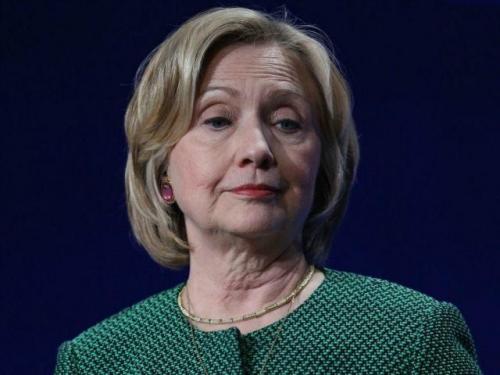
Sputnik – March 3, 2020
The almost six-year-long saga relates to Hillary Clinton’s use of a private email server for government business while secretary of state. Although the FBI investigation resulted in no charges, it still remains to be seen whether her unusual email practices were meant to avoid Freedom of Information Act requests.
A federal judge has ordered Hillary Clinton to provide a sworn deposition in person about her private email server.
The order, issued on Monday by US District Court Judge Royce Lamberth, grants the request of conservative watchdog Judicial Watch to depose Clinton about her correspondence and documents related to the 2012 attack on the US consulate in Benghazi, Libya.
The court also ordered the deposition of Clinton’s former chief of staff, Cheryl Mills, and two other State Department officials. It also allowed Judicial Watch to subpoena Google for documents and records associated with Clinton’s emails during her time at the State Department from 2009 to 2014.
Republican officials and members of Congress had accused then-Secretary of State Cinton of failing to prevent the attack, which left four Americans dead. She defended her handling of the episode.
Judicial Watch’s lawsuit seeking Benghazi-related records led to a scandal in 2015 when it helped discover that Clinton had repeatedly used her own private email server, rather than a government-issued one, during her time as Secretary of State. Records of official correspondence must be kept under federal law, and Clinton’s reliance on a private account sparked concerns that she was seeking to sidestep that requirement.
Clinton email controversy
The email scandal haunted Clinton’s presidential campaign and was weaponised against her by then-Republican candidate Donald Trump.
The FBI concluded in July 2016 that she had been “extremely careless in their handling of very sensitive, highly classified information”. Although Clinton insisted that she had never received or sent classified material, the FBI discovered that she had send out over a hundred emails that should have been regarded as classified.
Around 30,000 emails, deemed to be work-related, were provided to the State Department; her aides had also deleted around 32,000 emails, which they claimed to be non-work related, before any subpoenas were issued.
The bureau, however, recommended bringing no criminal charges against Clinton and referred the case to the Justice Department, which closed it with no charges. The FBI reopened its probe just days before the November election after new emails were discovered.
Questions still remain
“Judicial Watch argued that Secretary Clinton’s existing testimony has only scratched the surface of the inquiry into her motives for setting up and using a private server,” Judge Lamberth said in the 11-page ruling. “Secretary Clinton has repeatedly stated that convenience was the main reason for using a private server, but Judicial Watch justifiably seeks to explore that explanation further.”Clinton previously explained her use of a private server in a sworn written statement, but this deposition would be the first time she had to answer questions on the case in person.
“To argue that the Court now has enough information to determine whether [the] State [Department] conducted an adequate search is preposterous,” Lamberth wrote. “Even years after the FBI investigation, the slow trickle of new emails has yet to be explained.”
He stressed that some of the questions remain to date: “How did she arrive at her belief that her private server emails would be preserved by normal State Department processes for email retention? … Did she realise State was giving ‘no records’ responses to her FOIA requests for emails? … And why did she think that using a private server to conduct State Department business was permissible under the law in the first place?”
A Key FBI Photo Analysis Method Has Serious Flaws, Study Says
By Ryan Gabrielson | ProPublica | February 25, 2020
A study published this week casts doubt on the reliability of a technique the FBI Laboratory has used for decades to identify criminals by purporting to match their bluejeans with those photographed in surveillance images, potentially undermining evidence used to win numerous convictions.
The FBI’s method, used principally in bank robbery cases, matches denim pants by the light and dark patches along their seams, called wear marks. An FBI examiner’s scientific journal article on bluejeans identification in 1999 argued that wear marks create, effectively, a barcode that is unique on every pair. That article provided a legal foundation for the FBI to use an array of similar techniques to assert matches for clothes, vehicles, human faces and skin features.
After a ProPublica investigation raised questions about the technique, Hany Farid, a University of California, Berkeley, computer science professor and leading forensic image analyst, and Sophie Nightingale, a postdoctoral researcher in image science, tested the bureau’s method and found several serious flaws. Their study, published this week in the journal Proceedings of the National Academy of Sciences, is the first known independent research on the technique’s reliability, even though the courts have allowed bluejeans identifications as trial evidence for years.
The new study determined that seams on different pairs of bluejeans are often highly similar. Separately, multiple pictures of the same pant seam, taken under varying conditions, can appear starkly different from one another.
Taken together, the authors write, these deficiencies show “identification based on denim jeans should be used with extreme caution, if at all.”
The FBI declined to comment on the study.
In its articles last year, ProPublica revealed that FBI examiners have tied defendants to crimes in thousands of cases over the past half-century by using crime-scene pictures in unproven ways and, at times, have given jurors baseless statistics to say the risk of errors in their analyses was extremely low. In several cases, the FBI’s most prominent image examiner contradicted the original conclusions and results in his lab reports when presenting evidence to criminal courts, FBI records and legal filings show.
The FBI’s issues with image analysis echo earlier controversies over other forensic techniques. The bureau’s lab technicians and scientists had long testified in court that they could determine what fingertip left a print and which scalp grew a hair “to the exclusion of all others.” Research and exonerations by DNA analysis have repeatedly disproved those claims, and the U.S. Department of Justice no longer permits its forensic scientists to make such unequivocal statements.
ProPublica found that examiners on the Forensic Audio, Video and Image Analysis Unit, based at the FBI Lab in Quantico, Virginia, continue to use similarly flawed methods and to testify to the precision of these methods, according to a review of court records and examiners’ written reports and published articles. At ProPublica’s request, several statisticians and forensic science experts reviewed the unit’s methods. The experts identified numerous instances of examiners overstating their techniques’ precision and said some of their assertions defied logic.
In response to ProPublica’s reporting, Nightingale and Farid said they decided to test the FBI’s photo comparison techniques, starting with bluejeans identification.
The researchers purchased 100 pairs of jeans from local second-hand stores and collected images of more than 100 additional pairs of jeans through Mechanical Turk, the Amazon service that provides workers to complete tasks. The researchers used four high-resolution pictures of the seams on each pant leg.
They documented wear marks in the same manner FBI examiners do. But the researchers used what is known as signal analysis to digitally convert the patterns into numeric values and calculate how similar the jeans in different images were to each other.

Images of bluejeans seams showing wear collected by the researchers. (Courtesy of Sophie J. Nightingale and Hany Farid)
The authors were consistently able to mark the same features, suggesting the first step in the bureau’s process works as intended.
But then the analysis measured wear mark patterns and found the FBI Lab’s method struggled to match images of the same pant seam, which were frequently no more similar to one another than to seams from different pairs.
Nightingale and Farid hypothesize that denim jeans are too flexible, as the material easily stretches and shrinks, changing how wear marks appear, even moment to moment.
The technique failed to correctly match images of the same bluejeans in most cases unless they allowed for a high rate of false positives. When inaccurate matches were limited to one in 10,000, it identified less than 30% of the true matches.
Ultimately, comparing bluejeans seams is relatively useless, Farid said. “If you’re willing to tolerate that only one in four times this will be useful, OK, fine, use the analysis.”
Brandon Garrett, a Duke University law professor who studies the reliability of forensic science, agreed the study’s results cast serious doubt on the accuracy of jeans identifications, similar to the problems earlier research found in hair fiber and tool mark evidence.
“This is one of many studies uncovering non-trivial error rates for forensic techniques,” Garrett said. “Any lawyer or any judge in a case involving this discipline should, at minimum, hear about the error rates. Many people assume that these techniques are perfect.”
The error rates found in the study are probably the best-case scenario, the researchers said. Every image used in the study was taken in a controlled setting, under good lighting and with the pant seams flattened against a hard surface.
FBI examiners often analyze low-quality images from security cameras and “it is reasonable to expect that the reliability of this technique may degrade under real-world imaging conditions,” the authors wrote.
They argue that all image pattern analysis should undergo validation tests, performed by researchers independent of the FBI and other forensic laboratories. “Mistakes in these identifications are costly, resulting in an innocent person being accused or sentenced and a guilty person walking free.”
While further research is critical, Garrett argued that alone isn’t sufficient. He said this study and scores of others make clear the federal government should regulate the work of forensic scientists in the same manner they do clinical laboratories, setting rules and constantly testing their accuracy.
“We’ve known about the need for national regulation for over a decade now,” Garrett said, “and we haven’t seen it.”
Seth Rich, Julian Assange and Dana Rohrabacher – Will We Ever Know the Truth About the Stolen DNC Files?
Seth Rich, Julian Assange and Dana Rohrabacher. Credit: Public domain/Gage Skidmore/ Flickr
By Philip Giraldi | American Herald Tribune | February 29, 2020
The media is doing its best to make the story go away, but it seems to have a life of its own, possibly due to the fact that the accepted narrative about how Rich died makes no sense. In its Iatest manifestation, it provides an alternative explanation for just how the information from the Democratic National Committee (DNC) computer somehow made its way to Wikileaks. If you believe that Jeffrey Epstein committed suicide and that he was just a nasty pedophile rather than an Israeli intelligence agent, read no farther because you will not be interested in Rich. But if you appreciate that it was unlikely that the Russians were behind the stealing of the DNC information you will begin to understand that other interested players must have been at work.
For those who are not familiar with it, the backstory to the murder of apparently disgruntled Democratic National Committee staffer Seth Rich, who some days before may have been the leaker of that organization’s confidential emails to Wikileaks, suggests that a possibly motiveless crime might have been anything but. The Washington D.C. police investigated what they believed to be an attempted robbery gone bad but that theory fails to explain why Rich’s money, credit cards, cell phone and watch were not taken. Wikileaks has never confirmed that Rich was their source in the theft of the proprietary emails that had hitherto been blamed on Russia but it subsequently offered a $20,000 reward for information leading to resolution of the case and Julian Assange, perhaps tellingly, has never publicly clarified whether Rich was or was not one of his contacts, though there is at least one report that he confirmed the relationship during a private meeting.
Answers to the question who exactly stole the files from the DNC server and the emails from John Podesta have led to what has been called Russiagate, a tale that has been embroidered upon and which continues to resonate in American politics. At this point, all that is clearly known is that in the Summer of 2016 files and emails pertaining to the election were copied and then made their way to WikiLeaks, which published some of them at a time that was damaging to the Clinton campaign. Those who are blaming Russia believe that there was a hack of the Democratic National Committee (DNC) server and also of John Podesta’s emails that was carried out by a Russian surrogate or directly by Moscow’s military intelligence arm. They base their conclusion on a statement issued by the Department of Homeland Security on October 7, 2016, and on a longer assessment prepared by the Office of the Director of National Intelligence on January 6, 2017. Both government appraisals implied that there was a U.S. government intelligence agency consensus that there was a Russian hack, though they provided little in the way of actual evidence that that was the case and, in particular, failed to demonstrate how the information was obtained and what the chain of custody was as it moved from that point to the office of WikiLeaks. The January report was particularly criticized as unconvincing, rightly so, because the most important one of its three key contributors, the National Security Agency, had only moderate confidence in its conclusions, suggesting that whatever evidence existed was far from solid.
An alternative view that has been circulating for several years suggests that it was not a hack at all, that it was a deliberate whistleblower-style leak of information carried out by an as yet unknown party, possibly Rich, that may have been provided to WikiLeaks for possible political reasons, i.e. to express disgust with the DNC manipulation of the nominating process to damage Bernie Sanders and favor Hillary Clinton.
There are, of course, still other equally non-mainstream explanations for how the bundle of information got from point A to point B, including that the intrusion into the DNC server was carried out by the CIA which then made it look like it had been the Russians as perpetrators. And then there is the hybrid point of view, which is essentially that the Russians or a surrogate did indeed intrude into the DNC computers but it was all part of normal intelligence agency probing and did not lead to anything. Meanwhile and independently, someone else who had access to the server was downloading the information, which in some fashion made its way from there to WikiLeaks.
Both the hack vs. leak viewpoints have marshaled considerable technical analysis in the media to bolster their arguments, but the analysis suffers from the decidedly strange fact that the FBI never even examined the DNC servers that may have been involved. The hack school of thought has stressed that Russia had both the ability and motive to interfere in the election by exposing the stolen material while the leakers have recently asserted that the sheer volume of material downloaded indicates that something like a higher speed thumb drive was used, meaning that it had to be done by someone with actual physical direct access to the DNC system. Someone like Seth Rich.
What the many commentators on the DNC server issue choose to conclude is frequently shaped by their own broader political views, producing a result that favors one approach over another depending on how one feels about Trump or Clinton. Or the Russians. Perhaps it would be clarifying to regard the information obtained and transferred as a theft rather than either a hack or a leak since the two expressions have taken on a political meaning of their own in the Russiagate context. With all the posturing going on, the bottom line is that the American people and government have no idea who actually stole the material in question, though the Obama Administration was extraordinarily careless in its investigation and Russian President Vladimir Putin has generally speaking been blamed for what took place.
The story currently bouncing around the media concerns an offer allegedly made in 2017 by former Republican Congressman Dana Rohrabacher to imprisoned WikiLeaks founder Julian Assange. According to Assange’s lawyers, Rohrabacher offered a pardon from President Trump if Assange were to provide information that would attribute the theft or hack of the Democratic National Committee emails to someone other than the Russians. He was presumably referring to Seth Rich.
Assange did not accept the offer, but it should be noted that he has repeatedly stated in any event that he did not obtain the material from a Russian or Russian-linked source. In reality, he might not know the original source of the information. Since Rohrabacher’s original statement, both he and Trump have denied any suggestion that there was a firm offer with a quid pro quo for Assange. Trump claims to hardly know Rohrabacher and also asserts that he has never had a one-on-one meeting with him.
The U.S. media’s coverage of the story has emphasized that Assange’s cooperation would have helped to absolve Russia from the charge of having interfered decisively in the U.S. election, but the possible motive for doing so remains unclear. Russian-American relations are at their lowest point since the Cold War and that has largely been due to policies embraced by Donald Trump, to include the cancellation of START and medium range missile agreements. Trump has also approved NATO military maneuvers and exercises right up to the Russian border and has provided lethal weapons to Ukraine, something that his predecessor Barack Obama balked at. He has also openly confronted the Russians in Syria.
Given all of that back story, it would be odd to find Trump making an offer that focuses only on one issue and does not actually refute the broader claims of Russian interference, which are based on a number of pieces of admittedly often dubious evidence, not just the Clinton and Podesta emails. Which brings the tale back to Seth Rich. If Rich was indeed responsible for the theft of the information and was possibly killed for his treachery, it most materially impacts on the Democratic Party as it reminds everyone of what the Clintons and their allies are capable of. It will also serve as a warning of what might be coming at the Democratic National Convention in Milwaukee in July as the party establishment uses fair means or foul to stop Bernie Sanders. How this will all play out is anyone’s guess, but many of those who pause to observe the process will be thinking of Seth Rich.
Philip M. Giraldi is a former CIA counter-terrorism specialist and military intelligence officer who served nineteen years overseas in Turkey, Italy, Germany, and Spain. He was the CIA Chief of Base for the Barcelona Olympics in 1992 and was one of the first Americans to enter Afghanistan in December 2001. Phil is Executive Director of the Council for the National Interest, a Washington-based advocacy group that seeks to encourage and promote a U.S. foreign policy in the Middle East that is consistent with American values and interests.
Rohrabacher, Mueller, and Assange
By Daniel Lazare | Strategic Culture Foundation | February 26, 2020
Reports that Donald Trump offered to pardon WikiLeaks founder Julian Assange if he could prove that Russia didn’t hack Democratic National Committee caused a good-sized media storm when they came out in a British court last week. But then Dana Rohrabacher, the ex-US congressman supposedly serving as a go-between, issued an all-points denial, and the tempest blew over as fast as it arose.
But that doesn’t mean that the Russia-WikiLeaks story is kaput. To the contrary, it’s still brimming with unanswered questions no matter how much the corporate media wishes they would go away.
The most important question is the simplest: why didn’t Special Prosecutor Robert Mueller sit down with Julian Assange and ask him about the 20,000 DNC emails himself?
It’s not as if Assange would have said no. According to Craig Murray, the former British diplomat who serves as an unofficial WikiLeaks spokesman, he “was very willing to give evidence to Mueller, which could have been done by video-link, by interview in the [Ecuadorean] Embassy, or by written communication.” While Assange refuses as a matter of policy to disclose his sources, he had already made a partial exception in the case of the DNC by declaring, “Our source is not a state party.” Conceivably, he had more to say along such lines, information that Mueller might have then used to determine what role, if any, Russia played in the email release.
But he didn’t bother. Without making the slightest effort to get Assange’s side of the story, he assembled page after page of evidence purporting to show that WikiLeaks had collaborated with Russian intelligence in order to disseminate stolen material. Rather than an organization dedicated to exposing official secrets so that voters could learn what their government was really up to, WikiLeaks, in the eyes of the special prosecutor, was the opposite: an organization seeking to help Russia pull the wool over people’s eyes so they would vote for Donald Trump.
This is the super-sensational charge that has roiled US politics since 2016. Yet there is little to back it up.
Even though Mueller is confident that the Russian military intelligence agency known as the GRU routed the emails to WikiLeaks, for instance, he still hasn’t figured out how. “Both the GRU and WikiLeaks sought to hide their communications, which has limited the [Special Prosecutor’s] Office’s ability to collect all of the communications between them,” his report confesses on page 45. “The Office cannot rule out that stolen documents were transferred to WikiLeaks through intermediaries who visited during the summer of 2016,” it adds on page 47. “For example, public reporting identified Andrew Müller-Maguhn as a WikiLeaks associate who may have assisted with the transfer of these stolen documents to WikiLeaks.”
But Müller-Maguhn, a German cyber-expert who has worked with WikiLeaks for years, dismisses any such suggestion as “insane,” a claim the Mueller report makes no effort to rebut. The public is thus left with a blank where a dotted trail the GRU and WikiLeaks ought to be. Then there’s the issue of chronology. The Mueller report says that a GRU website known as DCLeaks.com reached out to WikiLeaks on June 14, 2016, with an offer of “sensitive information” related to Hillary Clinton. Considering that WikiLeaks would release a treasure trove of DNC emails on July 22, less than seven weeks later, the implication that the GRU was the source does not, at first glance, seem implausible.
But hold on. Although the report doesn’t mention it, Assange told a British TV station on June 12: “We have upcoming leaks in relation to Hillary Clinton, which is great.” Either he was amazingly clairvoyant in foreseeing an offer that the GRU would make two days hence or he got the material from someone else.
To be sure, the Mueller report adds that an alleged Russian intelligence “cutout” known as Guccifer 2.0 sent WikiLeaks an encrypted data file on July 14, which is to say eight days prior to publication. But since WikiLeaks didn’t confirm opening the file until July 18, this means that it would have had just four days to vet thousands of emails and other documents to insure they were genuine and unaltered. If just one had turned out to be doctored, its hard-earned reputation for accuracy would have been in shreds. So the review process had to be painstaking and thorough, and four days would not be remotely enough time.
Nothing about the Mueller account – timing, plausibility, the crucial question of how the stolen DNC emails made their way to WikiLeaks – adds up. Yet Mueller went public with it regardless. Which leads to another question: why?
One reason is because he knew he could get away with it, at least temporarily, since it was clear that corporate media howling for Trump’s scalp would accept whatever he put out as gospel. But another is that he’s a dutiful servant of the ruling class. After all, Mueller is the person who, as FBI director from 2001 to 2013, spent much of his time covering up Saudi Arabia’s not-inconsiderable role in 9/11, as investigative reporter James Ridgeway has pointed out on a number of occasions. Mueller is also the man who assured the Senate Intelligence Committee in February 2003 that “Iraq’s WMD program poses a clear threat to our national security,” a claim that the upcoming Iraqi invasion would reveal as fraudulent to the core.
Toeing the official line is therefore more important in his book than telling the truth. This is why he didn’t sit down with Assange – because he was afraid of what he might tell him. In January 2017, the CIA, NSA, and FBI officially reported that “Russian President Vladimir Putin ordered an influence campaign in 2016” and “that Russian military intelligence … used the Guccifer 2.0 persona and DCLeaks.com” to relay stolen computer data to WikiLeaks. Four months later, then-CIA Director Mike Pompeo went even farther by describing WikiLeaks as “a non-state hostile intelligence service often abetted by state actors like Russia.”
This was the official narrative that Mueller felt dutybound to defend when he was appointed special prosecutor a month after Pompeo made his remarks. Even though the CIA account would not hold up to close inspection, his self-perceived mission was to disregard certain facts and cherry-pick others in order to convince the public that it was true.
This leads us to a third question: how do Americans get themselves out of the hole that Mueller has dug for them? Not only does Assange face 170 years in prison for espionage, but the impact in terms of freedom of the press will be devastating. The prosecution’s case rests on an explosive theory that receiving inside information is effectively the same thing as supplying it. Just as a fence encourages people to steal, the idea is that a journalist encourages insiders to hack computers and rifle through file cabinets by offering to publish what they come up with. If upheld, it means that journalists would have to think twice before even talking to an inside for fear of incurring a similar penalty. Armed with such a legal instrument, Richard Nixon would have had no trouble dealing with Bob Woodward and Carl Bernstein. He would merely have charged them with espionage and locked them away until the break-in was forgotten.
If Assange goes down, in other words, democracy will take a major hit. Yet by labeling him a Russian agent, Mueller has seen to it that liberals are as unsympathetic to his plight as the most militant conservative, if not more so. He transformed Assange into the perfect scapegoat for Democrats and Russians to bash with bipartisan glee.
This is why a defense based purely on the First Amendment will not do. Rather, it’s important to deal with the charge of Russian collaboration that – completely unjustly – has turned him into an object of public opprobrium. It’s time to give the Mueller report the scrutiny it deserves before its collective falsehoods undermine democracy even more than they already have.
Blago Is Free
By Llewellyn H. Rockwell, Jr. | LewRockwell.com | February 20, 2020
On Tuesday, February 18, President Trump with excellent judgment commuted the 14 year prison sentence of former Illinois Governor Rod Blagojevich, aka “Blago.”
“We have commuted the sentence of Rod Blagojevich,” Trump said. “He’ll be able to go back home with his family after serving eight years in jail. That was a tremendously powerful, ridiculous sentence in my opinion. And in the opinion of many others.”
The President thus brought to an end a disgraceful episode in American politics. After Barack Obama was elected President in 2008, his seat as Senator from Illinois became vacant. Blago was charged with trying to sell the seat.
If in fact Blago tried to sell the seat, he was just practicing the dirty, rotten business of politics in the normal crooked fashion for Chicago and America. But out of all the corrupt pols, why did a federal prosecutor target a sitting governor, wiretap him, not allow him to use the wiretaps to defend himself, and send him to jail for 14 years? His real “crime”, in the eyes of the monstrous Obama and his henchman Rahm Emmanuel, was that he refused to appoint the man Obama picked as his successor.
The indictment against Blago was unconstitutional. As the distinguished historian and authority on the Constitution Kevin Gutzman pointed out in an article written for LRC on January 6, 2009, “Interestingly, one might note that the statute Fitzgerald is enforcing against the governor bases Congress’s claim of power to criminalize corruption in state office on the Constitution’s Commerce Clause. One really wonders at the idea that conspiring to sell Jesse Jackson, Jr. a Senate seat is interstate commerce. No one takes this idea seriously; rather, it is based on a common lawyers’ corruption — yes, corruption — of language. On simple federal arrogation of state power. This corruption has far more far-reaching consequences than anything Blagojevich is accused of having done.”
The indictment and trial were gross miscarriages of justice, as President Trump has said. Harvey Silverglate in an article written in 2011 gave the best analysis of the whole rotten business: “The most controversial charge Blagojevich faced was that he planned to sell Barack Obama’s US Senate seat. But Fitzgerald decided to come out swinging, terminated the wiretaps on Blagojevich’s home and office, arrested the then-sitting governor, held a sensational press conference, and called it a wrap before this alleged sale would have even taken place. Fitzgerald was obviously unwilling to wait out the unfolding situation to see if the governor was really serious about “selling” the seat to the highest bidder.
Had Blagojevich actually followed through with the sale of a Senate seat, Fitzgerald’s heavy-handed prosecutorial approach might have been justified. But in light of the fact that no seat was sold, and that these appointments are regularly used for political benefit, the reasonable doubt that a crime was actually committed would appear to be overwhelming. For a US Attorney who is known for “crossing his T’s and dotting his I’s,” you have to wonder why Fitzgerald didn’t spring into action after the sale of the seat, once the dirty deal was done. Blagojevich’s own writing may give us a clue. Blagojevich claims in his memoir, “The Governor,” that the goal of the Senate appointment was to get a political opponent out of the way, not to sell the seat for cash. If this scenario is to be believed, then Fitzgerald went forward with the case when he did because, had he waited until after the seat was filled, there would not have been a case since the seat would have been awarded not for cash, but for quite traditional political advantage.
One of the most shocking, and seemingly damning, sound bites that came from the wiretaps was Blagojevich’s assertion that Obama’s Senate seat was “a [expletive] valuable thing. You don’t just give it away for nothing.” A US Attorney whose last few cases ended unfavorably might be interested in spinning this quote to seem as though a cash transaction was being arranged in exchange for the Senate seat. However, if Blagojevich were looking to use the seat for his political benefit, then his statement would be crass, but would also be evidence that he was operating within the parameters of the law. The type of political maneuvering engaged in by the then-governor may seem to the average citizen (or juror, for that matter), to be less than wholesome, perhaps even a bit sneaky, but if every unwholesome or sneaky maneuver were a crime, we would not be able to build the prisons quickly enough to meet demand.”
Why didn’t Fitzgerald wait? Joe Hall, writing on February 19 in Gateway Pundit has a good explanation. He says that Blago was set up by Mueller, Comey, and the Deep State Gang and that President Trump’s release of Blago may be intended to send the Gang the message that he will fight them. Hall cites investigative reporter Marty Waters, who said last August “that the Deep State, led by Comey and Mueller, did the same thing with the fraudulent Mueller investigation sham as they did in the past. They create distraction, diversion and disinformation. In the early 2000’s they created Plamegate to distract and divert from the billions lost in Iraq and the weapons of mass destruction narrative that got the US into the war. In the mid-2000’s, they created the Rezco/Blagogate scandals to cover up for Obama’s corrupt actions early in his administration and while in the US Senate. The Mueller investigation distracted from the many crimes involving Obama and the Clintons and was in the same mold as the prior sham investigations.”
Hall sums up and concludes: “Of course Mueller was the Head of the FBI throughout most of the 2000’s and before Comey took over the now corrupted institution. Also, Comey claimed Fitzgerald was his attorney after it was suspected that Comey shared classified information with Fitzgerald during the Russian hoax scandal.”
After Trump commuted Blago’s sentence, Governor of Illinois J.B. Pritzker condemned the President’s decision. He said; “Illinoisans have endured far too much corruption, and we must send a message to politicians that corrupt practices will no longer be tolerated. President Trump has abused his pardon power in inexplicable ways to reward his friends and condone corruption, and I deeply believe this pardon sends the wrong message at the wrong time.”
Pritzker’s self-righteous moralizing is ironic. According to a story in the Chicago Tribune published May 31, 2017, “Pritzker, a billionaire businessman with political ambitions, told Illinois Gov. Rod Blagojevich he was “really not that interested” in the US Senate seat the governor was dealing in late 2008. Instead, Pritzker offered his own idea: Would Blagojevich make him Illinois treasurer?”
Blago is no angel, but I can’t help liking him. I admire his spirit. He refused to cave to Obama and the higher-ups. Now that he is out, he is free to tell us where the bodies are buried. You can be sure he knows a lot and with the commutation, the Feds can’t shut him up anymore. Blago has Obama on the ropes, and fortunately for those of us who care about truth, he is a skilled boxing champ.
Andrew McCabe’s case shows hypocrisy of Democrats claiming ‘No one is above the law’
By Nebojsa Malic | RT | February 15, 2020
After months of hearing that President Donald Trump must be impeached because “no one is above the law,” America found out that this talking point doesn’t actually apply to Democrats such as ex-FBI deputy director Andy McCabe.
As his lawyers triumphantly announced on Friday, the Department of Justice decided not to press criminal charges against McCabe “after careful consideration” of the inspector-general’s report that said he lied to investigators and leaked to the media.
“Based on the totality of the circumstances and all of the information known to the Government at this time, we consider the matter closed,” said the DOJ letter. It sent waves of glee through the ‘Resistance’ establishment, which set up and propagated for years the ‘Russiagate’ hysteria aimed at removing Trump from office.
One of the people who cheered “Andy” was Lisa Page, the FBI lawyer who famously discussed an “insurance policy” in case Trump gets elected in McCabe’s office with agent Peter Strzok, with whom she was carrying on an extramarital affair. Strzok, Page and McCabe’s fingerprints are all over the FISA scandal – in which the FBI spied on Trump’s campaign, fishing for dirt to tie him to Russia.
Though he was fired from the FBI, McCabe was hired by CNN back in August, joining former CIA Director John Brennan and former Director of National Intelligence James Clapper – two other ‘Russiagate’ pushers – in the lucrative land of political punditry.
In fact, precisely zero people involved with setting up and conducting the three-year “witch hunt” of Trump – unprecedented in the history of the American republic, by any measure – have suffered any adverse consequences for it. Even Michael Avenatti – the sleazy lawyer who has apparently defrauded and embezzled multiple clients in pursuit of political ambition – has only been convicted of attempting to extort Nike, rather than, say, lying to the Senate during the confirmation of Justice Kavanaugh.
Compare that to how anyone even remotely associated with Trump has been treated by the long arm of the law. Former campaign manager Paul Manafort was imprisoned over matters entirely unrelated to the 2016 election. Trump’s first national security adviser, General Michael Flynn, was fired after just two weeks on the job and bullied into pleading guilty for “lying to FBI agents” (one of whom turned out to be Strzok) – which he is now contesting. Campaign aide George Papadopoulos went to jail because he made a remark about Hillary Clinton’s private email server that was used to claim Trump was “colluding” with Russia. Political operative Roger Stone is currently facing the possibility of dying in prison for tripping into a perjury trap.
Trump has done little or nothing to help any of his former staff or associates. Admittedly, Democrats and the media both shrieked “abuse of power” when he merely tweeted about Stone’s proposed sentence being too harsh – showing once again that it’s never about the what, only about the who/whom.
Having come to Washington on a promise to “drain the swamp,” Trump has instead meekly submitted to the very same swamp’s endless lawfare. Yet that kind of restraint has not stopped his critics from declaring him a fascist, tyrant and dictator. In fact, the more he let them off the hook, the more they shrieked about how he seeks to subvert justice!
The case of Andrew McCabe – and his boss Jim Comey before him – is the perfect illustration that there are people effectively above the law. That there are in fact two sets of laws in America: one for Trump’s enemies, who have gotten away with a coup, and another for the “deplorables” who got punished for supporting him.
Justice must not only be done, it must be seen to be done. There is a point at which restraint turns into stupid magnanimity.
On more than one occasion, Trump has used ‘Game of Thrones’ memes. If he actually watched the show from the beginning, he might remember that Ned Stark’s naivete about the impartiality of King’s Landing law enforcement ended with his head on a pike outside the Red Keep.
Nebojsa Malic is a Serbian-American journalist, blogger and translator, who wrote a regular column for Antiwar.com from 2000 to 2015, and is now senior writer at RT. Follow him on Twitter @NebojsaMalic
Why Dems, MSM Ignore FBI Whistleblower’s Revelations on the Clintons’ Links to the Uranium One Deal
By Ekaterina Blinova – Sputnik – 28.01.2020
While US lawmakers and media pundits are busy discussing Donald Trump’s impeachment process, the Clinton Foundation’s alleged misdeeds, including its supposed role in the Uranium One deal, remain neglected, says Wall Street analyst Charles Ortel, referring to a mid-January public interview with an FBI whistleblower.
On 15 January, FBI whistleblower Nate Cain told OAN’s investigative journalist Richard Pollock that he possesses classified documents implicating former Secretary of State Hillary Clinton and the Clinton Foundation with regard to the Uranium One deal. However, he added that he would never release them unless he receives approval from the appropriate federal authorities.
According to Cain, who joined the FBI in 2016, he overheard major concerns voiced by top brass FBI officials who purportedly came across damning evidence about the Clinton Foundation’s role in the Uranium One deal. The whistleblower said that having reviewed the materials, he had been sure that the Clintons would be indicted.
However, the case was apparently swept under the rug after then-FBI chief James Comey recommended no criminal charges for Hillary Clinton’s mishandling of classified emails in 2016.
Being a protected whistleblower under US law, Cain delivered 450 pages of documents concerning the deal to Inspector General Michael E. Horowitz in June 2018. However, in November, 16 FBI agents raided Cain’s Maryland home, accused him of possessing “stolen federal property” and ignored his argument about whistleblower protection, as The Daily Caller revealed on 29 November 2018.
Uranium One Case Remains Undeservingly Neglected
According to Charles Ortel, a Wall Street analyst and investigative journalist who has been looking into the Clinton Foundation’s alleged fraud for the past few years, the Uranium One issue still remains undeservedly neglected both by the American authorities and media pundits.
“It strikes me that President Trump needs to make sure that his senior team finally addresses long-unanswered questions concerning Uranium One anyway,” he underscores.
In his interview with OAN, Cain asserted that former FBI chief James Comey had been aware about the agency’s concerns with regard to the deal. One might ask how this happened that the former agency’s boss “overlooked” the supposed “damning evidence”.
“This question needs to be considered alongside questions about others who tried to inform James Comey concerning suspected mishandling by Hillary Clinton of classified information,” the Wall Street analyst notes.
He recalls that Cain wasn’t the only one whistleblower who stepped forward to shed light on the Clinton Foundation’s alleged role in the uranium deal: another one was William Campbell and his claims “to date, do not seem to have been considered carefully enough”, according to the analyst.
On 7 February 2018, Republican and Democratic staff from the Senate Committee on the Judiciary, House Committee on Oversight and Government Reform, and House Permanent Select Committee on Intelligence interviewed Campbell. However, the summary of the interview released on 8 March 2018 said that Campbell “provided no evidence” of alleged quid pro quo involving Hillary Clinton or the Clinton Foundation in arranging and approving the Uranium One deal.
“It certainly seems as if Comey was determined not to examine core issues involving mishandling – one imagines that one reason for this could be that numerous senior Obama administration officials might be implicated in potential wrongdoing, and that these officials were determined and remain determined not to let the truth out in advance of the pivotal election of 2016 and the looming one this year,” Ortel suggests.
The Wall Street analyst presumes that it was no coincidence that the Uranium One case was buried when Comey announced that he would not recommend charging Hillary Clinton over mishandling classified government emails.
“I do not believe in coincidences when it comes to this matter,” Ortel says. “More likely, President Obama’s Justice Department had made decisions to bottle up Comey’s ‘investigation’ and remained ‘all-in’ to support Hillary Clinton through the 2016 election contest.”
Whistleblowers & Double Standard Approach
The Wall Street analyst also emphasises the apparent double standard approach exercised by the FBI and DoJ towards Cain, Campbell and the unnamed whistleblower whose complaint to IG Michael K. Atkinson became the trigger for the impeachment process against Donald Trump.
According to Ortel, one can hardly “reconcile the protection given to the whistleblower who even now cannot be named (in theory) with the aggressive tactics allegedly taken by elements within the US government against Campbell and Cain”.
“It certainly seems to me that the aggressive handling of the ‘impeachment case’ by Democrats in the House and Senate and mainstream media stands in stark contrast to the lack of interest by too many in understanding what really has been going in and around the Clinton Foundation, including with Uranium One and other projects where Clinton donors, and possibly the Clinton family, may have derived personal benefits in projects where US government approvals and/or financial support were involved,” the investigative journalist concludes.
The controversy over the Uranium One deal, which envisaged a partial sale of Canadian company Uranium One to Tenex, a subsidiary of Russia’s nuclear company Rosatom which was approved by the Obama administration in 2011, erupted ahead of the 2016 elections. In his 5 May 2015 book, “Clinton Cash” American author Peter Schweitzer wrote that at the time the uranium deal was arranged, former US President Bill Clinton received thousands in speaking fees in Russia; the Clinton Foundation got substantive donations from firms interested in the deal; while then Secretary of State Hillary Clinton oversaw the Committee on Foreign Investment in the United States. However, Hillary Clinton and Obama administration officials denied the accusations, insisting that neither Russians nor the foundation’s sponsors had been involved in any wrongdoing and that at the time there was no security reason to axe the deal.
Featured Video

Trita Parsi: Israel Set a Trap for Total War in the Region
or go to
Aletho News Archives – Video-Images
From the Archive
Zionism’s Violent Legacy
By Donald Neff | Washington Report On Middle East Affairs | January 1996
On January 4, 1948, Jewish terrorists drove a truck loaded with explosives into the center of the all Arab city of Jaffa and detonated it, killing 26 and wounding around 100 Palestinian men, women and children.[1] The attack was the work of the Irgun Zvai Leumi – the “National Military Organization,” also known by the Hebrew letters Etzel – the largest Jewish terrorist group in Palestine. The Irgun was headed by Revisionist Zionist Menachem Begin and had been killing and maiming Arabs, Britons and even Jews for the previous ten years in its efforts to establish a Jewish state.
This terror campaign meant that at the core of Revisionist Zionism there existed a philosophical embrace of violence. … continue
Blog Roll
 Aletho News
- Trita Parsi: Israel Set a Trap for Total War in the Region
- Trump’s Iran war is on an Israeli leash
- Saudi oil boss issues global supply warning
- Riyadh Says Its Oil System Is Intact. The Numbers Say Otherwise.
- Trump and Netanyahu Want to “Finish the Job” on Iran
- US ‘one-sided dictation’ not Iran’s beliefs makes rational talks impossible: Baghaei
- Iran’s Next Strike May Not Explode. It Could Shut You Down /Col Doug Macgregor
- Iran: US political targets legitimate if assassinations return
- Iraq shuts key border crossing with Iran under US pressure: Report
- Undersea Internet cables could be targeted in retaliation for attacks on Iran: IRGC deputy chief
- If Americans Knew
- The Israel Lobby’s Changing Fortunes
- AIPAC has become such a political liability that it’s shifting to a more “nimble” approach to buying politicians
- At least 160 Israeli settler attacks in 2 weeks
- Will Gaza’s Ancient Christian Community Disappear Forever?
- Israel’s vision of regional security rests on keeping Arab states weak
- Heidi Levine recounts how Palestinian youths helped save her in settler attack
- DAILY UPDATE: Latest essential news on Palestine, Israel, & region
- Trump’s Intensifying Sabotage of the ICC, for Israel’s Sake
- Israeli military detain US and UK volunteers in West Bank including Democratic NY politician Brad Lander
- Americans at National Conservatism Conference held in Israel this year criticize Israel
- No Tricks Zone
- E-Cars Reduce CO2 Emissions By Only 41% Compared To Internal Combustion Engine Vehicles
- Predictions Made By Renowned Climate Professor Over Past Decades Have Been Proven To Be Poor
- New Study Suggests Large Regions Of The Pacific Ocean Have Been Cooling For The Last 80 Years
- Germany’s Green Energy Debacle: High Energy Costs Force Kahla Porzellan to Close After 182 Years!
- New Study: 50 Years Of The Most Aggressive ‘Net Zero’ Policies Can Only Affect The Global Climate By 0.03°C
- US September “Heat” Was No Record…Many Records Set Decades Ago
- Latest European Green Energy Debacle; Portugal’s Largest Flagship Solar Park Insolvent!
- Green Energy Debacle: German Expert Professor Fritz Vahrenholt Warns Of Severe Economic And Social Consequences
- Two More Paleo Reconstructions Affirm Meters-Higher Sea Levels Across Ireland, Brazil 7000-6000 Years Ago
- New Study: Earth And Venus Surface Warmth Largely Explained By Convection And Lapse Rate, Not CO2 Or Radiation

