There appeared last week an interesting article about Soviet and American intelligence operations centered on San Francisco during the 1970s and 1980s, where Moscow had a very active KGB station that was focused on obtaining Silicon Valley generated high tech information. The piece is entitled “The Soviets wanted to infiltrate the Reagan camp. So, the CIA recruited a businessman to bait them.” The author of the article is Zach Dorfman, who describes himself as a senior fellow at the New York City based Carnegie Council for Ethics in International Affairs. The Council is a little known but mainstream organization that seeks to “…enlarge the audience for the simple but powerful message that ethics matter, regardless of place, origin, or belief. Since our founding by Andrew Carnegie a century ago, we have been one of the world’s top creators of nonpartisan educational resources on international ethics…”
Countering technology transfer, as it was referred to back in the 1970s, was a big deal for western intelligence agencies, driven by concern that the Soviet Union would be able to steal western technology and use it to upgrade its weapon systems as well as its military related infrastructures. A number of European CIA stations, including Germany, actually had tech transfer as the highest priority in their operating directives, meaning that it was considered to be more important than recruiting Soviet officials to learn what the Kremlin was planning to do about recurrent areas of friction like the controversial stationing of intermediate range ballistic missiles in Europe.
Given the still ongoing dissection of the events surrounding the 2016 election, the title of the Dorfman article was intriguing, suggesting that the Soviets and now the Russians have been attempting to infiltrate America’s political parties for over forty years. But, like the endless Robert Mueller investigation, is it actually true or is it a contrivance that is useful for those who want to continue to depict the Kremlin’s activities in the most negative possible light?
The intelligence war between the Soviets and the United States at the midpoint in the Cold War was certainly multifaceted and fraught with real danger as “mutual assured destruction” by the two great nuclear powers was by no means a notion empty of meaning. Looking back on the GOP nomination battle in 1976, one might reasonably recall that Ronald Reagan was a bit of an anomaly, a potentially dangerous hardliner with sometimes quixotic opinions, not unlike Donald Trump. His views on the Soviet Union were largely unknown apart from the usual bromides and the KGB would have had as a high priority the collection of information that would illuminate the somewhat outside the norm Hollywood actor turned politician.
All of that given, it would appear that the headline to the Dorfman article is not supported by evidence presented in the text. The narrative describes how an American businessman was used as an access agent to two Soviet intelligence officers beginning in 1975. One of the Russians, Yuri Pavlov, was under diplomatic cover at the Soviet San Francisco Consulate. The American businessman, John Greenagel ran a public relations firm in the city and had a relationship with the Reagan campaign that predated Reagan’s first run for the Republican nomination in 1975-6. He was also reporting to the CIA about the contact with the Russian, clearly with the objective of developing personal insights into Pavlov’s personality and character to permit an eventual recruitment pitch by an Agency officer.
In the article, a former FBI counter-terrorism officer concedes that Pavlov “wanted to learn about the American political system, and what people were thinking at the time,” and he did so openly by asking questions at diplomatic receptions and cocktail parties he was invited to. For example, over lunch with the American Greenagel, Pavlov asked questions about the former California governor: “He asked, ‘Is Reagan a warmonger? Why does he want military superiority? Why doesn’t he support détente?’”
It was all something that diplomats as well as spies and journalists normally do and it did not include any attempt by Pavlov to recruit Greenagel or anyone else to collect specific information from individuals working on the Reagan campaign. On the contrary, to set the hook for a recruitment pitch of Pavlov by CIA, it was Greenagel who provided the Russian with expensive gifts, including a designer suit and handfuls of $100 bills “for expenses.”
The article concludes “In the cat and mouse game of recruiting Cold War spies, it’s hard to say who came out ahead. What is perhaps most striking about Pavlov’s efforts to develop contacts in the Reagan camp was, in fact, how fruitless they seemed in the end. Some of the academics Pavlov targeted did indeed end up working in presidential administrations, recalls Kinane, though Pavlov failed to recruit any of them.” Nor was Pavlov ever recruited, or even pitched, by CIA. So did the KGB want to “infiltrate the Reagan camp” suggesting that 2016 was no anomaly? The answer would have to be “no,” or at least that if they wanted to do so they didn’t try very hard and any comparison to the current state of Russian-American relations as seen through allegations of mutual electoral interference is more than a bit of a stretch.
So, the Dorfman article’s headlined political message about Moscow’s alleged interference in US politics is not supported by the story. But Dorfman or his editor gets in the last word coming from the former FBI counter-intelligence officer, even though the evidence does not support the claim: “People think this is new. This isn’t new. The Russians have been doing this stuff for 40 or 50 years. It’s news now because they’ve been so successful. You’ve got to hand it to the Russians: they know what they’re doing. They’re more and more sophisticated; they’ve learned an awful lot. Now they get somebody like Donald Trump Jr. meeting with them — they’re killing them — because Americans like Trump Jr. don’t know what they’re doing.” Nor does the FBI, apparently.
But not so threatened, it appears, by our mental qualities.
Joseph McCarthy, making much of (and perhaps improving upon) his war record, was elected a US Senator in 1946. After three years in which he attracted little attention, he rose to national prominence with a speech in February 1950 in which he claimed to have a list of Communist Party members active in the US State Department. There is still debate today about the precise numbers he claimed and to what degree he was used by other actors. But he realised he was on to a good thing (he secured re-election in 1952) and kept “revealing” communists in the government and elsewhere. Televised hearings showed his vituperative and erratic nature; the Senate censured him in 1954 and he faded away. “McCarthyism” has become a doubleplusungood swearword so stripped of meaning that it can be shaped into mud to be thrown at Trump.
But – and a very big but – whatever McCarthy’s motivation or cynicism, however unpleasant, shifty and unshaven he looked on TV, there was a reality behind what he was saying.
ITEM. August 1945. Elizabeth Bentley approaches the FBI and eventually reveals the spying activities of the CPUSA.
ITEM. September 1945. Igor Guzenko defects in Ottawa, revealing the extent of spying on its allies by the USSR. Thanks to his information Alan Nunn May, part of the British contribution to the atomic bomb project, is arrested March 1946. A number of Canadians are arrested – including the MP Fred Rose.
ITEM. August 1948. Whittaker Chambers, a CPUSA member disgusted by the Hitler-Stalin pact, in testimony to HUAC, names Alger Hiss, a senior State Department official, as a CPUSA agent.
ITEM. Beginning in summer 1951 with the defection of Burgess and Maclean and only ending with the discovery of the last member in 1979, the revelation of extensive penetration by the Soviets of British intelligence – the Cambridge Five – caused continuing investigations and suspicions which tied up the CIA and SIS for years.
In conclusion, whatever you think of the man himself, “McCarthyism” was based on reality: there was extensive Soviet penetration in the USA and elsewhere.
+ + +
And today? The equivalent of McCarthy’s speech are the Clinton campaign’s excuses for losing.
We have 17 intelligence agencies, civilian and military, who have all concluded that these espionage attacks, these cyberattacks, come from the highest levels of the Kremlin, and they are designed to influence our election. (Hillary Clinton, 19 October 2016.)
That strategy had been set within twenty-four hours of her concession speech. [9 November 2016] Mook and Podesta assembled her communications team at the Brooklyn headquarters to engineer the case that the election wasn’t entirely on the up-and-up. For a couple of hours, with Shake Shack containers littering the room, they went over the script they would pitch to the press and the public. Already, Russian hacking was the centerpiece of the argument. (From Shattered, quoted here.)
After the story had been happily re-typed by the complaisant media, the “intelligence community” weighed in with two fatuous “intelligence assessments”:
This report is provided “as is” for informational purposes only. The Department of Homeland Security (DHS) does not provide any warranties of any kind regarding any information contained within.
ITEM. The DNI report of 6 January 2017 crazily devoted nearly half its space to a four-year old rant about RT. But the real clue that the report was nonsense was its equally stunning disclaimer:
We also assess Putin and the Russian Government aspired to help President-elect Trump’s election chances when possible by discrediting Secretary Clinton and publicly contrasting her unfavorably to him. All three agencies agree with this judgment. CIA and FBI have high confidence in this judgment; NSA has moderate confidence.
In other words, DHS told us to ignore its report and the one agency in the US intelligence structure that would actually know who hacked what refused to sign its name to it.
And not “all 17”, only three. Then – the final nail – not really the three but only “hand-picked” people from them. Eventually, the NYT issued a correction. (“Correction” being presstitute-speak for “you caught us”.)
The assessment was made by four intelligence agencies — the Office of the Director of National Intelligence, the Central Intelligence Agency, the Federal Bureau of Investigation and the National Security Agency. The assessment was not approved by all 17 organizations in the American intelligence community. (New York Times correction, 29 June 2017)
And that was the beginning of the story that has consumed so much effort, done so much damage, metastasised so far and continues today. No Elizabeth Bentley, no atomic spies, no Venona. Only 1) an excuse for losing, 2) “hand-picked” writers, 3) forced plea deals and 4) the pompous indictment of a Russian click bait farm.
One can only hope that the conspiracy will finally be so revealed and so proven and so obvious that even the consumers of CNN, MSNBC, The Guardian, the NYT and the rest will understand what was really going on. Then, maybe, we can hope to edge away from the highly dangerous anti-Russia hysteria.
McCarthyism was based on reality, today’s recurrence is not. A significant difference indeed.
+ + +
Lavrenti Beria is reputed to have said “give me the man, and I will give you the crime”. And sleep depravation and teeth and blood on the floor delivered the confession. How little he understood his craft. Maria Butina, an innocent if naïve Russian girl who liked the Second Amendment, arrested, stuck in solitary, on suicide watch (sleep deprivation – Beria knew about that), innumerable charges, after months, makes a plea deal. Michael Flynn, innumerable charges, savings burnt up, makes a plea deal. Paul Manafort, early morning SWAT attack (Beria recognises that), innumerable charges, makes a plea deal. Cohen, Papadopoulos and so on. That’s the American justice system – not Stalin’s “beat, beat and beat again” – just innumerable charges, bankruptcy by lawyers’ fees, endless interrogations, SWAT raids. Then the plea deal. Beria was an amateur.
So the Marx brothers are both wrong: the second time it’s a much more dangerous tragedy and, when you actually see it in reality, reason gone mad isn’t actually very funny.
How ironic that the U.S. government’s war on ISIS, the group brought into existence by the U.S. national-security establishment’s war of aggression on Iraq, would provide insight into the U.S. national-security’s establishment’s relationship with Lee Harvey Oswald, the accused assassin of President John F. Kennedy some 55 years ago.
As I emphasized in my 29-part video series on the JFK assassination and as I am emphasizing in my multipart series on the same subject in FFF’s monthly journal Future of Freedom, circumstantial evidence is just as valid as direct evidence. Equally important, sometimes we can glean just as much from what government officials fail to do as from what they do.
Consider the case of Hoda Muthana, a 23-year-old American citizen who traveled to Syria four years ago and became the wife of a member of ISIS. She had a baby and now wants to return to the United States.
It’s not going to happen if President Trump gets his way. He is steadfastly refusing to permit Muthana to return to the United States. As far as he is concerned, she is a traitor for having left the United States to join up with ISIS, which became an official enemy of the U.S. Empire after the U.S. conquest of Iraq.
What about Muthana’s American citizenry? Don’t citizens have a right to return to their home country regardless of what they have done abroad, even if they face the prospect of criminal charges? U.S. officials are questioning her citizenship, claiming that her father was a foreign diplomat residing in the United States when she was born, which would disqualify her from U.S. citizenship even though she was born in the United States. Her father denies that, saying that he had resigned his diplomatic position by the time she was born. According to an article in the New York Times, Seamus Hughes, the deputy director of George Washington Program on Extremism, “said the United States had an obligation to bring her home — ‘albeit in handcuffs.’”
The citizenship issue is now in court, but that issue is besides the point for purposes of this article. The point is that Trump and his national-security cohorts do not want this woman back in the United States. They want her to stay away. And they are fighting as hard as they can to keep her away. Moreover, if she is permitted back, she will undoubtedly return “in handcuffs.”
Muthana isn’t the only one in this situation. 19-year-old Shamima Begum is a British citizen who also traveled to Syria and joined up with ISIS. She has a baby boy and now wants to return to Britain.
The British government, which partnered with the U.S. government’s war of aggression on Iraq, is opposing Begum’s return to her home country as ferociously as the U.S. government is opposing Muthana’s return. Why, the British government has even stripped her of her British citizenship.
Some 59 Americans are believed to have joined ISIS. Even if any of them are permitted to return to the United States, they will almost certainly face criminal charges, either in U.S. district court or the military’s criminal “justice” system at Guantanamo Bay. According to an article on CNN.com, thirteen of them, “including a Texas man just last month, have faced terror-related charges after being returned to the US, according to research from the George Washington University Program on Extremism.”
None of this should surprise us. That’s how we would expect U.S. officials to behave given these facts and circumstances. We would be surprised if they instead took the opposite approach — one of forgiveness and red-carpet reentry into the United States.
Which brings us to Lee Harvey Oswald, the former U.S. Marine who U.S. officials have always said was a “lone nut” communist who killed President Kennedy.
How does Oswald’s case relate to those of the Americans who joined up with ISIS? The U.S. government’s treatment of Oswald, whose conduct was arguably as bad if not worse than that of the ISIS Americans, was exactly the opposite of how they are treating the ISIS Americans.
In fact, as I have noted in my two series, there are but two reasonable possibilities: Either Oswald was a Cold War miracle story or he was what many assassination researchers have long contended: a U.S. intelligence agent whose official cover was a communist.
Don’t forget the official narrative. It begins with a supposed communist joining the U.S. Marine Corps. How many communists have you ever heard of who have joined the U.S. Marines? Why would a genuine communist join the Marines? The Marines hate communists. They kill communists.
When Oswald joined the Marines, the Marines had just helped kill millions of communists in the U.S. intervention into the Korean War. The war was never ended, only suspended. The war could have resumed on a moment’s notice. Why would a genuine communist join an organization in which he might suddenly be called upon to kill more of his fellow communists? Does that make any sense?
Moreover, why would the Marines permit a communist to join their ranks? Couldn’t he be spying on them and reporting their movements and actions to what the national-security establishment said was a worldwide communist conspiracy based in Moscow, Russia (yes, that Russia!).
Oswald learned fluent Russian while he was in the Marines. How did he do that without help, especially since his study would presumably be limited to evenings and weekends? He was also studying Marxism, even to the point that his military colleagues were calling him “Osvaldovitch.”
Would the Marines really have permitted a Russian-learning, Marxism-studying “Osvaldovitch” to remain in their ranks? Not a chance. The circumstantial evidence points in only one reasonable direction: Oswald was recruited and being trained to be a communist infiltrator, one who would later infiltrate not only the Soviet Union but also communist organizations here in the United States that the CIA, the Pentagon, and the FBI had targeted for infiltration and destruction, such as the U.S. Communist Party and the Fair Play for Cuba Committee.
Then Oswald walked into the U.S. embassy in Russia and loudly announced that he is renouncing his U.S. citizenship—loud enough to ensure that Russian monitoring devices could pick up what he was saying. He handed over his passport to a U.S. official in the embassy and loudly declared that he intends to divulge all the secrets he learned in the U.S. military to the Russians. It was not an idle threat because the U.S. military had stationed this ostensible communist at Atsugi Air Base in Japan, which was where the CIA’s top-secret U-2 spy plane was based.
While in Russia, Oswald married a communist woman, one whose uncle had close ties to Soviet intelligence.
After a couple of years, Oswald suddenly had a change of heart, just like those ISIS wives. He decided that he now wanted to come home, along with his Red wife.
Now, how do you think that request would be handled by U.S. officials. Before you answer, remember: This was the height of the Cold War between the U.S. and the Soviet Union. That was the time when the Pentagon, the CIA, the NSA, and the FBI had convinced Americans that the communists were coming to get us as part of their worldwide communist conspiracy to take over the world, a conspiracy that was supposedly based in Moscow. The fear of this conspiracy was about 1000 times greater than the fear that ISIS was going to come and get us and establish a worldwide Islamic caliphate that was going to force every American to learn Sharia law.
In fact, take the current animus that U.S. officials have toward both Russia and ISIS and multiply it by 1,000. That’s how they felt about commies during the Cold War.
So what did they do when Oswald, the purported communist ex-Marine who had renounced his American citizenship, joined up with America’s official enemy that was trying to conquer the United States, married a Red wife, and promised to violate his oath of secrecy by divulging U.S. military secrets to the Russians?
Did they tell him he wasn’t welcome to come back? Did they tell him to stay away? Did they threaten to prosecute him, torture him, or threaten to send him to Guantanamo Bay? Did they tell him he could come back in handcuffs?
Nope. None of those of things. In fact, in what can only be described as a Cold War miracle story, Oswald was given a red-carpet treatment during a period of time in which the U.S. national-security establishment was doing everything it could to ferret out, smear, and destroy any American suspected to be a communist. A U.S. group called Traveler’s Aid even advanced Oswald the money to return with his Red wife. Upon his return, he wasn’t arrested, investigated, harangued, abused, or interrogated. Why, he wasn’t even summoned to appear before a federal grand jury, much less criminally indicted. And no handcuffs.
Instead, he found himself being mentored in Dallas by a right-wing elderly man who had U.S. intelligence stamped all over him. He also somehow secured a job with a photography company that did top-secret work for the U.S. government.
After he moved to New Orleans, Oswald somehow had the good fortune of securing a job with a coffee company whose owner was a fiercely right-wing anti-communist. Moreover, while Oswald was distributing pamphlets for the Fair Play for Cuba Committee, which the U.S. national-security establishment was trying to destroy, he was associating with a former FBI agent whose office was located squarely within the U.S. intelligence establishment in New Orleans. Why, even some of Oswald’s FPCC pamphlets had the FBI agent’s address stamped on the pamphlets as the return address.
The attitude and treatment of Americans who joined ISIS by President Trump and the national-security establishment is precisely what we would expect. The U.S national-security establishment’s treatment of Lee Harvey Oswald is also how we would expect they would treat a U.S intelligence operative trained to pose as a communist.
The New York Times and CNN led media coverage last month of discussions among senior FBI officials in May 2017 of a possible national security investigation of President Donald Trump himself, on the premise that he may have acted as an agent of Russia.
The episode has potentially profound political fallout, because the Times and CNN stories suggested that Trump may indeed have acted like a Russian agent. The New York Timesstory on Jan. 11 was headlined, “F.B.I. Opened Inquiry into Whether Trump Was Secretly Working on Behalf of Russia.” CNN followed three days later with: “Transcripts detail how FBI debated whether Trump was ‘following directions’ of Russia.”
By reporting that Russia may have been able to suborn the president of the United States, these stories have added an even more extreme layer to the dominant national political narrative of a serious Russian threat to destroy U.S. democracy. An analysis of the FBI’s idea of Trump as possible Russian agent reveals, moreover, that it is based on a devious concept of “unwitting” service to Russian interests that can be traced back to former CIA director John O. Brennan.
The Proposal That Fell Apart
The FBI discussions that drove these stories could have led to the first known investigation of a U.S. president as a suspected national security risk. It ended only a few days after the deliberations among the senior FBI officials when on May 19, 2017, the Justice Department chose Robert Mueller, a former FBI director, to be special counsel. That put control over the Trump-Russia investigation into the hands of Mueller rather than the FBI.
Peter Strzok, who led the bureau’s counter-espionage section, was, along with former FBI General Counsel James A. Baker, one of those involved in the May 2017 discussions about investigating Trump. Strzok initially joined Mueller’s team but was fired after a couple of months when text messages that he had written came to light exposing a deep animosity towards Trump that cast doubt over his impartiality.
The other FBI officials behind the proposed investigation of Trump have also since left the FBI; either fired or retired.
The entirety of what was said at the meetings of five or six senior FBI officials in the immediate aftermath of Trump’s firing of James Comey as FBI director on May 9, 2017, remains a mystery.
Closed-door Testimony
The CNN and Times stories were based on transcripts either obtained or, in the case of the Times, on portions read to it, of private testimony given to the House Judiciary and Government Oversight and Reform committees last October by Baker, one of the participants in the discussions of Trump as a possible Russian agent.
Excerpts of Baker’s testimony published by CNN make it clear that the group spoke about Trump’s policy toward Russia as a basis for a counter-intelligence investigation. Baker said they “discussed as [a] theoretical possibility” that Trump was “acting at the behest of [Russia] and somehow following directions, somehow executing their will.”
Baker went on to explain that this theoretical possibility was only “one extreme” in a range of possibilities discussed and that “the other extreme” was that “the President is completely innocent.”
He thus made it clear that there was no actual evidence for the idea that he was acting on behalf of Russia.
Baker also offered a simpler rationale for such an investigation of Trump: the president’s firing of FBI Director Comey. “Not only would [firing Comey] be an issue of obstructing an investigation,” he said, “but the obstruction itself would hurt our ability to figure what the Russians had done, and that is what would be the threat to national security.”
But the idea that Comey’s firing had triggered the FBI’s discussions had already been refuted by a text message that Strzok, who had been leading the FBI’s probe into the Trump campaign’s contacts with Russians, sent immediately after the firing to Lisa Page, then legal counsel to Andrew McCabe, formerly the bureau’s deputy director who was then acting director.
“We need to open the case we’ve been waiting on now while Andy is acting,” Strzok wrote, referring to McCabe.
As Page later confirmed to congressional investigators, according to the CNN story, Strzok’s message referred to their desire to launch an investigation into possible collusion between Trump and the Russians. Strzok’s message also makes clear he, and others intent on the investigation, were anxious to get McCabe to approve the proposed probe before Trump named someone less sympathetic to the project as the new FBI director.
Why the FBI Wanted to Investigate
The New York Times story argued that the senior FBI officials’ interest in a counter-intelligence investigation of Trump and the Russians sprang from their knowledge of the sensational charges in the opposition research dossier assembled by British ex-spy Christopher Steele (paid for by the DNC and the Clinton campaign) that the Putin government had “tried to obtain influence over Mr. Trump by preparing to blackmail and bribe him.”
But the Times writers must have known that Bruce Ohr, former associate deputy attorney general, had already given McCabe, Page and Strzok information about Steele and his dossier that raised fundamental questions about its reliability.
Ohr’s first contacts at FBI headquarters regarding Steele and his dossier came Aug. 3, 2016, with Page and her boss McCabe. Ohr later met with Strzok.
Ohr said he told them that Steele’s work on the dossier had been financed by the Clinton campaign through the Perkins-Cole law firm. He also told them that Steele, in a July 30, 2016 meeting, told him he was “desperate that Donald Trump not get elected and was passionate about him not being president,” according to Ohr’s contemporaneous notes of the meeting.
So, key figures in the discussion of Trump and Russia in May 2017 knew that Steele was acting out of both political and business motives to come up with sensational material.
Strzok and Page may have started out as true believers in the idea that the Russians were using Trump campaign officials to manipulate Trump administration policy. However, by May 2017, Strzok had evidently concluded that there was no real evidence.
In a text message to Page on May 19, 2017, Strzok said he was reluctant to join the Mueller investigation, because of his “gut sense and concern” that “there’s no big there there.”
Why, then, were Strzok, Page, McCabe and others so determined to launch an investigation of Trump at about the same time in May 2017?
A CNN article about the immediate aftermath of the Comey firing reported that Deputy Attorney General Rod Rosenstein and senior FBI officials “viewed Trump as a leader who needed to be reined in, according to two sources describing the sentiment of the time.”
That description by anti-Trump law enforcement officials suggests that the proposed counter-intelligence investigation of Trump served as a means to maintain some leverage over his treatment of the FBI in regard to the Russia issue.
That motivation would be consistent with the decision by McCabe on May 15, 2017 – a few days after the discussions in question among the senior FBI officials – to resume the bureau’s relationship with Steele.
The FBI had hired Steele as a paid source when it had earlier launched its investigation of Trump campaign official’s contacts with Russians in July 2016. But it had suspended and then terminated the relationship over Steele’s unauthorized disclosure of the investigation to David Corn of Mother Jones magazine in October 2016. So, the decision to resume the relationship with Steele suggests that the group behind the new investigation were thinking of seizing an opportunity to take off the gloves against Trump.
The ‘Unwitting Collaboration’ Ploy
The discussion by senior FBI officials of a counter-intelligence investigation of Trump has become part of the political struggle over Trump mainly because of the stories in the Times and CNN.
The role of the authors of those stories illustrates how corporate journalists casually embraced the ultimate conspiracy theory – that the president of the United States was acting as a Russian stooge.
The reporters of the CNN story — Jeremy Herb, Pamela Brown and Laura Jarrett — wrote that the FBI officials were “trying to understand why [Trump] was acting in ways that seemed to benefit Russia.”
The New York Times story was more explicit. Co-authors Adam Goldman, Michael S. Schmidt and Nicholas Fandos wrote that the FBI officials “sought to determine whether Mr. Trump was knowingly working for Russia or had unwittingly fallen under Moscow’s influence.”
The same day the Times story was published, the lead author on the piece, Adam Goldman, was interviewed by CNN. Goldman referred to Trump’s interview with NBC’sLester Holt in the days after the Comey firing as something that supposedly pushed the FBI officials over the edge. Goldman declared, “The FBI is watching him say this, and they say he’s telling us why he did this. He did it on behalf of Russia.”
But Trump said nothing of kind. What he actually said — as the Times itself quoted Trump, from the NBCinterview —was: “[W]hen I decided just to do it, I said to myself – I said, you know this Russia thing with Trump and Russia is a made-up story.” The Times article continued: “Mr. Trump’s aides have said that a fuller examination of his comments demonstrates that he did not fire Mr. Comey to end the Russia inquiry. ‘I might even lengthen out the investigation, but I have to do the right thing for the American people,” Mr. Trump added. ‘He’s the wrong man for that position.’”
Goldman was evidently trying to sell the idea of Trump as a suspected agent of Russia.
Goldman also gave an interview to The New Yorker’s Isaac Chotiner, in which the interviewer pressed him on the weakest point of the Trump-as-Russian-agent theory. “What would that look like if the President was an unwitting agent of a foreign power?” asked Chotiner.
The Times correspondent, who won a Pulitzer Prize for his coverage of the alleged Russian efforts to influence the 2016 election, responded: “It is hard to say what that would look like.” Goldman then reiterated the concept. “People were very careful to tell me that: ‘It is wittingly or unwittingly.’” And in answer to a follow-up question, Goldman referred to evidence he suggested might be held by the FBI that “perhaps suggests that the President himself may be acting as a foreign agent, either wittingly or unwittingly….”
The idea that American citizens were somehow at risk of being led by an agent of the Russian government “wittingly or unwittingly” did not appear spontaneously. It had been pushed aggressively by former CIA Director John O. Brennan both during and after his role in pressing for the original investigation.
When Brennan testified before the House Intelligence Committee in May 2017, he was asked whether he had intelligence indicating that anyone in the Trump campaign was “colluding with Moscow.” Instead of answering the question directly, Brennan said he knew from past experience that “the Russians try to suborn individuals, and they try get them to act on their behalf either wittingly or unwittingly.” And he recalled that he had left the government with “unresolved questions” about whether the Russians had been successful in doing so in regard to unidentified individuals in the case of the 2016 elections.
Brennan’s notion of “unwitting collaboration” with Russian subversion is illogical. Although a political actor might accidentally reveal information to a foreign government that is valuable, real “collaboration” must be mutually agreeable. A policy position or action that may benefit a foreign government, but is also in the interest of one’s own government, does not constitute “unwitting collaboration.”
The real purpose of that concept is to confer on national security officials and their media allies the power to cast suspicion on individuals on the basis of undesirable policy views of Russia rather than on any evidence of actual collaboration with the Russian government.
The “witting or unwitting” ploy has its origins in the unsavory history of extreme right-wing anti-communism during the Cold War. For example, when the House Un-American Activities Committee was at its height in 1956, Chairman Francis E. Walter declared that “people who are not actually Communist Party members are witting or unwitting servants of the Communist cause.”
The same logic – without explicit reference to the phrase — has been used to impugn the independence and loyalty of people who have contacts with Russia.
It has also been used to portray some independent media as part of a supposedly all-powerful Russian media system.
The revelation that it was turned against a sitting president, however briefly, is a warning signal that national security bureaucrats and their media allies are now moving more aggressively to delegitimize any opposition to the new Cold War.
Gareth Porter is an independent investigative journalist and historian writing on U.S. national security policy. His latest book, “Manufactured Crisis: The Untold Story of the Iran Nuclear Scare,” was published in 2014. Follow him on Twitter: @GarethPorter.
“As more and more data flows from your body and brain to the smart machines via the biometric sensors, it will become easy for corporations and government agencies to know you, manipulate you, and make decisions on your behalf… If we want to prevent a small elite from monopolising such godlike powers, and if we want to prevent humankind from splitting into biological castes, the key question is: who owns the data? Does the data about my DNA, my brain and my life belong to me, to the government, to a corporation, or to the human collective?”―Professor Yuval Noah Harari
Uncle Sam wants you.
Correction: Uncle Sam wants your DNA.
Actually, if the government gets its hands on your DNA, they as good as have you in their clutches.
Get ready, folks, because the government—helped along by Congress (which adopted legislation allowing police to collect and test DNA immediately following arrests), President Trump (who signed the Rapid DNA Act into law), the courts (which have ruled that police can routinely take DNA samples from people who are arrested but not yet convicted of a crime), and local police agencies (which are chomping at the bit to acquire this new crime-fighting gadget)—is embarking on a diabolical campaign to create a nation of suspects predicated on a massive national DNA database.
“The science-fiction future, in which police can swiftly identify robbers and murderers from discarded soda cans and cigarette butts, has arrived. In 2017, President Trump signed into law the Rapid DNA Act, which, starting this year, will enable approved police booking stations in several states to connect their Rapid DNA machines to Codis, the national DNA database. Genetic fingerprinting is set to become as routine as the old-fashioned kind.”
Referred to as “magic boxes,” these Rapid DNA machines—portable, about the size of a desktop printer, highly unregulated, far from fool-proof, and so fast that they can produce DNA profiles in less than two hours—allow police to go on fishing expeditions for any hint of possible misconduct using DNA samples.
Every dystopian sci-fi film we’ve ever seen is suddenly converging into this present moment in a dangerous trifecta between science, technology and a government that wants to be all-seeing, all-knowing and all-powerful.
These technologies are neither foolproof, nor are they immune from tampering, hacking or user bias. Nevertheless, they have become a convenient tool in the hands of government agents to render null and void the Constitution’s requirements of privacy and its prohibitions against unreasonable searches and seizures.
The government’s questionable acquisition and use of DNA to identify individuals and “solve” crimes has come under particular scrutiny in recent years.
All 50 states now maintain their own DNA databases, although the protocols for collection differ from state to state. Increasingly, many of the data from local databanks are being uploaded to CODIS (Combined DNA Index System), the FBI’s massive DNA database, which has become a de facto way to identify and track the American people from birth to death.
Even hospitals have gotten in on the game by taking and storing newborn babies’ DNA, often without their parents’ knowledge or consent. It’s part of the government’s mandatory genetic screening of newborns. However, in many states, the DNA is stored indefinitely.
For the rest of us, it’s just a matter of time before the government gets hold of our DNA, either through mandatory programs carried out in connection with law enforcement and corporate America, by warrantlessly accessing our familial DNA shared with geneological services such as Ancestry and 23andMe, or through the collection of our “shed” or “touch” DNA.
While much of the public debate, legislative efforts and legal challenges in recent years have focused on the protocols surrounding when police can legally collect a suspect’s DNA (with or without a search warrant and whether upon arrest or conviction), the question of how to handle “shed” or “touch” DNA has largely slipped through without much debate or opposition.
We all shed DNA, leaving traces of our identity practically everywhere we go. Forensic scientists use DNA left behind on cigarette butts, phones, handles, keyboards, cups, and numerous other objects, not to mention the genetic content found in drops of bodily fluid, like blood and semen. In fact, the garbage you leave for curbside pickup is a potential gold mine of this sort of material. All of this shed or so-called abandoned DNA is free for the taking by local police investigators hoping to crack unsolvable cases.
What this means is that if you have the misfortune to leave your DNA traces anywhere a crime has been committed, you’ve already got a file somewhere in some state or federal database—albeit it may be a file without a name.
If you haven’t yet connected the dots, let me point the way.
Having already used surveillance technology to render the entire American populace potential suspects, DNA technology in the hands of government will complete our transition to a suspect society in which we are all merely waiting to be matched up with a crime.
No longer can we consider ourselves innocent until proven guilty.
First, the ruling class kill messengers and then co-opt their messages. It’s a ploy that dates back to biblical times; Pharisees dispatch prophets and then whitewash their legacies in a concerted campaign to appropriate their movements. Truth tellers are twice victimized, once by assassins and the second time around by propaganda. Their likeness and their teachings are then cunningly marketed by the same powers they spoke against to reinforce the status quo.
This same playbook—which has been used to silence dissenters throughout the ages—was unleashed with ruthless efficiency against Martin Luther King Jr. Lost in the chorus of politicians, pundits and media personalities who are praising MLK is the core message that he was pushing before he was felled on the balcony of the Lorraine Motel. King evolved in his thinking; instead of seeking Civil Rights for “African-Americans”, he made the fatal decision to fight for economic justice for all.
King realized that the infringements against “black” folks in America were interconnected to the injustices felt by marginalized people throughout the world. That awakening is the reason he traveled to Memphis, by standing up for striking sanitation workers, he was hoping to form a bridge between poor folks irrespective of their skin color. The establishment love people who lead sectional movements—those who seek exclusive justice are doing the work of the status quo—what they will not abide are those who try to unify the oppressed and inspire collective actions.
King paid with his life for having the courage to pursue inclusive justice. After he was murdered, institutions of power—from government, academia to mainstream media and beyond—kicked in, stealthily erased King’s legacy and replaced it with disinformation. What has taken place over the past fifty years is a systematic and coordinated effort to blacken his narrative and dilute the power of his message.
I must pause here and explain what I mean by blackening Martin Luther King. What MLK fought for, and ultimately died on behalf of, was for equality and fairness for all. By narrowing the scope of his cause and containing his sacrifice to only as a struggle for “black” people, opinion leaders successfully ghettoized him in an effort to lessen his appeal to a broader constituency.
This is one of the main reasons why I reject racial labels and disavow constructs that were imposed by the very racists who shattered humanity. When you see me using quote marks around “black” and “white” in describing people, it’s because I know the true intentions behind these designations. Terms that we have come to embrace are actually insidious conventions used to dehumanize people, reduce us into abstractions and induce tribalism. As I make clear in this video below, it is vital for us to understand where these epithets come from and why bigots imposed these insidious labels on us to begin with.
Labels are insidious forms of reductionism, they are so subtle that most of us don’t understand how malicious they are. Martin Luther King is described as a “black leader” or an “African-American hero”, the adjectives in front of the title being used to depreciate the worth of the people they are describing. Nobody ever says Mozart was a European pianist or that Michelangelo was an Italian painter, yet when it comes to “black” folk, that descriptor is always attached to them—like a Scarlet letter used to insinuate that we are 3/5th human. Martin Luther King is not a black hero, he is a hero who spoke on behalf of all oppressed people.
To hide this truth and marginalize King, instigators and impostors are being propagated by mainstream media and moneyed interests. The profound message behind Martin Luther King’s “I have a dream” speech is continually transmuted by opportunists who use identity politics to advance their own agendas. “I have a dream that my four little children will one day live in a nation where they will not be judged by the color of their skin, but by the content of their character.” These words were eloquently spoken by King in order to free us from the shackles of imposed identities. We are creeping further and further away from MLK’s dream as we let demagogues lead us into the wasteland of sectarianism.
“One unfortunate thing about [the slogan] Black Power is that it gives priority to race precisely at a time when the impact of automation and other forces have made the economic question fundamental for blacks and whites alike. In this context a slogan ‘Power for Poor People’ would be much more appropriate than the slogan ‘Black Power.’”
This was a quote from King in August of 1967, eight months before he was executed. After spearheading the Civil Rights movement from the 50’s into the early 60’s, it dawned upon King that the struggle for equality was greater than being able to sit at lunch counters and riding at the front of buses. He realized that the only way to overcome oppression was to stitch together the pains felt by the proletariat in ways that would attract anyone who felt disenfranchised.
King articulated his apprehension about the movement he organized and expressed how he might have unwittingly directed his people into a quagmire. During a conversation he shared with Harry Belafonte and his inner-circle, King detailed the flaws of fighting racism’s symptoms without addressing the system that gives rise to inequalities.
“I’ve come upon something that disturbs me deeply. We have fought hard and long for integration, as I believe we should have, and I know we will win, but I have come to believe that we are integrating into a burning house. I’m afraid that America has lost the moral vision she may have had, and I’m afraid that even as we integrate, we are walking into a place that does not understand that this nation needs to be deeply concerned with the plight of the poor and disenfranchised. Until we commit ourselves to ensuring that the underclass is given justice and opportunity, we will continue to perpetuate the anger and violence that tears the soul of this nation. I fear I am integrating my people into a burning house.”
Martin Luther King was not disregarding the plight of “black” folks, nor was he giving short shrift to the struggles faced by “African-Americans”. What he recognized is that the struggles being borne by “minorities” would never be alleviated unless a majority of humanity formed a broad coalition to defend their common interests. Martin Luther King was not alone in this realization; Malcolm X came around to this same viewpoint once he visited Mecca and saw that the only way to attain justice was through mass-movements. Do you think it was an accident that both met the same gruesome fate?
Gone are the days of moral giants like Malcolm and Martin, we are firmly entrenched in the era of charlatans who profit from our disunion. What is truly sad is that so many hypocrites readily praise Martin Luther King while they get paid by the same powers that he was speaking against. Proving that treachery is truly bipartisan, on the day Martin Luther King is being celebrated, the King Center is commemorating warmonger emeritus John McCain. What better way to remember Dr. King than by praising the man who vehemently fought against honoring him and as the King Center dismantles his memory.
Meanwhile, Kamala Harris, California’s junior Senator—who was one of the biggest proponents of the prison-industrial complex—is expected to announce her presidential campaign on Martin Luther King Day. This is the same Kamala Harris whose office argued against early release of inmates on the grounds that it would hurt the labor supply [slave workers] of for-profit prisons. It is truly an affront that someone who reserved draconian measures for poor and working Californians— while giving a pass to banking executives like Steven Mnuchin—is going to use Martin Luther King day to hide the fact that she made a name for herself by being a staunch advocate of penal plantations. Kamala Harris 2020: chains you can believe in!
As always, the way to unravel conspiracies is to follow the money. Martin Luther King was sent to his grave because he connected the dots between wars overseas and economic inequalities in America. The hundreds of billions of dollars that were being spent to perpetuate the Vietnam War and conflicts around the world prevented investments in programs that could have alleviated suffering and lifted millions of people out of crushing poverty. That’s why King decided to come out against the Vietnam War, this brave stance made MLK radioactive and shortly led to his assassination.
Every politician, pundit and/or media personality who is “praising” Martin Luther King and leaving out King’s harsh criticism of wars and economic inequalities are the worst kind of hypocrites, They are erasing his legacy while pretending to honor King’s memory #RebrandingMLK
What is lost in all the pageantry and the pomp surrounding King’s holiday is the fact that he was once savagely attacked by the very establishment that is now lionizing him. Not only was his character maligned by opinion leaders, the FBI targeted him and terrorized King and his family to such an extent that they drove him into a period of deep depression. COINTELPRO was a program launched by J. Edgar Hoover to identify and neutralize, by any means necessary, the Civil Rights icons who dared speak truth to power. A generation later, the same power structure that extinguished their flames is now lighting candles on their behalf while annulling their true stories—they’ve turned a martyr into a merchandise.
There is a biblical poetry to it all, the same way Jesus was sold out by his own people, crucified by imperial enforcers and had his teachings inverted to advance the evils he died fighting against, these modern day Judases are embracing King while working for the very institutions he courageously took on. Goes to show, change agents will never be found amidst supposed activists who cast their lot with the same powers they pretend to speak against. True revolutionaries are either ignored by the establishment or silenced by bullets.
“For there is nothing hidden that will not be revealed, and nothing concealed that will not be known and brought into the light.” ~ Luke 8:17
Teodrose Fikre is the editor and founder of the Ghion Journal. A published author and prolific writer, a once defense consultant was profoundly changed by a two year journey of hardship and struggle.
Amnesty International, the eminent human-rights non-governmental organization, is widely known for its advocacy in that realm. It produces reports critical of the Israeli occupation in Palestine and the Saudi-led war on Yemen. But it also publishes a steady flow of indictments against countries that don’t play ball with Washington — countries like Iran, China, Venezuela, Nicaragua, North Korea and more. Those reports amplify the drumbeat for a “humanitarian” intervention in those nations.
Amnesty’s stellar image as a global defender of human rights runs counter to its early days when the British Foreign Office was believed to be censoring reports critical of the British empire. Peter Benenson, the co-founder of Amnesty, had deep ties to the British Foreign Office and Colonial Office while another co-founder, Luis Kutner, informed the FBI of a gun cache at Black Panther leader Fred Hampton’s home weeks before he was killed by the Bureau in a gun raid.
These troubling connections contradict Amnesty’s image as a benevolent defender of human rights and reveal key figures at the organization during its early years to be less concerned with human dignity and more concerned with the dignity of the United States and United Kingdom’s image in the world.
A conflicted beginning
Amnesty’s Benenson, an avowed anti-communist, hailed from a military intelligence background. He pledged that Amnesty would be independent of government influence and would represent prisoners in the East, West, and global South alike.
But during the 1960s the U.K. was withdrawing from its colonies and the Foreign Office and Colonial Office were hungry for information from human-rights activists about the situations on the ground. In 1963, the Foreign Office instructed its operatives abroad to provide “discreet support” for Amnesty’s campaigns.
Also that year, Benenson wrote to Colonial Office Minister Lord Lansdowne a proposal to prop up a “refugee counsellor” on the border of present-day Botswana and apartheid South Africa. That counsel was to assist refugees only, and explicitly avoid aiding anti-apartheid activists. “Communist influence should not be allowed to spread in this part of Africa, and in the present delicate situation, Amnesty International would wish to support Her Majesty’s Government in any such policy,” Benenson wrote. The next year, Amnesty ceased its support for anti-apartheid icon and the first president of a free South Africa, Nelson Mandela.
The following year, in 1964, Benenson enlisted the Foreign Office’s assistance in obtaining a visa to Haiti. The Foreign Office secured the visa and wrote to its Haiti representative Alan Elgar saying it “support[ed] the aims of Amnesty International.” There, Benenson went undercover as a painter, as Minister of State Walter Padley told him prior to his departure that “We shall have to be a little careful not to give the Haitians the impression that your visit is actually sponsored by Her Majesty’s Government.”
The New York Times exposed the ruse, leading some officials to claim ignorance; Elgar, for example, said he was “shocked by Benenson’s antics.” Benenson apologized to Minister Padley, saying “I really do not know why the New York Times, which is generally a responsible newspaper, should be doing this sort of thing over Haiti.”
Letting politics creep into mission
In 1966, an Amnesty report on the British colony of Aden, a port city in present-day Yemen, detailed the British government’s torture of detainees at the Ras Morbut interrogation center. Prisoners there were stripped naked during interrogations, were forced to sit on poles that entered their anus, had their genitals twisted, cigarettes burned on their face, and were kept in cells where feces and urine covered the floor.
The report was never released, however. Benenson said that Amnesty general secretary Robert Swann had censored it to please the Foreign Office, but Amnesty co-founder Eric Baker said Benenson and Swann had met with the Foreign Office and agreed to keep the report under wraps in exchange for reforms. At the time, Lord Chancellor Gerald Gardiner wrote to Prime Minister Harold Wilson that “Amnesty held the [report] as long as they could simply because Peter Benenson did not want to do anything to hurt a Labour government.”
Then something changed. Benenson went to Aden and was horrified by what he found, writing “I never came upon an uglier picture than that which met my eyes in Aden,” despite his “many years spent in the personal investigation of repression.”
A tangled web
As all of this was unfolding, a similar funding scandal was developing that would rock Amnesty to its core. Polly Toynbee, a 20-year-old Amnesty volunteer, was in Nigeria and Southern Rhodesia, the British colony in Zimbabwe, which was at the time ruled by the white settler minority. There, Toynbee delivered funds to prisoner families with a seemingly endless supply of cash. Toynbee said that Benenson met with her there and admitted that the money was coming from the British government.
Toynbee and others were forced to leave Rhodesia in March 1966. On her way out, she grabbed documents from an abandoned safe including letters from Benenson to senior Amnesty officials working in the country that detailed Benenson’s request to Prime Minister Wilson for money, which had been received months prior.
In 1967 it was revealed that the CIA had established and was covertly funding another human rights organization founded in the early 1960s, the International Commission of Jurists (ICJ) through an American affiliate, the American Fund for Free Jurists Inc.
Benenson had founded, alongside Amnesty, the U.K. branch of the ICJ, called Justice. Amnesty international secretariat, Sean MacBride, was also the secretary-general of ICJ.
Then, the “Harry letters” hit the press. Officially, Amnesty denied knowledge of the payments from Wilson’s government. But Benenson admitted that their work in Rhodesia had been funded by the government, and returned the funds out of his own pocket. He wrote to Lord Chancellor Gardiner that he did it so as not to “jeopardize the political reputation” of those involved. Benenson then returned unspent funds from his two other human-rights organizations, Justice (the U.K. branch of the CIA-founded ICJ) and the Human Rights Advisory Service.
Benenson’s behavior in the wake of the revelations about the “Harry letters” infuriated his Amnesty colleagues. Some of them would go on to claim that he suffered from mental illness. One staffer wrote:
Peter Benenson has been levelling accusations, which can only have the result of discrediting the organisation which he has founded and to which he dedicated himself. … All this began after soon after he came back from Aden, and it seems likely that the nervous shock which he felt at the brutality shown by some elements of the British army there had some unbalancing effect on his judgment.
Later that year, Benenson stepped down as president of Amnesty in protest of its London office being surveilled and infiltrated by British intelligence — at least according to him. Later that month, Sean MacBride, the Amnesty official and ICJ operative, submitted a report to an Amnesty conference that denounced Benenson’s “erratic actions.” Benenson boycotted the conference, opting to submit a resolution demanding MacBride’s resignation over the CIA funding of ICJ.
Amnesty and the British government then suspended ties. The rights group then promised to “not only be independent and impartial but must not be put into a position where anything else could even be alleged” about its collusion with governments in 1967.
Amnesty’s role in the death of Black Panther Fred Hampton
But two years later, senior Amnesty officials engaged in far more troubling coordination with Western intelligence agencies.
FBI documents, released by the Bureau in the spring of 2018 as a part of a series of disclosures of documents pertaining to the assassination of President John Kennedy, detail Amnesty International’s role in the killing of Black Panther Party (BPP) Deputy Chairman Fred Hampton, the 21-year-old up-and-coming black liberation icon — a killing that was widely believed to be an assassination but was ruled officially as a justifiable homicide.
Amnesty International co-founder Luis Kutner attended a November 23, 1969 speech of Hampton’s delivered at the University of Illinois.
During the speech, Hampton described the BPP “as a revolutionary party” and “indicated that the party has guns to be used for peace and self-defense, and these guns are at the Hampton residence as well as BPP headquarters,” according to the FBI document.
“Kutner has reached the point where he would like to take legal action to silence the BPP,” the FBI wrote. “Kutner concluded by stating that he believed speakers like Hampton were psychotic, and it is only when they are faced with a court action that they stop their “rantings and ravings.”
The FBI internal report on Kutner’s testimony cited above was issued on December 1, 1969. Two days later, the FBI, alongside the Chicago Police Department, conducted a firearms raid on Hampton’s residence. When Hampton came home for the day, FBI informant William O’Neal slipped a barbiturate sleeping pill into his drink before leaving.
At 4:00 a.m. on December 4, police and FBI stormed into the apartment, instantly shooting a BPP guard. Due to reflexive convulsions related to death, the guard convulsed and pulled the trigger on a shotgun he was carrying – the only time a Black Panther member fired a gun during the raid. Authorities then opened fire on Hampton, who was in bed sleeping with his nine-month pregnant fiancee. Hampton is believed to have survived until two shots were fired at point-blank range towards his head.
Kutner formed the “Friends of the FBI” group, an organization “formed to combat criticism of the Federal Bureau of Investigations,” according to the New York Times, after its covert campaign to disrupt leftists movements — COINTELPRO — was revealed. He also went on to operate in a number of theaters that saw heavy involvement from the CIA — including work Kutner did to undermine Congolese Prime Minister and staunch anti-imperialist Patrice Lumumba — and represented the Dalai Lama, who was provided $1.7 million a year by the CIA in the 1960s.
While Amnesty International’s shady operations in the 1960s might seem like ancient history at this point, they serve as an important reminder of the role that non-governmental organizations often play in furthering the objectives of governments of the nations where they are based.
Alexander Rubinstein is a staff writer for MintPress News based in Washington, DC. He reports on police, prisons and protests in the United States and the United States’ policing of the world. He previously reported for RT and Sputnik News.
When the annals of mistakes and abuses in the FBI’s Russia investigation are finally written, Bruce Ohr almost certainly will be the No. 1 witness, according to my sources.
The then-No. 4 Department of Justice (DOJ) official briefed both senior FBI and DOJ officials in summer 2016 about Christopher Steele’s Russia dossier, explicitly cautioning that the British intelligence operative’s work was opposition research connected to Hillary Clinton’s campaign and might be biased.
Ohr’s briefings, in July and August 2016, included the deputy director of the FBI, a top lawyer for then-Attorney General Loretta Lynch and a Justice official who later would become the top deputy to special counsel Robert Mueller.
At the time, Ohr was the associate attorney general. Yet his warnings about political bias were pointedly omitted weeks later from the Foreign Intelligence Surveillance Act (FISA) warrant that the FBI obtained from a federal court, granting it permission to spy on whether the Trump campaign was colluding with Russia to hijack the 2016 presidential election.
Ohr’s activities, chronicled in handwritten notes and congressional testimony I gleaned from sources, provide the most damning evidence to date that FBI and DOJ officials may have misled federal judges in October 2016 in their zeal to obtain the warrant targeting Trump adviser Carter Page just weeks before Election Day.
They also contradict a key argument that House Democrats have made in their formal intelligence conclusions about the Russia case.
Since it was disclosed last year that Steele’s dossier formed a central piece of evidence supporting the FISA warrant, Justice and FBI officials have been vague about exactly when they learned that Steele’s work was paid for by the law firm representing the Clinton campaign and the Democratic National Committee (DNC).
A redacted version of the FISA application released last year shows the FBI did not mention any connection to the DNC or Clinton. Rather, it referred to Steele as a reliable source in past criminal investigations who was hired by a person working for a U.S. law firm to conduct research on Trump and Russia.
The FBI claimed it was “unaware of any derogatory information” about Steele, that Steele was “never advised … as to the motivation behind the research” but that the FBI “speculates” that those who hired Steele were “likely looking for information to discredit” Trump’s campaign.
Yet, in testimony last summer to congressional investigators, Ohr revealed the FBI and Justice lawyers had no need to speculate: He explicitly warned them in a series of contacts, beginning July 31, 2016, that Steele expressed biased against Trump and was working on a project connected to the Clinton campaign.Ohr had firsthand knowledge about the motive and the client: He had just met with Steele on July 30, 2016, and Ohr’s wife, Nellie, worked for Fusion GPS, the same firm employing Steele.
“I certainly told the FBI that Fusion GPS was working with, doing opposition research on Donald Trump,” Ohr told congressional investigators, adding that he warned the FBI that Steele expressed bias during their conversations.
“I provided information to the FBI when I thought Christopher Steele was, as I said, desperate that Trump not be elected,” he added. “So, yes, of course I provided that to the FBI.”
When pressed why he would offer that information to the FBI, Ohr answered: “In case there might be any kind of bias or anything like that.” He added later, “So when I provided it to the FBI, I tried to be clear that this is source information, I don’t know how reliable it is. You’re going to have to check it out and be aware.”
Ohr went further, saying he disclosed to FBI agents that his wife and Steele were working for the same firm and that it was conducting the Trump-Russia research project at the behest of Trump’s Democratic rival, the Clinton campaign.
“These guys were hired by somebody relating to, who’s related to the Clinton campaign and be aware,” Ohr told Congress, explaining what he warned the bureau.
Perkins Coie, the law firm that represented both the DNC and the Clinton campaign during the 2016 election, belatedly admitted it paid Fusion GPS for Steele’s work on behalf of the candidate and party and disguised the payments as legal bills when, in fact, it was opposition research.
When asked if he knew of any connection between the Steele dossier and the DNC, Ohr responded that he believed the project was really connected to the Clinton campaign.
“I didn’t know they were employed by the DNC but I certainly said yes that they were working for, you know, they were somehow working, associated with the Clinton campaign,” he answered.
“I also told the FBI that my wife worked for Fusion GPS or was a contractor for GPS, Fusion GPS.”
Ohr divulged his first contact with the FBI was on July 31, 2016, when he reached out to then-Deputy Director Andrew McCabe and FBI attorney Lisa Page. He then was referred to the agents working Russia counterintelligence, including Peter Strzok, the now-fired agent who played a central role in starting the Trump collusion probe.
But Ohr’s contacts about the Steele dossier weren’t limited to the FBI. He said in August 2016 — nearly two months before the FISA warrant was issued — that he was asked to conduct a briefing for senior Justice officials.
Those he briefed included Andrew Weissmann, then the head of DOJ’s fraud section; Bruce Swartz, longtime head of DOJ’s international operations, and Zainab Ahmad, an accomplished terrorism prosecutor who, at the time, was assigned to work with Lynch as a senior counselor.
Ahmad and Weissmann would go on to work for Mueller, the special prosecutor overseeing the Russia probe.
Ohr’s extensive testimony also undercuts one argument that House Democrats sought to make last year.
When Republicans, in early 2018, first questioned Ohr’s connections to Steele, Democrats on the House Intelligence Committee sought to minimize the connection, insisting he only worked as an informer for the FBI after Steele was fired by the FBI in November 2016.
The memo from Rep. Adam Schiff’s (D-Calif.) team claimed that Ohr’s contacts with the FBI only began “weeks after the election and more than a month after the Court approved the initial FISA application.”
But Ohr’s testimony now debunks that claim, making clear he started talking to FBI and DOJ officials well before the FISA warrant or election had occurred.
And his detailed answers provide a damning rebuttal to the FBI’s portrayal of the Steele material.
In fact, the FBI did have derogatory information on Steele: Ohr explicitly told the FBI that Steele was desperate to defeat the man he was investigating and was biased.
And the FBI knew the motive of the client and did not have to speculate: Ohr told agents the Democratic nominee’s campaign was connected to the research designed to harm Trump’s election chances.
Such omissions are, by definition, an abuse of the FISA system.
Don’t take my word for it. Fired FBI Director James Comey acknowledged it himself when he testified last month that the FISA court relies on an honor system, in which the FBI is expected to divulge exculpatory evidence to the judges.
“We certainly consider it our obligation, because of our trust relationship with federal judges, to present evidence that would paint a materially different picture of what we’re presenting,” Comey testified on Dec. 7, 2018. “You want to present to the judge reviewing your application a complete picture of the evidence, both its flaws and its strengths.”
Comey claims he didn’t know about Ohr’s contacts with Steele, even though his top deputy, McCabe, got the first contact.
But none of that absolves his FBI, or the DOJ for that matter, from failing to divulge essential and exculpatory information from Ohr to the FISA court.
John Solomon is an award-winning investigative journalist whose work over the years has exposed U.S. and FBI intelligence failures before the Sept. 11 attacks, federal scientists’ misuse of foster children and veterans in drug experiments, and numerous cases of political corruption. He is The Hill’s executive vice president for video.
Last weekend, The New York Times reported that senior FBI officials were so concerned about whatever President Donald Trump’s true motivation for firing FBI Director James Comey was that they immediately initiated a counterintelligence investigation of the president himself.
The Times reported that these officials believed that Trump may have intentionally or unwittingly played into the Kremlin’s hands by firing Comey so as to impair the FBI investigation into what efforts, if any, Russian intelligence personnel undertook in attempting to influence the 2016 presidential election and what role, if any, the Trump campaign played in facilitating those efforts.
Trump gave three public reasons for firing Comey. He told Comey he was fired because he had dropped the ball in the FBI investigation of Hillary Clinton’s use of private servers for her official work as secretary of state by declaring publicly that Clinton would not be prosecuted. He told his Twitter followers that he fired Comey because Comey’s a “total sleaze.”
And he told Lester Holt of NBC News that he fired Comey because he would not shut down the FBI investigation into the Russian behavior during the 2016 campaign and would not drop the prosecution of his former national security adviser, retired Lt. Gen. Michael Flynn. It is the reasons he gave to Holt that, according to the Times piece, impelled senior FBI officials to believe that the president himself might be a national security risk.
Can the FBI investigate the president? In a word: Yes. Here is the back story.
The FBI conducts generally two types of investigations — criminal and counterintelligence. Criminal investigations are intended to find the people who have already committed particular crimes, with agents lawfully and constitutionally gathering evidence against them under the supervision of a federal prosecutor and in conjunction with a federal grand jury.
A counterintelligence investigation is aimed at shoring up national security by looking at people who may be breaching it. This type of investigation often involves surveillance of the suspected people. A national security breach is any event — criminal or not — that may have enabled foreign enemies to acquire classified secrets or influence government decisions.
The origins of criminal and counterintelligence investigations are often murky and at times inscrutable. There are two legal standards for commencing any investigation of anyone. The first is “articulable suspicion.” That is a low standard that requires no hard proof of criminal behavior or national security breaches, but it is generally understood to mean that there are reasons that can be stated for employing government assets to investigate a person’s behavior and that the reasons are rational and consistent with similarly situated investigations.
The other requirement is that the articulable suspicion be accepted by a prosecutor, as the FBI alone cannot commence any investigation. Of course, FBI agents can chase a kidnapper without getting a prosecutor’s approval. But in a white-collar case — when the target of the investigation does not present an immediate danger to the public and the evidence of the target’s criminality or interaction with foreign governments is not generally known — FBI agents must present the reasons for the commencement of their investigation to prosecutors, who may approve and authorize or decline and reject the investigation.
In the case of any FBI-harbored articulable suspicion about the president of the United States — for criminal or counterintelligence matters — my own view is that the Times story is probably accurate. If so, only Deputy Attorney General Rod Rosenstein could have authorized this counterintelligence investigation of Trump.
Whatever this investigation was — and for whatever purposes it was commenced — it was relatively short-lived in the hands of those FBI officials who suspected Trump’s motivations. That’s because Trump fired Comey on May 9, 2017, and Rosenstein appointed Robert Mueller as special counsel to conduct an independent investigation of alleged Russian influence in the campaign and any Trump campaign compliance just eight days later, on May 17, 2017.
At that moment in time, Mueller and his team assumed whatever investigation the FBI and Rosenstein had commenced of Trump and the then-1-year-old investigation of the Russians and the Trump campaign that had begun in the Obama administration.
At the same time this was going on, the FBI secured surveillance warrants of various Trump campaign officials from the Foreign Intelligence Surveillance Court. This use of the Foreign Intelligence Surveillance Act — which theoretically is limited to counterintelligence investigations of foreign agents in the United States — constituted an end run around the Fourth Amendment.
Stated differently, the Fourth Amendment requires probable cause of crime in order to obtain a surveillance warrant, but FISA only requires probable cause of communicating with a foreign person in order to get the same warrant.
Why should anyone care about this? The dual purpose of the Fourth Amendment is to protect personal privacy in persons, houses, papers and effects, as well as to compel law enforcement to focus only on those people as to whom it has probable cause of guilt. When the feds can bypass these profound requirements, they are violating and rejecting the dual purpose of the amendment, which they have sworn to uphold.
FISA warrants are general warrants. General warrants basically authorize the bearer to search where he wishes and seize what he finds. One FISA warrant authorized surveillance of all 115 million Verizon customers. General warrants were the totalitarian practice of British officials in Colonial America, and the Fourth Amendment was enacted expressly to prevent them.
Trump is correct when he argues that FISA has corrupted and seduced some FBI officials and agents into violating the Constitution — yet they keep getting away with it. The insatiable appetite of government officials to spy in violation of the Constitution has infected the rule of law. If they can do this to the president, they can do it to anyone.
Copyright 2019 Andrew P. Napolitano. Distributed by Creators.com.
Ever since I began writing on the JFK assassination, there have been those who have said to me, “What difference does it make whether this was a regime-change operation? Most everyone who engaged in it is dead by now anyway. What relevance does the assassination have for us living today?”
The answer: We are still living under the governmental structure that pulled it off, the same structure that has been conducting a counterintelligence investigation of President Trump to determine whether he is a secret agent of the Russian government and, therefore, a threat to “national security.”
While such an investigation appears absolutely ordinary to the mainstream press, it actually is a very shocking notion. After all, the president is the ostensible head of the executive branch of the federal government. Here we have people working in what are ostensibly subordinate parts of the executive branch carrying out a secret counterintelligence investigation of the man at the top.
To understand what is occurring here, it’s important to put the matter in a historical context.
The U.S. government began as a limited-government republic. That’s the type of governmental structure that the American people called into existence when they approved the Constitution.
In the beginning of the republic and for the next 100 years, there was no Pentagon, military-industrial complex, large and permanent military establishment, CIA, NSA, or FBI. There was only a relatively small sized army.
The powers that the Constitution delegated to the federal government were few and limited. The Bill of Rights expressly restricted the powers of the federal government. The foreign policy of the U.S. government was one of non-intervention – that is, not to get embroiled in alliances, wars, revolutions, civil wars, and famines in Europe and Asia.
Everything changed after World War II, when the federal government was converted into what is known as a “national-security state.”
Even though it is never emphasized in America’s public schools, that was a watershed event in American life, much more so than the conversion of America’s economic system to a welfare state and regulated economy in the 1930s. A national-security state is inherent to totalitarian regimes, vesting omnipotent power within the military-intelligence establishment to do whatever is necessary to protect “national security.” Nazi Germany was a national-security state. So was the Soviet Union. Cuba. North Korea. And many more, including post WW2 America.
Under the republic form of government, the army was in the executive branch, which was headed by the president. What happened after the conversion, however, was a completely different system, one that, as a practical matter, entailed four different branches of government, not the three branches that every schoolchild is taught in public schools. This fourth branch isn’t even located in Washington, D.C. It is based outside the District, in the neighboring states of Virginia and Maryland.
That fourth branch is the national-security branch, which, owing to its extremely large power, immediately assigned itself the authority to decide matters relating to “national security.” The other three branches — executive, legislative, and judicial — quickly began deferring to the national-security branch whenever some matter would arise relating to national security.
The way to think about this is the following: The Constitution did not expressly delegate to the Supreme Court the power to declare unconstitutional the laws and actions of the other two branches. Nonetheless, the Court declared that it had the power to do that, and the other branches deferred to that judgment and that power.
The principle is similar with respect to the national-security state. Even though the Constitution doesn’t provide for a national-security state, the national-security establishment — i.e., the military, CIA, NSA, and, to a certain extent, the FBI — effectively decreed that they were the final judges on matters relating to “national security” and wielded the omnipotent power to do whatever was necessary to protect the nation from what it decided were threats to national security.
Practically from the very beginning, the other three branches deferred to the national-security branch when it came to “national security.” That’s how we ended up with a nation whose governmental officials wield such totalitarian powers as assassination, torture, indefinite detention, regime-change operations, coups, alliances with dictatorial regimes, an empire of overseas military bases, a domestic empire of military-intelligence bases, secret surveillance, a military-industrial-congressional complex, and ever-increasing military-intelligence spending.
Most of the time the president and the national-security establishment are on the same page. That’s how the CIA was able to effect regime-change operations in places like Iran, Guatemala, and Chile. The president was on board with those operations.
But the question naturally arises: What if the worst happened? What if a democratically elected president himself is deemed to be a threat to national security. With respect to a foreign democratically elected leader who is deemed a threat to U.S. national security, the answer is clear: Eliminate him, either with a coup or through assassination. That’s what the regime-change operations against Mossadegh in Iran, Arbenz in Guatemala, Lumumba in Congo, Castro in Cuba, and Allende in Chile were all about.
But what if the same thing were to happen here in the United States? The answer is clear: By converting the federal government to a national-security state, the Constitution, as a practical matter, was implicitly amended by providing the national-security establishment with the omnipotent authority to investigate a president to determine whether he was a threat to national security and, equally important, to do what was necessary to resolve the issue.
That’s what President Eisenhower was alluding to in his Farewell Address, when he stated that the military-industrial complex posed a grave threat to the democratic processes of the American people. It was what his successor, John Kennedy, was alluding to when he had the novel Seven Days in May made into a movie.
As Douglas Horne, who served on the staff of the Assassination Records Review Board in the 1990s, points out in his FFF ebook, JFK’s War with the National Security Establishment: Why Kennedy Was Assassinated, that is precisely what happened in the Kennedy assassination. While the deep state today is investigating whether or not Trump is operating as an agent of the Russian government, the deep state back then definitely concluded that Kennedy’s actions and policies toward Russia and the rest of the Soviet Union and the communist world posed a grave threat to U.S. national security.
Since the very beginning of America’s national-security state, its driving force was anti-communism, which revolved around a deeply seated animus toward Russia, China, Cuba, North Korea, North Vietnam, and other communist states. The Reds were coming to get us, they said. National security was constantly under siege. This was a war to the finish.
Kennedy’s war with the national-security establishment began with the CIA’s Bay of Pigs disaster, when Kennedy fired CIA Director Allen Dulles and reputedly vowed to tear the CIA into a thousand pieces and scatter them to the winds. His war with the military evolved from what they perceived to be his weakness and cowardice toward Cuba and the Soviet Union, especially with the deal he reached to resolve the Cuban Missile Crisis, which left Cuba permanently under communist control.
But it was what Kennedy did after that the Cuban Missile Crisis that sealed his fate as a threat to national security. He threw the gauntlet down at American University on June 10, 1963, when he said that the entire Cold War was a crock and that he was declaring it to be over. From then on, he said, the United States and the Soviet Union and the communist world would live in peace and friendship, which the national-security establishment steadfastly maintained was an impossible fantasy.
He then entered into a nuclear test ban treaty with the Soviets, which the military and the CIA viewed as akin to disarming in the face of the worldwide communist threat. He then ordered a partial withdrawal of U.S. troops from Vietnam and told close aides he could complete it after winning the 1964 election. He proposed a joint moon project, which would necessarily entail sharing rocket technology with the Russians. Worst of all, from the standpoint of the Pentagon and the CIA, he entered into secret personal negotiations with Soviet leader Nikita Khrushchev and Cuban leader Fidel Castro, totally circumventing the U.S. national-security establishment.
They didn’t need to investigate Kennedy. They “knew” that his policies of peace and friendship toward Russia, like those of Mossadegh, Arbenz, Lamumba, Castro, and Allende, were much worse than anything Trump has supposedly done. Kennedy’s policies, they concluded, were taking America down to the road to a communist takeover.
In the war between Kennedy and the national-security establishment over Russia and the future direction of the United States, there could only be one winner. That winner did not turn out to be Kennedy. We have been living with the consequences ever since.
The New York Times reports that “[i]n the days after President Trump fired James B. Comey as F.B.I. director, law enforcement officials became so concerned by the president’s behavior that they began investigating whether he had been working on behalf of Russia against American interests.”
That’s an interesting way of putting it, but let’s try another:
Enraged at the firing of their director, and suspecting the firing might portend a threat to their place and power in the American political establishment, FBI officials went to war with the president of the United States. They redirected taxpayer money and government resources away from anything resembling a legitimate law enforcement mission, putting themselves instead to the task of drumming up a specious case that said president is an agent of a foreign power.
This is exactly the kind of bovine scat subsumed by the recently popularized term “Deep State” — an entrenched bureaucracy, jealous of its prerogatives and bent on the destruction of anyone and anything it perceives as dangerous to those prerogatives.
I’m far from the first writer to point out that this latest news reflects nothing new. Yes, it’s over the top, but it pretty much sums up what the FBI does, and what it has done for the entirety of its 111 years of existence. It attempts to protect “America” — which it defines as the existing establishment in general and itself in particular — not from crime as such, but from inconvenient disruption.
That’s why the Bureau under J. Edgar Hoover surveilled (and attempted to blackmail) Martin Luther King, Jr. That’s why its COINTELPRO projects illegally infiltrated and attempted to disrupt domestic political groups in the Vietnam era. That’s why the FBI had the material that COINTELPRO operator Mark Felt (“Deep Throat”) leaked to journalists by way of attempting to succeed Hoover as the man who brought down Nixon.
Trump is no Martin Luther King, Jr., but he’s certainly disruptive. That, not some cockamamie theory about a Russian mole in the White House, explains the FBI’s declaration of war on his presidency.
Almost exactly a year ago — after the FBI officials got caught destroying evidence in a probe of its investigations of Trump and of Hillary Clinton — I suggested that the time has come to abolish the Bureau. This latest news confirms that judgment. The FBI guards its own power, not our freedoms. It’s just too dangerous to keep around any longer.
Thomas L. Knapp (Twitter: @thomaslknapp) is director and senior news analyst at the William Lloyd Garrison Center for Libertarian Advocacy Journalism (thegarrisoncenter.org). He lives and works in north central Florida.
By Donald Neff | Washington Report On Middle East Affairs | January 1996
On January 4, 1948, Jewish terrorists drove a truck loaded with explosives into the center of the all Arab city of Jaffa and detonated it, killing 26 and wounding around 100 Palestinian men, women and children.[1] The attack was the work of the Irgun Zvai Leumi – the “National Military Organization,” also known by the Hebrew letters Etzel – the largest Jewish terrorist group in Palestine. The Irgun was headed by Revisionist Zionist Menachem Begin and had been killing and maiming Arabs, Britons and even Jews for the previous ten years in its efforts to establish a Jewish state.
This terror campaign meant that at the core of Revisionist Zionism there existed a philosophical embrace of violence. … continue
This site is provided as a research and reference tool. Although we make every reasonable effort to ensure that the information and data provided at this site are useful, accurate, and current, we cannot guarantee that the information and data provided here will be error-free. By using this site, you assume all responsibility for and risk arising from your use of and reliance upon the contents of this site.
This site and the information available through it do not, and are not intended to constitute legal advice. Should you require legal advice, you should consult your own attorney.
Nothing within this site or linked to by this site constitutes investment advice or medical advice.
Materials accessible from or added to this site by third parties, such as comments posted, are strictly the responsibility of the third party who added such materials or made them accessible and we neither endorse nor undertake to control, monitor, edit or assume responsibility for any such third-party material.
The posting of stories, commentaries, reports, documents and links (embedded or otherwise) on this site does not in any way, shape or form, implied or otherwise, necessarily express or suggest endorsement or support of any of such posted material or parts therein.
The word “alleged” is deemed to occur before the word “fraud.” Since the rule of law still applies. To peasants, at least.
Fair Use
This site contains copyrighted material the use of which has not always been specifically authorized by the copyright owner. We are making such material available in our efforts to advance understanding of environmental, political, human rights, economic, democracy, scientific, and social justice issues, etc. We believe this constitutes a ‘fair use’ of any such copyrighted material as provided for in section 107 of the US Copyright Law. In accordance with Title 17 U.S.C. Section 107, the material on this site is distributed without profit to those who have expressed a prior interest in receiving the included information for research and educational purposes. For more info go to: http://www.law.cornell.edu/uscode/17/107.shtml. If you wish to use copyrighted material from this site for purposes of your own that go beyond ‘fair use’, you must obtain permission from the copyright owner.
DMCA Contact
This is information for anyone that wishes to challenge our “fair use” of copyrighted material.
If you are a legal copyright holder or a designated agent for such and you believe that content residing on or accessible through our website infringes a copyright and falls outside the boundaries of “Fair Use”, please send a notice of infringement by contacting atheonews@gmail.com.
We will respond and take necessary action immediately.
If notice is given of an alleged copyright violation we will act expeditiously to remove or disable access to the material(s) in question.
All 3rd party material posted on this website is copyright the respective owners / authors. Aletho News makes no claim of copyright on such material.
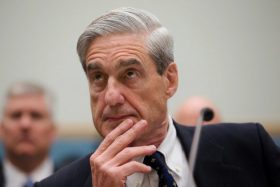 The New York Times and CNN led media coverage last month of discussions among senior FBI officials in May 2017 of a possible national security investigation of President Donald Trump himself, on the premise that he may have acted as an agent of Russia.
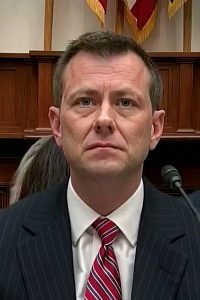 So, key figures in the discussion of Trump and Russia in May 2017 knew that Steele was acting out of both political and business motives to come up with sensational material.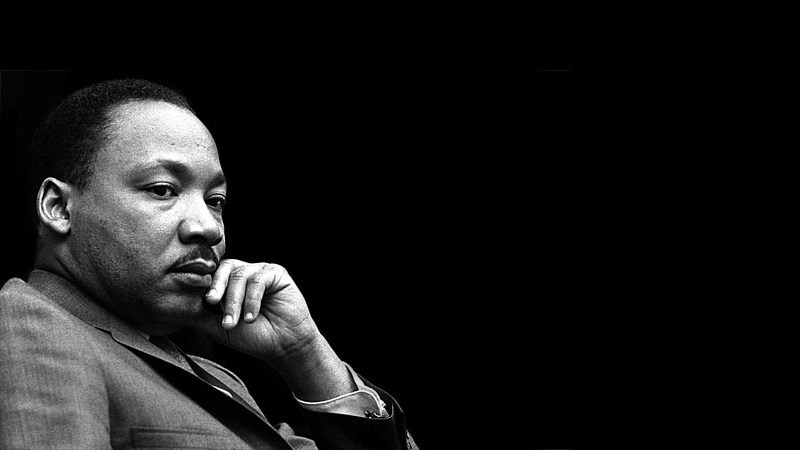


 Aletho News
