NATO Calls GPS Jamming ‘Dangerous, Disruptive’, Joins Norway in Accusing Russia
Sputnik – November 15, 2018
NATO has decided to throw its weight behind Helsinki’s and Oslo’s claims of GPS disruption during the recent alliance drill in Norway. Meanwhile, unsubstantiated allegations of Russian involvement are gaining momentum in the Nordic countries.
Unfounded accusations by Norway and Finland that Russia was responsible for the recent GPS malfunction experienced during the Trident Juncture drill, the largest in decades, have now been perpetuated by NATO headquarters.
“Norway has determined that Russia was responsible for jamming GPS signals in the Kola Peninsula during exercise Trident Juncture,” NATO spokesperson Oana Lungescu said. “In view of the civilian usage of GPS, jamming of this sort is dangerous, disruptive and irresponsible.”
Previously, NATO Secretary General Jens Stoltenberg stressed in a more evasive way that electronic warfare was on the rise, stressing that the alliance “takes all these issues very seriously.” Nevertheless, he specifically refused to pinpoint any particular nation responsible for the disturbance.
The Norwegian short-haul carrier Widerøe admitted to cockpit crews experiencing unusually weak GPS signals (or none at all), but declined to speculate on the reason for their disappearance.
Following claims by the Norwegian Defence Ministry that it had traced the source of jamming in Norway and Finnish Lapland “to a Russian military base on the Kola Peninsula,” Matti Vanhanen, former Finnish prime minister and current chair of the parliament’s foreign committee said that while Norwegian authorities are unlikely to present any proof, there still was “every reason to trust them”, Finnish national broadcaster Yle reported.
Foreign Minister Timo Soini and Finnish President Sauli Niinisto called for a thorough investigation of the incident, while Prime Minister Juha Sipila highlighting Russia, which “has the means to do it,” as the likely culprit. The Finnish Defence Ministry is yet to provide its commentary.
Neither Norway nor Finland recorded any incidents related to alleged GPS jamming. Russia has denied any involvement in the location signal disturbances.
“We know nothing about Russia’s possible involvement in those GPS failures,” Kremlin spokesman Dmitry Peskov said.
Moscow will respond to possible questions related to the alleged jamming of the GPS signals by Russia during the recent NATO exercises in Scandinavia after Helsinki and Oslo use diplomatic channels, Russian Deputy Foreign Minister Alexander Grushko said on Thursday.
Meanwhile, the police in Norway’s northernmost county of Finnmark are now issuing warnings that ‘Russian’ GPS jamming can threaten security and emergency preparedness in Norway. They noted that disturbances of GPS signals in Finnmark have occurred at least three times since last September, and can also interfere with police response to emergency situations. Furthermore, GPS coordinates are often used to determine locations when police are out on the job.
The alleged disturbance occurred amid NATO’s Trident Juncture, two-week military drills involving 50,000 soldiers from 31 countries.
Assessing US Marines Deployment to Norway: No Big Deal or Serious Threat to Russia?
By Arkady SAVITSKY | Strategic Culture Foundation | 17.08.2018
Norway has abandoned its traditional policy of “no foreign forces on our national soil.” On Aug. 15, the Norwegian defense ministry reported that the US will more than double (from 330 to more than 700) the number of Marines stationed in that country, in line with plans first outlined in June. The deployments to Norway are expected to last at least five years, compared with the former posting that ran for six months after the initial contingent arrived in 2017 and was then extended last June. A new military base at Setermoen will accommodate the US personnel this fall. The United States has expressed interest in building infrastructure to host up to four US fighter jets at a base 65 kilometers south of Oslo, as part of the European Reassurance Initiative (ERI).
The reinforcement comes ahead of a large-scale exercise dubbed Trident Juncture 18 — the biggest NATO maneuver in decades, involving 40,000 soldiers, 130 aircraft, and 70 vessels from more than 30 nations. That training event will be held from October to November in central and eastern Norway, the North Atlantic, and the Baltic Sea. Iceland, Sweden, and Finland will also take part.
According to the Norwegian government, the sole purpose of the American military presence is for training, there is no escalation involved in this whatsoever, and Russia has nothing to worry about. Foreign Minister Ine Eriksen Soereide previously told reporters that this decision did not constitute the establishment of a permanent US base in Norway and was not targeted at Russia.
Moscow issued a warning about the consequences such a move will entail. Are Russia’s concerns justified? After all, 700 soldiers are not a big deal for such a large country. They’ll finish their training, pick up some skiing skills, and leave. Is there really anything to worry about? Perhaps a more in-depth examination can provide an answer to this question.
The US Marines Corps is a service designed mainly for offensive operations. They are training to fight Russia under certain weather conditions. Once it has begun, such training becomes a routine part of the operational cycle. Whether you call it rotational or permanent, they’ll be there for years, ready to attack. It’s not just a few hundred servicemen, it’s an expeditionary force. They are in Norway to make sure that everything is in place to ensure a rapid reinforcement in order to launch offensive operations that include air support right upon arrival.
The cooperation between the US and Norway includes the exchange of intelligence, the purchase of weapons — including 52 F-35 aircraft and five Boeing P-8 Poseidon maritime patrol aircraft (MPA) — the use of Norwegian air bases, and the storage of military equipment in line with the Marine Corps Prepositioning Program-Norway (MCPP-N), which has been in effect since 2005. Actually, that project is a revival of a Cold War program that was launched in 1981 to preposition military equipment. Norway pays half of the program costs. Since 2014, it has been adjusted to meet the needs of the US Marine Corps. Their stockpiles have enough gear, vehicles, and ammunition to equip a force of more than 4,600 troops. According to the plans, there should be enough equipment and ammunition stored up to sustain a Marine Expeditionary Brigade (MEB) during combat. A MAB can consist of 8,000 to 16,000 Marines, or even more.
And it’s not just Norway. In May, US Marines from the 4th Tank Battalion withdrew tanks and weapons from storage caves in Norway to bring them to Finland during the Arrow 18 training exercise. That equipment was used in their maneuvers alongside the Finnish army. The US Marines in Norway could also be transported to Sweden. Such a scenario played out during the Swedish Aurora 17 exercise. As one can see, the Marines’ deployment in Norway is essential for providing US forces access from northern Scandinavia to the Baltic theater of operations.
Norway is part of an intelligence and missile-defense effort. The high-powered radar Globus 3 in Vardo is an example. The radar in Svalbard (above the Arctic Circle) is installed in violation of a 1925 treaty, which states that Svalbard has a demilitarized status. It can be used for missile-defense purposes. The US Poseidon MPA from Andøya monitor Russian submarine movements. In June, the US, UK, and Norway agreed to create a trilateral coalition on the basis of those planes that will conduct joint operations in the North Atlantic near Russia’s Northern Fleet naval bases.
The F-35 Lightnings purchased from the US are to be based in Ørland in southern Norway. They are nuclear-capable planes. The training provided by the American military to the Norwegian pilots is a violation of the 1968 Non-Proliferation Treaty (NPT) , which prohibits the transfer of nuclear weapons from nuclear-weapon states to other states. According to the treaty, non-nuclear-weapon states are not to receive nuclear weapons. Russia will never be sure the Norwegian F-35s aren’t carrying nuclear weapons.
The setting is important. The transformation of Norway into the tip of the knife for an attack on Russia is taking place amidst the speedy militarization of other Scandinavian countries, the Baltic states, and Poland. According to the Russian Defense Ministry, NATO has tripled its military presence on Russia’s western borders over the past five years, forcing Moscow to take retaliatory steps. The Norwegian government’s decision to extend and expand the Marines’ presence is part of NATO’s vigorous war preparations, making Norway a state on the front lines and the prime target for the Russian military.
15 European leaders call for new arms deal with Russia
RT | November 26, 2016
Fifteen European countries, headed by Germany, have issued a statement pushing for the reopening of “a new structured dialogue” with Russia aimed at preventing a possible arms race in Europe, according to the German foreign minister.
The countries, all belonging to the Organization for Security and Cooperation in Europe (OSCE), have expressed their deep concern over the current situation in Europe and support the relaunch of a conventional arms treaty with Russia, German Foreign Minister Frank-Walter Steinmeier told Die Welt newspaper in an interview published on Friday.
“Europe’s security is in danger. As difficult as ties to Russia may currently be, we need more dialogue, not less,” Steinmeier said.
The ongoing conflict in the Eastern Ukraine and the fact that Crimea joined Russia in 2014, a move most often dubbed as “annexation” by western officials, have put the question of war in Europe back on the table, Steinmeier continued. Fragile trust between Russia and European countries has suffered a significant setback and a “new armament spiral” is hanging over the continent, the foreign minister warned.
The statement contains strong anti-Russian rhetoric, blaming Moscow for violating arms deals as far back as 1990.
“The Conventional Forces in Europe treaty, which led to the destruction of tens of thousands of heavy weapon systems in Europe in the years following 1990, is no longer being implemented by the Russian Federation,” the statement said.
Russia put its participation in the treaty on hold in 2007 and then fully walked out of it last year.
Russian President Vladimir Putin called for the suspension of the treaty following a US decision to locate missile defense facilitates in the neighbouring Czech Republic and Poland. On top of that, President Putin noted that some of the NATO members did not join or ratify the treaty and there was no point in Russia abiding by the agreement.
Later Putin signed a decree suspending the treaty due to “extraordinary circumstances … which affect the security of the Russian Federation and require immediate measures,” having notified NATO and its members of the decision.
Since then NATO has taken no steps to upgrade the treaty, the Russian Foreign Ministry said in September, 2016, adding that Moscow is ready for dialogue on the subject. However, it is not planning to be the one to initiate it.
The statement names a number of other documents that need to be overviewed, including the OSCE’s Vienna document, stipulating the exchange of information on military movements, and the Open Skies treaty, enabling the monitoring of other countries’ ground forces. The documents are either neglected or in need of modernization.
The countries that spoke in favor of Steinmeier’s initiative include France, Italy, Austria, Belgium, Switzerland, the Czech Republic, Spain, Finland, the Netherlands, Norway, Romania, Sweden, Slovakia, Bulgaria and Portugal.
The group of the European foreign ministers is planning to meet again on the sidelines of a OSCE meeting in Hamburg on December, 8-9.
Nominally Populist Sweden Democrats Help Ratify NATO Deal
Sputnik – May 27, 2016
After Sweden Democrats reneged on earlier pledges to make a last-ditch effort to stall the decision, the Swedish parliament effortlessly railroaded through an agreement which essentially allows NATO to deploy forces in Sweden and brings the non-aligned Nordic country yet another step closer to the alliance.
The Swedish parliament ratified the so-called Host Nation Support Agreement (HNSA) after a proposal by the Left Party to put off the decision by one year, initially backed by Sweden Democrats, was voted down by 291 votes to 21.
The right-wing populist Sweden Democrats made an about-face ahead of the vote, abandoning plans team up with the Left Party, which argued that the hotly-debated deal posed a significant risk to the rights and freedoms stipulated in Sweden‘s constitution.
Despite earlier pledges by party leader Jimmie Åkesson to join efforts with the Left to stop the agreement he claimed posed “a threat to Sweden’s neutrality,” the Sweden Democrats had second thoughts in the eleventh hour and voted unanimously in favor of the controversial deal with NATO.
Remarkably, the party has been against closer NATO ties from the very beginning and officially stays true to its ideals.
Bizarrely, several Sweden Democrats party members claimed on Twitter and Facebook that they actually voted against the agreement, and that the parliament had published erroneous information on its website, news outlet Fria Tider reported.
The Left Party’s leader, Jonas Sjöstedt, condemned their usual antagonists’ U-turn.
“I am not at all surprised. The Sweden Democrats have been very wobbly on issues to do with freedom from alliances for some time now,” he said as quoted by the tabloid newspaper Aftonbladet.
Originally signed in September 2014, the HNSA allows the alliance to deploy helicopters, aircraft, ships and personnel across Swedish territory, but only at Sweden’s request. Since the agreement involved changes to Swedish regulation regarding privileges and immunities afforded NATO staff, a parliamentary ratification was necessary.
Additionally, public opinion in traditionally neutral Sweden, which boasts several centuries of non-alignment, has markedly shifted towards NATO in recent years. A survey by pollster Sifo, released in September 2015, marked the first time the majority of Swedes actually were in favor of NATO.
The HNSA may be seen as a major victory for Defense Minister Peter Hultqvist, who, despite formally denouncing perspectives of joining NATO, prepared a long series of agreements that would steadily increase Sweden’s involvement with the alliance.
Yesterday, the Swedish government entrusted the Swedish Civil Contingencies Agency MSB with negotiating a cooperation agreement with NATO’s Center for Strategic Communications in Riga, Latvia, in order to address the “information war” on Russia’s part, Swedish television network SVT reported. Hultqvist repeatedly urged Sweden to join the NATO Strategic Communications Centre of Excellence (STRATCOM), which is charged with targeting propaganda in traditional and social media.
Despite the soothing rhetoric that such measures “would not affect non-alignment,” today Sweden has emerged as a full-fledged NATO member in all but name.
Sweden’s deliberate creeping towards NATO may set an example for its fellow neutral neighbor Finland, which has also come under immense pressure recently with respect to NATO membership.
In late April, the Finnish Foreign Ministry published an “independent” report exploring the consequences of NATO membership for Helsinki. The report’s primary conclusion was that the Nordic duo should stay together: either in both joining the alliance or declining the generous offer.
New nuclear: Finland’s cautionary tale for the UK
By Sophie Yeo | Carbon Brief | October 20, 2015
Finland has a 15-year-old problem called Olkiluoto 3. This nuclear plant was once the bright star of Finland’s energy future and Europe’s nuclear renaissance.
It was seen as a key component in Finland’s plans to reduce greenhouse gas emissions by 80% by 2050 and end reliance on foreign imports of electricity, even during its long, dark Arctic winters. It is supposed to provide Finland with a low-carbon source of electricity for at least 60 years.
A 2006 article in the Telegraph spoke of the rebirth of Finnish love for nuclear power, describing the Olkiluoto site in phrases that could have been lifted from a pastoral poem: a “Baltic island of foraging swans”, “pine-scented” air and “unusually large salmon.”
But this source of hope has turned sour. Olkiluoto 3 — almost unpronounceable to non-Finns — is now nine years behind schedule and three times over budget.
It has been subject to lawsuits, technology failure, construction errors and miscommunication. A rift between the companies behind the plant has been described as “one of the biggest conflicts in the history of the construction sector”.
At best, it has been a turbulent lift-off to the lauded rebirth of nuclear power in western Europe. For the UK, which hopes to be a part of this renaissance, the story of Olkiluoto 3 offers a cautionary tale.
Background
The story of Olkiluoto 3 began in 2000, when Finnish utilities company TVO first applied to build a new nuclear power unit, in an attempt to wean the country off foreign imports of electricity and supply a new source of low-carbon energy.
In 2002, Finland’s parliament granted its permission, voting 107-92 in favour of the new unit. And in December 2003, Finland became the first country in Western Europe to order a new nuclear reactor in 15 years.
This was welcome news to nuclear supporters. Nuclear power stagnated in the 1990s, with accidents in Three Mile Island and Chernobyl in the ’70s and ’80s creating jitters about the risks of the industry, while the economic costs of building plants created nervousness among investors in newly liberalised energy markets. Olkiluoto 3 was seen as the sign that European nuclear was set for a revival.
With its new-and-improved Generation III+ technology, Olkiluoto 3 was meant to be safer and more efficient, as well as cheaper and faster to build than its predecessors — an ageing European fleet of Generation II plants built in the 1970s and 80s.
The 2014 World Nuclear Industry Status report points out that the former enthusiasm surrounding Generation III reactors has “dissolved”. Some proponents of nuclear power have argued that even these supposedly new-and-improved plants ought to be put aside for an even more modern round of Generation IV plants — technology that is still being developed, with China currently planning the world’s first in the province of Jiangxi.
It was decided that Olkiluoto Island in western Finland would host the new plant, where the Gulf of Bothnia could cool the steam used to turn the turbines and generate electricity. It would sit alongside two of Finland’s four existing nuclear plants (intuitively called Olkiluoto 1 and 2).
Olkiluoto 3 would use a new type of technology called a European Pressurised Reactor (EPR), which France has also since adopted for a new nuclear plant. China is building two EPRs, as well.
The plan was that Olkiluoto 3 should have a capacity of 1,600 megawatts. It would cost €3bn and come online in 2009.
Animation illustrating the operating principles of nuclear power plant units. Source: TVO.
Construction problems
It is now 2015, and Finland still does not have its new nuclear plant.
The companies behind the project are at loggerheads. TVO is seeking compensation from Areva in court, the company responsible for supplying the reactor and turbine, and Areva is pursuing a counterclaim.
Herkko Plit, the deputy director of Finland’s energy department, tells Carbon Brief:
“I don’t think there’s anybody who can say they are pleased with the project.”
Construction started in August 2005. The problems started early, with the incorrect laying of the concrete base slab — a structure that is supposed to be able to withstand the weight of the entire power plant collapsing on it.
This was accompanied by errors in the manufacture of the steel liner — the part of the unit that is responsible for preventing the release of radioactive materials into the environment, and is supposed to be able to withstand forces such as an aeroplane crash.
In 2006, the Finnish Radiation and Nuclear Safety Authority (STUK) conducted an investigation into the construction of the plant, following concerns about its safety culture.
The resulting report gives a variety of reasons for the problems encountered. Top of that hefty list comes problems with subcontractors responsible for carrying out much of the manufacturing work.
Many of the organisations chosen to work on the different parts of the plant did not have any experience in nuclear, and little understanding of the safety requirements.
One of the people interviewed for that report said that, “as safety culture is a concept usually associated with plants that are in operation, it has been difficult for them to understand what it could mean at the construction stage”.
While such issues had not compromised the safety of the plant, the report concluded that they were responsible for some of the first delays to the plant.
“The nervous system”
Later came problems with the instrumentation and control system, which is for monitoring and control. The International Atomic Energy Agency describes it as “the nervous system” of the plant.
This was finally approved in 2014, after four years of “exchanges” with TVO, as Areva put it. In August 2015, these cabinets were finally delivered to the site. Pasi Tuohimaa, TVO’s head of communications, tells Carbon Brief :
“Now we can see the trail towards the end. This autumn, we will have all this automation installed, and next year we apply to have it opened, and then we start testing it and loading the fuel.”
The good news precipitated a rare moment of harmony in the bitter feud between Areva and TVO. The rivals held their first joint press conference to mark the occasion. “It’s such a big milestone for both of us,” TVO’s Tuohimaa adds.
Who will suffer?
TVO signed a contract with Areva for the plant — a one-off payment of €3.2bn, covering the EPR and other costs. Such contracts are rare in nuclear power plants, due to the construction risks associated with the technology.
At the time, it was seen as an expression of confidence in the industry. For Areva, the opportunity to build an EPR in Finland offered a chance to show that nuclear could survive and become competitive in the liberalised Scandinavian energy market — a boost for the company, which has not managed to sell a reactor since 2007.
The turnkey contract meant spiralling costs of the Olkiluoto 3 plant have fallen at Areva’s door. This has been the subject of a bitter dispute between TVO and Areva.
Areva maintains that TVO’s “inappropriate behaviour” has been responsible for the delays, and that the utility company should, therefore, be liable for the multi-billion euro cost overruns. Meanwhile, TVO says Areva is responsible for failing to build the plant according to schedule. It has called the delays “hard to accept.”
The compensation claims, as well as the costs of the plant itself, keep spiralling upwards. In August 2015, TVO raised its claim against Areva to €2.6bn from its previous €2.3bn, and €1.8bn before that. In October 2014, Areva raised its own claim against TVO to €3.5bn from €2.6bn. The case is being dealt with in the International Chamber of Commerce‘s arbitration court.
Nonetheless, Areva has been forced to accept losses. The company, which hasn’t turned a profit since 2010, recorded net losses of €4.8bn in 2014, largely due to Olkiluoto. It has agreed to sell a majority stake in its nuclear reactor business to EDF.
If the lawsuit turns against TVO, it could be Finland’s industry that feels the pain. The utilities company is owned by shareholders that buy the right to use the electricity produced by the power station.
Its majority shareholder, for instance, is Pohjolan Voima Oy — a Finnish energy company that provides power to its shareholders, including two pulp and paper manufacturers, which pay for the production cost of the electricity.
Such industries could buckle under the inflated costs of electricity, which could end up more expensive than the electricity bought from the joint Nordic “pool”, says Stephen Thomas, professor of energy policy at the University of Greenwich. He tells Carbon Brief :
“It’s a big problem, because if you put up the price for householders, they will squeal and complain, but they’ll probably pay. If you’re an aluminium smelter and 60% of your costs is buying electricity, if that electricity is 50% too expensive, you’re out of business.”
Future of Finnish nuclear
Despite the trials and tribulations of Olkiluoto 3, Finland does not seem to have been swerved from its nuclear path.
Another nuclear power plant is planned for the north of Finland. Hanhikivi 1 will be the first nuclear power plant from another power consortium Fennovoima, and is due to come online in 2024.
The project is already facing controversy. Its reliance on Russian investment at a time when other countries have sought to isolate Moscow due to its invasion of Ukraine has raised eyebrows, while a Croatian investor was rejected by the government in Helsinki following suspicions that it was also being controlled from within Russia.
Construction work has also begun on a megaproject to store nuclear waste. Onkalo, which translates as “cavity”, is an underground tunnel built 520m into the Finnish bedrock. A project of Posiva, a company jointly owned by TVO and Fortum, it is located at the site of Olkiluoto.
Onkalo is designed to protect nuclear waste for 100,000 years. The timespan, almost impossible to conceptualise, caught the imagination of Danish director Michael Madsen, who made a documentary about the project, and the difficulty of communicating danger millennia down the line.
The possibility of a fourth reactor at the Olkiluoto site proved to be one too many, however. For now, TVO has given up on plans on Olkiluoto 4.
Plit, from Finland’s energy department, remains cheerful in the face of 15 years of difficulties and delays. He tells Carbon Brief:
“One has to remember that Olkiluoto 3 was the first western unit to be constructed in the nuclear sector for 20 years. Unfortunately, this know-how that used to exist in the 80s was no longer there, and you had to create everything from scratch, more or less. That has taken time.”
Prof Thomas at University of Greenwich is not so sure that the loss of knowledge since the last burst of nuclear construction can be entirely blamed. He points out that none of the four EPRs under construction have gone to plan so far, so to say that Olkiluoto is suffering only because of its novelty is oversimplistic. He tells Carbon Brief:
“Areva was so confident that they gave a fixed price, so they weren’t expecting first-of-a-kind problems.”
A cautionary tale
Some are already seeing Finland’s troubled relationship with new nuclear as a cautionary tale for the current UK government, which hopes to oversee its own nuclear renaissance.
The energy company EDF plans to build two new reactors at Hinkley Point. These will be the same design as Olkiluoto 3 — Areva’s EPR. The project will cost £24.5bn, and has already been subject to numerous delays.
The government has shown itself to be a devoted fan of the project, most recently offering a £2bn guarantee to smooth along the path to construction.
Despite this, it has been difficult to secure investors, who continue to be spooked by the ghosts of Flamanville in France and Olkiluoto, admitted the chief executive of EDF recently. Jean-Bernard Levy told French Financial daily Les Echos that, for those who have witnessed the spiralling costs and delays to date, it is “difficult to commit”.
The UK government hopes to confirm Chinese funding during a state visit by President Xi Jinping this week, which would prove instrumental in making the project happen.
EDF has insisted that it has learnt from the past, but Prof Thomas at the University of Greenwich is not so sure. The EPR is a “lousy design” that has not only tripped up the Finns, but also the French and Chinese. He tells Carbon Brief:
“If you look at the problems of Olkiluoto and Flamanville, they have been basic site work quality issues… It’s not as if there was a simple fault you could identify and make sure you didn’t do the same again. It’s not like they made a mess with this particular operation and this caused all the problems. There have been hundreds of different issues.
“That’s what’s most striking at the experience of Olkiluoto — just how many different things have gone wrong.”
Austrian Institute Clarifies True Costs of the EU’s Anti-Russian Sanctions
Sputnik – 03.07.2015
The Austrian Institute of Economic Research (WIFO) published a monograph clarifying the projected short and long-term costs of anti-Russian sanctions to the EU 28 plus Switzerland. A summary of the report published Friday has confirmed that Europe as a whole expects €92.34 billion in long-term losses, along with over 2.2 million lost jobs.
While the report attempts to downplay somewhat the losses attributed to sanctions, noting that politicized export restrictions must be considered together with the ongoing Russian recession and other factors, the figures speak for themselves.
The report projects an “observed decline in exports and tourism expenditures of €34 billion value added in the short run, with employment effects on up to 0.9 million people.” Switching to a longer-term perspective, the report estimates “the economic effects increas[ing] to up to 2.2 million jobs (around 1 percent of total employment) and €92 billion (0.8 percent of total value added), respectively.”
Commenting on the geographical disbursement of the economic and jobs losses, WIFO’s report shows that “geographical closeness highly correlates with the relative size of the effects at the national level, with the Baltic countries, Finland and the Eastern European countries being hit above the EU average of 0.3 percent of GDP in the short and 0.8 percent in the long run.” The report also notes that Germany, which accounts for nearly 30 percent of all EU 27 exports to Russia, has been hit the hardest in absolute terms, and is projected to lose €23.38 billion in losses in the long term. Italy is second, with €10.93 billion in projected losses. France rounds out the top three with €7.92 billion in losses.
The study’s figures also show that Estonia is the single most heavily affected country in both the short and the long term, with the country suffering a €800 million (4.91 percent) and €2.1 billion (13.24 percent) decline, respectively. Estonia is followed by Lithuania (-6.37 percent long term), Cyprus (-3.25 percent), Latvia (-1.87 percent), and the Czech Republic (-1.53 percent).
In employment terms, Estonia, Lithuania and Cyprus are also the hardest hit in percentage terms, and are projected to suffer 16.3 percent, 10.84 percent and 4.21 percent losses, respectively. In absolute terms, Germany (losing 395,000 jobs) Poland (300,000), and Italy (200,000) have been the hardest hit; Spain, Lithuania and Estonia are projected to lose between 100,000 and 190,000 jobs.
As for the economic sectors most heavily impacted, the WIFO study found that agriculture and food products, metal products, machine-building, vehicles, and manufacturing-related services are hardest hit in the short term, with construction, business services, and wholesale and retail trade services also projected to suffer disproportionately in the long-term.
Speaking to Radio Sputnik about the report, WIFO economist Oliver Fritz noted that while EU politicians still hope that the sanctions will have some effect on Russian policy, pressure is building on them to change their policy, since the economic consequences are rapidly beginning to add up.
While the economist noted that he does not see the sanctions being lifted in the short term, with German Chancellor Angela Merkel successfully keeping other EU nations in line, Fritz noted that as losses mount, EU politicians may eventually decide to consider rethinking their decisions.
Last month, WIFO conducted research for Europe’s ‘Leading European Newspaper Alliance’, estimating up to €100 billion in losses if anti-Russian sanctions remain in place.
Since March 2014, the United States, European Union, and other Western countries have placed sanctions on Russia’s banking, defense and energy sectors over Moscow’s alleged role in the Ukrainian crisis. In August, Moscow imposed a year-long food embargo on the countries that had sanctioned it. Last month, the EU’s foreign ministers agreed to extend sanctions against Russia until January 31, 2016.
Phantom Russian Sub Hunts Gave Birth To NATO’s Viking Bloc
By Andrew KORYBKO | Oriental Review | May 5, 2015
The largely unobservant public had previously been under the impression that the Baltic Sea was a zone of peace and stability, thinking that all the region’s states lived in harmony with one another. This may have been the case prior to 1991, but immediately afterwards, NATO’s expansion into the Baltic basin seriously upset the balance of power, as the incorporation of Poland and the former Soviet Baltic States in 1999 and 2004 attests. Through this manner, NATO was able to surround Kaliningrad and directly push up against part of Russia’s western border.
The military tension remained just below the surface (literally), until Shadow NATO states Sweden and Finland started initiating highly publicized ‘Russian sub’ scares, designed with the sole intent of scaring their publics into formal NATO membership and opening up an additional front in the New Cold War. Taking it further, this is all part of NATO’s new policy of regional blocs, as Brussels hopes to see the formation of a ‘Viking Bloc’ that would apply pressure against Russia in the Arctic. The most dangerous development, however, is with Finland, which is capitalizing off of the sea scare to call up nearly one million reservists (1/5 of the total population) in the event of a “crisis situation”, thereby presenting a dangerous test run in conflict escalation that might be applied all over Europe in the future.
Regional Hysteria
To put everything into focus, it’s best to begin by documenting the latest hysteria stemming from supposed ‘Russian sub’ sightings. Sweden started the trend when it claimed to be hunting a believed-to-be Russian sub back in October, and when nothing came out of the stunt except for a scared public and a couple million dollars spent, Stockholm continued to insist that it had evidence that a foreign sub did trespass through its waters, but curiously kept the details to itself. Be that as it may, it didn’t stop legislators from increasing the defense budget by a whopping $1.18 billion for the period 2016-2020, earmarking an additional $945 million for the future purchase of two subs, and announcing plans to reopen a military base on the Baltic island of Gottland. The ultimate irony is that there was never a ‘Russian sub’ to begin with, and that it was eventually revealed that the whole scandal started over a simple workboat, thus making it seem like Sweden exaggerated the situation simply to push through more defense funding and militarize its society against Russia.
 Being the regional leader that it is, it appears as though Sweden’s spectacle of the phantom Russian sub rubbed off on Finland, which soon after its latest elections began detonating underwater charges against its own suspected ‘Russian sub’. Finnish political analyst Jon Hellevig assessed that this was simply Helsinki’s application of Stockholm’s decades-long tactic of using phantom Russian subs to increase the population’s acceptance of future NATO membership. While Finland isn’t a de-jure member of the alliance, both it and Scandinavian military hegemon Sweden signed a NATO host nation agreement last fall to intensify their relations with the bloc, essentially making them Shadow NATO members in an even deeper capacity than Ukraine has become (the latter of which has been the bone of contention sparking the New Cold War in the first place).
Given such a relationship, it may not even be needed for either state to formally join NATO at this point, since the alliance can already reap the resultant military advantages of their territory in any possible anti-Russian crisis scenario. However, putting the provocative issue up for a referendum vote or making a unilateral government decision in this regard might be a forthcoming tactic towards creating the aforementioned crisis needed to ‘justify’ the indefinite hosting of NATO troops in those countries. It’s quite clear that Sweden is already de-facto participating in NATO, since they just partook in the group’s “Dynamic Mongoose” anti-submarine drills off the Norwegian coast. This would have obviously raised eyebrows among its domestic citizenry had it not been for the earlier ‘Russian sub’ scare that created the social pretext for its acceptance, showing how such false crises can be manipulated by the media for predetermined military gain.
The Viking Bloc
Everything going on in Scandinavia right now, from the phantom ‘Russian sub’ scares to the de-facto NATO-ization of the region’s last formal holdouts, is designed to create the northern component of NATO’s regional bloc strategy. In sum, the alliance is reverting to history and using Polish interwar leader Josef Pilsudski’s Intermarum concept to establish a Baltic-to-Black-Sea coalition of anti-Russian states to which it can more efficiently outsource its military prerogatives, all per the Lead From Behind strategy. The ‘Viking Bloc’ which consists of the Greater Scandinavian states of Sweden, Norway, Denmark, Iceland, and Finland (centered on Sweden, possibly incorporating Estonia and Latvia as well) is envisioned to complement the emerging Commonwealth Bloc of Poland, Lithuania, and Ukraine (centered on Poland), and the forthcoming Black Sea Bloc of Romania, Bulgaria, and Moldova (centered on Romania, possibly even expanded to Georgia).
Focusing more specifically on the characteristics of the Viking Bloc, its members have a maritime identity, so it’s predicted that they’ll focus their activity on the Baltic Sea, North Sea, and Arctic Ocean, accordingly making them all one large naval base. Sweden’s demographic and economic strength makes it the obvious leader amongst the identified members and the control node of its activity, while wealthy Norway can provide the natural resources needed to keep it running. Denmark controls the entrance to and from the Baltic Sea, and together with its colony country of Greenland, Iceland, and Norway, the three can patrol the North Sea and Arctic Ocean in hunting ‘Russian subs’. It’s also not a coincidence that all of these states are members of the Arctic Council, meaning that this dialogue configuration has essentially become one of confrontation between North America & the Viking Bloc on one side and Russia on the other. The odd member out of this naval configuration is Finland (also a member of the Arctic Council), which has recklessly adapted a land-based anti-Russian policy that’s bound to ratchet up tension with its neighbor. One should also note that the Viking Bloc’s members signed a multilateral defense cooperation agreement in April that basically institutionalized the organization as an official regional bloc.
The Finnish Amphibian
The most dangerous sub-bloc strategy being adopted by NATO is its Finnish affiliate’s advance preparation of 900,000 reservists in the event of a “crisis situation”, which obviously could only refer to a military conflict with Russia. The Finnish government is trying to account for all of its former reservists aged 20-60 in order to inform them of what their “crisis situation” role would be, as well as to collect updated information about them. This dramatic movement of anti-Russian initiatives from sea onto land represents an amphibious strategy that’s likely only in its initial test-run phase. NATO wants to gauge Russia’s reaction and monitor its response in order to fine-tune this template for eventually export throughout the bloc as a whole.
The Finnish Amphibian is a very simple strategy. All that the practicing states or regional blocs have to do is report on a phantom ‘Russian sub’ sighting, preferably with as much media paranoia as possible but providing no proof whatsoever, and then use the subsequent buzz to justify the potential mobilization of a massive land-based reservist force. This leads to the militarization of society within the targeted state and initiates a siege mentality that makes its citizens feel as though they’re constantly under some type of Russian attack. None of the accusations have to be proven, let alone even seen by the citizens themselves, so long as the media and supportive political figures repeat the chorus of conflict enough to make it believable. An added touch would be to implement Sweden’s strategy of publicly accusing 1/3 of all Russian diplomats there as being spies, which when coupled with the existing paranoia about phantom ‘Russian subs’, sends the populace’s paranoia into overdrive and all but assures that they’ll support whichever military or surveillance solutions their government or NATO suggests.
Concluding Thoughts
NATO’s northernmost regional fighting group, the Viking Bloc, owes its speedy creation to the utilization of phantom ‘Russian sub’ scare tactics to galvanize support for this new initiative. Greater Scandinavia is rapidly being transformed into one giant NATO naval base that’s meant to confront Russia on the neighboring high seas. As destabilizing as that is, it moves into the realm of flashpoint danger with the fact that Finland is preparing to mobilize 1/5 of its population against Russia, thus presenting an amphibious land-based component to the majority sea-focused strategy. Even worse, the template of using false sea-based scares to ‘justify’ massive land-based mobilizations could likely be applied elsewhere in Europe, thereby serving as an ideal model of militarization all throughout NATO. It’s this hybrid of media-military strategic collaboration that may eventually prove to be more destabilizing than the unveiling of the Viking Bloc itself.
Anti-NATO parties grab top spots in Finland general election
RT | April 19, 2015
The Prime Minister of Finland has acknowledged the victory of the opposition Centre Party in Sunday’s general election. With most of the votes counted, Centre has 21 percent support, which translates to a potential 44 seats in the country’s parliament.
“It appears the Centre has won. Congratulations,” PM Alexander Stubb, a staunch EU backer, said, according to Finnish broadcaster Yle.
However, with only 44 seats, Centre will have to form a ruling coalition. “This result will enable several possible coalition combinations”, party leader Juha Sipila told reporters.
The Centre has several potential allies to choose from. These include the nationalist Finns Party, which is currently second with 17.6 percent of the vote. Like the Centre, the Finns are against NATO membership for Finland, with the Finns also striving for more independence from the EU.
They are closely followed by the National Coalition Party (NCP), with 18.1 percent. The NCP is the only party in the top four which advocates both NATO membership and closer ties with the EU.
The Social Democratic Party, at fourth place with 16.7 percent, is another potential member for the ruling coalition. Like Centre and the Finns, it is against NATO – as many as 91 percent of its members saying they are oppose it.
Other runners include the Greens, the Left party the pro-minority Swedish People’s Party and the Christian Democrats, none of which got more than eight percent of the vote.
Three Finnish icebreakers for Russia’s oil and gas operations in the Arctic
MercoPress | August 13, 2014
Finland-based Arctech Helsinki Shipyard has been contracted to build three icebreaking stand-by vessels for Russian shipping company Sovcomflot, for a total cost of 380 million dollars.
The contract for the three 95 meters long vessels sums 380 million dollars and should be delivered by 2017 The contract for the three 95 meters long vessels sums 380 million dollars and should be delivered by 2017
The vessels will perform operations in the north-east Sakhalin offshore region oil and gas field for Sakhalin Energy Investment Company (SEIC).
The icebreakers are capable of carrying out rescue operations and recovery of oil spills, while they can also be used for moving cargo for low flashpoint fuels.
While designing the vessels will start immediately, the company hopes to deliver them between September 2016 and March 2017.
The 95m-long and 22m-wide vessels will be based on Aker Arctic concept Aker ARC 121 and will be fitted with four diesel generator engines, to generate total power of about 20,000kW. They will have a propulsion power of 13,000kW.
Arctech and Sovcomflot signed a contract in April, which included a larger platform supply vessel under the icebreaking vessels series, which would function efficiently in extreme weather conditions.
Arctech Helsinki Shipyard managing director Esko Mustamäki said: “We are extremely satisfied to receive an order of three arctic offshore vessels from Sovcomflot.
”This remarkable order of three vessels brings a lot of work to our shipyard and to the whole maritime cluster. We will also strengthen our organization considerably.”
The vessels will be used in ice management and ice breaking in extremely low temperatures of up to -35C°.
Equipped to navigate in 1.5m-thick ice, the vessels will be fit for emergency evacuation, firefighting operations and helicopter operations, as well as for diving support as they will comprise a moon pool.
The American Aggression Enablement Act and the US’ Eurasian Thrust (I)
By Andrew KORYBKO | Oriental Review | August 1, 2014
Congressional Hawks have been peddling the idea of a “Russian Aggression Prevention Act” since the beginning of May, but it has only been during the recent media-inspired hysteria that it began to gain traction. If passed into law, it would amount to a sweeping NATO offensive across all of Russia’s former soviet western periphery and would be the first official act of the ‘New Cold War’. Much has been written about the overall thematic consequences for US-Russian relations by Paul Craig Roberts and Patrick Buchanan illustrating how the US plans to use the legislation to subvert the Russian government from within via its support for ‘NGOs’ (and the prioritized ‘refugee’ status for journalists, ‘dissidents’, and various activists that is included in the document). What has not been explored, however, are some of the finer, yet no less important, aspects of the Act’s implementation. Whether it be NATO expansion into the Balkans or the destabilization of the Caucasus, bill S. 2277 more accurately could be described as the American Aggression Enablement Act (AAEA), as it represents a surge of US offensive military capability against Russian interests in its western flank.
Part I: The NATO Tumor Grows
The AAEA represents the cancerous growth of NATO throughout all of its targeted territories. Some of its most important details are that the EU and NATO are working hand-in-hand, NATO aims to swallow the Balkans, and the Missile Defense Shield (MDS) is to proceed at full speed ahead, with all of the resultant consequences thereof.
Good Cop, Bad Cop:
Although not explicitly stated in the AAEA itself, if one steps back and examines the overall context of the document, it is obvious that the EU and NATO have been working in lockstep to advance each other’s goals. In fact, an overall pattern can be ascertained:
(1) The EU makes some form of outreach to the targeted state(s) (e.g. The Eastern Partnership)
(2) Economic links between the EU and the target are nominally institutionalized (e.g. an EU Association Agreement)
(3) Shadow NATO (via major non-NATO ally status) moves in to defend the economic integration process
The EU presents the friendly, ‘humanitarian’ face to disarm the targeted state’s population while Shadow NATO inconspicuously attempts to absorb the country. This is the tried-and-tested technique of ‘good cop, bad cop’.
The Balkans or Bust:
The US is aggressively promoting its Armed Forces and NATO’s expansion into the Balkans as part of the AAEA. It stipulates that Obama must increase military cooperation with Bosnia, Montenegro, Kosovo, Macedonia, and Serbia, besides Azerbaijan and prescribed major non-NATO allies Ukraine, Georgia, and Moldova. Although it is unlikely that Serbia will be integrated into the fold (it is a strong Russian ally and vividly remembers the bloody bombings of 1999), the move still represents a major expansion of US military influence in Europe. One must keep in mind that the formerly forgotten-about Balkans are now at the forefront of this ‘New Cold War’, with the US and some European actors trying to sabotage Russia’s South Stream gas project which, ironically, certain EU members had agreed to in the first place. Bosnia, Montenegro, Kosovo, and Macedonia are all entities abutting Serbia, which is planned to be one of the hubs of South Stream, so their inclusion into the enhanced NATO security framework suggested by the AAEA can be seen as surrounding Serbia prior to destabilizing it once more. In the context of bitter energy geopolitics, the US’ seemingly unexpected push into the Balkans makes absolute sense.
Missile Defense and NATO’s Northern Expansion:
Included in the AAEA is the directive to accelerate the rollout of the Missile Defense Shield (MDS). This was already envisioned to have land, sea, and space components per the phased adaptive approach framework. What makes the AAEA different, however, is that it wants to ‘poke Russia in the eyes’ and go forward with something that Moscow has already stated would certainly be a red line. Russia holds this stance because it believes that a MDS would neutralize its nuclear second-strike capability, thereby giving the US a monopoly on carrying out a nuclear first strike and shattering the mutual assured destruction concept that kept the peace between the two nuclear titans for decades.
Russia’s response thus far has been to deploy Iskander missiles to the Baltic enclave of Kaliningrad. One of the dual purposes of the US’ MDS is to goad Russia into taking more such defensive actions that could then be propagandized as ‘offensive’, thereby exaggerating ‘the Russian threat’ and contributing to fear mongering among the Swedish and Finnish citizenry. The end result is to push these countries deeper into the NATO apparatus. Finland has already said that it could hold a referendum on joining as early as April 2015 after the next round of parliamentary elections, with its Defense Minister already actively lobbying for this to happen. Sweden, on the other hand, already engages in such close cooperation with NATO that it’s already a shadow member in its own right, and Foreign Minister Carl Bildt is one of the most prominent Russophobic policy makers on the continent. Because of a joint agreement on military security, Finland can only join NATO together with Sweden, meaning that if any move is made, it would likely be a ‘double whammy’ to get the two states in at once. It goes without saying that if Russia would not allow NATO to be deployed in Georgia or Ukraine, it most definitely would not allow it to be deployed along the Russo-Finnish border, further increasing the chances of yet another crisis in NATO-Russian relations sometime down the line.
To be continued… Part II
Norway may ban non-medical circumcision of boys
RT | November 13, 2013
Norway’s Health Ministry is considering a proposal on regulating the circumcision of boys. Some political parties are calling on a complete ban of the practice on minors, a possibility that would affect Jewish and Muslim communities.
Two years ago, the ministry was tasked with reviewing circumcision and how it should be practiced in Norway. It is yet to finalize its stance, but intends to submit its legislative proposal before Easter next year, Health Minister Bent Hoie told Aftenposten, Norway’s largest newspaper.
The issue was brought to public attention after the recent call by Norway Children’s Ombudswoman Anne Lindboe to ban circumcision of boys before age 16, unless the procedure is warranted by medical needs.
“This is not due to any lack of understanding of minorities or religious traditions, but because the procedure is irreversible, painful and risky,” she argued.
Lindboe’s position is shared by some members of the Labor Party, which currently holds the largest share of 55 seats in Norway’s 169-strong legislative and is in opposition to the ruling Conservative-Progress coalition.
“As a modern society, we should work to eliminate practices that expose children and people to unnecessary suffering,” said Labor’s Ruth Mari Grung, who is a member of the parliamentary Committee on Health and Care Services.
A ban is also supported by the Center Party, which has 10 seats in the parliament.
Other parliamentary parties are yet to formulate their official position on the issue. Hoie, a Conservative member, who used to chair the Health Committee before getting his ministerial appointment, voiced concerns that a ban would force the groups practicing ritual circumcision underground, where the procedure would be performed by non-medics and pose greater health risks to the children.
The Norwegian lawmakers also disagree on whether circumcision should be covered by the budget under the national healthcare system. Some parties insist that ritual circumcision should be paid for by parents.
According to the newspaper, an average of about 2,000 Muslim and seven Jewish newborns are circumcised in Norway each year.
Regulation of ritual circumcision in Europe made the headlines in June, when a German court ruled that the procedure constitutes a minor bodily harm and outlawed performing it on minors. The decision sparked nationwide debate on the conflict between religious freedoms and protection of children.
The issue was further stressed in early October, when the Council of Europe branded the practice “a violation of the physical integrity of children” and called on EU members to protect children. The latter should include a ban on performing circumcision on those who cannot consent to it, the non-binding resolution said.
Sweden, Finland, Denmark, Iceland and Greenland are among the European countries where public debate on ritual circumcision of boys is hotly debated.
Related article
Featured Video
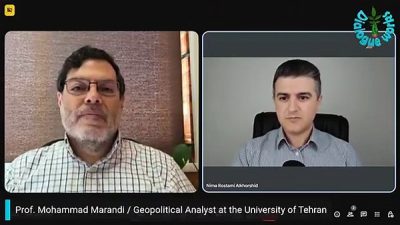
Seyed M. Marandi: U.S. Military DIVIDED? Iran’s Secret Defense EXPOSED
or go to
Aletho News Archives – Video-Images
From the Archives
‘Israel sees Iran as obstacle to its policies’

Press TV – August 25, 2017
Prime Minister Benjamin Netanyahu has said that Israel felt threatened by Iran’s growing influence in the Middle East. Netanyahu expressed his Iranophobic view in a meeting with Russian President Vladimir Putin in Russia’s Black Sea resort of Sochi on Wednesday. Press TV has asked Scott Rickard, former American intelligence linguist from Tampa, Florida, and Brent Budowsky, a columnist at The Hill from Washington, to give their thoughts on the issue.
Rickard said Tel Aviv is concerned about the fact that the regime could not carry out its old project to spread sectarian divisions and pave the way for dismemberment of the countries in the Middle East region because of the Iranian-led resistance against Israeli policies, not only in the occupied territories of Palestine but also in the whole region.
“Iran is not a threat to Israel whatsoever. The threat that Israel sees is the fact that their Oded Yinon Plan is being put to a hold by Iran,” the intelligence linguist said on Thursday night.
“They (the Israelis) look at Iran as a threat only because they have no influence on their governments and Iran is autonomous and is not under the Zionist influence,” he added.
Since the victory of the Islamic Republic of Iran in 1979, Tehran has been critical of Israel’s policies in the region, whereas “no leaders [of other states] even dared to speak out against Zionism,” Rickard argued. … continue
Blog Roll
 Aletho News
- Evidence points to Ukraine being behind TurkStream attempted sabotage, but that should come as no surprise
- Sri Lanka secures supplies of Russia oil – minister
- Nations across Asia strike direct deals with Iran for Hormuz passage
- IRGC commander declares ‘new phase’ of reprisal attacks against aggressors
- Israel’s air defenses overwhelmed by cluster-warhead Iranian missiles: Reports
- Striking Iran’s Infrastructure Would Have Little Military Impact – Report
- What’s Behind U.S./Israeli Strikes On Iranian Pistachio Factories?
- Seyed M. Marandi: U.S. Military DIVIDED? Iran’s Secret Defense EXPOSED
- How I fell foul of the BBC thought police
- The End of NATO
- If Americans Knew
- Trump says Iranians appreciate bombs, WHO warns of nuclear risks – Daily Update
- U.N. experts demand Israel release prominent Gaza doctor after reports of ‘severe torture’
- Israel’s Latest Genocide Is Against the Shias of Lebanon. Why Is the World Silent?
- How Eliot Cohen’s influence over U.S. war-making paved the way for Trump’s war crimes in Iran
- Israelis don’t pay for the weapons we ‘sell’ to them — US taxpayers do
- While Distancing from AIPAC, Most 2028 Democratic Hopefuls Are Still Embracing Israel
- A brief history of the Israeli nuclear program, the open secret at the heart of the Iran war
- Israeli Settlers Killed a Palestinian Farmer on His Own Land, in Front of His Father. Yes, Again
- The US-Israeli War on Science is an Assault on our Future
- 100+ International Law Experts Say US Strikes on Iran Violate UN Charter, Could Be War Crimes
- No Tricks Zone
- An Inconvenient Tree: Uncovered In Alps… Europe Much Warmer Than Today 6000 Years Ago
- New Study Reports A 60% Slowdown In Greenland’s Ice Loss Rate In The Last Decade
- Low Intensity Tornado Wrecks Major Solar Farm, Creating A Potential Toxic Dump
- New Study Finds Warming Saves Lives…Cold Temperatures 12 Times More Deadly Than Excess Heat
- German Science Blog Accuses PIK Climate Institute Of Hallucinating Climate Tipping Points
- Devastating Assessment Of Comirnaty Vaccine By Former Senior Pfizer Europe Toxicologist
- New Study: CO2 Is ‘Effectively Negligible’ As An Explanatory Climate Change Factor Since 2000
- Former Pfizer Toxicologist Dr. Helmut Sterz Tells Bundestag Hearing Pfizer Vaccine Should Have Never Been Approved
- Energy Expert: Germany’s Nuclear Phaseout Was A “500 Billion Euro Mistake”
- New Research: South Australia’s Mid-Holocene Sea Surface Temperatures Were 4°C Warmer Than Today
 Aletho News