The White House’s latest pro-war scheme comes at a time when the Pentagon is expected to receive its highest annual budget ever, as defense spending in the US is on track to reach $1 trillion annually before the decade is out.
RT Bank Accounts Frozen in France at Paris’ Behest
Samizdat – 20.01.2023
MOSCOW – Bank accounts of the RT France broadcaster’s desk have been frozen in France, Ksenia Fedorova, the broadcaster’s editor-in-chief, said on Friday, adding that the bank refers to the authorities’ order.
“We have received a letter from our bank regarding the freezing of RT France accounts by order of the French authorities in connection with the ninth round of sanctions adopted in December. Despite the fact that RT France is not on the list and has the right to operate in France, such a decision effectively paralyzes our activities,” Fedorova said in a statement.
Earlier, the head of the European Federation of Journalists, Ricardo Gutierrez, said that banning Russian media in the EU, including RT and Sputnik, “created a dangerous precedent that threatens press freedom”.
In early December, the French Council of State ordered the media regulator Arcom to reconsider its decision to continue broadcasting Russian TV channels Rossiya 1, NTV, and Channel One in Russia and Ukraine by the French satellite operator Eutelsat at the request of Reporters Without Borders (RSF).
Relations between Russian media and the West have become increasingly difficult in recent years. In November 2016, the European Parliament adopted a resolution stating the need to counter Russian media, with Sputnik and RT cited as the main threats in the document.
A number of western politicians, including US senators and congressmen, as well as the French president, accused Sputnik and RT of interfering in the US and French elections, but did not provide any evidence. Russian officials said such allegations were unsubstantiated.
Ex-French soldier requests asylum in Russia
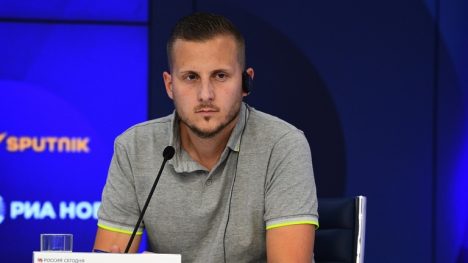
FILE PHOTO: Adrien Bocquet © Sputnik / Nina Zotina
RT | January 11, 2023
A former French military serviceman and volunteer, Adrien Bocquet, has allegedly requested asylum in Russia, the RIA news agency reported on Wednesday, citing an unnamed “source familiar with the situation.” The Frenchman had previously repeatedly traveled to Ukraine and Donbass and claimed that he had witnessed war crimes committed by the Ukrainian forces.
“A former French serviceman, Adrien Bocquet, has approached the Russian authorities and asked them to grant him political asylum,” the source told RIA, adding that the asylum application was supposedly filed in mid-December. The Russian authorities have so far not commented on the development.
Bocquet first traveled to Ukraine as a volunteer delivering humanitarian aid last spring. At the time, he reportedly visited Lviv and Kiev as well as its suburbs, including Bucha. Kiev accused the Russian forces of committing mass killings of civilians in that town, which the Russian troops withdrew from in late March. Moscow has repeatedly denied all of the accusations.
After returning to France in May, Bocquet gave an interview to French Sud Radio, where he claimed to have witnessed the abuse of Russian POWs at the hands of Ukrainian soldiers. The Frenchman accused the Ukrainian soldiers of torturing and killing civilians and claimed the French media was concealing that. He also said that he himself was detained by the Ukrainian soldiers for ten hours.
Last summer, he started traveling to the Donbass regions controlled by the Russian forces and local militias while publishing reports on the situation on the ground on his Telegram channel. There, he wrote weapons like Caesar howitzers, which France supplies to Ukraine, end up injuring civilians in Donbass.
In October, Bocquet claimed he was attacked by “militants” linked to the Ukrainian Security Service (SBU) in Istanbul. The Frenchman also published a photo of himself lying in bed with some visible injuries to his face and one hand. The next day, France’s foreign ministry published a statement in which it said it had “no information” on the incident.
Bocquet himself has not commented on his reported asylum application so far.
Share prices of NATO weapons makers surge
RT | January 11, 2023
The largest military and defense corporations of NATO member states have seen a 21.5% boost in market value in 2022 amid the military operation in Ukraine and the rearmament in Europe, Vedomosti newspaper reported on Wednesday, citing data from Defense News and Tradingview analytics.
Their combined market capitalization increased from $579 billion in December 2021 to $703 billion in December 2022, according to the estimates.
The ranking included 25 companies with a capitalization of over $1 billion which are traded on the stock market and have military products dominating in their revenues, and are also actively involved in arms supplies to Ukraine.
Authors of the report name German arms manufacturer Rheinmetall as the top gainer over the last 12 months, with a 122% surge in share price. French drone and missile producer Thales saw its market value rise 54%. American defense contractor Northrop Grumman was up 44%, while stock in HIMARS rocket launchers maker Lockheed Martin gained 42%.
Other notable mentions in the report include BAE Systems (+40%), Kongsberg Gruppen (+37%), General Dynamics (+24%), and Raytheon Technologies (+19%).
The report pointed out that the value of NATO’s military giants was soaring while the overall Western corporate sector sank by 16% last year, according to the S&P 1200 index, suggesting that arms manufacturers were likely the main beneficiaries of the political crisis in Europe.
Elon Musk agreed to EU’s censorship laws, France’s digital minister says
By Dan Frieth | Reclaim The Net | January 8, 2023
French digital transition minister Jean-Noel Barrot visited Twitter owner Elon Musk to discuss compliance with European censorship rules.
Barrot tweeted that he visited Musk after attending CES in Las Vegas on Saturday. The French minister claimed that Musk said Twitter would comply with EU laws.
“At Twitter headquarters, Elon Musk confirmed to me his intention to comply with European rules, and his commitments on content moderation, the fight against disinformation, and the protection of children,” he wrote in a tweet that included a photo of himself and the Twitter CEO.
Since Musk took over Twitter in late October, he has made several changes, including rolling back Covid censorship policies and laying off members of staff.
Shortly after Musk took over, European Commissioner Thierry Breton warned that the platform had to adhere to the bloc’s speech rules.
Last year, the EU passed the Digital Services Act (DSA), a regulation that will require online platforms to take down harmful content immediately and suspend users who repeatedly violate the rules.
The law will take effect in 2024.
Ansarallah seeks ‘permanent ceasefire’ in Yemen
The Cradle | January 1, 2023
Yemen’s Ansarallah movement seeks a “permanent ceasefire,” according to a spokesperson of the resistance group.
Mohammed Abdel Salam, a spokesperson of the Ansarallah movement, said on 1 January that a permanent ceasefire would require the opening of all ports, airports, and roads, and that all government wages are paid from oil and gas revenues.
“We are working to reach a point of clarity in Yemen, in which we move into either a truce or permanent ceasefire, and we have presented our point of view to the Omani mediator,” he said to Almasirah TV station.
“Any solution to Yemen’s crisis must be based on the disbursement of [government] employees’ salaries from oil and gas revenues according to the 2014 budget,” he added.
Meanwhile, an official delegation from the Sultanate of Oman landed in the Yemeni capital Sanaa on 21 December as part of Muscat’s mediation efforts to reach a political solution to the Saudi-led war that has been raging for nearly eight years.
No further details were provided about the meeting, nearly three months after a UN-brokered ceasefire between Sanaa and Riyadh ended.
Since then, Oman has been mediating talks between Saudi and Yemeni officials seeking to end a war that has killed nearly 400,000 Yemenis and pushed the rest of the population into famine.
Since 2015, Yemen has suffered a brutal Saudi-led war and economic blockade that has killed and displaced millions, and destroyed the country’s infrastructure. On top of this, western NGOs have been accused of mishandling billions of dollars in humanitarian aid for Yemenis.
Yemeni officials have also cautioned that US and French troops deployed in provinces controlled by the Saudi-led coalition have arrived to coordinate the looting of Yemen’s natural resources, similar to Washington’s oil trafficking operations in Syria.
Moscow ‘outraged’ by crackdown on Russian media abroad
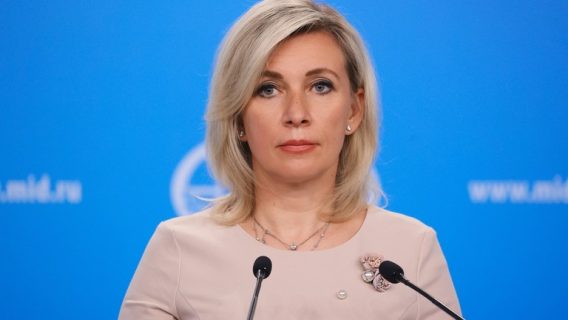
Foreign Ministry’s spokeswoman Maria Zakharova. © Sputnik
RT | December 29, 2022
France’s push to ban Russian news outlets both on the nation’s territory and in the EU is unacceptable, Moscow’s Foreign Ministry spokeswoman Maria Zakharova said on Thursday. Earlier this month, the nation’s TV regulator Arcom ordered satellite operator Eutelsat to stop broadcasting Channel One Russia, Rossiya 1, and NTV channels.
In a statement, Zakharova said the French watchdog had imposed those restrictions “under apparent pressure from the authorities,” adding that the move preceded relevant sanctions on the EU level. “Moscow is outraged by the new steps taken by Paris aimed at introducing more and more broadcasting bans on Russian media, both on its territory and in the EU as a whole,” she stated.
Such actions suggest that France, given its political clout in the bloc, “is the main lobbyist” supporting the ban on Russian TV channels in Europe, Zakharova claimed. “Such a display of Russophobia, which, unfortunately, has already become mundane, [points to] the aspiration to silence any voices that provide an alternative to the EU propaganda at all cost.”
According to Zakharova, Europeans “are being deprived of the right to free access to information.” She suggested that Paris and Brussels might be “afraid that the audience, after seeing a different point of view and picture of the world that does not correspond to that shown by the mainstream of the Western media, will draw their own conclusions” about global politics and the Ukraine conflict.
The spokeswoman described the crackdown on Russian media as “a flagrant violation” of freedom of speech, which is “discriminatory in nature.” The ban is “another testament that the Western ideal democratization model is in fact no more than a tool for achieving foreign policy goals,” Zakharova claimed.
In recent years, Western countries unleashed a massive campaign against Russian media, which only intensified after Moscow started its military operation against Ukraine. In March, the EU suspended the broadcasting activities of Sputnik and RT, with the number of blacklisted channels only growing as the bloc introduced new sanctions packages.
IRGC arrests seven riot leaders linked with UK intelligence services
The Cradle | December 26, 2022
Seven individuals active during the recent riots in Iran’s Kerman Province with ties to the United Kingdom were detained by Iran’s Islamic Revolutionary Guard Corps (IRGC) on 25 December, Tasnim news agency reported.
According to information released on 26 December by the IRGC’s Tharallah base in the Kerman Province of central Iran, seven individuals of a network with ties to UK intelligence services were detained. Those arrested had allegedly been leading riots and were in charge of recent disturbances in the area.
The network, which went by the name “Zagros,” collected anti-revolutionary agents from inside and outside the nation to carry out plots against the Islamic Republic in an attempt to destablize the government, particularly during the most recent unrest, IRNA reported.
According to the information released by the IRGC’s Tharallah base, among those detained were dual nationals who had been trying to flee the country.
The British foreign ministry stated that it was requesting more information from Iranian officials in response to claims that dual citizens of Iran and the United Kingdom had been detained there.
On 1 December, the head of the IRGC’S Basij forces was quoted as saying that the ‘enemies’ of the Islamic Republic have been using “hybrid warfare” against the country throughout the recent unrest, and that 47 foreign intelligence agencies are involved.
Last month, a number of French intelligence agents were also detained in Iran in relation to the unrest gripping the country, Interior Minister Ahmad Vahidi told state TV on 16 November.
“People of other nationalities were arrested in the riots, some of whom played a big role. There were elements from the French intelligence agency and they will be dealt with according to the law,” Vahidi said.
The interior minister did not specify the number of agents detained nor where they were discovered.
Several Mossad agents have also been arrested in Iran over recent months, who were allegedly planning to carry out sabotage operations and assassinations targeting security personnel.
On 22 December, Iran’s security forces identified and arrested members of four Mossad-affiliated operational teams, according to a statement disclosed by Tehran’s Intelligence Ministry.
The statement elaborated on how the Israeli intelligence agency planned to exploit Iran’s current instability in recent weeks, which began due to nationwide riots instigated by the alleged murder of Mahsa Amini while in the custody of Iran’s Gasht-e-Ershad, also known as the morality police.
The Intelligence Ministry further added that it obtained “clues” about a Mossad ringleader based in Europe, disclosing that information regarding the investigation will be revealed upon completion.
A few days prior, in a similar incident, the Intelligence Ministry disclosed that it arrested several members of the Mossad group who were allegedly planning to sabotage Tehran’s defense industry.
French energy crisis deepens – Bloomberg
RT | December 19, 2022
France faces a greater risk of running short on electricity this winter after the nation’s grid operator, Electricite de France (EDF), extended maintenance halts for several nuclear reactors, Bloomberg has reported.
The utility announced on Monday that the restart of its Penly-2 unit has been delayed from January 29 until June 11, while the reopening of the Golfech-1 unit has been pushed back to June 11 from February 18, according to the outlet.
The halt of the Chattenom-3 reactor has reportedly been prolonged by one month until March 26, and the restart of Civaux-2 has been postponed by more than a month until February 19.
On Friday, EDF announced it would delay the startup of a new nuclear reactor in western France by several months into 2024 due to construction work having been extended. That project is already more than a decade late, according to Bloomberg.
France produces roughly 70% of its electricity from 56 nuclear reactors, of which over 20 are currently shut down, causing a sharp drop in power generation.
EDF warned earlier that longer than planned maintenance halts and repairs on almost half of the nation’s nuclear plants may turn France, which has traditionally been a power exporter, into an importer. The grid operator has also warned of a potential electricity shortfall in the colder months as heating demand rises while the utility grapples with reactor repairs.
This will also add to rising concerns over power supplies to neighboring countries, as France has long been Europe’s largest producer of nuclear energy.
US playing ‘dangerous game’ in Yemen, insists on aggression: Ansarullah
Press TV – December 14, 2022
Yemen’s popular resistance Ansarullah movement has warned against the United States’ military presence in the country, saying Washington is playing a “dangerous game” as it insists on pursuing a policy of aggression while impeding the national peace process.
Ali al-Qahoum, a member of Ansarullah’s Political Bureau, made the remarks during an exclusive interview with Lebanon’s al-Mayadeen television network on Tuesday night.
“The presence of US troops in the Bab al-Mandab and off the coast of Yemen poses a serious threat to maritime navigation,” he said, adding that it further proves Washington’s aggressive policy against the impoverished country.
He went on to say that Saudi Arabia’s war and blockade against Yemen over the past eight years has been fully coordinated by the US, noting that “Riyadh is nothing but a tool in the hands of Washington to execute its policy of aggression with the participation of Israel, the UK and France.”
The Ansarullah official further noted that “the US and UK’s tendencies to keep the conflict ongoing and impose more embargo on Yemen, demand the utmost national responsibility of enhancing steadfastness.”
“If the Americans insist on aggression and blockade, the response will be in a way that achieves the required effect and sufficient pressure on the aggressor, whoever it may be,” he added.
Al-Qahoum further stated that our message to the Saudi-led coalition is that “elusiveness, gaining time, changing tools, and all the aspects of aggression and conspiracies are unacceptable.”
“We tell the aggressor countries not to rely on time and not to count on the deceptiveness of the United Nations and the US envoys as the overall equation is changing and the reality is different,” he added.
He further pointed out that “the only guarantor for the return of the ceasefire is that the demands of the Yemeni people and their rights be respected, which will open the prospects for peace, and there is no way to achieve this through deception.”
The UN-brokered truce between the Saudi-led coalition and Yemen first came into effect in April and has been extended twice since.
In mid-October Yemeni Foreign Minister Hisham Sharaf said there would be no talks about the extension of the six-month truce which expired on October 2 unless the nation’s legitimate demands were fully met.
Saudi Arabia launched the devastating war on Yemen in March 2015. The objective was to reinstall the Riyadh-friendly regime of Abd Rabbuh Mansour Hadi and crush the popular Ansarullah resistance movement, which has been running state affairs in the absence of a functional government in Yemen.
While the Saudi-led coalition has failed to meet any of its objectives, the war has killed hundreds of thousands of Yemenis and spawned the world’s worst humanitarian crisis.
Washington and London have been providing the coalition with direct arms, logistical, and political support, including through outfitting it with precision-guided ammunition that the Saudi-led forces have been using amply against Yemen’s civilian population.
French energy major makes costly exit from Russia
RT | December 10, 2022
French oil and gas giant TotalEnergies has announced on Friday it is giving up its stake in Russian gas producer Novatek and withdrawing its two representatives from the company’s board.
The exit will result in a “record” impairment of about $3.7 billion in the fourth quarter as Total will “no longer equity account for its 19.4% stake in Novatek.”
The French company said in a statement that the two directors have had to abstain from voting in Novatek board meetings, “in particular on financial matters,” due to Western sanctions imposed on Russia.
Unlike BP and Shell, which left Russia shortly after the conflict in Ukraine began in late February, TotalEnergies had held on to its projects in the country and faced international sanctions.
“Under these circumstances, the Board of Directors of TotalEnergies has decided to withdraw the representatives of the Company from the board of PAO Novatek with immediate effect,” the company announced.
The French energy major also said it cannot sell its stake in the Russian firm as “it is forbidden for TotalEnergies to sell any asset to one of Novatek’s main shareholders who is under sanctions.”
Apart from the stake in Novatek, the French company has minority holdings in Russian liquefied natural gas (LNG) projects Yamal LNG and Arctic LNG. According to Reuters estimates, exiting Russian projects will bring total impairments of TotalEnergies this year to $14.4 billion.
In addition, Total will no longer book reserves for its interest in Novatek, with an impact on the company’s reported proved reserves at the end of 2021 of 1.7 billion barrels of oil.
UNTRUSTWORTHY

By Helmholtz Smith | Son Of The New American Revolution | December 8, 2022
Russian has a rather complicated adjective недоговороспособны (nedogovorosposobny) for which there isn’t any good English equivalent. Literally it means something like “not together in speaking to find a way”; the clumsy English word used is not-agreement-capable. The meaning is “you can’t make an agreement with them and, even if you could, they’d break it”.
The Minsk agreements were negotiated between Kiev and the breakaway regions of Lugansk and Donetsk with two variants in 2014 and 2015. In essence they agreed to a ceasefire and the start of negotiations on some form of autonomy for Lugansk and Donetsk inside the borders of Ukraine. The second version had big involvement by France (President Hollande) and Germany (Chancellor Angela Merkel) – they were its guarantors. Russia’s role was to force Lugansk and Donetsk to the table (they would have preferred independence or joining Russia.) The agreements never took effect.
Kiev never pretended to try and then-President Poroshenko has recently admitted that Kiev only saw it as a mechanism to buy time and Donetsk and Lugansk could “hole up in basements“. Western consumers/dupes of their media would only have heard of it in the context of “In Ukraine, we have maintained an effort under Ambassador Kurt Volker to provide the means by which Russia can live up to its commitments under the Minsk Agreements.” More lies – Russia had no commitments in the agreement, the obligations were entirely on the part of Kiev, Donetsk and Lugansk. Russia delivered the latter two to the signing table and France and Germany were supposed to deliver the first. Had the agreements been lived up to – had France and Germany pressured Ukraine – Kievans would be cooking their meals in lighted rooms after a hot shower and sleeping in their own beds. Thousands of people would be alive and healthy today.
Putin recently told a group of soldiers’ mothers “In hindsight, we are all smart, of course, but we believed that we would manage to come to terms, and Lugansk and Donetsk would be able to reunify with Ukraine somehow under the agreements – the Minsk agreements… We were sincerely moving towards this.”
What did we just learn the other day from former German Chancellor Angela Merkel?
And the 2014 Minsk agreement was an attempt to give Ukraine time. She also used this time to get stronger, as you can see today. The Ukraine of 2014/15 is not the Ukraine of today. As you saw in the battle for Debaltseve (railway town in Donbass, Donetsk Oblast, ed.) in early 2015, Putin could easily have overrun them at the time. And I very much doubt that the NATO countries could have done as much then as they do now to help Ukraine.
[Sie hat diese Zeit hat auch genutzt, um stärker zu werden, wie man heute sieht. Die Ukraine von 2014/15 ist nicht die Ukraine von heute. Wie man am Kampf um Debalzewe (Eisenbahnerstadt im Donbass, Oblast Donezk, d. Red.) Anfang 2015 gesehen hat, hätte Putin sie damals leicht überrennen können. Und ich bezweifle sehr, dass die Nato-Staaten damals so viel hätten tun können wie heute, um der Ukraine zu helfen.]
Compare that with what she said at the time – “We are here to implement the Minsk deal, not to call it into question“.
So, Poroshenko was right – it was just a delaying tactic, NATO and Kiev never had any intention of negotiating an arrangement in which Lugansk and Donetsk, inside Ukraine, would enjoy a degree of autonomy and Germany, at least, never intended to push Kiev.
Putin was lied to and fooled.
I have three questions.
- Why would anybody in Russia ever bother negotiating with these people ever again about anything?
- Why would anybody in the rest of the world – China, India, Iran, the Middle East, Africa, South America – ever bother negotiating with these people ever again about anything?
- What possessed her to admit this now? An upwelling of conscience? Arrogance – we’re Number One and always will be and we don’t give a damn what you think? You’d think after the catastrophe that is hitting Ukraine and Europe because she (and others) ignored diplomacy and negotiation that she’d keep her mouth shut. (Korybko speculates on her motives.)
Недоговороспособны – even when you think you’ve made an agreement, they’re just trying to fool you.
American Pravda: Lost Histories of the Great War

Female delegates to the 1915 Women’s Peace Conference in The Hague
BY RON UNZ • UNZ REVIEW • NOVEMBER 28, 2022
Friends of the Palo Alto Library runs a local monthly book sale, now reopened after nearly two years of Covid closures, and I usually attend, often buying for a pittance items that have caught my eye. A few weeks ago I picked up for a quarter a copy of Adam Hochschild’s widely praised 2011 volume To End All Wars, his account of the British anti-war movement during World War I, which I’d seen very favorably reviewed in the Times and elsewhere when it was originally released. My own knowledge of that era was relatively meager and sparse, so I spent a couple of days reading the text.

Hochschild seems a fine writer and researcher, certainly earning the glowing blurbs by prominent scholars that stud his book, and he told a very interesting story of the men and women who organized and led Britain’s powerful but heavily suppressed anti-war movement as it opposed the continuing slaughter in the trenches. Many of these individuals suffered harsh imprisonment for their dissent, including Keir Hardie, the founder of what became the Labour Party and Bertrand Russell, the brilliant mathematical philosopher and future Nobel Laureate.
Support for the war split the militant Suffragette movement straight down the middle, and important political families were also often deeply divided, with the beloved elder sister of Britain’s own military commander-in-chief in France becoming a prominent peace campaigner. Just a few years earlier, E.D. Morel, the country’s leading investigative journalist, had been celebrated as an international hero for exposing the horrors of the Belgian Congo, but he was now imprisoned for his anti-war writings, with the treatment so brutal that it permanently broke his health and he died at the age of 51, a few years after the war ended.
Just as I’d expected, I discovered a wealth of information about a period only known to me in outline, and I saw no reason to doubt any of its accuracy, including the brief but surprising references to supposedly widespread German war crimes in occupied Belgium. I was very glad to fill these large gaps in my existing knowledge.
But near the end of Hochschild’s discussion of the year 1916, he emphasized that unlike Britain there was absolutely no corresponding anti-war movement in most other countries, including Germany. As he put it on p. 217:
“Both sides were committed to fight to the bitter end, and by now, two years into the war, if someone in a prominent position on either side so much as advocated peace talks, it was considered close to treason.”
On reading this, I did a double-take and almost questioned my sanity. Surely, Hochschild must be aware that exactly at that point in time, the government of Germany had publicly proposed international peace talks without preconditions aimed at ending the war, suggesting that the massive, pointless slaughter be halted, perhaps largely on a status quo ante basis.
The Germans had recently won several huge victories, inflicting enormous losses on the Allies in the Battle of the Somme and also completely knocking Rumania out of the war. So riding high on their military success, they emphasized that they were seeking peace on the basis of their strength rather than from any weakness. Unfortunately, the Allies flatly rejected this peace overture, declaring that that the offer proved Germany was close to defeat, so they were determined to hold out for complete victory with major territorial gains.
As a result, many additional millions needlessly died over the next two years, while just a couple of months later in early 1917 Russia’s Czarist government collapsed, eventually leading to the Bolshevik seizure of power, a turning-point with fateful, long-term consequences.
I don’t recall having ever seen any discussion of that rejected German peace proposal in the cursory treatment of the First World War provided by my basic high school or college textbooks, so I hadn’t originally heard of it. But around 2000, I’d begun a software project aimed at digitizing the near-complete archives of many of America’s most influential opinion magazines of the past, and along the way I’d been surprised to notice all those late 1916 headlines describing the peace offer, then glanced at a few of the articles and discovered the important history that I’d previously missed. For example, the December 23, 1916 lead article in America’s influential Literary Digest carried the headline “Germany’s Peace-Proposals” and for several weeks around that date numerous other stories in that periodical, as well as in the Nation, the New Republic, and various other publications had covered the same topic.
But although my introductory textbooks had failed to mention those facts, Hochschild was an award-winning author and historian, someone who had obviously devoted years of diligent research to his book on WWI peace movements. I found it difficult to believe that he was unaware of those crucial events, and I assumed that he would discuss them in the next chapter, but I finished his entire 450 page book seeing absolutely no mention anywhere.
At that point, I decided to confirm my recollections by doing a few casual Google searches on the topic, and found surprisingly little on the Internet. I then consulted the Wikipedia entry on World War I, which ran almost 40,000 words including nearly 500 references, but it only featured a single sentence on the German peace proposal that might have ended the fighting and thereby saved many millions of lives. Fortunately, that brief mention did link to a short 2018 Washington Post piece by a couple of professional historians, whose account fully matched my own understanding of the facts. The Great War ended on November 11, 1918, and their piece had appeared exactly one hundred years later to the day. So apparently it had required the centennial anniversary of the conclusion of that war to prompt our mainstream media to finally provide some coverage of that nearly forgotten story.
- Why the First World War Lasted So Long
Alexander Lanoszka and Michael A. Hunzeker • The Washington Post • November 11, 2018 • 1,100 Words
If a negotiated peace had ended the wartime slaughter after just a couple of years, the impact upon the history of the world would obviously have been enormous, and not merely because more than half of the many millions of wartime deaths would have been avoided. All the European countries had originally marched off to battle in early August 1914 confident that the conflict would be a short one, probably ending in victory for one side or the other “before the leaves fell.” Instead, the accumulated changes in military technology and the evenly-balanced strength of the two rival alliances soon produced a gridlock of trench-warfare, especially in the West, with millions dying while almost no ground was gained or lost. If the fighting had stopped in 1916 without a victory by either side, such heavy losses in a totally pointless conflict surely would have sobered the postwar political leadership of all the major European states, greatly discouraging the brinksmanship that had originally led to the calamity let alone allowing any repeat. Many have pointed to 1914 as the optimistic high-water mark of Western Civilization, and with the sobering impact of two disastrous years of warfare and millions of unnecessary deaths, that peak might have been sustained indefinitely.
Instead, the consequences of the continuing war were utterly disastrous for all of Europe and much of the world. Many millions more died, and the difficult wartime conditions probably fostered the spread of the deadly Spanish Flu epidemic of 1918, which then swept across the world, taking as many as 50 million lives. Russia’s crippling defeats in 1917 brought the Bolsheviks to power, leading to a long civil war that killed many millions more, followed by three generations of global conflict over Soviet Communism, certainly accounting for tens of millions of additional civilian deaths. The extremely punitive terms that the Treaty of Versailles imposed upon defeated Imperial Germany in 1919 eventually led to the collapse of the Weimar Republic and a second, far worse round of global warfare involving both Nazi Germany and Soviet Russia, a catastrophe that laid waste to much of Europe and claimed several times as many victims as the Great War itself.
Although the Allies at the time had bitterly denounced what they sometimes called the dangerous “German Peace Offensive” of late 1916, it seemed obvious to me that the world would have been a much better place if it hadn’t been rejected.
Just out of curiosity, I queried quite a number of knowledgeable, well-read individuals, asking what they knew of the abortive 1916 German peace proposal and their responses were quite interesting. A mainstream scholar who had written several books on First World War topics was a little surprised at Hochschild’s lack of awareness, but noted that academic fashions since the 1960s had shifted in a direction sharply hostile to Imperial Germany, and as a result coverage of those elements of the historical record suggesting otherwise had been greatly minimized over the last half-century or more.
Meanwhile, nearly all of the lay individuals I contacted had never heard of the 1916 effort at peace and were mostly shocked by the story, the one notable exception being Kevin Barrett, whose long-running Truth Jihad podcast show had featured various conspiratorial guests over the years who had discussed it, sometimes with regard to broader, less plausible historical plots.
The extent to which the seemingly undeniable facts of the 1916 peace proposal have disappeared from public discussion is really quite remarkable, and I gradually discovered that Hochschild was far from alone in providing no hint of the story.

Consider high-profile British-born historian Niall Ferguson of Harvard and Stanford Universities, who had made his early name with his publication of The Pity of War in 1999, a highly heterodox reanalysis of World War I that came to numerous controversial conclusions. Among other positions, Ferguson boldly argued that the British should have stayed out of the conflict, which would then have resulted in a quick and sweeping German victory, leading Germany to establish political and economic hegemony over Continental Europe. But this would have simply resulted in the creation of the EU three generations earlier and avoided the many tens of millions of needless deaths in the two world wars, let alone the global consequences of the Bolshevik Revolution.
Although Ferguson was deliberately provocative in his account, I didn’t remember seeing any specific mention of the 1916 peace proposal when I’d read the book a few years ago, and reexamining it now confirmed my recollection, even though his Introduction contains nearly a page of “What If?” scenarios, and he discussed numerous “alternative realities” later in his text. Indeed, just a couple of years earlier he had edited Virtual History, a collection of more than a dozen lengthy essays by professional scholars examining the consequences of history taking a different turn at numerous key junctures, including a German victory in WWI, but once again it totally lacked any suggestion of a possible negotiated peace in 1916.
An even longer volume of a very similar type, appropriately titled What If? appeared in 2001, edited by historian Robert Cowley and it was just as silent. The book ran over 800 pages, of which more than 90 were devoted to seven different alternate scenarios involving World War I, but the possibility of a 1916 peace nowhere appeared, despite surely being one of the most obvious and important “What Ifs.”
Comprehensive mainstream histories also seemed quite silent. In 1970 renowned British historian A.J.P. Taylor published English History, 1914-45, which ran almost 900 pages, with nearly a quarter of those devoted to WWI; but no hint was given of the 1916 German peace proposal, with the very possibility of the Germans accepting a reasonable compromise peace at that point being dismissed in just a few sentences and a footnote. John Keegan’s 1999 volume The First World War runs 475 pages and also appears to lack any mention. While I’ve hardly performed an exhaustive review of all the standard historical texts, I think these two examples seem fairly typical, probably thus explaining Hochschild’s complete lack of awareness, with Ferguson and other distinguished authors likely having similar gaps in their knowledge.
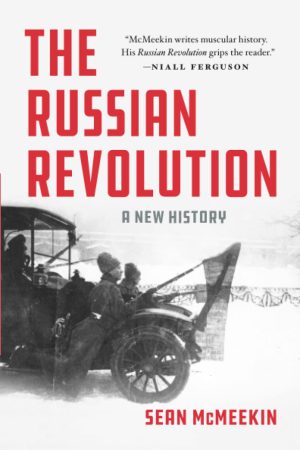
The issue also seemed not to come up in more specialized studies, even when it might have played an important role. A couple of years ago I’d read Sean McMeekin’s 2017 history The Russian Revolution, an outstanding, meticulous reconstruction of the complex and contingent circumstances that led to the 1917 fall of the Czarist Regime and the subsequent triumph of Lenin’s Bolsheviks.
The prologue is devoted to the murder of Grigory Rasputin, the peasant faith-healer who exercised such enormous influence over the Czar and his family that although he held no official position, he probably ranked for many years as the third most powerful figure in the Russian Empire. Moreover, his December 1916 death at the hands of a conspiratorial group that included top members of Russia’s elite seems to have been an important factor in destabilizing the regime, leading to its collapse in the February Revolution just a couple of months later.
Rasputin had long had severe misgivings about continuing the costly war against Germany, and this was a crucial motive behind his killing; indeed, fears of the defection of their huge Russian ally led members of British Intelligence to assist the effort. Although plots against Rasputin’s life had been circulating for months, he was finally struck down on December 20th, exactly when Germany’s very public “peace offensive” was gaining considerable international attention; and although the author doesn’t directly connect the two developments, the timing hardly seems likely to have been purely coincidental. So the desperate Allied moves to block any support for the proposed German peace plan may have actually helped trigger the Russian Revolution.
Obviously an early end to the Great War would have been an event of tremendous importance and the 1916 German efforts to secure peace were certainly treated as such in the news reports of the day. But Germany ultimately lost the war and the resulting official narrative blamed Europe’s catastrophe upon relentless German militarism, so that German peace proposal became a discordant element, raising troubling questions about the overall storyline. As a consequence, those facts were eventually flushed down the memory-hole for most of the next one hundred years, and if I hadn’t glanced at those original 1916 headlines, I certainly never would have discovered them.
Indeed, once I casually mentioned this interesting history on my website, one or two of the other commenters sharply challenged my claims, regurgitating the orthodox narrative that the Germans had been opposed to any reasonable negotiated peace, without explaining why all the contemporaneous media accounts had said exactly the opposite. According to these critics, Germany’s powerful military establishment would certainly have vetoed any such proposals, and I decided to see if I could find anything stronger to support my position than merely a thousand-word centennial op-ed in the Post written by a couple of obscure, junior academics.
To my considerable surprise, I discovered that just last year an entire book had been published on the lost chances for peace in 1916, apparently the first and only English-language work ever devoted to that seemingly important topic. Moreover, the author of The Road Less Traveled was Philip Zelikow, best known for having served as executive director of the 9/11 Commission, and therefore someone entirely in the good graces of the mainstream establishment. Near the end of his Introduction, he explained that he had been working on the project off and on for more than a dozen years.
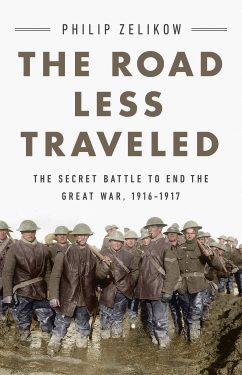
Although the main text ran well under 300 pages, his account of events seemed thorough and persuasive in its coverage, drawing heavily upon archival records and private diaries to firmly establish the same remarkable story that I had originally glimpsed in those old publications. His exhaustive research had uncovered a great deal of additional material, piecing together an account radically different than what had been presented in many decades of highly misleading treatments. And despite such seemingly controversial “revisionism,” his work received glowing endorsements from leading academic scholars and favorable reviews in such influential publications as Foreign Affairs, the National Interest, and Foreign Policy, though since it never caught the attention of my newspapers I’d remained unaware of it.
The story Zelikow tells is a really fascinating one, especially since it had remained almost entirely hidden from public awareness for more than a century.
Although influential elements including his closest political advisor had wanted America to enter the war on the Allied side, President Woodrow Wilson had been hoping all along that he could mediate an end to the conflict, much like his predecessor Theodore Roosevelt had done in the Russo-Japanese war, with the latter’s success crowned by winning the 1906 Nobel Peace Prize.
During the first two years of the fighting, neither side had responded favorably to his peace feelers, but by August 1916 circumstances had changed, and although the conflicted British leadership finally decided to continue trying their luck on the battlefield, the similarly-conflicted German government secretly accepted Wilson’s offer to preside as mediator at a peace conference. Given the horrific casualties that both sides had already suffered, it was widely believed that once public peace negotiations began, there was little chance that the fighting would ever resume. And with Wilson, most of the German leadership, and much of the British Cabinet ready for peace, the prospects certainly appeared excellent, especially since the Allies were so heavily dependent upon American supplies and financing for survival.
But although all the pieces seemed ready to fall into place, opportunities were repeatedly missed during the more than five months that followed. One important factor was the extreme difficulty of communications since the British had severed Germany’s trans-Atlantic telegraph cable at the beginning of the war, meaning that German communications with Wilson or their own ambassador had to take a circuitous route through various neutral countries and Latin America, finally arriving at DC in encoded form days or even weeks later.
Another crucial factor was that Wilson lacked any strong staff that could translate his broad ideas into serious policy proposals. Unlike major European countries, America back then had little bureaucratic infrastructure, with Wilson mostly writing his own speeches and regarding his new Secretary of State, a lawyer who had no diplomatic experience, as merely an intelligent clerk. Instead, his only close advisor was Col. Edward House, a wealthy Texan dilettante who often had eccentric views, and so strongly favored the British that he sometimes seemed to deliberately sabotage the peace effort. As a lifelong academic, Wilson himself had only spent two years as Governor of New Jersey before unexpectedly reaching the White House in 1913, and therefore he had little direct experience in either politics or international diplomacy.
So although the German government responded favorably to his offer of a peace conference in August 1916, Wilson failed to grasp the urgency of their request, and decided to take no action until after the November election. Meanwhile, within Germany, the military advocates of an unrestricted U-boat campaign against the American ships carrying Allied supplies were pressing very hard for their alternate strategy, which was sure to lead to a break in American relations.
After the British had suffered enormous casualties in their attack on the Somme, including losing nearly 20,000 dead on the first day of fighting, their own peace party was strengthened and the government became willing to consider Wilson’s offer. A son of Prime Minister H.H. Asquith had died in the battle and another had been wounded, while the German offer to restore occupied Belgium satisfied the most important British condition.
But then at the end of September, War Minister David Lloyd George — who had been a leading advocate of the American peace option — suddenly switched sides, and declared that Britain would never accept a compromise peace and would instead be willing to fight for twenty years if necessary in order to achieve a total military victory, with anything less than a “knockout” being “unthinkable.” Zelikow plausibly argues that Lloyd George believed he could use his reversal on peace to gain the support of British hardliners such as Lord Northcliffe’s powerful newspaper group for replacing Asquith as Prime Minister, and indeed that was exactly what happened within a couple of months, with the advocates of peace being pushed out of the government.
Despite the shifting positions of the British, Wilson returned to his peace efforts after his November 7th reelection, only to encounter strong opposition from House, his key advisor. Although Britain was already locked in a desperate struggle with Germany and totally dependent upon American supplies, House somehow became convinced that if America pressed too hard for peace, the British would declare war against our own country. Incredible as it might sound to us, House repeatedly argued to Wilson and others that a British army could sweep down from Canada while the Royal Navy would land hundreds of thousands of troops from their Japanese ally on our coasts, together seeking to conquer the United States. Although these bizarre concerns were rejected, they assisted the overwhelmingly pro-British State Department officials in delaying Wilson’s plans to launch his peace proposal.
Around this same time, the German ambassador began pleading with the Wilson Administration to act immediately lest the opportunity for peace be lost, and Zelikow entitled this chapter “Peace Is on the Floor Waiting to Be Picked Up!” which was one of the impassioned phrases that envoy had used. Meanwhile, Germany’s hard-line military leadership was steadily increasing the pressure on their government to abandon its peace efforts and instead return to the unrestricted submarine warfare that they claimed could quickly win the war.
Growing desperate at the president’s endless delays, Germany and its allies eventually issued their own unconditional call for peace talks on December 12th, hoping that step would finally prompt Wilson to act by inviting participants to a peace conference at the Hague and offering himself up as the mediator. The German announcement captured the attention of the world and forced Wilson to respond lest he be eclipsed, and a week later he finally circulated his own peacemaking note, but as Zelikow explains, it constituted a “misfire,” lacking as it did any specifics let alone an invitation for the warring parties to attend an actual peace conference. So the Allies firmly rejected the German offer as a “trick” and were able to ignore Wilson’s statement since it required them to do nothing. Over the next few weeks, the opportunity for peace faded away, and in late January the Germans announced they would return to unrestrained submarine warfare, leading Wilson to break off relations and move towards war with Germany.
Although influential elements within the American government had sought this result from the beginning, Zelikow persuasively argues that the mistakes, errors, and misunderstandings by Wilson and the others also seeking a negotiated peace were probably more responsible for this outcome than the efforts by the individuals who actually intended it. His harsh historical verdict on the former hardly seems unfair:
In the failure to make peace at the most opportune moment, no one failed, and failed the world, more than President Wilson. His was the most consequential diplomatic failure in the history of the United States.
Thus, one of the most important turning points of the twentieth century probably came in late 1916 with the tragic collapse of a peace effort that initially seemed so likely to succeed, and Zelikow’s gripping narrative tells the story of how and why that opportunity slipped away. By all rights, the Lost Peace of 1916 should have become the subject of countless novels, plays, and films, but instead it remains almost totally unknown today, even among the most highly educated.
My own encounter with some of the lost history of World War I came when I noticed the headlines and read the articles that had run in our leading publications while the story was still unfolding. Once important events have been finalized and the heroes and villains officially determined, there is a natural tendency to reinterpret the past in the light of what ultimately transpired, thereby establishing a simple narrative that follows straight lines. Put another way, the winners write most of the histories.
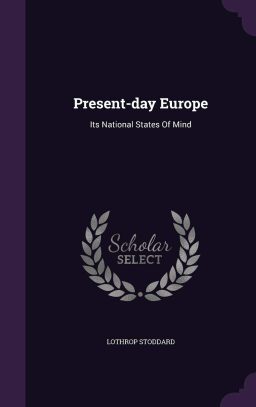
For that exact reason, I think that one of the least known but most absolutely valuable books about the Great War was completed in mid-March 1917, just weeks before our own involvement inevitably distorted all subsequent analysis. The author was Lothrop Stoddard, who had earned his Ph.D. in history at Harvard and was then just beginning a career that would soon establish him as one of America’s most influential public intellectuals. His book was Present-Day Europe, a scrupulously even-handed survey of the wartime politics and recent history of each individual nation.
The work is not overly long, running less than 75,000 words, and can easily be read in just a day or two, but it provides an enormous wealth of detailed, contemporaneous information, much of which appears to have been left on the cutting-room floor of later historiography, written after the official narrative had already hardened. Moreover, as he explained in his Preface, Stoddard followed a rigid requirement of only quoting the natives of each country in their own chapter, Englishmen on England, Germans on Germany, and so forth, thereby providing an invaluable presentation of the elite and popular sentiments of each nation, something very useful to those of us seeking to reconstruct the situation more than a century later.
- Present-Day Europe
Its National States of Mind
Lothrop Stoddard • 1917 • 74,000 Words
Stoddard’s book had gone to press just weeks after the final rejection of the German peace offer, and he hardly let a failed diplomatic project well-known to all of his readers dominate his narrative. But although the author was unaware of the extensive backstory, he gave the peace efforts reasonable treatment in the chapters on Britain and Germany, adding interesting details missed by both Zelikow and Hochschild. For example, as early as June 1916 several prominent British political figures of very mainstream views had publicly called for peace negotiations, including in the pages of the Economist, and their declaration had been emphatically endorsed by the editor of that influential publication. But this high-profile ideological rebellion in the elite media was swiftly crushed, with the editor losing his job as a consequence. Stoddard later explained that the uncompromising Allied rejection of all German peace offers had by early 1917 “spurred the entire German people to desperate wrath.”
A perfect example of the tremendous value of Stoddard’s material comes in his discussion of war aims, which obviously provided the necessary context for the differing national reactions to early peace negotiations, and there was a stark contrast between those of the two opposing camps. The goals of the Germans were relatively mild, with almost no demands for annexations of new territory. By contrast, the French were absolutely committed to the total destruction of Germany as their primary objective, with those sentiments being almost universally held across all political parties. They regarded the unified Germany created in 1870 as simply too powerful a European rival, which therefore had to be fragmented back into multiple, weak states. And not only would France reabsorb the lost provinces of Alsace-Lorraine, but it would also annex much of the Rhineland, territory that had been German for a thousand years. The British were not quite that extreme, but most of their political leadership class strongly believed that Germany needed to be totally crippled as an economic and military competitor.
In the East, the primary war aim of the Russian Empire was the annexation of Constantinople, the capital city and largest metropolis of Germany’s Ottoman Empire ally, which would give Russia strategic control of the Bosphorus Straits. Although Serbia had already been defeated and occupied by this date, elements of the Serbian government had originally provoked the war by arranging the assassination of Franz Ferdinand, the prospective Austro-Hungarian ruler, with their broader goal being the total destruction of that multi-ethnic state, several of whose major pieces would then become part of a Greater Serbia.
So to a considerable extent, Germany and its allies were actually the “status quo powers,” reasonably satisfied with the existing arrangement of borders, a situation totally different from that of their Allied opponents. When one side in a conflict is determined to dismember and destroy the other, an early peace is difficult to arrange. Moreover, the German alliance faced an opposing coalition that was far superior in manpower, economic strength, and potential military resources, so it was fighting what it reasonably regarded as a purely defensive war. This clear situation at the time is exactly contrary to what has been implied or even explicitly stated in our basic History 101 textbooks for the last one hundred years.
Obviously, the complete picture was not entirely one-sided, and an important factor behind the outbreak of the war had been German concerns over the rapidly growing population and military power of its enormous Russian neighbor to the east. Indeed, although the very powerful Social Democratic political block in the German parliament was strongly anti-militarist, its members were also intensely hostile to the Czarist regime, which their influential Jewish elements demonized as fiercely anti-Semitic, so the Russian threat was an important factor behind the near-total domestic political unity once war broke out. Meanwhile, important elements of the German military establishment had long favored waging a preventive war aimed at breaking Russian power before it became too overwhelming.
Major German victories during the first couple of years of fighting had led to the occupation of considerable Russian territory, and Jozef Pilsudski, Poland’s George Washington figure, had organized an army of 20,000 Poles that fought side-by-side with the Germans. As a consequence, the Germans decided to resurrect an independent Poland as a German client state more than a century after it had disappeared from the map, a geographical change that would greatly weaken Russia while providing a buffer against the latter’s future westward expansion.
Although of relatively minor importance, one of Stoddard’s most impressive sections is his discussion of the Balkans, home to several bitterly quarrelsome states, whose stories I had never previously seen treated, let alone analyzed in such intelligent detail. These countries had all fought wars against each other in 1912 and then again in 1913, and given the triggering 1914 events in Sarajevo, the Great War that followed might almost be regarded as merely a third consecutive Balkan round of fighting that unexpectedly brought in the rest of Europe.
As the author points out, prior to the Ottoman conquest and long occupation, each of the different Balkan peoples had at one time or another ruled a larger regional empire of their own, which they naturally sought to resurrect after Ottoman power receded. But all those previous Balkan empires had overlapped in territory, thus leading to bitter, conflicting claims, and the repeated rounds of new fighting between Bulgaria, Romania, Serbia, and Greece, all of which also coveted portions of the neighboring Austro-Hungarian and Ottoman empires, thereby contributing to the severe instability. Totally contrary to my assumptions, Stoddard explained that these individual countries actually had very different political and social profiles, with Bulgaria’s characteristics being entirely different from those of neighboring Romania, for example, though they had always been lumped together in my mind.
Although Stoddard’s book focused on the internal dynamics of the major European participants without directly addressing the exact causes of the conflict, his material generally supported the impression I’d always gotten from my textbooks that two heavily-armed and hostile alliances had blundered into a huge war, neither of them fully expecting or intending what eventually occurred. Just as Zelikow’s detailed scholarship indicated that the US, Germany, and Britain had together fumbled away the possibility of peace in 1916, the European great powers had started the conflict a couple of years earlier in much the same fashion.
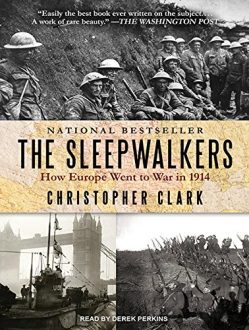
Two major historical volumes focusing on exactly that last topic had appeared about a decade ago, just before the hundredth-year anniversary, and they strongly reinforced that same conclusion with exhaustive scholarship. The Sleepwalkers by Christopher Clark and July 1914: Countdown to War by Sean McMeekin, together received a very lengthy and favorable front-page treatment in the NYT Book Review by Harold Evans, former editor of the Times of London. I’d read the first of these books a couple of years ago and the second just very recently, and found them both excellent, telling as they did a broadly similar story across their combined 1,100 pages.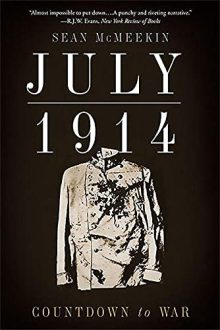
McMeekin’s very detailed narrative of the exact circumstances and decision-making process during July 1914 greatly emphasizes the extremely important role of unexpected, contingent factors that could so easily have diverted the history from its track. For example, just prior to the assassination in Sarajevo, Britain seemed on the very verge of violent civil war over Irish Home Rule, a conflict so bitter that it was weeks before the Cabinet even considered the developing situation in the Balkans, so if the events had occurred just a couple of months later, British military involvement might have been impossible. Similarly, by his strong initial stand against any attack on Serbia, the powerful Hungarian Prime Minister prevented the sort of immediate retaliatory strike that probably would have avoided bringing in other countries, unlike the eventual attack that came more than a month after the assassination; so the determined peace policy of a leading European statesman actually helped trigger the wider war. In all these countries, there were obviously powerful factions that had spent years pressing for war, but there were other powerful factions that felt otherwise, and the circumstances of the outbreak depended largely upon the particular decisions made.
Once the enormous conflict began, assigning the exact measure of guilt for the calamity became a strategic objective during the years that followed, especially on the part of the Allies, with Clark even noting that both the French and the Russians created fraudulent documents that they then inserted into their own diplomatic archives. The scholarly dispute over relative war-guilt has continued unabated for more than a century now, and while neither of these books settles the matter, I do think that they provide a very solid factual basis, explaining exactly who did what and when, thereby allowing each of us to assign the appropriate quantity of guilt to those particular actions.
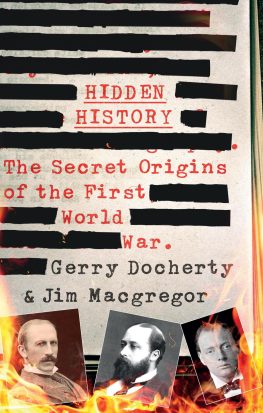
A very different sort of book on the same topic published almost simultaneously was Hidden History by amateur British historians Gerry Docherty and Jim Macgregor. Although totally ignored by the mainstream media, their extremely conspiratorial account of Britain’s political leadership prior to the outbreak of the war has become wildly popular in many alternative circles, and I finally decided to read it a couple of years ago. Unfortunately, I was far from impressed by their analysis, and although they usefully described some of the machinations of the most aggressive British political faction, I think they accorded it far more power than it probably possessed. I wrote my own appraisal in a comment after I’d only read a chapter or two, but once I’d finished the remainder of the book, my negative verdict was unchanged:
Well, I’ve seen numerous commenters give glowing endorsements of the Docherty/Macgregor book over the last year or more, so since I had it sitting around, I finally decided to take a look. So far, I haven’t really been very impressed.
As near as I can tell, their “revolutionary” hypothesis is that near the end of the 19th century a small group of individuals near the top of Britain formed a “secret society” with the central goal of greatly enhancing the power and wealth of the British Empire, sometimes using ruthless or dishonest means, and permanently dominate the world.
Is that really so remarkable? Suppose the “secret society” had never been formed? Wouldn’t we naturally assume that the normal, run-of-the-mill leaders of Britain would be doing their best to enhance the power and wealth of the British Empire? Wouldn’t it be much more shocking if they weren’t?
Should someone write a book: “Top executives at Google are secretly trying to expand Google’s wealth and power and gain dominance over the entire Internet.” Or “Top executives at Goldman Sachs are secretly trying to expand Goldman’s wealth and power and permanently dominate Wall Street.”
Neither Docherty nor Macgregor seem professional historians, and they’re certainly correct in attempting to refute the “legend of German villainy,” but I think that lots and lots of professional historians have already done that.
Decades ago, my ordinary high school texts emphasized that one of the main factors behind WWI was Britain’s fears of a rising Germany. And it’s also true that another major factor was Germany’s fears of a rising Russia. Historians have endlessly argued about the relative weighting of all these different factors, but everyone’s certainly aware of them.
In sharp contrast, a different book published just over a century earlier might today be seen as a product of the conspiratorial fringe, but it was certainly not viewed that way at the time, given that the author was widely regarded as one of America’s leading public intellectuals and the work was favorably discussed in the influential Literary Digest. David Starr Jordan was the founding president of Stanford University, a biological scientist by training who had published at least ninety-odd books, mostly of a scientific nature but also including works of broader public policy.
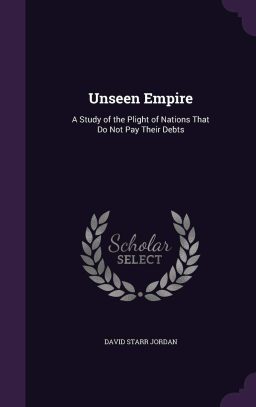
Unseen Empire, which appeared in 1912, fell into that latter category and argued that although the United States and the major European powers remained nominally sovereign, their heavy, unproductive military spending had gradually bound them into tight coils of debt, leading most of them to quietly become political vassals of a network of powerful financiers, the “unseen empire” of the title. So instead of kings, parliaments, or kaisers, the true rulers of Europe were a set of interconnected and intermarried banking dynasties, almost all of them Jewish: the Sterns and Cassels of Britain, the Foulds and Pereires of France, the Bleichroders of Germany, the Gunzburgs of Russia, the Hirsches of Austria, the Goldschmids of Portugal, the Camondos of Turkey, the Sassoons of the Orient, and above all of them, the Rothschilds of London and Paris.
Although in today’s world, such a description might seem insane or at least incendiary, Jordan presented it rather matter-of-factly without rancor, and indeed that particular claim didn’t even constitute the main theme of his analysis. The Stanford University President firmly regarded modern warfare as disastrous for a society, but also argued that wars had become so ruinously expensive that they could not last for long. Moreover, since the true financial owners of Europe believed that they were bad for business, no major wars would be permitted to break out.
Obviously, Jordan’s predictions were exploded just a couple of years later, but subsequent events did provide some hints that his analysis was not entirely mistaken. For example, according to Stoddard’s account, much of Britain’s wealthy Jewish elite, often having German roots like the Rothschilds, was widely regarded as being in the peace camp, so much so that in 1916 hard-line publications regularly denounced the country’s German-Jewish financiers as undercutting Brtain’s continuing military resolve. Similarly, Zelikow reports that Paul Warburg, the German-Jewish vice chairman of America’s Federal Reserve, was an enthusiastic supporter of Wilson’s efforts to pressure Britain into making peace, including discouraging American banks in late 1916 from making the additional loans that Britain required to purchase supplies. In private communications, the strongly pro-British head of the J.P. Morgan banking empire denounced that decision and argued for a public attack on the German-Jewish influence that he believed was behind this peace policy. Similarly, many of the wealthy Jewish interests in Germany were generally in the peace camp. So Jordan’s main mistake was probably to overestimate the political power of Europe’s dominant financial interests.
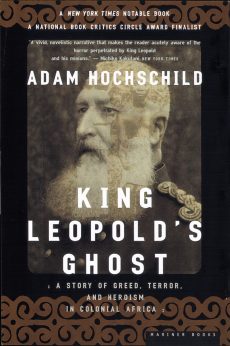
This extended discussion of the Great War was prompted after I read Hochschild’s book on the British anti-war movement, and I’d decided to do so because I’d been very impressed with his previous, award-winning bestseller King Leopold’s Ghost, which I’d read earlier this year. That latter work recounted the vivid history of the Belgian Congo and the horrific mistreatment of its inhabitants, which may have claimed the lives of up to ten million Africans, with Hochschild also telling the story of the British-led international moral crusade against those crimes, privately organized by E.D. Morel, a journalist, and Roger Casement, a civil servant. Their final victory came just a year before war broke out, and Hochschild’s last two chapters constitute an extended epilogue, including a description of the sad wartime fates suffered by his pair of champions.
At the time of the Sarajevo assassination, both Morel and Casement were towering international heroes, with the latter having even been knighted for his humanitarian achievements. But both were firmly opposed to the war and generally sympathetic to Germany’s position, and their public standing quickly collapsed, merely one of the many ironies that Hochschild describes.
One of the worst horrors that the colonial Belgians had inflicted upon the Congolese was chopping off the hands of those Africans who failed to meet their work-quotas or otherwise disobeyed, and photographs of the atrocity victims had triggered outrage across the globe. But in August 1914, the German army invaded Belgium, and the Belgians were suddenly transformed from monsters to martyrs, with British propagandists soon falsely claiming that the Germans were chopping off the hands of disobedient Belgians. For many years, the story of the millions of Africans who died in the horrors of the Belgian Congo had been the world’s leading humanitarian issue, but Hochschild plausibly argues that the sudden wartime propaganda-elevation of Belgians to unrivaled global victimhood status probably explains why that earlier story so quickly faded from public awareness until being eventually revived a half-century later.
Casement himself was Irish and his efforts to free the Congolese had brought him public honors and acclaim; but when he began seeking German help to free his own country from British rule, he was hanged for treason, becoming the first holder of a British knighthood to suffer that fate in hundreds of years. Morel similarly fell from grace for his anti-war writings, and after he sent a copy of one of his pamphlets to his pacifist friend, Romain Rolland, a French Nobel Laureate in literature living in Switzerland, he received six months of brutal imprisonment, which permanently broke his health.

However, once the war ended, British sentiments changed, and the newly rising Labour Party considered Morel a wronged hero and nominated him as a candidate for Parliament. As a young Cabinet Minister, Winston Churchill had played a crucial role in leading Britain into the world war, and in a remarkable symbolic turnabout, Morel now defeated him for reelection in 1922, taking his seat in the House of Commons. Morel was one of Labour’s leading spokesmen on foreign affairs and according to Hochschild, he was expected to be named Foreign Minister in Ramsay MacDonald’s new Labour government of 1922, but MacDonald decided to keep the portfolio in his own hands, perhaps because he feared Morel might overshadow him as a political rival. However, Morel’s political fairy tale had a less than happy ending, for although he was easily reelected in 1924, his harsh wartime imprisonment had destroyed his health and he died later that year at the unripe age of 51.
I had never previously heard of Morel and found his story a fascinating one, but when I consulted his Wikipedia page I discovered that much of the long entry focused on aspects of Morel’s postwar activism that the book had avoided mentioning, presumably for ideological reasons. In his epilogue chapters, Hochschild had rightly denounced the hypocrisy of the major European powers, which were willing to condemn the brutal treatment of Africans under Belgian colonial rule while ignoring the fact that they often behaved in a similar manner in their own African colonies. But he must have found Morel’s extreme lack of any such hypocrisy troubling for other reasons, so the last major project of that remarkable man’s career was excluded from his hagiography.
Morel heavily blamed France and Czarist Russia for the war and regularly condemned the extremely punitive terms of the Treaty of Versailles from the pages of Britain’s Foreign Affairs journal, an influential Labour publication that he directed, condemning, for example, the mutilation of Hungary, which had lost two-thirds of its territory.
But according to Wikipedia, his most important postwar project was launching the international “Black Shame” campaign, denouncing the horrific atrocities committed by France’s African colonial troops against the helpless German civilians of the occupied Rhineland, including widespread rape and murder. Wikipedia entries are usually heavily sanitized, so portions of this very surprising entry are worth quoting at length:
In a front-page article in The Daily Herald on 9 April 1920 by Morel about the French occupation of the Rhineland, the headline read, “: “Frankfurt runs red with blood French Blood Troops Use Machine-guns on Civilians”.[42] The following day, the same paper had another cover story by Morel, the title of which was “Black Scourge In Europe Sexual Horror Let Loose by France On Rhine Disappearance of Young German Girls”. In it, Morel wrote that France is “thrusting her black savages into the heart of Germany” and that the “primitive African savages, the carriers of syphilis, have become a horror and a terror” to the Rhinelanders.[42] In his article, Morel claimed that the Senegalese soldiers serving in the French Army were “primitive African barbarians” who “stuffed their haversacks with eye-balls, ears and heads of the foe”.[43] Morel declared in his article:
“There [the Rhineland] they [the Senegalese soldiers] have become a terror and a horror unimaginable to the countryside, raping girls and women – for well known physiological reasons, the raping of a white woman by a negro is nearly always accompanied by serious injuries and not infrequently has fatal results; spreading syphilis, murdering inoffensive civilians, often getting completely out of control; the terrible barbaric incarnation of a barbarous policy, embodied in a so-called peace treaty which puts the clock back 2,000 years”.[43]
Morel wrote that “black savages” have uncontrolled sexual impulses that “must be satisfied upon the bodies of white women!” (emphasis in the original).[44]
The phrase that Morel coined to describe the alleged terror by Senegalese troops in the Rhineland was the “Black Horror on the Rhine“, which became internationally famous, and the campaign against the “black horror” took much of his time for the last four years of his life.[45] Morel predicated the “black horror” would cause another world war, writing that the average German boy was thinking: “Boys these men raped your mothers and sisters” (emphasis in the original).[46] Morel used the “black horror” as a way of attacking France, which he claimed had caused a “sexual horror on the Rhine” and whose “reign of terror” was a “giant evil” that should inspire “shame into all four corners of the world” and ultimately should “a revision of the Versailles Treaty and the relief for Germany”.[47]
The somewhat censorious Wikipedia article condemns Morel for his blatant racism and cites a German sociologist who argues that those same sentiments had actually governed his earlier Belgian Congo activism as well. But this new Rhineland campaign was soon followed by his rise within the British Labour Party and his electoral triumph over Churchill, so both British Socialists and British voters apparently gave a different verdict. Moreover, Adolf Hitler soon alluded to some of Morel’s accusations in the pages of Mein Kampf, though in much less blood-curdling fashion, and those brief, mild passages have often been cited as proof of the German dictator’s deep racism.
Hochschild is a committed racial liberal, whose lifelong support for blacks in the American South and under Apartheid dominated his early career, and this easily explains why he elevated Morel to heroic stature for his international campaign to end European atrocities against Africans in the Belgian Congo. But it equally well explains why he excluded any mention of his moral exemplar’s final humanitarian crusade, this time focused on African atrocities against Europeans, which was contemporaneous with similar political projects by the KKK in America and may have even played an important role in inspiring Adolf Hitler.
Related Reading:
Featured Video
Deception – Submarines against Olof Palme
or go to
Aletho News Archives – Video-Images
From the Archives
Woolsey Fire started at Santa Susana Field Lab — where “radioactive materials released were never accurately measured”
By John Laforge | CounterPunch | November 30, 2018
In my Nov. 16 column, I reported on potential radiation risks posed by California’s Woolsey wildfire having burned over parts or all of the Santa Susana Field Laboratory—south of Simi Valley, Calif., 30 miles outside Los Angeles—site of at least four partial or total nuclear reactor meltdowns.
The field laboratory operated 10 experimental reactors and conducted rocket engine tests. In his 2014 book Atomic Accidents, researcher James Mahaffey writes, “The cores in four experimental reactors on site … melted.” Reactor core melts always result in the release of large amounts of radioactive gases and particles. Clean up of the deeply contaminated site has not been conducted in spite of a 2010 agreement.
Los Angeles’s KABC-7 TV reported Nov. 13 that the Santa Susana lab site “appears to be the origin of the Woolsey Fire” which has torched over 96,000 acres. Southern Calif. Public Radio said, “According to Cal Fire, the Woolsey Fire started on the afternoon of Thursday, Nov. 8 … on the Santa Susana site.” … continue
Blog Roll
 Aletho News
- What is fueling unrest across the EU?
- Why no power can undermine Iran’s eternal dominance over the Strait of Hormuz
- Is The War Against Iran Over?
- Iran war will leave long-term ‘scar’ on Wall Street, investors warn
- How Iran decimated US power projection in West Asia: Military lessons of 40-day war
- Iran’s report details US-Israeli war crimes in targeting schools, hospitals, livelihoods
- NATO’s Slow Fracture: How Trump’s Iran War Exposed the Instrument of Hegemony
- Chinese jet fuel and the myth of energy independence
- Ukraine Sea Drone Fired From Libya Hit Russian Tanker in Mediterranean
- IRGC: Iranian forces launched no attacks during ceasefire hours
- If Americans Knew
- Military aid to Israel emerges as the latest political litmus test for Democrats
- The only Palestinian children’s rights organization closes following years-long Israeli campaign against it
- ‘I Can’t Forget the Smell’: Lebanese Reel After Israel Kills Over 300 in Single Day
- DNC Shoots Down Resolutions Calling Out AIPAC and Limiting Arms to Israel
- TCN: Is Israel Blackmailing President Trump?
- Israel killed at least 303 Lebanese yesterday – who were they? Daily Update
- Amnesty: Urgent – Protect Lebanese civilians from brutal escalation in Israeli attacks
- Is The War Against Iran Over?
- Inside the Israeli army’s propaganda wing
- Hundreds of Gaza Amputees Stranded in Legal Limbo
- No Tricks Zone
- New Study: No Linear Warming Or Glacier Retreat Along Northern Antarctic Peninsula Since 1980s
- An Inconvenient Tree: Uncovered In Alps… Europe Much Warmer Than Today 6000 Years Ago
- New Study Reports A 60% Slowdown In Greenland’s Ice Loss Rate In The Last Decade
- Low Intensity Tornado Wrecks Major Solar Farm, Creating A Potential Toxic Dump
- New Study Finds Warming Saves Lives…Cold Temperatures 12 Times More Deadly Than Excess Heat
- German Science Blog Accuses PIK Climate Institute Of Hallucinating Climate Tipping Points
- Devastating Assessment Of Comirnaty Vaccine By Former Senior Pfizer Europe Toxicologist
- New Study: CO2 Is ‘Effectively Negligible’ As An Explanatory Climate Change Factor Since 2000
- Former Pfizer Toxicologist Dr. Helmut Sterz Tells Bundestag Hearing Pfizer Vaccine Should Have Never Been Approved
- Energy Expert: Germany’s Nuclear Phaseout Was A “500 Billion Euro Mistake”
 Aletho News