Israeli war crime suspects may be able to run but they cannot hide
By Dr Daud Abdullah | MEMO | February 5, 2015
The resignation of William Schabas from his post as head of the UN commission to investigate possible war crimes during Israel’s 2014 onslaught on Gaza was always on the cards. From the time of his appointment in August last year, he has been subjected to a relentless campaign that questioned both his integrity and impartiality.
The manner and timing of his resignation, weeks before the commission presents its report to the UN Human Rights Council (UNHRC), recalls the case of Judge Richard Goldstone who was forced to disassociate himself from the findings of another UN enquiry into the 2008-09 war on Gaza. Instead of subjecting himself to similar humiliation, Schabas decided to throw in the towel sooner rather than later.
While Israeli officials may count this as a victory, it does not lift the spectre of war crimes charges against them. Nor will it alter Israel’s image as an international pariah. Whether Schabas stayed or resigned is, therefore, actually irrelevant. Israel has never, and never will, cooperate with an independent investigation into its wartime conduct. Hence, the claim that the UNHRC is innately biased must be seen for what it is — a rather pathetic attempt to evade accountability.
Lawyers acting on behalf of human rights organisations in Gaza point out that all the evidence presented to the UN suggests that there is a compelling a case for a formal investigation by the International Criminal Court (ICC). The character assassination of Schabas will not change the course of events.
What is at stake is whether or not Israel acted within the confines of the law that governs armed conflict. Prime Minister Benyamin Netanyahu’s claim that the UNHRC “is the same body that only in 2014 passed more resolutions against Israel than against Iran, Syria and North Korea combined” is immaterial; it’s simply an attempt to deflect world attention from the real issue.
Did the UNHRC set out deliberately to malign Israel as Netanyahu claims? On 23 July2014, Navi Pillay, the UN High Commissioner for Human Rights, reiterated the fact that war crimes and crimes against humanity are two of the most serious types of crimes in existence. She noted that in the case of Israel’s war on the Gaza Strip the “credible allegations that they have been committed must be properly investigated.”
A newly published survey by Chatham House — the Royal Institute of International Affairs — showed that 35 per cent of Britons said that they “feel especially unfavourable towards” Israel. The study, conducted in 2014, showed that the number of those viewing Israel unfavourably had actually increased by 18 points since 2012, presumably because of its military campaign in Gaza which led to thousands of casualties among Palestinian civilians.
Significantly, the categories of international crimes referred to by Pillay originated in the Nuremberg Tribunal of 1945-46. Though intended to deal with those responsible for the persecution of Jews in Europe, their writ was never confined to the Nazi leadership. Robert H Jackson, the former US Supreme Court Justice and prosecutor at Nuremberg, wanted to make it clear, “That if this law is first applied against German aggressors, the law includes, and if it is to serve a useful purpose it must condemn aggression by other nations, including those which sit here now in judgment.”
Given the circumstances which led to the tribunal it seems utterly mind-boggling that Israel should today seek to deny others the benefit and protection of the laws used at Nuremburg. As such, none of these laws will be worth the paper they are written on as long as Israeli officials continue to enjoy apparent impunity and evade accountability for their actions. The consequences of this selective approach to justice and the rule of law are already evident across the Middle East and beyond.
Moreover, not even the countries that support Israel have been spared the consequences of its disregard for the rule of law. Consider, for example, the 2010 assassination of a Hamas official, Mahmoud Al-Mabhouh, in a Dubai hotel. Several of the suspects involved used false passports of several European countries to carry out the operation. Apart from the expulsion of junior diplomats from Britain, Australia and Ireland, not one of the 29 Israeli suspects have been brought before a court of law.
More than anyone, Israelis who have hunted down Nazi war criminals for decades are well positioned to know that the pursuit and prosecution of those believed to have committed war crimes and crimes against humanity is relentless and not bound by time. Their perceived success in bringing down William Schabas will have absolutely no bearing on the Palestinian quest for justice. Israeli war crime suspects may be able to run but they cannot hide; they may continue to avoid arraignment at The Hague but they know for sure that they have already lost in the court of world opinion. In the grand scheme of things, it is perhaps this which matters most, for Israel must remain isolated and a pariah in the community of nations until justice is seen to be done.
Netanyahu: UN Gaza probe should be ‘shelved’
MEMO | February 3, 2015
Israeli Prime Minister Benjamin Netanyahu on Tuesday said that a probe by the UN Human Rights Council (UNHRC) into last year’s Israeli offensive against the Gaza Strip should be shelved in light of the recent resignation of inquiry commission head William Schabas.
“After the resignation of the committee chairman, who was biased against Israel, the report that was written at the behest of the UNHRC… needs to be shelved,” Netanyahu said in a statement.
The Israeli premier went so far as to slam the rights council as “an anti-Israel body, the decisions of which prove it has nothing to do with human rights.”
“This is the same council that in 2014 made more decisions against Israel than against Iran, Syria and North Korea combined,” Netanyahu asserted.
“It is Hamas, the other terrorist organizations and the terrorist regimes around us that need to be investigated, not Israel,” he added.
The Israeli government has already said it would not cooperate with the UNHRC committee formed to investigate violations committed during Israel’s onslaught on the Gaza Strip last July and August.
Israel had said that the UN council would not be objective.
The Israeli offensive left more than 2,160 Palestinians dead and some 11,000 injured – the vast majority of them civilians – while partially or completely destroying thousands of residential structures across the territory.
The onslaught, which was launched with the stated aim of ending rocket fire from the coastal enclave, finally ended with the announcement last August of an open-ended cease-fire between Israel and Palestinian resistance factions.
On Monday, Schabas, a Canadian professor of international law, reportedly resigned from his post as head of the investigation committee due to Israeli allegations of bias.
Israeli Foreign Minister Avigdor Lieberman, for his part, hailed Schabas’ resignation, saying it was a “victory” for the self-proclaimed Jewish state.
“It is an Israeli diplomatic victory. However, it will not change the probe’s conclusions,” he said.
He added that the appointment of Schabas to investigate last year’s war against Gaza was like “appointing Cain to investigate who killed Abel.”
Head of UN War Crimes Inquiry Resigns After Israeli Accusations of Pro-Gaza Bias
IMEMC News & Agencies | February 3, 2015
The head of a UN inquiry into last summer’s Israeli military offensive in Gaza has said he will resign after Israeli allegations of bias, due to consultancy work he did for the Palestinian Liberation Organisation (PLO).
William Schabas, a Canadian academic, was appointed last August by the head of the UN Human Rights Council to lead a three-member group looking into war crimes during the offensive.
Al Ray reports that, according to the Guardian and in a letter to the commission, a copy of which was seen by Reuters, Schabas said he would step down immediately to prevent the issue from overshadowing the preparation of the report and its findings, which are due to be published in March.
Schabas’ departure highlights the sensitivity of the UN investigation just weeks after prosecutors at the international criminal court in The Hague said they had started a preliminary inquiry into atrocities committed in the Palestinian territories.
In the letter, Schabas said that a legal opinion he authored for the PLO in 2012, and for which he was paid some $1,300 (£900), was not different from advice he had given to many other governments and organizations.
“My views on Israel and Palestine as well as on many other issues were well known and very public,” he wrote. “This work in defence of human rights appears to have made me a huge target for malicious attacks.”
Israel has long criticized Schabas’ appointment, citing his record as a strong critic of “the Jewish state” and its current political leadership. Schabas said his work for the PLO had prompted the Human Rights Council’s executive to seek legal advice about his position from UN headquarters on Monday.
“I believe that it is difficult for the work to continue while a procedure is underway to consider whether the chair of the commission should be removed,” he wrote, adding that the commission had largely finished gathering evidence and had begun writing the report.
The appointment of Schabas, who lives in Britain and teaches international law at Middlesex University, was welcomed at the time by Hamas but was harshly criticized by Jewish groups in the US.
Schabas, at the time, had said that he was determined to put aside any views about “things that have gone on in the past”.
The commission is looking into the behavior of both the Israelis and of Hamas.
Lieberman: Third Lebanon war, fourth Gaza operation inevitable
Press TV – February 1, 2015
Israel’s foreign minister has described as “inevitable” a third war with Lebanon and a fourth aggression in the besieged Gaza Strip in the wake of a recent retaliatory attack by Hezbollah.
“A fourth operation in the Gaza Strip is inevitable, just as a third Lebanon war is inevitable,” Avigdor Lieberman said in an interview with Israel’s Ynet on Sunday.
“There’s no doubt the rules of the game have been changed, what Hezbollah forced upon us. We don’t respond, but rather decide to contain this incident,” Lieberman said, adding that the Lebanese resistance movement is “more determined.”
The Israeli official also said that another war on the Gaza Strip was on the horizon, adding that Hamas was already rebuilding its military capacities.
“We saw 10 rockets being fired at the sea last week. We see every week how they’re rebuilding [their arsenal],” he said, referring to the Palestinian resistance movement.
Hezbollah killed two Israeli soldiers and destroyed at least nine Israeli military vehicles in a retaliatory attack on a military convoy in northern occupied territories on January 28. Tel Aviv said a 20-year-old sergeant and a 25-year-old captain were killed.
Following the attack, Hezbollah said the move was in retaliation for Israel’s January 18 attack on the Syrian section of Golan Heights, where six Hezbollah members and an Iranian commander lost their lives.
Jihad Mughniyeh, the son of martyred Hezbollah top commander, Imad Mughniyeh, was among those killed in the attack.
Professor Salaita Sues University of Illinois For Free Speech Rights
By Deirdre Fulton | Common Dreams | January 29, 2015
Professor Steven Salaita, a Palestinian-American professor of Indigenous studies whose offer of a tenured position at the University of Illinois at Urbana–Champaign was rescinded last year because of his tweets criticizing the Israeli government’s bombing of Gaza, has filed a civil rights suit against the school and its top officials and donors, saying that his termination violated his First Amendment right to free speech and other constitutional rights, as well as basic principles of academic freedom.
“Like any American citizen, I have the right to express my opinion on pressing human rights concerns, including Israeli government actions, without fear of censorship or punishment,” Salaita said in a statement. “The University’s actions have cost me the pinnacle of academic achievement—a tenured professorship, with the opportunity to write and think freely. What makes this worse is that in my case the University abandoned fundamental principles of academic freedom and shared governance, crucial to fostering critical thought, that should be at the core of the university mission.”
Salaita, who is being represented by the Center for Constitutional Rights along with the Chicago civil rights law firm of Loevy & Loevy, filed the lawsuit Thursday in a U.S. federal court in Chicago.
The complaint (pdf) alleges that university officials, including the chancellor and university trustees, violated Salaita’s constitutional rights to free speech and due process of law, and breached an employment contract with him. According to CCR, the suit is also against university donors who, based on emails made public, unlawfully threatened future donations to the university if it did not fire Salaita on account of his political views.
As Common Dreams reported in September, Salaita had been awarded the tenured position in fall 2013 and was scheduled to begin on August 16, 2014—just two weeks after Chancellor Phyllis Wise rescinded the offer. University documents released in response to a public-records request revealed that Wise had been pressured by numerous pro-Israel students, parents, alumni, and big-money donors to abort his appointment. These demands followed critical comments by Salaita regarding Israel’s most recent attack on Gaza, during which thousands of Palestinians, including hundreds of children, were killed.
The university’s action, which Wise explained was taken because Salaita’s speech lacked “civility,” spurred protests from within the university as well as the academic community at-large. Sixteen academic departments of the university have voted no confidence in the university administration, and prominent academic organizations, including the American Association of University Professors, the Modern Language Association, and the Society of American Law Teachers have publicly condemned the university’s actions.
“The use of ‘civility’ as cover for violating Professor Salaita’s rights must be challenged, as it threatens the very notion of a University as a place for free inquiry and open debate,” said Maria LaHood, a senior attorney with the Center for Constitutional Rights. “There is neither a ‘civility’ exception nor a ‘Palestine’ exception to the First Amendment.”
According to CCR, the lawsuit seeks Salaita’s reinstatement and monetary relief that includes compensation for the economic hardship and reputational damage he suffered as a result of the university’s actions.
“Only donor pressure, or sheer pride, can explain the administration’s stubborn refusal to revisit a decision that has done so much harm to Dr. Salaita and to constitutional and other principles that academics hold dear,” said Anand Swaminathan of Loevy & Loevy. “The administration has something to hide, and through this lawsuit we intend to expose it.”
Israel-Egypt cooperation surpasses expectation
MEMO | January 28, 2015
Cooperation between the Israeli and Egyptian military and intelligence apparatuses exceeds all expectations, Israel’s Channel 10 stressed on Monday, noting that Cairo agrees with Tel Aviv’s requests pertaining to confronting “radical” Islamic movements in Sinai and the Gaza Strip.
In a report the channel’s military affairs broadcaster Alon Ben-David said that cooperation between the Egyptian and Israeli armies does not depend only on the coordination and sharing of intelligence information, but goes beyond this to field cooperation, in reference to the parties’ joint operations against those who are considered sources of danger for Israel and Egypt in Sinai.
Last year the Israeli TV station revealed that Prime Minister Benjamin Netanyahu issued instructions to carry out operations in the heart of Sinai.
Meanwhile, Israeli newspaper Israel Hayom, which is close to Netanyahu, asserted on 12 June 2014 that the Egyptian army depends on intelligence information provided by Israel in its operations against jihadists in Sinai.
General Amos Yadlin, former head of the Israeli Military Intelligence Division, said the confluence of interests between Israel and the “moderate Sunni” governments represents an unprecedented opportunity for Israel to strengthen cooperation with them so as to enhance Israel’s strategic environment and help it cope with the significant challenges it faces.
In an article published by the Makor Rishon newspaper on Monday, Yadlin stressed that Israel has greatly benefited from cooperation with Egypt, Jordan and some countries in the Gulf, calling on Netanyahu’s government to take advantage of this opportunity.
However, Yadlin said that what could undermine such opportunity is the unstable situation in some Arab countries, as well as the deliberate embarrassment that Israel is causing the Arab ruling elites by rejecting the peace initiative that was launched by the late Saudi King Abdullah Bin Abdulaziz.
UNRWA Forced to Suspend Gaza Assistance Due to Lack of Funds

UNRWA Report | January 27, 2015
The United Nations Relief & Works Agency (UNRWA) has been forced to suspend its cash assistance programme in Gaza to tens of thousands of people for repairs to damaged and destroyed homes and for rental subsidies to the homeless.
Over 96,000 Palestine refugee family homes were damaged or destroyed during last summer’s conflict and the total funding required to address that need is USD 720 million. To date, UNRWA has received only USD 135 million in pledges, leaving a shortfall of USD 585 million. While some funds remain available to begin the reconstruction of totally destroyed homes, the Agency has exhausted all funding to support repairs and rental subsidies.
“UNRWA in Gaza has so far provided over USD 77 million to 66,000 Palestine refugee families to repair their home or find a temporary alternative”, said UNRWA’s Director in Gaza, Robert Turner. “This is a tremendous achievement; it is also wholly insufficient. It is easy to look at these numbers and lose sight of the fact that we are talking about thousands of families who continue to suffer through this cold winter with inadequate shelter. People are literally sleeping amongst the rubble, children have died of hypothermia. USD 5.4 billion was pledged at the Cairo conference last October and virtually none of it has reached Gaza. This is distressing and unacceptable.”
“It is unclear why this funding has not been forthcoming,” added Mr. Turner “but UNRWA has been a stabilizing factor in a very challenging political and security context and if we cannot continue the programme it will have grave consequences for affected communities in Gaza. People are desperate and the international community cannot even provide the bare minimum – for example a repaired home in winter –let alone a lifting of the blockade, access to markets or freedom of movement. We’ve said before quiet for quiet will not last, and now the quiet is at risk.”
UNRWA urgently requires USD 100 million in the first quarter of this year to allow families with minor damage to repair their homes and to provide ongoing rental subsidies, including to the thousands of families that left the UNRWA-run collective centers and found alternative rental accommodation. UNRWA is very concerned that if it cannot continue to provide the rental subsidy then large numbers may return to the collective centers, where almost 12,000 displaced Palestinians continue to seek shelter.
Christopher Gunness
Spokesperson, Director of Advocacy and Strategic Communications
UNRWA | Office of the Commissioner General | Jerusalem
Illegal Occupation, the Elephant In The Room
The Origin of Modern Terror and Crumbling Western Values
By John Chuckman | Aletho News | January 26, 2015
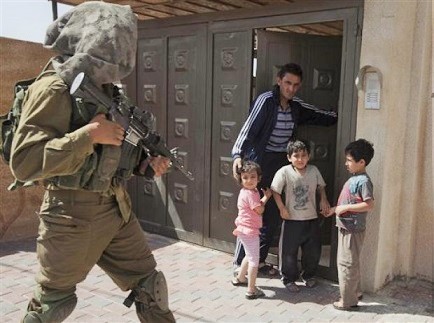
Do you ever solve problems by ignoring them? Most of us would say that is not possible, yet that is precisely what western governments do in their efforts to counteract what is called “Islamic terror.” Yes, there are vast and costly efforts to suppress the symptoms of what western governments regard as a modern plague, including killing many people presumed to be infected with it, fomenting rebellion and destruction in places presumed to be prone to it, secretly returning to barbaric practices such as torture, things we thought had been left behind centuries ago, to fight it, and violating rights of their own citizens we thought were as firmly established as the need for food and shelter. Governments ignore, in all these destructive efforts, what in private they know very well is the origin of the problem.
Have Islamic radicals always existed? Yes, we have records through the history of British and French empire-building of strange and fearsome groups. It appears every large religion has a spectrum of believers, always including at one end of the spectrum extreme fundamentalists. They are not a new phenomenon anywhere, so why has one group of them, in the sands of the Middle East, become part of our everyday awareness?
It is also nothing new that young men become hot-blooded and disturbed over what they regard as attacks upon their kind. Western society’s record of crusades, religious wars, colonial wars, and revolts, all total likely having no equal in the histories of the world’s peoples, offers countless examples of young men being angered by this or that circumstance and joining up or running off to fight.
George Bush told us today’s terrorists hate our freedom and democratic values, but like virtually every utterance of George Bush, that one was fatuous, explaining nothing. Nevertheless, his is the explanation pounded into public consciousness because governments and the corporate press never stop repeating versions of it, the Charlie Hebdo affair and its theatrical posturing over free speech being only the latest. Theatrical? Yes, when we know perfectly well that most of those who marched at the front of the parade in Paris are anything but friends of free speech.
All backward peoples are uncomfortable with certain western values, that being the nature of backwardness, and backwardness is a defining characteristic of all fundamentalist religious groups – Hasidic or ultra-Orthodox Jews, Mennonites, Roman Catholic Cardinals, cloistered nuns, Sikhs, and many others – who typically choose modes of dress, rules to obey, and even foods to eat having little or no relationship with the contemporary world and science. Of course, that is their right so long as they are peaceful and law-abiding.
Any fundamentalist group, pushed by more powerful people from outside their community, is entirely capable of, and even prone to, violence, and all human beings are capable of violence when faced with abuse and injustice. Centuries of religious wars and terrors in Europe about such matters as how the Mass is celebrated prove the proposition and should be held as a warning, but they are forgotten by most, if they were ever known. The tendency towards violence continues today amongst many fundamentalist faiths. In so relatively small and seemingly homogeneous a society as Israel, there are regular attacks from ultra-Orthodox Jews against the country’s worldly citizens or against fair-minded rules about such pedestrian matters as women riding buses or walking on a street. The attacks become quite violent – punching, spitting, burning down homes, and killing sometimes – and all go against what we call western values, but because the scale is fairly small, and our press also has a constant protective bias concerning all things Israeli, these events rarely make our mainline news. They must be found on the Internet.
It took Western Europe literally centuries to leave behind such recurrent and violent themes as witches and the need to burn them alive, the Evil Eye, casting out demons, execution for differences of belief, and countless other stupidities which characterized whole societies and destroyed lives. And if you want to go still further back, go to the Old Testament, a collection of ancient writing packed with violence, superstition, prejudice, and just plain ignorance, which Christians and others even today regard as containing important truths for contemporary life. Human progress, at least in some matters, takes a very long time indeed.
Our world has more backward people than most of us can imagine. The news does not feature their extremes and savageries because it serves no political purpose. In Africa, for example, we find practices and beliefs utterly repellent to modern minds: the practice of senior village men raping young girls as an accepted right, the genital mutilation of 3 million girls annually (an African, not an Islamic, practice), the hunting down and butchering such “strange” people as albinos, their parts to be eaten as medicine, and many others. In India, a country well on its way to becoming modern yet one with a huge backward population, we have practices such as marrying off mere girls to old men rich enough to pay dowries to poor parents. At one stroke this enriches the parents and relieves them of the burden of a child, a female child too, always viewed less favorably. The practice generates a large population of widows when the old husbands of girls married at, say, twelve die. These women are then condemned to entire lives as widows, never allowed to remarry, required to dress and eat in certain ways, and basically shunned to live in squalid equivalents of old folks homes, living entirely meaningless lives. India also has the practice of “bride burning” where new brides who are deemed unacceptable for various reasons become the prey of the groom’s family, literally being burned alive. There are many other barbarities in that society too, including “honor killing” and young women who are made inmates in certain temples to serve as glorified prostitutes.
Our press assiduously avoids much of the world’s horrors as it focuses on “Islamic extremism,” and politics are the only explanation for the bias. The press theme of Islamic terror and indeed real incidents of terror grow from a reality always taken for granted, never debated, and certainly never criticised: the elephant in the room, as it were, is Israel’s illegal and agonizingly long occupation of the Palestinians.
It may be not be important to our press and governments that Israel holds millions as prisoners, crippling the lives of generation after generation, or that Israel periodically strikes out in every direction – Gaza, Lebanon, Syria, the West Bank – causing the deaths of many thousands, or that Israel is seen to bulldoze people’s homes and sacred monuments with complete impunity, but it very much matters to many millions of Muslims in the world, and some of them, fundamentalist men, strike out against it just as young men everywhere have sometimes struck out against keenly-felt hurts and injustice.
In western countries, under the hard influence of America, a country in turn under the hard influence of the world’s best organized and financed lobby, the Israel Lobby, we have come to regard Israel’s behavior as normal, but it is, of course, not normal, not in any detail. What is normal about holding several million people prisoner for half a century? What is normal about bulldozing homes and literally stealing the land upon which they stood? What is normal about declaring an honestly elected government as criminal and treating its people as though they were criminals? What is normal about limiting people’s opportunity to earn a living or to import some of the needs of life? What is normal about killing nearly a thousand children, as Israel has done just in Gaza, since 2008?
Pretending that Israel’s behavior is not the major cause of what screams from our headlines and news broadcasts has reached absurd levels. America has only vastly compounded the problem of Israel’s organized abuse of a people: it and its silent partners have destroyed Iraq, destroyed Libya, are working hard to destroy Syria, have seen to it that Egypt’s tens of millions again live under absolute government, ignore countless inequities and barbarities in secretly-helpful countries like Saudi Arabia, and carry out extra-judicial killings through much of the region. All of it is carried out on Israel’s behalf and with Israel’s cooperation. Can any reasonable person not see that this vast factory of death also manufactures countless grievances and vendettas? The stupidity is on a colossal scale, rooted in the notion that you can kill your way out of the terrible consequences of terrible policies.
In America, paid political shills (Newt Gingrich was one) have campaigned about there being no such thing as a Palestinian. Others (Dick Armey was one) have said that millions of Palestinians should be removed, all their land left conveniently to Israel. That last is an odd thing to say, isn’t it, considering there are supposed to be no such thing as Palestinians? And just what country would take millions of “non-existent” Palestinians? Obviously no politician with even pretence of integrity would say such things, and how can intelligent and successful people like America’s Jews take satisfaction in hearing politicians reciting such embarrassing scripts? But this is a good measure of the way intelligence and sound thinking are scorned in American politics. How can you achieve anything worth achieving without intelligence and sound thinking? You cannot, but that doesn’t stop American Presidents and Secretaries of State from carrying on the world’s longest-running dumb show, something called the “peace process.” The sombre, moose-like figure of John Kerry is photographed playacting at statesmanship while American-supplied arms just keep killing thousands of innocent people.
ICC Opens Preliminary Inquiry into Gaza War Crimes
Al-Akhbar | January 16, 2015
Prosecutors at the International Criminal Court said on Friday they had opened a preliminary inquiry into possible war crimes in Gaza and the West Bank, the first formal step that could lead to charges against Israelis or Palestinians.
On January 1, a day before requesting ICC membership, the Palestinian Authority asked the prosecutors to investigate alleged crimes committed on territories under Palestinian control since June 13, 2014, the date on which Israel began its latest offensive in the Gaza Strip.
The 51-day Israeli assault on Gaza left at least 2,300 Palestinians dead, at least 70 percent of them civilians, and 96,000 houses destroyed. Reconstruction hasn’t started in the besieged enclave, leaving thousands vulnerable to elecricity cuts, water shortages and harsh winter weather.
“The office will conduct its analysis in full independence and impartiality,” the prosecution office said in a statement, adding that it was a matter of “policy and practice” to open a preliminary examination after receiving such a referral.
“The case is now in the hands of the court,” said Nabil Abuznaid, head of the Palestinian delegation in The Hague. “It is a legal matter now and we have faith in the court system.”
Israel denounced the ICC’s “scandalous” decision.
The sole purpose of the preliminary examination is to “try to harm Israel’s right to defend itself from terror,” Foreign Minister Avigdor Lieberman said in a statement.
He said the decision was “solely motivated by political anti-Israel considerations,” adding that he would recommend against cooperating with the probe.
On January 3, Israel froze the transfer of $127 million in tax funds it collects on behalf of the Palestinian Authority in retaliation for its application to join the ICC.
Israel has repeatedly delayed payments to the Palestinians to signal its displeasure with measures to achieve statehood and get accountability for Israeli war crimes.
It did so in 2012, after they won a UN vote recognizing Palestine as a non-member state. And it employed the tactic twice in 2011 – after PA President Mahmoud Abbas announced reconciliation with Hamas and after the Palestinians won admission to UNESCO.
A preliminary examination, which could take many years, involves prosecutors assessing the strength of evidence of alleged crimes, whether the court has jurisdiction and how the “interests of justice” would best be served.
Only if that led to a full investigation could charges be brought against officials on either the Israeli or Palestinian side of the conflict.
An initial inquiry could lead to war crimes charges against Israel, whether relating to last conflict in Gaza or Israel’s 47-year-long occupation of the West Bank and Gaza Strip.
It also exposes the Palestinians to prosecution, possibly for rocket attacks by resistance groups operating out of Gaza.
(Reuters, Al-Akhbar)
A puzzling question about Egyptians’ silence towards the razing of Rafah
Arabi21 | January 11, 2015
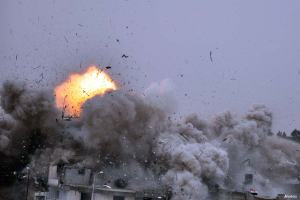
The Governor of North Sinai Abdel-Fattah Harhoor has announced that the authorities intend to raze completely the city of Rafah along the borders between Egypt and the Gaza Strip. His announcement has been met with a deafening silence except for very few voices that condemned the decision. According to informed sources, 100 houses out of a total of 1,220 were evacuated last Thursday as part of the second phase of the operation aimed at setting up a buffer zone along the Gaza Strip.
A step by step measure
In interviews conducted by Arabi21, activists have given a variety of interpretations for the deafening silence in Egypt regarding what is going on in Rafah and Sinai. One of these interpretations suggests that in the beginning, the coup authorities did not openly announce their intention to raze the city of Rafah and that the measure took place gradually as of October 2014 until today. It began with the announcement that a half kilometre deep border strip was going to be created. This decision was implemented within hours. Houses were bombed and the people of Sinai were forced out of their homes. Then there was a decision to expand the border strip to the depth of one kilometre. And finally, there was the announcement by the Governor of Sinai three days ago that the entire city of Rafah would be razed to the ground completely, as activist Asmaa Al-Sayyid explains.
The media and the constant blaming of Gaza
Journalist Samya Mahmoud has said that “the media played a major role in paving the way for these measures by repeatedly claiming that Sinai was a hotbed for terrorism and takfiris. According to her, the media used the attack on soldiers as a pretext in order to accuse Gaza of responsibility and call on the coup leader to evacuate the border strip.
Hajar Faafat said: “This is not all. Throughout that period the media continued to deny the authenticity of any videos or pictures that illustrated the amount of suffering and the violations perpetrated against the people of Egyptian Rafah.”
Ali Ghanim, on the other hand, was content with reciting some poetry to highlight the dimensions of the catastrophe brought upon the people of Rafah on the Egyptian side:
We once had in our country a town called Rafah, It was the home of beauty and tranquillity, All a gift from the Almighty Allah, Then came the oppressor who has been awful to his own religion, He went on destroying its houses, extinguishing its lights and murdering its people, He razed it to the ground as a favour to the Zionists, Yet, his followers, barking like dogs, continue to justify his actions.
An easy bite for the Zionists
Ibrahim Al-Husayni said: “In this way the curtain is drawn. The only beneficiary from the Egyptian revolution has been the Zionist entity and for the Muslims there has been no solace.”
Shaymaa Said said: “Indeed, the main reason for razing Rafah to the ground is the desire to break the back of the Palestinian resistance in Gaza and offer it as an easy bite to the Zionists. This is the clearest evidence that Al-Sisi and the leaders of his army are all agents. However, through its resistance Gaza has proven it is not an easy bite but a thorn in the throat of the Zionists and their agents who will perish with the help of God.”
Is Israel now safe?
A number of activists shared the statement made by Professor of Political Science Seif Abdel-Fattah who said in a tweet: “The Egyptian authorities will completely raze Rafah to the ground to set up a buffer zone with Israel. Is Israel now safe? Is this Egyptian national security?”
Activists also shared the remarks made by Egyptian actor Khalid Abu Al-Naja in an interview conducted with him by the Huffington Post. He said: “I do not usually talk about politics at all but usually I talk about the people who live in unfair conditions. This is something I cannot keep quiet about. I began my interview with talking about the Egyptian families who were banished from their homes along the borders. I believe this to be a gross injustice. You just cannot do this. This is how it all started. I am not an expert in politics. If you were to ask me about the difference between Marx and any other person you would not get an answer from me.”
Submitting all the credential papers
The social network activists also shared the statement issued by Hatim Azzam, deputy leader of the Al-Wasat Party, who addressed the issue of the banishment of the people of Sinai saying: “This is the plan through which the military coup leader is seeking to appease the Israeli occupation by means of submitting all the possible credential papers to the Zionist entity and to the powers that support it, foremost among them is the United States. The purpose is to guarantee the support of these powers for the coup to remain in power.”
In his communique, Hatim Azzam noted that the razing of the city of Rafah is a major disaster, especially after the initiation of a third governorate, which is called “Central Sinai”. He explained that this is a prelude to marginalising the North Sinai Governorate, a measure that involves relinquishing one of the most important and strategic cities in North Sinai, Rafah, and perhaps the complete negligence of the entire North Sinai Governorate.
Sinai activist Misaad Abu Fajr, former member of the Committee of Fifty for amending the constitution, said that the deportation of the people of Sinai amounts to a declaration of war on the three biggest tribes in Sinai, which are – from south to north – Trabin, Swarkah and Irmailat.
In a previous Facebook blog he wrote: “Don’t think of it as a decision that will pass just like previous decisions. If now you come into Cairo having arrived from a region affected by terrorism and you are paying a price for it, next time you will enter Egypt having arrived from a war zone. Undoubtedly, you know well that the price then will be much bigger.”
Translated by MEMO
Israel: ‘Je Suis Hypocrite’

By Rasha B. Foda • SHAREverything • January 12, 2015
 It is no small irony that the West, who now so vociferously speak against the so-called “intolerance of Islam” (while practicing their own censorship), should seek comfort and support from Israelis, of all people, who now too eagerly sing the hymns of free speech, while being one of the most egregious perpetrators of violence against journalists the world has ever known. Indeed, last year alone, Israelis achieved the dubious honor of being named the world’s second most lethal state against journalists, according to the watchdog Reporters Without Borders. And that’s no small accomplishment given that thanks to ISIS, only war-torn Syria beat Israel, and apparently only because Syria is engulfed in armed conflict all year round, whereas all 15 journalists killed by Israel in 2014 (only 7 of which Reporters counted as having been killed on duty) were killed during the 50 days of Operation “Protective Edge.”
So basically, Israel is second only to ISIS, who they could have beat had their Operation against Gaza lasted a little longer. Meanwhile, israel never did anything to punish the IDF soldier who killed Welsh cameraman, producer, and director James Miller almost 11 years ago.
The documentary which Miller was making on the day of his death (Death in Gaza, released by HBO in 2004) depicts Miller and his colleagues leaving the home of a Palestinian family in the Rafah refugee camp after dark, carrying a white flag. They had walked about 20 metres from the veranda when the first shot rang out.[15] For 13 seconds, there was silence broken only by Shah’s cry: “We are British journalists.” Then came the second shot, which killed Miller. He was shot in the front of his neck.[15]

That is one strange bedfellow to choose in championing the cause of free speech for journalists.
Featured Video
HE SAVED LIVES. NOW HE FACES PRISON.
or go to
Aletho News Archives – Video-Images
From the Archives
NATO Sanctions and the Coming Global Diesel Fuel Disaster
By F. William Engdahl – New Eastern Outlook – 11.04.2022
Amid the ongoing global inflation crisis, NATO heads of state and mainstream media repeat a mantra that high energy prices are a direct result of Putin’s actions in Ukraine since end of February. The reality is that it is the western sanctions that are responsible. Those sanctions including cutting SWIFT interbank access for key Russian banks and some of the most severe sanctions ever imposed, are hardly having an impact on the military actions in Ukraine. What many overlook is the fact that they are increasingly impacting the economies of the West, especially the EU and USA. A closer look at the state of the global supply of diesel fuel is alarming. But Western sanctions planners at the US Treasury and the EU know fully well what they are doing. And it bodes ill for the world economy.
While most of us rarely think about diesel fuel as anything other than a pollutant, in fact it is essential to the entire world economy in a way few energy sources are. The director general of Fuels Europe, part of the European Petroleum Refiners Association, stated recently, “… there is a clear link between diesel and GDP, because almost everything that goes into and out of a factory goes using diesel.” … continue
Blog Roll
 Aletho News
- Qatar PM calls for Gulf security framework with Iran, says war must be ‘wake-up call’
- China condemns US extortion of Iranian airlines, rejects Washington’s ‘illegal’ sanctions threats
- Italy to move military personnel from Taif base after missile strike
- Finland’s Stubb tells European leaders to calm down
- Defeating Russia on battlefield impossible – Fico
- Finland’s Gender Clinic Reversal
- Massachusetts Wants Mental Health Visits, Why Does Government Use ‘Health’ to Enter Our Homes & Families?
- US lawmaker admits American people footing bill for Trump’s failed aggression against Iran
- Pfizer Gave $500,000 to Groups That Lobbied to End Religious Exemption in Massachusetts
- HE SAVED LIVES. NOW HE FACES PRISON.
- If Americans Knew
- Phosphorus Munitions Fired by Israel Burn Groves, Orchards in Southern Lebanon
- Israel Carries Out New Ceasefire Violations Across Gaza
- AI – Emphasis on the ‘I’: Israel Is Funding AI Chatbot Propaganda
- Israel Blocking Hundreds of Wheelchairs for Injured Children From Entering Gaza
- Israel Is Expanding and Upgrading Compounds for Palestinian Militias in Gaza
- The Palestinian-American Residents of This West Bank Town Are Wondering: Where Is Trump?
- Gaza desperately needs tents, wheelchairs, fuel… and everything else (Israel blocks it all) – Daily Update
- Israeli Attacks in Gaza Kill at Least Seven Palestinians Over Three Days, including Woman and Child
- Trump’s militarization of Washington DC as he pursues Israel’s war against Iran
- Why Israel Fears This Searing New Documentary
- No Tricks Zone
- 2025 Nature Paper Claiming Worsening Global Drought Gets RETRACTED …Heavily Flawed
- New Study: ‘Global Drought Shows No Detectable Recent Acceleration Under Climate Warming’
- Economic Masterminds: German Socialists Suggest Taxing Productivity Gains Stemming From Using AI
- The South China Sea Has Not Been Cooperating With The Climate Change Narrative
- Energy Crisis: Germany Enters Heating Season With Historically Low Gas Reserve Fill Levels
- New Study: The Antarctic Ice Sheet Gained Mass From 2020-2024 Due To Staggering Snow And Ice Accumulation
- Study: Ocean Heating Rates From Thousands Of Years Ago ‘Dwarf’ Modern Ocean Heating Rates
- Climate Extremists Target, Attack Large-Scale Power Grid Infrastructure In Germany!
- New Study: Antarctic Ice Melt Has Contributed Less Than 1 Centimeter To Sea Level Rise In The Last 30 Years
- Fear Of Debate: Alarmist German Climate Scientist Calls On Mainstream Media To Discredit Skeptic Voices

