128 Journalists Killed so Far This Year
teleSUR | December 15, 2014
At least 128 journalist have been killed so far in 2014, according to the findings of the Swiss-based Press Emblem Campaign in its annual report released Monday.
While the deaths occured in some 32 countries, the Palestine-Israel conflict has been the most dangerous for the coverage this year “with 16 journalists killed by Israel during the Operation Protective Edge.”
The 2014 total is one more than last year’s record, yet the number is perceptibly growing since the organization started to track the figures in 2006. Since then, over 1,000 journalists and reporters have been killed.
This situation for journalists worsens as armed conflicts continue without reaching a political solution, emphasized PEC director Blaise Lempen. In these scenarios, journalists are increasingly being taken as hostages.
The most dangerous countries over the past five year-period have been Syria, Pakistan, Mexico, Iraq and Somalia.
Latin America is the third most violent region with 27 journalist killed after Middle East (46) and Asia (31), and includes three countries in the top 10 most dangerous places for journalists (Mexico ranks 6th, Honduras 7th and Brazil 10th). Paraguay, Peru and Colombia are also noted in the report.
The authors explain that have been taking into account both “journalists intentionally targeted in the exercise of their profession as well as those killed accidentally and otherwise unintentionally,” arguing that the cause of the death was difficult to determine.
However, half of the journalists killed in 2014 are estimated to have been targeted intentionally by governments, various armed groups or criminal gangs.
No Exit in Gaza
By Jen Marlowe | TomDispatch | December 7, 2014
Rubble. That’s been the one constant for the Awajah family for as long as I’ve known them.
Four months ago, their home was demolished by the Israeli military — and it wasn’t the first time that Kamal, Wafaa, and their children had been through this. For the last six years, the family has found itself trapped in a cycle of destruction and reconstruction; their home either a tangle of shattered concrete and twisted re-bar or about to become one.
I first met the Awajah family in August 2009, in the tent where they were living. I filmed them as they told me what had happened to them eight months earlier during the military invasion that Israel called Operation Cast Lead and said was a response to rocket fire from the Gaza Strip.
I had no intention of making a film when I went to Gaza, but after hearing the family’s story, I knew I had to. I returned again in 2012 and have continued to stay in touch in the years since, realizing that the plight of the Awajahs opened a window onto what an entire society was facing, onto what it’s like to live with an interminable war and constant fear. The Awajahs’ story shines a spotlight on what Palestinians in Gaza have endured for years on end.
What stuck with me most, however, was the demand of the Awajah children regarding the reconstruction of their new home in 2012: they insisted that the house have two doors.
What The Awajahs Saw
In separate interviews in 2009, Wafaa and Kamal Awajah told me the same story, each breaking down in tears as they offered me their memories of the traumatic events that had taken place eight months earlier — a night when they lost far more than a home. The next day, a still grief-stricken Wafaa walked me through her recollections of that night, pointing out the spot where each incident had taken place.
On January 4th, as Operation Cast Lead’s ground campaign began, the Awajah family was at home. Wafaa’s eldest daughter, 12-year-old Omsiyat, woke her up at around 2 am. “Mom,” said Omsiyat, “soldiers are at the door.” Wafaa jumped out of bed to look. “There are no soldiers at the door, honey,” she reassured her daughter. When Omsiyat insisted, Wafaa looked again, and this time she spotted the soldiers and tanks. She lit candles in the window so that the Israeli troops would know that a family was inside.
Suddenly, the ceiling began to crumble. Wafaa, Kamal, and their six children fled, as an Israeli military bulldozer razed their home. No sooner had they made it outside than the roof collapsed. As tank after tank rolled by, the family huddled under an olive tree next to the house. When dawn finally broke, they could examine the ruins of their house.
Just as the Awajahs were trying to absorb their loss, Wafaa heard nine-year-old Ibrahim scream. He had been shot in the side. As more gunfire rang out, Kamal scooped up the injured boy and ran for cover with the rest of the family. Wafaa was hit in both hips, but she and five of the children managed to take shelter behind a mud-brick wall. From there, she saw Kamal, also wounded, lying in the middle of the road, Ibrahim still in his arms.
Israeli soldiers approached her husband and son on foot, while Wafaa watched, and — according to what she and Kamal both told me — without warning, one of them shot Ibrahim at close range, killing him. He may have assumed that Kamal was already dead. Despite Wafaa and Kamal’s wounds, the family managed to get back to their wrecked home, where they hid under the collapsed roof for four days with no food or clean water, until a passing family with a donkey cart took them and Ibrahim’s body to a hospital in Gaza city.
As far as I know, the Israeli military never investigated the incident. In fact, only a handful of possible war crimes during Operation Cast Lead were ever investigated by Israel. Instead of an official inquiry, the Awajahs were left with a dead son, grievous physical wounds that eventually healed, psychological ones that never will, and a home reduced to pile of rubble.
One Family in Gaza, Jen Marlowe’s award-winning short documentary film featuring the Awajah family
(You may also click here to view the video on Vimeo if your browser is having trouble loading the video on this page.)
Life Goes On
When I met them eight months later, the Awajahs were struggling to rebuild their lives. “What’s hardest is how to offer safety and security for my children,” Kamal told me. “Their behaviors are not the same as before.”
Wafaa pointed to three-year-old Diyaa. “This boy is traumatized since the war,” she said. “He sleeps with a loaf of bread in his arms. If you try to take it from him, he wakes up, hugs it, and says, ‘It’s mine.’”
“What you can’t remove or change is the fear in the children’s eyes,” Kamal continued. “If Diyaa sees a bulldozer, he thinks it’s coming to destroy a house. If he sees a soldier, whether an Israeli or Arab soldier, he thinks the soldier wants to kill him. I try to keep them away from violence, but what he experienced forces him to release his fear with violence. When he kisses you, you can feel violence in his kiss. He kisses you and then pushes you away. He might punch or slap you. I am against violence and war in any form. I support peaceful ways. That’s how I live and raise my children. Of course, I try to keep my children from violence, and help them forget what happened to them, but I can’t erase it from their memory. The memories of fear are engraved in their blood.”
I thought about Kamal’s words as I filmed Diyaa and his five-year-old sister Hala scrambling onto the rubble of their destroyed home — their only playground — squealing with glee as they rolled bullet casings and shrapnel down the collapsed roof.
What moved me deeply was the determination of Kamal and Wafaa to create a future for their surviving children. “Yes, my home was destroyed, my life was destroyed, but this didn’t destroy what’s inside me,” Kamal said. “It didn’t kill me as Kamal. It didn’t kill us as a family. We’re living. After all, we must continue living. It’s not the life we wanted, or had, but I try to provide for my children what I can.”
The Fragility of Hope
In 2012, I returned to Gaza and to the tent in which the Awajah family was still living. It was evident that the trauma of their experience in 2009 — along with the daily deprivation and lack of security and freedom that characterize Gaza under siege — had taken a toll. “I had thought that those were the most difficult days of my life,” Kamal said, “but I discovered afterwards that the days which followed were even more difficult.”
In 2009, Kamal told me that the war hadn’t fundamentally changed him. Now, he simply said, “I lost myself. The Kamal before the war does not exist today.” He spoke of the screams of his children, waking regularly from nightmares. “The war is still chasing them in their dreams.”
Most painful for Kamal was his inability to help his children heal. His despair and feelings of helplessness had grown to the point where he had become paralyzed with severe depression. “I tried and I still try to get us out of the situation we are in — the social situation, the educational situation for the children, and the mental situation for me and my family.” But their situation, he added, kept getting worse.
My 2012 visit, however, came during a rare moment of hope. After nearly four years, the Awajah family was finally rebuilding their home. Trucks were delivering bags of cement; gravel-filled wheelbarrows were being pushed onto skids; wooden planks were being hammered down. In 2009, I had filmed Diyaa and Hala playing on the rubble of their destroyed house. In 2012, I filmed them climbing and jumping on the foundation of their new home.
“I am building a house. It is my right in life for my children to have a house,” Kamal said. “I call it my dream house, because I dream that my children will go back to being themselves. It will be the first step to shelter me and my children, away from the sun and the heat and tents, our homelessness. The biggest hope and the biggest happiness I have is when I see my children smiling and comfortable… when they sleep without nightmares.” Kamal added, “I can’t sleep because of my fear over them.”
For Wafaa, while the new home represented hope for their future, its construction also triggered flashbacks to that night of the bulldozer. As she told me, “Bulldozers and trucks bringing construction material came at night, and, at that moment, it was war again. When I saw the bulldozers and the trucks approaching with big lights, my heart fell between my feet. I was truly scared.”
Planning for the new house also provided Wafaa and Kamal with a poignant reminder of the fragility of hope in Gaza. “The children say to make two doors to the house,” Wafaa told me. “One [regular] door and the other door so when the Israelis demolish the house, we can use it to escape. We try to comfort them and tell them nothing like this will happen, but no, they insist on us making two doors. ‘Two doors, Daddy, one here and one there, so that we can run away.’”
The Gaza War of 2014
After my 2012 visit, I periodically contacted the Awajah family. Construction was proceeding in fits and starts, Kamal told me, due to shortages of materials in Gaza and their lack of financial resources. Finally, however, in the middle of 2013 the home was completed and as the final step, glass for the windows was installed in February 2014.
Five months later, in July, the most recent Israeli assault on Gaza began. I called the Awajah family right away.
“The children are frightened but okay,” Wafaa told me.
The Israeli army had warned their neighborhood to evacuate and they were now renting a small apartment in Gaza City. During a humanitarian ceasefire, Kamal was able to return to their house: it had been demolished along with the entire neighborhood.
When I spoke to the Awajah family at the end of September, Kamal told me that rent money had run out. Seeking shelter at a United Nations Relief and Works Agency (UNRWA) school wasn’t a viable option, he said, because there were already so many families packed into each room. The Awajahs were back in a tent next to the rubble of their twice-destroyed home.
Click here to see a larger version

2014: Kamal and his children on the rubble of their twice-destroyed home
The family’s situation is far bleaker than in 2009. Then they were able to tap into an electricity source and there was a communal outhouse for all the tent-dwelling families in the area. This time, Kamal said, the area near their house was entirely deserted: no water tank, electricity, outhouse, gas, or stove for cooking. Their only possessions were the few items of clothing they managed to take with them when they fled. They were sleeping on the ground, he said, no mattresses or blankets to ward off the cold, only the nylon of the tent beneath them. The children had been walking several kilometers to fill jugs with water until villagers who lived nearby made their wells available for a few hours a day.
Wafaa told me that she was cooking on an open fire, using scrap wood scavenged from the remnants of her house. For the first week, the children returned home from school every day and, surrounded by nothing but rubble, began to cry. Seventeen-year-old Omsiyat briefly took the phone. Her typically warm and open voice was completely flat, no affect whatsoever.
Worse yet, Kamal still owes $3,700 for the construction of their previous house. Though the home no longer exists, the debt does. “We are drowning,” Wafaa said.
The Awajah family today
(You may also click here to view the video on Vimeo if your browser is having trouble loading the video on this page.)
Drowning in Gaza
The Awajahs aren’t the only ones in Gaza who are drowning. The true horror of their repeated trauma lies in the extent to which it is widespread and shared. Nine-year-old Ibrahim Awajah was one of 872 children in Gaza killed in the 2009, 2012, and 2014 wars combined, according to statistics gathered by the United Nations Office for the Coordination of Humanitarian Affairs and B’tselem, an Israeli human rights organization. (There was also one Israeli child killed by mortar fire in that period.)
The flat affect in Omsiyat’s voice reflects the assessment of the United Nations Children’s Fund that nearly half of the children in Gaza are in urgent need of psychological help. And Kamal’s desire not to move into a communal shelter is understandable, given that 53,869 displaced people still remain crowded into 18 UNWRA schools. According to Shelter Cluster, an inter-agency committee that supports shelter needs for people affected by conflict and natural disaster, the Awajah family’s house is one of 18,080 homes in Gaza that were completely demolished or severely damaged in the 2014 war alone. A further 5,800 houses suffered significant damage, with 38,000 more sustaining some damage.
Shelter Cluster estimates that it will take 20 years for Gaza to be rebuilt — assuming that it does not face yet another devastating military operation. As the last six years indicate, however, unless there is meaningful political progress (namely, the ending of the Israeli siege and ongoing occupation), further hostilities are inevitable. It is not enough that people in Gaza be able to rebuild their houses yet again. They need the opportunity to rebuild their lives with dignity.
Kamal Awajah said as much. “I don’t ask anyone to build me a home for the sake of charity. That’s not the kind of help we want. We need the kind of help that raises our value as human beings. But how? That’s the question.”
There seem to be no serious efforts on the horizon to address Kamal’s question, which has at its core an insistence on recognizing the equal value of Palestinian humanity. As long as that question remains unanswered and the fundamental rights of Palestinians continue to be denied, the devastating impact of repeated war will continue for every family in Gaza and the terrifying threat of the next war will always loom. The Awajah children have every reason to insist that their future home be constructed with two doors.
Jen Marlowe is a human rights activist, author, documentary filmmaker, and founder of donkeysaddle projects. Her books include I Am Troy Davis and The Hour of Sunlight: One Palestinian’s Journey from Prisoner to Peacemaker. Her films include Witness Bahrain and One Family in Gaza. She blogs at View from the donkey’s saddle and tweets at @donkeysaddleorg.
Note: To help the Awajah family rebuild their home, Jen Marlowe set up an Indiegogo campaign on their behalf, which you can visit and share by clicking here.
Copyright 2014 Jen Marlowe
A look at Egypt’s failure to exploit gas in the Mediterranean
By Izzat Shaaban | Al-Akhbar | December 6, 2014
Cairo – The oil and gas resources that Egypt could benefit from are just talk and cannot even be exploited as Israel manipulates these resources and seeks to maintain its control over them by all means possible.
When Israel undertook security measures to protect gas fields in the Mediterranean Sea, including renting a military unit in Cyprus until 2016, it ignited a crisis regarding the right to exploit the oil and gas fields in the Mediterranean. Due to the fact that Israel established the Iron Dome missile defense system to intercept missiles along its coast and off its territorial waters, in addition to its intelligence activities, it was able to monitor the work being done in these economically viable waters.
In addition, Israel has a confidential strategic security understanding with the United States in coordination with Turkey to preempt any international operations aimed at gas exploration and to strike them through the military unit established in Cyprus or the US Sixth Fleet present in the Mediterranean. All these Israeli actions deprive the Egyptian treasury of nearly a billion US dollars yearly for failing to exploit the discovered gas fields in territorial waters in the Mediterranean Sea.
Egypt’s inability to control the gas fields
As a matter of fact, Egypt was never able to control the gas fields located along its territorial maritime borders in the Mediterranean Sea because “Israel seized control of the Leviathan gas field and Cyprus controls the Aphrodite gas field even though they fall within the range of Egypt’s economic water,” according to economic expert Nael Salah al-Din al-Shafi speaking to Al-Akhbar.
According to Shafi, the problem “lies with the location of the fields discovered by some Mediterranean countries and along Egypt’s current maritime border.” He pointed out that “in principle, we cannot estimate the economic returns of the discovered gas fields because there are several of them and we don’t really know their content.”
Maritime delineation
It is known that drawing Egypt’s maritime border was marred with errors. One of these errors, according to Samir al-Najjar, professor of marine science at Alexandria University, is the degree of commitment to the United Nations Convention on the Law of the Sea stipulating that “Coastal States exercise sovereignty over their territorial waters which they have the right to establish its breadth up to a limit not to exceed 12 nautical miles… and have sovereign rights in a 200-nautical mile exclusive economic zone.” That is why, according to Najjar, “If the distance between two states facing each other across the sea is less than 400 nautical miles, they cannot get 200 nautical miles each, therefore they have to agree to demarcate their borders based on the historical and economic rights of each state.”
He added, “If there are no established economic and historical rights for these states, they should resort to maritime delineation based on the meridian or sector line.”
“Egypt overlooked the fact that its established historical rights go back to 200 years BC.” al-Najjar said, pointing out that “after re-measuring, it became evident that the meridian limit in the Aphrodite gas field for example lies three kilometers away.” “This piece of information alone means that two entire fields are located within Egyptian waters,” al-Najjar explained.
Historically, the Mediterranean fields were discovered by geologist Hussam Kheir al-Din. Al-Najjar said that Egypt and Cyprus signed an agreement on February 17, 2003 which was approved by then President Hosni Mubarak and the parliament. In 2006, the two countries signed the so-called Framework Convention to share hydrocarbon reservoirs, meaning gas and oil. However, errors in demarcation postponed the ownership of Aphrodite field, which eventually became Cyprus’ and not Egypt’s. This decision must be reversed but that requires Egypt to redraw its maritime border. Kheir al-Din indicated that Egypt gave up its rights when it agreed to allow internet cables to pass through its water for no charge, pointing out that annual losses vary between $750 million and $2 billion.The reason behind the latest crisis
Security expert, General Ismail al-Gazzar, said the reason behind the latest crises over the Mediterranean waters emerged after Egypt issued the Cairo Declaration at a conference held last month at al-Ittihadiya presidential palace which “foiled an undeclared agreement between Turkey, Cyprus and Israel that aims at pressuring Egypt to impose the status quo after seizing control of all the resources in the Mediterranean.” Gazzar pointed out that “Energy, the US company in charge of gas exploration in the Mediterranean, resorted to military units in anticipation of any international activities to drill for gas.”
Economic losses
Economics professor at the American University of Cairo, Nawal al-Said, said that the two adjacent fields, the Leviathan and Aphrodite, contain reserves worth $200 billion. She pointed out that the US oil and gas company ATB began developing Shimshon, the Egyptian maritime field also seized by Israel, which has about 3.5 trillion cubic feet.
According to economist Amr Helmy, a specialist in financial and stock markets, Egypt has about 123 trillion cubic meters in reserves in the oil fields that are being looted by Israel and about 40 trillion cubic meters of natural gas considered one of the purest in the world. As a result, he added that “Egypt loses about $24 trillion.”
Israel refuses Turkish offer to supply Gaza with electricity
MEMO | December 3, 2014
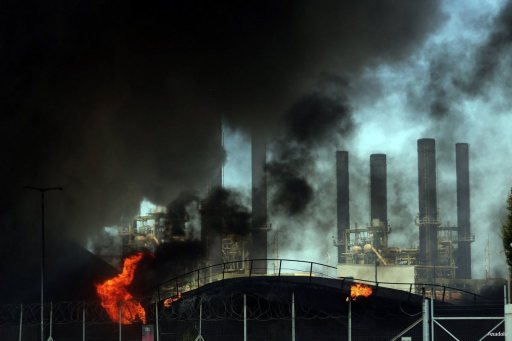
Israel has refused a Turkish offer to send a floating power-generating ship to the Gaza coast to supply the coastal enclave with electricity, Arabs48 reported yesterday.
In the wake of the recent Israeli war on the Gaza Strip, Israel targeted the sole electricity plant in the Strip and massively damaged electricity infrastructure, Turkey offered to cover the electricity shortage.
According to Israeli reports, Turkey has officially asked Israel to issue a permit for a Turkish ship carrying huge electricity generators to be stationed off the Gaza coast.
Arabs48 reported Israeli security sources saying that specialists had found that the infrastructure in the Gaza Strip is not suitable for such a connection and that is why the Turkish offer was refused.
The same sources said that other ideas to solve the electricity crisis in Gaza were proposed, including mobile generators.
Anti-Defamation League creates blacklist of groups that link Ferguson to Palestine
By Cecilie Surasky | MuzzleWatch | December 1, 2014
Wow. The ADL below considers the photo below a hateful message.

File this under “You can’t make this up.”
Abe Foxman, whose $688,000 annual salary makes him one of the most over-paid pro-Israel lobbyists in the country, recently embarrassed himself (again) by actually releasing a press statement lecturing NFL star Reggie Bush on his Twitter feed— Bush had dared compared Ferguson and Gaza.
But it gets worse.
The Anti-Defamation League, which leverages its reputation as a fighter of bigotry to silence human rights critics of the Israeli government (thereby actually perpetuating bigotry and worse), has published a defacto blacklist of groups that dared to link Ferguson with Palestine.
I mean, what could the militarization of U.S. police forces and repeated, unaccountable killing of unarmed people of color possibly have to do with Palestine? According to the ADL—daring to make the connection is purely cynical at best, and a form of hate at worst.
But here is where the ADL gets the chutzpah award: singled out for particular opprobrium are those who link what’s happening in Ferguson to the training of police in Israel. The ADL, for example, calls out the inimitable Trita Parsi, head of the National Iranian American Council (NIAC). for this Tweet:
“Wondering why the excessive police violence? Here’s a guess: #Ferguson police chief got training in Israel…#Gaza.”
 They also call out someone for holding a sign at a protest that says “Google It!!! Israel trains the NYPD.”
So, who do you think is responsible for an awful lot of those free police trainings in Israel? The Anti-Defamation League, natch. Which I guess is why they are condemning people as opportunists and bigots for saying, well, the obvious.
As Kristian Davis Bailey wrote in Ebony Magazine in August:
The St. Louis County Police Department that killed Michael Brown and initially placed Ferguson on siege has trained with the Israeli military. Former County Police Chief Timothy Fitch was one of 15 American officials to participate in a weeklong training in Israel three years ago.
The April 2011 National Counter-Terrorism Seminar (NCTS) was sponsored by the Anti-Defamation League (ADL). It brought together leaders from the largest American police departments, the FBI and Immigration and Customs Enforcement (ICE) with members of the Israeli National Police, Israel Defense Forces and other intelligence organizations.
Oddly, the quick-to-issue-a-statement ADL was too busy to respond to Bailey’s requests for comment. Bailey went on:
Over 9,000 American officials have trained with Israeli police and military units on responding to civilian protests and terrorism. These operations reflect failure to distinguish between the apparent duty of police to protect civilians and military responses to war. This fusion has had life-costing implications for Americans, specifically black, Muslim and Arab people.
Normally, the ADL boasts about training lots and lots and lots of police officers , which includes special trips for US police officials to Israel for training in counter-terrorism tactics (which are then deployed against American citizens.)
I guess that in this case, they have decided that the best defense is a good offense. Reggie Bush, a running back, probably knows all about that.
Israeli Forces Kill 9 Palestinians, Kidnap 650, in November
IMEMC News & Agencies | December 01, 2014
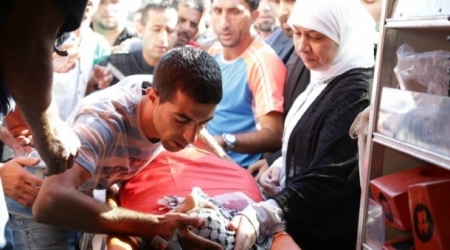
In a report issued on Monday, by Ahrar Center for Detainees’ Studies and Human Rights, Israeli occupation forces were said to have killed 9 Palestinians and detained 650 others, over the month of November.
According to Al Ray, the report noted that 42 out of 650 people taken from the occupied West Bank, Gaza and Jerusalem, were minors, in addition to 17 women. 30 of the minors were taken from Jerusalem.
The report also mentioned that six journalists and two cameramen were taken from Jerusalem, as well, while lawyer Ibrahim Nawaf Al Amer was abducted from the city of Nablus, after a raid on his family’s home.
Fuad Khafsh, director of Ahrar, said that Israeli forces storm the cities of the occupied West Bank when and wherever they please, every day and night.
He noted that the reported numbers are documented by the center, and that it was possible for there to be other cases which could not be documented by the center.
See PCHR reports on Israeli violations in the oPt for further documentation.
Islamic Jihad slams PA-Israel security coordination as unity gov’t expires
Al-Akhbar | November 30, 2014
The national consensus government declared by Hamas and Fatah this summer has finished its interim term, Hamas spokesman said Sunday, as the Islamic Jihad movement urged the Palestinian Authority (PA) to stop security coordination with Israel.
Hamas spokesman Sami Abu Zuhri said in a press conference in Gaza City that the unity government’s six-month term had expired, and that dialogue should be resumed on a national level to discuss the future of the government.
“Any decision on whether the government should be disbanded or continued or be reshuffled must be made only through national dialogue and consensus,” Abu Zuhri said, adding that Hamas “isn’t interested in incitement, but rather seeks to maintain national unity.”
The Palestinian national unity government was formed following a reconciliation deal signed by Palestinian political rivals Hamas and Fatah in April.
The deal sought to end years of bitter and sometimes bloody rivalry between Hamas, which controls the Gaza Strip, and Fatah, which dominates the West Bank-based PA.
Palestinian parties agreed in September that the unity government would assume immediate authority over Gaza, however the government has so far failed to make any real changes on the ground in Gaza.
Abu Zuhri went on to criticize the PA for making what he called “politically motivated arrests.”
So far in November, 80 Palestinians have been detained in the West Bank for their political affiliation, he said, adding that 70 of them were still in PA custody.
“Hamas denounces the escalating violations and criminal acts by the PA security services against supporters of Hamas and the Palestinian resistance,” he added, calling on PA President Mahmoud Abbas and Prime Minister Rami Hamdallah to stop the detention campaign.
Similarly, the Islamic Jihad movement urged Abbas on Sunday to release all political detainees and refrain from detaining any Palestinian over their political affiliation.
Besides the recent wave of detentions, the movement said the security coordination between the PA and Israel has become a “real danger” to the Palestinian national unity.
Islamic Jihad spokesman Yousef al-Hasayna said in a statement that the appreciation expressed by the Israeli authorities regarding the PA’s readiness to continue coordinating with the occupation forces on the security level “is a strike to the nationalistic values of the Palestinian security services” and “is in contrast with the values and beliefs of the Palestinian people.”
“Israel is using this coordination to oppress the Palestinians and make sure no uprising will erupt in the West Bank and Jerusalem,” al-Hasayna said.
“The only one benefiting from this coordination is the Israeli occupation.”
Gaza reconstruction
Ongoing differences between Hamas and the PA have kept tensions high in Gaza.
Earlier this month, a senior United Nations official warned that another conflict will engulf Gaza unless stability in the territory is achieved rapidly.
“I do not see the national consensus government effectively governing Gaza,” Robert Turner, director of operations for the United Nations Relief and Works Agency (UNRWA) in Gaza, said.
“If we do not have political stability, a national Palestinian government, and at least an easing of the blockade, yes there will be another war,” Turner told reporters.
For 51 days this summer, Israel pounded the Gaza Strip by air, land and sea.
More than 2,160 Gazans, mostly civilians, were killed and 11,000 injured during seven weeks of unrelenting Israeli attacks in July and August.
The assault ended with an Egypt-brokered ceasefire agreement that calls for reopening Gaza’s border crossings with Israel, which, if implemented, would effectively end the latter’s years-long blockade of the embattled territory.
However, the Zionist entity had repeatedly blocked the entry of building material, prompting the UN in September to broker another deal. The reconstruction of Gaza has yet to begin.
The Palestinian Authority has estimated that the rebuilding Gaza will cost $7.8 billion.
UN chief Ban Ki-moon said during a visit to the Gaza Strip in October that the devastation he had seen was “beyond description” and “far worse” than that caused in the previous Israel-Gaza conflict of winter 2008-2009.
According to the UN, as many as 80,000 Palestinians homes were damaged or destroyed during the days of hostilities, a higher figure than was previously thought, and over 106,000 of Gaza’s 1.8 million residents have been displaced to UN shelters and host families.
Israel routinely bars the entry of building materials into the embattled coastal enclave on grounds that Palestinian resistance faction Hamas could use them to build underground tunnels or fortifications.
For years, the Gaza Strip has depended on construction materials smuggled into the territory through a network of tunnels linking it to Egypt’s Sinai Peninsula.
However, a crackdown on the tunnels by the Egyptian army after it overthrew then-President Mohammed Mursi has effectively neutralized hundreds of tunnels, severely affecting Gaza’s construction sector.
Economists in Gaza have estimated that as many as 400 trucks of equipment – from concrete to building materials and machinery – are needed every day for the next six months to meet the demand, but so far only around 75 trucks have made deliveries.
“I know there is frustration at the pace of reconstruction,” Turner said, adding that efforts were underway to fully implement a mechanism negotiated by the UN’s special coordinator in the Middle East, Robert Serry, to speed up the flow of goods.
Alaa Radwan, head of the Popular Committee for Monitoring the Reconstruction of the Gaza Strip, made a simple calculation: “Given the pace at which construction materials are currently entering Gaza, it will be at least 20 years” before the damage caused by this summer’s war is repaired.
While Hamas and people in Gaza have lamented the slow flow of goods, Turner was optimistic that the volume could be greatly increased if political stability could be brought to bear and if Egypt and Israel fully lifted their combined blockade.
“I do not believe the crossings are a problem,” Turnor said. “All the technical problems can be addressed. The question for me is that the political choke points be addressed.”
“If the political will exists… expanding the crossing to 800 trucks a day is just a matter of paying for the expansion.”
The crisis between Hamas and Fatah has been delaying the flow of reconstruction material into war-battered Gaza because the opening of border crossings, both under Israeli and Egyptian control, is conditional on PA personnel being stationed there.
According to the UN-brokered deal, all materials going into Gaza should be extremely monitored, including GPS tracking and video surveillance of their storage, to ensure nothing goes missing and ends up being used for “military purposes.”
On top of the slow pace of reconstruction and the bureaucracy, Fatah’s failure to pay employees of Gaza’s former Hamas government has further escalated tensions between the two rivals.
Moreover, the situation in Gaza was thrown into doubt early November after bombs targeted the houses of some 10 senior Fatah officials in Gaza.
Even though Hamas leaders rushed to denounce the attacks and called upon security services in Gaza to investigate into the attacks and bring those responsible for it to justice, the Fatah-led Palestinian Authority security services accused Hamas of having knowledge of the blasts before they happened.
Hamas top member, Khalil al-Hayya, however, slammed the accusations as “groundless” and “baseless,” saying whoever was behind the blasts was trying to thwart reconciliation and ensure the Palestinian Authority did not re-extend its control over Gaza.
Hayya also warned against using the incident as an excuse to avoid reconciliation, calling on all sides to uphold their responsibilities towards the national good.
(Al-Akhbar, AFP, Ma’an)
Humanitarian aid is still a target for the Israeli occupation
By Ibrahim Hewitt | MEMO | November 26, 2014
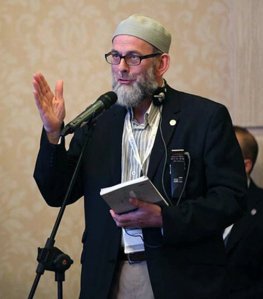 I have been the chair of trustees for 17 of Interpal’s 20 years as a British charity helping Palestinians in desperate need; it is a privilege to be in such a position. Being a trustee has enabled me to meet and work with some wonderful people, including our incredible beneficiaries in occupied Palestine, Jordan and Lebanon. They inspire us as we try to bring a degree of normality to their extraordinarily abnormal situation.It hasn’t been an easy ride. Interpal was declared by the US government in 2003 to be a “Specially designated global terrorist entity”; there was no due process, no investigation and no immediately obvious right to appeal against the decision. We discovered our new status via the BBC website. I called it “gesture politics” at the time, because claims that the US was freezing Interpal’s assets in America were nonsense; we didn’t have any assets there. In fact, the only money we have in the States now is around $100,000 which was confiscated by Citibank as the transfer of funds for our orphans’ programme in Jordan crossed a computer screen in New York. Orphans went without so that American and Israeli egos could be massaged.
A number of investigations and inquiries by Britain’s charity regulator have found no evidence of illegal activity by Interpal, and the US government has offered no evidence to justify its designation. The absence of any police involvement, said one senior Metropolitan Police officer, “is hugely significant”.
The “terrorist” tag originated in Israel, of course, which has a strong interest in blocking any kind of aid to the Palestinians living under its brutal military occupation; if life is made harsh enough, the theory goes, then perhaps the Palestinians will pack up and cross the Jordan into permanent exile. This is known in Zionist jargon as “silent transfer”. After almost 70 years of occupation, the Israelis obviously do not know the Palestinians, or the people who support them.
The UN Relief and Works Agency (UNRWA), whose senior spokesperson, Chris Gunness, has flown over to speak at Interpal’s 20th anniversary symposium in London, is at the forefront of working to keep the Palestinians afloat. Interpal is proud to be a valued partner of UNRWA and has a number of projects in the pipeline to continue such work in the months and years ahead.
Despite having such a high profile link to a UN agency, accusations of supporting “terrorism” have been thrown at Interpal almost since day one, with a claim in a major broadsheet that we “funded the training of suicide bombers” in 1996. A small charity has been seen as an easy target; we are the pebble in the Israeli shoe and just won’t go away. “Interpal,” said one Israeli politician, “is a tough nut to crack.”
The attack on our charity has been relentless which is odd, given our relatively small size. Italian journalist and author Loretta Napoleoni is an expert on “terrorist financing”. She told me that the US and Israeli governments are going after charities like Interpal precisely because they think that we are easy targets and can be shut down, at which point they can claim to be “cutting off terrorist funding”. The reality, she said, is that most of the $3 trillion drugs and terrorist economy is channelled through legitimate businesses, not charities. In 2012, HSBC confirmed that it was going to pay the US authorities $1.9bn (£1.2bn) in a settlement over money laundering. “A US Senate investigation said the UK-based bank had been a conduit for ‘drug kingpins and rogue nations’,” reported the BBC. The bank “admitted having poor money laundering controls and apologised.” There has been no special designation for a bank involved in very serious crime, but a small charity against whom there are only allegations from vexatious complainants face being driven out of existence; our only “crime” is helping Palestinians.
The message from our New York lawyer is that the US Treasury can only do so much about the designation: “It was a political decision and needs a political decision to rescind it.” In other words, the State Department must be involved, which is why Interpal has asked the Foreign and Commonwealth Office a number of times to speak on its behalf. Even though HM Government intervened on behalf of British banks facing legal action in the US, this British charity has been told “you need to raise it yourselves with the Americans”. Individual parliamentarians in both Houses have been very supportive over the years, but of government action there has been none.
Interpal distributes on average around £4 million a year and every penny is accounted for. In the great scheme of things, this is a relatively miniscule amount (Israel gets $8m a day from the US). The bureaucratic system that we have in place makes it ridiculous to suggest that we divert donations for illegal purposes.
The fact that many of the projects Interpal has funded are also funded by USAID doesn’t carry any weight in Washington, and America insists that we should discriminate along political lines in the distribution of our funds; discrimination of any kind is illegal for British charities, and rightly so. We will continue to support Palestinians with humanitarian aid without fear or favour, the only criteria being need.
Many of Interpal’s beneficiaries are women and children. The children of Palestine, Muslims and Christians alike, have had their childhood stolen from them; we should all hang our heads in shame at this. More than 80 per cent of the children in the Gaza Strip suffer from post-traumatic stress. Every time an Israeli jet flies overhead, or a helicopter, or a drone, these children wait for the bombs to follow; that is what they have come to expect. It is a shameful situation.
The recent news that the dedicated surgeon and activist Dr Mads Gilbert has been given a lifetime ban by Israel from entering the Gaza Strip illustrates perfectly the Israeli attitude towards anyone offering humanitarian assistance to Palestinians. It has nothing to do with “terrorism” and everything to do with enforcing an immoral and illegal blockade on the territory. What is being done in the name of “the only democracy in the Middle East” is not only undemocratic but also breaks international law. Israel’s leadership knows this but carries on regardless and with apparent impunity. NGOs and others will do likewise until justice is seen to be done and a free and independent Palestine emerges from the rubble.
This is an edited version of the speech given by Ibrahim Hewitt at Interpal’s 20th anniversary symposium in London on 25th November.
Israeli Authorities Prevent 100 Tons of Vegetables from Exporting out of Gaza
IMEMC News & Agencies | November 24, 2014
At Kerm Abu Salem crossing Israeli occupation authorities have barred ten truckloads of agricultural products from leaving the war-torn and economically besieged Gaza Strip, due to an alleged dispute between the Israeli army and the Ministry of Agriculture.
The dispute is preventing the trucks and their cargo from passing, and being exported to Saudi Arabia and West Bank, according to Al Ray Palestinian Media Agency.
Israeli website Walla reported, on Monday, that allowing the export of the agricultural products comes in the framework of “facilities” granted for Gaza residents in the wake of the last summer’s assault on the region, by Israel. Israeli authorities had agreed on the passage of ten truckloads per day.
Walla added that this shipment of vegetables weighs 100 tons, and has been held back since Sunday morning.
According to the Israeli system, after the truckloads pass to the military checkpoint on the Palestinian side of the crossing, they should be inspected and, then, loaded again onto Israeli trucks to pass to their planned route.
The office of the Coordinator of Government Activities in the occupied territories claims that the trucks are still stuck in the crossing because the Israeli Ministry of Health did not yet inspect them in accordance with regularities, with the Ministry itself citing a lack of staff to do that.
At this time, it is not clear when the shipment will pass.
UK approved $11mn Israeli arms sales before Gaza war: Report
Press TV – November 24, 2014
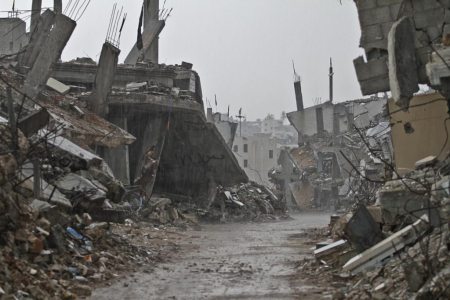
A new report has revealed Britain’s approval of arms sales to Israel worth nearly USD 11 million (£7 million) in the six months before the regime’s latest aggression against the Gaza Strip.
The Sunday report by The Independent newspaper raised fresh concerns about the use of British-made weapons and equipment by the Israeli army during the 50-day war on Gaza that killed more than 2,100 Palestinians and wounded 10,000 others in July-August.
Citing government figures, it added that the sales included components for drones, combat aircraft and helicopters along with spare parts for sniper rifles.
The figures also show that the British government has issued 68 export licenses for exports of military-use items to Israel between January and June.
“The Independent can reveal that ministers in the Department for Business Innovation and Skills (BIS) have also ordered a fresh review of military export licenses to Israel granted prior to the outbreak of the conflict after officials found 12 instances where arms containing British components may have been used in Gaza” by the Israeli army, it added.
“The refusal of the government to suspend these licenses caused a split in the coalition and led to the resignation of Foreign Office minister Baroness Warsi, who described Britain’s stance during the Israeli land and air assault as ‘morally indefensible’,” the British daily said.
Andrew Smith of the Campaign Against Arms Trade (CAAT) confirmed to the newspaper that “right up until the eve of the bombing, the UK was supporting licenses for the same kinds of weapons that (Secretary of State for Business, Innovation and Skills) Vince Cable’s own review found are likely to have been used against the people of Gaza.”
“Unfortunately it would not have been the first time UK weapons were used by Israel. The public was rightly shocked by this summer’s bombardment. That is why the UK must announce an embargo on all arms sales to Israel and an end to military collaboration.”
Katy Clark, a Labour party lawmaker, also said, “It is now abundantly clear that not only did the UK refuse to condemn Israeli military action,” but also it actively allowed UK companies to arm the Israeli military throughout the latest war on the beleaguered enclave.
Last month, the British government ordered the new review of licenses after campaigners began proceedings in the High Court to challenge its decision not to suspend the 12 licenses after Downing Street insisted Israel had a “legitimate right to self-defense.”
In August, The Independent revealed that arms export licenses worth $70 million had been granted to 130 British defense manufacturers since 2010 to sell military equipment to the Tel Aviv regime.
These range from bulletproof garments to naval gun parts and armored vehicles.
Featured Video
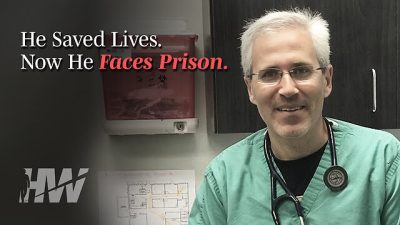
HE SAVED LIVES. NOW HE FACES PRISON.
or go to
Aletho News Archives – Video-Images
From the Archives
NATO Sanctions and the Coming Global Diesel Fuel Disaster
By F. William Engdahl – New Eastern Outlook – 11.04.2022
Amid the ongoing global inflation crisis, NATO heads of state and mainstream media repeat a mantra that high energy prices are a direct result of Putin’s actions in Ukraine since end of February. The reality is that it is the western sanctions that are responsible. Those sanctions including cutting SWIFT interbank access for key Russian banks and some of the most severe sanctions ever imposed, are hardly having an impact on the military actions in Ukraine. What many overlook is the fact that they are increasingly impacting the economies of the West, especially the EU and USA. A closer look at the state of the global supply of diesel fuel is alarming. But Western sanctions planners at the US Treasury and the EU know fully well what they are doing. And it bodes ill for the world economy.
While most of us rarely think about diesel fuel as anything other than a pollutant, in fact it is essential to the entire world economy in a way few energy sources are. The director general of Fuels Europe, part of the European Petroleum Refiners Association, stated recently, “… there is a clear link between diesel and GDP, because almost everything that goes into and out of a factory goes using diesel.” … continue
Blog Roll
 Aletho News
- Qatar PM calls for Gulf security framework with Iran, says war must be ‘wake-up call’
- China condemns US extortion of Iranian airlines, rejects Washington’s ‘illegal’ sanctions threats
- Italy to move military personnel from Taif base after missile strike
- Finland’s Stubb tells European leaders to calm down
- Defeating Russia on battlefield impossible – Fico
- Finland’s Gender Clinic Reversal
- Massachusetts Wants Mental Health Visits, Why Does Government Use ‘Health’ to Enter Our Homes & Families?
- US lawmaker admits American people footing bill for Trump’s failed aggression against Iran
- Pfizer Gave $500,000 to Groups That Lobbied to End Religious Exemption in Massachusetts
- HE SAVED LIVES. NOW HE FACES PRISON.
- If Americans Knew
- Sanctions are collective punishment: immoral and self-defeating
- Phosphorus Munitions Fired by Israel Burn Groves, Orchards in Southern Lebanon
- Israel Carries Out New Ceasefire Violations Across Gaza
- AI – Emphasis on the ‘I’: Israel Is Funding AI Chatbot Propaganda
- Israel Blocking Hundreds of Wheelchairs for Injured Children From Entering Gaza
- Israel Is Expanding and Upgrading Compounds for Palestinian Militias in Gaza
- The Palestinian-American Residents of This West Bank Town Are Wondering: Where Is Trump?
- Gaza desperately needs tents, wheelchairs, fuel… and everything else (Israel blocks it all) – Daily Update
- Israeli Attacks in Gaza Kill at Least Seven Palestinians Over Three Days, including Woman and Child
- Trump’s militarization of Washington DC as he pursues Israel’s war against Iran
- No Tricks Zone
- 2025 Nature Paper Claiming Worsening Global Drought Gets RETRACTED …Heavily Flawed
- New Study: ‘Global Drought Shows No Detectable Recent Acceleration Under Climate Warming’
- Economic Masterminds: German Socialists Suggest Taxing Productivity Gains Stemming From Using AI
- The South China Sea Has Not Been Cooperating With The Climate Change Narrative
- Energy Crisis: Germany Enters Heating Season With Historically Low Gas Reserve Fill Levels
- New Study: The Antarctic Ice Sheet Gained Mass From 2020-2024 Due To Staggering Snow And Ice Accumulation
- Study: Ocean Heating Rates From Thousands Of Years Ago ‘Dwarf’ Modern Ocean Heating Rates
- Climate Extremists Target, Attack Large-Scale Power Grid Infrastructure In Germany!
- New Study: Antarctic Ice Melt Has Contributed Less Than 1 Centimeter To Sea Level Rise In The Last 30 Years
- Fear Of Debate: Alarmist German Climate Scientist Calls On Mainstream Media To Discredit Skeptic Voices

