9 Palestinians killed, several injured in Israeli airstrikes on Gaza
By Saed Bannoura | IMEMC News | July 7, 2014
Palestinian medical sources have reported that nine Palestinians have been killed by Israeli missiles and shells in the Gaza Strip on Sunday, and Monday at dawn.
Seven of the slain Palestinians are members of the al-Qassam Brigades of the Hamas movement.
The Brigades stated the six fighters have been killed when the Israeli army fired missiles into a siege-busting tunnel in Rafah, in the southern part of the Gaza Strip. Their bodies were found on Monday, at dawn.
The fighters have been identified as Ibrahim al-Bal’aawy, 24, Abdul-Rahman az-Zamely, 22, Mustafa Abu Morr, 22, his twin brother Khaled, Yousef Sharaf Ghannam, 22, and Jom’a Abu Shallouf, 24.
A Qassam fighter, identified as Ibrahim ‘Abdeen, died of wounds suffered during an earlier shelling in Rafah.
Sami Abu Zohri, spokesperson of the Hamas movement, stated the assassination of the fighters is a serious escalation, adding that “the enemy will pay a heavy price”.
Dr. Ashraf al-Qodra, spokesperson of the Ministry Of Health in Gaza, stated that five Palestinians, including a child and two young girls, have been injured when an Israeli missile detonated near their homes, in Beit Hanoun, in northern Gaza.
Another airstrike targeted al-Qarara town, east of Khan Younis in the southern part of the Gaza Strip.
Missiles have also been fired into agricultural lands in Shekh Radwan in Gaza, causing damage but no injuries.
Two fighters, identified as Mazen al-Jedya and Marwan Salim, have been killed by Israeli missiles in al-Boreij refugee camp. Their bodies have been severely mutilated.
Palestinian resistance groups in Gaza claimed responsibility for firing dozens of shells into adjacent Israeli areas in retaliation to the Israeli military escalation.
Farming under siege: Working the land in Gaza
By Tom Anderson and Therezia Cooper | Corporate Watch | July 5, 2014
Corporate Watch researchers visited the Gaza Strip during November and December 2013 and carried out interviews with farmers in Beit Hanoun, Al Zaytoun, Khaza’a, Al Maghazi and Rafah, as well as with representatives from Union of Agricultural Work Committees (UAWC), Palestine Crops and the Gaza Agricultural Co-operative in Beit Lahiya. This is the first of two articles highlighting what their experiences show: that Palestinians face significant and diverse difficulties when it comes to farming their land and harvesting and exporting their produce under siege, and that Israel enforces what amounts to a de facto boycott of produce from the Gaza Strip.
The land and the buffer zones
“There is a 300 meter ‘buffer zone’ in our area. It is common that people get shot at directly if they enter it. Within 500 meters people often get shot at. It is unsafe within 1500 metres of the fence”
Saber Al Zaneen from the Beit Hanoun Local Initiative

Since the withdrawal of settlers and the end of a permanent presence of ground troops from the Gaza Strip in 2005, Israel insists that the area is no longer under occupation. However, as well as still controlling Gaza’s air space, coastline and exports, Israel effectively occupies the area commonly referred to as the ‘buffer zone’, located all the way down the strip along the border with Israel. A buffer area has existed in Gaza since the signing of the Oslo accords in 1993, when 50 meters on the Gaza side of the border was designated a no-go area for Palestinians. Since then, Israel has unilaterally expanded this zone on numerous occasions, including to 150 metres during the Intifada in 2000 and to changeable and unclear parameters since 2009.
According to the United Nations Office for the Coordination of Human Affairs (OCHA) the buffer zone takes up 17% of Gaza’s total land, making up to 35% of available farmland unsafe for Palestinians to use, with the areas nearest the border fence being the most restricted. Calling the boundaries of the zone ‘vague, unpredictable’ and ‘uncertain’, OCHA has divided the the zone into two danger grades: ‘no-go’ areas where Palestinians risk their lives if they enter as they are considered free fire zones by Israel (within 500 metres of the fence) and ‘high-risk’ areas, where the restricted access still has a severe consequences for farmers and where property destruction and levelling of the land occurs on a regular basis (within 500 and up to 1500 meters of the fence). These areas are kept under heavy surveillance by Israel, through the use of military border patrols and equipment as well as surveillance balloons and drone technology. There are regular incursions by Israeli troops into the buffer zone, sometimes as often as a few times a week.
In the ceasefire agreement during Operation Pillar of Cloud in 2012, Israel agreed to ease restrictions on some Palestinian farmland and allow access up to 100 meters from the fence but this promise appears to have had limited impact on Palestinians. There has been no official announcement regarding the easing of the restrictions and as the Israeli human rights organisation Gisha (part of Legal Center for Freedom Of Movement) has pointed out, advice from Israeli sources is often contradictory, citing the no go areas as sometimes 100 meters, sometimes 300 meters with no way for farmers to be sure. What is clear, however, is that Palestinians keep getting shot at from a greater distance than 300 metres and that anyone going closer than 500 metres from the border is putting themselves in danger. It is also clear that with so much of their land being out of bounds, farmers have no choice but to continue to work, at least partly, in areas which are unsafe.
Since 2008 over 50 Palestinians have been killed in the buffer zone and, although things have calmed down slightly since the truce in 2012, four Palestinian civilians have been killed and over 60 wounded by Israeli forces in the buffer zone so far this year, with five killed and approximately 60 wounded in 2013 according to Human Rights Watch. Most of these deaths have occurred when farmers have been trying to reach their land within, or near to, the buffer zone, or during demonstrations where communities have tried to assert their right so reach their fields. One role of international solidarity activists in the Gaza Strip is to accompany farmers wanting to access and farm their land. Sa’ad Ziada from UAWC estimates that the number of agricultural workers in Gaza has decreased from 55.000 to 30.000 as a result of the siege, with many of the remaining farmers unable to earn enough to survive from their crops.
As well as threatening life, the buffer zone has had a disastrous impact on Palestinians’ ability to make a living in the Gaza Strip, with not only fields but also property and water resources heavily affected. The Diakonia International Humanitarian Law Resource Centre states that since Israel’s supposed disengagement in 2005 ’305 water wells, 197 chicken farms, 6,377 sheep farms, 996 complete houses, 371 partial houses, three mosques, three schools, and six factories have been destroyed within the “buffer zone”’, and a total of 24.4 square kilometres of cultivated land has been levelled.
Destroying livelihoods in Khuza’a
“We can see the Israelis farming the land, and we cannot farm our land”
Hassan, farmer from Khuza’a

Khuza’a is a village in the southern Gaza Strip, just east of Khan Younis. It is located only 500 metres from the border fence with Israel and 70% of the population are farmers. The town has suffered greatly from the Israeli Occupation Forces’ enforcement of the buffer zone and from repeated air attacks. During Operation Cast Lead in 2008-2009, the village was targeted with white phosphorous, leaving farmland temporarily contaminated. During Corporate Watch’s visit to Khuza’a we talked to farmers representing several generations: Osama, Ahmed, Mohammed, Jihad, Salam and Hassan.
Hassan is 51 years old and has been a farmer in Khuza’a for over 30 years. He owns three different pieces of land, two dunams next to the border fence, two and a half dunams 400 metres from the fence and four dunams 620 metres from the border. He used to have olive trees on the plot by the border, but the land was levelled during an expansion of the buffer zone in 2000. In 2008 his other two pieces of land were bulldozed, including his greenhouses. In 2009 his house was partially burned by white phosphorous, which also affected the land next to him. “The farmers are the victims here” Hassan told us, “when resistance fighters are targeted on the farmland it destroys everything”.
Hassan is now trying to grow tomatoes and olives on the two pieces of land furthest from the fence with the support of Unadikum and other international volunteers, who accompany farmers in in the hope that their presence will make the work less dangerous. However, all the Khuzra’a farmers reported that they frequently get shot at even when working on land over 500 metres away from the border. “We have no choice, when the Israelis shoot we have to leave the land”, Hassan said.
According to the men we talked to in Khuza’a the economic situation for farmers in the Gaza Strip is the hardest it has ever been -not only are none of them making any money, but the siege is slowly killing their ability to be agriculturally self sufficient. Hassan used to earn approximately $1000 a month from his fields before he lost his first bit of land in 2000. Now he has got debts of $60.000 instead and no way of making money. We were told that farmers generally get seeds to plant from the traders which they then pay for after harvest season, but harvests in the Gaza Strip are highly unpredictable: land anywhere near the buffer zones can become impossible to farm at any point and some years whole crops are destroyed during Israeli attacks.
None of the farmers in Khuza’a are currently able to export the produce they do succeed in growing. There has been a near total ban on exports from the Strip since the tightening of the siege in 2007 with only a minimal amount of agricultural produce being allowed for export through Israeli companies every year. No Gaza produce is allowed to be sold in Israel or the West Bank, which has traditionally been Gaza farmers’ biggest market. Salam told us that he used to be able to market his produce for sale in Europe but that it had to be done through Agrexco and Arava, Israeli agricultural export companies, and that the last time he managed to export anything was almost ten years ago.
“I have been farming here for 30 years and all the lands have been destroyed” Hassan said with a shrug. “I used to produce 20 tanks of olive oil from my trees every year, but now I have to buy oil even for myself. Should we have to constantly rebuild everything? What will the future for my sons be? I am always arguing with my sons. They want to go to Algeria to find work, and then I will lose my sons too”. All these farmers want is the chance to have a future on their land.

Standing in the middle of the fields of Khuza’a, looking past the barren Palestinian land next to the fence and past the military watch tower, you can clearly see healthy looking green crops on the Israeli side of the border. The Israeli fields are close enough for us to hear the low humming of their fertilising plane as we leave.
Uprooting families in Beit Hanoun
Beit Hanoun has been one of the towns hit the hardest by Israel’s enforcement of the buffer zone. Located in the far north east of the Gaza Strip, only six kilometres from the Israeli city of Sderot and close to the Beit Hanoun (Erez) border crossing to Israel, the population is exposed to frequent incursions by the Israeli Occupation Forces and it shows. Approaching the buffer zone you walk past a big crater in the ground, the result of a 2012 F16 strike, and house rubble can be seen in the distance. The area is under constant heavy surveillance by Israel and several surveillance ‘balloons’ monitor everything that goes on on the ground. According to Saber Al Zaneen from the Beit Hanoun Local Initiative Israel bulldozed 9000 dunums of Beit Hanoun’s land between 2001 and 2009 including 70 houses. Most of it was farmland. As a result over 350 people living in the area have been displaced from their land. The Beit Hanoun Local Initiative, set up in 2007, is a grassroots group working with, and supporting, marginalised families and farmers living close to the buffer zone with the aim of helping them remain on their land.

In the past farmers in the area used to grow olives, lemons and oranges close to the border but all the trees haven now been bulldozed. “Communities now grow potatoes, peppers, tomatoes and watermelons on the outskirts of the buffer zone” Saber told us. “You can not grow anything tall at all, no trees are allowed. If plants get higher than about 80 centimetres they will be levelled”. Shortly after we visited the area, the Local Initiative assisted the planting of some new wheat fields nearer the fence, challenging the restrictions in the buffer zone.
On top of the access restrictions and the personal danger involved, farmers working the land face the big challenge of being able to access water for their crops. Approximately 60 water wells in the vicinity of the Beit Hanoun buffer zone were bulldozed or bombed between 2001-2009 and finding enough water to grow healthy produce is now a constant struggle for the community. The area we visited had one small mobile water tank for the fields but locals told us that as it requires either electricity or fuel to run they were not always able to use it. Instead they relied on a makeshift pit dug in the field and lined with tarpaulin in order to collect rain water. Gaza suffers from a severe and drawn out fuel crisis which, during our visit at the end of 2013, resulted in mains electricity only being available around 12 hours a day on a six hour off/six hour on basis at best. As a result fuel for personal use is both expensive and hard to come by (for an expanded explanation of the fuel crisis in Gaza see Corporate Watch’s briefing Besieging Health Services in Gaza: A Profitable Business)

House demolitions in Al Zaytoun
“We plant our plants here to claim our rights to the land. We are not making a profit, we are working for nothing”
Ahmad from Al Zaytoun
We met the farmers Ali, Rafat, Nasser, Ahmad, Jawad and Ishmael outside Ahmad’s house next to the Malaka intersection area of eastern Al Zaytoun just south of Gaza City. There used to be a three storey family home on this plot, but there is now a much smaller house next door. This is the result of continuous targeting of the area by the Israeli Occupation Forces, who have a military base close by. Ahmad, who was born on this land, told us that his family’s house had been demolished three times: in 2004, 2005 and during Operation Cast Lead in 2008.
“In 2008 they destroyed everything around here”, Ahmed said, “they even destroyed my jars of olive oil. We did not have time to bring hardly any of our things. The Israelis came through a gate in the fence in the buffer zone with 14 tanks and four military bulldozers. They were shooting a lot to make us leave before they arrived. We have had to rebuild our home three times”.
As in other buffer zone communities, it is not only property which is frequently targeted by Israel -it is anyone who attempts to farm the land. All the farmers we talked to in Al Zaytoun had some land within 300 metres of the fence. The last shooting incident had occurred just four days before our visit. When there is instability happening in the area, everyday activities for farmers become even more precarious.

The story of the farmers in Al Zaytoun is a familiar one: before the tightening of the siege in 2007 they all used to be able to make a decent profit from their land, with some farmers getting close to $30.000 a year but now they make no profit at all. Some of them used to export part of their produce, albeit through Israeli companies, but now none of them are able to export anything and all their goods go to the local Gaza market. “No-one has any money so we hardly make anything” said Ahmed. “Sometimes we have to feed some of the vegetables to the animals”.
Mustapha told us that farmers in this area have had some help from Norwegian People’s Aid who provided them with an irrigation system for the fields, and they also have a tractor but even with equipment taking care of the land is a challenge under siege. Just like the farmers in Beit Hanoun, they rely on access to electricity for the water pump and petrol for the tractor and those things are often not available. “The water is so salty here that we can only plant very specific plants like aubergines olive trees, potatoes, cabbage and spinach. Cucumbers and tomatoes can’t be planted”, said Mustapha. The salty water is the result of the Gaza aquifer having been contaminated by sea and sewage water, partly through a decline in ground water levels and partly as a result of infrastructure damage during Israeli air attacks in 2009. According to the UN 90% of the water from the aquifer, Gaza’s only water resource, is not safe to drink.
After the ousting of the Muslim Brotherhood in Egypt in the middle of 2013, life for Gaza’s farmers has become even harder. The men in Al Zaytoun said that they used to be able to be able to buy cheap fertilizers which had come through the tunnels from Egypt at the local market. However, since the tunnels were destroyed this is no longer possible. Products are now both harder to get hold of and more expensive as they have to come through Israel which means that there are no cheap choices and that tax will be added.
Despite all the problems they face the people of Al Zaytoun continue to work their land, they have no other option. As we walked around their fields they showed us how they have started to re-cultivate land nearer and nearer the fence, moving the area of cultivation forward by around ten metres per week. In Gaza simply farming the land has turned into an act of resistance.
Uprooting history in Al Maghazi
“It is not the uprooting of the trees themselves that is the worst, it is the uprooting of our history”
Abu Mousab from Al Maghazi

For Palestinians, the buffer zones do not only create financial hardship and humanitarian crises, they also sever people’s connection with their history. In Al Maghazi, a primarily agricultural community in the central Gaza Strip, we met Abu Mousab, a farmer who also holds down a job as an iron wielder in order to make a living. Al Maghazi is a refugee camp established in 1949 and according to Mohammed Rasi el Betany from the Al Maghazi refugee council approximately 95% of the population are refugees. However, Abu Mousab’s family have lived on the same piece of land for generations. When we visited, his father, who is in his late 90′s and who used to work for the British Mandate before the creation of Israel, was asleep in the room next door.
Staying steadfast on the farmland has not been easy for Abu Mousab and his family. Their land is located approximately 300 metres from the border fence and, despite the fact that conditions have become a little bit safer since 2012, working the land is dangerous. “We have to play a kind of cat and mouse game with the soldiers” Abu Mousab said. “When the soldiers go away we turn on the water and quickly irrigate our plants, but as soon as they start shooting we have to leave”. Only a week before our visit Abu Mousab’s nephew Medhat had been shot at with live ammunition warning shots when he was trying to weed some crops on the part of the family’s farmland nearest the fence. Some years the family have been able to access their land so infrequently that the crops have failed, leaving them with no income from their land. During good years when they do manage to harvest their barley, wheat, almonds, citrus fruits, olives and apricots they sell their produce to the local market in the Gaza Strip.
However, many people do not feel able to risk their life to work on the land. One of them is Mousa Abu Jamal, another farmer from Al Maghazi. He used to have ten dunums of farmland planted with olive trees within the buffer zone, all of which have been uprooted by Israel. When he tried to go back to re-cultivate his land in the middle of 2012 he was shot at. He has not been back since.
“I was always told by my father that he who has been raised on his farmland must stick with his farmland until he dies and that is what we are doing” Abu Mousab said. His family are so determined not to give up their heritage that during the bombardment of the Gaza Strip in 2012 they made a decision not to leave the area for relative safety further away from the border. “Ten years ago the Israelis came with Caterpillar bulldozers and destroyed olive trees and several 200 year old sycamore trees on my land. Those were trees my grandfather used to sit under”, Abu Mousab said. “They had to use two of their bulldozers to uproot just one tree, they were so rooted in our history.”
Boycott Divestment and Sanctions
Israel’s siege of Gaza is slowly strangling life in the Strip. It affects farmers’ access to land, crops, water and electricity. It also limits people in Gaza’s ability to buy food grown in Gaza and makes people more reliant on imports of Israeli goods. The situation for exporters is even worse: only a tiny amount of agricultural produce gets exported each year, all of which has to go through Israeli companies. The ban on Gaza produce being sold in Israel and the West Bank amounts to a de facto boycott of Gaza’s export industry by Israel.
What can the solidarity movement do?
During Corporate Watch’s visit to the Gaza Strip the people we interviewed made their hopes very clear: they want boycott, divestment and sanctions of Israel, but they also want opportunities to trade and make a living. This presents a challenge to the BDS movement. As the tiny amount of Palestinian produce that is being exported from the Gaza Strip is currently exported through Israeli companies it means that any boycott of, for example Arava, will boycott Palestinian produce too. When asked about this implications of this, farmers were still supportive of a boycott, as they hoped the pressure would be more beneficial to them in the long term than the minuscule benefits the current export levels achieve. “What we need is people to stand with us against the occupation”, said Mustapha from Al Zaytoun. “By supporting BDS you support the farmers, both directly and indirectly and this is a good thing for people here in Gaza”.
Farmers all over the Gaza Strip were particularly keen on getting the right to label their produce as Palestinian, ideally with its own country code, even if they have to export through Israel. Country of origin labels for Gaza goods is something the solidarity movement could lobby for.
There was strong support amongst farmers for increased action against Israeli arms manufacturers, as they are often on the receiving end of their weapons.
Mohsen Aby Ramadan, from the Palestinian Non-Governmental Organizations Network suggested that one good way forward could be to engage farming unions across the world and get them to endorse the BDS call in solidarity with Palestinian farmers -an avenue that has not as yet been properly explored.
Part two of this series of articles will look at the problems faced by Gaza’s export industry.
Israeli Air Force Carries Out 34 Air Strikes Against Gaza Amidst Threats of ‘Vengeance’
By Saed Bannoura | IMEMC News | July 1, 2014
 The Israeli Air Force carried out, on Tuesday before dawn, at least 34 air strikes targeting different areas of the Gaza Strip, causing excessive property damage, and at least four injuries.
The WAFA news agency has reported that Israeli F-16 fighter jets fired missiles into different areas of the Gaza Strip, mainly in agricultural and open areas, in addition to several homes and civilian property.
WAFA reported that the army bombarded Gaza, Rafah, Khan Younis, the Central District and the Northern District of the besieged coastal region, adding that Israeli navy ships also participated in the attacks.
Local sources said dozens of Israeli drones remained in the Gaza skies all night, while Israeli helicopters also continue to fly over the Gaza Strip, firing rounds of live ammunition.
Medical sources said Israeli missiles struck agricultural greenhouses seriously wounding four Palestinians, in Khan Younis and Rafah, in southern Gaza.
The four, who worked as guards at the greenhouses, have been moved to Nasser Hospital in Khan Younis facing life-threatening conditions.
Israeli officials confirmed the strikes against Gaza, and said that resistance groups also fired shells into Israeli areas across the border.
The Israeli Prime Minister, Benjamin Netanyahu, said that Hamas would pay the price for the death of the three Israeli settlers, who were found dead, Monday, near the southern West Bank city of Hebron, after eighteen days of searches and invasions by the Israeli army.
On his Twitter account, the Israeli Prime Minister posted, “Vengeance for the blood of a small child, Satan has not yet created. Neither has vengeance for the blood of 3 pure youths who were on their way home to their parents who will not see them anymore. Hamas is responsible and Hamas will pay.”
The Israeli army has killed five Palestinians since the settlers went missing 18 days ago, and dozens have been injured by Israeli army fire. In addition, close to 300 Palestinians have been kidnapped and imprisoned in the 18-day period. Since the bodies were discovered Monday, Israeli attacks, invasions and threats have increased significantly, so these numbers have likely increased in the last 24 hours.
Despite the threats and calls for vengeance, the Israeli government has released no information linking Hamas or any Palestinian groups or individuals to the deaths of the three settlers.
Recent Israeli airstrikes targeted Gaza infrastructure
Palestine Information Center – 20/06/2014
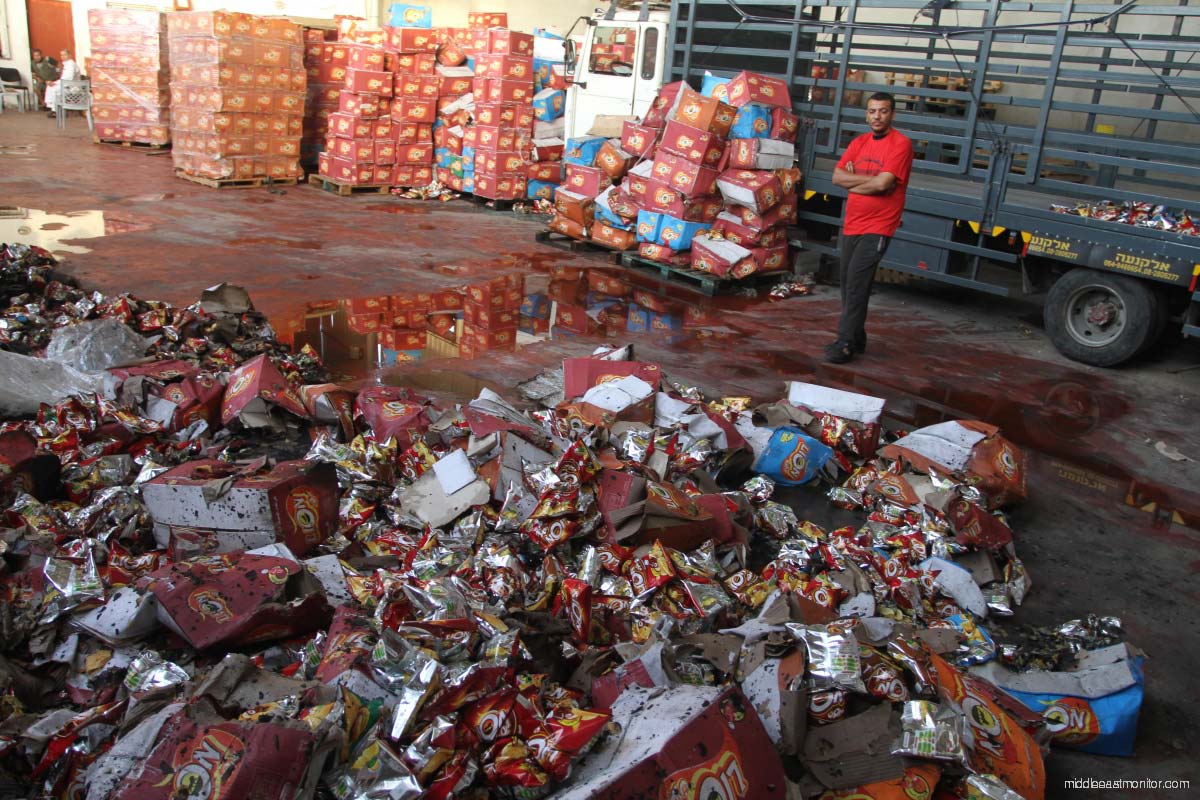 GAZA – The Palestinian interior ministry said that the recent Israeli aerial attacks on the Gaza Strip directly targeted its infrastructure, factories and workshops.
A spokesperson for the ministry stated that an Israeli warplane bombed a dairy plant in Gaza City at dawn today.
Israel escalated its aerial attacks on Gaza over the past few days in Gaza Strip, which rendered many civilians wounded amid persistent international and Arab silence.
For its part, the Palestinian education ministry strongly condemned Israel’s repeated bombing of educational institutions, asserting that 10 schools sustained damage during recent Israeli air raids on Gaza.
L-3 and Garret supplying equipment for Gaza checkpoint
By Tom Anderson and Therezia Cooper | Corporate Watch | June 20, 2014
The Beit Hanoun (Erez) crossing is the only crossing for people who want to go directly from Gaza into the 1948 borders of Israel. People wishing to cross must apply for a permit and only a small number of permits are granted. Privileged people such as foreign journalists (who are not overly critical of Israel), NGO workers, business people and politicians are often granted permits. Other people have to go through the Rafah crossing from southern Gaza into Egypt.
The Beit Hanoun crossing is subject to frequent closures by the Israeli authorities. The terminal has been closed since the kidnapping of three Israeli teenagers in the West Bank on 12 June. This closure amounts to an act of collective punishment against everyone in Gaza by the Israeli state.
The crossing is also the only way for hundreds of sick patients to obtain treatment. Israeli military attacks have destroyed vital services in Gaza, while the Israeli siege has prevented life saving equipment from reaching services in the Strip. See Corporate Watch’s recent briefing, Besieging health services in Gaza: a profitable business, to find out more about the effects of the siege on health in Gaza.
Corporate Watch did not apply for permission to cross through the Beit Hanoun crossing as we didn’t think that it would be granted. However, we did ask an NGO worker who was crossing to take a look at the equipment used in the terminal. The NGO worker, who wished to remain anonymous told us: “Coming from Israel, you first go through a private Israeli security firm check where your permit number is confirmed so that you can enter the terminal, then in the terminal you go through another Israeli security ‘border patrol’ check. Once through that you go on a long walk to the Palestinian Authority checkpoint where you’re registered, then you get into a taxi and drive just a minute to the Hamas checkpoint where another permit by the local government is checked. That’s the process for getting into Gaza.”
He told us “I saw the machine’s makes: ProVision on the full body scans, Garret on the metal detectors.”
Garrett are a security equipment supplier. In 2013 Corporate Watch reported that Garrett scanning equipment was being used by the police in the occupied West Bank. Garrett equipment is used by HM Court ‘Service’ in the UK. In our view, BDS campaigners should pressure HMCS to end its contract with Garrett because of its supply of security equipment used to enforce the unlawful siege of Gaza.
The PROVision scanners are manufactured by L-3. L-3 is a provider of military and security products and services. According to Who Profits it supplied body scanners to the Beit Hanoun terminal via Hashmira Israel, a security company owned by British-Danish company G4S.
Israel kills Palestinian in Gaza airstrike, blames Abbas for rockets
Ma’an – 12/06/2014
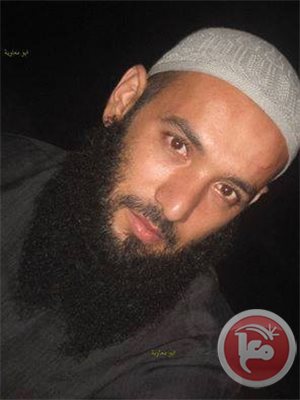 JERUSALEM (AFP) — An Israeli airstrike killed a Palestinian in Gaza on Wednesday after new rocket fire from the territory prompted Israel’s premier to warn he holds President Mahmoud Abbas responsible.
Two Palestinians were also wounded in the evening raid in the northern Gaza Strip, the emergency services said.
The dead man and one of the wounded were traveling on a motorbike and were the apparent targets. A young boy, who was passing by on foot, was also wounded.
Ashraf al-Qidra, spokesman for Gaza’s health ministry, identified the victim as Muhammad Ahmad al-Awour, 30.
The An-Nasser Salah al-Din Brigades, the military wing of the Popular Resistance Committees, said that al-Awour was affiliated to the group.
The Israeli military said it had targeted “terrorists affiliated to the international jihad,” its designation for Al-Qaeda inspired groups in Gaza.
The victim’s mother told Ma’an that when the Israeli missile targeted Muhammad, he was on his way to bring her food. She highlighted that he asked her and his wife a day before to invite his aunts and married sisters to a dinner at his home in Beit Lahiya.
“All invitees arrived, but the host hasn’t arrived because Israeli occupation’s warplanes surprised him while he was on his way home,” she said.
“Muhammad wasn’t going to launch missiles at them. We had a kind of family gathering, and he went to bring some food for us, but he never came back, and we received the news of his martyrdom.”
Abbas, who swore in a new merged government for the Palestinian territories last week replacing the Hamas administration in Gaza, condemned the rocket fire, which Israeli officials said hit the Eshkol region without causing any casualties or damage.
“Abbas is responsible and accountable for rockets that are fired at Israeli towns and cities by terrorists in the Gaza Strip,” Ofir Gendelman, a spokesman for Prime Minister Benjamin Netanyahu, wrote on Twitter.
Another Netanyahu spokesmen released a statement demanding that Abbas disarm “terrorist” organizations in Gaza.
“Abbas claims that the new Palestinian government honors all previous commitments. So why has he not disarmed the terrorist organizations in Gaza as he is obligated to do,” Mark Regev asked.
Israel had previously held Hamas responsible for all rocket fire from Gaza, regardless of who carried it out.
The Palestinian president’s bureau denounced the airstrike and urged the Israeli government to stop its escalation in Gaza immediately.
“We hold the Israeli government responsible for this escalation which we view as an attempt to create tension and drag the area into violence,” a statement released by Abbas’ office said.
An Israeli blockade on Gaza has been in place since 2006, limiting imports and exports and leading to major economic decline and a wide-reaching humanitarian crisis.
Israel has killed over 60 Palestinians since last July and injured more than a thousand in the occupied West Bank, East Jerusalem and Gaza Strip.
Ma’an staff contributed to this report.
Gaza fisherman shot by Israel 2 weeks ago succumbs to his wounds
Ma’an – June 8, 2014
GAZA CITY – A Palestinian fisherman shot by the Israeli navy two weeks ago succumbed to his wounds Sunday morning, Gaza medical authorities said.
Spokesman for the Gaza Ministry of Health Ashraf al-Qidra told Ma’an that 52-year-old Imad Shukri Salim was announced dead Sunday morning.
 Salim was shot in the chest by the Israeli navy two weeks ago while he was fishing off the coast in the area of al-Sudaniya in the northern Gaza Strip, al-Qidra said.
Israeli forces shot two Palestinian fishermen off the al-Sudaniya area coast in the month of May alone.
Palestinian fishermen are only being allowed to go three nautical miles from Gaza’s shore, even though an agreement previously settled on 20 nautical miles.
Israeli naval forces frequently harass Palestinian fishermen who near the three-mile limit, as well as those inside the zone.
There are 4,000 fishermen in Gaza. According to a 2011 report by the International Committee of the Red Cross 90 percent are poor, an increase of 40 percent from 2008 and a direct result of Israeli limits on the fishing industry.
Israeli Occupation Forces Kill Two Palestinians, Kidnap 370 In May

By Saed Bannoura | IMEMC News | June 1, 2014
In its monthly report on Israeli violations, the Ahrar Center for Detainees’ Studies and Human Rights has reported that Israeli soldiers killed two Palestinians in May, and kidnapped 370.
The Center said that the army shot and killed Nadim Nuwwara, 17, and Mohammad Abu Thaher, 20, near the Ofer Israeli military roadblock, near the central West Bank city of Ramallah. The two were killed on May 15, during Nakba Day protests.
Israeli army sharpshooters killed the two following clashes with the army as the Palestinians marked the Nakba Day. Video footage showed the two walking away, with their backs to the army location, when they were killed.
As for arrests carried out by the Israeli occupation army, the Center said that 370 Palestinians were kidnapped in the West Bank, Jerusalem and the Gaza Strip.
In Jerusalem, soldiers kidnapped 118 Palestinians, the highest number of arrests in May, while 86 Palestinians were kidnapped in the Hebron district, 40 in Nablus, 30 in Bethlehem, 27 in Ramallah, 27 in Jenin, 16 in Qalqilia, 8 in Salfit, 4 in Tulkarem, and two in Tubas.
In addition, 12 Palestinians were kidnapped in the besieged Gaza Strip; three of them were kidnapped near the border fence, and nine were Palestinian fishers were kidnapped by the Israeli Navy in Palestinian territorial waters.
Also in May, the army kidnapped five Palestinian women in different parts of occupied Palestine, and released three of them, while two remained under interrogation.
Head of the Ahrar Center, Fuad al-Khoffash, stated that Israel is escalating the arrests, especially amongst young Palestinians, and that Israeli interrogators continue to use cruel interrogation methods, and extreme torture, in direct violation of International Law and all related human rights treaties.
He added that the arrests are happening while Administrative Detainees, held by Israel under arbitrary orders without charges or trial, are ongoing with their hunger strike despite the fact that many detainees are facing life-threatening conditions, and serious complications.
Israel denies Gaza unity government ministers entrance to West Bank
Al-Akhbar | June 1, 2014
Israel has denied three future Palestinian Authority ministers from the Gaza Strip entry to the West Bank ahead of the unveiling of a new unity government, public radio said on Sunday.
The head of Israel’s military administration in the Palestinian territories, Major General Yoav Mordechai, had informed the Palestinians that the three would not be permitted to cross from Gaza to the West Bank, the radio said.
Palestinian Authority president Mahmoud Abbas said on Saturday that the line-up of a unity government would be announced Monday, following a delay over who would head the foreign ministry.
He also said Israel had informed the Palestinians that it would “boycott the government.”
“Israel wants to punish us because we have agreed with Hamas on this government,” he said.
And he also warned in remarks late on Saturday that the Palestinians would respond to every punitive step taken by Israel in respect to the new government.
The three ministers elect had applied to cross from Gaza to the West Bank on Thursday, but their application was immediately rejected, a senior Palestinian official responsible for coordinating exits and entries told AFP.
“We sent the application in on Thursday and explained that these officials are to be sworn in as ministers in Ramallah, but Israel immediately rejected the application,” he told AFP on condition of anonymity.
COGAT, the Israeli defense ministry unit responsible for Palestinian civilian coordination, refused to comment on the matter, as did the office of Prime Minister Benjamin Netanyahu.
But Netanyahu on Sunday warned against any international rush to recognize a Palestinian government.
“I call on all responsible elements in the international community not to rush to recognize a Palestinian government which has Hamas as part of it and which is dependent on Hamas,” Netanyahu, who has claimed such an administration would be a front for the Islamist group, told his cabinet.
Gaza’s Islamist ruling party and the Western-backed Palestine Liberation Organization, which is dominated by Abbas’s Fatah party, signed a surprise reconciliation agreement in April to end years of rivalry.
Under the deal, the sides agreed to work to form an “independent government” of technocrats, paving the way for long-delayed elections.
Israel denounced it as a deathblow to peace hopes and said it would not negotiate with any government backed by Hamas, which is committed to the destruction of the Zionist state.
However, Palestinians argued that Israel had already doomed the peace talk process by reneging on an agreement to release a final batch of Palestinian prisoners, and by its continued expansion of illegal settlements in the West Bank.
With the promised government to be sworn in at a ceremony on Monday, Israel appeared to be making good on its threats.
Speaking late on Saturday, Abbas said Israel was looking to punish the Palestinians for overcoming their years-long internal political differences.
“Israel wants to punish us for agreeing with Hamas on this government,” he said, explaining that Israeli officials had informed him that the Netanyahu administration would “boycott the government the moment it is announced.”
But the Palestinians would have an answer for every Israeli move, he warned.
“Each Israeli step will have a proper Palestinian response,” he warned, without elaborating.
“We will take everything step-by-step, we will not be the ones to react first.”
He appeared to be alluding to Palestinian intentions to seek further recognition for their promised state in the international diplomatic arena.
Such moves were put on hold for nearly all of the nine-month US-led peace talks, which collapsed in late April, but resumed after Israel blocked the promised release of two-dozen Palestinian prisoners.
The new government, which will pave the way for long-overdue legislative and presidential elections, will be chaired by Rami Hamdallah, who is currently serving as prime minister in the Fatah-dominated West Bank administration.
Israel has withheld tax revenues from Abbas’s aid-dependent Palestinian Authority, which exercises limited self-rule in the West Bank, in retaliation for his signing in April of international conventions and treaties after Israel reneged on a promised release of Palestinian prisoners.
(AFP, Reuters, Al-Akhbar)
Al-Sabirin: a new resistance movement in Gaza
By Hani Ibrahim | Al-Akhbar | May 31, 2014
The flag and logo of an organization that was launched a few days ago in the Gaza Strip suggest a Hezbollah now exists in Gaza. The organization is called al-Sabirin (the patient) for the Victory of Palestine and its logo bears a striking similarity to Hezbollah’s logo. Local opponents accuse it of being a Shia movement but its officials deny the charge and stress that they coordinate with other factions to organize their positioning in the resistance.
Gaza: Despite all the major turning points in the lives of Palestinians over the past 10 years, no party has offered a new political vision except a few youth organizations that have been stamped out by factional strife. Domestic strife has primarily been between Fatah and Hamas as each organization has aimed to control the political and economic map in the occupied West Bank and Gaza over the past seven years.
The social makeup in Gaza, which prides itself on its strong family ties, was impacted by factional differences and clashes. However, on a religious level, Gaza does not tolerate diversity as Sunni Muslims constitute the overwhelming majority. Therefore, the creation of a new organization poses “serious concerns regarding the path it is going to take.” Al-Sabirin talks about fighting Israel but its slogan carries connotations that make some view it as a “sectarian movement.” The circumstances and timing that the organization chose to announce its creation further complicate the matter.There is the reconciliation process between Fatah and Hamas while the Islamic Jihad expressed reservations regarding some of the terms dealing with the weapons of the Resistance. In the Arab world, there are tensions simmering against a sectarian and ethnic backdrop under the banner of the Arab Spring. In this context, the new organization puts itself in a position that raises a lot of questions and is even subject to numerous accusations.
Sources from al-Sabirin say that they are “well aware of the difficulty of the Palestinian and regional circumstances,” that is why the organization is presenting itself as a “Palestinian resistance movement that seeks to free all of Palestine and does not believe in any negotiated agreements or even long-term truces with Israel.” Nevertheless, it announced its creation after the death of one of its cadres (Nizar Issa) in an explosion they said was the result of a manufacturing error. It was forced to declare itself so it can claim responsibility for him but the organization pointed out that they have been operating for years.
An al-Sabirin spokesperson, known as Abu Yousef, addresses the question of their sectarian affiliation. He tells Al-Akhbar: “We believe in Islamic unity and we reject any sectarian discourse. Whoever raises this issue serves our enemies the Zionists and the global arrogance that stands behind it which seeks to fragment and divide this nation.” However, he added, “we do not deny any of our members the freedom to choose the sect according to which they worship God within the context of the sects recognized by Islamic law. But highlighting this issue as though it were a problem is the strategy of those who try to exploit differences and sow the seeds of sedition.”
He continued: “The similarity between the logos is not a reason to accuse us of being Shia. The logos of resistance movements are similar to each other. The logo we chose includes common symbols such as the rifle that is firmly gripped by the hand, the map of Palestine with a mark for Jerusalem and a reference to planet Earth because we are advocates of peace and humanism.”
The Palestinian resistance had spawned in the 1960s more than 27 military and political organizations. Some of them have survived until today while others have become less important. Some organizations ceased to exist altogether and others turned to political activism. Each landmark juncture in the history of the struggle against Israel was characterized by the declaration of a new faction. The Arab defeat after al-Nakba led to the founding of the Popular Front for the Liberation of Palestine (PFLP) and the Palestinian National Liberation Movement also known as Fatah. With the decline of the communist movement in the region, the PFLP’s role declined and so did the role of Fatah after it left Beirut and became distant from the geographic region surrounding Palestine.
Before Fatah turned to political action, the first intifada (1987) which began as a popular movement shored up two Islamist resistance movements, Hamas and Islamic Jihad. With the start of the second intifada, Fatah – armed with a quasi-official decision – returned to military struggle through al-Aqsa Martyrs Brigade and Ahmed Abu al-Rish Brigades. But President Mahmoud Abbas diminished the role and presence of the former and the latter disintegrated. Since then, no Palestinian organization with a new political program has been declared, except for small military organizations.
A Hezbollah connection?
Al-Sabirin’s official spokesperson talked about their relationship with Hezbollah, especially after the controversy that erupted regarding the identity of the organization among Palestinians who received the news on social media: “There is no connection between us and Hezbollah. It is a Lebanese organization and we are a Palestinian movement.” He added: “We agree with our brothers in Hezbollah because we have chosen the same path, that is the path of resistance, we belong to the same axis, we confront the same enemy and we meet on the path of liberating Palestine. That, however, does not mean that we are opposed to dealing with them in order to learn from their experience and the expertise of other organizations.”
In 2008, an organization called the Palestinian Hezbollah was declared in the West Bank but the Palestinian Authority (PA) and Hamas met this move with skepticism. This new faction, however, which described itself as “Sunni Jihadi Islamist and opposed to the political process,” did not last for long and no one has heard from them again. In addition, a military cell in Gaza named the Imad Mughniyeh Groups declared its responsibility for several operations. Eventually, it became evident that this cell was associated with Fatah.
Linking these organizations to Iran and Hezbollah is a very sensitive subject in Gaza. That is why some Arab and Israeli media outlets try to associate resistance movements with certain sectarian situations. Such as the incident years ago when Palestinian police affiliated with the Hamas government attacked a group that was holding a consolation session on the 40-day memorial for Hussein in northern Gaza. The city of Khan Younis in the south of the Gaza Strip witnessed in the past months fist fights and armed clashes between the followers of a Salafi cleric who regularly attacked the Syrian regime, Iran, Hezbollah and Islamic Jihad members before Islamic Jihad contained the situation.
Security sources familiar with the coordination effort between Palestinian factions told Al-Akhbar that a meeting was held between al-Sabirin and Hamas to sort out the former’s status as a Palestinian resistance movement that is going to work out of Gaza, as long as it is committed to the general framework of the agreements between the various organizations. But they refused to delve into other details about having al-Sabirin representatives at the Factions Coordinating Committee and their view on pacification. The new organization said that they established good communication channels with other parties and with the government.
The security situation in Gaza forces any political or military faction to coordinate with Hamas since it is the largest resistance movement in Gaza irrespective of how the reconciliation effort and the security issue will play out. The internal security agency affiliated with the government and the special security agency affiliated with al-Qassam Brigades, Hamas’ military wing, follow up with these organizations. As to whether the Palestinian landscape needs another organization, Abu Yousef says: “In light of the new conspiracies to liquidate the Palestinian cause, the fact that the Arab and Islamic worlds are preoccupied with other issues and the two major Palestinian factions are heading towards a political solution, we concluded that we have a religious duty to step forward at this stage to help the Palestinian cause reclaim its rightful place and rectify the direction it is taking. Palestine requires sacrifices and this path does not end as long as our land is occupied.
Hezbollah’s announcement of the martyrdom of one of its leaders in Syria, Fawzi Ayoub, angered the Israeli media, which refocused on Hezbollah’s role in supporting the Palestinian factions inside Palestine. Especially Ayoub who was arrested in the West Bank in 2000 and was released as part of a prisoner swap deal. Tel Aviv always accuses Tehran, Damascus and Hezbollah of providing financial and military aid to Palestinian factions, training their fighters, sending experts to help them and creating sleeper cells.
In terms of arming them, Abu Islam said: “We are still a small group, which means our abilities are limited. But we depend on our morale which we consider the basis of our confrontation with the enemy.”
As for their funding, he refused to disclose a specific source. He said, however, that the financial support they receive is still limited and restricted to relationships with those he described as supporters of the Palestinian people in addition to personal donations. He said that, in the future, they are going to “open channels with parties that fund the Resistance and get the necessary support.”
The secretary general of al-Sabrin’s Shura Council
His nom de guerre is Abu Mohammed. Those close to him refuse to reveal his real name because he does not personally represent al-Sabirin as they say. “Rather, there is a Shura Council that takes decisions in the organization. This council is not new but its announcement was delayed because of certain circumstances that were preceded by a long latent period.”
Not much comes up on Abu Mohammed when you try to find out who he is because he is a mysterious figure and moves about secretly. He has been a wanted man by Israel for 18 years. His name became prominent in resistance circles after the Israeli forces tried to arrest him at the beginning of the Intifada for an operation that killed 35 Israeli soldiers in Tel Aviv. But he left his house before they arrived. So they decided to demolish his home, which consists of six floors. This led to the martyrdom of his father and displacement of his family. He is accused of having a strong relationship with influential figures in the Islamic Republic in Iran which means he is being watched by Hamas’ security agencies. They arrested him more than once without being able to prove anything against him. He was also imprisoned by Israel and the Palestinian Authority in the 1980s and 1990s.
West Funds Insurgencies
By Felicity Arbuthnot | Dissident Voice | May 19, 2014
Thursday, May 15 marked Nakba Day, Yawm an-Nakba, “Day of Catastrophe”, the onset of the displacement of up to 800,000 Palestinians, at the time 67% of the population, followed by the destruction of over 500 villages since the establishment of the State of Israel in 1948, under the commitment agreed to by the then British Foreign Secretary, Lord Arthur Balfour, in November 1917.
This week: “Figures released by the Ramallah-based Central Bureau of Statistics … put the number of registered Palestinian refugees at 5.3 million. Those refugees live in 58 United Nations-run camps in Syria, Lebanon, Jordan, the West Bank and Gaza Strip.” Tragedy on a scale near unimaginable – ongoing.
Hardly the day to plan another one. However, undaunted, Britain’s current Foreign Secretary, William Hague (“I have been a Conservative Friend of Israel since I was sixteen”) hosted a meeting of the “Friends of Syria” group (Egypt, France, Germany, Italy, Jordan, Qatar, Saudi Arabia, Turkey, the United Arab Emirates, the UK and the US) to continue plotting to further decimate another Middle East country and overthrow yet another sovereign head of State.
As increasingly chilling, verified images appear of “opposition” – read insurgent – atrocities in Syria: beheadings, behandings, crucifixions, summary executions and, of course, cannibalism, Hague announced that: “the Syrian opposition would have its diplomatic status in the UK upgraded”, according to the BBC.
The Foreign Secretary was clearly following in his master’s footsteps since last week the Obama regime granted diplomatic foreign mission status to the “Syrian National Coalition” offices in New York and Washington, with a welcome present of a further promised $27 million increase in “non-lethal assistance to rebels fighting to oust President Bashar al-Assad.” This brings the total US support for the above crimes to $287 million.
Strangely, two days before the London meeting, it was announced that Israel’s Justice Minister Tzipi Livni was awarded “special mission” temporary diplomatic status to visit London, “to protect her against arrest and potential prosecution for alleged breaches of international law, including war crimes” relating to Israel’s attack on Gaza in December 2008-January 2009.
In December 2009 Livni cancelled a visit to Britain after an arrest warrant was issued by a London Court. “The British government subsequently changed the law on universal jurisdiction … in connection with international war crimes … Previously, citizens could apply directly to a Judge for an arrest warrant.”
Currently, London lawyers Hickman Rose working with Gaza’s Palestinian Centre for Human Rights (PCHR) had again been seeking a warrant for Livni’s arrest, Hickman Rose requesting that the Crown Prosecution Service advise the police to apprehend her: “for suspected war crimes and to liaise with the Attorney General to approve criminal charges.”
PCHR Director Raja Sourani commented of the Foreign Office’s stunt: “As lawyers for the victims of widespread suspected Israeli war crimes, PCHR is very concerned that these kind of political acts endorse the ‘rule of the jungle’ rather than the ‘rule of law.’” Indeed.
The Foreign Office is remarkably selective when it comes to alleged war criminals. Livni’s visit met “all the essential elements for a special mission, and for avoidance of any doubt on the matter, the Foreign and Commonwealth Office has confirmed consent to the visit as a special mission”, they commented.
The reason for Livni’s visit was shrouded in secrecy. What is known that the evening of the “Friends of Syria” meeting, she was to address a fund- raising dinner for the Jewish National Fund at London’s luxury Jumeirah Carlton Tower Hotel ($725 a night current lowest available rate, no wonder funds are needed.) But all those Foreign Office diplomatic sleights of hand to enable something she could have done by video-link?
Well, here’s a thought. Two days before Ms Livni’s arrival in London aided by the Foreign Office’s diplomatic goal post displacements, Major General Amos Yadlin, former Deputy Commander of the Israeli Air Force, who headed military intelligence between 2006-2010 said that “ Israel should weigh launching a military strike at Syria if the Assad regime uses chemical weapons against his civilian population …”
Preferable, though, mooted the General, would be a NATO led action led by the US, with Turkey the key country, establishing a no fly zone over Syria “at the very minimum.” Libya revisited. There should also be “standoff strikes” by NATO aircraft at strategic government targets.
“If Israel discovers that Assad is using chemical weapons against his people in mass attacks, it should intervene militarily”, said the representative of a regime who has used chemical weapons – not alone white phosphorous but also depleted uranium, both a chemical and radioactive weapon – against the Palestinians. Ironically, the article is headed: “Israel should punish Assad for killing civilians”, an expertise Israel has honed with impunity over sixty-six years.
Right on cue, on May 13th, in the lead to the London Conference, Human Rights Watch produced a report of “strong evidence” that Syrian government forces were using chlorine bombs.
Coincidentally, the previous day a letter had been sent to Kenneth Roth, Executive Director of Human Rights Watch, querying the organization’s seemingly extraordinarily partisan relationship with the US government.1
A flavour of the content is at paragraph 2:
For example, HRW’s Washington advocacy director, Tom Malinowski, previously served as a special assistant to President Bill Clinton and as a speechwriter to Secretary of State Madeleine Albright. In 2013, he left HRW after being nominated as Assistant Secretary of State for Democracy, Human Rights & Labor under John Kerry.
The letter was also signed by former UN Assistant Secretary General, Hans von Sponeck, current UN Special Rapporteur on Human Rights in the Palestinian Territories, Richard Falk and over one hundred scholars
John Kerry was, of course, also in London for the meeting, two days after he and President Obama had met with alleged former brothel owner Ahmed al-Jabra, who heads the “Syrian National Coalition”, in Washington. Jabra too had hopped on a ‘plane to London to attend the up-market plotting venue. A world away from the prison cell in Syria where he allegedly spent time for drug dealing.
Al-Akhbar has written regarding Ahmed al-Jabra of security records showing him:
“as a fugitive wanted for criminal offenses, including fraud, corruption, and even assassination plots that were not carried out. According to the source, records show that Riyadh handed over ‘the suspect Ahmad al-Jarba’ to Damascus in 2008, on charges of drug trafficking, in accordance with an extradition agreement between Saudi and Syrian security services … Jarba was tried and sentenced to a prison term at the time.”
Moreover:
“ … another entry involving Jarba, which the Qatari security services undoubtedly also have in their records. After the coup staged by the outgoing Emir of Qatar Hamad against his father Khalifa al-Thani, the latter’s Foreign Minister fled to Syria, where he became a vocal supporter for restoring the previous Emir. At the time, according to the records, Emir Hamad’s people asked Ahmad al-Jarba to assassinate the exiled Qatari Foreign Minister … Al-Jarba even received payment after accepting to carry out the mission, the source claimed.”2
Perhaps these most serious allegations regarding the man who now has upgraded diplomatic status in the US and UK have passed the State Department and Whitehall by. Whatever, they certainly seem to play fast and loose with awarding diplomatic credentials. In context, if the real reason for the action over Justice Minister Livni’s status change was not so she could attend the plotting against Syria – just over three weeks before the Syrian Presidential election on 3rd June, which President Assad is widely expected to win – it would be beyond astonishing.
Incidentally, at the Jewish National Fund cash-making bash, Livni told an illuminating tale:
“Recalling her family history, the minister also jokingly confided to the audience that as Justice Minister it was ‘embarrassing that my parents met while they were robbing a British money train to buy weapons to fight against the British army.’
“Ms Livni told her audience: ‘The first thing I want to emphasise is my parents were freedom fighters and not terrorists. I am not willing to accept any comparison with terrorists like Hamas who are looking for civilians to kill.’”
Clearly this was a week of triumph for selective perception.
Meanwhile, double standards at all levels are the order of the days. Obama, Kerry and Hague repeat the same words: “(President) Assad has no place in Syria’s future” (will any one ever ask what business it is of theirs?) Syria’s election has been declared a “farce”, but that of the US imposed fascist Junta in Ukraine on 25th May is regarded by as a “vote crucial to finding a way out of the crisis and preventing the country from tearing apart further …”
“The US and its allies are working ‘to send a unified message to pro-Russian separatists …’” that interference will not be tolerated. Whilst in sovereign Syria they are giving ever escalating $millions and arms to up to 80 groups of foreign terrorists led by an alleged serial criminal to bloodily interfere at mass murderous level.
In all there is only one consistency: illegal interference in nation states and barely believable levels of double standards. Incidentally Mr al-Jarba refers to the coming “new Syria.” For anyone looking at the ruins of the US’ “new Iraq” and “new Libya”, that should be enough to send all banging on government doors, emailing, telephoning, demonstrating: “Never, ever again.”
Featured Video

Trita Parsi: Middle East Unraveling — Are We on the Path to World War?
or go to
Aletho News Archives – Video-Images
New Book
Trans agenda is ‘normalization of sadism’ – US author

RT | September 23, 2026
The US Democratic Party has embraced a transgender agenda that amounts to “the normalization of sadism,” author A.J. Rice has said, warning that radical trans policies would return if the party is allowed to regain power.
Speaking to RT’s America First host Scotty Nell Hughes about his new book, ‘The Curse of the Bearded Lady: How the Trans Mafia Whacked American Sanity’, Rice argued that activists have gained significant influence in schools, medicine, and corporate America while people who questioned the agenda have faced pressure to stay silent.
The author described the “trans mafia” as the sprawling network of people and institutions that have helped the movement gain influence. He singled out parts of academia, wealthy backers, and corporations, and stated that providers of transition-related treatment also have a financial incentive to keep young people in their care indefinitely.
Rice argued that the consequences of these policies ultimately fall on children who are being drawn toward gender-affirming medical treatments and on girls who are expected to share locker rooms or compete in sports with biological males.
He noted that while voters rejected the Democrats’ approach to gender in 2024, the party, which has been “captured by madness,” has since only doubled down and is seeking what is effectively “the normalization of sadism.” … Full report
Blog Roll
 Aletho News
- Integrity Initiative: UK-funded network framed dissent as Russian disinformation for years
- ‘We don’t seek permission to defend our country’: Snippets from President Pezeshkian’s UNGA address
- NATO chief wants Europeans to fight American wars [for Israel]
- German chemicals giant reveals details of downsizing
- Refaat Al-Areer Was The Canary In The Coal Mine In Israel’s War On The Truth
- Israeli election committee bars candidate from Knesset race over Gaza war opposition
- French-Lebanese man files war crimes complaint over Israeli attacks
- Mahan Air Flight Lands in China Despite US Threat against Iranian Airlines
- US eyes $10bn fund to rebuild war-battered Gulf infrastructure
- Trump meets Rodríguez near Maduro’s prison as Venezuela’s oil flows to US
- If Americans Knew
- Caught on Tape: AIPAC CEO Boasted of Controlling Trump’s National Security Officials
- Why Hamas Attacked Israel in October 2023 – Israeli professor Ilan Pappé
- They see them, then kill them: Israeli quadcopters track, deliberately target civilians in Gaza
- Winter could turn Gaza’s treacherous, war-damaged buildings into deathtraps
- Majority of Democratic Voters Want to Prosecute Both Biden and Trump Administration Officials Over Gaza
- As Gaza languishes, world leaders gather at the UN – Daily Update
- Sanctions are collective punishment: immoral and self-defeating
- Phosphorus Munitions Fired by Israel Burn Groves, Orchards in Southern Lebanon
- Israel Carries Out New Ceasefire Violations Across Gaza
- AI – Emphasis on the ‘I’: Israel Is Funding AI Chatbot Propaganda
- No Tricks Zone
- New Study: Earth And Venus Surface Warmth Largely Explained By Convection And Lapse Rate, Not CO2 Or Radiation
- 2025 Nature Paper Claiming Worsening Global Drought Gets RETRACTED …Heavily Flawed
- New Study: ‘Global Drought Shows No Detectable Recent Acceleration Under Climate Warming’
- Economic Masterminds: German Socialists Suggest Taxing Productivity Gains Stemming From Using AI
- The South China Sea Has Not Been Cooperating With The Climate Change Narrative
- Energy Crisis: Germany Enters Heating Season With Historically Low Gas Reserve Fill Levels
- New Study: The Antarctic Ice Sheet Gained Mass From 2020-2024 Due To Staggering Snow And Ice Accumulation
- Study: Ocean Heating Rates From Thousands Of Years Ago ‘Dwarf’ Modern Ocean Heating Rates
- Climate Extremists Target, Attack Large-Scale Power Grid Infrastructure In Germany!
- New Study: Antarctic Ice Melt Has Contributed Less Than 1 Centimeter To Sea Level Rise In The Last 30 Years

