BETHLEHEM – Approximately 10,000 people have been forced to flee their homes due to widespread flooding in the Gaza Strip, according to a report released Saturday evening by the United Nations Office for the Coordination of Humanitarian Affairs.
The numbers of displaced dwarf earlier estimates, as they take into account both the thousands who have sought refuge in Gaza shelters as well as those who have sought refuge elsewhere.
Previous estimates released by the Gaza government had measured only those who had sought refuge in official shelters, who at their peak reached above 5,000 but were estimated at around 2,234 on Sunday.
In a comprehensive report on winter storm Alexa’s effects on the Palestinian Territories, OCHA reported that as of Saturday at 9 p.m., 10,000 Gazans had been evacuated from their homes and had gone to either shelters or relatives’ houses.
The areas most devastated by the storm are “North Gaza and Gaza City where over 1,500 houses suffered damage due to water entering houses, damaging furniture and electricity networks.”
An infant died and 100 were injured in storm-related incidents throughout Gaza, the report said. Gaza government officials said on Sunday that two individuals had died, but did not mention any case involving an infant.
Schools throughout Palestine have been closed since Thursday, and according to OCHA 17 schools in Gaza have been converted into shelters, while five other schools have been rendered unusable due to flooding.
The report also discussed the effects of the storm, in conjunction with the Israeli occupation, on herding communities in the West Bank.
“Several herding communities had their structures demolished (by the Israeli authorities) one day before the storm hit, prompting the UN Humanitarian Coordinator to call again for a halt to demolitions due to their humanitarian impact,” the report said.
Additionally, “approximately 30 families living in ten Bedouin communities in the northern Jordan Valley require emergency assistance.”
Meanwhile, the report said farmers across Palestine have been hit with livestock and crop losses, further weighing on levels of food insecurity throughout the territories.
“In the West Bank, preliminary reports of damages to the livestock sector are emerging from Hebron, Bethlehem and Salfit. Bedouin and herding communities seem to be the most affected. Herders are expected to face increasing livestock fatalities and morbidity in the coming weeks.”
In Gaza, over 10 percent of the coastal enclave’s greenhouses and field crops were destroyed or damaged by winter storm Alexa, in addition to 50 animal pens, the report said.
“120,000 chicks and 200 heads of livestock died as a result of the weather.”
The Gaza Strip is currently under a state of emergency due to severe weather conditions caused by a historic storm front moving south across the Levant.
UNRWA spokesperson Chris Gunness said on Saturday that large regions of the Gaza Strip were a “disaster area” and called on the international community to lift the Israeli blockade in order to allow recovery efforts to proceed.
“Any normal community would struggle to recover from this disaster. But a community that has been subjected to one of the longest blockades in human history, whose public health system has been destroyed and where the risk of disease was already rife, must be freed from these man made constraints to deal with the impact of a natural calamity such as this,” he said in a statement sent to Ma’an.
Fuel shortages have caused daily life in the Gaza Strip to grind slowly to a halt since early November, cutting off access to basic necessities for Gaza residents.
Until Sunday, the Gaza Strip had been without a functioning power plant since the beginning of November, when the plant ran out of diesel fuel as a result of the tightening of a seven-year-long blockade imposed on the territory by Israel with Egyptian support.
The power station began operating Sunday after receiving a delivery of diesel that was purchased from Israel by the Palestinian Authority using funds donated by Qatar.
The plant was only reopened in 2012 after it was targeted by an Israeli airstrike in the 2006 assault on the Strip. The power plant generates around 30 percent of the Gaza Strip’s electricity supply, while the rest comes from Israel and Egypt.
Until July of this year, the tunnels to Egypt provided a vital lifeline for the territory amidst the otherwise crippling Israeli blockade. The blockade has been in place since 2006, and it has limited imports and exports and led to a major economic decline and wide-reaching humanitarian crisis.
In 2011 and 2012, however, the situation improved, as the tunnels to Egypt witnessed a brisk trade following the Egyptian Revolution.
Gaza Strip energy officials have blamed Egypt for destroying numerous tunnels linking the Gaza Strip and Egypt in recent months. They also blamed the Fatah-led Palestinian Authority for charging taxes on fuel too high for Hamas authorities to afford.
BETHLEHEM – The Gaza Government’s Disaster Response Committee announced late Friday that Israeli authorities had opened up dams just east of the Gaza Strip, flooding numerous residential areas in nearby villages within the coastal territory.
Committee chairman Yasser Shanti said in a press conference that Israeli authorities had opened up dams just to the east of the border with the Gaza Strip earlier in the day.
He warned that residential areas within the Gaza Valley would be flooding within the coming hours.
He said that the move by Israeli authorities would flood areas in Moghraqa and other parts of Deir el-Balah in central Gaza, and he called upon residents of areas near the Gaza Valley to evacuate their homes in preparation for the anticipated flooding.
The Gaza Strip is currently under a state of emergency due to severe weather conditions caused by a historic storm front moving south across the Levant.
Fuel shortages have caused daily life in the Gaza Strip to grind slowly to a halt since early November, as power plants and water pumps are forced to shut down, cutting off access to basic necessities for Gaza residents.
Lack of diesel fuel is a result of the tightening of a seven-year-long blockade imposed on the territory by Israel with Egyptian support.
The Gaza Strip has been under a severe economic blockade imposed by the State of Israel since 2006.
GAZA — Israeli occupation forces opened on Sunday Wadi Sofa dam east of Rafah, south of the Gaza Strip, flooding dozens of Palestinian homes, local sources said.
The IOF opened its dams towards Palestinian houses without any prior warning for the second time since the stormy weather hit the region recently.
Rescue teams have evacuated trapped people from their flooded houses and transferred them to safe places and shelter centers.
Several Israeli earth dams have been established to the east of Gaza Strip, in order to benefit from rainwater and prevent its access to Gaza; however in such cases the Israeli occupation opens its dams toward the Strip to prevent swamping its agriculture lands.
Many residential areas and agricultural lands in Gaza were flooded when the Israeli authorities opened up the dams, which aggravated the population’s suffering. … Full article
By Richard Edmondson | Fig Trees and Vineyards | December 17, 2013
It has been reported in the past several days, by Ma’an News and on several websites including this one, that Israel may have opened one or more dams resulting in the severe flooding we have seen in Gaza and further exacerbated conditions already made dire by the onslaught of winter storm Alexa. This at any rate is the charge that has been made by the Gaza government’s Disaster Response Committee and its chairman, Yasser Shanti.
So far I myself have heard no official response from Israel either confirming or denying. However, the following is reported by the Middle East Monitor:
According to Israel’s Yedioth Ahronoth newspaper, the rainfall led to a lot of excess water which couldn’t drain away, so “the Israeli authorities resorted to discharging the excess water into the Gaza Strip.”
I could not find this reported on Ynet’s English website, but it’s possible it was reported in the Hebrew edition. So was a dam released? All we have to go on is the statement by Shanti, accompanied, of course, by the shocking images we have seen of inundated streets, flooded homes, and people paddling in boats. But I did come across this video and thought I would share it. If it turns out that a dam or floodgate of some sort was deliberately released, it apparently would not be without precedent. The following was reported by Press TV in January of 2010—and take special note of what the reporter says regarding the flooding and its coinciding with the one-year anniversary of the close of Israel’s Operation Cast Lead.
If Israel did this in 2010, does it beggar belief they would have done the same thing again this past week? If they did, the question then becomes did they do it out of a) a need to divert flooding from their own communities in Israel, or b) pure malice?
The question of whether a dam was opened or floodwater in some way diverted is addressed in a report on the Gaza flooding published at The Ecologist, an environmental website:
Amid the chaos it is impossible to verify the accusations. The heavy rain has also affected bordering areas of Israel and whether or not dams have been deliberately opened, drainage systems in Sderot and other cities were certainly overwhelmed by the volume of water.
What is certain is that low-lying Gaza, on the coastal plain, lacking functioning drainage and sewage systems, would in any case suffer most severely from the rainfall. Moreover Israel already stands accused of deliberately running down basic sanitation services in Gaza in order to make life unlivable for its residents.
And as Gaza resident Fidaa Abuassi points out: “Unlike their neighbors in Sderot Gaza’s refugees have nowhere to flee when heavy rains flood their 25-mile occupied territory, blockaded by land, air, and sea.”
Even as the floodwaters recede, there may be worse to come. The report warns of what most likely is an “impending health catastrophe” in the making, with a flare up of respiratory and skin diseases brought on by constant exposure to sewage water and lack of medical supplies.
In July 1980, American Indian Russell Means gave a speech at a gathering in the Paha Sapa (Black Hills) in the land of the Lakota (South Dakota). The title of the speech was “For America to Live, Europe Must Die”.1 In his speech, Means spoke to young Indians on the perils of European culture — particularly philosophies of European culture like Marxism and Christianity that appear to be for good things, like ending capitalism and loving one’s neighbor, but end up perpetuating the original problem — European culture itself and its destructive view of the world. Russell Means also spoke recently on the similarity between the genocide of the native Americans and the genocide of the Palestinians.2
Today the world watches helplessly while the Zionist entity slaughters the people of Gaza. This is nothing new — for the past 62 years, the world has watched massacre after massacre, attack after attack, and done nothing about it. In this latest atrocity, at least 900 Palestinians so far have been murdered from afar, with the Zionist’s US-supplied bombs and other weapons, and more weapons are on the way. No one who takes to the streets to denounce this barbarity is to be faulted, but protests taking place under slogans like “Let Gaza Live” seem to come from the same place that enabled the oppression of Palestine in the first place. Rather than pity the victim, why not stop the aggressor? Instead of “Let Gaza Live,” why not “Let Israel Die”? Pity for victims can go on forever; it’s high time to deal with the people who are beating that victim. And it’s time to do more for Palestinians than to just plea for them to be able to live.
The world has supplied relief to Gaza through such organizations as UNRWA for decades. Wouldn’t it have been much more effective to address the obvious cause of Gaza’s suffering at the source, when it began? Wouldn’t it have been better to drop all talk of peace with a belligerent who had proved again and again he wasn’t for peace, and forcibly take the gun out of his hands? Why hasn’t this happened? Why isn’t it happening now?
Perhaps the biggest reason is that this particular aggressor, though small in numbers, has been clever at deception, infiltration, and propaganda. Zionists have talked peace but waged war. They have infiltrated ruling elites in every strategically important country in the world — the US in particular. They have infiltrated the media, the entertainment industry, Wall Street, the government, the corporate power structure, human rights and civil liberties groups, and the antiwar left. They have infiltrated the places and communities where Judaism is observed, so that today one cannot go into a synagogue in the US without seeing the blue and white “Israeli” flag. At least 80% of Jewish people in the US either support the Zionist state or are afraid to criticize it. Yet to make an issue of this would be deemed a monstrous case of religious intolerance.
Judaism has been so thoroughly hijacked by Zionism that it is no longer clear where one ends and the other begins. At the end of December, a demonstration in Boston to condemn the just-begun bombing of Gaza was met with an almost equal number of supporters of the Zionist entity holding both the star of David and the stars and stripes. They carried signs saying “We Stand With Israel” and sang anthems for both “Israel” and the US. Well-established synagogues and temples have called for gatherings in support of the Zionist state even as the mass murder is carried out.
Support for Zionism is well integrated into US culture, itself built on the unacknowledged genocide its own indigenous people, and of the African slave. In such an environment the mainstream Jewish community is allowed to have it both ways — they can support one genocide, but they can’t be challenged because of their history as the victims of another genocide. One doesn’t accuse the authority on genocide with the same crime. This would be termed a “hate crime.” With its “No Place For Hate” programs in cities across the US, the Anti-Defamation League, which explicitly supports the Zionist state, has set itself up as the arbiter of any and all persecution and intolerance in American communities.
An even more effective tool of Zionism is its propaganda, built up over the period of 64 years since the end of World War II. This propaganda has elevated the victimhood of Jews at the hands of Nazi Germany to the level of religious belief, so that this genocide is the one above all others in history that counts. Not only must this go unquestioned, it is sacrilege (and now illegal) to do so. So it has come about that Jews who commit the same or worse crimes as the Nazis may do so with impunity. In the US and Europe, Christian guilt, Christian pity, and Christian forgiveness also make this possible. Zionists have exploited both Judaism and Christianity very thoroughly, especially attitudes of exceptionalism found in each religion.
For many people — and the numbers grow daily — the acts and atrocities of Zionism have completely burned up the credit that European Jews accrued in Nazi Germany. The holocaust is an old song that no one wants to hear any more. The victims of the Warsaw ghetto are now the perpetrators of the Gaza ghetto, and the massacre inside it.
The power that Zionists have achieved must be taken away from them, first morally, then physically. No one has a corner on suffering, even the eternal victim. Palestine must be returned to Palestinians, and the Zionist state, which was based on a crime and can only exist as a crime, must be condemned as a whole. For the killing to end, “Israel” has to go.
The Nakba is commonly perceived around the world and even, unfortunately, by Palestinians themselves, as a discrete historical event which happened in the late 1940s when Jewish terrorists established a Zionist state in Palestine. However, looking back at what has transpired in Palestine over the last six decades, it would be more accurate to describe the Nakba as an ongoing political process in which the racist state has continually implemented its policy of ethnically cleansing and moved ever closer to its long term goal of becoming a Jews-only state.
Adam Horowitz linked to an article suggesting that the Jews’ current military operation in Gaza could be regarded as a new Nakba as if, with the passing of time, this too will be seen as another discrete historical phenomena. “Palestinians reported that many families have left their homes in Beit Lahiya’s al-Atatra neighborhood and are staying with relatives in “safer” areas. Hundreds of residents, who are afraid to travel in their own cars for fear of IDF strikes, could be seen leaving the neighborhood on foot toward central Jabalya. “It was a difficult site and reminded us of images we saw on television during the 1948 Nakba (displacement of Palestinians following Israel’s inception),” one resident who left his home told Ynet. “The sense is that of a new Nakba.”” (‘Gazans say experiencing ‘another Nakba’ January 05, 2009).
Philip Weiss has added to the perception of the Nakba as a discrete historical event by demanding that more effort should be given to commemorating the political disaster that befell the Palestinians in the late 1940s. Given the way that the Zionist dominated media in the western world has pushed the Nakba into an historical ‘hole of oblivion’ it seems laudable trying to remind the global community about what befell the Palestinians in the late 1940s. However, treating the Nakba as an isolated historical event which happened long ago in the mists of time gives the impression that the racist Jewish state has never since resorted to such an odious war crime as ethnic cleansing.
In a recently published article Ilan Pappe fell victim to such a fallacy in an otherwise invaluable essay. He pointed out that Zionism is an ideology based on ethnic cleansing and that current events in Gaza were being airlifted out of their historical context. “It seems that even the most horrendous crimes, such as the genocide in Gaza, are treated as discrete events, unconnected to anything that happened in the past and not associated with any ideology or system.” And yet in the preceding paragraph he’d talked of the Nakba as precisely such a discrete historical event! “And yet, we cannot allow 2009 to be just another year, less significant than 2008, the commemorative year of the Nakba, that did not fulfill the great hopes we all had for its potential to dramatically transform the Western world’s attitude to Palestine and the Palestinians.” (Ilan Pappe ‘Israel’s righteous fury and its victims in Gaza’ ).
Pappe rightly argues that it is imperative that the historical context of the slaughter in Gaza is understood. “Therefore, it is the role of an activist academia and an alternative media to insist on this historical context. These agents should not scoff from educating the public opinion and hopefully even influence the more conscientious politicians to view events in a wider historical perspective.” (Ilan Pappe ‘Israel’s righteous fury and its victims in Gaza’ January 02, 2009). But what seems to elude Pappe is that the best way of providing such an historical context is by suggesting that every single Jewish attack on Palestinians over the last sixty years has been part of an ongoing Nakba whose ultimate goal is a Jews-only state in Palestine. In other words, it is imperative to see the Nakba as an ongoing political process not a one-off historical event.
From its formulation Zionism was intent on removing all Palestinians from Palestine. This had to be done either by murdering Palestinians, terrorizing them into leaving their homes and their own country, or by making the areas in which they lived uninhabitable whether by stealing water resources, damaging sewage systems, or simply by militarily pulverizing Palestinian infrastructure and buildings. The Zionist project is intent on ethnic cleansing and everything the Zionists have done since they established their racist state has been to move remorselessly towards a Jews-only country.
The assumption underlying the two Nakba thesis (if for the moment we accept the proposition that Gaza is a second Nakba) is that the period in between these two political disasters was a time of peace and tranquility when the Zionists made little effort to implement their ethnic cleansing ideology. Of course, in reality during this period the Jewish separatists were all too successful in advancing their piecemeal ethnic cleansing campaign. They have stolen a massive proportion of Palestinian land during this period but always taking care to keep within the bounds of what is acceptable to political and public opinion in the Western world.
But, it might be argued, if the Zionists were really pursuing their goal of ethnic cleansing then surely they would not only have stolen huge amounts of Palestinian land, they would also have dramatically reduced the Palestinian population. At present the population of Palestinians and Jews is roughly equal. But this demographic equality is highly deceptive. The Jews have been pursuing their ethnic cleansing campaign by pushing Palestinians into smaller and smaller enclaves. This leaves the Palestinian population extremely vulnerable to economic blockade and military attack. Jewish society can be visualized as a broadly based pyramid spread out over large areas of Palestinian land. In comparison Palestinian society can be visualized as an inverted pyramid. All the Jews have to do is quietly make these ghettoes less and less inhabitable and eventually these intense concentrations of Palestinians will collapse leading to mass emigration. The Zionist policy seems to have been first, steal their land, then corral Palestinians into ghettos, then make these ghettos increasingly uninhabitable until Palestinians are confronted only with the option of emigrating.
The differences between the political implications of these two characterizations of the Nakba are profound. The implication of the Nakba as an historic event is that Palestinians have a chance to create peace with the Jews because Jews haven’t been vile enough to pursue ethnic cleansing. The implication of the Nakba as ongoing event is that Palestinians do not have any chance of creating peace with such racist monsters and that any peace efforts they make, or hopes they may have, are an error, and a dangerous one because it leaves them highly vulnerable to annihilation. Of the two diametrically opposed perspectives the latter seems far more realistic, far truer to historical realities. The Zionists have never had any intention of allowing the Palestinians to create a Palestinian state. They stopped the Palestinians from forming a state in 1948 and ever since they have sabotaged all peace negotiations between the two sides to prevent the creation of a Palestinian state. Jennifer Loewenstein is but the latest commentator to reach this obvious conclusion. “The answer is because Israel has no intention of allowing a viable, sovereign Palestinian state on its borders.” (Jennifer Loewenstein ‘If Hamas Did Not Exist Israel Has No Intention of Granting a Palestinian State’ January 01, 2009). But it has to be suggested even this view does not get to the whole truth. Jewish racists have no intention of allowing Palestinians to remain in Palestine.
The great advantage of treating the Nakba as a continuing political process is that the so-called ‘Jewish Holocaust’ is precisely what the Nakba is deemed to be: a discrete historical event. (I say ‘so-called’ because I dispute the way the holocaust industry has transformed this event into humans’ greatest ever tragedy and not because I dispute the facts outlined by those such as Hannah Arendt). The Nakba is more important politically than the Holocaust for the simple reason that it is an ongoing political process affecting real people and not a distant historical event. It is remarkable, and exasperating, that on the one hand the Jews have resurrected a dead historical event and are able to use it as an important factor in current political events while, on the other hand, Palestinians have allowed their ongoing tragedy to lapse into a long forgotten historical event which is entirely without political relevance. The Jews have hyped up their historical tragedy to such an extent that in the Western world it is deemed to be more politically significant than the Jews’ ongoing ethnic cleansing campaign against the Palestinians. Indeed, this historical event continues to be the Jews’ best propaganda weapon for justifying whoever they might wish to slaughter whether they are Palestinians, Lebanese, Syrians, or Iranians. The Nakba should be accorded moral superiority over the ‘Holocaust’ since it affects millions of real people whereas the Holocaust is a mere chapter in human history. There is therefore no moral equivalence between the two because the Holocaust is a long gone historical event whilst the Nakba is a current event.
Pappe is correct, “By connecting the Zionist ideology and the policies of the past with the present atrocities, we will be able to provide a clear and logical explanation for the campaign of boycott, divestment and sanctions.” But the best means of doing this is by talking about Israel continuing to inflict a Nakba on the Palestinians for the sake of a racially pure Jewish state in Palestine. Every time Palestinians are held up at checkpoints they are being forced to endure another manifestation of the Nakba; every time pregnant Palestinian women are denied medical facilities they are suffering because of the Nakba; every time that Palestinians are assassinated this is because of the Zionists continuing Nakba on the Palestinians. Jews have turned ‘the Holocaust’ into a potent conceptual weapon which now bears considerable propaganda clout: the Zionists pretended they were being threatened by another holocaust by Saddam Hussein’s and Iran’s non-existent nuclear weapons. The Palestinians don’t have to hype up their Nakba in the same lurid way. All they have to do is show that the Nakba still continues after six decades. The Nakba should be treated as something that started in the late 1940s not that it finished soon after.
Over the last six decades or more, the efforts of Jewish racists to create a racially pure Jewish state have been highly successful. They have slaughtered tens of thousands of Palestinians. They have stolen the overwhelming majority of the land in Palestine not to mention virtually all of its resources. They have waged wars against their Arab neighbours causing, whether directly or indirectly, the slaughter of millions of Arabs. On the international front their political triumphs have been even more overwhelming. This rogue state pursuing Nazi policies has managed to convince the Western world to join its racist ‘war against terrorism’. This war against Islamic people was invented and then branded by Jewish supremacists who have persuaded the Western world to buy the brand. Conversely, Western politicians have totally failed to abolish the Jewish apartheid state and bring it within the fold of the multicultural, multi-ethnic, democratic, societies in the Western world. On the contrary, Western countries have adopted the rogue state’s racist ideology. Zionism has become the world’s dominant ideology determining the world’s political agenda. It is hyping up Islamophobia in order to pressure the Western world into engaging in world war three against the Islamic world.
Jewish racists have been laughing all the way to the land bank. Surely Zionist success in portraying the Nakba as an historical event of no current political importance is their greatest ever political conjuring trick. What is so frightening about the current dominance of racist Zionist ideology throughout the Western world is that even the victims of Jewish racism seem convinced that Jewish racists are not involved in ethnic cleansing and that the Nakba was a one-off event which has never been repeated.
Communicating with Israelis may leave one bewildered. Even now when the Israeli Air Force is practicing murder in broad daylight of hundreds of civilians, elderly persons, women and children, the Israeli people manage to convince themselves that they are the real victims in this violent saga.
Those who are familiar intimately with Israeli people realise that they are completely uninformed about the roots of the conflict that dominates their lives. Rather often Israelis manage to come up with some bizarre arguments that may make a lot of sense within the Israeli discourse, yet make no sense whatsoever outside of the Jewish street. Such an argument goes as follows: ‘those Palestinians, why do they insist upon living on our land (Israel), why can’t they just settle in Egypt, Syria, Lebanon or any other Arab country?’ Another Hebraic pearl of wisdom sounds like this: ‘what is wrong with these Palestinians? We gave them water, electricity, education and all they do is try to throw us to the sea’.
Astonishingly enough, the Israelis even within the so-called ‘left’ and even the educated ‘left’ fail to understand who the Palestinians are, where they come from and what they stand for. They fail to grasp that for the Palestinians, Palestine is home. Miraculously, the Israelis manage to fail to grasp that Israel had been erected at the expense of the Palestinian people, on Palestinian land, on Palestinian villages, towns, fields and orchards. The Israelis do not realise that Palestinians in Gaza and in refugee camps in the region are actually dispossessed people from Ber Shive, Yafo, Tel Kabir, Shekh Munis, Lod, Haifa, Jerusalem and many more towns and villages. If you wonder how come the Israelis don’t know their history, the answer is pretty simple, they have never been told. The circumstances that led to the Israeli Palestinian conflict are well hidden within their culture. Traces of pre-1948 Palestinian civilisation on the land had been wiped out. Not only the Nakba, the 1948 ethnic cleansing of the indigenous Palestinians, is not part of the Israeli curriculum, it is not even mentioned or discussed in any Israeli official or academic forum.
In the very centre of almost every Israeli town one can a find a 1948 memorial statue displaying a very bizarre, almost abstract, pipe work. The plumbing feature is called Davidka and it is actually a 1948 Israeli mortar cannon. Interestingly enough, the Davidka was an extremely ineffective weapon. Its shells wouldn’t reach more than 300 meters and would cause very limited damage. Though the Davidika would cause just minimal harm, it produced a lot of noise. According to the Israeli official historical narrative, the Arabs i.e., Palestinians, simply ran away for their lives once they heard the Davidka from afar. According to the Israeli narrative, the Jews i.e., ‘new Israelis’ did a bit of fireworks and the ‘Arab cowards’ just ran off like idiots. In the Israeli official narrative there is no mention of the many orchestrated massacres conducted by the young IDF and the paramilitary units that preceded it. There is no mention also of the racist laws that stop Palestinians[1] from returning to their homes and lands.
The meaning of the above is pretty simple. Israelis are totally unfamiliar with the Palestinian cause. Hence, they can only interpret the Palestinian struggle as a murderous irrational lunacy. Within the Israeli Judeo- centric solipsistic universe, the Israeli is an innocent victim and the Palestinian is no less than a savage murderer.
This grave situation that leaves the Israeli in the dark regarding his past demolishes any possibility of future reconciliation. Since the Israeli lacks the minimal comprehension of the conflict, he cannot contemplate any possible resolution except extermination or cleansing of the ‘enemy’. All the Israeli is entitled to know are various phantasmic narratives of Jewish suffering. Palestinian pain is completely foreign to his ears. ‘Palestinian right of return’ sounds to him like an amusing idea. Even the most advanced ‘Israeli humanists’ are not ready to share the land with its indigenous inhabitants. This doesn’t leave the Palestinians with many options but to liberate themselves against all odds. Clearly, there is no partner for peace on the Israel side.
This week we all learned more about the ballistic capability of Hamas. Evidently, Hamas was rather restrained with Israel for more than a long while. It refrained from escalating the conflict to the whole of southern Israel. It occurred to me that the barrages of Qassams that have been landing sporadically on Sderot and Ashkelon were actually nothing but a message from the imprisoned Palestinians. First it was a message to the stolen land, homes fields and orchards: ‘Our beloved soil, we didn’t forget, we are still here fighting for you, sooner rather than later, we will come back, we will start again where we had stopped’. But it was also a clear message to the Israelis. ‘You out there, in Sderot, Beer Sheva, Ashkelon, Ashdod, Tel Aviv and Haifa, whether you realise it or not, you are actually living on our stolen land. You better start to pack because your time is running out, you have exhausted our patience. We, the Palestinian people, have nothing to lose anymore’.
Let’s face it, realistically the situation in Israel is rather grave. Two years ago it was Hezbollah rockets that pounded northern Israel. This week the Hamas proved beyond doubt that it is capable of serving the South of Israel with some cocktail of ballistic vengeance. Both in the case of the Hezbollah and the case of the Hamas, Israel was left with no military answer. It can no doubt kill civilians but it fails to stop the rocket barrage. The IDF lacks the means of protecting Israel unless covering Israel with a solid concrete roof is a viable solution. At the end of the day, they might be planning just that (link).
But this is far from the end of the story. In fact it is just the beginning. Every Middle East expert knows that Hamas can seize control of the West Bank within hours. In fact, PA and Fatah control in the West Bank is maintained by the IDF. Once Hamas takes the West Bank, the biggest Israeli population centre will be left to the mercy of Hamas. For those who fail to see, this would be the end of Jewish Israel. It may happen later today, it may happen in three months or in five years, it isn’t a matter of ‘if’ but rather a matter of ‘when’. By that time, the whole of Israel will be within firing range of Hamas and Hezbollah, Israeli society will collapse, its economy will be ruined. The price of a detached villa in Northern Tel Aviv would equal a shed in Kiryat Shmone or Sderot. By the time a single rocket hits Tel Aviv, the Zionist dream will be over.
The IDF generals know it, the Israeli leaders know it. This is why they stepped up the war against the Palestinians into extermination. The Israelis do not plan upon invading Gaza. They have lost nothing there. All they want is to finish the Nakba. They drop bombs on Palestinians in order to wipe them out. They want the Palestinians out of the region. It is obviously not going to work, Palestinians will stay. Not only they will they stay, their day of return to their land is coming closer as Israel has been exploiting its deadliest tactics.
This is exactly where Israeli escapism comes into play. Israel has passed the ‘point of no return’. Its doomed fate is deeply engraved in each bomb it drops on Palestinian civilians. There is nothing Israel can do to save itself. There is no exit strategy. It can’t negotiate its way out because neither the Israelis nor their leadership understand the elementary parameters involved in the conflict. Israel lacks the military power to conclude the battle. It may manage to kill Palestinian grassroots leaders, it has been doing it for years, yet Palestinian resistance and persistence is growing fierce rather than weakening. As an IDF intelligence general predicted already at the first Intifada. ‘In order to win, all Palestinians have to do is to survive’. They survive and they are indeed winning.
Israeli leaders understand it all. Israel has already tried everything, unilateral withdrawal, starvation and now extermination. It thought to evade the demographic danger by shrinking into an intimate cosy Jewish ghetto. Nothing worked. It is Palestinian persistence in the shape of Hamas politics that defines the future of the region.
All that is left to Israelis is to cling to their blindness and escapism to evade their devastating grave fate that has become immanent already. All along their way down, the Israelis will sing their familiar various victim anthems. Being imbued in a self-centred supremacist reality, they will be utterly involved in their own pain yet completely blind to the pain they inflict on others. Uniquely enough, the Israelis are operating as a unified collective when dropping bombs on others, yet, once being slightly hurt, they all manage to become monads of vulnerable innocence. It is this discrepancy between the self-image and the way they are seen by the rest of us which turns the Israeli into a monstrous exterminator. It is this discrepancy that stops Israelis from grasping their own history, it is that discrepancy that stops them from comprehending the repeated numerous attempts to destroy their State. It is that discrepancy that stops Israelis from understanding the meaning of the Shoah so can they prevent the next one. It is this discrepancy that stops Israelis from being part of humanity.
Once again Jews will have to wander into an unknown fate. To a certain extent, I myself have started my journey a while ago.
Zahhar made his remarks during a special session held on Wednesday by the Palestinian legislative council to discuss the report that was submitted by its political committee on the negotiations between the PA and the Israeli occupation regime.
Zahhar called for forming a national front opposing the peace negotiations with the occupation and addressing their detrimental impacts on Palestinian rights and constants.
“The Palestinian negotiators are illegitimate, they neither represent the national consensus nor have the majority that allows them to speak on behalf the Palestinian people,” the Hamas official stated.
He affirmed that the Fatah faction took the Palestinian cause to a dangerous level in its negotiations with the Israeli occupation and waived many Palestinian rights, noting that the results of the negotiations had been settled in advance by the US sponsor in favor of the occupation.
Fatah chose to obey America in order to protect its presence as a representative of the people and insure financial support, he stressed.
Continuation of negotiation condemned
Dr. Ismail Radwan, Minister of Religious Affairs in Gaza, condemned the continuation of negotiation between Israeli and Palestinian authorities despite the national consensus on its rejection.
During his participation in a workshop concerning the current Palestinian situation, Radwan said that the Palestinian situation is “painful” in light the continued detention of thousands of Palestinian behind Israeli bars, escalated Judaization schemes, and security coordination between Israeli and Palestinian forces, in addition to the Islamic nations preoccupation with their internal problems.
Radwan praised the workshop, which contained participants from all Palestinian political parties, considering it a contribution to national reconciliation.
Radwan pointed to the Israeli settlers’ escalated break-ins into al-Aqsa mosque under Israeli forces’ protection in total disregard of Muslims’ feelings and freedom of religion.
He said that the continued Israeli violations in al-Aqsa Mosque aim at imposing a new fait accompli in al-Aqsa Mosque and toward building their alleged Temple on its ruins, stressing that what is happening to Jerusalem is a shame on leaders of the Islamic nations.
He praised the steadfastness of the Palestinian people in Jerusalem who continue to defend al-Aqsa Mosque.
Radwan said that the unfair Israeli siege on Gaza aims at undermining Palestinian resistance, praising Gazan people’s steadfastness.
Radwan called on the Fatah movement to implement Doha and Cairo agreements that stipulate the formation of a national unity government and achieving national reconciliation.
Commenting on a statement by one of the participants, Radwan stressed that resistance is a “red line”, adding that it is a strategic option for the Palestinian people.
Freedom is guaranteed to all Palestinian people under the rule of law, he finally said in response to a question by one of the participants.
It is impossible to predict the future. But one can state with a degree of certainty that little good can possibly be awaiting Palestinians when their political leadership seems to value their ties with Israel more than the fate of Gaza and all of its inhabitants. An exaggeration? Hardly.
In an interview with Voice of Russia, Palestinian Authority President Mahmoud Abbas replied to an ‘invitation’ by Israeli Prime Minister Benjamin Netanyahu to speak at the Israeli Parliament (Knesset). “If (Netanyahu) wants me to come and say the things I want to say, then I am ready to do it,” Abbas said, according to YNet and other media on November 23rd. However, he had no response to a call for unity by Gaza Prime Minister Ismail Haniyeh.
“Let’s have one government, one parliament and one president,” Haniyeh said in a recent speech, as quoted by Reuters. A spokesman for Hamas’ rival, Fatah, Ahmed Assaf, dismissed the call for it “included nothing new.”
Sure, Hamas and Fatah have been engaged in a terrible factional conflict that continues to undermine Palestinian national unity, and the Palestinian cause altogether. But the timing of Haniyeh’s call and Fatah’s dismissal is particularly sensitive, for Gaza is suffering its worst energy crisis since the Israeli-Egyptian siege of 2007.
For weeks, Gaza has been flooded with sewage as a result of a severe energy crisis caused mainly by Egypt’s systematic destruction of hundreds of tunnels that served as Gaza’s economic lifeline. The cheap diesel fuel which normally helps 1.8 million people survive a very harsh and relentless siege and boycott isn’t being smuggled in from the tunnels anymore. Israel has ensured that there can be no alternative to the Egyptian fuel, thus the Gaza government was forced to shut down the strip’s only power station.
Gaza has a high threshold to suffering, so for a place as poor as Gaza to be hurting, this additional agony means that the humanitarian crisis is at its worst. Even before the most recent crisis, a comprehensive UN report last year said that if no urgent action were taken, Gaza would be ‘unlivable’ by 2020. Since the report was issued in August 2012, the situation has grown much worse. Considering the sea of sewage, one would argue that Gaza is already ‘unlivable’.
But for nearly one year, many had hoped that the dramatic political changes in Egypt could in fact bode well for Palestinians in general and Gaza in particular. Gaza was still bleeding from Israel’s so-called Operation Cast lead – the 22-day war of 2008-9 that killed over 1,400 Palestinians and wounded over 5,500 more. The war had destroyed much of Gaza’s poor infrastructure, and the siege made a complete recovery impossible.
Then there was the war of November 2012 – eight days of fighting that killed 167 Palestinians and six Israelis. As strange as it may sound, the second war was a source of hope for Palestinians. Back then, Egypt had a democratically elected president. Sure, Morsi at times seemed to behave as a lame duck president, but he sided with the Palestinians against Israel, and helped craft a ceasefire agreement that met more of Hamas’ terms than Israel’s. It was the first time that Palestinians felt that the Egyptian government was truly on their side since the Camp David agreement in 1979.
Morsi was under severe pressure from the US and his own military, generously funded by the US, to isolate Hamas. Although he didn’t do so, he was too weak to offer Gaza a sustainable solution to break the Israeli siege. The Rafah border crossing, however, was mostly open, and relations were in constant improvement.
But the ousting by General Abdel Fatah al-Sisi of Morsi on July 3rd changed all of that. The Egyptian military cracked down with vengeance by shutting down the border crossing and destroying 90-95 percent of all tunnels, which served as Gaza’s main salvation. The strip became more vulnerable than ever before. Its haggard infrastructure began falling apart, as Egypt, Ramallah and Israel watched, preparing for various outcomes. Cairo found in Ramallah a willing ally who never ceased colluding with Israel in order to ensure that their Hamas rivals were punished, along with the population of the strip.
The New York Times reported on November 21st that 13 sewerage stations in the Gaza Strip have either overflowed or are close to overflowing, and 3.5 million cubic feet of raw sewage find their way to the Mediterranean Sea on a daily basis. “The sanitation department may soon no longer be able to pump drinking water to Gaza homes,” it reported. Farid Ashour, the Director of sanitation at the Gaza Coastal Municipalities Water Utilities, told the times that the situation is ‘disastrous’. “We haven’t faced a situation as dangerous as this time,” he said.
Gaza’s only power plant has been a top priority target for Israeli warplanes for years. In 2006 it was destroyed in an Israeli airstrike, to be opened a year later, only to be destroyed again. And although it was barely at full capacity when it operated last, it continued to supply Gaza with 30 percent of its electricity needs of 400 megawatts. 120 megawatts came through Israel, and nearly 30 megawatts came through Egypt. The total fell short from Gaza’s basic needs, but somehow Gaza subsisted. Following the ousting of Morsi and the Egyptian military crackdown, the shortage now stands at 65 percent of the total.
It was precisely then that Haniyeh tried to reach out to Abbas. This time, his call for unity had a particularly urgent humanitarian dimension. Although willing to speak at the Knesset, Abbas had no consolatory words for Haniyeh. Instead, it was time for some cruel politics. The PA decided to end its subsidy on any fuel shipped to Gaza via Israel, increasing the price to $1.62 per liter from 79 cents. According to Ihab Bessisso of the PA, the decision to rescind Gaza’s tax exemption on fuel was taken because sending cheap fuel to Gaza “was unfair to West Bank residents,” according to the Times.
Reports by the Economist, Al Monitor and other media speak of Egyptian efforts to reintroduce Gaza’s former security chief and Fatah leader Mohammed Dahlan to speed-up the projected collapse of the Hamas government. Al Monitor reported on November 21rst that Dahlan, a notorious Fatah commander who was defeated by Hamas in 2007, had met with General al-Sisi in Cairo. Evidently, the purpose is to oust Hamas. But the question is how? Some “suggest that a Palestinian brigade mustered in al-Arish could march on Gaza and, with Egyptian support, defeat the broad array of Hamas forces created in the last decade.”
No words can describe the deterioration of the moral standards of the Palestinian political elites. Even during particularly disgraceful episodes of their history, things had never sunk so low. In the meantime, Palestinians in Gaza continue to subsist in an atrocious reality, while pondering future possibilities. And with leaders like Abbas and Dahlan, little good can be expected.
– Ramzy Baroud (www.ramzybaroud.net) is a media consultant, an internationally-syndicated columnist and the editor of PalestineChronicle.com. His latest book is: My Father was A Freedom Fighter: Gaza’s Untold Story (Pluto Press).
Recalling the shabby treatment of religious leaders on previous visits to the Holy Land, let us hope Pope Francis takes a firmer line than his predecessor and insists on seeing Gaza and ministering to his terrorised flock there.
In May 2009, when Benedict was Pope, the Vatican told the Israeli press that the Holy Father would refrain from visiting Gaza. The word ‘refrain’ was a peculiar one in the circumstances. “The Pope will refrain from visiting Gaza….” smacks of abstinence, as in refraining from sexual intercourse. Setting foot in Gaza was as sinful as sneaking into a brothel, it seems. Israel’s hoodlums of course were keen to prevent him seeing how the tiny, overcrowded enclave had been devastated 16 months earlier by their murderous blitzkrieg codenamed Cast Lead. And the Pope went along with it.
Gaza’s isolated and besieged Catholic community were none too happy with the Pope’s attitude, judging by the reaction of their redoubtable old priest Fr Manuel Mussallam. “We will ask him why he came, what he intends saying to the Christians, the Jews, the Muslims and why he isn’t coming to Gaza,” said Fr Manuel. “We’ll tell him that this is not the right moment to come and visit the holy places, while Jerusalem is occupied.”
Time for the Pope to join BDS?
Having decided to go to Palestine (via Israel) it was imperative for the Pope to include Gaza or it would look like he didn’t give a damn about the appalling persecution in the very land where Christianity was born. He might as well hammer one more nail into Christendom’s coffin. Then again, should he be going to Israel at all while Jerusalem, Bethlehem and many other places dear to Christian and Muslim religious belief are under the jackboot?
Indeed, has it finally come to the point where the Pope ought to do the decent thing and boycott Israel… join the BDS movement? Admittedly, it’s a tough call given the Catholic Church’s considerable interests out there.
But we have seen enough wimpish conduct by Christian leaders while Israel defiles the Holy Land. The previous November, while the regime was planning its vicious assault, codename Operation Cast Lead, on Gaza’s Muslims and Christians after softening them up with two years of blockade and starvation, we were treated to the spectacle of the Archbishop of Canterbury joining the Chief Rabbi on a visit to Auschwitz to show joint solidarity against extreme hostility and genocide. The Archbishop called it “a place of utter profanity” and spoke of the collective corruption and moral sickness that made the Holocaust possible.
Would the pair show the same spirit of righteous solidarity by visiting Gaza? The scale of horror might be different but the moral sickness is just as obscene. And this being the Holy Land the profanity is many times worse.
The Pope too had been to Auschwitz to pray for the people murdered there. “I had to come here as a duty to truth and to those that suffered,” he said and spoke of the Nazis’ mania for destruction and domination.
Very commendable. But he wasn’t so keen to come and pray for those suffering in Gaza, victims of much the same kind of criminal insanity. Nevertheless, he turned up at Israel’s Yad Vashem Holocaust memorial and the Western (Wailing) Wall, and hobnobbed with the chief rabbis… but not with his brave priest and the shattered congregation in Gaza. What had happened to his ‘duty to truth’?
After my visit to Gaza in late 2007, 18 months after Israel’s merciless squeeze began, I wrote:
Fuel is running out, so are basics like washing powder. Shattered infrastructure and food shortages mean serious public health problems. Power cuts disrupt hospitals and vital drugs cannot be kept refrigerated. Thousands look death in the face as medicare collapses.
A friend emailed:
“Today in Gaza we have no cement to build graves for those who die.”
The subjugation and dispossession of Christians and Muslims in the Holy Land continues. It remains a mystery to me why our largely Christian democracy in Britain slavishly supports the Middle East ethnocracy that’s doing this…
The last six years have seen things go from bad to worse – much worse. Palestinians in the Holy Land, and especially Gaza, need to be shown that the Christian Church cares about them even if nobody else does. So where are these extravagantly robed and mitred Men of God when needed?
No repetition of the Benedict debâcle, please
Archbishop Rowan Williams, visiting in 2010, did manage to get into Gaza. But as far as I could discover he made no public statement about the wretched conditions there, nor did he reveal his findings to the House of Lords where he had the support of a large gaggle of bishops. This despite his claim to be “in a unique position to bring the needs and voices of those fighting poverty, disease and the effects of conflict, to the attention of national and international policy makers”.
And despite his declaration that “Christians need to witness boldly and clearly”.
And despite his urging greater awareness of the humanitarian crisis to ensure that the people of Gaza were not forgotten.
The Israelis, I heard, refused him access to Gaza from the start and only at the last minute allowed the Archbishop an hour or so, just enough for a quick visit to the Ahli Hospital and nowhere else. For that concession one wonders if he had to sign a gagging order.
His website, however, described how he, like the Pope, hobnobbed with the Chief Rabbinate of Israel and paid respects to Yad Vashem and the Holocaust. He also talked with the President of Israel, who no doubt enjoyed his guest’s frustration at being prevented from seeing the horrors that had been inflicted on Gaza.
And news of any get-together with senior Islamic figures on the ground was conspicuously absent, leaving a question-mark over his commitment to inter-faith engagement.
Why on earth did he agree to fraternise with Jewish political and religious dignitaries when it was clear that his wish to carry out his Christian duty in Gaza would be obstructed? Does Lambeth Palace not realise that meekly accepting such insults only serves to legitimise the Israelis’ illegal occupation and gives a stamp of approval to the brutal siege of Gaza, the daily death-dealing air strikes against civilians, the persecution of Muslim and Christian communities and the regime’s utter contempt for international law and human rights?
One can only hope the Vatican realises it too and avoids a repetition of the Benedict debâcle.
The Israelis walk all over fawning sycophants masquerading as Western political leaders. Our spiritual leaders, however, are supposed to be made of sterner stuff and to have the moral backbone to face down evil.
With the U.S. Congress safely in his back pocket, Israeli Prime Minister Benjamin Netanyahu has turned his charm offensive on the Vatican. How is that working out for him?
It does not look promising. The Prime Minister forgot the first rule of charm school: Target your prey gently. Avoid all punches to the mid-section.
The international Jewish News Agency (JTA) reported on Monday’s meeting between Netanyahu and Pope Francis:
“Prime Minister Benjamin Netanyahu at a Vatican audience with Pope Francis reportedly invited the pontiff to visit Israel. No date has been set for a visit by Francis to Israel, Vatican spokesman Father Federico Lombardi said. Netanyahu on Monday presented the pope with a book about the Spanish Inquisition written by his father, the late historian Benzion Netanyahu.”
An invitation to drop by for a visit to Tel Aviv along with a gift to the Holy Father recalling the dark moments of the Spanish Inquisition? Bad form, Mr. Prime Minister.
The book delivered to the Pope was written by Netanyahu’s father, Ben-Zion Netanyahu, who died recently at the age of 102. The pride of a son could be one justification for the gift. The book, The Origins of the Inquisition in 15th Century Spain, is considered the elder Netanyahu’s finest work.
The Seattle Post-Intelligencer was quick to note the incongruity of a book as a gift to the Pope which denounces the sins of Pope Francis’ 15th century predecessor, one that “largely revolves about Spanish Catholics questioning, torturing, and punishing Jewish converts to Catholicism,” a practice first legally sanctioned by Pope Innocent IV in 1252.
The Seattle PI adds:
“The elder Netanyahu’s impact on his politician son is well-known within Israeli circles. In 1998, David Remnick of the New Yorker wrote that while Ben-Zion Netanyahu’s opinions frequently differed from his son, the pessimism of his right wing worldview influenced his son’s hawkish policies. ‘His dilemma is always to what degree he can, or should, remain true to the ideals, the stubbornness, of his father,’ Remnick observed. The book given to the pope, Remnich adds ‘reflects that deep pessimism.'”
If the Pope accepts Netanyahu’s invitation and presents his own tit-for-tat gift to Netanyahu, there is a document in the Vatican library he could copy and take with him to Tel Aviv.
From what we are learning about this new pontiff, that Vatican document is not a gift Francis is likely to consider. Tit-for-tat does not appear to be the style of this pope.
Nevertheless, the document resting in the Vatican library files is one the Pope might read closely before he engages in further dialogue with the Israeli leader.
So important is this book that it received two laudatory views in the New York Times, one month apart.
In his Times review, Alex von Tunzelmann capsules the narrative of the book:
“Scott Anderson, a veteran war correspondent and an author of both fiction and nonfiction, gives Lawrence’s story a new spin by contextualizing him in a group biography. He weaves in the lives of three contemporary Middle Eastern spies: Curt Prufer, a German conspiring with the Ottomans to bring down the British Empire; Aaron Aaronsohn, a Zionist agronomist of Romanian origin, settled in Palestine; and William Yale, an East Coast aristocrat and an agent of Standard Oil who ended up in the service of the American State Department.”
A month later, Janet Maslin is back with her review, equally laudatory. She writes:
“As to why such acclaim elevated one renegade Briton and his feat of creating a guerrilla Bedouin army, Mr. Anderson writes that the short answer may seem anticlimactic. His reason: ‘This was a time when the seed was planted for the Arab world to define itself less by what it aspires to become than what it is opposed to: colonialism, Zionism, Western imperialism in its many forms.'”
In their reviews, both Alex von Tunzelmann and Janet Maslin avoid mentioning a key moment in Scott Anderson’s book. It is an important episode Pope Francis should be reminded of should he choose to visit Tel Aviv.
The episode, described by Scott Anderson (pages 298 to 305, your Holiness, if I may be so bold) describes a successful propaganda campaign orchestrated by, among others, Aaron Aaronsohn, described by reviewer Alex Von Tunzelmann as “a Zionist agronomist of Romanian origin, who had settled in Palestine.”
Scott Anderson tells the story in his superb history of the period, Lawrence In Arabia: War, Deceit, Imperial Folly and the Making of the Modern Middle East.
The In in the title is underlined to distinguish it from Lawrence Of Arabia, the 1962 David Lean film.
Here is how the Anderson narrative is developed, summarized and quoted in part:
In the spring of 1917, the Turkish Ottoman ruler of Syria was Djemal Pasha. When the British army was poised to strike Gaza City in February, Djemal Pasha ordered the evacuation of Gaza City’s entire population, a total or around 20,000 citizens. He wanted to clear the area for his army to move in and defend Gaza. After defeating the British in a cleared out Gaza, Djemal Pasha and his German commanders looked north.
They suspected that the British would next attack Jaffa (now a modern Tel Aviv). The city had a population of 40,000, of which around 10,000 were Jews and around 4,000 were Arab Christians, living alongside Arab Muslims. After the defeat in Gaza, the Ottomans were afraid that the British would attack Jaffa from the sea, using the city’s smooth beaches for easy access.
The British defeat at Gaza came on March 26, 1917. Two days later, assuming the British would turn north, Dejmal ordered the evacuation of the entire population, Christians, Jews and Muslims. He gave the residents a week to prepare to move out. When Jewish leaders protested that the sacred Passover holiday was about to begin, Dejmal extended the evacuation order for an additional eight days.
Anderson writes: “By clearing the city, Djemal Pasha unwittingly set in motion one of the most consequential misinformation campaigns of World War I.”
Ignoring the fact that Jews were joined by Christians and Muslims in the forced evacuation, the Zionist propaganda machine went into action, building the movement of the Jaffa population into an attack on all Jews of Palestine. The British Jewish Chronicle newspaper led the way with a May 4 story that carried the subhead: “Grave Reports — Terrible Outrages — Threats of Wholesale Massacre.”
The Chronicle story continued:
“But even worse is threatened. For the Turkish Governor, Dejeml Pasha, has proclaimed the intention of the authorities [sic] to wipe out mercilessly the Jewish population of Palestine, his public statement being that the Armenian policy of massacre is to be applied to the Jews.” That message swept “through Jewish communities in Britain, the United States and continental Europe and drew anguished appeals to their governments that some kind of action be taken.”
William Ormsby-Gore, a Conservative member of Parliament who had been favorably impressed with Aaron Aaronson, the Jewish spy leader in Palestine, cabled British War Cabinet member Mark Sykes (of Sykes-Pico fame) May 4:
“I think we ought to use pogroms in Palestine as propaganda. Any spicy tales of atrocity would be eagerly welcomed by the propaganda people here, and Aaron Aaronsohn could send some lurid stories to the Jewish papers.”
Aaronsohn gave Sykes the names of 50 Zionist leaders throughout the world, urging him to spread the word of the “dire threat” against the Jews of Palestine. Soon, The New York Times printed its story with this headline: “Cruelty to Jews Deported in Jaffe.”
The Turkish government was slow to respond to the false accusations, including one that claimed, falsely, that all the Jews had been evacuated from Jerusalem.
Finally, facing worldwide condemnation based on Jewish propaganda which spread rapidly, Dejaml Pasha pointed out that the entire population of Jaffe, 40,000 residents, had been evacuated, only 10,000 of which were Jewish and 4,000, Christians.
Scott Anderson concludes his account of the successful misinformation campaign surrounding Jaffa’s Jewish population in 1917: (p. 304)
“Spain, Sweden and the Vatican, all neutral entities in the conflict, sent envoys to investigate what had happened [in Jaffa]. Both the Spanish and Vatican envoys quickly concluded that the reports of Jewish massacres and persecutions were without foundation, while their Swedish counterpart went even further.
“‘In many ways,’ he wrote, ‘the Jewish community of Jaffa had fared far better — and certainly no worse — than the resident Moslem population in the evacuation.’ Shortly afterward, the U.S. consulate in Jerusalem also reported that the accounts of violence against the Jaffa Jews were ‘grossly exaggerated.’
“It didn’t matter, of course. In war, truth is whatever people can be led to believe and Dejaml Pasha had just handed his enemies a ‘truth’ that would change Middle Eastern history… The fiction of what happened in Jaffa in 1917 — a fiction repeated as act by most historians writing on the period since — would now become the ur-myth for the contention that the Jewish community in Palestine could never be safe under Muslim rule, that to survive it needed a state of its own.”
Pope Francis does not have to make a gift to Netanyahu of either the Vatican 1917 Jaffa report or Scott Anderson’s book, should the two leaders meet in Tel Aviv. What he can do is prepare for his meeting by reading both the Vatican document and Lawrence In Arabia.
Having read the document and the book, he will be prepared to confront the Prime Minister with some hard truths about a history that is more recent, and certainly more pertinent to this moment, than the 15th century Spanish Inquisition.
The Ahrar Center for Detainees Studies and Human Rights issued its monthly report Sunday revealing that Israel soldiers shot and killed 13 Palestinians in the West Bank and Gaza in November, while more than 374 Palestinians, including eight women, have been kidnapped.
Ahrar said that, similar to previous months, the southern West Bank district of Hebron witnessed the largest number of Israeli violations, while the army also kidnapped 95 Palestinians.
The Center stated that eight Palestinian women, including two teenagers, were among the kidnapped in Hebron. All kidnapped women, except the two young women, were released later on.
In occupied Jerusalem, soldiers kidnapped 85 Palestinians, including a journalist identified as Mohammad Abu Khdeir, who works for the Al-Quds daily; he was taken prisoner at the Ben Gurion Airport after concluding a visit to Egypt.
In Jenin, the army kidnapped 47 Palestinians, while 45 Palestinians were kidnapped in Nablus, 34 in Bethlehem, 30 in Ramallah, 18 in Qalqilia, 10 in Tulkarem, and one Palestinian has been kidnapped in Jericho.
Israeli soldiers also kidnapped nine Palestinians in the Gaza Strip, including three who allegedly tried to cross the border fence.
The Israeli Navy continued its attacks and assaults against the Palestinian fishermen in the Gaza Strip, and kidnapped four fishermen in Palestinian waters after the soldiers opened fire on them and their boats.
Soldiers also kidnapped a Palestinian patient from the Gaza Strip after he headed to the Erez terminal on his way for medical treatment at a hospital in Jerusalem. Israel granted him a permit to head to Jerusalem, but the soldiers still kidnapped him.
Ahrar added that soldiers also kidnapped a Palestinian from Gaza after he allegedly approached the border fence and “hurled a grenade” at an Israeli military vehicle.
In Jerusalem, soldiers kidnapped two Palestinian women, both teachers, and a young woman was kidnapped at an Israeli military roadblock near the northern West Bank city of Tulkarem. She is a college student from Nablus.
As for Palestinians killed by Israeli military fire in November, Ahrar said that Israeli soldiers shot and killed 13 Palestinians, including four from the Gaza Strip.
The four killed in Gaza have been identified as Rabee’ Baraka, 23, Khaled Mohammad Abu Bakra, 35, Mohammad Rashid Dawoud, 26, and Mohammad Issam Al-Qassam, 23; all were killed after the army bombarded Gaza on November 1st.
In the West Bank, detainee Hasan Toraby, 22, from the northern West Bank city of Nablus, died of cancer at the Al-‘Affoula Hospital after Israel failed to provide him with the needed medical treatment, and only moved him to hospital after having a very serious deterioration in his health condition.
On the night of November 7, resident Bashir Habaneen, 28, a university teacher from the northern West Bank city of Jenin, was shot and killed by soldiers at the Za’tara roadblock, south of the northern West Bank city of Nablus.
On the same night, Anas Al-Atrash, 22, from Hebron, was killed at the Container roadblock, near Bethlehem.
On November 26, soldiers assassinated three Palestinian from the southern West bank city of Hebron. The three have been identified as Mohammad Nairoukh, Mahmoud Najjar, and Mousa Fansha.
On November 28, Mahmoud Awwad, 24, from the central West Bank city of Ramallah, died of serious injuries he suffered in March. He was shot in the head and remained in a coma until his death.
On the same day, a Palestinian child identified as Nour Mohammad Affana, 14, died at an Israeli military roadblock as the soldiers closed the roadblock and prevented an ambulance, transporting her to a hospital in Bethlehem, from crossing.
On November 30, Israeli officers shot and killed Antar Al-Aqdra’, 24, from Qablan town, as he was working in the Petah Tikva area, north of historic Palestine. Twelve workers were taken prisoner.
Furthermore, Ahrar said that Israeli soldiers have escalated their attacks and assaults against Palestinian political prisoners, forced several detainees into solitary confinement, and denied family visits to dozens of detainees.
Palestinian researcher, former detainee and the head of the Ahrar Center, Fuad Al-khoffash, said that Israel’s violations, including deadly attacks and arrests, are ongoing, while extremist Israeli settlers carried out dozens of attacks, as part of organized assaults against the Palestinians, their lands and property, in the occupied West Bank, and occupied Jerusalem.
Well my first show on The People’s Voice will air on Sunday from 1600-1800 GMT.
It is a great programme with Gilad Atzmon and I having a conversation about the control of language and Jewish power, politically incorrect through and through.
I am also very happy to debut the series of stories about families in Gaza I met in 2011 when I lived there for 6 months. These are powerful, emotional stories and I must thank brother Ashraf Elwakhery for being the man who finally edited all the raw footage. There are 24 stories about 21 families and we are starting off with the heartbreaking story of Zeinat Samouni, it brings tears to my eyes to watch this story every single time, if you are not moved by what this beautiful woman and her children have been through then you have clearly lost your humanity. And lastly, I am very happy to have sister Noor Harazeen as our TPV Correspondent in Gaza, she will be giving us regular reports and also giving us an update about Zeinat and her children.
Please share this far and wide, please tune in, the show is called ‘Ken O’Keefe’s Middle East’, it will repeat later in the day, prime time in the US and other places throughout the week. We may have call in opportunities, stayed tuned for info for that.
The latest punishment of Gaza may seem like another familiar plot to humiliate the strip to the satisfaction of Israel, Mahmoud Abbas’s Palestinian Authority, and the military-controlled Egyptian government. But something far more sinister is brewing.
This time, the collective punishment of Gaza arrives in the form of raw sewage that is flooding many neighborhoods across the impoverished and energy-chocked region of 360 km2 (139 sq mi) and 1.8 million inhabitants. Even before the latest crisis resulting from a severe shortage of electricity and diesel fuel that is usually smuggled through Egypt, Gaza was rendered gradually uninhabitable. A comprehensive UN report last year said that if no urgent action were taken, Gaza would be ‘unlivable’ by 2020. Since the report was issued in August 2012, the situation has grown much worse.
Over the years, especially since the tightening by Israel of the Gaza siege in 2007, the world has become accustomed to two realities: the ongoing multiparty scheme to weaken and defeat Hamas in Gaza, and Gaza’s astonishing ability to withstand the inhumane punishment of an ongoing siege, blockade and war.
Two infamous wars illustrate this idea: The first is Israel’s 22-day war of 2008-9 (killing over 1,400 Palestinians and wounding over 5,500 more) and the second is its more recent war of Nov 2012 – eight days of fighting that killed 167 Palestinians and six Israelis. In the second war, Egypt’s first democratically-elected president Mohammed Morsi was still in power. For the first time in many years, Egypt sided with Palestinians. Because of this and stiff Palestinian resistance in Gaza, the strip miraculously prevailed. Gaza celebrated its victory, and Israel remained somewhat at bay – while of course, mostly failing to honor its side of the Cairo-brokered agreement of easing Gaza’s economic hardship.
In relative terms, things seemed to be looking up for Gaza. The Rafah border crossing between Gaza and Egypt was largely opened, and both Egypt and the Hamas governments were in constant discussions regarding finding a sustainable economic solution to Gaza’s many woes. But the ousting by General Abdel Fatah al-Sisi of President Morsi on July 3 changed all of that. The Egyptian military cracked down with vengeance by shutting down the border crossing and destroying 90-95 percent of all tunnels, which served as Gaza’s main lifeline and allowed it to withstand the Israeli siege.
Hopes were shattered quickly, and Gaza’s situation worsened like never before. Naturally, Cairo found in Ramallah a willing ally who never ceased colluding with Israel in order to ensure that their Hamas rivals were punished, along with the population of the strip.
Citing Gaza officials, the New York Times reported on Nov 21 that 13 sewerage stations in the Gaza Strip have either overflowed or are close to overflowing, and 3.5 million cubic feet of raw sewage find their way to the Mediterranean Sea on a daily basis. “The sanitation department may soon no longer be able to pump drinking water to Gaza homes,” it reported.
Farid Ashour, the Director of sanitation at the Gaza Coastal Municipalities Water Utilities, told the Times that the situation is ‘disastrous’. “We haven’t faced a situation as dangerous as this time,” he said. But the situation doesn’t have to be as dangerous or disastrous as it currently is. It has in fact been engineered to be that way.
Gaza’s only power plant has been a top priority target for Israeli warplanes for years. In 2006 it was destroyed in an Israeli airstrike, to be opened a year later, only to be destroyed again. And although it was barely at full capacity when it operated last, it continued to supply Gaza with 30 percent of its electricity needs of 400 megawatts. 120 megawatts came through Israel, and nearly 30 megawatts came through Egypt. The total fell short from Gaza’s basic needs, but somehow Gaza subsisted. Following the ousting of Morsi and the Egyptian military crackdown, the shortage now stands at 65 percent of the total.
In an interview with the UN humanitarian news agency, IRIN, James W. Rawley, the humanitarian coordinator for the Occupied Palestinian Territory, depicted a disturbing scene in which the impact of the crisis has reached “all essential services, including hospitals, clinics, sewage and water pumping stations.”
Israelis on the other hand, have been doing just fine since the last military encounter with Hamas. “The past year was a great one,” the Economist quoted the commander of Israel’s division that ‘watches’ Gaza, Brigadier Michael Edelstein. Due to the massive drop in the number of rockets fired from Gaza in retaliation to Israeli attacks and continued siege (50 rockets this year, compared to 1,500 last year), “children in Israel’s border towns can sleep in their beds, not in shelters, and no longer go to school in armored buses,” according to the Economist on Nov 16.
“But Israel’s reciprocal promise to help revive Gaza’s economy has not been kept,” it reported. Israel has done everything it its power to keep Gaza in a crisis mode, from denying the strip solar panels so that they may generate their own electricity to blocking Gaza exports. “In the meantime, Gaza is rotting away.”
Desperate to find immediate remedies, Gaza Prime Minister Ismail Haniyeh issued new calls to Mahmoud Abbas for a unity government. “Let’s have one government, one parliament and one president,” Haniyeh said in a recent speech, as quoted by Reuters. A Fatah spokesman, Ahmed Assaf, dismissed the call for it “included nothing new.” Meanwhile, the PA decided to end its subsidy on any fuel shipped to Gaza via Israel, increasing the price to $1.62 per liter from 79 cents. According to Ihab Bessisso of the PA, the decision to rescind Gaza’s tax exemption on fuel was taken because sending cheap fuel to Gaza “was unfair to West Bank residents,” according to the Times.
But fairness has little to with it. Reports by the Economist, Al Monitor and other media speak of Egyptian efforts to reintroduce Gaza’s former security chief and Fatah leader Mohammed Dahlan to speed-up the anticipated collapse of the Hamas government. Al Monitor reported on Nov 21 that Dahlan, a notorious Fatah commander who was defeated by Hamas in 2007 because of, among other reasons, his close ties with Israeli intelligence, had met with General al-Sisi in Cairo. Evidently, the purpose is to oust Hamas in the Gaza Strip. But the question is how? Some “suggest that a Palestinian brigade mustered in al-Arish could march on Gaza and, with Egyptian support, defeat the broad array of Hamas forces created in the last decade.”
With Morsi’s Muslim Brotherhood out of the picture, at least for now, Gaza is more vulnerable than ever. Some of Abbas’s supporters and certainly Dahlan’s may believe that the moment to defeat their brethren in Gaza is now.
– Ramzy Baroud (www.ramzybaroud.net) is a media consultant, an internationally-syndicated columnist and the editor of PalestineChronicle.com. His latest book is: My Father was A Freedom Fighter: Gaza’s Untold Story (Pluto Press).
The US Democratic Party has embraced a transgender agenda that amounts to “the normalization of sadism,” author A.J. Rice has said, warning that radical trans policies would return if the party is allowed to regain power.
Speaking to RT’s America First host Scotty Nell Hughes about his new book, ‘The Curse of the Bearded Lady: How the Trans Mafia Whacked American Sanity’, Rice argued that activists have gained significant influence in schools, medicine, and corporate America while people who questioned the agenda have faced pressure to stay silent.
The author described the “trans mafia” as the sprawling network of people and institutions that have helped the movement gain influence. He singled out parts of academia, wealthy backers, and corporations, and stated that providers of transition-related treatment also have a financial incentive to keep young people in their care indefinitely.
Rice argued that the consequences of these policies ultimately fall on children who are being drawn toward gender-affirming medical treatments and on girls who are expected to share locker rooms or compete in sports with biological males.
He noted that while voters rejected the Democrats’ approach to gender in 2024, the party, which has been “captured by madness,” has since only doubled down and is seeking what is effectively “the normalization of sadism.” … Full report
This site is provided as a research and reference tool. Although we make every reasonable effort to ensure that the information and data provided at this site are useful, accurate, and current, we cannot guarantee that the information and data provided here will be error-free. By using this site, you assume all responsibility for and risk arising from your use of and reliance upon the contents of this site.
This site and the information available through it do not, and are not intended to constitute legal advice. Should you require legal advice, you should consult your own attorney.
Nothing within this site or linked to by this site constitutes investment advice or medical advice.
Materials accessible from or added to this site by third parties, such as comments posted, are strictly the responsibility of the third party who added such materials or made them accessible and we neither endorse nor undertake to control, monitor, edit or assume responsibility for any such third-party material.
The posting of stories, commentaries, reports, documents and links (embedded or otherwise) on this site does not in any way, shape or form, implied or otherwise, necessarily express or suggest endorsement or support of any of such posted material or parts therein.
The word “alleged” is deemed to occur before the word “fraud.” Since the rule of law still applies. To peasants, at least.
Fair Use
This site contains copyrighted material the use of which has not always been specifically authorized by the copyright owner. We are making such material available in our efforts to advance understanding of environmental, political, human rights, economic, democracy, scientific, and social justice issues, etc. We believe this constitutes a ‘fair use’ of any such copyrighted material as provided for in section 107 of the US Copyright Law. In accordance with Title 17 U.S.C. Section 107, the material on this site is distributed without profit to those who have expressed a prior interest in receiving the included information for research and educational purposes. For more info go to: http://www.law.cornell.edu/uscode/17/107.shtml. If you wish to use copyrighted material from this site for purposes of your own that go beyond ‘fair use’, you must obtain permission from the copyright owner.
DMCA Contact
This is information for anyone that wishes to challenge our “fair use” of copyrighted material.
If you are a legal copyright holder or a designated agent for such and you believe that content residing on or accessible through our website infringes a copyright and falls outside the boundaries of “Fair Use”, please send a notice of infringement by contacting atheonews@gmail.com.
We will respond and take necessary action immediately.
If notice is given of an alleged copyright violation we will act expeditiously to remove or disable access to the material(s) in question.
All 3rd party material posted on this website is copyright the respective owners / authors. Aletho News makes no claim of copyright on such material.
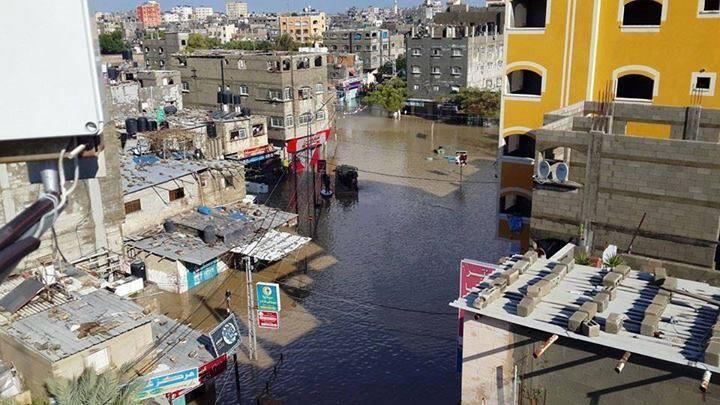
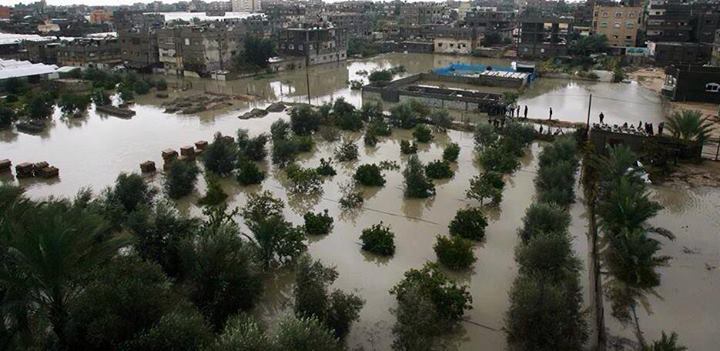

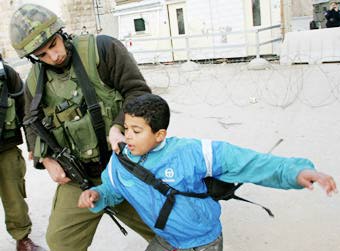
 It is a great programme with Gilad Atzmon and I having a conversation about the control of language and Jewish power, politically incorrect through and through.

 Aletho News
