Gaza’s new music sensation Watar Band has just released their latest song and it is making a lot of noise! The song Dawsha which literally translates to noise is a reminder to the world that creative rhythm and harmony still exist in Gaza despite the chaos and the depressive realities that prevail not only within the tiny strip but in the region as a whole.
I interviewed Watar Band’s lyricist Hassan Nigim about the song, the band and the triumphs and tribulations of making music in Gaza:
Samah Sabawi: Thanks Hassan for talking with me. I understand this is a very busy time for you as you prepare to release your video clip for Dawsha. Tell me how important is this work for you?
Hassan Nigim: Thanks for the interview Samah, we appreciate your support. I believe this work is very important even though it started as a hobby, I have worked hard to improve my skills and have been blessed with the support of my friends especially the Egyptian poet ( lyricist) Khaled Tag Al Deen who wrote many songs for super star singers like Amr diab, samira saed, Nawal Alzoghbi, Hamaki, and others. His support has been instrumental and we’d like to thank him for being the first to share our song on his FB fans page.
SS:What inspired you to write Dawsha?
HN: I got my inspiration from people’s experiences and from my own personal experiences as well. I wrote the lyrics for Dawsha when I came home to Gaza this year after completing my university degree in Egypt. I wanted to describe how we live and what we feel and do in a few simple words. The song is not just about us in Gaza but it is also about how we in most of the Arab World live these days…
SS:I noticed the song express both hope and despair at the same time. Was this contradiction deliberate?
HN: Yes. It’s important to give people hope that one day they can find love and freedom and that they can reach their dreams.
SS: There are no women in your band. What is it like for female artists in Gaza especially within the music scene?
HN: True, there are no women in our band but there is a female artist who sang with our band at the Centre Culturel Français (CCF) concert, Sara abu Ramadan, she sang a French song. We also had five young girls singing a part of the song Dawsha and you can see them in the video clip. There are more and more talented girls in Gaza who have started to learn music, but for sure there are still some people who hold on to old traditions and who are not supportive of women in music.
SS:What would you say is the biggest obstacle that stands in the way of making music in Gaza?
HN: The biggest obstacles that stand in our way at a personal level as well as an artistic one are daily problems everyone else encounters in Gaza like electricity shortages… but on top of that, I would say we don’t have much support from the media and we need that in order to publicize our work. As it stands, we do our own publicity. We also don’t have professional producers here, we don’t have enough instruments for our band, and we don’t have advanced studios to do the recordings in.
SS:Describe how an average week in your life looks?
HN: All of us in Watar Band are well educated. I’m a Biomedical Engineer, we have 2 doctors, an IT engineer and music teachers. We all have jobs even though as you know in Gaza it is hard to find employment, but we are hard workers and most of us have lived in different countries and were educated outside Gaza. An average day in a week is usually full. First we go to work, then we play sport and after that we meet for coffee and discuss our plans, projects and music. We would like to practice daily, but unfortunately we often face hurdles that get in the way. Some are personal problems with work and family commitments … etc. But the biggest hurdle is usually finding a place to practice. So whenever we get a chance to practice at the music school here in Gaza we make sure we don’t miss that chance. Sometimes we have to wait a long time for the opportunity to come. For example, when we worked on Dawsha, the melody came to us while we were sitting in a restaurant but we waited a long time to get access to the studio before we could record it.
SS:What message does your band want to send to the world?
HN: We want to say to the world that love, peace and freedom are in our thoughts and in our dreams. We want the world to see the positive side of our people the beautiful side of our country and culture. We want them to know that we have the right as human beings to live in peace, love and freedom. We also want to give hope to our people and to the whole world that this dream is possible.
Dawsha was composed by Alaa Shuplaq and Khamis Abushaban, arranged by Anas Alnajar, with lead singer Alaa Shuplaq on vocals. Solo Classic Guitar was performed by Dr. Mohanad El Hadad, solo Electric Guitar performed by Mohammed Lomani with Eyad Abulila on drums. The video clip was directed by Ahmed Nasr.
–Samah Sabawi is a Palestinian writer, playwright and commentator currently residing in Australia.
The agreement between the US and Iran is the best news coming out of the Middle East for some time. As Iran is not developing nuclear weapons it is not giving away too much, although it still went a long way to meeting US demands. Israel is furious. Netanyahu has done his best to prevent this point being reached and will be striving hard to make sure it goes no further. He will be appealing to Congress over the head of the president, the traditional tactic of Israeli prime ministers when they can’t get their own way. Israel’s lobbyists will be fully mobilizing for what is being represented as the greatest challenge to Israel in its history.
This is a major blow to Israel and a well-deserved slap in the face for Netanyahu. He has lost no opportunity to humiliate the US president so there is probably a personal element in all of this amidst the grander strategic considerations. But the outcome is good for the Middle East and good for the US. The agreement sets up the development of a relationship which will reconfigure geostrategic realities. By signing it the US is implicitly accepting Iran’s right to maintain its own special relationship with Syria and Hizbullah. The Syria experience has clearly been a sharp learning curve. In the name of political transition the so-called ‘Friends of the Syrian People’ have unleashed the hounds of hell at the geographic heart of the Middle East. The Islamic State of Iraq and the Levant is only the worst of the pack. The US administration has been backing away from its involvement and now clearly accepts that Bashar staying in power is the best option.
Both Israel and Saudi Arabia are dismayed at the refusal of their erstwhile allies to push the assault on Syria any further. Now they have the agreement with Iran to contend with and they are furious. Some of the commentary in the Israeli media is nothing short of demented. These two states have now formed their own axis of resistance – resistance to change, resistance to peace, resistance to the end of occupation, resistance to the White House and resistance to common sense. The recent bombing of the Iranian embassy in Beirut can safely be regarded as the work of one of them if not involving both. The Saudis are completely obsessed with destroying Shi’ism and Shia across the region. If they keep going like this their own special relationship with the US is going to suffer as well but they have already dropped hints that they don’t care.
Now that the Americans are talking to Iran they might start wondering what all the fuss was about. They are getting on with the Iranian negotiators, who are far more civilized and sophisticated than shills like Netanyahu and louts like Avigdor Lieberman. Furthermore, while Israel is an occupying state that has repeatedly gone to war to defend its ill-gotten gains, Iran, as commentators are pointing out, has not launched an aggressive war for more than two centuries, so which country shapes up as the most stable ally for the US in the region?
Saudi Arabia is another story. It is one of the most reactionary states in the world. It buys people, politicians, entire governments and newspaper editors. Money is its true god. Much of the revenue from its oil has gone into arms purchases from the US and European governments, all of which know that if they want this bonanza to continue they have to remain silent in the face of Saudi Arabia’s flagrant abuses of human rights. If there ever was a case for ‘regime change’ it is surely smack bang in the middle of Riyadh.
The agreement with Iran opens the way to significant commercial, political and strategic benefits for the US. It may well not be to Russia’s liking. By comparison, Israel is a dead weight around America’s neck from any perspective. It bleeds the US Treasury of more than $3 billion in arms and economic aid every year. It spies on the US and regularly defies the US. It has killed US servicemen in pursuit of its own strategic ends. It opens no doors and is of no commercial or economic benefit to the US and the days when it might have served some purpose as an armory during US military actions in the Middle East have probably gone for good. The American people have made it perfectly clear they do not want their government to be involved in any more wars in the Middle East and peace certainly offers the US far greater rewards than war.
The nuclear issue always was a distraction. The real issue for Israel is Iran’s growing influence across the region and its refusal to back away from its strategic alliance with Syria and Hizbullah despite economic sanctions and regular threats of war. The ruins of Gaza are testimony to Israel’s determination to destroy anyone and any thing standing in its way. Palestine is the wellspring but dig deep enough into the ruins of Iraq, Syria and Lebanon and you will find Israel at the bottom. It will see the whole Middle East flattened rather than retreat from the territory it has seized through its wars of aggression. Since the war of conquest of 1948 it has launched six other wars against Egypt, Syria, Gaza and Lebanon, apart from shorter incursions, assassinations and aerial attacks such as those launched on Syria this year. By comparison the only war involving the Islamic republic of Iran is the one launched by Saddam Hussein in 1980.
Israel cannot afford to alienate the US. It needs American economic aid and weapons and it will need US support if it ever gets into a war which it can’t win. Israel’s defeats at the hands of Hizbullah confirm a picture of relative military decline over the past three decades. Even Gaza with its miniscule defences has been able to withstand the fury of Israeli assaults. The fortress state is beginning to crumble at its foundations and if Israel continues to alienate even its friends the day will come when it finds itself alone with its nuclear bombs.
This is an existential moment for Israel. It refuses to change, expecting its friends endlessly to accommodate its outrageous behavior. The White House is sending signals that it has had enough and indeed the agreement with Iran may even mark the beginning of the setting of the sun on the US-Israel ‘special relationship.’
– Jeremy Salt is an associate professor of Middle Eastern history and politics at Bilkent University in Ankara, Turkey.
A common phrase used by major Jewish organisations.
At least 400 Palestinians, mostly women and children, were deliberately murdered and thousands are maimed and wounded when Israeli F-16 warplanes and Apache attack helicopters began premeditated massive aerial bombing attacks on the densely populated and Israeli-occupied Gaza Strip on Saturday 27 December 2008. It was a classic act of Jewish (State) terrorism.
In order to inflict terror and maximum civilian casualties, the Israeli attacks begun during traffic police graduation ceremony and just as thousands of Palestinian school children were coming home from schools. Vital civilian infrastructures, including hospitals, mosques, houses, schools and universities, including women dormitories have been destroyed.
According to an independent eyewitness in Gaza, five innocent girls were killed in their sleep when Israeli helicopter attacked a mosque. “There is no such thing as precision strike in a densely populated Gaza”, said the eyewitness. Let’s be honest, the attacks against 1.5 million Palestinian civilians (mostly refugees), 750,000 of them are children, have nothing to do with “self-defence”. Israel is not “defending itself”; Israel is committing deliberate war crimes in violation of international humanitarian law as defined in the Geneva Convention. The concentration camp has been under two-year-long total blockade. The blockade designed as a collective punishment (not peace) of the 1.5 million Palestinians and had already caused a humanitarian catastrophe before the anticipated Israel’s terror blitz.
The Israeli blockade policy in Gaza has effectively destroyed the economy and the living condition of the Palestinians. It had impoverished and starved the whole civilian population of Gaza. While this policy is illegal under International Humanitarian Law and a violation of the Fourth Geneva Convention, the U.S. and its European allies have encouraged Israel and Egypt to continue enforcing the blockade. The policy constitutes an indiscriminate collective punishment, a war crime and genocide. As a result, hundreds of innocent civilians have died in what Israeli leaders call “truce” (ceasefire) in which Israel practises violence and acts of terrorism with impunity. Israel broke the ceasefire in order to flex its muscle before Israel’s coming elections and to derail any prospect of peace. It was only after the Jewish State murdered 23 Palestinians that HAMAS fired the ineffective home-made Qassam rocket towards Israeli positions. Israeli Jewish leaders use HAMAS – the only democratically-elected people’s movement in the Arab World – as a pretext to justify terrorising the entire Palestinian population.
It is important to note that Israeli leaders would not have committed such heinous acts of terrorism without the full complicity and backing of the U.S. administration, the European governments, and the dictatorial regime of Egypt and Mahmoud Abbas’ thuggery. Palestinian leaders in Gaza have rightly accused the Egyptian brutal dictatorship of Hosni Mubarak and collaborators in the Palestinian Authority of colluding with Israel against the Palestinian in Gaza. Indeed, the treacherous Egyptian regime – propped-up and financed by the U.S. – has been a willing complicit in the Gaza blockade. Just before the massacre took place, Israeli Foreign Minister Tzipi Livni was in Cairo to consult with the dictator of Egypt.
This is not the first time the Jews have committed acts of terrorism in Palestine. Historically, the Palestinian people have suffering under Jewish terrorism for more that sixty years. The Jewish State was founded by heinous aggression and war crimes in 1984. It is just that Jewish terrorism is deliberately covered-up and justified as “self-defence” by Western media. With the exception of a few honourable voices, condemning the subject of Jewish terrorism remains taboo.
Richard Falk, the UN Special Rapporteur for Human Rights in the Occupied Palestinian Territory and international law Professor at Princeton University was recently denied entry into Israel. He was accused of comparing the policies of the Jewish State with that of Nazi Germany. It is ironic, because comparisons of Israel with Nazi Germany are very common in Israel itself.
However, Professor Falk chose his words carefully when he described Israel’s policies towards Palestinians as a “crime against humanity” that should be stopped by international action. Falk urged the UN to invoke “the agreed norm of a responsibility to protect a civilian population being collectively punished.” He also called for an International Criminal Court investigation of Israeli military and civilian officials for potential prosecution. “The recent developments [the two-year-old blockade and other war crimes] in Gaza are especially disturbing because they express so vividly a deliberate intention on the part of Israel and its allies to subject an entire human community to life-endangering conditions of utmost cruelty. The suggestion that this pattern of conduct is a holocaust-in-the-making represents a rather desperate appeal to the governments of the world and to international public opinion to act urgently to prevent these current genocidal tendencies from culminating in a collective tragedy.” Falk was lucky. Other Americans who dared to criticise the Jewish State were destroyed by a single shot of “ant-Semitism” and lost their jobs before they have committed political suicide.
While the parallels between the Jewish State of Israel and Nazi Germany are frightening, they are not surprising. Zionism grew out of German National Socialisms (Nazism). There are few important differences: (1) Unlike Nazi Germany, Israeli war is entirely against defenceless innocent civilians population resisting the illegal occupation of their homeland; (2) Unlike Nazi Germany, in addition to its superb propaganda system, Israel is supported by a global propaganda campaign led by the like of the BBC, CNN, Fox News, the Murdoch Press, and other Western media outlets which works tirelessly to portray Israel as a victim and propagate Israel’s Zionfascist ideology; and (3) Unlike Nazi Germany, Israel – in addition to possessing nuclear, chemical and biological weapons – is unconditionally supported (financially, militarily and politically) by major Western powers, including the U.S. and Britain. In short, Israel is untouchable. Moreover, like Nazi Germany, the Jewish State of Israel is committing war crimes by a deliberate policy of ethnic cleansing and extermination of a particular ethnic-religious group of people, the Palestinian people.
As Jean Ziegler, Professor of Sociology at the University of Geneva in Switzerland and a Member of UN Human Rights Council’s Advisory Committee said recently; “Behind the headlines of military conflict and escalating [Israeli] violence, there is a continuing physical, social and psychological destruction of a whole and very ancient [Palestinian] society”. The West’s “never again” rhetoric that followed the Second World War seems to be applicable to Jews only. Isn’t it time for the “international Community” to implement its solemn rhetoric?
We know that unlike other peoples, Jews have repeatedly cited the “Jewish holocaust” to gain sympathy and to raise it as a tool to extort money and weapons and political support from Europeans. They have no sympathy for Palestinian victims and Palestinian suffering. Every time Israel commits mass murder of Palestinian women and children, Jews (with a few exceptions) around the world remain silent. In order to deflect attention from Israel’s terror, Israeli Jews and major Jewish organisations have been promoting and “exploiting the wave of Islamophobia [particularly] in the U.S. and Europe, to engage them in this war on the Palestinians, doing their part in suffocating, starving, and weakening the Palestinian people, as Israel caries its mission of destruction”, wrote the late Israeli scholar Tina Reinhart. They are complicit in the Jewish State’s crime against humanity.
A report published in July 2008 by the National and International Relations Department of Palestine in Ramallah revealed that the Israeli military killed 466 Palestinian citizens during military operations carried out in the Palestinian territories during the first half of 2008, including 75 children under the age of 18 and 23 women. At least 200 Palestinians have died as a result of the unjust collective punishment and blockade imposed on Gaza, preventing Palestinians from leaving to receive adequate treatment abroad. “A genocide is taking place in Gaza … an average of eight Palestinians die daily in the Israeli attacks on the Strip. Most of them are children. Hundreds are maimed, wounded and paralyzed”, wrote the Israeli scholar Ilan Pappe.
Furthermore, in the illegally Occupied Territories, Jewish settlers have unleashed new waves of terror attacks on Palestinians in the West Bank city of Hebron. On Thursday, settlers shot at Palestinians, set fire to homes and olive groves, and defaced mosques and graves after Israeli troops evicted a group of settlers from a disputed Palestinian-owned home near a biblical site. Persistent acts of terrorism by Israeli occupation soldiers and illegal Jewish settlers against the Palestinian farmers have destroyed millions of olive trees and farms decimating the livelihoods of Palestinians. “As a Jew, I was ashamed at the scenes of Jews opening fire at innocent Arabs in Hebron. There is no other definition than the term ‘pogrom’ to describe what I have seen,” said the now discredited Israeli PM Ehud Olmert whose government is not only behind the policy of house demolishing but also behind the Jewish settlers’ terror against the Palestinians. In fact the Jewish settles are an effective weapon of the Jewish State to terrorise the Palestinians. The aim is to terrorise the Palestinian and forced them to leave their land.
As Palestinian houses are demolished, the illegal Jewish settlers’ population in the West Bank has grown three times higher than that of the rest of Israel during the past 12 years. An Israeli annual report shows that the illegal Jewish population in the West Bank more than doubled during that time, with a growth of 107 percent. The report also shows that the settler population has surged from 130,000 in 2005 to 270,000 by the end of 2007. Other illegal settlements in the West Bank have witnessed expansion between 50 per cent and 100 per cent of their areas in 1996.
Since 2007, more than 8,000 homes have been built in the West Bank and in the heart of annexed East Jerusalem, the capital of “future” Palestinian state, which is being intensively “Judaised”. Jewish extremist settlers are literally taking over Palestinian homes with impunity. A report by the Association of Civil Rights in Israel (ACRI) described the situation in the Israeli occupied West Bank as “reminiscent, in many and increasing ways, of the apartheid regime in South Africa”. The report also revealed that many of the 430 Palestinians killed and 1,150 wounded in the West Bank alone by Israeli soldiers and death squads in 2008 were innocent by standards.
A study published by the Applied Research Institute- Jerusalem (ARIJ) said that the Israeli occupation increased the area of Jewish settlements in the West Bank by 85per cent between 1996 and 2007. The study added that Jewish settlements are the cornerstone of the Israeli policy of Judaizing the occupied Palestinian lands. According to the study the process building the Jewish settlements in various parts of the West Bank and in particular in the Jerusalem district started immediately after the occupation in June 1967 to impose changes on the ground in an attempt to get control of most of the occupied Palestinian lands.
The study concludes that the Israeli occupation seems to have no intention to stop the settlement activity as these settlements doubled since the Oslo accords. This is in addition to the thousands of Dunums of Palestinian lands being confiscated to build the Apartheid Wall and Jewish-only roads to serve the settlements and further isolating Palestinian communities from one another and limiting the expansion of Palestinian towns and villages.
The illegal expropriation of Palestinian lands and the building of Jewish-only settlements have continue thanks to massive injection of fund and investment by wealthy individual Jews and Jewish organisations in the US, Australia and Europe. For example, the Jewish National Fund (JNF), a global corporation, had illegally expropriated most of the land of 372 Palestinian villages, which had been ethnically cleansed by Zionist forces in 1948, to build exclusively Jewish settlements. Like many wealthy Jews, Joseph Gutnick, an Australian wealthy Jew has poured millions into building Jewish settlements on expropriated Palestinian land with Israel’s blessing. Of course, Israel continues to use all kinds of terrorist acts to dispossess the Palestinian people of their lands.
Instead of being sanctioned to stop violating international law and the Geneva Convention, Israel is being rewarded by the U.S. and Europe with closer economic, academic, trade and defence links and privileges. “All we hear is a hollow laugh coming from behind the Apartheid Wall and the seething and starving prison camps for Palestinians under siege in Gaza and the West Bank”, writes Abe Hayeem of Architects & Planners for Justice in Palestine. On the other hand, Israel remains an extremist, right-wing, nationalistic and corrupt society which have rejected every step to live in peace and coexistence with its neighbours.
The ongoing massacre of innocent Palestinian civilians is not the first Jewish-perpetrated massacre and certainly won’t be the last. Israel follows a Nazi-like racist policy based on physical extermination and ethnic cleansing of the native Palestinian population.
Like Nazi Germany, Jewish Israel should be condemned, forced to renounce terrorism and end the occupation of Palestinian lands. The deliberate murder of innocent Palestinians is a classic act of Jewish State terrorism. There is no terrorism like the State of Israel terrorism. It remains to be seen if the world community needs a third world war to stop Jewish State terrorism.
Ghali Hassan is an independent writer living in Australia.
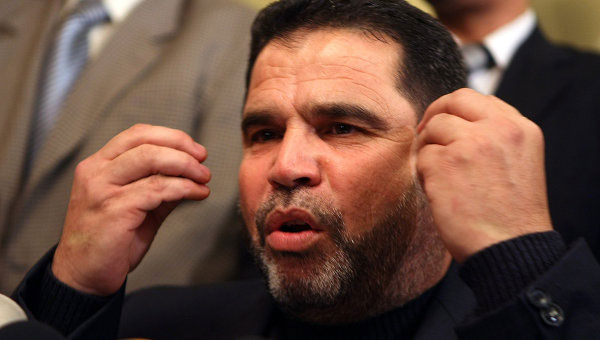
A senior leader of the Islamic Resistance Movement Hamas, Salah Bardawil, said he was disappointed with the third Arab-African Summit in Kuwait and the Arab Peace Initiative Committee which endorsed the Palestinian-Israeli negotiations, believing they represent “concrete proof of the Arab regimes’ intention to escape their responsibilities towards Palestine.”
Bardawil told Al-Quds Press that: “the Palestinians have high hopes in the Arab and Islamic nations and the international community as a whole to play an active role in pressuring the Israeli occupation to retreat from its crimes against the Palestinians; whether it is the siege imposed on Gaza or the Judaisation of holy sites or its daily assaults against the Palestinians. We also hoped that the Arab-African summit would play an active role in protecting the Palestinian refugees, but it is clear that the level of action is much lower than the level of speech.”
Bardawil added that even the message conveyed by the Arab-African Summit to the Palestinians is disappointing: “the Arab-African summit has conveyed a negative message to the Palestinians, the Arabs and supporters of democracy. The problem does not lie in endorsing the negotiations with Israel per say, but rather supporting the negotiations indicates that the Arab regimes are trying to escape their commitments towards the Palestinian issue by handing it over to a politically failing party. Yet the most serious issue is that the Arab-African Summit’s position is anti-democratic by accepting to host a party that had failed in the elections as the legitimate representative of the Palestinian people, while the elected-party is being besieged in the Gaza Strip. This position is contradictory and hostile to democracy and unfortunately consistent with the American-Israeli position.
Gaza, Occupied Palestine – On Wednesday, 13th November, gunfire by Israeli occupation forces injured a Palestinian farmer near al-Maghazi refugee camp, in the center of Gaza strip.
Mneifi Abu Abdullah, age 25, was working with three other farmers about 600 meters from the separation barrier.
Abu Abdullah is a worker who ears 30 shekels per day in the fields.
Farmworkers near al-Maghazi are used to hearing gunshots. The Israeli military presence is constant in areas along the barrier.
On Thursday, some of Abu Abdullah’s uncles, as well as another farmer present during the shooting, visited his room in al-Shifa hospital.
The witness said he suddenly heard three shots, injuring Abu Abdullah in at his right shoulder, around 2:50 pm. Another bullet struck near his feet.
The farmers transported Abu Abdullah roughly one kilometer before reaching an ambulance that brought him to al-Aqsa Martyrs hospital in Deir el-Balah.
The witness added that he had not seen Israeli soldiers, but military vehicles had been moving along the barrier.
On the same day in Deir el-Balah, another farmer, from Abu Daher family, was wounded in his leg by Israeli gunfire and rushed to al-Aqsa Martyrs hospital.
Abu Abdullah is married and has two children. His work in the fields is his family’s only source of livelihood.
He was transferred from al-Aqsa Martyrs hospital to al-Shifa hospital. The bullet entered and exited his shoulder. He needs surgery, as the bullet severed a nerve.
The ceasefire of 21st November 2012 established that Israeli occupation forces should “refrain from hitting residents in areas along the border” and “cease hostilities in the Gaza Strip by land, by sea and by air, including raids and targeted killings.”
However, Israeli military attacks by land and sea followed from the day after the ceasefire, and Israeli warplanes fly constantly over the Gaza Strip. Seven civilians have been killed by Israeli occupation forces since the end of their last major offensive, “Operation Pillar of Defense,” and more than 130 have been wounded.
These attacks on the Gaza Strip continue amid international silence.
Gaza, Occupied Palestine – On the morning of Sunday, 10th November, brothers Saddam Abu Warda (age 23) and Mahmoud Abu Warda (age 18) were captured by the Israeli navy in Palestinian waters off the Gaza Strip. They were released later in the evening and their boat was confiscated. Mahmoud was injured by a bullet in the right side of his abdomen.
We went to visit the two young fishermen in their home in the town of Jabaliya, in the northern Gaza Strip.
In the absence of electricity, the house was dark like most homes in Gaza Strip, which is stifled by the siege and a severe fuel crisis. Without electricity, water could not reach the house’s plumbing system.
“We cast our nets into the sea at a distance of about 500 meters from the forbidden fishing area,” Saddam told us. “We were far away from the Israeli gunboats.” The two fishermen were on a small boat, or hasaka, without an engine.
Saddam told us that an Israeli gunboat approached their boat. The soldiers shouted for them to leave in less than five minutes. “We had to cut our nets in order to flee,” Saddam said. “The soldiers came closer to us and started shooting at our boat.”
Without a motor, the two fishermen could not escape. The Israeli soldiers ordered the two fishermen to undress and jump into the water. Meanwhile, they continued to open the fire. “I was shocked,” Saddam said. “I could not move. They were shooting, and I thought I would be killed.”
As we listened to Saddam, F-16 fighter jets rumbled overhead at low altitudes, a constant threat in the darkness.
“I shouted, asking the soldiers to stop shooting and save our lives,” Saddam said. According to him, another Israeli gunboat reached them and attacked the fishermen using water cannons. The two fishermen jumped into the water. “Three Israeli gunboats surrounded us, our boat was now far away, and the water was cold,” he added. The soldiers told them to swim to the forbidden maritime area. “I was scared. My brother was away from me, and the soldiers kept firing. He was wounded. He could not swim. I reached him to save him. His blood was everywhere in the sea. Two Israeli dinghies reached us. The soldiers took my brother Mahmoud and closed his wound to stop the bleeding. They didn’t take me, too. They left me in the water. They told me to swim to the marker that delimits the maritime area allowed by Israel, then took me. They covered my head. I could not see anything. They pointed a gun at my head and cuffed my hands and feet. They hit me, kicking me on the back. Then I fainted for about an hour. I don’t remember anything more.”
Mahmoud (left) and Saddam Abu Warda. (Photo by Rosa Schiano)
The two fishermen were transported to a medical center in the port of Ashdod. “When I woke up, I saw my brother beside me,” Saddam said. “Two soldiers then took me to a special room and interrogated me. They asked me why we were fishing in the forbidden area. I told them that we were 500 meters away from the limit, and that the soldiers forced us to swim until we reached it. An investigator asked me how my brother was wounded, since it was not by the Israeli soldiers. I told him my brother was wounded by Israeli gunfire. The investigator tried to convince me that Mahmoud was not wounded by the soldiers. Then I told him that three Israeli gunboats were shooting over our heads and my brother’s blood was everywhere in the sea”.
The investigators then showed Saddam a map on a laptop, placing their boat in the forbidden maritime area. Investigators interrogated the two fishermen individually. Afterwards, the two brothers were detained in another room, and at the end of the day, were transferred to Erez, where they received another interrogation. “They asked me about my family, my neighbors, fishermen, and every detail of my life,” said Saddam. “Then they showed me a map and asked me about every house around my home. They also asked me how many boats I had.”
The Israeli port of Ashdod now holds three boats belonging to Saddam’s family. In the past, in fact, other members of the Abu Warda family had been arrested and seen their boats confiscated. Now they have none left.
After interrogation, the fishermen were detained in a cell for two hours before being released through the Erez checkpoint later in the evening.
Saddam’s family has 15 members. Fishing is their only source of livelihood. The other eight brothers are also fishermen. They don’t have any other source of income, and they don’t believe they will get their boats back.
Mahmoud showed us the wound on the right side of his abdomen. The bullet did not enter his body, but brushed it. Doctors in the Ashdod medical center closed his wound with two stitches. Mahmoud also told us of the physical and verbal abuse he received from Israeli soldiers. We asked him if he will return to fishing. “Of course,” he said. “We have no choice. We have to face the danger.”
What its fishermen earn only allows the Abu Warda family to survive. Sometimes, they return home without anything. Other times, what they earn only covers the cost of fuel.
The fishermen told us that they would like more support from international associations, especially when they are in the north of the Gaza strip. There, attacks are more frequent and the majority of confiscated boats have been lost.
We continue to hope that one day the international community will break its silence and force Israel to stop attacking Gaza fishermen, and to release all their boats it has confiscated.
Background
Israel has progressively imposed restrictions on Palestinian fishermen’s access to the sea. The 20 nautical miles established under the Jericho agreements, between Israel and the Palestine Liberation Organization (PLO) in 1994, were reduced to 12 miles in the Bertini Agreement of 2002. In 2006, the area Israel allowed for fishing was reduced to six nautical miles from the coast. After its military offensive “Operation Cast Lead” (December 2008 – January 2009) Israel imposed a limit of three nautical miles from the coast, preventing Palestinians from accessing 85% of the water to which they are entitled under the Jericho agreements of 1994.
Under the ceasefire agreement reached by Israel and the Palestinian resistance after the Israeli military offensive “Operation Pillar of Defense” (November 2012), Israel agreed that Palestinian fishermen could again sail six nautical miles from the coast. Despite these agreements, the Israeli navy has not stopped its attacks on fishermen, even within this limit. In March 2013, Israel once again imposed a limit of three nautical miles from the coast. On 22 May, Israeli military authorities announced a decision to extend the limit to six nautical miles again.
Occupied Palestine – The Palestinian Centre for Human Rights (PCHR) expresses deep concern over the deterioration of humanitarian conditions of the civilian population due to the aggravation of the electricity crisis in the Gaza Strip.
On Friday morning, 01 November 2013, the operation of the Gaza power plant was totally stopped due to the lack of fuel required for its operation. PCHR is deeply concerned that the current crisis may impact the access of 1.7 million Palestinians to vital services, including the supply of drinking water, and that this crisis may result in the suspension of work in some vital sectors, such as health, sanitation and education.
According to PCHR’s follow-up of the chronic power crisis in the Gaza Strip, the Palestinian Energy Authority in Gaza announced that the operation of the Gaza Power plant was totally stopped on Friday morning, 01 November 2012. The Energy Authority claimed that its counterpart in Ramallah stopped the fuel supplies required to operate the power plant and its requested taxes on the price of fuel. However, the Energy Authority in Gaza announced its inability to pay taxes on the price of the industrial fuel. On the other hand, the Energy Authority in Ramallah refused to provide any new fuel supplies required for operating the power plant resulting in the total lack of fuel and the shutdown of the plant.
The shutdown of the Gaza plant power has left serious consequences on the humanitarian conditions of the Gaza Strip’s population due to the deficit in daily needs of power in Gaza. The Electricity Distribution Company (GEDCO) in Gaza was forced to increase the hours of power outages on houses and vital facilities from 8 to 12 hours daily. Thus, the schedule, which is applied, based on which power will be distributed for six hours and then cut off for 12 hours resulting in further deterioration in humanitarian conditions of the Gaza Strip’s population. It should be mentioned that the power plant was providing around 65 megawatts during the years of its reparation and rehabilitation after being targeted and destroyed by Israeli forces in June 2006. The power plant had worked since June 2012 to produce around 100 megawatts. The Gaza Energy Authority stated that the electricity is provided to the Gaza Strip as follows: 120 megawatts from Israel and 27 megawatts supplied by Egypt.
The Gaza power plant has been suffering from a significant decrease in fuel supplies required for its operation coming from Egypt through tunnels under the Egypt-Gaza border, as the supplies have almost completely stopped for around 2 months. As a result, the Energy Authority in Gaza purchased fuel from Israel through its counterpart in Ramallah. At that time, the Palestinian Authority (PA) in Ramallah exempted fuel purchases from taxes. However, the Energy Authority in Ramallah demanded its counterpart in Gaza to pay the taxes on the fuel supplies due to the PA’s current financial crisis. The Energy Authority in Gaza refused to pay those taxes claiming that it cannot afford paying them.
PCHR has been following the power crisis consequences in the Gaza strip since the power plant stopped operating after Israeli forces targeted and destroyed it in June 2006 resulting in catastrophic impacts on the power supplies in the Gaza Strip. PCHR has been also following the impacts of the ongoing Palestinian political split, whose two parties failed to find solutions that take into account the best interests of Palestinian civilians in Gaza and stop the deterioration of humanitarian conditions and provide of their electrical power needs and fuel required to operate the Gaza plant power. PCHR is deeply concerned over further deterioration of civilians’ humanitarian conditions as the power crisis has affected all civilians’ daily life needs and violated their right to access to basic and necessary services, including access to health facilities and to treatment, access to educational institutions, including schools and universities, and access to water services, including drinking water in homes and all other vital services.
Through continuous follow-up of the effects of the aggravation of the power crisis, PCHR has observed serious deterioration of the humanitarian situation from which the residents of Gaza are suffering:
·About 1, 7 million inhabitants of the Gaza Strip are facing deficiencies in all walks of their daily life, which have affected their basic needs, including health services, access to water, environmental health services and ability to meet the educational needs of school and university students.
·The deterioration of health conditions in the health facilities of the Gaza Strip due to inability to compensate the shortage of electricity for long hours on one hand, and their inability to provide fuel needed to run the alternative generators in these facilities on the other hand, in addition to breakdown of many machines and medical equipment at hospitals and health facilities of the Gaza Strip.
·Hundreds of patients in the hospitals of the Gaza Strip face serious health risks as the medical equipment are not run regularly, especially in the intensive care units and other medical units like heart and kidney units.
·Local bodies, including municipalities and village councils, are unable to provide alternative fuel to ensure the workflow of their vital facilities serving the population of the Gaza Strip, including water and sanitation facilities. Citizens’ complaints started to resound because of their inability to get water in their houses, especially in high buildings.
·Different bakeries in the Gaza Strip said that they partially stopped working due to the long hours of power outage and the shortage of the fuel needed to run the machines. One can notice overcrowding for long hours in front of bakeries in order to get the basic needs.
·Educational facilities in universities and educational institutions are suffering serious disorder, which led to the inactivity of many educational laboratories and the postponement of some educational assignments due to electricity shortage and lack of alternative power sources. The aggravation of electricity crisis has coincided with the mid-term exams that started about a week ago in the schools and universities of the Gaza Strip. The majority of governmental schools is still without electricity and cannot provide the students with alternatives.
·Hundreds of institutions and associations in the Gaza Strip had to postpone their activities and programs due to the electricity shortage all day and their inability to provide alternative power sources to run their machines and equipment.
·The suffering of the population of the Gaza Strip has seriously aggravated, especially those living in high buildings and who depend on elevators in the ascending and descending from their apartments. Dozens of residents, including elderly people and patients with chronic diseases have been greatly affected.
PCHR is following the power crisis in the Gaza Strip with grave concern and:
1.Calls on all concerned parties, including the Palestinian government in Ramallah, the Palestinian government in Gaza and the Electricity Distribution Company in Gaza to make efforts to provide the fuel needed to run the power plant and ensure its workflow with no cessation;
2.Warns of the serious consequences of the stoppage of the power plant on all vital sectors, including the basic services for about 1, 7 million Palestinians living in the Gaza Strip, like drinking water supplies, disruption of health facilities, including hospitals and medical centers, in addition to the sewage plants and educational sectors.
3.Calls on the international community to pressure Israel, the occupying power according to international humanitarian law, to lift the illegal closure imposed on the Gaza Strip since June 2007, to fulfill their legal commitments towards the civilian population of the Gaza Strip and to ensure access to all the medicines, food, and basic services, including fuel supplies needed to run the Gaza Power Plant.
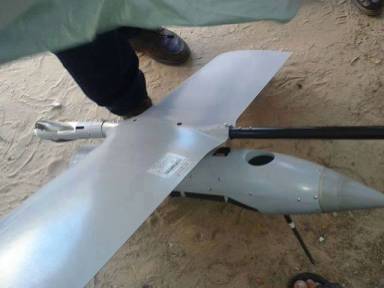
Palestinian Resistance announced on Sunday its fighters has managed to control and then down an Israeli drone flying over the northern part of the Gaza Strip.
The Al-Qassam Brigades, the armed wing of Islamic Resistance movement, Hamas, said its fighters managed to down the drone.
This is the second time the resistance in Gaza manages to down an Israeli drone, as the Al-Qassam Brigades declared during the latest Israeli war on Gaza, a year ago, that it managed to down an Israeli drone, and documented the incident.
An Israeli military spokesperson stated Sunday that the drone fell inside the Gaza Strip, effectively falling in the hands of the resistance.
He said that the drone landed and crashed due to a “malfunction”, an issue that the resistance challenged.
Actually, it’s not so much that the U.S. and Israel are seemingly ‘obsessed’ with Iran, but more that the neoconservative’s of the U.S. and Israel’s right-wing Zionists are. However, this apparent obsession is only a deliberately created illusion. Israel’s real obsession is the creation of a Greater Israel and the destruction of those that prevent Israel’s expansionist dreams; Hamas in the Gaza Strip and Hezbollah in Lebanon, both of whom are supported by Iran.
The stated casus belli for any Israeli/US attack on Iran will be that Iran is building a nuclear weapon with which it intends to ‘wipe Israel off the map’. The ‘Iran has a nuclear weapons program’ and the ‘wipe Israel off the map’ are two memes that have gone hand in hand in the propaganda and rhetoric of Israel’s Zionists and their neoconservative allies in the US and, indeed, around the world for years.
There are, however, a range of problems with these allegations. Firstly, there is, despite the constant barrage of assertions to the contrary, no actual physical evidence whatsoever that Iran actually has a ‘nuclear weapons program’. Time and time again, Israel and their allies have made the accusations but have never been able to support their allegations with any hard irrefutable evidence. All of the ‘evidence’ so far has been either vaguely circumstantial, hearsay based on statements from dissidents and defectors, straight out lies or simply conclusions based on wishful thinking and vivid imaginations.
Secondly, the ‘wipe Israel of the map’ meme is a deliberate mistranslation of a statement by Iranian President Mahmoud Ahmadinejad who said nothing of the sort. It was the neoconservative organisation MEMRI that was responsible for the deliberate mistranslation of the ‘wipe Israel of the map’ line which has been used extensively by neoconservatives and Israelis ever since to invoke hatred of Iran and to infer an existential threat against Israel from Iran. Still, though, Israel and the US insist that Iran is intent on producing a nuclear weapon that it plans to use against Israel and possibly even against America.
Which brings us to the third problem with the allegations ranged against Iran and that is; why would Iran, even if it did have a nuclear weapon, risk utter and swift destruction by US and Israeli retaliatory nuclear strikes if it were to ever attack Israel with a nuclear weapon? The answer, of course is; it wouldn’t – and the Israelis and the US are well aware of it. They are also well aware that in reality Iran has no nuclear weapons program.
So why then all the fuss? The hope is that with the aid of a compliant Western mainstream media, the propaganda memes of ‘Iran has a nuclear weapons program’ and wants to ‘wipe Israel off the map’ repeated over and over endlessly will eventually so influence public opinion that it will support an attack against Iran.
The ‘Iranian problem’ is presented to the world via the mainstream media in its most simplistic form. It runs thus: ‘Iran has a nuclear weapons program with which it wishes to wipe Israel off the map so the answer is to destroy its weapons making capabilities using military action’.
That’s the rhetoric and the propaganda.
The reality is this: Israel and the US have no real interest in Iran’s nuclear program; their real aim as far as Iran is concerned is to destroy the Islamic regime and replace it with one that is US and Israel friendly.
Attacking Iran and affecting regime change kills a number of birds with one stone. It puts an end to what Israel and the US regard as Iran’s influence in the region, but, most important as far as the Israelis and their supporters are concerned, is that an attack against Iran provides, so they hope the world will believe, a legitimate pretext for attacking Hamas in the Gaza Strip and Hezbollah in Lebanon on the basis that the Israelis are pre-empting a strike by Hamas and Hezbollah against Israel in retaliation of Israel’s attack against Iran.
Since the only way the US and Israel will be able to affect ‘regime change’ in Iran without the use of an invasion and occupation – unthinkable considering that Iran is more than three and a half times the size of Iraq and has about two and a half times the population – is by bombing it into capitulation and surrender, one can expect a campaign that will be far more than a load of bunker-buster bombs aimed at Iran’s nuclear facilities. Much more likely is a campaign of significant attacks against Iran’s defence and governmental institutions as well as its nuclear facilities; attacks that will deliberately inflict significant ‘colateral damage’ on civilians as the Iranian authorities get accused of using their civilians as ‘human shields’. The hope always with this strategy is that the civilian population will then press their government to end the war by capitulating to their enemies demands.
The only problem with this strategy is that it rarely ever works. Usually when such all-out bombing campaigns are carried out with the view to getting the enemy to sue for peace, rather than suing for peace, a phenomenon known as ‘Kriegssozialismus’ sets in whereby people from all walks of civilian life spontaneously ignore their ordinary class affiliations and come together to help each other out in circumstances where all are suffering equally due to war, and, importantly, collectively stiffen their resolve to resist the enemies actions rather than cave into them. Short of using nuclear weapons to defeat Iran, the US and Israel stand no hope of defeating the people of Iran.
There is also a problem of logistics in attacking Iran. Over the years that the threat of attack has prevailed, there have been reports that have suggested that Israel will ‘go it alone’ if they feel threatened enough by Iran’s ‘nuclear weapon program’. One report recently even suggested that the US is “concerned that Israel will not warn them before taking action against Iran’s nuclear facilities”. This is all rhetorical nonsense dished up for public consumption. The reality is that it would be absolutely impossible for Israel to launch an entirely unilateral attack against Iran without US connivance.
In any attack they mount, Israel will use American aircraft which constantly require spare parts mostly from the US. They will also require ordnance which also mostly comes from the US; they will require vast quantities of military jet fuel, and, if Israel plans to attack Hamas and Hezbollah at the same time, it will also require massive amounts of diesel fuel to power up its ground forces. All of this comes from the US and, as was recorded in August 2010, Israel has already ordered that fuel which would by now have been delivered and stockpiled.
The other major logistic hurdle Israel needs to overcome is the one of getting to and from its target. Israel is separated from Iran by at least two other countries; Syria and Iraq or Jordan and Iraq. Either way, this amounts to a round rip of around 3000kms to bomb Bushehr and/or Qom, Iran’s two main nuclear facilities. The most likely route would be via Syria who would be unlikely to offer any resistance to Israeli overflights – especially if it came under attack itself. Then there is the question of overflying Iraq. The Iraqi government on its own is unlikely to allow Israeli aircraft to overfly their territory. Israel would need to be in cohorts with the US if it wished to get the US to convince the Iraqi government to allow Israeli aircraft into its airspace. And not only would Israel need to have Iraqi permission to pass through its airspace, it would also need to use Iraqi airspace for in-flight refuelling operations which the Israelis would need to utilise since their strike aircraft do not have the range to do the job in one round trip without refuelling.
The question then is; what exactly is Israel’s intended endgame in the event of an attack against Iran, Hamas and Hezbollah?
Such a massive attack against all of its enemies at once is a huge commitment on Israeli resources and one of very high risk. It will, therefore, need to be decisive in terms of meeting all of its war aims.
Israel will have learnt the lessons of its past failures. After years of attacks against Lebanon and the Gaza Strip, Israel has not been able to destroy Hezbollah or Hamas despite its efforts against Hezbollah in 2006 and against Hamas in 2008/2009. In the event of an attack against Iran, Israel is likely to simultaneously mount hitherto unprecedented attacks against both Hamas and Hezbollah. Such a strike will likely be opened up with a massive aerial and artillery barrage and then, since Israel does not have to commit ground forces to attacking Iran, it will be able to invade and occupy the Gaza Strip and south Lebanon up to the Latani River. At the same time, Israel is likely to fully occupy all of the West Bank in order to prevent any uprising by Palestinian resistance there and remilitarise the Golan Heights to prevent any backlash there.
In short, for Israel an attack against Iran and Israel’s other enemies on the pretext of pre-empting an immediate threat to its own existence will be the do or die action it will take in order to realise Zionism’s ultimate endgame; the creation of a Greater Israel.
The coming confrontation is not about Iran being a threat; it is about Israel ridding itself of all of its enemies in the places that it would like to annex as part of its realisation of creating a permanent Greater Israel nation abundant with fertile lands, its own water resources, and living space. War is its pretext.
Gaza – The Palestinian Government stressed that the Palestinian people and resistance have the right to defend themselves by all possible means against Israel’s undeterred war crimes and aggressions.
Spokesman for the Palestinian Government, Ihab AL-Ghusain, stated on his facebook page “No one can deny the Palestinians thinking of new ways to confront the high-tech military apparatus of the Israeli occupation.”
The Gaza Strip citizens had been subjected to two wars and thus entitled to defend themselves, Ghusain said, adding that “digging tunnels is a defensive tactic innovated by the Palestinian resistance.”
AL-Ghusain found odd the UN Under-Secretary-General for Political Affairs Jeffrey Feltman’s statement that digging the [recently discovered] tunnel is a violation of the cease-fire agreement [mediated by Egypt between Hamas and the Israeli occupation after Israel’s 8-day war in November 2012], overlooking the Israeli violations of it.
“The Israeli occupation has not stopped violating the cease-fire agreement ever since its had been concluded; many violations are to mention, above them all sustaining Israel’s siege on the 1.7 million Gaza population by failing to open the commercial crossings, and to expand the fishing zone,” he said.
“What is more “terrorist” than an Israeli navy boat firing on a fisherman, an armored vehicle shooting a farmer, invading, or leveling his land?” Ghusain wondered, pointing to the deaths and injuries of a number of Palestinian civilians throughout the past year.
AL-Ghusain called on the UN to take its real role in putting pressure on the Israeli occupation to lift the siege, bringing Israeli leaders to justice, and protecting the Palestinian people from the continuous Israeli crimes and aggressions.
The famous Israeli analyst of Arab affairs, Ehud Yaari, is urging Israel to take advantage of the historical situation that the Arab region is going through to “defeat” Hamas with the help of Egypt.
Yaari, a commentator on Israeli television’s Channel Two, also said in an interview with Maariv newspaper that Al-Sisi’s actions are “excessive” and have not only affected the Islamists, but also figures of the liberal opposition.
For example, Ehud noted that a large group of the liberal opposition’s senior leaders have now left Egypt, citing Ayman Nour, who went to Lebanon, and Mohamed El-Baradei, who went back to his home in Vienna.
In regards to the Gaza Strip and Hamas, he stressed that there is now a golden opportunity to topple Hamas in Gaza. He called on Israel to take advantage of this and said, “Today we can clearly see a mutual interest between Israel and Egypt.”
There are several ways of expressing a desire for change, and one of these can be through the arts. In the current turmoil of the Middle East, there are also voices that look beyond the mere toppling of regimes, and are expressing their deep concern at the price being paid by ordinary citizens in civil wars and other phenomena of sectarian strife that have become widespread in the region.
It should not come as a surprise that some of these voices come from Palestine, as it has become obvious how the region’s unrest has led to diminished attention for the decades-long plight of the Palestinian people. Besides this, the past years have also split up Palestinian unity along sectarian lines, thus weakening the solid unified stance of the Palestinian people against the illegal Israeli occupation.
I am a Palestinian surgeon and hobbyist musician known by my artist handle ‘Doc Jazz’, and I run a website known as The Musical Intifada, which showcases my large collection of songs supporting the Palestinian cause. I recently wrote a song in Arabic that calls out for unity, and against settling sectarian differences through violence. The song was called ‘Al Jeel Al Jadeed‘, which is Arabic for ‘The New Generation’.
My message was picked up by young Palestinians from Gaza who are known for their activities in social media, among others Shahd and Majed Abusalama, Walaa al Ghussein and Eman Sourani, and a music video was put together for the song. This was largely filmed in Gaza, and directed by inspiring Palestinian artist Shahd Abusalama, in cooperation with cameramen Yazan Abu Dawood and Omar Shala. In total, around 20 youths from Gaza cooperated in the making of the video clip, and their names are listed in the credit roll at the end of it.
The result is a modern and radiant call for unity, providing a fresh, hopeful and positive angle on the situation. It was warmly received by the international community of Palestine-sympathizers, hitting the 5,000 view mark after only 24 hours of its appearance on Youtube. The unusual funky sound of the music, at least by the standards of mainstream Arabic music, proved to be no obstacle for its popularity, rather the opposite.
As is clear from the words of the song, the focus of it steers away from the political dimensions of the issue, and rather focuses on the human element. It calls upon people to embrace one another as equals despite their differences, and to resort to dialogue to settle internal matters instead of embracing methods that include weapons and other forms of violent confrontation.
The song came with translations in Dutch and English, but soon received spontaneous translations in Spanish and French from its supporters in the international community. These were added in Closed Captions (CC) subtitles to the video, enabling listeners from outside of the Arabic world to follow the song and its meanings.
I hope the message will be understood in its proper context. We have a struggle to wage against a belligerent, expansionist and racist entity that calls itself ‘Israel’. Without unity, there is not much we can achieve.
Let us stop giving the Zionist entity the pleasure and advantage of watching us going at each other’s throats, and embrace one another in Palestinian and Arab unity, for better or for worse, in sickness and in health.
– Tariq Shadid is a surgeon living in the Arab Gulf who has been contributing articles to the Palestine Chronicle for many years. Some of these essays have been bundled in the book ‘Understanding Palestine’, which is available on Amazon.com. He also is the founder of the website ‘Musical Intifada’ featuring his songs about the Palestinian cause, on http://www.docjazz.com.
Media interest in Saudi Arabian connections to the crimes of 9/11 has centered on calls for the release of the 28 missing pages from the Joint Congressional Inquiry’s report. However, those calls focus on the question of hijacker financing and omit the most interesting links between the 9/11 attacks and Saudi Arabia—links that implicate powerful people in the United States. Here are twenty examples. … continue
This site is provided as a research and reference tool. Although we make every reasonable effort to ensure that the information and data provided at this site are useful, accurate, and current, we cannot guarantee that the information and data provided here will be error-free. By using this site, you assume all responsibility for and risk arising from your use of and reliance upon the contents of this site.
This site and the information available through it do not, and are not intended to constitute legal advice. Should you require legal advice, you should consult your own attorney.
Nothing within this site or linked to by this site constitutes investment advice or medical advice.
Materials accessible from or added to this site by third parties, such as comments posted, are strictly the responsibility of the third party who added such materials or made them accessible and we neither endorse nor undertake to control, monitor, edit or assume responsibility for any such third-party material.
The posting of stories, commentaries, reports, documents and links (embedded or otherwise) on this site does not in any way, shape or form, implied or otherwise, necessarily express or suggest endorsement or support of any of such posted material or parts therein.
The word “alleged” is deemed to occur before the word “fraud.” Since the rule of law still applies. To peasants, at least.
Fair Use
This site contains copyrighted material the use of which has not always been specifically authorized by the copyright owner. We are making such material available in our efforts to advance understanding of environmental, political, human rights, economic, democracy, scientific, and social justice issues, etc. We believe this constitutes a ‘fair use’ of any such copyrighted material as provided for in section 107 of the US Copyright Law. In accordance with Title 17 U.S.C. Section 107, the material on this site is distributed without profit to those who have expressed a prior interest in receiving the included information for research and educational purposes. For more info go to: http://www.law.cornell.edu/uscode/17/107.shtml. If you wish to use copyrighted material from this site for purposes of your own that go beyond ‘fair use’, you must obtain permission from the copyright owner.
DMCA Contact
This is information for anyone that wishes to challenge our “fair use” of copyrighted material.
If you are a legal copyright holder or a designated agent for such and you believe that content residing on or accessible through our website infringes a copyright and falls outside the boundaries of “Fair Use”, please send a notice of infringement by contacting atheonews@gmail.com.
We will respond and take necessary action immediately.
If notice is given of an alleged copyright violation we will act expeditiously to remove or disable access to the material(s) in question.
All 3rd party material posted on this website is copyright the respective owners / authors. Aletho News makes no claim of copyright on such material.


 Palestinian Resistance announced on Sunday its fighters has managed to control and then down an Israeli drone flying over the northern part of the Gaza Strip.
 Aletho News
