Israeli minister: Kidnap Palestinian “terrorists”
Ma’an – July 8, 2016
BETHLEHEM – Israeli Education Minister Naftali Bennett advocated on Thursday for Israel to kidnap Palestinians to be used as leverage to obtain the release of two Israeli civilians and the bodies of two soldiers held in the besieged Gaza Strip, Israeli media reported.
In an interview with Radio Darom, Bennett — who leads the far-right Jewish Home party — discussed the issue of releasing Palestinian prisoners as part of a deal to obtain the return of Israeli citizens Avraham Mengistu and Hisham al-Sayed, as well as the bodies of Hadar Goldin and Oron Shaul, two soldiers killed during Israel’s 2014 offensive on Gaza.
“My policies are consistent over the years: complete opposition to disproportionate deals to free terrorists, and certainly in exchange for bodies,” The Times of Israel quoted Bennett as saying.
According to Israeli news outlet The Jerusalem Post, Bennett then advocated for the kidnapping of Palestinians to pressure for the release of the slain soldiers and missing Israelis.
“We should do what the State of Israel once did,” he said. “What we once did in such situations was we would go and kidnap from the other side, and create new leverage against the other side, rather than releasing more and more terrorists.”
The Jerusalem Post quoted Bennett’s spokesperson as specifying that the far-right political leader was suggesting kidnapping “terrorists,” not Palestinian civilians.
It remained unclear from Bennett’s statement whether he advocated the kidnapping of Palestinians to use as a bargaining chip to exchange with Israelis, in contradiction of his earlier statement, or as an intimidation tactic to coerce those holding the Israelis in Gaza into releasing them.
It was also unclear whether Bennett was pushing for Israel should detain more Palestinians in addition to the 7,000 currently held in Israeli prisons, or hold them completely extrajudicially.
Spokespeople for the Education Ministry and Bennett’s office were unavailable for comment on Friday, the weekend in Israel, to clarify the minister’s statements.
Bennett is well known for his incendiary rhetoric vis-a-vis Palestinians.
In the wake of several attacks last week which killed two Israelis, including a 13-year-old girl, and three Palestinians, Bennett advocated for a number of measures which have been denounced by rights groups as constituting collective punishment.
These proposed measures, many of which have been implemented, included increased settlement construction; stepping up Israel’s policy of demolition of Palestinian property built without permits; full Israeli military control over the entirety of the occupied West Bank; military closures of suspected attackers’ hometowns; the detention of suspected attackers’ family members; and cutting off internet and cellular access to the southern West Bank district of Hebron.
Israel is still withholding the bodies of at least seven Palestinians killed by Israeli forces since October, as the slain Palestinians’ families remain uncertain as to when, and if, they will be released for burial.
Ban Ki-moon’s farewell to the occupied Palestinian territories
MEMO | July 2, 2016
On Tuesday, UN Secretary General Ban Ki-moon finished his farewell trip to Israel and the occupied Palestinian territories. He is due to step down in December and used the occasion to urge some political will for a two-state solution as “the only way to meet the national aspirations of both peoples.” Ban also criticised the blockade of Gaza which, he said, “Suffocates its people, stifles its economy and impedes reconstruction efforts.” Interestingly, he added that it is “collective punishment for which there must be accountability.”
Speaking in Ramallah, the UN chief expressed an understanding of Palestinian frustration: “I’m aware that many Palestinians question the feasibility of reaching a just and lasting peace with Israel. They hear talk of peace but they see violence. They still live a life of checkpoints, permits, blockade, demolitions and profound economic hardships faced with growing indignities and the humiliating occupation that will soon enter its 50th year.”
During his time as Secretary General, Ban has condemned the status quo verbally but the organisation he leads has failed to take concrete action. Under his tenure, Gaza has been strangled by a tight blockade and its residents have witnessed three major Israeli offensives. In over half of his time at the top of the UN, the West Bank settler population has grown by 23 per cent (from the beginning of 2009 until the beginning of 2014), and at least two rounds of direct talks have failed. In 2014, more Palestinians were killed by Israel than in any other year since 1967. Violence and fatalities in the West Bank and East Jerusalem, meanwhile, were at their highest since the beginning of his tenure in 2007.
Following the most recent Israeli war against Gaza in 2014, a UN inquiry found that Israel was responsible for striking seven official sites used by the organisation as civilian shelters, during which 44 Palestinians were killed and 227 others were injured. Releasing the report, Ban condemned the attacks “as a matter of the utmost gravity.” He noted that it was the second time during his tenure as secretary general that he had been obliged to establish a board of inquiry into incidents involving UN premises and personnel in Gaza that have occurred during the course of “tragic conflicts” in the Gaza Strip. Concerning the children killed in the war, he commented during an earlier visit, “I met so many of the beautiful children of Gaza. More than 500 were killed in the fighting – many more were wounded. What did they do wrong? Being born in Gaza is not a crime.”
However, his inaction during the conflict forced 129 organisations and distinguished individuals to sign an open letter to him. “Until today,” they wrote, “you have taken no explicit and tangible measures to address the recent Israeli attacks in the occupied Palestinian territories since 13 June. Moreover, your statements have been either misleading, because they endorse and further Israeli false versions of facts, or contrary to the provisions established by international law and to the interests of its defenders, or because your words justify Israel’s violations and crimes.”
The number of Palestinian children killed during the 2014 war led to efforts to include the Israel Defence Forces on a UN list of serious violators of children’s rights. However, while the UN chief should have supported that inclusion made by Leila Zerrougui, the UN special envoy for children and armed conflict, he didn’t. He was accused of caving into pressure and omitting the Israeli military from the list. UN sources described the decision to override Zerrougui’s recommendation as “unusual”, while Human Rights Watch called it “a blow to UN efforts to better protect children in armed conflict.”
On his farewell visit to Gaza, Ban Ki- Moon told residents that, “The UN will always be with you.” As the two-year anniversary of the beginning of the 2014 Gaza war draws near, most of the 11,000 homes destroyed and 6,800 severely damaged or rendered uninhabitable remain in ruins, largely as a result of the Israeli-led blockade. As his time as UN leader comes to a close, the Palestinians will be hoping that his successor will give them more than words.
Israel, Turkey reach agreement to normalize ties – Israeli official
RT | June 26, 2016
Israel and Turkey have reached an agreement to normalize ties, a senior Israeli official told reporters, according to Reuters. This will end the bitter rift over the Israeli Navy’s killing of nine Turkish citizens during a Gaza flotilla raid in 2010.
The agreement, which took three years to reach, is expected to be officially announced on Monday, said the official traveling with Israel’s Prime Minister Benjamin Netanyahu, who is currently in Rome.
The restoration of full diplomatic relations that deteriorated after the Israeli navy killed nine Turkish and one Turkish-American pro-Palestinian activists in 2010 has been brokered with the help of Washington.
Israel conducted an operation against six civilian ships that belonged to the Gaza Freedom Flotilla in international waters of the Mediterranean Sea. The ships fit by the Free Gaza Movement and the Turkish Foundation for Human Rights and Freedoms and Humanitarian Relief (IHH) were carrying humanitarian and construction supplies to the blockaded Gaza Strip.
The deal is likely to involve compensation (of around $20 million) to the families of the killed Turks and higher Turkish aid and development projects for Gaza, Israeli media report.
The $20 million in compensation will come as a humanitarian act to a special fund organized for the families of the victims killed by the Israeli soldiers. The payment is external to the agreement, an act of good will, and doesn’t imply that Israel has acknowledged responsibility for the incident, the official stressed, according to the Jerusalem Post. The transaction will be carried out as soon as Turkey passes legislation making it impossible for the families to file further claims against Israeli officers or soldiers.
Turkish President Recep Tayyip Erdogan has reportedly pledged to make efforts to release the bodies of two Israeli soldiers that are held by the Hamas organization in the Gaza Strip and two other Israeli civilians.
“We asked for and received a document in which the Turkish president instructs the relevant Turkish agencies to work toward resolution of the issue of those kidnapped and missing. The document is in our hands, that’s what Turkey can do for now,” the official said, according to the Times of Israel.
The deal is to be signed on Tuesday by Foreign Ministry Director Dore Gold and his Turkish counterpart, Mevlut Cavusoglu.
Two of Turkey’s conditions for normalizing diplomatic relations that involved an apology and compensation are going to be fully met, reports say. The third demand – lifting the Gaza blockade – was a matter of disagreement and called for a compromise.
Israel will reportedly allow Turkey to help with the completion of a hospital in the Palestinian enclave and the construction of a new power station as well as a plant for desalination of water.
The Istanbul-based Foundation for Human Rights and Freedoms and Humanitarian Relief (IHH) has expressed its objections to the agreement on its official Twitter feed, both in English and Turkish. It includes 12 points that explain why Turkey shouldn’t be constrained with the terms of the deal, especially stressing that the agreement “should be based on the conditions of abolishing the blockade, not the embargo.”
International aid workers in Gaza found spying on resistance
MEMO | June 16, 2016
A group of employees working with international organisations active in the Gaza Strip have been found to be carrying out activities against the resistance, security website Al-Majd reported yesterday.
Security sources told the Hamas owned website that the group was found to be carrying out doubtful activities related to work sites for the Palestinian resistance.
Later on, the workers of international aid organisations were questioned and they recognised that they are connected to international intelligence services.
The foreigners recognised that they were asked to record footage of resistance work sites such as tunnels, military bases and other sensitive places, in addition to monitoring military movements in Gaza.
The security source reiterated that these collaborators used their work with the international aid organisations to cover-up their anti-resistance acts.
At the same time, they recognised that they are run by international intelligence services connected with the Israeli occupation.
Testimony of one of the latest attacks against Gaza’s fishermen
International Solidarity Movement | June 12, 2016
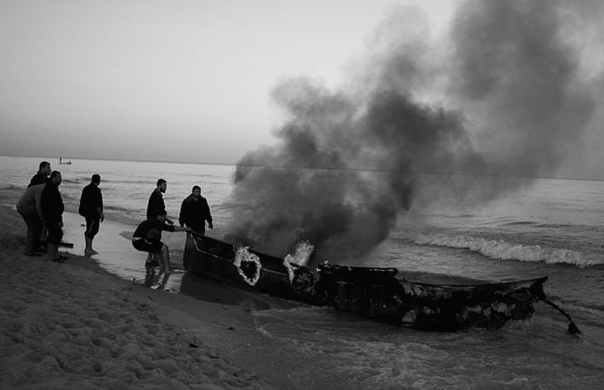
Gaza Strip, occupied Palestine – Last Wednesday Rajab Khaled Abu Riela, 30 years old, his brother and two cousins left Gaza’s port at 12 pm. They stayed out fishing until 1:30 am. “When we started our way back to the port one Israeli warship approached, the soldiers started insulting us through the microphone and immediately after started shooting against our two small boats with live ammunition”. “Then their warship crashed against us. In that moment I decided to try to escape, but I was immediately shot in the leg with live ammunition”. They took Rajab and his brother to Ashdod port, where they wouldn’t give him any medicine or treatment for the injury he sustained by the Israeli forces. “I was left bleeding until 9:30am”. Finally they were sent back to Gaza, where an ambulance took him directly from Erez border to the hospital, where he had to undergo surgery.
When he finally reached Shifa Hospital, doctors managed to remove the biggest pieces of the bullet – but many small pieces still remain in his leg.

Rajab’s mother shows the bullet removed from his leg
“Our future [for the fishermen] is uncertain; we don’t know what will happen tomorrow. Israel assaults us every day, takes our boats, shoots at us… Since 2005 I have pain in my chest due to an attack of the occupation, and as well my brother was injured while fishing in 2008. I’m responsible for providing for my family, we are 21 members… Now no one is providing for us, as I’m injured and they took our boat and motor. How I can work now without a boat?”

Palestinian Fishers Under Attack – End the Siege on Gaza

Samidoun Palestinian Prisoner Solidarity Network | May 31, 2016
Palestinian Fishers Under Attack
Five Palestinian fishers in Gaza – Rajab Abu Riyala, Khaled Abu Riyala, Hassan Miqdad, Mahmoud Miqdad, and Bashar Abu Riyala – were arrested this morning, 31 May, by Israeli occupation forces and two fishing boats confiscated by the Israeli navy. According to the Union of Agricultural Work Committees, these arrests bring the number of Palestinian fishers in Gaza arrested by Israeli occupation forces in 2016 to 70, including eight children, and the number of boats confiscated to 20. In 2015, 71 fishermen were detained and 22 boats confiscated throughout the year.
Zakaria Baker of the UAWC, which organizes fishers and farmers for land defense and mutual support and solidarity, said that these violations against fishers in Gaza have only increased since the proclaimed decision of the Israeli occupation to “extend” the fishing area to 9 nautical miles – a decision retracted on Monday – saying that fishers could not make use of this distance because they were prevented by force of arms. The fishers were attacked this morning 5 nautical miles out to sea, Baker said. Further, Israeli occupation forces fired on fishing boats northwest of Gaza city, damaging a fishing boat and forcing the fishermen to flee for safety, and in the sea off Deir al-Balah, firing live bullets pushing the fishers back to the beach.
On Monday, Israeli occupation naval forces said that the extended fishing zone had been “temporary,” for the fishing season, and that the fishing zone was again six nautical miles. The limit has frequently been used as a means of pressure and of maintaining the naval siege on Gaza; while the Oslo Accords set Gaza fishers’ zone as 20 nautical miles, the Israeli occupation has unilaterally lowered it to an area as small as three nautical miles, extended to six in 2014.
The fishing economy in Gaza – which supports 70,000 Palestinians – has been nearly destroyed by the naval siege on Gaza and the attacks on Palestinian boats, causing expensive boat damage to small fishing families who cannot afford repairs and preventing Palestinian fishers from entering deep waters where mature fish are available. Fishers in Gaza have lost 85% of their income since 2006 and the tightening of the siege.
On 30 May – 4 June 2016, activists are engaged in campaigns against the siege on Gaza – the denial of reconstruction, the smothering of the Palestinian economy, the closing of the crossings and denial of freedom of movement, the prevention of trade, the aerial attacks on Gaza, the firing on Palestinian farmers and destruction of Palestinian agriculture in the “no-go zone” near the border, and the strangling of the Palestinian fishery of Gaza – demanding an end to 10 years of Israeli siege with international support and complicity, and the involvement of the Egyptian state.
The actions mark ten years of siege and six years since Israel naval commandos attacked the international Freedom Flotilla to Gaza, killing ten Turkish activists seeking to break the naval siege. The occupation’s draconian restrictions on the movement of people and goods, along with its repeated military onslaughts and their destruction of Palestinian industry, resources, infrastructure, and life, have pushed the local unemployemt rate to 41.2%, the highest in the world. 75,000 remain displaced following Israel’s destruction of their homes, which have yet to be rebuilt, during its 2014 bombardment. Family members, patients, students, and workers are trapped, with over 25,000 having applied for rare permits to leave through the one crossing with Egypt.
UAWC video on Palestinian fishers in Gaza:
End the Siege on Gaza
Samidoun Palestinian Prisoner Solidarity Network urges protests and actions to support the besieged fishers in Gaza, and raising the voice of Palestinian fishers to end the attacks and break the siege on Gaza. Samidoun in New York City will rally on Friday, 3 June at 4:00 pm outside the offices of G4S at 19 W. 44th Street in New York City. G4S, the world’s largest security company and second-biggest private employer, equips Israeli prisons and detention centers where Palestinian prisoners, including many fishermen detained off the coast of Gaza, are held and tortured, as well as the occupation forces and infrastructure – like checkpoints surrounding the Gaza Strip – routinely used to massacre Palestinians while holding millions under military rule.
Take Action!
1. Organize or join a protest against the attacks and arrests of Palestinian fishers and the siege on Gaza, outside your national government buildings, local Israeli embassy, G4S office, or corporation involved in the occupation. If you are in New York, join Samidoun’s protest – elsewhere, send us your local protests against the attacks on Palestinian fishers in Gaza. Email us at samidoun@samidoun.net.
2. Contact political officials in your country – members of Parliament or Congress, or the Ministry/Department of Foreign Affairs or State – and demand that they cut aid and relations with Israel on the basis of its apartheid practices, its practice of colonialism, and its numerous violations of Palestinian rights including the siege on Gaza and the attacks on fishers. Demand they pressure Israel to stop attacking Palestinian fishers and strangling Palestinians in Gaza. In the United States, call the Israel/Palestine Bureau at the State Department at 202-647-3930 and the White House – 202-456-1111. Demand action on Barghouthi’s case and an end to aid to Israel. In the UK, call UK Foreign and Commonwealth Office, Philip Hammond, MP, +44 20 7008 1500. In Canada, call Foreign Minister Stephane Dion: 613-996-5789.
3. Boycott, Divest and Sanction. Hold Israel accountable for its violations of international law. Don’t buy Israeli goods, and campaign to end investments in corporations that profit from the occupation. G4S, a global security corporation, is heavily involved in providing services to Israeli prisons that jail Palestinian political prisoners – there is a global call to boycott it. Palestinian political prisoners have issued a specific call urging action on G4S. Learn more about BDS at bdsmovement.net.
Gaza Despair, Israeli Culpability, Unfit to Print in The NY Times
By Barbara Erickson | TimesWarp | May 23, 2016
Gaza made the front page of The New York Times recently, with an article highlighting the fears of residents who suspect Hamas of building tunnels under and near their homes. The topic was ready-made for the newspaper, fitting perfectly into the Israeli (and Times) spin on the besieged enclave.
According to the accepted narrative, the problems in Gaza are due to Hamas, and Israel is free from blame. Thus we find the tunnel story played prominently on the front page under the headline “As Hamas Tunnels Back Into Israel, Palestinians Are Afraid, Too.”
There is much cause for despair in Gaza—fishermen and farmers come under attack, drinking water is ever more scarce, patients are desperate for adequate medical care—but the Times has failed to highlight any of these issues, which are so clearly due to Israeli actions and policies.
The official Israeli line is that Hamas oppresses the residents under its control, and Israeli political leaders use this charge to help justify their airstrikes on Hamas sites and other actions, such as restrictions on the delivery of building materials to Gaza. The Times has been a willing partner in this effort.
So it is no surprise when the newspaper informs us that Hamas has rebuilt many of the tunnels it used during the assaults on Gaza in the summer of 2014, and this is causing anxiety for some Gaza residents who live near signs of underground construction work. They fear that Israel will bomb their neighborhoods to destroy the tunnels.
The story is just what the Israeli army press office ordered, and the Times willingly promotes this propaganda effort even as it shows little interest in even more urgent concerns that plague the residents of the strip. It had nothing to say, for instance, when Israel arrested 20 Gaza fishermen over less than a week this month and confiscated seven of their boats (here and here) even though they were fishing within the approved limit set by Israel.
Israeli harassment of the beleaguered fishermen has been a constant over the years: According to the Palestinian Center for Human Rights, Israeli forces detained 71 fishermen and confiscated 22 fishing boats in 2015, firing on fishing boats at least 139 times, wounding 24 fishermen and damaging 16 boats. The attacks have continued without letup this year.
The Times, however, has almost totally ignored the subject. The paper took notice briefly last month, when Israel announced new rules allowing Gaza boats to sail farther out to sea, and the story most certainly made the grade because it was a chance to show Israel in a benevolent light. The Times has been silent on the issue ever since.
Farmers with land near the border fence also face frequent attacks by Israeli soldiers who fire live ammunition at workers tending their fields, and Israel has destroyed crops and farm buildings, spraying fields of spinach and peas with herbicides and leveling land with bulldozers.
The Times has failed to report these incursions as well, although the United Nations documents them in weekly reports, and other news sources routinely tell of the assaults.
According to the UN, as of May 16, the Israeli military had made 30 incursions into Gaza this year. Its forces entered the enclave at least 56 times during 2015. These mini invasions—which include tanks, bulldozers and live fire—are breaches of the truce agreement made to end hostilities in 2014, but the Times has not seen fit to report them.
Instead, the newspaper prefers to raise the alarm about possible attacks from Gaza via the tunnels, ignoring the relevant context: the frequent shootings and other assaults by Israeli forces and the nine-year blockade, which finds not a single mention in the tunnel article.
Israel blocks the entry of needed medical supplies into Gaza, denies doctors the right to upgrade their skills in foreign countries and prevents many patients from leaving the enclave to receive the treatment they need. It has destroyed electrical equipment, wells and water treatment plants, and the lack of potable water has reached such a critical stage that only some 5 percent of the water in Gaza is safe to drink.
The Times, however, has shown no interest in exploring these crucial issues. It follows a prescribed narrative in deflecting blame from Israel and demonizing Hamas. The tunnel story fit this bill and thus merited a prime placement on page 1 above the fold.
Israeli attacks mount on Palestinian fishers in Gaza

Samidoun Palestinian Prisoner Solidarity Network – May 17, 2016
Two more Palestinian fishers were attacked and detained off the coast of the Gaza Strip on Tuesday morning, 17 May, Ma’an News reported. Samih and Ibrahim Zayid were attacked by an Israeli gunboat while fishing, ordered off the boat, and detained; their boat was towed to the Ashdod port.
This comes after the detention and boat confiscation of 10 Palestinian fishers on Sunday, 15 May. Two of the fishers, Khamis Baker and Hasan Madi, remained imprisoned while the other eight were released. Two more fishing boats were confiscated on Sunday. Another fishing boat was damaged and submerged by the gunboat’s attack; the damaged boat was later recovered by Palestinian fishers. Dozens of shells were fired at the fishers and their boats; the fishers were ordered to take off their clothes, jump into the water, and swim toward the gunboats.
While Israeli authorities in April expanded the fishing zone designated for Palestinian fishermen to nine nautical miles in the southern Gaza Strip, and retained the six-mile zone in the north, fishermen regularly report detentions, live fire, and boat confiscation within these limits,” reported Ma’an.
According to the Palestinian Center for Human Rights, Israeli forces detained 71 fishermen and confiscated 22 fishing boats throughout 2015, and opened fire on Palestinian fishermen at least 139 times over the course of the year.
PCHR noted that it “considers that attack as a grave violation of the fishermen’s right to sail and fish freely and to protect their property in the Gaza waters. Moreover, PCHR believes that such attacks against Palestinian fishermen constitute a form of collective punishment against them which aims to target fishermen and their livelihood. Furthermore, PCHR calls upon the international community to provide protection for Palestinian fishermen and their right to sail and fish freely, and to stop all forms of collective punishment against fishermen and their property which violate the international humanitarian law and the international human rights law.”
The Union of Agricultural Work Committees, a Palestinian grassroots organization, works with fishers and farmers in Palestine to defend their land and seas and their right to farm and fish in the face of occupation attacks. Saad al-Deen Ziadah of UAWC said that “Most of these attacks and violations occurred within the allowed fishing area by Israeli navy forces. These arrests are generally carried out under very intense situations – the Israeli navy shooting bullets and shells at the fishermen and their boats. It has been recorded that the Israeli navy targets the outboard engine of the boats, which is the ‘soul of the boat’, as the fishers say.”
UAWC video on Palestinian fishers in Gaza:
Featured Video

Racist Seinfeld Dances for Joy as Bibi Unveils His New Map
or go to
Aletho News Archives – Video-Images
TV Drama Review
Japanese drama projects Japan’s wartime atrocities onto Chinese characters

Global Times | October 25, 2026
By portraying Chinese characters as perpetrators of ruthless violence while casting Japanese Self-Defense Forces (SDF) intelligence operatives as defenders, the season 2 of the Japanese drama Vivant has recently drawn criticism from Chinese netizens, who argue that its depiction turns historical reality on its head while ignoring Japan’s wartime atrocities.
The TBS drama series – a spy suspense story in which an alleged unofficial intelligence unit of the SDF operates across the globe — has attracted a passionate fanbase. Its currently airing season 2 opened with a household rating of 18.8 percent, the highest for a TV drama this year, according toa commentary article by Japanese media Toyo Keizai.
What draws attention is the portrayal of the enemies in the series, the article noted. Scenes in which the Chinese organization subjects kidnapped members of the SDF unit to brutal torture are repeated with unrelenting intensity.
It is rare for Japanese TV dramas to explicitly portray a real-life country as the enemy, the article noted.
Japanese Prime Minister Sanae Takaichi also made a reference to the drama, saying that she has been recording Vivant and hopes to binge-watch it over the year-end and New Year holidays, according to Japanese media outlets.
China’s CCTV News report on Sunday revealed that the drama features scenes in which Chinese personnel cut off the fingers of and stab Japanese intelligence operatives in the abdomen. Such acts bear striking similarities to the torture inflicted on Chinese nationals by invading Japanese troops during the World War II.
The drama distorts the truth by attributing these atrocities to modern Chinese characters. Beneath the surface, it subtly glorifies Japan’s cross-border overseas operations, blurs the functional boundaries of the SDF and implicitly promotes an expansionist narrative, per CCTV News. … continue
Blog Roll
 Aletho News
- EU facing trillion-euro debt hole while seeking more cash for Kiev
- How US, Europe, Persian Gulf states exhausted missile stockpiles, splurged billions to defend Israel
- Up in arms… Koreans reject U.S. empire’s plan to make South Korea the next Ukraine
- Iran, Turkey, Pakistan, Saudi Arabia could advance region-led security framework in Tehran: FM spox
- Netizens condemn Japanese drama for projecting Japan’s wartime atrocities onto Chinese characters
- Racist Seinfeld Dances for Joy as Bibi Unveils His New Map
- A West Bank War for Netanyahu’s Election Campaign, Could It Backfire?
- Yemen denounces European Parliament’s ‘hypocritical’ push to blacklist Ansarullah
- Qalibaf: UAE’s UN bid aims to ‘clear the runway’ for ‘Greater Israel’, whitewash genocide
- Pakistan reopens Iran border after boosting security: Report
- If Americans Knew
- Why Israel’s latest assault on Hebron is so significant for the West Bank
- Israel Used “Where’s Daddy?” AI to Relentlessly Murder Palestinian Journalists and Their Families in Their Homes from October to December 2023
- DAILY UPDATE: Latest essential news on Palestine, Israel, & region
- Netanyahu Says Israel Must Prepare for Banking Sanctions, Floats Crypto as a Possible Bypass
- Latest updates from Israeli assault on West Bank
- Tourism Ministry launches free food truck tour in US
- “So Much Worse Than People Realize”: Never-Before-Seen Images Reveal Damage at U.S. Bases as Troops Describe Being Abandoned
- UK Bell Review Confirms Only Anti-Israel Attitudes Are Rising, Not Antisemitism
- DAILY UPDATE: Latest essential news on Palestine, Israel, & region
- DAILY UPDATE: Latest essential news on Palestine, Israel, & region
- No Tricks Zone
- Sudden Stratospheric Warming, Powerful El Niño Combination May Lead To Extreme Europe Cold, Energy Crisis!
- Two New Studies Find Thwaites Glacier Melt Cannot Be Driven By Human Activity Or A Warming Ocean
- E-Cars Reduce CO2 Emissions By Only 41% Compared To Internal Combustion Engine Vehicles
- Predictions Made By Renowned Climate Professor Over Past Decades Have Been Proven To Be Poor
- New Study Suggests Large Regions Of The Pacific Ocean Have Been Cooling For The Last 80 Years
- Germany’s Green Energy Debacle: High Energy Costs Force Kahla Porzellan to Close After 182 Years!
- New Study: 50 Years Of The Most Aggressive ‘Net Zero’ Policies Can Only Affect The Global Climate By 0.03°C
- US September “Heat” Was No Record…Many Records Set Decades Ago
- Latest European Green Energy Debacle; Portugal’s Largest Flagship Solar Park Insolvent!
- Green Energy Debacle: German Expert Professor Fritz Vahrenholt Warns Of Severe Economic And Social Consequences

