Israel forces open fire on Palestinian farmers in southern Gaza
Ma’an – May 8, 2016
GAZA – Israeli forces on Sunday morning opened fire on Palestinians farmers in the southern Gaza Strip, local sources said.
Locals told Ma’an Israeli forces deployed east of Khan Yunis opened fire on farmers, preventing them from reaching their lands. No injuries were reported.
An Israeli army spokesperson said they could not confirm the incident.
The incident comes after Israeli forces targeted the southern region of the small Palestinian territory with airstrikes for four consecutive days beginning Wednesday evening. Several were injured and a Palestinian woman was killed by Israeli shelling.
Israel said airstrikes were launched in response to Palestinian resistance groups targeting its troops with mortar rounds in an attempt to thwart Israeli military excavation activities in search of Hamas-made tunnels. However, Israel’s regular incursions inside Gaza’s border areas were perceived by many as the instigator of the hostilities.
The exchange was seen as an unusual escalation of violence in the Gaza Strip since a 2014 ceasefire was brokered after Israel’s devastating 50-day assault on the besieged coastal enclave that left some 2,200 dead and 11,000 injured.
Hamas, Gaza’s de facto ruler, had widely observed the 2014 ceasefire; Israeli Defense Minister Moshe Yalon in March said Hamas “hasn’t fired a bullet” since the war, and following Thursday’s hostilities, Israeli newspaper Haaretz quoted a senior Israeli army officer as saying that Hamas had even been instrumental in preventing terrorist attacks and rocket fire directed at Israel.
However in the almost two years since the ceasefire was declared, regular violations have been committed on the Israeli side.
Israeli bulldozers frequently enter Gaza territory, carrying out land-leveling and excavation operations while accompanied by military vehicles, with four such incursions recorded by the UN between April 26 and May 2.
On a near daily basis, the Israeli army fires “warning shots” on Palestinian fisherman, farmers, and shepherds entering the Israeli-enforced “buffer zone,” implemented after Israel imposed a blockade on the Gaza Strip a decade ago.
Due to the high frequency of the attacks, live fire often goes unreported.
While Israel typically cites security concerns when targeting Palestinian agricultural areas, the Palestinian Center for Human Rights has reported in the past that fishermen are often targeted when they pose no threat.
Approximately 35 percent of Palestinian agricultural land in Gaza is inaccessible without high personal risk, according to the center.
In 2015, Israeli naval forces opened fire on Palestinian fishermen at least 139 times, killing three, wounding dozens, and damaging at least 16 fishing boats, according to the UN Agency for the Coordination of Humanitarian Affairs (OCHA).
Israeli forces also regularly open fire on Palestinian protesters during Friday demonstrations held along Gaza’s border, with injuries sustained by live fire and rubber-coated steel bullets reported nearly every week. At least 25 Palestinians have been shot dead by Israeli forces in Gaza clashes since the beginning of October, according to UN documentation.
Israel Stoking More Conflict With Gaza
By Stephen Lendman | May 5, 2016
Three Israeli wars of aggression on illegally besieged Gaza since December 2008 perhaps aren’t enough for Israel’s killing machine.
Repeated inter-war ground, air and sea attacks occur regularly. Is Israel preparing the ground for another major assault – blaming Gazan victims like it always does for its high crimes against peace?
On Wednesday, Israeli tanks shelled two Hamas watchtowers provocatively. Senior Hamas official Musheer al-Masri called the attacks “dangerous developments and an obvious breach of the ceasefire in Gaza.”
“The Israeli occupation should avoid testing the Palestinian resistance. The enemy should realize that the toll would be in proportion to the Israeli crimes.”
“The Israeli escalation is a new development, and the Palestinian resistance is (deciding) how to react.”
Hamas’ armed wing al-Qassam Brigades responded with mortar fire on an Israeli bulldozer. An Interior Ministry source reported no casualties, just damage.
Islamic Jihad spokesman, Daud Shihab, said “Israel has not ceased its hostilities against the Palestinian people since the ceasefire was agreed on in 2014.”
“There are continued onslaughts and infiltrations in both Gaza and the West Bank and in other locations in Palestine.”
Gaza remains illegally blockaded since June 2007 – for political, not security reasons. According to an April UN report, about 75,000 Palestinians remain displaced from Israel’s summer 2014 naked aggression.
Affected families are forced to “liv(e) in store rooms, unfinished units, substandard apartments in relatives’ or neighbors’ buildings” or wherever else they can find shelter.
Some live in damaged homes, others in prefabricated shelters. War and displacement affected women and children hardest.
Over 30% of displaced females “liv(e) in shelter conditions… lacking safety, dignity and privacy, including tents, makeshift shelters, destroyed houses or the open air.”
Nearly all affected families lack resources and construction supplies to rebuild. Most funds pledged for reconstruction weren’t delivered.
Israel blocks or greatly restricts building supplies entering the Strip on the phony pretext of being useful to Hamas or other resistance groups.
The UN warned “(a)t the present rate, it will take years to address the massive reconstruction and repair needs, adding to the general frustration of the population following years of movement restrictions, rising unemployment and poverty.”
Gazans suffer hugely under open-air prison conditions. Israel attacks the Strip at its discretion.
Are things heading for another war? Does Israel want remaining parts of Gaza turned to rubble – thousands more of its residents slaughtered or injured?
Stephen Lendman lives in Chicago. He can be reached at lendmanstephen@sbcglobal.net.
His new book as editor and contributor is titled Flashpoint in Ukraine: US Drive for Hegemony Risks WW III.
Israeli Forces shoot at family harvesting crops on their land
International Solidarity Movement, Gaza team | May 2, 2016
Gaza, Occupied Palestine – After more than six months risking their lives while ploughing, planting seeds and weeding their land, and after investing a large amount of money on seeds and on renting a tractor, the Qudaih family from the village of Khuzaa were finally ready to start harvesting their barley and the wheat two days ago.
We arrived at the fields, located around 100 metres from the fence, at 7am. Around 9am one jeep from the Israeli occupation forces stopped in front of the farmers and a group of soldiers emerged. After a few minutes they fired several shots in the air, then returned to the jeep and left.

A family member working on the land in Khuzaa
45 minutes later another jeep arrived. This time the soldiers fired shots on the ground next to the farmers and the ISM activists that were with them. The shots were near misses, just a few centimetres from their feet. As if this was not terrifying enough, next they fired shots close to the farmers’ and activists’ heads. At that moment most of the farmers started to run away from their fields terrified by the whistling sounds of the bullets flying around them: One Bedouin man that was picking herbs for his animals laid down on the ground hiding behind his donkey, while the soldiers fired shot more than five times just a few centimetres from him. The shooting didn’t even stop when everyone started to run away, preventing the farmers to secure their horse cart holding what little harvest they had collected until they were attacked.

The Qudaih family harvesting their barley on their land.
These families now have to choose between losing all the money invested as well as their main sustenance for the year, or continue trying to harvest the crops on their land – despite the risk of someone getting killed or disabled.
‘Fake Jewish graves in Muslim cemeteries’: UNESCO slams Israeli occupation of Palestinian sites
RT | April 18, 2016
The Israeli authorities are furious after a UNESCO resolution stated that the Temple Mount and holy sites in Hebron and Bethlehem are an “integral part of Palestine.” The organization also criticized Israel, “the occupying power,” for planting fake graves in Muslim cemeteries.
Two tourist destinations, the Cave of the Patriarchs in the heart of the old city of Hebron and Rachel’s Tomb in Bethlehem, are named in the paper as “Palestinian sites.” The draft decision by the UNESCO executive board on occupied Palestine was released April 11.
UNESCO “reaffirms that the two concerned sites located in… Hebron and in Bethlehem are an integral part of Palestine” and “disapproves the ongoing Israeli illegal excavations, works, construction of private roads for settlers and a separation wall inside the Old City of… Hebron, that harmfully affect the integrity of the site,” the statement says.
UNESCO slammed Israeli attacks on Muslims in the Temple Mount, which it only refers to by its Arabic name, Al-Haram Al-Sharif, and its holy site, Al-Aqsa Mosque.
The organization “strongly condemns the Israeli aggressions and illegal measures against the freedom of worship and Muslims’ access to their Holy Site Al-Aqsa Mosque/Al-Haram Al Sharif, and requests Israel, the Occupying Power, to respect the historic Status Quo and to immediately stop these measures,” the statement says.
Al-Aqsa Mosque became the flashpoint for bloodshed in 2015, amid mounting tensions over the holy site, sacred to both Muslims and Jews.
UNESCO called on Israel to stop “banning Muslims from burying their dead in some spaces and by planting Jewish fake graves in other spaces of the Muslim cemeteries.”
The group also criticized “the continuous Israeli blockade of the Gaza Strip,” which causes an “intolerable number of casualties among Palestinian children,” as well as “the attacks on schools and other educational and cultural facilities and the denial of access to education.”
Israeli authorities have reacted with anger to the UNESCO document.
“This is yet another absurd UN decision,” Prime Minister Benjamin Netanyahu said, as cited by Israeli media.
“UNESCO ignores the unique historic connection of Judaism to the Temple Mount, where the two temples stood for a thousand years and to which every Jew in the world has prayed for thousands of years. The UN is rewriting a basic part of human history and has again proven that there is no low to which it will not stoop,” he added.
This is not the first UNESCO resolution that condemns Israel for aggression at holy sites in Jerusalem and the West Bank. In October 2015 the group issued a document which censured Israel for limiting Muslim access to Jerusalem’s Al-Aqsa Mosque compound and reaffirmed that the Cave of the Patriarchs in Hebron and Rachel’s Tomb in Bethlehem are Palestinian sites.
The document was passed by 26 votes to six – those against being the US, the UK, Germany, the Netherlands, the Czech Republic and Estonia.
‘UK firm helps Israel kill Palestinians’
Protesters slam UK firm over profiting from Israeli war crimes
Press TV – April 9, 2016
Scores of pro-Palestinian activists in the UK have demonstrated outside the headquarters of an arms manufacturing company, accusing it of benefiting from Israel’s deadly crackdown against Palestinians.
The protesters gathered in front of the UK headquarters of aerospace manufacturer Thales, in Crawley, on Friday and expressed their anger against the company’s partnership with Israel’s Elbit Systems to develop a surveillance drone, nicknamed Watchkeeper, used by the regime against Palestinians.
The rally was held by the Sussex Stop Arming Israel campaign and was supported by other human rights groups, including the Inminds. The main messages of the protest were “Stop Arming Israel” and “Thales profits from Israeli war crimes.”
“Thales UK has a billion pound contract with Israel’s largest arms company Elbit Systems to develop a fleet of drones. Human Rights Watch has documented [the drones] as being used by Israel to deliberately target Palestinian civilians in Gaza,” said Inminds chair Abbas Ali.
“It’s sickening that Elbit markets this killer drone as being extensively ‘field tested’ in ‘real life’ situations — using the slaughter of Gaza’s people as a marketing ploy to gain a competitive advantage,” he added.
The Watchkeeper drone, which is produced through a joint venture dubbed UAV Tactical Systems, is modeled on Elbit’s Hermes 450, a UAV that has been used in action by the Israeli military. According to the Sussex group, the drone is developed under a contract awarded by the UK’s Ministry of Defense.
Thales UK is a subsidiary of the French company Thales, and is currently considered as the UK’s second largest military company.
Tel Aviv is under fire by rights groups for its indiscriminate attacks against Palestinian civilians. In one instance of Israel’s brutality, at least 2,140 Palestinians, including 557 children, lost their lives during the regime’s offensive against the Gaza Strip in the summer of 2014.
The aggression also left 11,100 Palestinians wounded, including 3,374 children and 2,088 women, and displaced over 170,000 others.
Israeli forces detain 4 Palestinian fishermen off Gazan coast
Ma’an – April 8, 2016
GAZA CITY – Israeli naval forces on Thursday detained four Palestinian fishermen off the coast of Rafah City in the southern Gaza Strip and seized their fishing boats.
Fishermen told Ma’an that Israeli forces opened fire on the fishing boats before detaining them, although no injuries were reported. They said the incident took place within the designated nine nautical mile fishing zone.
An official with the Agricultural Work Union, Zakariya Bakr, identified the detainees as brothers Iyad and Ahmad Omar al-Bardawil and brothers Bilal and Muhammad Jihad Musleh. He said two fishing boats were confiscated.
An Israeli army spokesperson told Ma’an they were looking into the reports.
On Thursday, another two Palestinian fishermen were detained off the coast of Khan Younis after they allegedly passed beyond the designated fishing zone.
As part of Israel’s near-decade long blockade of the coastal enclave since 2007, Palestinian fishermen have been required to work within a limited “designated fishing zone” off the coast, which was extended to nine nautical miles last week.
Israeli forces regularly detain Palestinian fisherman off the coast of Gaza working within the fishing zone, generally for alleged security reasons. According to the Palestinian Center for Human Rights, Israeli forces detained 71 fishermen and confiscated 22 fishing boats throughout 2015.
The center said that Israeli naval forces also opened fire on Palestinian fishermen at least 139 times over the course of the year, wounding 24 and damaging 16 fishing boats.
“These attacks occurred in a time where the fishers did not pose any threat to the Israeli naval troops, as they were doing their job to secure a living,” the center said.
The NY Times on Gaza: Israel Is Just Trying to Help
By Barbara Erickson | TimesWarp | April 5, 2016
Now, at last, The New York Times has turned its sights on Gaza fishermen, a much beleaguered group, which has persevered under constant harassment and crippling restrictions. It has long been well under the radar as far as the newspaper’s reporting is concerned.
This week, however, we have an above-the-fold story on page 5 accompanied by a color photo of two fishermen with their nets. What has prompted this long overdue attention? It is the opportunity to present Israel as the benevolent caretaker of the besieged Gaza Strip.
Thus we find a headline announcing the following: “Israel Expands Palestinians’ Fishing Zone Off Gaza.” The story below reports the decision to increase the allowed zone from 6 to 9 nautical miles and the relief and excitement of Gaza fishermen and officials.
The article ends with a quote from Israeli officials, saying that the expansion was part of an effort to “improve the economy and foster stability” in the West Bank and Gaza, and so the story is framed around Israeli efforts to help struggling fishermen and Palestinians in general.
Thanks no doubt to the efforts of Times stringer Majd Al Waheidi of Gaza, readers find hints of the grim reality that fishermen there have actually faced over several years. We learn that Israeli gunboats have been firing on fishermen as they go to sea, and we hear the story of Ismail al-Shrafi, 62, who lost his boat five months ago when Israeli sailors confiscated it, injuring his son with live fire in the process.
The story, however, provides no data to place the case of al-Shrafi in context. Readers do not learn that during 2015, the Israeli navy fired on Gaza fishermen at least 139 times, wounding 24 fishermen and damaging 16 boats. Another 22 boats were confiscated, and 71 fishermen were detained.
According to the Palestinian Center for Human Rights, all these incidents took place within the legal 6-mile zone, but the Times notes that an army spokesperson denied that the navy had fired on boats within the permitted area.
The article, by Al Waheidi and Isabel Kershner, also states that over the weekend the navy “sank a suspected smuggling boat,” but it fails to inform readers that witnesses have contradicted this account. According to Palestinian news sources, the navy fired on several boats near Rafah, setting fire to one fishing vessel and causing it to sink.
The Times is denying readers the complete story here, but its most egregious paragraph is the final one in which officials claim that the expansion of the fishing zone was “part of a policy of loosening restrictions” to help the Palestinian economy.
In fact, Israeli policy appears to be aimed at impeding, rather than bolstering, economic progress in Gaza and the West Bank. Here are just a few examples of how Israeli actions and regulations impact the Palestinian economy:
- The same day the fishing zone was expanded from 6 to 9 miles, four Israeli military bulldozers entered the Gaza strip to destroy farmland planted with wheat.
- According to the PCHR, 35 percent of Gaza’s agricultural land “can only be accessed under high personal risk” because Israeli troops frequently fire on laborers in the fields.
- Israeli policies have caused the Palestinian telecommunications sector to lose $1 billion over the past three years, according to a World Bank report.
- Through a regime of permits, licenses and visas, Israel has cut into the Palestinian tourism industry, deflecting jobs and income to Israel.
- Israel confiscates some 80 percent of the water in the West Bank for its own use and charges Palestinian residents for the water it sells back to them.
- A United Nations report stated that in spite of the occasional loosening of restrictions, Gaza’s economy will continue to deteriorate as long as Israel maintains its blockade of the territory.
Times readers, however, are told that Israel is trying to help, loosening restrictions to “improve the economy.” Thus we find the headline this week announcing a generous move to allow fishermen more access to their own Gaza Sea.
It seems that the newspaper’s editors are credulous consumers of Israeli spin, readily quoting the self-serving claims of officials and making no attempt to verify the facts. Readers—as well as the courageous fishermen of Gaza—deserve better.
Follow @TimesWarp on Twitter
Israeli military destroys agricultural lands in Gaza
International Solidarity Movement | April 3, 2016

Gaza Strip, Occupied Palestine – At around 9am on Thursday, the 31st March, four Israeli bulldozers entered the Gaza Strip at El Fakhuri. They came in order to destroy agricultural lands located near the border, once again violating the indefinite truce that ended the 2014 Israeli aggression against Gaza.

Meanwhile more than thirty tanks were located along the fence line, pointing at the Palestinian farmers who kept working on their lands despite the great risk that they face doing so.

In less than a month the wheat harvest season will start. The families who own land near the border don’t know what will happen then, as no one seems to do anything to stop the systematic aggression. The wheat harvest is vital for the families ability to feed their children.

Sanders’ Written Remarks to AIPAC
By Stephen Lendman | March 23, 2016
AIPAC is a rogue lobbying group with enormous influence in Washington, one-sidedly supporting Israel at the expense of regional peace and Palestinian rights.
Bernie Sanders addressed its annual conference in spirit, not in person, delivering his remarks in written form – expressing longstanding support for a ruthless apartheid state run by hate-mongering Zionist zealots.
“Israel is one of America’s closest allies,” he said, “and we – as a nation – are committed not just to guaranteeing (its survival), but also to its people’s right to live in peace and security.”
Fact: Both countries partner in each other’s high crimes, Sanders failed to explain.
Fact: Israel’s survival isn’t threatened. Its only threats are ones it creates. Sanders paid no heed to its longstanding reign of terror on defenseless Palestinians.
Fact: Calling their freedom fighters “terrorists” mocks their dignity, humanity, and “right to live in peace and security” Israel systematically denies them.
Claiming as president he’ll “work tirelessly to advance the cause of peace as a partner and as a friend to Israel” belies reality.
No peace process exists, not now or earlier going back decades. Israel rejects it out-of-hand, pretending otherwise, wanting historic Palestine for Jews only, its people denied their fundamental rights.
Sanders knows what he won’t explain, one-sidedly supporting Israel while pretending otherwise. His voting record belies his claim about being “a friend not only to Israel, but to the Palestinian people.” When did he ever introduce legislation supporting their rights? Never!
He backs naked Israeli aggression on the phony pretext of responding to Hamas rocket attacks, used only in self-defense.
Saying he “believe(s) that Israel, the Palestinians, and the international community can, must, and will rise to do what needs to be done to achieve a lasting peace” ignores what never happened before and won’t now.
Again, Sanders knows what he won’t say, maintaining the fiction of efforts for regional peace when none exist. Washington and Israel systematically undermine them.
His formula for peace isn’t reality based. After decades of Israeli state terror, slow-motion genocide affecting an entire population, punctuated by intermittent premeditated wars, apartheid worse than South Africa’s, and governance of, by and for hate-mongering Zionist zealots, how can anyone believe it wants peace and stability.
Sanders is like all the rest, demanding “Hamas and Hezbollah renounce their efforts to undermine the security of Israel… Peace has to mean security for every Israeli from violence.”
Saying “attacks of all kinds against Israel” must end is code language for wanting Palestinians denied their international law guaranteed right of self-defense.
Adding “peace also means security (and well-being) for every Palestinian,” their right to “self-determination, (and) ending ‘what amounts’ (sic) to the occupation of Palestinian territory, establishing mutually agreed upon borders, and pulling back settlements in the West Bank (like earlier) in Gaza” ignores no possibility of achieving any of the above.
Sanders failed to explain Ariel Sharon’s so-called disengagement from Gaza transferred its settlers to stolen Palestinian West Bank land, displacing Palestinians from what’s rightfully theirs.
It put Jews out of harm’s way ahead of three Israeli wars of aggression on Gaza – in 2008-09, 2012 and 2014, along with frequent aerial and ground assaults, an entire population terrorized and besieged for nearly a decade with no prospect for relief.
Sanders saying “economic blockade of Gaza” must end ignores its political imposition, unrelated to security concerns.
Expressing rhetorical support for “a sustainable and equitable distribution of precious water resources so (both sides) can thrive as neighbors” ignores his one-sided support for Israel for 30 years.
He willfully lied, claiming Israel’s 2014 Gaza war followed “weeks of indiscriminate rocket fire into its territory and the kidnapping of (its) citizens.”
Operation Protective Edge was planned months in advance, naked Israeli aggression unrelated to Hamas rockets (launched only in self-defense after repeated Israeli provocations) and nonsensical kidnapping claims.
Sanders can’t get his facts straight, including false claims about Hamas “construct(ing) a network of tunnels for military purposes.”
They’re built as a vital lifeline, supplying goods essential to survive, restricted or prohibited by Israel’s suffocating blockade, one of many examples of its genocidal policy – what Sanders never explains.
His address featured numerous examples of misinformation and one-sided support for Israel. Rhetorically expressing concern for Palestinian rights rang hollow.
Throughout his political career, he never cared. Why should anyone believe he turned a new leaf.
Judge him and other politicians only by their voting record. Rhetoric is meaningless.
Stephen Lendman can be reached at lendmanstephen@sbcglobal.net.
His new book as editor and contributor is titled Flashpoint in Ukraine: US Drive for Hegemony Risks WW III.
Palestinians face severe restrictions during Jewish holiday
Ma’an – March 23, 2016
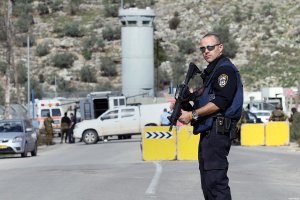 BETHLEHEM – Palestinians faced severe movement restrictions on Wednesday, as Israeli authorities shut down all movement through checkpoints in and out of the occupied West Bank and Gaza Strip ahead of the Jewish holiday of Purim.
An Israeli army spokesperson said that beginning at 1 a.m. on Wednesday and lasting until midnight Saturday, the checkpoints would be closed to all Palestinians with the exception of humanitarian cases.
Palestinian citizens of Israel, as well as holders of foreign passports, would still be allowed to pass through the checkpoints, she said, noting: “They’re only closed for Palestinians.”
She said Palestinians could seek to arrange “special circumstances” with Israel’s Coordination of Government Activities in the Territories (COGAT).
Sources inside the Palestinian liaison department confirmed the measures would be extended to the Kerem Shalom and Erez crossings into the Gaza Strip, with only humanitarian cases and a limited number of Palestinian Christians allowed to leave the blockaded coastal enclave.
Israeli police spokesperson Luba al-Samri said there would be heightened security measures, including a number of police patrols, across occupied East Jerusalem and the West Bank throughout the holiday.
Palestinian access has also been restricted to the Al-Aqsa Mosque compound, with all Palestinian men younger than 50 denied entry to the site, which is the third holiest in Islam.
Access restrictions to the mosque compound during a succession of Jewish holidays last September played a major role in triggering a wave of unrest that has since left more than 200 Palestinians and nearly 30 Israelis dead.
Tensions were running high in the West Bank on Wednesday morning after Israeli forces escorted hundreds of Israelis, including settlers, to holy sites there, with clashes breaking out nearby Joseph’s Tomb near Nablus.
The Jewish holiday of Purim, which commemorates the Biblical account of the saving of the Jewish people from Haman, an ancient Persian vizier, begins Wednesday evening and ends late Thursday this year.
Featured Video

Racist Seinfeld Dances for Joy as Bibi Unveils His New Map
or go to
Aletho News Archives – Video-Images
TV Drama Review
Japanese drama projects Japan’s wartime atrocities onto Chinese characters

Global Times | October 25, 2026
By portraying Chinese characters as perpetrators of ruthless violence while casting Japanese Self-Defense Forces (SDF) intelligence operatives as defenders, the season 2 of the Japanese drama Vivant has recently drawn criticism from Chinese netizens, who argue that its depiction turns historical reality on its head while ignoring Japan’s wartime atrocities.
The TBS drama series – a spy suspense story in which an alleged unofficial intelligence unit of the SDF operates across the globe — has attracted a passionate fanbase. Its currently airing season 2 opened with a household rating of 18.8 percent, the highest for a TV drama this year, according toa commentary article by Japanese media Toyo Keizai.
What draws attention is the portrayal of the enemies in the series, the article noted. Scenes in which the Chinese organization subjects kidnapped members of the SDF unit to brutal torture are repeated with unrelenting intensity.
It is rare for Japanese TV dramas to explicitly portray a real-life country as the enemy, the article noted.
Japanese Prime Minister Sanae Takaichi also made a reference to the drama, saying that she has been recording Vivant and hopes to binge-watch it over the year-end and New Year holidays, according to Japanese media outlets.
China’s CCTV News report on Sunday revealed that the drama features scenes in which Chinese personnel cut off the fingers of and stab Japanese intelligence operatives in the abdomen. Such acts bear striking similarities to the torture inflicted on Chinese nationals by invading Japanese troops during the World War II.
The drama distorts the truth by attributing these atrocities to modern Chinese characters. Beneath the surface, it subtly glorifies Japan’s cross-border overseas operations, blurs the functional boundaries of the SDF and implicitly promotes an expansionist narrative, per CCTV News. … continue
Blog Roll
 Aletho News
- EU facing trillion-euro debt hole while seeking more cash for Kiev
- How US, Europe, Persian Gulf states exhausted missile stockpiles, splurged billions to defend Israel
- Up in arms… Koreans reject U.S. empire’s plan to make South Korea the next Ukraine
- Iran, Turkey, Pakistan, Saudi Arabia could advance region-led security framework in Tehran: FM spox
- Netizens condemn Japanese drama for projecting Japan’s wartime atrocities onto Chinese characters
- Racist Seinfeld Dances for Joy as Bibi Unveils His New Map
- A West Bank War for Netanyahu’s Election Campaign, Could It Backfire?
- Yemen denounces European Parliament’s ‘hypocritical’ push to blacklist Ansarullah
- Qalibaf: UAE’s UN bid aims to ‘clear the runway’ for ‘Greater Israel’, whitewash genocide
- Pakistan reopens Iran border after boosting security: Report
- If Americans Knew
- An error has occurred; the feed is probably down. Try again later.
- No Tricks Zone
- Sudden Stratospheric Warming, Powerful El Niño Combination May Lead To Extreme Europe Cold, Energy Crisis!
- Two New Studies Find Thwaites Glacier Melt Cannot Be Driven By Human Activity Or A Warming Ocean
- E-Cars Reduce CO2 Emissions By Only 41% Compared To Internal Combustion Engine Vehicles
- Predictions Made By Renowned Climate Professor Over Past Decades Have Been Proven To Be Poor
- New Study Suggests Large Regions Of The Pacific Ocean Have Been Cooling For The Last 80 Years
- Germany’s Green Energy Debacle: High Energy Costs Force Kahla Porzellan to Close After 182 Years!
- New Study: 50 Years Of The Most Aggressive ‘Net Zero’ Policies Can Only Affect The Global Climate By 0.03°C
- US September “Heat” Was No Record…Many Records Set Decades Ago
- Latest European Green Energy Debacle; Portugal’s Largest Flagship Solar Park Insolvent!
- Green Energy Debacle: German Expert Professor Fritz Vahrenholt Warns Of Severe Economic And Social Consequences

