Have you heard the latest joke about Trump and Iran?
By Martin Jay | Strategic Culture Foundation | March 21, 2026
What’s the difference between Vietnam and the Iran War? Answer: Trump had an exit strategy for Vietnam.
How much collective responsibility can the West take for the shitstorm it is in now, otherwise known as ’The Iran War’? Many would like to blame most of it on Trump for being a manchild and just going ahead with the most madcap military venture NATO countries have ever known, against all the expert advice, and ending up with a regime which is even more hardcore for having a bomb, world energy prices soaring and causing chaos due to Iran choking the Straits of Hormuz, and the entire relationship between Washington and its allies in the region reduced to a handful of dust?
The reality is that Trump took the decision to go to war not based on one issue alone. Left-wing commentators in the U.S. would like us to think it was to distract the media away from the latest revelations of the DOJ and the Epstein files, which had a tome of evidence accusing him of having inappropriate relations with a 13-year-old girl. But there were other reasons which pushed him over the line. Top of that list is surely that Netanyahu was blackmailing him, threatening to release recordings of his phone calls with Epstein where they talk about young girls. Add to that, it was probably pointed out to him that he was not going to keep both houses when the midterms come unless a considerable amount of Jewish American money was pumped into his campaign.
But it isn’t just Trump that has got us all into this mess that we’re in. For decades, the EU allowed Israel to ratchet up their brutal occupation of Palestinians and in the process to dehumanize them, leading to the climax of the Gaza genocide. This gave an unrealistic sense of impunity, almost akin to a divine intervention to religious fanatics who already believed that they were the chosen people and that they had a right to murder those beneath them and steal their property. Look at the reaction of western governments and in particular the EU when the events of October 7th unfolded and how they supported any response at all from Israel. In fact, just look at how any UK government minister reacted to the start of the Iran War, which, if we didn’t know better, might have thought it was started by Iran.
Trump is isolated now not for his rank stupidity, or his delusional views about who he is and what America is. He is isolated by EU leaders as none of them want to be part of a new Vietnam War scenario which goes on for years and only produces body bags — only to keep a U.S. president from looking like a total fuckwit in front of his own people.
Yes, the reality is that the vast majority of Americans don’t really understand what Trump just did in Iran. Even today, something like 80 percent of Republicans polled agree with his decision to begin a conflict with Iran, while Democrats are in the other camp altogether, perhaps better informed of Trump’s rationale behind going ahead with the plan.
Most likely the plan had been on the table for months and each time a military expert pointed out the harsh realities of it bringing blowback on a global level, affecting not only pump prices rocketing but just about everything else over the longer term, they were ignored or swapped for a sycophant in a uniform who just nodded like a demented parcel shelf toy dog until he had a whole room full of them. Does the American public understand just how self-indulgent Trump has been and that he has now created for himself a new threat, like a magician pulling a pigeon out of his hat? While the so-called ’threat’ from Iran goes from being a vague, opaque notion which most people don’t even believe, to being something quite real and lucid to the point that, ironically, Trump can now present it to the gullible public and hope they don’t notice that he manufactured it all by himself.
Yet it is remarkable how detached Europeans are from Trump and his plans. What an extraordinary example of how diplomacy is entirely dead and not worth the paper it’s written on, when EU ambassadors had no clue about these meetings and what came out of them. Shouldn’t EU leaders have stepped in at some point and warned him he was playing with fire and that the only certainty was that the West was guaranteed to be the burn victim? What about our intelligence services? It is inconceivable they didn’t know what was coming? Did they not tip off their own governments? Likely they did and that London, Paris and Berlin simply did nothing, such is the non-existent special relationship between Old Europe and Washington. Even Britain.
Transatlantic relations between the U.S. and EU countries is never going to be the same again if something can’t be done to get a dialogue going. Sure, Trump may pull the U.S. out of NATO just out of spite, like a fuming four-year-old who’s just lost his ball to an angry neighbour, but other, bigger relations are probably burnt forever. Washington’s relations with Israel can never go back to the Master (Israel) Slave (U.S.) set-up. And America’s relations with Gulf Arab countries is going to be hard to put back on an even keel when Arab leaders can see how fake they were in the first place.
Trump’s childish revelation recently that he couldn’t have imagined Iran hitting the GCC countries feels like a seven-year-old boy trying to explain to a room full of adults that he didn’t realise that borrowing his friend’s go-kart would result in so much damage as no one told him the jalopy would go so fast down a hill. The EU has a similar idiot in power, though. Kaja Kallas, a name which conjures up a 1980s underarm deodorant or a Greek ferry company, is blessed by at least not looking as stupid as she really is. This daughter of an Estonian communist politician, who was happy to live the high life under the Soviets, seems to be almost entirely brain dead when she gets on the podium or in front of the six microphones (all of EU TV networks who are actually paid cash to broadcast her moronic ramblings) and harps on about Russia getting more money now from oil sales. It’s literally like watching someone in a mental institution who hasn’t taken their medication talking to the mirror with a toothbrush as a mic and trying to sound clever.
But it’s no joke how the West got to where it is with Iran, when these same buffoons for decades have been encouraging Israel to expand its ideas and, red in tooth and claw, reach a point today where they are either starving people so as to ethnically cleanse Gaza or simply bombing women and children in their tents — or taking over part of Lebanon, a decades-old fantasy which didn’t end well in 1982 when they tried it before.
So the Trump joke is less funny when you see it in the light of who led him to where he is and what his inconsistent messages are to EU leaders. He is stuck in the past and tends to be someone trying to correct or duplicate U.S. foreign policy. Of course, he lacks élan, though, which is also part of the problem with such leaders. In the early 70s, when Nixon wanted to devalue the dollar but retain its power around the world, EU leaders were horrified. Apparently, he simply said to them: “It’s our dollar, but it’s your problem.”
Saudi Arabia playing ‘Trojan horse’ for US amid tensions: Al Akhbar
Press TV – May 20, 2019
Saudi Arabia is fanning the flames of war between Iran and the US while both countries are against a confrontation, a Lebanese newspaper has said, accusing Riyadh of playing America’s “Trojan horse.”
In an article on Monday, Al Akhbar criticized Saudi Arabian King Salman for calling emergency meetings of the Arab League and the Persian Gulf Cooperation Council (GCC).
The paper warned Riyadh’s rulers that with their “subservience” to US President Donald Trump, they were essentially entering the kingdom into a conflict masterminded by Israel and America.
Saudi officials, it said, are only “adding fuel to the fire” of war that is aimed at partitioning the Middle East and destroying its heritage.
The official Saudi Press Agency (SPA) reported on Saturday that Salman had invited Arab leaders to convene urgent summits in the city of Mecca on May 30 to discuss ways to “enhance the security and stability in the region.”
Days before the invitation, four oil tankers, including two Saudi ones, were purportedly targeted near the port of Fujairah on May 12, in what the United Arab Emirates described as “sabotage” attacks.
The invitation came at a time when hawks within Trump’s administration are actively trying to tip the scale in favor of a major confrontation in the Middle East.
Over the past few days, the US has put its political staff in its Baghdad embassy as well as in the American consulate in the Iraqi city of Erbil on high alert about what it insists are possible threats from neighboring Iran.
Washington also sent a carrier strike group as well as strategic B-52 bombers to the region in a “clear warning” to Tehran.
Saudi attitude spells doom
Al Akhbar wrote that the tensions have divided the region. It said Al Saud will not use these meetings to discuss Trump’s so-called “deal of the century” for Palestine — which is expected to be unveiled in early June.
Rather, the meetings will fan the flames of war to serve American and Israeli interests, because that is what they think would ultimately save them their crown, the paper wrote.
The article added that King Salman had decided to once again let aggressors use the Saudi airspace and territorial waters to wage war but this would only lead to his own demise and impose a great price upon Persian Gulf sheikhdoms which have tied their economy and security to America’s demands.
The gulf within GCC is only widening
By M. K. BHADRAKUMAR | Indian Punchline | December 10, 2018
The annual summit meeting of the Gulf Cooperation Council (GCC) in Riyadh on Sunday was particularly important for Saudi Arabia as a display of its regional leadership. But the short meeting of the GCC leaders behind closed doors, lasting for less than an hour, ended highlighting the huge erosion of Saudi prestige lately.
The litmus test was the participation by Qatari Emir Sheikh Tamim bin Hamad al-Thani. King Salman’s letter of invitation to the emir was perceived as some sort of an olive branch for reconciliation. But Qatar’s Minister of State for Foreign Affairs Sultan bin Saad Al Muraikhi represented the country at the summit.
The calculation by the hot headed crown princes of Saudi Arabia and the UAE that Qatar would pack up is turning out to be a historic blunder. Qatar had some trying times but it has successfully weathered the harsh embargo by Saudi Arabia and the UAE, and the boycott is now hurting its enforcers. Qatar “celebrated” the anniversary of the boycott in June by banning the import of goods from the UAE, Saudi Arabia, Bahrain and Egypt (which had cut diplomatic and transport ties on June 5, 2017.) Ironically, Iran has been a beneficiary as Qatar established diplomatic relations with Tehran and began importing Iranian products.
Qatar also strengthened its alliance with Turkey, which stepped in as provider of security for Doha. And Turkey checkmated any plans that Saudis and Emiratis might have had to use force to bring the Qatari emir down on his knees.
The emir’s absence from the summit in Riyadh yesterday underscores that he is not in a mood to forget and forgive. Equally, Kuwait and Oman also have issues to settle with Saudi Arabia and the UAE. There is tension between Kuwait and Saudi Arabia over two oil fields – Khafji and Wafra – that are jointly owned by the two states, which have a capacity to produce more than half a million barrels per day, but have been closed since 2014 and 2015, respectively. The dispute is over the sovereignty over the so-called Neutral Zone on their border, which has been undefined for almost a century.
The Saudis are not relenting. “We’re trying to convince the Kuwaitis to talk about the sovereignty issues, while continuing to produce until we solve that issue,” Saudi Crown Prince Mohammed bin Salman told Bloomberg in an interview in October. Similarly, Saudis and Emiratis have stationed troops in Yemen’s southern province of al-Mahra that borders Oman although the region has no presence of Houthi rebels. Oman considers the move an infringement on its national security. Interestingly, instead of the Sultan of Oman, Deputy Prime Minister for the Council of Ministers Sayyid Fahd bin Mahmood Al Said represented the country at the GCC summit.
To be sure, like Banquo’s ghost at Macbeth’s banquet in Shakespeare’s play, the killing of Jamal Khashoggi provided the backdrop to the GCC summit. The GCC states (including Qatar) have not criticized the Saudi Crown Prince Mohammed bin Salman (MBS) but they would know this is a developing story and it has dented Saudi prestige irreparably, especially with the US Senate is at loggerheads with the Trump administration. The big question for the Gulf region would be as to where Saudi Arabia is heading. (See the blog by Thomas Lippman What Now For U.S. Policy And The Crown Prince?)
Of course, if the GCC disintegrates due to these contradictions, Saudi Arabia will be the big loser, because it will be a reflection on its regional leadership. But do the Saudis understand it? The remarks by the Saudi Foreign Minister Adel Al-Jubeir at the end of the GCC summit showed no sign of remorse.
He said, “The members of the Gulf Cooperation Council are keen that the crisis with Qatar will have no impact on the Council (GCC). But this does not mean relinquishing the conditions imposed on Qatar.” Doha should stop supporting terrorism and extremism and avoid interfering in other countries’ affairs and needed to fulfill the Arab countries’ conditions to open the way for its return to the full-fledged work in the GCC. “The stance towards Qatar came to push it to change its policies,” he added.
The leading Saudi establishment writer Abdulrehman al-Rashed fired away at Qatar on the day of the GCC summit. In a column entitled Is it Time to end the GCC? in the Saudi daily Asharq Al-Awsat (owned by royal family members) he wrote:
“Qatar… has been putting obstacles in the GCC path and it has succeeded where Saddam and Iran have failed: It managed to destroy and rip it [GCC] apart… It organized an internal and external opposition against the United Arab Emirates. It is now the primary financier of the greatest attack against Saudi Arabia and it stands behind the politicization of Khashoggi’s murder… Today’s [GCC] summit could not conceal the dark political cloud hanging over its head. It also strongly poses a question over the future of the GCC as doubts rise over the value of this union… A wedge has been driven in the GCC.”
The disarray within the GCC undoubtedly calls attention to the decline of US influence in the Middle East region. At the end of the day, the Gulf states have not paid heed to repeated US entreaties for GCC unity. Ideally, GCC should have provided today for the US strategy a strong platform for launching the regime change project against Iran. On the contrary, GCC is split down the middle, with Qatar, Oman and Kuwait getting along just fine with Tehran. While addressing the summit in Riyadh on Sunday, the Emir of Kuwait, Sheikh Sabah Al Ahmad hit the nail on the head when he said, “The most dangerous obstacle we face is the struggle within the GCC.”
Facing Defeat in Syria, ISIS Inexplicably Expands Globally
By Tony Cartalucci – New Eastern Outlook – 11.08.2017
Throughout human history, when a military force and its economic center has been defeated, it contracts, then collapses. For the first time in human history, the self-proclaimed “Islamic State” (ISIS), has managed to reverse this fundamental aspect of reality – but not without help.
Facing defeat in Syria as government forces backed by its Russian and Iranian allies close in on the terrorist organization, stripping it of territory it seized, it has managed to spread far beyond Syria’s borders, establishing itself in Libya, Afghanistan, and even as far as Southeast Asia where it has seized an entire city in the Philippines’ south, and carried out attacks and conducting activities everywhere from Indonesia and Malaysia to allegedly Thailand’s deep south.
It should be remembered, according to Western governments and their media, the territory ISIS holds in Syria is allegedly providing it with the summation of its financial resources and thus the source of its fighting capacity. According to official statements, the US and its European allies allege that ISIS fuels its fighting capacity with “taxes” and extortion as well as black market oil sales – all of which are derived from territory it holds in Syria.
The Washington Post in a 2015 article titled, “How the Islamic State makes its money,” would note:
Weapons, vehicles, employee salaries, propaganda videos, international travel — all of these things cost money. The recent terrorism attacks in Paris, which the Islamic State has claimed as its own work, suggest the terrorist organization hasn’t been hurting for funding. David Cohen, the Treasury Department’s Undersecretary for Terrorism and Financial Intelligence, described the Islamic State last October as “probably the best-funded terrorist organization we have confronted” — deep pockets that have allowed the group to carry out deadly campaigns in Iraq, Syria and other countries.
To explain where ISIS actually makes its money, the Washington Post claims:
Unlike many terrorist groups, which finance themselves mainly through wealthy donors, the Islamic State has used its control over a territory that is roughly the size of the U.K. and home to millions of people to develop diversified revenue channels that make it more resilient to U.S. offensives.
The Washington Post would also claim:
Its main methods of generating money appear to be the sale of oil and antiquities, as well as taxation and extortion. And the group’s financial resources have grown quickly as it has captured more territory and resources: According to estimates by the Rand Corporation, the Islamic State’s total revenue rose from a little less than $1 million per month in late 2008 and early 2009 to perhaps $1 million to $3 million per day in 2014.
With this territory quickly shrinking and the intensity of fighting against what remains of ISIS in Syria and Iraq expanding, it is seemingly inexplicable as to how ISIS is expanding globally, instead of contracting and collapsing.
The Washington Post’s already implausible thesis regarding ISIS finances – based on official statements from the US Treasury Department and US corporate-funded policy think tanks like Rand – appears to be the only thing contracting and collapsing.
ISIS Enjoys Global Reach Many Nation-States Lack
Regarding just how expansive ISIS’ global activities are, US Secretary of State Rex Tillerson himself would claim in an August 1, 2017 statement that:
I think our next steps on the global war to defeat ISIS are to recognize ISIS is a global issue. We already see elements of ISIS in the Philippines, as you’re aware, gaining a foothold. Some of these fighters have gone to the Philippines from Syria and Iraq. We are in conversations with the Philippine Government, with Indonesia, with Malaysia, with Singapore, with Australia, as partners to recognize this threat, try to get ahead of this threat, and help them with training – training their own law enforcement capabilities, sharing of intelligence, and provide them wherewithal to anticipate what may be coming their direction.
Tillerson made these remarks after noting ISIS’ shrinking holdings in both Syria and Iraq. He claimed in regards to Iraq:
More than 70 percent of Iraqi territory that was once held by ISIS has been liberated and recovered. ISIS has been unable to retake any territory that it has been – that has been liberated, and almost 2 million Iraqis have returned home. And this is really the measure of success, I think, is when conditions are such that people feel like they can return to their homes.
Regarding Syria, Tillerson would claim:
Similarly, over in Syria, we’re assisting with the liberation of Raqqa, which is moving at a faster pace than we originally anticipated.
The steps outlined by Tillerson to combat ISIS sidestep strategic fundamentals like identifying, isolating, and eliminating the economic and financial source of the organization’s fighting capacity, and instead focus on an indefinite justification for global US military operations – particularly across Southeast Asia at a time when the region is incrementally uprooting American influence and replacing it with Eurasian alliances, networks, as well as military and economic blocs.
For ISIS – fueled by resources found only within the boundaries of its meager and shrinking territorial holdings in Syria and Iraq – to be simultaneously fighting the national armies of Syria and Iraq, backed by Iran, Russia, Lebanon’s Hezbollah, and allegedly a US-led coalition including dozens of countries, all while expanding its reach worldwide, including full-scale military operations in Southeast Asia, begs belief.
ISIS doing all of this with multi-billion dollar multinational state sponsorship, not only makes much more sense, it is the only explanation.
ISIS is State Sponsored
Until recently, ISIS territory butted directly against the borders of NATO-member Turkey. In fact, looking at any map of the Syrian-Iraqi conflict with ISIS revealed what appeared to be logistical trails leading directly out of Turkey and to a lesser extent, Jordan.
A 2014 report from Germany’s public broadcaster Deutsche Welle, revealed a torrent of supplies, men, and weapons flowing daily over the Turkish-Syrian border, headed directly toward ISIS territory, directly under the nose and with the complicity of Turkish officials.
The report titled, “‘IS’ supply channels through Turkey,” would note:
Every day, trucks laden with food, clothing, and other supplies cross the border from Turkey to Syria. It is unclear who is picking up the goods. The haulers believe most of the cargo is going to the “Islamic State” militia. Oil, weapons, and soldiers are also being smuggled over the border, and Kurdish volunteers are now patrolling the area in a bid to stem the supplies.
So obvious was the logistical support for ISIS flowing from Turkey, that ISIS flags were clearly visible from the Turkish border throughout DW’s footage.
It was only until Russia’s military intervention in Syria upon Damascus’ request, that these logistical routes were targeted and significant pressure could be placed on ISIS inside Syria, rolling back its fighting capacity.
ISIS enjoys a global reach few nation-states could achieve because it is financially, politically, and militarily backed by nations with the resources to obtain that global reach. This includes the US itself, NATO, and the Gulf Cooperation Council (GCC) which in turn includes nations like Saudi Arabia, the United Arab Emirates (UAE), and Qatar.
ISIS is America’s Foot in the Door in Southeast Asia
US Secretary of State Rex Tillerson’s comments regarding ISIS’ spread into Southeast Asia implied long-term US involvement in the region, including closer involvement with regional police and even military forces. In the Philippines, where US-Philippine relations were spiraling downward, the sudden appearance of ISIS there and the organization’s ability to seize an entire city led directly to justification for not only a continued US military presence in the country, but its expansion.
Other nations across Southeast Asia – including Indonesia, Malaysia, and Thailand – have been incrementally pushing US influence out of the region in favor of stronger and more stable ties with each other and with neighboring China.
Thailand for instance, has begun replacing aging US military hardware with weapon systems from Russia, China, and Europe. Thailand has also begun joint military exercises with China, ending America’s post-Vietnam War monopoly. Thailand and Indonesia have also begun striking a series of economic and infrastructure deals with China, including immense expansions of their respective national railways.
As each nation has taken steps to move the US out of Asia, the US has increased pressure on each respective nation. It has done this through US-funded fronts posing as nongovernmental organizations (NGOs) and US-backed opposition movements. It also appears to be doing this through the introduction and expansion of ISIS activity in the region.
It should be remembered that it was the US itself that created Al Qaeda in the mountains of Afghanistan to fight the Soviets in the 1980s.
If the situation unravels there is the possibility of establishing a declared or undeclared Salafist principality in eastern Syria (Hasaka and Der Zor), and this is exactly what the supporting powers to the opposition want, in order to isolate the Syrian regime, which is considered the strategic depth of the Shia expansion (Iraq and Iran).
Gulf Crisis: US Admits Fake News of Russian Hacking
By Finian CUNNINGHAM | Strategic Culture Foundation | 18.07.2017
In a sharp about-turn, US intelligence agencies are now accusing the United Arab Emirates for hacking into Qatar’s official news agency, thereby sparking the Gulf crisis between Washington’s Arab allies. The latest twist amounts to an admission that the US is guilty of previously broadcasting fake news blaming Russia.
This week, the Washington Post cites US intelligence officials when it reported Monday: «The United Arab Emirates orchestrated the hacking of Qatari government news and social media sites in order to post incendiary false quotes attributed to Qatar’s emir, Sheikh Tamim bin Hamad al Thani, in late May that sparked the ongoing upheaval between Qatar and its neighbors».
However, last month, on June 7, the American news outlet CNN had a completely different take on the Gulf crisis, when it blamed Russia for trying to sow division between US allies in the Persian Gulf. It reported in an «exclusive» article with the headline: US suspects Russian hackers planted fake news behind Qatar crisis.
That CNN report went on to claim: «US officials say the Russian goal appears to be to cause rifts among the US and its allies. In recent months, suspected Russian cyber activities, including the use of fake news stories, have turned up amid elections in France, Germany and other countries».
While CNN hinted that the alleged Russian hackers in the Gulf could have been criminal privateers, the thrust of its report last month very much pointed the finger of blame at the Russian government for hacking into the Qatar news agency. Using assertion, speculation and anonymous sources, the alleged Russian cyber-attack on Qatar was linked to alleged meddling by the Kremlin in the US presidential election last year.
«US intelligence has long been concerned with what they say is the Russian government’s ability to plant fake news in otherwise credible streams, according to US officials», reported CNN.
But now this week, US intelligence officials have changed their tune on who they think is whipping up the Gulf crisis. It is not Russia, it is the United Arab Emirates (UAE).
«[US] Officials became aware last week that newly analyzed information gathered by US intelligence agencies confirmed that on May 23, senior members of the UAE government discussed the plan and its implementation,» reports the Washington Post this week.
For over a month now, the UAE has aligned with Saudi Arabia and Bahrain to blockade Qatar, another member of the Gulf Cooperation Council (GCC). The crisis has become deadlocked with neither side willing to back down, much to the strategic concern of Washington. All of the monarchial energy-rich states are longtime allies of the US and together as a unit are a linchpin in maintaining the global petrodollar system. The other GCC members, Kuwait and Oman, have taken a neutral stance in the diplomatic crisis and have acted as brokers to resolve the dispute. Egypt, has joined with the Saudi-led bloc, to impose sanctions against Qatar.
The row blew up dramatically days after US President Donald Trump made an official state visit to Saudi Arabia on May 20-22. In exchange for a record $110-billion arms deals with the Saudi rulers, it seems clear that Trump gave the green light for the Saudis to instigate a blockade on Qatar. Ostensibly, the Saudis and the others are accusing Qatar of sponsoring terrorism and, they say, that is why they acted to isolate the neighboring gas-rich state. The absurd hypocrisy behind the accusation belies the real motive of petty rivalry among the Gulf monarchs. In particular, the Qatari-based Al Jazeera news network has been a bane for the Saudi and Egyptian rulers owing to its relatively independent and critical reporting on repression in those countries. Qatar’s support for the Muslim Brotherhood has also rankled the Saudis and Egyptians.
Two days after Trump flew out of Saudi on May 22, the official Qatari News Agency was hit with a fake news attack. Its news reports attributed statements to the Qatari emir, Sheikh Tamim bin Hamad al Thani, in which he praised Iran – the Shia arch-enemy of the US-backed Sunni monarchies – as well as making critical comments about Trump.
The whole debacle was an obvious set-up. Despite urgent notices from Qatar that its new agency had been hacked with fake news, the Saudi, Bahraini and Emirati media continued to prominently report the statements as if they were genuine, with the evident intention of smearing Qatar and provoking a stand-off.
The stage was then set for Saudi Arabia, UAE, Bahrain and Egypt to announce on June 5 a total embargo of commercial, media and transport links with Qatar «because of its support for terrorism and friendly relations with Iran».
US President Trump initially voiced support for the blockade on Qatar, claiming it as a success from his trip to Saudi Arabia.
«So good to see the Saudi Arabia visit with the King [Saudi King Salman] and 50 countries already paying off», Trump smugly declared through his Twitter feed. «They said they would take a hard line on funding extremism, and all reference was pointing to Qatar. Perhaps this will be the beginning of the end to the horror of terrorism!»
But ever since Trump set off the worst crisis in the Gulf among US allies, his top diplomat Rex Tillerson has been busy trying to calm the row.
Qatar serves as the base for US Central Command in the Middle East with an airbase housing 10,000 troops. American warplanes flying out of Qatar are the main strike force for operations in Iraq, Syria and Yemen. Strategic planners in Washington realize that the US cannot afford to alienate Qatar.
Tillerson has diverged noticeably from Trump’s simplistic broadside supporting Saudi Arabia, and has instead sought to bring Qatar back into the GCC fold. The US Secretary of State has hinted that the Saudi-led blockade is draconian and unrealistic. On June 23, Saudi Arabia and its partners demanded that Qatar shut down the Al Jazeera network along with a dozen other ultimatums. Qatar refused.
Last week, Tillerson had a frenetic week of shuttle diplomacy flying between Qatar and Saudi Arabia to get both sides to compromise. On Friday, July 14, the former Exxon CEO returned to the US deflated, unable to break the deadlock.
While traveling back to the US, Tillerson alluded to the strategic importance at stake for Washington in maintaining Gulf Arab unity. He said it is «really important to us from a national security standpoint. We need this part of the world to be stable, and this particular conflict between these parties is obviously not helpful».
This would explain why the US has now moved to expose the Saudi-led camp as being behind the fake news hack incident against the Qatari news agency.
That disclosure undermines the Saudi-led position. It confirms what the Qataris have been saying from the outset; namely, that they have been set up for a faux crisis by Gulf rivals, whose objective is to subjugate Qatari sovereignty under Saudi tutelage. Shutting down the «offensive» Al Jazeera news station being one of the desired outcomes.
By undermining the Saudis and UAE in this way, the US is wagering that it can lever the Saudis and the others GCC members into softening their demands on Qatar.
So keen are the US military and geopolitical planners to defuse the prolonged Gulf crisis – a crisis that threatens the petrodollar system – that they were obliged to come clean about the real identify of the perpetrators of the cyber attack on Qatar. That means dishing the dirt on the Saudis and UAE as the source of the hack, and abandoning the earlier claim that Russia was to blame.
CNN is once again caught out faking news about Russian hackers. At the time of its «exclusive» last month accusing Russia of destabilizing US allies in the Gulf, the news channel at least had the decency to quote Kremlin spokesman Dmitry Peskov on the claim.
Peskov said in the June 7 report: «It is another lie.. CNN again and again publish references to unnamed sources in unnamed agencies, etc, etc. These streams of information have no connection with the reality. It is so far away from the reality. Fake is a fake».
What the whole episode shows is not just how irresponsible US intelligence officials and major media are in publishing false claims defaming Russia. It also shows them as unscrupulous and expedient.
Just because the lingering Gulf crisis is spiraling to threaten US strategic interests, only then is there a sudden switch to a version of events that more accurately reflects reality. If it weren’t for US strategic concerns in the Gulf, the fake news put out about Russian hackers would no doubt continue. Which begs the question: if Russian hackers in the Gulf is fake news, then what does that say about similar claims of Russian hacking in the US?
A warrior prince rises in Arabia as the monarch of all he surveys
By M K Bhadrakumar | Indian Punchline | June 22, 2017
The royal decree of June 21 by Saudi Arabia’s King Salman appointing his son Mohammed bin Salman as the Crown Prince and next in line to the throne is a watershed event in Middle East politics. Such a development has been expected for some time, but when it actually happened, it still looks momentous and somewhat awesome.
For a start, 31-year old MbS, whom many tend to deride as the “warrior prince”, has earned a reputation for being rash in the use of force. The extremely brutal war in Yemen is his signature foreign-policy project. Saudi Arabia, famous for its caution and its glacial pace of decision-making, has changed remarkably since MbS trooped in alongside King Salman to the centre stage of the Saudi regime in January 2015.
Considering King Salman’s age and health condition, MbS is being positioned in advance so that there will be no succession struggle. MbS has been steadily tightening his grip on the key instruments of power through the past 2-year period – national security apparatus and intelligence, armed forces and oil industry – in a grim power struggle with the Crown Prince Mohammed bin Nayef, who has now lost the game and is retiring from the arena.
With the vast powers of patronage vested in MbS as the Crown Prince, make no mistake, the winner takes it all. In short, the Persian Gulf’s – nay, Middle East’s – power house is about to get a new ruler who is only 31 and he may lead Saudi Arabia for decades.
The timing of the shift in the power fulcrum cannot but be noted. It is exactly one month since US President Donald Trump visited Saudi Arabia. Trump’s visit revived the Saudi-American alliance, which was adrift during the second term of President Barack Obama. MbS has emerged as the Trump administration’s number one interlocutor in the Saudi regime, superseding Nayef who used to be the favorite of the Obama administration.
MbS has forged links at personal level with Trump’s son-in-law Jared Kushner. In a rare gesture, the Prince invited Kushner and wife Ivanka Trump to his residence for a private meal during father-in-law Trump’s visit to Riyadh. So, Saudi-US relations from now onward will be a cozy, exclusive, secretive family affair imbued with a “win-win” spirit – as it used to be in the halcyon days when the Bush family was holding power in the US.
Trump’s visit to Riyadh signalled that Saudi Arabia has regained its stature as the US’ number one partner in the Muslim Middle East. Trump has publicly endorsed the Saudi stance in their standoff with Qatar, which, incidentally, is widely attributed to MbS.
MbS is widely regarded as the mastermind of the tough policy policy to isolate Qatar to make it submissive and has personally identified with the virulently anti-Iran thrust in the Saudi regional strategies. Therefore, MbS’ ascendancy impacts Middle East politics along the following fault lines:
· The war in Yemen;
· The standoff with Qatar;
· The Saudi-Iranian tensions;
· The nascent Saudi-Israeli regional axis;
· Situation in Syria and Gaza and/or Lebanon; and,
· The crackdown in Bahrain.
It remains to be seen whether the unity of the Gulf Cooperation Council (GCC) can be preserved. MbS enjoys personal rapport with Sheikh Mohammed bin Zayed, the crown prince of Abu Dhabi in the United Arab Emirates. But other GCC states — Kuwait, Oman and Qatar — will have a profound sense of unease about the “warrior prince” and this may lead to some major realignments in the Persian Gulf.
On the one hand, MbS may advance a normalization of relations between Saudi Arabia and Israel. If that happens, Israel breaks out of isolation and the Arab-Israeli conflict can never be the same again. Again, it is conceivable that MbS may throw the Palestinians under the bus. On the other hand, Iran too may finally succeed in breaching the GCC cordon that Saudi Arabia had erected, which in turn, may somewhat blur the sectarian divide in the Muslim Middle East and bring about a convergence of interests with Qatar and Turkey as regards perceived Saudi hegemony.
MbS is a man in a hurry. He has radical ideas to transform Saudi society and its economy under the rubric of Vision 2030. He has brought in western-educated technocrats into the governmental apparatus, replacing the Old Guard. How the conservative religious establishment views these winds of change remains the big ‘unknown unknown’ — especially MbS’ management style such as his openness to out-of-the-box thinking, his uniquely public profile in a deeply conservative country, his risk-taking character and his willingness to break conventions.
There is indeed a lot of pent-up disaffection within Saudi Arabia, which makes the period of reform and transition very tricky. The example of Shah’s Iran readily comes to mind. In the ultimate analysis, therefore, the big question is Who is the real MbS?
Clearly, his conduct so far cannot be the yardstick to fathom his personality, since it was primarily a swift, decisive action plan to elbow out the incumbent Crown Prince and take his job. Now that MbS’ actual hold over the levers of power is going to be unchallenged, his priorities can also change. Indeed, there are intriguing sides to his personality – his personal role in forging Saudi Arabia’s working relationships with Moscow, his determination to reduce the economy’s dependence on oil, his appeal to the Saudi youth as the harbinger of “change” and so on. The bottom line is that social and political stability in the country is vital for the success of Vision 2030, in which MbS has staked his prestige, envisaging wide-ranging structural reforms, geo-economic restructuring and the infusion of massive investments.
King Salman’s recent visit to China underscored that MbS understands the potential linkage between his Vision 2030 and China’s Belt and Road Initiative. Of course, China is highly receptive to the idea, too. Deals worth $65 billion were signed in Beijing during King Salman’s visit. Similarly, MbS has been a frequent visitor to the Kremlin and enjoys some degree of personal rapport with President Vladimir Putin. The OPEC decision on cut in oil production has been a joint enterprise in which Putin had a “hands-on” role. Rosneft has signalled interest in acquiring shares in Aramco when its “privatisation” begins next year, and at the recent meet of the St. Petersburg International Economic Forum, the two countries agreed to set up a joint energy investment fund.
MbS, who is Saudi Defence Minister, has also intensified his country’s military cooperation with Russia and China. A notable project will be the Chinese drone factory to be set up in Saudi Arabia. Again, Russia is in talks currently for the sale of T-80 battle tanks to Saudi Arabia, among other weaponry.
Suffice to say, MbS is quite aware of the seamless possibilities that the multipolar world setting offers. It is useful to remember that MbS is a unique Saudi prince who never attended a western university. He is far from a greenhorn in the world of politics either, having begun as fulltime advisor to the council of ministers in 2007.
Indeed, his trademark is his assertiveness in foreign policies that stands in sharp contrast with the traditional Saudi style, and, which, therefore, looks aggressive. But then, it needs to be factored in that the war in Yemen and the strident anti-Iran outlook are immensely popular in the domestic opinion in terms of the surge of Saudi nationalism. The big question, therefore, will be how he deploys the surge of nationalism — amongst the youth, in particular — in his hugely ambitious plan to reform and modernise the country. Traditionally, Saudi rulers used to derive legitimacy from the approval of the Wahhabist religious establishment. (Read an Al Jazeera write-up on MbS’s profile here.)
Qatar hacked by Arab neighbor states, not Russia, as previously reported by CNN
CNN busted by Qatar for spreading more fake news
By Alex Christoforou | The Duran | June 21, 2017
The reason cited by CNN for the ongoing Saudi-Qatari conflict, in which a coalition of Saudi-led states cut off diplomatic and economic ties with Qatar, originates with a CNN report (via its always handy anonymous sources bullwhip), that Russia is believed to have been behind a Qatar news hack.
CNN propaganda word-play is highlighted in bold…
US investigators believe Russian hackers breached Qatar’s state news agency and planted a fake news report that contributed to a crisis among the US’ closest Gulf allies, according to US officials briefed on the investigation.
The FBI recently sent a team of investigators to Doha to help the Qatari government investigate the alleged hacking incident, Qatari and US government officials say.
Intelligence gathered by the US security agencies indicates that Russian hackers were behind the intrusion first reported by the Qatari government two weeks ago, US officials say. Qatar hosts one of the largest US military bases in the region.
The alleged involvement of Russian hackers intensifies concerns by US intelligence and law enforcement agencies that Russia continues to try some of the same cyber-hacking measures on US allies that intelligence agencies believe it used to meddle in the 2016 elections.
The goal of Russian hackers, according to CNN’s unnamed US officials…
US officials say the Russian goal appears to be to cause rifts among the US and its allies. In recent months, suspected Russian cyber activities, including the use of fake news stories, have turned up amid elections in France, Germany and other countries.
It’s not yet clear whether the US has tracked the hackers in the Qatar incident to Russian criminal organizations or to the Russian security services blamed for the US election hacks. One official noted that based on past intelligence, “not much happens in that country without the blessing of the government.”
The FBI and CIA declined to comment. A spokeswoman for the Qatari embassy in Washington said the investigation is ongoing and its results would be released publicly soon.
Russian officials immediately denied the allegations, and they were correct to do so, as moments ago Qatar announced that the news agency cited by CNN as being “hacked by Russian” was in reality hacked by states linked to the boycott and blockade of Qatar.
According to a report cited by Reuters, Qatar’s attorney general has stated that Arab neighbor states (Saudi Arabia, Egypt, Bahrain and the United Arab Emirates) were responsible for the hacking of Qatar’s state news agency…
Qatar’s attorney general said on Tuesday his country has evidence that the hacking of Qatar’s state news agency was linked to countries that have severed ties with Doha.
Saudi Arabia, Egypt, Bahrain and the United Arab Emirates cut their ties with Doha earlier this month over comments alleged to have been made by the Emir Sheikh Tamim bin Hamad al-Thani and posted briefly on the Qatar News Agency’s website on May 23 which Doha said had been hacked.
The comments quoted Sheikh Tamim as cautioning against confrontation with Iran and defending the Palestinian Islamist group Hamas and Hezbollah, a Lebanese Shi’ite movement allied with Tehran.
U.S. and European officials have said that while U.S government agencies and experts were convinced that the news agency and the Qatari government’s Twitter feed were hacked, they have not yet determined who did the hacking.
“Qatar has evidence that certain iPhones originating from countries laying siege to Qatar were used in the hack,” the Qatari Attorney General Ali Bin Fetais al-Marri told reporters in Doha.
Marri said it was too early to explicitly name the countries responsible for the hacking and declined to comment when he was asked if individuals or states were behind it.
Qatar: ‘Neighbors’ leading economic siege hacked our news agency
Press TV – June 21, 2017
Qatar says it has evidence showing the same “neighboring” countries that are leading a boycott campaign against Doha had a hand in the alleged hacking of its state news agency, an incident that triggered an unprecedented diplomatic crisis in the Persian Gulf region.
Attorney General Ali bin Fetais al-Marri Ali bin Fetais al-Marri told a press conference in Doha on Tuesday that the hacking incident originated in “neighboring countries,” without naming them.
“We have evidence to show that iPhones originating from the countries laying siege to us have been used in this hacking. We have enough evidence to point the finger of blame at these countries,” Marri said.
Last month, the Qatar News Agency (QNA) released comments attributed to Emir Sheikh Tamim bin Hamad Al Thani, describing Iran as an “Islamic power,” praising the Palestinian resistance movement Hamas and criticizing US President Donald Trump.
Qatar said hackers had broken into the QNA website and published the fake news, but the denial did not convince the Riyadh regime and its Persian Gulf Arab allies.
Elsewhere in his remarks, the Qatari attorney general said it was “very soon” to give specific phone numbers for those he said were responsible for the hacking.
He also noted that Qatari investigators had traced the internet service providers used to the Saudi-led allied countries.
“We have sent the information to the countries concerned and we are awaiting their response,” Marri pointed out, adding, “As far as we are concerned, the case is very clear.”
Following the hacking report, Saudi Arabia, the United Arab Emirates, Bahrain and Egypt severed diplomatic ties and cut off transport links with Qatar in early June, accusing Doha of supporting terrorism, an allegation rejected by the Qatari government.
They put 12 organizations and 59 people associated with Qatar on a terror sanctions list.
Marri said the blacklist was “baseless” and stressed that Qatar would legally pursue those who had done harm to it.
Qatar has long been at odds with other Arab countries about the Muslim Brotherhood, which the UAE and Egypt regard as a terrorist group.
Back in March, 2014, Saudi Arabia, the UAE and Bahrain temporarily recalled their ambassadors from Doha after alleging that it has been interfering in their domestic affairs. The diplomatic relations resumed eight months later when Qatar ordered some Muslim Brotherhood members to leave the country.
The recent dispute, however, is said to be the worst to hit the Persian Gulf since the formation of the Persian Gulf Cooperation Council (GCC) in 1981.
Observers say the fresh rift surfaced in the wake of Qatar’s break with past policies and its leaning toward Russia and Iran.
Qatar’s Foreign Minister Sheikh Mohammed bin Abdulrahman Al Thani said lately that Doha would not “surrender,” vowing to keep “the independence of our foreign policy.”
Britain ignores Bahrain’s human rights record to pursue business interests with dictatorship
By Marwa Osman | RT | March 5, 2017
Britain’s multi-million pound trade and aid strategy for programs in Bahrain needs exposed as the tiny gulf kingdom continues its chain of tyranny and torture against the Shia majority.
The British government’s unreserved condemnation of torture and inhumane treatment and punishment seems to vanish when it comes to making more money. As kidnaps, imprisonments and political executions are on the rise in Bahrain, activists and Bahraini opposition figures are troubled by the fact that the UK government is spending taxpayers’ money on these trade and aid programs, especially given the clear risk of complicity in abuse.
Habib Mohamed Habib is the latest Bahraini civilian to be kidnapped from his home the morning of Friday March 3rd 2017 as security forces deployed armored vehicles in and around Diraz, in a continuation of the Al Khalifa Monarchy’s oppression against the Shiite Friday prayers as part of their uninterrupted crackdown on civilians since 2011 in the Bahraini capital Manama.
As Habib’s family struggle to know the whereabouts of their son, traveling in and around Diraz is nothing less than a nightmare with traffic jams at every entry point of the town, which is witnessing an increase in tightened security at its checkpoints.
Meanwhile, since last June the citizens of Diraz have been experiencing an internet blockade every day between 7pm and 1am as a result of a service restriction order from the Bahraini authorities. The citizens of Diraz are increasingly being cut off from the outside world. They cannot even contact emergency services, and if somebody is caught aiding a fellow citizen he/she will disappear like Habib and hundreds of others like him.
Last week alone, the Bahrain Center for Human Rights BHRC documented a total of 17 arbitrary arrests, among whom were six children. In the same week, 129 marches took place in 40 villages in Bahrain to denounce the chain of repressions and kidnappings targeting peaceful protestors and Friday prayers’ attendees. BHRC reported that 26 marches during the same week were attacked by the Bahraini riot police and a total of 19 persons were judged in 6 politically motivated cases.
It is an open secret in Bahrain that after 6 years of constant crackdowns on millions of protestors who clamored for social justice and political self-determination, the ruling Al Khalifa regime has managed to get away with brutalizing, imprisoning, torturing and killing their own civilians under nonsensical pretexts. Although the monarchy has often expressed its desire to negotiate a political solution, promises of change have translated on the ground to a systematic crackdown.
The Al Khalifa regime has utterly failed to bear its responsibility in creating a space of dialogue in order to foster harmony, cohesion and tolerance. Instead of pushing for respect of cultural diversities amongst its citizens as a fundamental basis of democracy and peace-building, the authorities have politicized freedom of religion and successfully used it as a pretext for the incitement of hatred, violence and racial discrimination against groups of individuals and religious minorities.
International community’s deafening silence
Despite the fact that the Bahraini authorities have been only tightening restrictions on the rights to freedom of expression and association and continuing to curtail the right to peaceful assembly while detaining and charging several human rights defenders, banning others from traveling abroad, dissolving the main opposition group and stripping more than 80 people of their Bahraini citizenship, the United Nations Human Rights Council (UNHRC) has largely remained silent on the situation in Bahrain.
According to a joint NGO letter to Permanent Representatives of Member and Observer States of the UN Human Rights Council, Bahrain’s courts continued to play a key role last year in issuing repressive orders and granting the authorities broad discretionary powers to revoke Bahrainis’ citizenship, in some cases leaving them stateless.
The ultimate repressive order was issued on January 9, 2017 by Bahrain’s Court of Cassation upheld death sentences against three protestors convicted of killing police including three police officers in a bomb attack.
Sami Mushaima (42), Ali Al-Singace (21) and Abbas Al-Samea (27), who were executed on the morning of January 15, 2017 by firing squad, were reported by Bahrain Center for Human Rights BHRC to have been tortured during interrogation to force them to confess to the bomb attack. According to the BHRC, the lawyers of the executed men were not given access to all the hearings against the defendants, nor allowed to cross-examine prosecution witnesses during court hearings.
The shocking part about the atrocities inflicting the Bahrainis is no longer the blatant violations of the Al Khalifa monarchy as much as it is the international community turning a blind eye to the Bahraini people’s legitimate struggle for democratic rights.
UK government complicit in oppression
The US and the UK are two major western states supposedly committed to supporting human rights, democratic values, free speech and political self-determination, while, at the same time, are flagrantly partnering with dictatorships like that of the Bahraini Monarchy to advance their foreign agenda.
For instance, the government of the United Kingdom signed what the Foreign and Commonwealth Office (FCO) called a “landmark defense agreement” with the Gulf island kingdom of Bahrain in 2014. Clearly ongoing human rights abuses committed by those partners on their own citizens are not considered a shared strategic and regional threat especially when Bahrain is home to a major Royal Navy base. The multi-million-pound Royal Navy facility in Bahrain, which was founded in November 2016 housing up to 600 UK military personnel, became the staging-post for Britain in the Middle East and is designed to assert influence over the Gulf. Bahrain has paid most of the £30million-plus cost, with the UK contributing around £7.5million.
During the opening of the new Naval Support Facility (NSF) in Manama, Britain’s first permanent military base in the region since 1971, the Telegraph published an OpEd by Fawaz bin Mohamed Al Khalifa, Bahrain’s Ambassador to London, who claimed that King Hamad bin Isa Al Khalifa outlined the Gulf Cooperation Council’s interest in a free trade agreement between the UK and the GCC, which would significantly increase the UK’s access to the GCC’s £1.3 trillion market; a market estimated to grow by a further £400 billion by 2020.
Relative to its size, Bahrain already hosts a large number of British companies. The Bahraini Ambassador to London put the figures at “500 British brands, 90 British company branches, and 350 Bahraini-British business partnerships”. These businesses operate in some of Bahrain’s key sectors, including banking, accounting, law and industry. Meanwhile bilateral trade between Bahrain and the UK generated a staggering £432 million in 2015 alone, which would simply explain why the UK would choose to remain silent on all the human rights violations in the tiny gulf kingdom.
These bilateral relations are signed and sealed with Bahraini blood, says Ali Alaswad, former Bahraini Member of Parliament who was elected in October 2010, but resigned in February 2011 in response to the Governments’ crackdown on peaceful democracy protesters.
After his home was targeted by security forces, AlAswad left Bahrain and now resides in London where he continues his political work to achieve a democratic Bahrain. As I spoke with MP AlAswad, he emphasized that the UK’s current disappointing stance towards ignoring the human rights violations in Bahrain provides “a green light to the Bahraini government to abuse the basic human rights of the civilians which permits it to become more violent against the Shia majority and the Bahraini opposition.”
AlAswad told me “it doesn’t matter who you are in Bahrain, if you dare to demand for your basic rights then you will be in grave danger, which is why if the UK government as a strategic ally to the Bahraini government doesn’t use its ties as a strong card to support the oppressed Bahraini people to at least secure their basic human rights as enlisted in the declaration of human rights, then the UK is whitewashing the Bahraini authorities’ shocking human rights record by deliberately blocking official criticism of the Kingdom especially at international forums like the UN”.
The UK government is now seen by human rights activists and Bahraini opposition figures as a complicit in the tiny gulf kingdom’s tyranny against the outcry of the legitimate and basic demands of the Bahraini civilians until an official statement is issued from the UK government to condemn the acts of oppression of the Bahraini monarchy against its people.
“How do you expect the majority of the population to react when they see their leaders and clerics being detained, unlawfully imprisoned and even sometimes deported from their own country?” asks MP AlAswad.
Sheikh Ali Salman, a Shiite cleric and head of the Al-Wefaq opposition party, is now sentenced to serve nine years in jail for allegedly inciting hatred and calling for regime change by force.
The Bahraini authorities then went overboard when they stripped the highest religious authority in the country Sheikh Isa Qassim, a 79-year-old cleric, of his citizenship in June 2016 over accusations that he used his position to serve foreign interests and promote sectarianism and violence. This happened a week after the government of Bahrain suspended the Shia opposition group al-Wefaq.
The implications of this arrest is sending shockwaves on the streets of Manama, Diraz, Sanabes, Karbabad, Karzakan and Barbar with protestors refusing to back down. This resistance is prompting even more oppression and kidnapping from the Bahraini authorities.
Earlier this week, Al-Wefaq Deputy Secretary General, Sheikh Hussein al-Daihi, said through his twitter account, that targeting Ayatollah Qassim is triggered by his brave and firm stances, to demand legitimate rights for the oppressed Bahraini people. The deputy SG also stressed that Ayatollah Qassim is a red line, and the repercussions of crossing that line would go beyond the country’s borders.
Ms. Marwa Osman. PhD Candidate located in Beirut, Lebanon. University Lecturer at the Lebanese International University and Maaref University. Political writer/commentator on Middle East issues with many international and regional media outlets.
At US behest Turkey reboots Syrian war
By M K Bhadrakumar | Indian Punchline | February 23, 2017
Turkey has decided to pick up a quarrel with Iran. It all began with President Recep Erdogan’s sudden outburst on February 14 in the first leg of a regional tour of Gulf States – Bahrain, Saudi Arabia and Qatar — when he said, “Some people want both Iraq and Syria to be divided. There are some that are working hard to divide Iraq. There is a sectarian struggle, a Persian nationalism at work there. This Persian nationalism is trying to divide the country. We need to block this effort.”
Tehran hit back by accusing Turkey of supporting terrorist organizations “to destabilize neighbouring countries.” And there has been much back and forth in mutual recriminations since then. The spat makes a mockery of the “trilateral alliance” between Russia, Turkey and Iran that Moscow has been promoting at the recent Astana talks on Syria. The Russian Foreign Ministry had announced as recently as February 16 that Russia, Turkey and Iran have formed a tripartite operational group to stabilize the ceasefire in Syria. The most puzzling aspect is that this is happening just when the Syrian peace talks began in Geneva today under UN auspices.
But then, there is always a method in Erdogan’s madness. Succinctly put, Erdogan’s outburst reflects an overall frustration that Iran has greatly outstripped its traditional rival Turkey in expanding its influence in both Iraq and Syria. The Iranian militia played a big role in taking Aleppo city and vanquishing the rebel groups supported by Turkey.
Turkey had fancied that it would play a similar lead role in wresting control of Mosul from the hands of the ISIS. But to its great consternation and anger, Iran has wrested that role too. The latest reports show that Iraqi forces have stormed Mosul airport. Iraq (and Iran) opposed any role for Turkey in the liberation of Mosul.
Conceivably, with an eye on the new US administration’s reported plan to create an anti-Iran alliance in the region, Turkey is repositioning itself. There are several developments pointing in this direction. The US and Turkey have been holding a series of top-level meetings through the past fortnight since President Donald Trump made his first phone call with Turkish President Recep Erdogan on February 7. The American visitors to Ankara since then included CIA Director Mike Pompeo, Chairman of the Joint Chiefs of Staff General Joseph Dunford and US the senator who heads the Armed Services Committee John McCain.
Meanwhile, Erdogan has undertaken a tour of the GCC states, which aimed at harmonising the Turkish stance on Syria with that of Saudi Arabia and Qatar. (During Erdogan’s tour, Turkey and Saudi Arabia signed a defence agreement.) Ankara has noted that in the past fortnight there have been important visitors from the US to the Gulf region –CIA chief Pompeo, Senator John McCain and Defence Secretary James Mattis. Pompeo conferred on Saudi Crown Prince Mohammed bin Nayef bin Abdulaziz the CIA’s George Tenet Medal for his exceptional contributions in the fight against terrorism. It doesn’t take much ingenuity to figure out that the US is promoting a Saudi-Israeli alliance against Iran.
Equally, Ankara and Washington are edging toward a mutually satisfactory resolution of a discord that had set them apart in the recent past – the fate of Islamist preacher Fetullah Gulen who lives in exile in Pennsylvania. The Trump administration may act to curb Gulen’s activities, while Erdogan may no longer press for his outright extradition to Turkey.
However, one other contentious issue still remains unresolved – US military support for Syrian Kurds. This is a non-negotiable issue for Turkey, which considers the Syrian Kurdish militia to be an affiliate of the separatist Kurdish group PKK. Turkey and the US are actively discussing at the moment the modalities of a Turkish military operation aimed at liberating Raqqa, the ‘capital’ of the Islamic State. The Turkish Prime Minister Binaldi Yildirim discussed the Raqqa operation with the US Vice-President Mike Pence in the weekend at the Munich Security Conference. It will be a major military operation with tanks, armoured vehicles and artillery. Turkey seeks US Special Forces’ participation, which will also serve the purpose of deterring Russian intervention, apart from weakening the Syrian Kurds’ drive to create an entity in northern Syria.
Without doubt, the capture of Raqqa will be much more than a symbolic event. Raqqa determines how much of Syria will be under the control of the Syrian regime. Clearly, Erdogan hopes to project Turkish power right into Damascus and have a big say in Syria’s future. Yildirim sounded upbeat after meeting Pence. See a report in the pro-government Turkish daily Yeni Safak – PM Yildirim: Turkey, US turning over a new leaf.
Suffice to say, Erdogan seems confident that the Trump administration is viewing Ankara once again as a “strategic partner and a NATO ally” (as Trump indeed told him). Just another 5 days remain in the timeline given by the Trump administration to the Pentagon to prepare a comprehensive plan to defeat the Islamic State in Syria and Iraq. But Turkey is already acting as if it had a preview of the Pentagon plan.
A lengthy dispatch from Damascus by Xinhua underscores that Turkey’s journey back to its American ally also coincides with the “re-emergence of the Gulf states as the backers of the rebels” and with a growing probability of US putting boots on the ground in Syria — all in all a “remilitarization” of the Syrian conflict. Read the insightful report titled Spotlight: Gloomy outlook shadows Syrian talks in Geneva.
Featured Video
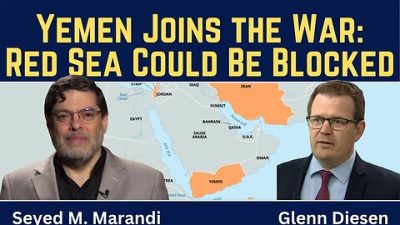
Yemen joins the war – Red Sea could be blocked next – Saudi regime at risk
or go to
Aletho News Archives – Video-Images
From the Archives
A superpower and “the world’s sickest warrior state”
By Paul J. Balles | March 8, 2010
Living through five or six major wars has hardened me to what I thought were the extremes of inhuman cruelty and brutality.
Two things made those extremes almost bearable: the brutality always revealed – at least according to the media coverage – the viciousness of the enemy. It was therefore quite understandable when our “brave men and women” pulverized the enemy.
Films of Japanese torturing captive Americans somehow justified holding Japanese Americans in internment camps during World War II; and only a small percentage of Americans found the bombing of Hiroshima and Nagasaki unreasonably vengeful at best, at worst, depraved.
The media giants in America portrayed the North Koreans as barbaric beasts with their captives, quite unlike their southern counterpoints – our allies during the Korean War. No one ever felt the need to explain how the South Koreans were a civilized breed while the North Koreans were absolute savages, at least according to the official line.
In Vietnam, our warriors justifiably (or so the media made us believe) dropped napalm on the North Vietnamese who had the gall to hide in villages and tunnels to ravage our invaders. At least it was accepted practice until some rogue photojournalist filmed a young girl screaming down a Vietnamese road in flames. … continue
Blog Roll
 Aletho News
- Russian tanker approaches Cuba despite US oil blockade
- Marandi: Yemen joins the war – Red Sea could be blocked next – Saudi regime at risk
- Pro-Palestinian French member of European Parliament denied entry to Canada
- Pakistan to Host US-Iran Talks
- How Indonesia’s tilt toward the US left it stranded in the Strait of Hormuz
- US has no choice but to retreat from Iranian borders: Top commander
- Iran Retaliation Strikes Chemical Plant Near Dimona
- AWACS’ Destruction is a Major Loss for US Military – Ex-DoW Analyst
- Israel’s Iran Strategy Uses US Military & Gulf States as Its Pawns
- Iran: Trump wanted regime change, now just begging for Hormuz to open
- If Americans Knew
- Israeli police block Catholic cardinal from entering Church of the Holy Sepulchre on Palm Sunday
- Israel is assassinating journalists again, more than any other nation, anywhere, ever – Not a ceasefire Day 170
- Over 300 US service members wounded, majority have brain injuries – Not a ceasefire Day 169
- Researchers at Human Rights Watch Resign Over Blocked Report on Palestinian Refugee Return
- Jewish Groups Are Backing a War Americans Don’t Want
- Eric Fingerhut Thinks He’s the President of the Jews
- Top Jewish Philanthropists, Rabbis Urge Israeli President to Take Action Against ‘Jewish Extremists’
- Don’t Be Fooled. Zionist Leaders Have Always Wanted to Control Southern Lebanon
- Israel’s widespread use of torture is a core element of its genocide against the Palestinian people
- In Israel’s War on Iran, Many Middle East US Bases Rendered “All But Uninhabitable”
- No Tricks Zone
- German Science Blog Accuses PIK Climate Institute Of Hallucinating Climate Tipping Points
- Devastating Assessment Of Comirnaty Vaccine By Former Senior Pfizer Europe Toxicologist
- New Study: CO2 Is ‘Effectively Negligible’ As An Explanatory Climate Change Factor Since 2000
- Former Pfizer Toxicologist Dr. Helmut Sterz Tells Bundestag Hearing Pfizer Vaccine Should Have Never Been Approved
- Energy Expert: Germany’s Nuclear Phaseout Was A “500 Billion Euro Mistake”
- New Research: South Australia’s Mid-Holocene Sea Surface Temperatures Were 4°C Warmer Than Today
- Storing Green Energy To Last Germany 10 Days Would Require A 60-Million Tonne Battery
- New Studies: UK Sea Levels Were 4 Meters Higher Than Today During The Mid-Holocene
- Destructive Green New Deal: German Energy And Metal Group Warns Of Drastic Crisis
- New Study Documents A 20-Year Pause In Arctic Sea Ice Decline – Driven By Internal Variability
 Aletho News