So-called conspiracy theories abound, especially among those who attack others by calling them conspiracy theorists. There are official conspiracy theories, such as the government-approved stories about 9/11, the 7/7 bombings, the Manchester Arena attack and so on. There are also unofficial conspiracy theories, such as the expressed opinion of Richard D. Hall that the Manchester arena attack was a staged simulation without injury or death but performed and reported as if real.
We have to use the term “conspiracy theory” advisedly because, as we shall see, conspiracy theory, as we understand the term, doesn’t exist. “Conspiracy theory” is really just an opinion that the state does not wish anyone to either hold or express.
The BBC’s special disinformation and social media correspondent, Marianna Spring, calls Richard D. Hall a “disaster troll.” She claims that Hall lives in a “dark world” and that his “warped views” have “led him to the doors of terror victims.” Spring says that Hall is spreading “obscene lies” and that he is “at the centre of a network of conspiracies.”
Spring is utilising the propaganda technique of “othering.” She is trying to cast Hall as subhuman—a troll—and, by association, applies the same dehumanising propaganda label to anyone who shares Hall’s concerns about the official account of the alleged Manchester Arena bombing.
“Othering” is an applied psychological strategy widely used by authoritarian political regimes. Prominent historical examples include the “othering” of Jews in Germany during the 1930s by Nazi propagandists.
Spring’s alleged “journalism” should be considered within the context of efforts by the government and its propagandists to censor any and all dissenting opinion. Spring evidences her intent, and the purpose of her “Disastater Troll” pseudo-investigation, when she rounds off one of her attack pieces on Hall by saying:
What matters is that he’s created a conspiracy world that causes real world harm.
Demonstrably, Hall has done nothing of the sort. It is Spring herself who has created a propaganda world that really does augur “real world harm.”
It seems that “what matters” to Spring and the BBC is that they provide whatever narrative support they possibly can to promote the UK government’s proposed Online Safety legislation. To that end, Spring is producing anti-democratic propaganda and disinformation.
Like the RESTRICT Act in the US and the EU’s Digital Services Act, the UK’s Online Safety Bill proposes to exploit alleged threats and legitimate safety concerns for the purpose of censoring free speech and freedom of expression.
The influential international law firm Reynolds Porter Chamberlain (RPC) describes what it calls the “unintended” consequences of the Online Safety Bill. Suggesting that the proposed legislation is poorly conceived, RPC notes:
Almost every online platform that allows user-to-user engagement or search will be caught by the OSB [Online Safety Bill]. [. . .] [E]very online platform or communication channel around the globe which “targets the UK” will have to comply with an increasingly onerous array of obligations.
Not only is censorship legislation emerging in the UK, it is also appearing simultaneously across the world. Since RPC is a pillar of the Establishment, it is not going to point out the UK’s dictatorship. But for the law firm to imagine that this coordinated, global censorship agenda is simply poorly conceived or all merely “coincidence” or the result of “mistakes,” as it claims elsewhere, isn’t credible.
RPC continues its informed legal opinion:
Individuals could be subject to ongoing surveillance ordered by a regulator and operated on an indiscriminate basis [. . .]. This in turn could expose journalistic sources and endanger individuals investigating politically sensitive issues. Index on Censorship warns that “unless the government reconsiders or parliament pushes back, these powers are set on a collision course with independent media and journalism as well as marginalised groups.”
The UK state’s intention is to censor “independent media and journalism” and silence “marginalised groups.” The “collision course” RPC speaks of is an inevitable consequence of the legislation, if it stands.
None of this “matters” to Spring or the BBC, however, as they relentlessly push for greater state surveillance and censorship. Instead, the destruction of our supposedly open and free democracy is wholeheartedly endorsed by Spring and her employers.
Spring is acting as a state propagandist, and her attack upon Hall is both nonsensical and politically motivated. The propaganda she is producing cannot be described as “journalism.”
Richard D. Hall’s Opinion
Richard D. Hall is an investigative journalist and author who has provided the evidence which strongly suggests that the official narrative of the Manchester Arena bombing cannot be true. In Hall’s opinion, the Manchester Arena bombing was a simulated false flag event that did not result in injury or death.
As reported by the BBC, false flag terrorism has been used extensively by governments. For example, Operation Gladio ran for more than four decades in Europe. In this operation, NATO-aligned intelligence agencies, including the British State’s MI6, worked with far right terrorist groups, murdering European civilians and blaming the atrocities upon far left groups. The geopolitical objective was to demonise the Soviet Union and, through the strategy of tension, convince populations to accept greater authoritarian state controls for their own “safety.”
Spring’s BBC propaganda deploys a similar strategy of tension. It seems her objective is to convince the wider public that Hall’s evidence-based opinion presents some sort of threat. Once convinced, the population may be willing to accept state control of public opinion—in the form of the Online Safety Bill—in order to “stay safe.”
The irony is that it is Spring’s Disaster Troll narrative that presents the real threat. A government that can censor all criticism is a very dangerous beast indeed.
The Operation Gladio false flag terror campaign used real bombs and bullets to kill people. The European mainstream media (MSM) then published the disinformation needed to shift the blame onto the pre-designated perpetrators.
A simulated or “hoaxed” false flag is different: the attack itself is staged, and few people, if any, are injured. The MSM’s role in such a hoax is to shore up the official account and deny the evidence that exposes it as a simulation or hoax.
For example, the evidence indicates that the so-called Boston bombing was a simulated terror event that used crisis actors to create the false impression of a terrorist attack. Yet the MSM reported the official narrative without examining any of this evidence.
“Disinformation” is information deliberately intended to deceive. If a global news corporation reports on an event without any investigation or reporting of the evidence, it is reasonable to consider this reporting “disinformation.” The intent is obviously to deceive the public into believing that the balance of evidence supports the report. It is “deliberately” misleading.
In 2016, the Associated Press (AP) reported that a deadly car bomb in Iraq “hit a popular fruit and vegetable market near a school in the northwestern Hurriyah area, killing at least 10 people and wounding 34.” The story was then picked up by MSM outlets across the world and reported to an unsuspecting public as if it were true.
In reality, it was a simulated terror attack. By omitting the clear evidence which proved this to be the case, AP and all the other MSM outlets that ran the same story were spreading disinformation.
Companies that specialise in providing crisis actors and crisis simulations, such as CrisisCast in the UK, create fake terror attacks and other crisis events for training purposes. They specialise in fake injuries—called Casualty Simulation (CAS SIM)—to provide the military and emergency services with highly realistic training environments.
CrisisCast explains that its crisis actors “undergo psychological training with our own in-house behavioural psychologist.” Promoting the effectiveness of its crisis actors, the company adds:
We provide professionally trained amputee actors and film grade makeup specialists. CrisisCast amputee actors have many years of experience in hyper-real, immersive training for key learning outputs and are regularly featured in film and television productions.
Of course, Spring’s faux “Disaster Troll” investigation does not inform the audience of the British state’s historical involvement in the use of false flag terrorism. She makes no mention of the fact that crisis actors exist or that false flag terror attacks, including simulations, are a relatively common propaganda tool. Thus, by omission, Spring deceives her audience into believing that Hall’s opinion is beyond the realm of possibility.
Spring broadcast comments she made to a BBC producer prior to doorstepping Hall at his market stall:
We’ve asked him lots whether he [Hall] wants to do an interview with us and he hasn’t taken us up on that offer. So this is my chance to put our questions to him face-to-face.
“Hasn’t taken us up on our offer” gives the impression that Hall hadn’t responded. In truth, Hall responded at length and flatly declined the BBC’s “offer.” He made it clear that he did not wish to speak to Spring or anyone else from the BBC. He even explained why:
The BBC has shown itself over many years to be duplicitous and its raison d’etre is not about reporting the truth. If you mention me or my work I insist that each time I or my work is referred to that you mention and display a prominent link to the following website URL, so that people can find the whole work and judge the whole work for themselves.
The fact that Hall felt the need to elaborate reveals an important distinction between the BBC’s output and his own work. The BBC expects its audience to trust whatever it says, but Hall knows, from experience, that they shouldn’t. Hence his request that the BBC feature a link to his website, at least affording the BBC audience the opportunity to consider the evidence he offers and “judge the whole work for themselves.”
When Spring interviewed him against his wishes, Hall politely suggested she should read his book—Manchester: The Night of the Bang. To which Spring replied:
I have looked at your book and in there are claims about the victims that are contrary to the evidence.
It is unclear if Spring has really “read” Hall’s book, but at least she mentions the importance of evidence. She goes on to say that Hall’s book contains “a series of false claims that would be laughably ridiculous if they weren’t so offensive and harmful.”
Considering that Spring thinks Hall’s evidence is “laughably ridiculous,” She makes an inexplicable allegation:
I think it is interesting that he [Hall] doesn’t want to talk to us. [. . .] I think for his fans and followers who turn up at his stall they might think — Oh! don’t you want to present your evidence? We wanted to give him that opportunity but he has decided that he doesn’t want to.
Why does Spring think she and the BBC need to give Hall this “opportunity”?
Richard D. Hall has spent years investigating the Manchester Arena bang. He has produced numerous videos and written and published an incredibly detailed analysis of the evidence. His book is available to anyone who wants to read it. Short of delivering his evidence door-to-door by hand, it is unclear what more Hall could have done to “present” the evidence to the public.
All of Hall’s “laughably ridiculous” evidence is in the public domain. Spring is supposedly an investigative journalist. She has produced endless reams of content alleging that Hall’s opinion is “contrary to the evidence” and causes harm. She’s a leading BBC correspondent, for heaven’s sake. She doesn’t need Richard D. Hall to present his evidence to her audience for her.
So, then, why hasn’t the BBC simply demonstrated to its listeners, readers and viewers precisely how Hall’s opinion is “contrary to the evidence?” Surely, if Spring is correct, nothing could be easier than to show that the evidence he has offered is “laughably ridiculous,” right?
Yet, despite running hours and hours of Disaster Troll podcasts, Panorama investigations, radio shows, numerous articles, appearances on media debates and widely reported news items, the BBC and Marianna Spring haven’t mentioned a single scrap of the evidence Hall has already “presented” to the public.
Indeed, the entirety of Hall’s “evidence” is absent from their “investigative reporting.” Why? Given the BBC’s serious allegations against Hall and Spring’s questioning of the veracity of his work, their refusal to explore his evidence makes no sense whatsoever. What is the BBC’s problem?
If Hall’s opinion is correct and his evidence solid and if he succeeds in bringing that evidence to wider public attention, the social and political implications would be immense. Under such circumstances, it is logical to expect the entire apparatus of the British state would be aligned against this single journalist. Thus, given that the BBC has devoted considerable resources to demonising and discrediting Hall, we can conclude it is trying to suppress his work.
But in attacking Hall, the state risks popularising his research. Marianna Spring confronts this problem:
Hall’s face and name are front and centre of his operation. [. . .] Hall has gone all in on trying to build a brand in his own name. [. . .] While making this podcast we gave careful thought to how much exposure we should give to conspiracy theories and the people who spread them. [. . .] But with Hall [. . .] it is impossible to report on the harm he’s causing without inevitably drawing some attention to him.
In other words, Spring is attempting to censor Hall’s work by using the “othering” technique of labelling him a conspiracy theorist “troll.” Her seeming intention is to discredit Hall while simultaneously discouraging her audience from looking at the evidence he has presented to the public. Spring apparently expects her audience to believe whatever claims she makes without examining any of the evidence for themselves.
Propagandists like Spring carefully construct the language they use to maximise the psychological impact of “othering,” thereby discrediting their target and heightening her audience’s fears and suspicions without cause. In Spring’s words, Richard D. Hall is not an investigative journalist and author who runs his own small business but is, instead, at the centre of an “operation.”
According to Spring, Hall’s willingness to publish his work in his own name doesn’t suggest he is honest but, rather, that he has “has gone all in” to build a “brand.” Without offering anything to substantiate her own opinion, Spring asserts that Hall is causing “harm” by expressing his honest opinion.
State propagandists face a conundrum. They realize that Hall’s scepticism of some state narratives is indicative of widely held beliefs. They want us to believe that so-called “conspiracy theory” has suddenly emerged as a social problem that “undermines democracy” and that something must be done to address this reportedly “new” problem. Of course, this assertion isn’t true, but the propagandists clearly hope that scapegoating Richard D. Hall will convince the UK public otherwise.
What is relatively new is the vast increase in the number of people who can now reach a relatively large audience. Hitherto, the distribution of information was reserved for a coterie of government officials, academia, and the MSM. In recent years, the internet has democratised the sharing of information, and the state’s response is to shut it down.
People are using the internet to discuss a whole range of issues that the state would prefer they did not. As a result, governments across the world are racing to seize control of the open and free exchange of information. The state and its propagandists are genuinely “undermining democracy.”
In order to justify their censorship agenda, propagandists need to construct compelling stories to convince people to abandon democratic principles by giving up their right to free speech and expression. Attacking Hall is one such compelling story, but it is a calculated risk.
Spring’s “Disaster Troll” propaganda is carefully crafted to evoke a fearful emotional response to the spectre of a dangerous bogeyman. The hope being, by casting Hall as a subhuman, the BBC audience will believe the spun narrative and accept the need for legislation to “protect” them, without ever considering any of the evidence Hall has presented.
The target is not Hall himself but rather the uncontrolled freedom of information. Destroying Richard D. Hall’s reputation and livelihood is just a means to an end for propagandists like Marianna Spring.
What Is Conspiracy Theory?
Joining in the drive towards state censorship is a gaggle of allegedly reformed “conspiracy theorists.” Neil Sanders and Brent Lee are among them. They seek to enlighten whoever they consider deluded. Apparently, Sanders and Lee are doing this “enlightening” by cooperating with Spring and the BBC.
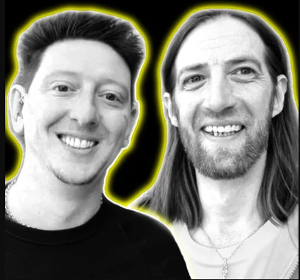
Neil Sanders and Brent Lee
Whether Sanders and Lee are useful BBC dupes isn’t known. To be fair to both, they consistently highlight the need for so-called conspiracy theorists to stick to the evidence, avoid making baseless claims and refrain from alarmist hyperbole. This is good advice in general and doesn’t apply only to people they label “conspiracy theorists.” Some BBC “journalists” and government spokespersons should take note.
It is also important to look for and, wherever possible, consider all of the evidence. So it is unfortunate that Sanders’ and Lee’s critiques so frequently ignore huge swaths of evidence as they construct the strawman arguments they then proceed to knock down. In Sanders’ case, at least, this oversight is surprising, considering that he is a diligent researcher.
Sanders and Lee hope to divert people away from going down so-called “rabbit holes.” They appear to be doing this by diving headlong down the biggest rabbit hole of all: the “conspiracy theory” hole. They seem to think “conspiracy theories”—as defined by the likes of Spring—exist, when, in fact, they do not.
In actuality, a conspiracy theory is nothing more than an opinion held by one or more people about a possible conspiracy. A conspiracy theory commonly questions state narratives and policies.
But that’s it! There isn’t any other legitimate definition of “conspiracy theory.”
Like any opinion, so-called conspiracy theories can be wild and wacky, poorly informed—or outright wrong. They can also be well-informed, evidence-based and accurate. As opinions go, they are exactly the same as all other opinions.
Anyone can have an opinion, including a belief in one “conspiracy theory” or another. These opinions, when voiced, can be abhorrent to others. They can condone or even promote racism, hate, violence, and so on. But expressed opinions can also do good, by exposing crimes, uncovering malfeasance by public servants, provide invaluable social and political insights, or encourage people to cooperate and live in peace.
By advocating that “conspiracy theories” should be censored, the government, the BBC and Spring are trying to regulate and censor all opinions that question the state. Spring apparently holds “democratic ideals” in contempt. She seems to want an authoritarian regime—perhaps something akin to fascism or communism—established in the UK.
Certain well-funded psychologists and propagandists insist that there is some sort of maladaptive psychology underpinning what they call “conspiratorial thinking.” As Spring asserts:
Conspiracies are rooted in someone’s belief system. They become someone’s identity and their entire community, making them even more difficult to reject.
This is anti-scientific, statistically ignorant dross. There isn’t a shred of evidence that alleged “conspiracy theorists” form any kind of identifiable group or that they are particularly prone to any psychological disorders.
In the US, political scientists Joseph Uscinski and Joseph Parent undertook what may have been the largest-ever research survey of individuals they called “conspiracy theorists.” It was published in 2014.
They found, for one thing, that there was no identifiable type of person who could be labelled a “conspiracy theorist.”
They also discovered that women were just as likely as men to be “conspiracy theorists.” And, unsurprisingly, given their lived experiences in the US, black and Hispanic people represented the ethnic groups statistically most likely to question the US government.
Another point they found out: People who questioned state narratives largely worked outside academia but almost one-quarter of them (23%) were university-educated.
The survey detected no unifying political ideology. Liberals and conservatives, socialists and capitalists, Democrats and Republicans were all equally likely to question official accounts of events. Uscinski and Parent did find, however, that non-partisan “independents” had a slightly increased propensity to do so, though the leanings didn’t amount to a clear ideological predisposition.
It is widely reported by the MSM that “dangerous” conspiracy theories are on the rise. So, more recently, Uscinki et al. wrote a paper examining the alleged growth of these so-called conspiracy theories in the West. Warning that their research “should not be used to make claims about, or to excuse the behavior of, political elites who weaponize conspiracy theories,” they reported:
In no instance do we observe systematic evidence for an increase in conspiracism, however operationalized. [. . .] Questions regarding the growth in conspiracy theory beliefs are important, with far-reaching normative and empirical implications for our understanding of political culture, free speech, Internet regulation, and radicalization. That we observe little supportive evidence for such growth, however operationalized, should give scholars, journalists, and policymakers pause.
To be clear: anyone, from any ethnic, political or social group, may have opinions that question official government narratives or policy decisions. These opinions are widely held across society. There is not, nor has there ever been, any such thing as a “conspiracy theorist community.” Nor is there any plausible evidence to indicate that a higher percentage of the population question the state today than in any previous generation.
It is possible that the first time “conspiracy theories” emerged as a pejorative term was somewhere around the 1870s. In the Journal of Mental Science vol. 16, it was noted:
The theory of Dr Sankey as to the manner in which these injuries to the chest occurred in asylums deserved our careful attention. It was at least more plausible that the conspiracy theory of Mr Charles Beade.
In his magnum opus—The Open Society And Its Enemies—the philosopher Karl Popper discussed what he called the prevailing conspiracy theory of society. Popper highlighted the point that, while human society is capable of affecting significant change, it does not follow that every major development results from human action.
He criticised, what he considered to be, the widely held “conspiracy theory of society”:
The view that an explanation of a social phenomenon consists in the discovery of the men or groups who are interested in the occurrence of this phenomenon (sometimes it is a hidden interest which has first to be revealed), and who have planned and conspired to bring it about [. . .] – sinister pressure groups whose wickedness is responsible for all the evils we suffer from – such as the Learned Elders of Zion, or the monopolists, or the capitalists, or the imperialists.
Then he added:
I do not wish to imply that conspiracies never happen. On the contrary, they are typical social phenomena. [. . .] The conspiracy theory of society cannot be true because it amounts to the assertion that all results, even those which at first sight do not seem to be intended by anybody, are the intended results of the actions of people who are interested in these results.
Popper’s concern about the prevalence of the “conspiracy theory of society” would seem reasonable were it not for the fact there was no evidence to support it. His contention that a large body of people believe that every event occurs due to “the actions of people who are interested in these results” was not evidence-based.
Popper himself acknowledged that conspiracies are relatively common, yet he did not count himself among those who, he alleged, held to the “conspiracy theory of society.” The proportion of events Popper believed to be the “intended results of the actions of people who are interested in these results” remains unclear.
Building on Popper’s work, in 1964 American historian Richard Hofstadter suggested that people’s rejection of official state narratives was not founded in their appreciation of evidence but was instead rooted in some sort of psychological derangement. Admitting that he had no particular experience in psychology, Hofstadter implied, without cause, that these people were unhinged idiots.
Hofstadter created the conceptual model of the “conspiracy theorist” that we are familiar with today:
I call it the paranoid style simply because no other word adequately evokes the sense of heated exaggeration, suspiciousness, and conspiratorial fantasy that I have in mind. [. . .] Of course, there are highbrow, lowbrow, and middlebrow paranoids, as there are likely to be in any political tendency. But respectable paranoid literature not only starts from certain moral commitments that can indeed be justified but also carefully and all but obsessively accumulates “evidence.” [. . .] The difference between this “evidence” and that commonly employed by others is that it seems less a means of entering into normal political controversy than a means of warding off the profane intrusion of the secular political world.
In addition, Hofstadter introduced an important component of the “conspiracy theorist” propaganda label. Although gathering and analysing “evidence” had traditionally been part of the critical thinking process, he newly presented the concept of “acceptable” evidence. That is, it is only “evidence” if it falls within the official Overton Window and supports the prevailing political and social paradigms.
Recently, UNESCO initiated its comically misnamed “Think Before Sharing” campaign. In its broad attack upon everyone who questions government policies, UNESCO listed six things that conspiracy theories have in common. Among them: “supporting evidence.”
UNESCO opines that the evidence offered by people who question official narratives is not evidence, because it is “forced to fit the theory.” This nonsensical drivel by UNESCO builds upon Hofstadter’s nonsensical drivel and is no more than a further attempt to redefine “evidence.”
Evidence is simply:
That which tends to prove or disprove something; ground for belief; proof.
Evidence cannot be “forced” to “fit” any “theory.” Evidence is independent of a theory. If it supports a theory, it lends credibility to the theory. If it contradicts a theory, it is provides reason to doubt that theory.
Theories are constructed from all the available evidence. This is achieved by evaluating both the supporting and the contradicting evidence. This is the only way known to humanity for discovering facts and, ultimately—with any luck, the truth.
The illogical practice of simply ruling out evidence that doesn’t fit the narrative is what enables defenders of the Establishment to dismiss everything that contradicts their opinions. They can apply the conspiracy theory label as a device to ignore evidence and thus maintain preferred narratives and “opinions” that are not evidence-based.
In 1967, the term “conspiracy theorist” was first weaponised as a propaganda tool by the CIA with the distribution of an internal dispatch called Document 1035-960: Concerning Criticism of the Warren Report. Constructed from an amalgam of Popper’s “conspiracy theory of society” and Hotstadter’s “paranoid style,” the CIA memo outlined many of the techniques used today by propagandists like Spring.
The modern term “conspiracy theorist” is a manufactured label created by those who seek to defend the Establishment by marginalising and silencing its critics. The “conspiracy theory” label has absolutely no foundation in either evidence or fact.
There is no evidence to substantiate the view that people called “conspiracy theorists” think random events never occur. There is no evidence that they are psychologically flawed or that they even exist as a distinct social group. The mythical conspiracy “movement” is a fabrication created by those who wish to stop people from expressing anti-state opinions. “Conspiracy theory,” then, is a nothing but a propaganda construct.
Spring’s Ludicrous but Dangerous Attack on Hall
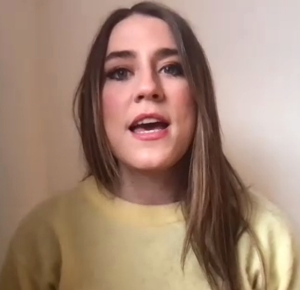
Marianna Spring
As we have already discussed, the lengths that the BBC and Marianna Spring have gone to in order to formulate an argument to ridicule Richard D. Hall’s opinion, without ever mentioning any of the evidence he has presented to substantiate his views, is quite remarkable. By omitting vital evidence, Spring must ask her audience to trust her when she alleges that Hall has “caused harm.” Not discussing the evidence clearly “matters” to the BBC and Marianna Spring.
With the considerable resources of the BBC behind her, Spring’s attack on Hall is formed entirely from accusation, insinuation, assumption, assertions and implied guilt by association. She has led her readers, viewers and listeners to wrongly believe that there is no basis for Hall’s questions and concerns. She has produced the epitome of disinformation.
We can summarise Spring’s published “investigation” of Richard D. Hall as follows:
— Spring is of the opinion that the Manchester Arena attack occurred exactly as described to her by the UK government. Richard D. Hall does not hold that opinion.
— Spring is satisfied that whatever the state told her about that attack is unquestionably true. Richard D. Hall isn’t satisfied with the state’s account of the attack.
— Spring has not investigated the Manchester Arena event at all. Hall has conducted a thorough investigation.
— Based on her own uninformed opinion, Spring has accused Hall of having the wrong informed opinion. She alleges—again, without evidence—that Hall’s informed opinion causes harm. She thereby implies that he should be prosecuted for expressing what she considers to be his wrongly informed opinion. Of course, Hall disagrees with her entire premise and conclusion.
Ordinarily, this disagreement between an advocate of the state’s story and a critic of the state’s story wouldn’t constitute any kind of news story. The fact that two people have different opinions is hardly newsworthy.
But, set within the context of a global effort to censor the wrong opinions by labelling the whole lot of them “conspiracy theories,” it is a very newsworthy story, and we need to pay close attention to it.
Spring is entitled to her opinion, but that is all it is—an opinion. She has not presented sufficient evidence—and has ignored far too much evidence—to substantiate her opinion. The fact that she creates content for the BBC does not lend her opinion any additional credibility. Many might feel, if anything, that her relationship with the BBC undermines her expressed opinion.
In light of the potential implications of the Online Harms Act, which makes a publisher responsible for the actions of individual members of its audience, Spring appears to be creating a false narrative in order to place Hall—and anyone else who expresses the wrong opinion—within its envisaged scope. She alleges, without any evidence, that Hall’s publications on the matter constitute “extreme material” and that he “leads his own community.”
Some people are interested in Hall’s opinions, others not. But he no more leads a “community” than Spring does. There is no RichPlanet [Hall’s website] “community,” just as there isn’t a Marianna Spring-led “BBC community.”
Hall expresses opinions that some people object to. In a free and open society, they have every right to their contrary opinion.
If we wish to maintain such an open-minded society, which Spring evidently doesn’t, we cannot allow the state to create a law which makes publishers responsible for the acts of everyone who has ever encountered their published opinions. Yet this is precisely what the Online Safety Bill portends.
Spring and the BBC appear to want us all to live in a tightly controlled, oppressive society. A society where, unless a journalist works for the BBC or another approved MSM outlet, he or she dare not publish any opinion that questions the state, lest some stranger comes along and cites that published opinion as the reason they caused harm.
We already have laws to stop publishers inciting violent or other crimes. We do not need any more. This OSB is censorship legislation, nothing more.
On behalf of the UK state, Spring and the BBC are endeavouring to construct the rationale for a society that outlaws perfectly legitimate opinion. People like Sanders and Lee have, unwittingly or not, been roped into the BBC’s corral.
While she presumably earns a fair living producing propaganda and disinformation for the BBC, Spring has repeatedly questioned the right of anyone else to support themselves doing independent research and analysis, writing and speaking.
She asks:
Mr Hall is only making a living from his theories, rather than making huge profits – why keep going?
Spring is at a loss to understand what motivates someone to follow the evidence and uncover the truth. Whether or not Hall is successful in his efforts to expose the truth is not the issue. Making the effort to find the truth appears to be what “matters” most to Richard D. Hall—a devotion Spring seems unable to fathom.
She apparently resents the fact that Mr Hall is able to earn a living from his work. There are enough people who are sufficiently interested in his opinion and, having encountered the evidence he has presented to substantiate it, are willing to support his efforts. Presumably, Spring believes that no one, other than MSM “journalists,” should be allowed to earn a living as a journalist.
Spring tells us that Martin and Eve Hibbert, who say they were victims of the alleged Manchester Arena terrorist attack, are suing Hall for defamation and harassment. Of course, this is their right. We await the outcome of the trial, if there is one.
Not surprisingly, Spring is eager to pre-emptively comment on the outcome of that possible trial:
He’s [Hall has] created a conspiracy world that causes real world harm.
Has he? Says who? Marianna Spring and the BBC? This smacks of trial by the media.
Let’s hope the court isn’t swayed by her opinion if the case comes to trial. Regrettably, the extent of the BBC’s accusations against Hall and the scale of their broadcast and published misrepresentation of his work makes the chances of him receiving a fair trial seem unlikely.
Spring has ratcheted up her allegations by stating that Hall’s investigation into the supposed Manchester victims constitutes “hate.” Yet, just as throughout her Disaster Troll pseudo-investigation, she continues to offer nothing to justify her opinion.
In her most recent Disaster Troll commentary, Spring outlines the purpose of her disinformation:
This is just one case, and taking legal action is expensive. It’s beyond the means of many people. Some think, it shouldn’t just be left to individuals to resort to the courts. [. . .] But legislation like this would not be straight forward. After all social media sites and policy makers have been grappling with hate and online disinformation for some time. The UK is currently in the process of introducing new legislation. The Online Safety Bill [. . .] will mean the social media sites have to make commitments to protecting users to the online regulator, Ofcom.
Spring reports that the Hibberts wish to hold Richard D. Hall to account. She says that they want to get him to admit that what they experienced was real.
As Hall does not currently believe that they sustained their injuries in the alleged bombing, he could presumably be convinced to change his mind only if the Hibberts can prove they were injured as a direct result of a bomb blast detonated by Salman Abedi in the foyer of the Manchester Arena on the evening of May 22, 2017.
If the dispute goes to trial, for any subsequent ruling to be just, the court will need to examine and consider all of the evidence Mr Hall has presented to substantiate his opinion. Any refusal to do so will render the legal decision meaningless.
If there is no exploration of Hall’s evidence; if it is simply dismissed out of hand by labelling it a “conspiracy theory”; if it is just asserted that the official narrative is true and cannot be questioned, then, regardless of whatever position Hall may be forced to accept, why would he, or anyone else who is familiar with the evidence he has uncovered, have any genuine cause to believe either the official account or the legitimacy of the verdict?