The FBI won’t name other social media companies it pays
By Cindy Harper | Reclaim The Net | December 25, 2022
The Federal Bureau of Investigation (FBI) has refused to indicate the exact social networks it has paid. This follows recent revelations verifying that the bureau paid Twitter at least $3.5 million.
Representatives for the FBI already spoke to Fox News and said that the substantial Twitter payment was a “reimbursement” for expenses and costs of its requests. The representatives indicated that the payment was to compensate the social media platform for acting in accordance with legal “requests.”
The FBI stated that the group had compensated social media platforms beyond Twitter as well. The news network requested the names of other companies that the FBI had paid for these purposes. The federal agency, however, was not willing to provide further information regarding the matter. The representatives did say, though, that the FBI has to offer reimbursement for any and all reasonable expenses that tie in with the acquisition of information that is essential for legal processes.
“While we are not able to speak to specific payments, the government is required to provide reimbursement for reasonable expenses directly related to searching for, assembling, reproducing, or otherwise providing the information responsive to the legal process. This requirement is set by federal law and the courts are the final arbiters of what is reasonable compensation,” the FBI officials said.
Christmas in Palestine: Then and Now
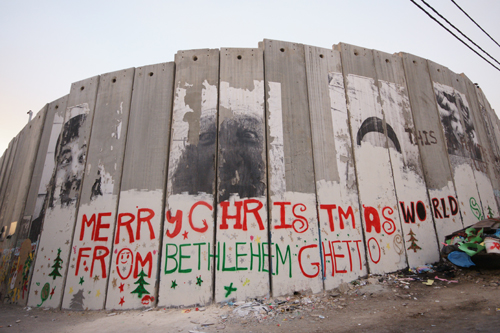
By James J. Zogby | The Jordan Times | December 28, 2021
The Christmas story as it is told in the West contains timeless elements that have shaped our culture in significant ways. As we tell it, year in and year out, the story conveys to those who listen powerful themes evoking deep feelings.
It is, at its core, the tale of a helpless child born as an outcast whose role became transformative in human history.
Unrecognised at first, the importance of this birth was initially only understood by the lowly of the earth — “the shepherds of the field”. Later “kings from the East” came to pay homage bringing gifts. Their appearance raised the ire of local rulers forcing the baby’s parents to flee in order to save the life of their newborn child.
I want to take a moment to reflect on this story, seeing contemporary realities through its prism.
Two thousand years ago, Palestine was subject to a harsh occupation, much as it is today. In some ways, though, the conditions back then allowed the residents of occupied Palestine greater mobility than the current inhabitants of that land.
As we are told in the bible story, Joseph had to take his expectant wife from Nazareth, where they were living, to Bethlehem, their ancestral village, in order to fulfill a requirement imposed by the authorities to register as part of a nationwide census. Today, of course, all of that would be impossible.
In the first place, no Palestinian originally from Bethlehem could ever have moved to Nazareth. The occupation and closure of the West Bank makes that sort of movement impossible. Furthermore, Israeli law prohibits an Arab from Nazareth from marrying a Bethlehemite and bringing their spouse across the Green Line to live with them in Israel.
Additionally, while thousands of Palestinians in Bethlehem, both Muslim and Christian, can see Jerusalem from their homes, they cannot go to the Holy City to pray. And Arab Christians from Jerusalem, likewise, cannot easily go the Christmas services in Bethlehem to pray alongside their co-religionists at the seasonal event.
Bethlehem of old was overcrowded and under siege. Today, as well, the city itself is being strangled, hemmed in by settlements that have confiscated the town’s ancestral lands to make way for a 30-foot barrier wall and massive Jewish-only housing colonies that cut the Arab residents off from nearby Jerusalem. The constriction of growth and the lack of economic opportunity have forced Bethlehemites to flee in search of jobs and freedom, with tens of thousands of them and their descendants now living in the US and the Americas. They can return to visit Bethlehem with difficulty but are not permitted by the occupation authorities to take up permanent residency in the town of their origins.
While the kings of old, we are told, were able to travel from afar bearing gifts to honour the newborn child, one can only imagine the difficulties they would encounter today dealing with Israeli soldiers at the Allenby Bridge. Having personally endured their interrogations, I can hear the kings answering hours of questions, such as “Where are you from?” “Who are your parents, grandparents?” “Why are you here?” Who are you visiting?” “What are these gifts for?” The questioning is reminiscent of Herod’s interrogation of the biblical visitors. In today’s Israel/Palestine, it is doubtful whether those hapless “kings from the East” would have gained entry.
That Joseph, Mary and Jesus were able to flee to Egypt to escape Herod’s vengeful wrath was possible back then. Today, that option is unlikely. The barrier/wall that encapsulates the West Bank, the hundreds of checkpoints, and the closure of Gaza would make such a life-saving flight impossible.
Finally, as I reflect on the birth of Jesus, I cannot help but think of the almost 400 babies who will be born, this very day, to Palestinian parents in the West Bank and Gaza. I think as well of the number of those who will perish at birth because of inadequate medical services. (Some babies have been put at fatal risk at checkpoints, because Israeli soldiers would not permit their delivering mothers to pass.) And I think of Mary, 2000 years ago, and am grateful that, despite all she endured, there were no checkpoints blocking her way to Bethlehem.
Our traditions tell us that Mary’s joy at the birth of her son was tempered by foresight. She knew her child would grow and endure great suffering. Likewise, the joy that Palestinian parents experience when greeting new life these days must, no doubt, be accompanied by similar concerns. Not only must they question how they will provide for their new child, but they must face down their fears of bringing up a son or daughter under occupation, with its dangers and hardships. From the violence, pressures and humiliation encountered daily by Palestinians in the West Bank at the hands of the Israeli military and settlers, to the grinding poverty and despair facing those trapped in Gaza, life under hostile foreign rule can drain joy out of even the most blessed events.
There is a traditional Christmas carol that asks the question “What child is this?” — the answer, of course, being “Jesus, the son of Mary”. But given the universal message conveyed by the Christmas story we also understand that the child is for us, a reminder of our responsibility to care for the helpless and the unrecognised. And so, when we think of the vulnerable children born today not only in Palestine, but those born anywhere where life is at risk (including here at home), we are not to ask: “What child is this?” — because we know that they are ours — to acknowledge and protect, like the shepherds and kings, enabling all of these children to grow, receive health care, and be educated so that they can grow and help change our world. Because all these children are ours, we have a responsibility to protect and care for them.
James J. Zogby is a president of Arab American Institute.
Copyright © James J. Zogby, The Jordan Times, 2022
Merry Christmas
eugyppius: a plague chronicle | December 24, 2022
In 2020 it was the lockdowners who destroyed Christmas, and in 2021 it was the vaccinators. All of it was for nothing. Sweden, which never locked down, has lower cumulative excess mortality than Germany, which locked down longer and harder than almost any other country in Europe. Nor did anyone even try to pretend that excluding the unvaccinated from public life would reduce the incidence of infection or death. The vaccinators claim that their elixirs reduce the rate of severe outcome from SARS-2 infection, but mass vaccination has coincided with increases in all-cause mortality and higher rates of transmission everywhere that it has been tried.
In the end, the lockdowners and the vaccinators lost. Alas, it wasn’t our alleged rights or democratic principles that saved us, but only Omicron, which crashed the pandemicists’ mythology faster than the Federal Republic of Germany could get their coercive proposals before the Bundestag. Today, the German Corona regime is all but dead, and even China has sworn off Zero Covid.
While I like to think that we may have played a small part in defeating the hysterical clowns and their virus circus, their greatest opponent was always reality. They stirred up enough panic and utopian hope to impede ordinary social life for the better part of two years, but they were too wrong about too many things to survive as any kind of durable political movement.
While they’ve done incalculable damage and changed many aspects of our lives and our societies forever, it feels really, really great to have Christmas back again.
Merry Christmas to all of my readers.
Prosecution stays COVID-related charges against Canadian Christian pastor Artur Pawlowski
By Anthony Murdoch | Life Site News | December 22, 2022
CALGARY, Alberta — Alberta-based Christian pastor Artur Pawlowski has been vindicated in court yet again after the COVID-related charges levied against him in 2020 for feeding the homeless and attending a pro-freedom rally were stayed by Crown prosecutors.
The Democracy Fund (TDF) said in a press release Tuesday that it “is pleased” with the decision by the Crown to drop Pawlowski’s charges, noting that if convicted he could have faced a fine of up to $100,000.
“Pastor Artur Pawlowski was charged for attending gatherings (feeding the homeless with his church and attending a Walk for Freedom protest), allegedly in breach of the COVID-19 pandemic-related gathering restrictions for ‘private social gatherings’ in December 2020,” said the TDF.
“The charges have been outstanding for the past 23 months, and Pastor Pawlowski has endured a total of five trial days.”
Pawlowski’s lawyer, Sarah Miller, noted that the Crown deciding to stay the charges is an “incredibly late resolution in Mr. Pawlowski’s favor.”
“The entire prosecution was flawed, from a weak case to extremely late disclosure, to inconsistent witnesses, to unreasonable delays,” said Miller.
“It will be a relief for Mr. Pawlowski once the stay expires and this prosecution is no longer hanging over him.”
The TDF noted that on December 16, right before Pawlowski’s trial was about to recommence, “the Crown decided to stay the prosecution.”
“This represents another victory for Pastor Pawlowski in his fight to defend religious freedom and civil liberties in Canada,” TDF celebrated.
The Crown’s decision to stay its charges against Pawlowski comes shortly after Alberta’s new premier, Danielle Smith, promised she would look at pardoning Christian pastors who were jailed for violating so-called COVID policies while Jason Kenney was premier.
Since becoming premier, Smith has been clear that she did not agree with how far COVID rules went under Kenney, noting specifically her displeasure with vaccine passports and mandates, as well as restrictions placed on places of worship.
Under Kenney’s leadership, Christian pastors Pawlowski, Tim Stephens, and James Coates were all jailed for flouting COVID health dictates.
This is not the first legal victory Pawlowski has had in relation to his fight against COVID mandates.
In July, Pawlowski had contempt charges against him and his brother Dawid nullified by an appeals court.
The Pawlowskis made international headlines after they were arrested in a highway takedown in May 2021 for holding worship services contrary to Alberta’s COVID rules, and ultimately spent three nights in jail before being released on bail.
In total, since the start of the COVID “crisis,” Artur Pawlowski has been jailed no less than five times. After his last arrest, he was initially denied bail when a provincial judge ruled he was a threat to “public safety.” This happened despite his alleged “crimes” being completely non-violent in nature.
Due to the severe backlash against Kenney for allowing what many felt was Christian persecution under the guise of public health policy, Smith has indicated that her government will never introduce draconian COVID mandates on Albertans again, including those targeting churches.
FBI Infiltration of Big Tech put US on fast track to Neofascist Technocratic Autocracy
By Ekaterina Blinova – Samizdat – 24.12.2022
The recently released sixth and seventh batches of the Twitter Files shed light on the FBI’s instructions to censor specific tweets and accounts for “violating” the company’s terms of service.
The internal documents also lifted the veil of secrecy on how the bureau launched an apparent damage control operation prior to the publication of the New York Post’s bombshell concerning Hunter Biden’s laptop.
On top of that, an email by Twitter’s former Deputy General Counsel Jim Baker revealed that the platform collected a staggering $3 million from the bureau at least on one occasion.
“My opinion – based on the evidence available – is the FBI did this because the FBI is fundamentally corrupt,” Jason Goodman, a US investigative journalist and founder of Crowdsource the Truth, told Sputnik. “Failure to investigate Hunter Biden based on the evidence on the laptop is bad enough. Evidence being revealed now by Twitter’s new management suggests the FBI actively worked to protect Hunter Biden from public scrutiny and hide their own lack of enforcement action. Broad knowledge of the evidence on Hunter Biden’s laptop would certainly have led to public outcry at least for further investigation. We have never witnessed such a brazen criminal act by a US government agency so nakedly exposed. For the past two years, any individual who even debates these facts online loses access to the major social media platforms.”
The Twitter Files exposure apparently hit the FBI’s raw nerve as the bureau issued an official statement claiming that “the men and women of the FBI” were doing their job, while “conspiracy theorists and others are feeding the American public misinformation with the sole purpose of attempting to discredit the agency.”
While commenting on the bureau’s statement, one prominent legal expert remarked that it is not clear “what is more chilling: the menacing role played by the FBI in Twitter’s censorship program or its mendacious response to the disclosure of that role.”
How It All Began
Make no mistake, this started long ago, noted Goodman: in fact, the groundwork was laid after September 11, 2001, with the passage of the Patriot Act.
“Prior to that, Americans were protected from undue search and seizure by the fourth amendment of the constitution,” the journalist explained. “In the newfound ‘war on terror’ the Patriot Act was sold to the American public as increased security. But it introduced several unconstitutional new laws and new law enforcement tools that removed our constitutional protection. One such tool was the National Security Letter (NSL).”
Goodman has drawn attention to the fact that prior to the advent of NSLs, investigators needed to get a warrant from a judge and had to have probable cause supported by some kind of evidence before they could lawfully investigate a person or their property, including electronic accounts, like email or Twitter.
However, with the Patriot Act, the FBI could simply write up an NSL under the suspicion that an individual was a national security threat and launch a probe into them, according to the journalist. “No warrant or evidence was required,” Goodman added. Moreover, the bureau could also reject the requests of those asking for proof on the basis that the evidence would risk revealing sources and methods and was also a national security threat, according to the journalist.
“These newfound powers were quickly and consistently abused,” Goodman continued. “Former FBI General Counsel Valerie Caproni was admonished by both the House and the Senate for gross abuses of NSLs and other unconstitutional acts.”
However, it appears that the US Congress’ attempts to rein in the bureau have not borne any fruit and the FBI has only grown more brazen in the years since.
“By alleging that the FBI was engaged in a counterintelligence investigation, they no longer had to adhere to the same rules or obey the constitutional protections that existed previously,” said Goodman. “This is exactly how the FBI began their shambolic investigation into the so-called Russian collusion with Trump.”
Hunter’s and Hillary’s Emails & APT28
Meanwhile, the story of the FBI’s attempts to shield Hunter Biden evokes strong memories of the Democratic National Committee (DNC) leak amid the Hillary Clinton presidential campaign. The disclosure of Hunter’s bombshell emails was downplayed and smeared as a “hack” and “disinformation” by “Russian APT28” just as the 2016 DNC email leak was.
According to Shellenberger, the bureau took Hunter Biden’s “laptop from hell” from Mac Isaac, a Delaware repair shop owner, on December 9, 2019. By August 2020, Isaac still had not heard back from the FBI, even though he had found alleged evidence of criminal activity on the device. So Isaac contacted lawyer Rudy Giuliani, “who was under FBI surveillance at the time,” and provided him with a copy of the laptop’s hard disk. In early October, Guiliani gave the disk to the New York Post.
On October 13, 2020, a day before the Post planned to release its bombshell, “FBI Special Agent Elvis Chan sent ten documents to Twitter’s then-Head of Site Integrity Yoel Roth through Teleporter, a one-way communications channel from the FBI to Twitter,” Shellinberger revealed citing internal Twitter documents. On October 14, 2020, the bombshell article saw the light of day but soon was banned and suppressed by major Silicon Valley giants, including Twitter.
But that is not all. According to Yoel Roth’s testimony, during all of 2020, the FBI warned him about the forthcoming Russian “hack and leak” operation “involving Hunter Biden” prior to the 2020 election. The bureau particularly referred to APT28, claiming that it’s a group of Russian hackers linked to Moscow’s intelligence services. In one of his recent interviews, Roth said that when Hunter’s emails finally emerged “it set off every single one of my finely tuned APT28 hack-and-leap campaign alarm bells.”
The “laptop from hell” posed a challenge to Hunter’s father, the Democratic presidential hopeful Joe Biden, as the bombshell suggested that the latter not only knew but also participated in his son’s murky financial schemes.
Similarly, the 2016 DNC leak threatened the Clinton campaign, demonstrating, in particular, that the party’s primaries were rigged in favor of Hillary. It was Clinton campaign lawyer Michael Sussmann who requested cyber security firm CrowdStrike’s help in investigating the alleged DNC hack.
CrowdStrike “detected” and “attributed” the alleged breach of DNC servers to Russia during the 2016 election cycle. The company claimed that the perpetrators were “two Russian espionage groups”: Cozy Bear (APT29) and Fancy Bear (APT28), suggesting with a “low” to “medium”-level of confidence that they may be affiliated with Russia’s Federal Security Service (FSB) and Main Intelligence Department (GRU), respectively. Moscow denied the claim as absurd.
For its part, the FBI relied on CrowdStrike’s conclusions, although the bureau has never physically examined the DNC servers and has only been provided with their “digital copies” instead.
According to Veteran Intelligence Professionals for Sanity (VIPS), a group of former US intelligence officers working within the CIA, the FBI and the NSA, there had been no hack: it was an inside job. Moreover, CrowdStrike President Shawn Henry admitted under oath in 2017 that the company does not have “concrete evidence” that the alleged “Russian hackers” exfiltrated any data from the servers.
The story of the DNC “hack” played a big role in smearing Russia and linking Donald Trump to Moscow. The Dems claimed that Moscow “hacked” the emails to help Trump win the 2016 elections. In summer 2016, the FBI launched Operation Crossfire Hurricane on the pretext of alleged “collusion” between Trump and the Kremlin. However, Special Counsel Robert Mueller investigation found no evidence to back the allegations, which were rubbished by Moscow from the very start as nonsensical.
“The true origin of the Russiagate hoax has not yet been revealed but it is becoming increasingly clear that top executives in the FBI have been involved in an ongoing coverup for a very long time,” said Goodman. “APT28 is likely a concoction of Dmitri Alperovitch’s Crowdstrike, which itself is an obvious FBI cutout. Crowdstrike co-founder Shawn Henry left the FBI to create the company, then shortly thereafter received $150 million from Google. Sounds fair enough but think about that for a moment. Google cannot easily hand $150 million to the FBI, but they can invest whatever they want in a startup tech company.”
It is not clear if the US public understands the legal games the FBI can play, according to the journalist.
“The FBI’s infiltration of Twitter is the tippy top of tip of the upper edge of the tip of the iceberg,” Goodman remarked. “We need to understand just how many private companies and non-profit organizations are secretly working with or for the incredibly dangerous and subversive US ‘Intelligence’ community. This hidden-in-plain-sight network of government agencies, non-profit organizations, and private industry is what is spoken of as the ‘Deep State’.”
Operation Mockingbird and Church Committee
The FBI’s attempts to control and infiltrate the work of social media giants resembles nothing so much as the US intelligence Operation Mockingbird which was first mentioned by CIA Director William Colby during his briefing to the Justice Department on December 31, 1974.
Later, the issue was touched upon by Watergate reporter Carl Bernstein in Rolling Stone in 1977. Bernstein revealed how numerous journalists, including Pulitzer-prize winners, wrote fake stories and disseminated propaganda at the CIA’s behest during the Cold War. The scale of the CIA’s huge international media network was described by one CIA official as ranging from Radio Free Europe to a third‐string guy in Quito who could get something in the local paper. According to the US mainstream press, the program has never been officially discontinued.
“It is essentially an extension of Operation Mockingbird,” Goodman said about the US intelligence community’s collusion with Big Tech. “The revelations of the Church Committee showed us the CIA’s intention. There is no reason to believe they would change. We see these ‘retired’ intelligence people on the news all the time. It should be obvious to anyone looking at the evidence if the FBI or any law enforcement or intelligence agency is doing anything other than tracking dangerous criminals on Twitter, they should not be doing it.”
The Church Committee was a US Senate select committee that investigated abuses by the CIA, NSA, FBI, and IRS in 1975.
Presently, it’s not a matter of the FBI getting away with what it has done (they already have), this is “an inflection point like none other in American history,” according to the journalist.
“We are in a dangerous moment,” Goodman warned. “The United States has become a neofascist technocratic autocracy. The new Congress must take bold steps to shut this down immediately and begin the journey back to the constitutional republic that was established in 1776 or it will only get worse (…) Another thing the Patriot Act created that most people are not aware of is the National Cyber Investigative Joint Task Force. It is an interagency intelligence-sharing operation overseen by the FBI. Critics say it eliminates the compartmentalization that is in place to prevent the types of abuses that are commonplace today. Without oversight, who knows what these interagency operations are capable of.”
DHS won’t hand over full details about “anti-disinformation” practices
By Didi Rankovic | Reclaim The Net | December 23, 2022
The Department of Homeland Security (DHS) is not giving the US Congress information necessary to put in place proper oversight of the agency regarding its “counter disinformation” activities, which have recently been gaining an ever more prominent role.
That is one of the key points conveyed in a letter to DHS head Alejandro Mayorkas by senators Charles Grassley and Josh Hawley.
We obtained a copy of the letter for you here.
Grassley, who is ranking member of the Senate Committee on the Judiciary, and Hawley first addressed the DHS expressing serious concerns in June by asking for answers to ten questions, but say that the response they received the same month fell short by either ignoring or downplaying those concerns, and in general, failing to actually answer any of the questions.
Instead, they received documents that were either already publicly available, or heavily redacted, as was the case with a batch of 500 pages of information.
“Based on our review of this material, it appears that many of the redactions are applied to pre-decisional and deliberative process material,” Grassley’s and Hawley’s December letter states.
The senators are taking issue with the plans the DHS is not hiding, and that is increasingly deeper involvement in “monitoring and mediating MDM” – that is, whatever’s labeled as misinformation, disinformation, and malinformation on social media. “Monitoring and mediating” here reportedly also means “directly engaging with social media companies to flag MDM.”
And the agency wants to cover a broad range of topics, such as Covid, race, all the way to the sudden US withdrawal from Afghanistan.
The Disinformation Governance Board, slammed in the letter as a “seriously misguided effort,” may have been bad enough, but the senators are concerned that these plans now go far beyond that “effort.”
The DHS is accused of ignoring not only the outright questions, but also the fundamentals of the US political system, where executive, legislative and judicial branches have “the separate and co-equal character.”
Therefore, the agency cannot get away with trying to work around requests from Congress members, the senators say.
Grassley and Hawley, however, seem determined not to let the DHS off the hook easily as it attempts to evade clarifying its role and intentions in this realm, and note that their letter was not sent as a Freedom of Information request, nor under DHS’ own procedures, based on which the DHS would be able to respond with redacted documents.
And they continue to await “full and complete” answers.
Canada redefined economic impact as “violence” to justify freezing protesters’ bank accounts
By Didi Rankovic | Reclaim The Net | December 20, 2022
Last February, Canadian authorities used whatever means they thought they could get away with to put an end to a peaceful political protest against Covid restrictions led by truckers, known as the Freedom Convoy.
Now, in trying to justify the government’s behavior, senior officials appear to be trying to “redefine” the meaning of (physical) violence, to make sure their actions fit within that definition.
The most controversial ones undertaken to stifle the protest – such as deploying riot police and freezing participants’ bank accounts – were done by evoking the Emergencies Act, in itself, a move controversial enough to warrant a commission inquiry.
The Public Order Emergency Commission (POEC) has issued a summary of a panel interview of four senior officials from the Prime Minister’s Office (PMO), while Prime Minister Justin Trudeau and several others were interviewed by the commission separately.
We obtained a copy of the summary for you here.
The summary shows that the panel identified areas that they “hoped the Commission could comment on;” one of them being threats to the economic security of Canada, “which carry with them a threat of tangible physical harm and violence.”
One of the PMO officials, the prime minister’s senior adviser on strategist and policy issues, Jeremy Broadhurst, is cited as saying that economic disruptions “can cause real, direct and personal harms in people’s lives.”
The truckers, whose work and livelihoods were first disrupted by Covid vaccine mandates and other restrictions, and then by the government seizing their bank accounts, would no doubt agree – but they had no government to protect them in this matter.
Instead, the government appears to have focused on protecting itself from political dissent back in February, and continues to do so today, as Broadhurst suggested that a “threat” to jobs, free movement of goods, etc. (caused by protests) is a threat “impossible to separate from the threat of violence, including physical violence.”
The question of what passes off as violence these days in Canada is important because in order to justify using martial law like the Emergencies Act, the government must meet the requirement of facing “an unmanageable threat to Canada,” as defined by the country’s Security Intelligence Services (CSIS) Act Section 2. (The Emergencies Act relies on the CSIS Act definition.)
In a previous exchange between a Freedom Convoy lawyer and the Ontario Provincial Police (OPP) commissioner, however, the former stated, “To your knowledge, there was no credible threat to the security of Canada as defined under Section 2 of the CSIS Act” – to which the commissioner replied, “That would be my understanding, yes.”
Quantas Pilot Alan Dana interview by Dr. Wolfgang Wodarg and Viviane Fischer
Stiftung Corona Ausschuss | December 12, 2022
Hier geht’s zum deutschen Stream:
https://odysee.com/@Corona-Ausschuss:3/Sitzung-134-Alan-Dana-Odysee-final:b
Guest:
Captain Alan Dana – former Jetstar pilot for Quantas
Dana was fired for refusing to get vaccinated.
He holds British, U.S. and Australian commercial airline transport licenses, including an FAA Accident Prevention.
Alan Dana has 35 years (23,000 flight hours) of flying experience and is a member of the Global Aviation Advocacy (GAA) Coalition.
Content:
About the court case of 50 Quantas employees fired for mandates.
About the increased sick leave that airlines are currently dealing with
and that many pilots are suffering from effects that could be linked to mRNA injections.
Evidence of pilots becoming increasingly unable to work while flying and about a
List of events that made the news. However, we can only speculate about the reasons….
Learn more about the committee:
https://corona-investigative-committee.com
Anonymous hints to the Corona Investigative Committee:
https://securewhistleblower.com
The Committees English Telegram channel:
https://t.me/CoronaInvestigativeCommittee
FBI accuses ‘conspiracy theorists’ of weaponizing Twitter Files
RT | December 22, 2022
Correspondence between the FBI and senior Twitter staff, revealing how the agency pressured the platform to suppress certain narratives, is not evidence of wrongdoing, the Bureau said in a statement on Wednesday, adding that “conspiracy theorists” are presenting their activities in a nefarious light.
The files turned over to journalists by Twitter CEO Elon Musk “show nothing more than examples of our tradition, longstanding and ongoing federal government and private sector engagements,” the FBI statement claims.
“It is unfortunate that conspiracy theorists and others are feeding the American public misinformation with the sole purpose of attempting to discredit the agency,” the statement concludes, reminding its critics that “the men and women of the FBI work every day to protect the American public.”
Messages appearing to show FBI agents pressuring Twitter staff to classify legitimate stories such as the Hunter Biden laptop revelations as foreign influence operations are, according to the Bureau merely examples of the FBI “provid[ing] critical information to the private sector in an effort to allow them to protect themselves and their customers.” Internal communications among platform employees suggest otherwise.
In communications published as part of the Twitter Files, staff repeatedly point out there is “no evidence” to substantiate FBI claims of foreign disinformation and express discomfort with the bureau’s meddling. Twitter’s former policy director observed a “sustained (if uncoordinated) effort by the IC [intelligence community]” to push Twitter to share more information against its own policies, while the FBI ultimately paid Twitter more than $3.5 million in taxpayer dollars to prioritize its censorship requests.
The White House has thus far refused to comment on the Twitter Files, referring reporters to the FBI, and the media establishment have largely ignored them. However, former Republican congressman Ron Paul argued they are proof the FBI colluded with Twitter to deprive Americans of their constitutional right to free speech.
A lawsuit filed earlier this year by the attorneys general of Missouri and Louisiana alleges that the FBI was not alone, and that officials from no fewer than 12 government agencies met weekly with representatives of Twitter, Facebook, and other Big Tech firms to decide which narratives and users to censor, with topics ranging from alleged election interference to Covid-19.
What Is Crimson Contagion?
By Jeffrey A. Tucker | Brownstone Institute | December 22, 2022
The lockdowns of March 2020 shocked the American people and most public health agencies, not to mention infectious disease doctors. The idea of school shutdowns, business closures, plus mandatory remote work and other restrictions have previously seemed inconceivable. It was especially remarkable to have such an “all-of-government” response to a virus that we already knew posed a threat mainly to the elderly and infirm.
Issues like public-health precedent, American legal tradition, and medical knowledge about dealing with respiratory viruses, not to mention natural immunity and collateral damage of lockdowns, were all thrown out the window.
Robert Kennedy, Jr.’s book The Real Anthony Fauci mentions a tabletop exercise called Crimson Contagion that ran from January through August, 2019. I had not previously heard of it and I found the mention remarkable, simply because it proves that not everyone was shocked by lockdowns. They were not part of official planning documents of either the CDC or WHO but they were clearly in the plans of someone.
I’ve only followed up on this report in light of growing focus on the person who coordinated Crimson Contagion: Robert Kadlec, who served in the Trump administration as Assistant Secretary of Health and Human Services, Preparedness and Response. It was he who also ran the Covid response between HHS and the Department of Homeland Security.
Kadec’s lifetime government service (and, yes, he is said to be CIA) extends all the way back to the G.W. Bush administration when in 2007 he took the position of Special Assistant to the President and Senior Director for Biodefense Policy on the Homeland Security Council from 2007 to 2009. The very notion of lockdowns originated in that administration.
The 2019 tabletop exercise involved a huge number of public-sector agencies across all states plus many private-sector associations. It postulated a disease scenario in which a respiratory virus begins in China and spreads around the world by air travelers. It is first detected in Chicago. The World Health Organization declares a pandemic 47 days later. But then it was too late: 110 million Americans became sick, with 7.7 million hospitalized and 586,000 dead.
The conclusion of the exercise was that government was not well prepared for a pandemic and urged more planning and fast acting to implement what we now call lockdowns as we await a vaccine. Presumably, the vaccine then fixes everything.
The public knew nothing of this exercise until March 19, 2020, when the New York Times reported on it for the first time. This was one day following the detailed release of stay-at-home orders by the Cybersecurity and Infrastructure Security Agency. The next day, National Public Radio also ran a report on Crimson Contagion.
The Times reported:
The Crimson Contagion planning exercise run last year by the Department of Health and Human Services involved officials from 12 states and at least a dozen federal agencies. They included the Pentagon, the Department of Veterans Affairs and the National Security Council. Groups like the American Red Cross and American Nurses Association were invited to join, as were health insurance companies and major hospitals like the Mayo Clinic.
The war game-like exercise was overseen by Robert P. Kadlec, a former Air Force physician who has spent decades focused on biodefense issues. After stints on the Bush administration’s Homeland Security Council and the staff of the Senate Intelligence Committee, he was appointed assistant secretary of Health and Human Services for Preparedness and Response.
Also participating were former Trump administration officials Rex Tillerson (Secretary of State, 2017-2018) and John F. Kelly, who was White House chief of staff from 2017 to 2019. The NYT even ran a picture of the two of them at the event.
Here are some direct quotes from the October 2019 report of Crimson Contagion:
The exercise revealed several workforce protection challenges under conditions where medical countermeasures, such as the pandemic vaccine, antiviral medications, and personal protective equipment, are limited. To protect the public prior to vaccine distribution, public health officials issued guidance on the implementation of nonpharmaceutical interventions intended to slow the spread of the virus.
In keeping with non-pharmaceutical intervention recommendations, employers – including government entities – sought to practice social distancing by having a significant portion of their employees work remotely. Employers encountered cascading impacts associated with making, communicating, and implementing such work-distancing decisions.
At multiple levels of government, officials wrestled with identifying employees who are essential and those who are nonessential in the context of an incident forecasted to span many months. In addition, officials faced challenges in determining which employees could perform their duties remotely and hierarchical organizations, such as state and federal departments and agencies, were uncertain as to the process for determining and implementing remote-workforce decisions.
Also:
During the exercise, CDC recommended that states delay school openings for six weeks, a follow-up to the initial (pre-exercise) recommendation that states delay the opening of schools for two weeks if the disease is present in the area. Many local jurisdictions and school districts have the authority to decide to close schools (or keep schools open). This distributed approach to school closure decisions caused confusion centered on discrepancies between schools that remained open and those that closed. In addition, while school delays and dismissals may be necessary over the course of the pandemic response, state participants identified any continued school delays and dismissals as having serious cascading impacts that require a concerted public messaging campaign and government coordination. Multiple states realized that dismissing schools is much more complex than they previously appreciated.
The participating private sector organizations and businesses:
- Aetna
- Allegheny Health Network
- Amador Health Center
- American Hospital Association
- American Red Cross
- Association of Public Health Laboratories
- Association of State and Territorial Health Officials Carestream Health
- Council of State and Territorial Epidemiologists
- Ephraim McDowell/James B. Haggin Hospital
- Giant Eagle Pharmacy
- Grand Strand Health/HCA
- Health Information Sharing and Analysis Center Healthcare and Public Health Sector Coordinating Council Healthcare Ready
- International Safety Equipment Association
- Juvare
- Kidney Community Emergency Response Program
- Mayo Clinic
- Moldex-Metric Inc.
- National Alliance of State Pharmacy Associations National Association of County and City Health Officials
- National Community Pharmacists Association
- National Indian Health Board
- North Shore University Health System Patients’ Hospital
- RBC Limited
- San Mateo County Health – EMS Agency Seqirus Inc., USA
- Spectrum Health
- TriStar Skyline Medical Center
- University of Minnesota
This exercise took place entirely out of the public eye but had strangely prescient foretelling of events only 5 months later. Kadlec, who had organized the entire tabletop exercise, was also later the author of the U.S. Senate Committee on Health Education, Labor and Pensions report: An Analysis of the Origins of the COVID-19 Pandemic, which came out earlier this year.
Robert F. Kennedy, Jr., reports: “second only to his longtime crony and comrade in arms Anthony Fauci, Robert Kadlec played a historic leadership role in fomenting the contagious logic that infectious disease posed a national security threat requiring a militarized response.”
He is the signer of the report to HHS, in a letter dated December 9, 2019:
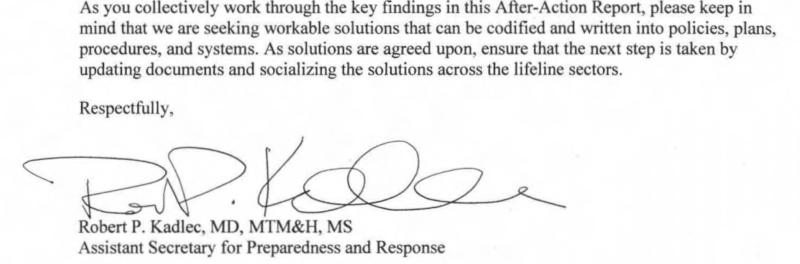
By the time of this letter, US intelligence already knew of the Wuhan virus. Four months later, US lockdowns began, starting with the March 8th cancellation of South-by-Southwest by the Austin, Texas mayor, and extending to the March 12th imposition of travel restrictions, the March 13 takeover by FEMA, and the March 16th press conference by Trump, Fauci, and Deborah Birx, which announced nationwide lockdowns.
The same day, Politico ran an article about another pandemic exercise from 2017 in which some incoming Trump officials participated, including Kelly and Tillerson. The article claims that such exercises are required by law. By the time of Covid lockdowns, they had both been pushed out, only to reemerge as key participants in Crimson Contagion along with most national-security and health-related agencies of the federal government.
The lockdowns – to which Trump agreed only reluctantly and were extended far past the point in which he believed they would control the virus – were the most ruinous of the administration. Trump’s pollsters for 2020 all agreed that these lockdowns created the conditions that drove him from office.
What does it all mean? Perhaps it is all just a series of coincidental data points, that what is called the worst pandemic in 100 years came only a few months after an elaborate multi-agency trial run of the same in which former high officials of the Trump administration participated. And perhaps the best person to run the Covid response also happened to be the very person who organized and managed the trial run in the previous season.
Many people will surely say there is nothing to see here. There is so much not to see these days.
Why was the FBI paying Twitter millions of dollars?
By Dan Frieth | Reclaim The Net | December 20, 2022
The latest batch of Twitter Files, released by independent journalist Michael Shellenberger on December 19, revealed that the FBI paid Twitter millions of dollars to process the bureau’s requests.
“I am happy to report we have collected $3,415,323 since October 2019!” wrote an employee at Twitter’s Safety, Content, & Law Enforcement (SCALE) team, in an email sent in February 2021.
“In 2019 SCALE instituted a reimbursement program for our legal process response from the FBI,” the email continued. “Prior to the start of the program, Twitter chose not to collect under this statutory right of reimbursement for the time spent processing requests from the FBI.”
The payout to Twitter, like many other things revealed through the Twitter files, is disturbing. However, Twitter’s “Guidelines for law enforcement” has a section titled “Cost reimbursement,” which states that “Twitter may seek reimbursement for costs associated with information produced pursuant to legal process and as permitted by law (e.g., under 18 U.S.C. §2706).”
The email suggests that the FBI’s reimbursement program for paying companies to process requests was there long before Twitter began accepting the payments. That means that other social media companies were also likely getting paid. What is not clear is which companies, how much the FBI has spent, and for how long it has been making the payments.
The amount spent to pay Twitter could be seen as bribing the company more than compensating it for the extra resources required to process the requests for information or simply buying information on users.
Featured Video

The American Retreat from Vietnam
or go to
Aletho News Archives – Video-Images
From the Archives
Secret document reveals plans for civil war in Lebanon, Israeli false flags, and invasion
By Randi Nord | Geopolitics Alert | April 5, 2019
Beirut – During his visit with US Secretary of State, Mike Pompeo, Lebanese President Michael Aoun reportedly received a US-Israeli document detailing plans for creating a civil war in Lebanon with covert false flag operations and possible Israeli invasion.
Although the source of the document is Israeli and created in partnership with Washington, no one knows who presented it to Aoun. The Lebanese TV station, Al-Jadeed, initially reported the document on Lebanese TV and a video on its website. Geopolitics Alert translated the report for this article. … continue
Blog Roll
 Aletho News
- ‘Distance yourselves from Israel’: IRGC urges US population to question govt policies
- America’s Greenland deal has a radioactive backstory
- The RAF Fairford ‘terror plot’: Unpacking escalation in the UK echo-chamber
- EU Council Advances Chat Control 2.0 Scanning Proposal
- Ex-Greek MEP files complaint against Israeli spyware firm over alleged Pegasus surveillance
- Troubling ideas throughout the Torah, Talmud, Mishneh Torah and Tanya
- ‘Grave, alarming’: Iran mission on Trump’s UNGA ‘annihilation’ threats
- Najaf airport to reopen to Iranian flights within 24 hours: Ambassador
- From ‘How Will This End For Iran’ to ‘When America Walks Away’: A tale of two Economist covers
- Tehran blasts ‘baseless’ speculation linking Iran to alleged bomb plot at UK air base
- If Americans Knew
- Ex-Biden officials are desperate for a Gaza scapegoat
- Israeli “settlers” Invade Al-Aqsa; Pour Boiling Water on 75-Year-Old
- Israel Has Kidnapped Another American Teenager
- US arms sales to Israel worth $21.6 billion in 20 months
- Three Palestinians Killed in Israeli Attacks on Gaza
- Revealed: German “Anti-Semitism Expert” Driving Crackdown on Palestine Solidarity is Former Israeli Spy
- Egypt’s Warning to Israel Before Oct 7
- Israel’s siege signals another cruel winter for 1.8 million Gazans – Daily Update
- Netanyahu Asked UAE Leader to Deny Report on Oct. 7 Warning in Secret Visit, Sources Say
- CNN Chief Int’l Correspondent Clarissa Ward on Journalists in Gaza
- No Tricks Zone
- New Study: Earth And Venus Surface Warmth Largely Explained By Convection And Lapse Rate, Not CO2 Or Radiation
- 2025 Nature Paper Claiming Worsening Global Drought Gets RETRACTED …Heavily Flawed
- New Study: ‘Global Drought Shows No Detectable Recent Acceleration Under Climate Warming’
- Economic Masterminds: German Socialists Suggest Taxing Productivity Gains Stemming From Using AI
- The South China Sea Has Not Been Cooperating With The Climate Change Narrative
- Energy Crisis: Germany Enters Heating Season With Historically Low Gas Reserve Fill Levels
- New Study: The Antarctic Ice Sheet Gained Mass From 2020-2024 Due To Staggering Snow And Ice Accumulation
- Study: Ocean Heating Rates From Thousands Of Years Ago ‘Dwarf’ Modern Ocean Heating Rates
- Climate Extremists Target, Attack Large-Scale Power Grid Infrastructure In Germany!
- New Study: Antarctic Ice Melt Has Contributed Less Than 1 Centimeter To Sea Level Rise In The Last 30 Years


