Israel detained 5,500 Palestinians in 2019
![Israeli police officers arrest a Palestinian youth Issawiya, Jerusalem, 4 January 2017 [Mahfouz Abu Turk/Apaimages]](https://i0.wp.com/www.middleeastmonitor.com/wp-content/uploads/2019/11/Issawiya-MU_JE_00-14-1.jpg?resize=1200%2C800&quality=85&strip=all&ssl=1)
Israeli police officers arrest a Palestinian youth in Issawiya, Jerusalem, 4 January 2017 [Mahfouz Abu Turk/Apaimages]
MEMO | December 31, 2019
Israeli occupation forces detained over 5,500 Palestinians from the occupied Palestinian territories in 2019, including 889 children and 128 girls and women, Quds Press reported rights groups saying yesterday.
According to the Palestinian Prisoners’ Commission, Palestinian Prisoners’ Club and Addameer for Human Rights, there are approximately 5,000 Palestinian prisoners being held in Israeli jails, including 40 girls and women, 200 children. Some 450 are under administrative detention.
The groups said that five Palestinian prisoners passed away while in detention this year, citing medical negligence and torture. They were named as: Faris Baroud, Awni Youses, Nassar Taqatqa, Bassam Al-Sayeh and Sami Abu-Dayyak. Israeli authorities withheld the bodies of four Palestinian prisoners.
During 2019, Israeli occupation forces issued 1,035 administrative detention orders, including four against women and four against children.
The rights groups said there are currently 700 prisoners who are in need of medical attention inside Israeli jails, including ten who suffer from cancer and more than 200 who have chronic diseases.
More than 50 prisoners went on hunger strike in protest against the policies of the Israeli prison services, as well as against the policy of administrative detention.
“Israeli occupation authorities violate all the rules of international and humanitarian laws, and reinforce their flagrant violations through the judicial system,” the rights groups said.
They called for local, regional and international bodies to put pressure on the Israeli occupation in order to stop its violations of Palestinian prisoners.
Palestinian minor prisoners in Israel jails tortured, humiliated, NGO reveals

MEMO | December 30, 2019
The Palestinian Prisoners’ Commission (PPC) has documented witnesses of Palestinian minor prisoners inside Israeli jails stating that they had been tortured and humiliated when they were arrested and during their investigations, Safa Press Agency reported.
Minor prisoner, Abdul-Min’em Al-Natsha, 17, revealed that Israeli undercover forces kidnapped him from the streets of Shu’fat Refugee Camp along with Usama Taha, 16.
Both boys disclosed that they were taken to an investigation centre and spent four hours being investigated. They were handcuffed, insulted and beaten.
Al-Natsha noted that members of the Israeli army unit, Nahkshon, beat him more than one time on his way to attend the court sessions.
“They beat me just because I spoke with my mother during one of the court sessions,” Al-Natsha added.
Meanwhile, Taha explained that the officers of the Nahkshon unit unleashed the police dog at him on his way to the court.
Another boy, Motasem Sheikha, 17, described his kidnapping by Israeli undercover forces while walking in the streets of Shu’fat Refugee Camp.
He added that he spent 30 days being investigated in Al-Moskobiyeh Detention Centre, where he was tortured after he was incarcerated in a room with no monitoring cameras.
Abdul-Rahman Abu-Laila, 17, was also kidnapped by Israeli undercover forces from his workplace in the city of Akka, Israel.
According to the PPC, Abu-Laila was locked up in Petah-Tikva Detention Centre for ten days. He spent each day handcuffed in an isolated cell.
Raed Rashid, a 16-year-old Palestinian boy from the West Bank of Jenin, told that the Israeli occupation forces broke down the main door of his house at night, broke into his room and arrested him while he was sleeping.
“When they saw my mother screaming as they were aiming their guns at me, they beat me harshly in front of her,” he told the PPC.
Rashid revealed that he was imprisoned in Al-Jalama Detention Centre, while blindfolded and handcuffed, for around 10 hours.
The boys Sheikha, Al-Natsha and Taha are being detained in Al-Damoun Prison and the others, Rashid and Abu-Laila, are being held in Meggido Prison.
Facebook Blocks State-run Radio Pakistan’s Live Streaming for Highlighting Kashmir Issue
Sputnik – December 30, 2019
For four months, the Pakistani government has been accusing Twitter of suspending hundreds of accounts of Pakistanis for raising issue related to Indian-administered part of Kashmir. The communication blockade entered its 148th day in Kashmir since the revocation of the special status of Jammu and Kashmir by Modi’s government.
Pakistan’s government has criticised the American social media giant Facebook for blocking the live streaming of news bulletins run by state-run Radio Pakistan, terming it a violation of basic human rights.
Special Assistant on Information and Broadcasting Ministry Firdous Ashiq Awan said that government will “make efforts for the restoration of the live streaming of Radio Pakistan’s news on Facebook”.
The minister said every time the state-run radio service tries to highlight “human rights violations” in Kashmir on social media platforms, “the accounts are suspended”.Earlier in the day, Radio Pakistan said its live streaming service of news bulletins was blocked for highlighting “Indian atrocities in Kashmir”.
The news coverage exposing “continued atrocities, curfew and military lockdown” led to the blockage, the statement read.
Radio Pakistan has also shared a screenshot message reportedly sent by Facebook in which the American firm claimed that “your post goes against our Community Standards on dangerous individuals and organisations”.
A huge number of Pakistani nationals have been venting their ire on social media since the Indian parliament revoked the decades-old temporary special status of Jammu and Kashmir State on 5 August and bifurcated it later into two federally-administered Union Territories.
A number of accounts of Pakistani journalists, activists and even some of government officials were suspended in August, triggering outrage among the people.
The Kashmir region has been a bone of contention for India and Pakistan. Both the nuclear-armed neighbours claim Kashmir in full but rule only part of the region.
UK accused of “crimes against humanity” for not allowing people to return to Chagos islands
MercoPress | December 28, 2019
The UK has been accused of committing “crimes against humanity” for refusing to allow people to return to their former homes on the Chagos Islands, despite a ruling earlier this year by the United Nation’s highest court.
Describing Britain’s behavior as stubborn and shameful, the prime minister of Mauritius, Pravind Jugnauth, told the BBC that he was exploring the possibility of bringing charges of crimes against humanity against individual British officials at the International Criminal Court (ICC).
“It is a violation of the basic principle of human rights. I fail to understand why Britain, this government, is being so stubborn,” said Mr Jugnauth.
Elderly Chagossians, living in Mauritius, have echoed that criticism and accused Britain of deliberately dragging its heels on the issue in the hope that the community will simply die out.
Earlier this year, Mauritius won a major victory against Britain when the International Court of Justice (ICJ) in The Hague ruled – in an advisory opinion – that the Chagos Islands should be handed over to Mauritius in order to complete its “decolonization.”
The United Nations General Assembly then voted to give Britain a six-month deadline to begin that process. Britain has steadfastly refused to comply.
It is half a century since Britain took control of the Chagos Islands from its then colony, Mauritius, and evicted the entire population of more than 1,000 people in order to make way for an American military base – part of a secret deal negotiated behind Mauritius’s back as it was seeking to secure independence from the UK.
“Britain has been professing, for years, respect for the rule of law, respect for international law… but it is a pity the UK does not act fairly and reasonably and in accordance with international law on the issue of the Chagos archipelago,” said Mr Jugnauth.
Philippe Sands, a lawyer representing the Mauritian government, said: “Britain is on the edge of finding itself as a pariah state.
”We now have a situation where Chagossians – a deported population, want to go back and have a right to go back. And the UK is preventing them from going back.
“Question – is that a crime against humanity? My response is that, arguably, it is.”
Britain continues to insist that the ICJ ruling is wrong. But it has apologized for its past treatment of the Chagossians and promised to hand the islands over to Mauritius when they are no longer needed for security purposes.
In a statement, Foreign & Commonwealth Office (FCO) told the BBC: “The defense facilities on the British Indian Ocean Territory help protect people in Britain and around the world from terrorist threats and piracy.
”We stand by our commitment to cede sovereignty of the territory to Mauritius when it’s no longer required for defense purposes.“
The FCO said Britain had pledged more than £40m to improve the livelihoods of Chagossians living in Mauritius, the Seychelles and the UK.
The UK has also begun to take small groups of Chagossians back to the archipelago for brief ”heritage“ visits. But in Mauritius, those tours have been condemned as a crude attempt to ”divide and rule“ the Chagos community.
”I boycott those trips. The British are trying to buy our silence. That’s why we say our dignity is not for sale,“ said Olivier Bancoult, who heads the Chagos Refugees Group.
In a graveyard in the Mauritian capital, Port Louis, the graves of several Chagossians are marked with headstones mourning their failure to return to the islands.
”I fear my wish will not come true before I die – to see my motherland again,“ reads the script beside the grave of Mr Bancoult’s mother, Marie Rita Elysee Bancoult.
”Every day, one by one, we’re dying. I believe the British are waiting for us to die so there will be no one to claim the islands,“ said Liseby Elyse, 66, who was 20 when she left the archipelago.
”We’re like birds flying over the ocean, and we have nowhere to land. We must keep flying until we die,” said 81-year-old Samynaden Rosemond
New Year’s swap: Dozens head home as Ukraine & breakaway Donbass conduct ‘all for all’ prisoner exchange
RT | December 29, 2019
Kiev is exchanging dozens of prisoners with the self-proclaimed Donetsk and Lugansk republics in the first such effort in two years. The swap was given a boost at the recent Normandy Four talks in Paris.
The self-declared Donetsk People’s Republic has handed over 51 people to Kiev, while receiving 61 of their followers. The Lugansk region returned 25 and took in 63 prisoners; nine people held by Kiev refused to partake in the exchange.
The office of Ukrainian President Volodymyr Zelensky confirmed that Kiev had received a total of 76 people from Donetsk and Lugansk.
Donetsk’s authorities said their list could be longer, as some people asked to be repatriated shortly before the exchange.
The swap, carried out under an “all for all” formula, was the first since a similar humanitarian effort in December 2017.
The prisoner exchange was overseen by officials from the International Committee of the Red Cross (ICRC) and the Organization for Security and Cooperation in Europe (OSCE). No ceasefire violations were recorded on the frontier.
It also comes weeks after leaders from France, Germany, Russia, and Ukraine agreed at a peace summit in Paris to push for a full ceasefire and a new troop disengagement by March 2020.
The summit was the first of its kind in three years, also marking the first time Russian President Vladimir Putin talked reconciliation with his Ukrainian counterpart, Volodymyr Zelensky.
Before the summit, Kiev and the rebel forces ordered a partial pullback in several areas of the frontline. However, several Ukrainian nationalist organizations stood up against Zelensky’s policies, even deploying their own armed groups to prevent the government from withdrawing their soldiers.
Bahrain’s Top Opposition Leader: Six Years of Persecution for Adopting Democracy and Reconciliation
By Sondoss Al Asaad | American Herald tribune | December 28, 2019
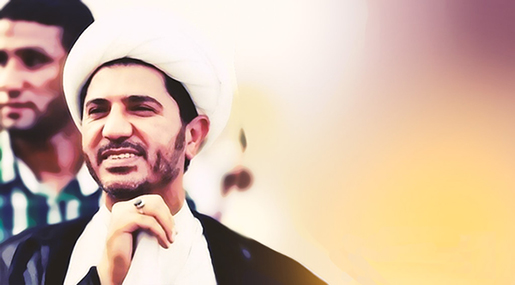
Although freedom of expression is a ratified constitutional right; yet it constitutes a heinous crime and poses an existential threat to the Manama regime. For instance, Sheikh Ali Salman, Secretary-General of the now-outlawed Al-Wefaq National Islamic Society, Bahrain’s top opposition political group, who has been held in custody since 2015, enters on Dec 28th his sixth year of arbitrary detention.
Indeed, the persecution of this peaceful leader is related to his commitment to peaceful protest and anti-corruption, marginalization and monopolization of power policies.
Al-Wefaq top leader had been initially serving a 4 years sentence on charges of ”insulting the interior ministry and inciting hatred.”
Prior to the current ongoing uprising, Sheikh Ali Salman had been severely tortured and arrested without trial, in 1994, before being exiled for more than 15 years.
The Bahraini High Court of First Tier acquitted Sheikh Salman on 21 June 2018; however, the Court of Appeal overturned the acquittal, on 4 November 2018, and handed him a life sentence after finding him guilty of spying for Qatar ”to transfer confidential information in exchange for financial compensation.”
Al-Wefaq slammed the verdict calling it a ”political revenge.” Sheikh Ali Salman’s co-defendants, former MP and Sheikh Hassan Sultan have also been sentenced to life in prison, while in absentia.
Seen as part of the diplomatic row with Qatar and following Saudi Arabia and other states’ boycott of what they call Doha’s ”extremist policies,” Sheikh Salman’s trial shifted to an intelligence-sharing case, relating to a clipped audio recording of a telephone call with Qatar’s former Prime Minister.
The incomplete clip was made in 2011, as part of mediation between Manama and the opposition, overseen and encouraged by the US, to deal with the political upheaval, i.e. it dates back to several years ago.
The edited clip was thus smeared by the Bahraini government to prolong the imprisonment of Sheikh Salman, merely because he long called for democratic reforms including a constitutional monarchy and elected prime minister.
Bahrain, Saudi Arabia, the UAE and Egypt accused Qatar of ”supporting terrorist groups and of being too close to Iran,” allegations Doha has vigorously denied.
Bahrain’s pro-democracy uprising had erupted in February 2011 but was violently suppressed by Saudi troops.
Ever since the tiny archipelago has been wracked by unrest as the government has stepped up its prosecution campaign against all forms of peaceful opposition demanding reforms, freedom of expression, release of political prisoners and to put an end to the politically-motivated discrimination against the Shiite majority population.
The government has curbed the rights to freedom of association and assembly, outlawed opposition groups, detained thousands of dissents, provoked the citizenship of hundreds and unfairly prosecuted citizens in military courts, accompanied with a wide range of physical, sexual and psychological torture and ill-treatment.
Bahrain hosts the US Navy’s 5th fleet and a UK permanent base. Those two powerful allies; however, have blatantly failed to speak out about the deteriorating human rights status-quo, ongoing crackdown on prisoners of conscience and the politically motivated conviction and unlawful imprisonment of Sheikh Ali Salman and the rest of opposition leaders.
Family of Slain Palestinian Say Israeli Officials Are Lying About How He Was Killed
IMEMC & Agencies – December 28, 2019
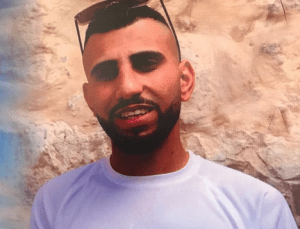 Although a month and a half has passed since the killing of the Jerusalemite, Faris Bassam Abu Nab, questions remain about the circumstances of his death, and his family members say Israeli officials have had contradictory and deceptive statements. Abu Nab was shot by Israeli forces near the Tunnel checkpoint, south of Jerusalem.
According to the Jerusalem-based Silwan Information Center, Bassam Abu Nab, the father of the killed Palestinian, said that he assigned a lawyer to follow up on the case of shooting his son and investigate, stressing that he continues to search for the truth of what happened to his son, and to hold the perpetrators accountable and punish them.
Abu Nab said: “AbuKbeir Institute of Forensic Medicine refuses, to this day, to give me the results of the autopsy, and I did not receive the initial or final report, and he told me that it was transferred to the Police Investigation Unit (Mahash), and when I headed to the police and asked the official, he first denied and then refused to provide any information”.
Abu Nab added that the condition of his son’s body revealed that he was killed “in cold blood”, because the bullets were in the upper part of the body, in the heart, chest, head, and neck, and the signs of assault were clear on his head from the back and lower back, as if he was dragged to the ground, in addition to dislocating his elbow, and all this refuted the occupation’s narration that only his feet were shot — but his feet did not contain any bullets.”
Abu Nab continued, “From the moment I learned about the incident, the occupation police told me that they opened fire at the vehicle from the rear on the pretext that it was ‘illegal’. But I myself found the car by chance parked in the parking lot of Al-Maskobyeh in West Jerusalem, and it had no sign of any bullets, and after examination and investigation it was found that it was legal.”
Abu Nab wondered: “Where are the surveillance cameras at the military checkpoint, and why did the Israeli media present a report on the incident with edited scenes?” He called for the full disclosure of the cameras’ recordings on the day of the incident.
He said: “The occupation forces have no right to kill anyone, whatever the reason, and they can use non-lethal electric weapons to arrest him.”
Abu Nab pointed to his pursuit and his family by the occupation authorities after his son was killed, including the invasion of his home, the assaults of himself and his children, and the interrogation of his three children last week. The interrogator told them: “Why do you say we killed your brother, the accident occurred in the West Bank. We didn’t have anything to do with it.” They also told the children to “not talk too much about this incident… it was a mistake and it happened.”
The mother of the victim confirmed that her son was committed to his work and said: “Faris was killed in cold blood, and he used his car to do delivery services and was working in cleaning restaurants and usually worked until after midnight. On the day of his martyrdom, he wore his clothes as usual and went out to work.”
The family confirmed that they would follow-up the case of their son’s martyrdom until the truth is revealed, and that they would remain steadfast in Jerusalem despite the abuse and prosecutions they are subjected to.
The Israeli occupation soldiers opened fire on Faris Abu Nab who is a resident of Silwan, on November 17th 2019, at the Tunnel checkpoint, south of Jerusalem, and his body was released to his family after three days of detention.
Survivors tell of France’s ‘dirty war’ for Cameroon independence
Press TV – December 28, 2019
The Cameroonian war of independence was a “dirty war” waged by French colonial troops but it never made headlines and even today goes untold in school history books.
The brutal conflict unfolded in Cameroon, which on January 1 marks its 60th anniversary of independence — the first of 17 African countries that became free from their colonial masters in 1960.
Many decades on, those who witnessed the violence recall events which shaped countless lives in the central African country yet remain unchronicled today.
“My life was overturned,” Odile Mbouma, 72, said in the southwestern town of Ekite.
On the night of December 30, 1956, French troops arrived in the town and slaughtered dozens of people, perhaps as many as a hundred, she recalls.
“We were sitting under a tree when we suddenly heard the crackle of gunfire,” she said. “It was everyone for themselves.”
Taking to her heels, the seven-year-old found herself jumping over bodies. “They were everywhere.”
The troops were looking for independence fighters — members of the Union of the Peoples of Cameroon (UPC), a nationalist movement established in 1948 that faced repression first by the French and later by Cameroonian soldiers.
French authorities labeled the UPC “communist” and cracked down on them from 1955, driving the movement underground, though its charismatic founder Ruben Um Nyobe preached non-violence.
Buried in cement
In September 1958, Um Nyobe — nicknamed Mpodol (for “he who brings the word” in the Bassa language) — was killed by French troops.
“His body was dragged around and displayed so that everybody (saw the corpse) of a man who was considered immortal,” said Louis Marie Mang, UPC activist in Eseka, where Um Nyobe is buried in a Protestant graveyard.
“To prevent traditional rites from being held, he was put in a block of cement and buried (without) a coffin.”
The conflict continued long beyond independence, for repression of the nationalists continued under Cameroon’s first president, Ahmadou Ahidjo, who also banned public references to the UPC and to Um Nyobe.
The violence “passed unnoticed, wiped from memories,” according to Thomas Deltombe, Manuel Domergue and Jacob Tatsitsa, authors of “La guerre du Cameroun” (“Cameroon’s War”), published in 2016.
They estimate that between 1955 and 1964, tens of thousands of people, including civilians as well as UPC members, were killed.
In Ekite, a wreath of flowers lies on the soil of a scrubland field at the end of a dirt track. “The Nation will remember your sacrifice,” says a memorial notice.
“This is one of the mass graves where the nationalists were buried,” said Jean-Louis Kell, a UPC militant.
A second ditch was apparent a dozen meters away, and “a third was discovered not long ago,” said Benoit Bassemel. He was seven during the French massacre and has tears in his eyes when he tells how his father was murdered.
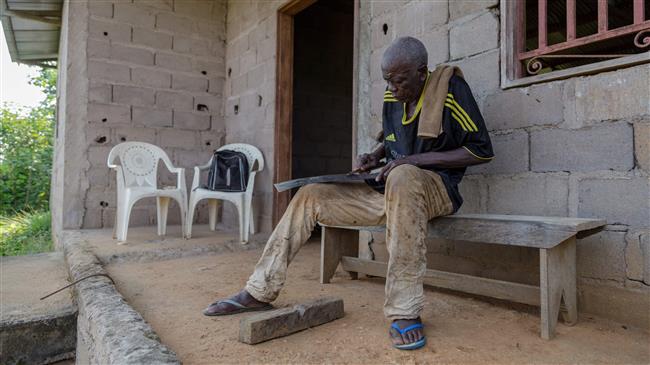
Benoit Bassemel, who’s father was killed during the massacre on the night of December 31 1956, files his machete at his home in Edéa, on December 11, 2019. (Photo by AFP)
‘Free like the others’
UPC nationalists believe that the independence granted on January 1, 1960, was not what they fought for.
They view the country’s two post-independence presidents, Ahidjo and Paul Biya, who has been in office since 1982, as working hand-in-hand with France.
“We wanted to be free like the other countries. We no longer wanted white people to subjugate us,” said 80-year-old Mathieu Njassep, in his tiny family apartment in Petit Paris, a poor district of Douala, the economic capital.
In 1960, aged 21, Njassep joined the Cameroon National Liberation Army (ALNK), the UPC’s armed wing.
After two years of fighting, he was appointed secretary to Ernest Ouandie, a leading figure in the movement. He was sentenced to death but escaped the firing squad, unlike Ouandie, who was executed in 1971.
“We had almost nothing to wage a war with,” Njassep said. “We carried out ambushes with machetes, sticks and homemade guns. If we had had enough weapons, we would have beaten them.”
At the time, the ALNK had established its headquarters in the village of Bandenkop, on the land of the main western tribal group, the Bamileke. Fighting was fierce between the nationalists and the French army.
In the rugged valley from which ALNK commanders led operations, there is no sign of human life today and the only sound is that of a bubbling stream.
“This whole zone was regularly bombed” by the French air force, said Michel Eclador Pekoua, a former UPC official.
Pekoua and other nationalists say French planes dropped napalm. France has neither confirmed nor denied the use of the notorious incendiary weapon.
Decapitations
On a road 30 kilometers to the north, in Bafoussam, a roundabout is known as the “crossroads of the guerrillas,” for it was where the decapitated heads of nationalists were placed on show, said Theophile Nono, head of a historical association, Memoire 60.
The regime’s methods “ranged from the arrest and arbitrary imprisonment of any Cameroonian suspected of ‘rebellion’ to systematic torture, with extrajudicial summary executions,” Nono said.
For many years the conflict mostly remained taboo in Cameroon. It was in the 1990s, when the authorities came under mounting pressure for democratic change, that people began to consider the historic past.
Biya, in a speech in 2010, paid tribute to “people who dreamed of (independence), fought to obtain it and sacrificed their lives for it… Our people should be eternally grateful to them.”
After years of French silence, then president Francois Hollande in 2015 became his country’s first head of state to speak of “a repression” of Cameroonian nationalists leading to “tragic episodes”.
For many survivors, this is not enough.
“France must accept its responsibility,” Nono said. “It must undertake to compensate victims of the dirty war, which has been carefully concealed by both the French side and the Cameroonian side.”
Britain’s Security Services Granted License to Kill
By Finian Cunningham | Strategic Culture Foundation | December 27, 2019
In a landmark ruling last week, a panel of five senior British judges ruled that a secret government policy of granting immunity to its state security service was “legal”. Below is an interview with one of the human rights groups which challenged the murky policy demanding that it be banned.
First though, some background to the issue. British government policy holds implicitly that agents or informants operating for the state’s security service, MI5, are permitted to commit crimes without fear of prosecution if those crimes are committed in the line of duty to protect national security.
This is tantamount to the British state granting its agents and proxies a “license to kill”. The judges in the panel of the so-called Investigatory Powers Tribunal (IPT) have formally recognized this hitherto secret government policy as “legal”. The panel voted by 3 to 2 in favor. The two dissenting judges expressed deep concern that the ruling was “opening the door to future abuses” of power by British state agents.
MI5 is the branch of state intelligence that deals specifically with internal security. The other branch, MI6, deals with overseas activities. The disturbing implication is that MI5 can act with impunity, including acts of murder, against British citizens in the name of national security. The powers granted to it are secret and beyond public scrutiny in the courts. That means Britain’s secret services are now officially untouchable and above the law. This is a description fitting for a police state, not a supposed democracy which proclaims to be under the rule of law.
Four British-Irish human rights groups challenged the policy of immunity but they were over-ruled last week by the five-judge panel. These groups are to further appeal the decision in the courts. One of them, the Committee on the Administration of Justice (CAJ), based in Belfast, has considerable expertise in investigating the abuse of state power during the armed conflict in Northern Ireland (1969-1998). CAJ has documented the extensive involvement of British military intelligence in waging a dirty war in Northern Ireland where its agents colluded with and directed paramilitary agents and informants to carry out assassinations. Hundreds of such extra-judicial killings remain “unsolved” and represent a painful legacy for citizens across Northern Ireland.
One of the most notorious killings was that of Belfast human rights lawyer Pat Finucane (39) in 1989. British agents smashed into his home while he was having dinner with his wife and three young children. The attackers shot him in the head 12 times as he lay prone on the floor in front of his family. The British government has previously acknowledged “shocking collusion” by its agents in Finucane’s murder. But the British authorities have pointedly refused to hold a full public inquiry, thereby blocking any prosecution.
Thirty years after the murder of Pat Finucane and hundreds of other Irish citizens by British counterinsurgency operations, Britain is now formally granting the same license to kill citizens anywhere in the United Kingdom – under the pretext of national security. The development has grave implications for human rights in Britain. It also casts a sinister cloud over what kind of Britain the new Conservative government under Boris Johnson is creating post-Brexit.
Strategic Culture Foundation conducted the following interview with Daniel Holder, the deputy director of the Committee on the Administration of Justice (CAJ), based in Belfast.
INTERVIEW
Question: Is CAJ concerned that the Investigatory Powers Tribunal ruling last week will lead to serious human rights abuses by British security services in the future?
Daniel Holder: We are very concerned that this ruling for now permits MI5 to continue to authorize informant or agent involvement in serious crime. This could include crimes that constitute human rights violations. There were such experiences during the Northern Ireland conflict of informant-based paramilitary collusion, with agents of the state involved in acts as serious as murder and torture. Far from the so-called “intelligence war” helping bring the conflict to an end we consider that such practices by covert units of the security forces as having prolonged and exacerbated the conflict.
Question: On Brexit impact, will leaving the EU and its human rights standards add to concerns of abuse of power by the British state?
Daniel Holder: Although the European Convention on Human Rights (ECHR) is part of the Council of Europe system and not the EU, those advocating for Brexit often confuse the two and hostility to the EU also manifests itself in hostility to the ECHR and its court in Strasbourg. Being an EU member state, however, does mean ECHR membership is obligatory, and that will go with Brexit. Although the ECHR being incorporated into Northern Ireland law is also a key part of the 1998 peace deal known as the Good Friday Agreement it is deeply concerning that the new British government is already advocating breaching this commitment by stating it will change the domestic ECHR law (the Human Rights Act) so it does not apply to acts before the year 2000. They are quite open that the reason for doing this is to impede investigations into the security forces during the Northern Ireland conflict – and top of the list as to what the UK does not want a light shined on is precisely the issue of the crimes of agents of the state within paramilitary groups, practices often referred to as “collusion”.
Question: Are British government claims justified that undercover work by security services and their agents may require freedom for agents to participate in unlawful activities in order to protect national security?
Daniel Holder: All police and security services the world over use informants. They are a vital policing tool, but they have to be used lawfully, and the question always is: where do you draw the line as to what they are allowed to do? On occasions where absolutely necessary this may involve informants being involved in crimes like conspiracies with a view to thwarting them; but the bottom line is that informants can never lawfully be “authorized” to be involved in serious crimes that constitute human rights violations, such as kidnap, killings and false imprisonment, nor can they act as agent provocateurs. All of that is illegal.
Question: The narrow majority in the five-judge high court granting immunity to MI5 from prosecution for crimes suggests there is concern among state judges that the existing policy is dubious and treacherous. Do you perceive deep misgivings among the authorities?
Daniel Holder: Yes, but not just now, going back some of the archival documents and investigations that have taken place into the Northern Ireland conflict have revealed significant misgivings at that time, about just such a policy. Take the government-approved De Silva review published in 2012 into the murder of human rights lawyer Pat Finucane, where “shocking” levels of collusion were admitted. This report conceded that that officers were being asked to do things that could not be done lawfully, which is another way of saying the policy and practice was unlawful. We now have a secret policy, the limits of which are unknown, on the basis of a power that does not exist in law, that tries to continue to place agents of the state above the law. The concern is that the errors of our past could be repeated if the same circumstances arise again, here or elsewhere.
Question: The British judges’ ruling last week seems contradictory. On one hand the ruling claims MI5 agents are not immune from prosecution, but on the other hand it says they can act unlawfully if it is done in the public interest?
Daniel Holder: The system and policy are contradictory. The policy says that MI5 informants are in theory not immune from prosecution, but MI5 will know about their crimes – and indeed authorize them – but conceal this from police and prosecutors, despite legal duties that apply to everyone in Northern Ireland and the United Kingdom to promptly inform the police when you are aware someone is committing a crime. Again, this is the security service placing itself above the law.
Question: Is this the kind of policy that leads to rampant lawlessness seen elsewhere, for example in Brazil and The Philippines where police officers and state agents are killing thousands of people extrajudicially with impunity? Northern Ireland’s past conflict of rampant British state collusion in killings is surely a warning too?
Daniel Holder: The practices by covert elements of the security forces of tolerating, facilitating and even directing informants in paramilitary groups involvement in serious crime, including killings, and assisting their evasion from justice, in our view was one of the most serious patterns of human rights violations that prolonged and exacerbated the Northern Ireland conflict and has left a deeply poisoned legacy that we are still struggling to deal with today. There have been significant reforms to the Police Service in Northern Ireland since the peace process to prevent recurrence, but the UK security and intelligence agencies also need to bring their practices within the law, otherwise somewhere, history could repeat itself.
‘Blinding the truth’: Israeli snipers target Gaza protesters in the eyes
By Tareq Hajjaj and Pam Bailey | The New Arab | December 20, 2019
Media coverage and social media posts went wild when Palestinian photojournalist Muath Amarneh was blinded in his left eye after he was hit by a rubber bullet while covering a protest in the West Bank.
However, Amarneh was far from unique; Israeli snipers targeting participants in Gaza’s weekly Great Return March protests have aimed for the legs – and eyes. To date, Gaza’s Ministry of Health reports that 50 protesters have been shot in the eye since the demonstrations began March 30, 2018 – leaving them permanently blind.
“Some of these protesters and journalists were hit in the eye with teargas canisters, but most were targeted directly with what is commonly called a ‘rubber bullet,’ giving the impression they are somehow benign,” says Ashraf Alqedra, MD, a treating physician at Gaza City’s al-Shifa Hospital and spokesperson for the Ministry of Health.
“But there is still steel at the core, and although these bullets don’t usually kill, they do grave damage. It is impossible to save an eye hit directly by a rubber-coated steel bullet.”
However, he adds, due to the Israeli blockade, there are no artificial, glass eyes in Gaza – only a cosmetic improvement, but one that can be a significant psychological aid. These are available only by travelling out of Gaza for treatment and permits for such journeys are often not granted.
According to data released by the World Health Organization, Gaza residents submitted 25,897 applications to travel via Erez Crossing to receive medical treatment in the West Bank or Israel; an average of 2,158 were submitted each month. However, the Israeli government only approved 61 percent.
Mai Abu Rwedah: the most recent victim
Mai Abu Rwedah, 20, grew up in north Gaza’s al-Bureij Refugee Camp in a family of nine children supported by a father who works as a janitor for a UN school. She just graduated from university, hoping to start her professional life as a medical secretary and contribute her income.
But that dream was dealt a severe blow December 6, when she became the most recent Gazan to lose an eye to an Israeli bullet.
Abu Rwedah believes in using peaceful, but active, resistance to reclaim Palestinians’ right to return to their ancestral homeland. So, she has joined participants in the Great Return March protest since its launch on March 30, 2018.
On September 21 of that year, she was shot by a rubber-coated bullet in one of her legs, but that didn’t stop her from participating; she kept on going.
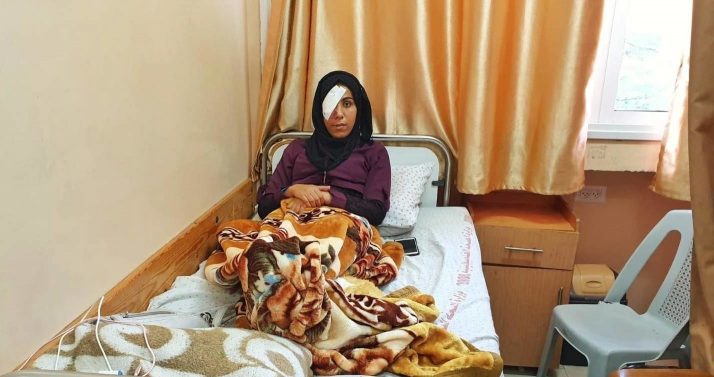
Doctors had to extract Mai’s right eye and the bullet damaged her jaw as well
Earlier this month, stood with a few friends about 100 metres from the fence that marks the border between Gaza and Israel. She glimpsed an Israeli soldier waving and pointing his finger to his eye.
“He was trying to intimidate me, but I was not afraid because I was doing nothing wrong. I wasn’t even throwing stones,” Abu Rwedeh recalls.
The soldiers fired tear gas then, and Mai and her friends ran away, but still were in sight of the young man who had threatened her.
“He was watching me; wherever I moved he kept watching. Then, suddenly, he raised his gun and pointed it at me. I was about to flee but he was too fast. He shot me in my eye.”
The bullet damaged her jaw as well. Doctors had to extract her right eye, since it was destroyed, Her determination, however, is intact. Abu Rwedeh continues to protest.
The youngest victim
Mohammed Al-Najar, 12, is the second-oldest son among four children, supported by a father who works in a wedding hall in Khan Younis.
In January, during the mid-year vacation from school, Mohammed begged his parents to allow him to watch the Friday protest with his cousins and other relatives, thinking it would give him an exciting story to share with classmates.
He was given permission to ride one of the government buses that collected people from the various neighbourhoods, taking them to the protest sites. When he disembarked, teargas bombs were flying, and he shouted to warn those around him. Then next one hit him directly in his right eye.
When Mohammad learned later that his eye could not be saved, he locked himself in his room and stopped going to school. When he did go back, he struggled.
“At first his marks at school dropped and he isolated himself. He tried to hide his missing eye,” says his mother, Um Edress.
She took to him an organisation that provided psychotherapy, but he refused to speak. Today, he is socialising, but goes quiet when asked about his injury.
The journalist
According to Dr Alqedra, most people with eye injuries from the Great Return March are journalists or photographers.
One of them is Sami Musran 35, a photographer who works for Al-Aqsa TV. On July 19, he was shot several times – first in his hand, the next two times in his shoulders and the fourth time in the chest. (Fortunately, he was wearing a bulletproof vest, so it did not harm him.) The last time cost him his left eye.
Sami says he had received several calls from Israeli officers warning him not to take photos at the Great Return March. His mother also received calls, saying her son might be killed.
“Forty times, my Facebook account was hacked or deleted for me, and I received death threats as well,” he says. “But I decided to keep on with my work to reveal the Israeli crimes against unarmed Palestinians who participate in the march.”
The night before Musran was shot, his wife tried to insist he stay home, but he refused.
“Minutes before I was hit, my mother called me twice, saying she was very worried about me. But I said that nothing happens that isn’t God’s plan,” he recalls.
He was about 250 metres away from of the Israeli fence when two women and a child were shot. Musran was taking photos of them and went in close. That’s when a rubber-coated bullet hit his eye and he lost consciousness. Two days later, he woke up in the intensive care unit to find out he had a skull fracture and an injured eye. The bullet had damaged the iris, retina and cornea and his vision was gone.
Today, it is hard for him to continue with his job; his depth perception is off, he gets headaches and the sight in his remaining eye “fades” at night. But he will keep trying.
“Israel wants to blind the eyes of the truth by sending messages to photographers saying we will hit your eyes to make you stop taking photos,” he says. “But we do not surrender.”
Colombia: Farmers Leader Shot to Death in Front of His Family

Social leader Reinaldo Carrillo in Pitalito, Department of Huila, Colombia. 2019. | Photo: Twitter / @ENGmateocastroe
teleSUR | December 26, 2019
The National Association of Farmer Users (ANUC) activist Reinaldo Carrillo was killed at dawn on Wednesday by hitmen who entered his house and shot him in front of his family in Pitalito town, Department of Huila, Colombia.
“We reject the murder of Reinaldo Carrillo. He was a member of a group of people which expected the government to grant them the ownership title of a vacant land called La Conaca,” said the ANUC, an organization legally recognized as “victim of the armed conflict” and “subject of reparation.”
“Reinaldo is the fifth ANUC leader killed in Huila over the last year… we demand that the authorities’ actions bring about results so that these cases are not added to the long list of impunities.”
A few minutes after the event, local Caracol Radio reported that the attack was perpetrated by three subjects aboard a motorcycle.
Although the 34-year-old social leader was immediately taken to the Pitalito hospital, he died due to the seriousness of his injuries.
“Infinite sadness. My solidarity with Reinaldo’s family, friends, and colleagues. Land ownership remains at the center of the armed conflict,” environmental activist Tatiana Roa said and added that the ‘Lords of The Land” continue to dispose of the life of Colombian farmers at will.

“Lucy Villareal, the mother of two girls, belonged to that extraordinary group of women who work and also take care of their children with love so that we can have a better country. Her cause does not die with her vile murder. We need a government capable of defending the life of every Colombian.”
Less than 24 hours before, the folk artist and social activist Lucy Villareal was also killed after participating in a workshop with children in the department of Nariño.
Between 2018 and 2019, the number of human rights defenders and social leaders killed increased by 13 percent in Colombia, according to the Inter-American Commission on Human Rights (IACHR).
India’s three-step communal game plan
Through the NRC-NPR process, the Modi government aims to create a category of second-class citizens
By Prakash Karat | The Hindu | December 22, 2019
The Citizenship (Amendment) Act (CAA), 2019, and the National Register of Citizens (NRC) are interconnected and twin measures. The Home Minister, Amit Shah, had repeatedly made this clear both in Parliament and outside. First, the Citizenship (Amendment) Bill would be adopted by Parliament following which the NRC would be taken up.
In the wake of widespread protests against the CAA, the Central Government is trying to obfuscate the issue of implementing the NRC. It is taking advantage of the lack of clarity and the inadequate information available on how the NRC is going to be implemented in the whole country. The Minister of State for Home Affairs, G. Kishan Reddy, has said: “A countrywide NRC had not been notified so far and no one should fear.” The Government has put out advertisements in Hindi and Urdu newspapers stating that “The NRC has not been announced yet and if it is done so in future, then rules and regulations should be such that no Indian citizen is troubled.”
The NRC-NPR link
These and other such pronouncements are an exercise in disinformation. A crucial fact is that the NRC process begins with the compilation of the National Population Register (NPR). This is the first stage of the NRC. The notification for preparing and updating the NPR was issued by the Registrar General of Citizen Registration, on July 31, 2019. For this, house to house enumeration will be conducted throughout the country (except in Assam) for “collection of information relating to all persons who are usually residing within the jurisdiction of the Local Registrar”. This enumeration will be undertaken between the first day of April 2020 and September 30, 2020.
The compilation of the NPR is a preliminary step towards preparing the NRC. On the basis of the NPR, the local register of Indian citizens will be finalised after due verification. This is the procedure set out under the “Citizenship (Registration of Citizens and Issue of National Identity Cards) Rules 2003”.
So, from April 1, 2020 onwards, the National Register of Citizens process will begin with house to house enumeration for the National Population Register.
It is important to note that, as per these Rules, during the verification process, particulars of such individuals whose citizenship is deemed to be “doubtful” shall be entered by the local Registrar with appropriate remarks in the Population Register for further enquiry; and in case of “doubtful” citizenship, the individual or the family shall be informed in a specified proforma immediately after the verification process is over.
Another clause of these Rules, 4(5)(a) states that: “Every person or family specified in sub-rule (4), shall be given an opportunity of being heard by the Sub-district or Taluk Registrar of Citizen Registration, before a final decision is taken to include or to exclude their particulars in the National Register of Indian Citizens” [emphasis added].
Use of biometric data
Fifteen questions will be asked in the survey, including questions on the place of birth, the date of birth, and the name of the father and mother. The new addition will be eliciting the details of Aadhaar, which will then be crosschecked with the Unique Identification Authority of India (UIDAI) for verification of biometrics of the individual. So, the NPR compilation will also have the biometric data of those listed, which raises troubling questions.
It is at the verification stage that communal profiling will take place in line with what the Home Minister had declared — the purpose of the NRC is to eliminate “infiltrators” as against the Hindu refugees who will become eligible for citizenship under the CAA. Those summoned as “doubtful citizens” will have to go through the tortuous process of submitting proof of their citizenship.
The NRC does not require any new law or amendment. It is already part of the Citizenship Act of 1955 through an amendment made during the Atal Bihari Vajpayee government in 2003. For the first time, the concept of a National Register of Citizens was introduced by making it compulsory to register every citizen of India and to issue a national identity card. Based on this, the rules for registration for citizenship were issued subsequently in which provision was made for a National Population Register.
Further, there is confusion created by the fact that the updation of the NPR is being done along with the Census enumeration for 2021. It is the Census authorities who undertake both these processes, but they are two separate things. The NPR is directly linked to the NRC.
That the game plan of the BJP is to create a communal division in States such as West Bengal is absolutely clear. On the one hand, it claims that the NRC process will eliminate all those who are “Muslim infiltrators” from Bangladesh. On the other hand, by amending the Citizenship Act, Hindu migrants who have come from across the border over the decades will be given citizenship.
Superfluous and expensive
The NRC process is being undertaken at a time when the Aadhaar identity card has already covered most of the population. There is also the Electors Photo Identity Card issued by the Election Commission of India. The necessity for another citizenship register and identity card is superfluous. Moreover, it will entail a huge amount of expenditure. The NRC process is weighted against the poorest sections of the population — migrant labour, Adivasis living in remote areas, and other marginalised communities.
The movement against the CAA has correctly linked it to the NRC. The CAA and the NRC must be seen in tandem. While the former would legitimise non-Muslim migrants as citizens, the NRC would target the so-called “Muslim infiltrators”. What the Narendra Modi government is aiming to do is to create a category of second-class citizens whose rights would be severely circumscribed.
Prerogative of States
It is imperative that the communal agenda of the BJP and the Central Government is foiled. This requires stoppage of the NRC. An important step in this direction will be to halt the NPR process in the States. Several Chief Ministers have gone on record that they are opposed to the NRC. Even Nitish Kumar, Chief Minister of Bihar, and Naveen Patnaik, Chief Minister of Odisha, whose parties supported the CAA in Parliament, have said that they do not want the NRC.
Already Pinarayi Vijayan, Chief Minister of Kerala, and Mamata Banerjee, Chief Minister of West Bengal, have announced that they are suspending the NPR process in their States. The work in the NPR gets halted since it is the State government which provides personnel for the enumeration and verification process. Other State Governments should also do so. If the Central Government stands by the announcement that the NRC process has not begun, then it should withdraw the July 31, 2019 notification for the updation of the NPR.
Prakash Karat is a Politburo member of the Communist Party of India (Marxist)
Featured Video

When Israel Is Mighty
or go to
Aletho News Archives – Video-Images
From the Archives
US murdering 1 million Iraqis is democracy, Iran giving yogurt to Iraq is “domination”
By Ali Salaam | American Herald Tribune | July 31, 2017
The New York Times, owned by the Zionist Jewish supremacist Ochs-Sulzberger family, has no problem with Iraqi suffering as long as Iran is not the one behind it.
The Iraq War was a genocide of the Iraqi people by Zionist supremacists in the Bush administration. Over 1 million innocent people were killed based on a lie. American soldiers died in an Israeli war and now an average of 22 soldiers commit suicide every day because their consciences cannot cope with the fact they committed crimes in an illegal war that served no purpose other than to benefit Israel, not America.
Benjamin Netanyahu, Prime Minister of the Zionist regime, once said “We are benefiting from one thing, and that is the attack on the Twin Towers and Pentagon, and the American struggle in Iraq.”
Paul Wolfowitz had his sights on Iraq since his time in the first Bush administration. Former Israeli official and Bush administration official Richard Perle had his eyes on Iraq since at least his authorship of the Clean Break white paper. The Zionist regime had their eyes on Iraq since the 1980s when strategist Oded Yinon wrote his white paper in support of dividing the Arab-Muslim world along ethnic and sectarian lines. The global Zionist lobby has had their eyes on Iraq since Theodor Herzl stated that Eretz Israel’s true borders go from the Nile River in Egypt to the Euphrates River in Iraq. … continue
Blog Roll
 Aletho News
- MEP blasts ‘Euro-Gestapo’ for lecturing Russia on democracy
- Syria May Send Troops to Saudi Arabia Amid War with Ansar Allah
- UK whines about losing billions to ‘Putin tax’
- Baghaei to Rubio: Distorted narratives cannot erase US record of broken commitments
- Houthis Don’t Have to Conquer Saudi Arabia to Make It Pay
- MOE: Nearly 22,000 Students and Education Workers Killed
- Guterres in Islamabad: Genocide, cowardice, and the cage of Imran Khan
- Johnson, Marandi say Yemen holds upper hand over Saudi Arabia
- False flags won’t save aggressors, Iran FM spokesman says
- The Makkah Pact Enters Into Force: The End of American Dominance or Its New Form?
- If Americans Knew
- Nearly 2 Million in Gaza Need Urgent Shelter Assistance as Winter Looms: IOM Chief Warns
- Suppressing Palestinian resistance: US charity under fire for AI monitoring of Gaza classrooms
- Thousands Are Held in Israeli Torture Camps. This Is What Happens Inside
- Israel puts Gaza’s sick, injured, newborn in peril – Daily Update
- Report claimed Mark Levin used by Israeli government to influence Trump
- Over 2,000 Gazans have died awaiting medical evacuation amid Israel’s continued siege
- How a U.S. Diplomat Suppressed and Altered Reports Critical of Israel
- 5 Palestinians Die from Israeli Strikes in Gaza as Relentless Attacks Continue
- Report: Ceasefire Slows Killing but Leaves Devastation Intact
- Country Music Singer Zach Bryan Breaks Attendance Record at Robert Kraft’s Gillette Stadium While Wearing ‘Free Palestine’ Shirt for Second Night in a Row
- No Tricks Zone
- New Study: 50 Years Of The Most Aggressive ‘Net Zero’ Policies Can Only Affect The Global Climate By 0.03°C
- US September “Heat” Was No Record…Many Records Set Decades Ago
- Latest European Green Energy Debacle; Portugal’s Largest Flagship Solar Park Insolvent!
- Green Energy Debacle: German Expert Professor Fritz Vahrenholt Warns Of Severe Economic And Social Consequences
- Two More Paleo Reconstructions Affirm Meters-Higher Sea Levels Across Ireland, Brazil 7000-6000 Years Ago
- New Study: Earth And Venus Surface Warmth Largely Explained By Convection And Lapse Rate, Not CO2 Or Radiation
- 2025 Nature Paper Claiming Worsening Global Drought Gets RETRACTED …Heavily Flawed
- New Study: ‘Global Drought Shows No Detectable Recent Acceleration Under Climate Warming’
- Economic Masterminds: German Socialists Suggest Taxing Productivity Gains Stemming From Using AI
- The South China Sea Has Not Been Cooperating With The Climate Change Narrative

