Israeli Forces Seize Palestinian Garbage Trucks, Detain Drivers
IMEMC News – July 10, 2019
A group of Israeli soldiers on Wednesday detained Palestinian municipal employees in the village of Beit Fourik, in the northern West Bank, and seized several vehicles used for trash collection.
According to local sources, the vehicles that were seized include a garbage truck, a tractor used for hauling garbage and a third vehicle used in trash collection.
The vehicles were loaded with garbage and were headed to a landfill site east of the village, located near Nablus in the northern West Bank, when they were detained by Israeli soldiers in military vehicles.
The soldiers approached with weapons drawn and ordered the municipal employees out of their vehicles, then held them for several hours in the hot sun, and took the vehicles away to an unknown location.
The Palestinian Wafa News Agency spoke with Ata Samara, a health inspector with the Beit Fourik village council, who told them that this trash collection by the municipality is a daily collection, and this is the first time they have been harassed by Israeli occupation forces.
Samara added that the trash dump is located in Area B of the West Bank, which is administered by the Palestinian Authority but falls under Israeli military rule, adding that the village council was not informed by the army that it would no longer be allowed to dump there. He said the seizure of the truck and car is part of an effort by the Israeli army to make life difficult for the Palestinians in that village.
Without a trash truck or a place to put garbage, the Palestinians of the village will be forced to fend for themselves, which will likely result in a buildup of trash at homes in the village, and unsanitary conditions will result.
Israeli authorities have created multiple landfill sites for Israeli garbage on stolen Palestinian land in the West Bank, and frequently haul and dump Israeli garbage onto Palestinian village land. However, in recent years the Israeli authorities have made it harder and harder for Palestinians in the West Bank to dump their garbage, instead closing off the Palestinian landfills and dumps or putting roadblocks to prevent the Palestinians from reaching them.
Israeli forces have targeted the village of Beit Fourik for collective punishment, in violation of the Fourth Geneva Convention, since March, when an Israeli settler was killed in a settlement nearby.
Judge, jury & executioner: Facebook policy permits death threats against ‘dangerous individuals’
RT | July 10, 2019
Facebook has issued an ominous new policy permitting death threats and calls for violence – so long as they’re directed against “dangerous” individuals or organizations, or someone accused (but not convicted) of a crime.
Facebook has updated its “community standards” to carve out a few exceptions to its “no death threats” policy. Calls for “high-severity violence” are now permitted, as long as they’re directed at individuals “covered in the Dangerous Individuals and Organizations policy” or individuals “described as having carried out violent crimes or sexual offenses” by media reports. After all, are people banned from Facebook really people at all?
The change was spotted on Tuesday by commentator Paul Joseph Watson, who along with his former Infowars boss Alex Jones was one of a handful of mostly-conservative personalities banned from Facebook in May under its “Dangerous Individuals” policy. Back then, even mentioning one of the banned names could get a user banned – unless the mention was derogatory.
Facebook has apparently taken that “hate the haters” tactic and run with it. While the “Dangerous Individuals” policy supposedly only covers “terrorist activity, organized hate, mass or serial murder, human trafficking, and organized violence or criminal activity,” none of the commentators banned – including Watson, Jones, conservative political performance artist Milo Yiannopoulos, and Nation of Islam leader Louis Farrakhan – were involved in any of those activities. But, Watson discovered, a person wearing an Infowars t-shirt is enough to get a photo removed from Instagram, and photos that include banned individuals – even if their faces are blurred out – have been deleted as well.
Equally ominous is Facebook’s decision to dispense with the concept of “innocent until proven guilty” that forms the core of the US legal system (Facebook is based in Menlo Park, California, and at least theoretically subject to US laws). Individuals need only be accused in the media of violent crimes and sexual offenses to become fair game for death threats – not convicted in court. For a company that claims to take the threat of “fake news” very seriously, Facebook is surprisingly cavalier about the potential for media misinformation to lead to violence.
But then, Facebook never even tried to prove Watson, Jones or any of the other banned users were “Dangerous Individuals,” either – its policy has always been that banned users are guilty until proven innocent, as any user who’s ever been forced to jump through its tech support hoops to restore a banned account can attest.
“The largest social media company in the world with over 2 billion users literally says it’s fine to incite violence against me, despite this being illegal,” Watson wrote at Summit.news, pointing out that sending death threats or threats of violence is, in fact, a crime under UK law (as it is under US law and the laws of most developed countries with substantial Facebook-using populations). “They are painting a target on my back.”
Facebook even tracks off-platform behavior to determine whether users should be blacklisted as “hate agents,” according to internal documents seen by Breitbart, meaning merely showing up at the same event as a “dangerous individual” can potentially earn a user the designation. The site’s list of “hate agents” is reportedly quite exhaustive and includes British politicians Carl Benjamin and Anne Marie Waters as well as conservative commentators like Yiannopoulos and Candace Owens. Because all this classification goes on in secret, users have no chance to appeal their un-personing, and may never even know they are being judged, until they start receiving Facebook-approved death threats of their own.
Also on rt.com:
‘No future for dissidents’ on social media: Paul Joseph Watson reflects on Facebook ban
A Child Under Administrative Detention

Defence for Children Palestine | July 9, 2019
On September 20, 2017, Laith K., 17, was arrested by Israeli forces. He was held in administrative detention for nearly 46 weeks. Administrative detention is a form of imprisonment without charge or trial. Learn more: https://nwttac.dci-palestine.org/
Nasrallah: Zionist Axis Defeated, We Have Enough Missiles to Redraw the Map of the Middle East
Speech by Hezbollah Secretary General Sayed Hassan Nasrallah on Friday, May 31, 2019, on the occasion of Al-Quds (Jerusalem) International Day.
Transcript:
[…] Another element indicating (the improbability of a war against Iran) is the field data, and I mean the (triple) Summit which I have just mentioned. And we are now entering the (4th section of my speech devoted to the triple) Arab Summit (in Mecca on May 30-June 1). The Summit was convened in emergency. Why? There are two reasons, two clear reasons that are mentioned in the (final) statements (of the Summit).
The first reason… The first reason… I remember that during the first days of the war of aggression against Yemen, His Eminence the (Supreme) Leader, Sayed [Khamenei], said that the young (fighters) of Yemen would rub the Al-Saud’s noses in dirt. Some days ago, the Saudi (army) bit the dust (once again). That’s what happened.
The first reason (for the improbability of war against Iran), that I mentioned earlier, is that Saudi Arabia has recognized the fact that there was no way out against the missiles of the Yemeni army and Popular Defense Committees, which they call the ‘Houthi’ missiles, and against their drones, and my proof is what happened in Yanbu’ (strikes of a Yemeni drone against oil installations in Saudi Arabia). It is a failure, a complete disaster. On the technical, military, security levels, and on every other level, it is a colossal failure. And it is a great success for our Yemeni brothers.
And that’s why in the joint statement at the conclusion of the Arab Summit, from the first line, points 1, 2, 3, 4, 5, 6, 7, 8, 9 and 10 only speak of Houthis, Houthis and yet again Houthis, as well as Iran. This clearly shows how much the issue of our Yemeni brothers is present and is the main cause for convening this triple Summit.
The second reason (indicating the improbability of a war against Iran) is that the Saudi regime and its allies understood with certainty that there will be no US war against Iran. You are dreaming (O Saudis), you spend your money for nothing and you incite for war to no avail. Trump will not fight for you, while it was your greatest hope. The last thing the Saudis had left was this hope (on which they have staked everything). Is there anything they can do? Do the Saud have alternatives (to prevail)? Who will go to war against Iran? The Saud themselves? While in Yemen, according to the information of the Saudis themselves, these young Yemeni fighters who have no army, no huge capacities, who are besieged, isolated, hungry, sick, whatever you want, but Saudi Arabia fails, is defeated and broken against them! And you (the Saudis) would go to war against (such a formidable power as) Iran? Who (will dare attack Iran)? Will they hire Netanyahu to launch a war against Iran? Let him first take care of his own problems (electoral and with Israeli justice)!
It’s the end of the road (for the Saud)! All their plans and hopes rested, in recent weeks, on Trump, on Trump’s incitement (to war), on Bolton, on Pompeo and all their fellow evil men in b or p, who were threatening to attack Iran and devastate this country. But it’s over. All their hopes were dashed.
That is why this Summit was convened in Mecca, as I said, to call the Arab and Muslim worlds and the Gulf countries for help. ‘Hasten therefore (to our help), O Arabs’ (cried the Al-Saud dynasty)! I wrote here… Where is this paper?… I wrote (a summary about it)… “Saudi Arabia convened the triple Summit to strengthen itself with the support of the Gulf it has torn apart…” For who is responsible for the crisis in the Gulf Cooperation Council? Saudi Arabia! “(Saudi Arabia convened the triple Summit) to strengthen itself with the support of the Gulf it has torn apart, of the Arabs it has crushed…” Is there a single Arab country left where Saudi Arabia has not created discord and division? And until now, up to this very day, there are Arab countries torn with civil wars, and Saudi Arabia is (the main) responsible. And there are Arab countries under threat of falling into civil wars (Algeria, Sudan…), and we must look (for the hand of) Saudi Arabia (behind it). “(Saudi Arabia convened the triple Summit to strengthen itself with the support of the Gulf it has torn apart), of the Arabs it has crushed and of the Muslims among whom it has spread the sedition of takfir.”
See Pakistan: Saudi Arabia wants to become stronger by getting the support of this country, while it propagated its takfiri ideology there among the Taliban, who created innumerable problems for the Pakistani military and the Pakistani people. Today, Saudi Arabia is calling on all these countries to save it (and get it out of the Yemeni quagmire).
First, regarding the Summit… I will conclude my remarks with a few words. Regarding the (Mecca) Summit, such is the context that explains it. It is a call for help, a cry for help, an intercessory request… You know it’s Ramadan (where all wishes can be fulfilled), so the Saudis make prayers, express wishes, cajole (the Arab governments) so that they’d fulfill their wishes, because of their failure and powerlessness, and because their hopes were dashed. The opposite Axis (United States, Israel, Saudi Arabia) isn’t in any case in a position of strength. It is in a position of weakness and failure, desperate, greatly confused and completely discouraged. This is the truth.
Second, let us consider the Joint Statement issued after the Summit. We see that it is composed of 10 points, which speak only of Iran and the “Houthis”, as they call them, but in the end of this Statement, as we commemorate the International Day of Al-Quds (Jerusalem), at the very end of this Statement, really the last two lines, we read: “And about the Palestinian cause, the main cause of the Arabs, the Summit has confirmed its commitment to the resolutions of the 29th Arab Summit (of April 2018) in Dhahran (Saudi Arabia), or Al-Quds Summit, and the resolutions of the 30th Arab Summit in Tunis (in March 2019).” Period. They did not even devote two lines to Palestine! They gave it only a line and a half of their final Statement! That’s the importance of Palestine for the Arab Summit. I do not even know if they actually talked about it (during their discussions), I just read the final Statement.
And about the Summit of the Gulf Cooperation Council, there is a really funny thing, the 4th point. Listen to the 4th point (of the final Statement) of the Summit of the Council of the Gulf Cooperation: “Confirms the strength, harmony and resolution of the Gulf Cooperation Council and the unity of its members around a common line to face these threats.” And they say that while they are besieging Qatar! They have been besieging the State and the people of Qatar for over a year! It’s really hilarious, Uncle! By God, some people really don’t realize that they have become the laughing stock of the world! The whole world mocks them, demeans and humiliates them!
Another point about the Arab Summit, we have a duty to praise the position expressed by Iraq and the President of the Republic of Iraq. It’s a remarkable position, courageous and excellent. What a shame that the rest of the Arab Presidents, Kings and Emirs did not talk the same way! And the Iraqi delegation has not said that they wanted to wage war against Saudi Arabia, the UAE, or anyone, nothing like it! They spoke in a balanced manner (without taking sides with Iran nor Saudi Arabia). You could do the same thing (and display a conciliatory neutrality). What prevented you from doing so, O Arabs? What a pity that (the participants of this) Summit, in spite of the failure, powerlessness and confusion (of Saudi Arabia), and the economic exploitation of the situation by the United States, have not talked in conciliatory terms about Iran, when Iran itself, a few days ago, said via its delegates that they were ready to talk with the Gulf states, and conclude pacts of non-aggression with them! Why did they not adopt the same open and conciliatory diplomatic language? If they had done so, their money, their safety, their security, their interests and even their dignity would not be violated by Trump morning and evening.
On the Arab Summit, I have one more thing to say: as a Lebanese party who participate in the government of Lebanon, we (Hezbollah) consider that the position of the official Lebanese delegation to the Arab Summit contradicts the Ministerial Declaration (of the Hariri government) and violates the commitments and promises of the Lebanese government, who received the confidence of the Parliament on the basis of this Declaration. Where is the promised neutrality, O official Lebanese delegation to the holy city of Mecca? You could have said… It was not even required that you take a position similar to that of Iraq. You could simply have said that the Lebanese government was committed to neutrality (in regional conflicts) and that such a stance was required in the national interest of Lebanon, which had to remain neutral, as it had done in previous Summits.
That is why we reject this position (expressed by the Lebanese delegation), which we consider unacceptable and condemn because it does not represent Lebanon. It represents only the members of the delegation (as individuals) or the political parties they belong to. It is impossible that this be the official position of Lebanon, a position which publishes a Statement with 10 paragraphs condemning Iran and only dedicates a line and a half to Palestine, the whole Statement expressing support for an Axis (US-Saudi-Israeli) against another (the Axis of Resistance).
Of course, the Future party could have made a statement of their own supporting eloquently the Final Statement of this Summit held in Holy Mecca, it is their natural right. We wouldn’t mind at all because (it is common knowledge) that we have opposite stances (on regional issues). We have already said that neutrality is not required of political forces. And we are the first not being neutral (and strongly and publicly announcing our stances against the US, Israel, the Saud…). But we agreed that the Lebanese government would remain neutral. The Lebanese State must remain neutral (because it is composed of both pro-American and pro-Iranian forces). And what happened in Mecca is contrary to the commitments and promises (made by the Future Alliance heading the government), and to Lebanon’s national interest.
This brings me to the last point (of my speech). (I’m sorry) for being so long, on this night of Ramadan, but it is a sensitive issue whose mention cannot be postponed. Regarding the delimitation of the (land and sea) borders (between Lebanon and Israel), as I have said repeatedly, as a Resistance, we have no problem and we comply with the decisions of the State. And for all that is happening at the borders, we leave everything in the hands of the State, whether what is happening is good or bad, right or wrong. Regarding the demarcation of our land and sea borders, we will respect all the decisions of State, (and we do not have a say).
And by making these statements, I do not exaggerate. Some brothers think that my words are conciliatory but do not coincide with reality, but no, I tell the strict truth when I say that we in Hezbollah trust the Lebanese officials who are in charge of this issue, and who are committed to upholding all Lebanon’s rights to land and water, in terms of maritime (space), oil and gas (resources present in the Mediterranean). We have (full) confidence in them, and that’s why we do not intervene in this issue. So much for the positive points, for I will now turn to a very different point.
On this issue, what is the United States striving to achieve through (its envoy) Mr. [David] Satterfield and his ilk? The USA is very strong to exploit all things, and exploit (all situations) in an evil way (in their interests and to our detriment). Since Lebanon needs a rapid delineation of borders, especially at sea, to (be able to exploit) oil and gas (resources at sea), and since Lebanon needs a calm situation in order to get financial loans —for we speak mainly about loans, not grants—, in this context, the United States come to… I hope that all the Lebanese will listen to me.
The United States wants to exploit the (indirect) negotiations (between Lebanon and Israel) on the demarcation of land and maritime borders to solve another adjacent, unrelated problem in the sole interest of Israel, and that Israel has been unable to resolve for years, namely precision missiles and the manufacture of precision missiles.
For over two years, (we have been contacted constantly by) ambassadors, embassies, foreign intelligence services, including those countries that consider us officially as terrorists, it does not bother them. They asked us the following questions, or (rather) addressed us the following messages: you have precision missiles, and this is something that Israel will not tolerate, and when Israel will learn their place (of storage), they will bomb them. That’s the message that we kept receiving for over two years. That’s (the first point).
The second point was the accusation that we’d have precision missile factories in Lebanon, which is (allegedly) a red line for Israel that will not be tolerated, and the warning that if Israel gets to know their location, they will bomb them. We hid this matter to the public for two years so as not to worry anyone, and to settle this matter behind the scenes. But some things happened during this week that lead me to speak out today because I think this whole issue will soon be discussed in the media, this topic being debated today in wider circles. I prefer to publicly state our position on this issue, rather than let the (State) officials being responsible for sending messages or answering questions (about this topic), and it is better that these answers come directly from me so that the United States, Israel and others receive them distinctly. (That’s better), isn’t it? That’s why I mention it.
Regarding the first point, the precision missiles issue, we are people who always tell the truth, we never lie. We can of course not reveal the truth without lying, or tell only part of the truth, but we never lie. That’s why when they asked us (if we had precision missiles), we answered that yes, we had precision missiles, and then you remember that two years ago, the tenth day (of ‘Ashura), I announced quite clearly that we have precision missiles able to hit all the targets required in the Zionist entity.
And today, on this (International) Day of Al-Quds (Jerusalem),on the 40th anniversary of the announcement of this Day, I say to the world that yes, we have in Lebanon enough precision missiles to change the face of the region and (upset) all equations!
But I say nothing new. That’s what I said for ‘Ashura two years ago. And to all those who have asked us, we said yes, we had precision missiles. And to all those who said or transmitted messages (Israeli threats), we said that there was no problem… It’s been 1, 2 and 3 years that these messages circulate, and that our response has been given and reached Israel: any time they tried to intimidate us by speaking of Israel, of red lines, of unacceptable things, of bombing, of (a violent) reaction, etc., our answer was clear, and I then repeated it publicly (in an interview) with Al-Mayadeen TV and then in a live speech. And I’ll repeat it again: we said that against any aggression, any Israeli strike against any target related to the Resistance in Lebanon, be it missiles or anything else, Hezbollah will retaliate immediately, directly and with (great) force!
And that’s why for 1 year, 2 years and 3 years now, they never bombed (Lebanon). And even more, Israel is going to the UN to (complain) that under the Al-Ahed football stadium, there would be missiles, and at such other place as well, (and then the UN) asks the government to verify if missiles are present at a given location, etc. It is not out of manners or decency that Israel does not strike our missiles. It is because we are strong that they don’t dare to do so (because they fear our retaliation), and that we will respond to any aggression by a similar attack, if not more!
The issue of precision missiles was therefore over (with a dead end for Israel). No one can do anything against it. So the issue has been upgraded with the accusation of possession of precision missile factories (in Lebanon). A few months ago, a (Lebanese) official said that the United States had contacted him to tell him this and this. I replied: “My dear official —I do not say anything specific to protect his identity—, this information is false. We do not have —and I speak with complete frankness— we have no precision missile factory in Lebanon.” He asked if the Iranians had such factories in Lebanon. I told him that the Iranians had no factory in Lebanon, be it for precision missiles or other missiles, or anything at all.
So far —I say so far, until tonight, until this International Day of Al-Quds—, there are no precision missile factories (in Lebanon). So the Americans left and came back later (with new charges), saying that there were such factories in such and such place, until what they said recently, namely that the process of delimitation of maritime borders was obstructed by the fact that in such region, there were precision missile factories. Again, several Lebanese officials asked me about it, and I said that it was not true. In this region, there are military facilities, supplies and equipment of Hezbollah, but no precision missile factory. That’s all.
What is my point? These (false accusations) have been accompanied by various threats. I will not say what the threats were because there is no reason for me to reveal them, but several threats were made, so that Lebanon settles this issue (precision missile factories) and destroys such and such installations, razes them to the ground and terminates them. But my dear (US) friends, do you know who you are dealing with? In what world do you live (to believe that your threats can frighten Hezbollah)? It is absolutely inconceivable for us.
In addition, we, in Hezbollah, are more trustworthy and reliable than the Americans and their predecessors, and more trustworthy and reliable than the Israelis and their predecessors. When I tell you that there is no precision missile factory, this means that there is none. And if there were such a factory, I would have said this evening on TV that there is such a factory, as I’ll prove in a moment.
I will explain my problem with this question and conclude my speech. My problem is that… That’s why I did not want to discuss this issue only with Lebanese officials, but I wish that we all (Lebanese) take part in it. The very discussion of such issues with the United States, merely allowing them to ask us about (our weapons), this door should be in my opinion closed. It is not their business, they have no right to inquire about our weapons. The US does not have any right to meddle in it. Whether there are precision missile factories in Lebanon or not, it is not their business. Israel, which is right next to us, manufactures missiles, warplanes, tanks, nuclear and chemical weapons. Let them go there and make the same requests! As for us, it is our right —and that’s what I want to add this evening—, it is our absolute right to possess any type of weapons to defend our country. And it is our absolute right to manufacture any type of weapons, because to have weapons, there are only three possibilities: either you buy them, or someone gives them to you, or you manufacture them.
In Gaza, what do they do? They make them. In Yemen, what do they do? They make them. But the Saudi mentality is unable to conceive that Yemenis can manufacture their own missiles and drones (and they accuse Iran of supplying them). What do you want me to do about it? In Iran, what are they doing? They manufacture their own weapons! And we absolutely have the right to do the same. I affirm that the United States do not have the right to debate with us on this right. That’s the first point. How does it concern you? Whether we have such factories or not, it’s none of your business. I assure you that there are no such factories yet, but you have no right to ask me in the first place! Whether there are such factories or not, mind your own business! We have every right to have all the weapons that allow us to defend our country, whether we buy them, they are given to us or we manufacture them. That’s the first point.
Second, if the United States continues to bring up this issue, I tell them this: we have all the technical and human capacity, thanks to our youth, to manufacture precision missiles, and we are perfectly able to import in Lebanon all the equipment required to open such factories. I declare tonight that if the United States continues to bring up this issue, let the whole world know that we will open precision missile factories in Lebanon!
So far, we have no such factories (in Lebanon), but if they continue to bring up this issue, they will convince us to do so! Then, the government talks about many problems of the Lebanese industry. Today, one of the greatest evils in the world is arms sales… Why are you laughing, I’m serious! We are able to manufacture precision missiles and sell them to the world, and thus help the Lebanese Treasury. Is that okay with you?
This is why I advise Satterfield to stay calm and do the job he is asked to do (without encroaching on our business), since he claims to be there to help… But who does he (really want to) help? Because you know that in general, the United States are not intermediaries. They are only there to lobby and defend the interests of Israel, and God help our Lebanese brothers responsible for these negotiations. Let Satterfield close this file and not waste his time in (idle) threats, and stop exerting himself. He should stop exerting himself (in vain).
This is our natural right (to have all the weapons required), we will remain attached thereto, and threats lead to nothing with us. These threats are not new, but date back to 2 or 3 years. I have answered them, and I do not want to have to repeat myself, okay? Be it now, before or after, our position remains the same.
In conclusion, O my dear and noble brothers, on this Day of Al-Quds, on this 40th year of the celebration of this Day, our (Resistance) Axis is in a position of strength, as is our front (the battlefield). It is true that in recent years we have made many sacrifices, but by the grace of the blood of martyrs, we got out of all these sacrifices stronger and more present. And it is full of strength, determination, faith and confidence that I tell you all that we can defeat the Deal of the Century and make it fail, and at the forefront the Palestinian people: when Palestinians are unanimous in their sovereign position, as I called it, about the Deal of the Century and the Conference in Bahrain (which are condemned by all factions), nobody can impose anything, neither to Palestinians nor to the region.
When the Syrian people refuse to cede the Golan, Golan will never become Israel’s, even if Trump redraws maps and signs below, as announced by Netanyahu yesterday. Let them sign anything they want, do what they want, and say whatever they want, (it will be futile). If we stay present in the field, on all battlefields, if we remain attached to our rights, and above all, before, after and with everything, if we trust in God and in His promise of victory, if we believe in Him, in our peoples, in our generation, in our men, in our women, in our brains and in our minds and willpower, the future belongs to Al-Quds, and not to Trump or to all the insignificant midgets who work for Trump.
Peace be upon the soul of the great Khomeini, who founded this Day, happy (al-Quds) holiday, and may God grant you victory and glory.
See the previous parts of this speech translated in full:
Resistance Axis, Arab & Muslim Peoples will Never Forsake Palestine
In the Next War, Missiles from Lebanon, Gaza, Syria & Iran will Strike Israel, Trump’s Deal of the Century Doomed to Fail
A War against Iran would Destroy Israel, the Saud and US Hegemony
Translation: resistancenewsunfiltered.blogspot.com
Settler tour exemplifies the difficult reality of occupation in the Old City of Hebron – a photo essay
International Solidarity Movement – July 7, 2019
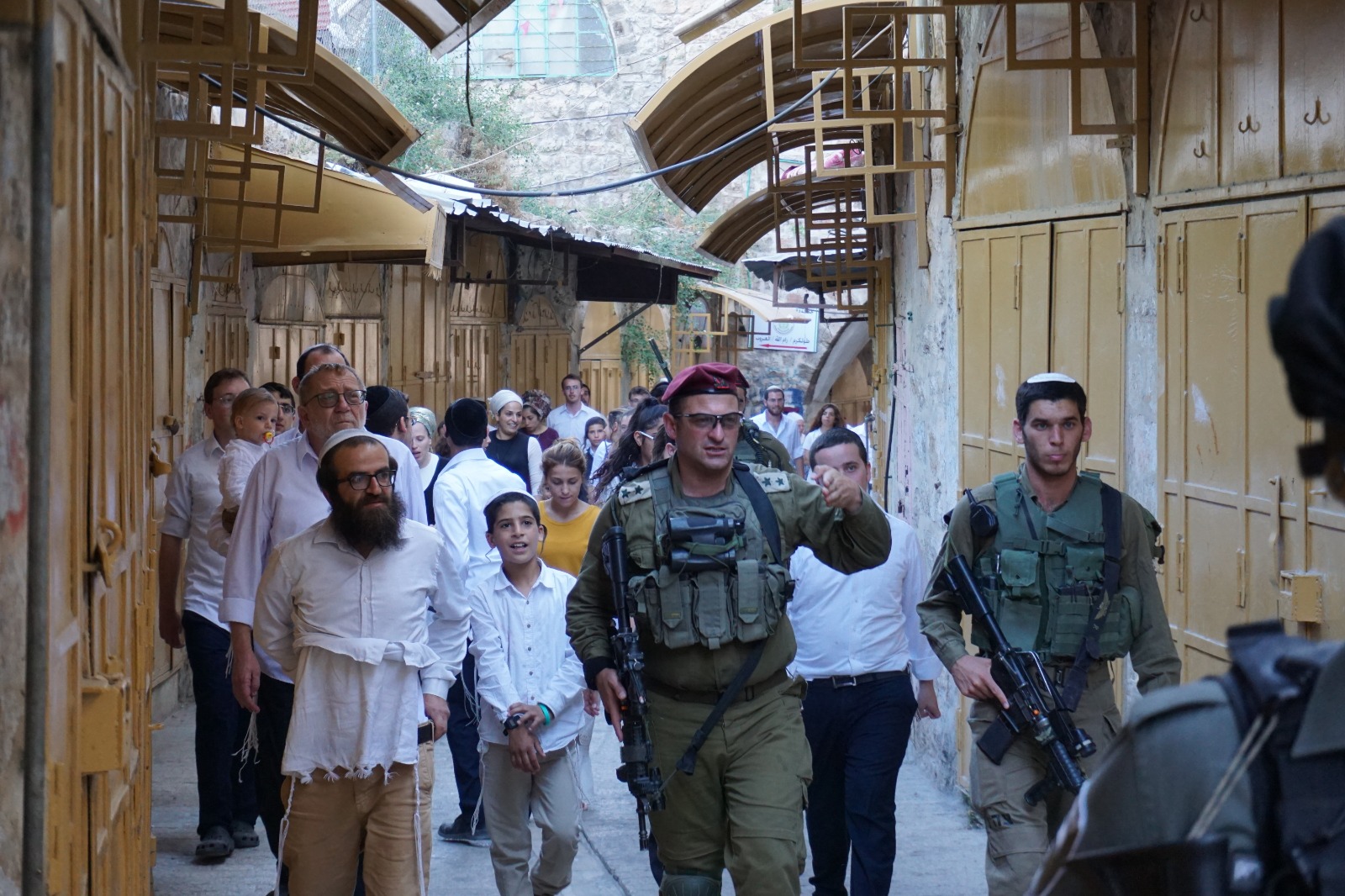
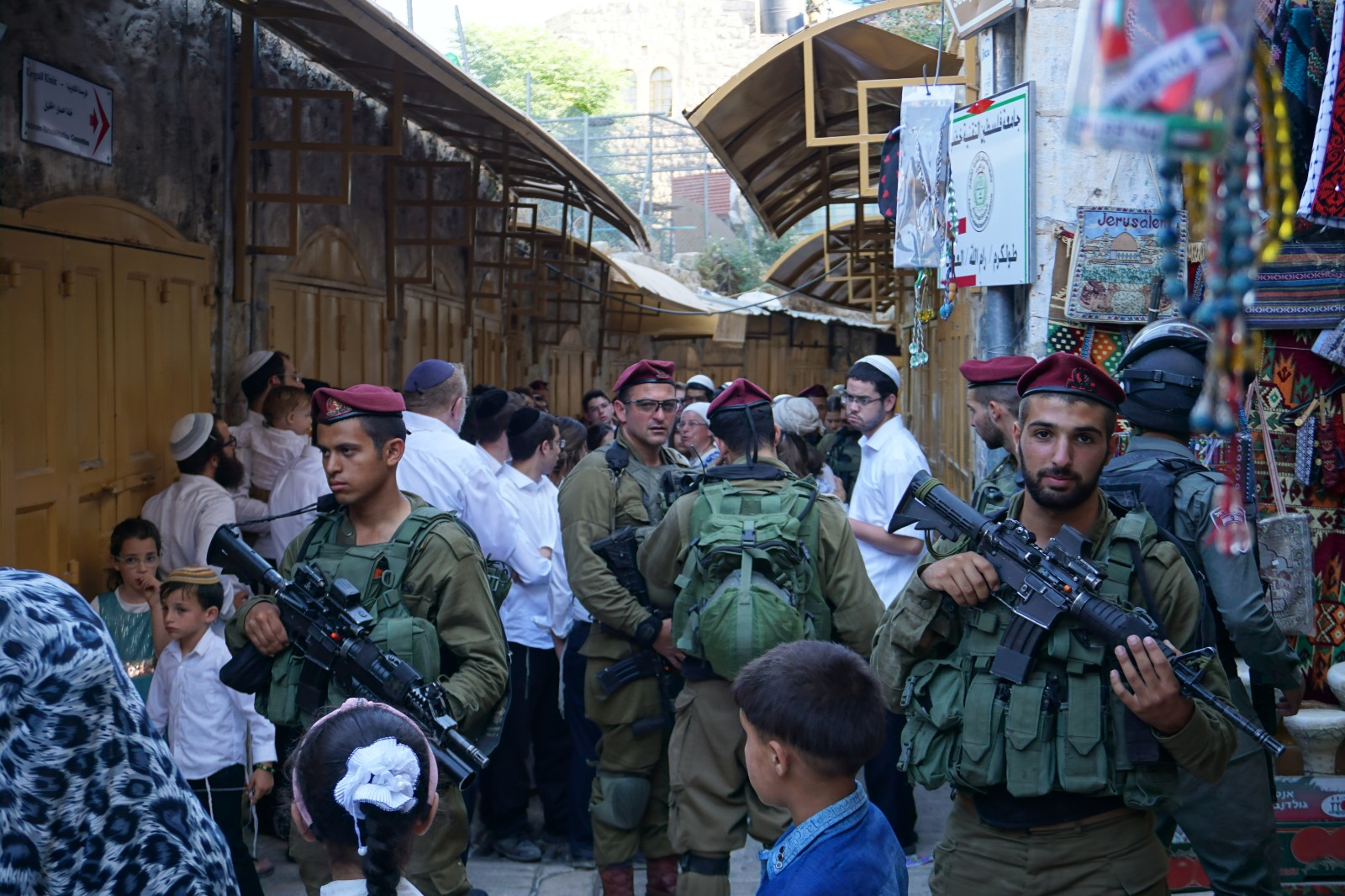
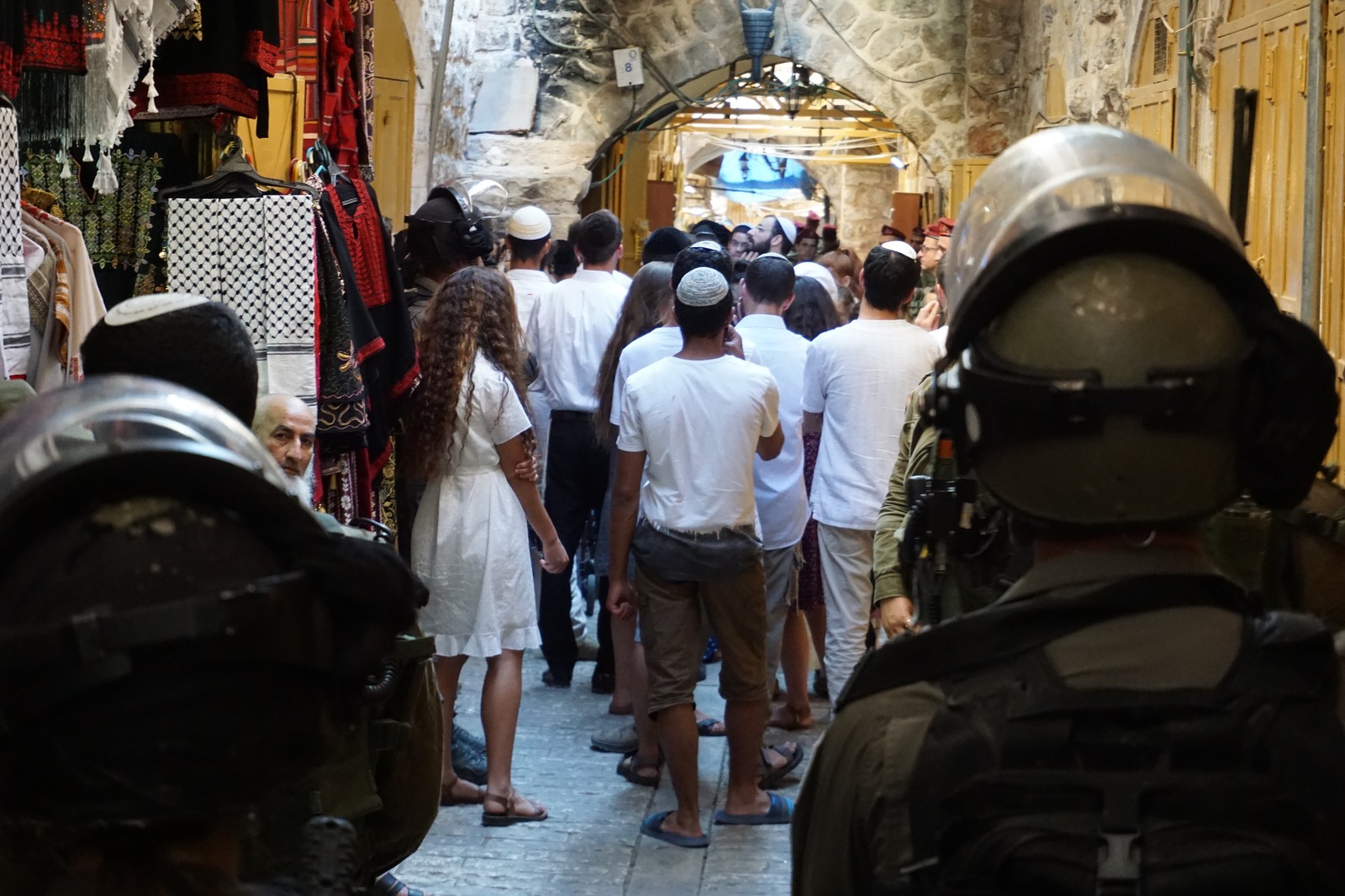
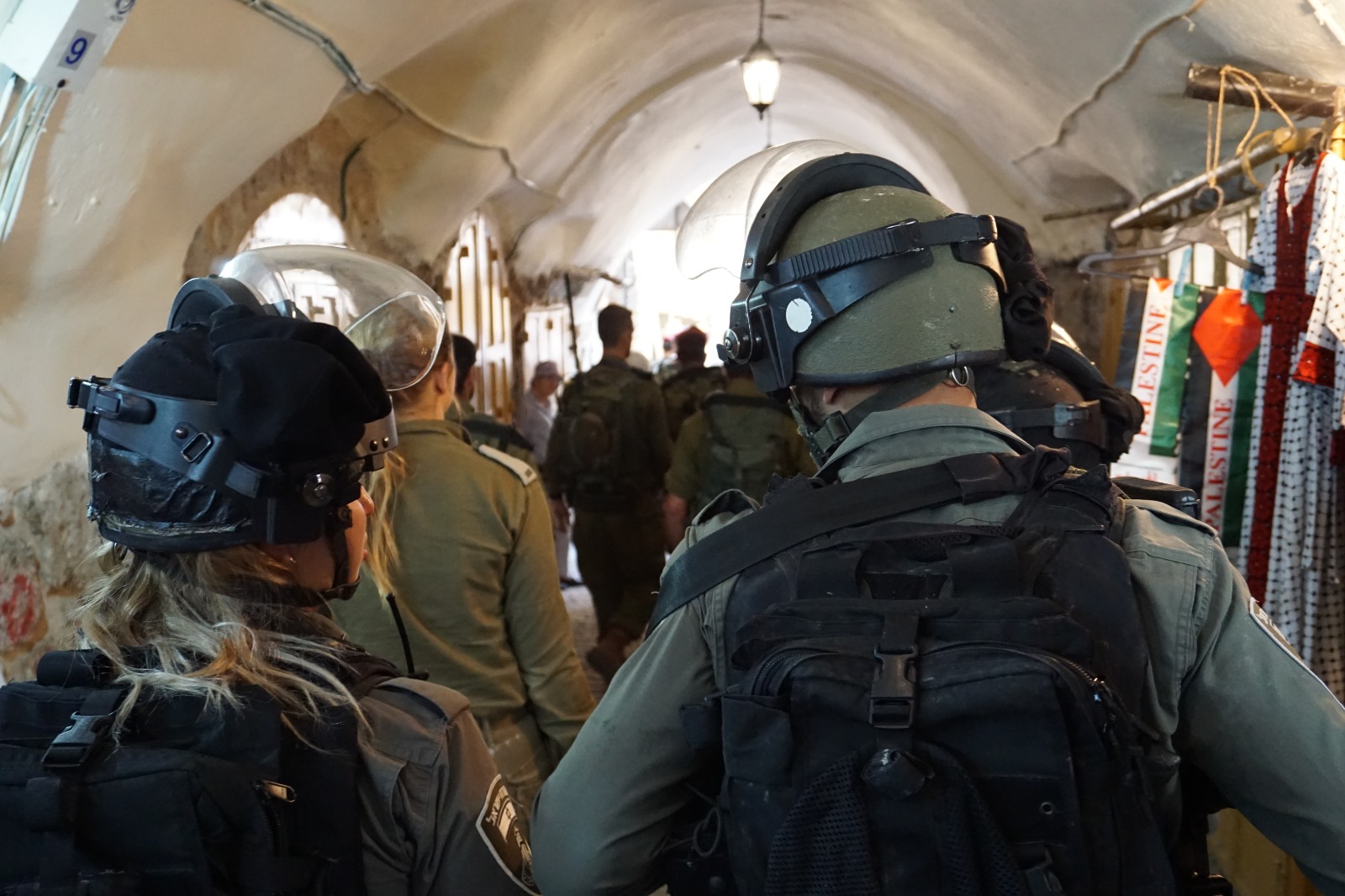
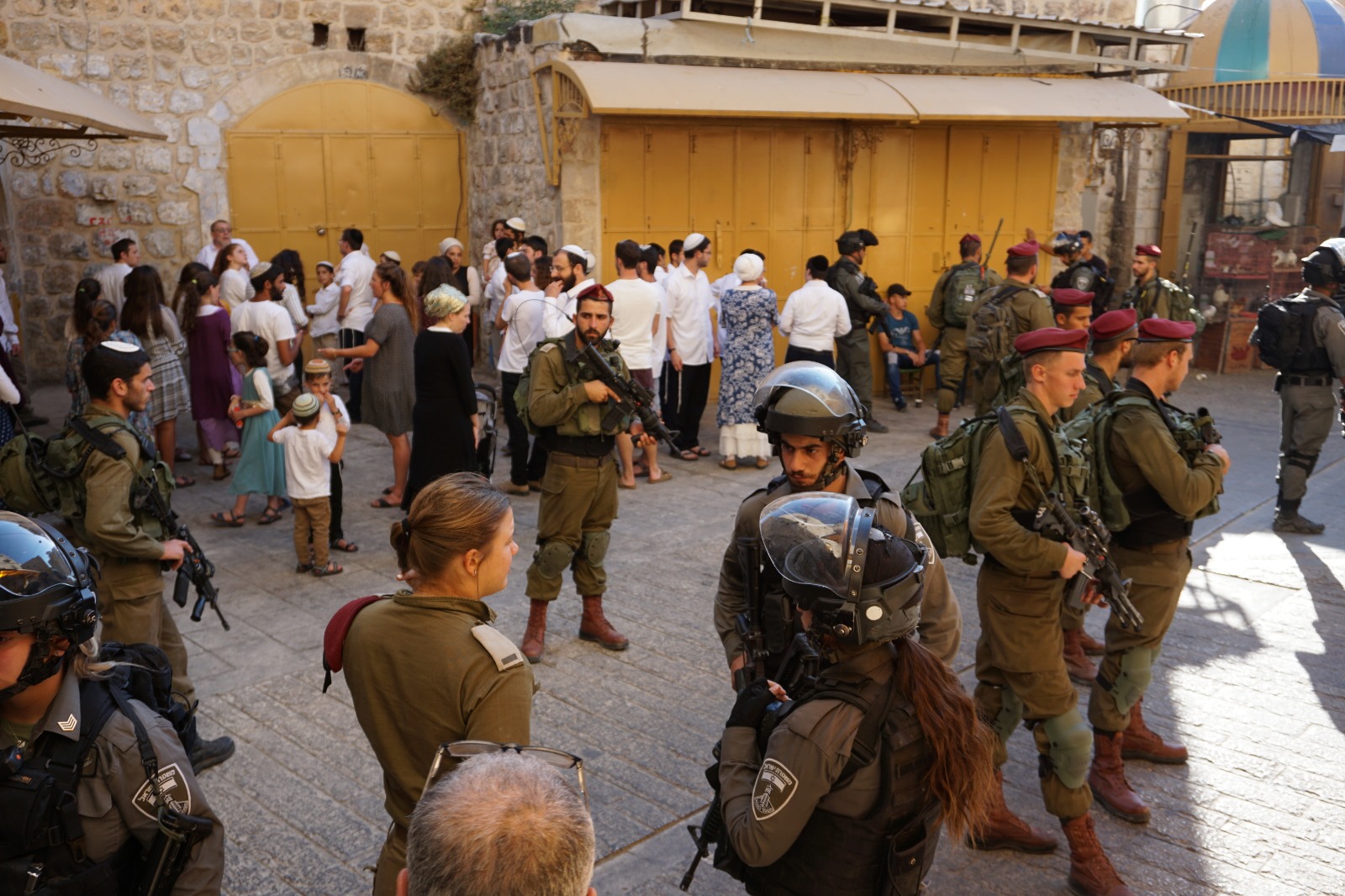
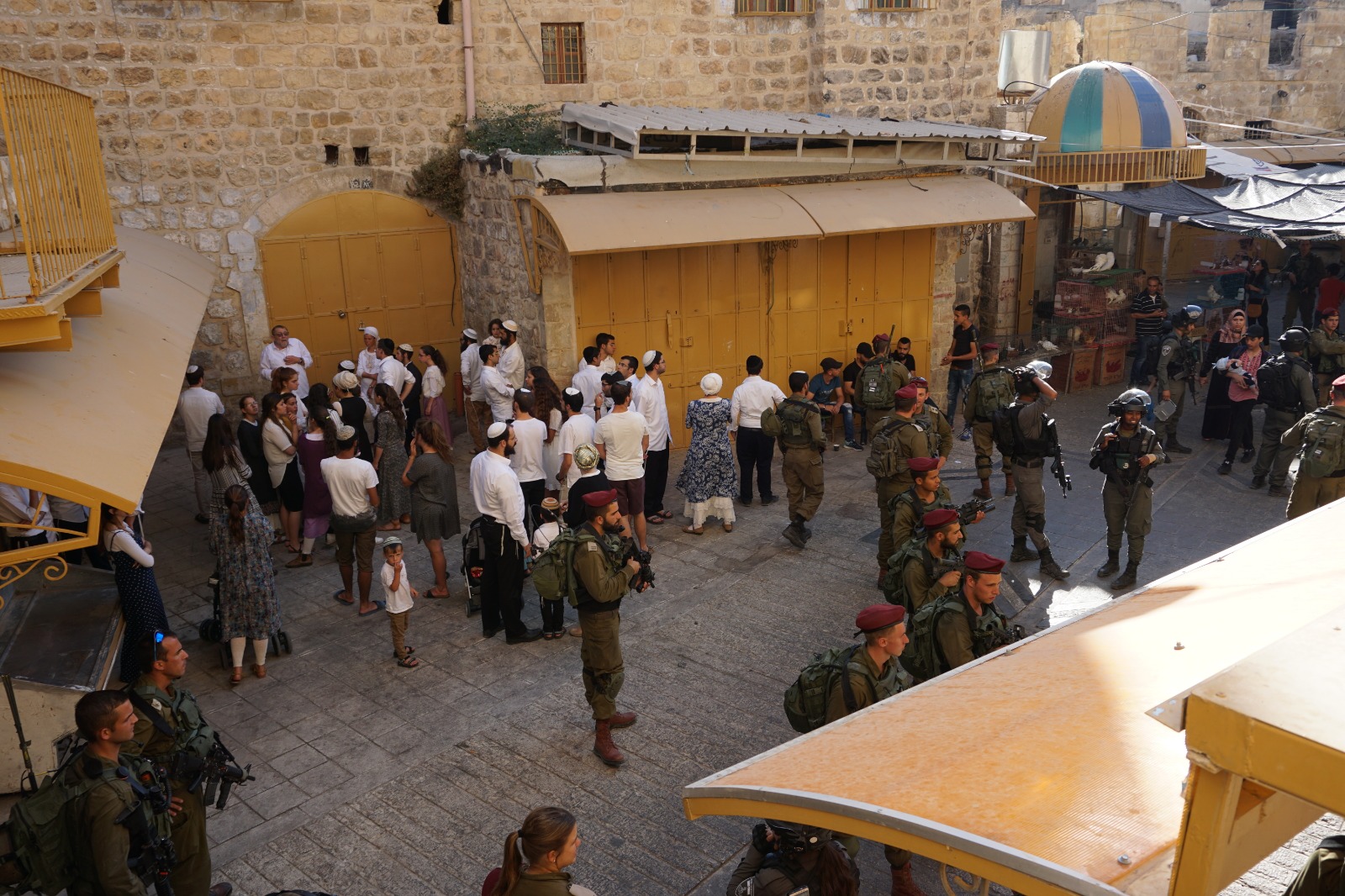
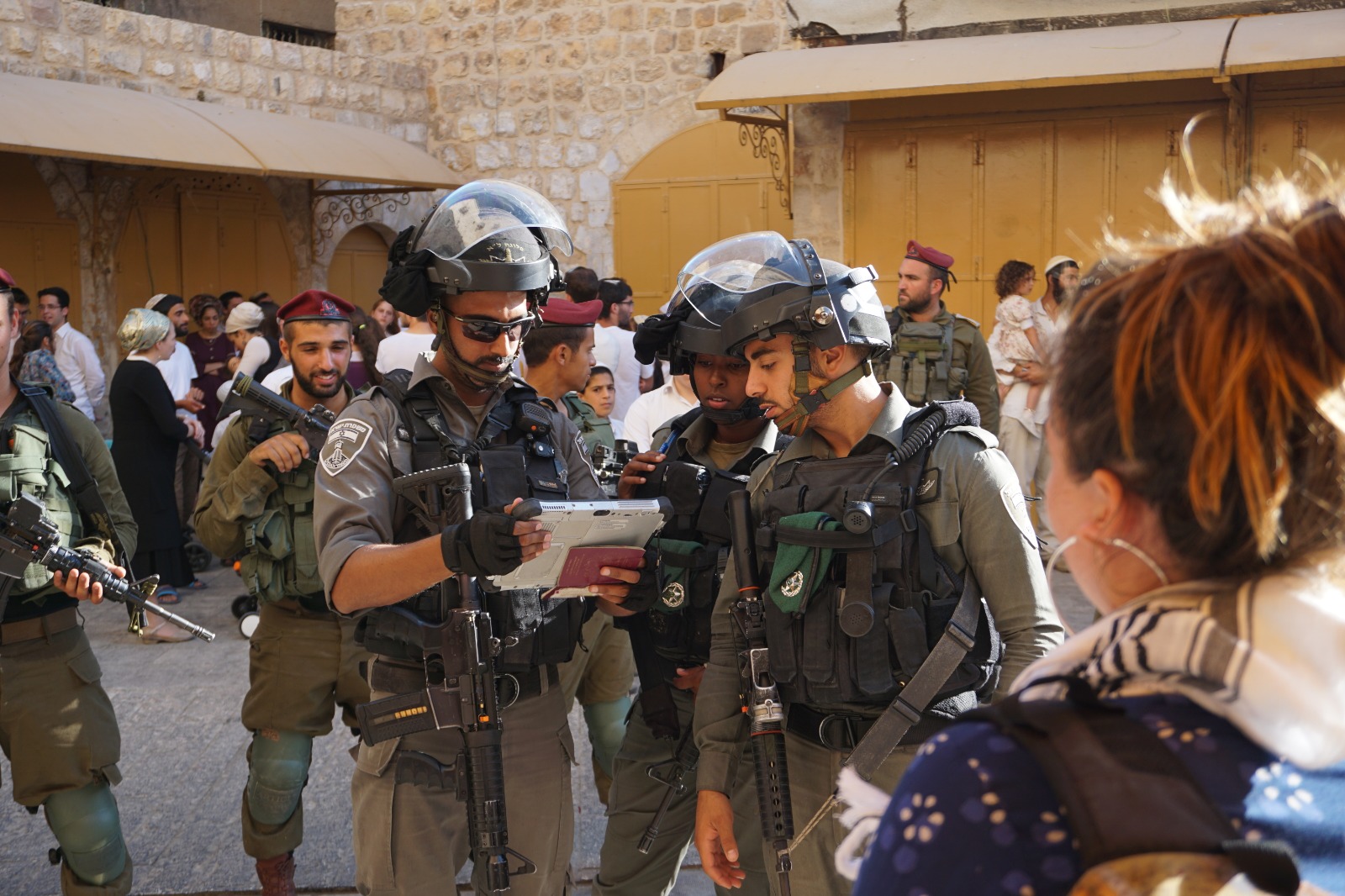
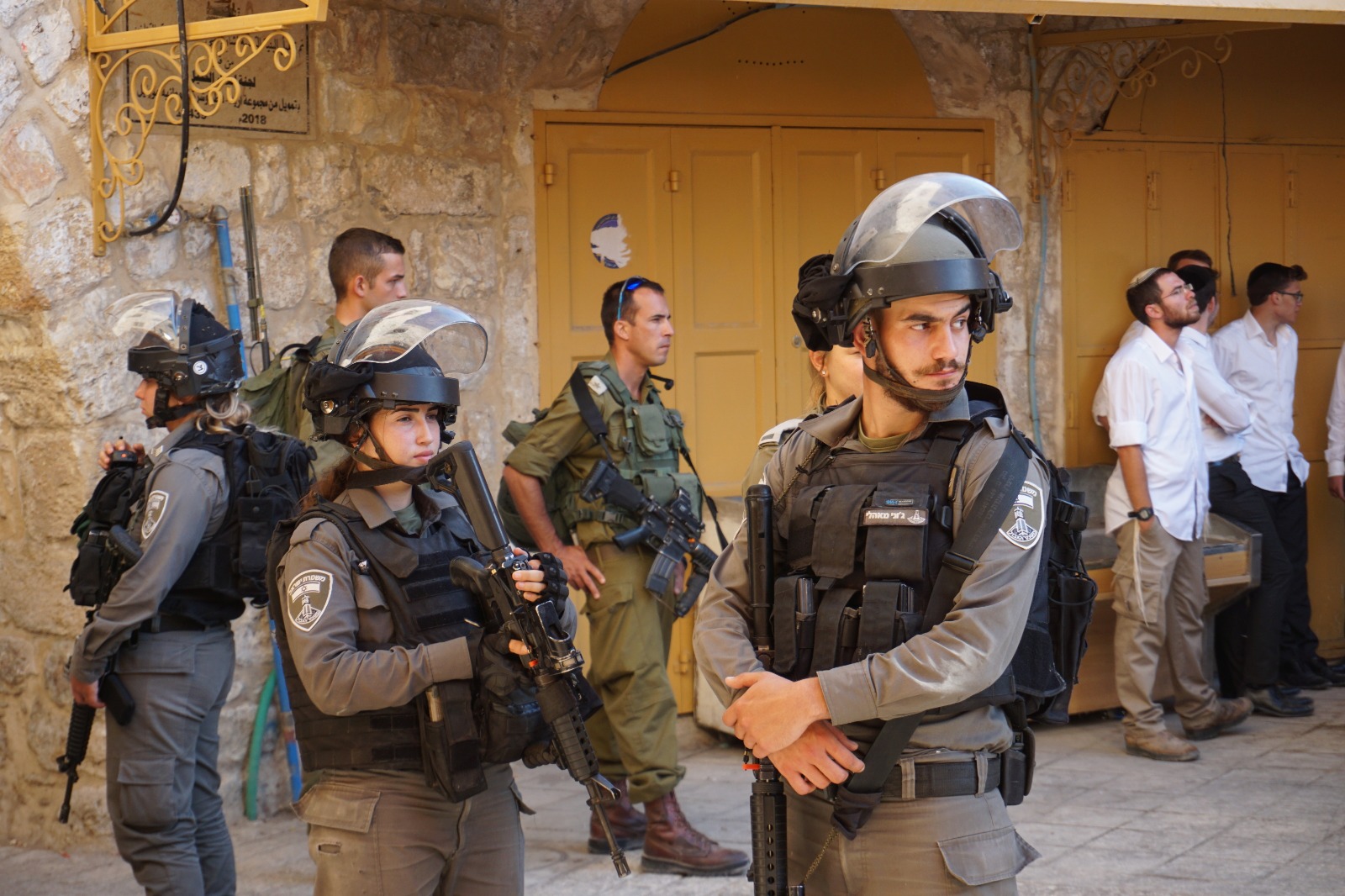
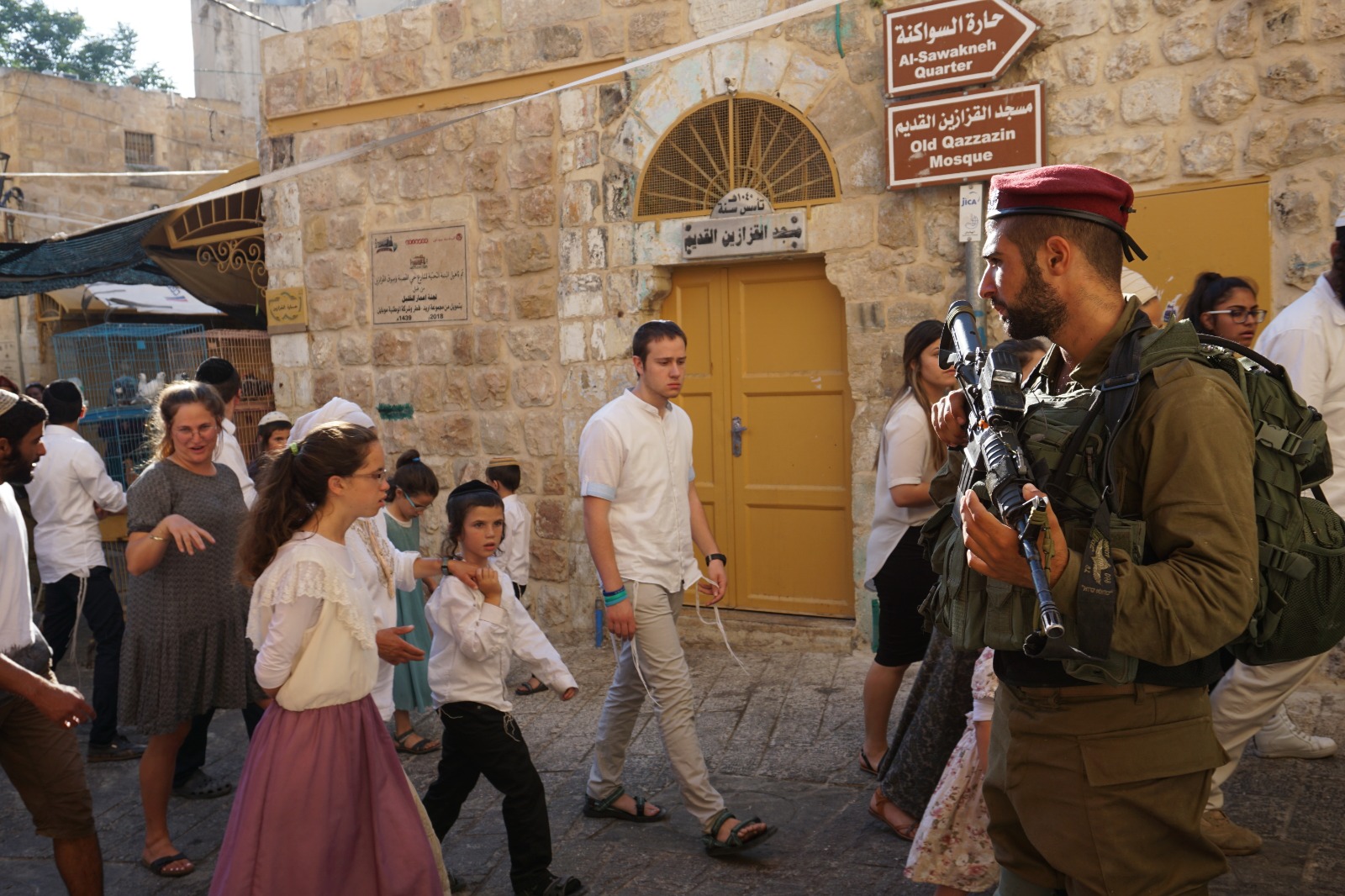
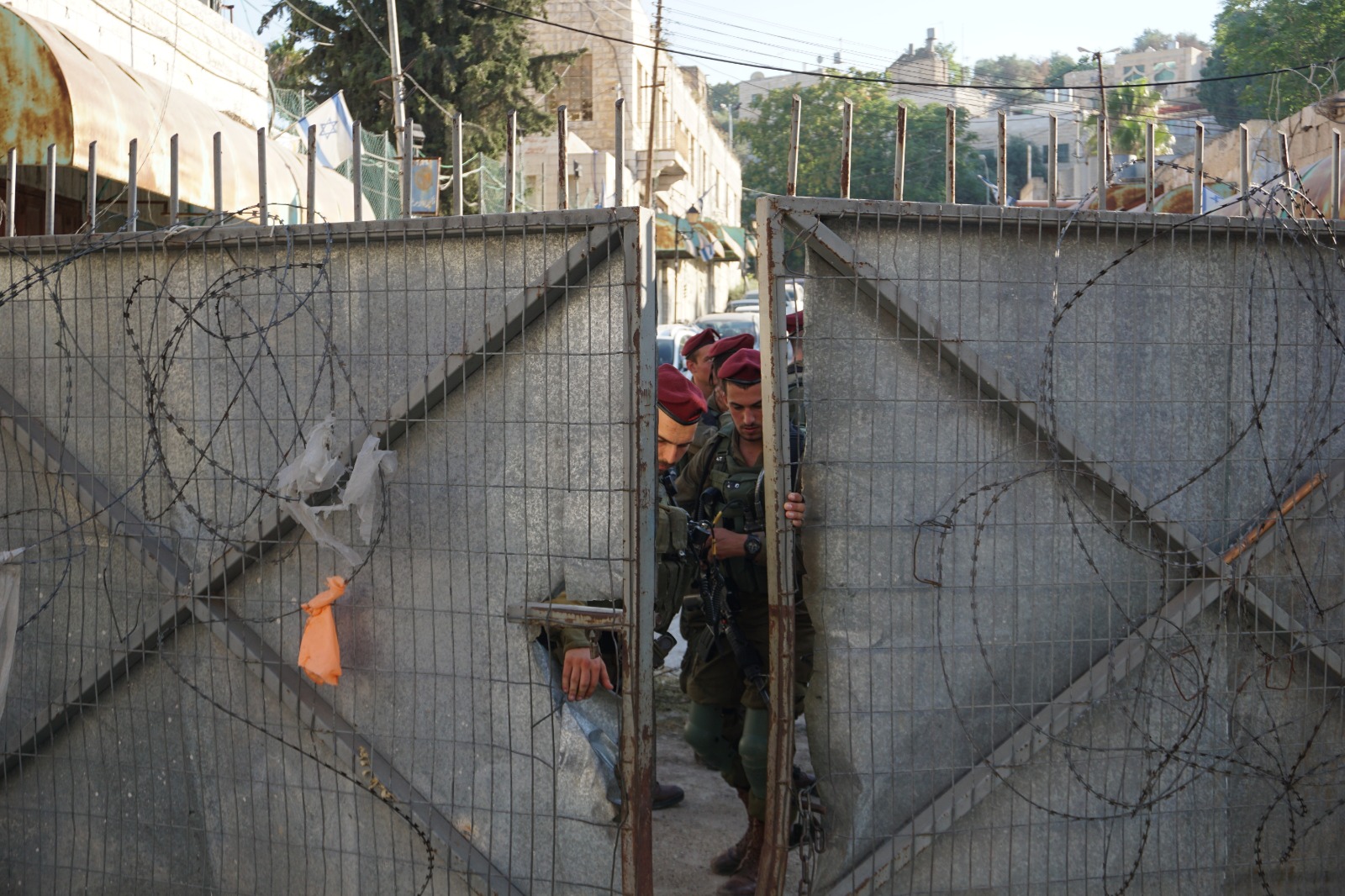
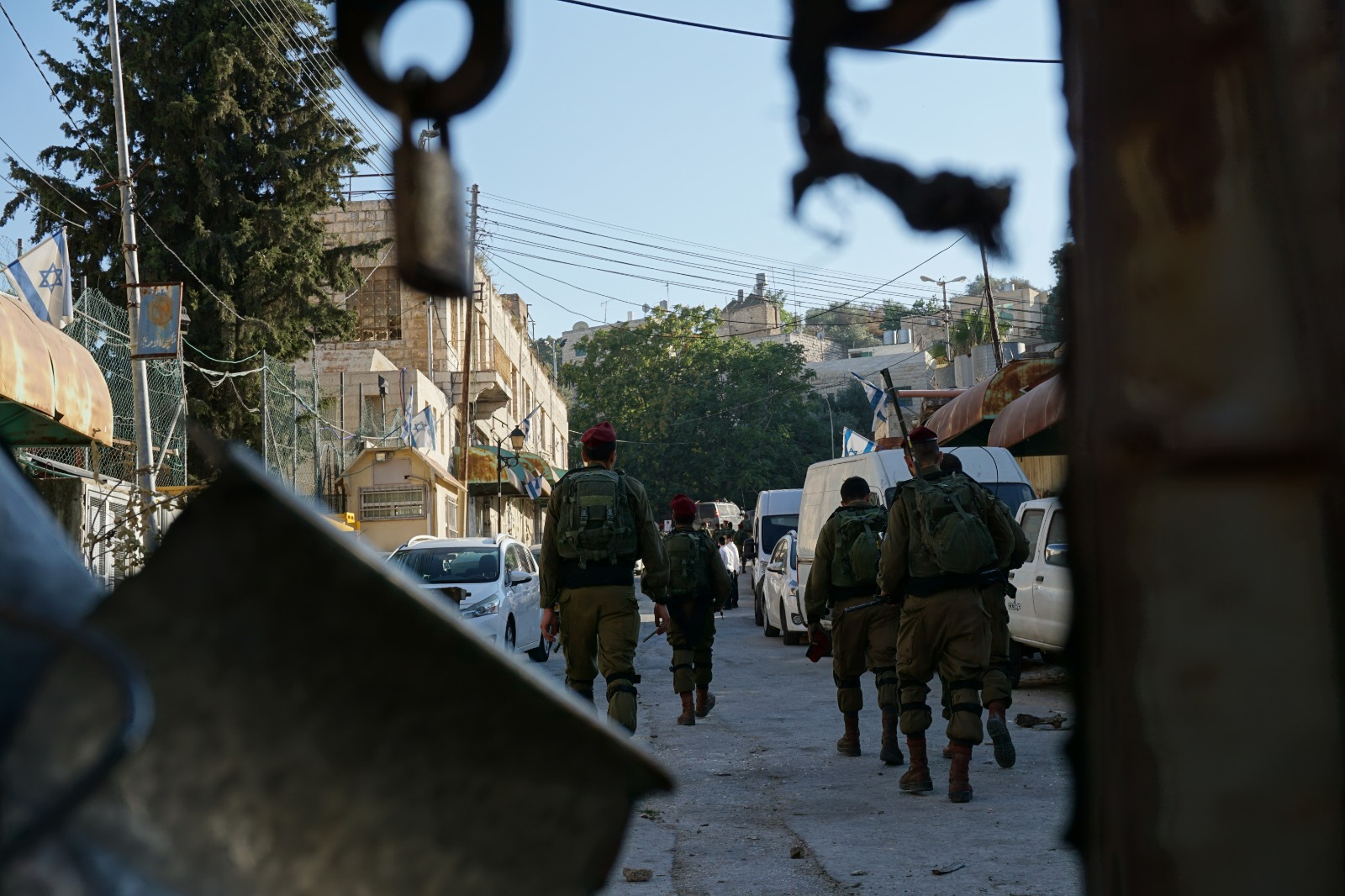
Hebron, occupied Palestine – Every Saturday, illegal Jewish settlers from around the West Bank take a “tour” of the busy souq (market) in Old City of Hebron, the busiest market street in the area since the closure of Shuhada Street. Local Palestinians believe that the Israeli authorities facilitate the tour as a deliberate method of intimidation, making life intolerable and unsustainable for them in order to prompt displacement.
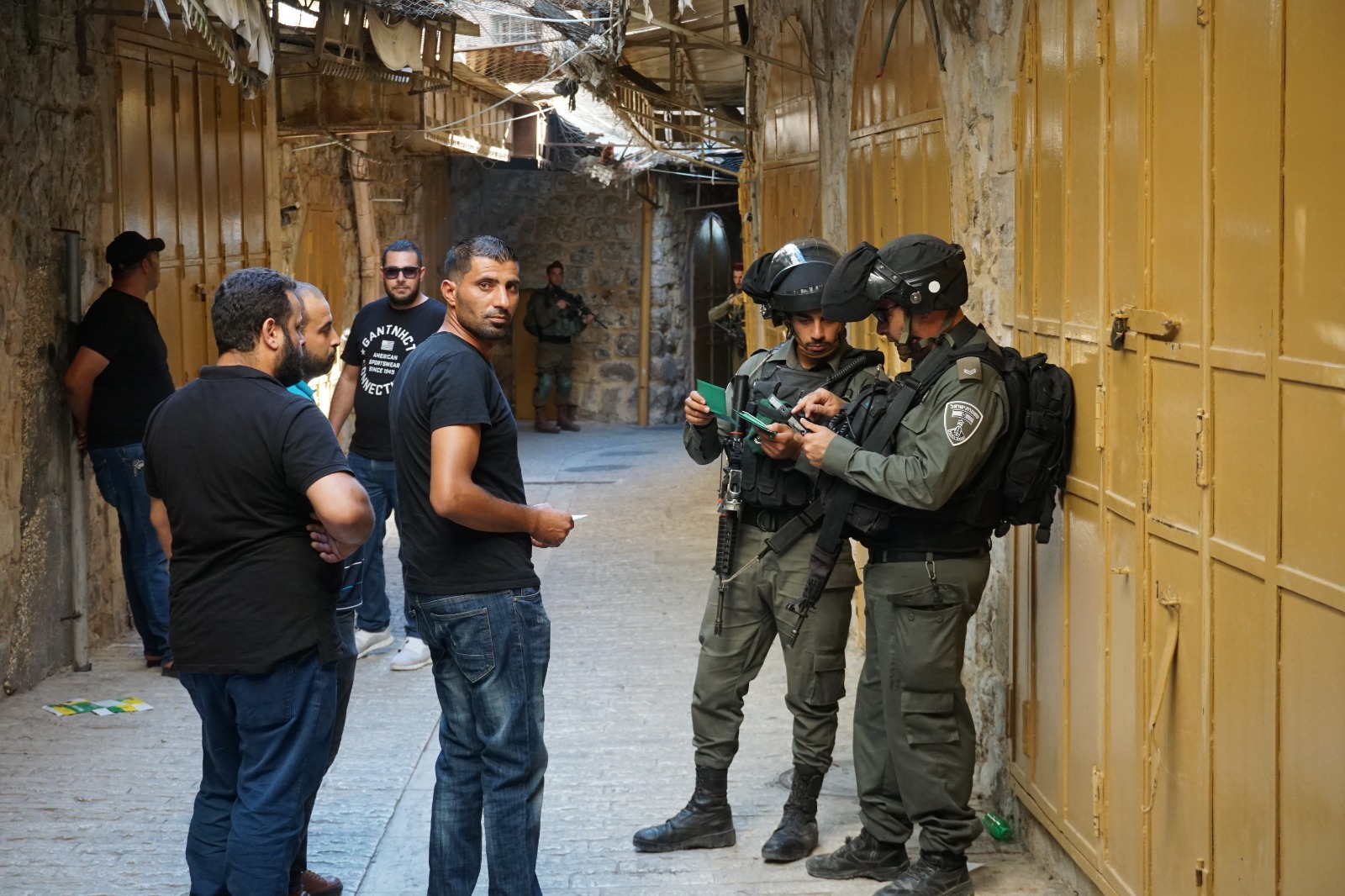
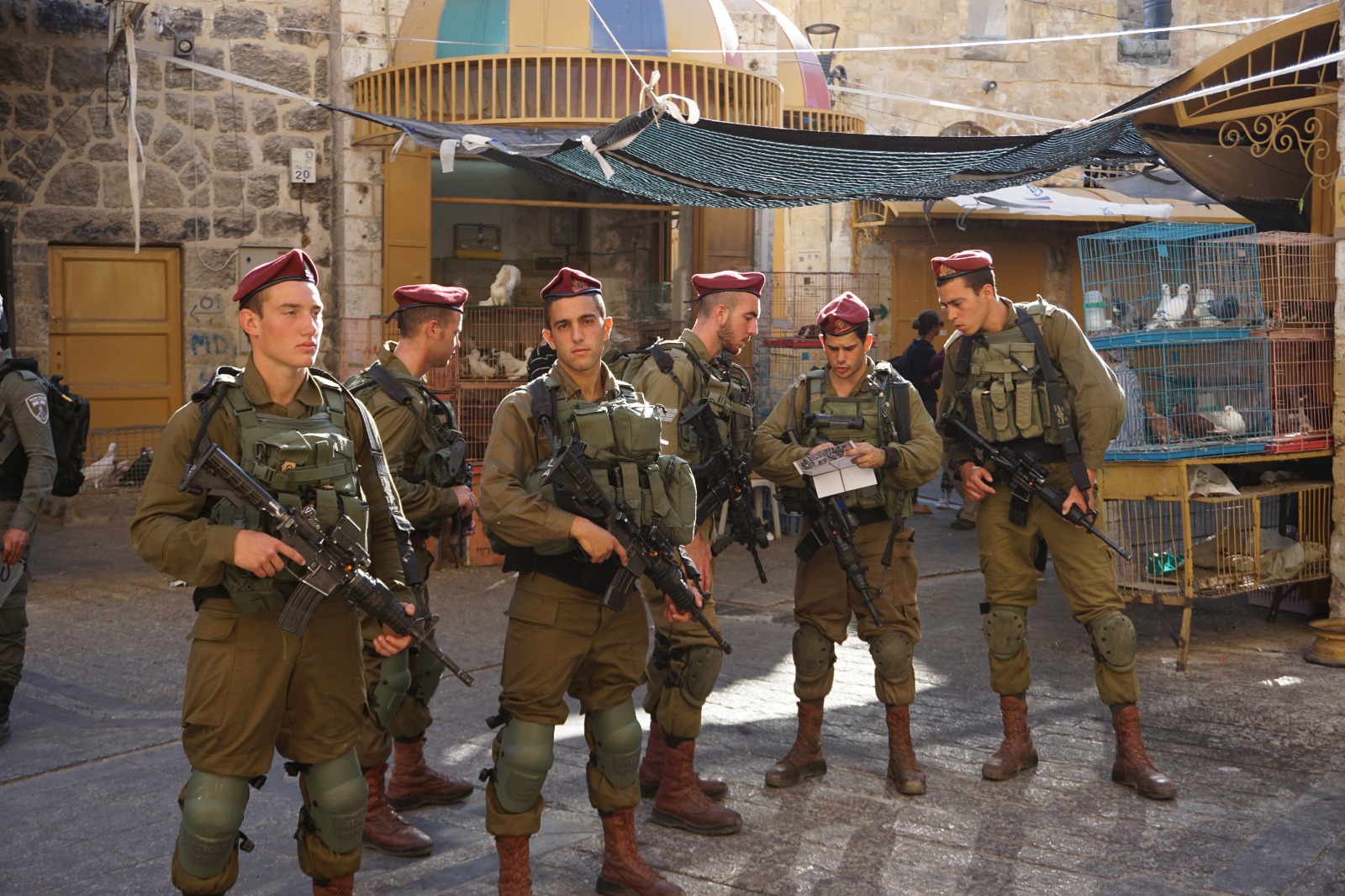
On the tour, current and prospective settlers are given a skewed history of Hebron which disregards and contradicts the documented history of peaceful coexistence between Arabs and Jews in the city before 1948. Instead, it identifies the land’s heritage as solely Jewish. As shown, the settlers are escorted by numerous Israeli soldiers and Border Police officers, who randomly detain Palestinians for ID checks and prevent free movement in the souq during the duration of the tour.
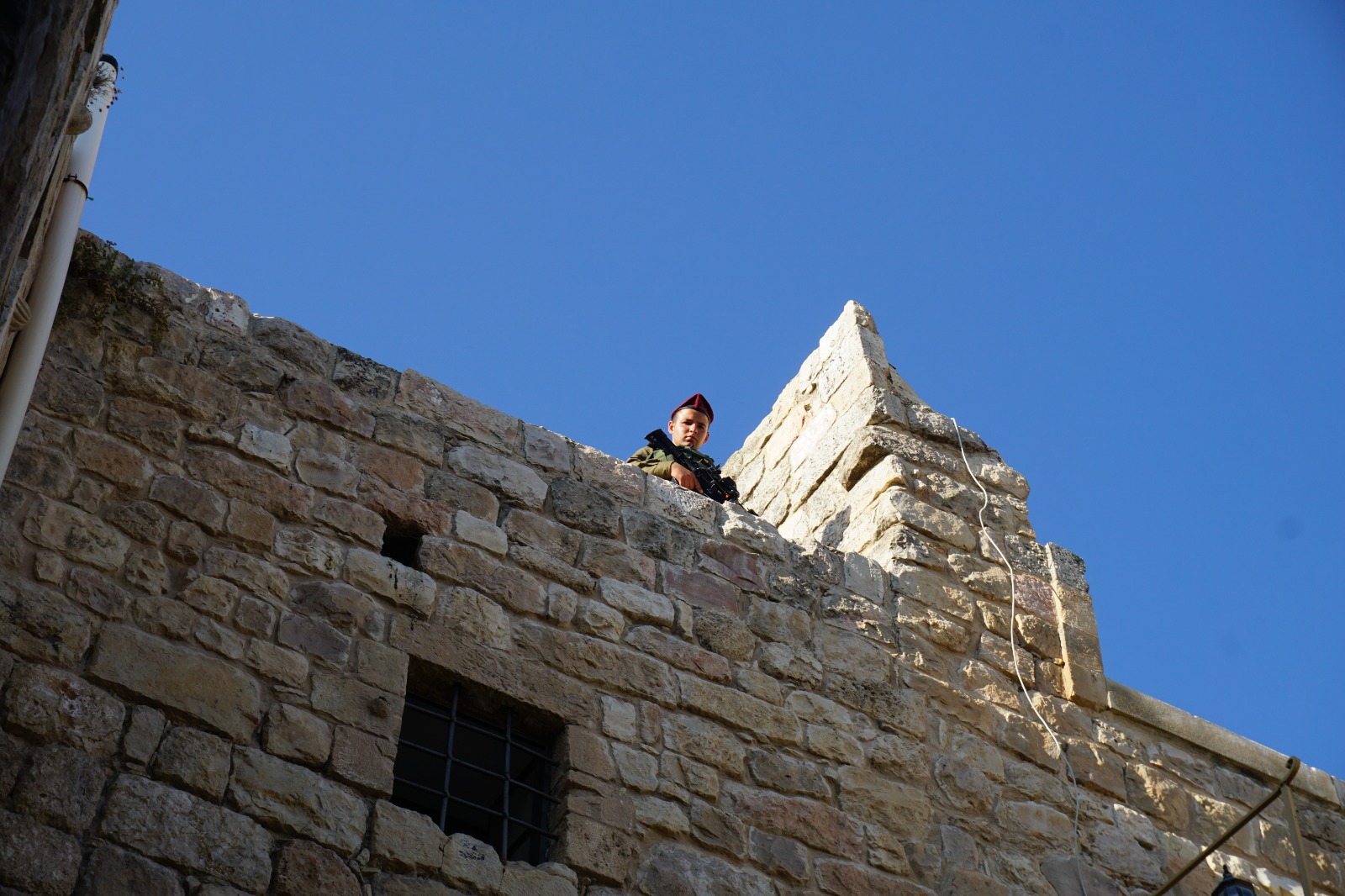
Military and police can also be seen on the rooftops of Palestinian homes, many of which are now empty as a result of forced evictions for surveillance purposes. Palestinians living in the Old City are under constant threat of home invasions by the Israeli military and Jewish settlers, further contributing to displacement and the theft of Palestinian property.




Revered Social Leader and Activist Killed in Colombia

teleSUR | July 5, 2019
Social leader Tatiana Paola Posso Espitia, 35, was shot twice in the head Wednesday morning in front of her house in El Copey located in the Department of Cesar when two men on motorcycles fired at the activist and fled the scene.
The assassination occurred just as Espitia’s taxi driver, Wilson Ortega Palomino, arrived at her home to take the social leader to work, according to local media reports. The bad timing resulted in Ortega also being shot four times by the hitmen. He is in critical condition at a nearby hospital.
The National Network for Democracy and Peace in Colombia published a communique on its Twitter account firmly condemning the murder.
“Posso Espitia was a social activist committed to humanitarian aid, helping vulnerable people and victims of the armed conflict that continue to affect Colombia,” said the report.
The organization added that the social activist, who was a candidate for the community council, was a beloved member of her community.
The document also explained how the city El Copey has had a long history marked by threats against social leaders, deaths and massive displacement of the population.
The tragic event comes as the Institute of Studies for Development and Peace (Indepaz) showed that since the signing of the peace agreement between the disarmed Revolutionary Armed Forces of Colombia (FARC) and the government of former president, Juan Manuel Santos in November 2016, 727 social leaders or human rights advocates have been killed in Colombia.
The assassinations have so far mainly targeted Afro-Colombian and Indigenous rights activists, in addition to rural farmers advocating for land and political rights in their respective regions.
Colombia’s Ombudsman announced Wednesday that at least 983 social leaders have been threatened with death in Colombia, 50 percent of them are women.
Last week, the ‘We Defend Peace in Colombia’ human rights organization called for major peaceful protests in the country and abroad meant to pressure the President Ivan Duque administration into fully addressing the rampant murders.
The global march is set to take place July 26 and is meant to “pay tribute to the (assassinated) social leaders and to demand action to end these crimes,” said organizers.
Iran Says 4 Kidnapped Diplomats in Occupied Palestine, Calls on ICRC to Form Fact-Finding Committee
Al-Manar | July 5, 2019
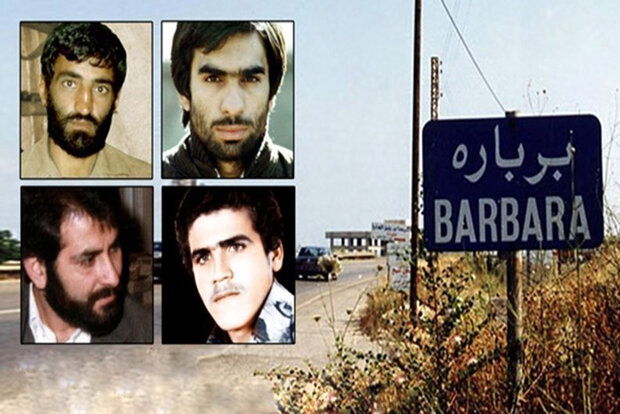
Iran on Friday said that the four diplomats kidnapped in northern Lebanon in 1982 are in occupied Palestine, calling on the International Committee of the Red Cross to form a fact-finding committee.
Iranian foreign ministry released on Friday a statement marking the 37th anniversary of the abduction of the four diplomats.
“As it has been mentioned over the past years, evidence indicates that the diplomats kidnapped in Lebanon have been handed over to the occupying forces of the Zionist regime and subsequently transferred to the occupied territories and now, are held in prisons of this illegitimate regime,” the statement said.
“Accordingly, and given the occupation of Lebanon at that time by the Zionist regime with the full support of the US, the Islamic Republic of Iran believes that the political and legal responsibility for the abduction and this terrorist action lies with the Zionist regime and its supporters,” the foreign ministry noted.
On July 4, 1982, the four Iranian diplomats were kidnapped by a group of Israeli-backed gunmen at an inspection post in northern Lebanon.
In September 2008, the Lebanese government sent a letter to the then UN secretary general, Ban Ki-moon, in which Beirut confirmed the abduction of the Iranian diplomats in the Lebanese territory and called for UN action to pursue the case.
The Zionist entity has claimed that the Iranian diplomats were abducted by a Lebanese militant group and killed shortly after their abduction.
Ethiopian Jews clash with Israel police over shooting
MEMO | July 3, 2019

Ethiopian-Israeli Solomon Tekah, shot dead by an off-duty policeman on 27 June, 2019
At least 47 police officers were injured and 60 people were arrested following protests across Israel after a police officer shot and killed an unarmed Ethiopian teen, Israeli authorities said Tuesday, reports Anadolu Agency.
Nineteen-year-old Solomon Tekah, a black Ethiopian Jew, was killed Sunday night when the off-duty officer fired at him in the Kiryat Haim neighborhood of Haifa. The incident triggered violent protests.
Protestors gathered in various cities and police intervened at times.
Protestors in the capital, Tel Aviv, the center of the demonstrations, blocked one of the main roads near Azrieli Tower, setting fire to the cars of drivers who wanted to pass through.
A kilometers-long traffic queue emerged in the capital following the protests.
Prime Minister Benjamin Netanyahu called on the protestors to stop closing down roads and said he was saddened by Tekah’s death.
More than 140,000 Ethiopian Jews live in Israel. Between 1984 and 1991, some 80,000 Ethiopian Jews migrated to the country. Ethiopians – also called Falas – who lived isolated for years and were only recognized by Israeli religious authorities after a long while.
In previous years, Ethiopian Jews held demonstrations protesting against the racism and discrimination they allegedly faced in Israel. According to Israeli media outlets, 11 Ethiopians have died since 1997 during clashes with the police.
READ ALSO:
Israel Police close case against cop who killed mentally ill Ethiopian man
The Special Rules- Why Aren’t They A Form of Discrimination?
By Eve Mykytyn | June 29, 2019
Any Labour Party member bold or stupid enough to make or be associated with negative statements about Israel, the Zionist politics that support Israel or who questions any piece of the present Holocaust narrative has been disciplined by the Party. Ex, See or See.
England has Jewish citizens and Israel is a British ally, these two facts somehow get conflated. Israel is a separate sovereign state, has been so for seventy years, and is likely to remain a country, and a rich and powerful one at that, for the foreseeable future. Britain’s Jewish citizens, like all Brits, have rights to protection from discrimination, hate speech and the like that derive from their British citizenship and are wholly unrelated to Israel.
England and the US are also allies. When President Trump visited England he was met by huge protests and signs calling Trump a racist, a warmonger (in that I see little difference between Trump and other recent US presidents) dangerous and unAmerican and by large balloons portraying Trump on a toilet, in a diaper and as a penis. I’m an American, not a fan of Trump’s and it is fine with me if the British choose to protest his presence, although as far as I can tell such protests have no effect. Trump blithely misinterpreted the demonstrations as crowds greeting him, brilliantly diverting the media into a discussion about how that was not so.
Now imagine if the British held up similar signs insulting Netanyahu or Israel. Could they call Netanyahu a racist or ‘unIsraeli?’ Would anyone dare hold blimps of Netanyahu as a penis? Who would be kicked out of the Labour Party? Who would be prosecuted for hate speech or defamation? And what would this have to do with Britain’s Jewish citizens?
Why does Britain insist that there are certain ‘rules’ for criticizing Israel, as contained in the international holocaust definition of anti Semitism (the only racism that has its own special set of rules, apparently Blacks can go it on their own) but not for critics of Americans? Sadly, the US is close on England’s heels in implementing similar free speech penalties. Is there to be one rule for Jews and another rule for the rest of humanity?
“Rise and Kill First.” – The Secret Israeli Worldwide Assassination Program.
By Brett Redmayne-Titley | Global Research | June 28, 2019
“It made no difference which Palestinians we killed… They either were terrorists or would become terrorists or they gave birth to terrorists.” – former IDF commander, Rafael “ Raful” Eitan.
Spies, Femme fatale, deadly plots, killings, bombs, knives, guns, and an array of unique murderous weaponry that would make James Bond and “Q” envious. All this, combined with dozens of unapologetic and brutal cloak and dagger assassinations in foreign locales worldwide? Sounds like the makings of a great spy thriller.
Indeed. But, despite decades of Israeli denial… this story is true.
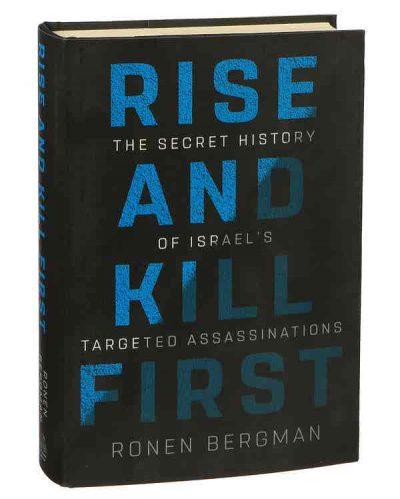 Ronen Bergman’s book, “Rise and Kill First,” was released in late 2018 to what, considering the inflammatory subject, was relatively little fanfare. While this might seem surprising, on reading this important chronological documentary of the inception and development of Israel’s worldwide assassination program it becomes clear that this book does provide a unique, very detailed and accurate history of Israel’s hundreds of extrajudicial killings over the past fifty plus years.
However, when read with just the right eyes, other far more important and separate timelines of history appear within the book to the reader already wary of the definition and rise of modern Zionism. Of these other unmentioned chronologies within the 530 pages, the author fails miserably in connecting these dots of his own excellent, but thus too superficial, presentation of fact.
What this book does more importantly reveal is a multi-faceted unmasking of Israel’s steady descent from the moral to the immoral tactics of war; the myth that it’s past Prime Ministers were not also barbaric terrorists and sacrosanct; the ongoing descent of other world leaders willing to give up their own conscience into the same mental abyss; the ever-increasing control of Israel over the minds of the American military, the CIA , its media and its politicians; and that Israel has never truly embraced peace as a foreign policy, preferring war and genocide instead.
Worse, “Rise and Kill First” reveals the true mind of the modern Israeli that has been infected by the rise of orthodox Jewish Likud party: An aberration of conscience that has no value for non-Jewish life worldwide whatsoever in its pursuit of its singular goal: Greater Israel.
***
“If someone comes to kill you, rise up and kill him first!” – The Babylonian Talmud.
“An eye for an eye, a tooth for a tooth” has been embraced in the routine alternative to turning the other cheek by Israel as foreign policy since its inception. This implies violent retaliation and retribution. But this book, when taken in totality, more accurately redefines this age-old Israeli mantra to its current Zionist definition, “Rise-up and kill first!”
The author’s failures in connecting the dots of his own excellently researched chronology are what makes this book a must-read. For observers of Israeli / Zionist hegemony of territory- and of mind- what Ronen omits are the many other chronologies that well illustrate, by his own documentation, why Israeli Zionism is indeed a threat that must be vanquished. These connections are obvious, yet omitted.
We need not wonder why.
In documenting Israel’s unknown – and always denied- program of targeted killings, Ronen’s work appears exceptional. What he presents is the result of seven years of his ongoing interviews of the scores of military and later political players who were the controllers of this seventy-five-year history of Israeli military development of domination and increased hegemony by assassination. The chronology begins with the killing of Tom Wilkin as far back as 1944 because of his role in very effectively infiltrating and disrupting the Jewish underground in Palestine as it forced the way for eventual Israel. At that time long ago before Zionism prevailed in establishing for the first time a Jewish nation, the assassination was not yet a sanctified national military program. That would change.
While the reader must take the details as presented since independent corroboration from these witnesses is nigh on impossible, the book is extensively footnoted and on very few occasions does Ronen fail to directly identify the names of his sources which he professionally cross-references against each other for validity. The credibility of the facts he presents seems evident.
His prima facie chronology of a book is a rollicking ride. Ronen is a good storyteller and he takes the reader through the details of the book from killing after killing and the planning and execution of each orchestrated plot. Loaded with salacious details aplenty, the author uses dozens of case studies from past Israeli hits to show the ongoing development and inception of the many new Israeli military and intelligence services, ongoing improvement in the tactics of the kill and the year-by-year increase in the willingness of Israel and its leaders to kill beyond their own borders while ever descending from the existing human conscience. His subject well in hand, Ronen treats the reader to a real page-turner of a spy novel.
The book picks up the modern era of Zionist expansion and assassination as WWII draws to a close with the Nuremberg trials and the flight of Nazi war criminals to other countries. Retribution is the key to these many stories as Israeli operatives systematically track down and arrest or kill those they accuse, such as Adolf Eichmann in Buenos Aires, Argentina.
As is the case with most books from Israeli authors on the subject of Israel, Ronen falls too conveniently upon the hyperbole of the Holocaust as reason for this initial killing and rendition program, but without proper examination. These killings first occur during the inception of the post-war development of Israel, the fact of which Ronen is far too brief and equally serving of the Israeli narratives since the historical slaughter and expropriation of Palestinians is glossed over.
As the author proceeds with his chronology, the reader is treated to a very fine and detailed description of many such major world events like the Munich Olympics kidnappings of 1972, the raid on Entebbe, Uganda and many, many more. Ronen does a very good job of cross-referencing the details of these many events with a plethora of interviews and quotes from the operatives directly involved at the time. What he reveals each time is quite likely the best examination of these events so far provided in print. Regarding Munich, he delves in great detail into the full rescue effort that includes the involvement of the German government which was at loggerheads with the Israelis and the IDF in the attempted and failed rescue.
Ronen’s effectiveness and credibility are challenged, however, by his almost constant insistence – by reference- that the Israeli actions he presents are invariably only retaliatory for a specific act of aggression by pro-Palestinian factions against Israelis. Ronen too routinely demonizes the Palestinian and Arab players’ actions and uses them too often as a fait a compli for their own eventual demise while rarely looking at the Israeli atrocity that preceded a Palestinian attack which led to yet another Israeli targeted killing.
During this period of the book, Ronen does a very good job documenting the change in the policy of the Israeli assassinations from executions only within Palestinian territories to the eventual decision to perform these assassinations globally. Ronen, although predominantly showing successful operations, does not shy away from Israel’s many failures as well.
He presents as almost comical the Manchurian Candidate-like attempt to brainwash, month after month, a Palestinian prisoner code-named “Fatkhi,” who is deemed to be mentally susceptible to these techniques and who, it was intended, would next be sent back to Palestine to assassinate PLO president Yasser Arafat. The results of this humorous vignette, after month’s of careful mental revision of the test subject assassin, are that the prisoner is finally freed on Dec. 19, 1969, by allowing him to cross the Jordan river. Due to equally poor planning, is swept down river and left clinging to a mid-river rock. When finally making it to shore Fatkhi immediately runs to the PLO police headquarters and then informs Arafat of all that he had endured at Israeli hands during his nine months of obviously unsuccessful programming.
When it comes to Arafat, the book shows the absolute hatred of Israel towards him personally due to his effectiveness as PLO chairman, a hatred that grows almost maniacally in the hearts of every Prime Minister and IDF commander as Arafat, again and again, evades their seemingly well planned and very numerous attempts to bump him off. This hatred is only made worse by the rising worldwide respect for Arafat and the PLO cause after each failed attempt.
It is at this stage in the book that, beyond the demand for Arafat’s blood, Israel crosses the mental Rubicon from respect for human life- other than the target- to allowing for and condoning the innocent to also be killed as a matter of convenience to each plot. The assassinations of a foreign scientist involved in the burgeoning nuclear programs in Iraq, Iran and Egypt began this slope downward.
Although Ronen fails to bring this point to the reader’s attention, he unwittingly documents in exceptional detail this change in conscience and therefore terror tactics which he best illustrates in the example of the Ashkelon murders.
***
“I do not remember an event of similar gravity in the history of the state of Israel” – Yehudit Karp, Israeli Deputy Attorney General for special duties
In understanding the change of the Israeli military and political mind towards that of proactive and routine utilization of terror by assassination, the Ashkelon affair is a seminal point in the book. This connection should not have been overlooked by Ronen; for what this case actually meant to subsequent Israeli war tactics was a complete change in morals of its leaders and that this change would devolve within leaders in other countries as well, particularly America.
On April 12, 1984, four Palestinian youths, three of whom were teenagers- the other twenty years of age- hijacked a bus heading en route from Tel Aviv to Ashkelon with forty Israelis aboard. Taking the passengers hostage with one knife and a fake bomb made of an old suitcase with wires dangling out from its seams for effect, they intended to get the bus to Palestine and next negotiate the release of 500 Palestinian prisoners held in Israeli jails.
When IDF troops eventually disabled the bus a stand-off ensues and negotiations for surrender begin with optimism for a peaceful resolution since, as future PM, Ehud Barak, who was on scene at the time assessed, “the hijackers would [likely] agree to let the hostages go in exchange for a few sandwiches.” But at 4:43 AM Sayeret Matkal (one of the many Israeli military factions) soldiers open fire killing two of the hijackers immediately and an Israeli woman instead.
Apprehended, the two remaining Palestinians are taken by Shin Bet (Israeli Intelligence Service similar to the American CIA) operatives under direction of the infamous Avraham (Avrum) Shalom, the longtime head of Shin Bet who, as Ronen showcases during previous killings, is a man predisposed of secretly sanctioned powers to kill with impunity and without authorization. As Ronen quotes Yuval Diskin, an eventual Shin Bet chief, “ We feared him… He was a strong man, brutal, clever, very stubborn, uncompromising, a real ass kicker.”
And so, since Shalom was not in favor of live terrorists being tried in court, hours later after first ordering the two Palestinians moved away from witnesses to a dank Shin Bet interrogation basement cell, next he allows/orders the soldiers transporting them to stop by the roadside en route and bludgeon them to death with rocks and iron bars to make it look like Israeli settlers had performed a different vendetta.
Then Shalom relaxes, safe in the knowledge that his personal barbarity was sanctioned from the top all the way to then PM Yitzhak Shamir, who had formerly been in charge of the same killing unit when so many innocent foreign scientists were put to death-secretly- at his whim as well. This was confirmed by Carmi Gillon, head of Shin Bet in the ’90s who assessed, “… he [Shalom] felt as if he could do whatever he wanted to do.” Within this subject, Ronen exposes the secret killing program know as “Weights” that was created by Shalom. Assesses the author:
“They were officially sanctioned extrajudicial killings, proposed to the head of Shin Bet by his senior commanders, approved by him and then the Prime Minister, first Rabin and then Begin and Shamir.”
What next transpires is what Ronen very accurately refers to as a “coup.” This was Shalom’s government-sanctioned barbarity vs. existing military and civil law: Laws that at that time favoured a proper conscience of man in wartime and therefore respect for human life. When the dust would settle several years later, the rule of law and its strictures would no longer functionally exist. And the mind of the modern Zionist would instead be set free to roam the earth.
Shalom would have, as so many times before escaped scrutiny, except for fate, a very inconvenient camera and that three senior Shit Bet officers would not lower their own moral values in kind.
Israeli press photographer Alex Levac had taken pictures of the arrest of the two remaining live Palestinians and managed to stash the film before being searched by a Birds soldier (another IDF special ops sub-set) for doing so.
When Levac’s final few shots disproved the IDF narrative that all four Palestinians had been killed at the scene of the bus incident, his editor’s at Hadashot tried to go with the story but were hit by IDF censors. However, someone leaked the story to Stern and the NYT along with the photo. When the story blew up, then PM Shamir and Shalom did all they could to stop the subsequent formal inquiry in its tracks.
In preparation for this coup, ten of Shalom’s men and co-conspirators meet in a distant orange grove under the direction of Gen. Yossi Ginosser, to ironically avoid Shin Bet listening devices and surveillance. Here they effect their plan which includes taking down their comrade, Brigadier General Yitzhak Mordechai, a man of impeccable reputation-and a personal friend of Ginnoser- who had commanded the troops at the scene of the bus- as the patsy.
When next Ginosser, with the full knowledge of Shalom, weaves a web of deceit designed to thwart the inquiry, they also seek to shift their crime to Mordechai by testifying that, due to their observations that day it was Mordechai who had given the order to kill the Palestinians. The court conveniently certifies their plot by clearing Shalom and company and next Mordechai is charged with manslaughter in their stead.
But fate then smiles on Mordechai when a military advocate, Menahem Finkelstein, who was on the first inquiry panel subsequently is involved in the decision on whether Mordechai is to be indicted for manslaughter, notices many inconsistencies in testimony and facts. Despite this, Shin Bet and the Justice Ministry insist – for obvious reasons – that Mordechai be prosecuted. Thanks to Finkelstein, however, Mordechai is, after being indicted, finally acquitted.
If this had been the end of the story it would have been relatively insignificant. But, during this lengthy saga three senior Shit Bet officials including Reuven Hazak, (Ronen does not name the other two) who was already tapped as Shalom’s successor to head the IDF, were having trouble sleeping. They concluded that justice would only be served by the collective resignations of all the conspirators including Shalom.
Shalom refuses and Hazak next goes directly to then PM Shimon Peres, who had replaced Shamir a year before. What Hazak does not know is that Shalom had already launched a preemptive strike of his own with Perez, who, after placating Hazak, next allows Shalom to sack all three whistleblowers. As the author notes:
“They departed in disgrace from the service they had given their lives to, estranged from their colleagues, who were given to believe that they were traitors.”
However, the three are undaunted, collectively showing up unannounced in the dead of night to the office of Israel’s Attorney General, Yitzhak Zamir, whom himself has previously signed off on many an Israeli hit. After spilling their guts for many hours about the true story of the Palestinians of Ashkelon and the frame-up of Mordechai, Deputy attorney general Yehudit Karp years later recalled to Ronen:
“I felt as if the sky had fallen. It is not possible to exaggerate what happened there. It was a gross undermining of the rule of law and corruption of all the systems. I do not remember an event of similar gravity in the history of the State of Israel.”
When Attorney General Zamir immediately calls for a new inquiry and Israel police launched a second concurrent investigation, Shalom refuses to yield. He and his other Shit Bet conspirators next begin direct intimidation of their own against Israel Judicial officials that was so extreme that Attorney General Zamir and others within the prosecution were assigned 24-hour police protection. From Shin Bet!
Shalom and company now appear to be cornered on all sides with the power of the full Justice Ministry now steaming directly at them. But Shalom has one last card to play. A trump card as it turned out.
Shalom, Ginosser and the others involved produce what Ginosser termed, The Skulls Dossier: A list of the secret and never revealed skeletons in the closet of not only the Shit Bet and Weights but, worse, of the former leaders who became Israeli Prime Ministers themselves afterwards. Ronen sums up:
“In reality, it was pure blackmail, an implicit threat that if Shalom and his allies were indicted, they would take others with them, including Prime Ministers.”
The denouement of this end to the power of the civilian Israel courts over the military came quickly in a final move by former PM Shamir (who had full knowledge of the plot), then current PM Shimon Peres (who had approved Shalom’s plot) and future PM Yitzhak Rabin who was at the time defense minister. They convince then Israeli president Chaim Herzog to hand down “all-encompassing pardons to the implicated Shit bet personnel, covering all proceedings against them. Eleven men were thus exonerated before they’d even been indicted.”
When challenged by the media about his own complicity in covering up the Ashkelon affair and covert operations Herzog was unabashed, stating, “That way [a trial] perhaps sixty to eighty affairs from the past would have emerged. Would that have been good for the country?”
As of this last day of the Ashkelon affair, Israeli respect for law, morality and the proper conscience of man would begin its steady descent towards the gates of hell where the souls of men like Shalom, Shamir, Begin and Netanyahu and their other Zionist ilk still seek mental refuge today.
***
“The attacks on 9/11 gave our own war international legitimacy. We were able to completely untie the ropes that had bound us.”– Shin Bet chief, Yuval Diskin.
While the aforementioned brief synopsis of the Ashkelon Affair does not do justice to Ronen’s much better and very detailed and footnoted portrayal, it is this parable that shows the inherent value of “Rise and Kill First” that is not garnered at the hands of the author. For, to the Ziologist- those predisposed to understanding the post-1967 worldwide threat of Israeli inspired Zionism- this one parable should ring true as a much too close parallel to what we see in today’s Israel and it’s American vassal.
Few observers of current American foreign policy would argue against the premise that its operations are today controlled by the Zionist elements on the rise in Israel due to a directly proportional rise of the Jewish orthodox influenced Likud Party. What is also important to note is that the Ashkelon affair took place more than thirty-five years ago: Before America eventually followed this example in lock-step.
It would, thus, be easy to substitute the names Bolton, Pompeo or Abrams for that of Shalom, or that of Chelsea Manning, Julian Assange or William Binney for the three Shin Bet officers who also took a moral stand that was brutally put down by a Zionist mentality revolted by inconvenient truth and the demands of correct conscience. It would also be easy to substitute the CIA for Shin Bet as the likely leaders of American extrajudicial killings currently sanctioned worldwide by an administration whose cajones are obviously in the fists of a Zionist controlled cadre transplanted into Langley, VA.
But should the reader of this review not yet see the value of this book as the narration of a chronology and history of the ongoing and increasing control over foreign and American governments alike, perhaps Ronen’s documentation of Israel’s “Red Pages” might help with one’s proper epiphany.
Red Pages are the death sentences for extrajudicial killings, once signed by Israeli Prime Ministers prior to the assassination of the victim. This began more than fifty years ago. Readers capable of objective historical understanding of the Obama administration should well know that it was during this time in American history that America followed the Israeli model and began the Tuesday Morning Briefings where, under America’s Nubian president in black-face, American foreign policy succumbed to CIA pressure and to the Zionist military business model wholesale and began allowing the extrajudicial killings of anyone offered up weekly for sacrifice by the CIA, including the innocent… and American citizens as well.
Within the book we follow these many Red Pages- named for the color of the document- as they morph from close civilian scrutiny within established law, to Israel changing the law for convenience in John Woo fashion under Bush II and eventually signing the equivalent Red Pages each week in secret in Washington and without concern whatsoever for Law or conscience. Or US judicial oversight.
The use of Red Pages by Israel began under Golda Meir who had already approved many assassinations and was predisposed to do the same to Black September leader Mahmoud Hamshari. Meir, however, was uncomfortable shouldering full responsibility and instead convened a panel of civilian leaders to formally approve the Red Page. At this time in history, the early ’70s, Israel had just begun assassinations outside of Israel, Palestine and Lebanon, but was not willing to hurt the innocent in the crossfire. As Meir told Mike Harari, former Mossad boss, before approving the hit, which would see Hamshari taken out in France, “be sure not a hair falls from the head of a French citizen.”
But by 1977, Israel under PM Menachem Begin saw him merely signing off all Red Page requests without reservation or committee and upon request and “Begin signed off on operations face-to-face, without a stenographer and without his military aid.”
In 1983 Israel next began approving targeted killings of foreign diplomats. First to go down was Iranian ambassador to Syria, Ali Akbar Mohtashamipur. At this point, targeted killing was routinely justified to stop likely future terrorist acts or as the Israelis called it, “negative treatment.” Still, these had to be approved at the highest level, but this proved far too restrictive to developing Israeli tactics. The next step was to re-brand the killings as an “interception” which conveniently no longer required authorization from the PM. As Ronen quotes a Northern Command officer,
“ … a precedent was created by which an assassination operation was called something else… in order to enable a lower echelon to approve it. Killing a man no longer required the prime minister’s approval.”
A different precedent was also created at the same time: that of killing retroactively as well as proactively.
By the time the US began using drones for its own targeted killings Israel – the first to use drones for this purpose had been doing so for years with a precursor drone program of its own. Here the Red Page definition for approval was further lowered. Using the new term, “illegal combatant” the forerunner of Donald Rumsfeld infamous, “enemy combatant,” after protracted debate the Israeli judiciary sided with the military in broadening the right to kill the innocent. As Ronen points out after laying out the details:
“The term allowed [killing]anyone active in a terrorist organization; even if his activity was marginal… he could be considered as a combatant-even when asleep in his bed-unlike a soldier on leave who had taken off his uniform.”
The culmination of this step-by-step decline in the value for human life was best exemplified in Ronen’s description of the killing of Hamas political leader, Mahmoud al-Zahar. He was not considered to be an imminent threat and was, as described by Israeli General Giora Eiland ”an elderly, pitiable, half-blind cripple in a wheelchair.” Further advanced planning predicted that the operation to kill al-Zahar ” would have implications as far as hurting uninvolved persons…”
Ariel Sharon, who as detailed repeatedly in the book is the embodiment of the barbaric tactics within the modern Zionist soul, approves the killing in an operation titled, ” Picking Anemones.”
The result is that al- Zahar dies from a hell Fire missile fired through his apartment window and many men women and children in the building join him in the rubble of what is left of Israel’s former allusion of adherence to humanity.
As Ronen takes the reader through the decades, what becomes clear, besides Israel’s descent from conscience, is the effect this full chronology has had on the world, particularly America. A single footnote on page 702 reveals the tight editorial control that likely allowed for the publishing of his book only by deliberate omission of the obvious connections, but also unwelcome facts. Following an interview with General Giora Eiland who assessed correctly, “The American approach to targeted killings has changed from one end to the other,” he follows up by quoting former US Home Land Security boss Michael Chertoff, who adds, regarding American targeted killings worldwide, ”I think they are very much better than non-targeted killings.”
But the many connections missed by Ronen but showcased non-the-less in his book go beyond his detailed story of the ongoing military take over of Israel judiciary and political institutions and the ever-changing definitions of Red Pages and therefore the value of human life.
For the Ziologist interested in adding Ronen’s history to his memory texts, one will also find within a similar descent of other world leaders and the United Nations; the rise of the Likud party under the influence of Jewish orthodoxy as spearhead to these changes; the rolling over of the media against examining Israeli atrocities; the steady insertion of ” dual loyalty” Zionists into the intelligence services of America, Britain, France and Europe; and Israel’s eventual utter disregard for world opinion and outrage primarily because of its infection into the aforementioned facet of world society.
Although Ronen fails, again and again, to make these connections, his excellent research, interviews and cross-referencing within the scores of assassinations he documents make these connections, however, irrefutable. This leaves the Ziologist -or the casually concerned reader of Israeli modern history- to draw one encompassing conclusion: Israeli Zionism is the singular cancer that has been forcefully injected into the minds of world leaders across the globe; a cancer that these similarly affected leaders would wantonly force upon what little remains of the moral, civilized and correct conscience of man.
Ronen failed to make any of these many and all too obvious connections. If he had, the book would have been a bombshell.
His failures are also why the reader has not likely heard of his book, and… why it managed to be published at all.
Featured Video

The Search for Truth: Charlie Kirk’s Assassination One Year Later
or go to
Aletho News Archives – Video-Images
From the Archives
The 9/11 “Double-Cross” Conspiracy Theory
BY LAURENT GUYÉNOT • UNZ REVIEW • SEPTEMBER 6, 2022
Is it true that “9/11 was an inside job”? Yes, insofar as Israel is “inside” the U.S. But for the 9/11 truthers who have identified Israel as the main perpetrators, “9/11 was an inside job” is at best a half-truth, and at worst an integral part of the Zionist operation, like a secondary flag sewn as a lining under the false flag of Islamism. Victor Thorn (1963-2017) wrote in his book 9/11 made in Israel: The Plot Against America (2011): “In essence, the ‘9-11 truth movement’ was created prior to Sept. 11, 2001 as a means of suppressing news relating to Israeli complicity. . . . The slogan ‘9-11 was an inside job’ was quite possibly the greatest example of Israeli propaganda ever devised.” In milder terms, it is “controlled opposition”.
A genuine truth movement would have pointed to Israel as the prime suspect from the start. From day one, it was obvious who would benefit. … continue
Blog Roll
 Aletho News
- Hormuz and the Looming Economic Catastrophe
- Dhubab offensive, media blitz and the rapid unraveling of Saudi-backed coalition’s new gambit
- Putin Conveys to Trump Iran’s Vision on Possible Conflict Resolution – Kremlin
- The Search for Truth: Charlie Kirk’s Assassination One Year Later
- ‘Harsh reality’: Iran says France seeks monopoly on power and intimidation, not peace for all
- When Will This White House Madness End?
- Huckabee aide goes to ‘unusual lengths’ to portray ‘Israel’ positively
- Trump Announces Diesel Supply Deal With Putin Following Phone Call
- MEP blasts ‘Euro-Gestapo’ for lecturing Russia on democracy
- Syria May Send Troops to Saudi Arabia Amid War with Ansar Allah
- If Americans Knew
- Gaza ceasefire exists in name only, say more than 100 organizations
- Nearly 2 Million in Gaza Need Urgent Shelter Assistance as Winter Looms: IOM Chief Warns
- Suppressing Palestinian resistance: US charity under fire for AI monitoring of Gaza classrooms
- Thousands Are Held in Israeli Torture Camps. This Is What Happens Inside
- Israel puts Gaza’s sick, injured, newborn in peril – Daily Update
- Report claimed Mark Levin used by Israeli government to influence Trump
- Over 2,000 Gazans have died awaiting medical evacuation amid Israel’s continued siege
- How a U.S. Diplomat Suppressed and Altered Reports Critical of Israel
- 5 Palestinians Die from Israeli Strikes in Gaza as Relentless Attacks Continue
- Report: Ceasefire Slows Killing but Leaves Devastation Intact
- No Tricks Zone
- New Study: 50 Years Of The Most Aggressive ‘Net Zero’ Policies Can Only Affect The Global Climate By 0.03°C
- US September “Heat” Was No Record…Many Records Set Decades Ago
- Latest European Green Energy Debacle; Portugal’s Largest Flagship Solar Park Insolvent!
- Green Energy Debacle: German Expert Professor Fritz Vahrenholt Warns Of Severe Economic And Social Consequences
- Two More Paleo Reconstructions Affirm Meters-Higher Sea Levels Across Ireland, Brazil 7000-6000 Years Ago
- New Study: Earth And Venus Surface Warmth Largely Explained By Convection And Lapse Rate, Not CO2 Or Radiation
- 2025 Nature Paper Claiming Worsening Global Drought Gets RETRACTED …Heavily Flawed
- New Study: ‘Global Drought Shows No Detectable Recent Acceleration Under Climate Warming’
- Economic Masterminds: German Socialists Suggest Taxing Productivity Gains Stemming From Using AI
- The South China Sea Has Not Been Cooperating With The Climate Change Narrative

