In a society of “believers” & “deniers” we all become Inquisitors
By Catte | OffGuardian | March 11, 2017

The two minute hate redefined for the Facebook age
Light often arises from a collision of opinions, as fire from flint & steel”Benjamin Franklin, 1760
“The peculiar evil of silencing the expression of an opinion is, that it is robbing the human race; posterity as well as the existing generation; those who dissent from the opinion, still more than those who hold it. If the opinion is right, they are deprived of the opportunity of exchanging error for truth: if wrong, they lose, what is almost as great a benefit, the clearer perception and livelier impression of truth, produced by its collision with error.” John Stuart Mill
The “collision of opinion” so endorsed by enlightenment thinkers, is not currently encouraged. If someone says something stupid or blatantly false our first response is no longer to try to prove them wrong – it’s to silence them. To quote Jonathan Pie we focus on “stopping debates instead of winning them.” A good recent example of that is the bizarre trial-by-media of Polish right-wing MEP Janusz Korwin-Mikke.
Let’s be clear. JKM seems to hold a pretty reactionary and unpleasant set of views, about women and much else. Speaking as a woman, I’m not a fan of that. Here is the gentleman, talking about the gender pay gap, in the discourse that ignited the current eruption of outrage:
His English is broken, his reasoning shaky and his conclusions pretty flawed. He’s a self-created straw man, waiting to be knocked over by any reasonably intelligent or astute opponent. But what has the response in the media been?
Yes, that’s right, not a series of rational refutations, but a chorus of offended people hurling abuse and demanding the clown be censored.
Piers Morgan, who invited Korwin-Mikke on to Good Morning Britain did little more than exchange playground insults with the man. Korwin-Mikke says his opinions are based on “scientific studies”. Did Morgan bother to ask what these “studies” might be? Did he offer counter-evidence that proves the nonsense Korwin-Mikke is talking?
No. He just called him “stupid” and a “sexist pig”. Ok, maybe JKM is both those things, but that’s not the point. If he’s wrong he should be shown to be wrong, with rebuttal, not ad hominem. What Morgan did, and was lauded for, isn’t debate, it’s an ignorant brawl, or the two-minutes hate. The fact the hate-figure on this occasion is some man with unpleasant ideologies and dodgy data does not make it a great day for democracy.
The call is mounting for Korwin-Mikke to be “kicked out” of the European parliament. The Soros-funded fake grassroots group Avaaz is leading this campaign, and lying about him into the bargain, publishing photos of him doing a Nazi salute, without bothering to tell anyone he was, as the Independent grudgingly confirms in its text, doing this as a derogatory commentary on current German policies, and not as a tribute to Hitler (yes, it was still inappropriate, but that doesn’t justify a blatant falsehood being propagated in pursuance of a witch hunt). Avaaz’s campaign already has over 700,000 signatories. And indeed Korwin-Mikke is going to be dealt with by the EP itself, who have promised:
… a penalty commensurate with the gravity of the offence”
Offence? Is it actually illegal now to say untrue things about women? We’re going to punish this guy, not prove him wrong?
So, who cares, right? So, one misogynistic fool gets falsely maligned and hounded in the tabloids and maybe even “kicked out” of parliament, who is any the worse for it?
To which the obvious reply is – do you really think it will end there? Do you think the neoliberal press and toxic propagandists such as Avaaz are busy fostering this atmosphere of anti-intellectual intolerance just so they can deal with a handful of women-haters or other nasties?
The point is, once you have installed the culture of suppression, you can use it in any way you like.
The insidious new meme being developed in “progressive” places like the Guardian, and other neoliberal strongholds is that free speech is all very well, but has its limits. Not, you understand, the already established limits defined by law which make it clear free speech does not include the right to threaten, defame or incite violence. No, these are new and woolly limits that involve misty concepts like “hate” (not hate-speech, which is also defined by certain laws, but “hate”, which isn’t), and “consensus facts.” We are told that people who transgress these vague new limits need to be stopped – for the good of society. We are told we are living in a time of unprecedented “hate”, even though prosecutions for hate-crime are dropping. We are told we need to take a stand, “stamp out” this “hate” and make a statement of zero tolerance.
On the surface that’s a reasonable thing. No one sane wants to encourage hate or to be a “hater”. But what we may not notice is that the “progressives” advocating this approach never say exactly what they mean by “hater”. “Hater” of what exactly? Ethnic minorities? Women? Trans people? White men? Oligarchs? Israel? Corrupt politicians? The NSA? What if the corrupt politician is a woman? What if the NSA spokesman is black?
And exactly how far can we go to stamp out “hate”? Is it acceptable – for example – to rescind an elected representative’s right to sit in the European Parliament if he’s branded a “hater”? Who would be empowered to make this decision? The parliament itself? Oligarch-funded pressure groups with hordes of unverified signatories? What are the exact definitions? Where is the line drawn? We aren’t told, and that’s probably not an oversight.
“Denier” is another word like “hater.” “Deniers” are the boogeymen to sell us the idea that free speech is dangerous, not just for minorities, but also for the preservation of truth. The same people who talk about “haters” frequently ask how we can allow “deniers” to keep muddying the argument about [insert contentious issue here], when the world/human health/the future of the universe is at stake.
The starting point is always the fallacy that we can establish truth to a degree that makes further discussion of evidence unnecessary and doubt a sort of crime. Once we know the Truth, the argument goes, we don’t really need free speech any more. In fact free speech in a time of established Truth becomes a regressive force, since it will enable those who don’t believe the Truth, or who are paid to besmirch it, to lead the unwary from the path of certainty into darkness and doubt.
If that sounds like religious fundamentalism it’s because essentially that’s what it is. It’s the fundamentalism of a post-deist world. Just as anti-rational, just as anti-factual, just as atavistic as any other expression of certitude that requires unqualified acceptance as the first article of faith. But this particular “fundamentalism” is being used cynically as another way of levering public opinion away from real free speech and toward “modified” free speech, where the right to air your opinion is conditional upon a lot of poorly defined, and often faith-based ideas about public health and social responsibility.
Let’s pause for a moment and evaluate.
Why do so many of the same neoliberals who support environmental disasters such as global wars and nuclear energy, also swarm the issue of climate change, and so vocally agitate for the silencing or denigration of “deniers”? Why when the absolutely not “denialist” IPCC is openly admitting there can at present be no certainty about the extent or direction of longterm global temperatures, is any kind of demurring from the belief that manmade climate change is not only real but deadly, presented to us in the liberal media as something malign or insane that should not be given airtime?
If the IPCC’s 2013 report on everything from the net warming potential of C02 to the true extent of ice-loss in the Arctic, is a long list of best guesses ranging from “high probability” to “low probability”, with no mention of certainty, how do we even begin to justify dismissing and demonising people whose views of these probabilities may be different?
Note, I’m not saying “why do people believe in the reality of manmade climate change”? I absolutely understand why they do. It’s a very reasonable thing to believe. I’m asking specifically why we are being encouraged to consider doubt or even nuance is invalid and should be expunged, when the IPCC and scientists on both sides acknowledge that doubt and nuance of varying degrees, and indeed complete absence of knowledge, inevitably goes with the territory?
Is the demand for the exclusion of certain points of view based on a) the fear the public may get confused by conflicting viewpoints and accidentally let the planet burn up, or b) the recognition this is a nice thin end of a very thick wedge?
Just as no one sane wants to encourage hate, no one rational wants to destroy the planet. It’s a pretty easy sell to persuade us that we shouldn’t listen, or give air time, to lunatics or shills who apparently want to let the oceans swallow the land and the skies boil. I mean, I don’t want that to happen, do you? Faced with a stark alternative, where we either censor the bad guys or let them usher in the end of the world, which side are we going to pick? Green David versus Goliath the Oil Monster, is a no-brainer, add in George Monbiot, or someone, pointing to the undeniably egregious suppression of the connection between smoking and lung cancer as proof that narrow special interests can confuse arguments and hinder progress, and we’re sold. Let’s silence the pesky deniers and save the planet.
The argument is superficially persuasive because it’s partly true. Big Tobacco did use its clout to suppress inconvenient research and pay off scientists to lie or obfuscate, and this had a very negative impact on public health over many years. It’s reasonable to want to avoid that in future.
But let’s stop and think for a moment. How, in heaven’s name, is the fact Big Tobacco managed to suppress research and manipulate the debate an argument for censoring anyone? What this case proves is the need for more openness and debate, not less. It proves that good science will win out over false representation, when both sides are given equal opportunity to be heard. It was Big Tobacco’s big bucks that kept the truth from coming out, not the principle of free speech. Imagine, forty years ago, Philip Morris International had been able to not simply suppress and distort but to label its critics “tobacco deniers” and demand their voice be banned from the airwaves for the good of humanity?
Are we supposed to believe this kind of suppression is a step forward, just because right now the perceived “good guys” are doing it? Or that the new age of “consensus-driven”, Avaaz-sponsored grass-roots endorsed censorship would only be used by the weak against the strong, truth against lies? Are we supposed to believe, once we have set a precedent of denying the “deniers” and the “haters” their platform, the neoliberal media won’t pretty soon be labeling anyone their bosses don’t like a “denier” or a “hater” and demanding they be silenced or sent to jail? And, if we can be persuaded to stop listening to one side of this argument can’t we most likely be persuaded to stop listening to one side of any argument.
Are we supposed to overlook the fact that while Goliath the Oil Monster certainly does fund climate skeptics, “Green David” is backed by some of the richest and most influential people on the planet?
No, once again, I’m not saying manmade climate change isn’t real. I’m saying, quite specifically, that the current drive to politicise and censor this debate has nothing to do with protecting truth or saving the planet and everything to do with attacking the most important principle of freedom. I’m saying Bill Gates, Jeff Bezos, Mark Zuckerberg, George Soros, Richard Branson, Reid Hoffman, Tom Steyer, the UN, NASA, NOAA, the IPCC, the EU, the Democratic Party et al can probably compete on equal terms with Big Oil. I’m saying their message is getting across and the idea that manmade global warming is some underfunded grassroots campaign that needs special pleading to defend its corner is just another way of persuading people that censorship can be progressive. I’m saying let’s stop buying that schtick.
I’m saying we need to reassert the fact that truth doesn’t require to be defended by censorship, government prosecution, or simplistic one-sided arguments. Truth thrives in open debate and the exchange of ideas. It dies when one side is denied a voice because “If the opinion is right, they are deprived of the opportunity of exchanging error for truth: if wrong, they lose, what is almost as great a benefit, the clearer perception and livelier impression of truth, produced by its collision with error.”
And that is only more true when the truth may have a dozen billionaires and the entire neoliberal establishment advocating for it.
I’m saying that in a society of “believers” and “deniers” we all become Inquisitors, of each other and ourselves. We are currently encouraged by our betters to be Brown Shirts, dumb as a bag of hammers, zero-tolerant and proud of it, beating down unacceptable minority views with a big populist stick. We are urged, not to arrive at opinions through analysis, but to just know what’s true, because the right people say so, because our Facebook friends give it a lot of likes, because it just is ok? We don’t engage with different opinions we scream at them until they go away or get put down.
I’m saying that as a modern day Milgram experiment this push to get intelligent, caring people to act like Salem witch hunters is interesting, demonstrating that the smartest, sanest person can be enjoined to act against their deepest ideals and even common sense, if given the proper cues.
We’re forgetting that the point of free speech is it guarantees a voice to the weaker party, the oppressed, the otherwise disenfranchised. And in the age of the internet this principle can be put into practice to a degree unimaginable.
This is why the powerful and the wealthy are currently trying to persuade us to fear and distrust each other. To hate in the name of anti-hate, silence in the name of progress. Bit by bit. Voice by voice. Until the only sound left is the dispossessed lunatic scream.
The horrible thing about the Two Minutes Hate was not that one was obliged to act a part, but that it was impossible to avoid joining in. Within thirty seconds any pretence was always unnecessary. A hideous ecstasy of fear and vindictiveness, a desire to kill, to torture, to smash faces in with a sledge hammer, seemed to flow through the whole group of people like an electric current, turning one even against one’s will into a grimacing, screaming lunatic. And yet the rage that one felt was an abstract, undirected emotion which could be switched from one object to another like the flame of a blowlamp George Orwell, 1984
PS: Just once again and to be quite sure any skim-readers get the message – No, I am still NOT saying man made climate change is a lie.
Banksy hotel opens in Bethlehem, eliciting heated reactions by Palestinians

“This picture belittles the sacrifice that thousands of Palestinians have made throughout the years,” according to Ramzy Baroud. (Photo: Walled Off Hotel)
By Jaclynn Ashly and Reem Alqam | Ma’an | March 11, 2017
BETHLEHEM – Israel’s infamous separation wall in the occupied West Bank, while cutting off Palestinians from their lands and religious sites, isolating communities, and eroding the livelihood of scores of Palestinians along its route, has become an unlikely breeding ground for tourism.
Adjacent to the graffiti-stained separation wall in the city of Bethlehem, which is surrounded by illegal Israeli settlements, and next door to the Aida refugee camp, elusive UK artist Banksy now welcomes guests to his latest project: the Walled Off Hotel.
The wall’s destruction of livelihoods
In a message written in Arabic, English, and Hebrew, a plaque posted at the entrance to the hotel-cum-art museum tells its guests not to “choose sides” in the conflict. In describing the separation barrier, deemed illegal by International Court of Justice, the statement says: “The wall is a lie. It sells the idea that there is a simple divide between the people here, but there isn’t.”
But according to Palestinian-American journalist and author Ramzy Baroud, Bethlehem’s isolation from Jerusalem through Israel’s separation wall and two massive illegal settlements — with a third on its way — is far from “a lie,” has taken a tangible toll on the city’s economy, which once boasted a thriving tourism industry thanks to its many historical and religious sites.
“This tragic reality left Bethlehem, one of the most endeared Palestinian cities, struggling for survival, and reduced it in many instances to utilize its very subjugation as a method of generating income,” Baroud told Ma’an.
Banksy’s hotel is not the first project that has attempted to develop an alternative tourism industry seeking to raise awareness about Palestinian dispossession and routine Israeli military violence.
Following the wall’s construction in the area, the livelihoods of numerous Palestinians were destroyed, forcing some to develop alternative livelihoods dependent on funds generated around foreign tourists coming to the area to view Israel’s separation wall.
Diana Buttu, a Palestinian-Canadian lawyer and former spokesperson for the Palestine Liberation Organization (PLO), emphasized to Ma’an that local Palestinians’ dependency on tourism centered around the wall was not just about financial profit.
“For some Palestinians, foreigners coming to see the wall is essential for their ability to stay alive. If they don’t get people to recognize what is going on in Palestine, then their deaths become just numbers,” she said.
“The idea of showing others the wall is a way of ensuring that their oppression and resistance is not experienced in silence.”
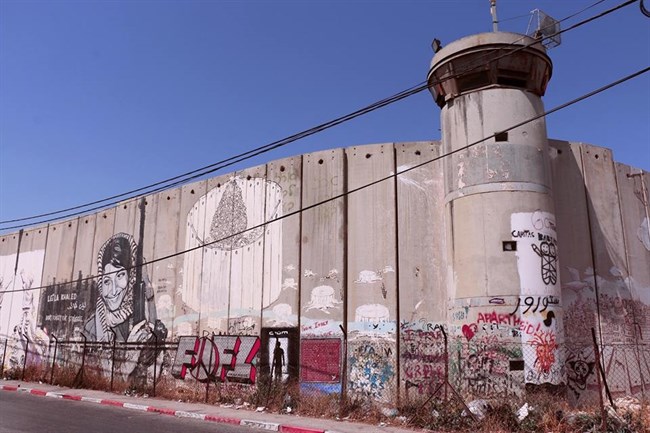
The separation wall in Bethlehem with a mural of Popular Front for the Liberation of Palestine (PFLP) leader Leila Khalid (MaanImages/Jaclynn Ashly)
These days, the few shops open in the area near the wall in Bethlehem cater to international tourists visiting the site to take pictures of graffiti and the impressive murals decorating the concrete. Banksy’s artwork in the area has become a centerpiece for such tourism.
Yamin al-Abed, a local tour guide and owner of the Banksy souvenir shop right beside the new hotel, told Ma’an that he expected Banksy’s hotel to triple the amount of visitors to Bethlehem. “This area is going to be crowded soon,” he said. “I am really looking forward to it.”
Banky’s artwork has “brought life back into a dead area,” al-Abed said, by developing a business around the now-iconic stencil work Banksy painted on the wall more than 10 years ago.
However, the hotel’s elusiveness on its planned financial model — as its website only states that it would “put any profits back into local projects” while remaining vague which specific projects would be concerned — has led observers to question whether or not the new business will positively benefit to the community.
A local worker at a nearby hotel, who preferred to remain unnamed, expressed his confusion over the hotel’s opening to Ma’an. “It is strange that this hotel was constructed in an area where commercial shops and hotels have been killed by the wall’s construction,” he said, adding that his own hotel had faced serious financial setbacks since the wall was built.
‘It’s not meant for Palestinians’
“What Bethlehem truly needed was breaking this sad paradigm, not cementing it,” Baroud said, echoing local concerns that the livelihoods generated around the wall has served to further entrench the Israeli occupation in the West Bank by basing a local economy on its most visual and destructive feature.
Buttu said that the most worrying aspect of what she referred to as “oppression tourism” was the parts of the wall which had not been decorated with graffiti and murals.
“The vast majority of Israel’s wall is completely ignored by tourists. And these parts of the wall are actively scooping out large areas of Palestinian land.”
Tourists are typically attracted to the “visual elements” of the cement wall, she said, and often disregard parts of the wall with barbed wire and electric fences, underscoring that these areas tend to be the most devastated as locals are dependent on farming and have no other alternative livelihood.
According to Buttu, “Many people really wanted visitors to see the wall for its ugly reality, and not use art and graffiti to mask or erase the reality Palestinians were living.”
While she wanted to give Banksy “the benefit of the doubt,” she said that the hotel risked feeding into the same process that Palestinians have been attempting to challenge. “Palestinians want foreigners to actually do something for their struggle, not just come and take pictures.”
Baroud, meanwhile, commented that certain aspects of the hotel were deeply offensive to Palestinians. Referring to one painting hung in a $265-per-night suite that lightheartedly depicts an Israeli soldier having a pillow fight with a Palestinian protester, Baroud said that it was “deeply insulting” and “belittles the sacrifice that thousands of Palestinians have made throughout the years.”
For local resident Muna Hassan, the hotel reflects larger issues in occupied Palestine.
“Palestinians feel hopeless. All we have now are foreigners coming here and advocating social and political projects that don’t help us at all. Meanwhile, our economy is dependent on international aid which arrives with conditions and tells us how we should behave,” she said.
According to Hassan, this kind of tourism exists because “there’s nothing left for us to do.”
“We have a government that doesn’t represent us. Israel has destroyed all our political movements and has stolen our land. They took everything from us. We have nothing left.”
Hassan told Ma’an that Palestinians had become tired of social and political projects originating from the international community. “We need better hospitals and schools. We need businesses that help us define and change our own society. We should create spaces where young Palestinians can develop their own conceptions of art, instead of just catering to foreigners who want to draw on the wall and snap pictures of Banksy paintings.”
She noted that, for her, the hotel was “not meant for Palestinians. It’s just more entertainment for tourists.”
Israelis welcome?
One of the most controversial elements of Banksy’s new hotel is the stated aim of welcoming Israelis to the West Bank, with the hotel itself being constructed in an Israeli-controlled area of Bethlehem.
The trilingual statement posted at the hotel’s entrance claims that most Israelis are “opposed to the cruelties inflicted by the wall,” while the ones who support it “are deeply fearful for their security.”
According to the hotel’s owner Wissam Salsa, one focus of the project is to “educate Israelis on Palestinian suffering” caused by the separation wall and the Israeli occupation. “We also want to show our guests what it’s like to live on this side of the wall.”
Al-Abed said that he believed it was important for Israelis to visit the West Bank, saying that “I am sure that once they come and see our miserable lives, they will return to Israel and attempt to change their government.”
However, Buttu told Ma’an that Israel’s policies have actually received widespread support from an Israeli public that has “benefited immensely” from these policies, while feeding into Israeli desires of a “Jewish state.” According to a poll released earlier this year, 62 percent of Israelis support continuing Israel’s illegal settlement construction in Palestinian territory.
“You will not find Israelis who support going back to life pre-1993, when you didn’t have separation and Palestinians had freedom of movement into Israel. Most Israelis are happy with this separation system in place,” she said.
One visitor to the hotel, a local Palestinian student who preferred not to be named, rapidly shifted from excitement to frustration after being informed that the project was aimed at creating dialogue between Israelis and Palestinians.
“We can have dialogue once Palestinians have equal rights,” he said. “If Israelis really want to understand Palestinian suffering, they should fight for the wall’s destruction and not stay in a hotel right next to it.”
Buttu noted the futility of the initiative, saying that “we can’t just pretend that it’s easy for Palestinians and Israelis to come together, hold hands, and sing songs.”
“This is a state system of apartheid and settler-colonialism. Unless Israelis recognize this, then there is no point in having these fake gatherings and dialogues.”
Israeli Police Abduct A Palestinian Novelist From Jerusalem
IMEMC News | March 11, 2017
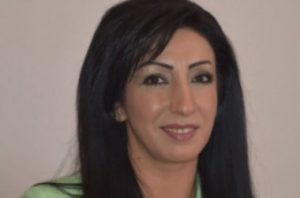 Israeli police officers abducted, on Saturday morning, a Palestinian novelist after she finished writing her latest work dubbed “The Jackal’s Trap,” talking about informants and collaborators, spying on their own people.
The Palestinian novelist, identified as Khaleda Gousha, was abducted after the police and soldiers stormed her home, in Beit Hanina neighborhood, north of occupied Jerusalem.
Khaleda’s business manager, Amani Abdul-Karim, said Khaleda was moved to an interrogation facility in Nevi Yacov illegal colony, built on illegally-confiscated Palestinian lands, owned by Beit Hanina residents.
She added that Khaleda called her colleagues from the interrogation center, and informed them that she needs a lawyer to represent her.
Khaleda said that she was officially informed that the reason behind her abduction and interrogation is her latest Novel, The Jackal’s Trap, which she intends to publish this coming October.
Israeli authorities crack down on Gundelia harvesters
Palestine Information Center – March 6, 2017
 NABLUS – Israel’s so-called “Nature Authority” detained Palestinian Akoub (Gundelia) harvesters in the northern Jordan Valley and seized their cattle on Sunday afternoon.
Local activist Aref Daraghma said the Nature Authority cracked down on the Palestinian pickers of Akoub plant in the Jordan Valley.
Daraghma added that wildfires have broken out across the mountains while bird eggs and baby animals have been burned down due to incessant Israeli military maneuvers in the area.
In addition, thousands of dunums of private land seized from Palestinian farmers in the area were handed over to Israeli settlers.
Daraghma further warned of underway attempts by the Israeli occupation authorities and settlers to expand illegal settlement projects at the expense of Palestinian farmlands.
Bahrain approves military trials for civilians
Press TV – March 5, 2017
Bahrain has approved trial of civilians at military tribunals in a measure blasted by human rights campaigners as being tantamount to imposition of an undeclared martial law countrywide.
The Consultative Council, the upper house of the Bahraini parliament, voted for the measure Sunday, less than two weeks after it was approved by the Council of Representatives, the lower house.
The move saw Manama manipulating part of its constitution, which defines the identities of those who can stand trial at such courts.
Neighboring Saudi Arabia, whose influence radically sways Bahrain, has likewise redefined its anti-terror laws to expand the powers of its security forces in the face of political dissent.
Bahrain has been witnessing peaceful anti-regime protests since 2011. High-handed suppression of the rallies has led to widespread imprisonments and scores of deaths.
Hundreds of the detainees have already faced summary proceedings at military courts.
Britain ignores Bahrain’s human rights record to pursue business interests with dictatorship
By Marwa Osman | RT | March 5, 2017
Britain’s multi-million pound trade and aid strategy for programs in Bahrain needs exposed as the tiny gulf kingdom continues its chain of tyranny and torture against the Shia majority.
The British government’s unreserved condemnation of torture and inhumane treatment and punishment seems to vanish when it comes to making more money. As kidnaps, imprisonments and political executions are on the rise in Bahrain, activists and Bahraini opposition figures are troubled by the fact that the UK government is spending taxpayers’ money on these trade and aid programs, especially given the clear risk of complicity in abuse.
Habib Mohamed Habib is the latest Bahraini civilian to be kidnapped from his home the morning of Friday March 3rd 2017 as security forces deployed armored vehicles in and around Diraz, in a continuation of the Al Khalifa Monarchy’s oppression against the Shiite Friday prayers as part of their uninterrupted crackdown on civilians since 2011 in the Bahraini capital Manama.
As Habib’s family struggle to know the whereabouts of their son, traveling in and around Diraz is nothing less than a nightmare with traffic jams at every entry point of the town, which is witnessing an increase in tightened security at its checkpoints.
Meanwhile, since last June the citizens of Diraz have been experiencing an internet blockade every day between 7pm and 1am as a result of a service restriction order from the Bahraini authorities. The citizens of Diraz are increasingly being cut off from the outside world. They cannot even contact emergency services, and if somebody is caught aiding a fellow citizen he/she will disappear like Habib and hundreds of others like him.
Last week alone, the Bahrain Center for Human Rights BHRC documented a total of 17 arbitrary arrests, among whom were six children. In the same week, 129 marches took place in 40 villages in Bahrain to denounce the chain of repressions and kidnappings targeting peaceful protestors and Friday prayers’ attendees. BHRC reported that 26 marches during the same week were attacked by the Bahraini riot police and a total of 19 persons were judged in 6 politically motivated cases.
It is an open secret in Bahrain that after 6 years of constant crackdowns on millions of protestors who clamored for social justice and political self-determination, the ruling Al Khalifa regime has managed to get away with brutalizing, imprisoning, torturing and killing their own civilians under nonsensical pretexts. Although the monarchy has often expressed its desire to negotiate a political solution, promises of change have translated on the ground to a systematic crackdown.
The Al Khalifa regime has utterly failed to bear its responsibility in creating a space of dialogue in order to foster harmony, cohesion and tolerance. Instead of pushing for respect of cultural diversities amongst its citizens as a fundamental basis of democracy and peace-building, the authorities have politicized freedom of religion and successfully used it as a pretext for the incitement of hatred, violence and racial discrimination against groups of individuals and religious minorities.
International community’s deafening silence
Despite the fact that the Bahraini authorities have been only tightening restrictions on the rights to freedom of expression and association and continuing to curtail the right to peaceful assembly while detaining and charging several human rights defenders, banning others from traveling abroad, dissolving the main opposition group and stripping more than 80 people of their Bahraini citizenship, the United Nations Human Rights Council (UNHRC) has largely remained silent on the situation in Bahrain.
According to a joint NGO letter to Permanent Representatives of Member and Observer States of the UN Human Rights Council, Bahrain’s courts continued to play a key role last year in issuing repressive orders and granting the authorities broad discretionary powers to revoke Bahrainis’ citizenship, in some cases leaving them stateless.
The ultimate repressive order was issued on January 9, 2017 by Bahrain’s Court of Cassation upheld death sentences against three protestors convicted of killing police including three police officers in a bomb attack.
Sami Mushaima (42), Ali Al-Singace (21) and Abbas Al-Samea (27), who were executed on the morning of January 15, 2017 by firing squad, were reported by Bahrain Center for Human Rights BHRC to have been tortured during interrogation to force them to confess to the bomb attack. According to the BHRC, the lawyers of the executed men were not given access to all the hearings against the defendants, nor allowed to cross-examine prosecution witnesses during court hearings.
The shocking part about the atrocities inflicting the Bahrainis is no longer the blatant violations of the Al Khalifa monarchy as much as it is the international community turning a blind eye to the Bahraini people’s legitimate struggle for democratic rights.
UK government complicit in oppression
The US and the UK are two major western states supposedly committed to supporting human rights, democratic values, free speech and political self-determination, while, at the same time, are flagrantly partnering with dictatorships like that of the Bahraini Monarchy to advance their foreign agenda.
For instance, the government of the United Kingdom signed what the Foreign and Commonwealth Office (FCO) called a “landmark defense agreement” with the Gulf island kingdom of Bahrain in 2014. Clearly ongoing human rights abuses committed by those partners on their own citizens are not considered a shared strategic and regional threat especially when Bahrain is home to a major Royal Navy base. The multi-million-pound Royal Navy facility in Bahrain, which was founded in November 2016 housing up to 600 UK military personnel, became the staging-post for Britain in the Middle East and is designed to assert influence over the Gulf. Bahrain has paid most of the £30million-plus cost, with the UK contributing around £7.5million.
During the opening of the new Naval Support Facility (NSF) in Manama, Britain’s first permanent military base in the region since 1971, the Telegraph published an OpEd by Fawaz bin Mohamed Al Khalifa, Bahrain’s Ambassador to London, who claimed that King Hamad bin Isa Al Khalifa outlined the Gulf Cooperation Council’s interest in a free trade agreement between the UK and the GCC, which would significantly increase the UK’s access to the GCC’s £1.3 trillion market; a market estimated to grow by a further £400 billion by 2020.
Relative to its size, Bahrain already hosts a large number of British companies. The Bahraini Ambassador to London put the figures at “500 British brands, 90 British company branches, and 350 Bahraini-British business partnerships”. These businesses operate in some of Bahrain’s key sectors, including banking, accounting, law and industry. Meanwhile bilateral trade between Bahrain and the UK generated a staggering £432 million in 2015 alone, which would simply explain why the UK would choose to remain silent on all the human rights violations in the tiny gulf kingdom.
These bilateral relations are signed and sealed with Bahraini blood, says Ali Alaswad, former Bahraini Member of Parliament who was elected in October 2010, but resigned in February 2011 in response to the Governments’ crackdown on peaceful democracy protesters.
After his home was targeted by security forces, AlAswad left Bahrain and now resides in London where he continues his political work to achieve a democratic Bahrain. As I spoke with MP AlAswad, he emphasized that the UK’s current disappointing stance towards ignoring the human rights violations in Bahrain provides “a green light to the Bahraini government to abuse the basic human rights of the civilians which permits it to become more violent against the Shia majority and the Bahraini opposition.”
AlAswad told me “it doesn’t matter who you are in Bahrain, if you dare to demand for your basic rights then you will be in grave danger, which is why if the UK government as a strategic ally to the Bahraini government doesn’t use its ties as a strong card to support the oppressed Bahraini people to at least secure their basic human rights as enlisted in the declaration of human rights, then the UK is whitewashing the Bahraini authorities’ shocking human rights record by deliberately blocking official criticism of the Kingdom especially at international forums like the UN”.
The UK government is now seen by human rights activists and Bahraini opposition figures as a complicit in the tiny gulf kingdom’s tyranny against the outcry of the legitimate and basic demands of the Bahraini civilians until an official statement is issued from the UK government to condemn the acts of oppression of the Bahraini monarchy against its people.
“How do you expect the majority of the population to react when they see their leaders and clerics being detained, unlawfully imprisoned and even sometimes deported from their own country?” asks MP AlAswad.
Sheikh Ali Salman, a Shiite cleric and head of the Al-Wefaq opposition party, is now sentenced to serve nine years in jail for allegedly inciting hatred and calling for regime change by force.
The Bahraini authorities then went overboard when they stripped the highest religious authority in the country Sheikh Isa Qassim, a 79-year-old cleric, of his citizenship in June 2016 over accusations that he used his position to serve foreign interests and promote sectarianism and violence. This happened a week after the government of Bahrain suspended the Shia opposition group al-Wefaq.
The implications of this arrest is sending shockwaves on the streets of Manama, Diraz, Sanabes, Karbabad, Karzakan and Barbar with protestors refusing to back down. This resistance is prompting even more oppression and kidnapping from the Bahraini authorities.
Earlier this week, Al-Wefaq Deputy Secretary General, Sheikh Hussein al-Daihi, said through his twitter account, that targeting Ayatollah Qassim is triggered by his brave and firm stances, to demand legitimate rights for the oppressed Bahraini people. The deputy SG also stressed that Ayatollah Qassim is a red line, and the repercussions of crossing that line would go beyond the country’s borders.
Ms. Marwa Osman. PhD Candidate located in Beirut, Lebanon. University Lecturer at the Lebanese International University and Maaref University. Political writer/commentator on Middle East issues with many international and regional media outlets.
Facebook begins ‘fake news’ crackdown with ‘disputed’ story tag roll out
RT | March 5, 2017
Facebook has begun rolling out its much hyped ‘fake news’ crackdown initiative, launching its ‘disputed’ news tag on stories deemed false by fact checking organisations working with the social media giant.
The tool appears to have been unveiled without fanfare in the US, but some users have shared screenshots of it in action on Twitter.
Facebook has added a question to its help center page entitled “How is news marked as disputed on Facebook?.” The section notes, however, that this feature is not yet available to everyone. It is unclear how many people currently have access to the ‘fake news’ debunking feature.
Facebook introduced their solution to false stories last December amid outcries that so-called fake news influenced the outcome of the US presidential election. These unproven claims have been disputed by a Stanford University/NYU study.
As part of the plan, the tech giant partnered with fact checkers that are signatories of Poynter’s International Fact Checking Code of Principles. These include ABC News, FactCheck.org, the Associated Press, Snopes and Politifact.
Stories flagged by Facebook users as ‘fake news’ are passed on to these fact checkers for verification. If the fact-checkers agree that the story is misleading, it will appear in News Feeds with a “disputed” tag, along with a link to a corresponding article explaining why it might be false.
These posts then appear lower in the news feed and users will receive a warning before sharing the story.
Similar efforts are planned in Europe amid threats from the EU to clamp down on the spread of misinformation. Facebook recently revealed fact checking partnerships in Germany and France ahead of respective elections in each country.
Concerns have been raised, however, over the implications of such practices on freedom of speech.
Project Censored, a non-profit that aims to fight censorship through promoting media literacy, views Facebook’s fake news crackdown as “problematic.”
“What Facebook, and the Washington Post’s ill advised list of fake news sites, has attempted to do is make lists of news outlets that are “fake,” Nolan Higdon, faculty advisor at Project Censored told RT.
“However, this is problematic because some news sites have both journalists doing credible work and those disseminating propaganda. While some consumers may be swayed by the digestible notion of “these sites good, these sites bad” lists; it does not solve the problem of people consuming propaganda, “ he added.
The key is education, Higdon insisted, explaining the importance of teaching individuals to examine a media outlet critically.
“Simply creating an arbitrary list of whose websites can and cannot be viewed on Facebook or considered ‘news’ is normalizing censorship instead of informing individuals.”
Another Indigenous Human Rights Activist Killed in Colombia

Colombian Indigenous activist Alicia Lopez Guisao | Photo: Congreso de los Pueblos
teleSUR | March 3, 2017
Colombian Indigenous and campesino leader Alicia Lopez Guisao was killed in Medellin on Thursday, adding to the growing list of recently murdered human rights activists in the South American country.
The number of social and human rights defenders killed in the last 14 months now stands at at least 120, according to a Friday press release from the Defense of the People.
“The retreat of the FARC from the zones where they previously exercised control has allowed for the entrance of new armed actors who fight for territorial and economic dominance,” states the report. This marks a concerning trend requiring immediate action since the attacks are “pertaining to groups with similar characteristics, and which occurred in the same period and geographic area,” it adds.
Guisao, who was shopping at a grocery store at 8:45 am local time, was shot repeatedly by two unknown gunmen who entered the store, El Tiempo reports.
The People’s Congress, the left-wing organization that Guisao worked for organizing Indigenous peasants, believes the gunmen may have been connected to right-wing paramilitary groups.
“With great sadness and indignation we received and transmitted the news of the murder of comrade Alicia Lopez Guisao,” The People’s Congress said in a statement.
“Her murder is an example of the fact that the right-wing organizations that operate today in the city of Medellin are the same paramilitaries who have murdered others in recent years.”
Guisao, a leader of Colombia’s Indigenous Asokinchas community, organized the Agrarian Summit Project, which distributed land and food for 12 Indigenous and Afro-descendant communities in the department of Choco.
Originally from the rural Uraba Antioquia, Guisao and her family were displaced from the region by U.S.-backed paramilitaries in the late 1990s, forcing them to move to Medellin.
In 2002, after opening a family-led community health and education center, she and her relatives were once again forced out by police and right-wing paramilitaries in a “counter-terrorism operation.”
Operation Orion, the campaign which displaced Guisao and her family, was a joint paramilitary and police offensive that targeted left-wing rebels accused of supporting Colombia’s guerilla movement. Prior to her death, Guisao lived in Choco where she performed community service work.
Her death in the same area from where she was displaced “shows that it’s (paramilitary activity) a structure that persists in the city and that it’s not only general delinquency or criminal gangs like state institutions say,” wrote an open letter signed by dozens of Colombian social justice organizations denouncing her murder.
The letter says that Guisao’s sisters were warned that they and their parents would be next if they show up to her burial. The groups call on the government to ensure the protection of her family and the prosecution of those responsible.
Marcha Patriotica, the leftist political party that worked closely with Guisao and The People’s Congress, says that during the first two months of 2017, more than 20 Colombian social leaders, including six women, were killed. Most of those killed, they say, were Indigenous campesino activists fighting for human rights.
Last January, Indigenous human rights activist Yoryanis Isabel Bernal Varela was murdered in Valledupar by suspected paramilitaries. Eyewitnesses said that she was threatened with a gun by several people on a motorcycle, who then shot her in the head. Varela, a member of Colombia’s Wiwa tribe, fought to protect Indigenous and women’s rights in her community.
“Indigenous people are being threatened and intimidated,” said secretary of the Wiwa Golkuche organization Jose Gregorio Rodríguez shortly after her murder on January 26. “Today they murdered our comrade and violated our rights. Our other leaders must be protected.”
The retreat of the FARC and other left-wing guerrilla groups that have historically defended Indigenous campesino groups has created a power vacuum in areas across the country that right-wing paramilitaries are exploiting.
Report: Israeli forces detained 420 Palestinians in February
Ma’an – March 4, 2017
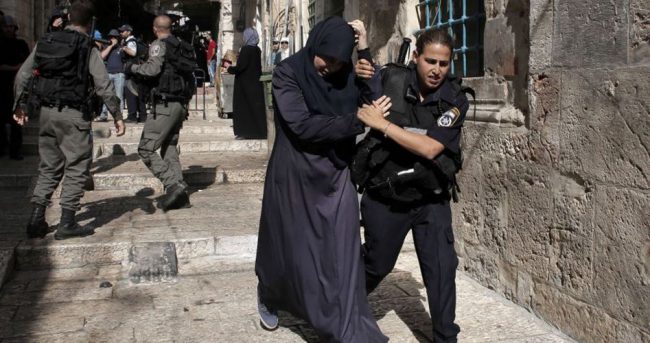
RAMALLAH – Israeli forces detained 420 Palestinians during the month of February, including 70 minors and 22 women and girls, according to a statement released on Saturday by the Palestinian Prisoners’ Center for Studies.
The center said in its monthly report that 12 of the detentions were carried out in the besieged Gaza Strip, including five fishermen whose boats were destroyed by Israeli forces before their detention, two who were detained at the Beit Hanoun crossing, and five who were detained after Israel alleged they attempted to cross the border fence between the besieged enclave and Israel.
A journalist was also among the detainees, identified by the center as Humam Muhammad Hantash from the southern occupied West Bank district of Hebron. He was sentenced to Israel’s widely condemned policy of administrative detention — imprisonment without charge or trial based on undisclosed evidence.
The center added that 88 administrative detention orders were issued by Israeli courts in the same period, 23 of which were issued for the first time, while 65 were renewed orders. Meanwhile, 32 administrative detention orders were issued against Palestinians from Hebron.
While Israeli authorities claim the withholding of evidence during administrative detention, which allows detention for three- to six-month renewable intervals, is essential for state security concerns, rights groups have instead claimed that the policy allows Israeli authorities to hold Palestinians for an indefinite period of time without showing any evidence that could justify their detentions.
Rights groups say that Israel’s administrative detention policy has also been used as an attempt to disrupt Palestinian political and social processes, notably targeting Palestinian politicians, activists, and journalists.
According to Addameer, as of January, 6,500 Palestinians were being held in Israeli prisons, 536 of whom were being held under administrative detention.
Featured Video

Seyed M. Marandi: US-Iran War Inevitable: Kuwait and Bahrain May Fall
or go to
Aletho News Archives – Video-Images
From the Archives
Oil and the Israel Lobby
Reknowned economist M. Shahid Alam offers this excellent critique of Noam Chomsky’s defective analysis of the relative influence of Oil versus the Israel lobby over US foreign policy: … continue
Blog Roll
 Aletho News
- ICC ignored ‘very well-documented’ NATO crimes – ex-Libyan minister
- SNSC secretary dismisses US response to Iran’s conditions as ‘inadequate’
- Sanaa says Taiz roads open, secure for residents, warns Saudi forces
- Iraqi resistance group urges Saudi leadership to admit defeat, lift Yemen siege
- Trump’s Retreat: How Al-Aqsa Flood Took Down the US Empire
- Israel’s Military Actions in Lebanon Grossly Violate International Law — Lavrov
- Seyed M. Marandi: US-Iran War Inevitable: Kuwait and Bahrain May Fall
- Leaders Condemn Ansarallah Attack on Saudi Arabia While Ignoring Illegal War Against Yemen
- Leaked: Britain’s Covert Iraqi Psyops Network
- Yemeni Armed Forces Warn Airlines Against Using Saudi Airports, Exempt Mecca and Medina
- If Americans Knew
- How Israel Conquered the Latin American Right
- Agents search Rep. Omar’s Washington home in criminal probe as she vows she won’t ‘be silenced’
- “The Rule Was: ‘Shoot Everyone You See'”
- Israel goes ballistic over Nobel Laureate Navi Pillay
- U.S. May Join Yet Another Middle Eastern War — TCN
- Yellow Line moves again as Israel closes in on trapped Gazans – Daily Update
- Israeli Attacks Kill Seven Palestinians in Gaza Including Six-year-old Girl
- Gaza: Ceasefire Anniversary Marks Year of Failed Promises
- The American Conservative: Mike Huckabee Should Resign
- A C-Section in Shackles: A Palestinian Woman’s Harrowing Birth in Israeli Detention
- No Tricks Zone
- Germany’s Green Energy Debacle: High Energy Costs Force Kahla Porzellan to Close After 182 Years!
- New Study: 50 Years Of The Most Aggressive ‘Net Zero’ Policies Can Only Affect The Global Climate By 0.03°C
- US September “Heat” Was No Record…Many Records Set Decades Ago
- Latest European Green Energy Debacle; Portugal’s Largest Flagship Solar Park Insolvent!
- Green Energy Debacle: German Expert Professor Fritz Vahrenholt Warns Of Severe Economic And Social Consequences
- Two More Paleo Reconstructions Affirm Meters-Higher Sea Levels Across Ireland, Brazil 7000-6000 Years Ago
- New Study: Earth And Venus Surface Warmth Largely Explained By Convection And Lapse Rate, Not CO2 Or Radiation
- 2025 Nature Paper Claiming Worsening Global Drought Gets RETRACTED …Heavily Flawed
- New Study: ‘Global Drought Shows No Detectable Recent Acceleration Under Climate Warming’
- Economic Masterminds: German Socialists Suggest Taxing Productivity Gains Stemming From Using AI

