The New York Times had a piece Tuesday on how security lines at airports are getting longer—in many cases, dramatically so, with waits of several hours at some times and airports. For example, the Times reported,
Ben Cheever, a support engineer for a cybersecurity firm, recently missed a flight in Seattle despite getting to the airport two hours ahead of his 6 p.m. departure to San Diego. Two lines spilled into the airport lobby, he said. A third was reserved for passengers who had signed up to a trusted traveler program called T.S.A. PreCheck that allowed them speedier access.
A lot of people love PreCheck. People not only like speedier lines, but it also plays to the natural human tendency to appreciate special treatment. But as I have noted before, there are serious questions about where this background-check program is headed. What is now a whitelist for a select few may turn into the normal manner of travel, subjecting virtually every passenger to increasingly intrusive database checks, excluding only an unfortunate few who become effectively blacklisted. As I observed last year,
by manipulating the system and the lines, the TSA can push more and more people to seek refuge from poor treatment within a government background check program that demands an ever-increasing amount of information about our lives.
What does the TSA say is the solution to longer security lines? According to the Times,
Both the airlines and the T.S.A. said that one way to alleviate the longer wait is to sign up for PreCheck, which allows eligible passengers to go through the speedier lanes without having to take off their shoes and belts or remove laptops and other electronic devices from their bags.
Is the TSA intentionally making everybody stand in long lines in order to pressure passengers into “voluntarily” submitting to (and paying for) background checks? I don’t believe that 3-hour waits are part of an intentional PreCheck-boosting plot, and the agency has incentives to avoid political backlash as angry travelers call their members of Congress. The Times cites a shortage of TSA screeners, budget cuts, and a growing number of passengers as the explanation for the longer waits. Nevertheless, when conditions are bad it’s a natural question to ask. The agency has a stated goal of moving as many Americans as possible into PreCheck, and will no doubt make use of the current situation to increase pressure on people to do so, as we saw officials doing in their comments to the Times. The structural logic of the situation gives the TSA an incentive to make life difficult for those who resist joining their background check program. It’s a parallel to the airlines’ incentive to make seats as uncomfortable as possible for those lowly passengers who hold out paying fees for “upgrades.” As Tim Wu put it, “in order for fees to work, there needs be something worth paying to avoid.”
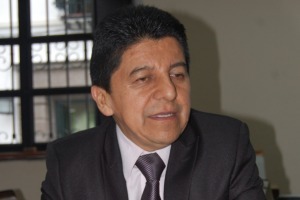
An army sergeant and a corporal have been arrested for the murder of Indigenous governor Bolaños Lasso in southwest Colombia, local media reported Tuesday.
The Prosecutor General’s Office confirmed the arrest of the two low-ranking army commanders who are part of the Jose Hilario Lopez battalion, of the Army’s 3rd Division, and said the pair are under investigation for the murder of Lasso.
Lasso was killed from gunfire on a road leading from Puracé, an Indigenous community in the Cauca Department, to the province’s capital of Popayán, on Oct. 19, 2015, according to the army.
“While the troops of the battalion Jose Hilario Lopez moved to the village of Santa Leticia, in Purace, where they prepared to take a position to provide security for election day October 25, they heard several shots,” representatives of the 29 Army Brigade said in an statement.
Commenting on the death last year, Colombia’s Indigenous Regional Council of Cauca (CRIC) said that Bolaños had “no known type of problem” that may have provoked his assassination.
No motive for the murder has been established as yet by authorities. The two soldiers will go on trial before the Third Municipal Criminal Court Guarantee Control charged with the murder of protected persons.
Murders and mistreatment of Indigenous Colombians is a regular occurrence in the Cauca region. As teleSUR reported in November, the Colombian army killed one campesino and wounded five others after it raided a rural area in what military officials say was an effort to “manually eradicate” illegal coca crops.
The slaughter stoked ire among many human rights activists including former Colombian Senator Piedad Cordoba who, in the aftermath, said the army needs to “sit down” with other organizations and social movements and “agree on another way of doing things.”
Three Israeli wars of aggression on illegally besieged Gaza since December 2008 perhaps aren’t enough for Israel’s killing machine.
Repeated inter-war ground, air and sea attacks occur regularly. Is Israel preparing the ground for another major assault – blaming Gazan victims like it always does for its high crimes against peace?
On Wednesday, Israeli tanks shelled two Hamas watchtowers provocatively. Senior Hamas official Musheer al-Masri called the attacks “dangerous developments and an obvious breach of the ceasefire in Gaza.”
“The Israeli occupation should avoid testing the Palestinian resistance. The enemy should realize that the toll would be in proportion to the Israeli crimes.”
“The Israeli escalation is a new development, and the Palestinian resistance is (deciding) how to react.”
Hamas’ armed wing al-Qassam Brigades responded with mortar fire on an Israeli bulldozer. An Interior Ministry source reported no casualties, just damage.
Islamic Jihad spokesman, Daud Shihab, said “Israel has not ceased its hostilities against the Palestinian people since the ceasefire was agreed on in 2014.”
“There are continued onslaughts and infiltrations in both Gaza and the West Bank and in other locations in Palestine.”
Gaza remains illegally blockaded since June 2007 – for political, not security reasons. According to an April UN report, about 75,000 Palestinians remain displaced from Israel’s summer 2014 naked aggression.
Affected families are forced to “liv(e) in store rooms, unfinished units, substandard apartments in relatives’ or neighbors’ buildings” or wherever else they can find shelter.
Some live in damaged homes, others in prefabricated shelters. War and displacement affected women and children hardest.
Over 30% of displaced females “liv(e) in shelter conditions… lacking safety, dignity and privacy, including tents, makeshift shelters, destroyed houses or the open air.”
Nearly all affected families lack resources and construction supplies to rebuild. Most funds pledged for reconstruction weren’t delivered.
Israel blocks or greatly restricts building supplies entering the Strip on the phony pretext of being useful to Hamas or other resistance groups.
The UN warned “(a)t the present rate, it will take years to address the massive reconstruction and repair needs, adding to the general frustration of the population following years of movement restrictions, rising unemployment and poverty.”
Gazans suffer hugely under open-air prison conditions. Israel attacks the Strip at its discretion.
Are things heading for another war? Does Israel want remaining parts of Gaza turned to rubble – thousands more of its residents slaughtered or injured?
Stephen Lendman lives in Chicago. He can be reached at lendmanstephen@sbcglobal.net.
We won — and now, thirty years later, the government has finally admitted it.
It’s not often that government officials admit to failure in the face of popular resistance. When they do, it’s an occasion for celebration.
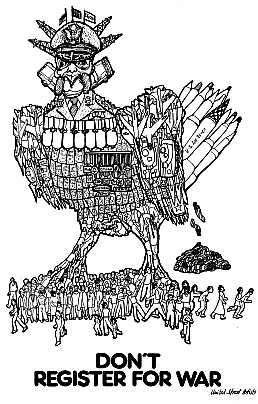
Draft registration was reinstated in 1980, supposedly to prepare for possible deployment of US troops in Afghanistan on the side of the Islamic fundamentalist warlords and “mujahideen” who were then fighting against the USSR. The US government put me in prison for refusing to agree to fight on the side of the people who would later become the Taliban and Al Qaeda! It’s no wonder that people of my generation, or later generations, have no faith in the ability of the US government to decide for us in which wars, or on which (if any) side, we should fight.
Today in U.S. News & World Report, Steven Nelson has the most significant piece of reporting about draft registration and the Selective Service System in decades, asking questions that journalists, politicians, and the public should have been asking years ago.
It’s been obvious — to anyone who wanted to look — that resistance forced the government to abandon the attempt to enforce draft registration in failure in the 1980s, after show trials of a handful of the “most vocal” nonregistrants. But this is the first time that responsible Selective Service officials and former officials have confirmed this on the record.
The article is worth reading in full, but I’ve posted some key excerpts below, followed by my analysis and comments:
Gender-Neutral Draft Registration Would Create Millions of Female Felons
by Steven Nelson, U.S. News & World Report, May 3, 2016
A key congressional committee voted last week to require young women to register for potentially compulsory military service, but the gender-equalizing reform threatens to make felons out of women who refused to participate.
Though prosecutions currently appear unlikely, men jailed for not registering with the Selective Service System and some former authorities who participated in the cases are concerned about criminalizing a large swath of the population.
“It will inevitably lead to massive resistance, whether visible in the streets or women just blowing it off the way men have,” says Edward Hasbrouck, prosecuted for not registering in the 1980s. “Congress is smoking crack if they think women can be forced to register.”
Hasbrouck served more than four months in prison after catching the eye of an ambitious federal prosecutor, Robert Mueller, who went on to be FBI director. He originally received a suspended sentence, but recalls an unamused judge sending him to prison in late 1984 [actually 1983] for doing peace activism to satisfy court-ordered community service….
The government was “faced with far more people who had initially refused to register in the start-up period than they had ever imagined — it was beyond their worst nightmare. They were self-deluded in the way people today who think they can just wave their wand and women will sign up for the draft are self-deluded,” Hasbrouck says….
In all, 20 men were prosecuted in the 1980s for not registering, a diverse and geographically scattered group including ideological advocates of individual rights and members of the historical peace churches.
The last indictment came in 1986 when Terry Kuelper of Arkansas was slapped with the felony charge. He agreed to register before trial and the charge was dismissed. Court proceedings ended when Gillam Kerley of Wisconsin was released from a three-year prison sentence after four months, with the case ending in 1988….
Former Selective Service associate director Edward Frankle … developed a process for … enforcement of the registration law…. “We did what we had to to keep at least some level of credibility in the system,” he says. “You couldn’t just totally ignore it — how could you do that and still with a straight face say, ‘Yeah that’s the requirement’?”
In the late ’80s the Justice Department discontinued prosecutions. Dick Flahavan, a spokesman for the Selective Service who was with the agency at the time, recalls the Justice Department “decided that since there was no draft … there are limited resources and the FBI’s time would be better spent chasing white collar crime than some Mennonite kid through Pennsylvania.”
“We said, ‘Fine, we understand,’ and that’s why it ended in ’88,” he says. “The agency did agree to what the Justice Department proposed, a suspension of prosecutions [during peace time]. Since they did the prosecutions we didn’t have much leverage anyways.”…
Flahavan says the Selective Service had hoped for a much stronger approach from federal prosecutors, but was rebuffed.
“What we would have preferred was every year in all 95 judicial districts there be a prosecution to keep the heat on and the publicity going,” he says. “But they couldn’t sustain that.”
If someone registered just before trial, the prosecution would be dropped, Flahavan notes, making the pursuit of resisters “really a losing proposition for the feds” and often “a big waste of time.”
Wilfred Ebel, acting director of the Selective Service System in 1987, when further waves of prosecutions were being considered, says he can’t recall the precise discussions that led to abandonment of new cases. Former Attorneys General Ed Meese, who left the department in 1988, and successor Dick Thornburgh did not respond to requests for comment, nor did Mueller….
Though hard numbers are elusive, Hasbrouck says with confidence “compliance with the address update requirement is and has been since 1980 essentially zero.”
Despite the refusal of the Justice Department to prosecute nonregistrants, the Selective Service System continues to refer names of possible nonregistrants identified by automated data-matching to the Justice Department “for possible prosecution”. According to the latest Selective Service System Annual Report to Congress for Fiscal Year 2015 (page 16), “If a man fails to register or fails to provide evidence that he is exempt from the registration requirement after receiving Selective Service reminder and/or compliance mailing, his name is referred to the Department of Justice (DOJ) for possible investigation and prosecution for his failure to register… During FY 2015, 146,997 names and addresses of suspected violators were provided to the DOJ.” None of these nonregistrants were investigated or prosecuted, nor have any of the other millions of suspected draft registration resisters whose names have been referred by the SSS to the DOJ in the last thirty years.
If resistance rendered draft registration of men unenforceable, why would anyone think that young women will be more willing to sign up to kill or be killed on command than young men have been?
Resistance to any attempt to extend draft registration to women is inevitable, but people tend to (wrongly) discount the practical or political significance of silent resistance, despite its effectiveness. That’s a major reason why the ongoing resistance to draft registration by young men has been so little noticed or understood.
Much of the active political life of subordinate groups has been ignored because it takes place at a level we rarely recognize as political. To emphasize the enormity of what has been, by and large, disregarded, I want to distinguish between the open, declared forms of resistance, which attract most attention, and the disguised, low-profile undeclared resistance….
For many of the least privileged minorities and marginalized poor, open political action will hardly capture the bulk of political action…. The luxury of relatively safe, open political opposition is rare… So long as we confine our conception of the political to activity that is openly declared we are driven to conclude that subordinate groups essentially lack a political life…. To do so is to miss the immense terrain that lies between quiescence and [open] revolt and that, for better or worse, is the political environment of subject classes….
Each of the forms of disguised resistance… is the silent partner of a loud form of public resistance.
Desertion is quite different from an open mutiny that directly challenges military commanders. It makes no public claims, it issues no manifestos, it is exit rather than voice. And yet, once the extent of desertion becomes known, it constrains the ambitions of commanders, who know they may not be able to count on their conscripts…. Quiet, anonymous,… lawbreaking and disobedience may well be the historically preferred mode of political action for… subaltern classes, for whom open defiance is too dangerous.
To make this happen, Congress and the public need to hear from young women who don’t plan to register for the draft. Otherwise they won’t think about the prospect of resistance by women to draft registration, or take it seriously. I’ll be happy to publish or link to “I Won’t Go” or “We Won’t Go” statements, anonymously or with names as the authors wish. If there are other things I can do to help young women prepare to resist draft registration, or to support their resistance, or to support the ongoing resistance by young men, please let me know.
A Jewish rights organization has taken three local councils to court, alleging discrimination over the public authorities’ decision to boycott Israeli goods produced in illegal settlements in the West Bank.
Jewish Human Rights Watch (JHRW) has taken Swansea, Gwyneedd and Leicester councils to the High Court in London, alleging their boycott of Israeli goods is anti-Semitic and violates the 2010 Equality Act.
A solicitor for JHRQ, Robert Festenstein, said: “We would like to see the motions quashed. I don’t understand why they would pass it in the first place.
“I mean, they wouldn’t pass a motion saying something derogatory about women, so why would they do that about Jews?”
Andrew Sharland, a lawyer representing Leicester’s council, which approved the boycott back in 2014, said the JHRW is trying to “stifle criticisms of Israel.”
“What this challenge really concerns is criticism of the State of Israel, and the claimant’s desire to suppress it,” he said.
A number of councils across the country began boycotting Israeli goods around 2009 in response to Israel’s invasion of Gaza.
Earlier this year, the government issued guidance to public authorities saying such boycotts are “inappropriate” unless formal legal sanctions or embargoes have been put in place by central government.
The Cabinet Office warned that boycotts could “undermine good community relations, poison and polarize debate, weaken integration and fuel anti-Semitism.”
The campaign group War on Want has decried the JHRW legal challenge as “shameful.”
War on Want senior campaigner Ryvka Barnard said: “It’s shameful that local councils are being attacked for ensuring their policies are in line with international and UK law.
“The illegal settlements are a part of the systematic abuses of international law and human rights committed by Israel against the Palestinians.”
Labour Party leader Jeremy Corbyn has also criticized the government’s guidance on boycotts as an “attack on local democracy.”
In a report by Palestinian prisoners’ institutions, the Palestinian Prisoners’ Society, Addameer Prisoner Support and Human Rights Association and the Prisoners Affairs’ Commission, the organizations released the relevant statistics and overall report on Palestinian prisoners in April 2016. The following figures were compiled and released by these three organizations.
567 Palestinians were arrested by Israeli occupation forces during April 2016, bringing the number of those arrested since the beginning of the popular uprising in October 2015 to 5334 Palestinians. The highest number of arrests were in Jerusalem, where 213 were arrested including 60 minors; al-Khalil, where 120 were arrested; followed by 43 in Ramallah, 40 in Nablus, 38 in Bethlehem, 35 in Qalqilya, 23 in Jenin, 12 in Tulkarem, 9 in Tubas, five in Salfit and four in Jericho; in the Gaza Strip, 25 were arrested, including 20 fishers who were subjected to firing and attacks in the sea, two who passed Beit Hanoun (Erez) crossing, and three near the “border” of Gaza.
Among the arrestees were 123 children and 24 women and girls (including 3 minor girls). 69 Palestinian women and girls are imprisoned in Israeli jails, including 15 minor girls; the total number of children in Israeli jails remains over 400. There are over 750 Palestinians held in administrative detention and 700 sick and ill prisoners. 133 administrative detention orders were issued in April, including 97 renewals of ongoing administrative detention orders.
Invasions and Inspection Policy in Prisons
The Israel Prison Service used special units in raid and search operations launched by the prison administration on a regular basis as a means of collective punishment by the Israel Prison Service from arrest until release. The prison administration fabricates pretexts to launch these attacks, in which prisoners are subjected to cruel and inhumane treatment.
These special units suddenly invade or launch inspections, so as to prevent prisoners from preparing themselves or taking precautionary measures, usually in the early morning hours and sometimes in the hours after midnight; sometimes these fall in the middle of the day, including during prayer times or during iftar in Ramadan. The aim of these raids is to harass and abuse detainees; these special units use provocative actions against prisoners, including dragging prisoners from the rooms, yelling in their faces, verbally abusing them, and confiscating personal documents and family photos, creating provocations which are then used to justify attacks on prisoners.
In the month of April, the incident of the storming of section 14 in Nafha prison went beyond a typical invasion/inspection process with beating of prisoners. This incident occurred after guards refused to allow Akram Siyam and Muharreb Da’is to use the bathroom, which led to an altercation between the guards and the prisoners, during which armed units broke into the section, beat prisoners, sprayed pepper spray and tear gas, removed prisoners from the section, then returned Da’is to the section and invaded again to take him back. Prisoners refused to hand him back and a large force returned with dogs, forced all the prisoners from the room, and attacked them with batons. This caused numerous injuries, including to the ill prisoner Yousry al-Masri, who has cancer and was beaten with a baton on his neck and in his liver area.
The prison administration closed all sections of the prison, and imposed sanctions on section 14, including removal of electrical appliances, denial of family visits, and isolation from other prisoners.
Isolation conditions
17 prisoners are isolated under the pretext of “threat to state security,” without evidence to indicate this threat. They are held in solitary confinement cells for 23 hours a day except for one hour of recreation when they are with guards only. Solitary confinement is harmful to mental and physical health. The prison service issues isolation orders which can be extended every six months on the decision of the military court, based on a secret file not revealed to prisoners or their lawyers.
Among the isolated prisoners are Noureddine Amer, 34, from Qalqilya, isolated since 21 September 2013, imprisoned since 2 February 2002, and serving a 55 year sentence. He is held in a 3.5 m x 1.5 m room, in Eshel prison, which contines a toilet and a metal door with a slot for introducing food, and has a closed window. He is allowed out for recreation alone for one hour per day.
He has been held in isolation in multiple prisons: Ramon, Ashkelon, Megiddo, Shatta, Gilboa and Ayalon. He is transfered by “Bosta”; transfers take many hours. Prisoners transfered by “Bosta” are prevented from looking through the window and their hands and feet are shackled. During these transfers, Amer is accompanied by special forces who often engage in provocations and subsequent attacks. In July 2015, he was beaten by five military guards; his nose was bleeding and he was in pain but was not given treatment. His belongings were scattered, and they told him to gather them again while he was handcuffed.
He suffers from several diseases worsened by the environment of isolation, including shortness of breath, high cholesterol, joint problems, severe headaches, and stomach ulcers. He sustained a fracture in his hand eight years ago in Gilboa prison and did not receive treatment, and continues to suffer today from the injury to his hand.
He has been denied all forms of communication with his family since his isolation. His mother is elderly, suffers from cancer and had a stroke; he has learned this news only through visits from his lawyers. Three of his brothers are also imprisoned; Nidal Amer is sentenced to life imprisonment, Abdul Salam Amer to 20 years, and Aysar Amer is held in administrative detention since February 2016.
Systematic policy of torture and abuse during the detention of children
Children are exposed to systematic torture, humiliation and cruel treatment from the first moment of arrest, characterized by methods of detention, whether through late-night home invasions, detention by special units or by undercover soldiers who seek to appear “like Arabs” on the street. In addition to degrading treatment of children during their arrest and transfer, they are shackled hand and foot and blindfolded while taken to detention or interrogation centers where they are directly exposed to ill-treatment. This comes either through beatings using hands and feet, cursing and yelling at them in order to provoke fear, or through solitary confinement and harsh conditions to psychologically pressure them,
Among the cases of minor prisoners is that of Mohammed Amarna, 17, from Ya’bad near Jenin, who was arrested on 2 March 2016 from his home. During a legal visit inside the prison, his lawyer confirmed that Amarna had been beaten, insulted and mistreated during transfer to a detention center where he was blindfolded and his hands cuffed behind his back. He was held for hours outside, slapped by a soldier in the face repeatedly as well as by an interrogator.
157 Palestinians detained in connection with activities on social media
The Israeli government formed in recent months the so-called “Cyber Unit” to step up its prosecutions of Palestinians on social media, especially Facebook.
From October 2015 to April 2016, there have been 157 cases of arrests based on expression and opinion posted on Facebook. A number of people have been indicted for “incitement,” while others have been ordered to administrative detention.
The majority of arrests have taken place in Jerusalem as part of the targeting of Palestinians in Jerusalem. Many of the statements express sympathy or solidarity with Palestinian martyrs killed by Israeli occupation forces, or include publishing the photos of martyrs or prisoners.
The suppression of freedom of speech, opinion and expression on social media is not limited to cases of arrest, but has also included terminating the employment of accused Palestinians from institutions in Jerusalem or 1948 occupied Palestine, or forcibly expelling them from their city of residence, especially Jerusalem.
Battle of the empty stomachs
During the month of April, Palestinian prisoners engaged in a number of individual and collective hunger strikes for multiple reason. Sami Janazrah, 43, from al-Khalil, has continued his hunger strike since 3 March, and Fuad Assi, 30, and Adib Mafarjah, 29, both from Ramallah, continue their hunger strikes since 3 April. All are striking against their administrative detention without charge or trial.
Shukri al-Khawaja, 48, from Ramallah, engaged in a strike for a number of days against his continued isolation; dozens of prisoners in several prisons launched solidarity strikes with him. Abdullah Mughrabi, 24, from Jerusalem, also struck for a number of days against isolation.
Mahmoud Suwayta, 40, from al-Khalil, went on hunger strike for over a week against the denial of visits from his son for over two years; Iyad Fawajrah of Bethlehem also engaged in a hunger strike for family visits.
Mansour Moqtada, 48, from Salfit, is engaged in a partial hunger strike as a result of complicated and difficult health conditions, demanding improved medical treatment. Muhannad al-Izzat of Bethelehm engaged in a 9-day hunger strike, also for medical treatment.
Two re-arrested former prisoners, Abdel-Rahim Sawayfeh and Mohammed Daoud, engaged in hunger strikes against their re-arrests.
In addition, thousands of prisoners collectively engaged in a protest, returning food in rejection of the attacks on prisoners in Nafha prison.
Dima al Wawi, 12, was released from an Israeli prison last week, and according to The New York Times, her experience there was not all that bad. She played shuffle ball and went to classes, and when she came home after more than two months, she remained her spunky self.
This is the tenor of a piece by Diaa Hadid that ran on page one recently under the headline, “As Attacks Surge, Boys and Girls Fill Israeli Jails.” The tone here is in stark contrast to other accounts. The Daily Mail, for instance, ran the story with this title: “Haunted face of a 12-year-old girl broken by jail.”
A YouTube video of Dima’s reunion with her family also reveals a stony-faced child with dull eyes, and her mother speaks of her dismay at seeing her like that: “It seems like she is living in another world, in shock, not aware of what is happening.” She adds, “It feels like our suffering has increased.”
But Hadid gives us nothing like this. Her piece opens with a description of a benign Israeli prison experience and ends with Dima talking back to her mother like a normal, spirited pre-teen. Only far into the story do readers learn that Dima was not allowed to have either her parents or a lawyer present when she was interrogated and that she was shackled when she appeared in court.
Also missing from Hadid’s article is a full account of Israel’s scandalous treatment of Palestinian children and its apartheid court system. She describes these euphemistically as “a debate over how Israel’s military justice system, which prosecutes Palestinians from the West Bank, differs from the courts that cover Israeli citizens… and especially how it handles very young offenders.”
In fact, this is more than a debate. It is an atrocity that monitoring organizations have been documenting and publicizing for years: Israel routinely abuses Palestinian children in custody, deprives them of access to their parents and lawyers and coerces them into confessions. (See list of sources below.)
In addition, Israel is the only country in the world that systematically tries children (but only Palestinian children) in military courts, and it has two distinct systems for Jews and Palestinians in the West Bank. The former are tried in civil court while Palestinians face military trials.
In the Times story, however, this scandalous state of affairs becomes little more than a bureaucratic matter, a problem that calls for bringing two separate justice systems “more in line with one another.”
Hadid writes that Israel is trying to correct this deficiency, and she lists some policy changes made since a 2013 UNICEF report outlined abuses, but she fails to clarify either the extent of these abuses or the consistent and widespread condemnations of Israeli practices.
It should also be noted that Israel, even as it claims it is correcting the problems, recently denied a delegation from the UK the right to witness child detainees in court. Additionally, the DCI report, cited in Hadid’s article, states, “Despite repeated calls to end night arrests and ill treatment and torture of Palestinian children, Israel has persistently failed to implement practical changes to stop violence against child detainees.”
Missing from the Times story is a major abuse cited in the above quote: the arrest of young Palestinians during night raids. Israeli soldiers routinely invade Palestinian homes after midnight—terrorizing families and neighborhoods in the process—and haul away teenagers and children accused of throwing stones or other offenses.
After a drumbeat of criticism from rights groups, the military announced that it would try a pilot program to cut down on night raids by delivering summonses to suspects, demanding that they turn themselves to the authorities.
But as the online magazine 972 reported, little has changed. The program has affected only 5 percent of these arrests, the documents are often handwritten in Hebrew without translation and soldiers are delivering the summonses during night raids.
DCI noted in its report that Israel has an obvious interest in continuing the raids: “Arresting children from their homes in the middle of the night, ill-treating them during arrest and interrogation, and prosecuting them in military courts that lack basic fair trial guarantees, works to stifle dissent and control an occupied population.”
Hadid’s story makes no mention of the night raids nor of the possible Israeli strategic interest mentioned by DCI. We get glimpses of the hardships Dima’s family has faced, but overall the effect is to minimize the trauma Israel inflicts on Palestinian children.
As the Times tells it, the treatment of these young detainees is simply “different” from that of young Israelis who run afoul of the law. It’s a matter of making a few adjustments, not a matter of ingrained racism and a brutal occupation.
Online readers can get a more complete story by clicking on the links to the DCI and UNICEF reports, but in the Times itself only fragments of the truth are allowed into print. The result is to obscure the cruel reality of routine abuse in the cells and interrogation rooms of Israel’s crowded prisons.
Often, when people are first becoming personally acquainted with me and my political views, I will be asked point-blank: “Do you support North Korea?” I always respond, “No, I don’t support North Korea. I support all of Korea.”
Among average Americans and even many who consider themselves activists and leftists, there is a great deal of confusion about issues involving the Democratic People’s Republic of Korea (DPRK) and its history. Each time there is an escalation of tensions on the Korean Peninsula, the level of confusion seems to get worse. The US media makes no effort to educate the public about why Korea is divided — and often blatantly distorts and lies about it.
Why is Korea Divided?
Prior to the Second World War, the Korean Peninsula was occupied by Japan, which carried out horrendous atrocities against the Korean people. Korean women were forced into sexual slavery by the Japanese military.
When Korean pacifist Christians went out to protest against Japan in March of 1919, over 7,000 of them were killed. The Japanese military retaliated against nonviolent acts of civil disobedience by randomly setting schools on fire and causing hundreds of random Korean children, who had nothing to do with the protests, to die in the flames. Tens of thousands of Koreans were rounded up and tortured by the Japanese on the mere suspicion of involvement in the pacifist, anti-Japanese protest movement.
After the failure of peaceful, nonviolent struggles, Koreans took up arms against the Japanese occupiers. In the 1920s and 30s, Kim Il Sung and others received military and political training from the Soviet Union. The Chinese Communist Party and the Korean Communist Party often closely cooperated in their activities. Armed Korean and Chinese Communists received a lot of guns and money from the Soviet Union as they fought for basic democratic rights against Japanese occupiers.
When the Second World War ended in 1945, the northern half of the Korean Peninsula had been liberated by Soviet troops. The southern half of the Korean Peninsula soon became occupied by US troops. In the northern part of the country, the major anti-Japanese resistance political parties — including communists, Social Democrats, agrarian revolutionaries, Christians, and many others — merged in 1948 to form the Korean Workers Party.
The understanding at the war’s conclusion was that there would be a nationwide election, in which every political party, including the very popular Korean Workers Party, would be allowed to participate in writing a new constitution.
However, in the southern half of the Peninsula, a military dictatorship was established. Syngman Rhee seized power and violently suppressed all opposition. The Rhee dictatorship was openly supported by the United States. Thousands of US troops poured into the country to prop up the military regime.
When democratic and labor activists living on Jeju Island rose up against Syngman Rhee to demand the free elections promised at the end of the war, US troops joined Rhee’s forces in slaughtering thousands of innocent civilians. Thirty thousand people — roughly one out of every ten people living on Jeju Island — were killed in the aftermath of the uprising.
In response to US military occupation of the southern half of Korea, the canceling of free elections, and the slaughter of innocent Korean civilians by US troops, the Democratic People’s Republic of Korea (DPRK) based in the northern territories of the peninsula, sent forces into the south, hoping to reunify the country and drive out US troops.
The response to the attempted reunification was the horrific United Nations “police action,” more commonly known as the Korean War. The United States bombed every building above one story tall in the northern half of the country. Dams were bombed in order to cause mass flooding of civilian areas. Between 3 and 4 million Koreans were killed.
An armistice was declared in 1953 — but the United States never signed a peace treaty, as was agreed upon. The Korean War technically never ended, and the United States has not even recognized the DPRK as a legitimate government.
“Democracy” in Southern Korea?
During the majority of the years between 1945 and today, the southern half of the Korean Peninsula has been ruled by unapologetic military dictators. Syngman Rhee and Park Chung Hee made no pretense of being democratic. They were violent, repressive military autocrats who were fully supported by the United States. Tens of thousands of US troops have been in southern Korea since the end of the Second World War, and often the US troops were used to violently suppress democratic uprisings against the Rhee and Park dictatorships.
After a series of student uprisings, labor protests, and other upsurges among the population, in the 1980s Korea transitioned toward a less repressive government. However, even today the government in southern Korea is hardly a poster child for “human rights.”
The Unified Progressive Party, the only genuine opposition party in southern Korea, was forcibly broken up by the government in 2013. Five candidates from the Unified Progressive Party, who had won seats in the government, were not permitted to take office. The leader of the party, Lee Seok-ki, was sent to prison for 12 years. Her conviction was based on a tape-recorded hypothetical conversation about what to do in the event of war between the United States and the DPRK.
A Korean youth named Park Jung-geun was sent to prison for 10 months in 2012, simply for re-tweeting the statements of the DPRK on social media. Park included sarcastic, anti-communist comments, and was clearly not a supporter of his northern countryfolk. He was still imprisoned.
The National Security Laws in the southern part of the Korean peninsula violate any notion of “human rights” and “free speech.” In southern Korea, making any statement in support of the DPRK, or even vaguely in support of Marxism or socialism, is a very serious crime. Koreans live in fear of openly speaking about the history of their country, the continued presence of US troops, or commonly discussed political concepts like class struggle. Saying anything that could in any way be construed as positive about their northern countryfolk could very well mean being imprisoned or tortured under Korean law.
The current president of the “Republic of Korea” in the southern regions of the country is Park Geun-hye. She is the daughter of the previously mentioned military dictator Park Chung Hee. Park is not only responsible for the death of tens of thousands of innocent people; he routinely employed methods of torture, collective punishment, retaliation against family members, and other extreme violations of human rights.
Park Guen-hye makes no attempt to distance herself from her father or any of his autocratic practices and well documented crimes against humanity. She describes her father’s coup d’état — in which he deposed the elected government with violence and established a brutal military dictatorship — as a “revolution to save the country” from communism.
Despite so much ugly repression, US media routinely calls the “Republic of Korea” in the south “democratic.”
Conditions in the North
During the 1960s, 70s, and even the early 80s, the Democratic People’s Republic of Korea, in the northern parts of the country, had a very strong economy.
This fact will of course be automatically dismissed as outrageous propaganda by the average American, but it is confirmed by the BBC.
An article from BBC’s website proclaims: “At one time, North Korea’s centrally planned economy seemed to work well — indeed, in the initial years after the creation of North Korea following World War II, with spectacular results.”
“The mass mobilisation of the population, along with Soviet and Chinese technical assistance and financial aid, resulted in annual economic growth rates estimated to have reached 20%, even 30%, in the years following the devastating 1950-53 Korean war.”
“As late as the 1970s, South Korea languished in the shadow of the ‘economic miracle’ north of the border.”
The DPRK’s crisis of malnutrition during the 1990s was the result of the collapse of the Soviet Union. The agrarian parts of the Korean Peninsula are all in the south, while the north is very mountainous. Without oil from the Soviet Union, it became very hard for the DPRK’s agricultural system to function. Sanctions from the United States made it nearly impossible for the DPRK to purchase things on the international markets, and as a result, there was mass starvation.
Koreans refer to this period of mass starvation in the 1990s as the “Arduous March” and they blame the United States’ economic and military blockade of their country for it. The conditions in the northern regions of the Korean peninsula were very bad during the 1990s, and any other government would have most likely collapsed under such pressure.
The DPRK has been able to slowly recover from these disastrous years. The DPRK now trades with Russia, Iran, Venezuela, China, and other countries. The DPRK’s agricultural system has been revamped, and the country has now been able to allocate money toward the construction of new housing units and other infrastructure for the population.
Defense spending remains a top priority in the DPRK, and almost every Korean above the age of 18 is somehow involved in the military. Those who criticize the DPRK for this forget that this is a country which is literally at war with the United States. Tens of thousands of US troops are lined up along its borders. The US military routinely rehearses dropping atomic bombs on the DPRK, and US Army General Douglas MacArthur publicly threatened to do this during the Korean War.
Koreans in the north generally feel that the proliferation of nuclear weapons has enabled them to be much more secure as a country. Now that the DPRK has the atomic bomb, the United States is far less likely to attack or invade and carry out the “regime change” it often discusses.
Critiques of the DPRK in relation to the topic of “human rights” often completely ignore the context and history of Korea. Between 3 and 4 million Koreans died in the Korean War, with no peace treaty ever signed. A similarly large amount died during the 1990s as a result of malnutrition, imposed on the country by the United States. The people of the DPRK are fighting for their very lives against the most powerful and well armed government in the world. Millions of Korean lives have already been claimed by the United States.
No country, facing such extreme threats and encirclement, can be expected to be a free, open society full of debate and discussion. The DPRK is locked down, in a state of war, fighting for its survival. No sensible person would claim it is a paradise, or an ideal model for human civilization. Under extremely hostile circumstances, the DPRK survives — primarily because of the political brilliance of the Korean Workers Party and its overall ability to mobilize and maintain the loyalty of the population.
Often the US media portrays the DPRK’s leadership as vulgar nationalists or “supremacists.” Those who fall for US media claims that the DPRK is somehow “racist” should note that the DPRK has a record of international solidarity with oppressed peoples around the world.
The DPRK was very supportive of the US Black Panther Party during the 1970s. The DPRK has come to the aid of the Palestinians.
The DPRK also supported the people of Zimbabwe as they fought against the British Empire and the apartheid settler state called “Rhodesia.” The DPRK supported the people of Angola in fighting against Portuguese colonialism. The DPRK even gave military support to Nelson Mandela and the African National Congress, while the US described them as “terrorists.”
Anti-Asian Racism and War Propaganda
Hatred for the DPRK seems to be almost compulsive in the United States. US media routinely repeats outrageous anti-DPRK allegations that have no basis in fact.
US media has claimed that women in the DPRK are forbidden to ride bicycles. This claim is easily refuted. Women in the DPRK not only ride bicycles, but have won Gold Medals in Olympic sports such as target shooting and weightlifting.
Without the slightest hesitation, US media repeated the claim that a prominent DPRK official was executed by “being eaten by a pack of wild dogs.” This outrageous story was proven to have originated in a satirical publication in China, and was never even intended to be true.
Hollywood churns out films like “Red Dawn,” “Olympus Has Fallen” and “The Interview,” all of which are dedicated to demonizing the DPRK, dehumanizing its population, and psychologically preparing the US public for war. The amount of extreme distortion associated with everything related to the situation on the Korean Peninsula should be very shocking and upsetting to any sensible person.
Many Asian Americans say the manner in which the DPRK is portrayed in US media should be offensive, not just to Koreans, but to all Asians. The anti-DPRK Hollywood film “The Interview,” which caused international tensions, involved extensive mockery of the Korean accent by white male actors. Furthermore, the film notably portrayed Korean women — who were forced into sexual slavery by Japan, and often raped by US troops during the Korean War — as mere sex objects, with white male characters crassly commenting on their bodies.
The extensive mockery of accents, clothing styles and other things in relation to the DPRK all fits into an archaic racist concept commonly called “Asiatic despotism.” At one time, the US and western European press portrayed Chinese, Vietnamese, and even Russian leaders in roughly the same way.
The racist underlying message hinted at in the endless slander and mockery of Korea’s leadership is that the peoples of Asian descent are barbaric savages, who naturally long for autocracy, and need whites to forcibly “civilize” them and teach them about “democracy.” While the extreme demonization of the DPRK’s leaders is the most blatant example, the old racist caricature of “Asiatic despots” and “Mongoloid tyrants” is gradually reemerging in relation to Xi Jinping in China and Vladimir Putin in Russia.
For the last five decades, the DPRK has called for peaceful reunification of the Korean Peninsula. The leaders of the Korean Workers Party currently ask for nothing more than what was agreed upon at the end of the Second World War. They want nationwide elections in which every party, including the communists, can participate. They also want US troops to leave.
This is hardly a radical or extreme proposal. The request of the DPRK is essentially: “Let Koreans run Korea.” There is nothing “extreme,” “crazy,” or “insane” about it.
Koreans are people — just like Americans, Western Europeans, Russians, Iranians, Chinese, or others. However, the Koreans are a people that have been subjected to almost a century of division, degradation and extreme humiliation by foreign powers.
The people of the Korean Peninsula, both in the north and the south, deserve our support and respect, not further demonization and mockery. The US media’s use of such extreme deception and racism in its portrayal of the situation on the Korean Peninsula should be a source of global outrage.
Relatives of Berta Caceres, Indigenous and environmental leader murdered in Honduras March 3, reaffirmed their distrust of the public prosecutor after having been excluded from the investigation, regarding the arrest of four suspects Monday.
“They excluded us from the investigation process from the beginning, we have no way of knowing whether the arrests are the result of exhaustive proceedings, nor do we know whether these include the masterminds at all levels,” they said in a statement.
They also stated that the alleged involvement of active and retired military linked to the company DESA demonstrates the involvement of state agents in the murder of Caceres.
Children and other relatives of Berta Caceres learned of the arrests through the media “and not through the channels they are entitled to by law,” the statement said.
The Honduran Office of the Public Prosecutor reported that 10 coordinated raids were carried out Monday in connection with Caceres’ homicide in the capital Tegucigalpa, as well as in La Ceiba, and Trujillo.
The four suspects are scheduled to appear in court in the following days, the OPP added.
Caceres’ death prompted massive international condemnation and led to huge protests in Honduras, a country that currently has the one of highest murder rates in the world.
Prominent Honduran radio journalist and critic of the country’s 2009 military coup Felix Molina has been wounded after suffering an assassination attempt on the eve of World Press Freedom Day and the two-month anniversary of the murder of another renowned Honduran figure, Indigenous leader Berta Caceres.
“I declare myself a survivor of the insecurity that the majority of the country faces,” Molina said in a statement released by the local human rights organization Cofadeh on Tuesday from the University School Hospital in Tegucigalpa where he is being treated for injuries from the attack.
Molina was the victim of a double attempt on his life on Monday. In the second attack, he suffered four bullet wounds, two in each leg, while taking a taxi in the capital city.
Photo: Facebook / Cofadeh
Hours earlier, he had reported on his Facebook account that two youth had pulled a gun on him while he rode in a taxi, asking him to hand over his phone. One of the attackers shouting at the other to shoot, but the driver sped away before the trigger was pulled.
Medical professionals reported that after receiving treatment, Molina’s life was not in danger due to the non-fatal location of the gunshot wounds.
“It is not my intention to speculate on this act, but with the repeat of the attack on the same day I think this was not a simple telephone theft but rather a direct attack against me,” Molina continued in his statement to rights defenders from the hospital, adding that he awaited a thorough and fair investigation. “If it is that, I am the most interested to know because I want to continue practicing journalism without fear, and continue living without fear.”
Human rights defenders were quick to point out that the attempt on Molina’s life was not an isolated event but part of the systematic repression and intimidation against activists and journalists that has sharply increased since the U.S.-backed military coup that hurled the country into crisis.
The human rights defense network of the western Honduran department of Lempira released a statement through Cofadeh holding the Honduran government responsible for the attack on Molina.
Human rights defender and prominent resistance activist Gilberto Rios wrote on social media that it is urgent to spread the news of the attack nationally and internationally.
“It is important that the world knows that is happening in Honduras everyday,” Rios wrote. “Freedom of expression is a precious right and there are not many journalists that identify with popular causes. No more assassinations of journalists!”
In the immediate aftermath of the 2009 U.S.-backed coup in Honduras, Molina was a pivotal source of information amid a media blackout around the coup and repression against massive protests taking over the streets. Through his radio program Resistencias, aired on Honduras’ Radio Globo, and other alternative media, he has reported on pro-democracy and resistance movements from the front lines of struggle, despite receiving death threats.
The human rights situation in Honduras has drastically deteriorated since the 2009 coup, and the country has become one of the most dangerous countries in the region for media workers, second only to Mexico.
Hebron, Occupied Palestine – On the morning of the 24th of March around 8:30 am two Palestinian youths, Ramzi Aziz al-Qasrawi, 21, and Abed al-Fattah Yusri al-Sharif, also 21, were shot to death by Israeli forces after an alleged stabbing attempt in the Palestinian neighbourhood of Tel Rumeida. The world became aware of the extra-judicial killing of al-Sharif by the Israeli-French army medic Elor Azaria through the footage shot by Imad Abu Shamsiya, resident of Tel Rumeida, co-founder of Hebron Human Rights Defenders and contributor to Israeli human rights group B’Tselem.
Over the last month Imad has become something of a celebrity. He has appeared on Palestinian news, made appearances in international media and has even been interviewed by mainstream British newspaper The Independent. All of which has come at the same time as the settlers in Tel Rumeida and in wider Hebron have issued death threats and upped their campaign of persecution against him and his family.
Imad and his 3 sons, Awne (left), Soli (middle), Muhammed (right), who are all taking part in resistance against the occupation.
Last week ISM activists had the privilege of sitting down with Imad and talking about the impact of these events on his life, his family’s history in Hebron, his history of arrests by the Israeli Occupying Forces and his hopes and fears for his life both now and in the future.
Imad’s family have lived in Hebron for generations: “I was born here, my father was born here, my grandfather and my great-grandfather, all born here.” He can trace his family’s presence in Hebron back at least 218 years as the family had a house near to the Ibrahimi Mosque registered in their name from that time, in addition to the family home that they occupy to this day in Tel Rumeida.
Seven years ago in 2009, however, the family’s house in Tel Rumeida was standing empty. Imad knew that it would only be a matter of time before the settlers, by now established in Tel Rumeida and on Shuhada Street, would attempt to sieze the home. It was then that Imad decided to move from his home in H1 (Palestinian-controlled Hebron) to Tel Rumeida in H2. This extraordinary decision was supported by his entire extended family as well as his wife Faiza and his five children (then aged between 4 and 11). Imad himself felt confident in this choice: “At first we thought there was not a lot of difference, just that here there is a checkpoint when there was not one where we had lived before.”
But despite his initial downplaying of the situation, the decision had a huge impact on his family. From the get-go his children would go out to play in the street and they would be attacked by settlers or harassed by the army. However, this only served to strengthen Imad and his family’s desire to stay in Tel Rumeida. Even his youngest son – Salah, now 11 – knows that they are there to stop the settlers from stealing their home and their land.
Sadly this notion of resistance that runs through the whole family has, perhaps unsurprisingly, had some serious ramifications for all of them. No more so than for Imad’s oldest son – Aune, 17. Aune was shot in the foot with a ‘dum-dum’ bullet – live ammunition that splinters on entry – and Imad was further shocked when, at the checkpoint near his home, the local area commander of the Israeli Occupying Force told him that he would kill Aune if he saw him again. They decided it was best to send Aune away to live with relatives and so, a child of seventeen, he cannot live with his mother and father and never sees his four siblings. Moreover the other four children have all, at one time or other, been victims of abuse and attacks at the hands of the settlers. Although perhaps the worst that the family have lived through is the current situation and the death threats that Imad has experienced since his role in the video of the extra-judicial killing was made public. Imad, however, has been through extremely challenging times before and is undaunted by the situation he faces.
Imad in his house, which is regularly targeted by settlers and army
In the late eighties during the first Intifada a young Imad – sixteen years of age – would, like many young male Palestinians at that time, go to the demonstrations in protest of the Israeli occupation. The Israeli forces then, as now, would shut these demonstrations down with extreme measures. On one such occasion – on Friday 20th of January 1988 – Imad found himself hospitalised having been shot in the hand with live ammunition: “I was in hospital in Jerusalem for fifty days recovering and at that time the Israelis came and arrested me.” In prison Imad was questioned for eighteen days, accused of being a ringleader and organiser. Finally brought before the court he was sentenced to six months in prison for his role as a demonstrator: “then, thirteen days after I was released that first time, they arrested me again and sentenced me to another six months in prison.” He wasn’t to know it then but this was the first year of a total of four years and two months that he would spend in prison.
On the 16th of February 1991 Imad was arrested once again and this time he was kept in solitary confinement for 111 days: “Imagine it. You are alone, without water to wash with, you don’t see the sun, you are cold, it’s winter, you are in a t-shirt and shorts.” During this time he was tortured: beaten, subjected to stress positions and consistently interrogated. He was accused of throwing stones and molotov cocktails as well as being a leader within the Intifada. He denied all accusations and after 111 days, when they had nothing to charge him with, he was taken before the court and sentenced to another six months detention regardless.
Example of common stress-position (torture position) utilised in Israeli interrogation
Once again in 1992 he was arrested and again he was kept in solitary confinement, this time for a period of 75 days. Refusing to confess to the false accusations of violence that were leveled at him, Imad was sentenced to six more months of detention without charge.
In 1995 Imad, specifically due to his position as a citizen of the already divided town of Hebron, was part of a large group of Palestinians who objected to the terms of the Oslo Agreement. As such he was part of a mass-arrest and sent to the infamous Naqab Prison in the Negev Desert where he was detained for a further six months. Imad would be arrested twice more – in 1997 and 1999. On both occasions he was arrested in the middle of the night, taken from his family home, not questioned or interrogated, but sentenced to a further six months detention.
Taking this history of persecution and Imad’s lifelong resistance into account, it is perhaps less surprising to picture Imad and Faiza agreeing with their children to move to the front line of resistance when they moved to Tel Rumeida in 2009. Then two years ago he formed Hebron Human Rights Defenders with Badee Dwalik, and Imad’s journey towards infamy began. Having been trained in the use of video cameras by B’Tselem, Imad and Badee recruited others from Tel Rumeida and wider Hebron and trained them to use video cameras donated by anti-Zionist activists in the US. Imad even trained his wife and children to use the cameras: the whole family knows that if things get bad with soldiers and/or settlers then the first recourse is to pick up a camera and to document. Now Badee and Imad plan to teach the local children in Tel Rumeida how to use the cameras: they intend to resist the occupation by exposing it’s most inhumane and abusive elements.
Badia from Human Rights Defenders at a school in Tel Rumeida, teaching the kids how to film.
All of which leads us neatly back to the events of the 24th March this year (and you can read about the events of that day from Imad’s perspective here.) One would have thought that living with his wife and four of his children in occupied Hebron, with the constant threat of attack by settlers as well as harassment by soldiers out for revenge for him having made the video, Imad would feel some negativity about his life now, or at least have mixed feelings about having found fame in this way. Nothing could be further from the truth: “if I could go back in time and had the opportunity to maybe not shoot the film I wouldn’t take it. I would always want the world to see what Palestinians have always known goes on”. Still, one could forgive if he felt that perhaps it would be best if his family left Tel Rumeida: “we will never leave here. They can harass us and attack us but we will not let them have our family’s home and our land. This is something my wife and children agree with 100%. We will not leave.” And would he leave Hebron? “Never.”
The occupation could have ground Imad Abu Shamsiya down. They have tried everything that they can to ruin his spirit – from torture and arrest to death threats and harassment – but Imad is a man, supported by his extraordinary family, who personifies the strength and the generosity of spirit demonstrated by the Palestinian people in the face of such indignity and suffering. He certainly touched and moved the ISM activists that had the pleasure of sitting down and chatting with him.
Lastly it is ISM’s pleasure to convey a message from Imad to the international community, to the political class and to all Palestinians:
“As Palestinians we always said that extra-judicial killings happened. Now people have seen my video I hope that the world will know that they do. Now people know what we live with and I hope we can work together to end the occupation so that we, the Palestinian people, can be free.” – Imad Abu Shamsiya
Political purges are not new. Trotsky was purged from the Soviet Communist Party and Ernst Rohm was purged by the Nazis. Currently we are witnessing the spectacle of “progressive” groups ostensibly dedicated to the cause of Palestinian rights turning on long time advocates of that cause because they are not viewed as sufficiently engaged in demonstrating that they are not anti-Semitic. Indeed, demonstrating one’s anti-anti-Semitic credentials seems to have become a sine qua non for establishing the bona fides of any friend of Palestine, apparently more important than actually doing anything for the Palestinians, who have been losing land continuously to the Israelis and regularly getting killed whenever they resist.
That the Palestinians have been victimized by the self-designated Jewish State funded by Jewish organizations and enabled through Jewish manipulation of America’s legislature and media would appear to be an irrelevancy to the self-righteous standard bearers adhering staunchly to what they choose to describe as their “anti-racist principles.” In a recent disagreeable incident involving the Students for Justice in Palestine at Stanford University a Nakba survivor Palestinian woman speaker was actually disinvited because it was feared that she might verbally challenge the legitimacy of the Zionist occupation of her former home. One wonders if the students would have censored an anti-Apartheid speaker from South Africa in a similar fashion in the 1980s?
I have sometimes noted how the Zionist conspiracy is international in nature, with hate crime legislation strictly enforced in places like France to sanction any criticism of Israel, which has been conveniently and incorrectly conflated with anti-Semitism. The latest focal point for making any critique of the Zionist enterprise unacceptable is Britain, and more particularly in the Labour Party, which once upon a time was viewed as the most progressive of the country’s three major parties. It also has long included Jewish Britons in senior party and government positions and is home to two formidable pressure groups, the Labour Friends of Israel and the Jewish Labour Movement.
Some recent Labour Party history is required. In September 2015 Jeremy Corbyn was elected leader of the parliamentary Labour Party to replace Ed Milliband. Corbyn, who has a long history as a human rights advocate and anti-interventionist in his foreign policy views, was considered a long shot when he began his leadership campaign but eventually won with nearly 60% of the vote due to “anti-establishment” fervor similar to what is taking place in the United States currently. Along the way, his campaign was assailed by a number of Jewish organizations in Britain based on allegations that he was hostile to Israel.
Corbyn had indeed been outspoken on Middle East policy as a member of the Palestine Solidarity Campaign, condemning the Israeli handling of the conflict in Gaza and denouncing what he describes as apartheid in Israel. He has supported a selective boycott of Israel and believes that weapons sales to it should be blocked. Asked by an interviewer in July 2015 why he had referred to both Hamas and Hezbollah as “friends”, Corbyn replied, “I use it in a collective way, saying our friends are prepared to talk. Does it mean I agree with Hamas and what it does? No. Does it mean I agree with Hezbollah and what they do? No. What it means is that I think to bring about a peace process, you have to talk to people with whom you may profoundly disagree … There is not going to be a peace process unless there is talks involving Israel, Hezbollah and Hamas and I think everyone knows that.”
Corbyn also supported the lifting of sanctions as part of a negotiated agreement to dismantle the Iranian nuclear program, and the initiation of steps to place Israel’s nuclear arsenal under Non-Proliferation controls. Though one would think that the statements were pretty mild stuff relatively speaking, Corbyn continues to be assailed as being tolerant of anti-Semitism within the Labour Party as a consequence.
Observers in Britain believe that much of the behind the scenes anti-Corbyn agitation within the Party is being orchestrated by former Prime Minister Tony Blair, who wants to see Corbyn replaced by someone closer to his brand of political centrism. One longtime Blair supporter and major Labour donor David Abrahams apparently agrees, ending his financial support of the party over its alleged anti-Semitism, declaring it “a plague that has to be stamped out.”
Britain is going to the polls on Thursday in local and municipal elections. It is perhaps no coincidence that the attacks on Labour have intensified in the past several weeks and polls are now suggested that the Party might well lose “hundreds” of local government seats at least in part due to the apparent turmoil reflected in media coverage of the anti-Semitism issue.
The wave of attacks on Labour members deemed to be too hostile to Israel actually began in August 2015 with widely publicized but later discredited claims that the Oxford University Labour Club was dominated by anti-Semites. As it turned out, Alex Chalmers, the student who made the allegations, was a member of Britain’s Israel lobby. Currently it is being fueled by appearances in the national media by Israel’s Ambassador Mark Regev and also by former associates of Tony Blair who are demanding a thorough review of possible anti-Semitism within the party. They have focused on two Labour notables, Naz Shah and Ken Livingstone, “Red” Ken, who have been suspended over comments and social media postings relating to Israel.
Naz Shah, a member of Parliament, reportedly made a Facebook post before she was elected to office that copied a graphic of Israel superimposed on to a map of the United States with the message “Solution for Israel-Palestine Conflict – Relocate Israel into United States” with the additional notation by Shah “Problem Solved,” a joke intended to demonstrate that if the U.S. and Israel love each other so much they should collocate, solving the Middle East conflict as a consequence. The graphic was copied from American professor Norman Finkelstein’s blog.
Shah has apologized four times for her transgression.
Ken Livingstone reportedly told the BBC that Adolph Hitler had supported Zionism in that he negotiated with German Zionists to transfer Europe’s Jews to Palestine in the event of a German Army defeat of the British in the Middle East, a victory that never materialized. Livingstone, well known for inserting his foot in his mouth, was, in fact correct in his comment, which he later declared as “historical” in nature. Under attack, Livingstone defended himself by declaring that the truth about Hitler and Zionism is “not taught in Israeli schools.”
Corbyn and other members of the Labour Shadow Cabinet have repeatedly stated that any party member who makes anti-Semitic or racist comments will be expelled. He has responded to the demands in the media and from within the party by initiating an official inquiry into possible racism headed by Shami Chakrabarti, a highly regarded former head of a civil rights charity called Liberty.
The disturbing aspect of the current purge underway in Britain is not only about racism, if that is indeed how one should define anti-Semitism. It is over the extent to which one can criticize the state of Israel without suffering consequences and also over the degree to which any such criticism should or can be equated with anti-Semitism. It is in the interest of Israel and its supports to make the two issues one and the same and they have had considerable success in making the distinction between the two largely invisible. Corbyn’s comments on the Middle East are decidedly progressive but not necessarily wrong. Naz Shah played with a graphic on Facebook expressing her views, which were not genocidal or racist, in a silly fashion that most Facebook users have likely emulated at one time or another. Ken Livingstone has a history of shooting from the lip and turning him into a whipping boy for an ill-advised comment that had no racist overtones or that did not in any way call for violence is more than a bit of overreach. None of the three attacked Jews either as an ethnicity or as a religion but they were criticized as if they had done so.
Critics of Israel in the United States, possibly to include the Stanford University Students for Justice in Palestine, should learn from what happens in Europe. Once you start your critique with an apology lest you offend someone you have already lost the argument. Refusing to listen to speakers who just might upset part of the audience is self-censorship, designed to go along to get along and in the end it is self-defeating. If you want to tie yourself in knots over avoiding the anti-Semitism label, which is routinely used to silence and destroy critics including yourself, you will never see a country called Palestine or a United States that is free from the manipulation by the Israel Lobby.
Reknowned economist M. Shahid Alamoffers this excellent critique of Noam Chomsky’s defective analysis of the relative influence of Oil versus the Israel lobby over US foreign policy: … continue
This site is provided as a research and reference tool. Although we make every reasonable effort to ensure that the information and data provided at this site are useful, accurate, and current, we cannot guarantee that the information and data provided here will be error-free. By using this site, you assume all responsibility for and risk arising from your use of and reliance upon the contents of this site.
This site and the information available through it do not, and are not intended to constitute legal advice. Should you require legal advice, you should consult your own attorney.
Nothing within this site or linked to by this site constitutes investment advice or medical advice.
Materials accessible from or added to this site by third parties, such as comments posted, are strictly the responsibility of the third party who added such materials or made them accessible and we neither endorse nor undertake to control, monitor, edit or assume responsibility for any such third-party material.
The posting of stories, commentaries, reports, documents and links (embedded or otherwise) on this site does not in any way, shape or form, implied or otherwise, necessarily express or suggest endorsement or support of any of such posted material or parts therein.
The word “alleged” is deemed to occur before the word “fraud.” Since the rule of law still applies. To peasants, at least.
Fair Use
This site contains copyrighted material the use of which has not always been specifically authorized by the copyright owner. We are making such material available in our efforts to advance understanding of environmental, political, human rights, economic, democracy, scientific, and social justice issues, etc. We believe this constitutes a ‘fair use’ of any such copyrighted material as provided for in section 107 of the US Copyright Law. In accordance with Title 17 U.S.C. Section 107, the material on this site is distributed without profit to those who have expressed a prior interest in receiving the included information for research and educational purposes. For more info go to: http://www.law.cornell.edu/uscode/17/107.shtml. If you wish to use copyrighted material from this site for purposes of your own that go beyond ‘fair use’, you must obtain permission from the copyright owner.
DMCA Contact
This is information for anyone that wishes to challenge our “fair use” of copyrighted material.
If you are a legal copyright holder or a designated agent for such and you believe that content residing on or accessible through our website infringes a copyright and falls outside the boundaries of “Fair Use”, please send a notice of infringement by contacting atheonews@gmail.com.
We will respond and take necessary action immediately.
If notice is given of an alleged copyright violation we will act expeditiously to remove or disable access to the material(s) in question.
All 3rd party material posted on this website is copyright the respective owners / authors. Aletho News makes no claim of copyright on such material.