Turkish police raid opposition Zaman daily HQ, unleash tear gas & water cannon on protesters
RT | March 4, 2016
Turkish police used water cannon and tear gas to disperse crowds protesting outside the headquarters of the opposition Zaman newspaper. They moved in to secure the premises following a government decision to take over the management of the media group.
Part of the crowd appears to have taken cover inside of the building, as riot police moved in on protesters, according to live feed from the scene.
After clearing their way through the crowd in front of the newspaper’s HQ, the officers pushed their way inside the building.
“Throw him off the staircase!” one of the officers allegedly shouted, as the raid squad pushed one of the publication’s employees down to the hall, according to a tweet written by a Zaman employee.
Zaman Editor-in-Chief Sevgi Akarcesme said that during the raid she was pushed by police as authorities tried to take her out of the building.
“A police officer grabbed my phone forcefully while I was broadcasting on Periscope. I’ll sue him when the rule of law is back. Unbelievable!” she tweeted. “This is beyond comprehension! Such a sad day in Turkey!”
The daily confirmed that police had gone to the management floor in the building, and were preventing editors from entering their offices. The journalists were shut out of their offices while police allegedly confiscated their cell phones, according to reports on social media.
The raid began shortly before midnight after a day of standoffs between police and opposition protesters furious about what they call a government crackdown on the free press.
The biggest opposition publication is being accused by the state of alleged links to America-based Muslim cleric Fethullah Gulen, whom the government accuses of attempting to topple the regime.
The decision by Istanbul 6th Criminal Court of Peace to de facto censor the publication was granted after the request of the Istanbul Chief Public Prosecutor’s Office, that accused the publication of taking orders from what it called the “Fethullahist Terrorist Organization/Parallel State Structure (FETO/PDY).”
The prosecutor said that the alleged terrorist group is working together with the Kurdistan Workers’ Party (PKK) with the aim of toppling the Turkish government.
To remedy the so-called “terrorist threat,” the court ruled to sack the entire management and the editorial team of Feza Media Group companies and to replace the entire group’s administration with a three-member board appointed by the state court.
Following the court ruling the newspaper editorial team released a statement through its English-language sister publication, Today’s Zaman, calling the takeover the “darkest and gloomiest” for the freedom of the press.
The statement added that “media organizations and journalists are being silenced via threats and blackmail.”
After the ruling, hundreds of people gathered outside the newspaper’s offices in Istanbul protesting against the move, before police allegedly fired tear gas at protesters as they stormed the head office building.
READ MORE: Court orders Turkish Zaman daily into administration, raising concerns of free press abuse
Israeli authorities demolished 183 Palestinian buildings in February
MEMO | March 4, 2016
The Israeli authorities demolished around 97 homes and 86 facilities in the West Bank in February under the pretext of “illegal construction”, according to a statistical report released Thursday by the Applied Research Institute Jerusalem (ARIJ).
The Palestinian institute also said that demolition orders and orders to stop construction were issued to a further 139 houses and facilities.
An estimated 653 dunums of Palestinian land in various parts of the West Bank is also facing confiscation orders.
Ghassan Doughlas, a Palestinian official who monitors settlement activity in the northern West Bank, has said there has been an escalation in the policy of demolishing homes and institutions in 2016.
In an interview with Quds Press, Doughlas stressed that the demolitions aim to displace Palestinians in order to “bring the settlers on the ruins of the Palestinians’ homes”.
“The occupation has used the demolition policy as a way to put pressure on the Palestinians so to empty the region classified as Area C in the West Bank,” adding that the demolitions are part of a policy of “collective punishment”.
The Caesar photo fraud that undermined Syrian negotiations

By Rick Sterling | American Herald Tribune | March 4, 2016
A 30 page investigative report on the “Caesar Torture Photos” has been released and is available online here. The following is a condensed version of the report. Readers who are especially interested are advised to get the full report which includes additional details, photographs, sources and recommendations.
Introduction
There is a pattern of sensational but untrue reports that lead to public acceptance of US and Western military intervention in countries around the world:
* In Gulf War 1, there were reports of Iraqi troops stealing incubators from Kuwait, leaving babies to die on the cold floor. Relying on the testimony of a Red Crescent doctor, Amnesty Interenational ‘verified’ the false claims.
* Ten years later, there were reports of yellow cake uranium going to Iraq for development of weapons of mass destruction.
* One decade later, there were reports of Libyan soldiers drugged on viagra and raping women as they advanced.
* In 2012, NBC broadcaster Richard Engel was supposedly kidnapped by pro-Assad Syrian militia but luckily freed by Syrian opposition fighters, the “Free Syrian Army”.
All these reports were later confirmed to be fabrications and lies. They all had the goal of manipulating public opinion and they all succeeded in one way or another. Despite the consequences, which were often disastrous, none of the perpetrators were punished or paid any price.
It has been famously said “Those who do not learn from the past are doomed to repeat it.” This report is a critical review of the “Caesar Torture Photos” story. As will be shown, there is strong evidence the accusations are entirely or substantially false.
Overview of ‘Caesar Torture Photos’
On 20 January 2014, two days before negotiations about the Syrian conflict were scheduled to begin in Switzerland, a sensational report burst onto television and front pages around the world. The story was that a former Syrian army photographer had 55,000 photographs documenting the torture and killing of 11,000 detainees by the Syrian security establishment.
The Syrian photographer was given the code-name ‘Caesar’. The story became known as the “Caesar Torture Photos”. A team of lawyers plus digital and forensic experts were hired by the Carter-Ruck law firm, on contract to Qatar, to go to the Middle East and check the veracity of “Caesar” and his story. They concluded that “Caesar” was truthful and the photographs indicated “industrial scale killing”. CNN, London’s Guardian and LeMonde broke the story which was subsequently broadcast in news reports around the world. The Caesar photo accusations were announced as negotiations began in Switzerland. With the opposition demanding the resignation of the Syrian government, negotiations quickly broke down.
For the past two years the story has been preserved with occasional bursts of publicity and supposedly corroborating reports. Most recently, in December 2015 Human Rights Watch (HRW) released a report titled “If the Dead Could Speak” with significant focus on the Caesar accusations.
Following are 12 significant problems with the ‘Caesar torture photos’ story.
1. Almost half the photos show the opposite of the allegations.
The Carter Ruck Inquiry Team claimed there were about 55,000 photos total with about half of them taken by ‘Caesar’ and the other half by other photographers. The Carter Ruck team claimed the photos were all ‘similar’. Together they are all known as ‘Caesar’s Torture Photos’.
The photographs are in the custody of an opposition organization called the Syrian Association for Missing and Conscience Detainees (SAFMCD). In 2015, they allowed Human Rights Watch (HRW) to study all the photographs which have otherwise been secret. In December 2015, HRW released their report titled “If the Dead Could Speak”. The biggest revelation is that over 46% of the photographs (24,568) do not show people ‘tortured to death” by the Syrian government. On the contrary, they show dead Syrian soldiers and victims of car bombs and other violence (HRW pp2-3). Thus, nearly half the photos show the opposite of what was alleged. These photos, never revealed to the public, confirm that the opposition is violent and has killed large numbers of Syrian security forces and civilians.
2. The claim that other photos only show ‘tortured detainees’ is exaggerated or false.
The Carter Ruck report says ‘Caesar’ only photographed bodies brought from Syrian government detention centers. In their December 2015 report, HRW said, “The largest category of photographs, 28,707 images, are photographs Human Rights Watch understands to have died in government custody, either in one of several detention facilities or after being transferred to a military hospital.” They estimate 6,786 dead individuals in the set.
The photos and the deceased are real, but how they died and the circumstances are unclear. There is strong evidence some died in conflict. Others died in the hospital. Others died and their bodies were decomposing before they were picked up. These photographs seem to document a war time situation where many combatants and civilians are killed. It seems the military hospital was doing what it had always done: maintaining a photographic and documentary record of the deceased. Bodies were picked up by different military or intelligence branches. While some may have died in detention; the great majority probably died in the conflict zones. The accusations by ‘Caesar’, the Carter Ruck report and HRW that these are all victims of “death in detention” or “death by torture” or death in ‘government custody” are almost certainly false.
3. The true identity of “Caesar” is probably not as claimed.
The Carter Ruck Report says “This witness who defected from Syria and who had been working for the Syrian government was given the code-name ‘Caesar’ by the inquiry team to protect the witness and members of his family.” (CRR p12) However if his story is true, it would be easy for the Syrian government to determine who he really is. After all, how many military photographers took photos at Tishreen and Military 601 Hospitals during those years and then disappeared? According to the Carter Ruck report, Caesar’s family left Syria around the same time. Considering this, why is “Caesar” keeping his identity secret from the western audience? Why does “Caesar” refuse to meet even with highly sympathetic journalists or researchers?
The fact that 46% of the total photographic set is substantially the opposite of what was claimed indicates two possibilities:
* Caesar and his promoters knew the contents but lied about them expecting nobody to look.
* Caesar and his promoters did not know the contents and falsely assumed they were like the others.
The latter seems more likely which supports the theory that Caesar is not who he claims to be.
4. The Carter Ruck Inquiry was faulty, rushed and politically biased.
The credibility of the “Caesar” story has been substantially based on the Carter-Ruck Inquiry Team which “verified” the defecting photographer and his photographs. The following facts suggest the team was biased with a political motive:
* the investigation was financed by the government of Qatar which is a major supporter of the armed opposition.
* the contracted law firm, Carter Ruck and Co, has previously represented Turkey’s President Erdogan, also known for his avid support of the armed opposition.
* the American on the legal inquiry team, Prof David M. Crane, has a long history working for U.S. Dept of Defense and Defense Intelligence Agency. The U.S. Government has been deeply involved in the attempt at ‘regime change’ with demands that ‘Assad must go’ beginning in summer 2011 and continuing until recently.
* Prof Crane is personally partisan in the conflict. He has campaigned for a Syrian War Crimes Tribunal and testified before Congress in October 2013, three months before the Caesar revelations.
* by their own admission, the inquiry team was under “time constraints” (CRR, p11).
* by their own admission, the inquiry team did not even survey most of the photographs
* the inquiry team was either ignorant of the content or intentionally lied about the 46% showing dead Syrian soldiers and attack victims.
* the inquiry team did their last interview with “Caesar” on January 18, quickly finalized a report and rushed it into the media on January 20, two days prior to the start of UN sponsored negotiations.
The self-proclaimed “rigor” of the Carter Ruck investigation is without foundation. The claims to a ‘scientific’ investigation are similarly without substance and verging on the ludicrous.
5. The U.S. Central Intelligence Agency (CIA) is involved.
In an interview on France24, Prof. David Crane of the inquiry team describes how ‘Caesar’ was brought to meet them by “his handler, his case officer”. The expression ‘case officer’ usually refers to the CIA. This would be a common expression for Prof. Crane who previously worked in the Defense Intelligence Agency. The involvement of the CIA additionally makes sense since there was a CIA budget of $1Billion for Syria operations in 2013.
Prof. Crane’s “Syria Accountability Project” is based at Syracuse University where the CIA actively recruits new officers despite student resistance.
Why does it matter if the CIA is connected to the ‘Caesar’ story? Because the CIA has a long history of disinformation campaigns. In 2011, false reports of viagra fueled rape by Libyan soldiers were widely broadcast in western media as the U.S. pushed for a military mandate. Decades earlier, the world was shocked to hear about Cuban troops fighting in Angola raping Angolan women. The CIA chief of station for Angola, John Stockwell, later described how they invented the false report and spread it round the world. The CIA was very proud of that disinformation achievement. Stockwell’s book, “In Search of Enemies” is still relevant.
6. The prosecutors portray simple administrative procedures as mysterious and sinister.
The Carter Ruck inquiry team falsely claimed there were about 11,000 tortured and killed detainees. They then posed the question: Why would the Syrian government photograph and document the people they just killed? The Carter Ruck Report speculates that the military hospital photographed the dead to prove that the “orders to kill” had been followed. The “orders to kill” are assumed.
A more logical explanation is that dead bodies were photographed as part of normal hospital / morgue procedure to maintain a file of the deceased who were received or treated at the hospital.
The same applies to the body labeling / numbering system. The Carter Ruck report suggests there is something mysterious and possibly sinister in the coded tagging system. But all morgues need to have a tagging and identification system.
7. The photos have been manipulated.
Many of the photos at the SAFMCD website have been manipulated. The information card and tape identity are covered over and sections of documents are obscured. It must have been very time consuming to do this for thousands of photos. The explanation that they are doing this to ‘protect identity’ is not credible since the faces of victims are visible. What are they hiding?
8. The Photo Catalog has duplicates and other errors.
There are numerous errors and anomalies in the photo catalog as presented at the SAFMCD website.
For example, some deceased persons are shown twice with different case numbers and dates.
There are other errors where different individuals are given the same identity number.
Researcher Adam Larson at A Closer Look at Syria website has done detailed investigation which reveals more errors and curious error patterns in the SAFMCD photo catalog.
9. With few exceptions, Western media uncritically accepted and promoted the story.
The Carter Ruck report was labeled “Confidential” but distributed to CNN, the Guardian and LeMonde.
CNN’s Christiane Amanpour gushed the story as she interviewed three of the inquiry team under the headline “EXCLUSIVE: Gruesome Syria photos may prove torture by Assad regime”. Critical journalism was replaced by leading questions and affirmation. David Crane said “This is a smoking gun”. Desmond de Silva “likened the images to those of holocaust survivors”.
The Guardian report was titled “Syrian regime document trove shows evidence of ‘industrial scale’ killing of detainees” with subtitle “Senior war crimes prosecutors say photographs and documents provide ‘clear evidence’ of systematic killing of 11,000 detainees”
One of the very few skeptical reports was by Dan Murphy in the Christian Science Monitor. Murphy echoed standard accusations about Syria but went on to say incisively, “the report itself is nowhere near as credible as it makes out and should be viewed for what it is: A well-timed propaganda exercise funded by Qatar, a regime opponent who has funded rebels fighting Assad who have committed war crimes of their own.”
Unfortunately that was one of very few critical reports in the mainstream media.
In 2012, foreign affairs journalist Jonathan Steele wrote an article describing the overall media bias on Syria.. His article was titled “Most Syrians back Assad but you’d never know from western media”. The media campaign and propaganda has continued without stop. It was in this context that the Carter Ruck Report was delivered and widely accepted without question.
10. Politicians have used the Caesar story to push for more US/NATO aggression.
Politicians seeking direct US intervention for ‘regime change’ in Syria were quick to accept and broadcast the ‘Caesar’ story. They used it to demonize the Assad government and argue that the US must act so as to prevent “another holocaust’, ‘another Rwanda’, ‘another Cambodia’.
When Caesar’s photos were displayed at the House Foreign Affairs Committee in Congress, Chairman Ed Royce said “It is far past time that the world act…. It is far past time for the United States to say there is going to be a safe zone across this area in northern Syria.”
The top ranking Democrat in the House Foreign Affairs Committee is Eliot Engel. In November 2015 he said “We’re reminded of the photographer, known as Caesar, who sat in this room a year ago, showing us in searing, graphic detail what Assad has done to his own people.” Engel went on to advocate for a new authorization for the use of military force.
Rep Adam Kinzinger is another advocate for aggression against Syria. At an event at the Holocaust Memorial Museum in July 2015 he said, “If we want to destroy ISIS we have to destroy the incubator of ISIS, Bashar al-Assad.”
The irony and hypocrisy is doubly profound since Rep Kinzinger has met and coordinated with opposition leader Okaidi who is a confirmed ally of ISIS. In contrast with Kinzinger’s false claims, it is widely known that ISIS ideology and initial funding came from Saudi Arabia and much of its recent wealth from oil sales via Turkey. The Syrian Army has fought huge battles against ISIS, winning some but losing others with horrific scenes of mass beheading.
11. The Human Rights Watch assessment is biased.
HRW has been very active around Syria. After the chemical attacks in greater Damascus on August 21, 2013, HRW rushed a report which concluded that, based on a vector analysis of incoming projectiles, the source of the sarin carrying rockets must have been Syrian government territory. This analysis was later debunked as a “junk heap of bad evidence” by highly respected investigative journalist Robert Parry. HRW’s assumption about the chemical weapon rocket flight distance was faulty. Additionally it was unrealistic to think you could determine rocket trajectory with 1% accuracy from a canister on the ground. To think you could determine flight trajectory from a canister on the ground that had deflected off a building wall was preposterous.
In spite of this, HRW stuck by its analysis which blamed the Assad government. HRW Director Ken Roth publicly indicated dissatisfaction when an agreement to remove Syrian chemical weapons was reached. Mr. Roth wanted more than a ‘symbolic’ attack.
In light of the preceding, we note the December 2015 HRW report addressing the claims of Caesar.
HRW seems to be the only non-governmental organization to receive the full set of photo files from the custodian. To its credit, HRW acknowledged that nearly half the photos do not show what has been claimed for two years: they show dead Syrian soldiers and militia along with scenes from crime scenes, car bombings, etc…
But HRW’s bias is clearly shown in how they handle this huge contradiction. Amazingly, they suggest the incorrectly identified photographs support the overall claim. They say, “This report focuses on deaths in detention. However other types of photographs are also important. From an evidentiary perspective, they reinforce the credibility of the claims of Caesar about his role as a forensic photographer of the Syrian security forces or at least with someone who has access to their photographs.” (HRW, p31) This seems like saying if someone lies to you half the time that proves they are truthful.
The files disprove the assertion that the files all show tortured and killed. The photographs show a wide range of deceased persons, from Syrian soldiers to Syrian militia members to opposition fighters to civilians trapped in conflict zones to regular deaths in the military hospital. There may be some photos of detainees who died in custody after being tortured, or who were simply executed. We know that this happened in Iraqi detention centers under U.S. occupation. Ugly and brutal things happen in war times. But the facts strongly suggest that the ‘Caesar’ account is basically untrue or a gross exaggeration.
It is striking that the HRW report has no acknowledgment of the war conditions and circumstances in Syria. There is no acknowledgment that the government and Syrian Arab Army have been under attack by tens of thousands of weaponized fighters openly funded and supported by many of the wealthiest countries in the world.
There is no hint at the huge loss of life suffered by the Syrian army and supporters defending their country. The current estimates indicate from eighty to one hundred and twenty thousand Syrian soldiers, militia and allies having died in the conflict. During the three years 2011 – 2013, including the period covered by Caesar photos, it is estimated that over 52,000 Syrian soldiers and civilian militia died versus 29,000 anti-government forces.
HRW had access to the full set of photographs including the Syrian army and civilian militia members killed in the conflict. Why did they not list the number of Syrian soldiers and security forces they identified? Why did they not show a single image of those victims?
HRW goes beyond endorsing the falsehoods in the ‘Caesar’ story; they suggest it is a partial listing. On page 5 the report says, “Therefore, the number of bodies from detention facilities that appear in the Caesar photographs represent only a part of those who died in detention in Damascus.”
On the contrary, the Caesar photographs seem to mostly show victims who died in a variety of ways in the armed conflict. The HRW assertions seem to be biased and inaccurate.
12. The legal accusations are biased and ignore the supreme crime of aggression.
The Christian Science Monitor journalist Dan Murphy gave an apt warning in his article on the Carter Ruck report about ‘Caesar’. While many journalists treated the prosecutors with uncritical deference, he said, “Association with war crime prosecutions is no guarantor of credibility – far from it. Just consider Luis Moreno Ocampo’s absurd claims about Viagra and mass rape in Muammar Qaddafi’s Libya in 2011. War crimes prosecutors have, unsurprisingly, a bias towards wanting to bolster cases against people they consider war criminals (like Assad or Qaddafi) and so should be treated with caution. They also frequently favor, as a class, humanitarian interventions.”
The Carter Ruck legal team demonstrated how accurate those cautions were. They were eager to accuse the Syrian government of “crimes against humanity” but the evidence of “industrial killing”, “mass killing”, “torturing to kill” is dubious and much of the hard evidence shows something else.
In contrast, there is clear and solid evidence that a “Crime against Peace” is being committed against Syria. It is public knowledge that the “armed opposition” in Syria has been funded, supplied and supported in myriad ways by various outside governments. Most of the fighters, both Syrian and foreign, receive salaries from one or another outside power. Their supplies, weapons and necessary equipment are all supplied to them. Like the “Contras” in Nicaragua in the 1980’s, the use of such proxy armies is a violation of customary international law.
It is also a violation of the UN Charter which says “All Members shall refrain in their international relations from the threat or use of force against the territorial integrity or political independence of any state, or in any other matter inconsistent with the Purposes of the United Nations”.
The government of Qatar has been a major supporter of the mercenaries and fanatics attacking the sovereign state of Syria. Given that fact, isn’t it hugely ironic to hear the legal contractors for Qatar accusing the Syrian government of “crimes against humanity”?
Isn’t it time for the United Nations to make reforms so that it can start living up to its purposes? That will require demanding and enforcing compliance with the UN Charter and International Law.
Bogus arrest of 12 year old boy in Hebron
International Solidarity Movement | March 3, 2016
Hebron, Occupied Palestine – On the 28th of February around 4:00pm, 12 year old Palestinian boy, Sayed Seder was arrested by 10 heavily armed Israeli soldiers whilst playing football with his friends on the street in front of his family home. The Israeli army claim that he was arrested under allegations he was throwing stones at the guard tower which watches over Al-Shallalah Street and the illegal Israeli settlement that has been built directly behind the street and family home.
Sayed’s father, Abed, went down to confront the soldiers after Sayed’s friends came running up to the family home, explaining to the father what was happening.
When Abed approached the soldiers to ask them what exactly they were arresting his son for, the soldiers responded by informing him that it was because he was seen throwing rocks at the guard tower above. However, the street is lined with a protective type of fencing above the shops roofs that prohibits objects being thrown up or in the most common cases, being thrown down by illegal Israeli settlers who live above. Abed put the argument forward that it would have been pointless for his son to have been throwing stones with this protective barrier in place. Perhaps the logic of this made too much sense and the arresting soldier quickly changed his story and then began to tell Abed his son was being arrested for stealing a settler child’s football whilst pointing to the ball that Sayed and his friends were playing with. Abed informed the soldier that the ball Sayed and his friends were playing with was in fact a ball that he had purchased for Sayed from a shop in Halhoul just recently. The soldier who was evidently lying and knowingly falsely accusing Sayed of the above allegations ignored any more of Abed’s protests and continued to arrest Sayed.

Al-Shallalah street where Sayed was arrested
From this point Sayed was marched to the Shuhada street entrance gate and taken through while his parents and friends were forced to stand back and watch. Sayed was then taken to the local military base on Shuhada street. Upon entering the military base he was reportedly handcuffed and blindfolded. The blindfold remained on for around 30 minutes before being taken off, assuming that it was put on so he could not get a full view of what was happening inside the military compound for security purposes. Sayed alleges that teenage settlers who were allowed into the compound then beat him while the Israeli army simply stood back and did nothing.

Protective fencing installed above Al-Shallalah street and the guard tower
Sayed was later released from custody at around 9pm to Palestinian authorities where he complained of pain in his kidneys. His father arrived shortly after and took Sayed to hospital where doctors examined him. While the doctors could not find physical wounds that would require further attention they did note that Sayed was severely traumatised from the event and was in a state of shock.
Just 3 months ago the Israeli army arrested one of Abed’s other sons who is 10 years old. The reason for the arrest was that he too was suspected of throwing stones at the military. As Abed didn’t believe this and objected he too was arrested with his 10 year old son. They were detained for 6 hours and released without charge.
One significant fact is that Abed’s house backs onto the illegal Israeli settlement of Beit Hadasa. Abed used to sell artisans out of the family home but has had to stop because of ongoing harassment both physical and verbal to himself and to his customers from the settlers that occupy the land next to his home. The front of Abed’s house has been covered in barbed wire by the Israeli military and is adorned with bags of dirty hummus, eggs and other foul items thrown down by the illegal settlers. The army has also boarded up the windows of his family home (without his permission) that overlook Beit Hadasa.

Abed’s home and the illegal Israeli settlement of Beit Hadasa

The barbed wire at the entrance to Abed’s house with rubbish thrown down by settlers
While harassment from the settlers in Hebron is often considered an unfortunate normality to most Palestinians living under occupation, the army’s continued bogus charges and harassment of Abed and his family give one the impression that the Zionist regime is using a tactical ploy to get Abed and his family out of their home for further settlement expansion.
Official: Israel obstructs Jordan agricultural exports to the OPT
MEMO | March 3, 2016
 Israel has been obstructing Jordanian agricultural exports to the Occupied Palestinian Territories under the pretext that Jordanian products do not conform to Israeli specifications, leading to exports completely stopping in 2015 and early 2016, a Jordanian official revealed.
Salah Al-Tarawneh, assistant secretary-general of the Jordanian ministry of agriculture for marketing and information, said in remarks to Quds Press that the Palestinian Authority asked last month to import tomatoes from Jordan but the Israeli side refused to allow their entry under the pretext that they contain viruses.
Al- Tarawneh explained that although the PA has repeatedly asked the Israeli side to increase agricultural trade with Jordan to meet its needs, Israel has continually refused under the pretext that Jordanian products do not conform to Israeli specifications.
According to data from the Jordanian ministry of agriculture, Jordan’s exports of vegetables and fruits to PA controlled areas completely stopped in 2015.
During the same year, Jordan’s agricultural exports to Israel amounted to more than 20,000 tons of vegetables and 5,000 tons of fruit.
President Obama, When It Comes to Human Rights, We Need More Action, Not Words
By Jamil Dakwar | ACLU | March 2, 2016
The Obama administration this week made new pledges and commitments to protect “human rights and fundamental freedoms” to the United Nations in advance of the U.S. re-election to the U.N. Human Rights Council. Yet while the U.S. has used its first six years of HRC membership to advance human rights overseas, its participation has had little direct bearing on human rights at home. Lack of accountability for torture and cooperation with U.N. human rights experts are just two examples of such double standards.
When he took office, President Obama promised to disavow many of the disastrous Bush administration policies, including by closing Guantánamo and ending the use of torture. Obama also promised to reassert U.S. global leadership on human rights by joining the HRC later that year.
While the president issued an executive order on his second day in office ending the CIA’s secret detention and torture program, he declined to support any meaningful measures of accountability for crimes that had taken place. His policy of “looking forward rather than backward,” as well as his administration’s continuing fight against transparency and any attempts to reveal the whole truth about Bush administration torture policies, will undoubtedly stain his human rights legacy.
That’s why it was surprising when the U.S. government released the following statement earlier this week:
“The United States is committed to upholding our international obligations to prevent torture and cruel, inhuman or degrading treatment or punishment. The United States supports the work of the UN Special Rapporteur on Torture and the Committee Against Torture, and in 2015, the United States was proud to become a participant in the Group of Friends of the Convention Against Torture Initiative.”
This kind of rhetoric is emblematic of the Obama administration’s hypocrisy and cherry-picking when it comes to U.S. international legal obligations. The U.S. is obligated under the Convention Against Torture not only to prevent torture and cruel, inhuman, or degrading treatment. It is also obligated to hold accountable those who ordered or perpetrated acts of torture and to provide legal redress to victims. On these fronts, our government’s record has been abysmal. Yesterday Human Rights Watch and the ACLU submitted a response to the U.S. one year follow-up report to the U.N. Committee Against Torture, which details the United States’ failure to meet its legal obligations to fully investigate acts of torture during the Bush administration.
When it comes to torture, the gap between rhetoric and action isn’t limited to the Bush administration’s record. While it is encouraging to see the U.S. expressing support for the U.N. Special Rapporteur on Torture, consider the ways the U.S. has directly prevented this critically important institution from effectively doing its job.
The current special rapporteur on torture, Juan Mendez, is about to end his six-year term. Since the early days of his mandate, he has repeatedly asked to visit U.S. prisons and detention facilities in order to examine the widespread use of solitary confinement, which often causes mental and physical suffering and can amount to cruel, inhuman, or degrading treatment or punishment — even torture. However, the U.S. has consistently stonewalled his requests and has so far failed to provide him with the minimum standards of access required by U.N. protocol for such visits. It is very likely that Mr. Mendez won’t be able to carry out his visit before the end of his term, which is exactly what the U.S. likely intended in delaying and dragging out the process. It’s simply outrageous that the United States won’t provide basic access to its domestic detention facilities, especially given that the U.S. is perhaps the only Western democracy that doesn’t have a permanent and independent monitoring system of all detention facilities.
American leadership on the world stage suffers when the country presents such a stark double standard on human rights and denies independent human rights monitors access to U.S. facilities abroad, like Guantánamo, and here in the United States.
This coming November, the U.S. will be on the ballot for a new three-year-term membership in the U.N. Human Rights Council. The Obama administration has another opportunity to demonstrate to the world that U.S. commitment to the universal prohibition against torture is serious and long-lasting. By upholding U.S. human rights obligations through action in addition to rhetoric, the Obama administration can send a strong message to future presidents that there will be consequences for breaking the law and more effectively press other governments to end torture abroad.
Russia working on ways to protect its internet due to US online dominance – Com. Minister to RT
RT | March 2, 2016
The US government and a handful of corporations working under US jurisdiction have a disproportionately strong influence on the internet. So other countries are mulling ways to protect their web sectors, the Russian communications minister told RT.
“Today, if you have a look at the whole IT global system, you will see that the whole world… is actually totally dominated by a single country and literally by several companies, which have practically monopolized the entire IT system,” Nikolay Nikiforov said.
The issue is not only about market shares of tech giants such as Google and Facebook, but also about the US government’s control of critical elements of the internet’s infrastructure, he said.
One small example is the Internet Corporation for Assigned Names and Numbers (ICANN), which assigns internet domain names. In 2014, the US pledged to hand over control over it from the US Department of Communications to a multi-stakeholder collective, which would include governments, companies, international organizations and individual users. The transition was scheduled to happen in September last year, but was postponed for at least a year.
“This didn’t happen for some reason, and many reasons were voiced. I believe them to be pretty far-fetched,” Nikiforov said.
“With this prolonged monopolization, many countries in the world are working on technical solutions that would protect national segments of the internet from a possible external destructive action. They are creating backup infrastructures, which respond to a disruption – intentional or accidental – and prevent national segments from being blocked,” he added.
The minister said Russia is among the countries heavily investing in the internet and naturally wants to protect this investment.
The issue is not theoretical for Russia. As part of the US-imposed sanctions, several American companies suspended their services in Crimea, which seceded from Ukraine in response to an armed coup in Kiev and rejoined with Russia. Washington called the move illegal and targeted individuals and some sectors of the Russian economy with sanctions.
Google, Apple, PayPal and others cut Crimea from their services. This affected tens of thousands of people, who could no longer properly update the software for their phones, buy apps, use electronic payments for online products and do other basic things.
The minister was speaking in Egypt, which he is visiting to foster business ties. He said Russia and Egypt have agreed to have mobile operators to cut down roaming tariffs, which would benefit Russian tourists visiting the North-African country.
“It’s no secret that overpriced roaming is the reason why many travelers simply don’t use their phones abroad. We are trying to make this problem go away for Egypt and Russia,” he said.
The agreement indicates that Russia may soon lift restrictions on flights to Egypt, which were imposed after a terrorist bomb last October destroyed a plane carrying Russian tourists home from Egyptian resorts.
Mental health professionals protest decision to hold conference in Jerusalem
MEMO | March 2, 2016
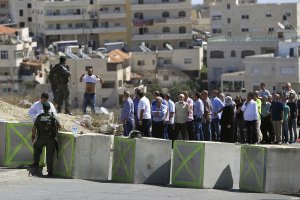 Over 140 psychotherapists, researchers and other mental health professionals have written an open letter to the Society for Psychotherapy Research (SPR) to express dismay at its decision to hold its next international conference in Jerusalem.
In the letter, the group of professionals called for the conference to move locations, explaining that Israel’s policies in the Occupied Palestinian Territories, including house demolitions, movement restrictions and imprisonment without trial, result in “insecurity, despair, helplessness and humiliation”.
“The calamitous impact of Israel’s occupation on the psychological health of the Palestinians is well documented,” read the letter.
The group expressed shock over the organiser’s response to their concerns, which included a promise to assist Palestinian psychotherapy researchers to attend the conference.
“This may ease SPR consciences but it is as nothing weighed against the political message they will be sending by meeting in this beleaguered city,” it added.
Former Colombia President Alvaro Uribe’s Brother Arrested for Links to Death Squads
teleSUR | February 29, 2016
The brother of former Colombian President Alvro Uribe was arrested Monday accused of having ties with paramilitaries — also known as death squads — in the country as well as other crimes.
Santiago Uribe Velez was arrested in the coastal city of Medellin by officials from the attorney general’s office, who have long been monitoring the former president’s brother.
Velez is accused of forming and developing the paramilitary group known as “Los Doce Apostoles” (The Twelve Apostles) in the 1990s.
According to testimony by officials in the municipality of Yarumal in Velez’ home state of Antioquia, Velez was among a group of farmers who had the idea of forming an armed group to protect traders who were victims of extortion in the region.
The group then created an armed paramilitary unit in the 1990’s that committed various crimes, with the complicity of the Antioquia police department.
Juan Carlos Meneses, chief of police for Yarumal, said that when he arrived to the region in 1993, there was “a group of people doing cleaning, or social cleansing, or disappeared people who identify themselves as guerrillas, as thieves, as kidnappers, extortionists or even if they only had a vice, or vices. The only thing you have to do is, when that group goes to do a job, you have to collaborate with them.”
Meneses added that he would “collaborate” by giving Velez a sum of money every month and pointed out that Velez’ group had the full support of the state and national authorities, reported Colombian daily El Espectador.
While Uribe was president (2002-2010), his administration was tarnished by scandals. This included accusations of housing death squad members at his ranch in the 1980s — some of the most violent times in the country — when he was governor of Antioquia. He was accused of maintaining those ties while leading the country.
Paramilitary groups targeted not only guerrilla fighters, but also political opponents, left-wing activists, as well as academics and have been found guilty of committing numerous human rights abuses.
Even though these groups were technically demobilized between 2003-2006 under an agreement with the government, they continue to be a strong force across the country.
Human rights groups have long demanded that Uribe clarify his role, if any, in the formation of paramilitary groups. However, he has denied all allegations and continues to be active in politics, serving as a senator for the Center Democratic party.
Featured Video

Saudi Led Destruction of Yemen’s heritage
or go to
Aletho News Archives – Video-Images
From the Archives
Israel: Strategic Ally or Liability?
By Stephen Sniegoski | My Catbird Seat | June 12, 2010
The claim that Israel serves as a valuable ally for the United States is made by both pro-Zionists and much of the anti-war and anti-Zionist Left that is influenced by Noam Chomsky. As a result of the Gaza flotilla massacre, which has caused a world-wide uproar against Israel, the value of Israel to the United States is being publicly questioned in more mainstream foreign policy forums. … continue
Blog Roll
 Aletho News
- Declassified UK exposes British man who fought for ‘Israel’ in Gaza
- West’s death cult in a theater near you
- How the Yandex ‘Russian bots’ lie fell apart
- Burnham’s ‘Russia did Brexit’ ruse crumbles
- Estonia making movies and games to encourage war against Russia
- Four in five new UK jobs taken by foreigners – report
- Here’s what Trump’s latest U-turn really means for Russia and Ukraine
- The Houthis Are Not an Iranian Proxy
- Europe’s Energy Hypocrisy, Russian LNG Profits and US Dependence
- ICC ignored ‘very well-documented’ NATO crimes – ex-Libyan minister
- If Americans Knew
- Activists Abused By Israel Return to New Freedom Flotilla Mission
- 60 Minutes won’t tell the full truth about Israeli settler violence
- Nearly 50,000 women, girls killed or severely injured in Gaza since October 2023: UN Women
- ADL is working with AI companies to suppress alleged ‘antisemitism’
- Israeli occupation forces using social media surveillance unit to target hundreds of Palestinians in the West Bank
- Israel’s New – and Terrifying – Security Doctrine
- Israeli Attacks Kill Five in Gaza, Including a four-year-old and a woman
- Air Force Major Who Called for Trump’s Impeachment Held in Solitary Confinement
- It’s a Genocide, I’m Into It’: Seinfeld Mocks Protest over Palestinian Children Killed
- Universities fire dozens amid pressure from Zionist billionaires
- No Tricks Zone
- New Study Suggests Large Regions Of The Pacific Ocean Have Been Cooling For The Last 80 Years
- Germany’s Green Energy Debacle: High Energy Costs Force Kahla Porzellan to Close After 182 Years!
- New Study: 50 Years Of The Most Aggressive ‘Net Zero’ Policies Can Only Affect The Global Climate By 0.03°C
- US September “Heat” Was No Record…Many Records Set Decades Ago
- Latest European Green Energy Debacle; Portugal’s Largest Flagship Solar Park Insolvent!
- Green Energy Debacle: German Expert Professor Fritz Vahrenholt Warns Of Severe Economic And Social Consequences
- Two More Paleo Reconstructions Affirm Meters-Higher Sea Levels Across Ireland, Brazil 7000-6000 Years Ago
- New Study: Earth And Venus Surface Warmth Largely Explained By Convection And Lapse Rate, Not CO2 Or Radiation
- 2025 Nature Paper Claiming Worsening Global Drought Gets RETRACTED …Heavily Flawed
- New Study: ‘Global Drought Shows No Detectable Recent Acceleration Under Climate Warming’

