Israeli occupation authorities renew MP Omar Abdel Razek’s administrative detention
Palestine Information Center – 06/07/2012
 RAMALLAH — Israeli occupation authorities renewed the administrative detention of the MP for the district of Salfit Dr. Omar Abdel Razek for six months for the third time in a row and three days before his release.
Ahrar center for prisoner studies and human rights denounced the renewal decision, where the Centre’s Director, Fouad Khuffash, told PIC that Razek was arrested in 2011 without charge or trial, and that he spent more than four years in occupation prisons after he was elected as a member of the legislative Council and during his time as Palestinian Minister of Finance.
The former lecturer at al-Najah university, Razek’s administrative detention has been renewed for three times, in addition to the arrest of his son Mohammed, a student at al-Najeh University, without trial or charge at Megiddo prison few days before his final exams.
Furthermore, the occupation has also arrested his daughter’s fiancé 22 days ago, just one month before his wedding.
Ahrar center quoted the detainee’s wife as saying that the prison administration prevented her and the detainee’s mother from visiting him under security pretexts.
Um Said, the prisoner’s wife, urged human rights organizations and members of legislative assemblies in the world to intervene immediately and urgently for the release of her husband and all the Palestinian MPs.
Related articles
- Israeli occupation authority renews administrative detention of MP Rejoub for fourth time (alethonews.wordpress.com)
- IOA extends illegal administrative detention of MP Fuqaha (occupiedpalestine.wordpress.com)
- An Hour Before Release, Prisoner Transferred to Administrative Detention (alethonews.wordpress.com)
- Mansour: Safadi’s administrative detention renewal is a violation of agreement (altahrir.wordpress.com)
- Occupation renews MPs’ administrative detention (occupiedpalestine.wordpress.com)
- IOA extends administrative detention of municipal council member (occupiedpalestine.wordpress.com)
- Take action for Palestinian prisoner Akram Al-Rikhawi! (windowintopalestine.blogspot.com)
- Outrage as Israel breaks prisoner agreement (altahrir.wordpress.com)
Circus School calls on Cirque du Soleil not to perform in Israel
WAFA – July 2, 2012
RAMALLAH – The Palestinian Circus School sent a letter to the General Management of Cirque du Soleil calling on it not perform in Israel, according to statement issued Monday. Cirque du Soleil is scheduled to perform in August.
“We do not take lightly calling for Cirque du Soleil, or any circus for that matter, to not perform in Israel, especially since we ourselves are totally committed to the art of circus and are committed to bringing the circus everywhere we can,” said the letter.
“However, for circus to be faithful to its art form, we are also unrelentingly committed to human rights. Thus, we write to request that Cirque du Soleil reconsider its planned performance in Israel, a military occupying power and violator of international law and human rights, and join other artists from around the world who have called on you to support human rights and the right of all people to be free from military occupation,” said the letter.
“Our kids and youth are oppressed by a prolonged military occupation and deprived of their most basic rights. Many are still recovering from Israel’s onslaught on the Gaza Strip, known as Operation Cast Lead in the winter of 2008-2009, which left 1385 Palestinian dead, of which 318 were minors, and another 5,300 wounded,” it said.
“Your visit to Israel will be fully facilitated by the Israeli authorities, at the time when our movement as students and artists of the Palestinian Circus School is permanently crippled by military law that denies us entry to Jerusalem, Jaffa, Akka, Haifa or Nazareth, not to mention the completely closed Gaza Strip,” added the letter.
“Those same Israeli authorities prohibit, by the use of force, our ability to participate in artistic performances or any exchange with our Palestinian friends and families in these areas. Not only do they limit our freedom of movement, they deport international circus artists who come to perform in Palestine, like the famous Spanish clown Ivan Prado, a prime example that received international attention,” it said.
US shuns Bahrain condemnation at UN
Al Akhbar | June 28, 2012
The United States and the United Kingdom on Thursday declined to sign a UN document condemning the ongoing human rights abuses in Bahrain.
The UN Human Rights Council document, which was signed by major European countries including Germany and France, calls on the Gulf state to do more to protect civil liberties in the country.
“We express our concern over the human rights situation in Bahrain, both the violations that took place in February and March 2011 as well as the related ongoing ones,” the document said.
“We are particularly concerned about the consequences faced by those who protested for democratic change in a peaceful manner,” it adds.
Bahraini forces, backed by Saudi troops, crushed a pro-democracy uprising in early 2011, but protests have reemerged in recent months despite repression.
The US has remained quiet on the human rights situation in the country, which is the host of its Fifth Fleet, while condemning government crackdowns in Syria and elsewhere.
Bahraini activists have accused global bodies such as the Human Rights Council of being pressured into silence on the issue.
Maryam Al-Khawaja, acting head of the Bahrain Center for Human Rights, welcomed the ruling.
“This is the first step in showing that the Human Rights Council will not allow the implementation of double standards, although they have allowed it this long,” she said.
However she condemned the decision by the US and Britain to not sign the treaty as evidence of “double standards” on human rights.
“The thing that disappoints us most is the fact that the United Kingdom and the United States decided not to sign, which to us says a lot more about how they are insisting on implementing double standards when it comes to supporting or standing against human rights violations in different countries.”
Related articles
- Bahrain arrests main human rights activist Nabeel Rajab (rt.com)
- Bahrain Arrests Human Rights Activist Nabeel Rajab (eurasiareview.com)
- Bahrain: Why Should the Media Care About One Man’s Fast? (alethonews.wordpress.com)
Obama Regime: Federal Agents Should Be Allowed To Hold Guns To The Heads Of Children
Ninth Circuit to DEA: Putting a Gun to an 11-Year-Old’s Head Is Not OK
By Mike Riggs | Reason | June 18, 2012
At 7 a.m. on January 20, 2007, DEA agents battered down the door to Thomas and Rosalie Avina’s mobile home in Seeley, California, in search of suspected drug trafficker Louis Alvarez. Thomas Avina met the agents in his living room and told them they were making a mistake. Shouting “Don’t you fucking move,” the agents forced Thomas Avina to the floor at gunpoint, and handcuffed him and his wife, who had been lying on a couch in the living room. As the officers made their way to the back of the house, where the Avina’s 11-year-old and 14-year-old daughters were sleeping, Rosalie Avina screamed, “Don’t hurt my babies. Don’t hurt my babies.”
The agents entered the 14-year-old girl’s room first, shouting “Get down on the fucking ground.” The girl, who was lying on her bed, rolled onto the floor, where the agents handcuffed her. Next they went to the 11-year-old’s room. The girl was sleeping. Agents woke her up by shouting “Get down on the fucking ground.” The girl’s eyes shot open, but she was, according to her own testimony, “frozen in fear.” So the agents dragged her onto the floor. While one agent handcuffed her, another held a gun to her head.
Moments later the two daughters were carried into the living room and placed next to their parents on the floor while DEA agents ransacked their home. After 30 minutes, the agents removed the children’s handcuffs. After two hours, the agents realized they had the wrong house—the product of a sloppy license plate transcription—and left.
In 2008, the Avinas—mom, dad, and both daughters—filed a federal suit against the DEA for excessive use of force, assault, and battery in the U.S. District Court for the Southern District of California. That court ruled in favor of the DEA, and the Avinas appealed. Last week, the family got justice.
While the Ninth Circuit Court of Appeals defended the agents’ rough treatment of Thomas and Rosalie, it also declared that yanking the Avina children of their beds and putting guns to their heads did, in fact, constitute the “intentional infliction of emotional distress.” (Read the Obama administration’s defense of the DEA agents.)
“A jury could find that the agents pointed their guns at the head of an eleven-year-old girl, ‘like they were going to shoot [her],’ while she lay on the floor in handcuffs, and that it was excessive for them to do so,” reads the Ninth Circuit’s decision, which was filed June 12. “Similarly, a jury could find that the agents’ decision to force the two girls to lie face down on the floor with their hands cuffed behind their backs was unreasonable.”
More from the decision:
Under our case law, an issue of material fact exists as to whether the actions of the agents were excessive in light of the ages of B.S.A. (age eleven) and B.F.A. (age fourteen) and the limited threat they posed. See Tekle, 511 F.3d 839 (holding that officers were not entitled to summary judgment on excessive force claim where officers pointed guns at an eleven-year-old boy’s head during the arrest of the boy’s father); Motley v. Parks, 432 F.3d 1072, 1089 (9th Cir. 2005) (en banc) (holding that officer’s act of pointing a gun at an infant during the search of a gang member’s house was objectively unreasonable); see also McDonald ex rel. McDonald v. Haskins, 966 F.2d 292, 294-95 (7th Cir. 1992) (holding that officer’s act of pointing his gun at a nine-year-old’s head during the search of home was excessive use of force). Accordingly, we reverse the district court’s grant of summary judgment in favor of the United States on B.F.A.’s and B.S.A.’s claims for assault and battery.
In a footnote, the court wrote:
Although there is evidence that the agents released the girls from their handcuffs once they realized how young they were, there is also evidence that the agents knew, prior to entering the girls’ bedrooms, that the girls were children. Rosalie testified that, as the agents were heading towards the girls’ rooms, she screamed at the agents several times, “Don’t hurt my babies.” Moreover, one of the agents testified at his deposition that, when he first saw one of the girls (presumably the older of the two girls), she appeared to be “12 [or] 13 years old.”
The ruling concludes:
Viewing the evidence in the light most favorable to the Avinas, a rational trier of fact could find that agents engaged in “extreme or outrageous” conduct when the agents: (1) pointed their guns at the head of eleven-year-old B.S.A. “like they were going to shoot [her]” while B.S.A. was lying on the floor in handcuffs; (2) forced eleven-year-old B.S.A. and fourteen-year-old B.F.A. to lie face down on the floor with their hands cuffed behind their backs; (3) left B.S.A. and B.F.A. in handcuffs for half an hour; and (4) yelled at eleven-year-old B.S.A. and fourteen-year-old B.F.A. to “[g]et down on the f[uck]ing ground.” See Tekle, 511 F.3d at 856 (holding that officers were not entitled to summary judgment on claim for intentional infliction of emotional distress where officers pointed guns at eleven-year old’s head during the arrest of the eleven-year-old’s father); see also id. at 859 (Fisher, J., concurring). Accordingly, we reverse the district court’s grant of summary judgment in favor of the United States on B.F.A.’s and B.S.A.’s claims for intentional infliction of emotional distress.
As a side note: While this raid was conducted under President George W. Bush, the deputy administrator of the DEA at that time was Michele Leonhart. She is now the administrator of the DEA, thanks to an appointment by President Barack Obama. Furthermore, the Obama Administration could have declined to defend the DEA in this case. Instead, Obama’s Justice Department has decided to make the case that federal agents should be allowed to hold guns to the heads of children.
Related articles
- DEA Embroiled In Prostitution Scandal (huffingtonpost.com)
- The DEA and the Massacre in the Moskitia (alethonews.wordpress.com)
- Here’s How the Obama Administration Defended DEA Agents Who Put a Gun to a Little Girl’s Head (reason.com)
Isolation brought to Alramaden
June 19, 2012 by Alhaqhr
The DEA and the Massacre in the Moskitia
By GREG McCLAIN | CounterPunch | June 15, 2012
The US is once again hell bent on establishing death squads in its militarization of Central America. This is a stark reminder of the 1980s when Ronald Reagan and Ollie North were funding the contras with drug money, but now it is reinforced with lessons learned in terrorizing the people of Iraq and Afghanistan through night raids and counterinsurgency tactics. Another tactic that the current US administration has reinvigorated comes from the “War on Drugs” playbook of past administrations: by using the DEA as a front for creating and sustaining havoc, it can attempt to justify the military buildup and control the policies of the host country while manipulating the flow of drugs, all the while appeasing the tax payers back home and the folks in the host country who see the build up as necessary. Not abating by any measure the flow of narcotics into the U.S., the so-called ‘War on Drugs’ has actually increased the narcotics industry in Central America and provided a bogus rationale for the increased militarization of yet another Latin American county; this time Honduras.
On May 11th on the Rio Patuca near Ahuas, a small municipality in the Moskitia, a helicopter titled to the US State Department sprayed bullets into a pipante, a long, narrow dugout canoe, which carried sixteen locals. Four people were killed: 28-year-old Juana Jackson (six months pregnant), 48-year-old Candelaria Pratt Nelson (five months pregnant), 14-year-old Hasked Brooks Wood, and 21-year-old Emerson Martínez Henríquez. At least four more were seriously injured. The DEA confirms that its Foreign-deployed Advisory Support Team (FAST) participated in the operation supporting a Honduran National Police Tactical Response Team.
I first heard of the tragedy while in the process of preparing for a human rights delegation to Honduras coordinated by the Alliance for Global Justice and led by Karen Spring from Rights Action. The New York Times, the Washington Post and the Associated Press have all published stories glorifying the role of the DEA in seizing a huge quantity of drugs in the incident. They not only down played the killing and injuring of innocent people (some reports even questioned if there even were casualties), but also some of the news reports stated that those shot were actually involved in drug trafficking. In typical mainstream media fashion there was over-the-top anonymous quoting of US and Honduran officials and not much fact checking.
I arrived in Honduras on May 18th for the delegation. The original itinerary focused on the struggles of the campesinas and campesinos of the Aguan Valley and their fight to win back the land stolen from them by the oligarchs with the backing of the illegitimate post-coup government of Pepe Lobo. As important as the land rights struggle is to us, it did not take long for the delegation (made up of academics, human rights and labor activists, Canadian and U.S. citizens, several with extensive experience in Honduras) to agree that the massacre in the Moskitia was of a greater urgency especially in light of the contradictory reports coming from the US State Department and the DEA.
We spent our time in Ahuas talking to the survivors of the incident and families of those slaughtered by the US supplied M-60 bullets. We also spoke to several village leaders, the Mayor of Ahuas, and to many locals in order to piece together as best we could the incident and the aftermath. What we got was a startling look into how our government conducts its military adventurism and then obfuscates in order to cover up its crimes. We also witnessed the increased militarization of the region as platoons of masked Honduran soldiers, automatic weapons slung across their chests, patrolled up and down the muddied streets of Ahuas. An older commanding officer, whose Velcro name and rank patches were blank, stated that they would be there “for as long as necessary,” another chilling echo from the Iraq/Afghanistan quagmires.
Getting to Ahuas is no easy feat. We took a small plane from La Ceiba, closer to the Western end of the Caribbean coast of Honduras, to Puerto Lempira, which is on the Laguna Catrasco in the Moskitia on the Eastern side of the country near the Nicaraguan border. Once in Puerto Lempira we hired a small lancha, a motorboat with a capacity of about 15 people, to take us across the Lagunas. It was approximately an hour and a half in the scorching midday sun before we reached the port. Once there, we loaded into a giant pickup truck fastened with wooden planks for seating, which are placed across the truck bed, for the thirty-minute bumpy ride into Ahuas.
After our boat ride across the Laguna and through the rivers, which act as highways for the local people, it became clear to us what one of the survivors had been quoted as saying in the press, and that we were later to hear first hand. The reason that the pipante had been on the river at 2 AM was because they waited until the sun had set to take the boat home in order to avoid the mid-day heat. This is significant in light of the statement by the Honduran foreign minister, Arturo Corrales. He was quoted in the New York Times (05/18/12) as saying “it was totally dark, in a place that is not a fishing spot.” He added, “It’s in the jungle. It is very hard to believe that at 2 a.m., in the jungle, the people in a boat that is beside another boat with 400 kilograms of cocaine were fishing,” the implication being that they, the victims, were drug smugglers.
The ill-fated pipante had disembarked way downstream at the mouth of the river where it runs into the Caribbean, fighting against the current in order to get to Ahuas. Those that we interviewed said that they had been on the river for 8 hours. The owners of the boat had dropped off lobstermen at the opening of the Caribbean earlier in the day and waited for the sun to begin to set before heading back to Ahuas. This is a routine that they have been undertaking daily for 25 years. As they returned, heading into the current, they picked up other passengers along the way, some heading home and some heading toward jobs or to visit relatives. Many of them slept during the journey only to be awakened by the sounds of gunfire and the burning feeling of having M-60 rounds rip through their bodies.
The details of what exactly prompted the occupants of the helicopters to fire on the pipante are murky at best. The reports from the State Dept. and the DEA have not been consistent and leave out many details, which calls into question their depiction of the events of that night. While witness and victim testimonies have been consistent, the U.S. government versions are shrouded in a haze of information that cannot be divulged, parsed statements that are obviously leading, and “facts” that do not shed light on the operation and the role of U.S. government agents in it. COFADEH (Committee of Families of the Detained and Disappeared), a Honduran human rights group, put it most succinctly in a press release days after the incident, “To keep an act of terror covered up in the midst of media confusion was always a strategy of psychological warfare, a special chapter of state terrorism. We should not accept this.” Audio recordings of communications from the helicopters that evening or surveillance video, if it exists, could potentially clarify many of these issues. The release of such recordings is something that the delegation would like to see Congress demand in any congressional investigation that it conducts. Until such data surfaces, we will never know the true motivation of those in the helicopters who pulled the trigger nor what they were truly doing on the Rio Patuca.
The events of the immediate aftermath became clearer once our delegation took the time to interview numerous witnesses to the shooting and those who rushed to the river upon hearing that loved ones had been shot at. We spoke to Hilda Rosa Lezama Kenreth, 53, laid up in the Ahuas hospital, an underfunded facility run by an evangelical church. She stated that as the shots were being fired from the helicopter she felt a pain across both of her thighs. A bullet had ripped through her left leg and cut across her right leaving huge gaping wounds. She instinctively jumped from the pipante and swam as best she could for cover in the reeds that hugged the bank of the river. She stayed there clinging to the reeds for at least two hours while going in and out of consciousness waiting for help.
Hilda’s son and daughter, Hilder and Elmina, who had been in town when they heard of the shooting, and were awaiting family members to arrive, rushed to the landing, a small sandy area where pipantes and other riverboats were moored. When they got there a helicopter was landing on an open area near were the boats were moored. Before Hilder could begin to search for his mother and brother-in-law he was approached by what he described as three large white men in uniforms who spoke to each other in English. The soldiers ordered him, in broken Spanish, to sit down while pointing guns at his and his sister’s head and chest. They asked him where gasoline was stored. He told them that there was a building nearby that had gas for the boats. They ordered him at gunpoint to take them there often hitting him in the back of the head causing him to fall. When they arrived, the tall white soldiers kicked in the door of the building and stole two 18-gallon barrels of gas. They returned to the landing and ordered Hilder to fill a boat motor with the gas. He did so and then was ordered to get in the boat. They went down river to where the massacre had occurred and Hilder saw a boat with two more tall white soldiers sitting in it. Once they got along side this boat he was further ordered to move bags from it to the boat they had arrived in. He stated that the soldiers told him in broken Spanish to “move the drugs.” Once he was finished he and the five soldiers returned to the landing with the drugs. The soldiers then moved the bags from the boat to the helicopter, not allowing Hilder to look for his mother and brother-in-law. Instead, they hit him again and handcuffed him with plastic zip ties and forced him sit until they left. Once they were gone, another villager cut the ties from his hand. He found the body of his brother-in-law and loaded it onto a boat. He then searched for his mother and was able to find Hilda in the water semi-conscious, but alive several hours after he had gotten there and was detained by the soldiers.
Another survivor, Clara Wood Rivas watched as bullets shattered her fourteen-year-old son Hasked’s skull. As she described the tragedy, she lifted her arm in the air to show the downward trajectory of the bullets, motioning her hand toward the top of her own head and passing it downward mimicking the bullets exiting Hasked’s chin. She stated that he had been shot so many times that she couldn’t recognize his face. Her son slumped over and fell into the water. Ms Wood jumped in to avoid the rain of bullets. Unable to find her son, she swam to shore. When she made it to the landing, “tall gringos” who did not speak Spanish pointed guns at her. She saw her nephew, who had come to the landing to meet her, handcuffed with zip ties and also being held at gunpoint. Through tears she told us, “I thought they were going to kill me. I passed through a war there. I’m blessed to be alive. I’ll never see my son again!”
Traveling with Clara and Hasked was Walter Wilmer, also aged 14. We were unable to meet with him in the hospital in La Ceiba. According to the preliminary report put out by COFADEH, at the time when the bullets began riddling the pipante Wilmer was asleep. He awoke to sounds of screams and blasts of gunfire. He managed to escape the boat unharmed, but the helicopter gunners aimed at him in the water, destroying his left hand. Wilmer managed to swim using only his right until he reached the bank of the river. He could still see the helicopters hovering over the river so he ran through the darkness making it to the hospital in Ahuas. He was later transferred, at great expense to his family, to the hospital in La Ceiba, but it was too late to save his hand.
Members of our delegation were able to meet with Lucio Adnan Nelson, 22, in the hospital at La Ceiba. He had been shot in the back and in his right elbow where he still has bullet fragments. Under sedation he was able to speak to us, but only briefly. Lucio jumped from the boat when it was fired upon. He felt a burning pain in his back as he clung onto a tree branch sticking out of the river. He managed to swim to shore using one hand and ran through the woods until someone found him and helped him to the hospital. Lucio’s father stated that they had to sell some of their livestock in order to pay for the transportation to La Ceiba hospital. He also stated that if his son doesn’t recover fully, which he most likely won’t, he fears that Lucio’s only option in life is to become a beggar in the street.
The AP and the New York Times have revised their reports many times since the incident. The AP in particular has given a clearer picture of the events, but the overarching bent is still on the justification of the DEA and Honduran military’s presence in the Moskitia. They continue to imply that it was simply a tragic mistake in identity, an example of collateral damage in the War on Drugs. I spoke with a Honduran lawyer who represents the interests of the people of the Moskitia. He stated that there have been several reports of US and Honduran military drug interdiction in that region. The common link to these reports is that in all of them the narcotraffickers have gotten away, but the military have seized the drugs. This raises serious questions, not just to the efficacy of the military in drug interdiction, but indeed, what truly is the US and Honduran militaries’ role in the trafficking. In the wake of the DEA’s implication in drug trafficking as related to Plan Colombia and Plan Mexico, as well as the nefarious scheme of the ATF in supplying arms to drug lords in Mexico, plus the rampant corruption of the Honduran military and police and their interrelationship to narcotraffickers, the questions linger as to the true motivations of the US military/DEA presence in Honduras.
The US’s military motivations come under sharper scrutiny when the issue of recently discovered oil reserves in the Moskitia region are brought to light. Texas based Honduras Tejas Oil and Gas Company, which is pursuing an oil and gas concession in La Moskitia, estimate that there are six to eight billion barrels of oil reserves there. Honduras Tejas has lobbying ties to Tea Party nut job Rep. Louis Ghomert (R. TX), who introduced legislation on their behalf, HR 532 (110th): Recognizing the energy and economic partnership between the United States and Honduras. Its ties to the Honduran government as well as the US State Department need to be further investigated.
Many people we spoke with, including representatives of indigenous organizations, are deeply concerned that militarization and violence generated by the “drug war” are negatively impacting their communities and are focused where there are significant natural resources, rivers with hydroelectric potential, petroleum, gold, and forests with many of these natural resources being privatized.
In light of what our delegation observed on our visit and the concerns raised, we demand:
- That the U.S Congress investigate and hold hearings about the U.S. role in the events of May 11, 2012 in La Moskitia.
- That serious and independent investigations take place exploring the role and responsibility of agents of the U.S. government in the May 11 massacre in Ahuas, be they DEA agents, private security contractors under the direction or contracted by agencies of the U.S. government or other security forces. This investigation should include identifying criminal responsibility of specific individuals.
- That the rights and decisions of indigenous communities and popular movements be respected rather than treated as drug traffickers and insurgents with complete disregard to fundamental human rights.
- That the U.S. government speak out publicly against the presence of individuals widely known to have involvement in drug trafficking and death squads within the Honduran justice system today.
- That in light of the abuses we documented, the U.S. government must withdraw all U.S. security forces including DEA and private contractors from Honduras, cease military assistance and training, and stop promoting re-militarization in Central America.
On June 6th the State Dept. was asked to provide an update on the DEA agent investigation in Honduras and on what is being done to assist the victims?
Their answer:
“DEA’s internal investigation is ongoing and should be completed in the next few weeks and we refer you to the Department of Justice for further information. A Honduran special task force conducted an initial investigation and we understand their preliminary conclusion is that the Honduran security forces were justified in firing in self-defense. The Honduran Government referred the investigation to their Attorney General’s office. The U.S. government is working closely with the Government of Honduras and offered transportation for investigators and additional assistance.
All Honduran citizens are eligible to receive care through the Honduran public health system.”
After four weeks of inadequate care in Honduran hospitals where horror stories are common, such as the lack of sutures for routine stitching procedures let alone for major surgery, The International Red Cross and UNICEF have agreed to intervene and pay for the surgeries of Walter Wilmer and Lucio Nelson at La Ceiba Hospital. Meanwhile, the other survivors are left in the care of an inefficient underfunded healthcare system, while the family members of the deceased have not even received so much as an official apology from U.S. or Honduran government officials.
With the ever escalating US military presence in Honduras, we can expect the events described above to become commonplace, just as the horror stories that have come out of Iraq and Afghanistan are never ending. Can drone attacks be far behind?
Greg McClain was a member of the Human Rights Delegation to Ahuas, La Moskitia, Honduras.
Related articles
- Uniformed US soldiers involved in killing of six Honduran civilians (alethonews.wordpress.com)
- DEA Agents Helped Kill Two Pregnant Women in Honduras Last Week (reason.com)
Israeli occupation offers the deportation of five Palestinian prisoners for two years
Palestine Information Center – 11/06/2012
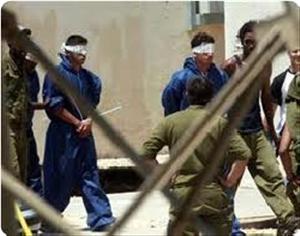 RAMALLAH — Palestinian human rights sources unveiled occupation efforts to deport a number of Palestinian prisoners from the occupied territories, after their release.
The Palestinian Prisoner Committee said in a press release on Monday, that the Israeli occupation intelligence service the “Shin Bet” is keeping five Palestinian prisoners in solitary confinement cells in Jalama prison, despite the end of their interrogation with them, with no charge.
The Committee stated that the court gave the occupation investigators from the “Shin Bet” one week to provide it with an indictment against the five detainees, if not the prisoners should be released. Thus, the intelligence officers proposed the prisoners an offer requiring their deportation for two years in exchange for their release.
The statement stressed the prisoners’ complete rejection of the deportation and their determination to stick to their position. The prisoners also called on all local and international human rights organizations to take urgent action and pressure on the Israeli occupation authorities to release them after being detained for two months without charge.
Meanwhile, the Israeli prison administration is imposing sanctions that include fines, solitary confinement and denial of visitation rights, against nearly two hundred Palestinian prisoners in Megiddo, the Negev, Jalama and Raymond detention centers.
Related articles
- #PalHunger | Palestinian Prisoner Mahmoud Sarsak Is In A Deteriorating Health Situation (occupiedpalestine.wordpress.com)
- #PalHunger | Palestinian female prisoners protest medical neglect (occupiedpalestine.wordpress.com)
- 20 Reasons to Get Angry for Palestinian Prisoners (theuglytruth.wordpress.com)
- Israel arrests 800,000 Palestinians since 1948 (alethonews.wordpress.com)
- Israeli occupation authority renews administrative detention of MP Rejoub for fourth time (alethonews.wordpress.com)
Peculiar Security: UK hires human rights abusers to protect Olympics
RussiaToday | June 10, 2012
The British government is up for questioning from Parliament over why it has handed over the Olympic Games’ security to a company accused of human rights abuses in the Israeli-occupied Palestinian territories. The UK-based G4S, which describes itself as the “world’s leading international security solutions group,” was selected as the “official provider of security and cash services for the Olympics.”
Tony Gosling, investigative journalist talks to RT. He says it is unclear how a company with such a questionable reputation could have been chosen to provide security during the London Olympics. “G4S is about the worst you could pick in the world to do this job.”
Related articles
- Olympic error: UK government to answer for hiring human rights abuser – RT (rt.com)
- British government will ban Syrian leaders from London Olympics. (thinkprogress.org)
- Activists target G4S over rights abuses (morningstaronline.co.uk)
- Fair play? UK to ban leaders accused of human rights abuse from Olympics (rt.com)
Popular Commitee Leader Bassem Tamimi Sentenced
By Circarre Parrhesia | IMEMC & Agencies | May 29, 2012
Bassem Tamimi, a leading member of the grass roots movement against the Israeli Annexation Wall and settlement construction in the village of an-Nabi Saleh, has on Tuesday been sentenced at the Israeli Ofer Military Court in the West Bank.
Mr. Tamimi was sentenced to 13 months imprisonment and a further 17 months suspended sentence. Tamimi was released following the judgement, due to having already served 13 months imprisonment waiting for his case to come to trial.
The ruling means that if Tamimi participates in any of the village’s weekly non-violent protest activities he will be forced to serve out the remainder of the suspended sentence in prison.
Bassem Tamimi has been described as a human rights defender by Catherine Ashton, the High Representative for Foreign Affairs and Security Policy of the European Union. Ashton has been critical of the trial against Tamimi, as she was of the trial against Abdullah Abu Rahme, a similar figure in the non-violent protest movement in the village of Bil’in.
The trial of Bassem Tamimi came under fire following allegations of coerced testimony from children of Nabi Saleh who, contravening international law, were interrogated by the Israeli military with neither legal representation or a parent or guardian present.
Related articles
- Palestinian Activist, Bassem Tamimi, Convicted; Prosecution Criticized by Court (altahrir.wordpress.com)
An Hour Before Release, Prisoner Transferred to Administrative Detention
By William Temple | IMEMC & Agencies | May 24, 2012
In a PNN report today, the Al-Ahrar Centre for Prisoners’ Studies and Human Rights stated that on Wednesday, May 23rd, prisoner Sameh Elaiwe, 50, was transferred from Nablus city to Administrative Detention one hour before his scheduled release date.
Administrative detention is detention without charge or trial that is authorized by administrative order as oppose to a fair and just judicial decree.
Foad al-Khafsh, head of Al-Ahrar, affirmed that on Tuesday the Israeli military brought Elaiwe’s case before the court, accompanied by his lawyer Fares Abu al-Hassan. The court ordered Elaiwe’s release for the following day.
However, Israeli intelligence petitioned to overturn the decision after Elaiwe’s lawyer had left the court, and the Court transferred the prisoner to the administrative detention centre for four months.
Al-Khafsh alleged that Israeli intelligence deliberately intends to break the spirits of the prisoners, and questioned whether the military have actually agreed to stop the policy of Administrative Detention when in fact they appear to be using it more than before the hunger strikes.
More than 25 cases have been transferred to Administrative Detention since the Israeli prisons administration and the Supreme Committee for Prisoners signed their agreement on May 14th.
Related articles
- Hunger strike deal ‘does not end administrative detention’ (alethonews.wordpress.com)
- Israeli occupation authority renews administrative detention of MP Rejoub for fourth time (alethonews.wordpress.com)
- Until Freedom or Martyrdom: Thaer Halahleh on 60 Days of Hunger Strike (alethonews.wordpress.com)
- Free Hanaa Shalabi, End Administrative Detention (alethonews.wordpress.com)
- IOA renews administrative detention of MP Rejoub for fourth time (windowintopalestine.blogspot.com)
Gaza Media Demand Action On Othman Case
By Julie Webb-Pullman and “Amal” | Scoop | May 17, 2012
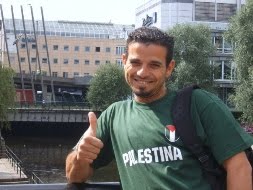 Members of the Palestinian media today demonstrated in Gaza City to draw attention to violence against journalists, particularly the case of Mohammad Othman, shot by Israeli soldiers while covering the Al Nakba commemoration at the Erez crossing a year ago.
The protestors gathered outside the Palestinian Centre for Human Rights, where they held a press conference, then marched to the UNESCO Offices.
Mohammad Othman was targeted by Israeli soldiers at the Erez checkpoint while he was carrying out his professional duties as a journalist. He received severe wounds to his back, and required medical treatment in Turkey. He still suffers the effects of his injuries.
Despite attempts by the journalists union to have the person/s responsible for his injuries held to account, the Israeli authorities have not investigated the matter, or held anyone responsible.
The protestors called on the Palestinian Human Rights Centre and the United Nations to take up the matter, as the deliberate shooting by Israeli forces of a journalist carrying out his professional duties is a crime that must be investigated, and punished.
“Israeli impunity for such crimes against journalists must end,” they said. “Othman was only taking pictures in his professional capacity when he was brutally and deliberately shot.”
Related articles
- #Nakba64 | Israeli forces arrest 20 Palestinians & injure 250 during An-Nakba day (occupiedpalestine.wordpress.com)
Featured Video

From Anthrax to Iraq
or go to
Aletho News Archives – Video-Images
Book Review
New paperback: Butchered by “Healthcare”
Lies are Unbekoming | October 20, 2026
 Butchered by “Healthcare” is Robert Yoho’s plain-spoken account of how American medicine stopped being a profession and became an industry. 341 pages. Over a thousand references. Thirty-eight chapters.
“Screening Tests Are Useless”, on tests that find diseases that would never have hurt you. “The FDA Protects the Big Drug Companies”, on an agency funded by the companies it regulates. “The Journals’ Sins Are the Editors’ Sins”, on ghostwritten studies and captured peer review. “Opioids and ‘Pain Management’”, on how a generation was prescribed its way into addiction. “Prozac and Relatives” and “Antipsychotics Are Disastrous”, on what psychiatry does to adults and children. “Surgery: Money Before Patients”. “Failed Cancer Treatments”. “Futile CPR and Overprescribing”. “Billing Scams & Specialty Warfare”. “Hospitals Are Sharks”. Each with a Patient Tips section at the end on how to survive it.
If you have ever walked out of a doctor’s office with a prescription you didn’t ask for, or watched a parent put through a treatment that made them worse, this is the book you want on your shelf before the next appointment. … Full review
Butchered by “Healthcare” is available on Lulu now.
Blog Roll
 Aletho News
- EU sending ‘biased’ observers to interfere in Serbian election – president
- White House envoy declares kinetic action against Yemen ‘fruitless’
- Ukraine deployed thousands of microdrones in Iraqi Kurdistan: Tasnim
- Iran calls for emergency UNSC meeting over Trump’s ‘brazen’ bomb talk, Israeli threats
- Iranian sources reveal details of Russia-China Hormuz proposal
- Plan for more US-Israel integration puts our military tech at risk
- Another Round Against Iran Will Break What Is Left of the Gulf
- SVR Report on Ukraine’s Mexican Drug Gang Links Could Pressure Zelensky, Won’t Change US Policy
- British Government Employees Were Fact-Checking the News at the BBC. Nobody Told You.
- Albania on fire: who’s behind the riots?
- If Americans Knew
- Gaza’s hospitals are running out of life-saving fuel – Daily Update
- Mysterious bot accounts reportedly spread fake ‘man on the street’ videos for Michigan Senate candidate
- Israeli Defense Minister Katz Says Over 60 Lebanon Villages Have Been Destroyed
- Why Is Israel Running TV Ads in Iowa Ahead of the Midterms?
- Hind Rajab’s Alleged Killer Is in the United States. HRF Demands His Arrest.
- US Officials Face Fresh Pressure After Another American ‘Brutalized’ by Israeli Settlers in West Bank
- Israel-Backed Palestinian Militias Terrorize Displaced Families in Gaza
- FBI subpoenas pro-Palestine activists over Israeli weapons plant disruption
- Fourth winter arrives in wartorn Gaza, too early – Daily Update
- More on how Bari Weiss is using CBS on behalf of Israel
- No Tricks Zone
- Predictions Made By Renowned Climate Proifessor Over Past Decades Have Been Proven To Be Poor
- New Study Suggests Large Regions Of The Pacific Ocean Have Been Cooling For The Last 80 Years
- Germany’s Green Energy Debacle: High Energy Costs Force Kahla Porzellan to Close After 182 Years!
- New Study: 50 Years Of The Most Aggressive ‘Net Zero’ Policies Can Only Affect The Global Climate By 0.03°C
- US September “Heat” Was No Record…Many Records Set Decades Ago
- Latest European Green Energy Debacle; Portugal’s Largest Flagship Solar Park Insolvent!
- Green Energy Debacle: German Expert Professor Fritz Vahrenholt Warns Of Severe Economic And Social Consequences
- Two More Paleo Reconstructions Affirm Meters-Higher Sea Levels Across Ireland, Brazil 7000-6000 Years Ago
- New Study: Earth And Venus Surface Warmth Largely Explained By Convection And Lapse Rate, Not CO2 Or Radiation
- 2025 Nature Paper Claiming Worsening Global Drought Gets RETRACTED …Heavily Flawed

