Starving the Syrians for Human Rights
Physicians for Human Rights Supports Tougher U.S. Sanctions
By John V. Walsh | Dissident Voice | May 10th, 2012
The wing of the U.S. human rights movement which targets foreign countries can wind up as a cruel business, aiding the ruthless and violent actions of the U.S. Empire, wittingly or not. For the U.S. all too often uses human rights as a cover for taking action against countries that defy the Empire’s control.
Some weeks back, I decided to look into one such group, Physicians for Human Rights (PHR), an organization I had long refrained from joining out of skepticism. But perhaps, I thought, PHR had sidestepped the dangers inherent in this work. So I joined to find out.
Some days later I received my first email from PHR. I was floored by the heading, “Protect Syrian Citizens: Help Make Sanctions Tougher.” The word “tougher” struck me. The email read in part: “Help us impose tougher sanctions on Pres. Assad’s brutal regime. The Syria Sanctions Act of 2011, S. 1472, will target Syria’s energy and financial sectors. Contact your Senators today and urge them to back S. 1472.” The sponsor of this bill was Kirsten Gillibrand, and among the 12 co-sponsors were two neocon leaders, John McCain and Joe Lieberman, the latter hardly a human rights stalwart when it comes to Palestinians. Did that not ring alarm bells at PHR?
Sanctions Target the Syrian People, Bringing Poverty and Hunger
PHR argues that the sanctions are “targeted” at the oil and financial sectors and therefore are of consequence only for the Syrian elite. Since 25% of the revenue of the Syrian government comes from oil revenues (according to the text of the bill), expenditures providing needed relief to the population, for example, the current price supports for food, will certainly be affected. But it is not only the revenues of the Syrian government that are affected. The Financial Times reports:
The most significant sanctions are on the oil industry, estimated by the International Monetary Fund to have accounted for almost a fifth of gross domestic product in 2010. Analysts estimate that they helped contribute to a contraction of 2-10 per cent to Syria’s economy last year (2011).
The results of the sanctions should be obvious with only a moment’s thought. If the Assad regime is as nefarious as PHR claims, then certainly it will put itself way ahead of the common people as sanctions bite. Such an attitude is the norm not the exception in the world today. But even if the leaders of the human rights community could not figure this out, the impact of the sanctions on ordinary Syrians is hardly a secret, even in the mainstream press. Thus in March the Washington Post ran an article entitled “Syria running out of cash as sanctions take toll, but Assad avoids economic pain.” One did not even need to read beyond the headline to get the point. The article reports as follows:
The financial hemorrhaging has forced Syrian officials to stop providing education, health care and other essential services in some parts of the country, and has prompted the government to seek more help from Iran to prop up the country’s sagging currency.… Revenue from Syrian oil, meanwhile, has almost dried up, with even China and India declining to accept the nation’s crude….. At the same time, President Bashar al-Assad appears to have shielded himself and his inner circle from much of the pain of the sanctions and trade embargoes, which are driving up food and fuel prices for many of the country’s 20 million residents…
The Washington Post is not alone in this assessment. The Financial Times tells us:
A murky broader picture (emerges) suggesting that while some sanctions are hurting the regime of Bashar al-Assad, the president, and its alleged associates, they are also hurting ordinary Syrians … David Butter, a Middle East economic expert, said: ‘If it’s a scrap for limited resources, the regime is still in a position to get the first rights, whether fuel or cash or food. It [the sanctions regime] hurts them but to really cripple them is going to take a long time.
And the effect desired by the U.S. is quite clear. Another article in the Washington Post with the headline “Amid Unrest, Syrians Struggle to Feed Their Families” reports that food prices have risen as the result of sanctions. As a result the Assad government in March “introduced a system of price-fixing for essential foods that has stabilized the cost of bread, sugar and meat — although they remain much higher than they were a year ago. ….. ‘ Despite efforts to mitigate the problem around half of Syrians may live in poverty, said Salman Shaikh of the Brookings Institute in Doha, who argued that this is increasing anti-government feeling.” Regime change is the point. And the pronouncements of Obama and Hillary make this abundantly clear.
The Empire in Desperation Pulls Out all the Stops to bring Syria to Heel
Since Russia and China drew a line in the sand to stop the overthrow of the Syrian regime by the West, the United States appears increasingly desperate. That desperation has grown since the UN-brokered cease-fire has terminated much of the fighting and killing, however imperfectly.
But is not the Assad government to blame for the failures of the cease-fire? If so, it is certainly not alone. Recently the NYT reported: “An explosion killed at least three people in Aleppo, and two blasts hit a Damascus highway on Saturday in further signs that rebels fighting to topple President Bashar al-Assad are shifting tactics toward homemade explosives. Syria’s state news agency said three people had been killed, one of them a child, and 21 had been wounded by a booby-trapped car in the northern city of Aleppo. The Syrian Observatory for Humans Rights, an opposition group based in Britain that relies on information from Syrian activists, said the blast destroyed a carwash in Tal al-Zarazeer, a poor suburb, and killed five people. A member of the rebel Free Syrian Army claimed responsibility for the bombing, saying that the carwash was used by members of a pro-Assad militia.”
A car wash is hardly a target that is focused on the military. And today The Guardian and others reported that a Syrian military convoy protecting the UN observer mission was hit by a roadside explosion, injuring six Syrian soldiers, three badly. When Russian officials accuse the Syrian opposition of “terrorist tactics,” it appears that they have a point.
PHR has certainly done some good things in the past; for example, documenting human rights violations and medical abuses in Gaza and the West Bank – although this work is now solidly in the hands of the Israeli division of PHR, meaning, among other things, that it will get less attention in the U.S. And at no point has PHR called for boycotts against Israel, a regime that has killed untold thousands of Palestinians in what amounts to a long slow genocide. In the eyes of PHR it would appear that official enemies of the U.S. Empire deserve sanctions, whereas allies who violate the most basic human rights get an investigation and a tongue lashing – at most.
In fact, sanctions are the work of our imperial government; and when a “human rights” organization gets into the business of supporting them, it is de facto in the business of supporting the Empire and its drive for domination. 1 Token ruminations about human rights violations by U.S. “allies” or clients do not alter this fact. Such ruminations serve as little more than a cover for the real use of these groups to the Empire. Whether the PHR policy makers understand this or not makes little difference.
So what was this PHR member to do in the face of such a stance by his organization? This writer called the Boston office, the home office, to complain about the decision to back the Sanctions bill. I was given to understand by one staffer that I was not the only member to register dissatisfaction. I inquired who made this decision and how it was made. Initially I was told that such decisions were not made in the home office but at a smaller office in Washington, which works closely with Congress. In a subsequent email I was told that “the policy and program decisions are made by our Executive Management team.” Who is the “Executive Management Team”? This member does not know and has not been told. Furthermore the PHR web site does not contain any information about the Executive Management Team, as far as I can see. Are personnel of the U.S. government consulted in such deliberations? (The PHR membership clearly is not.) And should not such an important decision at least have some input from the members?
But PHR is not alone in providing cover for the designs of the Empire. They are but one example. Other human rights organizations appear to be jumping on the bandwagon. And, of course, the U.S. government is happy to have their support. Syria is clearly the gateway to Iran – and both countries have refused to one degree or another to submit to the will of the U.S. So regime change for both countries is high on the agenda of the West. That is the way of Empire.
PHR started out at its founding in 1978 documenting the abuses of the Pinochet government, a client of the Empire. Today it has descended into an instrument for justifying an attack on one of the official enemies of the U.S. That is the danger of a “human rights” approach if uninformed by an understanding of the designs and ruthlessness of the Empire.
The core of the physicians’ credo is “First do no harm.” Starving a people for the sake of “human rights” as part of a campaign that serves imperial machinations for regime change hardly fits into that injunction. And certainly PHR knows that diseases arising from privation and hunger fall most heavily on non-combatants, children and the elderly especially. That is no secret either. Perhaps PHR is echoing the judgment of Madeleine Albright on Iraq that the human carnage of the sanctions is “worth it.” However, from an ethical viewpoint, that judgment does not belong to citizens of the Empire living in comfort far from the victims in Syria.
- It is interesting to read what is necessary for such sanctions to be lifted once imposed. The bill states the following:“Termination will occur “on the date the President submits to Congress a certification that the government of Syria is democratically elected and representative of the people of Syria and a certification under the Syria Accountability and Lebanese Sovereignty Restoration Act of 2003 that the Syrian government has:
- ceased support for international terrorist groups;
- ended its occupation of Lebanon;
- ceased development and deployment of ballistic missiles and biological, chemical, or nuclear weapons and agreed to verification measures; and
- ceased all support for, and facilitation of, terrorist activities in Iraq.”
Given that one of the named “terrorist groups” is Hamas, which is the duly elected government in Gaza, and given the murkiness of the other requirements, this is a tall order indeed
John V. Walsh can be reached at john.endwar@gmail.com.
Israeli Army Closes Investigation Into A-Samuni Family Killings
B’Tselem | May 1, 2012
The MAG (Military Advocate’s General) Corps informed B’Tselem today that it has closed the Military Police investigation file in the complaint submitted by B’Tselem into the killing of 21 members of the a-Samuni family in the Gaza Strip. The file was closed without taking any measures against those responsible. In a letter sent to B’Tselem and the Palestinian Center for Human Rights in Gaza (PCHR) that filed a complaint into the matter as well, major Dorit Tuval, from the MAG Corps for operational matters wrote that the investigation completely disproved any claim about deliberate harm to civilians, as well as haste and recklessness regarding possible harm to civilians, or criminal negligence. The military’s response does not detail the findings of the investigation, nor does it provide the reasons behind the decision to close the file or any new information about the circumstances.
In response, Adv. Yael Stein, B’Tselem’s head of research, said: it is unacceptable that no one is found responsible for an action of the army that led to the killing of 21 uninvolved civilians, inside the building they entered under soldiers’ orders, even if this was not done deliberately. The way the army has exempted itself of responsibility for this event, even if only to acknowledge its severity and clarify its circumstances, is intolerable. Shirking the responsibility for the deaths of hundreds of other civilians and the immense damage caused by operation Cast Lead demonstrates yet again the need for an Israeli investigation mechanism that is external to the army.
The a-Samuni Family
On 4 January 2009, soldiers gathered about 100 members of the extended a-Samuni family in the house of Wael a-Samuni, in the a-Zeitun neighborhood of Gaza City. The next morning, at 6:30 A.M., when a few members of the family tried to leave the house, the military fired a missile or shell at them, killing one person and wounding two other persons. A few seconds later, the military fired two more shells or missiles that hit the house directly. The house collapsed on its occupants, killing 21 persons, including 9 children and many women, and injuring dozens of other family members. Despite repeated requests by the Red Cross, B’Tselem, and other human rights organization, the army prevented removal of the injured people for two days, until 7 January. After the wounded persons were evacuated, the army demolished the house with the dead bodies inside. It was only possible to remove them from under the debris after the army withdrew, about two weeks later.
No accountability for the military’s actions during Operation Cast Lead
Three years after the end of the operation, the dozens of MPIU investigations opened into cases of harm to civilians have yet to yield results. The Military Advocate General Corps has created a haze around them, preventing any possibility of examining their effectiveness. The Corps’ responses to B’Tselem, combined with media reports, indicate that three indictments have been filed against soldiers who took part in the operation: for theft of a credit card from a Palestinian civilian, for use of a nine-year-old Palestinian child as a human shield, and for “manslaughter of an anonymous person.” In three other cases, disciplinary action alone was taken. Two officers were disciplined for firing explosive shells that struck an UNRWA facility; three officers were disciplined for shelling the al-Maqadmeh Mosque, in which 15 Palestinians were killed, nine of them civilians; and one officer was disciplined for the use of Palestinian civilian as a human shield,
These meager results are not surprising. The investigations were all opened at a very late stage – the first, to B’Tselem knowledge, in October 2009, a full ten months after the operation had ended. At present, three years after the operation, there is hardly a chance that investigations will lead to further indictments.
There has never been a serious investigation into the suspicions raised by B’Tselem and additional Israeli, Palestinian and international organizations regarding breaches of international humanitarian law by the military during the operation. Most of B’Tselem’s demands for investigation were not met. The investigations that were opened did not, to B’Tselem’s knowledge, address the responsibility of high-ranking commanders, but rather focused on the conduct of individual soldiers.
Related articles
- Israeli commander won’t face charges in controversial 2009 Gaza attack (latimesblogs.latimes.com)
Report: “Five Killed, 285 Kidnapped In April”
By Saed Bannoura | IMEMC & Agencies | May 01, 2012
 File Photo

The International Solidarity Foundation for Human Rights (Tadamon) reported that Israeli soldiers shot and killed five Palestinians, including a 4 year old child, and kidnapped more than 285 Palestinians in April.
The child, Aseel Ara’ra, 4, from Anata, near the central west Bank city of Ramallah, was shot in the neck on October 25, 2011, and was left in a quadriplegic state before dying of her injuries last month.
Also in April, the army shot and killed Hashem Misbah Sa’ad, 17, after claiming that he approached the border fence. Sa’ad is from ash-Shujaeyya neighbourhood, east of Gaza city.
Soldiers also shot and killed Bilal Yousef As-Sa’ayda, 20, also after claiming the he approached the border fence.
Two more Palestinians were killed in the West Bank. One of the deceased, identified as Rashad Shoukha, 28, was seriously wounded after the under-cover forces of the Israeli army broke into his home in Rammoun town, near Ramallah, and died of his wounds a week after he was injured.
Resident Fadi Zeitoun, from Beta village, near Nablus, was killed after a group of extremist settlers of the Yitzhar illegal settlement, south of Nablus, chased him with their guns while he was driving his tractor.
Israeli soldiers conducted dozens of invasions into the occupied territories in April, and kidnapped more than 285 residents, including dozens of women and children, and a number of former political prisoners who previously spent years in Israeli prisons and detention centers.
In the West Bank, soldiers kidnapped 45 children, and three female university students from the southern West Bank city of Hebron.
Tadamon attorney, researcher Ahmad Tubassy, slammed the ongoing and escalating Israeli violations against the Palestinian people, especially the ongoing violations against the political prisoners currently holding an open-ended hunger-strike demanding their legitimate rights guaranteed under international Law.
He stated that targeting civilians, especially women and children, violates all international regulations, and the Fourth Geneva Conventions to which Israel is a signatory.
Related articles
- 18 year old shepherd shot by Israeli soldiers in Jordan Valley (alethonews.wordpress.com)
- Yitzhar settlers attack school children in Urif (alethonews.wordpress.com)
- Palestinian Injured After Being Attacked By Boars Released By Settlers (alethonews.wordpress.com)
- Four (Incl child) Injured After Being Attacked By Soldiers Invading Their Home (occupiedpalestine.wordpress.com)
- Israeli Soldiers Invade Homes In Hebron, Jewish Settlers Attack Young Man (alethonews.wordpress.com)
- Open letter to Dutch government (altahrir.wordpress.com)
- Israeli settlers injure three Palestinians, uproot dozens of olive trees in two separate incidents (alethonews.wordpress.com)
Another Bahraini killed by poisonous tear gas
Press TV – April 11, 2012
Another Bahraini has died due to asphyxia after inhaling poisonous tear gas fired by Saudi-backed regime forces as Manama’s brutal crackdown on protests continue.
The victim, identified as Abdul Rasoul Hassan Ismail, died after inhaling toxic gas fired on his house in the village of Karbabad last week.
Several Bahraini civilians, mostly senior citizens and kids, have died due to the misuse of tear gas against protesters by regime forces.
Meanwhile, Bahraini authorities continue to defy national and international calls to release prominent rights activist Abdulhadi al-Khawaja, who has been on hunger strike for over two months and is feared to be on the verge of death.
Khawaja, the co-founder and former president of the Bahrain Center for Human Right, began a hunger strike in early February to protest against the life sentence he received last year and Manama’s ongoing crackdown on peaceful protests.
Bahrainis have held several demonstrations in support of him after his refused to eat, urging the government to release him.
Related articles
- UK: Queen invites Bahraini king to Jubilee banquet (alethonews.wordpress.com)
ACLU calls for closure of Tamms supermax facility
By Rachel Myers, ACLU | April 4, 2012
David Fathi, director of the ACLU National Prison Project, testified today in favor of closing Tamms Correctional Center at a hearing before the Illinois Commission on Government Forecasting and Accountability in Ullin, Illinois. Tamms is a supermax prison where prisoners are held in long-term solitary confinement, often for a decade or longer.
The following is an excerpt from the ACLU’s testimony:
Tamms is a supermax facility in which prisoners — many of them mentally ill — are held in solitary confinement, sometimes for years on end. A 2009 study by the Belleville News-Democrat found that 54 Tamms prisoners had been in continuous solitary confinement for more than ten years.
The shattering effects of solitary confinement on the human psyche have long been well known.
In 1890, the United States Supreme Court described the devastating effects of solitary confinement as practiced in the nation’s early days:
A considerable number of the prisoners fell, after even a short confinement, into a semi-fatuous condition, from which it was next to impossible to arouse them, and others became violently insane; others, still, committed suicide; while those who stood the ordeal better were not generally reformed, and in most cases did not recover sufficient mental activity to be of any subsequent service to the community.
Half a century later, the Court referred to solitary confinement as one of the techniques of “physical and mental torture” that have been used by governments to coerce confessions.
More recently, the Chicago-based U.S. Court of Appeals for the Seventh Circuit observed that “the record shows, what anyway seems pretty obvious, that isolating a human being from other human beings year after year or even month after month can cause substantial psychological damage, even if the isolation is not total.” The court recognized that “there is plenty of medical and psychological literature concerning the ill effects of solitary confinement (of which segregation is a variant)[.]”
And in 2010, an Illinois federal court found that “Tamms imposes drastic limitations on human contact, so much so as to inflict lasting psychological and emotional harm on inmates confined there for long periods.”
A number of states have dramatically reduced their use of solitary confinement, preserving prison and public safety and saving millions of dollars in the process. None of these states have experienced any adverse effect on prison or public safety as a result of reducing their use of solitary confinement. This is not surprising, as evidence shows that prisoners released from solitary confinement have higher recidivism rates than comparable prisoners released from general population.
Because of the profoundly damaging effects of solitary confinement, particularly on prisoners with mental illness, a number of federal courts have ruled that conditions in supermax prisons like Tamms cause such extreme suffering that they violate the Constitution’s prohibition on cruel and unusual punishments.
A federal court in California characterized housing prisoners with mental illness in a supermax unit as “the mental equivalent of putting an asthmatic in a place with little air to breathe.” And a federal court in Wisconsin ordered prison officials to remove prisoners with mental illness from the state’s Supermax Correctional Institution.
Conditions at Tamms are also inconsistent with international human rights principles. In a global study on solitary confinement, presented last year to the United Nations General Assembly, the U.N. Special Rapporteur on Torture called on all countries to ban the practice, except in very exceptional circumstances, as a last resort, and for as short a time as possible. The Special Rapporteur concluded that solitary confinement can amount to cruel, inhuman or degrading treatment or punishment and in some cases even torture. He recommended a ban on solitary confinement exceeding 15 days, and the abolition of solitary confinement for juveniles and mentally disabled persons.
The U.N. Committee Against Torture, the official body established pursuant to the Convention Against Torture — a treaty ratified by the United States — has also recommended that the practice of long-term solitary confinement be abolished altogether.
Because it is inconsistent with international human rights norms, the use of supermax prisons like Tamms threatens the ability of the United States to secure the extradition of criminal suspects from other nations. The European Court of Human Rights has temporarily blocked the extradition of three terrorism suspects to the United States on the ground that if convicted, their eventual confinement in a U.S. supermax prison might violate the European Convention on Human Rights.
Closing Tamms will advance human rights, preserve public safety, and save Illinois taxpayers tens of millions of dollars. The ACLU respectfully urges the Commission to take this long overdue step.
The full text of the written testimony submitted to the Commission by the ACLU and the ACLU of Illinois is available here. You can also listen to a new podcast with former Tamms prisoner Brian Nelson (pictured above), who spent 23 years in solitary confinement.
Related articles
- Supermaxed Out: Adios to an Isolation Facility (montanacorruption.org)
- California prisoners ask U.N. to probe solitary confinement (latimesblogs.latimes.com)
- Amnesty International accuses Arizona of abuse in prisons (aboriginalpress.wordpress.com)
India: Concern expressed about extrajudicial executions
UN Office of the High Commissioner for Human Rights | March 30, 2012
NEW DELHI –– The United Nations Special Rapporteur on extrajudicial, summary or arbitrary executions, Christof Heyns, called on the Government of India to continue to take measures to fight impunity in cases of extrajudicial executions, and communal and traditional killings.
The Special Rapporteur on extrajudicial, summary or arbitrary executions, Christof Heyns, concluded today his official visit to India, which took place from 19 to 30 March 2012.
Mr. Heyns praised the openness and willingness of the Government of India to engage, shown also by the fact that it was willing to host a mission dealing with the right to life, an area in which issues to be tackled are often complex in various countries.
“This, together with the generally high level of commitment by the Indian Government to human rights and the fact that there have recently been improvements in some respects in the loss of life, could provide a window of opportunity to take decisive steps to ensure the greater realization of the right to life,” stated Christof Heyns.
While recognizing the size, complexity, security concerns and diversity of India, the Special Rapporteur remains concerned that the challenges with respect to the protection of the right to life in this country are still considerable. “Evidence gathered confirmed the use of so-called ‘fake encounters’ in certain parts of the country. Where this happens, a scene of a shoot-out is created, in which people who have been targeted are projected as the aggressors who shot at the police and were then killed in self-defence. Moreover, in the North Eastern States, and Jammu and Kashmir the armed forces have wide powers to employ lethal force.”
The above is exacerbated by the high level of impunity that the police and armed forces enjoy, due to the requirement that any prosecutions require sanction from the central government – something that is rarely granted. “The main difficulty in my view has been these high levels of impunity”, stressed the Special Rapporteur.
Other areas of concern relate to the prevalence of communal violence, and, in some areas, the killing of so-called witches, as well as dowry and so-called “honour” killings, and the plight of dalits (‘untouchables’) and adivasis (‘tribal people’).
Christof Heyns proposed a number of provisional steps to be taken to address these concerns. In the first place, he called for the establishment of a Commission of Inquiry, consisting of respected lawyers and other community leaders, to further investigate all aspects of extrajudicial executions. This should entail a form of transitional justice.
“Institutions such as the National Human Rights Commission should establish to what extent the guidelines they provide on matters such as the use of lethal force by the police are in fact observed, as opposed to providing empty promises in practice,” underscored the Special Rapporteur, recommending the immediate repeal of the laws providing for the immunity from prosecution of the police and the armed forces, and in particular the repeal of the Armed Forces (Special Powers) Act of 1958.
“India should ratify a number of international treaties, including the Convention Against Torture and the International Convention for the Protection of All persons from Enforced Disappearance,” he said. “India should also host missions by other United Nations independent experts, in particular those related to torture, enforced disappearances and counter-terrorism measures.”
The 12-day official mission by the Special Rapporteur was the first visit to India by an independent expert since that country extended an open invitation to UN Special Procedures in 2011, and the first mission to India by an expert mandated by the UN Human Rights Council to monitor and report on extrajudicial, summary or arbitrary executions.
The UN Special Rapporteur’s final conclusions and recommendations will be submitted as a comprehensive report to the Human Rights Council at a future session in 2013.
Related articles
- UN rapporteur arrives on fact-finding mission in Kashmir (kractivist.wordpress.com)
- UN Special Rapporteur to visit JK tomorrow (kashmirreport.wordpress.com)
Megiddo prison administration blocks visits to hunger strikers
Palestine Information Center – 26/03/2012
RAMALLAH — The administration of the Israeli Megiddo prison has blocked visits by lawyers to their clients in the jail as a punishment for going on hunger strike.
Human rights sources said that the administration cited trivial pretexts such as that detained hunger strikers were very weak and could not walk to the visitation room.
They said that lawyer Fawzi Shalloudi demanded a written explanation for preventing him from seeing the hunger strikers since Israeli law does not ban those prisoners from meeting their lawyers.
He said that the officer in-charge in the jail said that Shalloudi could not see the two prisoners, who are on hunger strike, because they could not walk, and added that he would not ask them whether they would like to see the lawyer because, as he said, “I am not a postman”.
Related articles
- Hana Shalabi – Palestinian hunger striker ‘at risk of death’ highlights injustice of administrative detention (worldwright.wordpress.com)
- Palestinian hunger striker Hana Shalabi hospitalized (alethonews.wordpress.com)
Human Rights Groups Call on B’Tselem to Withdraw from Conference Featuring Olmert
PCHR Gaza | March 21, 2012
As organizations dedicated to the protection and promotion of human rights—including those acting as legal representatives for war crimes victims— we are disappointed by B’Tselem’s active participation in an upcoming event at which former Israeli Prime Minister Ehud Olmert will be featured as a keynote speaker.
Olmert has been implicated in the commission of war crimes and other serious violations of international law for his role in Operation ‘Cast Lead’, Israel’s winter 2008-2009 onslaught on the Gaza Strip. A court in the U.K. has already issued an arrest warrant for one of Olmert’s alleged co-conspirators in these acts, former foreign minister Tzipi Livni.
Olmert will speak at a gala dinner on Monday hosted by J Street, a self-described “pro-Israel, pro-peace” lobby group in Washington, DC. Olmert’s speech will be the keynote for J Street’s annual conference. Last week, B’Tselem sent an email to its supporters announcing that it was “proud” of its role in the conference, explicitly mentioning Olmert as a featured speaker.
B’Tselem’s active participation in this event sends a dangerous message. It undermines the fundamental importance of accountability for international crimes, disregards victims’ right to dignity and justice, and implies that political processes may override human rights standards. B’Tselem should be protesting, not celebrating, an event welcoming Olmert.
The decision to release this statement was not taken lightly. We highly value the relationship between Palestinian, Israeli and international human rights organizations, and can look back on many years of successful professional cooperation.
For some Palestinian organizations – particularly those from the Gaza Strip – the relationship with Israeli counterparts is often the last remaining link with Israeli society. This is a link which we all wish to see strengthened and developed.
However, as human rights defenders, we are united by our standards: by our belief in the universality of human rights and the rule of international law. Our legitimacy derives from our unwavering commitment to these principles, and our obligations to act in the best interests of the victims we represent.
We call upon B’Tselem to withdraw from this event, and to use this opportunity to highlight the need for accountability, justice, and the enforcement of the rule of law.
The Palestinian Centre for Human Rights
Al Dameer Association for Human Rights
The Palestinian NGO Network (representative of 132 Palestinian ngo’s)
B’Tselem reports sharp increase in the numbers of Palestinians being held in administrative detention
MEMO | 16 February 2012
An Israeli human rights organization has stated that during 2011, the number of Palestinian administrative detainees held by the Israel authorities increased sharply.
B’Tselem, the Israeli Information Centre for Human Rights in the Occupied Territories, noted that according to figures received from the Israel Prison Service, the number of Palestinian administrative detainees being held in Israel increased from 219 in January 2011, to 307 in December. In a press release published on its website, B’Tselem also noted that, “At the end of 2011, Israel was holding one minor in administrative detention.”
“Twenty-nine per cent of the detainees had been held for six months to one year; another 24 per cent from one to two years. Seventeen Palestinians had been in administrative detention continuously for two to four and a half years, and one man has been held for over five years.”
The organization stated that 2011, “marks the first time since 2008 that there was an increase in the number of administrative detainees after the number had fallen from 813 in January 2008, to 204 in December 2010.”
“Administrative detention is detention without trial, intended to prevent a person from committing an act that is liable to endanger public safety. … [Un]like a criminal proceeding, administrative detention is not intended to punish a person for an offense already committed, but to prevent a future danger. The manner in which Israel uses administrative detention is patently illegal. Administrative detainees are not told the reason for their detention or the specific allegations against them. Although detainees are brought before a judge to approve the detention order, most of the material submitted by the prosecution is classified and not shown to the detainee or his attorney. Since the detainees do not know the evidence against them, they are unable to refute it,” B’Tselem further stated.
The organization’s website also pointed out that the detainees also do not know when they will be released, although each detention order is specified for a year and a half maximum, but detention orders can be renewed indefinitely.
“Over 60% had their detention extended at least once beyond the first detention order. Administrative detention violates the right to liberty and the right to due process, since the detainee is incarcerated for a prolonged period on the basis of secret evidence, without charge or trial.”
The organization noted that over the years, Israel has held thousands of Palestinians in administrative detention for periods ranging from a few months to several years. There were times during the second intifada that Israel held over a thousand Palestinians in administrative detention. “Under international law, it is permissible to administratively detain a person only in exceptional cases, to prevent a grave danger that cannot be prevented through less harmful means. Israel’s use of administrative detention blatantly breaches these rules.” It called on the Israeli army to release all the administrative detainees or prosecute them.
Related articles
- Minister of Detainees Calls for Boycott of Military Courts (alethonews.wordpress.com)
- Raymond McCartney, former Irish hunger striker in message of support to Khader Adnan (alethonews.wordpress.com)
- Speaker Of Palestine Parliament Receives Six Months Administrative Detention (alethonews.wordpress.com)
- Carter Center calls on Israel to release or charge hunger striker (jta.org)
Under Attack–the Golani Brigade’s war on the Palestinian population of Al-Khalil/Hebron
CPTnet | 15 February 2012
A newly released report submitted to the United Nations by international organizations working in Al Khalil documents a sharp increase in serious human rights violations against Palestinian civilians, particularly youth and children, living in the Old City and Tel Rumeida since the arrival of the Golani Brigade of the Israeli army on 27 December 2011.
The report documents an increase in arrests and detentions of adults and children, serious physical injuries sustained while in military custody, home invasions, and an increase in the number and duration of arbitrary detentions of civilians at checkpoints. It also documents harassment of and attempts to silence international observers attempting to document these abuses.
Contrary to military justifications, these human rights violations have occurred without observed provocation on the part of Palestinians. These accounts, either reported to or witnessed by internationals working in the city, are believed to represent only a small portion of the total number of abuses.
For example
On Thursday, 12 January, Golani soldiers beat a developmentally disabled young man who had earlier in the day been teased by Border police who kept closing a mechanized door at a checkpoint when he tried to pass through. That evening, the Golani also attacked his mother and beat the teenager’s younger brother, cracking his skull, and then arrested the two young men.
On Tuesday, 17 January, Golani entered a man’s home at night, pushed the family out of their house, including their 1-½ year old son, and beat the father, for which he required medical treatment.
On Friday, 20 January, Golani held a ten and twelve year-old boy behind the gate of the Beit Romano settlement. A witness said the boys had been wearing ski masks because of the cold weather, but had not been throwing rocks, as the soldiers claimed. The soldiers gave the boys’ parents a list containing the names of five other boys from the Old City, saying that if the parents brought those boys to the gate, the soldiers would release the other two.
The full report is available for viewing, along with video and photos, at http://www.cpt.org/underattack
See also an article by Israeli journalist Amira Hass on the subject.
Related articles
- Israeli demolition ‘displaces 120′ in Hebron village (alethonews.wordpress.com)
- International Solidarity Movement volunteers encounter settler attack and sexual harassment in Hebron (alethonews.wordpress.com)
- Israeli Soldiers Accidentally Kill Settler Near Hebron (alethonews.wordpress.com)
- Israeli soldiers beat and arrest two teenagers in Hebron (alethonews.wordpress.com)
- Israeli forces arrest Hebron journalist (alethonews.wordpress.com)
- Hebron: Occupation and Sterilization (alethonews.wordpress.com)
- Extremist settlers hurl concrete blocks at Hebron’s Old Market (alethonews.wordpress.com)
Featured Video
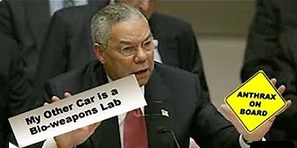
From Anthrax to Iraq
or go to
Aletho News Archives – Video-Images
Book Review
New paperback: Butchered by “Healthcare”
Lies are Unbekoming | October 20, 2026
 Butchered by “Healthcare” is Robert Yoho’s plain-spoken account of how American medicine stopped being a profession and became an industry. 341 pages. Over a thousand references. Thirty-eight chapters.
“Screening Tests Are Useless”, on tests that find diseases that would never have hurt you. “The FDA Protects the Big Drug Companies”, on an agency funded by the companies it regulates. “The Journals’ Sins Are the Editors’ Sins”, on ghostwritten studies and captured peer review. “Opioids and ‘Pain Management’”, on how a generation was prescribed its way into addiction. “Prozac and Relatives” and “Antipsychotics Are Disastrous”, on what psychiatry does to adults and children. “Surgery: Money Before Patients”. “Failed Cancer Treatments”. “Futile CPR and Overprescribing”. “Billing Scams & Specialty Warfare”. “Hospitals Are Sharks”. Each with a Patient Tips section at the end on how to survive it.
If you have ever walked out of a doctor’s office with a prescription you didn’t ask for, or watched a parent put through a treatment that made them worse, this is the book you want on your shelf before the next appointment. … Full review
Butchered by “Healthcare” is available on Lulu now.
Blog Roll
 Aletho News
- Undersea Internet cables could be targeted in retaliation for attacks on Iran: IRGC deputy chief
- EU sending ‘biased’ observers to interfere in Serbian election – president
- White House envoy declares kinetic action against Yemen ‘fruitless’
- Ukraine deployed thousands of microdrones in Iraqi Kurdistan: Tasnim
- Iran calls for emergency UNSC meeting over Trump’s ‘brazen’ bomb talk, Israeli threats
- Iranian sources reveal details of Russia-China Hormuz proposal
- Plan for more US-Israel integration puts our military tech at risk
- Another Round Against Iran Will Break What Is Left of the Gulf
- SVR Report on Ukraine’s Mexican Drug Gang Links Could Pressure Zelensky, Won’t Change US Policy
- British Government Employees Were Fact-Checking the News at the BBC. Nobody Told You.
- If Americans Knew
- Israel Denies Entry to French Journalist, U.S. Researcher Amid Rise in Entry Denials
- Gaza’s hospitals are running out of life-saving fuel – Daily Update
- Mysterious bot accounts reportedly spread fake ‘man on the street’ videos for Michigan Senate candidate
- Israeli Defense Minister Katz Says Over 60 Lebanon Villages Have Been Destroyed
- Why Is Israel Running TV Ads in Iowa Ahead of the Midterms?
- Hind Rajab’s Alleged Killer Is in the United States. HRF Demands His Arrest.
- US Officials Face Fresh Pressure After Another American ‘Brutalized’ by Israeli Settlers in West Bank
- Israel-Backed Palestinian Militias Terrorize Displaced Families in Gaza
- FBI subpoenas pro-Palestine activists over Israeli weapons plant disruption
- Fourth winter arrives in wartorn Gaza, too early – Daily Update
- No Tricks Zone
- Predictions Made By Renowned Climate Proifessor Over Past Decades Have Been Proven To Be Poor
- New Study Suggests Large Regions Of The Pacific Ocean Have Been Cooling For The Last 80 Years
- Germany’s Green Energy Debacle: High Energy Costs Force Kahla Porzellan to Close After 182 Years!
- New Study: 50 Years Of The Most Aggressive ‘Net Zero’ Policies Can Only Affect The Global Climate By 0.03°C
- US September “Heat” Was No Record…Many Records Set Decades Ago
- Latest European Green Energy Debacle; Portugal’s Largest Flagship Solar Park Insolvent!
- Green Energy Debacle: German Expert Professor Fritz Vahrenholt Warns Of Severe Economic And Social Consequences
- Two More Paleo Reconstructions Affirm Meters-Higher Sea Levels Across Ireland, Brazil 7000-6000 Years Ago
- New Study: Earth And Venus Surface Warmth Largely Explained By Convection And Lapse Rate, Not CO2 Or Radiation
- 2025 Nature Paper Claiming Worsening Global Drought Gets RETRACTED …Heavily Flawed

