Zionist Media Cites Bin Salman’s Failure to Provoke Pakistan, India & China against Iran
Al-Manar | February 23, 2019
The Pakistani State-run TV Channel muted the broadcast of the speech delivered by the Saudi state minister for the foreign affairs Adel Al-Jubeir while he was tackling the Iranian cause, one Zionist political analyst said.
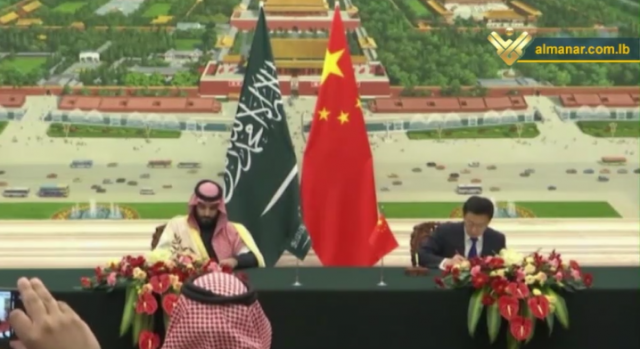
The Israeli media channels cited the Saudi crown prince Mohammad bin Salman’s failure to provoke Pakistan, India and China against Iran, adding that India rejected his offer to sell it the same amount of oil it purchases from Tehran for a lower price.
The Zionist analysts considered that Bin Salman tried to build more political partnerships and alliances in order to improve his conditions in his relation with the United States.
India wades into Afghan peace talks

(Russian Foreign Minister Sergey Lavrov greeting Taliban officials at Moscow peace conference, November 2018)
By M. K. BHADRAKUMAR | Indian Punchline | February 1, 2019
The Ministry of External Affairs spokesman’s remark on Thursday in New Delhi that “it is important that the presidential election in Afghanistan takes place as per the schedule” is the first major Indian comment on the current peace talks in Qatar between the United States and the Taliban.
Whether that was an off-the-cuff remark or not remains unclear, but if it has been a considered statement, it puts India at odds with the peace talks in Qatar, which is working toward commencing the intra-Afghan dialogue, forming an interim government in Kabul and declaring a nation-wide ceasefire. Arguably, India’s strong advocacy of the charade of a presidential election in Afghanistan at this juncture is tantamount to the debunking of what is happening at the Qatar talks.
The point is, the Indian stance is virtually identifying with the ‘rejectionist’ camp of Afghan opinion, which fears that the reconciliation with the Taliban will mean the end of the road for them. This camp principally consists of President Ashraf Ghani and his circle – his newfound associate Amrullah Saleh, in particular – who are justifiably nervous about their own political future if the peace talks at Qatar advance toward the formation of an interim government.
But why should India try to bolster their career prospects? It may create misperceptions that India has ulterior motives. Clearly, the conditions in Afghanistan do not allow the holding of the presidential election. Even if the election is held, its credibility will be in serious doubt. The result of the election is almost inevitably going to be hotly contested. Quite obviously, the recent parliamentary election tells a sordid story. The political legitimacy of the “victor” in any presidential election will remain highly suspect. Even Ghani’s government was formed 5 years ago only after protracted efforts by the US to work out a compromise formula of power sharing.
In fact, much of the present crisis in Afghanistan is to be directly attributed to the weak government in Kabul that lacked political legitimacy and popular support, and to its leadership that is widely perceived as an American concoction. What is the point in repeating such a futile experiment? As it is, Afghanistan is hopelessly fragmented and another Ghani as its next figurehead and another puppet regime in Kabul can only spell doom for the country.
The fact of the matter is that the Afghan government is not at all representative of the nation. The latest Russian initiative to convene a conference of the Taliban representatives and prominent Afghan politicians in Moscow next week underscores the political undercurrents in Afghanistan today. Reuters has quoted a Russian official as saying, “Senior Taliban leaders and prominent Afghan politicians will travel to Moscow for a day-long summit. At this sensitive stage, it was best to not have Afghan government officials at the table.”
Interestingly, the Afghan personalities who may take part in the conference in Moscow on this coming Tuesday include former President Hamid Karzai. Whatever the Russian motivations might be in taking such an initiative, it only highlights that Ghani’s camp is fast becoming irrelevant to any serious intra-Afghan dialogue involving the Taliban and other Afghan groups.

(Pakistan Foreign Minister Shah Mehmood Qureshi with Russian Special Representative on Afghanistan Zamir Kabulov, Islamabad, Jan 29, 2019)
It goes without saying that the Russian initiative is in tandem with Pakistan following the visit by the Russian special representative on Afghanistan Zamir Kabulov to Islamabad on January 29. Ironically, Russia is facilitating the first round of intra-Afghan dialogue with Pakistan’s tacit support and Taliban’s readiness to participate in it. Ghani is not going to like that he has been bypassed and ignored. But then, if the international community has not so far questioned his locus standii, it was out of decorum and/or courtesy, but a time has come when Russians obviously decided that enough is enough.
Ghani was entirely an American creation and he lacks a support base. His tactic is to gather around him a cabal of figures who, like him, also stand to lose in peace settlement. He may try to be a ‘spoiler’ but ultimately, he will be overtaken by events and cast aside. Simply put, he is of no more use to the Americans who will discard him sooner rather than later. The case of Saleh is equally pathetic. The Americans built up Saleh for certain specific assignments related to security and they may cut him loose once he ceases to be of use to them. Unsurprisingly, Ghani and Saleh are now left with no option but to blow the nationalist bugle to rally support among patriotic Afghans, but that won’t impress anybody – neither the Afghans nor the international community.
Why should India get embroiled in the shenanigans of the ‘rejectionist’ camp in Kabul? True, the Modi government too would have a sense of ‘betrayal’ – that after having been the US’ loyal supporter in Afghanistan, India finds itself in a cul-de-sac. But the fault lies entirely with Delhi. The Modi government viewed Afghanistan through the prism of India-Pakistan tensions and Kashmir and the zero sum mindset has damaged Indian interests and brought about the current isolation.
Without doubt, President Trump intends to withdraw the troops from Afghanistan. And without American support, the roof will come crashing down on the head of Ghani, Saleh, et al, within no time. Delhi should be realistic about its capabilities and, more importantly, be mindful of its limitations. Does India have the grit and the resources to swim against the current? Only fools rush in where angels fear to tread.
Let bygones be bygones. Delhi should not compound the folly. The prudent thing will be to refrain from being a ‘spoiler’ at this sensitive juncture. Let the peace talks proceed ahead. What is needed on India’s part is strategic patience. Its Manichean fear that Pakistan is about to conquer Kabul has no basis. Pakistan knows Afghans only too well not to harbor any such illusions.
On the other hand, Afghanistan is India’s neighbor and there is abiding goodwill toward our country on the part of the Afghan people. A new beginning is always possible and India can safeguard its core interests by building bridges with the new regime.
India baits US while Pakistan tells Trump, ‘There’s nothing like free lunch’
By M. K. BHADRAKUMAR | Indian Punchline | January 12, 2019
Breaking a prolonged period of several months, the Pakistani allegation of Indian involvement in terrorist attacks has surged. This appears during the first detailed media briefing by the Pakistani authorities in Karachi on January 13 on the results of the investigation over the terrorist strike on the Chinese consulate in the city last November.
Pakistan has blamed the Balochistan Liberation Army for staging the terrorist attack. Graphic details have been given claiming that the attack was “planned in Afghanistan” from where the Balochi terrorists travelled to Karachi.
India’s alleged role has been described variously in the Pakistani press as rendering “assistance” to the terrorists and “funding” them. One report mentions that the attack was “carried out with the assistance of Indian intelligence agency.” Indeed, immediately after the attack on November, a Pakistani security official had suggested that India “orchestrated” it. An AP report at that time had mentioned that Pakistan was investigating whether the Baluch separatist commander Aslam Achhu, who masterminded the attack, was in India.
The Pakistani assessment is that the Karachi attack was well planned over months and intended to cause rift in the China-Pakistan ties as well as to undermine the China-Pakistan Economic Corridor (CPEC) by highlighting the volatility of the city. It stands to reason that Pakistan would have shared with the Chinese any details in this regard.
The salience that must be noted here is that Pakistan has not finger-pointed at Kabul authorities directly or implicitly. In the past, the Pakistani allegation used to be that Indian and Afghan agencies collaborated in such enterprises.
Some other things stand out as well. The timing of the Pakistani disclosure is significant. First and foremost, it comes amidst signs of US-Taliban talks intensifying. A fourth round was expected to take place on Wednesday, but was called off by the Taliban on grounds of “agenda disagreement” with the Americans, in a clear snub to the US special representative Zalmay Khalilzad. Elsewhere, Taliban spokesman also told Reuters, “We (Taliban) have the feeling that Zalmay Khalilzad doesn’t have enough power to make important decisions.” Evidently, there is a fly in the ointment.
Interestingly, a former Pakistani diplomat Zamir Akram, who is an old India hand, wrote yesterday counseling that Pakistan should not harbor “unrealistic expectations” out of the Trump administration, as there may not be a “real change in policy towards Pakistan.” To quote Akram, “Washington continues to view relations with Islamabad through the prism of Afghanistan and not on the basis of relations with Pakistan in and of itself.”
He added, “Our Prime Minister should also resist the temptation, which his predecessors did not, of accepting a meeting with the American President as a “reward” in itself — a meeting devoid of any substantive outcome for Pakistan. This has been a usual American tactic mainly reserved for light-weight leaders who can be fobbed off with an Oval office photo-opportunity. Any meeting with Trump must lead to concrete results otherwise it would not be worth the effort.”
Amongst other things, Akram voiced disquiet that Washington is disrupting the India-Pakistan strategic parity in favor of India, and that “Pakistan’s relations with China and CPEC in particular are emerging as contentious issues in Pakistan-US relations.” He said that in an environment of “a convergence in US-India relations but a growing divergence in the Islamabad-Washington equation,” Pakistan must diversify its foreign relations, and in particular, it “must further strengthen strategic partnership with China for which successful implementation of CPEC, despite American and Indian opposition, must be ensured.”
Zamir concluded by underscoring that a political settlement in Afghanistan should provide for an outcome that served Pakistan’s interests “in terms of ending Indian use of Afghan territory to promote terrorism in Pakistan, recognition of Pakistan’s security interests in Afghanistan, return of Afghan refugees and removal of US sanctions. We have the leverage to attain this, given the American reliance on Pakistan, not just for the dialogue with the Taliban but also due to the air and ground access we provide to the US for its presence in Afghanistan.” (Express Tribune )
Plainly put, strategic (nuclear) parity in South Asia, restrictions on Indian activities in Afghanistan, Pakistan’s security interests in Afghanistan, return of Afghan refugees and removal of US sanctions on Pakistan – they are still on the table. If Trump’s game plan is to swing a settlement riveted on Pakistani acquiescence with a reduced US military presence in Afghanistan (enabling him also to flaunt “troop withdrawal” by election year 2020) by pandering to PM Imran Khan’s vanities, it may not work.
Given India’s hardline policies toward Pakistan, it is improbable that Islamabad will compromise on its agenda to purge the Indian presence in Afghanistan. Therefore, the media disclosure on the terrorist attack in Karachi at this juncture must be taken as a signal to Washington as much as to Delhi. Most certainly, it coincides with the US Special Representative Zalmay Khalilzad’s visit to Delhi, where he enjoys a fabulous reputation for being an inveterate anti-Pakistani Afghan-American.
Unsurprisingly, chaffing under the Taliban’s snub, Khalilzad was assured of a warm reception in Delhi. The press reports based on briefings suggest that Indian officials tore into Pakistan warning the Trump administration about Islamabad’s machinations. Clearly, Delhi sized up that it has in Khalilzad a most receptive audience.
Alongside, there has also been a sudden burst of enthusiasm to inject some verve into the US-Indian ties, which have been languishing during recent years. It is entirely conceivable that India may place some orders for weaponry from American vendors, which would of course please Trump immensely.
To be sure, Trump’s travails in withdrawing US troops from Syria may turn out to be a picnic in comparison with what is in store in Afghanistan.
Why India should pay attention to US-Turkey spat over S-400
By M. K. BHADRAKUMAR | Indian Punchline | January 6, 2019
Such a lot of nonsense was dished out by the American lobbyists through the past year to the effect that Washington was straining at the leash to punish India for buying the S-400 ABM system. This phobia was carefully planted in the Indian discourses by American think tankers. The most celebrated instance was of the Indian-American strategic expert Ashley Tellis penning a forceful essay, featured by the Carnegie in Washington last August titled How Can U.S.-India Relations Survive the S-400 Deal?
Tellis somehow inspires awe among Indian analysts, who blithely assume that he wields immense clout in the White House and US foreign-policy establishment in defining American policies vis-à-vis India. (Presumably this naïvety prompted PM Modi’s advisors too to get him to patronize Tellis personally by releasing his book in Delhi circa 2014.)
The American lobbyists were actually indulging in a ‘psywar’ to create panic among the policymakers in Delhi who were trying to close the S-400 deal after protracted negotiations with the Russians. In retrospect, the ploy failed to work and India went ahead with the S-400 deal.
That entire experience ought to show that Americans are bluff masters. No sanctions followed. Common sense ultimately prevailed – although some Indian analysts still fondly harbor the notion that Washington showed a favor to India. Whereas, sanctioning the policymakers or decision makers in the Indian defence establishment or the Indian arms procurement bodies (leave alone the end users of S-400 ABM system) was never really a viable option for Americans. The US today is a top arms supplier to India. In reality, the whole pressure tactic aimed at undermining the Indian-Russian relationship. (Tellis’ essay brought out this hidden agenda.)
Now, all this makes Turkey’s S-400 saga a morality play for India’s strategic community and defence establishment. Turkey, too, has placed an order for the S-400 system. Indeed, the Americans went berserk, threatening Turkey with dire consequences, including sanctions. But Turkish President Recep Erdogan didn’t blink.
The US then threatened to withhold the supply of the newly developed F-35 stealth fighters to Turkey. (Reports say Turkey plans to buy 111 such fourth-generation jets, each costing at 2019 prices approximately $85 million per unit complete with engines and full mission systems.) Clearly, Lockheed’s deal with Turkey is worth a mind-boggling amount running into tens of billions of dollars over the years. In addition, Turkey, being a “Level 2” partner of the US’ F-35 stealth aircraft project, has also been contributing to the development costs of these fighter jets.
Suffice to say, Erdogan correctly assessed that the Americans will kill a goose that lays the golden egg. In time, he was proven right. The US has since quietly withdrawn the threat and is going ahead with the transfer of the F-35 fighter jets to Turkey. (Initially, American experts had argued that the S-400 system installed in Turkey might enable Russians to study the weaknesses of the F-35 stealth aircraft.)
Washington is still hoping that Turkey can be cajoled to cancel the S-400 order with Russia (despite Ankara’s repeated assertions to the contrary.) A Pentagon delegation travelled to Ankara last week to make another effort. The US has now made an offer to sell the Patriot air defence system to Turkey (which it had hitherto refused) if only Turkey cancelled the order for S-400. (Turkey’s position is that it can have both S-400 and Patriot systems.)
But there is a catch. According to Turkish press reports, the discussions in Ankara last week showed that Russians may have sold the S-400 at a “fraction” of the cost at which the US is now offering the Patriot as a substitute. And, furthermore, the US will not transfer any technology relating to the Patriot.
Of course, imagine what would have been India’s plight if it had given up on the S-400 deal and instead heeded Ashley’s advice that PM Modi should “make a deal with Trump.” To quote from Tellis’ August 2018 essay,
“It (deal with Trump) would probably require India to move forward on one of the several major defense acquisition programs it has discussed with the United States over the years, thus… giving Trump an incentive to speedily issue the waiver that India needs. Both sides could thus come out ahead. For such a workaround to attract Trump’s attention, however, India’s proposal must be lucrative enough to the United States and remarkable in its potential geostrategic impact. And the details should emerge close to fully formed from a quiet dialogue between Indian and U.S. policymakers at the highest levels. Quickly resolving some of the more pressing trade disputes would only help this process further.”
Thereby hangs a tale. Turkey’s experience is not fundamentally different from India’s insofar as the chance of the US sanctioning Turkey over the S-400 deal is virtually nil. But Indian analysts have much to learn from the US-Turkish spat, since Turkey has a long history as America’s Cold-War era ally.
Quite obviously, Trump will never show the audacity to mock Erdogan publicly, as he repeatedly did to Modi. On the contrary, he shows to Erdogan the courtesies that he unfailingly reserves for Vladimir Putin and Xi Jinping. Trump is even planning a visit to Turkey.
India sequesters Iran ties from US predatory strike
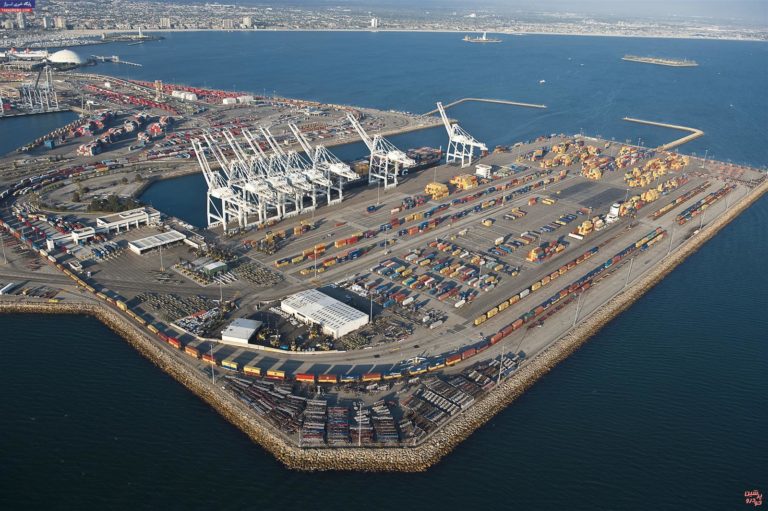
(Iran’s Chabahar Port)
By M. K. BHADRAKUMAR | Indian Punchline | January 2, 2019
India has done well to put in place the nuts and bolts of a payment mechanism for its trade and investment transactions with Iran against the backdrop of the US withdrawal from the Iran nuclear deal (known as the Joint Comprehensive Plan of Action) in May last year followed by the imposition of sanctions against Iran. The US had threatened to bring Iran’s oil trade to zero by the end of 2018 but ultimately pragmatism prevailed and major importing countries such as India were given 6-month ‘waivers’ in November.
Delhi has utilised this interregnum to sequester India-Iran economic relations as far as possible from the vagaries of the Trump administration’s Iran policies. How far Delhi sensitized Washington in advance about its Iran strategy we may never know, but the overall approach suggests a quiet determination to safeguard Indian economic (and political) interests from suffering collateral damage without, at the same time, displaying any strategic defiance of the US in the foreign-policy domain. The Indian diplomacy has been successful here so far.
Broadly, the Indian government has revisited the strategy adopted by the UPA leadership in similar circumstances of US sanctions against Iran and in the light of past experience, finessed a payment mechanism that dispenses with the use of American dollar in India-Iran economic transactions thereby bypasses the cutting edge of the US sanctions. Indeed, the impetus to do so is far more keenly felt today than under the UPA government because India-Iran economic relationship is transforming phenomenally and assuming strategic importance under the Modi government, especially with the operationalization of the Chabahar Port project.
Arguably, the Modi government is showing far greater grit in comparison with the timid attitude by the previous UPA government in asserting India’s strategic autonomy to advance the India-Iran partnership notwithstanding the hostile policies of Washington toward Iran, which are in the nature of forcing a ‘regime change’ in Tehran. Interestingly, the Indian approach is also impervious to the continued Israeli and Saudi intrigues against Iran, although the Modi government has significantly boosted India’s relations with these two Middle East countries.
The Indian policy toward relations with Iran under the deepening shadow of US sanctions has evolved in three carefully measured stages through the month of December. Needless to say, this wouldn’t have been possible without mutual trust and understanding in the relationship characterized by close consultations through diplomatic channels. In the first stage, it came to be known that in early November the two countries signed an agreement to the effect that India will import crude oil from Iran using a rupee-based payment mechanism and that 50 percent of those payments will be used for exporting items by India to Tehran.
Accordingly, India’s government-owned UCO Bank (which has no exposure to the US) was designated to handle this mechanism. In a third stage, in continuation of the above, the Ministry of Finance in Delhi issued an order in end-December exempting the National Iranian Company (NIOC) which exports crude to India from paying a steep ‘withholding tax’ to the Indian authorities. This order issued on December 28 will have retrospective effect from November 5 so that an amount of $1.5 billion that Indian refiners had accumulated as outstanding payments to NIOC could be released. Under Indian laws, the income of a foreign company that is deposited in an Indian bank account is subject to a withholding tax of 40 percent plus other levies, leading to a total take by the authorities of 42.5 percent.
Suffice to say, the door is open, Iran will now be able to use the rupee funds for a range of expenses–including imports from India, the cost of its missions in the country, direct investment in Indian projects, and its financing of Iranian students in India. It can also invest the funds in Indian government debt securities. The tax exemption order, though, only refers to crude oil. That means it does not apply to imports of other commodities, such as fertilizer, liquefied petroleum gas and wax. It appears that the scope of the use of funds will ensure balanced bilateral trade, which is traditionally in Iran’s favour.
On December 31, the two countries announced that their banking transactions mechanism is ready for operation.
Interestingly, India is leapfrogging many other countries that have been talking about similar payment mechanisms with Iran bypassing the US sanctions. The most glaring instance is of the European Union’s much-vaunted proposed mechanism of the Special Purpose Vehicle (SPV), which has not arrived yet. Brussels had vowed to establish the SPV “before the end of the year (2018) as a way to protect and promote legitimate business (of European companies) with Iran,” to quote the EU foreign policy chief Federica Mogherini.
Clearly, Delhi is not waiting to take the cue from other capitals that may harbor grave reservations over the US sanctions against Iran. Equally, Tehran’s willingness to accept for payments the Indian rupee (which is not traded on international markets) bears testimony to its great desire to sustain a beneficial relationship with India notwithstanding the US pressure on Delhi to severely cut back on economic ties with Iran.
All in all, Delhi seems to be preparing for the long haul. The fact of the matter is that politically, it is an increasingly tall order for the present Iranian leadership to continue with its adherence to its share of the 2015 Iran nuclear deal without any infringement or breach in the face of the failure on the part of the European leaders to deliver on their promise that in return Iran will be compensated through steps such as the EU maintaining and deepening economic relations with Iran, the continued sale of Iran’s oil and gas, effective banking transactions with Iran, the further provision of export credit and development of the SPVs in financial banking, insurance and trade areas and so on.
The ground reality is that the European leaders failed to deliver on their promises to Tehran and Iran has been left to fend for itself under the most savage and unlawful economic and political pressure by Washington. Simply put, while Europe claims that the Iran nuclear deal is of strategic importance, it is unwilling or reluctant to invest in its own strategic interests. The Iranian Foreign Minister Mohammad Zarif aptly summed up the European dilemma in a recent remark that you cannot swim without getting wet. Delhi may have shown that where there is a strong political will, there is always a way forward.
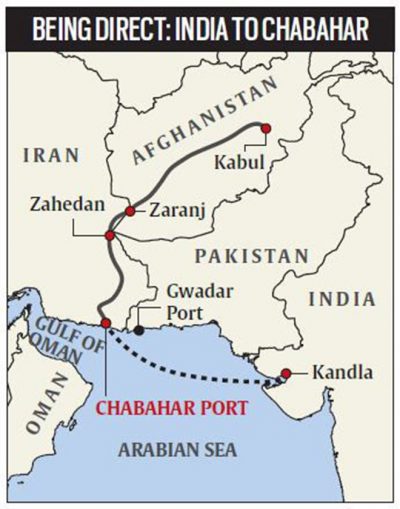
Without doubt, the operationalization of the Chabahar Port a week ago dramatically changes the India-Iran strategic calculus. Where words are not adequate to describe it, a look at the map showing India’s new Silk Road will do. Its geopolitical ramifications are profound. Ironically, Chabahar may eventually bring not only India and Iran but the US as well on the same page. Much lies in the womb of time.
US Blocks $199Mln in Assets Belonging to Iran, Syria, N Korea in 2017 – Treasury
Sputnik – 07.11.2018
WASHINGTON – The United States blocked nearly $200 million in assets belonging to Syria, Iran, and North Korea in 2017 as a result of the sanctions imposed on the three countries, the Treasury Department said in its annual report to Congress released on Wednesday.
“Approximately $199 million in assets relating to the three designated state sponsors of terrorism in 2017 have been identified by OFAC as blocked pursuant to economic sanctions imposed by the United States,” the report said.
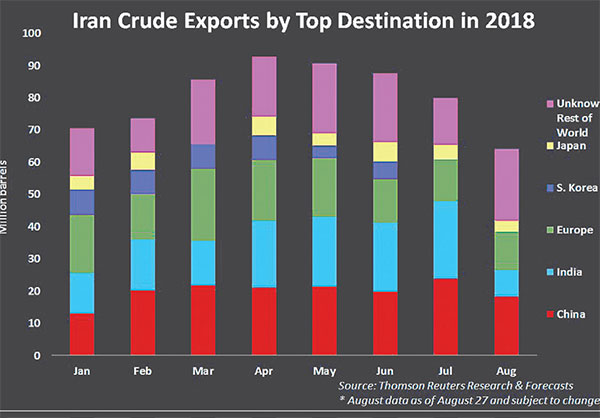
The statement comes days after the US fully reinstated sanctions against Iran, including measures that curb Tehran’s oil industry. At the same time, the United States temporarily exempted eight nations — China, Greece, India, Italy, Japan, South Korea, Taiwan and Turkey — from the sanctions on importing oil from Iran.
In May, US President Donald Trump announced that the United States would withdraw from the Iran nuclear agreement, officially known as the Joint Comprehensive Plan of Action, and reimpose sanctions against Tehran that were previously lifted under the accord, including secondary restrictions.
The first round of the US sanctions was reimposed in August, while the second round, targeting over 700 Iranian individuals, entities, banks, aircraft and vessels, came into force this week.
India should stay the course on Iran oil
By M. K. BHADRAKUMAR | Indian Punchline | November 5, 2018
The new kids on the block are unaware that not a year had passed since the Islamic Revolution in Iran 40 years ago when US sanctions against that country wasn’t a fact of life. Iran has weathered multiple rounds of sanctions before.
As a BBC commentary put it, “Iranians will be forced into finding creative ways to sell oil, relying on their years of experience of life under previous sanctions. And to fill the gap left by lost European investment, Iran will be looking east to forge new links with Russia and China.”
This is also the signal one gets from the Iranian reaction to the Trump administration’s re-imposition of sanctions. At the most authoritative level, Supreme Leader Ali Khamenei has been plainly dismissive. Some excerpts from his remarks on Saturday:
“The enemy made every attempts against us, with a variety of actions; the US engaged in military, economic, and media warfare against us. Via all these actions, the US aspired, in vain, to regain its previous domineering status over Iran — that it enjoyed during the Pahlavi Regime.”
“Today, an overview of the situation of the US shows that the US’s power is declining. The US is today much weaker than it was forty years ago… US’s soft power has degraded… US’s hard power — that is, its economic and military power — is also declining… It suffers from more than $15 trillion dollars public debt and $800 billion budget deficit… The US is declining. Everyone should know this.”
Clearly, for Tehran, talks with the US will be simply out of the question.
On the other hand, there are no knee-jerk reactions, either – such as that Iran is going to dump the 2015 nuclear deal. As the Iranian ambassador to the UK Hamid Baeidinejad (who was a leading member of Iran’s negotiating team with the US during 2013-2015) put it, “The aspiration that we have with the European Union, Britain, France and Germany, China and Russia, is that we keep the Iran Nuclear Deal alive and give time to the U.S. to rethink and revise its position.”
Baeidinejad added, Tehran will not accept any idea of changing or renegotiating the nuclear deal, because if one word is changed other aspects of the deal will either be changed or compromised. “We have a total loss of confidence” in negotiating with the US, but “we are trying very hard with European countries, with China and Russia, to find mechanisms that this deal could (still) be effectively implemented.”
The ambassador said, “There will be pressure against some countries, particularly European countries, and economic and trade institutions from attempting to enter into working with Iran, there will probably be some risks.” However, there is “total determination” by European countries and other world partners to find “practical solutions” so that the deal will be kept alive.
These remarks sum up the Iranian position. Tehran estimates that it has much elbowroom left to force a rethink on the Trump administration.
Curiously, this is also the assessment of some Israeli experts. A commentary in the Jerusalem Post gives the expert opinion that while the US’ oil sanctions will no doubt hurt Iran, “Tehran maintains key support from Asia,” which means that the sanctions are “insufficient to compel Iran to accept a new tougher nuclear deal.” Equally, support for Iran from China, Russia, India and South Korea would be too strong too [sic] sufficiently isolate the Islamic Republic’s economy… the fundamental dynamics protecting Iran from a total collapse if anything are even more solid (today).”
Interestingly, Tehran is not perturbed about the US threat to cut Iran off from the SWIFT. The fact of the matter is that Iran has an alternative to SWIFT – Russia’s SPFS. By the way, SPFS’ clients already include three of the top importers of Iranian oil – China, India and Turkey. (India probably used it recently to make payments for its purchase of the Russian S-400 ABM system!)
Suffice to say, Washington not only needs to accept that SPFS is a viable workaround for countries to import Iranian oil, but also a factor in the long-term implications of the emergence of such a new and parallel monetary system.
Therefore, the Trump administration’s decision to give the ‘waiver’ on import of Iranian oil is understandable. It is only prudent not to jeopardize the US’ relations with countries such as India or Turkey on account of the Iran oil sanctions when these countries are in any case going to find ingenious ways to import Iranian oil.
Then, there are other factors at work. One, as mentioned above, the US realizes that it lacks the ability to bring Iran’s oil exports to anywhere near zero level, as it once boasted. Two, oil sanctions against Iran will impact the world oil prices. Can Trump afford the political cost of oil prices cascading to, say, $100 bpd or more when he gears up for his re-election bid in 2020?
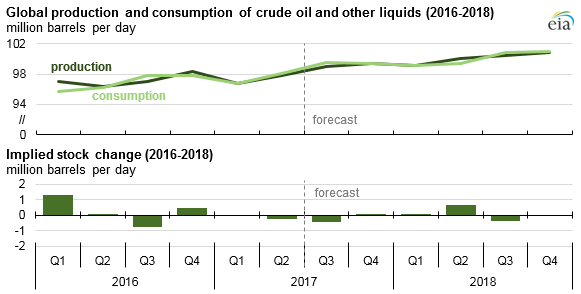
Third, there is great uncertainty about US-Saudi relations in the aftermath of the murder of Jamal Khashoggi. It is turning out to be a high stakes game of rogue operation by intelligence agencies for regime change in Saudi Arabia, which went horribly wrong. The searing experience seriously damages US-Saudi relations. And Saudi Arabia happens to be the only OPEC country that has the means to boost oil production to make up for shortfalls due to US’ oil sanctions against Iran. (Even Saudi surplus capacity is severely restricted.)
The bottom line is that New Delhi must stay the course, no matter what the American lobby in Delhi may say. The point is, the Trump administration is heading toward a cul-de-sac. When this realization dawns on Trump, he’ll, typically, make the course correction. As Ambassador Baeidinejad explained, Iran’s plan is to isolate the US and give it time to rethink. In this wise approach, Iran is getting strong support from the EU and Russia and China. Read the joint statement by the EU + EU-3 foreign ministers here.
India-Russia relations go way beyond defence deals
By M. K. BHADRAKUMAR | Indian Punchline | October 9, 2018
Amidst the welter of commentaries on the Indian-Russian annual summit last week in New Delhi, what stands out is that the government has outstripped our strategic analysts. The latter viewed the Russian summit last week exclusively through the prism of the $6 billion S-400 missile defence deal. Now, that turned out to be like missing the wood for the trees.
The United States’ Countering America’s Adversaries Through Sanctions Act (CAATSA) stipulates secondary sanctions against countries that enter into “significant transactions” with the Russian defence industry. Our S-400 deal became a celebrated test case. So, when in the face of threats held out by the American side relentlessly, when PM Modi went ahead with the S-400 deal, it stunned onlookers.
The ensuing confusion will take time to wither away. It will take time before it sinks in that US bluster aside, there is no way US will sanction India. The CAATSA is a legislation that the US Congress imposed on a reluctant president in the civil war conditions in US politics to stop him from improving relations with Russia (on which there is bipartisan consensus.) True, secondary sanctions have been imposed on China, but US does not intend to export arms to that country anyway!
But that is not the case with India or Turkey. Despite Turkey’s decision to not only fast track its S-400 deal with Russia and to make advance payments to the Russian manufacturer, US still intends to go ahead with its sale of F-35 stealth fighters. Turks nonchalantly told Washington that if the latter wanted to impose sanctions and annul the F-35 business deal, that’s fine with them, and they’d simply source stealth aircraft from some other country (read Russia). But, no, US still wants the F-35 deal to go through, because F-35 is a highly lucrative super business deal for Lockheed Martin, which hopes to sell to Turkey 100-120 aircraft at over $80 million per piece! In effect, Turkey called the American bluff.
Americans have keen business acumen and will not let go a honeypot like the Indian market. In fact, Modi has taken an even tougher decision to go ahead with oil imports from Iran and to sign up contracts for the month of November, although Trump warned that November 4 would be the cutoff date.
Alas, there is a lack of awareness as to what is happening. Our think tankers weaned on American folklore have been programmed to estimate that Russia is a spent force in global politics. They don’t realize that Americans themselves had no doubts already by the start of the millennium that Russia was on the comeback trail. The high oil prices in 2010-2011 proved a game changer for Russia. It was no coincidence that the first American sanctions against Russia was imposed in 2012 – Magnitsky Act – on human rights issues!
The knowledge of Russian politics and the raison d’etre of India-Russia relations is abysmally poor among Indian analysts. Modi’s strategic decision to revive India-Russia relationship as an anchor sheet of foreign policy is yet to sink in. What Americans know and Modi knows but our think tankers do not yet know is that Russia has not only returned to the global stage as a great power but with renewed capabilities in military technology and with an economy that has survived the western sanctions. The high oil prices in the period ahead will only add to Russia’s income significantly.
If the Americans sanction against India’s use of dollars for its transactions with Russia, make no mistake, Indian and Russian ingenuity will find a way to put in place a clearing system that altogether obviates the use of dollar. Arguably, it will be a blessing in disguise if the US forces India and Russia to revive their old Cold War era payment system, because if that happens, the economic content of the relationship will increase exponentially. Will the US want a major global economy like India to jettison the use of dollar and get accustomed to local currency payments?
Again, the US-Russia-China triangle is today splendidly working for Moscow and Beijing to counter the US, while both capitals retain strategic autonomy and neither seeks a military alliance. India can also be a beneficiary here if the available platforms are optimally used – BRICS, RIC and SCO, in particular. Modi made it clear at last week’s summit that India stands with Russia in strengthening multipolarity. It is a clear rejection of the US’ characterization of Russia as a “revisionist power.” Earlier, at the Shangri La Dialogue in Singapore in June, Modi underscored that India does not regard Indo-Pacific to be a strategy. The import of all this should be very clear except if one insists on holding the American brief on Russia and China. Simply put, India has a lot in common with Russia and China in regard of the emerging world order. Modi’s Wuhan initiative and his visit to Sochi soon afterward suggest that he is open to the idea of India’s Eurasian integration.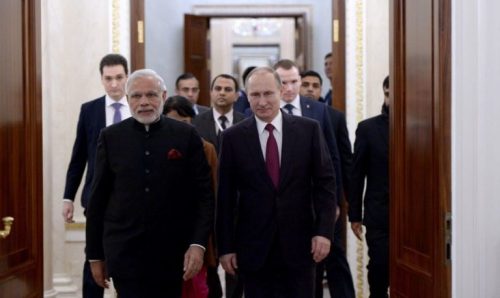
Things are looking up for India-Russia relations after the long winter of the UPA rule. For the first time in the post-Cold war era, there are signs that trade and investment between India and Russia is gaining traction. Energy sector is poised to generate massive business volume in a conceivable future. The defence cooperation still remains appreciable – at 62% of India’s arms procurement – despite the atrophy during the UPA rule.
It is sound realism that in a multipolar world, India strengthens relationships with Russia with whom it has common interests in regard of the emerging world order. The army chief Gen. Bipin Rawat’s remarks in the weekend asserting that the S-400 deal is a manifestation of India’s independent foreign policy must be viewed in that light. Last week’s summit averted a real risk of India ending up in America’s “Indo-Pacific” stable as a domesticated milch cow.
Featured Video
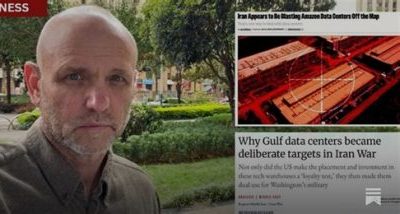
Iran spent $1 million to wipe out $30 billion in data center plans, and take down Amazon in the ME
or go to
Aletho News Archives – Video-Images
From the Archives
A short history of British torture
ICC | December 2005
When the House of Commons was debating how much to increase the time limit for detention without trial the question of torture came up. Officially this was limited to the nice considerations of whether it was all right to send people to places where torture is used and whether Britain can use information collected by the use of torture in other countries. This discussion gave an impression of democratic Britain as the home of civilised behaviour where the very idea of torture is repugnant to our legislators – unlike, say, the US with its secret CIA jails… In reality, the British state has a long history of using and developing a whole range of torture techniques. … continue
Blog Roll
 Aletho News
- Houthis Keep Advancing as the Red Sea Crisis Deepens
- Iran spent $1 million to wipe out $30 billion in data center plans, and take down Amazon in the ME
- Zionist billionaire pressure to silence Macklemore sparks exodus from Ed Sheeran tour
- House Votes to End Iran War for Third Time
- North Korea Slams US Plan for ‘AUKUS 2.0’ with South Korea and Japan
- Prolonging US-Iran Conflict Not Meeting Interests of Int’l Community – China’s Wang Yi
- EU bans former Zelensky aide from parliament
- NATO-backed Kosovo separatist ‘responsible for war crimes’
- US destroying international space law
- SCO Calls for Binding Global Deal to Prevent Arms Race in Space
- If Americans Knew
- U.S. Makes, Israel Takes: The Real Story of U.S.-Israeli Military Cooperation
- Night raids rise in Palestine
- Tucker Carlson interviews Norman Finkelstein about Gaza
- Groups urge Americans to support Van Hollen legislation on Israel’s killing of Americans & Palestinians
- Trump administration plans to send 40,000 tons of bombs to Israel: report
- Sanctions Target Iran’s Government, But Kill Hospitalized 23-Year-Old Woman
- An alternative view on the book “Israel’s Lobby: America in the Grip of a Foreign Power”
- Ed Sheeran’s band Beoga, other opening acts quit tour after Macklemore was dropped over his pro-Palestinian comments
- The assassination attempt on President Trump in Butler and the various Israeli connections to it
- “We Want That the Whole Land Be Jewish”
- No Tricks Zone
- New Study: ‘Global Drought Shows No Detectable Recent Acceleration Under Climate Warming’
- Economic Masterminds: German Socialists Suggest Taxing Productivity Gains Stemming From Using AI
- The South China Sea Has Not Been Cooperating With The Climate Change Narrative
- Energy Crisis: Germany Enters Heating Season With Historically Low Gas Reserve Fill Levels
- New Study: The Antarctic Ice Sheet Gained Mass From 2020-2024 Due To Staggering Snow And Ice Accumulation
- Study: Ocean Heating Rates From Thousands Of Years Ago ‘Dwarf’ Modern Ocean Heating Rates
- Climate Extremists Target, Attack Large-Scale Power Grid Infrastructure In Germany!
- New Study: Antarctic Ice Melt Has Contributed Less Than 1 Centimeter To Sea Level Rise In The Last 30 Years
- Fear Of Debate: Alarmist German Climate Scientist Calls On Mainstream Media To Discredit Skeptic Voices
- End-Of-August Arctic Sea Ice Extent Hasn’t Fallen In 20 Years, Official Data Show!
 Aletho News