Kamala Harris Isn’t Listening to U.S. Intelligence on Iran

By Ted Snider | The Libertarian Institute | October 10, 2024
Who is “America’s greatest adversary?”
That is the question 60 Minutes asked Vice President Kamala Harris. “I think there’s an obvious one in mind, which is Iran,” was her answer. She gave two reasons for her verdict: “Iran has American blood on their hands” and “what we need to do to ensure that Iran never achieves the ability to be a nuclear power, that is one of my highest priorities.” All three claims are strange.
That Iran is America’s greatest adversary comes as a surprise after the United States has spent the past two and a half years comparing Russian President Vladimir Putin to Adolf Hitler and painting him as bent on the conquest of Europe. The U.S. has spent in the neighborhood of $175 billion helping Ukraine fight Russia.
As early as 2018, the U.S. National Defense Strategy ranked China as the “primary concern in US national strategy.” Throughout the Biden-Harris administration, the focus has been on “growing rivalry with China [and] Russia,” as the Interim National Security Guidance of 2021 put it. It was China, and not Iran, that was considered “the only competitor potentially capable of combining its economic, military, and technological power to mount a sustained challenge” to the American-led system. In 2021, it was Russia and China that the National Intelligence Council flagged as “rising revisionist powers,” while the 2022 National Defense Strategy named China “the most comprehensive and serious challenge to U.S. national security” and called Russia an “acute threat.”
Up until the moment Harris answered the question, the United States had seen Russia and China as America’s greatest adversaries.
Harris did not specify the American blood Iran had on its hands. But her quick description erases the historical record of the second partner in the bloody dance. The history of Iranian blood on American hands traces from the 1953 coup in Iran, which the CIA has formally acknowledged it helped plan and execute, to cyber attacks on Iran’s civilian Natanz nuclear enrichment site, and the 2020 assassination of Iranian general Qasem Soleimani.
Harris’ third, and strangest, claim is that one of her highest priorities is to “ensure that Iran never achieves the ability to be a nuclear power.” But Harris knows that Iran is not pursuing the ability to be a nuclear power. At the same time the vice president was prioritizing blocking Iran from building a nuclear bomb, CIA Director William Burns was telling a security conference, “No, we do not see evidence today that the supreme leader has reversed the decision that he took at the end of 2003 to suspend the weaponization program.”
Burns added, “We don’t see evidence today that such a decision [to build a bomb] has been made. We watch it very carefully.” He said that, if Iran were to make such a decision, “I think we are reasonably confident that–working with our friends and allies–we will be able to see it relatively early on.”
This is not the first time Burns has made this intelligence assessment clear. In February 2023, Burns said, “To the best of our knowledge, we don’t believe that the supreme leader in Iran has yet made a decision to resume the weaponization program that we judge they suspended or stopped at the end of 2003.”
And, as Harris knows, it is not Burns or the CIA alone that assesses that Iran is not in pursuit of a nuclear bomb. The 2022 U.S. Department of Defense’s Nuclear Posture Review concludes that “Iran does not today possess a nuclear weapon and we currently believe it is not pursuing one.”
Iran never was pursuing one. The founder of the Islamic Republic of Iran, Ayatollah Ruhollah Khomeini, consistently ruled that nuclear weapons go against Islamic morality. The current supreme leader of Iran, Ayatollah Ali Khamenei, has consistently reiterated that ruling. Khamenei has insisted that “from an ideological and fiqhi [Islamic jurisprudence] perspective, we consider developing nuclear weapons as unlawful. We consider using such weapons as a big sin.” In 2003, Ayatollah Khamenei issued a fatwa that declared nuclear weapons to be forbidden by Islam.
And Khamenei was neither going rogue nor the exception. “There is complete consensus on this issue,” Grand Ayatollah Yusef Saanei, one of the highest-ranking clerics in Iran, has said. “It is self- evident in Islam that it is prohibited to have nuclear bombs. It is eternal law, because the basic function of these weapons is to kill innocent people. This cannot be reversed.”
In 2015, Iran agreed to the JCPOA nuclear agreement. Eleven consecutive International Atomic Energy Agency reports verified that Iran was completely and consistently in compliance with their commitments under the agreement prior to the United States illegally and unilaterally pulling out of the agreement in 2018. Despite promises by the Biden-Harris administration to return to diplomacy with Iran, they never have. Instead, despite Iran’s expressions of willingness to return to diplomatic negotiations, the State Department has said that negotiations with Iran are “not our focus right now” and that “It is not on our agenda… we are not going to waste our time on it.”
In July 2024, Masoud Pezeshkian was elected president of Iran. Pezeshkian is a reformist who has called for direct negotiations with the United States on improving relations and returning to the JCPOA nuclear agreement. But, in a July 8 press briefing, when National Security Communications Advisor John Kirby was asked if “the U.S. is now ready to resume nuclear talks, other talks, or make any diplomatic moves with Iran in light of this new president,” he answered, “No, we’re—we’re not in a position where we’re willing to get back to the negotiating table with Iran just based on the fact that they’ve elected a new president.”
Unphased, in his September 24 speech to the United Nations General Assembly, Pezeshkian said that “we have the opportunity…to enter a new era” and declared that Iran is “ready to engage with JCPOA participants” and that “[i]f JCPOA commitments are implemented fully and in good faith, dialogue on other issues can follow.”
Contrary to the vice president’s assertion that “ensur[ing] that Iran never achieves the ability to be a nuclear power… is one of [her] highest priorities,” the Biden-Harris administration has stubbornly refused to take the easiest and surest road to that end by honoring its promise to “offer Tehran a credible path back to diplomacy.”
It is strange and concerning that after encouraging and supporting two and a half years of war with Russia in Ukraine, that Harris considers, not Russia, but Iran to be America’s “greatest adversary.” It is also disturbing that Harris deletes America’s role in coups, sabotage, and assassinations in Iran from history. And it is alarming that Harris wants to stop Iran from acquiring a nuclear bomb, seemingly unaware that her military-intelligence community is telling her that they are not attempting to acquire a bomb, while showing no inclination for returning to the nuclear diplomacy with Iran that was already working.
US arms dealers see ‘record profits’ from Israel’s year-long genocide in Gaza, war on Lebanon
The Cradle | October 10, 2024
US arms manufacturers have outperformed major stock indexes this year in a rally fueled by Israel’s year-long genocide of Palestinians in the Gaza Strip and the expansion of its war against Lebanon.
Stock funds with holdings in the US aerospace and defense industry – including companies like Boeing, Lockheed Martin, RTX, General Dynamics, Northrop Grumman, and L3Harris – saw their profits soar past expectations this year, outperforming the S&P 500 index.
“That handout of taxpayer funds to Israel coupled with Israel’s, and global, demand increasing for weapons in a period of instability, has been jet fuel for stock prices,” reports Responsible Statecraft.
Lockheed Martin, makers of the F-35 aircraft that Israel has used to relentlessly bomb Gaza, Lebanon, Syria, and Yemen, produced a 54.86 percent total return from 7 October 2023 to the same date in 2024, outperforming S&P 500 by about 18 percent.
RTX, the makers of 2,000-pound ‘bunker buster‘ bombs that turned most of Gaza to rubble and are currently being dropped inside the Lebanese capital, saw its total return for investors in the past year reach 82.69 percent, outperforming S&P 500 by about 46 percent.
General Dynamics, which also manufactures bunker busters and is behind the BLU-109 bombs that Israel used to level several apartment buildings in the southern suburbs of Beirut during the assassination of Hezbollah secretary-general Hassan Nasrallah, delivered a 37 percent total return for investors, outperforming the S&P 500 by just over 3 percent.
On 1 October, as Israel pushed forward with its ground invasion of Lebanon and Iran launched hundreds of ballistic missiles in retaliation for the bombing of its capital, Forbes reported that the stocks of most US arms makers gained over 2.6 percent in value.
“Both Lockheed Martin and RTX shares booked all-time highs Tuesday, while L3Harris and Northrop Grumman tallied their top share price since 2022,” the US financial publication reported.
Furthermore, the BlackRock-managed iShares US Aerospace and Defense fund indexing the aerospace and defense sector hit a new all-time high last week, extending its 12-month gain to 43 percent and outperforming the S&P 500 by 33 percent.
According to the Stockholm International Peace Research Institute (SIPRI), between 2019 and 2023, Israel accounted for 2.1 percent of all global arms imports. During the same period, the US accounted for 69 percent of Israel’s arms imports, while Germany accounted for 30 percent.
As Washington retains its long-standing hold as the world’s largest arms dealer – controlling 42 percent of the global arms market – the country has also significantly boosted its military spending to assist Israel, blowing through at least $23 billion in one year.
Has Iran just tested a nuclear weapon?
By Tarik Cyril Amar | RT | October 10, 2024
In the late evening of October 5, seismic tremors of a magnitude of 4.6 on the Richter Scale were detected in Iran’s Semnan region. Although they could be felt even in the capital Tehran, over a hundred kilometers away from the epicenter, as earthquakes go this was not a major event: It was not terribly strong and caused no casualties. And yet it has attracted global attention. The reason is that we are not sure that it really was an earthquake.
Since the tremors shook the Iranian desert, speculation that this was, in reality, an underground nuclear test has not been dying down, in some traditional media and in social media everywhere. In Iran itself, according to the Tehran Times – an outward-facing English-language publication – ”seismologists and […] authorities” have denied a nuclear test. The newspaper added that “CIA Director William Burns also said there is no evidence that Iran has decided to build a nuclear weapon.” Considering that, from long and bitter experience, Iranians do not generally consider the CIA a source of truth, that is an intriguing, maybe tongue-in-check addition.
It is not hard to imagine plausible reasons why the leadership in Tehran could have an interest in staging a test that it knows leaves detectable traces while at the same time it’s officially denying that it has done so: it would, in essence, serve to warn enemies while allowing for a degree of politically flexible deniability. It would also, perhaps, create some strategic ambiguity – that is, uncertainty among opponents – if not about the event itself, then about what exactly the Iranian leadership is intending to do with it.
Yet it is at least equally realistic to assume that there really was no test. Those discussions of the Semnan tremors that are publicly available seem inconclusive to the non-expert at least, turning on points such as the exact nature of the seismic wave and the location of the epicenter. For now, the only certain conclusion seems to be that we don’t know: It may have been just an ordinary earthquake, but a nuclear test cannot be ruled out at this point.
Let’s take a step back: Instead of assessing arguments for one or the other version of what exactly happened at Semnan in Iran on October 5, let’s ask two simple questions: Why is it so important and what would it mean if a nuclear test did really occur?
In some regards, it is obvious why the tremors have reverberated globally: Iran is already embroiled in a de facto war with Israel that is on the verge of escalating further, from increasingly destructive missile attacks into an even larger regional and possibly global war. Beyond the longstanding hostility between the two countries, this escalation is underway for two reasons: First, Israel has already completed a year of committing genocide against the Palestinians and there is no end in sight, while it has also been assaulting multiple countries around it with terror attacks, indiscriminate bombings and, now in Lebanon, also a land invasion. Second, the West has sided with Israel. In a hypothetical world, one in which the West would not have trampled all over international law and elementary ethics and, instead, would have stopped Israel, the current escalation could not have occurred.
For these two reasons – Israel’s complete descent into mass killings and all-round aggression and the West’s helping it along – Iran’s regional “Axis of Resistance” has become the key, indeed the one and only international actor that is in the way of the Zionist regime. Given the way Western mainstream media propaganda vilifies this “axis” as “rogue” and “terrorist,” it is ironic that its members are the only ones at least trying to implement the UN 1948 Genocide Convention against the Israeli perpetrators, thus obeying a fundamental obligation of post-World War II international law. The true, monstrous rogue actors are the West and Israel.
Without the “Axis of Resistance” under Iran’s loose hegemony, the Palestinian resistance would be entirely alone. For Israel, this means that destroying or at least neutralizing Iran is the greatest possible strategic prize.
Without Tehran, the “axis” would not simply disappear. For that, its various elements – for instance, Lebanon’s Hezbollah and Yemen’s Ansar Allah movement (‘Houthis’) are too autonomous, not mere proxies. But there is no doubt that they would be gravely, perhaps fatally weakened.
Against this background, Iran’s military capabilities are a crucial factor. While Tehran has a much less modern air force than Israel’s, Iran’s missile forces are formidable. Despite claims to the contrary, the recent, still-restrained attack of 180 projectiles has shown that Iran can overwhelm Israeli air defenses and the US assistance these get. If it ever were to launch an assault really meant to be devastating – by targeting Israel’s economic and political infrastructure – Israel would have to absorb damage as never before in its history. The fact that Israelis have the option of leaving makes this threat all the more powerful: Their country has deliberately sought to make Gaza uninhabitable. As a civilized country, Iran would not resort to the same genocidal cruelty. But it could make it much less comfortable or safe for Israelis to stay in Israel.
And that is where we get back to the question of why it would be so important if a nuclear test really took place in Iran on October 5: On one side, Israel has threatened to target the country’s many nuclear facilities, if not in the next round of strikes then in the one after that. Yet, since the more important ones are deep underground, that is technically difficult, as an American general formerly involved in pertinent planning has just confirmed to the New York Times. But, still, Israel has US support. Even if Washington has mumbled some objections to that particular Israeli insanity, this means very little because the US tends to lie and Israel tends to do what it wants anyhow and then drag the US along, unwillingly or very willingly, as the case may be.
On the other side, Iran has, of course, been developing its own nuclear program. While its leaders insist that it’s entirely non-military, if that were true, they would be idiots neglecting their duty to protect their country. And they are neither idiots nor neglecting their duty.
What adds a wrinkle of complication is that the possibility of Iran crossing the threshold to possessing nuclear weapons has been exaggerated again and again by Western politicians and media with an obvious intention to create a pretext for yet another Western war of aggression in the Middle East. Indeed, the Wall Street Journal has just published another long article in that genre of “Look-how-close-they-are.” For those preferring more theoretical outlets, the prestigious journal Foreign Policy has just bluntly set out the ”case for destroying Iran’s nuclear program now.”
So, whenever you hear – at least in the West – that Tehran is close to having nukes, keep in mind that you may well be looking at war propaganda. And yet, there also is a real possibility of Iran acquiring – or perhaps already having acquired – nuclear bombs. That is why it has been so tempting to interpret the seismic shock in the Semnan region as a well-timed nuclear test. If Iran already has built nuclear weapons, then a test could have been a signal, telling Israel and the West that it is now too late for preempting an Iranian breakthrough because it has already happened. That would imply not only that such an Israeli or Western attack is now futile, but also that it has become much riskier since Iran may already be able to retaliate, even with nuclear weapons.
The scenario outlined above remains speculative as an interpretation of the Semnan seismic tremors on October 5. But what is more important is the fact that even if it has not yet occurred, then it is likely to occur soon. One way or the other, notwithstanding an earlier Iranian religious injunction – fatwa – against weapons of mass destruction often cited in the West, Tehran is likely to become a nuclear-armed power in the near future. In that case, the fatwa will be altered or superseded. If and when that happens, the West and Israel will have only themselves to blame, for three reasons.
First, we have long known that the West uses the foggy notion of “rules” and a “rules-based order” to evade international law and a meaningful role for the United Nations. The rules-based order is a cheap sham for those who prefer that laws do not apply to them. What the Gaza genocide and Israel’s other recent crimes have made unmistakably clear is that the “rules-based order” includes a very special privilege for Israel and the West, namely that of committing crimes against humanity. In such a world, every self-respecting government that takes its elementary duty to defend country and people seriously must think in the-very-worst-case terms. In such a world, in short, you better have nukes.
Secondly, we have not only learned what exactly the “rules-based order” is capable of. We have also learned that the alternative norms and institutions of international law cannot stop the “rules-based” crowd once it has made up its mind: By the findings of the highest court of the UN, the International Court of Justice, also called the World Court, Israel stands as a plausible perpetrator of genocide even now; a full sentencing is likely to follow. Its prime minister and minister of defense have arrest-warrant applications pending at the International Criminal Court. And what is the result? Nothing. Neither Western governments nor Israel have given a damn about the law. Indeed, they are in open contempt and obstructing it shamelessly. Again, in such a world, you better arm yourself as well as you can.
Thirdly, Iran itself has, of course, been through a long-drawn-out attempt to find a compromise with the West and, de facto, Israel. The Joint Comprehensive Plan of Action – aka the Iran Nuclear Deal – was concluded in 2015. Its essence was simple: Tehran would give up on military uses of its nuclear power and, in return, the West would let go of sanctions and generally normalize its relations with Iran. In 2018, the US reneged because Donald Trump – then president, now recklessly hollering about striking Iran’s nuclear facilities – felt like it. The Biden administration then failed to repair the damage and, if anything, made things worse. And neither a future Trump nor a Harris presidency will make them any better.
In sum, in the West’s “rules-based order” the rules include that Israel and the West may commit genocide, and then some; international law and other laws have no countervailing power and have been discredited; and individual negotiations and compromises lead to being cheated.
Responsible leaders in Iran, and in other states, have to conclude that their countries must have nuclear weapons as well as the means to deliver them. And, in the case of Iran, this actually means enough to deter Israel and the US. The latter especially must, in the future, face the possibility – as it does already with North Korea – of Iranian nuclear retaliation on its own homeland if Washington either attacks Iran directly or helps Israel attack it. That is the stark logic of deterrence. It is sad that nothing else remains. But, by their outrageous violence and, literally, lawlessness, the West and Israel have left Iran – and others – no choice but to adopt this harsh logic to the full.
Tarik Cyril Amar is a historian from Germany working at Koç University, Istanbul, on Russia, Ukraine, and Eastern Europe, the history of World War II, the cultural Cold War, and the politics of memory.
Russia aligns with Iran, war clouds scatter
By M. K. BHADRAKUMAR | Indian Punchline | October 9, 2024
Israel has apparently shelved its planned attack on Iran. A combination of circumstances can be attributed to this retreat, which rubbishes Israel’s own high-pitched rhetoric that it was raring to go.
Despite Israel’s brilliant media management, reports have surfaced that the Iranian missile attack on October 1 was a spectacular success. It was a display of Iran’s deterrence capability to crush Israel, if need arises. The failure of the US to intercept Iranian hypersonic missiles carried its own message. Iran claims that 90 percent of its missiles penetrated Israel’s air defence system.
Will Schryver, a technical engineer and security commentator, wrote on X: “I don’t understand how anyone who has seen the many video clips of the Iranian missile strikes on Israel cannot recognise and acknowledge that it was a stunning demonstration of Iranian capabilities. Iran’s ballistic missiles smashed through US/Israeli air defences and delivered several large-warhead strikes to Israeli military targets.”
Evidently, in the ensuing panic situation in Israel, as the US president Joe Biden put it, as of October 4, there had been no decision yet on what type of response Israel should mount against Iran. “If I were in their [Israeli] shoes, I’d be thinking about other alternatives than striking oil fields,” Biden said in a rare appearance in the White House briefing room a day after Israeli officials were saying that a “significant retaliation” was imminent.
Biden added that Israelis “have not concluded how they’re — what they’re going to do” in retaliation. Biden also told reporters that Israeli Prime Minister Benjamin Netanyahu should remember US support for Israel when deciding on next steps. He claimed that he was trying to rally the world to avoid all-out war in West Asia.
In this pantomime, it is safer to believe Biden, as the honest truth is that without US inputs and practical help, and money — and direct intervention — Israel simply lacks the stamina to take on Iran. Israel’s regional dominance narrows down to executing assassination plots and attacking unarmed civilians.
But here too, it is debatable how self-sufficient Israel is vis-a-vis Iran. Reports have appeared that the US’ new technological intel pinpointed Hezbollah leader Sayyed Nasrallah’s whereabouts, which were passed on to Israel, leading to his assassination.
Interestingly, CIA Director William Burns stepped in to refute the rumours that Iran conducted a nuclear test on Saturday. Speaking at a security conference on Monday, Burns stated that the US has closely monitored Iran’s nuclear activity for any sign of rushing toward a nuclear bomb.
“We don’t see evidence today that such a decision has been made. We watch it very carefully,” he said. Burns gently erased another alibi to attack Iran.
One critical factor that has compelled Israel / US to defer any attack on Iran is the stern warning by Tehran that any attack on its infrastructure by Israel will be met with an even harsher response. “In responding, we neither hesitate nor rush,” to quote Foreign Minister, Abbas Araghchi, who, by the way, made a trip to Lebanon and Syria over the weekend by way of giving Israel a defiant “message” — as he put it — that “Iran has strongly backed the resistance and will always support it.”
Earlier on October 4, Supreme Leader Ayatollah Ali Khamenei had used a rare public sermon to defend Iran’s missile attack against Israel, saying it was “legitimate and legal” and that “if needed,” Tehran will do it again. Speaking in both Persian and Arabic during Friday Prayers in Tehran, Khamenei said Iran and the Axis of Resistance won’t back down from Israel. Iran will not “procrastinate nor act hastily to carry out its duty” in confronting Israel, Khamenei declared.
However, what deters the Israelis and causes uneasiness in the American mind is something else — Russia’s lengthening shadows on the West Asian tapestry.
American military analysts have disclosed that certain highly advanced Russian weaponry have been transferred to Iran in the recent weeks backed up by the deployment of Russian military personnel to operate these systems, including S-400 missiles. There is speculation that the secretary of Russia’s Security Council (former Defence Minister) Sergei Shoigu paid two secret visits to Iran in the recent period.
Apparently, Moscow also responded to the Iranian request for satellite data on Israeli targets for its missile strike on October 1. Russia also supplied Iran with the long-range electronic warfare system “Murmansk-BN”.
The “Murmansk-BN” system is a powerful EW system, which can jam and intercept enemy radio signals, GPS, communications, satellites, and other electronic systems up to 5,000 kms away and neutralise “smart” munitions and drone systems — and is capable of disrupting high-frequency satellite communication systems owned by the US and NATO.
To be sure, the Russian involvement in Iran’s standoff with Israel is potentially a game changer. From the US perspective, it raises the worrisome spectre of a direct confrontation with Russia, which it doesn’t want.
It is in this scenario that official Russian news agencies have quoted presidential aide Yury Ushakov on Sunday that Putin plans to meet with his Iranian counterpart, Masud Pezeshkian in the Turkmen capital, Ashgabat, on October 11.
Ushakov did not elaborate on the meeting. Indeed, this comes as a surprise since the two leaders are scheduled to meet again at the BRICS summit in the Russian city of Kazan that runs on October 22-24.
Of course, Iranians are also playing coy. Both Moscow and Tehran announced that their presidents were visiting Ashgabat on October 11 to attend a ceremony marking the 300th birth anniversary of the Turkmen poet and thinker Magtymguly Pyragy. Smoke and mirrors! (here and here)
It is entirely conceivable that amidst the cascading regional tensions, Moscow and Tehran may have thought of bringing forward the formal signing of the Russian-Iranian defence pact, which was originally scheduled to take place in Kazan.
If so, the event on Thursday will be reminiscent of the unscheduled visit by the then Soviet Foreign Minister Andrei Gromyko to New Delhi for the signing of the historic Treaty of Peace, Friendship and Cooperation Between India and the USSR on 9th August 1971.
Interestingly, Ushakov added that Putin has no plans to meet Netanyahu. Putin is yet to respond to a request by Netanyahu for a phone conversation, made five days ago. A legend that Netanyahu created, typically, in the recent years to impress his domestic audience (and confuse the Arab street) — that he had a special relationship with Putin — is falling apart.
On the other hand, by chalking up an urgent meeting in Ashgabat — in fact, Turkmen president Serdar Berdimuhamedov was in Moscow only on Monday/Tuesday on a working visit — Kremlin is making it clear to Washington and Tel Aviv that Moscow is irrevocably aligned with Tehran and will help the latter no matter what it takes. (See my blog West Asian crisis prompts Biden to break ice with Putin, Indian Punchline, October 5, 2024)
Isn’t history repeating? The 1971 Indo-Soviet Treaty was the most consequential international treaty entered into by India since Independence. It was not a military alliance. But the Soviet Union boosted India’s military capability for an upcoming war and created space for India to strengthen the basis for its strategic autonomy, and its capacity for independent action.
American Neocons Get Their Iran War as Congress Sleeps
By Ron Paul | October 7, 2024
Over the weekend, the Commander of the US Central Command (CENTCOM), General Michael Kurilla, arrived in Israel to “coordinate” with the Israeli military and plan a military strike against Iran. Think about that for a moment: one of the highest-ranking officers in the US military is planning a war in a foreign country against another foreign country which will be fueled by American weapons, American intelligence, and American tax dollars.
Did that foreign country – Iran – attack the United States or threaten Americans? No, it did not. What did Iran do to warrant a CENTCOM commander bringing the weight of the US military into play to plan a war – possibly WWIII? It retaliated against Israeli airstrikes including the assassination of a Hamas leader, Ismail Haniyeh, in Tehran.
It was the Israeli missile attack on Tehran – an unprecedented event – that set off this chain of escalation, but few would know it from media coverage. This war fever between Israel and Iran not only has nothing to do with us, but our increasing involvement actually hurts our national interests in the region.
After a deadly and futile three-year proxy war against Russia in Ukraine, the last thing we need is another war in the Middle East, especially against Iran. But make no mistake, war is what we are getting. This Administration has even offered to “compensate” Israel with even more weapons and diplomatic support if they hit targets of the US choosing and avoid others in Iran.
Imagine if China sent military officials to Iran to pay Tehran to make sure some US targets were struck and others avoided. Would we consider it Iran’s war against us, or China’s war against us? Both?
Has Congress declared war on Iran or even authorized the war? No. Has this Administration explained to us why Americans suffering after the catastrophic Hurricane Helene are on their own because we need to spend billions on a war that is none of our business? No. The neocons have wanted this war for decades and for them it’s always America last.
This war will make us less free, less safe, and much poorer. There will be no benefits at all, only downside.
Will the Biden/Harris Administration greenlight Israel taking out Iran’s oil production and other energy facilities? That would mean the average American already suffering under high inflation and an economic downturn would be paying orders of magnitude higher for not just gasoline, but everything. Consider the cost of shipping and trucking and every aspect of our lives that depends on world energy prices. It would be an economic calamity for Americans for the benefit of a foreign country. This is what they call patriotism?
We are sleepwalking into a catastrophic war, lulled into compliance by non-stop media propaganda. More billions will be drained from our economy and many more innocent lives will be lost in this madness. Almost a quarter of a century later we still have not learned the lessons of 9/11. When we go abroad wreaking havoc and destruction on foreign populations who have not harmed us we create enemies who will seek revenge. We harm ourselves. And we risk blowback. The time to oppose this impending war is NOW!
Iran to destroy all Israel gas fields, power plants at once if Tel Aviv makes mistake: Deputy IRGC chief
Press TV – October 4, 2024
Iran will simultaneously destroy all of Israel’s energy facilities if the regime attempts any new aggression against Iran, warns IRGC’s deputy-in-command.
General Ali Fadavi told the Lebanese television channel Al-Mayadeen on Friday that the Israeli regime will risk its existence if it attacks Iran.
“If the occupying entity makes a mistake, we will target all its energy resources, power plants, refineries, and gas fields.”
He pointed out that Iran is a large and vast country with many economic centers, while Israel has only three power stations and several refineries.
“We can strike them all at once,” the general asserted.
Iran launched Operation True Promise II late Tuesday in response to the Israeli assassination of late Hamas leader Ismail Haniyeh in Tehran in April and also the assassination of late Hezbollah chief Sayyed Hassan Nasrallah along with Iranian military advisor, Brigadier General Abbas Nilforoushan in September.
Iran fired around 200 ballistic missiles at Israel during that operation, saying 90 percent of them hit their targets.
The Israeli regime has vowed to respond to that attack, with some Zionist officials calling for attacks on Iran’s nuclear energy sites, oil fields, and other scientific and economic infrastructure.
Iran has warned to attack the regime’s infrastructure if it wants to respond to the Iranian retaliation.
‘Israel to receive a devastating response’
Meantime, commander of the Iranian Army Major General Abdolrahim Mousavi told Al-Mayadeen on Friday that the Israeli regime would receive a “severe and devastating response” if it engaged in uncalculated actions.
“We have exercised restraint and patience in the past, but we are ready to deliver a precise and destructive blow at the right time,” he said.
He noted that Iran would respond more forcefully than the level of aggression shown by its enemies if they made a mistake at any level.
West Asian crisis prompts Biden to break ice with Putin
By M. K. BHADRAKUMAR | Indian Punchline | October 5, 2024
The US president Joe Biden sprang a surprise during a press gaggle with reporters outside the White House on Thursday when he essentially didn’t rule out a potential meeting with his Russian counterpart Vladimir Putin at the upcoming summits of the Group of 20 or the Asia-Pacific Economic Cooperation. Biden sort of signalled, ‘Barkis is willing.’ As he put it, “I doubt that Putin will show up.”
As these White House gaggles generally go, Biden deliberately chose to respond to the TASS correspondent who asked the question, who of course knew that Biden knew that a trip by Putin to the Western Hemisphere to attend the G20 summit in Rio de Janeiro, Brazil, on November 18-19 is under active consideration in the Kremlin.
Biden and Putin have a lot to talk about but what adds up is that Biden signalled his interest in a conversation just a day after the massive Iranian missile strike against Israel, which came as a bolt from the blue and dramatically upended the legacy of his presidency.
Don’t be surprised if the Middle East crisis dominates a Biden-Putin summit in Rio de Janeiro — that is, if such a meeting takes place. The Ukraine war is coasting inexorably toward a Russian victory. Biden’s interest lies in making sure somehow that Ukraine’s capitulation — and NATO’s humiliation — get carried over to January 20. But Putin must cooperate. This is one thing.
Meanwhile, what causes sleepless nights for Biden is the situation in the Middle East, which may cascade uncontrollably toward a regional war. Here, Putin is not the problem but can be the solution. This needs some explaining.
To be sure, policy differences have arisen between Biden and Netanyahu which is only to be expected given their sense of priorities respectively as politicians. It may seem the current crisis in the US-Israeli relationship is rather severe but how much of it is for the optics or, how little of it is for real is the moot point. Certainly, even a transition from war to a new diplomatic order is currently not in the cards.
However, the US and Israel are also joined at the hips. There is no question that Biden is allowing seamless assistance to flow to Israel in its war effort and for keeping its economy afloat. And the US is blocking all moves in the UN Security Council calling for a ceasefire, which means that peacemaking efforts cannot even begin.
Iran’s missile attack on Israel, in this context, needs to be put in perspective. Rather than an act of belligerence, it can be seen as a coercive measure to force Israel to abandon its ground operation in Lebanon. President Masoud Pezeshkian has disclosed that Iran exercised utmost restraint so far to stop Israeli atrocities only because of pleas by Western leaders that negotiations leading to a potential ceasefire in Gaza were at a crucial stage. But the West didn’t keep its promise leaving Iran no option but to act.
Passivity or inaction in the face of Israel’s relentless rampage against the Palestinian population aimed at ethnic cleansing created a distressing situation for Iran as the saviour of oppressed Muslims. Besides, Iran’s entire strategy of deterrence came under challenge too.
Biden is today like a cat on a hot tin roof. A Middle Eastern war is the last thing he wants. But he has no control over Netanyahu who is already plotting the next move on the escalation ladder. As for Iran, its sense of exasperation over western perfidy and moral bankruptcy is palpable. The US’ credibility has suffered a severe beating all across the West Asian region.
Enter Putin. On the Middle Eastern chessboard, Russia’s role assumes great importance. Russia-Iran relations touch an unprecedented level today. Russian statements have become highly critical of Israel in recent years. Russia has openly kept contacts with the groups constituting the Axis of Resistance.
Russian diplomacy is moving with a ‘big picture’ in mind to bring the Israeli-Palestinian conflict to the centre stage of international politics. In the past year, security consultations between Moscow and Tehran notably intensified. Some reports have appeared about Russia transferring advanced military equipment to strengthen Iran’s air defence capabilities.
Significantly, Russia was the only country that Iran informed in advance about its missile strike against Israel. According to the well-known US podcast Judge Napolitano: Judging Freedom (below), the Russian naval fleet in the East Mediterranean downed 13 Israeli missiles last week near Lebanon.
Apparently, a frantic Netanyahu has been trying to reach Putin on phone for the past few days but the call is yet to materialise. On the diplomatic track too, Russia has underscored the highest importance it attaches to the relations with Iran.
Clearly, the US senses the imperative to engage with Russia. What may be acceptable can be proportional strikes by the two West Asian protagonists, couched in carefully calibrated media campaigns. For example, targeted attacks on individual military installations, which would save face for Israel and avoid a major war — it’s a preferable scenario for Iran too, because it avoids unnecessary risks and preserves the trump cards for a game that promises to be long drawn out.
In the final analysis, what matters is the US-Israeli intentions. The Financial Times cited Israeli sources to the effect that the game plan is to inflict maximum damage to Iran’s economy so as to trigger the latent ‘protest potential’ of Iranian society. The Israeli hope is apparently that a credible regime change agenda will find resonance in Washington and attract US intervention.
Anyway, Biden’s move to engage with Putin suggests that a US military intervention is to be ruled out. On the other hand, the historic Russian—Iranian security pact, which is expected to be signed during the forthcoming BRICS summit in Kazan, Russia, on October 20-22, gives Iran vastly more strategic depth to negotiate with the West.
Russia’s own interest lies in boosting Iran’s defence capability and pressing ahead with broad-based bilateral cooperation anchored on the economic agenda in the conditions under sanctions while on a parallel track advancing Iran’s integration into Moscow’s Greater Eurasia project. In short, Russia is uniquely placed today as a stakeholder in a stable and predictable Iran at peace with itself and the region.
Russian Foreign Minister Sergey Ryabkov told reporters in Moscow Thursday, “We are in the closest contact with Iran on the current situation. We share a wonderful experience of cooperation in various fields. I think this is the moment when our relations are particularly important.” By the way, President Pezeshkian received the visiting Prime Minister of Russia Mikhail Mishustin on Monday, September 30 in Tehran just hours ahead of the launch of the Iranian ballistic missiles against Israel.
At a meeting of the UN Security Council dedicated to West Asian developments, Russia’s Permanent Representative to the UN Vasily Nebenzya stated on Wednesday, “As part of its mandate to maintain international peace and security, the UN Security Council must compel Israel to immediately cease hostilities. You and I also should make every effort to create conditions for a political and diplomatic settlement. In this context, we take note of Tehran’s signal that it is not willing to whip up confrontation any further.”
Interestingly, the Kremlin spokesman Dmitry Peskov lost no time to pick up the threads of Biden’s remark on a meeting with Putin. He said on Friday, “There have been no talks on this issue and as of today, at this moment, there are no prerequisites for it. However, the president has repeatedly stated that he remained open for all contacts.”
Collapsing Empire: Iran Throws Down Gauntlet
By Kit Klarenberg | Global Delinquents | October 4, 2024
On October 1st, Iran launched scores of missiles at the Zionist entity, in response to the murder of Hezbollah leader Hassan Nasrallah, among many brazen provocations and escalations targeting the Resistance in recent months. Voluminous footage of key Israeli infrastructure, including military and intelligence sites, being comprehensively flattened by the Islamic Republic’s inexorable onslaught has circulated widely, amply contradicting predictable claims emanating from Tel Aviv and Washington that the blitzkrieg was successfully repelled by Western air defence systems.
It is the largest, most devastating attack on the Zionist entity in its 76-year history. The full impact is not yet apparent. While US officials worriedly warned hours in advance they possessed “indications” Iran was preparing to attack Israel, the incursion’s timing, scale, and severity caught all concerned by surprise. Washington dispatching thousands more troops across West Asia in the days prior, explicitly in Israel’s defence, was evidently no deterrent to Tehran.
That deployment came replete with a supposedly rock-solid Pentagon pledge to come to the rescue should the Islamic Republic seek to repeat the historic, wide-ranging drone and rocket barrage to which it subjected the Zionist entity in April. Department of Defense apparatchiks boldly declared they and Tel Aviv alike were “even better prepared for a new Iranian attack” than last time round. The ease with which Israel’s purportedly impregnable Iron Dome was bested exposes this braggadocio as hopeless hubris at best, dangerous delusion at worst.
The Islamic Revolutionary Guard Corps is ever-cautious, and has acted with extraordinary restraint since the 21st century Holocaust erupted in Gaza. Some analysts have interpreted this implacable self-control, and Tehran’s lack of immediate backlash against acts such as the audacious assassination of Hamas leader Ismail Haniyeh on Iranian soil, as not merely rigid reluctance to escalate into all-out war with Israel and its Western backers, but an inability to respond at all. Tel Aviv’s unprecedented October 1st battering should dispel any such inference.
Senior Israeli politician Yair Golan, who returned to Israeli Occupation Force (IOF) service following October 7th, has branded Iran’s latest assault a “declaration of war” against the Zionist entity. Notorious Benny Gantz boasts Tel Aviv “has capabilities that were developed for years to strike Iran, and the government has [our] full backing to act with force and determination.” Meanwhile, IOF spokesperson Daniel Hagari declares, “there was a serious attack on us and there will be serious consequences.”
The IRGC appears to have calculated such threats and pronouncements will be as empty and meaningless as the Pentagon’s pledge to be “better prepared” for a future Iranian strike. At the very least, the Islamic Republic fears no Anglo-Israeli retaliation to its latest broadside. That may mean Tehran has grounds to believe the balance of power in the region, and in any future large-scale conflict with the Zionist entity and West, has irrevocably tipped in favour of the Resistance.
Eerily, a little-noticed report published September 19th by the Jewish Institute for National Security of America (JINSA), a powerful and shadowy Zionist lobby organisation, inadvertently reached this same conclusion. It laid out in forensic detail how the Empire will be on the defence, and at grave disadvantage, in all-out hot war with Iran. Along the way, a blueprint for Resistance victory was plainly sketched. With Tehran having thrown down a gauntlet on October 1st, we could now be seeing that plan being put into action.
‘Gaining Overmatch’
Titled U.S. Bases in the Middle East: Overcoming the Tyranny of Geography, JINSA’s report was authored by former CENTCOM commander Frank McKenzie, who oversaw the Empire’s disastrous retreat from Afghanistan. It appraises the viability, value, and force projection capabilities of current US military installations throughout West Asia, focusing on Bahrain, Jordan, Kuwait, Qatar, Saudi Arabia, and UAE. The findings are stark, calling for an immediate overhaul of American basing across the region:
“Our current basing structure, inherited from years of haphazard decision-making, and driven by divergent operational and political principles, has yielded installations that are not optimally situated for the most likely threats of today and the future in the region.”

Despite mentioning “threats” in plural, JINSA’s sole focus is the Islamic Republic. While a myriad of issues with the Empire’s modern day positioning throughout West Asia are identified, the “most important” conclusion drawn is that Washington’s “current basing array detracts from our ability to deter Iran and fight them effectively in a high-intensity scenario.” McKenzie is nonetheless at pains to portray Tehran as somewhat feeble and vulnerable:
“The Iranians have no army that can be deployed as an invading force. They have a small and ineffective navy, and in practical terms, no air force. Their missile and drone force, though, is capable of gaining overmatch against many of its neighbors… they can deploy more attacking missiles and drones than can be defended against.”
As such, JINSA notes, “a theater-level war with Iran would be a war of missiles and drones,” and Tehran’s April 13th attack on Israel was a “comprehensive demonstration of Iranian operational design.” The IRGC sought to overwhelm the Zionist entity’s air defences and radar systems with waves of low-cost drones and cruise missiles, to “make it difficult for Iron Dome or Patriot to engage the ballistic missiles that followed.”
McKenzie correctly forecast that the April strike would “probably remain the basic template for large-scale Iranian attacks.” He appraised the effort – “at least conceptually” – as “a sound one,” from which “there are lessons for all to learn.” The most pressing and “obvious” takeout was, “for the defenders of the Gulf, it will be a war of strike aircraft, tankers, and air and missile defense… and here is the problem”:
“These aircraft are largely based at locations along the southern coast of the Arabian Gulf… an artifact of planning against Russian incursions in the 1970s, and the Iraq and Afghanistan campaigns of the early decades of this century. They are close to Iran, which means they have a short trip to the fight… but that is also their great vulnerability. They are so close to Iran that it takes but five minutes or less for missiles launched from Iran to reach their bases.”
The “thousands of short-range missiles” Iran possesses are also a key negative “factor”, offering “no strategic depth.” While an F-35 fighter jet “is very hard to hit in the air… on the ground it is nothing more than a very expensive and vulnerable chunk of metal sitting in the sun.” Refuelling and rearming facilities on US bases in West Asia “are also vulnerable, and they cannot be moved.” Most damagingly of all:
“These bases are all defended by Patriot and other defensive systems. Unfortunately, at such close range to Iran, the ability of the attacker to mass fires and overwhelm the defense is very real.”
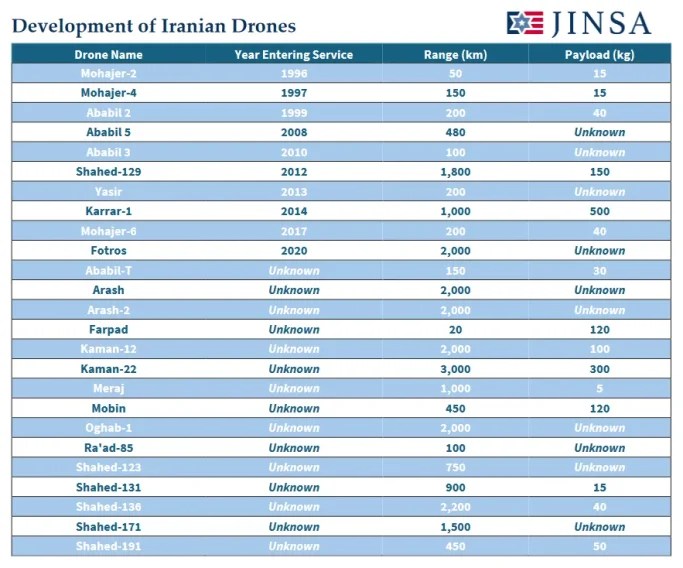
In closing his roadmap to Tehran’s victory, McKenzie bitterly laments, “it is hard to escape the conclusion that our current basing structure is poorly postured for the most likely fight that will emerge.” The Empire “will not be able to maintain these bases in a full-throated conflict, because they will be rendered unusable by sustained Iranian attack.” Imperial overreach in West Asia has now fallen victim to “the simple tyranny of geography.” And all along, the Islamic Republic has been taking rigorous notes:
“The Iranians can see this problem just as clearly as we do, and that is one of the reasons why they have created their large and highly capable missile and drone force.”
‘Nothing But Force’
For all the JINSA report’s doom and gloom, McKenzie does express some optimism – of the most fantastical, self-deceived kind. For one, he suggests Iran cannot threaten the Empire’s “carrier-based aviation” capabilities. Still, he concedes “there aren’t enough carriers, and therefore naval aviation will probably not be the central weapon in a fires war with Iran.” The former CENTCOM chief also conveniently overlooks AnsarAllah’s recent crushing defeat of the US Navy during Operation Prosperity Guardian, which unambiguously exposed the redundancy of US aircraft carriers altogether.
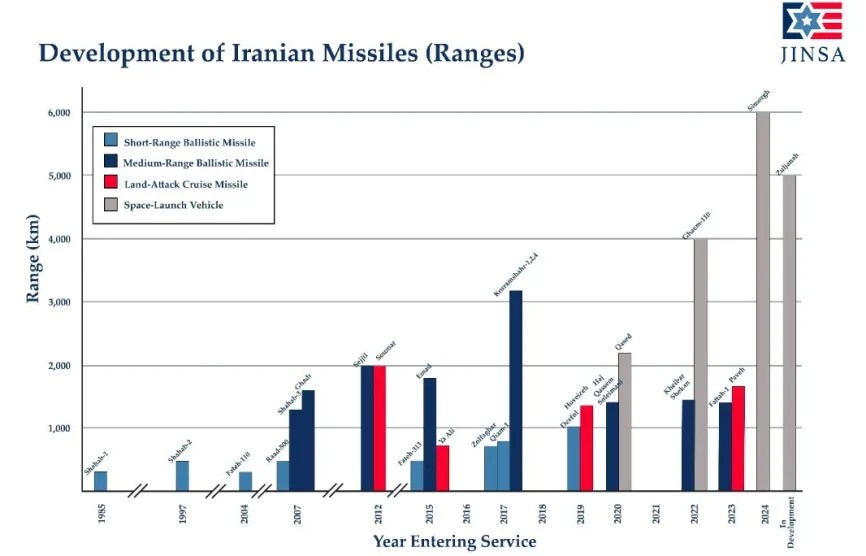
Elsewhere, McKenzie declares that the Empire “needs to move aggressively to develop basing alternatives that demonstrate that it is prepared to fight and prevail in a sustained high-intensity war” with Tehran, and therefore “overcome unfavorable basing geography.” One radical solution proposed by the JINSA report is to “consider basing in Israel”. US military presence in Tel Aviv has already been slowly growing over recent years. While largely unacknowledged and downplayed, it has proven incredibly controversial every step of the way.
In September 2017, the IOF announced the arrival of America’s first permanent military installation in the Zionist entity. Such was the backlash domestically and regionally, officials in Washington raced to deny this was the case, prompting a major cleanup of IOF websites referencing the site. Any move to create a fully-fledged US base in Israel, explicitly for war-fighting purposes, would inevitably spark even greater outcry, and be considered as a major escalation by the Resistance, demanding a drastic response.
Such an eventuality undoubtedly didn’t occur to the former CENTCOM chief. His analysis is hazardously unsound and fallacious in other areas too. On top of Israel’s “geographic advantages”, he praises Tel Aviv’s “powerful, proven air and missile defense capability.” It was this “competence”, combined with “US and allied assistance, and the cooperation and assistance of Arab neighbors”, that ensured Iran’s April strike on the Zionist entity was a “failure”, McKenzie muses.
He appraises this group effort, which supposedly prevented Iran from delivering decapitation strikes against the Zionist entity’s military and intelligence structure, as “in every measurable way… a remarkable success story.” If McKenzie’s view was shared by the Pentagon, this may explain why the US was so caught off guard by, and ill-prepared for, Tehran’s recent bludgeoning of Israel. Far from an embarrassing cataclysm, the April effort was a spectacular success, which exposed Israel’s fatal weaknesses, and reshaped West Asia forever.
Far from wanting to deliver a death blow, the Islamic Republic sought to deliver a measured, well-advertised show of strength, while avoiding further escalation, and a wider response. In the process, the IRGC demonstrated that if it wished, in future its missiles could successfully bypass the Iron Dome, and would wreak immense destruction. Then, a “new equation” was spelled out by a Corps Commander:
“If from now on the Zionist regime attacks our interests, assets, personalities, and citizens, at any point we will attack against them.”
That message was evidently not received in corridors of power in Brussels, London, Tel Aviv, and Washington. This is apparent from JINSA’s report, which states “events of the past two months clearly show that Iran can be deterred from undertaking irresponsible and deadly attacks in the region,” in reference to a lack of retaliation to the Zionist entity’s provocations during this time. It seems the finest Western military minds fell into the trap of believing no response was forthcoming from Tehran, because there couldn’t and wouldn’t be.
Fast forward today, and the question of whether the battlefield primacy of the Resistance in West Asia will finally be comprehended by their adversaries, in light of October 1st, remains an open one. As Russian military strategist Igor Korotchenko once observed, “this Anglo-Saxon breed understands nothing but force.”
Tehran rejects ‘baseless’ US accusations of meddling in presidential election
Press TV – October 4, 2024
Iran has rejected “baseless” US accusations that it is attempting to influence the upcoming presidential election, saying Washington, with a record of interference in other countries’ affairs, is “in no position” to make such claims against Tehran.
Iran’s Foreign Ministry spokesman Esmaeil Baghaei made the remarks on Friday, two days after an annual assessment by the Department of Homeland Security alleged that Iran, Russia and China are trying to influence the November vote, including by employing artificial intelligence to disseminate fake or divisive information.
Baghaei said, “These repeated and baseless claims, which have been made by some US officials and institutions for some time, are politically-motivated and serve domestic political purposes.”
“The US government, which has a long history of illegal interference in the internal affairs of other countries, is in no position to level such accusations at other states.”
Back in August, the campaign of US Republican presidential candidate Donald Trump claimed that it had been hacked, pinning the blame on Iran without providing evidence.
Meanwhile, the FBI and other US agencies alleged that Iranian hackers had sought to interest President Joe Biden’s campaign in information stolen from Trump’s campaign, sending unsolicited emails to people associated with the then-Democratic candidate.
The Islamic Republic said it does not accord any credence to the accusations, emphasizing that it has no intent or motive to meddle in the American election.
Iran’s oil production nears pre-sanctions levels: Report
The Cradle | October 4, 2024
Iran’s oil production is running at almost full capacity despite US sanctions, amid Israeli threats to target Tehran’s oil infrastructure in an expanded regional war, Bloomberg reported on 4 October.
The Islamic Republic’s oil output has reached 3.4 million barrels per day, just a few hundred thousand barrels below a previous high of 3.9 million.
After US President Donald Trump withdrew the US from the JCPOA nuclear deal in 2018 and reimposed sanctions on Iran, Tehran’s production dropped as low as two million barrels per day.
Iran now sells much of its oil to China at reduced prices, as Beijing has been willing to ignore US sanctions seeking to block the sales.
“Iran is having success exporting thanks to a willing customer in China, the increased sophistication of illicit transportation channels, and the relatively low interest in the US to take action,” said Henning Gloystein and Greg Brew, analysts at Eurasia Group. “There’s a risk that Israel strikes Iranian oil facilities.”
According to Bloomberg, Tehran’s increased sales to China have taken place with the “tacit approval” of the White House, as US President Joe Biden and his advisors have eased sanctions enforcement to keep gasoline prices low.
In August 2023, before the wars in Gaza and Lebanon began, Bloomberg reported that “months of secretive diplomacy” between the US and Iran “have yielded progress on prisoner exchanges, the unblocking of frozen assets, and possibly even Iran’s enrichment of uranium. They also seem to have produced an informal arrangement on oil flows.”
Israel reportedly threatened to bomb Iran’s nuclear or oil facilities following Tehran’s large-scale missile attack on Israel.
Iran fired as many as 400 ballistic missiles at Israel on 1 October in retaliation for its killing of Hamas leader Ismail Haniyeh in Tehran in July and Hezbollah leader Hassan Nasrallah in Beirut on 27 September.
In an off-the-cuff remark to a reporter, Biden said that his administration has been “discussing” possible Israeli plans to attack Iran’s oil industry in retaliation for the Iranian attack.
Bloomberg added that world oil prices jumped five percent on Thursday after Biden’s comment.
Tehran Will Strike Israeli Refineries, Gas Fields If Israel Attacks Iran – IRGC
Sputnik – 04.10.2024
TEHRAN – Tehran will strike Israeli refineries, gas fields if Israel attack Iran, deputy commander in the Iran’s Islamic Revolutionary Guard Corps (IRGC), Ali Fadavi, said on Friday.
“If the occupiers [Israel] make a mistake [by attacking Iran], we will strike at all their energy sources … all oil refineries and gas fields,” Fadavi was quoted as saying by the Mehr news agency.
Iran is a large country with many economic centers, while Israel has only three power plants and several refineries that Iran can hit at the same time, Fadavi added.
Tehran does not intend to continue to strike Tel Aviv, but if Israel takes any action against Iran, the response will be tougher, Iranian Foreign Minister Abbas Araghchi said on Friday.
“We do not intend to continue the attacks. If Israel takes any more steps against Iran, our actions will be tougher, and we will definitely respond. Our response will be proportionate and absolutely calculated,” Araghchi told a press conference in Lebanon, as quoted by the Tasnim news agency.
Featured Video
Seyed M. Marandi: Toward Total War in the Middle East
or go to
Aletho News Archives – Video-Images
From the Archives
The Geopolitics behind the War in Yemen (I)
By Mahdi Darius NAZEMROAYA | Strategic Culture Foundation | 30.03.2015
The United States and the Kingdom of Saudi Arabia became very uneasy when the Yemenese or Yemenite movement of the Houthi or Ansarallah (meaning the supporters of God in Arabic) gained control of Yemen’s capital, Sanaa/Sana, in September 2014. The US-supported Yemenite President Abd-Rabbuh Manṣour Al-Hadi was humiliatingly forced to share power with the Houthis and the coalition of northern Yemenese tribes that had helped them enter Sana. Al-Hadi declared that negotiations for a Yemeni national unity government would take place and his allies the US and Saudi Arabia tried to use a new national dialogue and mediated talks to co-opt and pacify the Houthis.
The truth has been turned on its head about the war in Yemen. The war and ousting of President Abd-Rabbuh Manṣour Al-Hadi in Yemen are not the results of «Houthi coup» in Yemen. It is the opposite. Al-Hadi was ousted, because with Saudi and US support he tried to backtrack on the power sharing agreements he had made and return Yemen to authoritarian rule. The ousting of President Al-Hadi by the Houthis and their political allies was an unexpected reaction to the takeover Al-Hadi was planning with Washington and the House of Saudi. … continue
Blog Roll
 Aletho News
- Pakistan-Iran talks secure LNG shipment to Islamabad through Hormuz
- Black Sea grain crisis puts global wheat supplies under pressure
- IRGC air defenses destroy another US MQ-1 drone over Strait of Hormuz
- Imran Khan’s entire immediate family detained in Pakistan ahead of mass protest demanding his release
- EU nation detains former presidential frontrunner
- Leaked: Britain’s Sham Conviction Of Hashim Thaci
- Seyed M. Marandi: U.S. Strike Imminent – Toward Total War in the Middle East
- Russia Voted Under Fire. Washington Is Loading the Tankers.
- 12 Things Your Oncologist Was Trained Not to Tell You
- Anthrax Attacks Paved Way for COVID-Era ‘Junk Drugs and Vaccines’
- If Americans Knew
- Israeli Attacks in Gaza Kill at Least Seven Palestinians Over Three Days, including Woman and Child
- Trump’s militarization of Washington DC as he pursues Israel’s war against Iran
- Why Israel Fears This Searing New Documentary
- Huckabee aide solicited cash gifts from Israelis
- This isn’t sci-fi, AI is already killing people
- ‘The Most Brutal Thing’: Investigation Reveals Execution of Elderly Woman in Rafah
- Inside Israel’s ‘soft’ ethnic cleansing plan for Gaza through the eyes of its victims
- New online database tracks pro-Israel political donations in the United States
- Israeli president pardons soldier convicted for killing wounded Palestinian
- Singer Ed Sheeran says his ‘heart broken’ by Gaza devastation, addresses Macklemore controversy
- No Tricks Zone
- 2025 Nature Paper Claiming Worsening Global Drought Gets RETRACTED …Heavily Flawed
- New Study: ‘Global Drought Shows No Detectable Recent Acceleration Under Climate Warming’
- Economic Masterminds: German Socialists Suggest Taxing Productivity Gains Stemming From Using AI
- The South China Sea Has Not Been Cooperating With The Climate Change Narrative
- Energy Crisis: Germany Enters Heating Season With Historically Low Gas Reserve Fill Levels
- New Study: The Antarctic Ice Sheet Gained Mass From 2020-2024 Due To Staggering Snow And Ice Accumulation
- Study: Ocean Heating Rates From Thousands Of Years Ago ‘Dwarf’ Modern Ocean Heating Rates
- Climate Extremists Target, Attack Large-Scale Power Grid Infrastructure In Germany!
- New Study: Antarctic Ice Melt Has Contributed Less Than 1 Centimeter To Sea Level Rise In The Last 30 Years
- Fear Of Debate: Alarmist German Climate Scientist Calls On Mainstream Media To Discredit Skeptic Voices
 Aletho News