Moscow reveals whether US sanctions would harm Iran deal
RT | March 15, 2022
Russian Foreign Minister Sergey Lavrov said on Tuesday that Moscow has received written assurances from the US that Ukraine-related sanctions won’t hinder its ability to trade with Iran under the terms of a new nuclear agreement. “We received written guarantees. They are included in the text of the agreement itself on the resumption of the Joint Comprehensive Plan of Action on the Iranian nuclear program,” Lavrov told reporters in Moscow.
The ‘Joint Comprehensive Plan of Action’, or JCPOA, is the official title of the 2015 Iran nuclear deal. Signed by Iran and the US, UK, Russia, France, Germany, China and the EU the deal promised Iran sanctions relief in exchange for a halt to its nuclear program. Former US President Donald Trump unilaterally withdrew from the deal in 2018, claiming that Iran was breaching its obligations, and negotiators have been meeting in Vienna, Austria and attempting to hammer out a new deal for nearly a year now.
An unnamed US official told the Wall Street Journal on Sunday that the US was not prepared to ease any Ukraine-related sanctions to save the deal, and would be open to negotiating a “replica of the JCPOA” without Russian involvement if Moscow insisted on exemptions being made.
Commenting on the reports, Lavrov suggested that Washington itself is still not ready to support the deal, and pointed out that, according to his Iranian counterpart, the problem with the agreement is in the US’ “exorbitant demands.”
Appearing beside Lavrov on Tuesday, Iranian Foreign Minister Hossein Amir-Abdollahian said that there is no link between the conflict in Ukraine and the talks in Vienna.
The Iranians have repeatedly insisted that Russia remain a part of any deal.
The Vienna negotiations have been paused since last week, but an Iranian Foreign Ministry spokesman said on Monday that they should resume shortly, when they will enter their “final, crucial steps.” Lavrov told reporters on Tuesday that he believes these talks are on the home stretch, and called on the US to “return to the legal framework of this nuclear deal” and lift “the illegal sanctions the US has imposed to hurt not only Iran and its people, but a number of other countries.”
Missile strike on Mossad centers in northern Iraq aimed at defending Iran’s security: Ambassador
Press TV – March 14, 2022
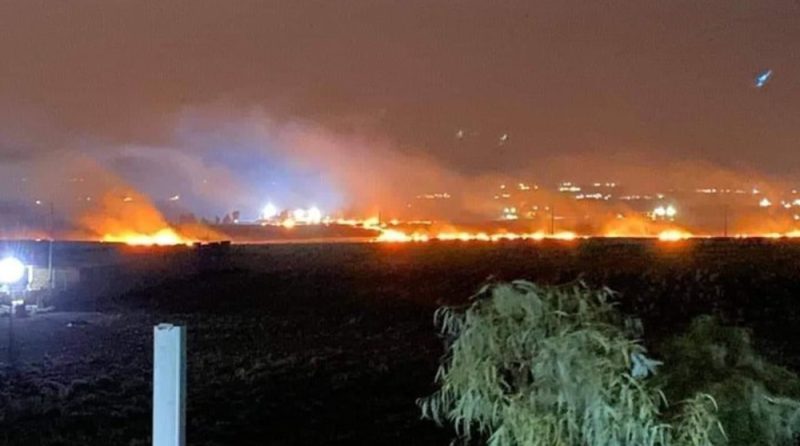
The Iranian ambassador to Iraq says the latest missile strike by the Islamic Revolution Guards Corps (IRGC) on secret bases of the Israeli Mossad spy agency in the semi-autonomous Kurdistan region was strictly necessary, as operations against Iran’s security were being plotted and orchestrated there.
Iraj Masjedi made the remarks while addressing an international conference in Iraq’s holy city of Karbala on Monday.
The Iranian diplomat said Israeli operatives used the Iraqi Kurdistan region to plot and launch operations against Iran’s security, emphasizing that Iranian officials had time and again warned the Kurdistan Regional Government (KRG)’s authorities against their activities, but to no avail.
Masjedi highlighted that the missile attack was carried out in order to safeguard Iran’s security, “and was neither intended to violate Iraq’s sovereignty nor was meant to insult the Arab country and its nation.”
“We expect you to force Israelis out of Iraqi soil and get rid of them,” Masjedi addressed Kurdish officials, adding, “However, if they are not expelled, will we stand by with our hands tied behind us to [allow them] carry out operations against our security? Definitely not.”
The Iranian ambassador emphasized that the attack was aimed at Israel’s training centers and did not target the United States or the Iraqi government.
“Some media outlets have asserted that we targeted the US consulate. I’m surprised by such allegations. It is true that a conflict has been going on between us and the United States for forty years, but the recent operation was not against them. It was an operation against an Israeli base, where plots against our security were being hatched,” Masjedi said.
A dozen ballistic missiles hit secret Mossad bases in the northern Iraqi city of Erbil, reportedly leaving several Israeli operatives dead.
Citing security sources, Iraq’s Sabereen News reported that two Mossad training centers were targeted by ballistic missiles in the early hours of Sunday.
Al-Mayadeen television news network said a Mossad base on the Masif-Saladin Street in Erbil was “fully razed to the ground and a number of Israeli mercenaries were killed or injured.”
In a statement issued earlier on Sunday, the IRGC indicated that the operation was in response to an Israeli airstrike on the Syrian capital of Damascus last Monday, in which two IRGC officers were killed. The IRGC identified the two slain officers as colonels Ehsan Karbalaipour and Morteza Saeidnejad, warning that Israel would “pay for this crime.”
IRGC warns Israel after missile strike on Mossad bases in Erbil
Press TV – March 13, 2022
Iran’s Islamic Revolution Guards Corps (IRGC) has issued a stern warning to Israel following a retaliatory missile strike on the “strategic center of Zionist conspiracy and evil” in the northern Iraqi Kurdistan city of Erbil.
In a statement issued Sunday, the IRGC indicated that the operation was in response to an Israeli airstrike on the Syrian capital of Damascus last Monday, in which two IRGC officers were killed.
“Following the recent crimes of the fake Zionist regime and the previous announcement that the crimes and evils of this infamous regime will not go unanswered, the strategic center for conspiracy and evil of the Zionists was targeted by powerful and pinpoint missiles of the Islamic Revolution Guards Corps,” it said.
A dozen ballistic missiles hit secret Mossad bases in Erbil, reportedly leaving several Israeli operatives dead.
Citing security sources, Iraq’s Sabereen News reported that two Mossad training centers were targeted by ballistic missiles in the early hours of Sunday.
Al-Mayadeen said a Mossad base on the Masif-Saladin street in Erbil was “fully razed to the ground and a number of Israeli mercenaries were killed or injured”.
Last week, IRGC identified the two slain officers as colonels Ehsan Karbalaipour and Morteza Saeidnejad, warning that Israel would “pay for this crime”.
On Thursday, Iran’s permanent mission to the United Nations had written to the UN secretary general and the Security Council, saying Tehran “reserves its inherent right to self-defense, under Article 51 of the United Nations Charter, to respond to such criminal act whenever it deems appropriate”.
Iran “recognizes that the Israeli regime is fully responsible for all the consequences of these criminal acts, and seriously warns the regime about taking further adventuristic and malevolent measures,” it said.
The Sunday statement by the IRGC said, “Once again, we warn the criminal Zionist regime that the repetition of any evil will face harsh, decisive and destructive responses.”
“We also assure the great nation of Iran that the security and peace of the Islamic homeland is the red line of the armed forces of the Islamic Republic of Iran and they will not allow anyone to threaten or attack it.”
Iran and SCO sign protocol to start accession process for Tehran
Press TV – March 12, 2022
Iran and the Shanghai Cooperation Organization (SCO) have started a formal process for Tehran’s accession to the major economic bloc.
A Saturday report by Iran’s IRIB News said that a document had been signed a day earlier in the Uzbek capital of Tashkent between representatives of the eight-member SCO and Iran to allow the organization to consider Iran’s accession bid.
Uzbekistan’s Foreign Ministry said in a statement that the signing of the protocol would practically allow the implementation of decision by SCO heads of state in Tajikistan last year to provide membership to Iran.
The next step in the process will be for Iran to sign a memorandum of commitment at an SCO summit in Uzbekistan’s Samarkand in September 2022, said the statement, adding that SCO heads of states will then decide to include Iran in the bloc.
Iran was an observer member of the SCO before applying to join the bloc that includes Russia, China, India, Kazakhstan, Kyrgyzstan, Pakistan, Tajikistan and Uzbekistan.
Experts says Iran’s accession to the SCO will be a major boost to the bloc’s influence in the region mainly because Iran’s massive transportation network can facilitate regional and international trade.
Iran is also expected to benefit economically from membership in the bloc. The Iranian customs office (IRICA) said on Saturday that Iranian exports to SCO members had increased by 41% year on year in the 11 months to late February to reach nearly $18.3 billion.
IRICA figures showed that Iran had imported $14.4 billion worth of goods from the SCO countries between March 2021 and February 2022, an increase of 31% against the previous similar period.
Imran Khan hits out at West for treating Pakistanis like ‘slaves’

Russian President Vladimir Putin and Pakistani Prime Minister Imran Khan in Moscow, February 24, 2022 © Mikhail Klimentyev / Sputnik
RT | March 7, 2022
Prime Minister Imran Khan lashed out at foreign diplomats who pressured Pakistan to join a UN resolution condemning Russia over its military attack on Ukraine, accusing the envoys of treating Pakistan like “slaves.”
At a rally on Sunday, Khan shot back at a March 1 letter from diplomats representing 22 missions, including countries in the European Union along with Japan, Switzerland, Canada, the UK, and Australia, which called on Pakistan to drop its neutrality and join them in condemning Moscow.
“What do you think of us? Are we your slaves… that whatever you say, we will do?” questioned Khan, before asking EU ambassadors whether they wrote “such a letter to India,” which also remains neutral.
Khan claimed that Pakistan had suffered for previously supporting NATO’s military action in Afghanistan and declared, “We are friends with Russia, and we are also friends with America; we are friends with China and with Europe; we are not in any camp.”
Pakistan, along with 34 other countries, abstained from voting on the UN’s resolution condemning Russian “aggression against Ukraine” last week. Pakistan’s neighbors India, Bangladesh, China, Iran, Sri Lanka, Tajikistan, Kyrgyzstan, and Kazakhstan also abstained.
Khan met with Russian President Vladimir Putin in the Kremlin on February 24, the day Moscow launched its military operation in Ukraine, to discuss bilateral ties and regional issues.
Moscow maintains that the attack was launched with the purpose of “demilitarization” and “denazification” of Ukraine, and that it was the only possible option left to protect the people of eastern Ukraine following years of a grueling blockade that claimed thousands of lives. Kiev insists the invasion was unprovoked, saying it had no plans to retake the breakaway Donetsk and Lugansk republics by force.
Iraq, Russia, Syria and Iran discuss counter-terrorism
MEMO | February 25, 2022
Iraqi National Security Adviser, Qassem Al-Araji, yesterday met the ambassadors of Russia, Syria and Iran as part of the Quartet Centre for Information Exchange in Iraq’s capital city, Baghdad, to discuss counter-terrorism.
Local media reported that the meeting had discussed recent developments along the Iraqi-Syrian border, as well as the latest security developments in the region.
Al-Araji said that cooperation and joint action with the three countries had led to “strong and deterrent blows to terrorism and its leaders,” adding that the Centre was playing a “role in informing and resolving many issues.”
He pointed out that his country would not allow the presence of terrorist groups along its borders, stressing that Baghdad would only deal with “legitimate, sovereign states and governments.”
He reiterated that the Centre was strengthening the “close relationship between the countries that participated in this Centre in difficult and sensitive circumstances, and Iraq will respect those who stood by it during the difficult days.”
“There is a concern that there is a plan for the return of terrorists and their spread in the region, which could lead to instability,” he said.
Israel offers Arab state the opportunity to tackle Iran together
RT | February 15, 2022
Since Israel and Bahrain both view Iran as a threat, they could team up and counter Tehran together, Israeli prime minister Naftali Bennett said on his landmark visit to the Gulf monarchy.
“We will fight Iran and its followers in the region night and day. We will aid our friends in strengthening peace, security, and stability, whenever we are asked to do so,” Bennett pledged in an interview with the Bahraini state-linked Al-Ayyam outlet on Tuesday.
The PM blamed Tehran of striving to “destroy moderate states” in the Gulf region in order to replace them with “bloodthirsty terrorist groups.”
When asked about the possibility of creating an alliance to resist Iranian influence, which could include Israel, Bahrain, and some other Arab nations, he gave a positive response: “We all understand that we face the same challenges, so why not work together to tackle them?”
Bennet, who became the first Israeli prime minister ever to visit Bahrain, assured the journalists that “Israel is a strong and reliable country.”
The idea of such a block was first floated by Israeli general Tal Kelman last year. According to Kelman, who heads the IDF’s Strategy and Third Circle Directorate, “the moderate axis” of Israel, Bahrain, the UAE, Jordan, Egypt and others should resist “the radical axis” of Iran and what he called its “proxies” in Lebanon, Syria, Yemen, and Iraq.
Israel and Bahrain normalized relations in late 2020 as part of the so-called Abraham Accords, a US-backed drive to improve ties between the Jewish state and some Arab countries after decades of strife.
Bahrain is a small island nation of around 1.5 million. The majority of its population is Shia Muslims, but the country is being run by a Sunni monarchy. The rulers in Manama have been concerned by Tehran’s activities as Iran, which is located less than 800 kilometers (497 miles) away, often faces accusations from its rivals of supporting Shia groups in other countries.
Iran envoy: No IAEA access to new nuclear site in Isfahan before conclusion of JCPOA revival talks
Press TV – January 31, 2022
Iran’s ambassador to international organizations based in Vienna says the International Atomic Energy Agency (IAEA) will have no access to the country’s new nuclear site in the central city of Isfahan before the ongoing talks on the removal of US sanctions and revival of the 2015 Iran nuclear deal reach a definitive result.
Mohammad Reza Ghaebi made the remarks while speaking to reporters on Monday after the IAEA announced earlier the same day that Iran has informed the world body that it would move the production of centrifuge rotor tubes and bellows from TESA Karaj Complex to Isfahan.
He said the process “has not started yet,” adding, “The IAEA will be able to adjust its surveillance rules accordingly, although the information gathered through that surveillance process will remain in Iran and the IAEA will not have access to it until Tehran resumes its nuclear commitments under the JCPOA,” referring to the 2015 nuclear deal, officially known as the Joint Comprehensive Plan of Action.
The Iranian diplomat added that the IAEA report was a routine update of the agency that provides the “latest technical information on Iran’s nuclear activities to its members.”
In its Monday statement, the UN nuclear agency said its inspectors had installed surveillance cameras in a new workshop in Isfahan on January 24 to ensure the machines intended for the production of centrifuge rotor tubes and bellows were under monitoring but the production of the parts there had not started then.
The UN nuclear agency noted that the production of centrifuge rotor tubes and bellows at TESA Karaj Complex has ceased.
Back in December, Spokesman for the Atomic Energy Organization of Iran (AEOI) Behrouz Kamalvandi said that the country had allowed the IAEA to reinstall its surveillance cameras at TESA Karaj Complex only after the UN nuclear watchdog met Tehran’s preconditions.
Kamalvandi explained that Iran’s preconditions included technical and security examination of the new IAEA cameras, judicial and security investigations into the dimensions of the June attack against the facility, which damaged the previous cameras, and also the IAEA’s condemnation of such acts of sabotage.
Back in September, Iran refused to allow the United Nations’ nuclear agency access to a number of cameras that had been damaged during a terrorist operation targeting the TESA Karaj Complex, a centrifuge component manufacturing workshop in north-central Iran. The Islamic Republic’s refusal was based on the fact that the country needed to complete some legal-security investigations into the incident.
Rather than rivals, Iran and Russia are partners against US energy order
Press TV – January 19, 2022
Iran and Russia are thought to have conflicting interests in the economic field, especially in energy, but that’s not the case.
The public opinion has been shaped in such a way to believe that Iran and Russia have conflicting interests in the economic field, especially in energy, but this article is arguing that it is not the case.
Iran’s Minister of Petroleum Javad Owji and his Russian counterpart Nikolay Shulginov on Tuesday discussed energy cooperation in a meeting in Moscow which is hosting President Ehrahim Raisi on his most important visit abroad since taking office in August.
Oil and gas cooperation, the OPEC+ agreement, and transfer of technology featured in their discussions.
Owji planned to discuss options for shipping Iranian natural gas to Pakistan and India with the participation of Russian companies, and manufacturing of oil industry equipment. He will also hold talks with Russia’s main OPEC+ representative, according to deputy prime minister and former energy minister Alexander Novak.
The two sides further discussed preparation and the agenda for the next meeting of the Russian-Iranian government commission on trade and economic cooperation, the Russian energy ministry said in a statement.
Iran’s foreign, petroleum and economy ministers are accompanying President Raisi in his two-day visit to Moscow.
The two sides plan to discuss a whole gamut of bilateral cooperation. The economic topics could be the fate of a promised $5 billion Russian loan, supplying some Iranian oil to global markets through Russian companies, devising new oil-for-goods deal, increasing the current record $3 billion bilateral trade to $5 billion and doing business in national currencies.
Iran’s Foreign Minister Hossein Amir-Abdollahian wrote in Russia’s Sputnik news agency that the two sides are determined to update a 20-year cooperation treaty they signed in 2001.
They plan “a new road map based on a balanced, active, dynamic and smart foreign policy, which lays an emphasis on cooperating with all neighbors, especially the Russian Federation, and advancing economic diplomacy”, he said.
“For their bilateral relations, the two countries are determined to update the Treaty on the Basis of Mutual Relations and Principles of Cooperation between Iran and Russia in harmony with global developments,” Amir-Abdollahian said.
The agreement, signed in March 2001, was originally meant to last four 10 years, but it has twice been extended for five years.
The visit comes as Iran and the remaining signatories to a 2015 nuclear deal which include Russia are working strenuously to revive the JCPOA agreement which has been on life support since the US abandoned it in 2018.
Among Russian energy companies, Lukoil has already said it would be “happy” to return to talks to develop Iran’s Ab Teymour and Mansouri oil fields, which were put on hold in late 2018 after the US reimposed sanctions on the country’s oil industry in the wake of its withdrawal from the nuclear deal.
President Raisi, however, has signaled hedging its bets on the success of the Vienna talks and instead pushed for maximum engagement with Iran’s neighbors and the countries which are less at Washington’s beck and call.
Iran and Russia are interchangeably estimated to hold the first and second largest gas reserves in the world. The two countries are also major oil producers, meaning both countries are energy superpowers in terms of their hydrocarbon reserves combined.
According to the head of the Iranian Ministry of Petroleum’s Institute for International Energy Studies, Iran, Russia and the countries supplying hydrocarbon resources will suffer from the new American order in the energy market, and as a result the great interests of Russia and Iran in the energy market will be in working together against this order.
“Unfortunately, the former officials of the country have shaped the mentality of public opinion in such a way that Iran and Russia are thought to have conflicting interests in the economic field, especially in energy. As a result, according to this analysis of the conflict of interests of the two countries, no effective action has been taken so far to increase economic cooperation with Russia,” Mohammad Sadeq Jokar told Fars news agency.
To prove the conflict of interests between Iran and Russia, he said, it is always argued that the two countries compete in the European gas market and that Russia does not want to lose its monopoly on the European market and share it with Iran.
“This analysis has a fundamental drawback. In fact, the question is whether the targeted markets of Iran and Russia are still common markets. Given the developments in the energy market, the answer to this question is no, and it must be said that at present the two countries do not have a common target market in which to compete,” Jokar said.
According to the energy specialist, those defending Iran’s gas exports to Europe justify the trade for its political benefits, arguing that they would make Europe dependent on Iranian gas.
“My first question is what market share Iran can gain from such exports,” he said, noting that Russia plans to export 200 billion cubic meters of gas a year. “Do they really think that, for example, with the annual export of 10 billion cubic meters, Europe will become dependent on Iranian gas?”
Given that 90 percent of the gas produced in Iran is consumed domestically and the fact that the country currently does not have any LNG plants, its best option is to export its surplus output to neighbors through pipelines.
“If Iran has gas for export, the priority is definitely to export gas to Oman, for example. When the Oman gas market is available to Iran, why should we export gas to Europe, which has a lower price and we have to pay transit fees to Turkey” Jokar asked.
“Why should we take gas to Europe when the Iraqi and Kuwaiti gas markets are available to Iran for export? This is not economically viable at all,” he said.
“If Iran, according to its economic and political priorities in the gas market, moves to own the market in Pakistan and the southern Persian Gulf, Russia will not have a fundamental issue with that. Of course, in some markets there is still competition between Iran and Russia – in the Turkish gas market, for example.”
Jokar touched on the legacy of the “America first” agenda initiated by former president Donald Trump aimed at transforming the US into a global energy superpower.
Like other international economists, Jokar believers the global energy system is in transition to a new energy order characterized by the emergence of the United States as a net oil exporter, the shale revolution and the gradual shift towards low-carbon sources and renewables.
“This will hurt traditional suppliers of hydrocarbon resources such as Iran, Russia and Saudi Arabia,” he said. “This is where it can be seen that the greater interests of Russia and Iran in the energy market lie in standing together against this new order.”
The economist touched on some of the grounds for cooperation between Iran and Russia, citing the mini-LNG technology which the Russians have recently acquired.
“Also after the sanctions, Rosneft has localized more than 70% of the required oil import services. Due to the technology sanctions of Western companies against the two countries, Iran and Russia can also exchange technology in this field,” he said.
Jokar also cited leading Iranian industrial group Mapna, saying it has a high capacity to overhaul Russian power plants.
“Or we have achieved some successes in some upstream technologies that can be exchanged with the Russians. Some Iranian companies cooperated with the Russians on the Nord Stream 2 pipeline. This means that we also have capabilities to offer to the Russians, and it is not the case that the game is one-sided.”
Moreover, the Russians have good experience in “clean coal” projects which include capturing carbon emissions from burning coal and storing them under the Earth.
“It is not clear why we do not pay attention to the use of coal at all. Coal can be used to generate electricity in some areas that do not have air pollution problems, and the Russians, and especially the Chinese, have good experience in this area,” Jokar said.
US, Israel blocking elimination of chemical weapons worldwide: Iran
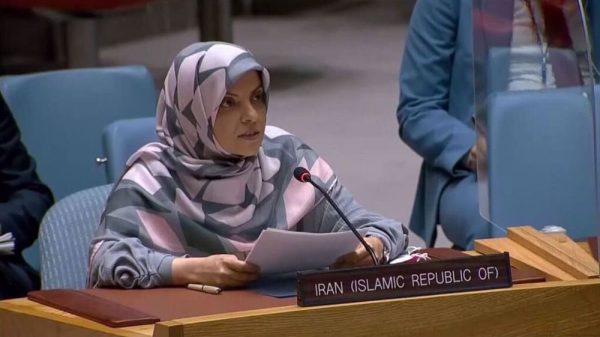
Iran’s Deputy Permanent Representative to the UN Zahra Ershadi
Press TV – January 6, 2022
An Iranian envoy to the United Nations has raised concerns about the possession of chemical weapons by the United States and Israel, describing the pair as the main obstacles to the elimination of such arms across the world.
Zahra Ershadi, deputy permanent representative of Iran to the UN, made the remarks on Wednesday at the Security Council briefing on chemical weapons in Syria.
She said that the elimination of all chemical weapons worldwide was the prime objective of the Chemical Weapons Convention (CWC), and that this goal could be realized only through the treaty’s full, balanced, effective and non-discriminatory implementation, as well as its universality.
It is therefore a source of serious concern that due to non-compliance by the United States, this objective has yet to be realized, she added.
Ershadi also stressed that the Israeli regime must be compelled to join the CWC without any precondition or further delay.
Warning against the serious impact of politicization on the CWC’s credibility, the Iranian envoy called for de-politicization of the work of the Organization for the Prohibition of Chemical Weapons (OPCW).
Iran reiterates its long-standing and principled position on the need to strongly condemn the use of chemical weapons by anyone, anywhere and under any circumstances, she said.
The only absolute guarantee that chemical weapons will not be used again is the total destruction of all chemical weapons across the globe, she said, adding that all necessary measures should be taken to ensure that such weapons will not be produced and used in the future.
Citing significant efforts by Syria to carry out its obligations under the CWC, including the complete destruction of all its 27 chemical facilities as verified by the OPCW, Ershadi said the holding of monthly Security Council meetings to consider the Syrian file is unjustified.
Syria surrendered its entire chemical stockpile in 2013 to a mission led by the United Nations and the OPCW.
It believes that false-flag chemical attacks on the country’s soil have been staged by foreign-backed terrorists in a bid to pressure the government amid army advances.
Syria slams West’s disinformation campaign
Speaking at Wednesday’s Security Council briefing, Syria’s Permanent Representative to the UN Bassam Sabbagh condemned any use of chemical weapons, emphasizing that the Damascus government has never employed such prohibited arms, despite the threats posed by terrorist groups and their sponsors on its territory.
Since joining the CWC in 2013, Syria has cooperated with the United Nations to eliminate its stockpiles and production facilities, a process that was completed in record time, in mid-2014, he added.
Sabbagh also rejected the disinformation campaign launched by some Western countries, which have adopted a hostile policy against Syria and created the OPCW Investigation and Identification Team, he said that reports by the body have become part and parcel of the hostile Western campaign.
He further urged the UN not to “drag its feet” in investigating the use of chemical weapons by terror outfits and cautioned that certain Western states often jump to conclusions before the end of the probe.
EU’s top court allows European firms to scrap Iran deals
Press TV – December 22, 2021
The EU’s supreme court has intervened to protect European companies against legal action by Iran for failing to fulfill their contractual obligations.
The European Court of Justice (ECJ) in Luxembourg has ruled that EU companies can end contracts with Iranian firms if upholding the deals would lead to “disproportionate economic loss” as a result of US sanctions.
The ruling was prompted by a lawsuit from the German branch of Iran’s Bank Melli against Deutsche Telekom after the telecommunications provider terminated a contract with the bank in 2018 prior to its expiry.
The decision effectively neutralizes a “blocking statute” that prohibited individuals and companies in the European Union from complying with US sanctions imposed in 2018 by then US president Donald Trump after he decided to withdraw unilaterally from the Iran nuclear deal.
As per their obligations under the nuclear deal, the Europeans issued the statute in order to keep Iran in the agreement, but companies in the bloc quickly severed ties rather than risk running afoul of the US.
Under the blocking statute, European firms must seek a legal exemption for withdrawing from Iran due to US sanctions and those failing to do so could be penalized by their governments. Firms, however, can twist the law if they claim that their withdrawal is a business decision.
The court on Tuesday paid lip service to the EU blocking statute in its ruling, saying “the prohibition imposed by EU law on complying with secondary sanctions laid down by the United States against Iran may be relied on in civil proceedings”.
But the judges also said the rules of the blocking statute “cannot infringe the freedom to conduct a business by leading to disproportionate economic loss”.
The Higher Regional Court in Hamburg will have to decide whether upholding the contract with Bank Melli would expose Deutsche Telekom to such a disproportionate economic loss.
Observers believe the decision is a foregone conclusion, given that Deutsche Telekom makes about half of its turnover with its US business.
The ECJ said the Hamburg judges must take into account that Deutsche Telekom did not apply for an exemption from the EU blocking statute’s rules.
Other European measures taken to maintain open trade channels with Iran have equally proven to be empty shells.
For example, Iranians have got almost nothing from the Swiss Humanitarian Trade Agreement (SHTA) since it was launched in January 2020 with the support and consent of the US.
The Swiss trade channel much publicized by Washington as a purportedly secure way of delivering humanitarian assistance to Iran at a time of sanctions has failed to process even a single deal on Iranian medicine imports.
The channel was meant to find a way around the US sanctions to use Iranian funds deposited abroad to buy food and medicine for the country via the Swiss bank BCP.
However, companies seeking to participate in the scheme have found it very difficult to comply with the criteria set by the US government to avoid violating the general rules governing the sanctions, said the report.
Fabian Maienfisch, a spokesman for Switzerland’s State Secretariat for Economic Affairs (SECO), which oversees the channel, has admitted in the past that the initiative had effectively failed to meet its objectives.
Such failures and the ECJ’s ruling prove statements by the Iranian government that the Europeans are disingenuous in dealing with the Islamic Republic.
The ruling comes as Iran and the Europeans continue negotiations in Vienna to find a way to remove the US sanctions.
A possible revival of the agreement would require the European companies to return to Iran and fulfill their obligations, but the EU court decision appears to be intentionally timed to provide them a leeway for further violations.
Featured Video

Trita Parsi: Middle East Unraveling — Are We on the Path to World War?
or go to
Aletho News Archives – Video-Images
New Book
Trans agenda is ‘normalization of sadism’ – US author

RT | September 23, 2026
The US Democratic Party has embraced a transgender agenda that amounts to “the normalization of sadism,” author A.J. Rice has said, warning that radical trans policies would return if the party is allowed to regain power.
Speaking to RT’s America First host Scotty Nell Hughes about his new book, ‘The Curse of the Bearded Lady: How the Trans Mafia Whacked American Sanity’, Rice argued that activists have gained significant influence in schools, medicine, and corporate America while people who questioned the agenda have faced pressure to stay silent.
The author described the “trans mafia” as the sprawling network of people and institutions that have helped the movement gain influence. He singled out parts of academia, wealthy backers, and corporations, and stated that providers of transition-related treatment also have a financial incentive to keep young people in their care indefinitely.
Rice argued that the consequences of these policies ultimately fall on children who are being drawn toward gender-affirming medical treatments and on girls who are expected to share locker rooms or compete in sports with biological males.
He noted that while voters rejected the Democrats’ approach to gender in 2024, the party, which has been “captured by madness,” has since only doubled down and is seeking what is effectively “the normalization of sadism.” … Full report
Blog Roll
 Aletho News
- German chemicals giant reveals details of downsizing
- Refaat Al-Areer Was The Canary In The Coal Mine In Israel’s War On The Truth
- Israeli election committee bars candidate from Knesset race over Gaza war opposition
- French-Lebanese man files war crimes complaint over Israeli attacks
- Mahan Air Flight Lands in China Despite US Threat against Iranian Airlines
- US eyes $10bn fund to rebuild war-battered Gulf infrastructure
- Trump meets Rodríguez near Maduro’s prison as Venezuela’s oil flows to US
- Trita Parsi: Middle East Unraveling — Are We on the Path to World War?
- Iran FM meets with US envoy on UN meeting’s sidelines at American side’s insistence: Report
- Qatar PM calls for Gulf security framework with Iran, says war must be ‘wake-up call’
- If Americans Knew
- Caught on Tape: AIPAC CEO Boasted of Controlling Trump’s National Security Officials
- Why Hamas Attacked Israel in October 2023 – Israeli professor Ilan Papé
- They see them, then kill them: Israeli quadcopters track, deliberately target civilians in Gaza
- Winter could turn Gaza’s treacherous, war-damaged buildings into deathtraps
- Majority of Democratic Voters Want to Prosecute Both Biden and Trump Administration Officials Over Gaza
- As Gaza languishes, world leaders gather at the UN – Daily Update
- Sanctions are collective punishment: immoral and self-defeating
- Phosphorus Munitions Fired by Israel Burn Groves, Orchards in Southern Lebanon
- Israel Carries Out New Ceasefire Violations Across Gaza
- AI – Emphasis on the ‘I’: Israel Is Funding AI Chatbot Propaganda
- No Tricks Zone
- New Study: Earth And Venus Surface Warmth Largely Explained By Convection And Lapse Rate, Not CO2 Or Radiation
- 2025 Nature Paper Claiming Worsening Global Drought Gets RETRACTED …Heavily Flawed
- New Study: ‘Global Drought Shows No Detectable Recent Acceleration Under Climate Warming’
- Economic Masterminds: German Socialists Suggest Taxing Productivity Gains Stemming From Using AI
- The South China Sea Has Not Been Cooperating With The Climate Change Narrative
- Energy Crisis: Germany Enters Heating Season With Historically Low Gas Reserve Fill Levels
- New Study: The Antarctic Ice Sheet Gained Mass From 2020-2024 Due To Staggering Snow And Ice Accumulation
- Study: Ocean Heating Rates From Thousands Of Years Ago ‘Dwarf’ Modern Ocean Heating Rates
- Climate Extremists Target, Attack Large-Scale Power Grid Infrastructure In Germany!
- New Study: Antarctic Ice Melt Has Contributed Less Than 1 Centimeter To Sea Level Rise In The Last 30 Years

