How China is Going to Reshape Asia
By Salman Rafi Sheikh – New Eastern Outlook – 01.04.2021
With China and Iran signing a multi-billion dollar deal for the next 25 years, there remains little gainsaying that the former is going to increase its footprint in West Asia/Middle East in a way that once was thought to be unimaginable for reasons that included China’s own economic policies and West Asia’s too close ties with the West to allow for any players. Forces of economic change that China is unleashing will not only become a massive boost for Iran, but Iran will become a gateway for China’s further expansion into the Middle East, including countries, such as Saudi Arabia and the UAE, that Iran rivals. For China, its presence and expansion in the Middle East is not merely about economic benefits; this presence is equally driven by the emerging US-China global rivalry and China’s desire to push back against erstwhile US hegemony and domination of the Middle East since the Second World War.
As such, when China’s foreign minister went on a tour to the Middle East last week, he was not merely looking to sign a deal with Iran; he was more interested in and largely focused on introducing new rules of the game that focus, first and foremost, on economic engagement and connectivity. Rather than traditional Gulf tensions. Therefore, while Wang Yi met Saudia’s Crown Prince, MBS, and supported Saudi stance to oppose any “interference” in the internal affairs by any external player, Wang also offered MBS, who is currently not on good terms with the Joe Biden administration, an opportunity to engage with China “to explore and find a path of development that fits its own conditions.” This path, as Wang emphasised in an interview with Saudia’s official news channel, Al Arabiya, can be found only when Gulf countries can “break free from the shadows of big-power geopolitical rivalry and [be able to] independently explore development paths suited to its regional realities.”
As it stands, China has offered Saudi Arabia the same path it has signed up with Iran. Therefore, China, while it does not want to get entangled in the cross-web of geo-political rivalries in the Persian Gulf, aims to chart a new course whereby countries in the region can stick to an agenda that maintains a strict separation between geo-economics and geo-political and/or ideological rivalries including those around Sunni & Shia faiths and organisations like Muslim Brotherhood.
Therefore, while China signed a multi-billion dollar deal with Iran that includes development projects and enhanced oil production and supplies, China’s growing ties with Saudi Arabia, too, include an increasing Saudi desire to enhance Saudi supply of oil to China and secure Chinese investment in fields ranging from petrochemical, nuclear energy and other energy fields, further expanding it into new fields such as 5G, telecommunication and digital technologies. Saudi Arabia, MBS affirmed, is also willing to make joint efforts with China to push forward the free trade negotiations between China and Gulf countries.
Therefore, by offering both rivals a somewhat similar paradigm of economic development that bypasses geo-political tensions and rivalries, China is building an economic landscape that would leave minimum room for external payers, like the US, to continue to manipulate the Gulf to its advantage as it has been doing for the past many decades.
As such, whereas Chinese investment in Iran offers the latter an opportunity to break economic shackles imposed by the US through economic sanctions, for Saudi Arabia, China offers an opportunity to reshape its ties with the US at a time when the Joe Biden administration appears unwilling to accept MBS as the future king.
By offering states in the Gulf an opportunity to diversify their external geo-economic ties and reduce dependence on the US, China is posing a serious challenge to the US position in West Asia, which has mostly relied on using the precarious geo-political scenario to keep itself militarily entrenched and maintain a relationship that served, first and foremost, the US military industrial complex. At the same time, for the Middle Eastern states, China’s economic path is a way out of their decades old reliance on oil as a primary source of national income.
For China itself, it is pivoting to the Middle East at a time when the Joe Biden administration is trying to assemble an anti-China coalition through the QUAD, a group of countries that includes the US, Japan, India and Australia. China, by simultaneously approaching rival countries like Saudi Arabia, Iran, Turkey and the UAE, is posing a counter-challenge to the US ambitions, making it more and more difficult for the US to realise its “containment” of China ambitions at the global level.
The fact that China’s multi-billion dollar deals have received a very warm reception speaks volumes about how the Gulf itself is keen to transform its geo-economic landscape. In this sense, China-Gulf ties become, unlike US-Gulf ties, a fruit of a path that converges to serve mutual interests.
China’s pact with Iran and its deepening ties with other Gulf countries, therefore, has the potential to completely upend the prevailing geo-economic scenario. With the Gulf countries’ ability to diversify their ties and radically reduce their over-dependence on the US, the region’s geo-political scenario could also undergo a dramatic change.
Therefore, it would be wrong to grasp China-Iran deal as an isolated event. The fact that Wang has toured Iran, Saudi Arabia, Turkey, Oman, and the UAE shows how China is embracing the region as a whole through a single framework of policy that is very largely underpinned by economic development. The fact that Saudi Arabia, to China’s utter joy, even refused to back the US campaign against China’s alleged “genocide” of Uyghur shows how China, to the disappointment of the US, continues to earn more and more acceptability.
Salman Rafi Sheikh is a research-analyst of International Relations and Pakistan’s foreign and domestic affairs.
Iran takes United Nations ‘rights report’ apart, belies it bit by bit
Press TV – March 27, 2021
Iran has provided the United Nations with a detailed letter exposing all instances of falsification and deviation from the UN Human Rights Council’s standards in a recent controversial HRC report about the Islamic Republic.
Ali Baqeri-Kani, head of the Iranian Judiciary’s High Council for Human Rights, forwarded the letter recently to the world body’s Secretary General Antonio Guterres and High Commissioner for Human Rights Michelle Bachelet.
The message sought to “clarify the ambiguous allegations and accusations” leveled against the country in an earlier report by Javaid Rehman, the UN’s so-called special rapporteur on the situation of human rights in Iran.
The rapporteur had thrown a flurry of accusations against the country, blaming it for a raft of self-proclaimed but unproven human rights abuses.
Among other things, he had alleged in his report that women were being treated in Iran as “second-class citizens” and attacked the Islamic Republic’s COVID-19 response.
UK, US, Saudi, Israeli footprints
Iran’s response noted how the report had been compiled based on information provided by anti-Iran counter-revolutionary and terrorist groups as well as fugitive and dangerous criminals , whom the report had glorified as “human rights defenders.”
It identified the alleged “sources” of the report as “organizations affiliated with governments hostile to the Iranian nation” such as the British, American, and Saudi governments as well as organizations linked to the Israeli regime.
The letter underlined those regimes’ own longstanding record of deadly human rights violations against the Iranian nation and other peoples around the world.
It further blasted the rapporteur for trying “to paint a black picture of the situation [of human rights in Iran] instead of stating the realities” and opting for “silence in the face of the biggest cause of violation of the rights of the Iranian nation.”
By the latter, the message was referring to the US’ long-drawn-out inhumane sanctions against Iranians, which have been illegally blocking their access to food and medicine among other vital items.
Elsewhere, the message asked how the report had failed “to reflect the views of the Islamic Republic” and “provide sufficient time for clarifications and responses to allegations and accusations.”
The Islamic Republic essentially discredits Rehman’s very mandate to report on Iran, calling the permission the result of a non-consensual resolution forced upon the Council by a few political actors.
Tehran also strongly disapproves of the way the Council tolerates such politicization of the human rights issue.
Iran, China to sign cooperation document
IRNA – March 27, 2021
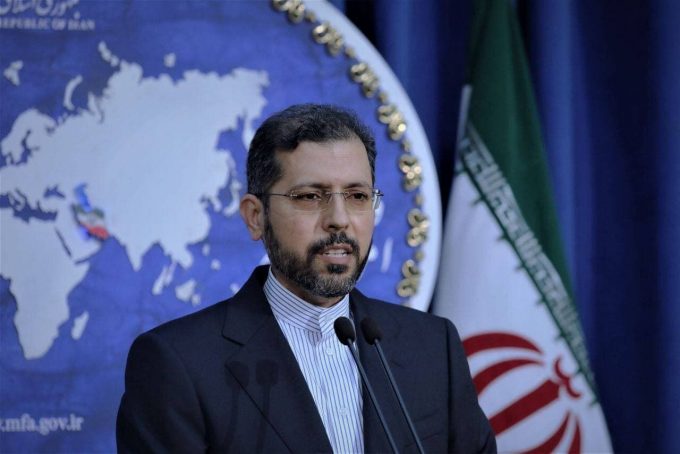
Tehran – Iran’s Foreign Ministry Spokesman Saeed Khatibzadeh said on Friday night that Iran and China would sign the 25-year Cooperation document on Saturday.
Speaking to IRIB TV Channel 1, Khatibzadeh said that China’s Foreign Minister Wang Yi is visiting Iran on the verge of the 50th anniversary of establishing diplomatic relations between the two countries and the document would be signed in this trip.
The Chinese Foreign Minister, who arrived in Tehran Friday night, is also going to have meetings with a number of Iranian authorities, according to the Spokesman.
He also said that the cooperation document was discussed in 2015, when the Chinese President Xi Jinping visited Iran, to lead bilateral ties to a comprehensive and strategic level.
“Relations between Iran and China are multi-layered, deep and having different dimension and this necessitates them to be included in a document. Therefore, the document has been exchanged between the two states for several times and it will eventually be signed on Saturday by Foreign Ministers,” Khatibzadeh went on to say.
The document has a comprehensive road-map, said the diplomat, adding that the economic dimension, as the main axis of the document, includes cooperation in different areas, as well as Iran’s participation in One Road, One Belt initiative and special focus on the private sector in both countries.
“No comprehensive strategic participation is established unless the exact cultural, popular and media basis is formed. This has been addressed in the cultural part of the document,” Iran’s Foreign Ministry Spokesman said, adding “We expect the document to serve as a road-map for Iran-China relations in the next 25 years.”
Trade-Off ahead on Syria and Yemen
By Ghassan Kadi for the Saker Blog | March 16, 2021
In the past few weeks much has happened in the area of diplomacy on the part of Russia. Russia is forging ahead after stepping up its presence in the Middle East in the past decade, taking a strong pro-active political role. Moscow during this period has been intent on consolidating its efforts in re-establishing itself as the key player in any political settlements in the Middle East. Ever since Kissinger in the late 1970’s pulled the rug out from underneath the feet of the USSR, striking a deal between Israel and Egypt, excluding the USSR and the rest of the Arab World, the political influence of Russia in the Middle East significantly waned until it came back with deciding force when Russia responded to the Syrian Government’s request for help in September 2015.
Lately, the economic crisis has deepened in Syria following the drastic Western sanctions. And specifically after the implementation of the Caesar’s Act, the Syrian currency took a huge tumble and the cost of living has soared to unprecedented levels. This left many cynics wondering and pondering what was Russia going to do in the face of the collapsed Syrian economy after having achieved an impressive military victory, taking its troops outside its former USSR borders for the first time and heralding the end of the single super power status of the USA.
To this effect, and on the diplomatic side, Russian FM Lavrov has recently visited Saudi Arabia, Qatar and the UAE for talks pertaining to an array of issues. The agenda issues that transpired to the media include trade, the Russian Sputnik V vaccine, as well as issues of global and regional security, albeit vague in details as what ‘security issues’ mean.
It appears that in these meetings, discussions included the return of Syria to the Arab League and the cost of reconstruction of Syria after ten years of war, a bill touted to exceed $Bn200. Expectations have existed for some time that the Arab Gulf states will fork out a huge chunk of this cost. As mentioned above, the bottom line here is that Russia’s military success in its operation in Syria needs to be followed by political success. Partly, this is achieved within the Astana talks which include Turkey and Iran. However, the very same Arab States instrumental in the ‘War on Syria’ are also instrumental in facilitating the return of Syria to the Arab League, the reconstruction efforts in Syria and the easing of sanctions. The Gulf states have always reiterated that there will be no return of Syria to the Arab League for as long as Iranian forces remain on the ground. The UAE seemed more open than Saudi Arabia to the prospects of Syria’s return to the Arab League and financing the reconstruction process.
But why would the Gulf States, the same states that spent tens of billions of dollars in order to destroy Syria, be suddenly now interested in the reversal of the process? This is a fair question to ask.
Quite unexpectedly, and almost immediately after the return of Lavrov to Moscow, a top delegation of Hezbollah, headed by Mohamad Raad, was invited to Moscow for talks. Apparently, the visit was cloaked in a veil of secrecy in Russia and was not at all covered in Western media, even though it made news in Arabic mainstream media. It would be politically naïve to imagine that Lavrov’s visit to the Gulf has no relation to this. All issues in the Middle East are related to each other, including the war in Yemen.
To put it succinctly, the UAE had already stepped away from the Yemen war. However, Saudi Arabia remains bogged down in this travesty and seven years on, must have come to the humiliating and painful realization that it is a war it cannot win. This is where Iran and Hezbollah can have leverage in any direct or indirect negotiations with the Saudis, and Russia is the only arbitrator who is able to communicate with all parties involved.
All parties in the Middle East are looking for face-saving tradeoffs; at least partial and interim ones. The Saudis in particular are tired and exhausted.
In an interview given to Sputnik Arabic, one not widely reported in other media, not even Sputnik English, Raad praised the cooperation between Hezbollah and Russia, stating that ‘the invitation we received aims to reopen the dialogue about the next phase after having reached the achievements that serve the interests of the people of the region in the recent past’ .
This is Raad’s first visit to Moscow since 2011. Of that visit, I am not trying to speculate in hindsight of the purpose of it and the achievements of it. Furthermore, Hezbollah has not ever been party to any international dis-engagement or peace negotiations in the past, except for ones relating to exchange of prisoners. The economic demise of Syria and Lebanon, as well as the Saudi-Yemeni impasse, may well have placed Hezbollah in a position of participating in peace-deals negotiations this time.
I am neither referring to peace deals with Israel here, nor any deal involving disarmament. Hezbollah will not be prepared to negotiate disarming itself under any political settlement either today or in the foreseeable future, and Moscow is totally aware of this.
According to my analysis, the deal that Moscow is most likely to suggest is a mutual withdrawal of Iran and Hezbollah from Syria on one hand, and an end of the Saudi war on Yemen. It is simple, Saudi Arabia to leave Yemen and Iran/Hezbollah to leave Syria. I believe that Lavrov has already secured the Saudi acceptance of those terms, terms that will not only end the war in Yemen, but also the return of Syria to the Arab League and a possible easing of the Western economic sanctions on Syria. Had Lavrov not secured the Saudi assurance, he would not have invited Hezbollah for talks.
A deal of this nature can potentially end the criminal human tragedy in Yemen in a manner that will portray the Saudis as the real losers in the war, and this is where they need a face-saving trade-off in Syria. In Syria, they will be perceived as winners by securing an Iranian/Hezbollah exit. But most importantly perhaps for the Saudis, this will put an end to a very costly and humiliating war in Yemen, one which is beginning to draw criticism from some quarters of the international community, including alleged talk of America considering placing arms deal embargos on Saudi Arabia.
On the other hand, if Iran and Hezbollah end their presence in Syria, many sanctions are likely to be lifted and the severe economic pressure in Syria will be eased. Such a deal will be a humanitarian win for Syria and Yemen, a strategic win for Saudi Arabia and Iran, and a diplomatic win for Russia.
What will be in it for Hezbollah will largely depend on what Lavrov has put on the table, and it seems obvious that it is Hezbollah that will need more convincing than Iran, and this is why the talks are now with Hezbollah; not with Iranian officials. Perhaps the deal already has the tacit approval of Iranian officials.
It goes without saying; Israel will be watching these developments with keen interest. Israel wants Iran and Hezbollah out of Syria. But the trade-off deal I am talking about is not one in which Israel is a direct party.
What is known at this stage is that a meeting has already taken place between the Hezbollah delegation and Russian officials. As I write this, I am not aware if other meetings are to follow and or whether or not the Hezbollah delegation is back in Lebanon.
Was the 2011 Moscow visit of Raad a prelude for Hezbollah to enter Syria? Will the 2021 visit be prelude for Hezbollah to leave Syria? We don’t know. We may never find out the actual detailed outcome of the mysterious-but-not-so-mysterious current Hezbollah visit. It may not even end up with a press release, but in the next coming days, we will find out if a Syria-Yemen trade-off is indeed looming.
Iran rejects ‘baseless’ Israeli claims, urges UNHRC to avoid politicization
Press TV – March 13, 2021
Iran’s permanent ambassador to the UN office in Geneva has dismissed “baseless” accusations leveled by Israel against the Islamic Republic at the United Nations Human rights Council (UNHRC), urging the body to avoid politicization.
Addressing the 46th regular session of the Human Rights Council on Friday, Esmaeil Baghaei Hamaneh said the regime occupying Jerusalem al-Quds has no right to comment on the noble issue of human rights in Iran.
The remarks came after the Israeli mission in Geneva tweeted, “Today, during the Item 4 General Debate, where HRC46 discusses situations which require its attention, we repeated our call for @UN_HRC to focus on Iran.”
Baghaei Hamaneh said the Israeli regime is best described under the United Nations General Assembly Resolution 3379, adopted on November 10, 1975. In the Resolution 3379, Israel was declared a racist regime.
He said the rule of law makes up the basis for promoting human rights and protecting the foundations of freedom.
The Iranian envoy also expressed regret that some governments focus on weakening the rule of law in developing countries by targeting their judicial systems under the pretext of defending human rights.
No country or group of states should consider that they have the right to dictate their priorities and ideals to others, the Iranian envoy said, stressing that the world’s countries can freely choose their governments as well as judicial, legal and economic systems according to the principle of independent action.
He further called on the UN Human Rights Council to distance itself from politicization, double standards and stereotypes.
Baghaei Hamaneh also criticized Canada, Australia, Britain, Denmark, the US, France, Switzerland, the Netherlands, Belgium, Austria and Sweden for accusing others of rights violations while pretending as if no one was aware of their own contradictory performance both inside and outside their countries.
These states, he added, are accused of widespread human rights violations across the world through exporting weapons to aggressor countries and adopting unilateral policies towards developing countries.
Iran Asks Why Israel Gets Preferential Treatment With IAEA Despite Its Arsenal of Nukes
By Ilya Tsukanov – Sputnik – 06.03.2021
Tel Aviv adheres to a policy of ‘nuclear ambiguity’, meaning that it neither confirms nor denies possessing nuclear weapons. At the same time, the country reserves itself the right to bomb, sabotage or otherwise act to stop activities of any Middle Eastern power it believes could lead to the development of a nuclear weapon.
Israel’s suspected nuclear arsenal poses a threat to the Middle East and the world, and Tehran is concerned by the country’s apparent preferential treatment with the International Atomic Energy Agency despite its status as a non-signatory to the Treaty on the Non-Proliferation of Nuclear Weapons, Kazem Gharibabadi, Iran’s ambassador to international organizations in Vienna, has said.
“Since all [countries] in the Middle East region, except the Israeli regime, are parties to the NPT and have undertaken to accept the Agency’s comprehensive safeguards, development of a clandestine nuclear weapons programme by this regime poses a continuing serious threat not only to the security and stability of the region and the world, but also to the effectiveness and efficiency of the NPT and the Agency’s safeguards regime,” Gharibabadi said, speaking at the meeting of the IAEA border of governors meeting this week.
The diplomat suggested that despite Israel’s censure at the United Nations and the IAEA over its suspected non-proliferation violations, the country has refused to accede to the NPT, or to place its nuclear facilities and activities under the IAEA’s safeguards regime.
“Ironically, Israel is now even enjoying a more preferential treatment as compared with that of the Nuclear Weapons States, since they are members of the NPT and have several obligations specifically under Articles 1 and VI of the Treaty,” Gharibabadi argued. The articles he mentioned relate to the non-transfer of nuclear weapons technologies, and to good-faith talks on the cessation of the nuclear arms race and disarmament.
“It is a clear contradiction that Israel as a non-member to the NPT is enjoying the full rights and privileges due to its membership to the IAEA, while at the same time, it considers itself free from any responsibility, and participates in all deliberations of the Agency related to members of the NPT,” the diplomat said.
It is “an irony” that the IAEA has focused its attentions on Iran and other members of the NPT while making “the chronic strategic mistake” of “overlook[ing] Israel’s nuclear materials and activities in the volatile region of the Middle East,” Gharibabadi suggested, suggesting that this “very serious shortcoming” needs to be addressed.
Otherwise, he asked, “what is the advantage of being both a NPT member and fully implementing the Agency’s safeguards?”
Israel has repeatedly called on the international community to take action against Iran’s nuclear programme and its alleged secret military component. Tel Aviv has also threatened that it would not rule out unilateral military actions to halt this alleged weapons programme. Prime Minister Benjamin Netanyahu has claimed for the better part of the last decade that Iran is on the verge of obtaining nuclear weapons, with the timeframe involved claimed to be either “weeks” or “months.”
Israeli threats of action against Iran come amid multiple reports citing satellite intelligence suggesting that Tel Aviv itself is engaged in major construction activity at the Shimon Peres Negev Nuclear Research Center, the top secret installation thought to have given birth to Israel’s first atomic bomb in the 1960s.
Israel does not confirm nor deny possessing nuclear weapons. Estimates on the size of its nuclear arsenal range from 80 to 400 warheads, with these weapons believed to be deliverable via a number of medium and long-range ground-based missiles, aircraft and cruise missiles launched by subs.
Iran is not known to possess nukes, and its leaders have issued at least two fatwas (religious rulings) banning their development. In the 1980s, one of these fatwas also prohibited Iran from retaliating to Iraqi chemical attacks using Iran’s own chemical weapons arsenal. The country later eliminated these weapons before joining the Chemical Weapons Convention.
In 2015, the Islamic Republic, the United States, Russia, China, Britain, France, Germany and the European Union signed the Joint Comprehensive Plan of Action, a landmark treaty promising Iran relief from sanctions in exchange for restrictions on its peaceful nuclear programme. Washington pulled out of the agreement in 2018, and the Biden administration has yet to live up to its campaign pledge to rejoin it.
Biden becomes the sixth successive President to bomb Iraqis: how far could this latest round of escalation go?
By Aram Mirzaei for The Saker | March 4, 2021
Another president, another act of aggression. For the past few decades, it’s almost like a mandatory rite of passage for US presidents to bomb Muslim countries. I don’t think many of us are surprised to see that current US President Joe Biden turned out to be no different to his predecessors, when Washington once more bombed Iraqis last week.
Continuing the same policy of terrorism and humiliation from the Trump era, Washington felt the need to show strength against the Resistance forces on the Syrian-Iraqi border area. What angers me most, is not just the terrorist act of killing people who are fighting US occupation and US backed terrorism, but the fact that Washington cannot and will not recognize that there is a growing local resistance to Zionist hegemony, instead resorting to degrading and humiliating legitimate resistance groups such as Hashd al-Sha’abi of Iraq (PMU) or the Houthis of Yemen by labelling them “Iranian backed proxies”.
Everything and everyone that oppose Washington and Zionist hegemony in West Asia are “Iranian backed”. Whether it is a Houthi attack on a Saudi airport, a Taliban attack on a NATO convoy or a suspiciously random rocket attack on a US base in Iraq, it is always Iran’s fault and somehow the Islamic Republic must be held responsible for these attacks. Both Washington and the Zionist entity keep attacking Resistance forces in the very area where ISIS remnants have been re-emergent for the past months, claiming their right to self defense. Self defense?! America is more than 10,000 kilometres away. US troops are occupying Syrian and Iraqi territory and Washington claims the right to self defense? This narrative has been drilled into the minds of so many people in the West that nobody even reacts when one of the Obama gang’s old crude liars, Pentagon Press Secretary John Kirby was telling the press that Washington acted to “de-escalate” the situation when it bombed Resistance forces on the Syrian-Iraqi border.
What Kirby really meant by “de-escalation” was that he believes that Washington sent Iran and its allies a “clear message”, that messing with Washington is unwise. The sad part is that he and the other psychopaths in Washington actually believe that the so called “message” will in any way deter the Resistance forces in West Asia. It is pretty clear what the US is doing with these random attacks on the Resistance forces. Washington knows the realities on the ground and acts in response to them. In Syria, it has become clear for Washington that Damascus won’t fall, that dream came down crashing when Russia entered the war in 2015. So, Washington is acting to deny Syria and her allies their well deserved victory through the occupation and looting of eastern Syria. Washington will act for as long as it takes to starve the Syrian people into submission.
In Iraq, Washington, being well aware that the Iraqi parliament has voted to expel US forces from Iraq, is desperately seeking new reasons to prolong their occupation. Be it through the magical re-emergence of Daesh terrorists in Western Iraq or through suspicious Katyusha rocket attacks on US interests in Baghdad’s green zone, which are then blamed on the Iraqi Resistance forces without any kind of evidence presented, Washington is seeking to undermine the Iraqi parliament’s decision.
In Iraq, Washington has a foothold in Baghdad not seen in Syria’s Damascus. It is through this foothold that Washington wields influence over many Iraqi politicians and thus has the ability to cause great internal disunity and animosity among Iraqis themselves.
Washington has both great influence over the Kurds in northern Iraq and over the Prime Minister’s office. PM Al-Kadhimi is known to be a close associate of Washington’s and is suspected to be cooperating with the US to prolong their stay in Iraq. During his tenure, tensions between Baghdad and the PMU have run high as government forces have made random raids on the PMU headquarters, arresting some members even. Yet even more dangerous is the escalating tension between Washington and the PMU. On Wednesday March 3rd, a new rocket attack on the Ain Al-Assad military base was reported. This is the same military base that was struck by the IRGC last year in retaliation for Washington’s murder of martyrs Soleimani and Al-Muhandis. Previously the PMU had vowed revenge for Washington’s attack last week, which makes it rather obvious that Washington will blame the PMU for this recent strike.
With this latest round of escalation, one wonders what will happen next? Of course I’m just speculating but I see some real dangers with tensions running this high. I believe that Washington could very well seek to push Iraq into a new civil war in a bid to eradicate the Hashd al-Sha’abi. Many of the groups within the PMU have threatened to wage war on US forces if Washington refuses to withdraw. Unfortunately, this threat by the PMU can easily be exploited by the US, giving Washington a casus belli, as they intensify their “defensive” airstrikes while claiming to support Baghdad’s campaign to bring “stability” to Iraq. Such an endeavour could risk dragging several regional countries into the conflict as the Islamic Republic could be forced to intervene on behalf of the Iraqi Resistance forces. It is clear that Washington cannot and will not attack Iran directly, such an adventure would be too risky for the crazies in the White House and Pentagon. However, fighting “Iranian backed” forces and rolling back Iranian influence could serve to both solidify the continued US occupation of Iraq in the short term, and prevent the Resistance forces from achieving complete victory, in the mid-to-long term. In order to manufacture consent, Washington must portray their actions as both “defensive” and in service of “stability and peace”. Having others fight Washington’s wars for them is a speciality for the Empire. This is why I believe the most likely scenario to be one where Washington attempts to pit Baghdad against the PMU, then sweep in to “help” Baghdad “preserve stability”. This strategy has been used in different ways before by the Obama regime when it unleashed the Daesh terrorist group in Iraq, then claimed to fight the same terrorists it had armed and trained, in a bid to continue their occupation of Iraq and pressure pro-Iran PM Nouri Al-Maliki to resign. Obama then did the same thing in Syria with the support of Kurdish militants in a bid to pressure Damascus into concessions. Trump continued on the same path but went even further when his administration began using phony attacks on “US interests” in Iraq as a pretext for direct confrontation with the PMU, a path that ultimately led to the murder of Martyrs Soleimani and Al-Muhandis. The then-secretary of State Mike Pompeo claimed that Washington had acted to “stabilize” Iraq with the murder of these “terrorists” who were “hated among Iraqis”.
Iraq is key to the Resistance Axis and cannot fall into enemy hands. It is however also the most vulnerable of the countries where the Resistance forces are active, as not only does Washington have great influence over Baghdad, but also over the Kurdish autonomous region in the north.
Supporting Kurdish independence is another way that Washington could seek to attack the Resistance Axis. This can be seen in Syria as well where the Kurdish militants are acting as excellent proxy troops for Washington, occupying about a third of the country and helping US forces in the looting of Syrian oil. Kurdish parties also have excellent ties to the Zionist entity in Tel Aviv, as Zionist chieftain Netanyahu has on several occasions been a vocal supporter of Kurdish independence, often likening the Kurdish people’s cause with the Zionist one. The reactionary Kurdish parties, who are too ignorant and too greedy to understand and realize that they are being used as cannon fodder to further US imperial ambitions, will be more than happy to wage war on Syria and Iraq with US support behind them.
It’s been almost 10 years since the war in Syria began, and 18 years since the war in Iraq began, and still there seems to be no peace in sight for any of the Arab countries. Biden has been in office in less than two months, but in my opinion, the next four years seem to be rather clear in terms of Washington’s policies towards the West Asia region- the long wars will continue and more blood is to be expected. Bush bombed Iraq, [Clinton bombed Iraq, Bush Jr bombed Iraq,] Obama bombed Iraq, Trump bombed Iraq, and now Biden bombs Iraq. For our people, it never matters who or what occupies the White House, the bombings and wars will continue. Iraq has a rather young population, more than 60 percent of the population is under 25 years of age. This means that most Iraqis have known nothing else except the US imposed wars on their homeland. It is a tragedy and a shameful moment in human history where most people in the totally “advanced, civilized, democratic, morally superior” West don’t care about what their despicable governments are doing in Iraq or Syria, because they are stupid Muslim terrorists anyway. This is why Iraq cannot and should not rely on Western public opinion. Resistance is the only way, and the US Empire must be kicked out with force in order for Iraqis to finally have some peace.
Iran Describes as Invalid Any US Return to JCPOA without Lifting Sanctions
Al-Manar | February 20, 2021
Iran’s Ambassador and Permanent Representative to the United Nations said that any signature to return to JCPOA is invalid without verification of Tehran.
“During the Obama administration, we also sent reports to the JCPOA coordinator, protesting the actions of the United States at that time against its obligations,” said Majid Takht-Ravanchi in an interview with Khamenei.ir.
“Now, they have imposed three kinds of sanctions on us. If none of this is repealed, there is no point in returning of the United States to the JCPOA,” he added.
“It is of no value to just say that I am ready to return to the JCPOA if the sanctions are not be lifted in practice,” the Iranian diplomat said, adding, “We can not just sign an agreement. It does not make sense if the signature is not accompanied by a process for verifying the actions.”
He highlighted, “If it is announced that the embargo on Iranian oil has been lifted, there must be guarantees that there will be no problem in selling oil, and the buyer can be able to easily transfer the money to Iran through the global banking system.”
“The Europeans told us to wait and we would compensate for the withdrawal of the US. But not only did they not compensate, but they also did not fulfill their obligations under the JCPOA,” Takht-Ravanchi noted.
After the illegitimate US exit from the JCPOA in May 2018, the three European signatories to the deal remained indifferent to making up for Iran’s losses.
Amid the Europeans’ lack of action, Iran took five steps to reduce its commitments to the deal while vowing that it will reverse the course as soon as the other parties live up to their commitments under the accord.
Recently, the Iranian parliament passed a bill, dubbed the Strategic Action Plan to Counter Sanctions in early last December, setting a Feb. 21 deadline for Biden to lift the US sanctions. Otherwise, Iran will halt inspections of its nuclear sites by the International Atomic Energy Agency (IAEA) and further boost uranium enrichment.
Iran has so far resumed 20% uranium enrichment at Fordow plant in accordance with the Parliament’s legislation and has warned that in the case Washington does not remove all the anti-Iran illegitimate sanctions, it will also stop voluntary implementation of the Additional Protocol, which gives IAEA inspectors unannounced visits to Iranian facilities.
The Islamic Republic of Iran has emphasized that for Tehran, the return of the United States to the JCPOA is not an important issue, but what is important is the lifting of US sanctions against Iran.
Tehran to halt Additional Protocol unless other parties return to full JCPOA compliance
Press TV – February 15, 2021
Tehran says it will end its voluntary implementation of the Additional Protocol to the nuclear Non-Proliferation Treaty (NPT) Safeguards Agreement should the other parties to the 2015 Iran nuclear agreement fail to honor their commitments by the deadline of February 21.
“This measure means an end to inspections beyond the Safeguards Agreement, but does not mean an end to all inspections. In fact, Iran is a member of the Safeguards Agreement and the NPT, but the implementation of the Additional Protocol will be halted,” Foreign Ministry spokesman Saeed Khatibzadeh said at a weekly press conference on Monday.
Khatibzadeh emphasized that Iran will nonetheless continue to cooperate with the International Atomic Energy Agency (IAEA) and report its new nuclear undertakings to the IAEA beforehand, as has always been the case.
He reiterated Tehran’s position that all of its measures are “easily reversible” provided that the other parties to the nuclear deal, officially called the Joint Comprehensive Plan of Action (JCPAO), return to fulfilling their abandoned commitments.
The JCPOA was unilaterally ditched by former US President Donald Trump in May 2018, in pursuit of what he called the “maximum pressure” policy against the Islamic Republic through unilateral sanctions. Iran has denounced the policy as an act of “economic terrorism”.
The US withdrawal from the deal was met with worldwide criticism, and was followed, a year later, by Iran’s gradual reduction of its nuclear commitments. However, Tehran has repeatedly proclaimed that it will return to its nuclear obligations as soon as its interests under the JCPOA are met.
Khatibzadeh’s announcement comes more than two months after the Iranian Parliament passed a law to further accelerate the development of the country’s nuclear program.
The law, among other things, tasked the Iranian administration to stop allowing inspections beyond the Safeguards Agreement, including the voluntary implementation of the Additional Protocol, if the other parties to the JCPOA failed to deliver on their commitments, normalize Iran’s banking relations and remove obstacles to Iran’s oil export.
“According to this law, the inspections beyond the Safeguards Agreement will be halted, which we had voluntarily accepted within the framework of the Additional Protocol,” Khatibzadeh reiterated.
Nothing changed under Biden admin
Asked to offer his take on the new US administration of Joe Biden’s Iran policy almost a month into his presidency, the spokesman said the Biden administration, unfortunately, treads in the footsteps of the Trump administration.
“What is happening today is not different from what was happening before January 20 … The same maximum pressure and crime, committed through the cruel sanctions against the Iranian people, continues today,” he said.
“This should actually bring a stain of disgrace to those who based their election campaign on distancing themselves from the bullying policies of the Trump administration,” Khatibzadeh said, referring to Biden, who prior to the November presidential election promised to rejoin the deal but has so far reneged on his promise.
In similar remarks on Wednesday, Foreign Minister Mohammad Javad Zarif said, “I feel that the Americans have not yet decided on their policies. That’s why the White House had to correct Mr. Biden’s remarks many times.”
Zarif made the remarks a week after Biden said in an interview with CBS that he would not lift sanctions in order to encourage Iran to return to the negotiating table.
Iran’s stance on nuclear weapons unchanged
Elsewhere in his presser, Khatibzadeh said the Islamic Republic’s stance on the use of nuclear weapons has not changed.
Iran underlines the peaceful nature of its nuclear activities and this stance has not changed, he said.
“The fatwa (religious decree) issued by the Leader of the Islamic Revolution on the prohibition of the use of weapons of mass destruction and nuclear weapons remains in place,” he added.
In recent days, Intelligence Minister Mahmoud Alavi has been rebuked over saying that persistent Western pressure on Iran could push the country to fight back like a “cornered cat”.
“If they push Iran to that [corner], then it will not be Iran’s fault,” he said in a televised interview last Monday, in remarks that were widely viewed in the world as a threat on Iran’s part to seek nuclear weapons.
The Islamic Republic of Iran’s nuclear program, however, is based on a fatwa issued by Leader of the Islamic Revolution Ayatollah Seyyed Ali Khamenei that categorically bans the production, possession and stockpiling of nuclear weapons and other weapons of mass destruction.
Featured Video
Trita Parsi: Middle East Unraveling — Are We on the Path to World War?
or go to
Aletho News Archives – Video-Images
New Book
Trans agenda is ‘normalization of sadism’ – US author

RT | September 23, 2026
The US Democratic Party has embraced a transgender agenda that amounts to “the normalization of sadism,” author A.J. Rice has said, warning that radical trans policies would return if the party is allowed to regain power.
Speaking to RT’s America First host Scotty Nell Hughes about his new book, ‘The Curse of the Bearded Lady: How the Trans Mafia Whacked American Sanity’, Rice argued that activists have gained significant influence in schools, medicine, and corporate America while people who questioned the agenda have faced pressure to stay silent.
The author described the “trans mafia” as the sprawling network of people and institutions that have helped the movement gain influence. He singled out parts of academia, wealthy backers, and corporations, and stated that providers of transition-related treatment also have a financial incentive to keep young people in their care indefinitely.
Rice argued that the consequences of these policies ultimately fall on children who are being drawn toward gender-affirming medical treatments and on girls who are expected to share locker rooms or compete in sports with biological males.
He noted that while voters rejected the Democrats’ approach to gender in 2024, the party, which has been “captured by madness,” has since only doubled down and is seeking what is effectively “the normalization of sadism.” … Full report
Blog Roll
 Aletho News
- NATO chief wants Europeans to fight American wars [for Israel]
- German chemicals giant reveals details of downsizing
- Refaat Al-Areer Was The Canary In The Coal Mine In Israel’s War On The Truth
- Israeli election committee bars candidate from Knesset race over Gaza war opposition
- French-Lebanese man files war crimes complaint over Israeli attacks
- Mahan Air Flight Lands in China Despite US Threat against Iranian Airlines
- US eyes $10bn fund to rebuild war-battered Gulf infrastructure
- Trump meets Rodríguez near Maduro’s prison as Venezuela’s oil flows to US
- Trita Parsi: Middle East Unraveling — Are We on the Path to World War?
- Iran FM meets with US envoy on UN meeting’s sidelines at American side’s insistence: Report
- If Americans Knew
- Caught on Tape: AIPAC CEO Boasted of Controlling Trump’s National Security Officials
- Why Hamas Attacked Israel in October 2023 – Israeli professor Ilan Pappé
- They see them, then kill them: Israeli quadcopters track, deliberately target civilians in Gaza
- Winter could turn Gaza’s treacherous, war-damaged buildings into deathtraps
- Majority of Democratic Voters Want to Prosecute Both Biden and Trump Administration Officials Over Gaza
- As Gaza languishes, world leaders gather at the UN – Daily Update
- Sanctions are collective punishment: immoral and self-defeating
- Phosphorus Munitions Fired by Israel Burn Groves, Orchards in Southern Lebanon
- Israel Carries Out New Ceasefire Violations Across Gaza
- AI – Emphasis on the ‘I’: Israel Is Funding AI Chatbot Propaganda
- No Tricks Zone
- New Study: Earth And Venus Surface Warmth Largely Explained By Convection And Lapse Rate, Not CO2 Or Radiation
- 2025 Nature Paper Claiming Worsening Global Drought Gets RETRACTED …Heavily Flawed
- New Study: ‘Global Drought Shows No Detectable Recent Acceleration Under Climate Warming’
- Economic Masterminds: German Socialists Suggest Taxing Productivity Gains Stemming From Using AI
- The South China Sea Has Not Been Cooperating With The Climate Change Narrative
- Energy Crisis: Germany Enters Heating Season With Historically Low Gas Reserve Fill Levels
- New Study: The Antarctic Ice Sheet Gained Mass From 2020-2024 Due To Staggering Snow And Ice Accumulation
- Study: Ocean Heating Rates From Thousands Of Years Ago ‘Dwarf’ Modern Ocean Heating Rates
- Climate Extremists Target, Attack Large-Scale Power Grid Infrastructure In Germany!
- New Study: Antarctic Ice Melt Has Contributed Less Than 1 Centimeter To Sea Level Rise In The Last 30 Years

