Why I Don’t Trust Trump on Iran
By Ron Paul | January 6, 2020
President Trump and his Secretary of State Mike Pompeo told us the US had to assassinate Maj. Gen. Qassim Soleimani last week because he was planning “Imminent attacks” on US citizens. I don’t believe them.
Why not? Because Trump and the neocons – like Pompeo – have been lying about Iran for the past three years in an effort to whip up enough support for a US attack. From the phony justification to get out of the Iran nuclear deal, to blaming Yemen on Iran, to blaming Iran for an attack on Saudi oil facilities, the US Administration has fed us a steady stream of lies for three years because they are obsessed with Iran.
And before Trump’s obsession with attacking Iran, the past four US Administrations lied ceaselessly to bring about wars on Iraq, Afghanistan, Syria, Libya, Serbia, Somalia, and the list goes on.
At some point, when we’ve been lied to constantly and consistently for decades about a “threat” that we must “take out” with a military attack, there comes a time where we must assume they are lying until they provide rock solid, irrefutable proof. Thus far they have provided nothing. So I don’t believe them.
President Trump has warned that his administration has already targeted 52 sites important to Iran and Iranian culture and the US will attack them if Iran retaliates for the assassination of Gen. Soleimani. Because Iran has no capacity to attack the United States, Iran’s retaliation if it comes will likely come against US troops or US government officials stationed or visiting the Middle East. I have a very easy solution for President Trump that will save the lives of American servicemembers and other US officials: just come home. There is absolutely no reason for US troops to be stationed throughout the Middle East to face increased risk of death for nothing.
In our Ron Paul Liberty Report program last week we observed that the US attack on a senior Iranian military officer on Iraqi soil – over the objection of the Iraq government – would serve to finally unite the Iraqi factions against the United States. And so it has: on Sunday the Iraqi parliament voted to expel US troops from Iraqi soil. It may have been a non-binding resolution, but there is no mistaking the sentiment. US troops are not wanted and they are increasingly in danger. So why not listen to the Iraqi parliament?
Bring our troops home, close the US Embassy in Baghdad – a symbol of our aggression – and let the people of the Middle East solve their own problems. Maintain a strong defense to protect the United States, but end this neocon pipe-dream of ruling the world from the barrel of a gun. It does not work. It makes us poorer and more vulnerable to attack. It makes the elites of Washington rich while leaving working and middle class America with the bill. It engenders hatred and a desire for revenge among those who have fallen victim to US interventionist foreign policy. And it results in millions of innocents being killed overseas.
There is no benefit to the United States to trying to run the world. Such a foreign policy brings only bankruptcy – moral and financial. Tell Congress and the Administration that for America’s sake we demand the return of US troops from the Middle East!
Copyright © 2019 by Ron Paul Institute
The USA is now at war, de-facto and de-jure, with BOTH Iraq and Iran
The Saker | January 5, 2020
First, let’s begin by a quick summary of what has taken place (note: this info is still coming in, so there might be corrections once the official sources make their official statements).
- Iraqi Prime Minister Adil Abdl Mahdi has now officially revealed that the US had asked him to mediate between the US and Iran and that General Qassem Soleimani was to come and talk to him and give him the answer to his mediation efforts. Thus, Soleimani was on an OFFICIAL DIPLOMATIC MISSION as part of a diplomatic initiative INITIATED BY THE USA.
- The Iraqi Parliament has now voted on a resolution requiring the government to press Washington and its allies to withdraw their troops from Iraq.
- Iraq’s caretaker PM Adil Abdul Mahdi said the American side notified the Iraqi military about the planned airstrike minutes before it was carried out. He stressed that his government denied Washington permission to continue with the operation.
- The Iraqi Parliament has also demanded that the Iraqi government must “work to end the presence of any foreign troops on Iraqi soil and prohibit them from using its land, airspace or water for any reason“
- The Iraqi Foreign Ministry said that Baghdad has turned to the UN Security Council with complaints about US violations of its sovereignty.
- Iraqi cleric Moqtada al-Sadr said the parliamentary resolution to end foreign troop presence in the country did not go far enough, calling on local and foreign militia groups to unite. I also have confirmation that the Mehdi Army is being re-mobilized.
- The Pentagon brass is now laying the responsibility for this monumental disaster on Trump (see here). They are now slowly waking up to this immense clusterbleep and don’t want to be held responsible for what is coming next.
- For the first time in the history of Iran, a Red Flag was hoisted over the Holy Dome Of Jamkaran Mosque, Iran. This indicates that the blood of martyrs has been spilled and that a major battle will now happen. The text in the flag says “Oh Hussein we ask for your help” (unofficial translation)
- The US has announced the deployment of 3,000 soldiers from the 82nd Airborne to Kuwait.
- Finally, the Idiot-in-Chief tweeted the following message, probably to try to reassure his freaked out supporters: “The United States just spent Two Trillion Dollars on Military Equipment. We are the biggest and by far the BEST in the World! If Iran attacks an American Base, or any American, we will be sending some of that brand new beautiful equipment their way… and without hesitation!“. Apparently, he still thinks that criminally overspending for 2nd rate military hardware is going to yield victory…
Analysis
Well, my first though when reading these bullet points is that General Qasem Soleimani has already struck out at Uncle Shmuel from beyond his grave. What we see here is an immense political disaster unfolding like a slow motion train wreck. Make no mistake, this is not just a tactical “oopsie”, but a major STRATEGIC disaster. Why?
For one thing, the US will now become an official and totally illegal military presence in Iraq. This means that whatever SOFA (Status Of Forces Agreement) the US and Iraq had until now is void.
Second, the US now has two options:
- Fight and sink deep into a catastrophic quagmire or
- Withdraw from Iraq and lose any possibility to keep forces in Syria
Both of these are very bad because whatever option Uncle Shmuel chooses, he will have lost whatever tiny level of credibility he has left, even amongst his putative “allies” (like the KSA which will now be left nose to nose with a much more powerful Iran than ever before).
The main problem with the current (and very provisional) outcome is that both the Israel Lobby and the Oil Lobby will now be absolutely outraged and will demand that the US try to use military power to regime change both Iraq and Iran.
Needless to say, that ain’t happening (only ignorant and incurable flag-wavers believe the silly claptrap about the US armed forces being “THE BEST”).
Furthermore, it is clear that by it’s latest terrorist action the USA has now declared war on BOTH Iraq and Iran.
This is so important that I need to repeat it again:
The USA is now at war, de-facto and de-jure, with BOTH Iraq and Iran.
I hasten to add that the US is also at war with most of the Muslim world (and most definitely all Shias, including Hezbollah and the Yemeni Houthis).
Next, I want to mention the increase in US troop numbers in the Middle-East. An additional 3,000 soldiers from the 82nd AB is what would be needed to support evacuations and to provide a reserve force for the Marines already sent in. This is NOWHERE NEAR the kind of troop numbers the US would need to fight a war with either Iraq or Iran.
Finally, there are some who think that the US will try to invade Iran. Well, with a commander in chief as narcissistically delusional as Trump, I would never say “never” but, frankly, I don’t think that anybody at the Pentagon would be willing to obey such an order. So no, a ground invasion is not in the cards and, if it ever becomes an realistic option we would first see a massive increase in the US troop levels, we are talking several tens of thousands, if not more (depending on the actual plan).
No, what the US will do if/when they attack Iran is what Israel did to Lebanon in 2006, but at a much larger scale. They will begin by a huge number of airstrikes (missiles and aircraft) to hit:
- Iranian air defenses
- Iranian command posts and Iranian civilian and military leaders
- Symbolic targets (like nuclear installations and high visibility units like the IRGC)
- Iranian navy and coastal defenses
- Crucial civilian infrastructure (power plants, bridges, hospitals, radio/TV stations, food storage, pharmaceutical installations, schools, historical monuments and, let’s not forget that one, foreign embassies of countries who support Iran). The way this will be justified will be the same as what was done to Serbia: a “destruction of critical regime infrastructure” (what else is new?!)
Then, within about 24-48 hours the US President will go on air an announce to the world that it is “mission accomplished” and that “THE BEST” military forces in the galaxy have taught a lesson to the “Mollahs”. There will be dances in the streets of Tel Aviv and Jerusalem (right until the moment the Iranian missiles will start dropping from the sky. At which point the dances will be replaced by screams about a “2nd Hitler” and the “Holocaust”).
Then all hell will break loose (I have discussed that so often in the past that I won’t go into details here).
In conclusion, I want to mention something more personal about the people of the US.
Roughly speaking, there are two main groups which I observed during my many years of life in the USA.
Group one: is the TV-watching imbeciles who think that the talking heads on the idiot box actually share real knowledge and expertise. As a result, their thinking goes along the following lines: “yeah, yeah, say what you want, but if the mollahs make a wrong move, we will simply nuke them; a few neutron bombs will take care of these sand niggers“. And if asked about the ethics of this stance, the usual answer is a “f**k them! they messed with the wrong guys, now they will get their asses kicked“.
Group two: is a much quieter group. It includes both people who see themselves as liberals and conservatives. They are totally horrified and they feel a silent rage against the US political elites. Friends, there are A LOT of US Americans out there who are truly horrified by what is done in their name and who feel absolutely powerless to do anything about it. I don’t know about the young soldiers who are now being sent to the Middle-East, but I know a lot of former servicemen who know the truth about war and about THE BEST military in the history of the galaxy and they are also absolutely horrified.
I can’t say which group is bigger, but my gut feeling is that Group Two is much bigger than Group One. I might be wrong.
Supreme Leader Khamenei’s Adviser Says Iran Will Target US ‘Military Sites’ – Report
Sputnik – January 5, 2020
The world waits in anticipation after Iran pledged to respond with a “vengeance” to the killing of top ranking General Qasem Soleimani in a US airstrike on Friday. The killing came after the US claimed that the Iranian commander was going to put US lives at risk in a series of planned attacks.
Iran will respond to the killing of General Qasem Soleimani in a US drone strike by targeting “military sites”, an advisor to Iranian Supreme Leader Ayatollah Khamenei’s said on Sunday.
While speaking to CNN former Iranian defence minister Hossein Dehghan said: “The response for sure will be military and against military sites”.
Dehghan reiterated the position that Iran “will not be seeking war”.
“It was America that has started the war. Therefore, they should accept appropriate reactions to their actions. The only thing that can end this period of war is for the Americans to receive a blow that is equal to the blow they have inflicted,” he told the network. “Afterward they should not seek a new cycle.”
Dehghan also used the opportunity to respond to a threat by US President Donald Trump on Saturday night that any Iranian retaliation would be met by the targeting of 52 unspecified Iranian sites, describing them as “ridiculous and absurd.”
Many of the areas which the US plans to target may be culturally important or UNESCO protected sights.
“Trump doesn’t know international law. He doesn’t recognize U.N. resolutions either. Basically, he is a veritable gangster and a gambler. He is no politician he has no mental stability,” Dehghan told CNN, citing United Nations Resolution 2347, which makes illegal the unlawful destruction of cultural heritage under international, which the US itself is a signatory to since 2017.
Dehghan warned that if Trump were to carry out his threat: “for sure no American military staff, no American political center, no American military base, no American vessel will be safe. And they are accessible to us.”
While speaking to ABC on Sunday, Secretary of State Mike Pompeo softened the presidents remarks claiming that the US would “act lawfully”.
The attack which killed Soleimani in Baghdad was approved by Trump in Mar-a-Lago last Thursday.
The operation took place in Baghdad in the early hours of Friday as Soleimani and as well as Iraqi officials of Iranian-backed militias were leaving Baghdad airport.
Several missiles were launched from a drone killing at least seven people including Soleimani and his comrades.
Iran has pledged to respond to the attack, vowing “harsh vengeance” against the US for the liquidation of one of their top commanders and beloved officials.
“Harsh vengeance awaits the criminals that got his and other martyrs’ blood on their evil hands in last night’s incident”, said Iran’s supreme leader in a statement following the event on Friday.
US officials claim that it was a preemptive strike in response to planned attacks by Soleimani on American targets but have yet to provide any details.
The strike followed a storming of the UN embassy in Iraqi after US airstrikes were launched against Iranian-backed militia groups in Iran which killed 25 people.
US Long-Planned Assassination of Soleimani Lacks Legal, Strategic Justification – Ex-Envoy
Sputnik – 04.01.2020
WASHINGTON – The Trump administration’s unlawful execution of Iranian Quds Force Commander Qasem Soleimani is a strategic blunder of mammoth proportions that has now turned every American military official into a target, former US Ambassador to Saudi Arabia Chas Freeman told Sputnik.
Soleimani, considered the second most powerful person in Iran’s leadership structure, was killed in a US drone strike in Baghdad on Thursday in the wake of attacks on the American embassy in Iraq. Abu Mahdi al-Muhandis, the deputy head of the Iran-backed Iraqi Popular Mobilization Forces (PMF), was also killed in the strike.
“This was not retaliation as claimed, but the pre-planned exploitation of a pretext to assassinate a foreign official designated as an enemy,” Freeman said on Friday. “It was an act of war that will inevitably evoke reprisal.”
President Donald Trump claims he ordered the strike because Soleimani and the militia chief had allegedly been plotting “imminent” attacks against US interests.
Freeman, who also served as US Assistant Secretary of Defence for International Security Affairs, said there is no concrete evidence to corroborate Trump’s claims or justify preemptive action.
“The charge that these two were planning attacks on American soldiers and officials could equally well be leveled at US Secretary of Defense Mark Esper, Secretary of State Mike Pompeo, White House officials, and US military commanders at all echelons,” he said.
Freeman called the attack an “extrajudicial execution” and further departure from the rule of law in the United States.
The former diplomat observed how the escalation began Sunday with suspicious US strikes against Iranian-backed militia groups in Iraq, which sparked the attacks against the embassy in Baghdad.
“[Soleimani’s death] was preceded by three airstrikes on elements of Kataeb Hezbollah for the death of a civilian contractor in Kirkuk. None of these [US] airstrikes was anywhere near Kirkuk,” Freeman said. “They bore the marks of a pre-planned operation looking for a pretext to launch.
“Meanwhile, Iran has already promised to exact “savage” retribution, he noted.
“Soleimani was the equivalent of the US national security adviser or the commanders of CENTCOM, SOCOM, and SOCCENT. All are now potential Iranian targets,” Freeman warned.
Meanwhile, Kataeb Hezbollah is likely to be joined in its campaign against US forces and officials in Iraq by other patriotic militias including some historically hostile to Iran, the former envoy added.
Although likely a welcome distraction to the impeachment proceedings, in foreign policy terms Trump’s decision “makes no sense at all,” he said.
“It is not a deterrent to Iran so much as a provocation. It pushes Iraq further into the arms of Iran and invites the humiliating expulsion of US forces from Iraq. It makes every American in Iraq a target for murder or hostage taking,” Freeman said.
Trump’s “strategy-free” decision is tantamount to beginning a game of chess with only an opening move in mind, he said.
“It is thus a reminder to the word of the witless hubris and violence with which the United States now conducts its international relations,” Freeman concluded.
US Military ‘Despised Across the Region’ as Iran, Iraq View Strikes as Acts of War
Sputnik – 04.01.2020
US President Donald Trump argued Friday that the killing of Qasem Soleimani, head of Iran’s Islamic Revolutionary Guard Corps’ Quds Force, was to “stop a war” from breaking out. However, the governments of both Iraq and Iran regard the act as the opposite, and one analyst tells Sputnik that the US has actually united the Middle Eastern countries.
Mohammad Marandi, an expert on American studies and postcolonial literature who teaches at the University of Tehran, joined Radio Sputnik’s Loud and Clear on Friday to discuss the motivation behind the US’ attacks in the Middle East and express his thoughts on what’s to come.
Marandi explained to hosts Brian Becker and John Kiriakou that it’s not only the Iranian government who considers the killing of Soleimani to be an act of war, but Baghdad as well.
“The Iraqis consider this to be an act of war because the United States also murdered Abu Mahdi al-Muhandis, the deputy head of the … Popular Mobilization Forces that spearheaded the fight against [Daesh] in Iraq,” he said, adding that al-Muhandis and Soleimani “were the ones who saved Iraq from [Daesh].”
“The United States has been acting with impunity in Iraq from day one of occupation,” Marandi asserted.
However, the US’ recent strikes against Iraqi Popular Mobilization Forces that resulted in the deaths of at least 25 fighters and injured dozens, were particularly sinister, the academic noted.
He highlighted that not only did the strikes take place on the frontlines of the battle against the Daesh on the Iraqi-Syrian border, but the area targeted was hundreds of kilometers away from the nearest US base in the region.
“They did that … to weaken the fight against [Daesh] because the Americans would like to see [Daesh] regain the border between Iraq and Syria, so that Syria would not be able to trade with Iraq,” Marandi argued.
“The Americans ignore the sovereignty of Iraq; they ignore [Prime Minister Adel Abdul-Mahdi]; they ignore the will of the Iraqi people; they murder the heroes of the war against [Daesh]; and they wonder why they are so widely despised across the region.”
He went on to say that Washington has gotten to a point where they believe their own propaganda and continue to perpetuate the idea that there is nothing but hatred between Iranians and Iraqis.
“The Western media does not show the huge crowds in Iraqi cities that are protesting against this US act of aggression,” Marandi said, speaking of the strike which killed Soleimani and al-Muhandis.
“The Western media propagates a narrative, then they believe their own narrative, and then they make calculations based on that false narrative,” Marandi noted, saying the US is confronted with repeated setbacks “because their calculations are based on illusions.”
In keeping with this trend of Washington damaging its own goals, “the murder of General Soleimani … served to unite the Iranian population against the United States,” according to Marandi. “And the murder of [Soleimani and al-Muhandis] served to turn the bulk of the Iraqi population against the United States, and it outraged those 400,000 armed forces that led the fight against [Daesh] in Iraq.”
Soleimani murder: what could happen next?
The Saker | January 3, 2020
First, a quick recap of the situation
We need to begin by quickly summarizing what just happened:
- General Soleimani was in Baghdad on an official visit to attend the funeral of the Iraqis murdered by the USA on the 29th
- The US has now officially claimed responsibility for this murder
- The Iranian Supreme Leader, Ayatollah Ali Khamenei has officially declared that “However, a severe retaliation awaits the criminals who painted their corrupt hands with his and his martyred companions’ blood last night“
The US paints itself – and Iran – into a corner
The Iranians simply had no other choice than to declare that there will be a retaliation. There are a few core problems with what happens next. Let’s look at them one by one:
- First, it is quite obvious from the flagwaving claptrap in the USA that Uncle Shmuel is “locked and loaded” for even more macho actions and reaction. In fact, Secretary Esper has basically painted the US into what I would call an “over-reaction corner” by declaring that “the game has changed” and that the US will take “preemptive action” whenever it feels threatened. Thus, the Iranians have to assume that the US will over-react to anything even remotely looking like an Iranian retaliation.
- No less alarming is that this creates the absolutely perfect conditions for a false flag à la “USS Liberty“. Right now, the Israelis have become at least as big a danger for US servicemen and facilities in the entire Middle-East as are the Iranians themselves. How? Simple! Fire a missile/torpedo/mine at any USN ship and blame Iran. We all know that if that happens the US political elites will do what they did the last time around: let US servicemen die and protect Israel at all costs (read up on the USS Liberty if you don’t know about it)
- There is also a very real risk of “spontaneous retaliations” by other parties (not Iran or Iranian allies). In fact, in his message, Ayatollah Ali Khamenei has specifically declared that “Martyr Suleimani is an international face to the Resistance and all lovers of the Resistance share a demand in retaliation for his blood. All friends – as well as all enemies – must know the path of Fighting and Resistance will continue with double the will and the final victory is decidedly waiting for those who fight in this path.” He is right, Soleimani was loved and revered by many people all over the globe, some of whom might decided to avenge his death. This means that we might well see some kind of retaliation which, of course, will be blamed on Iran but which might not be the result of any Iranian actions at all.
- Finally, should the Iranians decide not to retaliate, then we can be absolutely sure that Uncle Shmuel will see that as a proof of his putative “invincibility” and take that as a license to engage in even more provocative actions.
If we look at these four factors together we would have to come to the conclusion that Iran HAS to retaliate and HAS to do so publicly.
Why?
Because whether the Iranians do retaliate or not, they are almost guaranteed another US attack in retaliation for anything looking like a retaliation, whether Iran is involved or not.
The dynamics of internal US politics
Next, let’s look at the internal political dynamics in the USA:
I have always claimed that Donald Trump is a “disposable President” for the Neocons. What do I mean by that? I mean that the Neocons have used Trump to do all sorts of truly fantastically dumb things (pretty much ALL his policy decisions towards Israel and/or Syria) for a very simple reason. If Trump does something extremely dumb and dangerous, he will either get away with it, in which case the Neocons will be happy, or he will either fail or the consequences of his decisions will be catastrophic, at which point the Neocons will jettison him and replace him by an even more subservient individual (say Pence or Pelosi). In other words, for the Neocons to have Trump do something both fantastically dangerous and fantastically stupid is a win-win situation!
Right now, the Dems (still the party favored by the Neocons) seem to be dead-set into committing political suicide with that ridiculous (and treacherous!) impeachment nonsense. Now think about this from the Neocon point of view. They might be able to get the US goyim to strike Iran AND get rid of Trump. I suppose that their thinking will go something like this:
Trump looks set to win 2020. We don’t want that. However, we have been doing everything in our power to trigger a US attack on Iran since pretty much 1979. Let’s have Trump do that. If he “wins” (by whatever definition – more about that further below), we win. If he loses, the Iranians will still be in a world of pain and we can always jettison him like a used condom (used to supposedly safely screw somebody with no risks to yourself). Furthermore, if the region explodes, this will help our beloved Bibi and unite US Jewry behind Israel. Finally, if Israel gets attacked, we will immediately demand (and, of course, obtain) a massive US attack on Iran, supported by the entire US political establishment and media. And, lastly, should Israel be hit hard, then we can always use our nukes and tell the goyim that “Iran wants to gas 6 million Jews and wipe the only democracy in the Middle-East off the face of the earth” or something equally insipid.
Ever since Trump made it into the White House, we saw him brown-nose the Israel Lobby with a delectation which is extreme even by US standards. I suppose that this calculation goes something along the lines of “with the Israel Lobby behind me, I am safe in the White House”. He is obviously too stupidly narcissistic to realize that he has been used all along. To his (or one of his key advisor’s) credit, he did NOT allow the Neocons to start a major war against Russia, China, the DPRK, Venezuela, Yemen, Syria, etc. However, Iran is a totally different case as it is the “number one” target the Neocons and Israel wanted strike and destroy. The Neocons even had this motto “boys go to Baghdad, real men go to Tehran“. Now that Uncle Shmuel has lost all this wars of choice, now that the US armed forces have no credibility left, now is the time to restore the “macho” self-image of Uncle Shmuel and, indeed, “go to Tehran” so to speak.

Biden immediately capitalizes on these events
The Dems (Biden) are already saying that Trump just “tossed a stick of dynamite into a tinderbox“, as if they cared about anything except their own, petty, political goals and power. Still, I have to admit that Biden’s metaphor is correct – that is exactly what Trump (and his real bosses) have done.
If we assume that I am correct in my evaluation that Trump is the Neocon’s/Israeli’s “disposable President”, then we also have to accept the fact that the US armed forces are the Neocon’s/Israeli’s “disposable armed forces” and that the US as a nation is also the Neocon’s/Israeli’s “disposable nation”. This is very bad news indeed, as this means that from the Neocon/Israeli point of view, there are no real risks in throwing the US into a war with Iran.
In truth, the position of the Dems is a masterpiece of hypocrisy which can be summed up as follows: the assassination of Soleimani is a wonderful event, but Trump is a monster for making it happen.
A winner, no?
What would the likely outcome of a US war on Iran be?
I have written so often about this topic that I won’t go into all the possible scenarios here. All I will say is the following:
- For the USA, “winning” means achieving regime change or, failing that, destroying the Iranian economy.
- For Iran, “winning” simply means to survive the US onslaught.
This is a HUGE asymmetry which basically means that the US cannot win and Iran can only win.
And, not, the Iranians don’t have to defeat CENTCOM/NATO! They don’t need to engage in large scale military operations. All they need to do is: remain “standing” once the dust settles down.
Ho Chi Minh once told the French “You can kill ten of my men for every one I kill of yours, but even at those odds, you will lose and I will win“. This is exactly why Iran will eventually prevail, maybe at a huge cost (Amalek must be destroyed, right?), but that will still be a victory.
Now let’s look at the two most basic types of war scenarios: outside Iran and inside Iran
The Iranians, including General Soleimani himself, have publicly declared many times that by trying to surround Iran and the Middle-East with numerous forces and facilities the USA have given Iran a long list of lucrative targets. The most obvious battlefield for a proxy war is clearly Iraq where there are plenty of pro and anti Iranian forces to provide the conditions for a long, bloody and protracted conflict (Moqtada al-Sadr has just declared that the Mahdi Army will be remobilized). But Iraq is far from being the only place where an explosion of violence can take place: the ENTIRE MIDDLE-EAST is well within Iranian “reach”, be it by direct attack or by attack by sympathetic/allied forces. Next to Iraq, there is also Afghanistan and, potentially, Pakistan. In terms of a choice of instruments, the Iranian options range from missile attacks, to special forces direct action strikes, to sabotage and many, many more options. The only limitation here is the imagination of the Iranians and, believe me, they have plenty of that!
If such a retaliation happens, the US will have two basic options: strike at Iranian friends and allies outside Iran or, as Esper has now suggested, strike inside Iran. In the latter case, we can safely assume that any such attack will result in a massive Iranian retaliation on US forces and facilities all over the region and a closure of the Strait of Hormuz.
Keep in mind that the Neocon motto “boys go to Baghdad, real men go to Tehran” implicitly recognizes the fact that a war against Iran would be qualitatively (and even quantitatively) different war than a war against Iraq. And, this is true, if the US seriously plans to strike inside Iran they would be faced with an explosion which would make all the wars since WWII look minor in comparison. But the temptation to prove to the world that Trump and his minions are “real men” as opposed to “boys” might be too strong, especially for a president who does not understand that he is a disposable tool in the hands of the Neocons.
Now, let’s quickly look at what will NOT happen
Russia and/or China will not get militarily involved in this one. Neither will the USA use this crisis as a pretext to attack Russia and/or China. The Pentagon clearly has no stomach for a war (conventional or nuclear) against Russia and neither does Russia have any desire for a war against the USA. The same goes for China. However, it is important to remember that Russia and China have other options, political and covert ones, to really hurt the US and help Iran. There is the UNSC where Russia and China will block any US resolution condemning Iran. Yes, I know, Uncle Shmuel does not give a damn about the UN or international law, but most of the rest of the world very much does. This asymmetry is further exacerbated by Uncle Shmuel’s attention span (weeks at most) with the one of Russia and China (decades). Does that matter?
Absolutely!
If the Iraqis officially declare that the US is an occupation force (which it is), an occupation force which engages in acts of war against Iraq (which it does) and that the Iraqi people want Uncle Shmuel and his hypocritical talking points about “democracy” to pack and leave, what can our Uncle Shmuel do? He will try to resist it, of course, but once the tiny fig leaf of “nation building” is gone, replaced by yet another ugly and brutal US occupation, the political pressure on the US to get the hell out will become extremely hard to manage, both outside and even inside the USA.
In fact, Iranian state television called Trump’s order to kill Soleimani “the biggest miscalculation by the U.S.” since World War II. “The people of the region will no longer allow Americans to stay,” it said.
Next, both Russia and China can help Iran militarily with intelligence, weapons systems, advisors and economically, in overt and covert ways.
Finally, both Russia and China have the means to, shall we say, “strongly suggest” to other targets on the US “country hit list” that now is the perfect time to strike at US interests (say, in Far East Asia).
So Russia and China can and will help, but they will do so with what the CIA likes to call “plausible deniability”.
Back The Big Question: what can/will Iran do next?
The Iranians are, by far, more sophisticated players than the mostly clueless US Americans. So the first thing I would suggest is that the Iranians are unlikely to do something the US is expecting them to do. Either they will do something totally different, or they will act much later, once the US lowers its guard (as it always does after declaring “victory”).
I asked a well-informed Iranian friend whether it was still possible to avoid war. Here is what he replied:
Yes I do believe full scale war can be avoided. I believe that Iran can try to use its political influence to unite Iraqi political forces to officially ask for the removal of US troops in Iraq. Kicking the US out of Iraq will mean that they can no longer occupy eastern Syria either as their troops will be in danger between two hostile states. If the Americans leave Syria and Iraq, that will be the ultimate revenge for Iran without having fired a single shot.
I have to say that I concur with this idea: one of the most painful things Iran could do next would be to use this truly fantastically reckless event to kick the US out of Iraq first, and Syria next. That option, if it can be exercised, might also protect Iranian lives and the Iranian society from a direct US attack. Finally, such an outcome would give the murder of General Soleimani a very different and beautiful meaning: this martyr’s blood liberated the Middle-East!
Finally, if that is indeed the strategy chosen by Iran, this does not at all mean that on a tactical level the Iranians will not extract a price from US forces in the region or even elsewhere on the planet. For example, there are some rather credible rumors that the destruction of PanAm 103 over Scotland was not a Libyan action, but an Iranian one in direct retaliation for the deliberate shooting down by the USN of IranAir 655 Airbus over the Persian Gulf. I am not saying that I know for a fact that this is what really happened, only that Iran does have retaliatory options not limited to the Middle-East.
Conclusion: we wait for Iran’s next move
The Iraqi Parliament is scheduled to debate a resolution demanding the withdrawal of US forces from Iraq. I will just say that while I do not believe that the US will gentlemanly agree to any such demands, it will place the conflict in the political realm. That is – by definition – much more desirable than any form of violence, however justified it might seem. So I strongly suggest to those who want peace that they pray that the Iraqi MPs show some honor and spine and tell Uncle Shmuel what every country out there always wanted from the US: Yankees, go home!
If that happens this will be a total victory for Iran and yet another abject defeat (self-defeat, really) by Uncle Shmuel. This is the best of all possible scenarios.
But if that does not happen, then all bets are off and the momentum triggered by this latest act of US terrorism will result in many more deaths.
As of right now (19:24 UTC) I still think that there is a roughly 80% chance of full scale war in the Middle-East and, again, will leave 20% of “unexpected events” (hopefully good ones).
Resist U.S. imperialism: U.S. out of Iraq! No war on Iran!

Source: Hawaii Independent
Samidoun Palestinian Prisoner Solidarity Network expresses our strongest condemnation of the latest crime by the United States against the people of Iran and Iraq, the assassination of Iranian Gen. Qassem Soleimani in a drone strike near the Baghdad International Airport on 2 January 2020.
For over three decades, the United States has been engaged in a series of ongoing wars and occupation of Iraq, which has encompassed sanctions, invasion, occupation, bombing, the starvation of civilians, the destruction of infrastructure and the fomenting of civil war. This latest attack – on Iraqi soil, in apparent “revenge” for Iraqis demanding the U.S. occupation out of their country – cannot be separated from the continuing war on and occupation of Iraq.
Of course, this attack is also a massive escalation in the ongoing threats of war on Iran. The assassination of a major military – and political – leader is a blatant act of war and aggression that comes atop the ever escalating use of the economic weapon of sanctions against Iran, a project in which U.S. imperialism is fully allied with Israel in order to target the Iranian people in order to prevent any challenge to the imperialist-Zionist-reactionary hegemony and domination in the region.
This assassination puts millions of lives at risk throughout the region, primarily the lives of working people and the popular classes in Iran, Iraq, Lebanon, Syria, Yemen and Palestine. It is a blatant act of imperial aggression with massive implications. We note that the goal of this assassination appparently seeks to threaten the resistance to imperialism more broadly throughout the region and extend the precedent of U.S. impunity for war crimes.
In particular, we note the particularly dangerous role played by U.S. “anti-terrorism” legislation. Nearly every Palestinian resistance organization is labeled a “foreign terrorist organization” by the United States. This designation is used to imprison charity workers like the Holy Land Five, to divide Palestinian communities in exile from those fighting inside occupied Palestine and struggling in the refugee camps, to threaten activists and organizers around the world with criminalization. In the case of the assassination of Qassem Soleiman and the extraordinary action of the U.S. in declaring a state’s armed forces to be a “foreign terrorist organization,” we recognize that these laws are also a threat of death.
We know that the real force of terror in the world is that of U.S. imperialism and its partners, the Zionist project and Arab reactionary regimes. In Palestine, 5,000 Palestinian prisoners – and indeed, a whole people – are labeled as “terrorists” by the perpetrators of ethnic cleansing, colonialism, mass arrests, extrajudicial killing, torture, land theft, home demolition, decades of assassinations: That is, they are labeled by the perpetrators of over 100 years of terror. For all of that time, a war has been waged on Palestinian resistance and on the resistance and self-determination of peoples throughout the region. Despite the atrocities and the military might of the perpetrators, that resistance has continued to fight for justice, return and liberation, to make it clear that the Palestinian people, the Arab people, the Iranian people and all peoples in the area hold the promise of a society liberated from oppression.
Imperialist wars anywhere are always wars on the people everywhere.We urgently call on friends and supporters of the Palestinian people and the Palestinian resistance, especially within the United States and its allied imperialist states (Canada, the European Union and others) to take action to build a real anti-war movement to confront the crimes of empire. Now is the time to stand up and say clearly: US out of Iraq! No war on Iran! We stand with the resistance!
For a first practical step, there will be a series of demonstrations across the U.S. on Saturday, 4 January. Get details and join in the action near you here: answercoalition.org/national_action_us_troops_out_of_iraq
US killing of Iranian commander on Iraqi soil violates terms of US stationing troops in the country – Iraqi PM
RT | January 3, 2020
The interim prime minister of Iraq has condemned the US assassination of a senior Iranian commander, calling it an act of aggression against his country. Qassem Soleimani was killed at Baghdad airport.
Soleimani, the commander of the elite Quds Force, was killed after his convoy was hit by US missiles. A deputy commander of the Popular Mobilization Forces (PMF), the Iraqi militia collective backed by Iran, was killed in the same airstrike.
In a statement on Friday, the caretaker leader of Iraq’s protest-challenged government, Adil Abdul Mahdi, said the US assassination operation was a “flagrant violation of Iraqi sovereignty” and an insult to the dignity of his country.
He stressed that the US had violated the terms under which American troops are allowed to stay in Iraq with the purpose of training Iraqi troops and fighting the jihadist organization Islamic State (IS, formerly ISIS). He added that the killing may trigger a major escalation of violence and result in “a devastating war in Iraq” that will spill out into the region.
The Iraqi government has called on the parliament to hold an emergency session to discuss an appropriate response, Mahdi said.
The killing of Soleimani marks a significant escalation in US confrontation with Iran. Washington considers the Islamic Revolutionary Guard Corps (IRGC), to which Quds belongs, a terrorist organization and claimed the slain commander was plotting attacks on American citizens.
Tehran said the Quds commander was targeted for his personal contribution to defeating IS in Iraq and Syria. Soleimani drove Iran’s support for militias in both countries that fought against the terrorist force.
Palestinian Factions Denounce Suleimani Assassination, Stress Unity of Resistance Front
Al-Manar | January 3, 2020
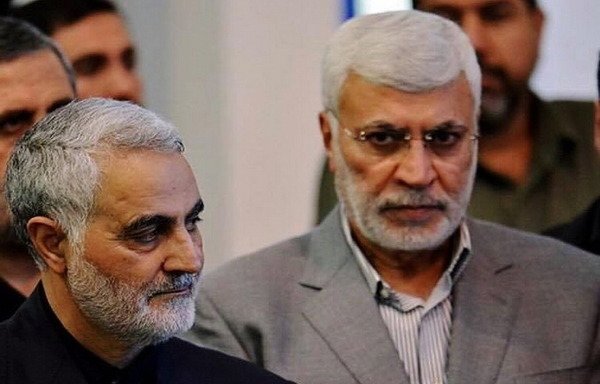
Palestinian factions on Friday firmly denounced assassination of Quds Force Commander General Qassem Suleimani and Iraq’s Hashd Shaabi deputy commander Abu Mahdi AL-Muhandis in a US strike on Baghdad airport early Friday.
Islamic Jihad resistance movement offered condolences to Supreme Leader of the Islamic Revolution in Iran Imam Sayyed Ali Khamenei, and Iraqi leadership on the martyrdom of the two commanders.
“The (Muslim) nation raises its flag against this aggression, announcing that there is no retreat in the path towards liberation,” the Islamic Jihad said in a statement, stressing on the unity of the Axis of Resistance.
“Suleimani was targeted as he was on the frontlines of the confrontation.”
For its part, Spokesman of Al-Quds Brigades, the military wing of Islamic Jihad, praised Suleimani noting that he played a major role throughout two decades in offering military support to the Palestinian resistance.
“Axis of Resistance won’t be defeated and will grow more powerful in face of the Zio-American scheme,” Abu Hamza, Al-Quds Brigades spokesman said.
Meanwhile, Hamas offered condolences to both Iranian and Iraqi leaderships over the martyrdom of Suleimani and Al-Muhandis.
In a statement, Hamas said Suleimani was one of the prominent Iranian military commanders who offered different kinds of support to the Palestinian resistance.
The Palestinian group held the US fully responsible for the bloodshed in the region, denouncing Washington’s “arrogance” in sowing discord and sedition in the region.
The Popular Front for the Liberation of Palestine, meanwhile, noted that the assassination of Suleimani and Al-Muhandis requires an “all-out retaliation.”
Trump’s Fatal Mistake in Iraq and Beginning of End for US Occupation
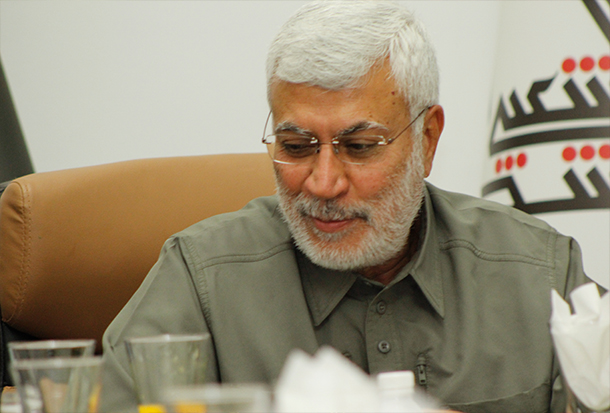
Iraqi PMU commander Abu Mahdi al-Muhandis in Baghdad following their defeat of ISIS in 2017 (Photo: Patrick Henningsen 2017©)
By Patrick Henningsen | 21st Century Wire | January 3, 2020
The United States may have just worn out its welcome in Iraq. Whatever comes next will be laid at the feet of the Trump Presidency.
As a result of a series of disastrous moves by US central command, the region now faces the very real prospect of another multinational conflagration in the Middle East, which could include a direct military confrontation between the US and Iran.
How It Began
This past Sunday December 29th, just before the New Year rang in, President Donald Trump gave the order to bomb an Iraqi military base, killing and wounding a number of Iraqi military personnel, including Iraqi Army officers, Iraqi police, as well as soldiers belonging to the People’s Mobilization Unit (PMUs). US Air Force F-15E fighters struck five targets located in Iraq and along the Syria-Iraq border, all said to be controlled by an ‘Iranian-backed paramilitary group,’ according to the Pentagon.
According to Washington defense spokespersons, Sunday’s US airstrike was supposedly in response to a rocket attack which struck the “K1” joint US-Iraqi military base located in Kirkuk in north Iraq, which happened just two days before on Friday December 27th, killing one U.S. defense contractor, and one Iraqi police officer, as well as wounding a further 4 US defense contractors, and 3 Iraqi Army officers. US officials claim they had intelligence which confirmed that Friday’s rocket attack near Kirkuk was the work of “Iranian militia,” therefore holding the Islamic Republic of Iran responsible. However, no evidence was presented by the US in relation to the claim.
In response to the US bombing its facility on Sunday, Iraqi protesters, including friends and family of fallen soldiers killed in the US bombing raid, and led by Iraqi PMU members and their supporters, stormed the outer perimeter of the US embassy in Baghdad located inside the infamous US-controlled Green Zone. Many US embassy staff were evacuated or airlifted from the compound, and an additional detachment of 100 US Marines were called in as reinforcements, along with an additional 750 troops from fast battalion 82nd Airborne Division sent to Kuwait preparing to go into Iraq. US combat helicopters circled overhead, as well as around the entire Green Zone and over civilians neighborhoods in Baghdad. This move was not received well by the Iraqi government who forbid such US military patrols as part of their status of forces agreement for the country. The siege lasted until News Years Eve on December 31st, before the Iraqi Army and Iraqi Mukhabarat internal security eventually arrived to disperse the angry crowds.
Following the embarrassing scenes at the US embassy on New Years Eve, Washington promised retribution. What followed could very well be the trigger for a renewed war in Iraq, and which may likely result in US forces and personnel eventually being asked (or forced) to leave the country. On Wednesday January 2, 2020, the US launched another airstrike, targeting an access road leading to Baghdad International Airport, and reportedly killed Iranian Quds Force leader, General Qasem Soleimani, as well as senior Iraqi PMU commander, Abu Mahdi al-Muhandis, according to reports by Iraqi TV.
Both Soleimani and al-Muhandis are considered to be among Iran and Iraq’s most revered military figures, and their targeted assassinations by the US government will certainly be viewed as an act of war by a large portion of the Iraqi and Iranian populations, as well as their respective military and security apparatuses. In particular, al-Muhandis is regarded by many a hero in Iraqi’s hard-fought victory over ISIS in 2017.
Iraqi cabinet officials and parliamentarians have been meeting over the last 48 hours to discuss reviewing the status of their cooperation agreement with the United States which allows for intelligence sharing and US training and technical assistance for Iraqi military divisions. Whether this escalates into officials calling for the US military and its 20,000 troops and defense personnel to pack up and leave the country – remains to be seen.
It should go without saying that this provocative military action by the United States means that US troops and personnel may no longer be safe operating in Iraq.
Questioning US ‘Intelligence’
In order to grasp the full gravity of what the Trump Administration has just done, it’s essential to consider these events in historical context, as the latest reckless move in a long line of US failures in Iraq.
According to veteran Middle East correspondent Elijah Magnier, “The United States of America has fallen into the trap of its own disinformation policy, as exemplified by the work of one of its leading strategic study centres, a neocon think tank promoting war on Iran.”
Magnier adds, “Analysts’ wishful thinking overwhelmed their sense of reality, notably the possibility of realities invisible to them. They fell into the same trap of misinformation and ignorance that has shaped western opinion since the occupation of Iraq in 2003. The invasion of Iraq was justified by the presence of ‘Weapons of Mass Destruction’ which never existed.”
According to Iraqi officials, at the time of the initial rocket attack on Dec 27th, it was not clear who had actually fired on the K1 joint base. Regardless, a number of data points strongly indicate that the US had already decided who it would be targeting.
According to the New York Times, “President Trump was briefed by Defense Department leaders on Saturday, and allowed the strikes to proceed. Senior officials including Defense Secretary Mark T. Esper and Secretary of State Mike Pompeo traveled to Mr. Trump’s Mar-a-Lago resort in Florida on Sunday for discussions with the president, American officials said.”
The US had already taken the decision to bomb Iraq before any joint investigation could be conducted between the Iraqi Ministry of Defense and the US authorities. Soon after the Mar-a-lago meeting, Secretary of Defense Mark Esper called acting Iraqi Prime Minister Adil Abdul-Mahdi to inform him the US was not interested in working with Baghdad to find out what happened and who had fired the rockets. Esper told the Iraqi PM that Washington had already received “intelligence” from its trusted sources which said the rocket attack was carried out by a branch of the Iraqi PMUs known as Katiab Hezbollah (no relation to Lebanon’s Hezbollah defense force). It should be noted that these PMU brigades are composed of Iraqi citizens who serve under the official Iraqi military command headquartered in Baghdad. Because this PMU division’s membership is composed of Shia Muslims, United States officials and the US mainstream media have taken the liberty of labeling them as “Iranian militia” – a blatant falsehood, but one which has been disseminated by US officials in order to infer these are somehow ‘Iranian proxies’ and proceeded to pin the alleged responsibility of the initial rocket attack on Iran, in effect, justifying the heavy-handed US retaliation on Sunday, and Washington’s targeted assassinations of Qasem Soleimani, and Abu Mahdi al-Muhandis on January 2nd.
To date, US officials have provided no evidence to support their claim that the rocket attack on Dec 27th was carried out by Katiab Hezbollah PMUs, nor has the US given any specifics as to the provenance of its ‘intelligence’ which attributed blame to PMUs. If this was indeed a rush to judgement, it would not be the first time the US has perpetrated an act of war against a sovereign state based on faulty, and less than credible intelligence. The recent OPCW leaks have demonstrated beyond any doubt that the US-led airstrikes against Syria in April of 2018 were based on misinformation of a supposed ‘chemical attack’ just days earlier in Douma, Syria on April 7, 2018.
Upon closer review, it’s now clear that what the US claimed it was doing, does not actually match the actions which it had undertaken on Dec 29th. In addition, the US bombing raid on Dec 29th will also have aided ISIS. Magnier explains the obvious US disconnect here:
Mr Abdel Mahdi asked Esper if the US has “proof against Kataeb Hezbollah to share so Iraq can arrest those responsible for the attack on K1”. No response: Esper told Abdel Mahdi that the US was “well-informed” and that the attack would take place “in a few hours”.
In less than half an hour, US jets bombed five Iraqi security forces’ positions deployed along the Iraqi-Syrian borders, in the zone of Akashat, 538 kilometres from the K1 military base (that had been bombed by perpetrators still unknown). The US announced the attack but omitted the fact that in these positions there were not only Kataeb Hezbollah but also Iraqi Army and Federal Police officers. Most victims of the US attack were Iraqi army and police officers. Only 9 officers of Kataeb Hezbollah – who joined the Iraqi Security Forces in 2017 – were killed. These five positions had the task of intercepting and hunting down ISIS and preventing the group’s militants from crossing the borders from the Anbar desert. The closest city to these bombed positions is al-Qaem, 150 km away.
Interestingly, this is not the first time that the US and allies have targeted an Iraqi PMU facility and tried to label it as “Iranian.” Back in September, 21WIRE reported how Israel and Saudi Arabia were reported to have launched supposed ‘retaliatory’ airstrikes against “pro-Iranian militias” stationed along the border between Syria and Iraq. This was reported by the Jerusalem Post at the time:
“Saudis, Israel attack pro-Iran militias on Syria-Iraq border,” and adding that,“Saudi fighter jets have been spotted along with other fighter jets that have attacked facilities and positions belonging to Iranian militias.”
21WIRE also noted how the Jerusalem Post had compiled their report citing multiple sources, including pieces of information from the Independent Arabia, Lebanese outlet Al Mayadeen and the Syrian Observatory for Human Rights. They reported air strikes hitting targets over the course of that week, killing 31, after hitting what they called “Iranian-backed” Iraqi Hash’d Shaabi (PMUs) positions along the Iraqi-Syria border.
“On Wednesday, five people were killed and another nine were wounded in an airstrike carried out by unidentified aircraft that targeted positions of the Iranian-backed Iraqi Popular Mobilization Forces militia in Albukamal, according to Sky News Arabia.”
Why this is crucial, is because it demonstrates previous form by Israel and Saudi Arabia – against near identical targets which the US bombed on Dec 29. It stands to reason then, that the ‘intelligence’ source for both attacks, on Sept 19th, and Dec 29th, seem to be related, deriving from either Israel or Saudi Arabia – both of which are heavily biased against Iran, and viewed it as an existential threat to their own regional geopolitical and military hegemony. In the case of Israel, it has played a visible role in directing US policy regarding Iran since the onset of the Trump Administration. It was Israeli PM Benjamin Netanyahu who boasted about his role in convincing the White House to unilaterally withdrawal from the JCPOA Iran nuclear deal in May 2018.
It’s also important to note with the US bombing raid on Sunday Dec 29th, the Iraqi bases hit along the Syrian-Iraqi border are located approximately 540km from Kirkuk, far away from where the US claim that Kaitab Hezbollah PMUs had fired the initial rocket attack on Dec 27th – which means that those US targets played no role in Friday’s rocket attack on K1, and more likely had already been selected in advance of Dec 27th, and the US was simply waiting for the right ‘incident’ to green-light a military attack on what it claims to be “Iranian” military targets.
Again, the fact that the US insists on mislabeling its supposed enemy means that nothing productive can come out of the latest series of events – unless Washington considers another full-scale war in Iraq a productive endeavor – a proposition which many would not find that far-flung considering America’s tawdry record in the region.
Iraqi PMUs Defeated ISIS in 2017
In order to properly understand the Iraqi military and PMU’s reaction to this ham-fisted US attack on Iraqi soil, it is important to understand who are the Iraqi People’s Mobilization Units (PMUs), aka the Hash’d al-Shabbi, or ‘Hasheed’ for short. This is the new national militia of Iraq and are the very same soldiers who have fought and died against ISIS for ultimately defeating their terrorist occupation in late 2017. The PMUs were formed in response to the emergence of ISIS and the fall of Mosul in June 2014. The Grand Ayatollah Sistani issued a fatwa in the summer of 2014, which called on all able-bodied men of fighting age to form a coalition of national militias, roughly 130,000 strong, to fight back against ISIS after it had routed the Iraq Army during ISIS’s summer blitzkrieg which saw several key cities taken by the terrorist army, as they headed dangerously close to the capital city Baghdad.
Based on the rhetoric and media coverage we are seeing this week, it’s painfully obvious that few, if any, within the ranks of American foreign policy ‘experts’ and national security journalists, are really aware of this reality on the ground in Iraq. It is widely acknowledged in Iraq, and in the region, that the PMUs played the decisive role in defeating ISIS and securing liberated communities in the latter stages of the country’s terrorist ordeal. It’s important to note also that tens of thousands of Iraqis, including Iraqi Army, Police, Iraqi civilians, and Iraqi PMUs – including these very same PMU units who the US has killed this week – have all died, sacrificing their lives for their country in the fight against the foreign-backed terrorist menace. For the United States political leadership and mainstream media to crassly label them as “Iranian militias,” is to rob Iraqis of an important national victory and strip them of their agency.
As we can now see from the incredible scenes at the US embassy on Tuesday, Washington’s ignorance of the reality on the ground in Iraq has come at a heavy price.
Since its opening in 2008, the new US embassy has not faced any serious challenge to its structural integrity. It is not just any embassy either – it is the world’s largest and most expensive embassy ever constructed, covering a total of 104 acres which is roughly the size of Vatican City, and houses 5,000 embassy staff, military and intelligence personnel. Iraqi protesters breached its outer security walls and main gate, and proceeded to lay waste the embassy’s periphery structures, before pinning down US Marines guarding the compound inside the foyer of one of the outer reception buildings. Now that this facility has been compromised, it can no longer be relied on as the ‘fortress America’ and forward operating station it has been for the past decade.
Trump and Washington’s Fundamental Error
Another important takeaway from all of this is for Americans to realize that Iran posed no national security threat to the United States, but Washington’s insistence on framing every incident in the region as “the work of the Iranian regime” means that forces in Washington desperately want war, and now they can’t hide their agenda. This drive is most certainly being spurred on by US allies in the region, Israel and Saudi Arabia. From an imperialist standpoint, the US and its allies do benefit geopolitically by keeping Iraq divided and weak – ensuring that it can never get back on its feet economically or politically to become influential in the region, and can never become close partners with its two most important neighbors Syria and Iran.
For Washington and Tel Aviv, the road to Tehran has always been through Baghdad, only we’re not in 2003 anymore, and the Middle East playing field has changed dramatically since that time, mostly as a direct consequence of US military and proxy aggression in the region.
Besides this, Iraqis are well aware by now that it is the United States and not Iran, who has already ruined their country for generations to come.
If Washington continues down this path, it could also lead to Trump’s downfall politically.
Unfortunately, Iraq is set again to become the pitch for another ugly geopolitical grudge match between the West and Iran. By showing its ugly hand, Washington has left its adversaries with little choice but to fight back this time.
***
Author Patrick Henningsen is an American writer and global affairs analyst and founder of independent news and analysis site 21st Century Wire, and is host of the SUNDAY WIRE weekly radio show broadcast globally over the Alternate Current Radio Network (ACR). He has written for a number of international publications and has done extensive on-the-ground reporting in the Middle East including work in Syria and Iraq. See his archive here.
Featured Video
Trita Parsi: Middle East Unraveling — Are We on the Path to World War?
or go to
Aletho News Archives – Video-Images
From the Archives
Why Saudi Ties to 9/11 Mean U.S. Ties to 9/11
By Kevin Ryan | Dig Within | September 27, 2015
Media interest in Saudi Arabian connections to the crimes of 9/11 has centered on calls for the release of the 28 missing pages from the Joint Congressional Inquiry’s report. However, those calls focus on the question of hijacker financing and omit the most interesting links between the 9/11 attacks and Saudi Arabia—links that implicate powerful people in the United States. Here are twenty examples. … continue
Blog Roll
 Aletho News
- Integrity Initiative: UK-funded network framed dissent as Russian disinformation for years
- ‘We don’t seek permission to defend our country’: Snippets from President Pezeshkian’s UNGA address
- NATO chief wants Europeans to fight American wars [for Israel]
- German chemicals giant reveals details of downsizing
- Refaat Al-Areer Was The Canary In The Coal Mine In Israel’s War On The Truth
- Israeli election committee bars candidate from Knesset race over Gaza war opposition
- French-Lebanese man files war crimes complaint over Israeli attacks
- Mahan Air Flight Lands in China Despite US Threat against Iranian Airlines
- US eyes $10bn fund to rebuild war-battered Gulf infrastructure
- Trump meets Rodríguez near Maduro’s prison as Venezuela’s oil flows to US
- If Americans Knew
- Caught on Tape: AIPAC CEO Boasted of Controlling Trump’s National Security Officials
- Why Hamas Attacked Israel in October 2023 – Israeli professor Ilan Pappé
- They see them, then kill them: Israeli quadcopters track, deliberately target civilians in Gaza
- Winter could turn Gaza’s treacherous, war-damaged buildings into deathtraps
- Majority of Democratic Voters Want to Prosecute Both Biden and Trump Administration Officials Over Gaza
- As Gaza languishes, world leaders gather at the UN – Daily Update
- Sanctions are collective punishment: immoral and self-defeating
- Phosphorus Munitions Fired by Israel Burn Groves, Orchards in Southern Lebanon
- Israel Carries Out New Ceasefire Violations Across Gaza
- AI – Emphasis on the ‘I’: Israel Is Funding AI Chatbot Propaganda
- No Tricks Zone
- New Study: Earth And Venus Surface Warmth Largely Explained By Convection And Lapse Rate, Not CO2 Or Radiation
- 2025 Nature Paper Claiming Worsening Global Drought Gets RETRACTED …Heavily Flawed
- New Study: ‘Global Drought Shows No Detectable Recent Acceleration Under Climate Warming’
- Economic Masterminds: German Socialists Suggest Taxing Productivity Gains Stemming From Using AI
- The South China Sea Has Not Been Cooperating With The Climate Change Narrative
- Energy Crisis: Germany Enters Heating Season With Historically Low Gas Reserve Fill Levels
- New Study: The Antarctic Ice Sheet Gained Mass From 2020-2024 Due To Staggering Snow And Ice Accumulation
- Study: Ocean Heating Rates From Thousands Of Years Ago ‘Dwarf’ Modern Ocean Heating Rates
- Climate Extremists Target, Attack Large-Scale Power Grid Infrastructure In Germany!
- New Study: Antarctic Ice Melt Has Contributed Less Than 1 Centimeter To Sea Level Rise In The Last 30 Years

