The US Meddles In Syria’s Constitutional Reform Process By Threatening Sanctions
By Andrew KORYBKO – Oriental Review – 18/10/2018
The US is threatening to further sanction Syria if Damascus doesn’t make progress in America’s preferred direction during the ongoing constitutional reform process.
The US special representative for Syria James Jeffrey conveyed this intention on the sidelines of the UN General Assembly after his country and a handful of others called upon Staffan de Mistura to report back to them by the end of this month about which of the 50 people he’s supposed to select to participate in Syria’s constitutional committee.
Prior agreements on the creation of this important political mechanism stipulate that the delegates will be chosen from members of the pro-government, domestic opposition, and external opposition factions, and while this is admittedly an ultra-sensitive process, the US and its allies feel that Syria has been dragging its heels on it for far too long and that’s why they want to crank up the pressure on Damascus by threatening more sanctions against it.
The elephant in the room is the issue of so-called “decentralization”, which appears to be the only pragmatic political solution for dealing with the Kurdish-controlled agriculturally and energy-rich northeastern third of the country that’s reported to host around 20 American bases but which President Assad has sworn will return to the central fold by one way or another.
This is becoming ever less realistic to achieve as Russia signaled that it won’t engage in the nuclear brinkmanship that would be needed for supporting Syria’s otherwise futile efforts to evict the US and make this happen, hence why a “compromise” is the only peaceful way for resolving this issue. The US also knows that its Russian, Chinese, and Iranian rivals lack the money needed for rebuilding the liberated areas of Syria, which is why it’s weaponizing reconstruction aid for political purposes.
Pressing home the point of what he wants to see achieved, Jeffrey also hinted at imposing a “no-fly zone” over the Kurdish-controlled northeast and replicating the state of affairs that prevailed in Iraqi Kurdistan from 1991-2003 during which time the US carried out occasional airstrikes to prevent the central government from reasserting its sovereignty in this region. Since the de-facto “partition” of Syria is already a fait accompli at this point, the next goal of the US and its allies is to compete with its rivals over the reconstruction of their respective “spheres of influence” in the country.
Despite it being comparatively easier for the geographically smaller, less populated, and more resource-rich northeast to recover a lot quicker than the rest of Syria, the US hopes that this can serve as a “demonstration effect” for the rest of the country and subsequently be manipulated through infowars and perception management tactics to somehow “delegitimize” the predictably slower efforts of Damascus and its allies in this regard.
The post presented is the partial transcript of the CONTEXT COUNTDOWN radio program on Sputnik News, aired on Friday Oct 12, 2018
US Will Walk Out of Nuke Treaty Again if Iran Agrees to New Deal – Scholar
Sputnik – 17.10.2018
Six months after Donald Trump announced the US withdrawal from the 2015 nuclear deal with Iran, Washington is proposing to sign a new agreement with Tehran.
The US is ready to give “a whole lot” to sign a new treaty with Iran that would take into account all of Washington’s concerns, including Tehran’s missile program, the US Special Representative for Iran Brian Hook said.
It is not the first time that Washington has invited Iran to conclude a new treaty since it walked out of the 2015 nuclear deal with Tehran.
Tehran insists that it won’t ink a new agreement with the US after Washington’s mistake of withdrawing from the Joint Comprehensive Plan of Action (JCPOA).
In his address to the 73rd session of the UN General Assembly in September, Iranian President Hassan Rouhani said that Tehran would agree to negotiate with the US but only if Washington changed its attitude towards the Islamic Republic.
In an interview with Sputnik Persian, Iranian political observer Ali Reza Rezakhah and a Tehran University expert in US affairs, Mohammad Marandi, spoke about the terms on which Tehran would be ready to sign a new accord with Washington.
According to Dr. Rezakhah, signing a new a new agreement with the US made no sense as Washington’s departure from the JCPOA showed everyone that it can’t be trusted.
“Statements alone are not enough, because the US has repeatedly declared its intention of concluding a new treaty with Iran. Singing a new treaty with the United States makes no sense. This is logical too because one can conclude a new agreement only with someone who fulfills his obligations. This means that we need to be confident about what the United States is saying,” Reza Rezakhah said.
He added that there weren’t any guarantees that the US would fulfill its obligations under a new treaty.
“It unilaterally withdrew from the JCPOA treaty, violating all its international obligations. Neither Iran nor any other country can agree to sign a treaty with the United States, since they (the United States) do not honor their obligations. When speaking at the UN General Assembly, President Hassan Rouhani stated that Iran is ready to negotiate, provided that the United States takes the first step by adhering to the JCPOA.”
Mohammad Marandi flatly ruled out any new agreement with the US.
“It will not happen. Iran will not sign a new agreement with the United States or re-negotiate with it. With the JCPOA in place, what new agreement can we talk about? If the Americans do not understand this, then they know the Iranians even worse than we could have imagined.”
According to him, by violating the JCPOA the US proved that it can’t live up to its commitments.
“Tomorrow we will conclude an agreement with the United States, and they will walk out of it again. This defies logic,” Dr. Marandi argued.
“Even if Iran agrees to negotiate (a new agreement), the United States will take this as a sign of its pressure having worked and will ramp it up even more,” Marandi continued.
Iran would agree to negotiate with the US only if Washington returns to the JCPOA and negotiates within its framework,” Mohammad Marandi concluded.
In May, President Donald Trump said he was withdrawing the US from the 2015 nuclear agreement with Tehran and promised to impose the “highest level” of sanctions on the country’s energy petrochemical and financial sectors despite objections from Europe as well as Russia and China — the other parties to the deal, known as the Joint Comprehensive Plan of Action (JCPOA).
Washington has also warned countries to stop buying Iranian oil starting from November 4 and threatened to use sanctions against those who do not.
The first wave of US sanctions on Iran took effect on August 6, targeting the country’s automotive sector, trade in gold, and other vital metals.
The remaining sanctions will come into effect on November 4, targeting Tehran’s energy sector, petroleum-based transactions, and transactions with Iran’s Central Bank.
US-Saudi alliance in twilight zone
By M. K. BHADRAKUMAR | Indian Punchline | October 15, 2018
President Donald Trump’s remarks about the Jamal Khashoggi affair in the interview with CBS 60 Minutes turned out to be nothing earthshaking. Basically, he said three things: a) Son-in-law Jared Kushner spoke to Crown Prince but latter denied; b) Saudi culpability is yet to be established and if it gets proven, US will be “very upset and angry” and “there will be severe punishment”; and, c) Sanctioning Saudi Arabia is problematic, given deep business interests and “There are other ways of punishing” Saudi Arabia – if it indeed comes to that.
Trump didn’t elaborate what could be the “other ways”. But Saudi Arabia has posted the warning that there will be dire consequences – “any action against the kingdom will be responded to with greater reaction” – if the US dared to proceed on any such track of “economic sanctions, using political pressure or repeating false accusations.” Interestingly, Saudis alluded to “the support of allies” in countering the “organized campaign” against it.
An influential Saudi establishment figure subsequently dilated on the likely retaliation in the event of US sanctions, claiming Riyadh has drawn up a list of 30 “potential measures”:
- Saudis will not accede to Trump’s requests to boost oil production (to make up for shortfall due to Iran sanction) and instead let oil prices rise to “$100, or $200, or even double that figure.”
- Saudis will stop using dollars for oil trade and may instead switch to a “different currency, Chinese yuan, perhaps.”
- Saudi-Iranian rapprochement may ensue, with Russian help.
- Saudis may end intelligence cooperation over terrorist threat to western countries.
- Saudis may turn to Russia and China to source weapons.
- Saudis may allow a Russian base in the northwestern province of Tabuk situated “in the heated four corners of Syria, Israel, Lebanon and Iraq.”
- Saudis will revive links with Hamas and Hezbollah.
- Saudi will pull out of investments in the US, estimated at $800 billion.
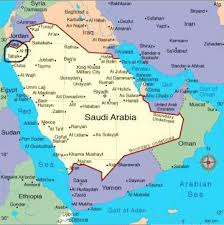
In sum, Saudi Arabia will make a strategic shift toward the Russia-China-Iran axis. In immediate terms, Saudis can hit the US hard by leveraging its status as energy superpower. A dramatic jump in oil prices will boost Saudi income but create difficulties for oil consuming countries, especially EU, China or India. It will boost Russia’s income and make western sanctions even more ineffectual. Again, it will undermine the US’ game plan to bring down Iranian economy to its knees.
On the other hand, any Saudi move to dump dollar in oil trade may significantly galvanise the nascent moves to dethrone dollar as world currency, but its impact can only be in a medium-term scenario.
In geopolitical terms, Saudi Arabia has been a pivotal ally of the US during the past 7 decades. A breakdown in the US-Saudi alliance will unravel the entire American strategy in the Middle East. A US retrenchment from the region may become inevitable.
On the other hand, the ascendancy of Russian and Chinese influence will hurt western interests. Indeed, Israel’s overall security position gets weakened, too.
The bottom line, of course, is that Iran’s rise as regional power will become irreversible – although Iran-Saudi rapprochement is easier said than done. Interestingly, the Iranian reaction to the Khashoggi affair echoes how Tehran took advantage of the overthrow of Saddam Hussein in Iraq.
How far will Russia (and China) want to get entangled in the Saudi standoff with the US? Moscow and Beijing are seeking better relations with the US and may hope that a chastened America would make a more reasonable interlocutor. After all, they’d assess that a US retrenchment in the Middle East will inexorably bring the curtain down on America’s global hegemony. Which in turn will accelerate the trends toward multipolarity. It is improbable that Russia or China will join hands with Saudi Arabia to destabilize the world economy.
The Saudi prognosis that the “if Washington imposes sanctions on Riyadh, it will stab its own economy to death” is plain hyperbole. Then, there is a fundamental contradiction insofar as the survival of the archaic Saudi regime is critically dependent on American support. Trump wasn’t exaggerating when he recently said that if the US support is withdrawn, Saudi regime would pack up in two weeks. There are historical forces swirling around Saudi Arabia, which have been kept at bay due to the sheer US presence. For example, the eastern Shi’te provinces of Saudi Arabia are restive; the Houthis of Yemen will seek revenge.
Above all, the Saudi regime has been exporting radical forces as geopolitical tool for the Americans. These forces may come to haunt Saudi internal security. The Muslim Brotherhood, al-Qaeda, etc. are waiting in the wings. Islamism, paradoxically, poses an existential threat to the Saudi regime.
Succinctly put, the sins of the past will come to wreak vengeance on the Saudi regime with a demonic fury sooner than one may think once America’s protective shield is withdrawn. In fact, the possibility of the disintegration of the Kingdom of Saudi Arabia, which is after all an arbitrary creation of British imperialism in the early 20th century, is very real.
What complicates the situation today is that the US is a badly divided house and the Saudis are used to dealing with the Washington establishment in an idiom that is no longer in vogue. Left to himself, Trump would have handled the Khashoggi affair much as his predecessors in the White House might have done. But that is not going to be possible with the Deep State and the US Congress arm-twisting him. On the other hand, Crown Prince Mohammed bin Salman represents a new type of Saudi leadership that is not shy of a faceoff and seeks a reset of the relationship with the US.
Russia says Iran’s presence in Syria none of Israel’s business
Press TV – October 12, 2018
A senior Russian official has dismissed the Israeli regime’s demand that Iran be forced out of Syria, saying that the issue is none of Tel Aviv’s business as it is Syria’s sovereign right to authorize Iranian forces on its soil.
“Syria is a member of the United Nations,” Russian Deputy Foreign Minister Mikhail Bogdanov said, adding that the Arab country “has equal rights” over its self-determination with Russia, the US and any other member of the UN.
“This is a sovereign country led by a legitimate government. It can agree on cooperation with any other country, including Iran, Russia, Israel,” he noted in an interview with the Israeli TV channel i24NEWS released Thursday night.
“That’s Syria’s sovereign right, and it’s not the business of a third party to intervene in these subjects of politics or policy of a sovereign country,” said Bogdanov, who is also President Vladimir Putin’s special envoy for the Middle East.
He went on to say that Moscow had already explained to Israel and the US that “this is a sovereign decision for Syria who should be on their territory.”
“They asked us and the Iranians to be there. The Iranians have said repeatedly on many levels that Syria asked them to help them in the fight against terrorists, and when Mr. Assad tells them that their mission is accomplished and they are no longer needed, they will leave Syria, just like us.”
Iran has been offering military advisory support to Syria at the request of the Damascus government, enabling its army to speed up its gains on various fronts against terror outfits.
However, over the past few years, Israel has frequently attacked military targets inside Syria in an attempt to prop up terrorist groups that have been suffering defeats at the hands of Syrian government forces.
In the latest Israeli airstrikes on Syria a few weeks ago, a Russian Il-20 plane was mistakenly shot down by Syrian air defenses in Latakia Province, northwestern Syria. The Syrian S-200 missile defense system was responding to a wave of strikes by four Israeli warplanes.
Moscow blamed Tel Aviv for the incident, which killed all 15 people on board, saying the Israeli warplanes had deliberately “created a dangerous situation” that led to the crash.
Shortly after the attack, Russia delivered a modern version of its S-300 missile defense system to Syria in a bid to prevent similar incidents in the future.
Plane crash changed rules of the game
In his interview with i24NEWS, Bogdanov underlined that the Israeli pilots’ fault in that incident totally changed the rules of the game.
“The rules of the game were violated when Israeli pilots used a Russian aircraft for cover, knowing how it threatened the Russian crew,” he noted.
“You can imagine what would have happened if 15 Israeli officers had been killed through our fault,” he said.
Netanyahu’s UN theatricals on Iran nuclear site
Elsewhere in his remarks, Bogdanov mocked Israeli Prime Minister Benjamin Netanyahu’s theatrical performance at the United Nations, in which he used placards with satellite pictures to make claims about a secret atomic warehouse in Tehran.
“It’s naive to think that only one country and only one secret service knows something that nobody else knows,” Bogdanov told i24NEWS, refuting allegations leveled by the Israeli PM about an atomic warehouse in Turquzabad, a village close to Tehran.
“It’s the work of the International Atomic Energy Agency (IAEA), which is supposed to check this. It is a professional and serious organisation. It has authority and legitimacy,” he said, adding that the IAEA can inspect any site at any time under the agreement it has with Iran.
“To tell the whole world they have something, and show pictures, maybe some people like this and it helps him, maybe it’s intended to score points and for internal consumption,” Bogdanov noted.
“Speaking seriously… Israel should have taken a different approach and not worked with journalists and with what we call ‘megaphone diplomacy’,” he noted.
Benjamin Netanyahu Is No Friend to America
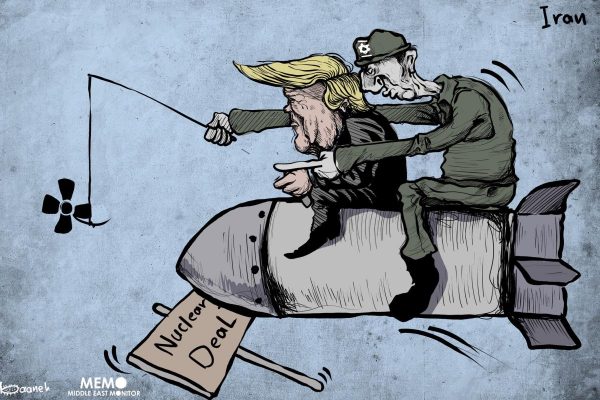
By Scott Ritter | TruthDig | October 4, 2018
Benjamin Netanyahu is no stranger to the American spotlight. A career Israeli politician who attended school in the United States, he specializes in the kind of rhetoric that his American counterparts revel in—a kind of narcissism that’s more used car salesman than educator.
Netanyahu specializes in selling danger to the American people. This is an art he has practiced on numerous occasions, whether it be at the gatherings of the American Israel Public Affairs Committee (AIPAC), his many appearances before the U.S. Congress, at televised events or during the general debate in the United Nations General Assembly, an annual gathering of global leaders and diplomats where each nation’s representative is provided the opportunity to address counterparts and the world on issues he or she deems to be of particular import.
Bibi (as he is known, affectionately or otherwise) delivered his latest address to the General Assembly on Sept. 27. Like others he had delivered previously, this one was a tour de force of angst, fear and anger with a nearly singular focus on the issue that has seized Netanyahu for more than two decades—Iran and its alleged nuclear weapons program.
In his 1995 campaign autobiography, “Fighting Terrorism,” Netanyahu, preparing to run for the office of prime minister of Israel, asserted that Iran was “three to five years” away from having a nuclear bomb. Bibi repeated this claim several times over the next 20-plus years, apparently unconcerned by the fact that his self-appointed timetable kept coming and going without the Iranian nuclear threat manifesting itself.
In September 2002, when he briefly found himself a private citizen, Netanyahu shifted his aim to Iraq, which he confidently asserted had a nuclear weapons program as he touted the benefits of removing Saddam Hussein from power—this during so-called “expert” testimony before the U.S. Congress. He was wrong on both counts, a fact that seems to slip the minds of those who continue to assign him a semblance of credibility given his proximity to Israel’s vaunted intelligence service.
As someone who spent four years (from 1994 to 1998) working closely with Israel’s intelligence service to uncover the truth about Iraq’s weapons of mass destruction programs, I can attest that Israeli intelligence is better than most at what it does, but far from perfect. For every good lead the Israelis delivered to the United Nations Special Commission (UNSCOM), for which I was working at the time, they provided a dozen or more that did not pan out. Their detailed analysis about the alleged organization and structure of Iraq’s covert nuclear program proved to be far removed from the truth. They got names wrong, affiliations wrong, locations wrong—in short, the Israelis made the exact same mistakes as any other intelligence service.
Iraq was a denied area, made less so by the presence of UNSCOM weapons inspectors like me who had unprecedented access to the most sensitive national security sites in the country. And still the Israelis got it wrong. They did so not because of “bad intelligence,” but because they, like the CIA and other intelligence agencies around the world, were privy to the vast amount of information and data collected by UNSCOM inspectors about the true state of Iraq’s proscribed weapons and related programs. They suffered from the same lack of imagination as did the others that postulated a nuclear-armed Iraq circa 2002, unwilling to consider the possibility that Saddam Hussein might be telling the truth about not having retained any weapons and related capabilities prohibited by the Security Council resolution. This same lack of imagination appears to fuel Netanyahu’s increasingly wild claims about Iran.
It is no secret that Netanyahu has opposed the Iran nuclear deal—officially known as the Joint Comprehensive Program of Action, or JCPOA—since the possibility of a negotiated solution to the stand-off between Iran and the rest of the world was put on the table by the Obama administration in 2012. He lobbied hard against the agreement, interjecting himself in American domestic politics in an unprecedented fashion to undermine the negotiations.
When Donald Trump won the 2016 U.S. presidential election, Netanyahu found a kindred spirit whose intellectual curiosity would not permit any effective challenge to the narrative constructed by the Israeli prime minister. And when Trump faced resistance from his secretary of state, Rex Tillerson, and his national security adviser, H.R. McMaster, he simply replaced them with more compliant persons, Mike Pompeo and John Bolton respectively.
Trump’s decision to withdraw from the JCPOA was facilitated not by any supporting brief from the U.S. intelligence community, which held fast to the assessment that Iran was fully compliant with its obligations under the JCPOA, but rather by intel provided by Israel that featured wild claims of an operation in the heart of Tehran; hundreds of thousands of documents purported to outline a nuclear program that Iran insisted did not exist. In April 2018, Bibi unveiled the existence of what he termed Iran’s “Atomic Archive” as he detailed some of its contents, allegedly recovered during an Israeli operation.
While Netanyahu’s dramatic presentation proved to be enough to help push Trump into withdrawing from the JCPOA the following month, it failed to convince the rest of the world that Iran was operating in bad faith when it came to declaring the totality of its nuclear program. One of the main reasons for this is that the tale put forward by Bibi simply didn’t add up. Documents he presented as being derived from the newly captured archive were recognized by officials from the International Atomic Energy Agency (IAEA)—which, along with supporting governments, is responsible for implementing the JCPOA—as matching those presented to the agency more than a decade ago. That cache of documents was allegedly recovered from a laptop computer sourced to an Iranian opposition group by Israeli intelligence.
At best, there is nothing new in these materials, and all the underlying issues alleged to have been “exposed” had already been discussed and rectified by the IAEA and Iran prior to the rectification of the JCPOA. At worst, Netanyahu was lying about the Israeli intelligence operation, and simply recycling old material—which may have been manufactured by Israel to begin with back in 2004—simply to provide political cover for Donald Trump.
Netanyahu spent much of his Sept. 27 address before the General Assembly detailing an alleged “Atomic Warehouse,” supposedly uncovered by Israeli intelligence in the heart of Tehran. As was the case with the “Atomic Archive” facility, Netanyahu made grand claims about Iranian malfeasance: The site contained “15 ship containers full of nuclear-related equipment and material,” along with “15 kilograms of radioactive material” that Iran allegedly evacuated from the site to evade detection. (Netanyahu seems to have overlooked the fact that the U.S. Department of Energy, prior to the JCPOA and in anticipation of such a scenario, “evacuated” nuclear material from one of its facilities during an exercise, only to have evidence of its existence uncovered by inspectors wielding the same detection capabilities as the IAEA.)
Netanyahu alleged that Iran was maintaining both an “Atomic Archive” and an “Atomic Warehouse” so that it could reconstitute its nuclear weapons program when the “time is right,” ostensibly when the sunset clauses of the JCPOA, which limit the number of centrifuges Iran can operate, expire. As with the “Atomic Archive” story, however, outside of Trump and his inner circle of anti-Iranian acolytes, informed American officials aren’t buying the Israeli leader’s tale, noting that Netanyahu has exaggerated the scope and scale of the warehouse in question. (These officials claim that the “material” being stored there is documentary in nature, a far cry from the “equipment” claimed by Netanyahu.)
Netanyahu bemoaned the fact that the world was promised “anywhere, anytime” inspections in Iran, and yet the IAEA has failed to take any steps to investigate the revelations provided by Israel. The reality is that the JCPOA promised no such thing. “Anywhere, anytime” was an artificial construct cobbled together by opponents of the deal by denigrating the investigatory capabilities of the IAEA. Moreover, the IAEA is intimately familiar with the quality of the intelligence information provided by Israel in the past, having spent months with Iran carefully deconstructing the claims contained within. The agency is hesitant to fall victim to Israeli exaggerations and falsifications again, and rightfully so.
More importantly, the JCPOA has a detailed mechanism in place to investigate claims such as those put forth by Israel. But by precipitously withdrawing from the JCPOA, the Trump administration has removed itself from that process. This means that Israel would need to turn to the Europeans, Russians or Chinese to plead its case. And the fact that neither France nor Germany nor the United Kingdom has picked up the mantle of Israel’s claims points to the inherent weakness of its intelligence. Netanyahu may be able to play siren to Trump’s Ulysses in order to crash America’s ship onto Iranian shoals, but the rest of the world is not following suit.
The American people should not tolerate this continued intrusion into their affairs by an outsider whose previous lies, prevarications and provocations helped get the United States entangled in one war, all the while advocating for our involvement in another. Bibi Netanyahu has a problem with telling the truth, and we give power to his words and deeds by not calling him out for what he truly is—a habitual liar with the blood of thousands of our fellow citizens on his hands. Netanyahu claims he is a friend of the American people. He is, in fact, the furthest thing from it.
Scott Ritter is the author of “Dealbreaker: Donald Trump and the Unmaking of the Iran Nuclear Deal,” published by Clarity Press, October 2018.
Saudis finance Western media to demonize opponents: Expert
Press TV – October 4, 2018
The head of the UK-based Islamic Human Rights Commission says that Saudi Arabia’s increasing efforts to buy shares or directly finance TV and radio channels in Britain is in line with the kingdom’s efforts to demonize any entity which is opposed to its crimes and human rights violations.
“Saudis are organizing themselves and indeed opening and financing TV stations, radio station to broadcast in Farsi as a means of trying to influence their position within the Iranian community,” Massoud Shadjareh said in an interview with the Press TV on Thursday.
He said Riyadh has also tried to demonize groups like Lebanon’s Hezbollah and Egypt’s Muslim Brotherhood as they oppose the kingdom and its policies.
Shadjareh said Saudi Arabia’s investment in Farsi stations in Britain and elsewhere is only the tip of the iceberg and there has been further investment in other outlets as well.
“Saudis for a very long time have been involved in buying shares and influencing main TV stations like CNN, Sky and others,” he said.
The policy has been meant to both silence the media regarding Saudi Arabia’s war crimes and inhumane activities and also to publicize the kingdom’s demonization of Iran and others who it sees as an obstacle to its policies.
Shadjareh said Saudi Arabia is in fact emulating Israel and other suppressive regimes in bribing the media or launching propaganda stations. “And this tactic is the sort of very similar to the tactics that Zionists are using.”
The expert said the media should try to get more information about the increasing Saudi clout on the field, saying that would expose the crimes committed by the kingdom both inside the country and in other parts of the world.
“I think this use of the media, both social media and mainstream media, it is very dangerous and we need to be aware of it and we need to make sure that we expose their (Saudis’) crimes everywhere,” he added.
Trump Administration Follows Corporate Media Playbook for War With Iran
By John C. O’Day | FAIR | October 4, 2018
Three years ago, as Americans debated the Joint Comprehensive Plan of Action (JCPOA) agreement with the Islamic Republic of Iran—popularly known as “the Iran deal”—I highlighted a troubling media trend on FAIR.org (8/20/15): “For nearly all commentators, regardless of their position, war is the only alternative to that position.”
In the months since US President Donald Trump tore up the JCPOA agreement, his administration has been trying to make good on corporate media’s collective prediction. Last week, John Bolton (BBC, 9/26/18), Trump’s national security advisor and chief warmonger, told Iran’s leaders and the world that there would be “hell to pay” if they dare to “cross us.”
That Bolton’s bellicose statements do not send shockwaves of pure horror across a debt-strapped and war-weary United States is thanks in large part to incessant priming for war, facilitated by corporate media across the entire political spectrum, with a particular focus on Iran.
Back in 2015, while current “resistance” stalwarts like the Washington Post (4/2/15) and Politico (8/11/15) warned us that war with Iran was the most likely alternative to the JCPOA, conservative standard-bearers such as Fox News (7/14/15) and the Washington Times (8/10/15) foretold that war with Iran was the agreement’s most likely outcome. Three years hence, this dynamic has not changed.
To experience the full menu of US media’s single-mindedness about Iran, one need only buy a subscription to the New York Times. After Trump withdrew from the JCPOA, the Times’ editorial board (5/8/18) wrote that his move would “lay conditions for a possible wider war in the Middle East.” Susan Rice (New York Times, 5/8/18), President Barack Obama’s national security advisor, agreed: “We could face the choice of going to war or acquiescing to a nuclear-armed Iran,” she warned. Cartoonist Patrick Chappatte (New York Times, 5/10/18) was characteristically more direct, penning an image of Trump alongside Bolton, holding a fictitious new agreement featuring the singular, ultimate word: “WAR.”
On the other hand, calling Trump’s turn against JCPOA a “courageous decision,” Times columnist Bret Stephens (5/8/18) explained that the move was meant to force the Iranian government to make a choice: Either accede to US demands or “pursue their nuclear ambitions at the cost of economic ruin and possible war.” (Hardly courageous, when we all know there is no chance that Trump or Stephens would enlist should war materialize.)
Trump’s latest antics at the United Nations have spurred a wave of similar reaction across corporate media. Describing his threat to “totally destroy North Korea” at the UN General Assembly last year as “pointed and sharp,” Fox News anchor Eric Shawn (9/23/18) asked Bill Richardson, an Obama ally and President Bill Clinton’s ambassador to the UN, whether Trump would take the same approach toward Iran. “That aggressive policy we have with Iran is going to continue,” Richardson reassured the audience, “and I don’t think Iran is helping themselves.” In other words, if the United States starts a war with Iran, it’s totally Iran’s fault.
Politico (9/23/18), meanwhile, reported that Trump “is risking a potential war with Iran unless he engages the Islamist-led country using diplomacy.” In other words, if the United States starts a war with Iran, it’s totally Trump’s fault. Rice (New York Times, 9/26/18) reiterated her view that Trump’s rhetoric “presages the prospect of war in the Persian Gulf.” Whoever would be the responsible party is up for debate, but that war is in our future is apparently all but certain.
Politico’s article cited a statement signed by such esteemed US experts on war-making as Madeleine Albright, who presided over Clinton’s inhuman sanctions against Iraq in the ’90s, and Ryan Crocker, former ambassador for presidents George W. Bush and Obama to some of America’s favorite killing fields: Iraq, Afghanistan, Pakistan and Syria. James Clapper, Obama’s National Intelligence Director, who also signed the letter, played an important role in trumping up WMD evidence against Saddam Hussein before the United States invaded Iraq in 2003. When it comes to US aggression, they’re the experts.
Vanity Fair (9/26/18) interviewed John Glaser of the Cato Institute, who called Trump’s strategy “pathetic,” and also warned that it forebodes war. In an effort to “one-up Obama,” Glaser explained, Trump’s plan is “to apply extreme economic pressure and explicit threats of war in order to get Iran to capitulate.” Sound familiar? As Glaser implies, this was exactly Obama’s strategy, only then it wasn’t seen as “pathetic,” but rather reasonable, and the sole means for preventing the war that every US pundit and politician saw around the corner (The Hill, 8/9/15).
When everyone decides that war is the only other possibility, it starts to look like an inevitability. But even when they aren’t overtly stoking war fever against Iran, corporate media prime the militaristic pump in more subtle yet equally disturbing ways.

Netanyahu speaks for the Iranian people on CNN (9/29/18)
First among these is the near-complete erasure of Iranian voices from US airwaves (FAIR.org, 7/24/15). Rather than ask Iranians directly, national outlets like CNN (9/29/18) prefer to invite the prime minister of Israel, serial Iran alarmist and regional pariah Benjamin Netanyahu, to speak for them. During a jovial discussion this weekend over whether regime change and/or economic collapse is Iran’s most likely fate, Netanyahu explained to the audience that, either way, “The ones who will be happiest if that happens are the people of Iran.” No people of Iran were on hand to confirm or deny this assessment.
Bloomberg (9/30/18) similarly wanted to know, “What’s not to like about Trump’s Iran oil sanctions?” Julian Lee gleefully reported that “they are crippling exports from the Islamic Republic, at minimal cost to the US.” One might think the toll sanctions take on innocent Iranians would be something not to like, but Bloomberg merely worried that, notwithstanding the windfall for US refineries, “oil at $100 a barrel would be bad news for drivers everywhere—including those in the US.” [$500,000,000 increase in gas costs, daily, just for Americans]
Another prized tactic is to whitewash Saudi Arabia, Iran’s chief geopolitical rival, whose genocidal destruction of Yemen is made possible by the United States, about which corporate media remain overwhelmingly silent (FAIR.org, 7/23/18). Iran’s involvement in Yemen, which both Trump and the New York Times (9/12/18) describe as “malign behavior,” is a principal justification for US support of Saudi Arabia, including the US-supplied bombs that recently ended the brief lives of over 40 Yemeni schoolchildren. Lockheed Martin’s stock is up 34 percent from Trump’s inauguration day.
Corporate media go beyond a simple coverup of Saudi crimes to evangelize their leadership as the liberal antidote to Iran’s “theocracy.” Who can forget Thomas Friedman’s revolting puff piece for the Saudi crown prince Mohammad bin Salman? Extensively quoting Salman (New York Times, 11/23/17), who refers to Iranian Ayatollah Ali Khamenei as “the new Hitler of the Middle East,” Friedman nevertheless remains pessimistic about whether “MBS and his team” can see their stand against Iran through, as “dysfunction and rivalries within the Sunni Arab world generally have prevented forming a unified front.” Oh well, every team needs cheerleaders, and Friedman isn’t just a fair-weather fan.
While Friedman (New York Times, 5/15/18) believes that Trump has drawn “some needed attention to Iran’s bad behavior,” for him pivotal questions remain unanswered, such as “who is going to take over in Tehran if the current Islamic regime collapses?” One immediate fix he proposed was to censure Iran’s metaphorical “occupation” of Syria, Iraq and Lebanon. Isn’t this ironic coming from an unapologetic propagandist for Washington’s decades-long, non-metaphorical occupation of the two countries to the east and west of Iran? (FAIR.org, 12/9/15)
In a surprising break from corporate media convention, USA Today (9/26/18) published a column on US/Iran relations written by an actual Iranian. Reflecting on the CIA-orchestrated coup against Iran’s elected government in 1953, Azadeh Shahshahani, who was born four days after the 1979 revolution there, wrote:
I often wonder what would have happened if that coup had not worked, if [Prime Minister] Mosaddeq had been allowed to govern, if democracy had been allowed to flourish.
“It is time for the US government to stop intervening in Iran and let the Iranian people determine their own destiny,” she beseeched readers.
Shahshahani’s call is supported by some who have rejected corporate media’s war propaganda and have gone to extreme lengths to have their perspectives heard. Anti-war activist and Code Pink founder Medea Benjamin was recently forcibly removed after she upstaged Brian Hook, leader of Trump’s Iran Action Group, on live TV, calling his press conference “the most ridiculous thing I have ever seen” (Real News, 9/21/18). Benjamin implored the audience: “Let’s talk about Saudi Arabia. Is that who our allies are?”
“How dare you bring up the issue of Yemen,” admonished Benjamin as she was dragged from the room. “It’s the Saudi bombing that is killing most people in Yemen. So let’s get real. No more war! Peace with Iran!” Code Pink is currently petitioning the New York Times and Washington Post to stop propagandizing war.
Sadly, no matter whom you ask in corporate media, be they spokespeople for “Trump’s America” or “the resistance,” peace remains an elusive choice in the US political imagination. And while the public was focused last week on Supreme Court nominee Brett Kavanaugh’s perjurious testimony, the Senate finalized a $674 billion “defense” budget. Every single Democrat in the chamber voted in favor of the bill, explicitly naming Iran as persona non grata in the United States’ world-leading arms supply network, which has seen a 25 percent increase in exports since Obama took office in 2009.
The US government’s imperial ambitions are perhaps its only truly bipartisan project—what the New York Times euphemistically refers to as “globalism.” Nowhere was this on fuller display than at the funeral for Republican Sen. John McCain (FAIR.org, 9/11/18), where politicians of all stripes were tripping over themselves to produce the best accolades for a man who infamously sang “bomb bomb bomb, bomb bomb Iran” to the tune of a Beach Boys song.
McCain’s bloodlust was nothing new. Nearly a hundred years ago, after the West’s imperial competition culminated in the most destructive war the world had ever seen, the brilliant American sociologist and anti-colonial author WEB Du Bois wrote, “This is not Europe gone mad; this is not aberration nor insanity; this is Europe.”
Iranian leaders have repeatedly said they do not want war with the US (AP, 9/27/18), but US corporate media, despite frequently characterizing Trump as a “mad king” (FAIR.org, 6/13/18), continue to play an instrumental role in rationalizing a future war with Iran. Should such an intentional catastrophe come to pass, we can hardly say that this would be America gone mad; war is not aberration, it is always presented as the next sane choice. This is America.
Victory for Iran: Highest UN court orders US to suspend sanctions
Press TV – October 3, 2018
In a victory for Tehran against Washington, the International Court of Justice (ICJ) has ordered the United States to halt the unilateral sanctions it recently re-imposed on “humanitarian” supplies to Iran.
The Hague-based court, which is the principal judicial organ of the United Nations, announced its ruling on Wednesday regarding the July lawsuit brought by Tehran against Washington’s decision to re-impose unilateral sanctions following the US exit from the the 2015 nuclear deal.
Iran’s lawsuit argued that the sanctions violate the terms of the 1955 Treaty of Amity between Iran and the US. It also called on the court to order Washington to immediately suspend the measures.
On Wednesday, the UN’s top tribunal – known as the World Court — unanimously ruled that the US must ensure that the re-imposed sanctions do not impact humanitarian aid or civil aviation safety.
According to the verdict, which was read out by Judge Abdulqawi Ahmed Yusuf, Washington “shall remove by means of its choosing any impediments arising from the measures announced on May 8 to the free exportation to Iran of medicines and medical devices, food and agricultural commodities” as well as airplane parts.
The court further said that sanctions on goods “required for humanitarian needs… may have a serious detrimental impact on the health and lives of individuals on the territory of Iran.”
US sanctions on aircraft spare parts also had the “potential to endanger civil aviation safety in Iran and the lives of its users,” it added.
The decisions of the ICJ – which rules on disputes between UN member states – are legally binding and cannot be appealed.
In a post on his Twitter account on July 16, Iran’s Foreign Minister Mohammad Javad Zarif said the complaint challenged the US “unlawful re-imposition of unilateral sanctions.”
“Iran is committed to the rule of law in the face of US contempt for diplomacy & legal obligations. It’s imperative to counter its habit of violating int’l law,” he tweeted.
In May, Trump pulled his country out of the 2015 nuclear agreement, called the Joint Comprehensive Plan of Action (JCPOA), despite objections from the other signatories to the accord.
In August, he re-imposed the first round of sanctions on Iran. The second phase of US bans will come into effect next month.
Defeat for ‘sanctions-addicted’ US
Meanwhile, Tehran has welcomed the ruling by the 15-member panel of justices, saying it once again indicted Iran’s “righteous” position against the hostile US policies.
In a tweet on Wednesday, Foreign Minister Mohammed Javad Zarif described the verdict as yet another defeat for the “sanctions-addicted” US government.
Iran’s Foreign Ministry also issued a statement, saying the decision “proved once again that the Islamic Republic of Iran is right, and that US sanctions against people and citizens of our country are illegitimate and cruel.”
It also showed that “the US government is growing more isolated day by day due to its wrong and extremist policies and as a result of its own excessive demands from other countries,” the statement added.
Tehran further called on Washington to abandon its unpleasant addiction to imposing cruel and illegal sanctions against other people and act as a responsible member of the international community.
IAEA dismisses Israel’s call to inspect Iran facility
Press TV – October 2, 2018
The International Atomic Energy Agency (IAEA) has declined to “take at face value” a recent Israeli claim that Iran has a secret atomic warehouse.
“The Agency uses all safeguards relevant information available to it but it does not take any information at face value,” IAEA Director General Yukiya Amano said in a statement released on Tuesday.
Although Amano did not make an explicit reference to Israeli Prime Minister Benjamin Netanyahu’s claim against Iran, it is his first public pronouncement since the premier’s speech.
“It should be noted that under the existing verification framework, the Agency sends inspectors to sites and locations only when needed,” he added.
During his speech on Thursday at the 73rd annual session of the UN General Assembly in New York, Netanyahu once again took the stage to bring out fresh theatrics against Iran, repeating his threadbare allegation that the country is working to develop nuclear weapons at a “secret” site and urged the IAEA to inspect it.
“In May, we exposed the site of Iran’s secret atomic archive. Today, I’m revealing the site of a second facility; Iran’s secret atomic warehouse,” claimed the Israeli PM, who added, “Iran has not abandoned its goal to develop nuclear weapons.”
Amano further emphasized that the IAEA’s work related to nuclear verification “must always be impartial, factual, and professional,” saying, “In order to maintain credibility, the Agency’s independence in relation to the implementation of verification activities is of paramount importance.”
The IAEA chief added that the agency is conducting verification and monitoring of Iran’s nuclear-related commitments under the 2015 nuclear agreement, officially known as the Joint Comprehensive Plan of Action (JCPOA), Iran signed with major world powers.
“These activities will continue to be carried out within the parameters of the relevant decisions and resolutions of the IAEA Board of Governors and the UN Security Council as appropriate,” he pointed out.
Pointing to his reports to the IAEA Board of Governors, Amano noted that the agency would continue its evaluations regarding the absence of “undeclared nuclear material and activities for Iran.”
“The Agency continues to evaluate Iran’s declarations under the Additional Protocol, and has conducted complementary accesses under the Additional Protocol to all the sites and locations in Iran which it needed to visit,” the head of the UN nuclear agency said.
In his introductory statement to the Board of Governors in Vienna on September 10, Amano said Iran is living up to all its commitments under the 2015 nuclear deal.
He added that the IAEA would continue to verify the non-diversion of nuclear material declared by Iran under its Safeguards Agreement.
Later in his opening address to the IAEA’s 62nd General Conference in Vienna on September 17, the IAEA director general reaffirmed that Iran is in compliance with the nuclear agreement.
Germany approves extradition of Iran diplomat over bomb ‘plot’ – court
RT | October 1, 2018
Germany has approved the extradition of an Iranian diplomat over a suspected bomb plot, according to a statement by a local court. The 46-year-old man, arrested on German soil in July, will be handed over to Belgium.
The diplomat, identified as Vienna-based Assadollah Assadi, is suspected of plotting an attack on an Iranian opposition group near Paris, according to AP. He was detained in July near the German city of Aschaffenburg on a European arrest warrant.
Now, a superior regional court in a Bavarian town of Bamberg said in a statement that it had approved the extradition of Assadi to Belgium. The man “cannot cite diplomatic immunity” to oppose the extradition because he was detained outside of his host state, Austria.
Also, Assadi was not traveling “between his host country and the state that dispatched him,” the court has said.
Back in July, Assadi had allegedly contracted an Antwerp-based couple and gave them a device containing 500 grams of TATP, a homemade explosive produced from easily available components.
The couple in question, identified by the media as a 38-year-old man, Amir S., and a 33-year-old woman, Nasimeh N., were stopped in Belgium and authorities reported finding the explosives in their car. The pair were then charged with attempted terrorist murder and preparation of a terrorist act.
Soon after the news on Assadi broke, Iranian Foreign Minister Javad Zarif denounced the allegations as a foiled terrorist plot, calling them “a sinister false-flag ploy.” He said the timing of Assadi’s arrest was particularly notable.
“How convenient: Just as we embark on a presidential visit to Europe, an alleged Iranian operation and its ‘plotters’ arrested,” Zarif tweeted. He stated that Tehran “unequivocally condemns all violence and terror anywhere.”
US creating basis for regional conflagration in Middle East: James Petras
Press TV – September 29, 2018
The United States is creating the basis for the regional conflagration in the Middle East by fortifying its circle around Iran, American writer and academic James Petras says.
The US State Department has endorsed the proposed sale of more than 800 tactical missiles to Bahrain amid the Al Khalifah regime’s heavy-handed crackdown on pro-democracy campaigners and political dissidents in the tiny Persian Gulf country.
The approval includes Guided Multiple Launch Rocket System (GMLRS) Unitary Rocket Pods and Army Tactical Missiles System (ATACMS) Unitary missiles for an estimated cost of $300 million, the Arabic-language al-Khaleej al-Jadeed news website reported on Saturday.
“Well, it’s part of the US setting up the aggressive policy; mainly it is directed against the government in Iran. And it’s largely responsible for encouraging this aggression with the addition of its support of Israel and Saudi Arabia,” Professor Petras said.
“It’s creating the basis for the regional conflagration. I don’t think anyone is aware of any danger to the small (Persian) Gulf state. They’re mainly there to serve the US, and to enrich the oligarchies that run those countries,” he added.
“They have no defensive function. They have no positive role to play. And they are forever condemned for their repression of their dissident populations,” the analyst said.
“So I think this is an act by the Trump administration to fortify its circle around Iran. It’s likely to force Iran to increase its defenses and its alliances in the region,” he added.
“I don’t think it has any positive function for the US to continue meddling the Middle East and causing new wars, new terrorists, and new instability in the region,” the academic concluded.
The Debate – Israel Anti-Iran Stunt
PressTV | September 28, 2018
The Israeli Prime Minister has addressed the UN General Assembly. Anything unique about his address: the props were there, but there were more of them, and the target of the props: Iran, Iran, Iran. Was he successful in his pitch, that Iran had a Secret Iranian Nuclear Facility? We will look at his statements on Iran, how he said Iran “took this radioactive material and spread it around Tehran like Nutella, when it is Israel that possesses Nuclear weapons and yet it won’t allow for any inspections.
Watch Live: http://www.presstv.com/live.html
YouTube: https://www.youtube.com/user/videosptv/
Twitter: http://twitter.com/PressTV
Featured Video
Iran Walks Out On Peace Deal Due To Trump’s Threats
or go to
Aletho News Archives – Video-Images
From the Archives
Neocons confess: “We did 9/11-anthrax”
By Kevin Barrett | Press TV | September 6, 2014
As the 13th anniversary of the crimes of September, 2001 approaches, the neoconservatives are shrieking from the rooftops – and effectively confessing that they were the real perpetrators of the 9/11-Anthrax false flag operation. (The neocons, you may recall, openly called for a “new Pearl Harbor” in September, 2000 – and got one exactly one year later.)
Every year at this time, the neocons orchestrate and hype a series of public relations stunts designed to magnify fears of “radical Islam” and reinforce their crumbling 9/11-Anthrax cover story. But this year’s propaganda campaign is so extreme that it represents a tacit confession: The neocons know that the truth about the 9/11-Anthrax operation is slowly closing in on them; so they are over-reacting by desperately trying to stoke the dying embers of the so-called War on Terror, in order to maintain the myth that Muslims (rather than neoconservative Zionists) attacked America in the autumn of 2001.
When a hysterical person exhibits guilty demeanor by trying too hard to blame a crime on someone else, that person is almost certainly the real perpetrator. As the neocons try much too hard to blame Islam for 9/11 and “terrorism” in general, their hysteria inadvertently reveals their own culpability. Like Shakespeare’s Lady MacBeth, the neoconservative movement has blood on its hands and “doth protest too much.” … continue
Blog Roll
 Aletho News
- Iran’s Oil Spigot Could Open Soon But Hurdles Remain
- Trump’s Attempt to End the Iran War Infuriates the Uniparty
- First round of Swiss-hosted Iran-US talks ends with 5 key agreements
- What Is Hay Fever?
- IRAN WALKS OUT ON PEACE DEAL DUE TO TRUMP’S THREATS – w/ Prof. Seyed Mohammad Marandi
- Moderna’s mRNA Flu Vaccine Gets Unanimous Thumbs-Up Despite Risks, Low Efficacy
- UK Speech Regulator’s Telegram Questions Point Toward Private Chats
- Cuban FM blasts Rubio for ‘chronically lying’ about US fuel blockade
- Al-Jazeera demands punishment for Israeli officials following latest assassination of cameraman
- Iran opens hundreds of legal cases over US, Israeli aggression: Prosecutor general
- If Americans Knew
- Gaza Soccer Player Who Dreamed of Competing in World Cup Can Now Barely Watch It
- Gaza baby loses mom and a leg; Palestinian prisoner tortured to death – Daily Update
- JNS Policy Summit to kick off in Israel
- Fatalities From Israel’s Vast Gaza Genocide Deliberately Undercounted
- ‘Reproductive genocide’ in Gaza; death toll in Lebanon tops 4,000 (during a ceasefire) – Daily Update
- Israelis Invaded Lebanon And Then Cried Victim When Their Soldiers Got Killed
- FARA Docs: Israel is Spying On Millions Of Christian Americans In Their Churches
- Why US presidents from both parties end up cursing Benjamin Netanyahu
- Israel Asked Facebook to Censor Iran War Content, Internal Documents Show
- Deaths in Gaza undercounted, possibly by 100s of thousands; “Psychopath” Ben-Gvir talks trash – Daily Update
- No Tricks Zone
- THE TRANSCEIVER PARADOX: Why Organoid Intelligence (OI) Could Become Our Ultimate Alien Predator
- German Wind Turbines Face Regulatory Shutdown Due To Excessive Noise
- New Study: Chile’s Relative Sea Level Was 3.2 Meters Higher Than Today During The Mid-Holocene
- Beyond The Pitch: Why FIFA’s World Cup Is One Of Humanity’s Best Investments
- Climate Alarmists Now Using Natural Phenomena To Support Their Claims
- New Study: Significant CO2 Fluxes From Non-Volcanic Sources Are Largely Neglected In Carbon Budgets
- Women Climate Scientists Being Harassed, Insulted By Skeptics, Claims Berkeley Earth Researcher
- Germany’s Longterm Spring Climate Data Show “No Climate Trend”
- New Study: Solar Photovoltaic, Wind Power Fail To Meet Annual Energy Demands 62% Of The Time
- Germany’s Die Welt: “Too Much Is Too Much” … Green Energies Are Cannabalizing Each Other!
 Aletho News