Iran issues sober warning to US: Action will be met with counteraction
Press TV – September 18, 2019
Iran has warned the United States via Switzerland that any action taken against the country over the false accusation that Tehran was behind the recent attacks on Saudi Arabian oil facilities will be met with an immediate response.
In an official note passed to the Swiss Embassy in Tehran, which represents American interests, Iran reiterated that it was not behind the Saturday attacks on Saudi Arabian oil facilities.
It condemned and rejected claims by US President Donald Trump and Secretary of State Mike Pompeo that Iran had been involved.
The note was handed to the Swiss Embassy on Monday evening, shortly after the US accused Iran of involvement in the attacks, IRNA reported on Wednesday.
In the note, Iran said that any action taken against the country would be met with immediate counteraction, which would not be limited to the source of the act of aggression.
Last Saturday, Yemeni armed forces conducted a large-scale operation against Saudi Arabia’s Aramco oil installations in response to the Saudi-led war on their country, causing a partial halt in crude and gas production from the world’s top oil exporter.
The Yemeni Houthi Ansarullah movement immediately took credit for the attacks.
Yet, Pompeo swiftly blamed Iran.
A short while later, Trump said the US was “locked and loaded” for a response at the behest of Saudi Arabia, although he later said that he wanted no conflict with any country. Still later, the Pentagon reportedly prepared “response” options for the US president.
Tensions have significantly risen as a result of the accusations, which Iran has denied, and there has been speculation that the US may take military or other forms of action against Iran or Iranian interests.
Iran’s defense minister warns of decisive response
In another development, Iran’s Defense Minister Brigadier General Amir Hatami on Wednesday also dismissed the US accusations about Iran’s involvement in the attacks in Saudi Arabia.
“If a threat is posed to Iran, there will be the same decisiveness with which we responded to the American drone’s minimal incursion [into Iranian skies],” he said, referring to the shooting down of a US drone that had intruded into Iranian airspace on June 20.
Hatami also reiterated Iran’s position that the Yemeni attacks on the Saudi oil facilities were a legitimate act of self-defense.
“It’s pretty clear: there has been a conflict between two countries (Yemen and Saudi Arabia). One party to the conflict is the Yemenis, who have said explicitly that they have done this.”
Iran should respond in kind to Canada’s sale of diplomatic properties: MP
Press TV – September 15, 2019
A senior member of the Iranian parliament has called for a decisive response to Canada’s sale of Iranian diplomatic properties in Ottawa and Toronto, saying Canadian shipments crossing the Strait of Hormuz in the Persian Gulf should be confiscated in response to the move.
“An order should be issued to confiscate ships and goods that set off from the Hormuz region to the destination of Canada,” said Heshmatollah Falahatpisheh on Sunday, adding, “This measure should be adopted as soon as possible.”
The comments came two days after Iranian Foreign Ministry warned Canada that the country should await consequences if it does not revoke a decision to sell Iranian diplomatic properties worth tens of millions of dollars in an alleged bid to compensate so-called victims of terror.
In a Friday statement, the ministry strongly condemned the move as “a clear breach of the international law,” and urged the Canadian government to immediately return the properties.
Foreign Ministry Spokesman Abbas Mousavi said Tehran will take action by itself to restore its rights based on international regulations if Ottawa fails to immediately revoke the unlawful decision and compensate the damages.
Falahatpisheh, a senior member of parliament’s committee on national security and foreign policy, said that courts in Iran should also be authorized to seize Canadian government properties in Iran.
He said, however, that responding in kind to the ruling issued in August by the Ontario Superior Court of Justice to sell the two Iranian-owned buildings would not suffice as Canada has not enough assets in Iran that could be subject to a similar court verdict.
The lawmaker, who made the remarks in an interview with the parliament news service, said Iran had a duty to decisively counter the sale of the properties in Canada, a move which he said was clearly influenced by political lobbies who seek to “plunder” Iran’s wealth.
Iran Was Ready to Attack US Bases in Case of Retaliation after US Drone Downing, Says IRGC General
By Nader Talebzadeh | American Herald Tribune | September 15, 2019
Brigadier General Amir Ali Hajizadeh, commander of the aerospace unit of the Islamic Revolution Guards Corps (IRGC), says Iran was ready to attack US bases in the region if the country tried to retaliate after Iran downed its intruding spy drone over the Strait of Hormuz.
“As was mentioned in previous interviews, if they wanted to attack, we would have attacked US bases with missiles, and we were ready, and we would have targeted the US base in al-Udeid in Qatar or al-Dhafra in the Emirates or their ships in the Gulf of Oman or Arabian Sea, and if they had hit us, we would have hit them back,” General Hajizadeh said in an interview with the Nader’s Show, hosted by Nader Talebzadeh.
During the interview, General Hajizadeh answered some questions from former CIA officer Phillip Giraldi, journalist and author Pepe Escobar and former Pentagon officer and political analyst Michael Maloof.
“Of course, they knew and had intelligence and were aware of the consequences of that eventuality,” he said. “But if that incident had occurred, the conflict would have continued and intensified.”
US busy spying 12,000 kilometers away from own borders: Hajizadeh
He pointed out that the US presence in the Middle East is not justified.
“If we take a look at the map of the world, if free-thinking people around the world and in America take a look, they will see that the distance between Iran and the United States is around 12,000 kilometers. Twelve thousand kilometers between us and America, and America has covered this distance and has come close to our borders, it builds bases and is busy spying,” he remarked.
In other words, the general continued, the issue of America’s security is not necessarily relevant to this region, and if a nation wants to defend itself it can invest in its neighboring area, but “12,000 kilometers away” cannot be viewed seriously.
“Their numerous spy planes are busy flying around outside of Iran’s borders and everybody knows that their intelligence activities and collection with manned or unmanned planes is of a significant magnitude,” Hajizadeh said, adding, “In this recent incident, we actually defended ourselves. The MQ-4C, an advanced US spy plane, entered into Iranian airspace. Yes, it is correct, it only entered into [Iran] a few kilometers, but in any case, we don’t tolerate even a few meters.”
He emphasized that his forces warned the US drone four times before shooting it down “but they did not pay any attention.”
The top Iranian general noted that the IRGC forces could also shoot down an American P8 spy plane, which had a crew of approximately 35, but decided not to do that.
Hajizadeh said the US has no reason to build military bases in the Middle East and will be driven out of the region inevitably, because “we in the region witnessed nothing but insecurity and enmity so far.”
He stated that the US spends American taxpayers’ money in a “very destructive” way in the region. “We witness civil war in Afghanistan, mass killings occurred in Iraq in these years, insecurity in the region, disease, environmental destruction. With this money that has been spent by the Americans, militant groups like Daesh (ISIS) and al-Qaeda were created. People around the world have now realized that America has spent this money and is now supporting Saudi Arabia whose crown prince murdered [journalist Jamal] Khashoggi.”
‘Would Americans tolerate if we sent our drones to their coasts?’
The IRGC general asked the American people what their reactions would be if Iran sent its drones along the US coasts. “In other words, if we send our drones and began doing these things, would the US tolerate it? Naturally, they wouldn’t tolerate it.”
He also rejected US President Donald Trump’s claim that the US had been “cocked and loaded” to retaliate against Iran but he decided to call off the mission.
“Well, let me say that this is not true,” said General Hajizadeh, adding, “This is contrary to reality. Look, it’s possible that within the US military, among politicians’ discussions might have occurred, but they didn’t reach that decision. Why? Because we defended ourselves and downed the US spy drone. With what excuse did they want to attack?”
General Hajizadeh: Nobody wants war or conflict
The chief of the IRGC aerospace unit also said one of the things that “we and the Americans have in common is that nobody wants war or conflict, but if an unintentional conflict occurs, it is possible that it results in a war.”
“Because of the tensions and the sensitive situation, our region is like a powder keg,” he cautioned. “When these contacts become too close, when forces come in contact with one another, it is possible that a conflict happens because of a misunderstanding.”
“In other words, it’s possible that the leaders in Iran and in the US do not want war, but the forces and troops that are in contact with one another in the region enter into an unintentional war. So, logic dictates that America keeps its distance.”
Asked by Mr. Maloof about the decision-making process of downing the American drone and whether it was ordered at the highest levels, General Hajizadeh said Iranian forces at any level have specific directives on how to act in different circumstances.
“Look, we have directives that we issue to our units,” he explained. “For example, we specify that if a plane in these circumstances, with these conditions, is closing in within a certain distance, you give a warning. But if it goes beyond certain conditions, you confront and shoot it down.”
Defensive units possess higher authority compared to offensive units, says Hajizadeh
“Naturally, we have sets of authorities at various levels of the Guards, some at the command level and some at the unit level at the borders. In other words, they have a set of authorities. For example, it could be that launching a missile requires higher level authority, which is the case everywhere around the world. If for example, an airplane wants to bomb a location, a decision has to be taken. However, on matters of defense and air defense, it could be that a junior officer manning his post, when he identifies a situation and discovers something and sees that it is not a friendly force, has the duty to confront. He has this directive.”
He further explained that offensive units require authority at higher levels compared to defensive units, in which authority is granted to lower levels.
Hajizadi continued, “For instance, I’m the commander of the Aerospace Force, and I was informed only after the drone was targeted and downed. It was not the case that I was informed previously and it wasn’t the case that I stayed up and was ready to give orders. No, those units are at the border and decide themselves and have authority.”
The general noted that a similar incident occurred a few years ago, when Iranian forces shot down an Israeli spy plane which was over Natanz in the central part of the country, emphasizing, “There as well, they had the authority because it had entered their area. Naturally, they confronted it and downed it.”
Asked whether his forces identified the intruding American drone before they shot it down, Hajizadeh said, “Yes. The units in the area identified the aircraft. The difference between the Global Hawk RQ4 and the MQ4 is very slight, and the units there identified it but the units that publicized it didn’t make that distinction, but after it was downed, the precise model was established. And after it was downed and they informed me, they informed me that it was a MQ-4 drone, a very large spy aircraft.”
‘Probability of a US retaliation was very low’
Hajizadeh argued that the probability of a US response was very low after the incident “because we had warned them four times, we didn’t do it over their base, we did it over our space.”
Considering the fact that Iran was capable of targeting the P-8 but refrained from doing so, the Americans understood that it was a warning to the US, the Iranian commander said.
“Yes, it is true that they lost a very large aircraft, but nobody was killed and this was a warning that Mr. Trump also acknowledged and thanked us for choosing to [only] strike the unmanned aircraft,” he added.
He reiterated that the incident could have easily turned into a war should the Americans decided to retaliate.
Asked by Mr. Escobar whether the 3rd Khordad air defense system and its parts were produced domestically, General Hajizadeh said “We have been under an arms embargo for the last 40 years, including the eight years of the war and the last 30 years as well. We haven’t been able to buy anything from the world to bring here.”
He said Iran is even banned from purchasing automotive spare parts, and that France and some other countries with which Iran has contracts, don’t deliver automotive spare parts to the Islamic Republic.
The same goes for aircraft parts and even in very trivial things we are sanctioned, he said.
“So naturally, the import sector for weapons is very limited and we didn’t have many options. Over these years we couldn’t even import simple things like radars which every country needs for its defense. We can’t attack anybody with that radar, but it can detect if an aircraft is passing or not, and even this they wouldn’t sell to us and this had dire consequences.”
Sanctions made Iran self-sufficient: IRGC aerospace unit chief
The general highlighted that Iran became self-sufficient as a result of the sanctions which inflicted heavy losses on Iran, especially during the eight-year war which was imposed by Iraq.
Noting that Iran’s military achievements are incredible, Hajizadeh said, “Our domestic systems are not just one or two examples. Thousands of weapons systems are manufactured domestically and this would be impossible with imports and bringing things from abroad. We are self-sufficient and our dynamism will continue.”
Asked by Mr. Maloof if a conflict between Iran and the US-backed terrorist groups such as ISIS is on the horizon, General Hajizadeh said “Look, we’ve been fighting them in the last seven-eight years now, in Iraq, Syria, Lebanon and even in Iran and now we are continuing to fight with their remnants and the vast majority of them have been destroyed and they scattered around the region.”
“We know that they are being supported by America and at various times during the conflicts they conducted airdrops for them, supplied them, transported their commanders and they supported them. They would smuggle Iraqi oil under US protection and they would sell the crude oil. They are being supported by America and in Afghanistan this is also the case.”
“But the fighting is not going to be larger than the fighting that happened in the past and the majority of them have been eradicated and destroyed,” he added.
‘U.S. leaders, commanders not having the will for a war’
Asked Mr. Giraldi about the possibility of an Iran-US conflict, the IRGC general said, “We do not see the American military or the American political leaders having the will for a war. But all of this comes down to a decision and ultimately, it’s possible that a decision will be taken in the future.”
He went on to say, “We do not see such situation in America, US bases, the state of the US military or the morale of American officers and soldiers being on that level. But we ourselves have a duty, and with the management of the Supreme Leader, we always view the future with skepticism and we say that a big war will occur. That is, in the military we are always preparing ourselves for a war.”
“In other words, if a rational nation wants to avoid war, it has no option but to prepare itself for war,” he argued. “Therefore, it’s on this basis that we are permanently preparing ourselves, developing our capabilities, and fulfilling our intelligence and operational duties.”
General Hajizadeh also stressed that the possibility of an incident or misunderstanding which could lead to a war is higher than a pre-planned war.
Mr. Escobar asked what is the key message that the IRGC wants to American officials and more importantly global public opinion to be aware of, to which Hajizadeh responded, “We don’t have much to say to American officials because American officials are not committed to anything nor do they have any firm beliefs, nor are they concerned about the American people nor do they care about the people of the region.”
Hajizadeh: Zionists determine U.S. policies, actions
“They care about the one percent rich people in America and we believe that the American people are captives of the politicians and rulers who constitute a tiny minority who themselves are captives of the Zionists,” he noted.
“It’s the Zionists that determine who the president of the United States will be and it’s them who determine his policies and actions,” the general added.
He said America’s power is declining because of the pervasive corruption of its rulers, who “support a murderer and because of the Saudi money they are supporting Daesh and al-Qaeda which developed with the support of this same Saudi Arabia. They have really fallen and declined morally.”
According to a new report, US Army soldiers are being exposed to a deck of playing cards depicting Iranian weaponry to get a better sense of Iran’s weapons stockpile. General Hajizadeh was asked to comment on the report. He said the American troops really know and understand and they are making fun of their own officials.
“We monitor their tweets, they curse their own officials, nasty curses,” he said.
“Just imagine a few thousand people have to bear the circumstances of being on the sea for months. For rest and recreation, they take them to a barren and dry place. They are really under pressure and the troops can’t really fight with this morale.”
“I also want to say something so that the whole world hears this,” the general continued. “In addition to the US bases in various regions like Afghanistan, Iraq, Kuwait, Emirates and Qatar, we can target all naval vessels up to a distance of 2,000 km and we are constantly monitoring them.”
Iran of today not comparable to Iran of 30 years ago: Hajizadeh
Hajizadeh noted that the Iran of today is not the Iran of 30 years ago, when an aircraft would fly to the center of the country like in the Tabas incident, and Iran didn’t have the equipment, the radar and the air defense systems to respond.
“They shot down our Airbus passenger plane with 290 people on board and we couldn’t respond, he said, adding, “But today it is very different. Today we are powerful and our response will be very powerful and crushing.”
Asked to comment on the impact of Iran on the defensive power of the region, General Hajizadeh said, “According to Islamic teachings, we must help Muslims around the world. If in Palestine, in Lebanon, in Syria, in Yemen they (Muslims) are being attacked by enemies that are being supported by America and European countries, it is our duty to support them to the best of our abilities and to stand with the Resistance Front.”
The general said Iran will definitely help Palestine, Lebanon, Yemen, etc. in spite of the blockades and restrictions that exist.
While concluding his remarks, the Iranian commander said, “It’s not like in the past when they were alone… We are definitely interrelated and are standing beside each other and the era of hit-and-run is over. We will not allow them to oppress us and we stand united against America.”
EU’s $15bn Credit Line Has Nothing to Do with Sanctions Relief: Oil Minister
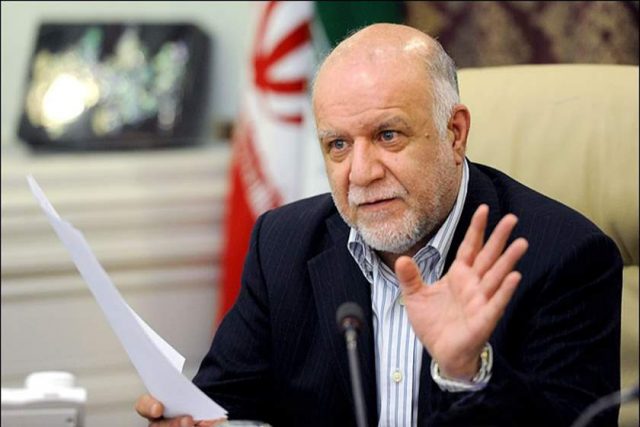
Iran’s oil minister, Bijan Namdar Zanganeh
Al-Manar | September 14, 2019
Iranian oil minister Bijan Zanganeh said Saturday that the France-proposed $15 billion credit line for Iran has nothing to do with easing of US sanctions on the country.
“In the eye of the country’s oil industry, sanctions relief means selling oil,” Oil Minister Bijan Zanganeh told reporters on Saturday.
He was speaking on the sidelines of a signing ceremony for a deal between Pars Oil and Gas Company (POGC) and Petropars Company for developing Belal Gas Field in the Persian Gulf.
“The point was for the oil sanctions to be lifted so that we could freely sell our oil. This credit line will put Iran in debt in the future,” he added, according to Mehr news agency.
The $15 billion credit line has been proposed by the French side in a bid to salvage the 2015 Iran nuclear deal in the wake of US’ unilateral withdrawal and Iran’s countermeasures in reducing commitments to the agreement.
The package is meant as an incentive to keep Iran in the nuclear agreement in the face of US’ efforts to drive the country’s oil exports to zero.
The sum is said to account for about half the revenue Iran normally would expect to earn from oil exports in a year.
Elsewhere, Zanganeh maintained that the development of the phase 11 of South Pars has not yet been exempted from US sanctions.
He then refused to confirm data of Iran’s oil reserves or answer any questions regarding Iran’s measures to bypass US sanctions.
He noted, however, that Iran is in talks with China to peacefully resolve the issue of the East Asian country’s decision to leave the SP11 development project.
Canada sells Iran’s properties, gives money away to ‘terror victims’
Press TV – September 13, 2019
Canada has gifted some $30 million worth of Iranian assets to the victims of terrorist attacks in which Iran says has not been involved, Canadian media reported.
The victims have received their share of the money earned through the sale of two Iranian-owned buildings in Ottawa and Toronto, according to a document filed in the Ontario Superior Court of Justice in August.
The valuable Ottawa property, sold for $26.5 million, was used as the Iranian Cultural Center, and the Toronto building, sold for $1.85 million, served as the Center for Iranian Studies, the Global News reported.
In addition to the $28 million earned from the sale of the two properties, the victims were also awarded a share of some $2.6 million seized from Iran’s bank accounts. Documents also list a Toyota Camry and Mazda MPV.
The recipients include several American families who have filed claims in the Ontario and Nova Scotia courts, seeking a share of Iran’s assets seized by the Canadian government.
In particular, they include the family of Marla Bennett, a US citizen killed in a 2002 bombing that rocked the Hebrew University in Jerusalem al-Quds.
The attacks are mostly blamed on Palestinian and Lebanese resistance movements Hamas and Hezbollah. The families claimed that the Iranian government supported the two organizations and was therefore responsible for their actions.
The complaints were first filed in the US but the claimants turned to Canada after finding out that the Iranian government had more properties and bank accounts there.
In July 2017, a Canadian court required the Islamic Republic to pay around $1.7 billion in damages to “American victims of terrorism.”
Iran has denied any role in the attacks which the courts have based their cases on to appropriate the country’s frozen assets.
Tehran had argued that the victims had to prove Iran’s role in each attack instead of just repeating the US government’s baseless allegations.
The seizure and sale of Iranian assets in Canada come as the country has turned into a center of fraud and a safe haven for embezzlers who manage to escape justice in the Islamic Republic of Iran, according to Iran’s prosecutor general Mohammad Jafar Montazeri.
Mahmoud Reza Khavari, a former Iranian banker, fled to Canada after a $2.6 billion financial fraud came to light in 2011. He was sentenced to 30 years in prison and the Interpol issued a warrant for him in December 2017.
Marjan Sheikholeslami, accused of embezzling public funds in Iran in two separate cases, has also fled to Canada. In 2010, amid the international sanctions on Iran, she founded various companies in Iran and Turkey to help Iran bypass the sanctions and sell its petrochemical products, but has reportedly refused to pay back the government’s money.
Australians detained in Iran were nabbed for flying drone in military area – reports
RT | September 12, 2019
An Australian couple in Iran were detained for breaking a law forbidding the flying of drones without a proper permit, according to new details that have emerged about the incident.
The couple, an Australian-British woman and her Australian boyfriend, were arrested some 10 weeks ago in Iran, British and Australian media have reported. On Wednesday, Australia’s Department of Foreign Affairs and Trade (DFAT) confirmed that it has been providing consular assistance to the families of three Australians detained in Iran, and it is believed that the duo is among those three.
While Canberra refused to disclose the identities of its citizens, and has not revealed the reason for their arrest, the mainstream media feasted on the reports, portraying the couple as innocent tourists thrown into a “notorious Tehran prison” after they camped out at a military area around Jajrood.
Fresh reports suggest that the couple was detained specifically for flying a drone near the capital, Tehran, thus violating an Iranian law banning the operation of this type of device without a government-issued license.
London-based Persian-language Manoto TV reported that the couple “were unaware” of the law, and their family blames a “misunderstanding” for their arrest.
The pair, identified in media reports as Jolie King and Mark Firkin, were prolific travel bloggers who had traveled through Asia documenting their journey on YouTube, Facebook and Instagram. Their last stop before Iran was Pakistan.
One of the goals the couple had reportedly set for the themselves was to “break the stigma around traveling to countries which get a bad rap in the media,” the Australian reported.
With mainstream media taking the bloggers’ side and using the incident to take yet another shot at Tehran, some pointed out that ignorance of the law has never been an excuse, no matter the country.
“Is there a stigma around following laws of the nation you’re traveling to? Or a stigma around doing research?” a tweeter wrote.
“A cautionary tale about breaking laws you didn’t know about,” another tweeted, noting that it’s standard practice for a country to regulate the use of drones, as they can be used for surveillance purposes and disrupt air traffic.
“Wouldn’t you get arrested in Sydney if you flew a drone without approval and inappropriately?” a commenter chimed in, while another called the spin that media put on the affair an example of “the usual West hypocrisy for propaganda.”
Top Iran cultural body slams US protracted detention of stem-cell scientist
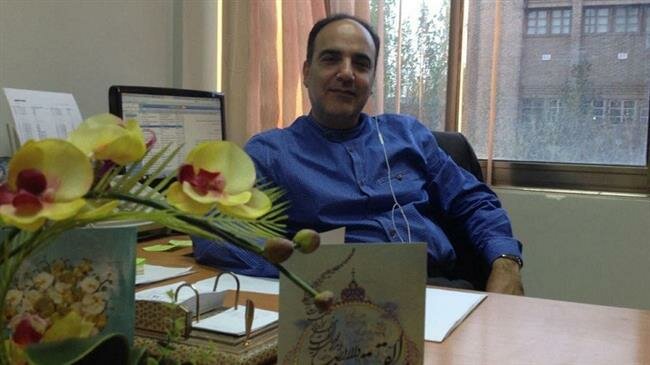
Masoud Soleimani, senior Iranian stem-cell researcher in US custody
Press TV – Sep 11, 2019
A leading Iranian cultural organization has slammed the United States for its protracted detainment of an Iranian stem-cell scientist on “hollow” grounds, calling on advocates of human rights worldwide to help end the “arbitrary detention.”
“The US government constantly delays Dr. Soleimani’s trial in violation of academic and research protocols, and has so far failed to produce any official report on the reason behind his arrest,” said Iran’s Supreme Council of the Cultural Revolution in a statement published on its website on Wednesday.
Masoud Soleimani was arrested upon his arrival in Chicago in October last year on charges that he had violated trade sanctions against Iran. He has been held in detention south of Atlanta since then.
Soleimani and two of his students, who are free on bond, are accused of conspiring to export biological materials from the US to Iran without a license from the Treasury Department’s Office of Foreign Assets Control.
Attorneys in the case say he seized on the plans of a former student to travel from the US to Iran in September 2016 as a chance to get recombinant proteins used in his research at a lower price than what he would pay at home.
Lawyers for the scientists argue that the trio did nothing wrong, stressing that no specific license was required as the proteins are medical materials and that transporting them to Iran for noncommercial purposes does not amount to exporting goods.
The Council further said Soleimani ranked among the world’s top 100 scientists in terms of scientific citation, who had traveled to the US at the invitation of the Minnesota-based Mayo Clinic — a ranking nonprofit academic medical center — on a valid visa.
He was arrested right upon arrival without charge or trial, and was currently jailed alongside criminals, drug traffickers, and hooligans, it added.
“Dr. Soleimani’s detention is a clear example of arbitrary arrest,” prohibited under all international norms, added the statement.
The case serves to prove the US’s adversarial and inhumane attitude given that Soleimani’s research and academic background has nothing to do with Washington’s sanctions targeting Iran, it stated.
“The American government, which has failed to block Iran’s monumental scientific progress,…has now resorted to such inhumane behavior,” the document noted.
It asserted that Soleimani was an “apolitical academic figure.” The detention prevented him from seeing his mother, who went into a coma after learning about his arrest, and passed away recently.
The Council also noted that Soleimani’s prolonged detention has severely affected his eyesight and caused him to lose much weight.
Soleimani’s family is paying all the medical and legal costs, it noted. The US government is preventing his access to decent medical treatment, despite the fact that he suffers from irritable bowel syndrome (IBS).
The body called on the world’s justice-seeking people and organizations to help pursue the scientist’s release.
‘The New Normal’: Trump’s ‘China Bind’ Can Be Iran’s Opportunity
By Alastair Crooke | Strategic Culture Foundation | September 9, 2019
There is consensus among the Washington foreign policy élite that all factions in Iran understand that – ultimately – a deal with Washington on the nuclear issue must ensue. It somehow is inevitable. They view Iran simply as ‘playing out the clock’, until the advent of a new Administration makes a ‘deal’ possible again. And then Iran surely will be back at the table, they affirm.
Maybe. But maybe that is entirely wrong. Maybe the Iranian leadership no longer believes in ‘deals’ with Washington. Maybe they simply have had enough of western regime change antics (from the 1953 coup to the Iraq war waged on Iran at the western behest, to the present attempt at Iran’s economic strangulation). They are quitting that failed paradigm for something new, something different.
The pages to that chapter have been shut. This does not imply some rabid anti-Americanism, but simply the experience that that path is pointless. If there is a ‘clock being played out’, it is that of the tic-toc of western political and economic hegemony in the Middle East is running down, and not the ‘clock’ of US domestic politics. The old adage that the ‘sea is always the sea’ holds true for US foreign policy. And Iran repeating the same old routines, whilst expecting different outcomes is, of course, one definition of madness. A new US Administration will inherit the same genes as the last.
And in any case, the US is institutionally incapable of making a substantive deal with Iran. A US President – any President – cannot lift Congressional sanctions on Iran. The American multitudinous sanctions on Iran have become a decades’ long knot of interpenetrating legislation: a vast rhizome of tangled, root-legislation that not even Alexander the Great might disentangle: that is why the JCPOA was constructed around a core of US Presidential ‘waivers’ needing to be renewed each six months. Whatever might be agreed in the future, the sanctions – ‘waived’ or not – are, as it were, ‘forever’.
If recent history has taught the Iranians anything, it is that such flimsy ‘process’ in the hands of a mercurial US President can simply be blown away like old dead leaves. Yes, the US has a systemic problem: US sanctions are a one-way valve: so easy to flow out, but once poured forth, there is no return inlet (beyond uncertain waivers issued at the pleasure of an incumbent President).
But more than just a long chapter reaching its inevitable end, Iran is seeing another path opening out. Trump is in a ‘China bind’: a trade deal with China now looks “tough to improbable”, according to White House officials, in the context of the fast deteriorating environment of security tensions between Washington and Beijing. Defense One spells it out:
“It came without a breaking news alert or presidential tweet, but the technological competition with China entered a new phase last month. Several developments quietly heralded this shift: Cross-border investments between the United States and China plunged to their lowest levels since 2014, with the tech sector suffering the most precipitous drop. US chip giants Intel and AMD abruptly ended or declined to extend important partnerships with Chinese entities. The Department of Commerce halved the number of licenses that let US companies assign Chinese nationals to sensitive technology and engineering projects.
“[So] decoupling is already in motion. Like the shift of tectonic plates, the move towards a new tech alignment with China increases the potential for sudden, destabilizing convulsions in the global economy and supply chains. To defend America’s technology leadership, policymakers must upgrade their toolkit to ensure that US technology leadership can withstand the aftershocks.
“The key driver of this shift has not been the President’s tariffs, but a changing consensus among rank-and-file policymakers about what constitutes national security. This expansive new conception of national security is sensitive to a broad array of potential threats, including to the economic livelihood of the United States, the integrity of its citizens personal data, and the country’s technological advantage”.
Trump’s China ‘bind’ is this: A trade deal with China has long been viewed by the White House as a major tool for ‘goosing’ the US stock market upwards, during the crucial pre-election period. But as that is now said to be “tough to improbable” – and as US national security consensus metamorphoses, the consequent de-coupling, combined with tariffs, is beginning to bite. The effects are eating away at President Trump’s prime political asset: the public confidence in his handling of the economy: A Quinnipiac University survey last week found for the first time in Trump’s presidency, more voters now say the economy is getting worse rather than better, by a 37-31 percent margin – and by 41-37 percent, voters say the president’s policies are hurting the economy.
This is hugely significant. If Trump is experiencing a crisis of public confidence in respect to his assertive policies towards China, the last thing that he needs in the run-up to an election is an oil crisis, on top of a tariff/tech war crisis with China. A wrong move with Iran, and global oil supplies easily can go awry. Markets would not be happy. (So Trump’s China ‘bind’ can also be Iran’s opportunity …).
No wonder Pompeo acted with such alacrity to put a tourniquet on the brewing ‘war’ in the Middle East, sparked by Israel’s simultaneous air attacks last month in Iraq, inside Beirut, and in Syria (killing two Hizbullah soldiers). It is pretty clear that Washington did not want this ‘war’, at least not now. America, as Defense One noted, is becoming acutely sensitive to any risks to the global financial system from “sudden, destabilizing convulsions in the global economy”.
The recent Israeli military operations coincided with Iranian FM Zarif’s sudden summons to Biarritz (during the G7), exacerbating fears within the Israeli Security Cabinet that Trump might meet with President Rouhani in NY at the UN General Assembly – thus threatening Netanyahu’s anti-Iran, political ‘identity’. The fear was that Trump could begin a ‘bromance’ with the Iranian President (on the Kim Jong Un lines). And hence the Israeli provocations intended to stir some Iranian (over)-reaction (which never came). Subsequently it became clear to Israel that Iran’s leadership had absolutely no intention to meet with Trump – and the whole episode subsided.
Trump’s Iran ‘bind’ therefore is somehow similar to his China ‘bind’: With China, he initially wanted an easy trade achievement, but it has proved to be ‘anything but’. With Iran, Trump wanted a razzmatazz meeting with Rohani – even if that did not lead to a new ‘deal’ (much as the Trump – Kim Jung Un TV spectaculars that caught the American imagination so vividly, he may have hoped for a similar response to a Rohani handshake, or he may have even aspired to an Oval Office spectacular).
Trump simply cannot understand why the Iranians won’t do this, and he is peeved by the snub. Iran is unfathomable to Team Trump.
Well, maybe the Iranians just don’t want to do it. Firstly, they don’t need to: the Iranian Rial has been recovering steadily over the last four months and manufacturing output has steadied. China’s General Administration of Customs (GAC) detailing the country’s oil imports data shows that China has not cut its Iranian supply after the US waiver program ended on 2 May, but rather, it has steadily increased Iranian crude imports since the official end of the waiver extension, up from May and June levels. The new GAC data shows China imported over 900,000 barrels per day (bpd) of crude oil from Iran in July, which is up 4.7% from the month before.
And a new path is opening in front of Iran. After Biarritz, Zarif flew directly to Beijing where he discussed a huge, multi-hundred billion (according to one report), twenty-five-year oil and gas investment, (and a separate) ‘Road and Belt’ transport plan. Though the details are not disclosed, it is plain that China – unlike America – sees Iran as a key future strategic partner, and China seems perfectly able to fathom out the Iranians, too.
But here is the really substantive US shift taking place. It is that which is termed “a new normal” now taking a hold in Washington:
“To defend America’s technology leadership, policymakers [are] upgrading their toolkit to ensure that US technology leadership can withstand the aftershocks … Unlike the President’s trade war, support for this new, expansive definition of national security and technology is largely bipartisan, and likely here to stay.
… with many of the president’s top advisers viewing China first and foremost as a national security threat, rather than as an economic partner – it’s poised to affect huge parts of American life, from the cost of many consumer goods … to the nature of this country’s relationship with the government of Taiwan.
“Trump himself still views China primarily through an economic prism. But the angrier he gets with Beijing, the more receptive he is to his advisers’ hawkish stances toward China that go well beyond trade.”
“The angrier he gets with Beijing” … Well, here is the key point: Washington seems to have lost the ability to summon the resources to try to fathom either China, or the Iranian ‘closed book’, let alone a ‘Byzantine’ Russia. It is a colossal attenuation of consciousness in Washington; a loss of conscious ‘vitality’ to the grip of some ‘irrefutable logic’ that allows no empathy, no outreach, to ‘otherness’. Washington (and some European élites) have retreated into their ‘niche’ consciousness, their mental enclave, gated and protected, from having to understand – or engage – with wider human experience.
To compensate for these lacunae, Washington looks rather, to an engineering and technological solution: If we cannot summon empathy, or understand Xi or the Iranian Supreme Leader, we can muster artificial intelligence to substitute – a ‘toolkit’ in which the US intends to be global leader.
This type of solution – from the US perspective – maybe works for China, but not so much for Iran; and Trump is not keen on a full war with Iran in the lead up to elections. Is this why Trump seems to be losing interest in the Middle East? He doesn’t understand it; he hasn’t the interest or the means to fathom it; and he doesn’t want to bomb it. And the China ‘bind’ is going to be all absorbing for him, for the meantime.
Foreign Minister Zarif says Iran’s commitments reduction allowed under JCPOA
Press TV – September 8, 2019
Iran’s Foreign Minister Mohammad Javad Zarif says the three steps taken by the Islamic Republic to reduce its commitments under a nuclear deal it clinched with world powers in 2015 are legitimate and allowed under the agreement.
Zarif made the remarks in a meeting with the visiting acting head of the International Atomic Energy Agency (IAEA) Cornel Feruta in Tehran on Sunday.
Iran’s top diplomat said all measures taken “by the Islamic Republic of Iran to reduce its commitments in response to the European sides’ failure to fulfill theirs” conformed to Article 36 of the deal, which is officially known as the Joint Comprehensive Plan of Action (JCPOA).
The Atomic Energy Organization of Iran (AEOI) said on Saturday that the country has started up advanced centrifuges to boost its stockpile of enriched uranium, warning the signatories to the nuclear deal that the clock was ticking for them to salvage the landmark agreement in the face of pressure by the United States.
As a third step in Iran’s reduction of commitments under the deal, the AEOI said it has activated 20 IR-4 and 20 IR-6 centrifuges for research and development purposes.
The third step comes after the Europeans failed to work within a 60-day deadline to meet Iran’s demands and fulfill their commitments under the multilateral deal. Iran had already rowed back on its nuclear commitments twice in compliance with Articles 26 and 36 of the JCPOA.
Iran says its retaliatory measures will be reversible as soon as Europe finds practical ways to shield the mutual trade from the US sanctions, which were re-imposed last year when President Donald Trump withdrew from the JCPOA.
Iran has given another two months to the European signatories to take meaningful action to save the JCPOA as a France-led diplomatic process is underway between the two sides.
On the same day that Iran took the third step, the IAEA said it had inspectors on the ground in Iran who would be able to look into Tehran’s move to turn on advanced centrifuges to increase the country’s uranium stockpiles.
The Vienna-based agency added that its “inspectors are on the ground in Iran and they will report any relevant activities to IAEA headquarters.”
Elsewhere in his remarks, Zarif pointed to the close cooperation between Iran and the IAEA after the signing of the landmark nuclear accord, which led the IAEA to confirm Iran’s compliance with its JCPOA commitments in over a dozen reports.
Iran’s top diplomat also called on the IAEA to observe the principles of professionalism, confidentiality, and impartiality in fulfilling its duties regarding Iran.
The acting IAEA acting chief, for his part, said the agency has been working to build more trust and would carry out its verification activities in a professional and impartial manner.
Feruta arrived in the Iranian capital on Sunday morning to hold talks with high-level Iranian officials. The IAEA said the visit was part of its “ongoing interactions” with Tehran, including “verification and monitoring in Iran under the JCPOA.”
Earlier on Sunday, the Romanian diplomat held talks with the AEOI Head Ali Akbar Salehi.
During the meeting, Iran’s nuclear chief criticized the European signatories to the 2015 nuclear agreement for failing to honor their legal commitments to Tehran, adding that the multinational accord is “no one-way street.”
IAEA will continue impartial, professional approach: Feruta
Speaking at a joint press conference with Iran’s nuclear chief, Feruta said the UN nuclear agency would continue with its independence, impartial and professional approach and would not be affected by pressure.
He added that the IAEA is tasked with verifying the JCPOA implementation and is involved in dynamic interaction with Iran on the implementation of the Additional Protocol and its Safeguard Agreement.
He expressed the IAEA enthusiasm to continue cooperation with Iran.
IAEA underlines ‘impartiality’ in conducting safeguards activities
Later on Sunday, the IAEA issued a statement on Feruta’s Tehran visit, quoting him as saying that the agency’s “safeguards activities are conducted in an impartial, independent and objective manner.”
Acting Director General Cornel Feruta visited Iran on 8 September 2019, and met with Vice-President and President of the Atomic Energy Organization of Iran Ali Akbar Salehi, Foreign Minister Mohammad Javad Zarif and other Iranian senior officials, the statement said.
The IAEA noted that Feruta’s discussions with the Iranian officials “covered IAEA activities in Iran, with an emphasis on the ongoing interactions between the IAEA and Iran related to the implementation of the Safeguards Agreement and Additional Protocol.”
Featured Video

Trita Parsi: Middle East Unraveling — Are We on the Path to World War?
or go to
Aletho News Archives – Video-Images
From the Archives
Why Saudi Ties to 9/11 Mean U.S. Ties to 9/11
By Kevin Ryan | Dig Within | September 27, 2015
Media interest in Saudi Arabian connections to the crimes of 9/11 has centered on calls for the release of the 28 missing pages from the Joint Congressional Inquiry’s report. However, those calls focus on the question of hijacker financing and omit the most interesting links between the 9/11 attacks and Saudi Arabia—links that implicate powerful people in the United States. Here are twenty examples. … continue
Blog Roll
 Aletho News
- Neria Leiter Was A Legitimate Military Target
- Integrity Initiative: UK-funded network framed dissent as Russian disinformation for years
- ‘We don’t seek permission to defend our country’: Snippets from President Pezeshkian’s UNGA address
- NATO chief wants Europeans to fight American wars [for Israel]
- German chemicals giant reveals details of downsizing
- Refaat Al-Areer Was The Canary In The Coal Mine In Israel’s War On The Truth
- Israeli election committee bars candidate from Knesset race over Gaza war opposition
- French-Lebanese man files war crimes complaint over Israeli attacks
- Mahan Air Flight Lands in China Despite US Threat against Iranian Airlines
- US eyes $10bn fund to rebuild war-battered Gulf infrastructure
- If Americans Knew
- Caught on Tape: AIPAC CEO Boasted of Controlling Trump’s National Security Officials
- Why Hamas Attacked Israel in October 2023 – Israeli professor Ilan Pappé
- They see them, then kill them: Israeli quadcopters track, deliberately target civilians in Gaza
- Winter could turn Gaza’s treacherous, war-damaged buildings into deathtraps
- Majority of Democratic Voters Want to Prosecute Both Biden and Trump Administration Officials Over Gaza
- As Gaza languishes, world leaders gather at the UN – Daily Update
- Sanctions are collective punishment: immoral and self-defeating
- Phosphorus Munitions Fired by Israel Burn Groves, Orchards in Southern Lebanon
- Israel Carries Out New Ceasefire Violations Across Gaza
- AI – Emphasis on the ‘I’: Israel Is Funding AI Chatbot Propaganda
- No Tricks Zone
- New Study: Earth And Venus Surface Warmth Largely Explained By Convection And Lapse Rate, Not CO2 Or Radiation
- 2025 Nature Paper Claiming Worsening Global Drought Gets RETRACTED …Heavily Flawed
- New Study: ‘Global Drought Shows No Detectable Recent Acceleration Under Climate Warming’
- Economic Masterminds: German Socialists Suggest Taxing Productivity Gains Stemming From Using AI
- The South China Sea Has Not Been Cooperating With The Climate Change Narrative
- Energy Crisis: Germany Enters Heating Season With Historically Low Gas Reserve Fill Levels
- New Study: The Antarctic Ice Sheet Gained Mass From 2020-2024 Due To Staggering Snow And Ice Accumulation
- Study: Ocean Heating Rates From Thousands Of Years Ago ‘Dwarf’ Modern Ocean Heating Rates
- Climate Extremists Target, Attack Large-Scale Power Grid Infrastructure In Germany!
- New Study: Antarctic Ice Melt Has Contributed Less Than 1 Centimeter To Sea Level Rise In The Last 30 Years

