A Secret US-Iran Deal over Oil Supplies to Syria
By Elijah J. Magnier | American Herald Tribune | September 8, 2019
A secret deal has been set up between the US and Iran, through a third party, to enable the Iranian supertanker Adrian Darya 1 (formerly Grace 1) to deliver its 2.1 million barrels of oil to the Syrian government. Smaller tankers worked for five days unloading the oil to be delivered to the Syrian port of Tartous from offshore.
Sources close to the negotiation team said the US “was determined to stop the Iranian supertanker from reaching Syria due to the US-EU strategy to economically sanction the Syrian President Bashar al-Assad and turn Syrians against their leader.” These countries, responsible for the 2011-2019 war, failed to achieve a regime change and a failed state militarily. Now they are trying to reach their goal by surrounding the country and preventing its return to normality. The US stopped the Gulf countries from returning to Damascus and imposed on Jordan to restrict the flow of goods to and from Syria. It has closed the al-Tanaf crossing with Iraq and is occupying the north-east (oil-rich!) area for no strategic purpose for the United States. Notwithstanding these drastic measures, Iran is determined to support its allies.
According to sources, Adrian Darya 1 remained for several days in the Mediterranean without a final destination, waiting for the end of the negotiations. Steps were agreed to begin releasing the “Stena Impero” British-flagged 7 crew members. Once Adrian Darya 1 has ended its delivery, more crew members are expected to be released. “Stena Impero” will be set free without further demand for financial compensation once “Adrian Darya 1” reaches a point of safety.
Iran said it has a buyer for the 2.1 million barrels of oil carried by the supertanker. According to informed sources, the client is Rami Makhlouf, President Assad’s cousin who bought the 130 million dollars-worth cargo (in the open market). Iran offers hundreds of thousands of barrels monthly free to Syria and has done since the beginning of the 2011 war. Damascus pays the rest – at a much-reduced price – to Iran or to whomsoever Tehran decides, said the sources.
During the navigation of Adrian Darya 1 close to Syrian waters, sources confirmed the daily presence of an Israeli-type super Heron drone above the Iranian supertanker. Drones disappeared the day the deal was reached, enabling the ship to head freely towards Syria’s Tartous harbor.
US Defence Secretary Mark Esper said that he “had no plans to seize Adrian Darya 1” and his administration was negotiating with Iran indirectly, meanwhile Brian Hook, the US special envoy for Iran was trying to bribe the Iranian supertanker captain Akhilesh Kumar with 15 million dollars to allow the ship to be seized, ending by scaring him with “sanctions” if he delivered the cargo to Syria. At the end of the day, the British government and the US administration secured Iranian promises to release the “Stena Impero” crew and ship later on, once the Iranian supertanker reaches safety. The content of the negotiations was far from any dialogue related to the nuclear deal.
Iran managed to stand against the US and the UK in the Persian Gulf. It is sending its drones to fly daily over UK warships patrolling the Straits of Hormuz and opposite the Iranian coast. The Iranian Revolutionary Guard Corps (IRGC) responsible for the security of the Persian Gulf has proved capable of confronting the US and the UK and defending its security and financial interests.
Iran also showed its capability and readiness to ease tensions, when negotiating the Adrian Darya case. However, the Iranians responsible have no intention of resuming any sort of dialogue with US President Donald Trump until after the 2020 elections.
Iran has also fulfilled its commitment to its allies who represent essential components of its national security. Adrian Darya was carrying enough oil to support Syria and its allies for months. The US sanctions on Syria and Hezbollah have proved perfectly possible to overcome, and therefore ineffectual.
Hizbullah Reminds Israel of Its Power
By Helena Cobban | Lobe Log | September 5, 2019
On September 1, Hizbullah fighters on Lebanon’s border with Israel fired two precision-guided missiles over the border, apparently hitting an Israeli “Wolf” armored personnel carrier (APC) and inflicting casualties of unknown severity on its occupants (see below). The strike came a day after Hizbullah head Hassan Nasrallah warned that the organization would retaliate for Israel’s killing, a few days earlier, of two Hizbullah fighters in Syria and Israel’s deployment of explosive drones against Hizbullah-related targets in eastern Lebanon and the capital, Beirut.
The Israelis responded to the attack on the Wolf by firing a number of rockets and artillery shells, seemingly at random, into uninhabited parts of southern Lebanon, with no casualties reported.
On September 2, Hizbullah released a video of the attack on the Wolf, which took place in broad daylight. The video shows Hizbullah operatives launching two guided missiles against a military vehicle, each of which causes a large explosion. Hours later, Nasrallah told his supporters that this cross-border action—the first since the extremely destructive Hizbullah-Israel war of 2006—represented a new stage in the struggle against Israel. He warned, too, that his fighters would henceforth feel free to bring down any of the scores of military drones that Israel deploys in Lebanese airspace each month.
Taken together, the events of late August through September 1 underscored that the situation of reciprocal (if highly asymmetrical) deterrence that has existed between Israel and Hizbullah since the end of the 2006 fighting remains in place.
This situation has significant impact not only for the peoples of Lebanon and Israel but also in the broader regional arena, in which the Israel-Hizbullah balance plays a key role. For though Hizbullah has always, since its emergence in 1985, been an authentic, indigenous Lebanese movement, it is also a key ally of the Islamic Republic of Iran. So if Israel, some parts of the U.S. government, and other regional actors such as Saudi Arabia are considering launching any significant military attack against Iran, then Hizbullah’s ability and willingness to join the battle by counter-striking against high-value targets inside Israel is a factor that anti-Tehran war planners have to take into account.
Iran does have, as I wrote here recently, a broader network of regional allies, of which Lebanon’s Hizbullah is only one part. But Hizbullah is unique by virtue of the special role its conflict with Israel plays in affecting strategic thinking and decision-making in Israel and elsewhere. Hizbullah, as everyone in the Middle East is aware, is the only body, governmental or non-governmental, that has been able to inflict significant military defeat on Israel—and not just once, but twice.
The first defeat became clear in May-June of 2000, when the Israeli military that had been occupying a strip of Southern Lebanon since 1978 simply pulled up its stakes and withdrew. The decisive earlier battle against Hizbullah that led PM Ehud Barak to take that decision had actually happened four years earlier. In 1996, Israel launched a scorched-earth attack against Lebanon that failed to either destroy Hizbullah or turn the Lebanese population against it. When Barak became PM, he judged, quite sensibly, that the casualties that Israel’s occupation force had continued to take in Lebanon since 1996 were all for naught.
In 2006, another Israeli PM, Ehud Olmert—who had far less military experience and military savvy than Barak—thought he would try his hand at diminishing the considerable amount of military and political power that Hizbullah had continued to accrue in Lebanon. With huge support from President George W. Bush and most European governments, Olmert launched another scorched-earth attack against Lebanon, once again aimed at either destroying Hizbullah or turning the Lebanese public against it. In the two years prior to 2006, there had been quite a lot of (Saudi-supported) anti-Hizbullah agitation in Lebanon, so perhaps Olmert hoped to gain advantage from that. If so, he failed miserably. Lebanese from all political and religious persuasions rallied strongly around Hizbullah.
That was not the only thing that went wrong with the war from Olmert’s point of view. Some three weeks into the conflict, it became clear that even the Israeli air force’s destruction of critical Lebanese infrastructure (gruesomely celebrated in Israel thereafter as the “Dahiyeh Doctrine”) could not force Hizbullah to cry “uncle.” Olmert and his advisors decided to send in Israeli ground forces. But the ground units all proved woefully ill-prepared for their task. It soon became clear that neither they nor the air force could stop Hizbullah’s well-trained rocketeers from continuing to fire missiles deep into Israel’s interior.
Thirty-three days into the campaign, both leaderships agreed it was time to stop. They negotiated a ceasefire through the mediation of the Lebanese government and the United Nations. The ceasefire’s basic structure was a return to the status-quo ante. All the Israeli troops recently deployed into Lebanon had to immediately withdraw. All hostilities and cross-border military actions had to cease. The United Nations beefed up its southern Lebanon peacekeeping force, which since 1978 had been a fairly ineffective presence along the border.
For Israel, the 2006 war was a crushing defeat—and for its ground forces, in particular, a humiliation. (One explanation for the three vicious assaults Israel launched against Gaza in 2008, 2012, and 2014 was that the country’s military leaders sought to regain from Israel’s citizens the high esteem they had always previously enjoyed—esteem that had been very badly dented in 2006.)
For Hizbullah, the 33-Day War of 2006 was unquestionably a victory, though one bought at a high price in the human and material losses suffered by all the Lebanese people.
The essential victory that Hizbullah won in 2006, as in 1996, was that it faced down Israel’s extremely hi-tech military and survived with its core military and political networks and its ability to inflict significant destruction inside Israel all intact—and without having made any political concessions. This is, of course, why Israel and its acolytes and supporters in the West all hate it so deeply.
In the limited military exchange that Hizbullah and Israel engaged in on September 1, the underlying facts about the reciprocal deterrence that has existed between them since 2000 were on full display.
For some years now, the Israeli military has been taking advantage of the chaotic situation in Syria to mount sporadic attacks against various targets there, including some that they claim are connected to Hizbullah or the Iranian military. At periodic meetings that Israeli officials have conducted with their counterparts in Russia, which has long been allied with the Syrian government, the two sides have sketched out rudimentary “rules of engagement” for such raids. In July, the Israelis extended their campaign to interrupt Iran’s export of weapons and advisors yet further, sending F-35s to attack two locations in Iraq that were allegedly being used by Iran’s Islamic Revolutionary Guard Corps (IRGC). In July, and again in late August, it struck at Hizbullah operatives inside Syria, killing at least two of them.
Of all the targets thus attacked, only Hizbullah retaliated directly against Israel. It did so in a measured and limited way that nonetheless served to remind Israelis of their continuing vulnerability to Hizbullah’s military muscle and military/political smarts.
Israel’s reaction to the announcement Nasrallah made on August 31, that Hizbullah “would retaliate” for Israel’s killing of its operatives in Syria, was intriguing. As was widely reported in the (always military-censored) Israeli media, the Israeli military ostentatiously announced that it would pull troops back from front-line positions facing Lebanon, in what seemed like a deliberate move to de-escalate tensions.
Israel’s responses to the Wolf attack, which happened the very next day, were also intriguing. Firstly, in the military sphere, its retaliation against Hizbullah/Lebanon was notably restrained, a fact that could perhaps be attributed to PM Benjamin Netanyahu’s reluctance to get Israel into yet another complex imbroglio in Lebanon with his country’s next general election coming up September 17—except that, in the context of, say, Gaza, Israeli leaders have often seemed to judge that launching an attack could be a valuable part of an election strategy.
Secondly, in the informational sphere, Netanyahu went out of his way to deny that the attack on the military vehicle had caused any casualties. The video that Hizbullah made and distributed of the incident seemed clearly to show that the vehicle was an APC, and that the two missiles that struck it caused massive explosions. Other news footage from inside Israel showed injured soldiers being carried out and evacuated to a nearby military hospital. But Israeli spokesmen, faithfully parroted by reporters from the local and foreign media—all of whom are subject to Israeli military censorship– described the vehicle as merely a military “jeep” and said the footage showing apparent medevac operations had been faked by the military, using dummies.
This strange claim seemed aimed either at reassuring Hizbullah that its operation had already “succeeded” enough that it need not launch any follow-on attacks—or, perhaps more plausibly, at damping down any desire Israelis might have had for a large-scale retaliation.
But throughout this whole episode, Israel’s leaders were still clearly signaling that they agree that “You don’t mess with Hizbullah.”
This has wider implications for the regional balance between Israel and Iran. One essential fact in that balance is that the alliance between Hizbullah and Iranian leadership goes far deeper than any mere coalition of convenience and is, in practice, unbreakable at this point. Another is that Hizbullah’s home turf and principal area of operations directly abuts Israel—and it cannot be defeated there. Remember, after all, that Hizbullah first emerged in the mid-1980s under the difficult circumstances of a harsh Israeli occupation of one third of Lebanon—and that it showed first, that it could successfully organize to throw off that occupation and, then, that it could repel the next big attempt Israel made, in 2006, to destroy it.
Much about the regional balance has changed since 2006. The biggest change has been the heartbreakingly protracted civil war in Syria, a conflict that weakened the Syrian government which had long been a key part of the Iran-led coalition and considerably weakened Damascus’s ability to protect the Syrian homeland from incursion by all manner of hostile foreign forces, including those of Israel, the United States, and Turkey. (Syria’s civil war has, however, provided Hizbullah and the IRGC with valuable opportunities to act and train in complex urban-conflict environments.) Another change has been a considerable weakening of U.S. military-political power in Iraq, with the diffusion of some U.S. military capabilities into Syria. All these changes—along with others that have taken place in the Arabian Peninsula and elsewhere in the region—undoubtedly affect the balance of power between Israel and Iran. But the inescapable facts, that Hizbullah can cause wide damage within Israel’s heartland and withstand the strongest counter-attacks that Israel can launch against it, still remain.
Veteran Middle East analyst and author Helena Cobban is a Senior Fellow at the Center for International Policy and the CEO of both Just World Books and the nonprofit Just World Educational. JWE’s website Justworldeducational.org makes freely available to the public a variety of resources on war, peace, justice, and the Middle East.
US Tried To Bribe And Threaten Iranian Ship’s Captain
teleSUR | September 5, 2019
Emails obtained by The Financial Times (FT) have revealed that U.S. government officials were contacting the captain of an Iranian tanker, offering millions of dollars if the captain steered the ship towards an allied country that would impound on behalf of the United States, but threatening sanctions if the captain refused. It was the same ship that was seized by the U.K. in Gibraltar, and subsequently released after it was clear there were no legal grounds for the seizure.
The email was published by the FT, intended for Iranian ship captain Akhilesh Kumar and a number of other captains. It offered personal payments if the captain sabotaged the ships course, but threatened sanctions on those who don’t. It reads, “This is Brian Hook… I work for Secretary of State Mike Pompeo and serve as the U.S. representative for Iran…… I am writing with good news.”
“With this money you can have any life you wish and be well-off in old age … “If you choose not to take this easy path, life will be much harder for you.”
The official’s State Department phone number was included on the email so as to reassure the captain of its authenticity.
Iran’s Foreign Minister responded saying, “Having failed at piracy, the U.S. resorts to outright blackmail—deliver us Iran’s oil and receive several million dollars or be sanctioned yourself. Sounds very similar to the Oval Office invitation I received a few weeks back. It is becoming a pattern. #BTeamGangsters”
The U.S. has attempted to isolate Iran through sanctions, as a means of punishing the country for its nuclear programme, and opposition to U.S. foreign policy in the region. However, Iran has managed to resist to some degree, it was recently announced that China has stepped up investments and oil imports from Iran, in defiance of U.S. unilateral measures.
US posts $15mn bounty for help with ‘disrupting’ finances of Iran’s Revolutionary Guard Corps
RT | September 4, 2019
The US government has offered a reward of up to $15 million for information that helps “disrupt” the financial operations of Iran’s Revolutionary Guard Corps (IRGC), while slapping a new round of sanctions on Tehran.
The lavish bounty was announced on Wednesday as part of the Rewards for Justice program, run by the State Department, which offers financial incentives for information on alleged “terrorist activities” that target the US. The IRGC, an elite branch of Tehran’s military, was designated by Washington as a terrorist organization in April.
The US State Department is seeking information on any companies and individuals who allegedly help the IRGC with “evading US and international sanctions” as well as those who merely “do business” with the military unit.
Apart from issuing the bounty notice, Washington has issued a new sanctions package against an “oil-for-terror” network – as they put it – allegedly run by the IRGC. The sanctions broadside targeted 16 companies and nine individuals, allegedly involved in supplying Iranian oil to Syria in breach of US sanctions. Six oil tankers linked to such activities were also placed on the list.
The new round of sanctions and the bounty offer were lauded by top US officials, who gave themselves a pat on the back for taking action against the alleged network.
Washington will continue to impose new sanctions on the country to maintain “maximum pressure,” US special representative for Iran Brian Hook said, adding that “we are not looking to grant any exceptions or waivers.”
Such an approach effectively buries France’s idea to provide Tehran with a $15 billion credit line, suggested earlier by Foreign Minister Jean-Yves le Drian, who explicitly said that such a deal would require sanction waivers from the US. The proposed credit arrangement would be guaranteed by Iranian oil revenues and require Tehran to comply with the 2015 nuclear deal, known as the JCPOA, as well as to enter negotiations on regional security.
Tehran has repeatedly urged the EU countries to actually do something to save the 2015 agreement and secure sanctions relief from the US. Earlier on Wednesday, Iranian President Hassan Rouhani gave Europe two months to do so, promising to further rollback on its commitments under the JCPOA if this doesn’t happen.
Japan won’t join US-led maritime coalition in Gulf: Report
MEMO | September 3, 2019
Japan will not join the United States in a security mission to protect merchant vessels passing through key Middle Eastern waterways and will instead consider deploying its military independently, the Yomiuri newspaper reported on Tuesday, Reuters reports.
Japan has been reluctant to join the United States, its most important ally, in its efforts to set up the coalition because of its close economic ties with Iran, a major supplier of oil.
Citing unidentified government sources, the Yomiuri said Japan was considering a plan to send its Maritime Self-Defense Force (SDF) on information-gathering missions in the areas around the Strait of Hormuz and Bab al-Mandab shipping lane between Yemen, Djibouti and Eritrea.
It would also consider including the Strait of Hormuz in the SDF’s sphere of activity if Iran agrees, the paper said.
Iran has denounced US efforts to set up the coalition and says countries in the region can protect waterways and work towards signing a non-aggression pact.
The Japanese government is set to make a final decision, including whether the plan is feasible, after the United Nations General Assembly later this month, the Yomiuri said.
Global commodity trading has been rocked in recent months by the seizure of a British tanker and a series of attacks on international merchant vessels that the US and Britain have blamed on Iran. Tehran denies involvement.
Britain last month became the first US ally to announce its participation, although most European countries have been reluctant to sign up for fear of adding to the tension in the region.
It’s Necessary to Find Way to Counter US, Otherwise Nuclear Deal Won’t Be Only Loss: Zarif
Sputnik – September 3, 2019
Iranian Foreign Minister Javad Zarif said on Monday that Washington’s actions regarding the Joint Comprehensive Plan of Action are a blow to international law, and if the accord is not preserved, the nuclear deal “will not be the only loss”.
On Sunday, Tehran said it would make a third reduction of commitments agreed to under the deal and that this round would be the harshest yet. A spokesman for the Iranian government, Ali Rabiei, said on Monday that Iran would wait until Thursday for the deal’s signatories to take steps toward implementing the accord and make a decision on whether to further scrap its commitments depending on these actions.
“America’s actions are not only a blow to the JCPOA, but to the whole framework of international law. That is why, if we do not find a way to counteract the United States, the JCPOA will not be the only loss. Therefore, we share the same views with Russia on this issue”, Zarif told the Rossiya 24 broadcaster.
Earlier in the day, Zarif said that Tehran would return to full implementation of the deal, if there was progress in negotiations on the implementation by Europeans of their part of the agreement.
The JCPOA was signed in 2015 by Iran, China, France, Germany, Russia, the United Kingdom, the United States, and the European Union. It required Iran to scale back its nuclear programme and severely downgrade its uranium reserves in exchange for sanctions relief. In 2018, the United States abandoned its conciliatory policy on Iran, withdrawing from the JCPOA and hitting Iranian petroleum industries with sanctions.
Offer from Biarritz not good enough for Iran
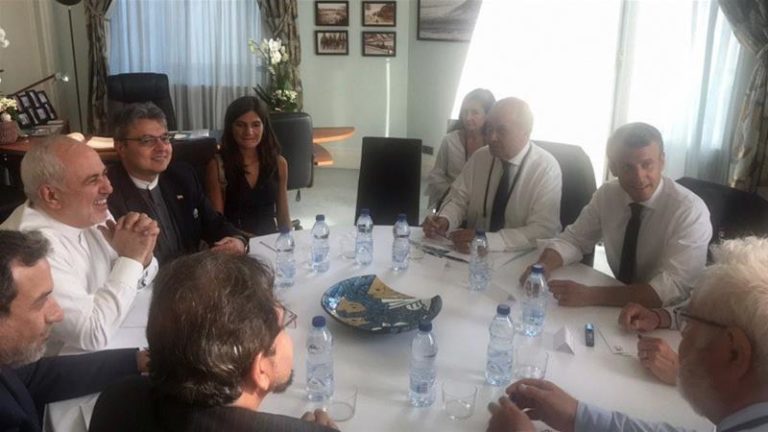
Iran’s Foreign Minister Javad Zarif (L) held talks in Biarritz on Sunday Aug. 25, 2019 with France’s President Macron (R) and Foreign Minister Jean-Yves Le Drian.
By M. K. BHADRAKUMAR | Indian Punchline | August 29, 2019
From all accounts, Tehran is struggling to cope with the startling news in the weekend from the G7 summit at Biarritz that a meeting between the presidents of the US and Iran is to be expected in the “coming weeks”.
The cautiously optimistic tone struck by the French President Emmanuel Macron and the conspicuously positive attitude adopted by President Trump along with the fact that the Iranian Foreign Minister Javad Zarif was actually present at Biarritz (with the prior knowledge and tacit concurrence of POTUS) — all these signalled that France’s back-to-back peace initiatives in the recent weeks with Washington and Tehran have come to a defining moment.
From Biarritz, Zarif took off for Tehran ostensibly to change planes for an onward journey to China as part of a previously scheduled Asian tour. Presumably, he briefed Rouhani on what transpired at Biarritz. Zarif is still on the Asian tour — China, Japan, Malaysia, etc., which are, interestingly, major buyers of Iranian oil.
If the Biarritz formula gains traction, these Asian countries have a key role to play in generating income for Iran out of oil sales, which apparently would incentivise Tehran to get into negotiations with the US.
En route to Beijing, Zarif tweeted, “Iran’s active diplomacy in pursuit of constructive engagement continues. Road ahead is difficult. But worth trying.” China’s foreign minister Wang Yi also spoke to Emmanuel Bonne, diplomatic adviser to French President Emmanuel Macron, by telephone on Monday. Bonne said France wanted to coordinate and cooperate with China to ease tensions over Iran and to maintain the 2015 nuclear deal, according to a report by official Chinese news agency Xinhua.
The initial reaction from Tehran at the level of Rouhani also suggested that he may be open to the idea of meeting Trump. Notably, Rouhani said on Monday, “I believe we should use any tool to protect our country’s national interests. If I think that meeting someone helps solve the people’s problems, I will not hesitate. The principle is our national interests.”
Two days later, however, Rouhani’s Chief of Staff and key aide Mahmoud Vaezi, who is an influential figure in the foreign policy establishment, conspicuously moderated what the president had said. Speaking to reporters in Tehran on Wednesday, Vaezi said any meeting with the US officials will solve no problem and the US must come back to the P5+1 negotiation table and respect its commitments to the Joint Comprehensive Plan of Action.
Vaezi didn’t altogether reject the idea of a Rouhani-Trump meeting, but added a template that the negotiations must also involve other guarantor states — E3, Russia and China. On the other hand, an Iranian economic delegation is proceeding to France next week. It could be that Tehran is strengthening its bargaining chip as well as insulating itself from the risk of engaging an interlocutor such as Trump who is fickle-minded, lacks consistency and has no coherent policies — and, above all, is surrounded by a team that includes notorious anti-Iran hawks, especially the National Security Advisor John Bolton.
Meanwhile, we see a significant hardening of Tehran’s stance in an interview with the state TV given by the Iranian Deputy Foreign Minister for Political Affairs Seyed Abbas Araqchi. Araqchi simply ruled out any negotiations with Washington so long as the sanctions remained in place.
In his words, “We are only talking with the European countries over our specific 11 demands (based on the JCPOA) and we will not negotiate with the US.” Vaezi’s remarks must be taken seriously, as he was one of the key negotiators of the 2015 nuclear deal and is an authoritative voice. Vaezi underlined that that no country would accept to enter negotiations while being under “maximum pressure” because doing so would mean “surrender”.
The offer held out in Biarritz appears to be simply not good enough for Tehran. Why should Tehran “surrender” after successfully countering the US’ regime change agenda and “maximum pressure” strategy and while the US has failed to reach the objectives behind its unilateral move to abandon the 2015 nuclear deal?
On Wednesday, Iran’s top military commander Chief of Staff of the Iranian Armed Forces Major General Mohammad Hossein Baqeri pointedly reminded everyone that it has been the country’s deterrence power that effectively stopped the US from going ahead with its plans to wage a war against Iran.
Quite obviously, a lot of churning has been going on within the top echelons of the Iranian establishment, which involve multiple agencies at an institutional level and even factions that would have congruent political interests or different priorities at any given time. The influential Majlis has not voiced an opinion. The bottom line is that all power centres would be waiting for the Supreme Leader Ayatollah Ali Khamenei to speak publicly.
Behind Israel’s Bombing in Iraq’s Heartland
By Giorgio Cafiero – Consortium News – August 28, 2019
Iraq has felt the heat from escalating tensions between the U.S. and Iran this summer as the White House moves ahead with its “maximum pressure” campaign against the Islamic Republic. Also clear is that Israel and Iran’s proxy wars in the region have spilled into Iraq too. Last month, Israel carried out its first attacks on targets in Iraq since Operation Opera on June 7, 1981.
On July 19, Israel struck a target in the Salahuddin governorate, three days before another attack against Camp Ashraf, located within close proximity to Iran. According to al-Ain, the attack against Camp Ashraf killed 40 members of Iran’s Islamic Revolutionary Guard Corps (IRGC) and Iranian-sponsored Iraqi Shi’a militiamen. On Aug. 12, a blast occurred at a Popular Mobilization Units (PMU) arms depot in the Iraqi capital, allegedly carried out by an Israeli aircraft and resulting in one death and 29 injuries. Other Israeli attacks followed on the 19 and 25 of August. Several days ago, U.S. officials confirmed that Israelis were indeed behind the July 19 attack in Salahuddin governorate, which was suspected from the beginning.
Such actions highlight how Israel seeks to expand its theater of confrontation with the Iran to Iraq. Put simply, the Israelis are reacting with increasing aggression against the extent of Iranian-sponsored militias in Iraq and elsewhere in the Middle East that provide Tehran greater leverage vis-à-vis Israel.

Pompeo: Not against further Israeli strikes. (YouTube)
Important questions surround the U.S. role in these Israeli attacks against PMU targets in Iraq. It is difficult to imagine how the Trump administration could have not given Israel the green light to carry out these attacks. As Karim al-Alwei, an Iraqi parliamentarian, explained, “the U.S. controls Iraqi air space” thus “no planes, including Iraqi jets or helicopters, can overfly the area without U.S. knowledge or permission.” Only seven months ago, U.S. Secretary of State Mike Pompeo reportedly raised the topic of Iranian missiles in the hands of PMU forces in Iraq while meeting with Iraq’s Prime Minister Adel Abdul-Mahdi, stating that Washington would not be against any future Israeli military operations targeting such facilities.
Unclear is whether the Israelis used Syrian, Turkish, or Saudi airspace to reach their targets in Iraq. Regardless, it is a safe bet that the Saudi leadership, which maintains a tacit partnership with Israel largely based on a common perception of Tehran as a threat to its interests, welcomes such Israeli action in Iraq. As Saudi and Israeli officials see Iranian-sponsored Shi’a militia in Iraq, Syria, and Lebanon as a major threat, the Israeli strikes in Iraq will likely push the Israelis and Saudis even closer together.
Other Targets of Israel
Tel Aviv has dramatically increased the intensity and reach of its military campaign to weaken Tehran-backed militias in the region, waging attacks not only in Iraq, but also in Syria and Palestine too, as well as recently sending two drones into Lebanon. Into the chaos of Syria the Israelis have carried out many strikes against Iran-related targets since the civil war began in 2011. Yet by attacking targets in Iraq, Israel is showing its determination to expand the theater of its proxy war with Iran.
Although difficult to predict the long-term ramifications of these blasts in Iraq, their impact will likely be destabilizing, given Iraq’s fragile security. A major concern for officials in Baghdad is that in the days, weeks, and months ahead Iraq—as well as its airspace—could be the location of intensified violence as the U.S., Israel, and Iran challenge each other’s actions. Iraq will have a difficult time staying neutral between Washington and Tehran.
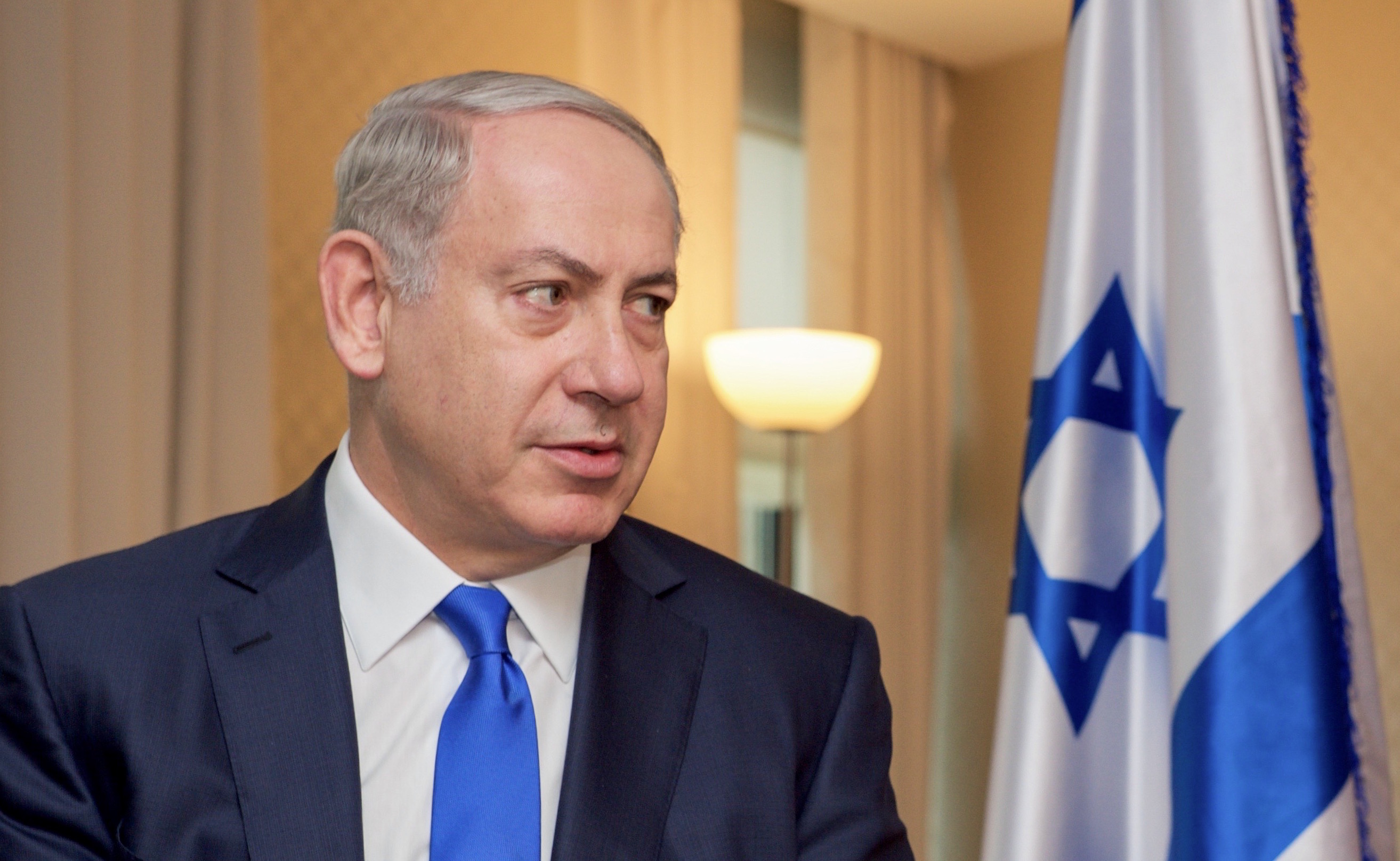
Netanyahu: More coming. (Wikimedia Commons)
Prime Minister Benjamin Netanyahu said Aug 19, “Iran has no immunity, anywhere… we will act and currently are acting against them, wherever it is necessary.” Three days later the Israeli leader went further, suggesting his country was perhaps involved in these attacks in Iraq, declaring, “We are operating in many areas against a state that wants to annihilate us.”
By making such bold moves, Israel is taking major risks. If such attacks continue in Iraq against Tehran-sponsored non-state actors near the Iranian border, Iran will likely respond. Perhaps the Iranians will put air defense capabilities in the hands of Iraqi Shi’a militias to enable such factions to fend off future Israeli attacks. Also possible is that Tehran would carry out limited strikes in retaliation at a time and place of the Iranian leadership’s choosing, perhaps targeting Israeli positions in the occupied Golan Heights of Syria.
Israeli strikes, which constitute a flagrant violation of Iraq’s sovereignty, may come with major costs for U.S. interests in Iraq. Given that an influential Iran-based Shi’a cleric, Grand Ayatollah Kazim al-Haeri, reacted to such Israeli attacks with a fatwa forbidding America’s military presence from continuing in Iraq, and the fact that many in Iraq and other Arab countries see the U.S. as responsible for Israeli actions against PMU targets, the roughly 5,000 American troops in the country could find themselves in the crosshairs of what has quickly become an escalating Israeli-Iranian proxy war waged in Iraq.
Israel’s bombing of Iraq will have major implications for the Washington-Baghdad relationship too, particularly given that the Iraqi government is attempting to bring the heavily armed Shi’a militias under its control. If the U.S. administration fails to prevent Israel from turning Iraq into more of a battleground in Tel Aviv’s proxy wars with Tehran, Iraq’s fragile stability will be further undermined. Under such circumstances, Iran could quickly capitalize on such conditions to bring Baghdad closer to Tehran at a time in which U.S. influence in Iraq—and the region at large—continues to wane.
Unquestionably, perceptions across Iraq that the U.S. is to blame for Israel’s actions will push more Iraqis to the conclusion that the White House’s “maximum pressure” agenda against Iran is directly undermining Iraq’s basic interests in upholding sovereignty and moving toward a more stable future in which the country is not implicated in greater regional crises involving multiple nations.
Giorgio Cafiero (@GiorgioCafiero) is the CEO of Gulf State Analytics (@GulfStateAnalyt), a Washington-based geopolitical risk consultancy.
Iraq would face ‘wrath of US’ if oil pipeline projects with Iran go ahead
RT | August 27, 2019
Washington would do anything to prevent an Iran-Iraq oil pipeline from ever being built, even if the Europeans were in favor, policy researchers told RT.
“Iraq would feel the wrath of the US” should it pursue a cross-border pipeline project with its neighbor Iran, believes the head of the British-based consultancy firm Alfa Energy, John Hall.
According to a recent report, Tehran talked with Baghdad about building an oil pipeline through Iraq into Syria. The sides have also reportedly discussed reviving the existing pipeline connecting Kirkuk in Iraqi Kurdistan with the city of Baniyas on Syria’s Mediterranean coast. The pipeline was heavily damaged by US airstrikes in 2003 and has remained defunct since. The proposed project is said to be aimed at providing an alternative route for Iranian oil should the Strait of Hormuz be closed in case of a direct conflict with the US.
Hall said Washington would be “upset” by this idea and will do all it can to dissuade Baghdad, as well as the EU, from participating.
Although European countries would be happy to buy oil from Iran, they won’t do so because of the threat of retribution from the United States. When you’ve got someone like Donald Trump as the president of the US, it’s very difficult knowing what may follow if Europeans try to engage with Iran across the sanctions.
The situation in civil war-torn Syria “has somewhat stabilized,” Iran and Iraq see “serious opportunities” to explore their energy ties, said Irina Fyodorova, a senior Middle East researcher at the Institute of Oriental Studies at the Russian Academy of Sciences.
“It is not the US’ interest to have a pipeline that would be independent from them and their allies in the Persian Gulf,” she told RT.
It is also against US interests to have an Iran-Iraq cooperation that is outside of their control. So there will be actions aimed at hampering the implementation of this project.
One of the steps Washington and its allies could take is boosting their support for anti-government groups in Syria, she said. The researcher added that another problem for the pipeline would be the US-backed Kurdish forces, should it go from Kirkuk.
EU countries, on the other hand, would like to see new ways to bypass US sanctions on Iranian oil, Fyodorova noted, as “getting the oil through a pipeline would be cheaper than having it delivered by tankers.”
“The Europeans love balancing the books. Moreover, it would be a wonderful alternative to the oil the EU is buying from the US.”
Iran tourist arrivals neared 8 million in early 2019: Tourism chief
Press TV – August 26, 2019
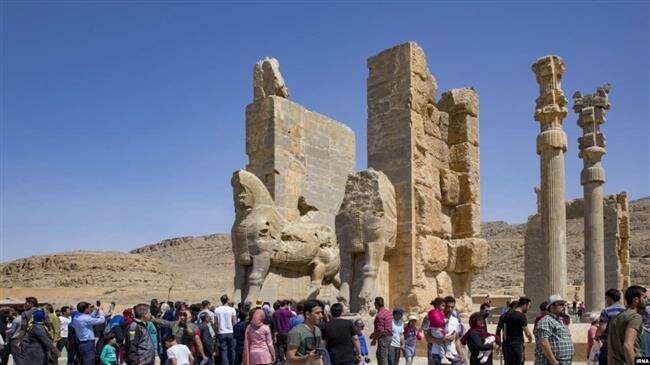
Head of Iran’s government department on tourism says around eight million foreigners visited the country in the last Iranian calendar year ending in March 2019.
“Some 7.8 million foreign tourists arrived in the country last year,” said Ali Asghar Mounessan, adding that the figure shows a 40-percent increase compared to the previous year.
Mounessan, who heads the Cultural Heritage, Handicrafts and Tourism Organization of Iran (ICHTO), said each tourists coming to the country spends an average sum of $1,400 during his stay, adding that almost all the money earned from tourists should be viewed as pure income as investment has been very low compared to the revenues generated in the sector.
He said the boom in tourism arrivals and revenues have come despite sanctions imposed by the United States in the past year, adding that major accommodation places across the country have been booked up for months to come.
Mounessan, a deputy president whose department is planned to be turned into a ministry in the coming months, said the government would double the budget earmarked to the tourism and handicraft management as the sectors keep attracting massive foreign currency into the country.
The official also said that Iran eyes $2 billion worth of exports of handicraft, saying that all provinces across the country had huge potentials that could be used to meet the target.
Mounessan said the decision to turn the ICHTO to a ministry would also allow the government to have a better policy for protection of historic monuments and artifacts existing across the country, saying that would further boost arrivals of the tourists who are mainly interested in visiting Iran’s cultural heritage.
The Saker Interviews Professor Marandi

The Saker • Unz Review • August 22, 2019
Introduction: first, several friends recently suggested that that I should interview Professor Seyed Mohammad Marandi; then I read this most interesting text on Moon of Alabama and I decided to ask Professor Marandi to share his views of the current situation in Iran, the Persian Gulf and the rest of the Middle-East who very kindly agreed to reply to my question in spite of his most hectic and busy schedule. I am most grateful to Prof. Marandi for his time and replies. Crucially, Prof. Marandi debunks the silly notion that Russia and Israel are allies or working together. He also debunks that other canard about Russia and Iran having some major differences over Syria. Prof. Marandi, who is currently in Iran, is superbly connected and informed, and I hope that with this interview some of the more outlandish rumors which were recently circulated will finally be seen for what they are: utter, total, nonsense. Enjoy the interview!
The Saker: It is often said that there is an “axis of resistance” which comprises Syrian, Hezbollah, Iran, Russia and China. Sometimes, Venezuela, Cuba or the DPRK are added to this list. Do you believe that there is such an “axis of resistance” and, if yes, how would you characterize the nature of this informal alliance? Do you think that this informal alliance can ever grow into a formal political or military alliance or a collective security treaty?
Professor Marandi: I definitely believe there is an Axis of Resistance that currently includes Iran, Syria, Iraq, Gaza, Lebanon, parts of Afghanistan, and Yemen. I do not think that we can include the DPRK in any way or form. I believe that Russia could be considered to a certain degree as aligned or affiliated to this resistance, but that this is not something many would feel the need to acknowledge. At certain levels, there is a lot of overlap between Russian and Chinese policy and the policies of the countries and movements in this region that are affiliated to this Axis of Resistance. The same is true with countries such as Venezuela, Bolivia, and Cuba, which I do not consider to be similar to North Korea at all. Just as almost everywhere else, American policy in the Korean Peninsula is ugly, hegemonic and malevolence, but the nature of the DPRK government is fundamentally different from that of Venezuela or Cuba, whether the Americans or Europeans like to acknowledge that or not. Others can interpret the Axis of Resistance to include or exclude certain countries, but it is pretty clear that Iran and Russia have similar policy objectives when it comes to certain key issues. Nevertheless, Russia has a close relationship with the Israeli regime whereas Iran considers it to be an apartheid state, almost identical to that of apartheid South Africa. Or for example the Syrian government position regarding Israel is different from that of Iran’s. The official Syrian position is that the West Bank and Gaza Strip must be returned to the Palestinians, in accordance with UN Security Council resolutions, and that the occupied Golan Heights have to be handed back to the Syrian people, which are legitimate demands. But the Iranian position is different, Iran firmly believes that Israel is a colonial and apartheid regime and that it is morally unacceptable for it to exist in its present form. Therefore, at least officially, there are substantial differences. So people can interpret the Axis of Resistance in different ways. It is important to keep in mind that despite Syria, Iran, Turkey and Qatar are also moving closer together partially thanks to US, Saudi, and UAE hostility towards the Muslim Brotherhood. What is important is that there is a growing consensus about key issues in this region and what the major problems are, and I think that as time goes on this loose alliance of countries and movements is growing more influential and more powerful. I cannot say whether there will be a formal or open collective security treaty or military alliance created by any of these countries in the near or foreseeable future and I do not see such a necessity. However, I think this convergence of ideas is very important and I think that the formal and informal links that exist between these countries is in many ways more important and more significant than formal political or military alliances or security treaties.
The Saker: In recent months a number of observers have stated that Russia and Israel are working hand in hand and some have gone as far as to say that Putin is basically a pawn of Netanyahu and that Russia is loyal to Israel and Zionists interests. Do you agree with this point of view? How do Iranian officials view the Russian contacts with the Israelis, does that worry them or do they believe that these contacts can be beneficial for the future of the region?
Professor Marandi: That is nonsense. The US and Israeli regimes are culturally and ideologically bound to one another, whereas the Americans have a deep antipathy towards Russia. That is why the Russians have a very different position on Syria than do the Americans and Israelis. The Israelis alongside the US, the EU, the Saudis, and some of Syria’s neighboring countries, supported ISIS, Al Qaeda, and other extremist entities and attempted to tear Syria apart. As explained earlier, the Russian view of Israel is different from Iran. There are many Russian Jewish immigrants in Israel and they constitute a large segment of the colonists in Palestine and they are largely utilized for the further subjugation of the Palestinian people and ethnic cleansing. Generally speaking, Russian interests are in sharp conflict with those of the United States, Israel’s strongest ally. In addition, Russia’s close relationship with Syria dates back to the cold war and the relentless US pressure on China and Russia has also acted as a strong catalyst to quicken their convergence with one another as well as with Iran on key issues. The Chinese and Russians know quite well that the United States, the Europeans, and regional countries have extensively used extremists in Syria to undermine the state and that those forces could later be used to undermine security in Central Asia, Russia, and China. A large number of Russian, Chinese, and Central Asians have been trained to fight in Syria, and this is a major threat to their collective security. The United States could use these and other extremists in an attempt to impede the potential success of the Belt and Road Initiative or other plans for Asian integration. Thus, there is a sharp and growing conflict between the Russians and the Americans.
The Israeli regime constantly tells the Russians and the Chinese that they are the gateway to Washington and that if they maintain strong ties with Israel, the Israelis can help them solve their problems with the United States. I do not think there is much truth to that, because this growing conflict is about the fate of US global dominance and there is nothing the Israelis can do to change that. Nevertheless, this has been used as an incentive for the Russians and the Chinese to maintain better relations with the Israeli regime.
In any case, Russia does not have to maintain identical views with Iran, Syria, Hezbollah, Lebanon, Iraq, or Yemen. Differences exist, but strong relationships exist nevertheless. All of these countries recognize that if the Americans are able to undermine any of them, whether it is Syria, Iran, Russia, or China, then that would only encourage the United States to be more aggressive towards the remaining countries that impede US foreign policy objectives or exist as potential rivals whether regionally or globally. So even though their political structures are different, even though their foreign policies are different, the similarities that exist are quite striking as well as the common threats. Again, to a large degree this coalition is a result of US and Western foreign policy, which has strong undercurrents of Eurocentricism, tribalism, and racism.
Not only has this pressure brought these countries and movements closer to one another, but it has also created a deeper understanding among them. The Russians understand Iran better today than they did 5 years ago, partially as a result of their cooperation in Syria. This greater understanding enhances the relationship, and helps to dispel many of the misunderstandings or myths that may exist about one another due to Eurocentric narratives and orientalism.
Hence, Iran is not concerned about Russian-Israeli relations. Obviously, in an ideal world Iran would like Russia to break relations with the Israeli regime for its apartheid nature. But reality is reality, and Iranian relations with Russia are very good and at times I am sure the Iranians send certain warnings to the Israelis through the Russians.
The Saker: How is Russia viewed in Iran? Are most Iranians still suspicious of Russia or do they believe that they have a viable and honest partner in Russia? What are the main reservations/concerns of patriotic Iranians when they think of Russia?
Professor Marandi: Historically, the Iranians have had serious problems with the Russians. The Russians and the Soviet Union interfered extensively in Iranian internal affairs and they undermined Iran’s sovereignty. But ever since the collapse of the Soviet Union the image of Russia has changed. Especially since Russia began fighting alongside Iran in Syria in 2015, Russia’s image has improved significantly. When we look at polls, Russia’s image is pretty good compared to Western countries.
Western governments own or fund dozens of Persian language media outlets These outlets, such as VOA and BBC Persian among others, are constantly spouting anti-Russian propaganda. Obviously they have an impact and that couples with historical Iranian concerns about Russia, but despite all that, the Russian image is relatively favorable and that says a lot.
The Saker: How about Turkey? Iran and Turkey have had a complex relationship in the past, yet in the case of the AngloZionist war against Syria, the two states have worked together (and with Russia) – does that mean that Turkey is seen as a viable and honest partner in Iran?
Professor Marandi: Iran’s relationship with the Turkish government is complicated, especially, because of the constant policy changes that have occurred IN TURKEY over the past few years. This has made the government seem unreliable in the eyes of many. Having said that, Turkey is very different from Wahhabi influenced regimes in the Arabian Peninsula. Turkish Islamic tradition has striking similarities with Iran’s Islamic culture and because of its strong Sufi tradition, Turkey is much closer to Iran than it is to, for example,Wahhabi Saudi Arabia.
The global Wahhabi menace has grown as a result of Saudi financial support, as well as the support of other countries in the Persian Gulf region. Turkish society has been more resistant, although ever since the military conflict in Syria and due to extensive funding from the Persian Gulf, there has been growing concern about growing sectarianism in Turkey, not unlike what happened in Pakistan in the 1980s.
Ironically, before the conflict in Syria President Erdogan had a closer personal relationship with President Assad than did the Iranians. They and their families would spend vacations together.
In any case, Turkey has a very strong economic, political, and cultural relationship with Iran, and some of the rising anti-Shia and takfiri sentiments that have been on the rise in Turkey were stunted by the Saudi and Emirati support for the attempted coup in Turkey. Subsequently, their open antagonism towards the Muslim Brotherhood and Qatar, their support for the coup in Egypt, their policies in Sudan and Libya, and of course the murder of Jamal Khashoggi, have all had a beneficial impact on Iranian-Turkish relations. As a result, Turkey has grown much more distant from Iran’s regional antagonists, while Turkish support for the Palestinian cause is another element that brings Iran and Turkey closer together. American support for PKK terrorists in Syria has also angered the Turks adding push to Turkish-Iranian convergence. Even Turkish policy towards Syria is evolving, although it is impossible for the government to make a radical change, because of years of attempts at regime change.
The Saker: Next, turning to Iraq, how would you characterize the “balance of influence” of Iran and the USA in Iraq? Should we view the Iraqi government as allied to Iran, allied to the USA or independent? If the Empire attacks Iran, what will happen in Iraq?
Professor Marandi: The relationship between Iraq and Iran is significantly more important than the relationship between Iraq and the United States. Iran and Iraq are allies, but this alliance does not contradict the notion of Iraqi independence. Iraq’s regional policy is not identical to Iran’s. But the two countries have very similar interests, a very close relationship, many Iraqi leaders have spent years in Iran, and the bulk of the Iraqi population lives close to the shared border of over 1,200 km between the two countries. So trade, pilgrimage, and tourism are key to both countries. The religious similarities and the holy sites that exist in Iran and Iraq are a huge incentive for interaction between the two countries. There are many Iraqi students studying in Iran and many Iranian’s working in Iraq. The fact that Iranians made many sacrifices when fighting ISIS in Iraq and many Iraqis were martyred in the war against ISIS and Al Qaeda in Syria is a strong indication of where things stand despite US pressure.
The Arba’een pilgrimage that takes place every year where millions of Iranians and Iraqis make the walk towards Karbala, side by side, with tens of thousands of Iraqi and Iranian volunteers helping pilgrims along the way is, I think, a further sign of the close relationship.
While the U.S presence in Iraq continues to be hegemonic, Iran has not sought to prevent Iraq from having normal relationships with other countries. However, the U.S continues to seek control over Iraq through the world’s largest embassy, its military presence, and its influence over the bureaucracy. The United States continues to have much say over how the country’s oil wealth is spent.
Still, despite the US colonial behavior, its continued theft of Iraqi oil wealth, and its thuggish behavior, the Iraqis have been able to assert a great deal of independence. In the long run, this continued US behavior is only going to create further resentment among Iraqis. The empire rarely takes these realities into account, they seek to accumulate influence and wealth through brute force, but in the long term it creates deep-rooted anger and hostility which, at some point, will create great problems for the empire, especially as this anger and unrest is growing across the region, if not across the globe.
It is highly unlikely that the regime in Washington will attack Iran, if it does it will bring about a regional war, which will drive the United States out of Iraq, Afghanistan, Lebanon, and Syria. Saudi Arabia and the Emirates would, swiftly collapse and the price of oil and natural gas would go through the roof, leading to a global economic meltdown even as millions of people will be streaming towards Europe.
The Saker: It is often said that Russia and Iran have fundamentally different goals in Syria and that the two countries regularly have tensions flaring up between them because of these disagreements. Is that true? In your opinion, how are Russian and Iranian goals in Syria different?
Professor Marandi: The news that we sometimes hear about serious tensions existing between the Iranians and the Russians in Syria is often nonsense. There are clear reasons for people to exaggerate small incidents or to fabricate them altogether, but the relationship is quite good. Iran does not intend to have any military bases in Syria, whereas the Russians do feel the need to preserve their military presence in Syria through long-term agreements.
But ultimately, Iran would like to help enable Syria to acquire the military capability to retake the occupied Golan Heights. Iran does not intend to initiate any conflict with the Israeli regime inside Palestine. That is not an objective in Lebanon and that is not an objective in Syria. As in Lebanon, where the Iranians supported Hezbollah to restore the country’s sovereignty and to drive out the Israeli aggressors and occupiers, the Iranians have the same agenda in Syria. They want to support the Syrians so that they will be able to restore full sovereignty. I don’t believe the Golan Heights is a priority for the Russians.
The Saker: For a while, Iran let the Russian Aerospace Forces use an Iranian military airfield, then when this became public knowledge, the Russians were asked to leave. I have heard rumors that while the IRGC was in favor of allowing Russian Aerospace Forces to use an Iranian military airfield, the regular armed forces were opposed to this. Is it true that there are such differences between the IRGC and the regular armed forces and do you think that Iran will ever allow the Russian military to have a permanent presence in Iran?
Professor Marandi: That is a myth. The Russians were not asked to leave. There were no differences between the IRGC and any other part of the armed forces. This was a decision made by the Supreme National Security Council and the President and all the major commanders in the military were involved in this decision. Actually, the airbase does not belong to the guards it belongs to the air force and a part of the base was used for Russian strategic bombers that were flying to Syria to bomb the extremists. This cooperation ended when the Russians were able to station adequate numbers of aircraft in Syria, because the flights over Iran were long and expensive, whereas the air campaign launched from bases inside Syria was much less expensive and much more effective. Iran was very open about its relationship with the Russians, and openly permitted the Russians to fire missiles over Iranian airspace. There were those who were opposed to the Russian presence in the Iranian airbase. A small segment of Iranian society that is pro-Western and pro-American complained about it in their media outlets, but they had absolutely no impact on the decision-making process. According to polls, an overwhelming majority of Iranians supported Iran’s activities in Syria, and the Supreme National Security Council was under no pressure to its decision. However, Iran does not plan to allow any country to have permanent bases in the country and that is in accordance with the constitution of the Islamic Republic of Iran. The revolution in Iran was about independence, dignity, sovereignty and indigenous values, and the removal of American hegemony over Iran was very much a part of that. The Iranians will not give any bases to foreign powers in future, and neither the Russians nor the Chinese have ever made such requests. There are absolutely no differences regarding Iran’s regional policies between the IRGC and the rest of the military, both were a part of the decision-making process when the Russians were allowed to fire missiles over Iranian territory and both were part of the process in allowing Russian aircraft to use Iranian airspace. The Russian bombers were providing air support for Iranian troops and Iranian affiliated troops on the ground.
The Saker: Both Ayatollah Ali Khamenei and Hezbollah Secretary General Hassan Nasrallah have made repeated statements that the days of the racist ZioApartheid regime in occupied are numbered. Do you agree with their point of view and, if yes, how do you see such a regime change actually happening? Which of the One State solution or a Two State solution do you believe to be more realistic?
Professor Marandi: I do not believe the two-state solution is possible because the Israeli regime has colonized too much of the West Bank. Actually, through acts of selfishness and petty short-term gain, the regime has damaged itself enormously. As a result of the colonization of the West Bank, even the European elites and diplomats who would privately admit that the Israeli regime pursues apartheid policies and who would always speak of hope for a two-state solution, admit that the two state solution is dead. All Palestinians are treated as sub humans, whether they reside in the West Bank or not. They are a subjugated nation, whether they are Israeli citizens or not. However, there is no longer any hope that those who live in the occupied West Bank will gain freedom, even though we predicted the Israelis would never voluntarily relinquish the West bank. This is the most important challenge that the regime faces in the future. By colonizing the West Bank and despite official western media and government narratives, it is increasingly seen by the international community as the apartheid regime that it is. It is delegitimizing itself in the eyes of larger numbers of people.
In addition to that, it can no longer behave with impunity. The 2006 war in Lebanon where the Israeli armed forces were defeated by Hizbullah was a turning point. Before then, the Israelis had created an image that they were invincible. But now even in Gaza, they are unable to carry out their objectives when they periodically attack the territory and its civilians. The Israelis are now more easily contained especially since the Syrian government has been able to restore order and expel ISIS and al-Qaeda from areas neighboring Israeli forces on the occupied Golan Heights, despite the Israelis supporting the extremists. The Israelis have been contained regionally, at home they are increasingly seen as an apartheid regime. Its regional allies are also on the decline and regionally. Saudi Arabia and the UAE are the only countries that can be considered as effective allies and they are facing a potential terminal decline. Therefore, regionally the regime is becoming more isolated. I do not believe that under such circumstances, the Israeli regime can last for very long. Just as the apartheid regime in South Africa collapsed under the burden of its own immoral existence, the Israeli regime will not last. There will be no two-state solution, the only realistic and moral solution is for Palestine to be united and for the indigenous population to have its rights restored, whether they are Palestinians, Jews or Christians or anyone else who is indigenous to the land.
The Saker: Iran is an Islamic Republic. It is also a majority Shia country. Some observers accuse Iran of wanting to export its political model to other countries. What do you make of that accusation? Do Iranian Islamic scholars believe that the Iranian Islamic Republic model can be exported to other countries, including Sunni countries?
Professor Marandi: I do not think that there is any validity to that accusation. Iran has a very excellent relationship with Iraq, but it has not imposed its model on the country. In fact, Iran helped create the current constitution of that country. The same is true for Lebanon and Yemen. Iran is constantly accused by its antagonists, but in the most inconsistent ways. Elsewhere they claim that Iran is afraid of their model being exported because they are fearful of rivals. Iran has always been attacked from all sides often using self-contradictory arguments. On the one hand, the so-called regime is allegedly immensely unpopular, it is corrupt, it is falling apart, and it is incapable of proper governance. Yet on the other hand, Iran is a growing threat to the region and even the world. This is paradoxical, how can Iran be incompetent and collapsing on the one hand, yet a growing threat to the whole world on the other hand? This simply does not make sense. Nevertheless, I have seen no evidence that Iran has tried to impose its model on other countries or on movements that are close to it. If it was not for Iran’s support, ISIS and al-Qaeda would have overthrown Syria with its secular government and secular constitution. Iranians firmly believed that the terrorist forces supported by Western intelligence services as well as regional regimes were the worst case scenario for the Syrian people. Did they impose their model?
The Saker: thank you for all your answers!
Featured Video
Trita Parsi: Middle East Unraveling — Are We on the Path to World War?
or go to
Aletho News Archives – Video-Images
From the Archives
Why Saudi Ties to 9/11 Mean U.S. Ties to 9/11
By Kevin Ryan | Dig Within | September 27, 2015
Media interest in Saudi Arabian connections to the crimes of 9/11 has centered on calls for the release of the 28 missing pages from the Joint Congressional Inquiry’s report. However, those calls focus on the question of hijacker financing and omit the most interesting links between the 9/11 attacks and Saudi Arabia—links that implicate powerful people in the United States. Here are twenty examples. … continue
Blog Roll
 Aletho News
- Neria Leiter Was A Legitimate Military Target
- Integrity Initiative: UK-funded network framed dissent as Russian disinformation for years
- ‘We don’t seek permission to defend our country’: Snippets from President Pezeshkian’s UNGA address
- NATO chief wants Europeans to fight American wars [for Israel]
- German chemicals giant reveals details of downsizing
- Refaat Al-Areer Was The Canary In The Coal Mine In Israel’s War On The Truth
- Israeli election committee bars candidate from Knesset race over Gaza war opposition
- French-Lebanese man files war crimes complaint over Israeli attacks
- Mahan Air Flight Lands in China Despite US Threat against Iranian Airlines
- US eyes $10bn fund to rebuild war-battered Gulf infrastructure
- If Americans Knew
- Caught on Tape: AIPAC CEO Boasted of Controlling Trump’s National Security Officials
- Why Hamas Attacked Israel in October 2023 – Israeli professor Ilan Pappé
- They see them, then kill them: Israeli quadcopters track, deliberately target civilians in Gaza
- Winter could turn Gaza’s treacherous, war-damaged buildings into deathtraps
- Majority of Democratic Voters Want to Prosecute Both Biden and Trump Administration Officials Over Gaza
- As Gaza languishes, world leaders gather at the UN – Daily Update
- Sanctions are collective punishment: immoral and self-defeating
- Phosphorus Munitions Fired by Israel Burn Groves, Orchards in Southern Lebanon
- Israel Carries Out New Ceasefire Violations Across Gaza
- AI – Emphasis on the ‘I’: Israel Is Funding AI Chatbot Propaganda
- No Tricks Zone
- New Study: Earth And Venus Surface Warmth Largely Explained By Convection And Lapse Rate, Not CO2 Or Radiation
- 2025 Nature Paper Claiming Worsening Global Drought Gets RETRACTED …Heavily Flawed
- New Study: ‘Global Drought Shows No Detectable Recent Acceleration Under Climate Warming’
- Economic Masterminds: German Socialists Suggest Taxing Productivity Gains Stemming From Using AI
- The South China Sea Has Not Been Cooperating With The Climate Change Narrative
- Energy Crisis: Germany Enters Heating Season With Historically Low Gas Reserve Fill Levels
- New Study: The Antarctic Ice Sheet Gained Mass From 2020-2024 Due To Staggering Snow And Ice Accumulation
- Study: Ocean Heating Rates From Thousands Of Years Ago ‘Dwarf’ Modern Ocean Heating Rates
- Climate Extremists Target, Attack Large-Scale Power Grid Infrastructure In Germany!
- New Study: Antarctic Ice Melt Has Contributed Less Than 1 Centimeter To Sea Level Rise In The Last 30 Years

