Pompeo ‘Happy’ to Pontificate in Tehran, Revealing US Tyranny of Arrogance
By Finian Cunningham | Strategic Culture Foundation | August 3, 2019
Imagine the spectacle. US Secretary of State Mike Pompeo sitting in Tehran and telling the Iranian people via a state media interview how “evil” their government is. No wonder tensions with Iran are reaching a flashpoint when Washington is so arrogant and delusional.
Last week, Pompeo told US media he was willing to go to Iran despite the Americans having no diplomatic relations with Tehran. Pompeo was not intending to suddenly meet with Iranian officials. Instead he wants a putative visit to Tehran to be an occasion to get on state media and address the Iranian people “directly”.
In response to a question about whether he was prepared to go to Tehran, the American top diplomat said: “Sure. If that’s the call, I’d happily go there… I would welcome the chance to speak directly to the Iranian people.”
“I’d like a chance to go [to Tehran], not do propaganda but speak the truth to the Iranian people about what it is their leadership has done and how it has harmed Iran,” he added.
That’s not diplomatic outreach. It is simply about seeking the chance to pontificate in Tehran. Despite claiming he would “not do propaganda”, the talking points that Pompeo would regurgitate on Iranian media would be the usual baseless slander that has become Washington’s standard depiction of Iran. A depiction that Pompeo as well as President Donald Trump have personally propagated.
Iran, according to Washington dogma, is an evil terrorist-sponsoring regime that ruthlessly represses its 80 million people, fueling conflict all over the Middle East, and secretly building nuclear weapons. Typically, the Americans never provide any evidence to substantiate their caricature of Iran. It’s merely a “truth” solidified by relentless repetition of hollow allegations. In short, propaganda.
And Pompeo wants to insult the intelligence of Iranians by being given a pulpit on Iranian state media.
By saying he wants to “speak directly” to the Iranian people, Pompeo is adverting to the real US agenda of fomenting regime change.
America’s official arrogance and hypocrisy are boundless. Every malign activity that Washington accuses Iran of can be thrown straight back at the US with manifold more accuracy of facts. The US has destroyed the Middle East with numerous criminal wars and covert regime-change operations, has sponsored terrorists as its proxies, and has fueled the danger of nuclear war by illegally arming Israel with hundreds of weapons of mass destruction.
President Trump has sinisterly alluded to potentially using WMD against Iran in recent weeks, threatening to deploy overwhelming force “to end the regime”.
Admittedly, the American president has at times said he is open to talks with the Iranian government. His “offer” is unconvincing of an intention for genuine dialogue. Trump expects Iran to come to the negotiating table in an act of surrender and self-debasement to accept his terms of “disarmament”. All the while using the threat of annihilation as a bargaining tool.
Moreover, Pompeo expressed his entitlement to lecture the Iranians and urge them to liberate themselves from a “theocratic tyranny” because, he said, the Iranian foreign minister Mohammad Javid Zarif is allowed “the freedoms of the United States to come here and spread malign propaganda”.
Pompeo was referring to an official visit to the US earlier this month by Zarif who was attending the United Nations in New York City for a diplomatic conference. All foreign diplomats have a sovereign right to attend the UN. Pompeo’s remarks indicate a presumption that the US government has dominion over the UN and international law.
The alleged “malign propaganda” that Pompeo accused Zarif of spreading was an interview he conducted with the NBC news channel at the Iranian ambassador’s residence. During that interview, Zarif did not unload on the litany of factually verifiable war crimes that the US is culpable of.
What Zarif said was a model of restraint and diplomacy. He said that if the US lifted crippling sanctions off Iran, then the “door is wide open” for future negotiations.
Calling for the avoidance of war, the Iranian diplomat pointed out that it was the United States, not Iran, that had undermined diplomacy by walking away from the 2015 nuclear agreement between Tehran and world powers, reported NBC.
“It is the United States that left the bargaining table. And they’re always welcome to return,” Zarif added.
What Pompeo calls “malign propaganda” many other people would view as an accurate, if restrained, telling by the Iranian diplomat of how it really is.
Given the unlawful aggression that the Trump administration is wielding against Iran in terms of economic warfare on the country’s vital oil trade and in terms of military force buildup in the Persian Gulf, including nuclear-capable B-52 bombers, what Iran is demonstrating is an immense discipline to maintain regional and world peace.
Iran’s conditions for possible negotiations are eminently reasonable. They include being respected as a sovereign nation and entering into dialogue as a mutual party where discussions can be held on the basis of facts and international law.
Pompeo’s supreme arrogance about America’s presumed exceptional entitlements and superiority are, unfortunately, a sign that Washington is incapable of being a normal state. The real “theocratic tyranny” is in Washington where it has the perverse belief that it has divine right to destroy other nations if they don’t grovel sufficiently at its feet. But those feet are made of the proverbial clay signifying a doomed power, as Iran’s dignity and defiance is revealing.
Iran’s Zarif drives Trump to insanity
By M. K. BHADRAKUMAR | Indian Punchline | August 1, 2019
At a time when the Trump administration has no problem negotiating with the secretary of the Russian national security council Nikolai Patrushev, who is technically under US sanctions since April 2018, the cut and thrust of Washington’s move to sanction Iran’s Foreign Minister Mohammad Javad Zarif needs to be understood properly.
How did US Secretary of State Mike Pompeo try to explain the dispatch of Zarif to perdition? Pompeo’s statement on Wednesday attributed to Zarif a singular sin: a) Zarif “acted on behalf of the Supreme Leader”; b) Zarif took “direction from the Supreme Leader and his office”; c) Zarif was “a key enabler of Ayatollah Khamenei’s policies throughout the region and around the world”; d) and, Zarif has been “a senior regime official and apologist” of Iranian government and has “for years now been complicit in these (Iran’s) malign activities”.
Basically, Pompeo’s grouse narrows down to this: Zarif is a disciplined dutiful, loyal Iranian public servant who abided by the Iranian system of government founded in the concept of velāyat-e faqīh (‘guardianship of the Islamic jurist’.)
Does that become a sin? Any foreign minister has his job cut out for him — even Pompeo himself. Pompeo has no pretensions that he is holding the job entirely at the pleasure and discretion of his supreme leader President Trump. Trump, in fact, is an unforgiving stickler for loyalty. Ask James Mattis or Rex Tillerson.
The US establishment knows very well how the concept velāyat-e faqīh operates, how the alchemy of political power is formed in Iran, and how the decision-making process is reached. Even Trump would know it. Which is why he even tried to get through to Supreme Leader Ayatollah Ali Khamenei (and was duly snubbed.) So, where is the beef?
Simply put, Zarif per se is the problem. The Trump administration is desperately keen to put an end to Zarif’s contacts with the American elite. Zarif lived and worked for several years in America from the age of 17 — as a high school student, university student, and career diplomat, ending up as Iran’s representative at the UN from 2002 to 2007. He also kept closely in touch with the US academia and intellectual circles in his capacity as a professor and editor of scholarly journals in Tehran who has written copiously on disarmament, human rights, international law, and regional conflicts.
Indeed, what rankles the Trump administration is that Zarif has extensively networked with American intellectuals, politicians, think tankers and media persons — figures as diverse as Joseph Biden, John Kerry, Nancy Pelosi, Chuck Hagel, Nicholas Kristof, Thomas Pickering, James Dobbins and Christian Amanpour.
Zarif took his job seriously and being a fluent English speaker, he could tweet and debate and spar with any American with delectable ease. Zarif outclassed the mediocre American foreign and security policy team.
Zarif’s periodical visits to New York (ostensibly to attend the UN events) increasingly became a nightmare for the Trump administration as he cast his net wide and ably put across Iran’s narrative. Trump singled out more than once that Zarif had meetings with Kerry, former state secretary who negotiated the 2015 Iran deal.
This is the crux of the matter. By imposing sanctions on Zarif, the US can deny visa to him and render unlawful (and liable to prosecution under law) any contact between him and any American national. Effectively, Trump instructed Pompeo to make sure that Zarif doesn’t come to New York between now and the 2020 November election so that his detractors and critics cannot hear from the horse’s mouth the Iranian narrative.
Trump feels exasperated that Iran is winning the information war. And he is worried that between now and November 2020, his re-election campaign may get booby-trapped. For any longtime observer of the US-Iran standoff, it is obvious that a sea change has appeared in the American discourses on Iran. There is an influential and ever growing body of opinion in the US today, which disagrees with Trump’s ‘maximum pressure’ strategy. This constituency rationally argues that Trump shouldn’t have dumped the 2015 deal.
Equally, there is a far better understanding today in the informed American opinion regarding Iran and its policies, and the zen of dealing with Persian nationalism beneath the veneer of Islamism. The surprising part is that such an awakening has happened despite the Herculean efforts by the Israeli Lobby to demonise Iran and to stymie all contrarian views in the media, think tanks and campuses — and the Hill.
Will Trump’s ploy work? Unlikely. The point is, Zarif is irrepressible. He will continue to tease, taunt, disparage, humiliate and expose and run down Trump’s Iran policies. Worse still, Zarif has driven a knife into the heart of the ‘B Team’ driving the US administration’s Iran policies currently.
Trump’s sanctions against Zarif will not set an example for any other country which has diplomatic relations with Iran. In the final analysis, Trump will have to deal with Zarif, whether he likes him or not.
The best way to counter Zarif would have been to handpick an intellectually resourceful, dynamic state secretary. A mediocrity like Pompeo stands no chance with Zarif. This is a dumb thing Trump has done. He should have known better.
In 2001, Zarif was Iran’s main representative at the Bonn Conference, which brought together regional players in the aftermath of the US invasion of Afghanistan and the ousting of the Taliban. His American counterpart at the event, James Dobbins — who was later named as the Obama Administration’s special envoy to Afghanistan — wrote a memorable essay titled Negotiating with Iran: Reflections from Personal Experience in the Washington Quarterly about Zarif’s erudition, wit and charm — and his pragmatism, which helped the two gifted diplomats to thrash out “over morning coffee and cakes” a deal that led to the replacement of the Northern Alliance government in Kabul with a US-backed interim set-up under Hamid Karzai. (Burhanuddin Rabbani remarked bitterly at that time he hoped that would be the last time a foreign power ever dictated to Afghans.)
Washington has now sanctioned the man who played a pivotal role in that fateful transition in Kabul leading to the installation of the US’ client regime in the Hindu Kush. Some gratitude!
Russia presents UN with Persian Gulf collective security plan amid tensions
Press TV – July 30, 2019
Russia has submitted to the United Nations a proposal that calls for collective security in the Persian Gulf at a time of rising tensions in the strategic region.
In two identical letters addressed to the UN Security Council and the General Assembly and obtained by Russia’s TASS news agency on Tuesday, Moscow underlined the need for an “effective” measure to boost stability in the Persian Gulf.
“In the current conditions, energetic and effective action is needed at international and regional levels in the interests of improving and further stabilizing the situation in the Persian Gulf, overcoming the prolonged crisis stage and turning this sub-region to peace, good neighborly relations and sustainable development,” the letters read.
They also called on regional and extra-regional countries to engage in bilateral and multilateral talks aimed at forming a security system in the Persian Gulf.
“Practical work on launching the process of creating a security system in the Persian Gulf may be started by holding bilateral and multilateral consultations between interested parties, including countries both within the region and outside of it, UN Security Council, LAS (League of Arab States), OIC (Organization of Islamic Cooperation), GCC (Persian Gulf Cooperation Council),” they added.
Moscow further expressed its readiness to cooperate with “all interested parties to implement this and other constructive proposals.”
The Russian Foreign Ministry unveiled last week its plan for collective security in the Persian Gulf, which envisages holding an international conference as well as establishing an organization on regional security and cooperation.
Recently, the US has taken a quasi-warlike posture against Iran and stepped up its provocative military moves in the Middle East, among them the June 20 incursion of an American spy drone into the Iranian borders.
The UK has also joined the US in fueling tensions with Iran by seizing an Iranian-owned supertanker in the Strait of Gibraltar on July 4 in an apparent act of “maritime piracy.”
Two weeks later, a British-flagged tanker failed to stop after hitting an Iranian fishing boat — as is required by international law — in the Strait of Hormuz. Iran’s Islamic Revolution Guards Corps (IRGC) impounded the ship after its unsafe maneuver.
Earlier this month, Marine General Joseph Dunford, chairman of the Joint Chiefs of Staff, said the US was working to form a military coalition to protect commercial shipping off the coast of Iran and Yemen.
Former British foreign secretary Jeremy Hunt also unveiled plans for a European-led naval mission, which he said would be aimed at ensuring safe shipping through the Strait of Hormuz.
Talks only possible with ‘tangible results,’ but US does not ‘seek dialogue’ – Tehran
RT | July 29, 2019
There is no point in talking when no “practical results” can be achieved, and Washington is not interested in good-faith dialogue, the Iranian Foreign Ministry spokesperson said amid rising tensions with the US.
“Dialogue and negotiation can be held when we have a certain agenda in place, and when we could get some tangible and practical results out of it,” Abbas Mousavi said on Monday, as cited by Reuters.
The Americans “are not seeking dialogue,” he added.
Problems have been piling up between the US and Iran over the Iranian nuclear and ballistic missile programs, as well as attacks on oil tankers in the Gulf of Oman, which the US blames Tehran for. Iran denies any wrongdoing and urges Washington to stop meddling in regional affairs.
Earlier this week, US Secretary of State Mike Pompeo proposed traveling to Iran to “speak directly to the Iranian people.”
Mousavi rebuffed Pompeo’s offer as a step in “psychological warfare” and a “defensive move” by the US in response to Iranian Foreign Minister Mohammad Javad Zarif’s recent trip to New York. The official said Iran “sees no sincerity” in Pompeo’s suggestion and pointed out that Zarif travels to New York only to attend UN events, not for bilateral talks with the US.
Amid the standoff with Iran, US officials maintain that Washington is open and ready for dialogue, but not until the Islamic Republic fulfills a laundry list of demands. Tehran has also been saying that it is ready to negotiate, but only on an equal footing and without threats and ultimatums by the US.
Johnson Forced To Tow Establishment Line When Dealing with Iran
Press TV – July 27, 2019
Britain’s new Prime Minister, Boris Johnson, has immediately been engrossed in controversy upon assuming the highest office in the land.
He has landed in hot water because of his father’s hard-hitting interview with Press TV.
Speaking to Press TV on July 25, two days after his son was declared prime minister, Stanley Johnson said he was looking forward to seeing Boris “building bridges with Iran”.
Talking up Boris’ fascination with ancient history, and his apparent “love” for Iran, Johnson Snr claimed that: “Iran means so much to him, so the chance to have long-standing relationship with a country with such a fantastic history…”
Johnson Snr even proposed the following solution to the tankers dispute: “I think the best thing would be to say, look, we let your ship go you let our ship go… easy peasy”.
Stanley Johnson came under immediate attack from the British press for his supposedly “bizarre gaffe” on “Iranian state TV”.
For his part, Boris Johnson explicitly opposed his father’s position, and possibly his own beliefs, by parroting the establishment line on this issue.
Despite all the hot issues of the day, not least Brexit, Johnson opted to focus on Iran as his top priority at the very beginning of his premiership.
Addressing parliament for the first time as prime minister, Johnson attacked the leader of the opposition, Jeremy Corbyn, for “appearing” on Press TV and “siding” with Iran.
Johnson was subsequently ridiculed by the tabloid press for attacking Corbyn for committing the same supposed sin as his own father.
However, this about-face is hardly surprising as, at the end of the day, the PM is expected to follow the old establishment guidelines on foreign policy matters.
If anything, this episode demonstrates the power of the establishment in imposing its values, requirements and policy priorities on the highest office of the land.
Boris Johnson has developed a reputation as an amateur historian. Back in 2006 he authored the book “The Dream of Rome” to showcase his historical knowledge.
The book was also the subject of a BBC documentary, with Johnson as the star of the show, thus further burnishing his credentials as a historian.
If he was true to his training as an amateur historian, and a putative “lover” of Iran, then Johnson would take immediate steps to ease tensions with Iran.
Some international observers tend to lean toward his father’s view on the tankers dispute. They argue that releasing the Grace 1 super-tanker, which was unlawfully seized in the Gibraltar Strait by the Royal Marines earlier this month, would constitute a credible de-escalatory first step.
His strength of personality and bombast notwithstanding, Boris Johnson’s words and actions in his first few days in office do not instill confidence that he will stay true to his own instincts and judgement on Iran.
The Media Is Reluctant to Report Israel Boasts of Killing Iranians

Israel’s Regional Cooperation Minister Tzachi Hanegbi. Credit: Facebook
By Philip Giraldi | American Herald Tribune | July 27, 2019
It is rare that a high official in a government will admit that his country has been killing foreigners without any declaration of war or being subjected to an imminent threat, but that is exactly what Israeli Regional Cooperation Minister Tzachi Hanegbi has done recently, boasting on a Sunday morning talk radio show that “Israel is the only country in the world that has been killing Iranians for two years now.”
Hanegbi’s candid admission of a policy that is a war crime included his description of how Israel “strikes the Iranians hundreds of times in Syria, sometimes admits it and sometimes foreign reports reveal it. Sometimes the chief of staff [reveals it], sometimes the outgoing air force chief [reveals it], but it’s all coordinated policy.”
The interviewer then asked “what would happen should Israel get in trouble with Iran?” and Hanegbi responded that “You can see that the Iranians are very limited in their responses [to Britain’s seizure of their tanker], and it’s not because they don’t have abilities, it’s because they understand that Israel means business.”
Hangebi went on to add that Israel is “very aggressive when it comes to our national security… We still didn’t see the Iranians backing off from their intention to entrench themselves militarily in Syria, and this campaign isn’t over. But they know exactly who to mess with, and who can be annoyed. We can’t.”
The minister’s comments inevitably were not reported in the western media, which is reluctant to air anything that demonstrates just how irresponsible Israeli policies actually are. In the United States, in particular, the Jewish state is consistently portrayed as some kind of perpetual victim in spite of the fact that it is the only nuclear armed power in its neighborhood as well as having the most powerful conventional military arsenal.
The Iranian government did not respond directly to the report of the Israeli minister’s comments, but there was some mention on Tehran’s Press TV local broadcast, which noted that “This is how Israelis are freely and proudly talking about killing Iranians! Just imagine what would happen if it was the other way around!” Indeed. A boast by Iran that it had been very successful at killing Israelis would have produced shocked headlines in every European and American newspaper.
The Israeli admission that it is attacking targets in Syria should come as no surprise to anyone who has been following developments in the region. That there have been hundreds of attacks may be an exaggeration to impress the Israeli listeners regarding their country’s military prowess, but it is certainly true that numerous incidents have been recorded both by the Syrian government and by foreign observers. In one notorious incident on Christmas Day 2018, Israeli warplanes masked their approach to targets inside Syria by flying closely behind civilian airliners transiting the region. It has been speculated that they hoped that Syrian air defenses would respond by shooting down a civilian plane, creating a major crisis for the Bashar al-Assad government. In the event, the Syrians held their fire and the Israeli warplanes launched their missiles against targets near Damascus, killing Syrian military personnel and civilians on the ground.
What is astonishing is that Minister Hangebi does not perceive the implications of the Israeli government’s apparent willingness to kill Syrians on the ground by intent and also as collateral damage even though it is not at war with Damascus. It does so with the stated objective of killing Iranians even though it is also not at war with Iran. It is, to state it succinctly, several war crimes tied up in one package and it would make the Jewish state uniquely a rogue among nations but for the fact that the United States has done the same sort of thing with cruise missile strikes in Syria, though not in as sustained a fashion as have the Israelis.
Israel’s willingness to use its armed forces in what might be described as non-traditional roles creates some very specific problems for the region. One particular concern is that the Israelis might stage a false flag attack, possibly in cooperation with its temporary friend Saudi Arabia, to draw outside powers into a war with Iran. The recent incidents involving mining two tankers, attributed to Iran but much more likely a false flag, nearly succeeded in doing just that. Subsequent incidents involving the seizures of a tanker carrying Iranian oil by the British and a retaliatory move against two British tankers by the Iranians have threatened to escalate into a shooting war. There should be little doubt that any ambiguous armed exchange involving Iran and Israel would see the American Jewish dominated media immediately laying the blame on the Iranians, producing demands by the Israel Lobby, Christian Zionists and Congress to get involved in the conflict.
There should also be particular concern over developments in neighboring Iraq, even though the country is not yet under attack by the Israelis. Shi’te militias in the country, linked to Iran, have long demanded that American military bases be closed down. Recent rocket attacks on the bases have been blamed on the militias, with Washington placing particular emphasis on the militia links to the Iranian Revolutionary Guard Corp, which has now been listed as a state sponsor of terrorism by the U.S. State Department. The Israelis are well aware of the dynamics of what is going on in Iraq and might be inclined to stage an incident in that country that will kill Americans and be blamed on the Iranians. The comments by Minister Hangebi that Israel is “very aggressive when it comes to our national security” would strongly suggest that his country is prepared to do anything – even something quite stupid – to eliminate what it sees as the Iranian threat.
The tragedy in all this for Americans is that Washington is being led into war by an Israeli propaganda and influence machine that is second to none. In May four hundred Congressmen signed on to a generic bill that was intended as a blanket endorsement of Israeli behavior and a blank check for the ruthless Netanyahu government to do whatever it sees fit in “self-defense,” with Washington willing to be dragged into a conflict in which it has no real interest just to show its loyalty to the Zionist enterprise. More recently, by last Tuesday’s vote of 398 to 176, another Congressional bill condemned and established penalties against the nonviolent Boycott, Divestment and Sanctions (BDS) movement, which has become a bête noire for all of Israel’s friends. If America is ever to regain its independence from foreign entanglements the time to start is now and the process should begin by disengaging from Israel.
UK court rejects Iran claims for £20m interest on old defense deals
Press TV – July 26, 2019
A top court in Britain has dismissed a complaint lodged by Iran seeking at least £20 million in interest for a debt related to a series of defense deals signed before the Iranian revolution of 1979.
Judge Stephen Phillips from the High Court in London ruled on Friday that the UK does not have to pay the sum that Iran believes has accrued on £387 million owed to Tehran over the failed delivery of more than 1,500 Chieftain tanks and armored vehicles based on contracts signed as of 1971.
The judge said the interest was accumulated over a 10-year period when Iran was under sanctions. The ruling also asserted that there was still ambiguity for the UK to decide to which Iranian government body it should pay the main debt so that it could avoid current sanctions.
The ruling deals a fresh blow to efforts meant to reduce tensions between Iran and Britain as the two countries are locked in several disputes, including two recent ship seizure incidents and a high-profile legal case related to the imprisonment of several dual nationals.
Britain has repeatedly refrained from paying the debt it acknowledges it owes to Iran, citing illegal sanctions imposed by the United States on Tehran.
Newly-appointed Prime Minister Boris Johnson once briefed the journalists in February 2018 after a trip to Tehran as foreign minister that the money will be paid back.
However, the payment never took place to the irritation of Tehran which thinks London is trying to use the case to solve other problems, including the much-publicized imprisonment of Nazanin Zaghari Ratcliffe, an Iranian-British national who is in jail in Iran for espionage convictions.
The court ruling also comes amid renewed tensions in the Persian Gulf where Iran has refused to release a British tanker since it was seized last Friday for violation of maritime rules.
The incident came two weeks after British marine forces boarded a supertanker laden with Iranian oil near the UK overseas territory of Gibraltar.
Iran’s seizes UK tanker in counter-escalation
By M. K. BHADRAKUMAR | Indian Punchline | July 21, 2019
The seizure of a British oil tanker by the Islamic Revolutionary Guards Corps on July 20 in the Strait of Hormuz has all the hallmarks of a retaliatory act in the downstream of the seizure of an Iranian tanker by the British Navy exactly two weeks ago on July 4 off Gibralter.
On July 16, Iran’s Supreme Leader Ali Khamenei had warned, “Iran will respond to the vicious Britain’s piracy. Iran’s response will come at the right time and the right place.” Four days alter, IRGC struck. An IRGC statement gave a detailed account of what happened. Footage of the incident has also been released — just as Britain did.
Iran is taunting Britain and making it look foolish. Britain is now left with no option but to negotiate. And the outcome of any negotiations can be easily foretold — Britain will have to unceremoniously set free the Iranian tanker.
Quite obviously, the seizure of the Iranian tanker by Britain was done in tandem with the hardliners in Washington and it is by now clear that the EU distanced itself from it. Britain’s dilemma now will be that all its ships in the Strait of Hormuz are in Iran’s crosshairs.
Yesterday’s incident was a calculated act by the IRGC, enacted right under the nose of a British warship, which was escorting the tanker. When the warship threatened to open fire, IRGC retorted that it would also retaliate with fire. Thereupon, an Iranian helicopter dropped masked men on the British tanker and took control of it. The intention is to make the Brits look impotent and stupid. (See the Press TV commentary The Royal Navy: From Piracy to Impotence.)
In a broader perspective, therefore, it appears that Iran may have underscored that its earlier threat must be taken very seriously — that if its oil exports ever got intercepted or blocked, then no one will be allowed to export oil via the Strait of Hormuz.
****
On July 17, Iran’s semi-official news agency Fars News had carried an interview with me (in Persian) on the seizure of the Iranian oil tanker by Britain and its likely consequences as well as the related issues of the Iran-EU cogitations over the mechanism known as INSTEX, which Brussels has put in place to circumvent US sanctions against Iran.
In the context of yesterday’s incident in the Straits of Hormuz, my interview with the Fars correspondent Mahdi Khodabakhsh may be of interest. The English translation of the interview follows:
‘Indian diplomat: British action against Iran on behalf of the United States.’
QUESTION: As you know, some days ago UK royal navy seized a Tanker containing Iranian crude oil off Gibraltar. UK claimed it was bound to Syria which is under sanctions. Do you think UK’s move was legal? What does the international law say about it?
ANSWER: As far as I can gather from media reports, the legality of the British action is highly questionable. Syria is not under any UN sanctions and under international law, there is no embargo on oil supplies to that country.
QUESTION: How do you see the development and what effect it can have on Iran relations with EU? (also considering recent JCPOA tensions)
ANSWER: This is an act of blatant provocation with a view to inciting an Iranian reaction that could in turn be used as an alibi for some other downstream action by the US. I cannot see how the EU can endorse the British action because the group has no such policy to enforce a naval blockade of Syria. At least, I have not seen any EU country endorsing the British action so far. There are also signs that UK is seeking some sort of a patch-up with Iran, while saving face, because the international opinion did not support the British action.
QUESTION: In your opinion would it be proper for Iran – in this tense situation – to react to the UK’s move and do something retaliatory? If No, why is that; and if Yes what could the response be?
ANSWER: I have no doubt that Iran views the British belligerence with utmost seriousness and there will be consequences. Having said that, in my opinion, it is only proper that Iran has refused to be provoked into any knee-jerk response but is taking its own time. There could be a range of responses that Iran could consider, but importantly, Iran should only give a measured response that does not provide excuses for the US for doing something reckless or aggressive. The US or the so-called B Team, to my mind, has most likely instigated the British action. This is a surcharged atmosphere and Iran has so far acted with restraint and dignity — and rationally.
QUESTION: As we know, Iran started taking a second step in reducing its obligations under JCPOA from yesterday due to Trump’s unilateral withdrawal from the deal and of course because Iran did not benefit from economic relief. So how do you think the EU and other remaining parties in JCPOA will react to these steps by Iran? Are they going to trigger the dispute mechanism and snap-back lifted UN sanctions?
ANSWER: The EU foreign ministers meeting in Brussels on Monday reportedly took the decision that the situation does not warrant any move to trigger the dispute mechanism or to demand snap-back sanctions.
QUESTION: Yesterday EU ministers held a meeting in Brussels with a focus on the Deal however many of the diplomats including French, Britain, German, Dutch, Finnish Foreign Ministers and even Mogherini called on Iran to stay committed unilaterally to the JCPOA but say nothing about US withdrawal. Do you think with this trend,the JCPOA will survive? Considering the European partners’ inaction against US sanctions on Iran and its unilateral withdrawal from the deal, despite the 14 month period Iran given to them for some efforts; do you think that the EU really wants the JCPOA? Are they sincere in what they say about the Iran deal? The UK, Britain and France tried to put together a mechanism to evade US sanctions for trading with Iran called INSTEX. However Tehran says it was not fruitful. How do you elaborate its effectiveness to benefit Iran from JCPOA economic relief? Is the US capable of sanctioning the whole INSTEX?
ANSWER: The EU is walking a fine line. It is unrealistic to expect the US’ European allies — make no mistake, there are still allies — to publicly condemn Washington even if they disagree fundamentally on the Trump administration’s decision to withdraw from the JCPOA. Clearly, the EU is keen that the JCPOA survives and there should be no doubt on that score. One can see that the EU is on the defensive, as it realises that the EU and the E3 have not been able to fulfil their obligations under the JCPOA. What they are trying to do, in my opinion, is to mitigate to some extent Iran’s losses. As of now, there is a visible shortfall. The issue is not about sincerity but about politics, which is the art of the possible.
The INSTEX has just become operational. The EU foreign policy chief Mogherini is on record that the mechanism is fleshing out some business proposals already. She also said that certain non-EU third parties have shown interest in the INSTEX. These are encouraging signs. To my mind, these are early days and it is difficult to pass final judgment. Mogherini claimed that the E3 are also discussing the feasibility of oil trade being included in the INSTEX mechanism.
As things stand, the US may see the INSTEX as contravening its sanctions and the ‘maximum pressure’ policy. But then, on the other hand, the US is also interested that the JCPOA survives (according to Mogherini.) Therefore, a pragmatic US attitude toward INSTEX cannot be ruled out, either. As I said earlier, this is an evolving situation.
“US Causes Instability Anywhere It Sets Foot”
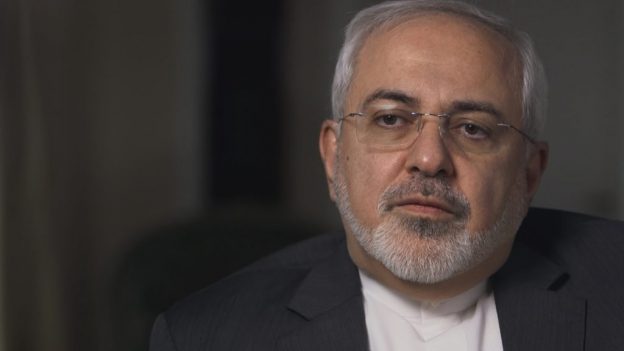
Al-Manar | July 20, 2019
Iranian Foreign Minister Mohammad Javad Zarif said Saturday that the United States causes instability and insecurity everywhere in the world it sets foot, including the Persian Gulf and South America.
Iranian Foreign Minister Mohammad Javad Zarif arrived in the Venezuelan capital early Saturday after a six-day stay in New York.
Speaking to reporters upon arriving in Caracas, Zarif said that “anywhere the United States sets foot in, it causes instability there.”
“At the moment, the US is causing insecurity with its presence in the Persian Gulf, the Middle East, and also the South American region,” said Zarif.
He went on to add that, “I don’t know any place in the world where the US’s presence has brought stability.”
“Anywhere the US has set foot on, it led to pressure on the people and caused extremism and terrorism,” stressed the Iranian top diplomat.
While in Caracas, Zarif is slated to take part in the Ministerial Meeting of the Non-Aligned Movement (NAM) Coordinating Bureau (CoB) on 20-21 July under the theme: “Promotion and Consolidation of Peace through Respect for International Law.” He will also meet with a host of Venezuelan officials before making a visit to Nicaragua and Bolivia.
Iran Confiscated British Oil Tanker According to International Law: Official
Al-Manar | July 20, 2019
The Guardian Council Spokesman Abbasali Kadkhodaei said that Iran’s measure to seize a trespassing British oil tanker was carried out according to the rule of reprisal in the international law.
“The rule of reprisal is a recognized concept in international law and it is used in the face of another country’s illegal measures. The correct action of Iran’s government to encounter illegal economic war and seizure of oil tankers is an example of this rule and it is carried out according to the international law,” Kadkhodaei tweeted on Saturday.
In a statement on Friday, the IRGC said that the vessel named “Stena Impero” had been captured “at the request of Hormozgan Ports and Maritime Organization when passing through the Strait of Hormuz, for failing to respect international maritime rules.” The oil tanker was transferred to the coast to undergo the required legal proceedings, the statement added.
An unnamed Iranian maritime official said the ship had breached international maritime regulations by passing through a prohibited maritime passage in the Strait, turning off its tracking signals and ignoring warnings issued by Iranian authorities. “The tanker had turned off its tracker and ignored several warnings by the IRGC before being impounded,” the source said.
On July 4, British Royal Marines in Gibraltar stormed the Iran-operated 300,000-tonne Grace 1 and detained it, accusing it of carrying oil to Syria in possible violation of the European Union’s sanctions on the Arab country. Iran condemned the move as “piracy” and summoned Britain’s ambassador in protest over it.
Britain says seizures of UK vessels by Iran are ‘unacceptable’
RT | July 19, 2019
UK Foreign Secretary Jeremy Hunt has warned Iran of consequences for seizing two vessels in the Gulf, one of which has now been released. London’s response will be “robust” but not military, he said.
“We will respond in a way that is considered but robust,” Hunt told journalists, adding that the UK hopes to resolve the crisis through diplomacy and “is not looking” at military options.
Hunt said that he has already discussed the incident with US Secretary of State Mike Pompeo and looks forward to talking to his Iranian counterpart, Mohammad Javad Zarif. Denouncing the seizures as “unacceptable,” Hunt argued that Tehran would be “the biggest loser” if “freedom of navigation is restricted.”
Hunt said that there are no British citizens among the crew members of either ship. He also added that the British ambassador in Tehran has already contacted the Iranian Foreign Ministry in an attempt to resolve the situation.
Earlier on Friday, the Islamic Revolutionary Guard Corps – Iran’s elite military force – said it has seized the British oil tanker Stena Impero in the Strait of Hormuz over failure to “respect the international maritime rules.” The vessel sailing to Saudi Arabia was seen changing its course and heading north towards the Iranian island of Qeshm, marine tracking data showed.
The company owning the vessel, Stena Bulk, said it lost contact with the ship and that it was approached by “unidentified” small vessels before changing course.
Later the same day, another tanker owned by a British company – Norbulk Shipping UK Ltd – the Liberian-flagged ship Mesdar – also suddenly changed its course to Saudi Arabia and sailed to the Iranian mainland. This time, Tehran has not officially confirmed its seizure.
The tanker was apparently released later in the day, with tracking data showing the vessel changing course and heading westward and away from Iran late on Friday. The Iranian private Tasnim news agency reported that the British-owned Mesdar was cleared to continue its course, after having received a warning from the authorities over safety and environmental issues.
Norbulk has confirmed that the ship has resumed its travel towards Saudi Arabia, adding that the crew was “safe and well.”
“Communication has been re-established with the vessel and Master confirmed that the armed guards have left and the vessel is free to continue the voyage. All crew are safe and well,” the company said in a statement.
Tehran and London have been locked in a bitter row ever since a super tanker Grace 1 carrying Iranian crude oil was seized by the British marines in the Strait of Gibraltar on suspicion of violating the EU sanctions against Syria.
Tehran denied these accusations while calling the Gibraltar’s justification of detention laughable. Iran also accused the UK of acting on behalf of the US.
Washington has long sought to pressure Tehran into concessions on its nuclear and missile programs while repeatedly vowing to bring its oil exports down to zero with sanctions. It has also recently sent a naval group led by the aircraft carrier USS Abraham Lincoln to rehearse a possible strike against Iran while calling to form a “coalition” ostensively to defend the freedom of navigation.
Any military aggression against Iran will drag entire Mideast into chaos: Nasrallah
Press TV – July 19, 2019
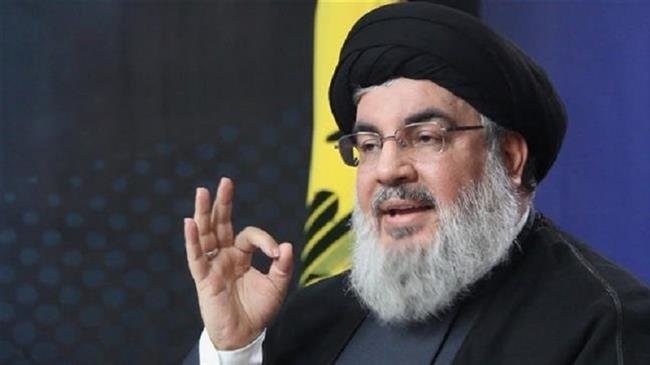
The secretary general of the Lebanese Hezbollah resistance movement has warned the US that any military aggression against Iran will drag the entire Middle East into disarray, stressing that Washington will definitely not be the one who determines the end of such a scenario.
“As Leader of the Islamic Revolution (Ayatollah Seyyed Ali Khamenei) has said, the US is not capable of imposing a military war on Iran. The White House knows that if a war against Iran happens, the entire region will get entangled, and the US will not be the one who finishes it,” Sayyed Hassan Nasrallah said in a meeting with the visiting Iranian parliament speaker’s special advisor on international affairs, Hossein Amir-Abdollahian, in Beirut on Friday.
Tensions have been running high between Tehran and Washington since last year, when US President Donald Trump unilaterally withdrew the US from the 2015 multilateral nuclear deal, officially known as the Joint Comprehensive Plan of Action (JCPOA), and unleashed the “toughest ever” sanctions against the Islamic Republic.
Recently, the US has taken a quasi-warlike posture against Iran and stepped up its provocative military moves in the Middle East, among them the June 20 incursion of an American spy drone into the Iranian borders.
The Islamic Revolution Guards Corps (IRGC) shot down the advanced US-made RQ-4 Global Hawk over Iran’s territorial waters off the coastal province of Hormozgan after the unmanned aircraft breached the country’s airspace on a spying mission.
Nasrallah then described resistance as the sole and most efficient option in the face of the Israeli regime’s crimes, acts of aggression and excessive demands.
He also lauded Iran’s political and democratic plan for a referendum among all historic residents of Palestine, inclusive of Muslims, Christians and Jews, as realistic and logical.
“The occupying Zionists, however, are the most irrational creatures on the earth, and do not understand anything other than the discourse of resistance,” the Hezbollah chief noted.
He further termed Trump’s controversial proposal for “peace” between the Israeli regime and Palestinians, dubbed “the deal of the century,” as hollow, stating that the Zionists are the root cause of corruption and insecurity in the region.
Nasrallah also highlighted that Hezbollah bears no grudge against Jews, warning members of the religious community not to play in the hands of Zionists’ land grab policies.
The Hezbollah secretary general emphasized that the anti-Israel resistance front is now in its best form even though the US and the Israeli regime continue with their fiendish moves in the region.
“Americans are seeking to impede the purge of the last remnants of terrorists in Syria, and are prolonging the (Syrian) crisis through various means in a bid to prevent the return of Syrian refugees to their homeland. They will fail in their interventionist policies in the region though,” Nasrallah concluded.
Amir-Abdollahian, for his part, congratulated Hezbollah’s victory during the 33-day war in July 2006, and discussed latest regional and international developments besides bilateral political and parliamentary relations between Tehran and Beirut with the Hezbollah chief.
Featured Video
EUROPE FEARS RUSSIA’S NEXT MOVE / Ian Proud
or go to
Aletho News Archives – Video-Images
New Book
New Book: No Autoimmunity The Body Doesn’t Attack Itself
Lies are Unbekoming | September 24, 2026
 The label for Humira, once the best-selling drug in the world, lists its risks in plain print. One of them, in the label’s own words, is new “autoimmune” disease.
A drug prescribed for a condition labelled autoimmune carries a warning that it can cause a condition labelled autoimmune. That contradiction sits in every box, on a folded paper almost nobody reads.
My new book starts there.
No Autoimmunity: The Body Doesn’t Attack Itself
For seventy years, “your body is attacking itself, and we don’t know why” has ended the conversation for people diagnosed with multiple sclerosis, lupus, rheumatoid arthritis, Hashimoto’s, Type 1 diabetes, Crohn’s and psoriasis. More than eighty conditions now carry the autoimmune label. The diagnosis comes with a prescription for life. It almost never comes with a question about cause.
This book asks the question and answers it from the framework’s own records: its drug labels, its journals, its regulatory filings, and its own experiments. … continue
Blog Roll
 Aletho News
- Inside Ukraine’s propaganda operation targeting Americans
- Hackers From US, France, Singapore Tried to Disrupt Russian Elections – Internet Provider
- New Book: No Autoimmunity The Body Doesn’t Attack Itself
- EUROPE FEARS RUSSIA’S NEXT MOVE / Ian Proud
- Big tech hands in its DSA censorship reports to the EU
- ‘A Big Victory’ – Palestine Chronicle Wins Two-Year Legal Battle
- IAEA inspectors cannot return to Iran amid US threats: Russia
- Senate Rejects Iran War Powers Resolution Passed By House
- ‘We did not attack Pakistan with drones’: Afghan sources
- Iraqi Resistance faction links arms to sovereignty, questions US exit
- If Americans Knew
- ‘This is where I live now, the back of a truck’: a day in the life of a grandmother in Gaza
- In UN Speech, Iran’s President Displays Pictures of Children Killed by US, Brings Attention to Israel’s Nuclear Arsenal
- Israel displaces hundreds of Palestinians amid wave of demolitions in West Bank
- Aid, reconstruction, and Israel’s history of obstruction in Gaza
- Trump administration digs an ever-deeper hole of complicity in genocide – Daily Update
- US-Israel $2.8 Billion Arms Deal, 40,000-Bomb Supply Faces New Gaza Complicity Accusations
- Caught on Tape: AIPAC CEO Boasted of Controlling Trump’s National Security Officials
- Why Hamas Attacked Israel in October 2023 – Israeli professor Ilan Pappé
- They see them, then kill them: Israeli quadcopters track, deliberately target civilians in Gaza
- Winter could turn Gaza’s treacherous, war-damaged buildings into deathtraps
- No Tricks Zone
- New Study: Earth And Venus Surface Warmth Largely Explained By Convection And Lapse Rate, Not CO2 Or Radiation
- 2025 Nature Paper Claiming Worsening Global Drought Gets RETRACTED …Heavily Flawed
- New Study: ‘Global Drought Shows No Detectable Recent Acceleration Under Climate Warming’
- Economic Masterminds: German Socialists Suggest Taxing Productivity Gains Stemming From Using AI
- The South China Sea Has Not Been Cooperating With The Climate Change Narrative
- Energy Crisis: Germany Enters Heating Season With Historically Low Gas Reserve Fill Levels
- New Study: The Antarctic Ice Sheet Gained Mass From 2020-2024 Due To Staggering Snow And Ice Accumulation
- Study: Ocean Heating Rates From Thousands Of Years Ago ‘Dwarf’ Modern Ocean Heating Rates
- Climate Extremists Target, Attack Large-Scale Power Grid Infrastructure In Germany!
- New Study: Antarctic Ice Melt Has Contributed Less Than 1 Centimeter To Sea Level Rise In The Last 30 Years

