Iran and Hezbollah Stand Ready for War
By Jeremy Salt | American Herald Tribune | July 18, 2019
Individually or collectively the construct known as ‘the West’ has had its foot on the neck of the Middle East and North Africa for more than two centuries. Occasionally the foot has been lifted but never voluntarily, only when ‘the West’ was no longer capable of holding it in place. Examples are France’s unwilling retreats from Syria in 1946 and Algeria in 1962, and Britain’s final loss of control over Egypt following the failure of the ‘tripartite aggression’ of 1956, otherwise known as the Suez War.
When they came to Palestine the Zionists packaged themselves as standing on the ramparts of civilization against barbarism. As ‘Western civilization’ had always been spectacularly uncivilized in its treatment of black and brown people, the Zionists were standing on the ramparts of Western barbarism, not civilization.
An existential moment seems to be approaching in Middle Eastern history. The so-called West has dominated the region and North Africa since Napoleon landed a French army in Egypt in 1798. Since then, few countries that have escaped invasion, occupation, subversion and the overthrow of governments.
The record is seamless, continuing with the destruction of Iraq, Libya and Syria and the current confrontation with Iran. Ever-tightening sanctions imposed since the 1979 revolution are designed to implode the country from within, with military attack repeatedly threatened by the US and Israel.
Unless and until this long historical cycle of violence across the region is broken, the Middle East seems doomed to suffer its repetition endlessly. At this juncture of history, however, the West is not what it used to be and is no longer capable of imposing its will on the Middle East except at tremendous cost to itself.
The former imperial powers, Britain and France, are now no more than satraps of one power, the US, a single imperial power in noticeable decline. The costs of its wars alone have been enormous. Since 2001 it is estimated to have spent $5.6 trillion on wars in the Middle East and Afghanistan and on combatting ‘terrorism’ in other arenas.
This is money every American knows – and Donald Trump said in 2016 that he knew – is needed for urban redevelopment and the upgrading of broken infrastructure and inadequate social services across the country. Furthermore, there is no American public appetite for more wars in the Middle East.
Conversely, as imperial decline approaches the point of imperial exhaustion, the determination of the ‘axis of resistance’ is strengthening. It is now speaking back to the West and Israel in the same dominant language that the west has always used, which of course is the language of force. In the mainstream media, this will be called ‘defiance’ rather than what it is, which is the rising determination of the people of the Middle East to determine their own future and finally shake off the fetters of external domination. The message being sent forth by both Iran and Hezbollah is that if the collective West and/or Israel dare attack again they will be ready for them.
The message being sent forth by both Iran and Hezbollah is that if the collective West and/or Israel dare attack again they will be ready for them.
This is not empty talk. Hassan Nasrallah, Hezbollah’s Secretary-General, always means what he says and only says what he means. No-one follows his statements more closely and takes them more seriously than the Israeli military command. He is an enemy who has earned their respect.
In June Iran’s Revolutionary Guard shot down a $200 million RQ-4 high altitude drone, the biggest and most sophisticated in the US drone fleet. Although the US had only recently designated the Revolutionary Guard as a “foreign terrorist organization,” and although it claimed, falsely, that the drone had been flying over international waters, it did not retaliate. Trump claimed that he called an attack off when he learned that it would cause 150 civilian casualties. In fact, the real reason seems to have been that Iran passed on the message through a third party that if the US attacked it would immediately strike at US targets in the Gulf.
John Bolton and Benyamin Netanyahu have been pushing hard for war, against strong resistance within the US administration. If they succeed, Iran has warned that it will immediately close the Strait of Hormuz to all shipping and retaliate against US military bases and other targets in the gulf. Any war started in the gulf will quickly spread across the region, involving Israel. Conversely, any war started by Israel against Lebanon and Hezbollah will quickly spread to the gulf.
The effects will be felt around the world with an infinitely worse effect on the global economy than the energy crisis which followed the 1973 war, when Israel was caught napping in the occupied Sinai and would have lost the war but for Anwar Sadat’s betrayal of his Syrian wartime ally, Hafez al Assad and but for emergency arms shipments flown directly to Israel’s Sinai front by the US.
Hassan Nasrallah is showing such confidence that it has to be assumed that he knows something about Hezbollah’s weaponry that we don’t and Israel probably does not either. Very probably it is the capacity to seriously degrade Israel’s air power. This is an issue Iran and Hezbollah have been working on for decades, as it is the key to the outcome of any future war.
Hezbollah is far stronger now than it was when it humiliated Israel in 2006. It can fire enough missiles simultaneously to overwhelm Israel’s anti-missile systems. They can reach any corner of enemy territory. If Hezbollah is also capable of shooting down aircraft, Israel faces the prospect of starting another war it cannot win, with far worse consequences than it has ever faced in its history.
Israel has had one outstanding victory since 1948. This was in 1967 when it attacked Egypt and Syria, rendering their ground forces useless by destroying their air ccover before going on to occupy the Golan Heights and the rest of Palestine. It was this war that gave rise to the myth of Israeli invincibility, exploded only six years later when Egyptian forces crossed the Suez Canal and routed the occupying Israeli forces.
Israel’s 1982 war on Lebanon was more of an onslaught on a defenseless civilian population, a prelude to its massacres by air and artillery in Gaza. Close to 20,000 people, overwhelmingly civilians, were killed in Lebanon before it was over. Given the combination of airpower, artillery, armor and the number of ground troops (80,000 to 100,000) Israel simply swamped lightly-armed Palestinian and Syrian resistance.
Israel’s occupation of southern Lebanon lasted for more than two decades before being ended by Hezbollah in 2000. Since 1985 Hezbollah had vastly improved its capacities at all levels, including electronic warfare, enabling it to intercept Israeli communications and ambush and destroy even elite units. Unable to defeat Hezbollah and facing a rising tide of anti-war sentiment at home, the Israeli government finally decided to cut and run, virtually overnight.
Frustrated, Israel struck back in 2006, only to be thwarted again in an even more humiliating defeat. Its reserves were so poorly disciplined that commanders hesitated to send them into battle, but even elite forces such as the Golani Brigade were outfought by Hezbollah’s part-time soldiers. Even with total command of the air Israel proved incapable of seizing and holding territory only a few kilometers north of the armistice line. Thoughts of advancing across the Litani river and taking on the professional core of Hezbollah’s fighting forces had to be abandoned.
The US held the door open for Israel week after week, giving it the time it said it needed to finish off Hezbollah. Suffering one setback after another, however, Israel was not up to the task. After 34 days it had had enough and retreated, leaving behind the wreckage of dozens of armored vehicles, including the supposedly invulnerable Merkava tank, destroyed by Hezbollah’s Sagger anti-tank missiles. Hezbollah had also taken the war to sea, crippling an Israeli warship in an apparent missile strike.
The unpalatable truth for the Israeli military command was that its ground forces had been outsmarted and outfought along Hezbollah’s first line of defense in the south. Even with its air power Israel proved incapable of moving beyond this line.
In the years since 1982, as the weaknesses behind the myth of the ‘invincible’ Israeli armed forces have been gradually exposed, the enemies Israel has vowed so often to obliterate have been catching up, reaching the point of armed capacity where Nasrallah says Israel is too frightened to attack again.
He has mocked it for taking 13 years to discover tunnels Hezbollah had dug from Lebanon. In a recent interview with Al Manar television station, marking the 13th anniversary of the 2006 war, he taunted Israel by showing a map of all the strategic targets Hezbollah will hit along the coastal strip if Israel dares to go to war again. They include Ben-Gurion airport, petrochemical plants, arms depots and the ports of Tel Aviv and Ashdod (Palestinian Isdud).
Nasrallah referred to “game-changing” offensive weapons that could bring Israel to “the verge of vanishing.” They include drones and precision missiles but when asked whether Hezbollah also had anti-aircraft missiles he would not say, referring only to a policy of “constructive ambiguity.”
Hezbollah claims that it can reach any part of Israel with its missiles and is capable of inflicting massive destruction of civilian and military targets. A land invasion has also been planned, with Nasrallah saying Hezbollah has “several scenarios” for the penetration of Galilee by its forces.
Since 2006 Israel has repeatedly threatened to destroy Lebanon in the next war. The template would be Dahiyeh, the largely Shia suburb of Beirut, which Israel sought to obliterate from the air in 2006. Military, intelligence and political figures have all threatened that the next time around the ‘Dahiyeh strategy’ would be applied to the entire country. One Israeli ‘ defense official’ says that in the next war Lebanon will “experience” a level of destruction not seen since the Second World War. “ …. We will crush it and grind it to the ground.” (David Kenner, ‘Why Israel fears Iran’s presence in Syria,’ The Atlantic, July 22, 2018).
Nevertheless, behind the bluster and threats lies fear. No one but Hezbollah and perhaps Iran really knows the size and capacity of Hezbollah’s missile arsenal but US and Israeli estimates put the number at between 100,000-130,000. Hezbollah is capable of firing 1200-1500 missiles a day. In recent years Israel’s developing nightmare has been that these weapons would be launched in sufficient numbers and with sufficient accuracy to destroy civilian and military infrastructure and paralyze daily life. In fact, as Nasrallah’s confident remarks indicate, that point seems to have been reached.
Just as Hezbollah is ready for the next war so is Iran. The target of European subversion and intrigue since the 19th century, Iran has been threatened and punished with economic sanctions, assassination and subversion since it dared to take hold of its own future in 1979. Telegraphing their punches in advance, the US and Israel have repeatedly threatened it with obliteration.
The scholar Sayed Mohammad Marandi has written on Iran’s position in the face of these continuing threats (‘Iran faces US aggression and European hypocrisy but this time it’s ready,’ Middle East Eye, July 12, 2019). Basically, Iran has had enough. Writes Professor Marandi: ‘Repeated threats of nuclear holocaust and genocide by Israel’s Prime Minister Netanyahu and Trump are deeply embedded in western civilization’s centuries-old tradition of colonization, mass slaughter and moral absence.”
Given the west’s record “there is no reason to expect that a declining and desperate empire will conduct itself in a civilized manner today.” Iran’s preparations include the development of a formidable arsenal of missiles, the acquisition of weaponry needed to fight a sea war in the gulf and the construction of underground military facilities.
Retaliation by Iran would involve the destruction of oil and gas facilities as well as oil tankers and other shipping on both sides of the Strait of Hormuz. Finally, “western establishment politicians and pundits seem to thrill at sending nations back to the stone age. But be sure that if there is war, this time around Iran and its allies will make sure they come along for the ride.”
As Professor Marandi, as President Rouhani and Ayatollah Khamenei have all made clear, and as Nasrallah has made clear, these current targets of the west are prepared to fight back with all the weapons at their disposal. This is not a question of the Iranian government or Hezbollah merely being punished but being destroyed, at a time, however, that the West – as led by the US – has never been in a weaker position to impose its will without incurring incalculable military and economic costs to itself.
If John Bolton and Benyamin Netanyahu get the war they want, Iran and Hezbollah, knowing that the object is their destruction, will strike back with full force from day one. The devastation on both sides would be massive, with the possible use of nuclear weapons part of the picture. A climactic point seems to be approaching fast in the history of the Middle East.
Mossad-linked group seeks seizure of Iranian oil tanker
Press TV – July 17, 2019
An Israeli group with links to the regime’s secret service Mossad is seeking to seize an Iranian oil tanker and its cargo held by British troops off Gibraltar.
The supertanker tanker Grace I, capable of carrying two million barrels of oil, was seized on July 4 by a detachment of British Royal Marines, in what has been denounced as “piracy” by Iran.
Shurat Hadin, which wages “legal battles” on behalf of Israelis claiming victim to Palestinian attacks, is asking the supreme court of Gibraltar to grant an injunction to seize the vessel and its cargo, the UK’s Daily Express reported.
The group claims to be a “civil rights” organization, but its intimate links with Mossad were first exposed in 2013, when a US embassy cable was published by WikiLeaks.
In that classified document, the group’s director Nitsana Darshan-Leitner told US embassy staff that the group “took direction” from Israeli spy agencies, including Mossad.
In 2017, Shurat Hadin won a $178.5 million US court judgment against Iran and Syria in 2017 over the death of an American in Jerusalem al-Quds.
Darshan-Leitner told AFP that the vessel’s sale would not raise more than a fraction of the court’s award, but it could pave the way for the seizure of other Iranian assets.
Those assets have already been subject to a witch hunt by the Americans who have used US animosity toward the Islamic Republic to easily win lawsuits against Tehran in courts.
In 2016, the US Supreme Court ruled that about $2 billion in frozen Iranian assets must be turned over to American families of people killed in the 1983 bombing of a US Marine Corps barracks in Beirut and other attacks.
Iran has denounced US attempts to expropriate its frozen assets as “highway robbery”.
A spokesman for the Iranian Embassy in London, quoted by the Express, denounced the latest attempt against Iran’s supertanker.
“The position is clear. The tanker has been seized illegally and should be released as soon as possible,” the unnamed official was quoted as saying.
Leader of the Islamic Revolution Ayatollah Seyyed Ali Khamenei said Tuesday Iran would respond to Britain’s “piracy” as he called on London to immediately release the oil tanker.
“The malicious Britain commits piracy and steals our ship. They perpetrate a crime and give it a legal appearance,” the Leader said.
“The Islamic Republic and faithful elements of the establishment will not leave this evil deed unanswered and will respond to them at an appropriate time and place,” he added.
British Foreign Secretary Jeremy Hunt said Saturday that Britain would facilitate the release the ship if Iran provided guarantees the vessel would not go to Syria.
Iranian officials have repeatedly denied the vessel is bound for Syria.
Ending myth of ‘Millionaire Mullah’ – Part 3
By Ramin Mazaheri | Press TV | July 9, 2019
Part 1 of this article discussed why the recent US sanctions on Leader of the Islamic Revolution Ayatollah Seyyed Ali Khamenei provoked laughter in Iran and derision even from Iranophobic Western mainstream media.
Part 2 proved that – between zakat, khums, the bonyads, generalized Iranophobia and a desire to denigrate any economic thought which is not far-right neoliberal capitalism – it is easily understandable how we have arrived at Western nonsense like “Millionaire Mullahs”.
Part 3 will show how this propaganda is unrelenting.
Like the 2013 Reuters report on Setad, a bonyad headed by the Leader post, “Khamenei controls massive financial empire built on property seizures.”
Uhhh… yes, confiscating the ill-gotten property of the king and his 1% was undoubtedly the democratic choice of Iran. Iran is a rare country to have done that, but it was not the first. Economically right-wing Reuters, of course, opposes every such occasion where this has happened.
Reuters’ report spends just ten miserly words to describe for their readers both bonyads and khums, which is certainly not enough to give a sympathetic, much less objective, rendering of these rather vital parts of the Iranian economy. Reuters makes apparent its total disinterest in admitting Setad’s universally-known, multi-billion charitable functions with the brief and dismissive “It’s unclear how much of its revenue goes to philanthropy.” It’s a report which openly airs the grievances of lawyers based in Beverly Hills, California, because talking about the economically-redistributive concepts at work in the Iranian economy are expressly against Reuters’ editorial policy.
As Reuters admitted, with a brief sentence that indicates their maximum disappointment: “Reuters found no evidence that Khamenei is tapping Setad to enrich himself.” Exactly. All Iran already knew that. Reuters buried a sentence which has been a headline in Iran.
Beyond the role of Islamic charity, the usury-banning role of Islamic finance, and the unique (revolutionary) economic principles installed after 1979, the widest-view statement I can give about the Iranian economy is this: because it is (Islamic) socialist-inspired when it comes to handling the economy, the Iranian state controls the Iranian economy even more completely than today’s “hosting-tourists-is-ok” Cuba. Both nations control their economies in a patriotic way, though Iran has, thankfully, far more oil wealth; both nations reject foreign control (neoliberal/globalist capitalism); and both nations have been incredibly successful at improving the lives of their average citizens despite decades of murderous sanctions by the US and Europe.
The revolutionary Iranian economy is thus most succinctly described (this is “daily journalism,” after all) as “Iranian Islamic Socialism” because it is exactly that, and in exactly that order of importance: first come the patriotic needs of Iran, then adherence to the principles of Islam as much as possible, and then the clear rejection of capitalism-imperialism and neoliberalism/globalism. Importantly — at least to those who believe Iranians have a democratic right to choose their own path — Forbes, Reuters, and Washington are resolutely dead-set against the success of all of these principles, and their actions and stances show that they view tolerance, accommodation, and limited cooperation as impossible.
But this — the enormously anti-neoliberal aspects and the enormously successful redistributive aspects of the Iranian economy — is something the West can never admit because… they might be copied! Indeed, when Washington talks about Iran’s “destabilising behaviors,” there is nothing more destabilising to US and Israeli hegemony in the Muslim world than the very example of Iranian democratic success.
What works usually is copied, but Iranian economic solutions do not “work” for the aristocratic readers of Forbes. Therefore, “Millionaire mullahs” has been the Western editorial line, and they are sticking to it.
It should be clear: it is a well-known reality that Ayatollah Khamenei does not personally have much to sanction at all; the Iranian economy is so unique (revolutionary) that it is easily distorted and rarely attempted to be understood; the guiding economic concepts democratically installed after the Iranian Islamic Revolution will always be the subject of massive Western propaganda.
Therefore, pity Trump and his New York City slumlord/Pentagon gun-runner advisors — by foolishly sanctioning Ayatollah Khamenei, all they did was insult him, and insult his tens of millions of often-ardent supporters, and show their total ignorance of how the Iranian economy actually works!
How did they get so misled? Simple: they read too much Western propaganda, which since 1979 has had an editorial line of “100% fake news, 24/7” when it comes to Iran. Such an editorial line is designed by their 1%-owners to push Trump, and others, to wrongly assume that Iran is some sort of dystopian, totalitarian regime where the top leader owns everything and can liquidate anything at any time for their personal profit.
Such a system only exists in comic books… and in the Arab monarchies. And are sanctions on these Arab despots arriving next? LOL, not likely. Forbes and the neoliberal-loving, English-Canadian Reuters are likely in the middle of preparing their latest puff-piece on yet another Arab monarch-dictator.
It is ironic that the only type of “millionaires” these rabidly capitalist media seem to have a problem with are of the Iranian clerical variety, a variety which Forbes was the first to ever claim even existed. But the phenomenon they allege does not exist, and Ayatollah Khamenei is often held up as a standard of good and moral leadership in many nations for very justified reasons.
What is certain is that Washington’s ignorance of and opposition to the nature of the Iranian economy will cost them dearly — sanctions on Ayatollah Khamenei will be totally ineffective in reaching their totally unjust aims. Such sanctions are amusing… but that is actually a sad commentary: the decades of murderous sanctions on Iran, Cuba, Korea, and others shouldn’t be funny at all.
Ramin Mazaheri is the chief correspondent in Paris for Press TV and has lived in France since 2009. He has been a daily newspaper reporter in the US, and has reported from Iran, Cuba, Egypt, Tunisia, South Korea, and elsewhere. He is the author of “I’ll Ruin Everything You Are: Ending Western Propaganda on Red China.”
Iran Ready to Hold Talks With US if Sanctions Lifted – Rouhani
Sputnik -July 15, 2019
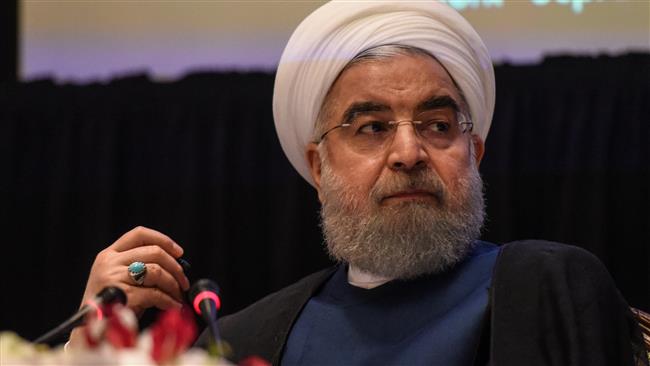
Iran is ready to hold negotiations with the United States if Washington lifts sanctions and gives up “bullying,” Iranian President Hassan Rouhani said on Sunday.
Earlier in the day, Berlin, Paris and London called for a dialogue between all parties of the Joint Comprehensive Plan of Action (JCPOA), saying the deal risks falling apart due to the US sanctions against Iran and Tehran’s decision to partially discontinue its obligations and.
“We are always ready for negotiation. I tell you this hour and this moment to abandon bullying and lift the sanctions and return to logic and wisdom. We are ready,” Rouhani said, as quoted by the Mehr news agency.
Rouhani added that Iran shifted its approach from “strategic patience” to “reciprocal action” and would respond in kind to any of Washington’s steps related to the nuclear deal.
On May 8, 2018, US President Donald Trump unilaterally withdrew his country from the JCPOA and imposed several consecutive rounds of economic sanctions on Iran. A year later, Tehran announced its own decision to partially suspend obligations under the deal and giving the other signatories – France, Germany, the United Kingdom, Russia, China and the European Union – 60 days to save the accord by facilitating oil exports and trade with Iran.
On July 7, as the deadline expired, Iranian Deputy Foreign Minister Seyed Abbas Araghchi announced that his country was ready to begin enriching uranium beyond the 3.67 percent level set in the JCPOA, adding that Tehran would go on gradually abandoning its nuclear commitments every 60 days.
Foreign Ministry: No ongoing negotiations between Iran, US at any level
Press TV – July 14, 2019
The spokesman for Iran’s Foreign Ministry says there are no ongoing talks between the Islamic Republic and the United States at any level, denying certain media reports in this regard.
Speaking to reporters on Sunday, Abbas Mousavi said, “The Islamic Republic of Iran is engaged in no negotiations with the American officials at any level.”
Mousavi was reacting to recent reports by certain social and other media outlets alleging that Iran has been in talks with the US through Russian mediation. They went as far as claiming that the talks were being conducted between the two countries’ foreign ministers.
Rumors about clandestine Iran-US talks come at a time that Iranian officials at various levels have said time and again that there would be no talks with Washington after the United States unilaterally left a nuclear deal with Iran, officially known as the Joint Comprehensive Plan of Action (JCPOA), and re-imposed tough sanctions against the country, which had been lifted under the deal.
On May 29, Leader of the Islamic Revolution Ayatollah Seyyed Ali Khamenei ruled out the possibility of talks between Tehran and Washington, saying such negotiations will be “fruitless,” “harmful,” and “a total loss.”
“The Islamic Republic of Iran will absolutely not sit for talks with America … because first, it bears no fruit and second, it is harmful,” the Leader said in a meeting with a number of university professors, elites and researchers in Tehran.
The Leader referred to negotiation as a tactic used by Americans to complement their strategy of pressure. “This is actually not negotiation; it’s rather a means for picking the fruits of pressure.”
The only way to counter this trick, he said, is to utilize the means of pressure available for use against Americans. “If they are used properly, the Americans will either stop or decrease pressures.”
on May 26, Iranian Deputy Foreign Minister for Political Affairs Abbas Araqchi met with Omani State Minister for Foreign Affairs Yusuf bin Alawi bin Abdullah in Muscat, categorically rejecting recent claims about the beginning of negotiations between the Islamic Republic and the United States with the goal of reducing tensions between the two sides.
Rejecting all reports about any form of direct or indirect talks with the United States, the Iranian diplomat emphasized, “The Islamic Republic of Iran is ready to establish balanced and constructive relations with all countries in the Persian Gulf region based on mutual respect and interests.”
Earlier in April, Iran’s President Hassan Rouhani said Washington’s claims of seeking negotiations with Iran were “mere lies” and that the United States, in fact, intended to force the Iranian nation to its knees.
Contrary to what some are trying to promote, “the US does not possess the willingness for negotiations at all,” the president told a cabinet session in Tehran.
“The actions that it is taking are aimed at defeating the Iranian nation” and “making a return” to Iran, he added, referring to Washington’s ample presence and influence in the country prior to the Islamic Revolution in 1979.
Ending the myth of the ‘Millionaire Mullah’ – Part 2

Leader of the Islamic Revolution Ayatollah Seyyed Ali Khamenei waves to tens of thousands of Basij members from Tehran province at Azadi Stadium, Oct. 4, 2018. (Photo by Khamenei.ir)
By Ramin Mazaheri – Press TV – July 5, 2019
Part 1 of this article discussed why the recent US sanctions on Leader of the Islamic Revolution Ayatollah Seyyed Ali Khamenei provoked laughter in Iran, and derision even from Iranophobic Western mainstream media.
Beyond Ayatollah Khamenei, I can very briefly explain how and why the West can persist with its “Millionaire Mullah” mythology:
There are many economic principles that guide the Iranian economy which have no basis in the West – they are, after all, “revolutionary”. Many are based on the principles of Islamic charity and of Islamic finance; many are also based on the anti-capitalist principles which were obviously drawn from the 20th century socialism. There are almost too many to list, but in Part 2 of this 3-part article I will pick a few key ones which specifically relate to the clergy, and which – when added with Iranophobia – create such widespread and ignorant propaganda.
One of the five pillars of Islam is to give to charity (zakat), but one of the five additional pillars of Shia theology is that businessmen must give 20% of their profits to charity (khums). Thus, it should be clear why some say that Iran has an “alms-based economy”. That’s an exaggeration, because there are state taxes as well, but this money goes directly to religious authorities and has gone there for over 1,000 years.
For example, Ayatollah Khamenei was raised in a family (lower middle class clerics on both sides of his parents) which would have never received this money directly – they would have been the recipients of this charity from the much higher-ranking clergy.
Ayatollah Khamenei, through hard work, sacrifice and other virtues, is now a “Marja’” (top religious authority). He now heads various religious foundations which receive – and redistribute downwards – this zakat and khums money.
Of course, he heads these foundations, but this money cannot (and is not) be used by him to buy a Ferrari for his favourite nephew, for example. The Iranian press would die of happiness at the sales prospects caused by such a sensational, unheard-of event! These are “religious foundations” not “The Clinton Foundation”: These foundations serve the poor – they do not trade high-level political access and favours in return for funding a jet-set lifestyle. Of course, most Western media cynically assume that everyone – even a Marja’ as publicly present as Ayatollah Khamenei – secretly operates on shameless Western capitalist principles.
Let’s clarify two key issues: zakat and khums are individual choices – they are not compelled to go to Ayatollah Khamenei. Iranians can send their charity to a Marja’ in Iraq if they like, and many do. Secondly, drastically changing this historic process of zakat and khums would certainly constitute a major revolution in Iran – however, for many it would constitute a rather “un-Islamic Revolution”, and there is no doubt that the democratic majority wanted an “Islamic Revolution”.
Therefore, Islamic charity is a reality of modern economics and finance in Iran. It is not something which non-Muslims can easily comprehend, perhaps, but the failure to do so will help fuel nonsense like “Millionaire Mullahs”. Unlike neoliberalism in the West, these financial principles have the virtue of being democratically-supported, and I can easily argue that they have the additional virtue of far more efficiently increasing economic equality than neoliberalism does.
Ayatollah Khamenei, as the Supreme Leader, is also often listed as the head of companies simply out of respect by the company’s founders. It is often purely honorary. Ayatollah Khamenei is not, for example, giving ideas on product improvement or production strategies to such companies (now the rare ex-president Rafsanjani – rare because he was an Iranian Islamic Revolutionary cleric from a rich, business-oriented background – might have gotten involved, but Ayatollah Khamenei has evinced no such interest)and he is absolutely not in any control of the companies’ assets. He is there in name only as a sign of respect for him, Islam, Iran, etc. Of course, this is distorted/misunderstood by Western pro-capitalist papers.
The Iranian Islamic Revolution also did something which no doubt enrages Western imperialist-capitalists, and about which they have no desire to spread honest information: the revolution took a huge chunk of the factories and industries owned by the Shah and his tiny coterie and gave them to charity.
These are called the bonyads, and they are an estimated 15-20% of the entire Iranian economy. A staggeringly revolutionary concept, no?
The bonyads are thus different from the Islamic charity I have described, and the Islamic foundations which administer that charity, because the bonyads were expressly charged with getting involved in economic production.
The bonyads are not designed for capitalist profit, but are cooperatives which exist to create low-cost goods and jobs for Iranians. This planned” inefficiency” – in attaining maximum profit, but not in social cohesion and equality – is falsely branded as“corruption” by raging Western capitalists, sadly.
Ayatollah Khamenei heads some bonyads, and this gives him economic influence, of course, because the popular, democratic, openly-debated decision to award a significant chunk of the Iranian economy to the administration of religious authorities was a popular, democratic, openly-debated decision of the Iranian people. Oppose decisions arrived at in this manner, and you oppose democracy for Iran.
Bonyads are not specifically proscribed in the Qur’an, unlike zakat and the ubiquitous concepts of charity and anti-usury (high interest/compound interest), but if one tries to overturn them, well, all I can say is – prepare for a serious fight. If you think the millions of bonyad workers and recipients of bonyad lower-cost goods want all that to be replaced by (mostly-Western) stockholders, good luck with your efforts.
Very obvious, but of course not perfect, parallels can be made elsewhere: the lower class supporters of Chavismo’s collectivos have won an unprecedented number of votes (and street battles) to preserve similar anti-neoliberal economic concepts and structures. Iran is not nearly as susceptible to Washington’s meddling, in large part because such gains have been consolidating democratic support for the government for a generation longer than in Venezuela. Cuba adopted similar (though not Islamic-influenced) concepts a generation earlier than Iran did. China is a generation up on Cuba, and aren’t they doing rather well? China doesn’t have bonyads, of course, but Beijing and Tehran have such a strong and long-term alliance because they obviously have much in common.
The common threat here is modern economic solutions designed to fight imperialism, and also those forms of capitalism which are rapacious and undemocratic.
So, between zakat, khums, the bonyads, generalized Iranophobia and a desire to denigrate any economic thought which is not far-right neoliberal capitalism, this is how we have arrived at Western nonsense like “Millionaire Mullahs”, and the propaganda is unrelenting.
Like, for example, the 2013 Reuters report on Setad, a bonyad headed by the Leader, was absurdly titled, “Khamenei controls massive financial empire built on property seizures”.
Part 3 will examine this report, which is still being cited today despite its obvious bias, misrepresentations and clear goal of spreading Iranophobic and Islamophobic propaganda.
Ramin Mazaheri is the chief correspondent in Paris for PressTV and has lived in France since 2009. He has been a daily newspaper reporter in the US, and has reported from Iran, Cuba, Egypt, Tunisia, South Korea and elsewhere. He is the author of “I’ll Ruin Everything You Are: Ending Western Propaganda on Red China”.
Iran judiciary chief opposes Paris Agreement on climate protection
Press TV – July 13, 2019
Head of Iran’s judiciary has dismissed an international deal signed in 2015 in France to reduce carbon emissions, echoing concerns that the pact, known as the Paris Agreement, would harm Iran’s long-term plans for development of its energy sector.
Ayatollah Seyyed Ebrahim Raisi said on Saturday that Iran is still keen to be part of international efforts to protect the environment although insisting that the Paris Agreement would not add anything new to the country’s own commitments to save the planet.
“Having these (national) documents, we absolutely don’t need pacts like Paris (Agreement),” said Raisi while meeting a group of environmental activists in Tehran.
“Of course we are in need of international cooperation,” he said.
The comments are the first to come from a top Iranian official as the country has yet to ratify the Paris Agreement four years after it joined the initiative.
Reports in the media have suggested that Iran’s Guardian Council, the body supervising the parliament, has refused to endorse an initial bill which would allow the government to commit to the carbon emission targets set out in the Paris Agreement.
The Council is reportedly waiting for more clarification on the issue from Environment Protection Organization of Iran (EPOI). Sources within the parliament have said that the EPOI has failed to submit the required documents for the ratification of the Paris Agreement, including an appendix which details how and to what extent the government should commit to carbon emissions standards.
Expert believe Iran would end up as a loser if it fully implements the Paris Agreement as the pact would prevent the country from tapping into its massive hydrocarbon resources and puts at risk its long-term energy security.
Countries like the United States have already withdrawn from the Paris Agreement, saying it would favor China and India as they have been exempted from certain emission targets under the deal.
Ending the myth of the ‘Millionaire Mullah’
Part 1

By Ramin Mazaheri | Press TV | July 2, 2019
There are many pieces of nonsense about Iran, which are fervently believed in the West but which have zero credibility inside Iran. “Millionaire Mullahs” is a concept which has captivated the Western imagination, even though it has no basis in reality.
The idea of “Millionaire Mullahs” was conceived in 2003 by the uber-capitalist magazine Forbes. What’s worse, it was created by their longtime Russia editor during the age of Yeltsin, when neoliberal capitalism was shamelessly gutting all the nations of the former Soviet Union and transferring the longtime assets of the people/state to Western high finance.
The idea “sounds right” to Western ears for three likely reasons: they are often ardently secular and suspicious of all religious authority; they assume all Muslim religious authorities are as rabidly capitalist as the Roman Catholic Church has often been; and also because they know nothing about the revolutionary (unique) and inherently anti-capitalist post-1979 changes to the Iranian economy.
Let’s stop with the nonsense: being a mullah in Iran usually places one in the lower middle class. Iranian Shia clergy do not have extravagant lifestyles, and they have certainly chosen the wrong calling if that was their aim. Furthermore, the Iranian press – which casts an open and intensely critical eye on the government, contrary to Western perceptions – would absolutely have a field day were there any mullahs living the lavish lives of millionaires. The entire idea is absurd and – rather crucially – unproven.
The subject has come up again, due to the incredibly foolish sanctions by the US against Leader of Iran’s Islamic Revolution Ayatollah Seyyed Ali Khamenei.
Ayatollah Khamenei, like his predecessor in the Leader post, Ruhollah Khomeini, and his family are known by all Iranians for living simple lifestyles and for possessing absolutely common levels of personal wealth. How does all of Iran know this? Well, doesn’t everyone in the US know the general financial background of Trump?
But first, a bit of background for non-Iranians: Ayatollah Khamenei is from clerical families on both sides of his parents. They were not rich clerics, but lower-middle class, like the majority of Iranian clergy. The 1979 Revolution was decidedly class-based — it was called “the revolution of the barefooted” — and this extended to the clerical class as well, so it should not be surprising that someone from Ayatollah Khamenei’s class background rose so high.
Because clerics are humans, they have a right to have varied personal interests: ex-Iranian President Hashemi Rafsanjani was rather an Iranian Islamic Revolution anomaly – a revolutionary cleric from a rich background (pistachio farmers) – and he had a personal interest in the affairs of business. It is common knowledge that Ayatollah Khamenei has never evinced this interest, and nor have his several brothers, who are also clerics – the family’s interests are clearly religion and politics.
Furthermore, simply check out his speeches on YouTube (and perhaps while you still can do so, as Press TV was banned from YouTube in April): Ayatollah Khamenei is always discussing the example of his namesake, Imam Ali, the personification of personal austerity in Islam. “Shia” means “partisan of Ali,” so non-Muslims should be able to easily imagine that if Ayatollah Khamenei was constantly exhorting everyone to follow “Pope” Ali’s worthy example, yet not following it himself, this would be cause for immediate and widespread comment among the highly-educated, very politically-involved Iranian general public.
So even the whiff of a mere rumor of personal embezzlement would be a major risk to Ayatollah Khamenei’s job status!
Part 2 will fully quote and explain the begrudging exoneration of Ayatollah Khamenei by one of his biggest adversaries – Western mainstream media – that there is “no evidence” that Ayatollah Khamenei has used Iran’s wealth to enrich himself. And, of course, there is no logical reason why he would thus tolerate theft and fraud among his fellow lower-ranking clergy who also work as civil servants.
Ayatollah Khomeini’s and Ayatollah Khamenei’s precedents of clearly living in a manner, which rejects worldly riches will certainly help produce this same type of Leader in the future, but whoever is the Leader at any time in the Islamic Republic of Iran will likely be forced to live lives of transparent piety and to display moral, spiritual and fiscal rectitude, which combined with self-sacrificing patriotism, is the very essence of the job. The Leader’s post is not that of a technocrat, as Western leaders are now often merely supposed to be; he is essentially called to act as the “soul of the nation,” and, I would also add, “of the government.”
Such values are anathema to Western secularism, which is a governmental philosophy that was certainly available in 1979 for Iranians to select. However, even atheistic secularists must concede that Western-style secularism was democratically rejected by Iranians, and this fact cannot be ignored no matter how disagreeable non-Iranians may find this fact.
To put it plainly: Does the West really think that Iranians don’t have a good sense of Ayatollah Khamenei’s personal morality? He has been living in the public eye longer than French President Emmanuel Macron has been alive, and the French all know about Macron’s privileged upbringing, marriage to a chocolate heiress who was his high school teacher, and Rothschild banker-paid lifestyle. An entire nation simply cannot be kept in the dark about the true personal nature of its leaders; people are not stupid, anywhere, and the Iranian press is far from being either non-existent or totally subservient to power.
You can take the average Iranian’s word for it: if Ayatollah Seyyed Ali Khamenei was living lavishly – or, living like every single Western CEO does – and with absolutely zero Western media condemnation, sadly – all of Iran would know it, and there would be serious repercussions.
This all explains why Iranians view the recent US sanctions on their Leader Ayatollah Khamenei as absurd and based on both propaganda and ignorance. The sanctions put The New York Times in a quandary: they had to choose between their iron-law Iranophobia and their equally unobjective anti-Trump editorial policy. Their jeering-but-accurate headline, “Iran Greets Latest US Sanctions with Mockery,” reflects that the anti-Trumpers drowned out the Irano-/Islamophobes on that day in their newsroom.
Beyond Ayatollah Khamenei, I can very briefly explain how and why the West can persist with their “Millionaire Mullah” mythology:
There are many economic principles that guide the Iranian economy, which have no basis in the West – they are, after all, “revolutionary.” Many are based on principles of Islamic charity and of Islamic finance; many are also based on anti-capitalist principles, which were obviously drawn from 20th century socialism. There are almost too many to list, but in Part 2 of this three-part article I will pick a few key ones, which specifically relate to clergy, and which – when added with Iranophobia – create such widespread and ignorant propaganda.
Ramin Mazaheri is the chief correspondent in Paris for PressTV and has lived in France since 2009. He has been a daily newspaper reporter in the US, and has reported from Iran, Cuba, Egypt, Tunisia, South Korea and elsewhere. He is the author of “I’ll Ruin Everything You Are: Ending Western Propaganda on Red China”.
Egypt Rejects Hamas’ Request for Haniyeh to Travel
Palestine Chronicle | July 12, 2019
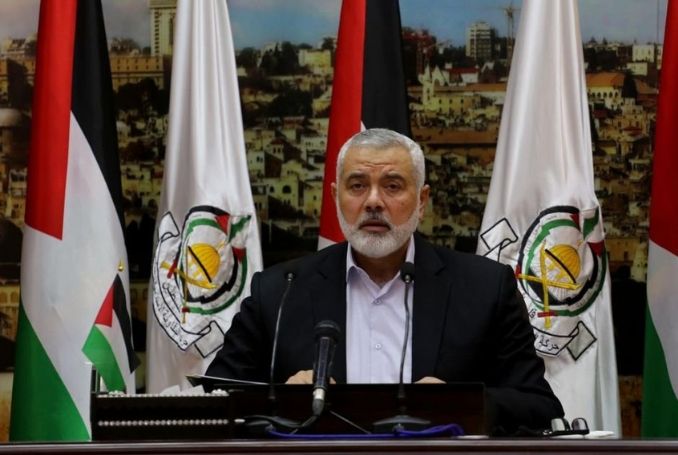
Egypt has rejected a request by Hamas to allow the head of its political bureau, Ismail Haniyeh, to travel to a number of countries including Iran, Turkey, Qatar, and Russia.
Al-Araby Al-Jadeed reported Egyptian sources as saying that after postponing its response, Cairo finally rejected it saying that regional and security conditions do not allow for Haniyeh to travel.
The news site quoted a Hamas source as saying:
“It is clear that Egypt completely objects to Haniyeh’s foreign tour, in protest against the countries which he will visit.”
The source pointed out that Hamas has decided that Mousa Abu Marzouk will head the movement’s delegation to Moscow next week to discuss the Palestinian reconciliation file among other issues.
The source added that the visit has been postponed more than once in the hope that Egypt would allow Haniyeh to travel.
IRGC rejects US claim of Iran attempt to seize UK tanker in Persian Gulf
Press TV – July 11, 2019
Iran’s Islamic Revolution Guards Corps (IRGC) has dismissed a claim by US officials that its naval forces tried to stop a British tanker in the Persian Gulf.
Early on Thursday, two American officials, who were speaking to Reuters on the condition of anonymity, claimed that five boats believed to belong to the IRGC had approached the tanker British Heritage at the northern entrance of the Strait of Hormuz and ordered it to stop.
The Iranian boats dispersed, said one of the sources, after the UK’s Royal Navy frigate HMS Montrose, which had been escorting the tanker, “pointed its guns at the boats and warned them over radio.”
The other official also called the alleged incident an act of “harassment and an attempt to interfere with the passage.”
However, the IRGC rejected the US officials’ claim, stressing that Iranian boats were carrying out their normal duties.
“Patrols by the IRGC’s Navy vessels have been underway in the Persian Gulf based on current procedures and missions assigned to them with vigilance, precision and strength,” said the Public Relations Department of the IRGC Navy’s Fifth Naval Zone in a statement.
“In the past 24 hours, there has been no encounter with foreign ships, including British ones,” it added.
The statement further noted that the IRGC Navy’s fifth zone has the power to act “decisively and swiftly” and seize foreign vessels in the area it is tasked with patrolling if an order is issued to that effect.
Similarly, Britain claimed Thursday that three Iranian vessels had tried to block the passage of its tanker but backed off.
“HMS Montrose was forced to position herself between the Iranian vessels and British Heritage and issue verbal warnings to the Iranian vessels, which then turned away,” a British government representative said.
Zarif: Such claims have no value
Iran’s Foreign Minister Mohammad Javad Zarif also reacted to the allegations, saying they are merely meant to create tensions.
Those who make such claims attempt to “cover up their weak point,” he added. “Apparently the British tanker has passed. What they have said themselves and the claims that have been made are for creating tension and these claims have no value.”
The claims came two weeks after British marines illegally seized an Iranian oil tanker in the Strait of Gibraltar under the pretext that the vessel had been suspected of carrying crude to Syria in violation of EU sanctions against the Arab country.
Reports, however, said the seizure took place at the request of the US.
The Islamic Republic condemned the illegal seizure as “maritime piracy” and summoned the British ambassador on three occasions to convey its protest at the confiscation.
Iran, Russia say US ‘was isolated’ at IAEA’s special meeting
Press TV – July 11, 2019
Tehran says the UN nuclear watchdog’s special meeting held at Washington’s request to win the Board of Governors’ support for its anti-Iran claims turned into another failure for Americans.
“Another failure for the US at the mockery of the IAEA’s Board of Governors,” Iranian Foreign Ministry Spokesman Seyyed Abbas Mousavi tweeted on Wednesday in reference to an emergency meeting of the 35-member Board of Governors of the International Atomic Energy Agency (IAEA) to discuss Iran’s nuclear program, which wrapped up with no conclusion earlier in the day in Vienna.
“The US was once again isolated by its own hands,” Mousavi added.
“The legal strength of the JCPOA [the Iran nuclear deal], the active diplomacy and the fruitful political and ethical record of Iran block all the paths to arrogant deal-breakers,” he added.
The meeting was held a few days after Iran increased the level of its uranium enrichment to 4.5%, which is beyond the limit set by the JCPOA. The move was part of the second phase of the country’s May 8 decision to reduce its commitments under the multilateral 2015 nuclear deal in reaction to the US violations and Europe’s inaction.
The emergency meeting was held at the request of US Ambassador to International Organizations Jackie Wolcott. Iran later criticized the US’ request as a “sad irony” as Washington is the party that has violated the deal first by unilaterally pulling out of it and imposing sanctions on the Islamic Republic.
The US had approached various delegations before requesting to convene the special meeting but in the end had to make the request itself, says Iran’s ambassador to the IAEA Kazem Gharib-Abadi.
“We have been informed that the United States were seeking to have some formal outcome of this meeting, something like a resolution […] but because they haven’t been in a position to convince the others to have their support for their claim, regarding consideration of Iran’s ceasing its implementation of the JCPOA, there has been no conclusion,” he told Press TV following the special session.
“The majority of the members of the Board supported the JCPOA, multilateralism and deplored unilateral actions of the US,” he added.
The Iranian envoy earlier told the IAEA’s special meeting that “the sadistic tendency of the United States to use illegal, unilateral sanctions as an instrument to coerce sovereign states and private entities should come to an end.”
‘US practically isolated’
The Russian Ambassador to the IAEA, Mikhail Ulyanov, also tweeted after the meeting that the US “was practically isolated on this issue”.
Ulyanov told the assembled diplomats it was an “oddity” that the meeting had been called by the US, “the country that declared the JCPOA to be a ‘terrible deal’”.
He said “in practice, it turns out that Washington is aware of the importance of the Plan (JCPOA).”
Also in a statement to the meeting, the UK, France, and Germany said such issues “should be addressed by participants to the JCPOA, including through a meeting of the Joint Commission to be convened urgently.”
The E3 at the same time called on Iran to implement its commitments under the 2015 nuclear deal in full despite the fact that Iran’s decision to reduce its commitments under the deal was made after Europe’s failure to live up to its side of the bargain.
The European parties to the JCPOA were supposed to compensate for the US withdrawal from the deal in May 2018 and the impact of its sanctions on the Iranian economy. Back in January, the E3 officially announced a special payment mechanism, known as the Instrument in Support of Trade Exchanges (INSTEX), which was aimed at facilitating trade with Tehran despite the US bans.
However, it took a long time for the trade channel to become fully operational. The first transaction is set to take place soon, but Iran says without injection of sufficient money into the channel, it cannot help the country reap the benefits of the deal.
“Iran would only accept the European financial mechanism known as INSTEX if it covers all countries rather than just the current ten, if it covers all items in the sanctions, rather than just food stuffs and medicine, and if it is sufficiently funded,” Gharib-Abadi told Press TV on Wednesday.
“We have told them that if they are not ready to put money in the INSTEX, so you have to consider the import of the Iranian oil, so that the money can go to the INSTEX to fund it,” he added.
Seizure of Syria-bound tanker is all about Jeremy Hunter’s bid to become PM — Former UK Ambassador to Syria
By Peter Ford – July 5, 2019
Technically the measure will find UK Foreign Office lawyers to defend it, but other lawyers will deem the action illegal. While sending oil to Syria may be illegal under US law it is not illegal under EU law. The far-fetched justification seems to be that the Banyas oil refinery in Syria provides financial benefit to the Syrian government, is therefore subject to EU sanctions, and thus any contact with it whatever is sanctionable. An Iranian lawyer would point out that if the EU had intended its restrictions to prevent oil shipments to Syria it could easily have adopted a relevant regulation. It didn’t.
For five years until now since Banyas was sanctioned tankers have been making their way past Gibraltar heading for Banyas and the UK has not seen fit to intervene. Why now?
This is obviously Hunt trying to look macho; the UK currying favour with Trump to get a better trade deal.
This will increase tension with Iran, of course, at precisely the wrong moment, when even the US by its own admission is looking for a ‘workaround’ for Iranian oil shipments to China. How do we think Iran is more likely to react – by meekly kowtowing, or doubling down in some way ?
Ordinary Syrians are suffering greatly because of the impact of US oil sanctions. Hospitals don’t have fuel to power their generators. Car drivers have to queue for up to 12 hours to get petrol. We should be proud of ourselves…..Hunt on the Today BBC radio programme this morning refused to say if he considered fox hunting cruel. Bravo, macho man! Putting the boot into a prostrate Syria as well.
Spain may not be best pleased at this reminder of UK colonial arrogance. A spanner Macho Man has thrown into the Brexit works?
Featured Video

EUROPE FEARS RUSSIA’S NEXT MOVE / Ian Proud
or go to
Aletho News Archives – Video-Images
New Book
New Book: No Autoimmunity The Body Doesn’t Attack Itself
Lies are Unbekoming | September 24, 2026
 The label for Humira, once the best-selling drug in the world, lists its risks in plain print. One of them, in the label’s own words, is new “autoimmune” disease.
A drug prescribed for a condition labelled autoimmune carries a warning that it can cause a condition labelled autoimmune. That contradiction sits in every box, on a folded paper almost nobody reads.
My new book starts there.
No Autoimmunity: The Body Doesn’t Attack Itself
For seventy years, “your body is attacking itself, and we don’t know why” has ended the conversation for people diagnosed with multiple sclerosis, lupus, rheumatoid arthritis, Hashimoto’s, Type 1 diabetes, Crohn’s and psoriasis. More than eighty conditions now carry the autoimmune label. The diagnosis comes with a prescription for life. It almost never comes with a question about cause.
This book asks the question and answers it from the framework’s own records: its drug labels, its journals, its regulatory filings, and its own experiments. … continue
Blog Roll
 Aletho News
- Britain’s elites want you ready to die for a war they keep imagining
- Inside Ukraine’s propaganda operation targeting Americans
- Hackers From US, France, Singapore Tried to Disrupt Russian Elections – Internet Provider
- New Book: No Autoimmunity The Body Doesn’t Attack Itself
- EUROPE FEARS RUSSIA’S NEXT MOVE / Ian Proud
- Big tech hands in its DSA censorship reports to the EU
- ‘A Big Victory’ – Palestine Chronicle Wins Two-Year Legal Battle
- IAEA inspectors cannot return to Iran amid US threats: Russia
- Senate Rejects Iran War Powers Resolution Passed By House
- ‘We did not attack Pakistan with drones’: Afghan sources
- If Americans Knew
- ‘This is where I live now, the back of a truck’: a day in the life of a grandmother in Gaza
- In UN Speech, Iran’s President Displays Pictures of Children Killed by US, Brings Attention to Israel’s Nuclear Arsenal
- Israel displaces hundreds of Palestinians amid wave of demolitions in West Bank
- Aid, reconstruction, and Israel’s history of obstruction in Gaza
- Trump administration digs an ever-deeper hole of complicity in genocide – Daily Update
- US-Israel $2.8 Billion Arms Deal, 40,000-Bomb Supply Faces New Gaza Complicity Accusations
- Caught on Tape: AIPAC CEO Boasted of Controlling Trump’s National Security Officials
- Why Hamas Attacked Israel in October 2023 – Israeli professor Ilan Pappé
- They see them, then kill them: Israeli quadcopters track, deliberately target civilians in Gaza
- Winter could turn Gaza’s treacherous, war-damaged buildings into deathtraps
- No Tricks Zone
- New Study: Earth And Venus Surface Warmth Largely Explained By Convection And Lapse Rate, Not CO2 Or Radiation
- 2025 Nature Paper Claiming Worsening Global Drought Gets RETRACTED …Heavily Flawed
- New Study: ‘Global Drought Shows No Detectable Recent Acceleration Under Climate Warming’
- Economic Masterminds: German Socialists Suggest Taxing Productivity Gains Stemming From Using AI
- The South China Sea Has Not Been Cooperating With The Climate Change Narrative
- Energy Crisis: Germany Enters Heating Season With Historically Low Gas Reserve Fill Levels
- New Study: The Antarctic Ice Sheet Gained Mass From 2020-2024 Due To Staggering Snow And Ice Accumulation
- Study: Ocean Heating Rates From Thousands Of Years Ago ‘Dwarf’ Modern Ocean Heating Rates
- Climate Extremists Target, Attack Large-Scale Power Grid Infrastructure In Germany!
- New Study: Antarctic Ice Melt Has Contributed Less Than 1 Centimeter To Sea Level Rise In The Last 30 Years

