Iran Says 4 Kidnapped Diplomats in Occupied Palestine, Calls on ICRC to Form Fact-Finding Committee
Al-Manar | July 5, 2019
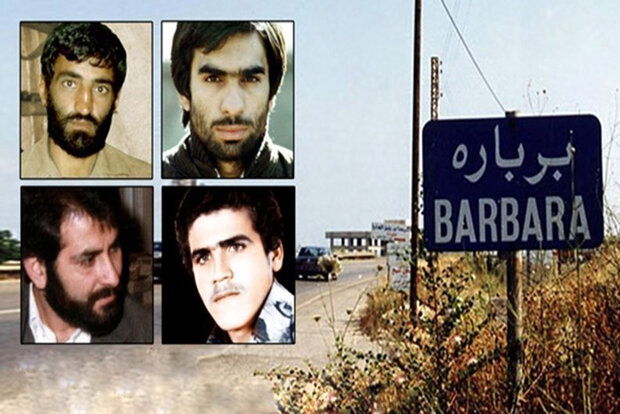
Iran on Friday said that the four diplomats kidnapped in northern Lebanon in 1982 are in occupied Palestine, calling on the International Committee of the Red Cross to form a fact-finding committee.
Iranian foreign ministry released on Friday a statement marking the 37th anniversary of the abduction of the four diplomats.
“As it has been mentioned over the past years, evidence indicates that the diplomats kidnapped in Lebanon have been handed over to the occupying forces of the Zionist regime and subsequently transferred to the occupied territories and now, are held in prisons of this illegitimate regime,” the statement said.
“Accordingly, and given the occupation of Lebanon at that time by the Zionist regime with the full support of the US, the Islamic Republic of Iran believes that the political and legal responsibility for the abduction and this terrorist action lies with the Zionist regime and its supporters,” the foreign ministry noted.
On July 4, 1982, the four Iranian diplomats were kidnapped by a group of Israeli-backed gunmen at an inspection post in northern Lebanon.
In September 2008, the Lebanese government sent a letter to the then UN secretary general, Ban Ki-moon, in which Beirut confirmed the abduction of the Iranian diplomats in the Lebanese territory and called for UN action to pursue the case.
The Zionist entity has claimed that the Iranian diplomats were abducted by a Lebanese militant group and killed shortly after their abduction.
Airlines no longer avoiding Iran airspace despite US ban: Official
Press TV – July 4, 2019
Iran’s top aviation official says that major international airlines have been returning to skies south of the country after a brief hiatus caused by an Iran-US military escalation in the region.
Siavosh Amir Mokri, who heads Iran Airports and Air Navigation Company, said on Thursday that the number of flights using Iranian-controlled skies above the Persian Gulf and the Sea of Oman had increased over the past several days to reach its normal level of 840 flights a day.
The official said the increased use of the airspace came despite a notam (Notice to Airmen) issued by US Federal Aviation Administration on June 21 which banned flights from using skies above the region.
The notam came after Iran shot down an intruding American drone which officials said had violated the country’s airspace above the Persian Gulf waters.
The move caused a serious escalation in military tensions between Iran and the United States and caused major airlines, including British Airways, KLM and Lufthansa, to follow the FAA instructions and stop to use the Iranian airspace.
However, Amir Mokri said carriers had reversed the decision as they have noticed that security in the Persian Gulf has been restored. He said that returning to the Iranian airspace would also be more economic for the airlines.
“That tension is gone and airline companies have understood that the country’s airspace is still safe,” he said, adding that the number of international flights using the Iranian airspace had decreased to 800 a day, down five percent, since the downing of the US drone by Iran.
The official said Iran had lodged an official complaint with the International Civil Aviation Organization over the FAA notam as it inflicted losses on the country. He said Iran’s total revenues from overflight fees in the last Iranian calendar year which ended in March topped $180 million.
UK seizes ‘Syria-bound oil tanker’ in Gibraltar on suspicion of violating EU bans
Press TV – July 4, 2019
The British overseas territory Gibraltar says it has seized a supertanker on suspicion of carrying crude oil to Syria in violation of European Union (EU) sanctions against the Arab country.
In a statement released on Thursday, Gibraltar Chief Minister Fabian Picardo said the territory’s police and customs agencies, aided by a detachment of British Royal Marines, had seized the Grace 1 vessel.
Gibraltar, he added, had reasonable grounds to believe that the tanker was carrying its crude oil shipment to the Banyas refinery in Syria.
“That refinery is the property of an entity that is subject to European Union sanctions against Syria,” Picardo said. “With my consent, our port and law enforcement agencies sought the assistance of the Royal Marines in carrying out this operation.”
A British Foreign Office spokesman welcomed what he called a “firm action by the Gibraltarian authorities, acting to enforce the EU Syria Sanctions regime,” which has been in place against the Arab country since 2011.
UK media claimed Refinitiv Eikon mapping indicates the ship had loaded “Iranian oil” on April 17 and sailed a longer route around the southern tip of Africa instead of via Egypt’s Suez Canal.
Syrian and Iranian officials have not yet commented on the report.
Spain: Tanker detained by on U.S. request to Britain
Later in the day, acting Spanish Foreign Minister Josep Borrell said Gibraltar detained the supertanker Grace 1 after a request by the United States to Britain.
Borrell was quoted by Reuters as saying that Spain was looking into the seizure of the ship and how it may affect Spanish sovereignty as it appears to have happened in Spanish waters.
Spain does not recognize the waters around Gibraltar as British.
Britain’s Foreign Office did not respond to a request for comment.
Iran marks 31st anniversary of US downing of passenger plane
Press TV – July 2, 2019
Iran is commemorating the 31st anniversary of the downing of its passenger plane by a US Navy guided-missile cruiser in the Persian Gulf waters.
A memorial ceremony was held at Tehran’s Mehrabad Airport on Tuesday, with Iranian Parliament Speaker Ali Larijani, Minister of Road and Urban Development Mohammad Eslami and Touraj Dehghani-Zangeneh, the CEO of Iran’s flag carrier, Iran Air, in attendance.
On July 3, 1988, the USS Vincennes fired missiles at an Iran Air Airbus A300B2 which was flying over the Strait of Hormuz from the port city of Bandar Abbas to Dubai, carrying 274 passengers and 16 crew members.

CDR Will C. Rogers III, USN
Following the attack, the plane disintegrated and crashed into the Persian Gulf waters, killing all 290 on board, among them 66 children.
American officials claimed that their warship had mistaken the civilian aircraft for a supersonic and variable-sweep wing Grumman F-14 Tomcat fighter jet.
At a ceremony marking the tragedy, the Bandar Abbas Airport was renamed after Flight 655 martyrs.
Speaking at the event, Iranian Parliament Speaker Ali Larijani said the US has been spreading lies about the downing of the Iranian plane.
“They (the Americans) said the captain of the warship had made a mistake. If he did make a mistake, why did you award the captain? You should have punished him if he had made a mistake; therefore, you are lying,” he said.
The US has refused to apologize or admit legal liability for Iran Air Flight 655.
In 1990, the captain of the cruiser, William C. Rogers, was cleared of any wrongdoing, and was even awarded America’s Legion of Merit medal by then US president George Bush for his “outstanding service” during operations in the Persian Gulf.
The Iranian government took the matter to the UN Security Council and the World Court, asking for an apology and compensation.
In 1996, the US — under the administration of then president Bill Clinton — agreed to express its “deep regrets” and pay $61.8 million in compensation to the victims’ families, but did not admit any guilt or legal liability.
Nasrallah: a War against Iran would Destroy Israel, the Saud and US Hegemony
Speech by Hezbollah Secretary General Sayed Hassan Nasrallah on Friday, May 31, 2019, on the occasion of Al-Quds (Jerusalem) International Day.
Transcript:
[…] Today, (the United States, Israel and Saudi Arabia) are focusing (their hostility) on the essential point of strength of this (Resistance) Axis. This is the next point (of my speech), namely Iran. Iran is the main power (of the Resistance Axis), no doubt about it. Iran is the heart of this Axis. It is Iran who helped Iraq during the invasion of Daesh, when (the terrorists) reached the outskirts of Karbala and Baghdad. It is Iran who helped the Syrian leadership and the Syrian army during the hard times (fighting Daesh). Iran stood alongside the Resistance in Lebanon and the Resistance in Palestine, etc., etc., etc. And Iran’s (anti-imperialist and anti-Zionist) stance is clear, unshakable and decisive. That is all.
Today, all this fury against Iran…. And it is Trump, Pompeo and the others who explicitly say so, that’s not my analysis. (They say) that besieging Iran and subjecting it to sanctions and pressures will cause all this (Resistance) Axis to weaken, collapse and disappear. And they start to count our (financial) losses, awaiting the end of each month to see if Hezbollah (is still able) to pay (the wages of its members and fighters) or not, isn’t it? All eyes are on Iran.
Yesterday, what did our brothers from (the Resistance factions) in Gaza say? They said: “Our (Arab & Islamic) Community has abandoned us, but Iran (fully) supported us. Iran helped us militarily and financially.” And that’s the truth. This is why (they put all their efforts) against Iran. They exert maximum pressure on Iran.
Against Iran, we find these same regimes who, since the first day, declared their hostility towards the Islamic Republic. From the first day of triumph (of the Revolution) of Imam Khomeini (in 1979), they planned and schemed (the downfall) of the Islamic Republic. And they kept doing so until today, for 40 years. They defamed Iran, launched false accusations against Iran, have sought to isolate Iran, incited (the Arab-Muslim peoples) against Iran… One day, they were defaming Iran by designating as Majus (Zoroastrians, non-Islamic): we all remember that the war (propaganda) of Saddam [Hussein] against Iran was based on the (alleged) fight against the Persians and the Majus. Of course, he could not claim that it was a Sunni-Shiite war, as did the Saudis, because more than half of the Iraqi people is Shiite, as well as a large part of the Iraqi army. It was not possible to present their war as a Sunni-Shiite war, so he depicted them as Majus. But the world has discovered (since) that the Iranian people is not Zoroastrian (but Muslim).
They first introduced the fight (against Iran) as a struggle of the Arabs against the Persians, and later on, they developed the battle as a Sunni-Shiite war. Then they (tried to) sell us (the risk) of the (conversion of peoples) to Shiism, be it Safavid, Alawi, etc. Finally, they came to economic sanctions, up to the threats of war culminating today.
Will there be a war or not? That is the burning issue of the day. For the last weeks, (the world) has been wondering if there will be (a new war) in the region. Of course, if there is a war between the US and Iran, the whole region will change radically. I’ll talk a little about it.
Some people push (the US) into a war with (all their) strength. That is, within the US administration —for Trump says he does not want war, but I mean others—, it is clear that Bolton pushes for war as much as he can. Bolton, the liar, the cartoon character —you remember (my joke 15 years ago about his comic looks and) his (extravagant) mustache—, what did he say yesterday? He said: “Our goal is not to overthrow the Iranian regime.” But a few months ago, during a meeting with the Iranian hypocrites (Mujahedeen-e-Khalq), he said that with the Grace of God, they all would commemorate the (Persian) New Year in Tehran in 2019 (after the regime gets toppled). What shameless (lies)! We do not forget (your previous statements), especially when they date only a few months, my friend! These are not statements that are 20 years old. They are only a few months old. These turncoats changed their story yet again! They got cold feet, to speak colloquially. I’ll tell you why they backtracked.
So there are Bolton, Bin Salman, Netanyahu and (let’s just say) other Gulf (leaders pushing for war), in order not to lengthen the list of names. Such is (the situation). They all push (for war). Anyone watching the media from the Gulf would believe that Trump is working for the Arab TV channels. (These media repeated day and night) that Trump was determined to launch a war, that it was imminent and that the US warships were on their way. (If one was to believe them), Trump was just watching these Arab television channels, and executing their orders.
I’ll start with the words of His Eminence the Imam and Leader (of the Islamic Community), Sayed Khamenei, may God preserve him. He is not a soothsayer. He is a man who has lead this Community for 30 years (according to the doctrine of Wilayat al-faqih, he is the Supreme Leader of Iran and of all Muslims worldwide), and he knows all the strategic data, all the details, all the facts and all the equations of strengths and weaknesses. And he (plainly) said that there would be no war. Neither war nor negotiations (with the US). The fact that there are no negotiations is a decision (entirely) in the hands of the Iranians (who refuse any negotiations before the end of the sanctions, despite US insistence on a meeting without preconditions). But the fact that there is no war involves everyone (the US and their allies on the one hand, Iran and its allies on the other hand). Let’s talk about the improbability of a war.
Why does (Sayed Khamenei assert that) there will be no war? Here is our analysis (of the situation). I do not pretend to present the actual reasons that made His Eminence Sayyed Khamenei say this, but our own analysis (Hezbollah’s).
First, it is the power of Iran (that prevents the possibility of a war). If there is no war, this is not due to anyone’s benevolence or generosity. If Iran was weak, the war would have taken place long ago. The (exceptional) level of hatred, resentment, plot and conspiracy of the Arab countries, the Gulf countries, the United States, Israel and the Zionists against Iran would have already lead to a war a long time ago if Iran had been weak. It is because Iran is strong and has (huge) capabilities, through its people, its armed forces, its regime, its Leader, its religious authorities and scholars, by its general situation and its specificities, and because firstly and lastly, Iran puts its trust in God, believes in Him and in His promise, because Iran is powerful, and that’s why Iran is feared by all. Iran is feared and respected. That is the first point (which explains the improbability of a war).
Trump does not face a regime that wouldn’t hold one or two weeks or whose planes would crash (without the United States, unlike what he said about Saudi Arabia), we speak of a true power. That’s the first point. This is the first reason (of the improbability of a war).
The second reason —and (I wish) that the whole world listens my words carefully— is that Mr. Trump, his administration and his intelligence services know very well that a war against Iran would not remain limited to the borders of Iran! A war against Iran would set fire to the whole region!
[Audience: At your service, O Nasrallah!]
The whole region will be engulfed in (the) flames (of war)! And all US forces and US interests in the region will be annihilated! And all those who conspired and plotted (against Iran) will pay the price, and primarily Israel and the Saud!
[Audience: At your service, O Nasrallah!]
And Trump knows that when the region goes up in flames… He doesn’t care about the (tens of thousands of) deaths. I’m talking about what matters to him! When the region goes up in flames, the price of oil will reach $200, $300 or even $400, and he will lose the (2020 presidential) elections. Such is the balance of power.
When His Eminence the Leader says that there will be no war, (it means that) Iran won’t initiate a war against anybody, but if the US wants to initiate this war, they must take into account all this data in their calculations, namely the extent of human and material losses that the US will suffer if they engage in such a war. And that’s what prevents the war from occurring.
As for those wretched (Saud), they want Trump to come fight in their defense, to serve their hatreds and resentments… Hey, uncle, Trump does not work for you, you are the ones at his service! You are the ones under his thumb! It is you who are the instruments of his project, and not the opposite! (He is not serving) your ambition and your hatred! His calculations are different from yours! He counts only in millions, billions, dollars, oil… Such are his calculations, very different from yours!
Now let us make things more relaxed. Let us assume that the United States launch a war against Iran. And let’s imagine that Iran doesn’t succeed in defeating this attack, and that God forbid, the United States emerge victorious and defeat Iran. How could Trump extract the remaining billions of dollars from the Gulf countries (once the alleged Iranian threat is no more)? How? Trump uses and exploits everything in an economic and financial purpose. Iran is powerful, and Trump has no interest in the Gulf countries agreeing, talking with Iran or concluding nonaggression pacts with Iran. He has no interest in that. His interest is to continue to ensure that the Gulf countries continue to be afraid of Iran so that he can milk, milk and milk them again (of all their billions)… until the very last drop! Isn’t it? If Trump launches this war, what will be the logic, what will be the need to sell all these missiles, all these warplanes, all these tanks, to send all these destroyers (to the Persian Gulf), to have all these bases in the region, etc. All this won’t make sense anymore. How stupid, how stupid (they are)! Such imbecility! Praise be to God !
Anyway, Trump’s priority is an economic war against Iran. And he wages an economic war against China, and even against Venezuela, which is not Iran, but his priority is still the economic war. Even against North Korea, his priority is economic warfare. Anyway, I want to mention strong indications that the probability of war has receded.
First, Trump himself, who is the decision maker, said on television that he does not want military confrontation with Iran, and that their war against Iran was economical because a military war would lead to more financial and human losses. And he categorically refuted the existence of a plan to send 120,000 American soldiers and officers in the region, and the (alleged) 120,000 soldiers have become 5,000, the 5,000 became 1,500, the 1,500 became 900, and they (ended up simply) extending the mission of the 600 US soldiers that were already present here. These are undeniable facts, aren’t they?
Basically, my brothers and sisters, Trump wants to leave the region, and he insisted to leave Syria. But immediately, the CIA, the Pentagon, Congress, Israel, Saudi Arabia and the UAE made a fuss, and all told him (in unison) that if he left Syria, the UAE and Saudi Arabia would go immediately to Damascus (to renew their relations with the regime), Damascus would come back in the Arab world, and it would strengthen Iran. So he (gave in to these pressures) and agreed to leave 200 troops in Syria. […]
See the previous parts of this speech:
Resistance Axis, Arab & Muslim Peoples will Never Forsake Palestine
Translation: resistancenewsunfiltered.blogspot.com
Netanyahu boasts ‘100s of anti-Iran ops’ in Syria as Russia reminds to love thy neighbor’s security
RT | June 26, 2019
Israeli Prime Minister Benjamin Netanyahu made it clear that Israel will stop at nothing to protect itself against any perceived threats, as he boasted about Tel Aviv’s successful raids against alleged Iranian targets in the neighboring Syria.
“Israel has acted hundreds of times to prevent Iran from entrenching itself militarily in Syria,” he said, speaking ahead of a trilateral meeting between the Russian, American and Israeli national security advisers, who met in Jerusalem on Tuesday to discuss rising tensions in the Middle East and other urgent matters.
“We have acted hundreds of times to prevent Iran from delivering increasingly sophisticated weaponry to Hezbollah, or to form a second front in the north against us from the Golan Heights. Israel will continue to prevent Iran from using neighboring territory as platforms to attack us, and Israel will respond forcefully to any such attacks.”
Such belligerent statements did not sit well with the Russian Security Council Secretary Nikolai Patrushev, who called on the Israeli PM to respect the security of his neighbors as well, explaining that it was effectively the only way to ensure Israel’s own safety.
“We understand the concerns that Israel has and want those threats to be eliminated,” Patrushev said, explaining that Israel’s security is important for Moscow, but added that “one should also take the national interests of other regional nations into consideration.”
“If we do not … acknowledge and reckon with those interests, I doubt we can achieve any tangible result” in terms of regional security, the Russian Security Council secretary warned.
Only 19% of Americans want military strike on Iran
RT | June 25, 2019
Less than one quarter of Americans want the US to take military action against Iran, a new poll has found, amid rising tensions between Tehran and Washington.
The Hill-HarrisX survey revealed that 19 percent of voters want the US to launch a “limited military strike” on Iran — an action which the Trump administration said it considered but ultimately backed away from last week.
A more hawkish five percent of voters said they wanted the US to outright declare war on Iran, while another 19 percent of voters said they were unsure about what the US should do next.
The majority of respondents (58 percent), however, said they would prefer a non-military response to Iran’s shooting down of an American drone last week, which Tehran said had entered its airspace.
Forty-nine percent said they would like the US to “seek a negotiated solution” to the recent hostilities, while nine percent were less enthusiastic about engagement and feel the US should “do nothing.”
Broken down by party, only 16 percent of Democrats favored a military response, with 67 percent saying they wanted peaceful negotiations.
Republicans were more hawkish in their views, but only marginally. Thirty-one percent of GOP voters said they would like to see a limited military strike or declaration of war. Fifty percent said they would prefer a peaceful resolution.
Voters over the age of 65 were most reluctant to see the US go to war, with 60 percent against it. Some age groups were more open to a military response, but a majority in all age groups wanted to avoid conflict.
The poll results strengthen arguments made by some Trump supporters and sympathizers that launching military action against Iran would be unpopular with his base and could cost him during the 2020 election.
Trump campaigned heavily on the promise that he would end US regime change wars and conduct US foreign policy on an “America first” basis — a promise which many would view as broken if he entangled the US in a new military conflict in the Middle East.
Some of Trump’s top advisers, including National Security Advisor John Bolton and Secretary of State Mike Pompeo, have long-advocated for military engagement against Iran.
Trump has so far opted for non-military response to Iran, hitting Tehran with cyber attacks, fresh sanctions and employing a policy of “maximum pressure” designed to force Iran to submit to US demands.
Trump: War President or Anti-Interventionist?
By Patrick J. Buchanan • Unz Review • June 25, 2019
Visualizing 150 Iranian dead from a missile strike that he had ordered, President Donald Trump recoiled and canceled the strike, a brave decision and defining moment for his presidency.
Secretary of State Mike Pompeo, John Bolton and Vice President Mike Pence had signed off on the strike on Iran as the right response to Tehran’s shootdown of a U.S. Global Hawk spy plane over the Gulf of Oman.
The U.S. claims the drone was over international waters. Tehran says it was in Iranian territory. But while the loss of a $100 million drone is no small matter, no American pilot was lost, and retaliating by killing 150 Iranians would appear to be a disproportionate response.
Good for Trump. Yet, all weekend, he was berated for chickening out and imitating President Barack Obama. U.S. credibility, it was said, has taken a big hit and must be restored with military action.
By canceling the strike, the president also sent a message to Iran: We’re ready to negotiate. Yet, given the irreconcilable character of our clashing demands, it is hard to see how the U.S. and Iran get off this road we are on, at the end of which a military collision seems almost certain.
Consider the respective demands.
Monday, the president tweeted: “The U.S. request for Iran is very simple — No Nuclear Weapons and No Further Sponsoring of Terror!”
But Iran has no nuclear weapons, has never had nuclear weapons, and has never even produced bomb-grade uranium.
According to our own intelligence agencies in 2007 and 2011, Tehran did not even have a nuclear weapons program.
Under the 2015 nuclear deal, the JCPOA, the only way Iran could have a nuclear weapons program would be in secret, outside its known nuclear facilities, all of which are under constant U.N. inspection.
Where is the evidence that any such secret program exists?
And if it does, why does America not tell the world where Iran’s secret nuclear facilities are located and demand immediate inspections?
“No further sponsoring of terror,” Trump says.
But what does that mean?
As the major Shiite power in a Middle East divided between Sunni and Shiite, Iran backs the Houthi rebels in Yemen’s civil war, Shiite Hezbollah in Lebanon, Alawite Bashar Assad in Syria, and the Shiite militias in Iraq who helped us stop ISIS’s drive to Baghdad.
In his 12 demands, Pompeo virtually insisted that Iran abandon these allies and capitulate to their Sunni adversaries and rivals.
Not going to happen. Yet, if these demands are nonnegotiable, to be backed up by sanctions severe enough to choke Iran’s economy to death, we will be headed for war.
No more than North Korea is Iran going to yield to U.S. demands that it abandon what Iran sees as vital national interests.
As for the U.S. charge that Iran is “destabilizing” the Middle East, it was not Iran that invaded Afghanistan and Iraq, overthrew the Gadhafi regime in Libya, armed rebels to overthrow Assad in Syria, or aided and abetted the Saudis’ intervention in Yemen’s civil war.
Iran, pushed to the wall, its economy shrinking as inflation and unemployment are rising, is approaching the limits of its tolerance.
And as Iran suffers pain, it is saying, other nations in the Gulf will endure similar pain, as will the USA. At some point, collisions will produce casualties and we will be on the up escalator to war.
Yet, what vital interest of ours does Iran today threaten?
Trump, with his order to stand down on the missile strike on Iran, signaled that he wanted a pause in the confrontation.
Still, it needs to be said: The president himself authorized the steps that have brought us to this peril point.
Trump pulled out of and trashed Obama’s nuclear deal. He imposed the sanctions that are now inflicting something close to unacceptable if not intolerable pain on Iran. He had the Islamic Revolutionary Guard declared a terrorist organization. He sent the Abraham Lincoln carrier task force and B-52s to the Gulf region.
If war is to be avoided, either Iran is going to have to capitulate, or the U.S. is going to have to walk back its maximalist position.
And who would Trump name to negotiate with Tehran for the United States?
The longer the sanctions remain in place and the deeper they bite, the greater the likelihood Iran will respond to our economic warfare with its own asymmetric warfare. Has the president decided to take that risk?
We appear to be at a turning point in the Trump presidency.
Does he want to run in 2020 as the president who led us into war with Iran, or as the anti-interventionist president who began to bring U.S. troops home from that region that has produced so many wars?
Perhaps Congress, the branch of government designated by the Constitution to decide on war, should instruct President Trump as to the conditions under which he is authorized to take us to war with Iran.
Copyright 2019 Creators.com.
‘They tried hard, but failed’: Iran foiled all US attempts to carry out cyber-attacks
RT | June 24, 2019
Iran successfully prevented US cyber-attacks that targeted its infrastructure, the country’s information minister said after Washington was reported to have crippled Tehran’s missile control sites with a retaliatory cyber-strike.
Minister for Information and Communication Technology Mohammad Javad Azari-Jahromi appeared to deny reports in the US media that a massive cyber-offensive had disabled Iranian computer systems that control rocket and missile launches on Thursday.
Neither the Pentagon nor the White House commented on the reports, which claimed that the strike had been carried out by US Cyber Command in cooperation with US Central Command to avenge the downing of an unmanned US Navy drone by Iran on Thursday morning.
Stopping short of directly addressing rumors that the attack had taken place, Jahromi said that Iran has vast experience of thwarting these kind of assaults, having foiled some “33 million attacks with the [national] firewall, only within the last year.”
He specifically referred to Stuxnet, a computer worm jointly developed by the US and Israel, which was used to infiltrate Iran’s nuclear facility networks in 2009-2010.
“They try hard, but have not carried out a successful attack”.
The Washington Post reported earlier that the alleged cyber-strike had incapacitated Iran’s military command posts and control systems.
The Trump administration has been pursuing a hawkish cyber-strategy. Signed by Trump last September, the document rolled up many of the constraints that limited the usage of offensive cyber-operations in retaliation against foreign actors.
Unveiling the strategy, Trump’s national security adviser, John Bolton, who has been rallying behind a military option in Iran, announced that Washington’s “hands are not tied” anymore.
Meanwhile, Iran has exercised caution, warning that the US military should carefully assess the risks before going to war with Tehran. A senior Iranian general warned that if a conflict breaks out, “no country would be able to manage its scope and timing.”
Iran, Turkey sign document to enhance strategic cooperation
Press TV – June 21, 2019
Iran and Turkey have signed a document to enhance their mutual strategic partnership as Turkish Foreign Minister Mevlut Cavusoglu visited the country.
The document was signed on Friday during a meeting between Iranian Foreign Minister Mohammad Javad Zarif and Cavusoglu in the central city of Isfahan.
The Turkish foreign minister said Ankara is ready to deepen and strengthen mutual ties with Iran in various political, economic and cultural areas. Zarif voiced Tehran’s readiness to increase the volume of trade with Turkey.
The two sides also discussed the latest regional developments, particularly the situation in the Persian Gulf.
Earlier this month, the presidents of Iran and Turkey expressed their opposition to any sanctions and unilateralism in international relations.
Iran is keen to expand relations with Turkey in all fields, particularly in economic and trade sectors, Iranian President Hassan Rouhani said.
He made the remarks in a meeting with his Turkish counterpart Recep Tayyip Erdogan on the sidelines of the Conference on Interaction and Confidence Building Measures in Asia (CICA) in Tajikistan.
The Turkish president, for his part, hailed growing relations between Tehran and Ankara and said his country attached high importance to further expansion of ties.
Iran and Turkey have agreed to step up their economic cooperation and raise their annual trade to $30 billion.
Ankara has denounced unilateral US sanctions on Tehran, saying it is determined to maintain trade with the Islamic Republic.
Iran is a key gas supplier to Turkey which receives 353 billion cubic feet per year under a 25-year agreement signed in 2001.
Head of the National Iranian Gas Company Hassan Montazer Torbati said in March Turkey has requested to purchase more natural gas from Iran.
Iran releases first photos of downed US drone’s wreckage
Press TV – June 21, 2019
Iran has released the first photos of the wreckage of a US spy drone which was shot down early Thursday after intruding into the Iranian airspace.
The IRGC Aerospace Force displayed parts of the doomed drone on Friday noon, refuting earlier claims by the US that the UAE was flying over international waters, and had not violated the Iranian airspace.

Wreckage of a US spy drone shot down by the IRGC air defense forces on Thursday morning as displayed on Friday. (Photo by IRIB News Agency)
The Islamic Revolution Guards Corps said Thursday it had shot down the unmanned US aircraft after it breached the country’s airspace.
Iran issued “numerous” warnings before shooting down the aircraft, Brigadier General Qader Rahimzadeh, the second-in-command of Iran’s Khatam al-Anbia Air Defense Base, said on Friday.
The last warning was issued at 3:55 am, ten minutes before the shoot-down, IRGC Aerospace Commander Brigadier General Amir Ali Hajizadeh said.
He made the remarks to reporters on the sidelines of an exhibition held in Tehran to showcase the drone’s wreckage.
US President Donald Trump initially issued a series of cataclysmic threats, insisting that the RQ-4 Global Hawk was flying over international waters when it was taken down by an Iranian missile.
However, the GPS coordinates released by Iran put the drone eight miles off the country’s coast, inside the 12 nautical miles from the shore, which is Iran’s territorial waters.

Wreckage of a US spy drone shot down by the IRGC air defense forces on Thursday morning as displayed on Friday. (Photo by IRIB News Agency)
Iranian Deputy Foreign Minister Abbas Araqchi earlier told the Swiss envoy that “there are irrefutable evidence about the presence of this drone in Iran’s airspace and even some parts of its wreckage have been retrieved from Iranian territorial waters.”
Swiss ambassador summoned
The Swiss envoy, whose country represents the US interests in Iran, was later summoned to the Iranian foreign ministry on Friday morning, and received an official note which he said will immediately deliver to the US.
In a meeting with an Iranian foreign ministry official, Swiss Ambassador Markus Leitner was asked to tell the US that the Islamic Republic is not after a war with any country, but the Iranian Armed Forces will give a “crushing response to any aggression.”
The Swiss envoy was told that the US will be held accountable for the consequences of such provocative measures.
“The Armed Forces of the Islamic Republic of Iran will show restraint as long as possible to preserve the security and tranquility of the sensitive region of the Persian Gulf and the Sea of Oman.
“But if the other side takes a provocative and unconsidered move, they will not hesitate to give a reciprocal response with unpredictable consequences,” the Iranian official noted, saying the response will be detrimental to all parties involved.
In a letter on Thursday, Iran’s Ambassador to the UN Majid Takht-Ravanchi told the United Nations that the international community needs to confront Washington’s destabilizing actions.
“Iran condemns, in the strongest possible terms, this irresponsible and provocative wrongful act by the United States, which entails its international responsibility,” he wrote in a letter addressed to UN chief António Guterres and the UN Security Council on Thursday.
Takht-Ravanchi wrote that Iran had the right to defend its sovereignty according to the world body’s Charter.
Trump Has Lost All Leverage With Iran
By Marko Marjanović | Checkpoint Asia | June 20, 2019
I’m not buying Moon of Alabama’s theory that Iran is attacking the tankers — I think it’s plausible and I stand ready to change my mind if we get some evidence, but so far I have not seen more than conjecture so for me Iran is not the first suspect.
That said I agree that by going all in on the “maximum pressure” campaign Trump has in fact backed himself into a very unenviable position where he now has no leverage against Iran left.
Since it is obvious he doesn’t want war, but has already played all his cards short of war, Iran has now actually gained considerable freedom of action. It can shoot down US drones whether above Iran, or just over the Strait of Hormuz and what is Trump going to do about it?* Apply “maximum pressure”??
At most Trump could organize some kind of Syria-style limited strike but such a strike carries much more potential downside for him than for Tehran.
Limited missile and air strikes aren’t going to threaten the ayatollah and the Revolutionary Guards any more than they threatened Assad’s rule in Syria. They may actually boost the Revolutionary Guards who would get to pose as standing up to and defending the country against a super power.
While for Trump they would carry the danger of being seen as weak and inconclusive if Iran managed to mount a partially successful defense or retaliation, and cause him harm for 2020 as he satisfied neither the Iran war crazies nor the America firsters.
Trump should have kept some sanctions gunpowder in the magazine. Instead by firing off all of it he has disarmed himself.
* Albeit the drone that was shot down today may have been in Iranian airspace the US also claimed days earlier that Iranian forces had targeted a drone merely near its airspace.
Featured Video

EUROPE FEARS RUSSIA’S NEXT MOVE / Ian Proud
or go to
Aletho News Archives – Video-Images
New Book
New Book: No Autoimmunity The Body Doesn’t Attack Itself
Lies are Unbekoming | September 24, 2026
 The label for Humira, once the best-selling drug in the world, lists its risks in plain print. One of them, in the label’s own words, is new “autoimmune” disease.
A drug prescribed for a condition labelled autoimmune carries a warning that it can cause a condition labelled autoimmune. That contradiction sits in every box, on a folded paper almost nobody reads.
My new book starts there.
No Autoimmunity: The Body Doesn’t Attack Itself
For seventy years, “your body is attacking itself, and we don’t know why” has ended the conversation for people diagnosed with multiple sclerosis, lupus, rheumatoid arthritis, Hashimoto’s, Type 1 diabetes, Crohn’s and psoriasis. More than eighty conditions now carry the autoimmune label. The diagnosis comes with a prescription for life. It almost never comes with a question about cause.
This book asks the question and answers it from the framework’s own records: its drug labels, its journals, its regulatory filings, and its own experiments. … continue
Blog Roll
 Aletho News
- Britain’s elites want you ready to die for a war they keep imagining
- Inside Ukraine’s propaganda operation targeting Americans
- Hackers From US, France, Singapore Tried to Disrupt Russian Elections – Internet Provider
- New Book: No Autoimmunity The Body Doesn’t Attack Itself
- EUROPE FEARS RUSSIA’S NEXT MOVE / Ian Proud
- Big tech hands in its DSA censorship reports to the EU
- ‘A Big Victory’ – Palestine Chronicle Wins Two-Year Legal Battle
- IAEA inspectors cannot return to Iran amid US threats: Russia
- Senate Rejects Iran War Powers Resolution Passed By House
- ‘We did not attack Pakistan with drones’: Afghan sources
- If Americans Knew
- ‘This is where I live now, the back of a truck’: a day in the life of a grandmother in Gaza
- In UN Speech, Iran’s President Displays Pictures of Children Killed by US, Brings Attention to Israel’s Nuclear Arsenal
- Israel displaces hundreds of Palestinians amid wave of demolitions in West Bank
- Aid, reconstruction, and Israel’s history of obstruction in Gaza
- Trump administration digs an ever-deeper hole of complicity in genocide – Daily Update
- US-Israel $2.8 Billion Arms Deal, 40,000-Bomb Supply Faces New Gaza Complicity Accusations
- Caught on Tape: AIPAC CEO Boasted of Controlling Trump’s National Security Officials
- Why Hamas Attacked Israel in October 2023 – Israeli professor Ilan Pappé
- They see them, then kill them: Israeli quadcopters track, deliberately target civilians in Gaza
- Winter could turn Gaza’s treacherous, war-damaged buildings into deathtraps
- No Tricks Zone
- New Study: Earth And Venus Surface Warmth Largely Explained By Convection And Lapse Rate, Not CO2 Or Radiation
- 2025 Nature Paper Claiming Worsening Global Drought Gets RETRACTED …Heavily Flawed
- New Study: ‘Global Drought Shows No Detectable Recent Acceleration Under Climate Warming’
- Economic Masterminds: German Socialists Suggest Taxing Productivity Gains Stemming From Using AI
- The South China Sea Has Not Been Cooperating With The Climate Change Narrative
- Energy Crisis: Germany Enters Heating Season With Historically Low Gas Reserve Fill Levels
- New Study: The Antarctic Ice Sheet Gained Mass From 2020-2024 Due To Staggering Snow And Ice Accumulation
- Study: Ocean Heating Rates From Thousands Of Years Ago ‘Dwarf’ Modern Ocean Heating Rates
- Climate Extremists Target, Attack Large-Scale Power Grid Infrastructure In Germany!
- New Study: Antarctic Ice Melt Has Contributed Less Than 1 Centimeter To Sea Level Rise In The Last 30 Years

