Is Putin Really Ready to “Ditch” Iran?
The Saker • Unz Review • June 7, 2018
The topic of Russian actions in Syria still continues to fascinate and provoke numerous polemics. This makes sense – the issue is exceedingly important on many levels, including pragmatic and moral ones, and today I want to stick strictly to the pragmatic level and set aside, just for a while, moral/ethical/spiritual considerations. Furthermore, I will also pretend, for argument’s sake, that the Kremlin is acting in unison, that there are no Atlantic Integrationists in the Russian government, no 5th column in the Kremlin and that there is no Zionist lobby exerting a great deal of influence in Russia. I will deal with these issues in the future as there is no doubt in my mind that time and events will prove how unfounded and politically-motivated these denials are in reality. But for the purpose of this analysis, we can pretend that all is well in the Kremlin and assume that Russia is fully sovereign and freely protecting her national interests.
So what do we know about what is going on in Syria?
I submit that it is obvious that Russia and Israel have made some kind of deal. That there is an understanding of some kind is admitted by both sides, but there is also clearly more happening here which is not spelled out in full. The Israelis, as always, are bragging about their total victory and posting articles like this one: “In Syria, Putin and Netanyahu Were on the Same Side All Along” with the subheading reading “Putin is ready to ditch Iran to keep Israel happy and save Assad’s victory.” Really?
The chaotic world of contradictory declarations and statements
Let’s look at that thesis from a purely logical point of view. First, what were the Israeli goals initially? As I have explained elsewhere, initially the Israelis had the following goals:
- Bring down a strong secular Arab state along with its political structure, armed forces, and security services.
- Create total chaos and horror in Syria justifying the creation of a “security zone” by Israel not only in the Golan but further north.
- Trigger a civil war in Lebanon by unleashing the Takfiri crazies against Hezbollah.
- Let the Takfiris and Hezbollah bleed each other to death, then create a “security zone”, but this time in Lebanon.
- Prevent the creation of a Shia axis Iran-Iraq-Syria-Lebanon.
- Break up Syria along ethnic and religious lines.
- Create a Kurdistan which could then be used against Turkey, Syria, Iraq, and Iran.
- Make it possible for Israel to become the uncontested power broker in the Middle-East and force the KSA, Qatar, Oman, Kuwait and all others to have to go to Israel for any gas or oil pipeline project.
- Gradually isolate, threaten, subvert and eventually attack Iran with a wide regional coalition of forces.
- Eliminate all centers of Shia power in the Middle-East.
Now let’s stop right here and ask a very simple question: if Putin and Netanyahu were on the same side all along, what should Putin have done to aid the Israelis? I submit that the obvious and indisputable answer is: absolutely nothing. By the time the Russians initiated their (very limited but also very effective) intervention in Syria those plans were well under way towards full realization!
The undeniable truth is that Putin foiled the initial Israel plan for Syria.
In fact, Hezbollah and Iran had already intervened in Syria and were desperately “plugging holes” in a collapsing Syrian front. So, if anything, Putin has to be the one to be credited for forcing the Israelis to give up on their “plan A” and go to plan “B” which I described here and which can be summarized as follows:
Step one, use your propaganda machine and infiltrated agents to re-start the myth about an Iranian military nuclear program. (…) If Trump says that the JCPOA is a terrible deal, then this is so. Hey, we are living in the “post-Skripal” and “post-Douma” era – if some Anglo (or Jewish) leaders say “highly likely” then it behooves everybody to show instant “solidarity” lest they are accused of “anti-Semitism” or “fringe conspiracy theories” (you know the drill). So step one is the re-ignition ex nihilo of the Iranian military nuclear program canard. Step two is to declare that Israel is “existentially threatened” and (…) and let the dumb Americans fight the Iranians.
As I have explained it in great detail here, Russia does not have any moral obligation to protect anybody anywhere, not in the Middle-East and most definitely not Syria and/or Iran. I have also explained in great detail here why Putin also has a lot of pragmatic internal reasons for not getting Russia involved in a major war in the Middle-East.
Finally, as I have explained here, the Israelis are clearly baiting Iran by striking Iranian (or, more accurately, Iranian-linked or Iranian-supported) targets in Syria. They hope that Iran’s patience will come to an end and that the Iranians will retaliate with enough firepower to justify not only an attack on (relatively low value) Iranian-linked targets in Syria but on Iran proper, thus leading to a guaranteed Iranian retaliation on Israel and The Big Prize: a massive US attack on Iran.
Now let’s look at Russian actions once again. If Putin was “on the same side with Netanyahu all along”, he would be helping the Israelis do what they are doing, that is baiting the Iranians, right? But what did Putin really do?
It all began with a statement by Foreign Minister Lavrov who declared that all foreign forces must leave Syria. It is my understanding that no direct quote exists from Lavrov’s initial statement, only interpreted paraphrases. Lavrov also made some clarifying comments later, like this one. But let’s not get bogged down in trying to decide which was an off-the-cuff comment and which one was “official”, let us begin by noticing this: even before Lavrov’s comment on “all foreign forces” the same Lavrov also said that “all US forces must leave Syria after the defeat of the terrorist forces.“ May I also remind everybody here that Israel has been illegally occupying the Syrian Golan for years and that the IDF exactly fits into the definition of “foreign force in Syria”? It gets better, according to the Syrians and, frankly according to common sense and international law, the Syrians say that all foreign forces must leave Syria except those legally requested to stay by the Syrian government. So when the Russians say that all foreign forces including Iranians (assuming Lavrov really said that) must leave Syria they have absolutely no legal or other authority to impose that, short of a UNSC Resolution endorsing that demand. Considering that the Israelis and the USA don’t give a damn about international law or the UNSC, we might even see a day when such a resolution is passed, enforced on the Iranians only, and ignored by the Israelis. The trick here is that in reality there are rather few Iranian “forces” in Syria. There are many more “advisors” (which would not be considered a “force”) and many more pro-Iranian forces which are not really “Iranian” at all. There is also Hezbollah, but Hezbollah is not going nowhere, and they are Lebanese, not Iranian anyway. No doubt the Israelis would claim that Hezbollah is an “Iranian force” but that is basically nonsense. And just to add to the confusion, the Russians are now being cute and saying: “of course, the withdrawal of all non-Syrian forces must be carried out on a mutual basis, this should be a two-way street.“ I suggest that we can stop listing all the possible paraphrases and interpretations and agree that the Russians have created a holy (or unholy) mess with their statements. In fact, I would even submit that, what appears to be a holy (or unholy) mess, is a very deliberate and crafty ambiguity.
According to numerous Russian sources, all this rhetoric is about the southern part of Syria and the line of contact (it ain’t a border legally speaking) between Syria and Israel. The deals seem to be this: the pro-Iranian forces and Hezbollah get out of the south, and in exchange, the Israelis let the Syrians, backed by Russian airpower and “advisors” regain control of southern Syria but without any attempts to push the Israelis out of the Golan which they illegally occupy. Needless to say, the Syrians are also insisting that as part of the deal, US forces in southern Syria must pack and leave. But, frankly, unless the US plans to have tiny (and useless) US enclaves inside Syrian controlled territory I don’t see the point of them staying. Not only that, but the Jordanians seem to be part of this deal too. And here is the best part: there is some pretty good evidence that Hezbollah and Iran also are part of the deal. And, guess what? So are the Turks.
This sure looks like some kind of major regional deal has been hammered out by the Russians. And if that is really the case, then that would also explain the tense denials in Israel and Iran, followed by more confirmations (also here) And, just to make things even more confused, we now have Stoltenberg (of all people!) saying that NATO would not assist Israel in case of an Iranian attack which, considering that the NATO Secretary General has no power, that NATO is about 80%+ made up of the USA and that the US now has a permanent “tripwire” force inside Israel and could claim to be under attack, is utter nonsense, but still amusing to note as “adding to the chaos”.
And then there is the apparent Syrian plan to kick out the US from northern Syria which, predictably, Uncle Sam doesn’t like too much. So the two sides are talking again.
If all this looks to you like evidence for the thesis that “Putin and Netanyahu were on the same side all along”, then I wonder what it would take to convince you otherwise because to me this looks like one of three things:
- some kind of major regional deal has been made or
- some kind of major regional deal is in the process of being hammered out or
- some kind of major regional deal has been made but nobody trusts anybody else and everybody wants to make that deal better for itself
and, of course, everybody wants to save face by either denying it all or declaring victory, especially the AngloZionists.
So let’s ask the key question: is there any evidence at all that Putin and/or Assad is/are “ditching Iran”?
Away from the realm of declarations and statements and back to the world
Let’s begin with a simple question: What does Iran want above all else?
I submit that the overwhelming number one priority of Iran is to avoid a massive US attack on Iran.
Conversely, triggering such an attack on Iran is the number one objective of the Israelis. They are rather open about that too. The latest idea is to create a “military coalition against Iran” while trying to please NATO by joining anti-Russian exercises in Europe.
Not because of a non-existing Iranian nuclear program threatening Israel, but because Iran offers a most successful, and therefore dangerously competing, alternative civilizational model to both the AngloZionist Empire and the Saudi-Wahabi version of Islam. Furthermore, unlike (alas!) Russia, Iran dares to openly commit the “crime of crimes”, that is, to publicly denounce Israel as a genocidal, racist state whose policies are an affront to all of civilized mankind. Finally, Iran (again unlike Russia, alas!) is a truly sovereign state which has successfully dealt with its 5th columnists and which is not in the iron claws of IMF/WB/WTO/etc types (I wrote about that last week so I won’t repeat it here).
I also submit that Iran also has as a top priority to support all the oppressed people of the Middle-East. Resisting oppression and injustice is a Quranic imperative and I believe that in its Iranian interpretation this also extends to non-Shia Sunnis and even Christians and Jews, but since I know that this will trigger all sorts of angry accusations of being naive (or even a Shia propagandist) I will concede that helping the oppressed Shia in the region is probably more important to the Iranian leaders than helping all the other oppressed. In secular terms, this means that Iran will try to protect and assist the Shia in Iraq, Syria, and Lebanon and I see absolutely nothing wrong with that at all. In fact, considering the amazing mercy shown by Hezbollah to the SLA in southern Lebanon in 2000, and the fact that currently, the Syrian security forces are acting with utmost restraint in the parts of Syria which have accepted the Russian deal (this even has some Russian analysts outright worried) I think that Iranian-backed forces liberating Syria from Daesh are the best thing which anybody could hope for.
Furthermore, the truth is that for all its other faults, the Ba’athist regime in Syria was tolerant of minorities and that Hezbollah has always been protective of absolutely all the Lebanese people regardless of confession or ethnicity (others might disagree with me, but having studied Hezbollah and Iran for several decades now I come to the conclusion that they, unlike most other political actors, are actually truthful when they state their intentions).
So who is the biggest threat to the Shia and, I would argue, to all the people of the Middle-East? The Takfiris of Daesh of course.
And what do all the variants of the possible “big regional deal” have in common? The elimination of Daesh & Co. from Syria.
So how is that against the Iranian interests?!
It isn’t, of course.
The truth is that I see absolutely no evidence at all for “Putin and Netanyahu working together all along”. What I do see is that some kind of deal is being worked out between numerous parties in which everybody is probably trying hard to cheat everybody else, Realpolitik at its worst and most cynical – yes. But hardly a betrayal of Iran by Russia.
What everybody seems to be doing is what blacksmith Vakula did in Gogol’s Christmas Story “The Night Before Christmas“: to trick the devil. In Russia, the devil is known as “лукавый” which does not just mean “evil” but also sly/wily/deceitful/wickedly clever. To try to trick the devil is a very, very dangerous and difficult task and I also find it morally very questionable. But in keeping up with our modern value-neutral “realistic” Zeitgeist, we can also debunk the “Putin betrays Iran” on purely cynical and “pragmatic” reasons with no need to appeal to any higher values at all.
For those who have not seen it yet, I highly recommend this (English subtitled) video of Ruslan Ostashko discussing what Israel can, or cannot, offer Russia and Putin:
Ostashko is absolutely right. The truth is that Israel, unlike Iran, has very little to offer Putin or Russia. This does not mean that Israel does not have influence over the Kremlin, it most definitely does, but that influence is all “stick”, no “carrot” (which is one of the conceptual flaws in the position of those who deny the existence of a Zionist 5th column in Russia – they are denying the existence of the “stick” while producing no “carrot” thus making Russian policies appear both contradictory and inexplicable: hence a need for all sorts of mental contortions to try to explain them).
But Israel’s “stick”, while undeniably big, is dwarfed by Iran’s “carrot”: not only immense resources and billions of Dollars/Rubles/Rials/Euros to be made in energy and weapons and also many sectors of the economy. There is also the fact that Iran is truly the number one regional power in the entire Middle-East: maybe not big enough to impose its will on all others, but definitely big enough to bring down any major plan or policy it does not approve of. Furthermore, now that the international sanctions against Iran have been officially lifted (the USA’s reneging on its signature notwithstanding), Iran can join and become an influential member of the Shanghai Cooperation Organization (along with, possibly, other Middle-Eastern countries). All this makes the Iranian “carrot” very attractive to Russia. There is also a conceptual Iranian “stick”: if Israel gets its way and Iran is massively and viciously attacked by the AngloZionist Empire, and either chaos or a severe crisis result, what would be the impact on Russia and her allies? And, while I don’t think for a second that this is possible, let’s say the Empire overthrows the Islamic Republic and puts a pro-AngloZionist regime in power in Tehran – what would that do to Russian national security? It would be an absolute nightmare, wouldn’t it?
Look at the relationship between Russia and Turkey before the coup attempt against Erdogan. Surely that relationship was much worse than the relationship currently enjoyed between the Islamic Republic and Russia, right? And yet, when the US attempted to topple Erdogan, what did Russia do? Russia gave Erdogan her fullest support and even, according to some rumors, physical protection during a few key hours. If Russia sided with Erdogan against the Empire, why would Russia not side with the Islamic Republic, even if we consider only arguments of Russian self-interest?
For an excellent Iranian analysis of the Russia-Iran alliance, check out this article by Aram Mirzaei.
Conclusion
The simple truth is that regardless of declarations and political statements, China, Russia, Iran, Syria and Hezbollah are all dependent on each other and cannot afford to truly betray anybody lest the Empire take them out one by one. To use Franklin’s expression – they all must hang (i.e. stand) together or most assuredly they will all “hang separately”? That does not mean that they all love each other, or always share the same goals? They might also play against each other to some degree, and even try to get some sweet deal “on the side” with the AngloZionists (remember, Assad used to torture for the CIA!), but the facts on the ground and the correlation of forces in the Middle-East will limit the scope of such “mini-betrayals”, at least for the foreseeable future.
True, there is the Saudi factor to take into account. Unlike the Israelis, the Saudis are offering a lot of “carrot”. But the Saudis are way too arrogant, they are already messing with Russian interests not only in Syria, but also in Qatar, and their brand of Islam is truly a mortal danger for Russia. Right now the Atlantic Integrationists and Eurasian Sovereignists have achieved somewhat of an equilibrium in the Kremlin. One is trying to split the EU from the USA and make lots of money, while the other is left in charge of national security issues, especially towards the South, but this equilibrium is inherently unstable and would be immediately threatened by any meaningful AngloZionist attack. So yes, there is a Zionist Lobby in Russia and yes, it does act as a 5th column, but not, most emphatically no, it is not strong enough to completely disregard the financial interests of the Russian business elites or, even less so, fundamental Russian national security interests. That is the biggest difference between the USA and Russia: Russia, while only partially sovereign, is far from being an Israeli protectorate or colony. And as long as Russia retains her even partial sovereignty she will not “ditch” Iran, regardless of Israeli whining and threats.
My personal evaluation is that Putin is playing a very complex and potentially dangerous game. He is trying to trick not one, but many “devils,” all at the same time. Furthermore, if the US Americans have been недоговороспособны (“not agreement capable”) already since Obama, Trump and his Neocon masters have made that even worse. As for the Israelis, they would make Satan himself look honest and are ideologically incapable of honesty (or even decency). Frankly, I don’t trust Erdogan one bit and I don’t think that the Russians will ever trust him either. Call me naive, but I think that Assad has been changed by this war and even if he did, indeed, collaborate with the CIA in the past, I think that he will be a pretty good ally for Russia in the future. As for Ayatollah Ali Khamenei and Hassan Nasrallah, I see them both as men of honor who will uphold any alliance they formally enter into (informal understandings and temporary mutual interests are a different deal). I also see them as brilliant and wise geostrategists: they fully realize that Iran and Hezbollah need Russia to survive. So Putin’s policy, while dangerous, is not doomed to failure at all: he is trying to save Syria from the AngloZionsts while avoiding a regional war. Time is on his side as Trump’s erratic (and that is putting it mildly) policies (or, really, lack thereof) are inflicting tremendous damage on the Empire on a daily basis (see Dmitri Orlov’s excellent analysis here).
I honestly don’t know if Putin’s dangerous strategy will work or not. I don’t think anybody else does either (except ignorant cheerleaders, of course). But I do know that even if the sight of Bibi Netanyahu in Moscow with a Saint George ribbon was nauseating to my conscience, this absolutely does not indicate that Netanyahu and Putin are working together or that Russia is “ditching Iran”. As always, the Israelis feel almighty and brazenly display their arrogance. Let them. Just remember the inevitable outcome from that kind of Zionist hubris in the past and wait for the inevitable “oy vey!“.
Finally, there is the single most important fact: the AngloZionist Empire and Russia remain at war, and have been so for at least four years or more. That war is still about 80% informational, 15% economic and 5% kinetic, but it is a very real war nonetheless, and it is escalating. As long as Russia will retain even partial sovereignty and as long as she will offer an alternative civilizational model, even an imperfect one, she will remain an existential threat to the Empire and the Empire will remain an existential threat for the entire Russian civilizational realm. While hugely important to Israel, the entire Iranian issue is just a sideshow to the transnational leaders of the Empire who see Russia and China as the real main competitors, especially when joined in a symbiotic relationship as they are today. Hence the crises in the Ukraine and on the Korean Peninsula, hence the constant warnings of a possible full-scale nuclear war (see Eric Zuesse latest article here or Paul Craig Roberts numerous article on his website; also check out Dan Glazebrook’s excellent analysis of Trump’s attempt to repeat the “Rambouillet ruse” in Korea here). Even if Putin succeeds in moving the EU closer to Russia and away from a (clearly insane) USA, and even if he succeeds in preventing the AngloZionists from directly attacking Iran, this will only further convince the AngloZionist leaders of the Empire that he, Putin, and Russia, are the ultimate evil which must be eliminated. Those who hope for some kind of modus vivendi between the Empire and Russia are kidding themselves, because the very nature of the Empire makes this impossible. Besides, as Orlov correctly pointed out – the Empire’s hegemony is collapsing, fast. The Empire’s propaganda machine denies and obfuscates this, and those who believe it don’t see it – but the leaders of the Empire all understand this, hence the escalation on all fronts which we have seen since the Neocons re-took power in the White House. If the Neocons continue on their current course, and I don’t see any indication whatsoever that they are reconsidering it, then the question is only when/where this will lead to a full-scale war first. Your guess is as good as mine.
Top Russian pundit calls for Palestine talks in Moscow
By M.K. Bhadrakumar | Asia Times | June 6, 2018
In an interview with the influential Russian daily Izvestiya, the well-known “Orientalist” scholar and establishment figure, Vitaly Naumkin, has floated the startling idea that Moscow must play a role in resolving the Palestinian problem. He said, “Moscow has long urged for [organizing] a top-level meeting between Palestinians and Israelis in Russia, on a Moscow platform. It is necessary to turn Moscow into a venue for such talks.”
Naumkin explains that Moscow has unique credentials to kickstart peace talks, since it is a veto-holding member of the UN Security Council with an obligation to pursue the implementation of relevant UN resolutions on Palestine and is also a member of the Middle East Quartet. Alas, US obduracy has stalled the Quartet, while Washington is stonewalling by casting its veto in the Security Council. He lamented that the US is hobnobbing with extreme right-wing elements in Israel who are not even representative of Israeli opinion.
The idea of Russia acting as a mediator in talks on the Palestinian problem dates back to the Soviet era. It’s been a non-starter due to the West’s dogged determination to keep the Soviets out of the strategic Middle East region. But although Cold War has ended, any Russian attempt to highlight the Palestine problem as the core issue in the Middle East will run into strong headwinds from Tel Aviv and Washington.
So, why is Naumkin, a top establishment pundit (who heads the Russian Academy of Science’s hallowed Institute of Oriental Studies), wading into the whirlpool? In a manner of speaking, he is actually using an “objective co-relative” to clarify the real state of play in the Russian-Israeli ties.
In the interview, Naumkin dispels any notion that Russia and Israel are in any “strategic alliance.” He prefers to call it a “normal trust-based relationship,” which enables the two countries to “fight terror together” and maintain excellent economic ties. Period. Quintessentially, as he puts it, the two countries “no longer see each other as enemies.”
Naumkin points out that Israel’s stance on Ukraine is helpful insofar as it refuses to join western sanctions against Russia, and, secondly, Israel is in harmony with Russia as regards attitudes toward World War II and fascism. But does it mean that Moscow and Tel Aviv have identical stance on everything under the sun? For heaven’s sake, no!
What makes Naumkin’s remarks very interesting is not only his subtlety of mind but that he belongs to the great Soviet tradition of scholar-diplomats who are on the frontline of Russian foreign policy. Quite obviously, Naumkin has marked some distance between Russia and Israel at a complicated juncture when the self-serving western narrative would be that the two countries have struck a deal at the highest level of leadership regarding the future of Syria, leaving Iran out in the cold.
Moscow feels that poison is being injected into Russia’s complex equations with Tehran and Damascus. Who else but Naumkin could provide the perfect antidote? The heart of the matter is that Russia has substantially improved relations with most countries in the Middle East in recent years after a decade of limited cooperation through the first decade following the collapse of the Soviet Union.
Russian diplomacy has shaken off the Soviet-era ideological baggage and is highly pragmatic. Thus, although Saudi Arabia and the UAE significantly contributed to the bleeding of the Red Army in Afghanistan in the 1980s and had covertly fostered “jihadism” in Chechnya in the 1990s, the Kremlin today is eager to build relations with them. In fact, Saudi Arabia is Moscow’s strategic partner in the so-called “OPEC+ deal” aimed at stabilizing the world oil market.
Again, Qatar, which has been called the “Club Med for terrorists” and was a latent ally of Chechen rebels, is currently negotiating the purchase of Russia’s advanced S-400 missile defence system.
Moscow’s diplomacy aims to convey the impression to its Middle Eastern interlocutors – be it Israel, Jordan, Iran or Saudi Arabia – that Russia keeps its end of a mutually beneficial bargain. But if anyone adds mystique to the bargain and elevates it to a Faustian deal, Moscow may be left with no option but to bring it down to terra firma.
Plainly put, Naumkin, (who, interestingly enough, also happens to be Russia’s advisor to the UN Special Envoy for Syria Steffan de Mistura) knows perfectly well what Russia is attempting in southern Syria – namely, to eliminate the remaining strongholds of terrorist groups ensconced in that region bordering Jordan and Israel. Indeed, if Israel could persuade Washington to shut down the base in Al-Tanf (which makes no sense from a military point of view anyway), it will help the overall Russian efforts. On the other hand, Israel has no reason to worry, because Iran does not intend to participate in the liberation of the provinces of Daara and Quneitra that straddle the Golan Heights.
Besides, it is no secret that Russia has nothing to do with Iran’s policy of resistance against Israel. But then, to put two and two together to shout and dance in jubilation that Russia is muzzling Iran is completely unnecessary – and can turn out to be counterproductive. Of course, if anyone tries to create confusion, Moscow will clarify. That is what Naumkin has ably done.
Iran to boost production of uranium enrichment material – state atomic agency
RT | June 5, 2018
Iran has begun preliminary work on infrastructure for advanced centrifuges, the country’s Atomic Energy Organization has confirmed. The announcement comes after Tehran said it would revamp its uranium enrichment program.
The infrastructure project is being carried out at a facility in Natanz. Iran also plans to boost production of UF6, a gas needed to produce fuel for nuclear reactors and weapons. But the country’s nuclear activities will remain within the framework of the 2015 nuclear deal, Ali Akbar Salehi, the director of Iran’s Atomic Energy Organization (AEOI), has stated.
A spokesman for the organization said that the International Atomic Energy Agency (IAEA), which oversees Iran’s compliance with the 2015 JCPOA deal, will be notified of Iran’s activities on Tuesday.
“In a letter that will be handed over to the International Atomic Energy Agency … Iran will announce that the process of increasing the capacity to produce … UF6 (uranium hexafluoride) … will start on Tuesday,” he said.
The spokesman said it was being done on the orders of Iranian Supreme Leader Ayatollah Ali Khamenei, who said in a speech on Monday that AEOI must promptly prepare to start uranium enrichment “up to a level of 190,000 SWU for the time being within the framework of the JCPOA (Joint Comprehensive Plan of Action).”
SWU or “separative work unit” is a standard measure of the effort needed to separate isotopes of uranium during an enrichment process. 1 SWU equals 1 kg of such effort.
Previously, Iran’s Atomic Energy Agency estimated that its enrichment capacity will reach 190,000 SWUs by the 15th year after the deal comes into effect. For that purpose, Iran planned to gradually increase its number of centrifuges, while staying within the scope of the deal.
Speaking to ISNA, Kamalvandi stressed that, by boosting its nuclear program, Iran does not seek to develop nuclear weapons. “Our goals are not to achieve a nuclear weapon, and it’s against our religious stance.”
“The message of our actions is that we will maintain our capacity for activation at a high level, and if we agreed to limit it now, it is because the parties must adhere to their commitments,” he said.
After the US exit from the deal on May 8, other parties to the landmark agreement, including France, the UK, and Germany vowed to abide by the deal and keep it intact, despite the US withdrawal. However, European nations followed the lead of Washington in demanding that Iran’s missile program and its regional posture must be a part of any future negotiations for a post-deal security framework. Iran has vehemently refused to tie its ballistic missile program, which has not been a part of the original agreement, to the deal and has called on Europe to compensate it for the impact that the reimposed US sanctions will have on its economy. On Monday, Khamenei said Europe should not expect Teheran to stay in the deal if it does nothing to shield it from the brunt of punitive measures coming its way.
“It seems from what they say that some European governments expect the Iranian nation to both put up with sanctions and give up its nuclear activities and continue to observe limitations [on its nuclear program]. I tell those governments that this bad dream will never come true,” he said.
He again ruled out that Iran might agree to curtail its ballistic missile development, saying that it’s wishful thinking by Europe if it believes otherwise.
“I am telling the Europeans, ‘Limiting our missile work is a dream that will never come true,” Khamenei stressed.
One of the major points of Iran’s ultimatum to Europe is that it must offset the damage inflicted on its energy industry by buying Iranian oil and protecting trade with the Islamic Republic by providing banking guarantees.
Last week, a senior adviser to Khamenei, Ali Akbar Velayati, told Iranian media that the continuation of the talks would depend on Europe’s readiness to meet these demands.
“We will preserve Iran’s regional and missile power to kill US with envy,” he added.
Israel intelligence minister proposes ‘military coalition’ against Iran
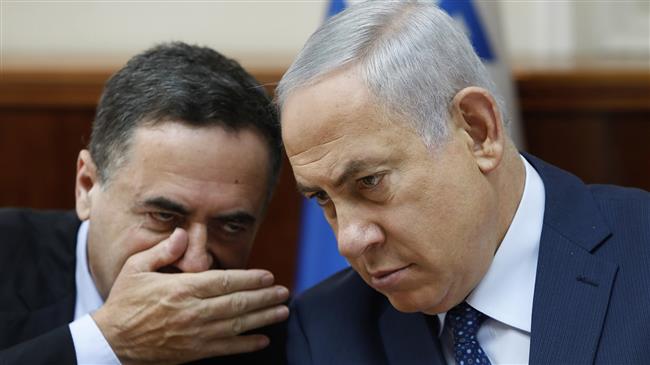
Israeli Intelligence Minister Yisrael Katz (L) and Israeli Prime Minister Benjamin Netanyahu
Press TV – June 5, 2018
Israel has proposed that “a military coalition” be formed against Iran in case Tehran pursues “military-grade” uranium enrichment, suggesting that the military force would comprise of the Israeli regime, the US, the Western states and their Arab allies.
Speaking to media on Tuesday, Israeli Intelligence Minister Yisrael Katz claimed that Iran had once been running an “unsupervised” enrichment scheme with the potential of arming the country with nuclear weapons.
The allies will need to issue a statement against the Islamic Republic “if the Iranians don’t surrender now, and try to return,” he said, adding that the statement would be threatening Iranians that “a military coalition will be formed against them.”
“There should be a clear statement by the president of the United States and all of the Western coalition” if Iran returns to enriching “military-grade” uranium, the minister said. “The Arabs and Israel surely would be there too,” he added.
Washington and Tel Aviv, and to a lesser extent their Western and Arab partners, have claimed that Tehran’s nuclear energy program harbors military aspects.
Iran has strictly and in all circumstances denied pursuing any military ambitions through its nuclear work.
The country asserts that under a fatwa (religious decree) issued by Leader of the Islamic Revolution Ayatollah Seyyed Ali Khamenei, its long-established policy is to oppose the acquisition, production, stockpiling, and use of nuclear weapons.
In December 2015, the International Atomic Energy Agency’s governing board voted overwhelmingly in favor of a draft resolution, which closed the so-called possible military dimensions (PMD) case in Iran’s nuclear program.
The vote brought an end to a 12-year investigation into the “past and present issues” regarding Iran’s nuclear activities, which the United Nations nuclear watchdog had been probing under pressure from the Israeli regime, the US and their allies.
The vote came after Iran and the P5+1 group of countries signed a nuclear agreement in 2015.
The US, however, withdrew from the accord last month, emboldening Israel in its efforts to try to kill the deal and rally more support for its anti-Iran campaign.
Despite Tel Aviv and Washington’s hostile endeavors, European states have vowed to keep respecting the deal and try their utmost to preserve it.
The Israeli minister’s comments come as Prime Minister Benjamin Netanyahu has embarked on a tour of Europe to persuade European leaders to follow the US and ditch the Iran deal.
This is while Iran is currently in talks with the other signatories on the future of the deal. Tehran has said it will stay in the JCPOA if the Europeans give guarantees that a deal without the US would still protect the Iranian interests.
Merkel agrees with Netanyahu that Iran is a ‘concern’ for Israel’s security
RT | June 4, 2018
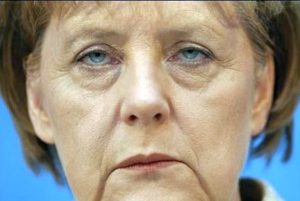 German Chancellor Angela Merkel said on Monday that she agreed with Israeli Prime Minister Benjamin Netanyahu that Iran’s activities in the Middle East are a concern, particularly for Israel’s security. She made the statement after a meeting in Berlin.
“We agree that the question of Iran’s regional influence is worrying, especially for Israel’s security,” the chancellor said.
Netanyahu’s European tour this week follows the US withdrawal from the 2015 nuclear deal which France, Germany and Britain have said they will continue to respect.
The Israeli leader is also expected to meet French President Emmanuel Macron and possibly British Prime Minister Theresa May to discuss ways to stop what Netanyahu called “Iran’s nuclear ambitions and regional expansionism,” Reuters said.
Iran rejects US report on religious freedom as ‘politically motivated’
Press TV – May 31, 2018
Tehran has dismissed the allegations put forth in a recent US report on religious freedom in Iran as “baseless” and “politically motivated,” saying the document offers a “distorted picture” of the realities in Iran and other countries.
Iranian Foreign Ministry spokesman, Bahram Qassemi, was reacting to the US State Department’s International Religious Freedom Report for 2017, which was released on May 29.
The Iran section of the report claimed that “non-Shia Muslims and those affiliated with a religion other than Islam” residing in the Islamic Republic faced “societal discrimination and harassment.”
Besides Iran, the report also targets Washington’s other foes, including Russia, China and North Korea.
Qassemi said, “The Islamic Republic of Iran views this report as unrealistic, baseless and biased, which has been compiled merely with the aim of serving certain political goals.”
The US, he added, has “no accurate and realistic evaluation” of the situation inside other countries, stressing that this report, which presents yet another distorted picture of religious freedoms in Iran and levels untrue allegations against the Islamic Republic, is “undoubtedly unacceptable and rejected.”
The official said history shows that the great people of Iran, from all faiths and ethnicities, have peacefully coexisted for millennia.
Since the 1979 Islamic Revolution, “followers of all religions have performed their religious traditions in various religious centers across Iran based on the articles of the Constitution and within the framework of law,” Qassemi said, adding that Iranian law “protects all such freedoms.”
Iran’s Foreign Ministry spokesman also called on the United States to avoid politicizing the issue of religion, warning that offering “delusional, self-made and unfounded readings of different religions” could only lead to more interfaith clashes in the world.
The official religion of Iran is Shia Islam under the Constitution. The Islamic Republic recognizes Zoroastrian, Jewish, and Christian religious minorities, among others.
The Constitution states that “the investigation of individuals’ beliefs is forbidden,” and that “no one may be molested or taken to task simply for holding a certain belief.”
US imposes new sanctions against Iran
Press TV – May 30, 2018
The United States has imposed sanctions on several Iranian individuals and organizations, including Evin Prison and the Islamic Republic of Iran Broadcasting (IRIB), over “human rights abuses” and “censorship.”
The US Treasury Department announced the sanctions Wednesday on its website, saying the listed persons and entities will be blocked from the US financial system.
Individuals and companies who do business with the targeted Iranians could face sanctions from Treasury as well.
“Iran not only exports terrorism and instability across the world, it routinely violates the rights of its own people. The Iranian regime diverts national resources that should belong to the people to fund a massive and expensive censorship apparatus and suppress free speech,” Treasury Secretary Steven Mnuchin said in a statement.
Iran has rejected US and Western accusations of human rights abuses in the Islamic Republic as “untrue” and “politically-motivated.”
On Thursday, the US Treasury imposed new sanctions against nine Iranian and Turkish individuals and companies as well as a number of aircraft providing goods and services to four Iranian airlines.
The move by Washington was part of President Donald Trump’s plans to impose harsh sanctions against Tehran after pulling out of the 2015 Iran nuclear deal.
Many countries, including America’s European allies, have said that they would not back Trump’s new plan.
The UK, France and Germany– all signatories to the deal– are already in talks with Iran to protect their businesses from possible punishment by the US.
Russia and China have also expressed willingness to back the deal and even fill the void should any European companies leave Iranian markets.
MEK’s Money Sure Can’t Buy Love
But it can buy a lot of politicians

Maryan Rajavi
By Philip Giraldi • Unz Review • May 29, 2018
Iran’s radical Marxist cult Mohajedeen e Khalq, better known by its acronym MEK, is somewhat reminiscent of the Israel Lobby’s American Israel Public Affairs Committee (AIPAC) in that it operates somewhat in the shadows and is nevertheless able to punch well beyond its weight by manipulating politicians and understanding how American government functions on its dark side. MEK promotes itself by openly supporting a very popular hardline policy of “democratic opposition” advocating “regime change” for Iran while also successfully selling its reform credentials, i.e. that it is no longer a terrorist group. This latter effort apparently convinced then Secretary of State Hillary Clinton on 2013 as she and President Barack Obama responded to the group’s affability campaign by delisting MEK from the government list of terrorist organizations.
This shift in attitude towards MEK was a result of several factors. First, everyone in Washington and the Establishment hates Iran. And second, the Executive Order 13224, which designates Iran’s Revolutionary Guards as a terrorist organization, ipso facto defines any group fighting against it as one of the good guys, justifying the change
MEK is best described as a cult rather than as a political movement because of its internal discipline. Its members are, according to the testimony of those who have somehow escaped, subjected to considerable indoctrination best described as brainwashing. Though not exactly imprisoned, adherents are kept isolated and separated insofar as possible and cannot contact their families. Their possessions are collectivized so they have no money or other resources. If they are in contravention of the numerous rules that guide the organization they are punished, including physically, and there are reports of members being executed for trying to escape.
The current head of the group is Maryam Rajavi, the wife of the deceased co-founder of MEK, Massoud. She is reported to be politically savvy and speaks excellent English learned in part to enable her to communicate with adoring American politicians. The group itself was founded in 1965. Its name means “People’s Holy Warriors,” derived from its Marxist/populist roots and its religiosity. It was not unlike the Taliban which developed in adjacent Afghanistan. During the 1970’s it rebelled against the Shah and was involved in bombing and shooting American targets. It executed U.S. Army Lt. Col. Lewis Hawkins in 1973 as he was walking home from the U.S. Embassy and in 1975 it killed two American Air Force officers in their chauffer driven car, an incident that was studied and used in CIA training subsequently as an example of how not to get caught and killed by terrorists. Between 1976 and 1978 the group bombed American commercial targets and killed three Rockwell defense contractors and one Texaco executive.
MEK welcomed the Iranian revolution and also the occupation of the U.S. Embassy but soon fell afoul of the Ayatollah Khomeini regime. It eventually moved to join Iran’s enemy Saddam Hussein in Iraq and participated on the Iraqi side in the bloodletting that followed when the two countries went to war in 1980-8. For that reason alone, MEK is particularly hated by most Iranians and the repeated assertion that it is some kind of “Iranian democracy” alternative is ridiculous as the people in Iran would never accept it. In terms of the duplicity surrounding its marketing, it is reminiscent of Iraqi con artist Ahmed Chalabi, who also had little following inside Iraq but was able to convince Pentagon geniuses like Paul Wolfowitz that he represented some kind of democratic movement. At the time Chalabi was also secretly working for Iran.
MEK was protected by Saddam and later by the U.S. invaders who found a weapon to use against Iran useful. They were housed in Camp Ashraf near Baghdad, and later, after Ashraf was closed, at so-called Camp Liberty. In 2013, when the Iraqis insisted that they go elsewhere the President Barack Obama facilitated their removal to Albania under the auspices of the United Nations refugee program, with the $20 million dollar bill being footed by Washington. The organization’s political arm, the National Council of Resistance or Iran (NCRI), meanwhile established itself in Paris under the control of Maryam Rajavi, in part to place it closer to the American and European sources of its political legitimacy and financing. In 2001, to make itself more palatable, the group had renounced violence.
The MEK folks in Albania have become a bit of a problem. Through various additional migrations they have multiplied and now number around 3,000 and have largely adhered to their cultish ways even though one of the original objectives of the move into Europe was to somehow deprogram and “deradicalize” them in an environment far removed from Iran-Iraq. Part of the problem is that the Albanian government likes the U.N. subsidies used to support the MEK associates, but it will not let them work as they have no legal status and they cannot resettle or lead normal lives. So they resort to criminal activity that includes promotion of fraudulent charities, drug trafficking and even a form of slavery in which their own people are sold and traded as laborers. The temporary solution has been to move the MEK out of a rundown university property in the capital Tirana to a more remote site in northern Albania dubbed Ashraf-3, but local people believe that that is just kicking the can down the road and that MEK should be forced to go somewhere else, preferably in the United States, which seems to like them so much.
Also, Albania is majority Muslim and has been subjected to the same Saudi Arabian ultra-conservative wahhabi promotion backed by lots of money that has plagued many states in the Middle East. Albanians accustomed to the mild form of Turkish Islam suddenly found themselves confronting the Sunni-Shia divide and also the MEK as agents of both Saudi Arabia and Israel. Many outraged Albanians see the unreformed MEK in their midst as a terror time bomb waiting to go off, but the government, under pressure from the U.S. Embassy has not sought their removal.
Meanwhile back in the United States everything involving the non-deradicalized MEK is just hunky dory. MEK and the NCRI are enemies of Iran and also seem to have plenty of money to spend, so they buy high ranking American speakers to appear at their events. Rudy Giuliani and John Bolton have appeared regularly, as have Senators John McCain, Lindsey Graham and Jeanne Shaheen. At a 2015 appearance in Paris, Giuliani brought the crowd to its feet by calling for “Regime change!” after shouting out that the “Ayatollah must go!” In August 2017, Senators Roy Blunt, John Cornyn, Thom Tillis and Carl Levin met with Rajavi in Paris. Newt Gingrich also considers himself a friend of the Iranian resistance while Elaine Chao, Secretary of Labor and wife of Senate Majority leader Mitch McConnell spoke in Paris for five minutes in 2015 and was paid $50,000. The payments made to the other politicians have not been revealed.
And then there is the Saudi and Israeli angle. Saudi Arabia is now the major funder of MEK/NCRI. It’s intelligence chief Turki al-Faisal spoke before the group in 2017. Israel funded the group in its early days and its external spy service Mossad continues to use MEK stay-behinds in Iran to assassinate scientists and tamper with computer systems. The CIA, which recently expanded its anti-Iran task force, it also working closely with MEK. And Giuliani, Bolton, Chao are all in the White House inner circle, which, not coincidentally, is baying for Iranian blood.
Lost in all of the above is any conceivable American interest. It is difficult to even make the claim that Iran threatens the United States or any vital interest and the drive to decapitate the Mullahs, both literally and figuratively, really comes from Riyadh and Tel Aviv. And there is potential collateral damage where it really might matter as MEK cultists continue to sit and fester in a holding pattern maintained by Washington in the heart of Europe. What comes next? War of some kind with Iran is appearing to be increasingly likely given recent remarks by Secretary of State Mike Pompeo, threatening to crush the Iranians. Is Washington intending to send the MEK warriors on sabotage missions inside Iran, something like the resistance to the Germans in World War II? Maybe Giuliani and Bolton know the answer to that question.
“Skirmishes” – Israel’s Syria Blitz
Media Lens | May 23, 2018
A key ‘mainstream’ media theme in covering the Israeli army’s repeated massacres of unarmed, non-violent Palestinian civilians protesting Israel’s military occupation in Gaza – killing journalists, a paramedic, the elderly and children – has been the description of these crimes as ‘clashes’.
This has been a clear attempt to obfuscate the fact that while two groups of people are involved, only one group is being killed and wounded.
To the casual reader – and many readers do not venture beyond the headlines – a ‘clash’ suggests that both sides are armed, with both suffering casualties. One would not, for example, describe a firing squad as a ‘clash’. There was no ‘clash’ in New York on September 11, 2001, and so on.
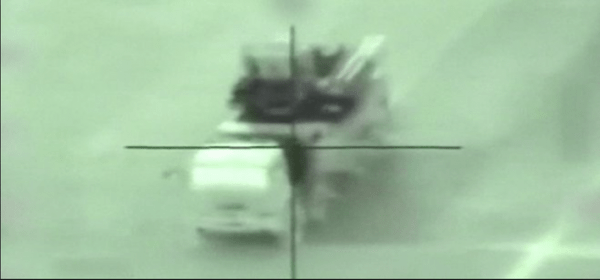
Following Israel’s massive blitz on more than 100 targets in Syria on May 10, ‘mainstream’ coverage offered similarly questionable frameworks of understanding.
A Guardian headline read:
Israel retaliates after Iran “fires 20 rockets” at army in occupied Golan Heights (Our emphasis)
For moral, legal and public relations reasons, the issue of which side started a conflict is obviously crucial. If the public recognises that the case for war is unjustified, immoral or illegal – that a country has chosen to launch a war of aggression – they will likely oppose it, sometimes in the millions, as happened in 2002 and 2003 in relation to the Iraq war. It is thus highly significant that the Guardian described Israel as retaliating.
The BBC reported of Israel’s attacks:
They came after 20 rockets were fired at Israeli military positions in the occupied Golan Heights. (Our emphasis)
Reuters took the same line as the Guardian and BBC:
Iran targets Israeli bases across Syrian frontier, Israel pounds Syria
Iranian forces in Syria launched a rocket attack on Israeli forces in the Golan Heights early on Thursday, Israel said, prompting one of the heaviest Israeli barrages in Syria since the conflict there began in 2011. (Our emphasis)
The New York Times also reported:
It was a furious response to what Israel called an Iranian rocket attack launched from Syrian territory just hours earlier. (Our emphasis)
And yet, the report buried a challenge to its own claim that Israel had retaliated in the second half of the piece:
Iran’s rocket attack against Israel came after what appeared to have been an Israeli missile strike against a village in the Syrian Golan Heights late on Wednesday. (Our emphasis)
According to the BBC (see below), the Israeli missile strike had targeted an Iranian drone facility killing several Iranians.
So, actually, it might be said that Iran was retaliating to Israeli attacks – a more reasonable interpretation, given recent history also described by the New York Times:
Israel has conducted scores of strikes on Iran and its allies inside Syria, rarely acknowledging them publicly.
Nevertheless, the corporate media theme has been that Israel retaliated, part of a long-term trend in media coverage. In a 2002 report, Bad News From Israel, The Glasgow University Media Group commented:
On the news, Israeli actions tended to be explained and contextualised – they were often shown as merely “responding” to what had been done to them by Palestinians (in the 2001 samples they were six times as likely to be presented as “retaliating” or in some way responding than were the Palestinians).
Was Iran Skirmishing?
But was Iran even involved at all? The opening, highlighted sentence in a front-page BBC piece by diplomatic editor Jonathan Marcus left the reader in no doubt:
These are the first skirmishes in a potential war between Israel and Iran that promises a fearful level of destruction – even by the standards of the modern Middle East.
So this was a ‘skirmish’, a clash involving Israel and Iran – they were both involved in the combat. And yet, in the second half of the article, Marcus wrote:
The alleged Iranian attack last night – I say alleged because at this stage there is no confirmation from Iranian sources as to the precise authors of the attack – involved a single and relatively short-range system, what appears to have been a multiple-barrelled rocket launcher.
How can the Iranian attack be merely ‘alleged’ half-way down the article but a bald fact in the highlighted opening sentence?
In fact, not only has there been ‘no confirmation’, there has been outright Iranian rejection of the claims. Abolfazl Hassan-Baygi, deputy head of the Iranian parliament’s national security committee, commented:
Iran has nothing to do with the missiles that struck the enemy entity yesterday.
Associated Press (AP ) reported Iranian Foreign Ministry spokesman Bahram Ghasemi commenting that Israel’s attacks were based on ‘fabricated and baseless excuses’, and were a breach of the national sovereignty and territorial integrity of Syria.
AP quoted a senior Lebanese politician and close ally of Syria and Iran, Parliament Speaker Nabih Berri, as saying: ‘this time the Syrian retaliation was in the Israeli-occupied Golan Heights but next time it will be in Israel proper. (Our emphasis)
Later in his BBC piece, Marcus wrote:
The immediate tensions stem from an Israeli air strike on what they claimed was an Iranian drone facility at the so-called T-4 air base, near Palmyra, on 9 April, which reportedly killed several Iranian military advisers.
This again challenged the idea that Israel had ‘retaliated’, but again it was not given the kind of prominence that could challenge Israel’s version of events.
So the ‘skirmishes’ may actually have consisted of Israel first attacking an Iranian drone facility killing Iranian personnel, and then launching a massive attack against Iranian positions across Syria, without Iran responding at all. And yet Marcus wrote:
It is a conflict that needs to be averted and the time to do it is now. However Israel and Iran remain on a collision course.
Despite the uncertainty on whether Iran had attacked, Marcus concluded:
Iran’s strategic intent is clear… it is unlikely to be dissuaded from its efforts.
He added:
Israel has drawn its red lines and it is clearly not going to back down either.
Obama also famously drew his ‘red line’ in Syria in 2012, threatening a massive attack in the event of Syrian government use of chemical weapons. But for Marcus, Israel’s actual launch of a massive attack merely constituted the drawing of ‘red lines’.
And again, ignoring his own doubts about what had happened, the required warmongering ‘balance’ was favoured:
For the immediate future, the pattern of strike, attempted riposte, and counter-strike is likely to continue.
If it had started at all! Marcus concluded his article with three ominous lines identifying another threat alongside the danger of Israel drawing more ‘red lines’ with more massive attacks:
One clear danger is that Iran may seek to exact its revenge outside the Middle East.
Pro-Iranian factions have in the past attacked Israeli tourists abroad or Jewish organisations, notably in Latin America.
A successful terrorist attack of this kind would inevitably alter the picture, pushing Israel and Iran to the brink of a full-scale war.
The word ‘terrorist’ thus made its first appearance in the last line of Marcus’s piece, in reference to a hypothetical Iranian atrocity.
The idea that Israel might already have committed terrorist atrocities in Syria by launching unprovoked attacks, by illegal bombings committed completely outside of international law, is unthinkable.
Iran: Morocco’s false claims aim to please third parties
Press TV – May 24, 2018
Iran has hit out at Morocco for accusing Tehran of interference in the African country’s affairs, saying the “false claims” are aimed at pleasing certain third parties.
Morocco has close ties with Saudi Arabia which has accused Iran of meddling in Arab affairs, with Moroccan Foreign Minister Nasser Bourita repeating those claims in a recent interview with Fox News.
“The Moroccan foreign minister knows himself well that the unjust charges he is making are utterly wrong, false and based on delusions and fictions written by those who resort to such provocations only in line with their illegitimate interests,” Iran’s Foreign Ministry spokesman Bahram Qassemi said on Thursday.
Bourita first made the accusations against Iran early this month as he announced Morocco’s decision to sever diplomatic ties with the Islamic Republic over what he called Tehran’s support for the Polisario Front.
The Polisario is a guerrilla movement fighting for independence for the Sahrawi people in Western Sahara which is claimed by Morocco after colonial Spain left the territory.
In his interview with Fox News aired on Wednesday, Bourita claimed that Hezbollah members had met with senior Polisario military leaders recently and that the Iranian embassy in Algeria was used to fund the Polisario.
“The Moroccan authorities’ insistence on repeating their false claims for cutting diplomatic ties with Iran and repeatedly raising baseless allegations against our country is merely a bid to please certain third parties,” Qassemi said.
Bourita also claimed that Iran was in part trying to destabilize the area due to Morocco’s good relations with the US and Europe.
Earlier this month, he had said that Iran and Hezbollah were supporting Polisario by training and arming its fighters, via the Iranian embassy in Algeria.
Algeria, Iran and Hezbollah were all quick to reject the claims as baseless back then.
Iranian Foreign Ministry said there was no cooperation between Tehran’s diplomatic mission in Algiers and the Algeria-backed movement.
Hezbollah also blamed the US, Israel and Saudi Arabia for the diplomatic tensions, saying Rabat had cut ties with Tehran under pressure from the trio.
In turn, Algeria summoned Morocco’s ambassador to protest the “unfounded” claims.
Rabat annexed Western Sahara, a former Spanish colony, in 1975, and has since been in conflict with Polisario, which demands a referendum on self-determination and independence.
The movement, which aims to end Morocco’s presence in the Saharan region, recently said they sought to set up a “capital” in the region, prompting Rabat to caution it would respond with force.
Iraqi voters undermine Trump’s Iran strategy
Muqtadar al-Sadr and Hadi al-Amiri, both anti-American, finished first and second in elections held on the day Trump scrapped the Iran nuclear deal
By M.K. Bhadrakumar | Asia Times | May 24, 2018
In an ironic twist, May 12, which was the deadline for US President Donald Trump’s decision on the Iran nuclear deal, also happened to be the day the Iraqi parliamentary elections took place.
Yet no one seemed to take note of the symbolism. In the event, the Iraqi election results seriously hinder Trump’s agenda of rolling back the Iranian presence in the northern tier of the Middle East comprising Iraq, Syria and Lebanon.
Of these three countries, Iraq is arguably the most crucial theatre of contestation between the United States and Iran. The fate of the Iranian presence and Iranian capacity to influence the politics of the entire Shi’ite arc will be critically dependent on its standing and influence in Baghdad. The stakes have never been as high as they are today.
To be sure, the Iraqi election results that were formally announced on Sunday constitute a stunning setback for Trump’s containment strategy against Iran. Washington had bet heavily on the alliance led by Prime Minister Heidar al-Abadi to win, but it has been relegated to third place, winning only 42 seats in the 329-member parliament.
Anti-American tilt
Worse still, two staunchly anti-American alliances – led by Muqtadar al-Sadr and Hadi al-Amiri – secured first and second places respectively.
Coalition making will be a long drawn out process, but what is clear is that the next government in Baghdad will have a pronounced anti-American tilt and the probability is high that it could evict US troops and contractors totaling 100,000 in Iraq.
While Amiri leads the powerful Iran-aligned militia groups known as the Popular Mobilization Force, Sadr’s surge is really bad news for the Americans. Sadr’s Mahdi Army has the blood of hundreds of Americans and Brits on its hands.
In the expert opinion of the Washington-based think tank Brookings Institution: “His (Sadr’s) victory has turned America’s Iraq policy upside down, and Washington now faces a severe political crisis in a country where it has invested substantial blood and treasure … His movement gave rise to many of the Shiite militia groups that committed atrocities against Americans and that today dominate Iraq – as well as the front lines of the war in Syria, where they have fought US forces. These groups have been pivotal to securing the Assad regime’s survival as well as enhancing Iran’s influence in the region.”
In the coming weeks and months, Tehran will play a key role in the negotiations for the formation of the next government in Baghdad. During earlier such moments, Tehran and Washington had tacitly agreed on compromise candidates – prime ministers Abadi and Nouri al-Maliki respectively – but the scope for such accommodation is non-existent today.
Western analysts make much out of Sadr’s nationalistic outlook to give it an anti-Iranian tweak, but that betrays wishful thinking. Sadr is indeed a mercurial personality and tends to lean toward “red Shi’ism” in his outlook on Iraq’s political economy. His alliance partners are communists and secularists.
The Iran-Sadr connection
But significantly, he met Amiri on Monday and said later in a statement: “The process of government formation must be a national decision and importantly, must include the participation of all the winning blocs.”
Again, much has been made out of Sadr’s visit to Saudi Arabia last year and his meeting with Crown Prince Mohammed bin Salman, but in reality, the warming relationship between Baghdad and the Persian Gulf states – Saudi Arabia, the UAE and Qatar – runs only skin deep.
On the other hand, Iranians and Sadr’s family go back a long way. Sadr lived in Tehran in exile for many years. Meanwhile, reports say Tehran is bringing on board the two main Iraqi Kurdish parties – KDP and the PUK – who feel aggrieved that the US connived with Abadi’s crackdown in Kirkuk last October, to align with Amiri.
All in all, Tehran can afford to weigh the pros and cons of many options open to it.
It is entirely conceivable that Tehran might even choose to settle for another government led by Abadi as the figurehead of a staunchly pro-Iranian power structure. Ever since the regime change in Baghdad following the US invasion in 2003, Tehran has made sustained and intense efforts to cultivate wide-ranging political partnerships with Iraqi groups across the religious, ethnic and political spectrum.
It is preposterous to fantasize that Baghdad is about to move out of Iranian orbit.
The bottom line is that a new coalition government in Baghdad over which Iran enjoys political leverage may well set a timetable for the withdrawal of American troops. The Trump administration must prepare for such an eventuality since it has left Tehran in no doubt that continued US military presence in Iraq poses an existential threat of “regime change.” Trust Tehran to pull out all the stops – short of directly targeting US troops – to undermine the American influence in Iraq.
On the other hand, a well-grounded military footing in Iraq is an absolute pre-requisite for the Pentagon to conduct its operations at the present scale in northeastern Syria, given the imponderables in Turkey’s continued cooperation. In these circumstances, it is hard to see how Trump is going to realize his dream to get Iranians to vacate from Iraq or Syria.
Featured Video
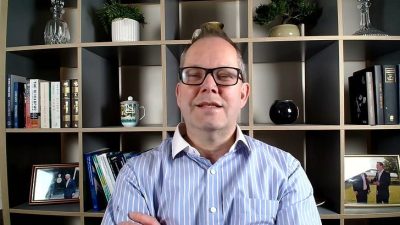
EUROPE FEARS RUSSIA’S NEXT MOVE / Ian Proud
or go to
Aletho News Archives – Video-Images
New Book
New Book: No Autoimmunity The Body Doesn’t Attack Itself
Lies are Unbekoming | September 24, 2026
 The label for Humira, once the best-selling drug in the world, lists its risks in plain print. One of them, in the label’s own words, is new “autoimmune” disease.
A drug prescribed for a condition labelled autoimmune carries a warning that it can cause a condition labelled autoimmune. That contradiction sits in every box, on a folded paper almost nobody reads.
My new book starts there.
No Autoimmunity: The Body Doesn’t Attack Itself
For seventy years, “your body is attacking itself, and we don’t know why” has ended the conversation for people diagnosed with multiple sclerosis, lupus, rheumatoid arthritis, Hashimoto’s, Type 1 diabetes, Crohn’s and psoriasis. More than eighty conditions now carry the autoimmune label. The diagnosis comes with a prescription for life. It almost never comes with a question about cause.
This book asks the question and answers it from the framework’s own records: its drug labels, its journals, its regulatory filings, and its own experiments. … continue
Blog Roll
 Aletho News
- Merz regime wants ‘secret police’ – opposition
- Israeli settlers terrorize West Bank Palestinians with state-provided drones: Report
- They see them, then kill them: Israeli quadcopters track, deliberately target civilians in Gaza
- Debunked: Trump’s egregious UNGA claims on war against Iran crumble under scrutiny
- Europe was part of the infrastructure of US aggression against Iran: Deputy FM
- New evidence on the Bucha Massacre
- Italy and France debunk reports CIA issued ‘Russian drone threat’ warning
- How Russia is Rewiring the Global South
- Britain’s elites want you ready to die for a war they keep imagining
- Inside Ukraine’s propaganda operation targeting Americans
- If Americans Knew
- Trump betrayed voters with his campaign lies and prioritized a foreign country once he took office
- Netanyahu calls Israel’s war in Gaza ‘opposite of genocide’ in UN speech to near-empty hall
- Settler Kidnappings: Torture, Sexual Abuse and Terrorisation of Palestinian Abductees as Israel Deepens Annexation of West Bank
- Gaza winter nears as 162,000 tents become unusable, raising fears of humanitarian crisis
- Netanyahu says, “It’s the opposite of genocide”; UN says Gaza economy is world’s ‘most severe crisis on record’ – Daily Update
- Israel’s US-Backed Assault on Gaza Has Created the ‘World’s Most Severe Economic Crisis on Record’: UN
- ‘Protecting U.S. Citizens’… From Israel
- ‘This is where I live now, the back of a truck’: a day in the life of a grandmother in Gaza
- In UN Speech, Iran’s President Displays Pictures of Children Killed by US, Brings Attention to Israel’s Nuclear Arsenal
- Israel displaces hundreds of Palestinians amid wave of demolitions in West Bank
- No Tricks Zone
- New Study: Earth And Venus Surface Warmth Largely Explained By Convection And Lapse Rate, Not CO2 Or Radiation
- 2025 Nature Paper Claiming Worsening Global Drought Gets RETRACTED …Heavily Flawed
- New Study: ‘Global Drought Shows No Detectable Recent Acceleration Under Climate Warming’
- Economic Masterminds: German Socialists Suggest Taxing Productivity Gains Stemming From Using AI
- The South China Sea Has Not Been Cooperating With The Climate Change Narrative
- Energy Crisis: Germany Enters Heating Season With Historically Low Gas Reserve Fill Levels
- New Study: The Antarctic Ice Sheet Gained Mass From 2020-2024 Due To Staggering Snow And Ice Accumulation
- Study: Ocean Heating Rates From Thousands Of Years Ago ‘Dwarf’ Modern Ocean Heating Rates
- Climate Extremists Target, Attack Large-Scale Power Grid Infrastructure In Germany!
- New Study: Antarctic Ice Melt Has Contributed Less Than 1 Centimeter To Sea Level Rise In The Last 30 Years

