Jennifer Rubin: Hillary Must Stop Peace With Iran at All Costs!

By Daniel McAdams | Ron Paul Institute | August 18, 2016
After anxiously and incessantly angling for a hardcore neoconservative to take the Republican presidential nomination, the Washington Post’s online blogger Jennifer Rubin has made the long journey home. Rebuffed by Republican voters who selected Donald Trump as their candidate, Rubin’s gunpowder breath is now desperately seeking Democratic nominee Hillary Clinton’s ear.
Her message? This damned Iran deal is improving US/Iran relations and that is completely intolerable. “Hillary: Please bomb something over there,” Rubin screeches, in her latest installment of the neocon chronicles.
Why is Rubin so hot and bothered? Well, Secretary of State John Kerry has dared to encourage some business investment in Iran after the nuclear deal has begun paying dividends in more stable relations. Doing business is always preferable to sanctions and blockades because it makes war less likely. Each side has too much to lose when there are economic interests at stake so each side will act with more caution. As when a Chinese incident with a US spy plane led the damaged US plane to land in China, yet both sides realized that economic relations were sufficiently important that the potentially volatile situation needed to be carefully walked back from the brink of conflict.
War kills economic opportunities for the average people on both sides, but it also produces unique financial opportunities for the specially connected. Like the people around Jennifer Rubin.
Rubin is given a little corner of Washington’s “paper of record,” but she is either so ill-formed when it comes to the basic situation in Syria that one wonders why she has such a platform when surely there are plenty of better-informed high school students who could fill the slot… or she is purposely obfuscating from her little perch in which case the Washington Post is a witting party to her deception.
For example she writes this:
This week we have also learned that as many as 100,000 Iranian-backed militia members are fighting in Iraq…
But she does not inform her readers that these Iranian militia members are in fact fighting ISIS in Iraq. In other words, they are helping us defeat our sworn enemy. While Washington is pained to admit it, even John Kerry said not long ago that having so many additional fighters taking on ISIS in Iraq is “helpful” to America’s efforts to defeat ISIS.
Rubin would clearly prefer an ISIS victory to accepting the assistance of an Iran that also views the establishment of an anti-Iranian jihadist Caliphate in its backyard an existential threat.
Again Rubin plays fast and loose with the truth when she writes:
Russia is expanding its alliance with Iran and influence in Syria in unprecedented ways. Russian planes are now taking off directly from Iran to bomb Syrian targets…
What she does not tell us once again is that those Russian planes are bombing ISIS and al-Qaeda (those guys who attacked us on 9/11). Does anyone else wonder why she objects to the Russians bombing ISIS and al-Qaeda? Particularly as the US seems to be letting them get away at every possible opportunity.
What is to be done, in the mind of Rubin?
[R]ather than pleading with Russia, we can make clear that we will be establishing a new policy of direct action against the Assad regime, including establishment of safe havens. Vladimir Putin has had a risk-free policy of aggression up to now; that should change.
So, Rubin would have the US attack a Syrian government that has fought for five years against a foreign, radical jihadist insurgency and directly confront a Russia that has the same enemy in the process.
Who’s side is she on? Ours or the terrorists’?
Evidently we can partner with Stalin to defeat Hitler but we dare not partner with Putin to defeat ISIS and al-Qaeda. The neocons are clearly high on their own vapors. Rubin is first in line for neocon bong hits.
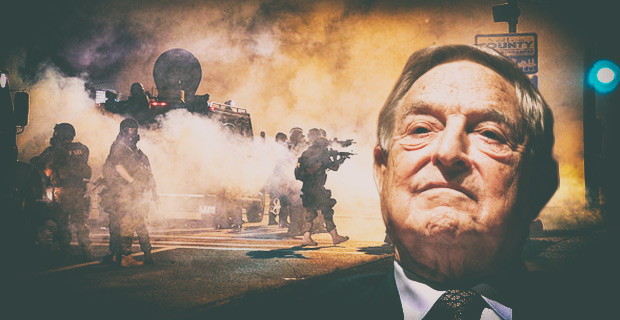
George Schwartz Soros – The Oligarch Who Owns The Left
By Gilad Atzmon | August 18, 2016
An email leaked recently by Wikileaks reveals that in 2011, Jewish oligarch George Schwartz Soros gave step by step instructions to US Secretary of State Hillary Clinton on how to handle unrest in Albania.
Soros even nominated three candidates whom he believed to “have strong connections to the Balkans.”
Not surprisingly, several days after the email was sent to Clinton, the EU sent one of Soros’ nominees to meet Albanian leaders in Tirana to try to mediate an end to the unrest.
Soros’ email sheds light on who really sets the tone for the West. Clearly it isn’t our so-called ‘democratically elected’ politicians. Instead, it is a small cadre of oligarchs, people like Soros, Goldman and Sachs. People who are driven by mammonism – Capitalism that is based on trade as opposed to production. The mammonites are interested in the pursuit of mammon (wealth) purely for the sake of mammon.
Soros is, without doubt, the most illustrious mammonite of our time. The Jewish billionaire is the “man who broke the Bank of England,” an adventure that made him more than $1 billion in one day in September of 1992. In 2002, a Paris court found Soros guilty of using inside information to profit from a 1988 takeover deal of Bank Societe Generale. In the days leading to the Brexit vote the speculative capitalist used The Guardian’s pages in an attempt to manipulate the Brits into following his advice on Brexit. Apparently the Brits didn’t heed Soros’ wisdom. And, so far, it seems that Soros’ predictions of doom were far fetched, verging on phantasmic. Still open is the question of why the Guardian provided a platform for the speculative capitalist oligarch. Is it a news outlet or an extension ofMammonism’s long arm?
The Jewish oligarch has developed a huge infrastructure that assists him in pursuing his speculative capitalist agenda. Soros realised many decades ago that it is very easy to buy leftist institutions and activists. Since the 1980s, Soros has used his Open Society Institute to invest a fraction of his shekels in some ‘left leaning’ political groups and NGOs worldwide. Soros funds NGOs, activists and Left institutions that are willing to subscribe to his agenda. They support a cosmopolitan philosophy and are dedicated to Soros’ anti nationalist mantra. The outcome has been devastating. Instead of uniting working people, Soros funded ‘left’ organisations divide workers into sectarian groups defined by gender, sex orientation and skin colour.
Many of those who support Palestinian causes were shocked to discover that Soros funded the BDS movement although he was simultaneously invested in Israeli industry and Israeli factories operating in the West Bank such as Soda Stream.
Soros also bankrolls J Street, the American Jewish lobby group that controls the opposition to the ultra Zionist AIPAC. Looking at the huge list of Soros’ supported organisations reveals that the light Zionist oligarch supports some good causes that are particularly good for the Jews and Soros himself.
Soros seems to believe in the synagogueisation of society. He supports the breaking of society into biologically oriented tribes: e.g., Blacks, Women, LGBT, Lesbians. He has invested millions in dividing the working class. Divide and rule is what it is.
Traces of his destructive Open society Institute can be identified in Iran’s failed Velvet Revolution, anti Assad NGO activity in Syria, behind anti Putin intense activism and of course the Gazi Park events in Turkey. These so called ‘civilian’ and ‘popular’ uprisings have at least one common denominator. They attempt to destabilise regimes that oppose Zio-cons as well as the mammonite world order.
Erdogan to Visit Tehran Next Week to Launch Turkey-Iran-Russia Coalition
Al-Manar | August 17, 2016
Turkish President Recep Tayyip Erdogan is preparing to take a high-profile trip to Tehran next week in a move seen by mainstream Arab media as the official launchpad for kickstarting the Turkey-Iran-Russia coalition on Syria.
Erdogan made a half-a-day trip to Russia after the recent coup in Turkey to meet and hold negotiations with Russian President Vladimir Putin in Saint Petersburg. Their talks were mainly focused on finding a way to end the war in Syria while both countries have set up a joint commission to implement the results of their talks.
“Given the reports claiming that Erdogan had come to Iran the night of coup and then returned to Turkey after its failure, the Turkish president’s visit to Tehran is highly important in establishing new relations between Tehran and Ankara,” Arabic language al-Hayat newspaper said in a report, according to Fars news agency.
Sources told al-Hayat daily that a trilateral meeting, consisting of the Iranian, Turkish and Russian officials, is due to be held to confer on ways to terminate the Syria war, adding that part of Erdogan’s trip to Tehran will be focused on this issue.
Also, the London-based al-Arab daily referred to Iranian Foreign Minister Mohammad Javad Zarif’s recent visit to Turkey, and said the trip was made within the framework of the goals pursued by Erdogan during his visit to Moscow.
According to al-Arab, the triangle of Iran-Turkey-Russia is forming an international coalition to confront the West.
The daily underlined that Zarif’s trip showed that rapid and important developments are being formed in the region which will marginalize the Arab states.
Al-Arab quoted analysts as saying that the Arabs’ foreign policy, specially on Syria, has failed deeply.
After the Turkish prime minister said it’s time for his country to improve ties with Damascus, top diplomats in Tehran said that Ankara is likely to initiate a major shift in policy on Syria and move to ally with Iran and Russia.
Turkish Prime Minister Binali Yildirim suggested a three-pronged road map for a solution to the five-year-old war in Syria, which has not only affected neighboring countries but also many parts of the world with the flight of more than 4 million refugees.
Stating that he was optimistic that a solution was at hand due to the changing nature of Turkish foreign policy, in which Ankara aims to make more friends and decrease its number of enemies, Yildirim said the time had come for Turkey to mend relations with Syria.
He added that Turkey would overcome the Syrian problem together with the regional actors.
After his remarks, Iranian Deputy Foreign Minister for Arab and African Affairs Hussein Jaberi Ansari said that Turkey will be invited to join Iran and Russia’s efforts to bring stability to Syria.
Addressing reporters in a press conference with his Russian counterpart Mikhail Bogdanov, Jaberi Ansari said that Turkey was an important country and influential in the Syrian crisis.
“The Iranian and Turkish officials agreed to continue talks in implementation of bilateral agreements in detail; we will soon send an invitation to Turkish Deputy Foreign Minister Umit Yalcın and alternatively, I will pay a visit to Ankara to talk about the regional issues in detail,” he added.
Jaberi Ansari expressed the hope that new developments in the region would help the establishment of new grounds for Iran, Russia and Turkey to act in coordination to end the stalemate and humanitarian crisis in Syria, especially in Aleppo.
The Iranian Foreign Minister Zarif had earlier this month visited Turkey.
In remarks made upon his arrival in Ankara, Zarif said, “Iran, Russia, and Turkey are considered important players in the region, and they need to engage in dialogue and cooperation.”
Pointing to the failed coup bid in Turkey, Zarif said, “We believe that the era of bullying and coups is over and such things no longer have a place in our region. People’s choice and will cannot be suppressed by a military group.”
During his one-day visit to Ankara, Zarif also met with President Erdogan.
Also, Zarif and his Russian counterpart Sergei Lavrov in a telephone conversation on Thursday discussed bilateral ties and the latest developments in Syria.
In the phone talks, the Iranian and Russian foreign ministers exchanged views on the latest developments in the region, specially Syria.
The two sides called for resolving the regional crises through political means.
Turkey harmonises with Russia, Iran on Syria
By M K Bhadrakumar | Indian Punchline | August 15, 2016
The reported remarks Monday by Turkish Prime Minister Binaldi Yildirim regarding a 3-step road map for ending the Syrian conflict would be the latest indication that Ankara is tiptoeing toward restoring Turkish-Syrian relations at the diplomatic and political level.
Yildirim’s road map envisages future Syria to be a unitary state that has an inclusive political system with constitutional safeguards that prevent domination by any sectarian, ethnic or regional groups. Its constructive ambiguity over the core issue of the fate of President Bashar Al-Assad is absolutely delightful. It abandons the pre-condition that President Assad should step down in any transition.
Yildirim instead leaves it to the Syrian electorate’s majority will to decide on Assad’s political future. He thinks Assad may not get a popular mandate, but then, he won’t deny Assad the right to seek one, either. Now, isn’t that a leap of faith? (Hurriyet )
To be sure, with the Turkish-Russian rapprochement in hand and a new-found rapport with Iran in the air, President Recep Erdogan is preparing to address the Syrian question, which is the root cause of the instability in Turkey. (See my recent articles in Asia Times Putin, Erdogan have a deal on Syria and Iran taps into Turkish-Russian reset.)
The road map suggested by Ildirim means that Turkey seeks convergence with the Russian and Iranian stance. Ildirim didn’t say so as many words, but implied that Turkey is abandoning the ‘regime change’ project in Syria. There are signs that Turkey is rolling back its support for the rebel groups fighting the Syrian government forces.
Unsurprisingly, there is a sense of urgency on the part of Turkey against the backdrop of the capture of Manjib from the control of the Islamic State in the weekend by the predominantly Kurdish Syria Democratic Forces (SDF) with the support of US Special Forces and air cover. (Associated Press )
Turkey had sought and obtained an assurance from the US in May that the Syrian Kurds will not be allowed to occupy Manjib and will be asked to leave the town after defeating the IS. However, much water has flown through the Bosphorous since then. US-Turkish relations have come under great stress following the coup of July 15. Suffice it to say, Turkey will be anxiously watching whether Washington will keep its word in the changed circumstances.
Indeed, the reports from Manjib should be highly worrisome for Turkey since the Syrian Kurds are now planning another military campaign to move further westward toward Al Bab, an important city in northern Syria, which will mean a significant expansion of their influence in the regions adjacent to the Turkish border. It would appear that the US is backing the Syrian Kurds in the new offensive on Al Bab. (VOA)
If so, Ankara’s worst fears seem to be coming true. A commentary by Deutsche Welle says that the Syrian Kurds are creating new “facts on the ground”. (German intelligence is active among Kurds.) The following excerpts suggest that the Syrian Kurds with US backing may be creating a fait accompli for Turkey:
- The SDF’s growing political and military clout is likely to further enrage neighboring Turkey, which views the YPG (Syrian Kurds) as a terrorist group because of its close relations with the Kurdistan Workers’ Party (PKK) fighting in Turkey. Ankara has repeatedly had its redlines crossed by the Syrian Kurds and the United States. The latest iteration is in Manbij, where first the SDF crossed the Euphrates, thereby crossing one “redline,” then again when the YPG led the recapture of the city. This appears to have broken a reported understanding between Ankara and Washington that Arab forces would take the lead in Manbij.
- The Syrian Kurds’ ultimate goal is to clear IS-controlled ground to the west of Manbij in order to unite their territories in the northeast, the so-called cantons of Kobani and Jazira, with Afrin… Uniting the cantons would give the Kurds an uninterrupted stretch of territory along the Turkish border, a prospect that the Syrian regime and Russia could welcome, as it would also weaken the rebel groups they are fighting. The question remains whether the United States will go along with an SDF offensive to unite the cantons and equally important, Turkey’s response to the prospect of a contiguous Kurdish mini state on its border and what that would mean for any future political solution in the country. (Deutche Welle )
Clearly, Yildirim’s accent on Turkey remaining a unitary state under any settlement needs to be put in the above perspective. Turkey will be dependent on Russia and Iran to prevent the emergence of a Kurdistan straddling its border regions with Syria.
On the other hand, Turkey also cannot antagonize Washington, since it is the US which is active on the ground in northern Syria and is equipping and helping the Syrian Kurds in their military campaign. Turkish Foreign Minister Mavlut Cavusoglu publicly demanded on Monday that the US should keep its word and have the Syrian Kurds vacate the regions to the west of Euphrates (which is Ankara’s ‘red line).
It is possible to see a degree of testiness in Cavusoglu’s words: “The U.S., even President [Barack] Obama, assured Turkey that the PYD (Syrian Kurds) would return to east of the Euphrates River after Manbij’s liberation. We expect them to keep their word.” (Anadolu )
Simply put, yet another fault line is appearing in US-Turkish relations in the run-up to the visit by US Vice-president Joe Biden to Ankara on August 24. Of course, Turkey holds a trump card insofar as the US operations in Syria are largely conducted from the Incirlik air base. But it will play the Incirlik card only if push comes to shove.
Norway offers €1bn in credit to Iran

Iranian Parliament Speaker Ali Larijani (R) and Norwegian Foreign Minister Borge Brende in Tehran on August 17, 2016. ©IRNA
Press TV – August 17, 2016
Iran says it has been offered a major export credit line by Norway worth €1 billion in what could be a fresh indication of Oslo’s determination to expand relations with the Islamic Republic in post-sanctions era.
The two countries have signed an agreement to the same effect after a meeting between the visiting Norwegian Foreign Minister Borge Brende and his Iranian host Mohammad Javad Zarif in Tehran, Iran’s IRNA news agency reported.
The agreement was part of a total of three agreements that the Export Guarantee Fund of Iran and the Norwegian Export Credit Guarantee Agency signed to fund some of Iran’s key development and infrastructure projects.
“After the lifting of sanctions, good opportunities have emerged for cooperation and Norway is ready to utilize the post-deal situation to expand cooperation in various fields,” Brende has been quoted as saying by IRNA in a report that was also carried by AFP.
The report added that Brende and Zarif had also discussed the expansion of economic relations between Iran and Norway in different areas, particularly in monetary and banking sectors.
Brende will leave Tehran for Islamabad later in the day. Apart from Zarif, he is scheduled to meet several other top Iranian officials during his single-day stay in the Islamic Republic. They included President Hassan Rouhani, Petroleum Minister Bijan Zangeneh, Parliament Speaker Ali Larijani, and Secretary of the Supreme National Security Council Ali Shamkhani.
Iran, the U.S., and Nuclear Development
By Robert Fantina | Aletho News | August 17, 2016
In 2015, after much ado, and with great, international fanfare, the United States and 5 other nations (China, France, Russia, Great Britain and Germany) entered into an agreement with Iran, regulating that country’s nuclear activities. This was not an easy sell to the U.S. Congress, which, apparently, exists to serve Israel first, and U.S. citizens only after Israel’s needs have been satisfied.
A group of 47 senators succeeded in humiliating the nation by sending a letter to Mohammad Javad Zarif, the Iranian Foreign Minister, purportedly explaining U.S. law.
Mr. Zarif, a U.S. constitutional expert, responded by schooling them.
Then, none other than Israeli Prime Minister Benjamin Netanyahu addressed Congress, telling its members, yet again, for the umpteenth time in the last ten years, that Iran was only ‘months away’ from having a nuclear weapon.
Democratic members of Congress particularly beholden to Israel but not wanting to embarrass a Democratic president, danced to a particularly awkward tune as they waited to see if the agreement had enough votes in the Senate to pass. Once it was apparent that the agreement would be approved by a Congressional majority, they were at liberty to express their opposition to it, knowing that doing so would please their Israeli masters, and not impact the vote, thus embarrassing President Barack Obama.
Now, the bizarre reasoning behind why Iran, a nation that hasn’t invaded another country in decades, should be forbidden from developing nuclear weapons, when Israel, a brutal, apartheid regime with more blood on its hands than a doctor after a botched surgery, can, is a topic for another essay. Our purpose today is to examine the agreement that was made with Iran, what concessions were made on each side, and how each is following through.
Iran, which never claimed it had the development of nuclear weapons as its goal, agreed to major reductions in its nuclear development program. It also agreed to allowing an international monitoring team to verify compliance. In return, the U.S. agreed to lift decades-old sanctions that, like most of U.S. sanctions, did little to impact the government, but caused untold suffering among the Iranian population.
It seems, however, that Iran overlooked an important aspect in its negotiations with the U.S. While there is a mechanism in place to monitor Iranian compliance with the agreement, no such measures exist to monitor U.S. compliance.
The U.S., in its usual hypocritical way, has released the obligation of European banks to avoid doing business with Iran, yet maintains some sanctions, thus effectively preventing the banks from conducting any business with that country. As reported by CNN Money in May of this year, “HSBC, Standard Chartered and France’s BNP Paribas have all been in trouble before — and paid billions in fines — for dealing with Iran while U.S. sanctions were in place. So while they may see attractive commercial opportunities in the country of about 80 million people, they’re treading very carefully because some sanctions still linger, including a ban on conducting transactions with Iran in U.S. dollars.”
So while the U.S. adheres to the letter of the law, it violates the spirit of it, and as a result, Iran is getting next to nothing for the concessions it made. “We hold the US responsible for all violations [of the nuclear agreement]. The US must accept responsibility for reneging on its promises on the international level,” Alaeddin Boroujerd, Chairman of the Iranian Parliament’s Committee on National Security and Foreign Policy, stated on August 1. He further emphasized that the U.S., despite Iran’s adherence to the terms of the agreement, continued to damage “Iran’s economic relations with other countries.”
Now, isn’t the U.S. the land of the free and the home of the brave? Does it not proclaim its moral superiority around the globe, even as it bombs innocent men, women and children? Is its word not worth gold?
The U.S. does not want Iran to have nuclear weapons, because doing so would provide an equal, yet opposing, force to Israel in the Middle East. Current Democratic candidate, the corrupt former Secretary of State Hillary Clinton, has made support for Israel a cornerstone of her campaign. She has stated that the best way to serve Israel is to topple the government of Syrian president Bashar Assad. So if U.S. government officials will go so far as to overthrow foreign governments (please see Ecuador, Guatemala, Brazil, Bolivia (twice), Portugal, Nicaragua, etc.), with all the killing, mass arrests and oppression that accompanies each coup, certainly crippling the economy of one of Israel’s enemies, and violating its word in order to do so, is a trivial matter by comparison.
When one party to any contract violates the terms of that contract, the other party is no longer bound by it. So when Iran decides that it need not slow its nuclear program, because the U.S. hasn’t respected its side of the agreement, we will all watch U.S. members of Congress proclaiming “I told you so! Those Iranians can’t be trusted!’, when, in fact, it is the U.S. that can’t be trusted. But the corporate-owned media will only report on what it will see as Iran’s violations of the agreement, without mentioning that the U.S. violated it first.
U.S. citizens will gasp in horror at the perfidy of Iran; after all, most Iranians are Muslim, and as the news media either hints at, or boldly proclaims, all Muslims are terrorists. And the way will be open for another U.S. imperial misadventure, something to match the tragedy of Iraq, Afghanistan, Vietnam or the countless other places where the U.S. has disastrously and illegally intervened. Countless innocent people will suffer and die, the Middle East will be further destabilized, and military contractors’ profits soar. It will be business as usual in the mighty, corrupt U.S.A.
Russia Deploys Jets at Iranian Base to Combat Syria Terrorists
Al-Manar | August 16, 2016
Russian warplanes have been deployed to the Hamedan Air Base in western Iran in a bid to take part in the fight against Takfiri insurgents in Syria.
Al-Masdar News (AMN ) reported the newly signed military agreement between Russia and Iran, noting that such move will allow Russia to reduce flight time by 60%, saving the Kremlin both money and improving airstrike effectiveness.
Currently, the strategic TU-22M3 bombers take flight from southern Russia at Modzok airfield, AMN reported.
The distance of these flights equal roughly 2,150km to reach a target near Palmyra. In comparison, the Hamedan Air Base in Iran is roughly 900km from Palmyra.
The Hmeimim (or Khmeimim) Airbase in Latakia province, which Russia was granted access to in late 2015, is not suitable for the massive TU-22M3, one of the largest bomber jets in the world.
The Russian military is yet to announce how many TU-22M3 will be operating from the Iranian airbase.
Russia has earlier requested Iraq and Iran airspace allowance to transport cruise missiles into Syria.
This development indicates significantly improved political relations between Iran and Russia.
Claims of Iranian arms for Daesh in Sinai ‘ridiculous’
Press TV – August 11, 2016
Iran has rejected as “ludicrous and baseless” recent reports by Israeli media that Iranian weapons have ended up in the hands of Takfiri Daesh terrorists operating in Egypt’s restive Sinai Peninsula.
An informed source in the Iranian Foreign Ministry dismissed the claims as “insignificant” on Wednesday, saying “such awkward and unfounded news fabrication will never change the realities.”
“Iran’s unchanging and permanent policy on terrorist-Zionist groups like Daesh is quite evident,” said the official.
The source went on to say that the Islamic Republic will “spare no effort” in fighting terrorist groups such as Daesh and will continue encouraging the world to counter their “inhumane activities.”
The entire world has come to realize the link between “the evil triangle of the Zionist regime, Saudi Arabia and Takfiri terrorists who are hell-bent on creating and perpetuating chaos and insecurity in the region and the world,” the official added.
The Sinai Peninsula has been under a state of emergency since October 2014, following a deadly terrorist attack that claimed the lives of 33 soldiers.
In recent years, militants have been carrying out anti-government activities and deadly attacks in the region, taking advantage of the turmoil caused after democratically-elected President Mohamed Morsi was ousted by the military in July 2013.
Militants from the Takfiri Velayat Sinai group, Daesh’s offshoot in northeastern Egypt, have claimed responsibility for most of the attacks, mainly targeting the army and police.
Previously known as Ansar Bait al-Maqdis, the terrorist outfit has pledged allegiance to Daesh in Iraq and Syria.
Takfiri groups, such as Daesh, are a sworn enemy of Iran and regard Iranians a regular target of their terrorist attacks.
‘Kill Russians and Iranians, threaten Assad,’ says ex-CIA chief backing Clinton
RT | August 9, 2016
Former CIA deputy director Michael Morell, who supports Hillary Clinton and insists that Donald Trump is being manipulated by Russian President Vladimir Putin, said that Russians and Iranians in Syria should be killed covertly to “pay the price.”
The ex-CIA chief, who worked with Clinton while she was secretary of state, told CBS This Morning co-host Charlie Rose that Iran and Russia should “pay a big price” in Syria – and by that he meant killing them.
“When we were in Iraq, the Iranians were giving weapons to the Shia militia who were killing American soldiers,” Morell said. “The Iranians were making us pay a price.”
“We need to make the Iranians pay a price in Syria, we need to make the Russians pay a price,” he continued.
When asked if that meant killing Russians and Iranians, Morell fully agreed, qualifying the answer with “covertly.”
“Tell the world about it, right?” he went on. “You don’t stand up at the Pentagon and say ‘we did this,’ but you make sure they know it in Moscow and Tehran.”
Referring to the US-backed rebels in Syria, Morell said he wanted Washington to support them in more aggressive actions, not only against Bashar Assad’s government, but against Iranians and Russians.
Morrell then went on a diatribe about how the US should “scare” Assad, including going after his national guard and “bombing his offices in the middle of the night.”
“I’m not advocating assassinating him, I’m advocating going after what he thinks is his power base and what he needs to survive. I want to put pressure on him, I want to put pressure on the Iranians, I want to put pressure on the Russians to come to that diplomatic settlement.”
The former acting director of the CIA publicly endorsed Hillary Clinton last week through an opinion piece in the New York Times, praising her qualifications as commander-in-chief and calling her rival Donald Trump a threat to national security.
After he retired from the CIA in August 2013, Morrell took a job at Beacon Global Strategies, a Washington, DC consultancy founded by Clinton aides Philippe Reines and Andrew Shapiro. There he worked with Leon Panetta, another Clinton aide and his predecessor at the helm of the CIA, who also spoke in support of Clinton at the Democratic convention in Philadelphia last month.
Last year, Morrell apologized to “every American” and finally owned up to the “mistakes” made by the CIA in Iraq, where over 4,000 US soldiers and at least 250,000 Iraqi civilians have been killed since the 2003 US invasion.
READ MORE: Illegal incursion? 1st alleged photo evidence of British presence in Syria
Israel pops up in Gulf riding Arab coattails
By M K Bhadrakumar – Indian Punchline – August 7, 2016
The reported statement by former Israeli minister Diaspora Affairs Rabbi Michael Melchior that Saudi Arabia will open its doors to Israeli visitors “much sooner than you dream about” will not come as surprise. To be sure, a critical mass is developing in the secretive Saudi-Israeli intercourse.
The Saudi regime has been chary about links with Israel for fear of annoying the ‘Arab Street’, whereas, Israel has been all along eager to flaunt the breach in the Berlin Wall of Arab-Israeli conflict. But Saudis seem to estimate that the time has come to be open about the relationship.
The point is, if the raison d’etre of the dalliance is the ‘containment’ of Iran, it is resource-sharing. An open relationship is needed to optimally develop security and military cooperation. The Custodian of Holy Places seems to think the Muslim world will learn to live with his country’s strategic cooperation with Israel.
Well, the Palestine issue no longer poses hurdles, either. Arab Spring, conflicts in Syria and Iraq, military coup in Egypt, Saudi-Iranian rivalry, breakdown in Iran’s ties with Hamas, Islamic State – all these have relegated the Palestine issue to the backburner. Besides, Palestine President Mahmoud Abbas is on a tight American and Saudi leash. Abbas even received in Ramallah recently a Saudi delegation led by former general Anwar Majed Eshki who visited Jerusalem and met senior Israeli officials, including the head of the foreign ministry Dore Gold.
Again, Saudi Arabia’s keen interest in taking possession of two Red Sea islands at the mouth of the Gulf of Aqaba – Tiran and Sanafir – needs to be understood as a move to be Israel’s ‘neighbor’. Sanafir and Tiran sit at the mouth of the Gulf of Aqaba, on a strategically important stretch of water called the Strait of Tiran, used by Israel to access Red Sea. King Salman personally camped in Cairo in April to persuade Egyptian President Abdel Fattah al-Sisi to transfer the two islands in lieu of a seductive multi-billion dollar offer to Sisi.
Indeed, both Saudi Arabia and Israel are making haste to position themselves for a new phase of the Middle East’s politics in the post-Barack Obama era. They expect Hillary Clinton to pick up the threads where George W. Bush left them — a muscular regional policy involving switch back to containment of Iran and resuscitation of the pivotal relationships with Israel and Saudi Arabia.
Neither Saudi Arabia nor Israel is willing to reconcile with the Iran nuclear deal. They are doing everything possible, no matter what it takes, to see that the deal gets derailed. On Saturday, Israeli Defence Ministry issued a harshly-worded statement slamming Obama and comparing the Iran deal with the 1938 Munich agreement to appease Hitler. (Jerusalem Post )
Equally, Saudis and Israelis have convergent interests in regard to the conflicts in Syria and Iraq — supporting extremist Sunni groups, promoting the Kurdistan project, creation of ‘spheres of influence’ on Syrian and Iraqi territory, and ultimately, entrapping Iran in a quagmire that will exhaust the regime.
The Saudi-Israeli strategic regional realignment is something that Washington historically encouraged. It is just the underpinning needed for creating a regional security architecture supported by the NATO’s network of partnerships with the GCC states under the canopy of a US missile shield.
Alas, Turkey too could have been a key partner in this enterprise, but for the failure of the July 15 coup. Israel looked distressed when it transpired that the coup failed. As for Saudi Arabia, it probably played a role in the failed coup. (Sputnik )
Without doubt, it is against a complex backdrop that the recent reports regarding Israel and Pakistan taking part in a major air exercise hosted by the US also needs to be viewed. Neither Islamabad nor Tel Avi has denied the reports. Of course, the US always encouraged a Pak-Israeli proximity. Now, the big question is: With Saudi Arabia establishing ties with Israel, can Pakistan be far behind? (Times of Israel )
From the Israeli, Saudi and American perspective, it is of utmost importance that Pakistan aligns with Saudi Arabia instead of remaining neutral in regard of Iran’s rise. Pakistan’s role is crucial to any major plans of destabilization of Iran.
Israel and Saudi Arabia pretended until recently that they have a special thing going with Moscow, too, with a view to create ‘strategic ambiguity’. Moscow played along, while making a strategic decision that Iran is its ‘natural ally’ in the Middle East. This is perfectly understandable, because in the ultimate analysis, Israel and Saudi Arabia are bit players only, while Iran (or Turkey for that matter) is an authentic regional power credited with a world view.
It is possible to see the Russia-Azerbaijan-Iran trilateral summit in Baku on Monday as a strategic counter-move by Moscow and Tehran.
The proposed North-South Transport Corridor is admittedly an old idea with a pronounced economic dimension, but in the present context, an access route for Russia to the Persian Gulf and Middle East via Iran’s territory becomes a geopolitical event of far-reaching significance in the regional alignment that is under way. (See my blog China’s One Belt One Road isn’t only show in town.)
Featured Video

Death Spikes & Rising Cancer In Our Youth Explained
or go to
Aletho News Archives – Video-Images
From the Archives
Politicians lie
By Mazin Qumsiyeh | Popular Resistance | August 18, 2013
There is no way to say this truth nicely: Politicians lie. That includes Japanese, American, Egyptian, Israeli, and Palestinian politicians! Is there something more common sense than that? Yet, so many citizens around the world believe their own politicians or wistfully acknowledge lies but think it is part of the job needed to run things. They believe even when politicians contradict themselves blatantly. This phenomenon is rather remarkable. It is a dissonance and disconnect from reality that many seem oblivious to. It is very dangerous because it can lead to accepting rationales for going to war. These can be deadly wars that lead to millions of lives lost as happened in what was called World War 1 and WW2. Even when incredible and declassified evidence abound, politicians continue to lie and old mythologies refuse to die. Here are just a few of the countless lies told to us over the past few decades… continue
Blog Roll
 Aletho News
- RSF military group defects, joins Sudanese army: State media
- Ireland goalkeeper refuses to play ‘Israel’ as squad weighs boycott
- China pushes back against US on Cuba, Iran
- Ukrainian Soldiers, Potential Mercenaries: Have Gun, Will Travel!
- Burnham’s UN debut… A masterclass in British disinformation
- Iran flights continue despite US aviation sanctions
- Global Tipping Points Lead the World Into a State of Entropy
- The day-after at the White House: USA and Xi Jinping
- The Geopolitical Balance in the Red Sea: The UAE Being Displaced by New Players
- Iraqi resistance group vows to stage airport sit-ins over Iran aerial blockade
- If Americans Knew
- Deconstructing Netanyahu’s pants-on-fire UN rant – Daily Update
- Trump betrayed voters with his campaign lies and prioritized a foreign country once he took office
- Netanyahu calls Israel’s war in Gaza ‘opposite of genocide’ in UN speech to near-empty hall
- Settler Kidnappings: Torture, Sexual Abuse and Terrorisation of Palestinian Abductees as Israel Deepens Annexation of West Bank
- Gaza winter nears as 162,000 tents become unusable, raising fears of humanitarian crisis
- Netanyahu says, “It’s the opposite of genocide”; UN says Gaza economy is world’s ‘most severe crisis on record’ – Daily Update
- Israel’s US-Backed Assault on Gaza Has Created the ‘World’s Most Severe Economic Crisis on Record’: UN
- ‘Protecting U.S. Citizens’… From Israel
- ‘This is where I live now, the back of a truck’: a day in the life of a grandmother in Gaza
- In UN Speech, Iran’s President Displays Pictures of Children Killed by US, Brings Attention to Israel’s Nuclear Arsenal
- No Tricks Zone
- New Study: Earth And Venus Surface Warmth Largely Explained By Convection And Lapse Rate, Not CO2 Or Radiation
- 2025 Nature Paper Claiming Worsening Global Drought Gets RETRACTED …Heavily Flawed
- New Study: ‘Global Drought Shows No Detectable Recent Acceleration Under Climate Warming’
- Economic Masterminds: German Socialists Suggest Taxing Productivity Gains Stemming From Using AI
- The South China Sea Has Not Been Cooperating With The Climate Change Narrative
- Energy Crisis: Germany Enters Heating Season With Historically Low Gas Reserve Fill Levels
- New Study: The Antarctic Ice Sheet Gained Mass From 2020-2024 Due To Staggering Snow And Ice Accumulation
- Study: Ocean Heating Rates From Thousands Of Years Ago ‘Dwarf’ Modern Ocean Heating Rates
- Climate Extremists Target, Attack Large-Scale Power Grid Infrastructure In Germany!
- New Study: Antarctic Ice Melt Has Contributed Less Than 1 Centimeter To Sea Level Rise In The Last 30 Years

