On June 15, 2013, Hassan Rowhani became Iran’s president-elect and raised expectations about the outcome of future meetings between Iran and the five permanent members of the UN Security Council plus Germany, collectively known as the P5+1. From 2003 to 2005 Rowhani headed a team that negotiated Iran’s nuclear program with France, Britain, and Germany (EU3). In these negotiations the EU3 made every effort to stop Iran’s enrichment activities. The result was the November 2004 Paris Agreement, which asked Iran to suspend all enrichment-related and reprocessing activities voluntarily and temporarily in exchange for some vague and, for all practical purposes, undeliverable economic promises. In what appeared to be a kind of “good-cop, bad-cop arrangement”—where the Europeans and Americans were working together but playing different roles—the US gave this agreement guarded approval.
By 2005 there were reports that the US might support EU negotiations with Iran and accept the so-called carrot and stick approach. Even though this was no more than the bad cop joining the good cop, Israel and its lobby groups expressed opposition to any shift in US policy and waged a campaign against it. In Iran, too, there was opposition to the Paris Agreement, especially after the US gave the agreement its tacit blessing. The opposition became stronger with the election of Mahmoud Ahmadinejad as President of Iran, and Rowhani was removed as the head of the negotiating team. After protesting that the Paris Agreement was turning a voluntary and temporary halt in uranium enrichment activities into a permanent freeze and that the EU had not kept its part of the bargain, Iran ended the agreement.
In 2006, the US, Russia and China joined the talks between Iran and the EU3. The group became known as the P5+1. Ever since, the meetings between Iran and the P5+1 have continued on and off, but have produced no tangible results. The question is can Rowhani change the equation, reach an agreement with the P5+1, and mitigate the sanctions imposed on Iran.
As stated earlier, the P5+1 consists of the US, France, Britain, Germany, Russia and China. However, through proxies, there is also another power present at the meetings between Iran and the P5+1, i.e., Israel. Indeed, Israel is such a powerful factor that after every meeting between Iran and the P5+1, the US representative to the meeting briefs Israeli officials, sometimes even before briefing the US government. Thus, Iran is actually dealing with the P5+2.
The most import question is what these powers are trying to achieve by these meetings. Is their intention merely to end the nuclear program of Iran? Or are they ultimately trying to use these talks, and what appears to be Iran’s intransigence to end its nuclear program, to overthrow the government of the Islamic Republic of Iran and replace it with a US-Israel friendly government? In order to answer this question, we have to divide the P5+2 into two groups: Russia and China on one side and the rest, which we can call the P3+2, on the other.
In the meetings between Iran and the P5+2 Russia and China seem to be merely tagging along, fishing in muddy waters to see if they can find some political or economic advantage. For example, in exchange for agreeing to impose the fourth set of UN sanctions on Iran, Russia made a deal with the US on the expiring 1991 Strategic Arms Reduction Treaty and the US deployment of anti-missile system in Europe, and China received less pressure from the US for its alleged currency manipulations.
Russia and China are ideologically not close to the Islamic Republic of Iran; nevertheless, they don’t seem to have any intention of overthrowing its government. They have never had a close relation with Iran in the past and don’t expect to have one in the future. Moreover, they don’t seem to believe that Iran has a nuclear weapons program and are not opposed to Iran pursuing some limited civilian nuclear program. If Iran were to deal with Russia and China directly, a resolution of the nuclear issue could be reached relatively rapidly.
The story is different with the other 5 members of the P5+2. All five, particularly the US and Israel, used to have very close relations with the Shah of Iran; and ever since the downfall of the monarchy in 1979, they have been trying to restore such relations. Moreover, Israel sees Iran as a major impediment to its continued occupation of Palestine, and this makes its animosity toward the Islamic Republic of Iran even more intense.
The P3+2, particularly the US and Israel, have used every excuse to facilitate the overthrow of the post-revolutionary government of Iran, and sanctions have played a significant role in this attempt. Among the many excuses that they have used are Iran taking hostages at the US embassy in 1979, supporting terrorism, not supporting the Israeli-Palestinian peace process, developing weapons of mass destruction, destabilizing Afghanistan and Iraq, harboring Al-Qaeda, lacking democracy, being ruled by unelected individuals, violating human rights, not protecting the rights of women, not being forward-looking and modern and, of course, Iran developing nuclear weapons. The last one, developing nuclear weapons, is actually a relatively new excuse; it has been used as the rallying point since 2002.
In short, for 34 years sanctions have been levied against Iran, particularly by the US, even in the absence of any accusation that Iran is developing nuclear weapons. Thus, members of the P3+2 appear to have a different agenda than merely ending or limiting the nuclear program of Iran; the agenda seems to be the good old notion of “regime change.” The formal meetings are used to show that Iran is not giving up its nuclear program, to pile up more draconian sanctions, to create enormous economic crisis, and, if there is a mass revolt, to wage a military attack against Iran. As long as this agenda exists, there will be no resolution, regardless of who the Iranian president is. Even if Iran agrees to halt its nuclear programs, all other excuses will remain.
Let us suppose, however, that in the meetings Iran concedes to each and every possible demand of the P3+2, or that the P3+2 reaches the conclusion that after 34 years of sanctions and threats of war there is no prospect of overthrowing the government of the Islamic Republic of Iran. Moreover, let us suppose that the US is apprehensive about another costly military conflict in the Middle East. Can sanctions be removed?
There are currently four multilateral sanctions and numerous unilateral sanctions against Iran. The four multilateral sanctions are imposed by the United Nations and, if the UN Security Council decides, these sanctions could be annulled. Some of the unilateral sanctions are imposed by the Council of the European Union. Theoretically, these sanctions, too, could be annulled if the Council decides to do so.
The majority of sanctions, however, are imposed by the US government. These sanctions themselves fall into two broad categories, those imposed by the executive branch and those mandated by the US Congress. The sanctions imposed by the executive branch are in the form of executive orders; and they, in turn, allow imposition of numerous sanctions by such entities as the Department of State and Department of the Treasury. These sanctions could be removed if the US president decides to do so. However, the same cannot be said of the sanctions imposed by the US Congress and signed into law by the president. An example of these kinds of sanctions is the Comprehensive Iran Sanctions, Accountability and Divestment Act (CISADA), which was passed by the Congress on June 24, 2010, and signed by President Obama on July 1, 2010. These acts, which are usually much harsher and more sweeping than those imposed by the executive branch, cannot be annulled by the president at a stroke of a pen. They must be changed or removed by the Congress and this is technically very difficult. Moreover, it is hard to see how these sanctions can be removed given the fact that the underwriters of many of them are ultimately Israel and its lobby groups in the US, particularly the American Israel Public Affairs Committee (AIPAC). As along as Israel needs an “existential threat” to justify its occupation of Palestine, as long as the members of the Senate and the House of Representatives need the Israeli lobby groups to get elected—and would therefore sign just about every anti-Iran bill put in front of them—and, in general, as long as the US “military-Industrial complex” needs an “enemy” to continue its existence, removing Congressional sanctions is nearly impossible.
In sum, even if President Rowhani makes concessions on the issue of Iran’s nuclear program, the P3+2 will ask for more; and if the P3+2’s intention continues to be “regime change,” no concession from Iran will satisfy them. Moreover, the removal of draconian sanctions imposed by the US Congress on Iran is so difficult that we should not expect real “sanctions relief” any time soon. The best that can be expected from Rowhani is the appointment of a more competent team of negotiators who can make it difficult for the P3+2 to carry out its “regime change” plan.
Sasan Fayazmanesh is Professor Emeritus of Economics at California State University, Fresno. He can be reached at: sasan.fayazmanesh@gmail.com
June 18, 2013
Posted by aletho |
Ethnic Cleansing, Racism, Zionism, Militarism, Timeless or most popular, Wars for Israel | Hassan Rowhani, Iran, Israel, Middle East, Rowhani, United States, Zionism |
Leave a comment
MSNBC host Rachel Maddow has a penchant for saying smug, self-satisfied and generally stupid things about Iran. She has claimed that the Iranian Revolution in 1979 marked the establishment of a dictatorship in that country, rather than end of one; one that just so happened to be a monarchic dynasty that was proudly supported for decades by the United States government. Just two months ago, she weirdly decided to mock Iranians for their national and religious holidays because, y’know, she’s progressive like that.
Maddow was back at it this week, ending her nightly program on Monday with some juvenile comments about Friday’s presidential vote, when Iranians will elect Mahmoud Ahmadinejad’s successor. Here’s how she began:
The current president of Iran has had the job for the last eight years. Mahmoud Ahmadinejad, he’s known around the world for defending Iran’s pursuit of nuclear weapons.
It took her all of seven whole seconds to spit out that egregious falsehood.
First, Maddow’s premise is wrong. Iran is not pursuing nuclear weapons. Despite being the single most spied on country on the planet, U.S. intelligence consistently affirms that Iran has no nuclear weapons program and its leadership has not made any decision to start one. Iran has never breached its obligations as a signatory to the Nuclear Non-Proliferation Treaty. The vast majority of allegations about Iranian weaponization research and testing has been provided by the United States and Israel, has never been authenticated, and refers to long-debunked claims about supposed actions that took place over a decade ago.
Iran does have, however, a highly-developed nuclear energy program and enriches uranium to levels far below weapons-grade under strict supervision and routine inspection by the International Atomic Energy Agency (IAEA). The agency has continued to verify – up to four times a year over the past ten years – that Iran has never diverted any nuclear material for military purposes and has also affirmed “it has all the means it needs to make sure that does not happen with Iran’s enriched uranium, including cameras, physical inspections and seals on certain materials and components.”
Furthermore, despite the constant mainstream perception that Iran’s nuclear facilities are opaque and mysterious, the fact is that the IAEA has conducted more inspections in Iran than anywhere else.
Former Iranian nuclear negotiator Seyed Hossein Mousavian, now a lecturer at Princeton University, has noted, “Since 2003, the International Atomic Energy Agency (IAEA) has implemented the most robust inspections in its history with more than 100 unannounced and over 4000 man-day inspections in Iran.”
Just last year alone, IAEA investigators spent 1,356 calendar days in Iran, conducting 215 on-site inspections of the country’s 16 declared nuclear facilities, and spending more than 12% of the agency’s entire $127.8 million budget on intrusively monitoring the Iranian program, which fields only a single functional nuclear reactor, which doesn’t even operate at full capacity.
By contrast, IAEA inspectors spent only “180 calendar days in France, Europe’s biggest nuclear power,” while “Russia and the U.S., which maintain the world’s biggest atomic-weapon arsenals and aren’t required under rules to allow inspections of all facilities, received 16 and 50 calendar-day visits respectively.”
But Maddow’s ignorance was even more pronounced when she claimed that Ahmadinejad is known for “defending” a program that doesn’t exist.
Never once, in the 34 years since the revolution, has a single government official stated Iran’s intention to acquire nuclear weapons – to the contrary, such a goal has always been explicitly denied on strategic, legal, moral, humanitarian and religious grounds.
Ahmadinejad himself has never strayed from this stance. In September 2005, shortly after his first inauguration, the Iranian president stood before the United Nations General Assembly and reaffirmed the Islamic Republic’s “previously and repeatedly declared position that, in accordance with our religious principles, pursuit of nuclear weapons is prohibited.”
The following year, he stated clearly, “Nuclear weapons have no place in Iran’s defense doctrine and Iran is not a threat to any country.” Indeed, over the past eight years, Ahmadinejad has lambasted the development and stockpiling of nuclear weapons as “inhuman,” “against the whole grain of humanity,” “obsolete,” “abhorrent,” “disgusting and shameful.” Ahmadinejad has said, “The nuclear bomb is the worst inhumane weapon,” described it as “evil,” and declared anyone who builds an atomic bomb as “crazy and insane,” as well as “politically…backward.”
Nevertheless, American officials and their ventriloquist media puppets like Rachel Maddow continue to claim that Iran is actively pursuing the development of nuclear arms. On June 9, the New York Times stated that one of the most pressing issues for Samantha Power, Obama’s nominee to replace Susan Rice as U.S. Ambassador to the United Nations, will be to confront “Iran’s apparent attempts to develop a nuclear weapon.”
The very same day, in an interview with the American overseas propaganda outfit, Radio Free Europe/Radio Liberty (RFE/RL), U.S. Undersecretary of State for Political Affairs Wendy Sherman expressed, “from a U.S. perspective,” the belief that “Iran’s nuclear program… is headed towards having a nuclear weapon.”
Apparently, the “U.S. perspective,” noted by Sherman doesn’t rely on facts or evidence.
Some officials, however, choose their words more carefully than others. During testimony before Congress on June 11, General Martin Dempsey, Chairman of the Joint Chiefs of Staff, said, “Iran is a threat to US national security in many ways, not simply their move toward the potential to develop a nuclear weapon,” adding, “I choose my words carefully, because the intelligence community has not yet come to a conclusion that they intend to build a nuclear weapon.”
Yet Maddow’s own declaration was even more definitive, echoing, of all things, the words of George W. Bush. In March 2008, Bush, while speaking on RFE/RL’s Persian-language counterpart, Radio Farda, stated that the Iranian government have “declared they want to have a nuclear weapon to destroy people — some in the Middle East.”
This statement was so devoid of truth that even former State Department Iran specialist Suzanne Maloney was moved to speak out. Maloney, a fellow at the Brookings Institution’s Saban Center, noted at the time, “The Iranian government is on the record across the board as saying it does not want a nuclear weapon,” adding that while, in her opinion, “there’s plenty of room for skepticism about these assertions…it’s troubling for the administration to indicate that Iran is explicitly embracing the program as a means of destroying another country.”
Joe Cirincione, president of the Ploughshares Fund, a non-proliferation group, also chimed in to correct the record. Calling Bush’s statement “uninformed,” he explained, “Iran has never said it wanted a nuclear weapon for any reason. It’s just not true. It’s a little troubling that the president and the leading Republican candidate are both so wrong about Iran.”
It is indisputable that Iranian officials have consistently denounced the acquisition, stockpiling, and use of nuclear weapons.
Former National Security Adviser Zbigniew Brzezinski made this point in 2009, stating that Iran has been “publicly affirming for quite some time” three main points: “We don’t want nuclear weapons. We’re not seeking nuclear weapons. Our religion forbids us to have nuclear weapons.”
Brzeneski added, “Note, incidentally, that this stands in sharp, explicit contrast with the position of the North Koreans. The North Koreans have been saying the very opposite: ‘We want nuclear weapons. We’re seeking nuclear weapons. And, in your face, haha!, we have nuclear weapons.'” Brzenzinski also condemned the American penchant for “oversimplification and sloganeering rather than analysis” with regards to Iran.
Early this year, Greg Thielmann, a senior fellow at the Arms Control Association, similarly affirmed that the “leadership in Tehran continues to challenge the rationale and morality of nuclear weapons. Although such policy statements are hardly determinative of actual intentions, they do stand in stark contrast to the declaratory policies of other governments of proliferation concern, such as North Korea or Pakistan.”
Unsurprisingly, the rest of Maddow’s segment, solely designed to make fun of Iran for some reason, was rife with worn out stereotypes and mainstream talking points. Even the minutiae of her snide derision were weird. Referring to the current heated presidential race as “amazeballs” – because, y’know, she’s a professional journalist – Maddow found it ridiculous that the three presidential debates, broadcast live on Iranian television, each exceeded four hours. Four hours!, she scoffed. Of course, American debates between only two candidates last roughly two hours. Iran had eight candidates. Quadruple the contenders, double the time. How absolutely insane.
Also, towards the end of her bit, Maddow claimed that Ahmadinejad was recently in a helicopter crash, when – based on the article her own staff shows onscreen – it was an emergency landing due to unspecified technical problems. The article itself states clearly that “the pilot managed to land the aircraft safely.”
Still, Maddow repeats the word “crash” four times in less than thirty seconds and speculates that the reason the helicopter landed hastily was due to foul play. Her evidence? The media put the word “accident” in between quotation marks when reporting on the story. Here’s how she put it, using her most ironic voice:
“The media reports on the Ahmadinejad helicopter crash put air-quotes around the word accident, as in ‘President Ahmadinejad just survived a helicopter crash. It’s reported to have been an accident, nudge nudge, wink wink, yeah right’.”
Ok, first, print media can’t put “air-quotes” around anything, Rachel. They’re actual quotes.
Second, the reason the media put the word accident in quotes is because… wait for it… the reports were quoting from the primary source of the news. And what was that primary source that called the incident an accident? Iranian president Mahmoud Ahmadinejad’s official website.
But, for Maddow and her inept interns, “The media apparently thinks he was set up.” No, the media stated the emergency landing was due to an “accident,” because that’s what the president’s press release said.
But when it comes to Iran, the liberal media darling Maddow is no different than the neoconservative editors of the Washington Post. Facts are irrelevant and propaganda prevails.
June 17, 2013
Posted by aletho |
Deception, Mainstream Media, Warmongering, Timeless or most popular | IAEA, International Atomic Energy Agency, Iran, Iranian Revolution, Mahmoud Ahmadinejad, Rachel Maddow, United States |
Leave a comment
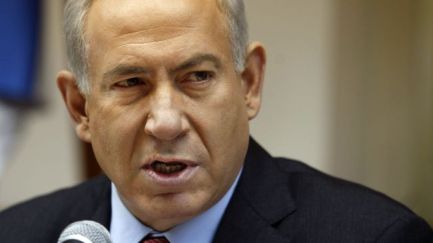
Israeli Prime Minister Benjamin Netanyahu called on Sunday for nations to continue boycotting Iran over its nuclear efforts after the election of a new president widely hailed as a moderate.
Netanyahu said it was Iran’s supreme leader, Ayatollah Ali Khamenei, and not the newly elected president, Hassan Rohani, who set a nuclear policy that has been challenged by tough economic sanctions and the prospect of military action.
“The international community must not give in to wishful thinking or temptation and loosen the pressure on Iran for it to stop its nuclear program,” the right-wing Netanyahu told his cabinet, according to a statement released by his office.
Israel, the Middle East’s only only nuclear power, has threatened to strike Iran over its nuclear program. It is also believed to be behind a string of assassinations targeting Iranian nuclear scientists over the past several years.
“The greater the pressure on Iran, the greater the chance of bringing a halt to the Iranian nuclear program, which remains the greatest threat to world peace,” Netanyahu said.
Iran insists its nuclear program is peaceful, and its main ally Russia has repeatedly said that there is no evidence to suggest otherwise.
Netanyahu’s remarks come one day after Israeli Defense Minister Moshe Yaalon called for tougher sanctions against Iran regardless of who is elected as its new president.
“We must toughen the sanctions against Iran and make this country understand that the military option remains on the table to halt the progress of its dangerous nuclear program,” Israeli radio quoted Yaalon as saying on a visit to the United States Saturday.
(Reuters, AFP, Al-Akhbar)
June 16, 2013
Posted by aletho |
Subjugation - Torture, Wars for Israel | Ali Khamenei, Benjamin Netanyahu, Hassan Rowhani, Iran, Israel, Middle East, Netanyahu, Sanctions against Iran, Zionism |
Leave a comment
The short answer is Iran and Hezbollah according to Congressional sources. “The Syrian army’s victory at al-Qusayr was more than the administration could accept given the town’s strategic position in the region. Its capture by the Assad forces has essentially added Syria to Iran’s list of victories starting with Afghanistan, Lebanon, Iraq, as well as its growing influence in the Gulf.”
Other sources are asserting that Obama actually did not want to invoke direct military aid. The rebels fighting to topple the Assad government or even to make use of American military power in Syria for several reasons. Among these are the lack of American public support for yet another American war in the Middle East, the fact that there appears to be no acceptable alternative to the Assad government on the horizon, the position of the US intelligence community and the State Department and Pentagon that intervention in Syria would potentially turn out very badly for the US and gut what’s left of its influence in the region. In short, that the US getting involved in Syria could turn out even worse than Iraq, by intensifying a regional sectarian war without any positive outcome in sight.
Obama was apparently serious earlier about a negotiated diplomatic settlement pre-Qusayr, and there were even some positive signs coming from Damascus, Moscow, and even Tehran, John Kerry claimed. But that has changed partly because Russia and the US have both hardened their demands. Consequently, the Obama administration has now essentially thrown in the towel on the diplomatic track. This observer was advised by more than one Congressional staffer that Obama’s team has concluded that the Assad government was not getting their message or taking them seriously and that Assad’s recent military gains and rising popular support meant that a serious Geneva II initiative was not going to happen.
In addition, Obama has been weakened recently by domestic politics and a number of distractions and potential scandals not least of which is the disclosures regarding the massive NSA privacy invasion. In addition, the war lobby led by Senators McClain and Lindsay Graham is still pounding its drums and claiming that Obama would be in violation of his oath of office and by jeopardizing the national security interest of the United States by allowing Iran to essentially own Syria once Assad quells the uprising. Both Senators welcomed the chemical weapons assessment. For months they have been saying that Obama has not been doing enough to help the rebels. “U.S. credibility is on the line,” they said in a joint statement this week. “Now is not the time to merely take the next incremental step. Now is the time for more decisive actions,” they said, such as using long-range missiles to degrade Assad’s air power and missile capabilities. Another neo-con, Sen. Robert P. Casey Jr. (D-Pa.) said the opposition forces risk defeat without heavier weapons, but he also warned that may not be enough. “The U.S. should move swiftly to shift the balance on the ground in Syria by considering grounding the Syrian air force with stand-off weapons and protecting a safe zone in northern Syria with Patriot missiles in Turkey,” Casey said.
Secretary of State Kerry held meetings with more than two dozen military specialists on 5/13/13. The Washington Post is reporting that Kerry believes supplying the rebels with weapons might be too little and too late to actually flip the balance on the Syrian ground and this calls “for a military strike to paralyze Al-Assad’s military capacities.” A Pentagon source reported that the USA, France, and Britain are considering a decisive decision to reverse the current Assad momentum and quickly construct one in favor of the rebels” within a time period not exceeding the end of this summer.
Shortly after the meetings began, King Abdullah of Saudi Arabia quickly returned to Saudi Arabia from his palace at Casa Blanca, Morocco after receiving a call from his intelligence chief, Prince Bandar Bin Sultan. Bandar reportedly had a representative at the White House during the meetings with President Obama’s team. King Abdullah was reportedly advised by Kerry to be prepared for a rapid expansion of the growing regional conflict.
What happens between now and the end of summer is likely to be catastrophic for the Syrian public and perhaps Lebanon. The “chemical weapons-red line” is not taken seriously on Capitol Hill for the reason that the same “inconclusive evidence” of months ago is the same that is suddenly being cited to justify what may become essentially an all-out war against the Syrian government and anyone who gets in the way. Hand wringing over the loss of 125 lives due to chemical weapons, whoever did use them, pales in comparison to the more 50,000 additional lives that will be lost in the coming months, a figure that Pentagon planners and the White House have “budgeted” as the price of toppling the Assad government.
“We are going to see a rapid escalation of the conflict”, a staffer on the US Senate Foreign Relations Committee emailed this observer: “The president has made a decision to give whatever humanitarian aid, as well as political and diplomatic support to the opposition that is necessary. Additionally direct support to the (Supreme Military Council), will be provided and that includes military support.” The staffer quoted the words of Deputy National Security Adviser Ben Rhodes to the media on 5/13/13 to the same effect.
A part of this “humanitarian assistance” the US is going to establish in the coming weeks a “limited, humanitarian no-fly zone, that will begin along several miles of the Jordanian and Turkish borders in certain military areas into Syrian territory, and would be set up and presented as a limited bid to train and equip rebel forces and protect refugees. But in reality, as we saw in Libya a Syrian no fly zone would very likely include all of Syria.
Libya’s no-fly zones made plain that there is no such thing as a “limited zone”. Put briefly, a “no-fly zone” means essentially a declaration of all-out war. Once the US and its allies start a no fly zone they will expand it and intensify it as they take countless other military actions to protect its zones until the Syrian government falls. “It’s breathtaking to contemplate how this in going to end and how Iran and Russia will respond,” one source concluded.
The White House is trying to assuage the few in Congress as well as a majority of the American public that it can be a limited American involved and that the no-fly zone would not require the destruction of Syrian antiaircraft batteries. This is more nonsense. During the no-fly zone I witnessed from Libya in the summer of 2011 the US backed it up with all manner of refueling, electronic jamming, special-ops on the ground and by mid-July a kid peddling his bike was not safe. Over the 192 days of patrolling the Libyan no-fly zones, NATO countries flew 24,682 sorties including 9,204 bomb strike sorties. NATO claimed it never missed its target but that was also not true. Hundreds of civilians were killed in Libya by no-fly zone attack aircraft that either missed their targets or emptied their bomb bays before returning to base while conducting approximately 48 bombing strikes per day using a variety of bombs and missiles, including more than 350 cruise Tomahawks.
At a Congressional hearing in 2011, then US Secretary of Defense Robert Gates got it right when he explained while discussing Libya “a no-fly zone begins with an attack to destroy all the air defenses … and then you can fly planes around the country and not worry about our guys being shot down. But that’s the way it starts.”
According to the accounts published in American media, Obama could alternatively authorize the arming and training of the Syrian opposition in Jordan without a no-fly zone. That appears unlikely because the Pentagon wants to end the Syrian crisis by summer’s end, the observer was advised “rather than working long term with a motley bunch of jihadists who we could never trust or rely on. The administration has come to the conclusion apparently that if they are in for a penny they are in for a pound.”
In response to a question from this observer about how he thought events might unfold in this region over the coming months, a very insightful long-term congressional aid replied: “Well Franklin, maybe someone will pull a rabbit out of the hat to stop the push for war. But frankly I doubt it. From where I sit I’d wager that Syria as we have known it may soon be no more. And perhaps some other countries in the region also.”
Franklin Lamb can be reached c/o fplamb@gmail.com
June 15, 2013
Posted by aletho |
Deception, Militarism | Iran, Obama, Syria, United States |
Leave a comment
“Tehran has developed technical expertise in a number of areas – including uranium enrichment, nuclear reactors, and ballistic missiles – from which it could draw if it decided to build missile-deliverable nuclear weapons,” reads Director of National Intelligence James R. Clapper’s April 2013 report to the Senate Committee on Armed Services.
Then comes the statement usually ignored by mass media: “We do not know if Iran will eventually decide to build nuclear weapons.”
The fact that Iran is not producing a nuclear bomb – nay, hasn’t even decided if it wants to – has not deterred the US government from slapping the Islamic Republic with the most punishing unilateral sanctions in history.
While the Iranian economy struggles to adjust to periodic US sanctions “upgrades,” a significantly devalued currency and restrictions in global financial transactions have suddenly challenged even Iran’s famed adaptability to these kinds of externally-imposed pressures.
But something is awry. There is no implosion in Iran. How is that possible with off-the-chart hikes in the price of basic goods, unaffordable housing in congested urban areas, increased youth unemployment? Instead, Iranians who love nothing better than to complain about government and economy, have grumpily rallied against these foreign efforts to pit population against state.
According to results of a Gallup poll in February, 85 percent of Iranians claim sanctions have hurt their livelihood either “a great deal” or “somewhat.” But 70 percent of those polled blame external parties (the US, western European countries, Israel, and the UN) for this suffering; remarkably, only 10 percent blame their government and their leaders. Instead of sanctions forcing a change in Iran’s calculation about pursuing nuclear enrichment – which is a stated US goal – 65 percent of Iranians favor a continuation of the country’s nuclear power capabilities.
As former head of the International Atomic Energy Agency (IAEA) Mohamed El Baradei astutely observed before leaving his 11-year post: “The line was, ‘Iran will buckle under pressure.’ But this issue has become so ingrained in the Iranian soul as a matter of national pride. They talk about their nuclear program as if they had gone to the moon.”
Instead of changing tack and identifying novel ways to gain favor with Iran’s population while pressuring their leaders, the US administration went off the rails last week and upped the sanctions ante – targeting for the first time Iran’s rial currency and its auto industry, a large source of domestic jobs.
No – there can no longer be any mistake about what that means. Washington isn’t trying to change Iran’s “calculations” about “its nuclear program.” It is trying to break Iran’s back.
“Let Them Try”
“US power and reach is in decline,” says Alaeddin Boroujerdi, who heads the Majlis’ (parliament) foreign affairs and national security committees, and cheerily expects to out-maneuver, out-last, and out-smart the Americans.
As with all decision makers in Iran, any discussion of US sanctions gets you a slow smile and a political lesson.
“The new realities in Iran don’t seem to be apparent to the US after 33 years. They’re still focused on regime change, sanctions, cyber war, military operations. The result of this strategy has been to the US detriment (financially draining) and to our advantage,” explains Boroujerdi.
In this period, “Iran gained incredible technology. The US didn’t want us to have nuclear capability – and we have done so from the basics to where we are now in a peaceful nuclear program. They tried to restrict our knowledge and our development. In these three decades we obtained advanced technologies ourselves – building and launching satellites, developing nanotechnology from scratch, developing a domestic arsenal of weapons,” he continued.
“We used Iranian brainpower, our youth; we have attained the unattainable – we changed the process. How many other countries could have done this?”
That’s the crux of it. David vs Goliath. The nimble, determined developing nation upstart facing down the global bully and a crumbling Empire. That image can inspire passion here in Iran – which may explain some of those earlier Gallup numbers and the upward tick in polling data for presidential candidates who talk tough on negotiations with the US.
In short, many Iranians feel the US and other Western nations want to stunt their independence, development, and scientific progress – keeping the country “backward and needy;” a dumping ground for stale Western products and services in exchange for the petrodollars of a one-commodity economy.
“Nuclear” Saves Lives in Iran
I visit a University of Tehran campus that houses the first nuclear medicine center in the country. This is the teaching nexus from which most of the nation’s nuclear medicine specialists graduate. It is a relatively new specialty – a few decades old – but already there are 130 nuclear medicine centers around Iran and an equal number of specialized doctors.
“Nuclear medicine is a real peaceful use of nuclear energy,” explains Dr. Mohsen Saghari who heads the center and is also the president of the Iranian Society of Nuclear Medicine. “We basically use radioactive materials for diagnostics and therapeutic purposes – we do all the treatments and scans (bone, heart, liver, spleen, renal, breast, thyroid, lungs) at this facility.”
As I quickly learned, nuclear medicine is several things: For the purpose of diagnostics, when administered into the body these radiopharmaceuticals can “image” disease at the cellular level, thereby detecting illness earlier than via x-ray, CT-Scans or MRIs, for instance, which rely on the visible manifestation of disease for detection to be possible.
It is like radiology from the inside – instead of the external radiation passing through your body to capture an image from an x-ray, in nuclear medicine, external cameras capture images from the radiation emitted by a radiopharmaceutical administered into a patient.
Nuclear medicine is also used for the purpose of therapeutic treatment. These are specialized drugs that emit short distances of radiation thereby reducing undesirable side effects.
At the center that day, I saw maybe 20 patients and family members in a seating area awaiting a scan or outpatient treatment, mostly for thyroid cancers and hyperthyroidism, according to the medical professional who took me on a tour.
“Most of the procedures we do here are complementary, but in a few cases, they are the only procedures and nothing else can substitute them,” says Saghari. “But because of sanctions we have problems. If we want radioactive materials or equipment, they won’t sell them to us.”
So Iran decided to make its own.
Most of his center’s radioactive materials are produced by the Atomic Energy Organization of Iran, which fuels up those nuclear reactors that make people in Washington and Tel Aviv all wobbly-kneed and shrill.
Saghari showed me a sealed vial – or “cold kit” – that contained a few pinches of a powdered substance. Iran makes that part of the drug too because the newer US (unilateral) sanctions have made it hard for Iranians to trade in Western currencies and transact through most banks. The vial remains sealed until radioactive material is injected into it – which then makes it an active radiopharmaceutical used in diagnostics and treatment.
As my notes recall, 90 percent of these diagnostic procedures require a synthetically-produced chemical element called Technetium, which is produced at Iran’s nuclear plants via a process using 20 percent enriched uranium and then extracted from the nuclear rod fuels to create the necessary medical isotopes.
Says Saghari, “Even in the black market, the importation of chemotherapies and high-tech medications have largely stopped with the latest rounds of sanctions.”
So Iran relies on its own nuclear power plants to fill in – and eventually altogether replace – imports. “Sometimes we get shortages, at the present time they can produce.”
Not a lot of countries produce radiopharmeceuticals. Saghari named just Canada, the US, England, France, Russia and China. Like others leading the charge toward self-sufficiency in Iran, he anticipates that one day Iran will be producing competitive, lower-cost radiopharmeceuticals for export.
“Each week we see 20 to 24 new thyroid cancer patients – last month I had 94 inpatients, 876 diagnostic scans performed and 700 outpatients for thyroid illnesses,” he says, flicking through some administrative papers to try to give me an accurate count. “Every year in Iran about one million people get referred for diagnostic and therapeutic procedures.”
“So of course we are going to make it ourselves,” insists Saghari.
Baa, Baa, Cloned Sheep
A 2010 Canadian report on the “geo-political shift in knowledge creation” claims scientific output has grown 11 times faster in Iran than the global average – faster than in any other country in the world. I recall reading this tidbit three years ago and wondering how that could be right. In previous trips to Iran, I couldn’t say that I ever noted visible signs of ‘unusual progress.’
I don’t think most Iranians think much about this either. Discussing my interviews with friends and acquaintances during my visit, most seemed surprised, even shocked that this much development was going on under their noses. The Iranian government, good or bad, suffers acutely from an inability to communicate its value propositions to the wider population. Which really, quite frankly, cripples it when faced with the well-oiled spin-machines of hostile Western and Arab states seeking to vilify the Islamic Republic.
Every Iranian has an opinion on the country’s nuclear energy program for the simple reason that this is the one ‘development project’ they all know about…so rarely is it out of the international headlines.
This kind of hyper-scientific growth is essential, says Dr. Hamid Gourabi, president of the Royan Institute, a leader in stem cell and reproductive biomedicine in Iran: “Scientific progress can make countries independent – and apply pressure on others.”
If you think his message has political undertones, you are right. It is something I hear in all my meetings. “After the revolution, we decided instead of being dependent on oil, we should diversify into sciences and other areas.”
Royan, a quasi-governmental institute, was established to solve a basic problem: young Iranian couples with fertility problems were having to travel outside the country and spend large sums of money to conceive. The organization started with very basic fertility treatments in 1991 and two years later the first in vitro fertilization (IVF) child was born in Tehran. With a 40 percent success rate, the institute now does more than 4,000 cycles every year – in Europe there are less than ten clinics that perform more than 1,000.
Royan was playing catch-up with some of its early endeavors. In 2006 it cloned its first sheep, followed by two transgenic kid goats called Shangool and Mangool (named after popular children’s characters in Iran), and then by calves – each using slightly different biotechnologies.
Gourabi’s institute is not ultimately interested in replicating other’s successes though – it wants to forge its own way. He tells me about some important thinking that went on in Iran during the presidency of Mohammad Khatami from 1997-2005: “We wanted to expand in sciences, technologies – Khatami didn’t think Iran could advance ‘car-making’ for example – we wanted to go into areas where Iran can bring leadership.” But, he says, ultimately, “the scientific community is the main impetus behind this – they push the government.” Then he adds with a twinkle that Iran’s Supreme Leader “Khamenei has a huge interest in science.”
Since then Royan has branched out in all sorts of directions. Stem cell research is today the most advanced part of what the group does, and Iran, according to Gourabi, is now only the 8th nation in the world to produce scientific output on stem cells.
He also confirms that “sanctions have been a key motivator” for the rush to development. “One of the products we need cost us a million dollars to import. Now we produce it ourselves, it costs us very little. Iran sells biotech to other countries – we offer a lower cost than most companies.”
Gourabi, whose institute has been denied laser technology-based products by the US’ restrictive sanctions regime, says with some confidence: “We will end up producing these drugs for ourselves, so pirating and patent-busting becomes prolific. And they (the West) lose a good market for their products.”
He’s not worried about isolation either: “Sanctions do affect our work – time is important in science and sanctions cause delays – but we are contributing in a big way to the global scientific community now, and this collaboration helps us.”
Nanotechnology 101
A decade ago, Iranian decision makers and scientists were trying to solve a large problem: “In less than 100 years, we will run out of all these oil resources. How do we have an economy then?”
The prevalent thinking was that Iran needed to develop sectors that would help it create a “knowledge-based economy” where it could establish itself as a global leader. The country had underperformed on IT and biotech, so it took its time in studying the potential of nanotechnology. Three years later it decided to plunge in.
“Our mission was to be among the top 15 countries in the world in all rings of the ‘value chain’ – all the way from developing the human resources to commercialization and wealth creation,” say Dr. Seyed Mehdi Rezayat and Dr. Ali Beitollahi, senior officials at The Iran Nanotechnology Initiative Council (INIC).
“Today, more than 14,000 are engaged in Iran’s nanotech industry – a decade ago you couldn’t count the number of people on two hands who understood what it meant,” laughs Beitollahi.
The data starts flowing. In the past five years, Iran has registered 95 patents for nanotechnology products and processes. Dozens of Iranian universities have been corralled into creating graduate and doctoral programs in advanced nanotech. Because of sanctions and embargos, Iranians are making sophisticated machinery that they otherwise would have bought. Twenty five Iranian companies have now commercialized nano equipment because nobody would sell it to them.
In a short time, the Islamic Republic has become one of only six nations involved in nanotech standardization – all others are Western countries (US, UK, Canada, Germany) with the exception of Japan.
The applications in nanotech are broad. From eco-efficiencies like coating glass that keeps heat out, to strengthening building materials in earthquake prone areas, to creating cancer drugs to water filtration and desalinization.
“In high-tech you can get much more advanced benefit than from commercial technologies,” says Rezaiat. “Every kilogram of cement is just a few cents. The main cost of things is knowledge and technology, so why should a country like Iran stick to cement?”
“We learned a lot of lessons from our previous lack of achievement,” he reflects, adding, “We used to buy turnkey projects and we didn’t even know what was inside.” Now, says Rezaiat, “Nano has become a model for the country. We started from scratch – we will look, learn about everything.”
Why Washington Fears Iran?
A rigorous report published last week on Iran sanctions by the Congressional Research Service (CRS) says the following:
“There is a growing body of opinion and Iranian assertions that indicates that Iran, through actions of the government and the private sector, is mitigating the economic effect of sanctions. Some argue that Iran might even benefit from sanctions over the long term by being compelled to diversify its economy and reduce dependence on oil revenues. Iran’s 2013-2014 budget relies far less on oil exports than have previous budgets, and its exports of minerals, cement, urea fertilizer, and other agricultural and basic industrial goods are increasing substantially.”
A year ago I wrote an article titled “How Iran Changed the World.” In it I warn that continued economic pressures on Iran will produce the unintended consequence of undermining Western hegemony very decisively.
The US, after all, is aggressively challenging the Islamic Republic at a time when the entire Western financial and economic order is teetering on the brink of collapse, with no apparent safety net in sight.
Iran is an extremely resourceful country of 78 million people, a huge export market for any nation keen to bolster its treasuries, and has major strategically valuable commodities – oil and gas – that people are keen to buy.
The tighter the sanctions, the more likely that Iran and its trading partners will seek innovative ways around them. In effect, by putting the screws on this important country (Iran is today the head of the 118-nation Non-Aligned Movement and increasingly protected by the emerging BRICS economies), the US is encouraging the development of alternative financial and economic practices that will fundamentally undermine – perhaps even destroy – its own global order.
Every global power throughout history has ended its reign at the hands of an adversary, whether on the battlefield or in a grand power play that goes wrong. What Washington rightfully fears is that its three-decade-long tussle with the Islamic Republic is unwinnable – which is nothing short of defeat for the world’s last superpower.
Unable to get off its current trajectory of escalation, the US continues to seek new, illogical, increasingly indefensible ways to squeeze Iran’s population. But the fact is that sanctions simply don’t work: Iran is not going to stop its nuclear enrichment. Iranians aren’t going to eject their government.
This will not end well for the US. Iran…I’m not so worried about.
This is the second in a two-part series on my 2012 research trips to Iran to discover what makes the Islamic Republic so resilient in the face of Western economic and political pressures. You can read Part 1, “Why Arabs Need Iran” here.
Sharmine Narwani is a commentary writer and political analyst covering the Middle East. You can follow Sharmine on twitter @snarwani.
June 12, 2013
Posted by aletho |
Economics, Timeless or most popular | Atomic Energy Organization of Iran, International Atomic Energy Agency, Iran, Israel, United States |
Leave a comment
Merida – After President Nicolas Maduro attended a military display in Aragua state which included Venezuela’s three unarmed drones, some mainstream media have highlighted Venezuela’s defence program, stressing Venezuela’s relationship with Iran.
Maduro presided over a ceremony to hand over and display National Bolivarian Armed Forces (FANB) equipment last week. There was a demonstration of Venezuela’s Harpy System of Drone Planes.
The unarmed planes are operated by remote, can take photographs and be used for disaster situations, agricultural research and protection of the electrical grid, according to Defence minister Diego Molero.
Molero said that through the Simon Bolivar satellite, the drones can observe any part of Venezuela. He also presented the Gavilan project, for a drone plane which he said has been designed completely with Venezuelan technology.
Venezuela’s Harpy drones are small and can only be used for remote controlled long distance surveillance. They weigh 85kg, have a maximum flight distance of 100km and flight time of 90 minutes, a cargo capacity of 17 kg, and video cameras which can transmit in real time.
Venezuela’s Cavim (Venezuelan Military Industrial Company) manufactured the drones, with the help of Venezuelan military engineers who were trained in Iran. The system consists of three planes, a launcher, and a control unit.
Ciudad CCS reports that the government eventually hopes to have “at least a dozen” Harpies (Arpías in Spanish).
“We’re advancing in the development and management of military science and technology, for preserving peace and security in Venezuela,” Maduro said at the demonstration, adding that Venezuela is “prepared to resist any attack that could be fabricated overseas, against Venezuela”.
Minister for internal affairs at the time, Tareck el Aissami reported in September last year that Venezuela’s drones had detected a plane with a US registration number, allegedly transporting drugs, in Venezuelan territory. The first Harpy (Arpia-001) was manufactured in January 2012.
Media and U.S. response
Last week’s military demonstration led to some corporate media headlines over the following days about Venezuela “launching” its drones system. Media in and outside Venezuela have reported that the drones are for surveillance and to be used to “curb drug trafficking” but has also emphasised that Iran “helped to build them”.
Univision Noticias headlined with, “Venezuela will use drones to protect the country from any threat”. Fox News and AP reported that “Venezuela’s announcement comes as the United States has begun to use unmanned drones to hunt drug traffickers on both the U.S.’s southern border with Mexico and in the open waters of the Caribbean.”
Last year the U.S. said it would watch Venezuela’s drone development closely, with U.S. State Department spokesperson Victoria Nuland saying at the time, “Our concern, obviously, would be with any breaking of international sanctions on Iran. And we will be most vigilant in watching how this goes forward”.
Further, according to an April 2013 article by the InterAmerican Security Watch (IASW), which “monitors threats to regional security” and the Jerusalem Post, “the growing military ties between Iran and Venezuela… have raised concerns in both the US[sic] and Israel”.
The IASW also made the claim that “Iran’s extended reach in Latin America could pose a threat to US national security; Tehran’s strategies in the region could also threaten Jewish and Israeli interests”.
However, while Venezuela’s 3 small drones are unarmed and have not left Venezuelan territory, the U.S. has used armed and unarmed drones in Afghanistan, Pakistan, Iraq, Yemen, and Somalia, while Israel has used them in Lebanon. According to a February 2012 report by the Bureau of Investigative Journalism, U.S. drones had killed at least 2,413 civilians in Pakistan alone, between May 2009 and the date of the report.
June 5, 2013
Posted by aletho |
Mainstream Media, Warmongering, War Crimes | Iran, Israel, Latin America, United States, Venezuela |
Leave a comment

In 2011, when Arab revolts began to sweep the Middle East and North Africa, the view from Washington and its closest allies was one of concern. How would the removal of mostly pro-Western dictatorships affect the balance of power in the region? More importantly – how to prevent these events from boosting Iran’s influence?
Two years on, the regional competition for influence is in full throttle. In its sights – among many other developments – are recent efforts by Iran and Egypt to upgrade their relationship.
The spoilers will have none of it. Said Steven A. Cook last week on the website of that most prestigious of US institutions, the Council on Foreign Relations (CFR): “Other than some quick cash and subsidized energy, there is nothing that Tehran can offer Cairo that will, in the long run, be to Egypt’s benefit.”
He has it entirely wrong. “Quick cash and subsidized energy” can only be used to describe the superficial offerings of countries like Saudi Arabia and Qatar, both vying for influence in this new Egypt.
There is no contest whatsoever between that kind of assistance and what Iran can bring to the table. Iran has achieved its economic independence the hardest way imaginable – through a devastating eight-year war with Iraq and decades of potentially-debilitating sanctions. It has shrugged off the yoke of imperialism, built infrastructure, social services and industry from scratch, harnessed its own resources toward establishing domestic self-sufficiencies, created a dynamic – if imperfect – indigenous political system of representative government, and managed to maintain the security of its oft-threatened borders through military innovation and soft power.
In short, with similar-sized populations (Iran’s 78 million to Egypt’s 82 million) and the experience of tackling monumental state-building challenges with varying degrees of success, there is simply no country better situated to provide developmental guidance to Egypt – and other economically vulnerable Arab states – than the Islamic Republic of Iran.
Seeing is Believing
Other than a frustratingly brief trip some years ago to attend a Tehran conference where I had little opportunity to get around, I had not visited Iran in eight years. In the latter part of 2012, I made three trips to the country – in large part to discover how Iran continues to thrive despite the “biting sanctions” we keep hearing about.
And thrive it does. Visitors land at the brand new Imam Khomeini international airport as a first step in experiencing an utterly revamped Tehran. You drive into the city on new highways, lit up almost excessively by closely aligned lampposts and the Iranian penchant for colorful lighting at major intersections. Streets are lined with trees, shrubs and flowers planted and nurtured by a succession of rather remarkable mayors that Tehran residents like to boast about.
Those are the city planners who develop well-manicured parks and children’s playgrounds to break up the urban monotony, build women’s sports facilities to encourage good health, spearhead campaigns on AIDS awareness, and pass out free condoms and hypodermic needles to prevent infection among drug users.
Tehran feels new and fresh – like it has had a facelift. New buildings abound, each more luxurious than the last, although sales have slowed dramatically in recent years, much like in other capitals hit by economic slowdown and ridiculously expensive housing. I cannot believe the greenery – this is a dry climate and I cannot seem to recall the city ever overflowing with late summer foliage like this.
New restaurants, cafés, and boutiques dot the boulevards; the bazaars are well-stocked and cleaner than I recall. Nothing seems to be in shortage – and Iranians are producing more of the food products on their supermarket shelves than ever before. In 2011, Iran ranked 11th globally in agricultural output, just behind Japan, Russia, Turkey, and Australia – and is ranked first and second worldwide in the production of a variety of fruits, vegetables, spices, and nuts ranging from apricots, cucumbers and walnuts to pistachios, saffron, and watermelon.
This is a country hell-bent on achieving self-sufficiency, after all. Under threat of increasingly punitive US-sponsored economic sanctions, Iran’s Supreme Leader Ayatollah Ali Khamenei last year promised the development of a “Resistance Economy” that will aim to stop all dependence on oil revenues and switch to knowledge-based industries and vital commodities instead.
After eight years away from the country, none of Tehran’s significant advances impressed me as much as the pollution-solution. Surrounded by the Alborz mountain range that traps pollutants, the capital has struggled for decades to lessen air pollution, much of which stemmed from aging vehicles that service a city of more than 12 million residents.
During past trips to Tehran, the stench of petrol from cars was omnipresent in congested areas – you’d have to clean blackened particles from your nose every day. In 2012, I experienced none of these things. The city still has high alerts on dangerous pollution days, but has come a long way from the days when the municipality enforced alternative driving days for cars with even and odd license plate numbers.
For starters, during my eight-year absence, Tehran has launched around 80 subway stations servicing more than 2.5 million passengers daily, and inaugurated a 60-station rapid transit bus system with just under two million daily users.
More impressive yet is the Islamic Republic’s nationwide effort to convert public transportation and privately owned vehicles from petrol engines to ones that run on Compressed Natural Gas (CNG).
Pay attention now. Iran’s experiment to switch to alternative fuel-based vehicles is the kind of super-efficient central government initiative that the country now frequently launches – with varying degrees of success. It is one of many zero-to-a-hundred projects initiated in recent years that seeks to diversify the economy, create jobs, generate revenues or solve a problem. To Iran’s credit, at least they think big and make the effort – few other governments engage in these kinds of expansive nation-building activities anymore.
Partly to help stem air pollution, and mostly to reduce the country’s dependence on imported gasoline – and therefore mitigate the effect of US-backed sanctions against companies that sold refined petroleum to Iran – the Islamic Republic embarked on an ambitious program to adopt Natural Gas Vehicles (NGV) based on alternative fuels.
In just a few years, Iran has established a fleet of around 3 million NGV, the largest in the world (by contrast, the US has just over 200,000) and now has the capacity to domestically manufacture 1.5 million CNG cylinders per year at extremely competitive costs.
Big Thinkers Build Nations
In writing this series of articles based on my Iran trips, I am constantly reminded of an MSNBC promotional ad featuring Rachel Maddow, where she stands in front of the Hoover Dam in a blue hardhat and gets sentimental about big-projects-that-build-nations:
“When you are this close to Hoover Dam, it makes you realize how small a human is in relation to this as a human project. You can’t be the guy who builds this, you can’t be the town who builds this, you can’t even be the state who builds this, you’ve got to be the country that builds something like this. This is a national project – this is a project of national significance. We’ve got those projects on the menu right now and we’ve got to figure out whether or not we are still a country that can think this big.”
The current mayor of Tehran Mohammad Bagher Ghalibaf – a former commander in the Revolutionary Guard and national police chief who is widely admired for his big thinking and ability to get the job done – happens to be one of eight candidates running for president in the June elections.
Tehran residents are attached to their mayors, and in a city of between 12 to 14 million, are able to propel them to the presidency (current Iranian President Mahmoud Ahmadinejad was the previous mayor). And after eight years in this role, you would be hard pressed to find a Tehrani who doesn’t praise Ghalibaf for his role in developing their capital. If he emerges as a national frontrunner, Tehran will push him over the line.
Among the other eight 2013 presidential contenders is Dr. Gholam-Ali Haddad-Adel, a former speaker of parliament (majlis) who holds one of Tehran’s 30 majlis seats and a close adviser to Iran’s Supreme Leader Ayatollah Ali Khamenei, to whom he is related through marriage.
I met with Haddad-Adel during one of my trips to Iran last year – not to discuss regional or domestic politics – but to learn about four “academies” set up by the Iranian government two decades ago. These academies are meant to drive “big thinking,” establish best practices, and initiate macro planning for national projects in the areas of Sciences, Medical Sciences, Arts, and the Farsi language.
The Farsi language as a big national project? As it happens, that’s the academy headed up by Haddad-Adel, who holds a PhD in philosophy and has translated Immanuel Kant’s books into the Persian language.
What could be so urgent and critical about the national language that would move a country under prohibitive international sanctions to direct resources toward it?
“Farsi is as old as Iranian civilization – they are inseparable,” explains Haddad-Adel. “We Iranians are proud of our national language and literature. We regard our Persian literature as one of the most important elements of our national identity. And we have to support this language against the dangers that threaten it – new words, idioms and terms entering the language through science, technology and culture – mostly through the English language.”
Under Haddad-Adel’s tenure, one of the 15 departments dedicated to the task of preserving the Persian language has created a nine-volume dictionary converting over 40,000 foreign words into Persian equivalents. A quick glimpse through the final volume shows that a lot of the terminology being replaced are technological, medical and scientific words (laparascopy, intra-muscular injection, binary pulsar, supramolecular). But also covered are subjects like political sciences (interdependence, deconstructionism, national security), music (chord, grand-barre, capo d’astro) and sport (play-offs, kayak, surfboard).
Seventy different university groups and more than 150 people are involved in this task. The academy has developed complicated software for finding Persian equivalents for English terms.
“Language is not something that can be improved by command though,” says Haddad-Adel. “The velocity of development is so rapid, it is not possible for the public to follow it. We try to disseminate it through cultural ways.”
Another project of the academy: a Persian-to-Persian dictionary covering at least 1,000 years of the language – and tracking words like “khasteh” which means “tired” in modern Farsi and “injured” in old Persian through its exportation to the Ottoman Empire and current usage in modern Turkey as “hastehan” which means “hospital.”
Yet another department is developing a six-volume encyclopedia containing the “whole history of Persian language and literature in the Indian subcontinent.” Explains Haddad-Adel: “Persian was welcomed by Indians. It was a language of culture and has been for more than 800 years the official language of the old Indian courts and intellectuals. British colonialism ended this.”
There is more to this than the preservation of language – cultural revivalism, national security, identity politics, nationalism are woven into the fabric of the academy’s work. The Iran of Haddad-Adel isn’t a nation in decline – it appears to be getting geared up to lead a renaissance.
Mississippi Calls on Iran for Help
I next visited the director of the Medical Sciences academy Dr. Alireza Marandi, a pediatrician by training, two-time minister of health, university professor and a current member of the Majlis from Tehran.
In 2009, I had read an article in the UK-based Sunday Times (reproduced on this blog) that told the remarkable story of Iran’s provincial health houses. The post-revolution initiative to rapidly deliver basic medical care to under-served rural areas was able, in a short time, to reduce child mortality rates by 69 percent and maternal mortality in rural areas from 300 per 100,000 births to 30.
So astounding were these results that the US state of Mississippi – which, according to the Sunday Times article, has “some of the worst health statistics in the country, including infant mortality rates for non-whites at Third World levels” – turned to Iran for advice, assistance and training on how to achieve these results back home.
Dr. Marandi was Iran’s minister of health around the time the first health houses (khaneh behdasht) were established in post-revolutionary Iran. He recalls the difficulties in getting funding back in the early 1980s:
“During the Iran-Iraq war we had very little oil to export – we were limited to about one million barrels per day. The price of oil had come down to about $7-8 per barrel. The country was under bombardment. Yet during this time, the country still focused on developing a primary healthcare system.”
That wasn’t even the hard part. When majlis-approved funding finally came in to run one pilot program in each of Iran’s provinces, the planners had a difficult time finding local men and women with the required five years of elementary education to staff the health houses – especially the girls. Today, with literacy rates among Iran’s youth (ages 15-24) at 98 percent according to the World Bank, all health house workers have at least a high school education.
The women are trained for basic healthcare procedures – monthly check-ups for mothers, vaccines for children, schedules and checklists, breastfeeding guidance, preventive care. The men are largely responsible for environmental health issues like water and sanitation – they check village water supplies, add chlorine where necessary, teach locals personal hygiene, how to disinfect things, install basic toilets, and lay water pipes.
Today, says Marandi, Iran has some 20,000 health houses in 65-70,000 villages around the country and has established a primary healthcare “network” connecting health houses to larger health centers in larger towns, which in turn plug into hospitals and specialized medical facilities in urban areas. Although challenges still exist in this system, Iran has solved a vital social service and healthcare challenge that continues to plague most developing nations.
Despite a lack of funds, Marandi’s ministry of health tackled many more major health problems in those early days. In 1983, the highest rate of immunization in Iran was 25 percent. A few years later, that rate skyrocketed to 95 percent throughout the country. Iranians desperately needed more physicians (only 12,000) and a more diversified medical worker base, so the ministry of health under Marandi pushed through a bill that took all health-related schools (midwifery, dentistry, nursing, etc) away from the ministry of education. By streamlining and adding to existing resources, in that first year 1,200 students were increased to 6,000, students were directed into undermanned specialties where jobs awaited, and new schools of medicine were built – at least one for each province.
Today, there are 120,000 physicians in Iran. The country is self-sufficient in the production of medical experts and support staff, and has diversified into specialties like fertility treatments, heart, cornea, and kidney transplants that Iranians were forced to seek outside the country a few decades ago. Iranian expertise and relatively low-costs now even draw medical tourism from near (Iraq) and far (Canada).
“We now have every sub-specialty you can think of,” says Marandi, who received an award for his accomplishments from the World Health Organization (WHO) in 2000.
While Iran has the benefit of considerable oil resources to cushion its economy, throughout the 1980s the country was broke. Economically, Iran was in not much better a position than Egypt or Jordan are today, both countries just months away from bankruptcy. There is a missionary zeal that permeates the higher echelons of government and their immediate ranks below. Many decision makers I interviewed are driven by both religious faith and geopolitics – determined to satisfy public needs and focused on discovering efficiencies that will thwart the negative effects of sanctions. Despite frequent accusations of corruption and mismanagement, clearly a lot is getting done in the country – and with a real spirit of innovation.
In the next installments, I will write about my interviews with leaders in technological and scientific fields including Iran’s controversial nuclear energy program, huge achievements in nanotechnology, political insights on what top Iranian politicians think about a Muslim Brotherhood-led Egypt, and US-sponsored sanctions…and the unexpected fact that Iran has cloned sheep.
Sharmine Narwani is a commentary writer and political analyst covering the Middle East. You can follow Sharmine on twitter @snarwani.
June 3, 2013
Posted by aletho |
Economics, Timeless or most popular | CNG, Compressed Natural Gas, Egypt, Iran, Mass transit systems, Middle East, Natural gas vehicle, Public transportation, Tehran, United States |
Leave a comment
I was unaware that Sarah Palin was still a meme, but the Democratic Party is apparently still using her to raise money and build their email lists. Apparently, because who cares enough to look it up, the former Alaska governor said the US government is “stockpiling bullets” to use against the public. And so a petition has been launched by the Democratic Governors Association to demand an apology because that is important:
Accusing our government of actively stockpiling weapons to use against its own people is not only offensive and wrong — it’s downright dangerous. For Sarah Palin to insinuate that the United States is similar to the tyrannical governments in Syria and Iran who do carry out those types of atrocities is completely reprehensible.
Good on the governors for looping Iran into the mix, rather than a Bahrain or Saudi Arabia. President Hillary may have to bomb them someday, so it’s important to lay the groundwork now. Sarah Palin and Iran: Bad. Got it.
Of course, the unfortunate thing is that the US government is “actively stockpiling weapons to use against its own people” (no one cares about it using them against other people). You don’t end up with 2.3 million Americans in prison cells by asking them nicely. You force them in at the point of a gun. The FBI alone gets over $8 billion a year to do this. Federal prisons get over $8 billion to keep them there.
Is that the same as the sort of political repression that goes on in Syria or Iran? No, it’s different. The people getting shot in the streets by security forces are usually Black or Latino. And no one has anywhere near the size prison population that America does.
(via @FireTomFriedman)
June 1, 2013
Posted by aletho |
Deception, Ethnic Cleansing, Racism, Zionism, Mainstream Media, Warmongering, Progressive Hypocrite | Democratic Governors Association, Democratic Party, Iran, Sarah Palin, Syria, United States |
Leave a comment
Last week the Senate passed Resolution 65, mandating a new round of sanctions against Iran and promising to support Israel if it should choose to launch a unilateral war. The bill contradicted explicit US policy in a number of areas: it imposed secondary penalties on US allies; it lowered the bar for military action to Israel’s preferred language of “nuclear capability” rather than acquisition of a nuclear weapon; and it interferes with the attempt to reach a diplomatic resolution to the nuclear impasse at a delicate time. No wonder Secretary of State John Kerry implored Congress not to pass the bill when he testified before the Senate Foreign relations committee last month.
Nevertheless, the Senate bill came to a vote on May 22, and the result – in a roll call vote – was 99-0 in favor of the bill.
In the last Congress, another Iran Sanctions measure – an amendment attached to the 2012 Defense Appropriation Bill — was also opposed by the Obama administration. The provision, probably illegal under WTO rules, mandated secondary penalties against foreign banks which did business with Iran’s oil sector (US banks were already banned from doing so). Secretary of the Treasury Tim Geithner wrote a letter to the Senate Armed Services Committee “to express the Administration’s strong opposition to this amendment because, in its current form, it threatens to undermine the effective, carefully phased, and sustainable approach we have taken to build strong international pressure against Iran.” Two State Department officials of the Administration testified against the amendment; Senate Foreign Relations Committee Chairman John Kerry also opposed the measure.
However, when the amendment’s sponsors insisted on a roll call vote, it passed 100-0. Even Senator Kerry voted for the measure he had earlier opposed.
To understand how this can happen, it is useful to look at the Israel Lobby’s legislative MO — as well as the larger dynamic around Israel advocacy within the US Congress, in our political system and in the press.
AIPAC, of course, is the premier Israel Lobby organization. Every March at its annual Conference the group assembles a huge turnout of moneyed and grassroots lobbyists. Scores of members of Congress from both parties and political aspirants of all stripes jockey to express their loyalty to the Lobby. It is at these conferences that AIPAC’s major legislative priorities for the year are unveiled. This always includes renewed (and increased) military aid for Israel and for the last ten years or so various measures to oppose, sanction and preferably make war on to overthrow the Islamic Republic of Iran — Israel’s last remaining serious military opponent in the Middle East.
Here is the way it works.
–In the days before the yearly AIPAC conference in early March, reliable members of Congress from both parties – preferably non-Jews – are prevailed upon to submit AIPAC-drafted bills with a substantial number of initial bi-partisan sponsors. This year the highlighted legislation included House Res. 850, The Nuclear Iran Prevention Act of 2013, introduced on February 28 by California Democrat Rep. Edward Royce and 31 co-sponsors (16 Democrats and 15 Republicans); and Senate Res. 65, Strongly Supporting the Full Implementation of United States and International Sanctions On Iran, also introduced on February 28 by the every dependable Senator Lindsey Graham [R-SC] and 22 initial co-sponsors (13 Democrats and 9 Republicans). Another bill, apparently a late entry from the March 2-4 Conference itself, did not follow the preferred pattern. House Res. 938, The United States-Israel Strategic Partnership Act of 2013 was introduced hurriedly on March 4 by Rep. Ileana Ros-Lehtinen [R-FL27] with only two Democratic co-sponsors. These three bills embodied AIPAC’s 2013 declared legislative priorities: Prevent Iranian Nuclear Weapons Capability; Strengthen U.S.-Israel Strategic Cooperation; Support Security Assistance for Israel.
– Then, before leaving Washington, the AIPAC Conference attendees launch themselves on Capitol Hill to recruit more co-sponsors for the AIPAC bills. Initially, this is mostly pushing on an open door, as many legislators are eager to join the bandwagon; some were simply not asked earlier in the interest of bi-partisan balance; some were not quick enough to get listed when the initial bills were introduced. Within a few weeks of the AIPAC Conference Senate Res. 65 had an additional 55 co-sponsors, House Res. 850 added more than 250 sponsors; and House Res. 983 more than 150.
–The effort continues to line up more cosponsors with the aim of securing an irresistible momentum for the bills. Many legislators simply take more time to pin down; others (few) might have been reluctant holdouts persuaded not to find themselves isolated against the AIPAC juggernaut. An AIPAC staffer once famously bragged that “in twenty-four hours, we could have the signatures of seventy senators on a napkin”. It took a little longer this time, but Senate Res. 65 already had 91 co-sponsors before it came up for a vote. House Res. 850, still pending, now has 351 co-sponsors; H. Res. 983 has 271.
–Not all AIPAC-initiated legislation follows this pattern. Other bills or amendments come up during the year and are pushed as opportunities or needs present themselves. Some of these bills – and the frequent “Congressional Letters” of support for Israel — have little practical impact on policy but are part of AIPAC’s promotion of discipline among US legislators. I call it “puppy training,” so that members of Congress are reflexively obedient to AIPAC’s legislative agenda. The 29 standing ovations for Israeli Prime Minister Benjamin Netanyahu when he addressed Congress in 2011 are a good illustration of the outcome. Pavlov had nothing on the Israel Lobby.
It might be tempting to conclude – as AIPAC and its allies contend – that Congress acts in response to the overwhelming public support for Israel. However, it is important to observe that votes on the Lobby’s bills are rarely much publicized in the US – as opposed to Israeli –mainstream media. Of course, the pro-Israel political machine, the Rightwing and Zionist blogosphere do pay close attention, ever-ready to reward or punish legislative misbehavior. Most of the public remains, by design, completely unaware of these political maneuverings. Not long ago, House Republican Whip Eric Cantor proposed voting separately on military aid to Israel so as to insulate it from potential cuts to Pentagon spending, but he was quickly persuaded to drop the idea. The Israel Lobby prefers to have the $3 billion plus in annual aid to Israel discretely hidden within the vast Defense Appropriation Bill.
So the power of AIPAC derives not fundamentally from Israel’s vast popularity. Although opinion polls do regularly confirm the public supports Israel at a much higher level than the Palestinians (no surprise), substantial pluralities still prefer that the US stay neutral in the conflict. I have seen no polling about support for the billions in military aid to Israel each year. It is hard to imagine that the majority response would be anything but negative in the light of cuts to funding other popular government programs. Not surprisingly the Lobby prefers “Don’t Ask, Don’t Tell” on the question of yearly$billions for Israel.
The apparent dominance of the Israel Lobby in Congress stems from what I would call “asymmetric politics”. AIPAC represents the power of a well-funded and single-issue political machine. It is quick to punish recalcitrant legislators – or to reward good behavior with dollars and campaign support from the many PACS and rich donors who take its direction.
On the other side, the advocates for Palestinian rights are scattered, poor and little threat to incumbent legislators. The Arab and Muslim communities cannot match the Israel Lobby’s Jewish financial base or its mobilized grassroots numbers. Many of their communities are relatively new in the US, insecure and targeted by the well-funded complex of anti-Arab, anti-Muslim mobilization since 9/11. The great mass of the public are simply not involved and not paying much attention to the Israel-Palestine conflict or much aware of pro-Israel political power in Congress.
Seen in this light, members of Congress – ever averse to risk, as are all elected officials – are behaving rationally when they defer to the Israel Lobby. They pay little or no price for playing ball with AIPAC and risk a backlash with no apparent reward if they don’t.
As for the broader anti-war and progressive movements, even when they have adopted good positions on Palestinian rights or opposing the Lobby-supported drive for war with Iran, these issues usually turn out to be “expendable” in comparison to other agendas.
Two recent examples will illustrate this dynamic.
This Spring, a well-established national peace organization, with a significant branch in Massachusetts, decided to endorse Democratic Rep. Ed Markey prior to the special primary election for John Kerry’s vacated Senate seat. Markey is on the right side of most issues progressives hold dear, but he was also an initial supporter of the Iraq War. And he has become a very reliable backer of Israel-Lobby legislative priorities, where in Massachusetts he is something of an outlier on these issues. He was among only three Massachusetts delegation co-sponsors of H. Res. 850 and among only two of H. Res. 983. He is also a dependable signer of whatever letter AIPAC is collecting signatures for, such as the one supporting the assault on Gaza a few years ago.
Some members of the peace organization argued in favor of no endorsement for Markey – at least in the primary – because of his poor record on Iran and Palestine, but they were outvoted. The majority argued that an endorsement and fundraising for Markey would give them “access” to promote better positions on these issues after the election. A cynic may wonder whether Markey, or any other progressive legislator would take this seriously. A long-serving national board member of the group resigned in protest.
Then there is Massachusetts’ celebrity Senator Elizabeth Warren. Many of her progressive supporters were uneasy over the boiler-plate pro-Israel language on her campaign web site, however there was little doubt that she was a genuine populist on other issues and would bring a rare progressive voice to the halls of Congress. This, in large measure, she has done.
However, when push came to shove, Sen. Warren was persuaded to add her name as a sponsor to Senate Res. 65 – late to be sure (not until May 7) – and she joined in the unanimous vote in favor of the bill. Now Warren, a faculty member of Harvard Law School undoubtedly knows the score on the Israel and Iran issues. It is hard to imagine she hasn’t had certain conversations in the Faculty Club about Palestine, heard about the many events at her school on issues of Human Rights and International Law in the Middle East or understood the role of the Israel Lobby in war-promotion and military spending.
No doubt Warren rationalized her vote pragmatically. Why risk becoming an isolated Senate freshman and losing her political credibility? Why not submit to what was required in order to give her space to battle on other political issues she cared about? For Senator Warren – as for so many progressives and Liberals — her seat is worth the price of a vote for AIPAC.
This is the way asymmetric politics works for the Israel Lobby. It is the dynamic that puts our country in opposition to most of the world with respect to International Law and peace in the Middle East. And it may yet succeed in getting us into a war with Iran.
Jeff Klein is a retired local union president, peace and justice activist, Palestinian rights supporter. He just started a blog at http://atmyangle.blogspot.com/ and can be reached at jjk123@comcast.net
May 31, 2013
Posted by aletho |
Ethnic Cleansing, Racism, Zionism, Militarism, Timeless or most popular, Wars for Israel | AIPAC, American Israel Public Affairs Committee, Congress, Ileana Ros-Lehtinen, Iran, Israel, Lindsey Graham |
Leave a comment
An American judge has passed a 25-year prison sentence for the Iranian-American citizen Manssor Arbabsiar over allegations of his participation in a plot to kill the Saudi ambassador to the US.
On Thursday, New York federal Judge John Keenan passed the maximum sentence and said Arbabsiar must be taught a lesson for his involvement in a plot that Washington cannot tolerate.
His lawyers argued for a jail term of 10 years and said that he is suffering from mental disorders.
Arbabsiar was arrested at New York’s John F. Kennedy International Airport on September 29, 2011.
He was detained on charges of planning to assassinate Saudi Ambassador Adel al-Jubeir in a bomb attack at a restaurant in Washington.
Arbabsiar signed a plea bargain offered to him by Preet Bharara, US attorney for the Southern District of New York. He was represented by Sabrina Shroff, a federal public defender, appointed by the court.
Arbabsiar’s family says that the plea bargain was signed under duress. They add that Shroff misguided them about the terms of the plea agreement.
Iran has said the case was a false scenario made up by American and Israeli officials.
May 31, 2013
Posted by aletho |
Deception, False Flag Terrorism, Mainstream Media, Warmongering | Arbabsiar, Iran, Manssor Arbabsiar, Preet Bharara, Sabrina Shroff, United States |
Leave a comment
Iranian Foreign Ministry Spokesman Abbas Araqchi has strongly rejected recent claims by Yemen’s foreign minister about Iran’s interference in the Arab country’s affairs.
Expressing surprise at Yemeni Foreign Minister Abu Bakr al-Qirbi’s recent remarks about the smuggling of Iranian arms to Yemen, Araqchi rejected the claims as baseless and said, “Unfortunately, the Yemeni foreign minister talks in the same manner as the previous government that was overthrown by the people of Yemen.”
The Iranian official reiterated Tehran’s respect for Yemen’s sovereignty and unity, adding that Iran has never withheld any effort to help the Arab country’s calm and development.
It is not the first time that Yemen has made unfounded claims about Iranian interference in its domestic affairs.
Earlier in February, Yemen’s President Abd-Rabbu Mansour Hadi, a UK-trained field marshal, accused Iran of smuggling arms into the Arab country. The Yemeni government asked the United Nations to probe a seized ship it claimed contained “Iran-made weapons.”
In a letter to President of the United Nations Security Council (UNSC) Zhang Yesui on February 14, Iran’s Ambassador to the United Nations Mohammad Khazaei rejected the claim as fabrication.
Khazaei said initial investigations showed that the ship intercepted by the Yemeni government does not belong to the Islamic Republic.
The Iranian official said the ship had been registered in a European country and sailed under the flag of Panama and none of the vessel’s personnel were Iranian.
May 28, 2013
Posted by aletho |
Deception, Mainstream Media, Warmongering | Iran, Press TV, Yemen |
Leave a comment
Iran has officially inaugurated a railroad which connects the northern Iranian city of Gorgan to Incheh Borun town along the border with Turkmenistan.
The Gorgan-Incheh Borun railroad came on stream in a ceremony attended by Iranian President Mahmoud Ahmadinejad and Roads and Urban Development Minister Ali Nikzad in Golestan Province on Monday.
The 80-kilometer long rail project, which is part of a broader railroad network, links Iran to Central Asia, Russia and China and has the capacity to annually transfer 10 million tons of goods and more than 4 million passengers.
The initial agreement on the construction of the railroad was signed between the presidents of Turkmenistan and Kazakhstan in the city of Turkmenbashi in April 2007 and Iran joined the deal in September 2007.
The 920-kilometer railroad will shorten more than 600 kilometers of the route for transporting goods from the Central Asia to the Persian Gulf, and will become one of the important international transportation links between China and Europe.
Earlier on Sunday, Nikzad said projects are underway to connect Iran’s railway system to the international network via five points.
The Iranian minister said the five projects include linking Sarakhs in the northeast of the country to Azerbaijan Republic, Khosravy in the west of Iran’s Kermanshah Province to Iraq, southern border town of Shalamche to Iraq, southeastern port city of Chabahar to the Sea of Oman as well as the one which will link Iran to Turkmenistan, Kazakhstan and China.
May 27, 2013
Posted by aletho |
Economics | Central Asia, China, Iran, Kazakhstan, Turkmenistan |
Leave a comment
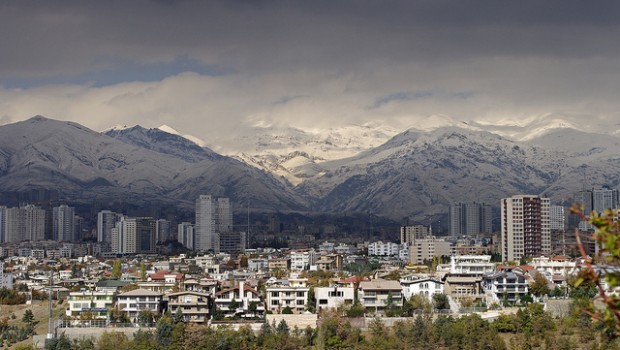

 Aletho News
