Iraq’s Islamic Resistance strikes Israel’s air base in occupied Golan with drones
Press TV – March 18, 2024
The Islamic Resistance in Iraq says it has carried out another anti-Israeli operation, targeting the regime’s air base in the occupied Golan Heights with drones.
The Islamic Resistance in Iraq, which is an umbrella group of the country’s anti-terror movements, made the announcement in a statement on its Telegram channel early Monday without naming the Israeli air base.
“The fighters of the Islamic Resistance in Iraq, at dawn today, Monday, 3/18/2024, targeted with drones an air base for the Zionist occupation’s drones in the occupied Golan,” the statement said.
It added that operations against the occupying entity will continue and double during the holy month of Ramadan in order to destroy more enemy strongholds.
The Islamic Resistance in Iraq asserted that the new strike was part of the second phase of its operations against the Israeli regime and in support of the Palestinian people in Gaza, amid the regime’s ongoing genocide across the territory.
Israel’s military aggression against Gaza has so far killed at least 31,645 Palestinians and injured 73,676 others.
The regime has also imposed a complete siege on the territory, cutting off fuel, electricity, food, medicine and water to more than two million Palestinians living there.
The new operation came almost a week after the Iraqi resistance struck Israel’s main airport in support of Palestinians in the Gaza Strip.
“The fighters of the Islamic Resistance in Iraq … targeted Ben Gurion Airport deep within the usurping entity by drone,” it said in a statement.
Earlier this month, the Iraqi resistance announced it had targeted the Haifa Airport in the northern part of the occupied territories in another pro-Palestinian operation.
The group has also staged numerous attacks against bases housing American occupation forces in Iraq and neighboring Syria in protest at the United States’ unreserved political, military, and intelligence support for the Israeli genocide in Gaza.
‘Gates of hell will open’: Iraqi resistance issues ultimatum on ouster of US forces
By Wesam Bahrani | Press TV | March 17, 2024
After weeks of strategic silence, one of the biggest units within Iraq’s Popular Mobilization Forces (PMF) has made its position emphatically clear on key national security issues.
Kata’ib Hezbollah (KH) reminded the government, the largest bloc in parliament (the Coordination Framework) as well as officials in the committee tasked with overseeing the withdrawal of foreign forces that they “should not grant immunity to the occupying forces, or else the gates of hell will open.”
By “occupying forces”, the resistance group referred to the US military, which has more than 2,500 troops deployed in bases across Iraq and thousands of others stationed at the US embassy in Baghdad.
The remarks by Abu Ali Al-Askari, the head of the KH Security Bureau, were directed at Iraqi authorities and the warning was aimed at Washington – it’s high time to pack up and run.
That’s important to highlight, as some have rightly noted, that Americans are telling the government in Baghdad one thing and telling certain other Iraqi factions something else.
More than a month ago, the Iraqi resistance suspended attacks on US bases in Iraq and Syria, which were staged in solidarity with Gaza and to expel American forces for complicity in the Gaza genocide.
The decision to halt the attacks (despite deadly US airstrikes against PMU positions and commanders) was to allow breathing space for talks between Baghdad and Washington over the US military exit.
The government is believed to have assured the Iraqi resistance factions that if talks proceed uninterrupted, there is a better chance of US forces leaving without further foot-dragging. And that the process of negotiations would be faster than the operations on US bases.
Since then, as KH states, the US occupation forces “have not changed their movements and behavior on the ground and in the sky so far” and “even their statements indicate evasion to gain time and to keep their occupying forces in the country.”
There is a simple formula (which almost all Iraqis can agree on now) over whether the US military presence is an occupation, as large segments of Iraqi society say, or is “advising and training Iraqi forces to fight Daesh (ISIS)” as Washington claims.
When the US military returned to Iraq in 2014 on the pretext of fighting Daesh, it openly declared its position as a “combat mission”, which went unnoticed at the time since the wider focus was on defeating Daesh terrorism.
After the PMU defeated Daesh in 2017 and the Iraqi parliament voted for the withdrawal of all foreign “combat” forces in early 2020, the US transitioned its mission from a “combat” role to an “advisory” role in a bid to avoid being categorized as an “occupation”.
At least that’s what it said on paper in Washington.
In practice, violating Iraqi airspace, forbidding Iraqi forces to inspect US military bases, bombing PMF positions in Baghdad or the Syrian border, or killing top Iraqi commanders is far from an “advisory” role.
That is a purely “combat” role, which makes the US military presence in the Arab country an occupation. Many, however, argue that it’s been an occupation since 2017.
What’s happening now is that the PMF has realized that something isn’t quite right.
Sources say the US is in no position to defeat the PMF, which has become a formidable democratic force, without which there would be no Iraqi government today, but the US is pressuring certain parties within the country’s political system to replace PMF commanders.
Before even speaking about “opening the gates of hell”, Abu Ali al-Askari warned that “removing leaders or replacing others must be decided by the PMF internally, and acting otherwise and at this inappropriate time would be a significant mistake.”
This is why al-Askari addressed the government and the coordination framework who are pretty much allies of the PMF and which KH essentially notes as having good intentions for national security but is advising them to be very cautious of a fifth column.
Who could that be? The PMF warns that “controversial figures should not be brought in to lead the parliament, to avoid creating division within the legislative institution,” and that “the Iraqi parliament speaker should be chosen according to previous agreements and customary practices.”
The Kurds oversee parliament procedures, as they always have done. The parliament speaker has always been a Kurd, and the method of selecting the speaker has been the same since 2003.
Are Kurdish elements trying to influence parliament or switch tactics to change the PMF leadership? The same PMF leadership that is leading the calls for an end to the US occupation? Changes to KH and the PMF that were both in part set up by late anti-terror commander and PMU deputy chief Abu Mehdi al-Muhandis (assassinated by the US) by Kurdish factions?
With Reuters citing a senior Iraqi official on “condition of anonymity” as saying that talks to end the US occupation may not conclude until after the US presidential election in November, al-Askari connected the dots.
“Our brothers in the field of gathering information should start presenting documents and confessions confirming that Erbil is a conspiratorial espionage hub that works to harm Iraq’s security and is an advance base for the Zionist entity,” he stressed.
The northern Iraqi Kurdish city is increasingly and openly being used by some Iraqi Kurds as a meeting center for Mossad agents.
In particular now with the genocide in Gaza going on, the Israelis are more fearful of the Axis of Resistance and the damage it is capable of inflicting on the illegitimate entity in Tel Aviv.
The Islamic resistance in Iraq has shown no fear. It has entered phase two of its operations involving direct attacks against vital Israeli interests and enforcing a “blockade in the Mediterranean Sea on Israeli ships”.
At this rate, the PMF, with all its factions, may enter the fray against US bases in Iraq. What the PMF and its commanders sacrificed for the Iraqi people and the state is not something that Baghdad can ignore.
The successful battles to defeat Daesh terrorism in what was the biggest security challenge that faced the country in modern history require Iraqi leaders to show some respect to the PMU leadership.
Wesam Bahrani is an Iraqi journalist and commentator.
Imperial Assisted Suicide

By John Weeks | The Libertarian Institute | March 11, 2024
The United States Imperial Government (USIG) claims to be keeping the peace, underwriting the liberal, rules-based international order and safeguarding the global security architecture. This is not true. What the USIG is actually doing is killing people, helping get lots of people killed, and assisting foreign states as they commit corporate suicide. Israel’s ongoing, “plausibly genocidal” slaughter in Gaza and the West Bank is the latest example of this.
The United States is an empire and empire is murder-suicide. Since 9/11, U.S. soldiers have directly killed more than 400,000 civilians and indirectly contributed to the deaths of more than four million civilians. Meanwhile, more soldiers who served in the U.S. government’s Global War On Terror have committed suicide than have been killed in combat. Four times more.
The American People have not escaped suffering as the USIG and its empire have dished out catastrophic devastation in Afghanistan, Somalia, Iraq, Pakistan, Egypt, Yemen, Libya, Syria, and Mali. The cost of living has exploded. Our infrastructure is in shambles. Public trust in government has collapsed. The military’s “recruitment landscape” is in free fall. And things are so bad at home the government has found a new job: attacking “tent cities” filled with “under-sheltered” people. Murder-suicide.
Then there are the vassal or “client” states. In the propaganda, the empire defends these states from…whatever. But in reality, it helps these states murder people all while creating the conditions for these states to kill themselves. This has been demonstrated recently in Afghanistan (state committed suicide), Ukraine (state is trying to commit suicide) and Israel (state is thinking about committing suicide).
In October, 2001, the USIG invaded Afghanistan and smashed the Taliban-controlled state. In its place was installed a new state with a new military, which Libertarian Institute Director Scott Horton describes:
“The new regime was also largely a coalition government of ethnic minorities, the Tajiks, Uzbeks, and Hazaras, being leveraged against the 40 percent plurality Pashtuns, dominant in the east and south of the country where the Taliban are from.”
This coalition regime could not exist without billions of U.S. dollars in its coffers, U.S. boots on the ground, and U.S. air power in the sky. As predicted by Horton, as soon as U.S. forces began their withdrawal from Afghanistan, the Afghan state (along with its military) immediately killed itself. The Taliban resurrected their state which the U.S. had smashed almost twenty years earlier.
In February 2014, the USIG backed a violent, neo-Nazi led coup in Ukraine. Instead of smashing the entire state, the coup overthrew President Viktor Yanukovych’s administration. Unlike Afghanistan’s anti-Taliban government in a box, the Ukrainian government under new management was capable of existing without a massive U.S. military presence. It was not, however, capable of winning a war with Russia. It took eight years, but the USIG managed to provoke a war with Russia.
Ukraine has been defeated but the imperial wizards in DC refuse to admit this truth and seek peace. There could have been a peace deal two years ago, when it was still fashionable for Americans to fly the Ukrainian flag outside their front doors, but the USIG crushed it. The Ukrainian state is bleeding out and continuing the war at this point puts the entire Ukrainian nation at risk. Russia could seize all of Ukraine and downgrade it from sovereign nation to a Russian aircraft carrier.
Israel has been fortunate to never have its state murdered or regime changed by the USIG. Quite the opposite; Israel has intervened in USIG affairs to a shocking extent. The Israel lobby wields massive influence in Washington DC, so much so that President Joe Biden is risking his re-election chances by refusing to stop producing Israel’s “plausibly genocidal” mass killing spree in Gaza.
This gleeful and live streamed spree of sadism has not been good for Israel. Its state is provoking the global community to view it as a deranged pariah, including the great powers of Russia and China. Even within America, the people want a ceasefire. We want it to stop.
Meanwhile, Israeli society is cracking. Approximately 200,000 Israelis have been displaced from their homes in the south and north of the country. The IDF has suffered thousands of casualties, the economy is destabilized, and fear has blanketed the land.
And now Israel is planning an invasion of southern Lebanon. Such an invasion would be a hoped for but unexpected gift to Hamas. Experts such as Col. Douglas Macgregor, Col. Lawrence Wilkerson, Lt. Col Daniel Davis, Alastair Crooke, John Mearsheimer and Robert Pape have all warned against the invasion. They have argued that Israel risks catastrophic fallout from such a move, from mass causalities to provoking a regional war and even suffering strategic defeat.
Israel supporters seem confident in its security state, despite its massive failure on October 7. Tel Aviv appears to be operating with the assurance that the U.S. military will step in with strike packages and boots on the ground if and when needed. And yes, DC will let American cities die while it views Israel as too big to fail.
But the empire is beset by incompetence and anyone who paid attention to the self-immolation of the Afghan state and the slow suicide of the Ukrainian state knows this isn’t going to end well.
Taiwan, watch your six.
Iraqi resistance launches drone strike at Israeli chemical storage sites in Haifa port
Press TV – March 3, 2024
Iraqi resistance forces have carried out a drone strike against the largest and busiest port in the Palestinian territories controlled by Israel since 1948 in a new show of solidarity with the Palestinians under Israeli attack in Gaza.
The Islamic Resistance in Iraq, an umbrella group of anti-terror fighters, in a statement published on its Telegram channel on Sunday, claimed responsibility for an aerial attack targeting chemical storage facilities inside the port of Haifa that had taken place two days earlier.
The statement noted that the attack had taken place “in rejection of US military presence in Iraq and elsewhere in the region, in support of our people in Gaza and in response to the massacre of Palestinian civilians, including children, women, and elderly people, by the usurping entity.”
The Iraqi resistance underscored that it will continue to target the occupying regime until the complete “destruction of enemy strongholds.”
Last month, Iraqi resistance forces said they had carried out a drone attack on the port of Haifa in the Israeli-occupied territories.
“In continuation of our approach to resisting the occupation and supporting our people in Gaza, our (fighters), using drones, attacked the port of Haifa in the occupied territories in Palestine,” the IRI said in a statement on the first of February.
The Islamic Resistance in Iraq has also claimed responsibility for attacks targeting US-occupied military bases in the region, including one in late January on Jordan’s border with Syria that left three US soldiers dead.
The Israeli regime waged the war on Gaza on October 7 after Hamas carried out the surprise Operation Al-Aqsa Storm against the occupying entity in response to the Israeli regime’s atrocities against the Palestinians.
Since the start of the aggression, Israel has killed at least 30,410 Palestinians, mostly women and children, according to the latest count by the Gaza Health Ministry.
The US, Israel’s traditional ally, has backed Tel Aviv’s attacks on the Palestinian territory and provided the regime with extensive military support since the onset of the war.
Washington has also used its veto power to block the United Nations Security Council’s resolutions demanding an immediate ceasefire in Gaza.
Time’s up: Threats won’t prevent US ouster from Iraq after years of occupation
By Wesam Bahrani | Press TV | February 17, 2024
All eyes in Iraq are glued to the negotiations taking place at the moment between American officials and the government of Mohammad Shia’ al-Sudani, aimed at ending the years-long military occupation.
The climate of these talks is believed to be tense. A source familiar with the latest security developments in the Arab country said the Iraqi resistance has threatened to shut down the US embassy in Baghdad, which has long been accused of acting as a US military base instead of a diplomatic mission.
This would also see all Western embassies affiliated with the US-led military coalition getting closed if the American occupation rejects popular and growing calls to withdraw from Iraq, the source noted.
The Iraqi government can also expect threats from Washington during the meetings. With the revenue of Iraqi oil sales heading to the US Treasury in a very unfair measure, Washington can threaten to impose sanctions that could weaken the Iraqi Dinar.
This sinister ploy would be aimed at downgrading the living standards of Iraqi families in a bid to turn the people against their government and the resistance. They may both (as Washington would hope) be blamed for any damage to the country’s economy, despite the US pulling the strings.
The Iraqi resistance is seeking a clear timeline from the government for the expulsion of US forces and is not willing to settle for anything less, including vague assurances of withdrawal dates.
How the resistance will execute its threat against the US embassy is unclear, but it appears that America has already decided to withdraw from the country. The only question is when and how.
Washington is aware that its military presence in Iraq is deeply unpopular. This was evident when the White House held back from ordering strikes against the resistance, which had attacked US bases in Iraq and Syria around 200 times since the genocidal Israeli war on Gaza began on October 7, 2023.
But after the recent deadly US strikes on the Iraqi-Syrian border followed by the assassination of the Iraqi military commander Abu Baqr al-Sa’adi in the capital Baghdad, all the indications suggest that nothing will return to normal for the US occupation even if the Israeli-American war on Gaza ends.
Al-Sa’adi was a highly respected commander within the Popular Mobilization Units (PMU), also known as Hashd al-Shaabi, whose factions have been integrated into the national armed forces.
The PMU’s Chief of Staff, Abu Fadek, asserted that “avenging the martyrdom of Abu Baqir al-Sa’adi is the removal of all foreign forces” and that the resistance “will not accept anything less than this.”
Abu Fadek did not go into specifics on how the US occupation will be removed; only saying the PMU will coordinate with “all relevant Iraqi parties,” including the government.
The PMU, which was established in 2014, needs the green light from the Iraqi government to wage military operations against the US occupation.
The Iraqi resistance was established in late 2003 to resist the US invasion. Many of its factions later joined the PMU in its fight against Daesh and, in turn, got involved in the country’s political system.
The resistance has also warned that the US seeks to return Daesh terrorism to Iraq should its troops leave the country for a second time, and this assertion does not look far-fetched.
It was no coincidence that when the Iraqi resistance kicked out the US occupation in late 2011, the Arab Spring turned into a terrorist Autumn that saw the US creation of Daesh (by the admission of American officials themselves), and allowed the US military to slip back into Iraq through the backdoor.
The resistance has been waging drone and missile operations on US bases in Iraq and Syria in solidarity with Gaza and to end the Israeli regime’s partner in crime, the American occupation, without government coordination.
That does not make its military measures illegitimate as it has the legal authority to resist an occupying entity. The resistance cooperates with government officials in the field of security. Deep down, the government knows it won’t be sitting in Baghdad today without the sacrifices of the resistance.
In the vast number of battles against terrorism, it has handed over many terrorists to the relevant government authorities to face trial. A large proportion of terrorists in Iraqi jails today were captured by the resistance, so the country owes its security to the resistance.
It has also acted independently during its operations against the US occupation, which have surged under the banner of the Islamic Resistance in Iraq, following the genocidal Israeli war on Gaza.
Nevertheless, the recent deadly US bombings in Iraq have violated all the rules of engagement and agreements with Baghdad and the so-called US-led military coalition could see the potential entry of the PMU in the fight against the American occupation, should it not depart after the current negotiations between Iraqi and US officials.
It won’t be surprising to see a suspension of attacks by the resistance against American bases in the lead-up to a US withdrawal from the country.
This is what happened in 2011 when Washington requested third parties to plead with the resistance for a two-month pause in attacks against US forces so that President Barack Obama could paint a picture back home that American troops are not leaving under fire.
The two leading factions of the Iraqi resistance today, Kataib Sayyed al-Shuhada (KSS) and Harakat al-Nujaba operate – like all other Iraqi resistance forces – independently of any third party, contrary to US claims that these factions receive support or orders from Iran.
The Secretary-General of KSS, Abu Ala’a al-Walai, fought the former Iraqi Ba’athist regime of Saddam Hussein, the first US occupation, and more recently Daesh terrorists and the second US occupation.
The senior Iraqi resistance official was imprisoned by Saddam’s West-backed regime for ten years and the US occupation for three years.
“We were grateful for Iran’s support toward the resistance in the past, in particular against Daesh terrorists. Today we have our own opinions and make our own decisions. These repeated questions that ‘we fight on behalf of Iran’ or ‘take orders from Iran’ have become irritating,” he said.
Iran has repeatedly stressed that these resistance movements in the region act on their own accord.
The reality is that the Iraqi resistance has gained significant experience on the battlefield and much of the credit for that goes to the late Haj Radwan (Imad Mughniyah), a senior commander with Lebanon’s Hezbollah who was assassinated by a joint Israeli-American operation in February 2008.
The experience of the Lebanese guerilla-style resistance that ended the Israeli army’s occupation of Lebanon in 2000 suited the Iraqi resistance in its operations against the US army’s first occupation of the country from 2003 until 2011.
Furthermore, in all the US airstrikes against the arms depots of the resistance, there were never any Iranian weapons, such as short-range missiles that have been hitting US bases recently, found in the caches.
The irony is that Washington itself is fully aware of this, but has repeatedly branded the Iraqi resistance as “Iranian-backed” – repeating this hollow rhetoric many times since October 7.
The Americans argue their presence in Iraq has seen a transition from a combat mission to an “advisory” role. But there is nothing “advisory” about bombing the country dozens of times and killing its soldiers.
That was evident by America’s deadly combat mission in the country.
As the Secretary-General of Harak al-Nujaba, Sheikh Akram al-Kaabi said “The end of the resistance operations depends on Gaza and the US withdrawal from Iraq.”
One of the stumbling blocks to the US withdrawal from Iraq is some Sunni and Israeli-backed Kurdish parties that have shown little desire for the end of the occupation.
This was evident during the parliament session that was held to discuss the occupation in the aftermath of the US assassination of al-Sa’adi.
Sunni and Kurdish members were notably not in attendance at the session, which passed a bill for the parliamentary defense and security committees to review the violations of the occupation.
It appears that some Kurdish parties are complicit in the destabilization of their own country by inviting the Israeli Mossad to operate from the northern regions they control.
But many factions of Iraqi society, including its people from all faiths and backgrounds, the majority of its parliament, presidency and government have publicly voiced their rejection of the US occupation and are calling for the swift withdrawal of its military.
The government meetings with the US can see this task accomplished. America pretty much knows its time in Iraq has come to an end unless it seeks a major escalation.
As Iraq approaches the 21st anniversary of the US invasion that left a lasting imprint on its security infrastructure, the journey towards self-sufficiency has been a challenging one for the country, with persistent obstacles hindering its ability to stand firmly on its own feet.
Behind all of these setbacks that Iraq has suffered is the US.
The challenges that have faced the country are multifaceted. The deadly American occupation from 2003 until 2011 was intertwined with al-Qaeda in Iraq (AQI), which saw terrorist attacks killing dozens, if not hundreds, of civilians on an almost daily basis.
Not a single market in Baghdad was spared. At one point, 24 terrorist bombings took place in one day.
This was followed by the brutal Daesh terrorism that marked another dark chapter in the country’s history and then came the second wave of a very sinister and trouble-making US occupation in 2014.
It all proves that consecutive governments were incapable of providing stability, the government of Haider al-Abadi’s agreement to allow the Americans back in 2014, was strongly opposed by the resistance and the government of al-Sudani is now regretting that decision.
Iraq stands at a crossroads, grappling with the legacies of the past while striving for a more secure and stable future. The journey ahead is undoubtedly challenging, but the strength of the resistance remains a beacon of hope.
The incumbent government has declared that the PMU and other Iraqi armed forces are capable of securing the country’s sovereignty and territorial integrity, and acknowledges that a destabilizing US occupation, which violates Iraqi skies every day, is standing in the way.
Iraq needs resistance until it is capable of providing security to its people and sovereignty for the country. Baghdad needs to purchase anti-air defense systems that can secure its skies from intruding aircraft. It needs a stronger army to secure its borders.
The PMU is doing an effective job on the Syrian border despite being bombed by the US. But all of the borders need to be protected. This will help bring security to the country and the wider region.
Wesam Bahrani is an Iraqi journalist and commentator.
The World’s Gyre
By Alastair Crooke | Strategic Culture Foundation | February 12, 2024
The U.S. is edging closer to war with Iraq’s Popular Mobilisation Forces, a state security agency composed of armed groups, some of which are close to Iran, but which for the main are Iraqi nationalists. The U.S. carried out a drone strike in Baghdad, Wednesday that killed three members of the Kataeb Hizbullah forces, including a senior commander. One of the assassinated, al-Saadi, is the most senior figure to have been assassinated in Iraq since the 2020 drone strike that killed senior Iraqi Commander al-Muhandis and Qassem Soleimani.
The target is puzzling as Kataeb more than a week ago suspended its military operations against the U.S. (at the request of the Iraqi government). The stand down was widely published. So why was this senior figure assassinated?
Tectonic twitches often are sparked by a single egregious action: the one final grain of sand which – on top of the others – triggers the slide, capsizing the sandpile. Iraqis are angry. They feel that the U.S. wantonly violates their sovereignty – showing contempt and disdain for Iraq, a once great civilisation, now brought low in the wake of U.S. wars. Swift and collective retaliation has been promised.
One act, and a gyre can begin. The Iraqi government may not be able to hold the line.
The U.S. tries to separate and compartmentalise issues: AnsarAllah’s Red Sea blockade is ‘one thing’; attacks on U.S. bases in Iraq and Syria, an unrelated ‘another’. But all know that such separateness is artificial – the ‘red’ thread woven through all these ‘issues’ is Gaza. The White House (and Israel) however, insists the connecting thread instead to be Iran.
Did the White House think this through properly, or was its latest assassination viewed as a ‘sacrifice’ to appease the ‘gods of war’ in the Beltway, clamouring to bomb Iran?
Whatever the motive, the Gyre turns. Other dynamics are running that will be fuelled by the attack.
The Cradle highlights one significant shift:
“by successfully obstructing Israeli vessels from traversing the Bab al-Mandab Strait, the Ansarallah-led Sanaa government has emerged as a powerful symbol of resistance in defence of the Palestinian people – a cause deeply popular across Yemen’s many demographics. Sanaa’s position stands in stark contrast to that of the Saudi and Emirati-backed government in Aden, which, to the horror of Yemenis, welcomed attacks by U.S. and British forces on 12 January”.
“The U.S.–UK airstrikes have prompted some heavyweight internal defections … a number of Yemeni militias previously aligned with the UAE and Saudi Arabia, consequently switched allegiance to Ansarallah … Disillusionment with the coalition will have profound political and military implications for Yemen, reshaping alliances, and casting the UAE and Saudi Arabia as national adversaries. Palestine continues to serve as a revealing litmus test throughout West Asia – and now in Yemen too – exposing those who only-rhetorically claim the mantle of justice and Arab solidarity”.
Yemen military defections – How does this matter?
Well, the Houthis and AnsarAllah have become heroes across the Islamic World. Look at social media. The Houthis are now the ‘stuff of myth’: Standing up for Palestinians whilst others don’t. A following is taking hold. AnsarAllah’s ‘heroic’ stance may lead to the ousting of western proxies, and so to dominate that ‘rest of Yemen’ they presently do not control. It seizes too, the Islamic world’s imagination (to the concern of the Arab Establishment).
In the immediate aftermath of the assassination of al-Saadi, Iraqis took to the streets of Baghdad chanting: “God is Great, America is the Great Satan”.
Do not imagine this ‘turn’ is lost on others – on the Iraqi Hashd al-Sha’abi, for example; or on the (Palestinians) of Jordan; or on the mass foot-soldiers of the Egyptian army; or indeed in the Gulf. There are 5 billion smartphones extant today. The ruling class do watch the Arabic channels, and view (nervously) social media. They worry that anger against the western flouting of international law may boil over, and they will be unable to contain it: What price the ‘Rules Order’ now since the International Court of Justice upended the notion of a moral content to western culture?
The wrongheadedness of U.S. policy is astonishing – and now has claimed the most central tenet in the ‘Biden strategy’ for resolving the crisis in Gaza. The ‘dangle’ of Saudi normalisation with Israel was viewed in the West as the pivot – around which Netanyahu would either be forced to give up on his maximalist security control from the River to the Sea mantra, or see himself pushed aside by a rival for whom the ‘normalisation bait’ held the allure of likely victory in the next Israeli elections.
Biden’s spokesperson was flagrant in this respect:
“[We] … are having discussions with Israel and Saudi Arabia … about trying to move forward with a normalization arrangement between Israel and Saudi Arabia. So those discussions are ongoing as well. We certainly received positive feedback from both sides that they’re willing to continue to have those discussions”.
The Saudi Government – possibly angry at the U.S. recourse to such deceptive language – duly kicked the plank out from beneath the Biden platform: It issued a written statement confirming unequivocally that: “there will be no diplomatic relations with Israel unless an independent Palestinian state is recognized on the 1967 borders, with East Jerusalem as its capital, and that the Israeli aggression on the Gaza Strip stops – and all Israeli occupation forces are withdraw from the Gaza Strip”. The Kingdom stands by the 2002 Arab Peace Initiative, in other words.
Of course, no Israeli could campaign on that platform in Israeli elections!
Recall how Tom Friedman set out how the ‘Biden Doctrine’ was supposed to fit together as a interlinked whole: First, through taking a “strong and resolute stand on Iran” the U.S. would signal to “our Arab and Muslim allies, that it needs to take on Iran in a more aggressive manner … that we can no longer allow Iran to try to drive us out of the region; Israel into extinction and our Arab allies into intimidation by acting through proxies — Hamas, Hezbollah, the Houthis and Shiite militias in Iraq — while Tehran blithely sits back and pays no price”.
The second strand was the Saudi dangle that would inevitably pave the path into the (third) element which was the “building of a credible legitimate Palestinian Authority as … a good neighbour to Israel …”. This “bold U.S. commitment to a Palestinian state would give us [Team Biden] legitimacy to act against Iran”, Friedman foresaw.
Let us be plain: this trifecta of policies, rather than gel into a single doctrine, are falling like dominoes. Their collapse owes to one thing: The original decision to back Israel’s use of overwhelming violence across Gaza’s civil society – ostensibly to defeat Hamas. It has turned the region and much of the World against the U.S. and Europe.
How did this happen? Because nothing changed by way of U.S. policies. It was the same old western bromides from decades ago: financial threats, bombing and violence. And the insistence on one mandatory ‘stand with Israel’ narrative (with no discussion).
The rest of the world has grown tired of it; even defiant towards it.
So to put it bluntly: Israel has now come face-to-face with the (self-destructive) inconsistency within Zionism: How to maintain special rights for Jews on territory in which there is an approximately equal number of non-Jews? The old answer has been discredited.
The Israeli Right argues that Israel then must go for broke: All or nothing. Take the risk of wider war (in which Israel, may or may not, be ‘victorious’); tell Arabs to move elsewhere; or abandon Zionism and themselves move on.
The Biden Administration, rather than help Israel look truth in the eye, has discarded the task of obliging Israel to face up to the contradictions in Zionism, in favour of restoring the broken status quo ante. Some 75 years after the founding of the Israeli state, as former Israeli negotiator, Daniel Levy, has. noted:
‘[We are back to] “the “banal debate” between the U.S. and Israel over “whether the bantustan shall be repackaged and marketed as a ‘state’”.
Could it have been different? Probably not. The reaction comes from deep in Biden’s nature.
The trifecta of U.S. failed responses paradoxically has nonetheless facilitated Israel’s slide to the Right (as evidenced by all recent polling). And has – absent a hostage deal; absent a Saudi credible ‘dangle’; or any credible path to a Palestinian State – precisely opened the path for the Netanyahu government to pursue his maximalist exit from collapsed deterrence through securing a ‘grand victory’ over the Palestinian resistance, Hizbullah, and even – he hopes – Iran.
None of these objectives can be achieved without U.S. help. Yet, where is Biden’s limit: Support for Israel in a Hizbullah war? And were it to widen, support for Israel in an Iran war too? Where is the limit?
The incongruity, coming as it does, at a moment when the West’s Ukraine Project is imploding, suggests that Biden may see himself needing some ‘grand victory’, as much as does Netanyahu.
Only 3 in 10 Americans Were Aware of US Troops in Syria Prior to Deadly Attack
By Kyle Anzalone | The Libertarian Institute | February 6, 2024
A recent poll of Americans found that only 30% were aware that US troops were deployed to Syria before three US soldiers were killed just across the border in Jordan. The results of the survey show Americans are generally unaware of the attacks against US forces in Syria and the reason for the deployment.
Defense Priorities commissioned YouGov to poll Americans from January 8-15 about the deployment of 900 US troops in Syria. Three in ten Americans responded that they were aware US troops were deployed to Syria. The three US soldiers killed at Tower 22 in Jordan were supporting the US base in southern Syria.
US troops in Iraq and Syria have come under attack over 160 times from Shia militias that operate in the region. The YouGov poll found only a quarter of Americans were aware of the attacks that left scores of US soldiers injured.
The Shia militias say they are targeting American soldiers occupying Iraq and Syria with drones, rockets, and missiles because of US support for the ongoing genocide Israel is conducting in Gaza. The poll found that a majority of Americans are concerned about a larger war breaking out in the region because of the US troops’ presence.
The outcome may be playing out. In response to the death of three members of the Georgia National Guard in Jordan, President Joe Biden ordered a massive bombing operation in Iraq and Syria. The White House will not rule out hitting targets inside Iran and has pledged future strikes.
President Biden has refused to reverse his unconditional support for Israel even as his approval rating has dipped. An NBC News poll released on Sunday found the President’s approval rating at the lowest of his term, 37%. Weighing on his approval is likely the war in Gaza. Only 29% of Americans approve of the way Biden has handled US support for the Israeli onslaught.
When You Realize You’ve Been Had
BY JOHN LEAKE | COURAGEOUS DISCOURSE | FEBRUARY 6, 2024
In Dante’s Inferno, the 9th and final circle of hell, “the lowest, blackest, and farthest from heaven,” is reserved those guilty of treachery against those in whom they have cultivated a bond of trust.
I often thought about this in 2013, when I was living in Menlo Park, California and became friends with a man of who was a benefactor of the VA hospitals in Menlo Park and in Palo Alto. He was especially concerned about young soldiers who’d suffered traumatic brain injuries in Afghanistan and Iraq.
On a few occasions we made the rounds and visited patients who’d sustained this kind of injury. The strangest were those who had retained motor skills and seemed to recognize us, but who also seemed completely indifferent to us. Some had suffered from speech impairment and seemed frightened of us. A nurse told me that it was common for this kind of patient to have developed a passionate interest in Facebook and to spend most of his waking hours scrolling through it.
In 2013, it was hard for me to fathom that hundreds of thousands of young men in the United States—many with wives and small children—had sustained Traumatic Brain Injuries. Many could still function in their day to day lives, but suffered irritability, frequent headaches, and a feeling of disconnection from their family and friends. On the extreme end of the scale were the completely disabled, doomed to spend the rest of their lives in VA hospitals.
In 2017, Lindquist, Love, et al. published Traumatic Brain Injury in Iraq and Afghanistan Veterans: New Results from a National Random Sample Study. As the opening of the report states:
Traumatic brain injury (TBI) has been called a “signature injury” of Iraq and Afghanistan Conflicts. The Defense and Veterans Brain Injury Center (DVBIC) reports nearly 350,000 incident diagnoses of TBI in the U.S. military since 2000. Among those deployed, estimated rates of probable TBI range from 11–23%.
I thought it notable that the U.S. military was, apparently, completely unprepared for roadside bombs constructed to focus the blast on particular sections of road as a convey is passing by. It wasn’t so much shrapnel and other missiles striking the head as the supersonic, explosive shockwave that does the brain damage. Click on the video below to see an example of a large roadside bomb blasting a U.S. convoy.
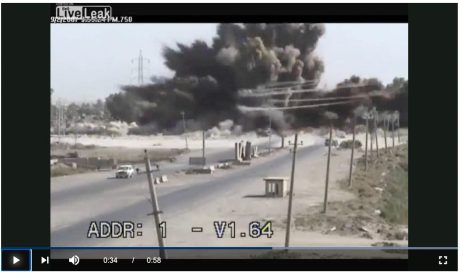
I got to be pals with a psychiatrist who worked at the VA. In public, around his colleagues, he tried to put on an optimistic face about it. In private, over our occasional dinners, he seemed very despondent that anything could be done for these guys.
“No one really knows what to do about these injuries,” he told me. “A lot of doctors who work at the VA will talk to you about promising new therapies, but most of them are more interested in getting grant money for their pet projects than in doing anything for their patients.”
I wondered how many of these young men ultimately realized that the United States government had lied to them—that their mission in Iraq had never been about protecting the American people from a hostile foreign dictator and his alleged terrorist network—but rather to pursue the mad dreams of insane old men in Washington.
This morning I thought about my VA experiences in a decade ago when I saw that the same cabal of old hawks in Washington are now beating the drums of war against Iran—a nation three times the size and with twice the population of Iraq.
I wonder if Joe Biden or Lindsay Graham or Jake Sullivan are even aware of the 350,000 men who suffered Traumatic Brain Injuries in the course of Washington’s disastrous military adventures in the Middle East twenty years ago. I sort of doubt it.
Understanding that one has been deceived is one of the most painful experiences in life. It begins with an uneasy feeling of cognitive dissonance — a sinking feeling that someone you have trusted has not been honest about an important matter. Later it dawns on you that you’ve been had. It’s a traumatic experience, and the greater the deception, the harder it is to recover from it. At root of the trauma, I suppose, is the feeling that you put your faith, heart and soul into something that wasn’t real.
Because most Americans have been insulated from the disastrous consequences of its government’s Forever War policy, they are apparently slow to recognize that they are constantly being conned by the terrible men and women who run the U.S. government—selfish, ambitious, power-hungry men and women who do not care at all about the citizenry they are supposed to represent and serve.
Kata’ib Hezbollah: Iraq strikes stem from US statesmen’s criminal mindset
Press TV – February 4, 2024
Iraqi anti-terror group Kata’ib Hezbollah has roundly denounced the latest US military airstrikes against several sites used by resistance groups in the country, stating that the attacks emanate from the US administration’s criminal mindset and its craving for more bloodshed.
“We extend our condolences to our proud and steadfast nation for the martyrdom of several compatriots, who were targeted while protecting the homeland against the evils of American forces and the Takfiri Daesh terrorist group,” it said in a statement.
It added that criminality is deeply ingrained in the mindset of American politicians, and they long for relentless bloodletting as well as starvation and massacre of ordinary people in pursuit of their interests and advancement of their malicious agendas.
“US officials do not shy away from the occupation of other countries, plundering others’ national assets, influencing their decision-making and their humiliation.
“Under the American mindset, the first solution is murder. Such an attitude has historically been responsible for the extensive destruction of the Japanese cities of Hiroshima and Nagasaki. It is now behind the deadly attacks against sites in al-Qa’im,” Kata’ib Hezbollah pointed out.
Separately, the Yemeni Ansarullah resistance movement censured the US aggression against areas in Iraq and neighboring Syria, terming them as barbaric, in breach of international law, and a serious violation of the two countries’ sovereignty.
“The aggression falls within the context of US support for the Zionist enemy as it continues its crimes against the Palestinian population of Gaza,” it added.
Ansarullah warned that US moves will drag the entire region into a more complex conflict, and will jeopardize international peace and security.
“Washington could have compelled the Tel Aviv regime to halt its aggression on Palestinians and lift the siege on Gaza. It, however, decided to target the countries and nations of the region.
“We reiterate that Muslim nations reserve the right to defend themselves and protect their security and sovereignty against repeated US acts of aggression,” the Yemeni movement underscored.
US Central Command (CENTCOM) said its military forces struck more than 85 targets in Iraq and Syria “with numerous aircraft to include long-range bombers flown from the United States”.
“The air strikes employed more than 125 precision munitions,” it added in a statement.
US President Joe Biden said in a statement on Friday that the strikes were the first in a series of actions by Washington in response to a drone attack that killed a number of soldiers at a remote US base in Jordan.
“Our response began today,” Biden said. “It will continue at times and places of our choosing,” he stated.
Three US soldiers were killed and about 40 others injured in the assault on the military base known as Tower 22 near the Jordan-Syria border on Sunday.
The Islamic Resistance in Iraq, an umbrella group of anti-terror fighters, in a statement published on its Telegram channel claimed responsibility for the drone strike.
In retaliation for the flurry of US aerial assaults on several locations in Iraq and Syria, the Islamic Resistance in Iraq announced that it had conducted missile strikes against the Ain al-Asad Airbase, housing US occupation forces in the western Iraqi province of al-Anbar.
The group also said it had staged missile and drone strikes against the strategic al-Tanf military base in southeastern Syria near the border with Jordan and Iraq, as well as the al-Khadra Village in Syria’s northeastern province of al-Hasakah.
No Iranian base or advisors targeted by US strikes in Iraq, Syria: Diplomat
Press TV | February 3, 2024
Iran’s Ambassador to Damascus Hossein Akbari says no Iranian bases or military advisors have been targeted in deadly strikes by the US occupation forces on a number of sites in Iraq and Syria.
Akbari said on Saturday that contrary to claims, the attacks aimed to destroy Syria’s civil infrastructure amid the pro-Palestine actions undertaken by the resistance front.
He said the US government’s terrorist act on Friday night was carried out mainly to make up for Israel’s defeats in the Gaza Strip and strengthening armed Takfiri terrorists based on the borders of Iraq and Syria.
The US Central Command (CENTCOM) said in a statement on Friday that its forces had struck more than 85 targets “with numerous aircraft” during overnight raids on localities in Iraq and Syria.
The Syrian state media reported that the US aggression targeted positions in Syria’s eastern province of Dayr al-Zawr and the city of al-Bukamal near the Iraqi border, falling short of providing details on the extent of damage and the exact number of casualties.
Sixteen people were killed, among them civilians, and 25 injured in the US airstrikes in Iraq, Prime Minister Mohammed Shia’ al-Sudani’s office said.
Featured Video
Iran & Its Allies Are Threatening Every Route for Saudi Oil
or go to
Aletho News Archives – Video-Images
From the Archives
A short history of British torture
ICC | December 2005
When the House of Commons was debating how much to increase the time limit for detention without trial the question of torture came up. Officially this was limited to the nice considerations of whether it was all right to send people to places where torture is used and whether Britain can use information collected by the use of torture in other countries. This discussion gave an impression of democratic Britain as the home of civilised behaviour where the very idea of torture is repugnant to our legislators – unlike, say, the US with its secret CIA jails… In reality, the British state has a long history of using and developing a whole range of torture techniques. … continue
Blog Roll
 Aletho News
- House Votes to End Iran War for Third Time
- North Korea Slams US Plan for ‘AUKUS 2.0’ with South Korea and Japan
- Prolonging US-Iran Conflict Not Meeting Interests of Int’l Community – China’s Wang Yi
- EU bans former Zelensky aide from parliament
- NATO-backed Kosovo separatist ‘responsible for war crimes’
- US destroying international space law
- SCO Calls for Binding Global Deal to Prevent Arms Race in Space
- Iran & Its Allies Are Threatening Every Route for Saudi Oil
- ‘40,000 tons of bombs’: Report shows Trump planning ‘largest bomb transfer in modern US history’ to Israel
- Amazon says cloud infrastructure in Bahrain, UAE ‘beyond saving’
- If Americans Knew
- Groups urge Americans to support Van Hollen legislation on Israel’s killing of Americans & Palestinians
- Trump administration plans to send 40,000 tons of bombs to Israel: report
- Sanctions Target Iran’s Government, But Kill Hospitalized 23-Year-Old Woman
- An alternative view on the book “Israel’s Lobby: America in the Grip of a Foreign Power”
- Ed Sheeran’s band Beoga, other opening acts quit tour after Macklemore was dropped over his pro-Palestinian comments
- The assassination attempt on President Trump in Butler and the various Israeli connections to it
- “We Want That the Whole Land Be Jewish”
- BREAKING: Building collapse in Gaza kills at least 20 as they sleep – Daily Update
- ‘School is Life’: 1.5 Million Palestinian Children Face Fourth Year of Shattered Education
- Pentagon admits Iran war caused ammunition shortages, cost US $33.4bn
- No Tricks Zone
- Economic Masterminds: German Socialists Suggest Taxing Productivity Gains Stemming From Using AI
- The South China Sea Has Not Been Cooperating With The Climate Change Narrative
- Energy Crisis: Germany Enters Heating Season With Historically Low Gas Reserve Fill Levels
- New Study: The Antarctic Ice Sheet Gained Mass From 2020-2024 Due To Staggering Snow And Ice Accumulation
- Study: Ocean Heating Rates From Thousands Of Years Ago ‘Dwarf’ Modern Ocean Heating Rates
- Climate Extremists Target, Attack Large-Scale Power Grid Infrastructure In Germany!
- New Study: Antarctic Ice Melt Has Contributed Less Than 1 Centimeter To Sea Level Rise In The Last 30 Years
- Fear Of Debate: Alarmist German Climate Scientist Calls On Mainstream Media To Discredit Skeptic Voices
- End-Of-August Arctic Sea Ice Extent Hasn’t Fallen In 20 Years, Official Data Show!
- News-Making Nepal Region Has Had As-Warm Or Warmer Periods Than The 2000s In The 1600s, 1700s, 1800s
 Aletho News