Washington sanctions 14 Iraqi banks in new anti-Iran ‘crackdown’
The Cradle | July 20, 2023
The US Treasury Department and the Federal Reserve Bank of New York have barred 14 Iraqi banks from conducting transactions in US dollars as part of a “sweeping crackdown” to stop Iran and other sanctioned nations from acquiring the greenback, the Wall Street Journal (WSJ) reported on 19 July.
US officials say the new sanctions were issued after discovering “information” showing the banks “engaged in money laundering and fraudulent transactions, some of which may have involved sanctioned individuals and raised concerns that Iran could benefit.”
“We have strong reason to suspect that at least some of these laundered funds could end up going to benefit either designated individuals or individuals who could be designated,” a senior US official told the WSJ.
The banks targeted by the punitive measures are small institutions reportedly “heavily involved” in US dollar transactions.
According to Iraq’s Shafaq News, the targeted banks include the Islamic Advisor for Investment and Finance, the Islamic Qartas for Investment and Finance, Al Mustashar Islamic Bank, Elaf Bank, Erbil Bank, the International Islamic Bank, Trans-Iraq Bank, Mosul Bank, Al-Rajeh Bank, Sumer Commercial Bank, Trust International Islamic Bank, the World Islamic Bank, and Zain Iraq Islamic Bank.
The sanctions came only one day after the US State Department issued a new 120-day sanctions waiver to allow Baghdad to deposit payments for Iranian natural gas into non-Iraqi banks in response to criticism that the White House is responsible for recent power cuts at the height of Iraq’s blistering hot summer.
Since 2003, all Iraqi oil revenues have been paid into an account with the US Federal Reserve. Although Iraqis formed a sovereign government after the US invasion and occupation of their state, Iraq is still restricted from opening accounts for its oil earnings outside the US.
Given its dominance of the global financial system, Washington can control all funds of Iraq’s Central Bank through threats or sanctions, even though these funds are not deposited exclusively in US banks. Furthermore, Iraq’s oil funds, which in 2022 amounted to more than $90 billion, remain in one single account in New York Fed – the institution that two years ago unilaterally blocked Afghanistan from accessing its foreign reserves, plunging the nation into an unparalleled crisis.
Last November, the US Treasury cut off four Iraqi banks from access to dollars and imposed tight controls on wire transfers, sending the economy reeling.
To negate the effect of these unilateral measures, Baghdad has been looking to move trade away from the greenback and, in May, banned the use of the US dollar for both personal and business transactions.
Earlier this month, the commercial advisor to the Iranian embassy in Iraq, Abd al-Amir Rabihawi, revealed that Baghdad proposed that the two nations switch trade payments to the Iraqi dinar to combat US economic coercion.
Elizabeth Tsurkov Was Up To No Good When She Went Missing In Iraq
BY ANDREW KORYBKO | JULY 10, 2023
It was just reported that US-based Russian-Israeli academic Elizabeth Tsurkov went missing in Iraq, where she was conducting fieldwork as part of her research at Princeton. She reportedly arrived in the country on her Russian passport since Iraq doesn’t allow Israeli citizens to enter. Iran is accused of organizing her kidnapping via its local allies, which one outlet speculated was to set up a high-profile prisoner exchange for an IRGC operative who Israel claimed last month was captured inside the Islamic Republic itself.
The Mainstream Media is portraying Tsurkov as an innocent victim after an unnamed senior Israeli official denied that she’s a member of Mossad like some had begun to suspect. Regardless of whatever her ties with that country’s intelligence agency may or may not be, she was up to no good when she went missing in Iraq. From the perspective of local patriotic groups, it would have been legitimate to detain Tsurkov for the five reasons that will now be explained.
For starters, she should never have entered a country that prohibits entry to Israeli citizens like herself. By arriving in Iraqi on her Russian passport, she deliberately deceived the authorities. Once this was discovered, it immediately put her and everyone who she’d hitherto come into contact with there under suspicion of being spies. She therefore behaved highly irresponsibly, which is unbecoming of an Ivy League researcher like she presents herself as and thus casts further doubt on her credibility.
The second point is that the very nature of her work makes her suspicious. According to the New Lines Institute for Strategy and Policy where she’s a Non-Resident Fellow, “Her research is based on a large network of contacts – ordinary civilians, activists, combatants and communal, political and military leaders – which she has established across the Middle East and particularly in Syria, Iraq and Israel-Palestine.” The Iraqi counterintelligence service therefore had grounds to be concerned by her activity.
Third, she was clandestinely cultivating her vast regional network with sources whose countries prohibit their people from having any ties with her country or its nationals. She as an Israeli would have certainly known this, which means that she purposely put these people at risk for reasons that only she herself can account for. Researchers are supposed to operate according to a code of ethics whereby they never do anything that could bring harm to their subjects, though Tsurkov did precisely the opposite.
The fourth point is that she was conscious of her work advancing Israeli interests, whether the way she subjectively understands them as being or per speculative orders from suspected handlers, as evidenced by the fact that her Twitter handle @Elizrael explicitly references that country. She has the right to publicly self-identify with any country and thus be associated with it by others, especially if she’s its national, but this just goes to show that she knew that everything she was doing put her sources at risk.
And finally, local patriotic groups might not have trusted their corrupt country’s security services to properly deal with the counterintelligence threat posed by Tsurkov upon discovering her ties to Israel and the suspicious nature of her work, which is why they might have acted unilaterally as vigilantes. No value judgement is being made either way about the scenario in which such groups might have been responsible for her disappearance, but just to point out why they might have acted outside legal bounds.
Tsurkov should have known better than to visit Iraq seeing as how it’s illegal for Israeli citizens to do so, yet she still went anyway in order to expand her network of sources there on the pretext of conducting fieldwork as part of her research at Princeton and deceptively entered on her Russian passport. Even if she had nothing to do with Israel, her work would have still placed her on the radar of regional counterintelligence services, who investigate foreign-connected networks inside their countries.
Nobody who’s truly up to any good would ever enter a country where they’re legally prohibited from visiting by using another passport, let alone to clandestinely expand their network of sources there. She knowingly misled the authorities and then put her contacts at risk by meeting with them in person afterwards. Even worse, she did all this while publicly self-identifying on social media with the same country that they’re legally prohibited from having any ties.
One can still support Tsurkov and remain convinced that she’s supposedly an innocent victim exactly as the Mainstream Media claims, but it’s dishonest to deny that she behaved highly irresponsibly at great risk to herself and her sources inside Iraq, which contradicted expectations of an Ivy League researcher. For that reason, there are indeed plausible reasons to suspect her of conducting espionage under that cover, though whether or not she should have reportedly been detained remains a matter of debate.
The Middle East and US Terrorist Activities
By Viktor Mikhin – New Eastern Outlook – 08.06.2023
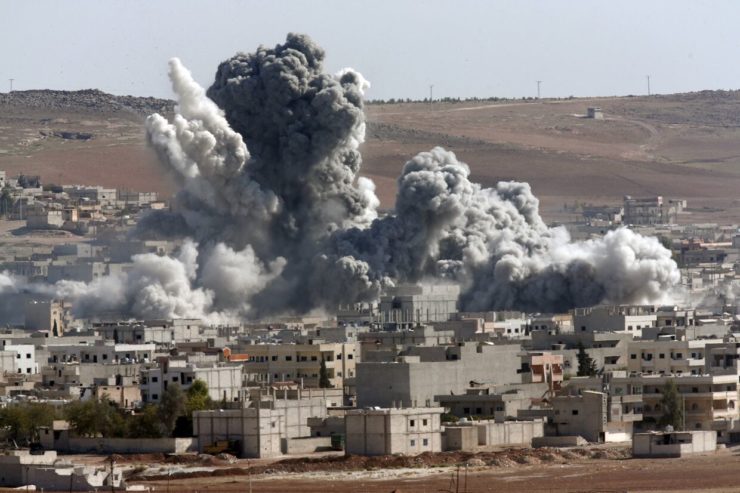
Incredibly high civilian casualty rates from American-led military adventurism in Afghanistan, Iraq, Pakistan, Syria, Yemen, Libya, and Somalia have been revealed in a new research by Brown University’s The Cost of War Project in the State of Rhode Island. The report provides direct data on the victims of the war in which nearly a million people were killed by the US efforts.
According to the study, another important aspect that has indirectly killed several million more people is the military destruction of the economy, public services, infrastructure and the environment, which increases the death toll long after the bombs have been dropped and increases over time. The report estimates that these factors contributed to more than 3.5 million deaths. This aspect requires more research, and the project specifically emphasizes that “the many long-term and underestimated consequences of war” need to be explored in more detail.
Another study shows that the number of direct casualties from wars that killed nearly a million people is an understatement, which the report again refers to by saying that “the exact death toll remains unknown.” In another section of the project’s report on the Iraqi death toll, it says that “estimates of the Iraqi war death toll have been particularly inconsistent. The Lancet 2006 estimated that approximately 600,000 Iraqis died as a result of military violence between 2003 and 2006.” The report goes on to say that the controversy over conflicting reports about the death toll in Iraq stems from news reports estimates, with some exaggerating the death toll while those who supported the illegal invasion downplayed the death toll.
The project cites a report in The Lancet that says the death toll in Iraq since 2003 and in the next three years alone reached 600,000 Iraqis. Various unbiased studies have been conducted, concluding that more than one million Iraqis were killed as a result of the US invasion and occupation of Iraq from 2003 to 2011.
Even the one million mark in Iraqi deaths could be considered an understatement when there were daily reports of almost daily terrorist bombings that killed hundreds of Iraqis. And then, add to that the US and DAESH era from 2014 to 2017, when hundreds of thousands more people were killed, and it’s not hard to imagine that over a million Iraqis have died and continue to die today as a result of the US so-called “war on terror.”
There is no doubt that the US military presence has brought nothing but insecurity and instability to West Asia. In January 2018, Leader of the Islamic Revolution in Iran, Ayatollah Sayyid Ali Khamenei said: “What is important is that the corruptive presence of the US in this region must end… They (Americans) have brought war, discord, sedition and destruction to this region; they brought about destruction of infrastructures. Of course, they do this everywhere in the world… It must be stopped.”
The Cost of War Project’s latest study also warns that “these wars continue to affect millions of people around the world, who live with their consequences and die from them.” The report focuses on the impact of the wars unleashed by the United States on women and children, who “bear the brunt of these ongoing consequences.”
The report notes that while some people have died in combat, many more, especially children, have died as a result of the negative effects of wars, such as the spread of disease and damage to public services. “More research is needed on the impact of the destruction of public services by war, especially outside the health care system, on public health,” the report says. “Damage to water and sanitation systems, roads and commercial infrastructure such as ports, for example, has significant and important negative consequences.”
The study says that the wars and conflicts the United States has fought or been involved in under the pretext of supposedly fighting terrorism since September 11, 2001, clearly show that the consequences of the ongoing violence of war are so vast and complex that they cannot be measured. It should be noted that after the 9/11 attacks, the US waged wars and fomented conflicts, especially in West Asia, under the pretext of fighting terrorism. However, as a result of US military adventurism, there has been an extremely dramatic increase in terrorist groups that had no presence in West Asia or countries such as Somalia prior to Washington’s military intervention in the region.
In other words, the so-called “war on terror” has had the opposite effect from the stated goal of Pentagon’s campaign of instability in West Asia, which has allowed terrorism to flourish. In other words, and many experts agree, the presence of US troops and US policies in the Middle East and other parts of the world have only led to the direct growth of terrorism and terrorist organizations that have destabilized peace and tranquility in those parts of the world.
The report states that the damage and continued deaths caused by the wars mean that those who have unleashed them must take responsibility, including financial responsibility for repairing the damage caused. Suffice it to recall how the American clown of a Secretary of State Colin Powell shook some test tube of incomprehensible white powder on the UN podium and hysterically frightened the whole world with unthinkable troubles from Saddam Hussein. And that was the reason for the barbaric and unjustifiable attack on sovereign Iraq in 2003, from which the Iraqis are still unable to recover and rebuild their state.
Iraqis, and indeed millions of other people, still suffer from distress, pain and trauma in both current and former war zones, according to the study, which calls on the United States as well as its allies to ease the continuing loss and suffering of millions and provide the required “reparations, though not easy, and cheap.” It is something “imperative,” the report notes.
The project correctly and very justifiably blames the US for its role in the military adventurism it embarked on after 9/11, particularly the casualties inflicted during the American two-year war and the 20 year of occupation of Afghanistan. The report focuses on Afghanistan as an example of how people, particularly women and children, the most vulnerable in society, are dying because, despite the indiscriminate withdrawal (or rather shameful flight) of US troops, the damage Washington has done to Afghanistan’s vital services, such as its health sector, sanitation and other infrastructure over 20 years of war and occupation, means that Afghans are still dying today. “Although the United States withdrew military forces from Afghanistan in 2021, officially ending the war that began with its invasion 20 years ago, Afghans are suffering and dying from war-related causes today more often than ever,” the report notes alarmingly.
The Cost of War Project says that much more research is needed to gather more adequate data “to guide life-saving actions.” “More research is needed on the impact of the destruction of public services by war, especially outside the health care system, on public health,” the report notes. “Damage to water and sanitation systems, roads and commercial infrastructure such as ports, for example, has significant consequences.”
In the case of Somalia, for example, the US intervention and the ensuing war prevented the delivery of humanitarian aid, which, according to the study, exacerbated the famine. This is a natural disaster that could have been mitigated if the US had instead chosen to spend a huge amount of money on humanitarian aid programs instead of radicalizing the local population (and increasing terrorism and bloodshed) by bombing civilians with drones. The section of the report reads: “While all belligerents must be held accountable, in the causation sections this report addresses the relevant consequences of the actions of the United States, as the primary power responsible for all these crimes.”
Critics argue that if the United States had not fought wars against West Asian countries or provoked conflicts in the region, other parties would not have participated in any combat missions. In this case, the US should be solely responsible for the disturbing direct and indirect death toll resulting from its provocative and illegal military measures. Washington’s policy of intimidation, military adventurism and terrorism against peace-loving nations of the world must end. And this is the will and aspiration of peoples who want to live in peace and prosperity, without wars and aggressions, and to follow the path of building a new multipolar world, actively promoted by Russian President Vladimir Putin.
Iran, Regional States to Form Naval Coalition Soon: Navy Commander
Al-Manar – June 3, 2023
Iranian Navy Commander Rear Admiral Shahram Irani announced that Iran’s navy and the countries of the region including Saudi Arabia, UAE, Qatar, Bahrain and Iraq will form a new naval coalition soon.
Irani in a televised program on Friday night announced the formation of new regional and extra-regional coalitions, saying that today, the countries of the region have realized that the security of the region can be established through synergy and cooperation of the regional states.
Referring to the holding of annual exercises of the naval coalition of Iran, Russia and China, he said that the regional coalition is also forming.
Almost all the countries of the North Indian Ocean region have come to the understanding that they should stand by the Islamic Republic of Iran and jointly establish security with significant synergy, he said, adding that Oman, Saudi Arabia, UAE, Qatar, Bahrain, Iraq, Pakistan and India are among these countries.
Earlier, a Qatari website reported that Iran, Saudi Arabia, the United Arab Emirates, and Oman are to form a joint naval force under China’s auspices towards enhancing maritime security in the Persian Gulf.
Al-Jadid carried the report on Friday, saying China had already begun mediating negotiations among Tehran, Riyadh, and Abu Dhabi aimed at reinforcing maritime navigation’s safety in the strategic body of water.
Since the 1979 victory of Iran’s Islamic Revolution, the Islamic Republic has invariably opposed foreign meddling and presence in the region, asserting that the regional issues have to be addressed by the regional players themselves.
Iraq unveils $17bn infrastructure project linking West Asia to Europe
The Cradle | May 27, 2023
Iraqi Prime Minister Mohamed Shia al-Sudani on 27 May unveiled a $17 billion infrastructure project to link West Asia and Europe and make Iraq a regional transportation hub.
Once finished, the “Route of Development” project would run the length of the nation, reaching 1,200 kilometers from Turkiye’s northern border to the Persian Gulf in the south.
The project was announced by Sudani during a meeting with transport ministry representatives from Iran, Jordan, Kuwait, Oman, Qatar, Saudi Arabia, Syria, Turkiye, and the UAE.
“We see this project as a pillar of a sustainable non-oil economy, a link that serves Iraq’s neighbors and the region, and a contribution to economic integration efforts,” he said.
While more negotiations are needed, the Iraqi parliament’s transport committee stated that any country that desires “will be able to carry out part of the project,” adding that the project may be finished in “three to five years.”
“The Route of Development will boost interdependence between the countries of the region,” Turkiye’s ambassador to Baghdad, Ali Riza Guney, said, without specifying what role his country will play in the initiative.
Sudani has prioritized the repair of the country’s road network as well as the upgrade of its aging energy infrastructure.
On 25 May, Iraq’s Oil Minister Hayan Abdel-Ghani announced that Saudi Aramco is seeking to invest in Iraq’s Crutch gas field and expand its capacity to 400 million cubic feet.
Additionally, in February, the Iraqi government signed an agreement with the UAE firm Crescent Petroleum to develop two gas fields in northeastern Diyala governorate to supply local power plants.
The UAE’s private upstream oil and gas company disclosed that the Gilabat-Qumar and Khashim gas fields are expected to produce seven million cubic meters within an 18-month span.
In recent months, Baghdad has bolstered its efforts to increase its relations with Gulf states. On 19 February, Iraq and Saudi Arabia signed a Memorandum of Understanding (MoU) to share sensitive intelligence and deepen security cooperation, marking the first time the two nations have signed a security pact since 1983.
Railway of Resistance: A grand project to connect Iran, Iraq, Syria
By Mohamad Hasan Sweidan | The Cradle | May 19 2023
Sir Halford John Mackinder, one of Britain’s most prominent theorists in the field of geopolitics, discusses the significance of land connectivity between nations in his 1904 essay called The Geographical Pivot of History.
Besides introducing his notable Heartland Theory, Mackinder argued that advancements in transportation technology, such as the development of railways, have altered the balance of power in international politics by enabling a powerful state or group of states to expand its influence along transport routes.
The establishment of blocs, like the EU or BRICS, for instance, aims to enhance communication between member states. This objective has positive implications for the economy and helps reduce the risk of tensions among them.
The cost of such tensions has increased considerably, given the growing benefits and common interests achieved through strengthened ties between nations. Consequently, reinforcing connections within a specific region has a positive impact on the entire area.
Therefore, any infrastructure project between countries cannot be viewed solely from an economic standpoint; its geopolitical effects must also be highlighted.
West Asia connected by railway
In July 2018, Saeed Rasouli, head of the Islamic Republic of Iran Railways (RAI), announced the country’s intention to construct a railway line connecting the Persian Gulf to the Mediterranean Sea, the Iran-Iraq-Syria railway link. This ambitious project would run from Basra in southern Iraq to Albu Kamal on the Iraqi-Syrian border and then extend to Deir Ezzor in northeastern Syria.
Undoubtedly, this project strengthens communication between the countries of West Asia and increases the need for other powers to collaborate with this important region, which is strategically located in parts of Mackinder’s “Heartland” and Nicholas Spykman’s “Rimland” of Eurasia.
Moreover, in accordance with Mackinder’s proposition, it can be argued that this railway project holds geopolitical significance for the three involved countries – Iran, Iraq, and Syria – and for West Asia as a whole.
The concept of a railway link between Iran and Iraq emerged over a decade ago. In 2011, Iran completed the 17-kilometer Khorramshahr-Shalamjah railway, which aimed to connect Iran’s railways to the city of Basra. Subsequently, in 2014, a memorandum of understanding (MoU) was signed between Tehran and Baghdad to construct the Shalamjah-Basra line.
As per the agreement, Iran was responsible for designing and building a bridge over the Arvand River, while the Iraqi side pledged to construct a 32-kilometer railway line from the Shalamjah border to the Basra railway station within Iraqi territory.
Final destination: Syria
On 14 August, 2018, Iran announced its intention to further extend the railway from its territory to Syria, with Iraq’s participation. This move aimed to counter western sanctions and enhance economic cooperation.
The railway project would begin at the Imam Khomeini port on the Persian Gulf, located in Iran’s southwestern Khuzestan province, to the Shalamjah crossing on the Iraqi border. From there, the railway traverses through the Iraqi province of Basra, crossing Albu Kamal on the Syrian border and ending at the Mediterranean port of Latakia.
Iranian official sources stated that this railway would contribute to Syria’s reconstruction efforts, bolster the transport sector, and facilitate religious tourism between Iran, Iraq, and Syria. Iran would bear the costs of the project within its own territory, while Iraq would contribute its share up to the Syrian border.
During the visit of former Iranian President Hassan Rouhani to Iraq in March 2019, a memorandum of understanding on the project was signed between Tehran and Baghdad. However, despite the agreements, the Iraqi side has faced economic challenges and a lack of funds, resulting in a delay in the construction of the railway.

Proposed railway links between Iran, Iraq, and Syria
Three Sections
The railway project can be divided into three sections: The first section links the Imam Khomeini Port to the Shalamjah crossing on the Iraqi border. According to the Iranian Minister of Roads and Urban Development Mehrdad Bazrpash, the railway line in Iran has been completed and has reached the zero border point.
The second section will link the Shalamjah Crossing to Basra in southern Iraq, then extend to Baghdad, Anbar province, and finally, the Syrian border. The financing of this section, according to the agreement, falls under the responsibility of the Iraqi government. The commencement of this phase is expected soon.
The third section, within Syria, encompasses two routes: The northern route extends between Iraq’s al-Qaim and Syria’s Albu Kamal, then heads west towards the Syrian port of Latakia. The southern route runs from the al-Qaim crossing on the Iraqi-Syrian border to Damascus via Homs.
It should be noted that although the shortest route to Damascus is through al-Tanf, due to the presence of the illegal US occupation forces there, the longer Homs-Damascus corridor was adopted. This also ensures the passage of railways through a greater number of Syrian cities.
Economic significance
Although the rail line between Iran and Iraq will only span 32 km and cost approximately $120 million, divided equally, its significance extends far beyond its length. It will serve as the sole railway connection between the two countries and play a crucial role in improving communication throughout the wider region by linking China’s Belt and Road Initative (BRI) lines to Iraq via Iran.
Once completed, the project will enable Iraq to easily connect to Iran’s extensive railway network, which extends to Iran’s eastern border. This linkage will open pathways for Baghdad to connect with Afghanistan, Pakistan, China, the Caucasus, Central Asia, and the Far East.
Moreover, in the future, the project positions Iraq as a transit route for trade between the Arab countries of the Persian Gulf region and Central Asia, as well as Russia. Incidentally, Iran and Russia have just inked an agreement to establish a railway connecting the Iranian cities of Astara with Rasht, as part of the International North–South Transport Corridor (INSTC).
The railway line also contributes to the promotion of religious tourism among the three countries, which are home to several important Shia shrines. In September 2022, more than 21 million people from around the world, including 3 million Iranians, visited Iraq for the annual Arbaeen pilgrimage in the holy city of Karbala. This figure is likely to increase significantly with a rail link, leading to increased revenues for the Iraqi treasury.
Furthermore, the project serves as a means to bypass western sanctions and external pressures on the three countries, particularly Iran and Syria. It strengthens the independence of these nations and reduces the likelihood of foreign powers interfering in the economic relations of the project countries.
Obstacles to project implementation
Despite the signed agreements, the Tehran-Baghdad-Damascus railway project has faced mixed reactions in Iraq, leading to a lack of enthusiasm for moving forward with the rail link. Only last month, the Ministry of Transport issued a clarification regarding its rail link with Iran, stressing that the project is related to “passenger transportation only.”
Iraqi politicians have expressed concerns that the rail link with Iran could hinder their country’s Dry Canal project, which aims to connect the port of Faw in Basra province to the Turkish and Syrian borders.
They believe that the Grand Faw Port is strategically positioned as the closest point for sea cargo to Europe, potentially bringing economic benefits and employment opportunities. These concerns arise from the fear that the Imam Khomeini port in Iran could gain increased importance, diminishing the significance of the Faw Port.
But Iraqi concerns actually present an opportunity to link Iran to the Dry Canal, enhancing the strategic importance of both projects and bolstering Iraq’s position as a regional trading hub. In the near future, communication and cooperation between these neighbors will be crucial in thwarting external efforts to impede the economic interdependence of the three countries.
A promising journey
The tripartite railway link project holds immense significance as it connects these countries within a larger network, resembling the historical Silk Road that facilitated trade between the east and the west for centuries.
The railway project has the ability to initiate a major transformation in West Asia if it materializes and expands further afield to countries like Saudi Arabia, Jordan, and Lebanon.
Their participation would not only reduce tensions among regional states but also yield positive economic outcomes and bolster tourism, particularly religious tourism, and foster stronger inter-regional ties.
By connecting key players in a geopolitically strategic region, the Tehran-Baghdad-Damascus rail link has the potential to lay the foundation for a new West Asian paradigm that promotes connectivity, stability, and prosperity.
As seen by the recent Iran-Saudi and Syria-Saudi rapprochement agreements, the region is in a collaborative mood, actively seeking economic development instead of conflict. With China and Russia – two powers at the forefront of Eurasia’s biggest interconnectivity projects (BRI and INSTC) – brokering and impacting many of these diplomatic initiatives, expect railways, roads, and waterways to begin linking countries that have been at odds for decades.
Up to 4.5 Million Dead in ‘Post-9/11 War Zones’ – Study
By Will Porter | The Libertarian Institute | May 16, 2023
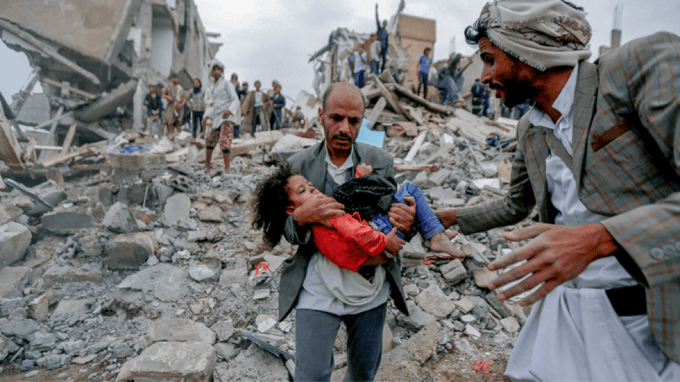
The far-reaching effects of America’s War on Terror may have contributed to the deaths of some 4.5 million people, according to new research by Brown University’s ‘Costs of War’ project. While many of the fatalities were the direct result of violent conflict, indirect causes such as economic collapse and food insecurity have taken a far greater toll.
Published on Monday, the study examines the long-term impact of the “post-9/11 wars” and the “devastating indirect toll” inflicted in Afghanistan, Iraq, Pakistan, Syria, Yemen, Libya and Somalia – all nations subject to US military intervention since 2001.
“Some of these people were killed in the fighting, but far more, especially children, have been killed by the reverberating effects of war, such as the spread of disease,” the paper said. “These latter indirect deaths – estimated at 3.6-3.7 million – and related health problems have resulted from the post-9/11 wars’ destruction of economies, public services, and the environment.”
Though the researchers acknowledged that the true total figure remains unknown, the study reviews a wide range of factors contributing to mortality. Those include economic collapse and the resulting loss of livelihood for local residents, the destruction of health infrastructure and public services, environmental contamination, as well as other cultural effects of war that can lead to further violence down the line.
“While this research does not ascribe blame to any single warring party or factor, and neither does it suggest the full death count is quantifiable, a reasonable and conservative estimate suggests that at least 4.5 million people have died in the major post-9/11 war zones,” the study concluded.
It went on to stress that “body counts are complicated and controversial,” and that tallying deaths from indirect causes is even more difficult, suggesting its figures are merely a tentative estimate based on a variety of sources.
The researchers found staggering levels of child malnutrition in some of the affected countries, with Afghanistan and Yemen topping the list. In the wake of Washington’s two-decade military occupation, more than 3 million Afghan children are now experiencing wasting, a symptom of severe, potentially life-threatening malnutrition.
Last year, Doctors Without Borders warned of a “worrying increase” in Afghanistan’s malnutrition rates, citing “the suspension of international aid” as among the primary causes. A special representative for the United Nations, Dr. Ramiz Alakbarov, described the situation as “almost inconceivable,” adding that up to 95 percent of Afghans were “not eating enough food, with that percentage rising to almost 100 percent for female-headed households.”
UN emergency aid coordinator Martin Griffiths has also attributed the crisis in Afghanistan, in part, to international sanctions and the seizure of government bank accounts following the Taliban’s sudden rise to power in the summer of 2021.
The study found that more than 2 million children in Yemen were also suffering from wasting following eight years of brutal bombings by Saudi Arabia and its allies, which have all but crippled the country’s healthcare sector. Riyadh has received indispensable support from the United States throughout the conflict despite countless reports of attacks on civilians and infrastructure, including hospitals, clinics, homes, factories, farms and bridges. A UN estimate in late 2021 suggested some 377,000 people had been killed in Yemen since the war erupted in 2015, with 70 percent thought to be children under the age of 5.
The Costs of War authors said the study aimed to “convey the scale of the suffering” in the war-torn nations, stating the “urgent need to mitigate the damage” inflicted by US military interventions and their long-term and indirect consequences. They added that additional research is needed on the subject, voicing hopes such work could “prevent further loss of life,” as America’s post-9/11 wars “are ongoing for millions around the world who are living with and dying from their effects.”
Featured Video

Chinese jet fuel and the myth of energy independence
or go to
Aletho News Archives – Video-Images
Book Review
Former Insiders Criticize Iran Policy as U.S. Hegemony
By GARETH PORTER | CounterPunch | February 27, 2013
“Going to Tehran” arguably represents the most important work on the subject of U.S.-Iran relations to be published thus far.
Flynt Leverett and Hillary Mann Leverett tackle not only U.S. policy toward Iran but the broader context of Middle East policy with a systematic analytical perspective informed by personal experience, as well as very extensive documentation.
More importantly, however, their exposé required a degree of courage that may be unparalleled in the writing of former U.S. national security officials about issues on which they worked. They have chosen not just to criticise U.S. policy toward Iran but to analyse that policy as a problem of U.S. hegemony. … continue
Blog Roll
 Aletho News
- What is fueling unrest across the EU?
- Why no power can undermine Iran’s eternal dominance over the Strait of Hormuz
- Is The War Against Iran Over?
- Iran war will leave long-term ‘scar’ on Wall Street, investors warn
- How Iran decimated US power projection in West Asia: Military lessons of 40-day war
- Iran’s report details US-Israeli war crimes in targeting schools, hospitals, livelihoods
- NATO’s Slow Fracture: How Trump’s Iran War Exposed the Instrument of Hegemony
- Chinese jet fuel and the myth of energy independence
- Ukraine Sea Drone Fired From Libya Hit Russian Tanker in Mediterranean
- IRGC: Iranian forces launched no attacks during ceasefire hours
- If Americans Knew
- DNC Shoots Down Resolutions Calling Out AIPAC and Limiting Arms to Israel
- TCN: Is Israel Blackmailing President Trump?
- Israel killed at least 303 Lebanese yesterday – who were they? Daily Update
- Amnesty: Urgent – Protect Lebanese civilians from brutal escalation in Israeli attacks
- Is The War Against Iran Over?
- Inside the Israeli army’s propaganda wing
- Hundreds of Gaza Amputees Stranded in Legal Limbo
- The gallows law: Israel moves toward executing Palestinian children
- Tucker Carlson: The Path to Peace requires ending ‘special alliance’ with Israel
- This is ceasefire? Israel’s biggest massacre yet in Lebanon, another journalist killed in Gaza – Daily Update
- No Tricks Zone
- An Inconvenient Tree: Uncovered In Alps… Europe Much Warmer Than Today 6000 Years Ago
- New Study Reports A 60% Slowdown In Greenland’s Ice Loss Rate In The Last Decade
- Low Intensity Tornado Wrecks Major Solar Farm, Creating A Potential Toxic Dump
- New Study Finds Warming Saves Lives…Cold Temperatures 12 Times More Deadly Than Excess Heat
- German Science Blog Accuses PIK Climate Institute Of Hallucinating Climate Tipping Points
- Devastating Assessment Of Comirnaty Vaccine By Former Senior Pfizer Europe Toxicologist
- New Study: CO2 Is ‘Effectively Negligible’ As An Explanatory Climate Change Factor Since 2000
- Former Pfizer Toxicologist Dr. Helmut Sterz Tells Bundestag Hearing Pfizer Vaccine Should Have Never Been Approved
- Energy Expert: Germany’s Nuclear Phaseout Was A “500 Billion Euro Mistake”
- New Research: South Australia’s Mid-Holocene Sea Surface Temperatures Were 4°C Warmer Than Today
 Aletho News