Raqqa: A hellhole created by the regime-changers of the West

© Morukc Umnaber / Global Look Press
By Neil Clark | RT | September 2, 2017
As Jan Egeland, the UN humanitarian adviser on Syria, has stated, if there’s a worse place to be in the world at the moment than the Syrian city of Raqqa, then it’s hard to imagine.
This week, the UN estimated that the battle to capture the de facto ISIS capital is costing the lives of 27 civilians a day.
It’s not just the almost non-stop aerial bombardment and shelling from the mainly Kurdish Syrian Democratic Forces that the 25,000 or so citizens in ISIS-held parts of the city have to endure. “Access to safe drinking water, food and other basic services is at an all-time low with many residents relying on food they had stored up earlier to survive,” says UN public information officer David Swanson.
Both ISIS snipers and the US-led coalition have been targeting people trying to flee from the Middle Eastern hellhole. The UN notes that coalition forces have even been attacking boats on the Euphrates River, described as “one of the remaining escape routes for civilians.”
We can only imagine the headlines if Russia was doing all this. But because it’s the US and its allies, the international reaction has been muted to say the least. It’s revealing to compare the “humanitarian” concern voiced by pro-war Western politicians and mainstream media outlets when Russia began its military operations in Syria in September 2015, with the lack of concern over what’s been happening in Raqqa.
The claim that Russia was fighting terrorists was widely ridiculed. The US and its allies issued a statement saying that Russia’s actions, which included a strike on a ISIS training camp near Raqqa, would “only fuel more extremism and radicalization.”
On October 2, 2015, the claim made by then-US President Barack Obama that Russian strikes would only “strengthen ISIS” made Western news headlines.
Accusations that Russia was committing war crimes also received prominent coverage.
But when the US-led coalition bombs ISIS, the reporting from mainstream outlets is different. Then, the operation is presented much more positively, with little or no talk about how it will “strengthen” the enemy or “fuel more extremism and radicalization.” There is also little or no talk of war crimes.
A meticulously-researched Alert from Media Lens earlier this summer compared the coverage of the sieges of Aleppo and Mosul.
“When Russian and Syrian forces were bombarding ‘rebel’-held East Aleppo last year, newspapers and television screens were full of anguished reporting about the plight of civilians killed, injured, trapped, traumatised or desperately fleeing…
By contrast, there was little of this evident in media coverage as the Iraqi city of Mosul, with a population of around one million, was being pulverised by the US-led ‘coalition’ from 2015; particularly since the massive assault launched last October to ‘liberate’ the city from ISIS, with ‘victory’ declared a few days ago.”
As I noted here in an earlier Op Edge, it was deemed a ‘Thought Crime’ by Imperial Truth Enforcers to actually refer to the recapture of eastern Aleppo by Syrian government forces as a ‘liberation.’ Pro-war Labour MP John Woodcock even went so far as to call the left-wing Morning Star newspaper “traitorous scum” for daring to defy the gatekeepers and use the ‘L’ word.
But of course, if it’s the US and its allies doing the bombing, then using the word ’liberation’ is de rigueur, regardless of how much death and destruction the ‘liberation’ causes.
There have been no calls from ‘Inside the Bastille’ Western politicians or media pundits for people to protest outside US embassies about the number of civilians killed by coalition airstrikes in Raqqa – as there were over Aleppo. And absolutely no likening of coalition actions to those of the Nazis.
It’s worth noting, too, that while the US and its allies repeatedly called for a “humanitarian pause” in the fighting for Aleppo, they’ve rejected the UN calls for one in Raqqa. “Going slower only delays the liberation and subsequently costs more civilians their lives,” US Colonel Joe Scrocca, director of public affairs for combined Joint Task Force-Operation Inherent Resolve, told Middle East Eye.
What makes the double standards even more outrageous is that without the warmongering actions of the US and its allies in the Middle East, there would be no ISIS/ISIL in the first place. The ‘Coalition’ is fighting in Raqqa a monster that – like Frankenstein in Mary Shelley’s famous novel – they helped to create. The terrorist organization known by the names of ‘Islamic State,’ ‘ISIS/ISIL,’ or ‘Daesh,’ grew out of the chaos that Bush and Blair’s illegal invasion of Iraq had unleashed. As Patrick Cockburn, author of the book ‘The Rise of Islamic State,’ puts it, “ISIS is the child of war.”
Furthermore, the spread of IS to Syria was actually welcomed by the US and its allies as a way of weakening the secular Ba’athist government in Damascus, which Western neocons were desperate to see toppled because of its friendly links with Iran and Russia.
“If the situation unravels there is the possibility of establishing a declared or undeclared Salafist principality in eastern Syria, and this is exactly what the supporting powers to the opposition want, in order to isolate the Syrian regime, which is considered the strategic depth of the Shia expansion (Iraq and Iran),” – declared a secret US intelligence report, which was declassified in 2015.
In 2016, a leaked tape conversation between US Secretary of State John Kerry and anti-government Syrian activists revealed how the US was pleased to see Islamic State gain territory. “The reason Russia came in is because ISIL was getting stronger,” Kerry admits, flatly contradicting the claims made publicly by the State Department in October 2015 that Russia wasn’t targeting ISIS/ISIL.
“Daesh was threatening the possibility of going to Damascus and so forth,” Kerry went on. “We were watching. We saw that Daesh was growing in strength, and we thought Assad was threatened. We thought, however, we could probably manage. You know, that Assad might then negotiate,” he said.
The US and its allies didn’t just watch with pleasure as ISIS expanded – they aided the process. They did this not only by giving money and weaponry to ‘moderate rebels’ who then – surprise, surprise – defected to Abu Bakr al-Baghdadi’s head-chopping outfit, but by targeting forces that were opposed to Islamic State. Israel, for instance, has bombed Syria on countless occasions in the last few years, but each time its attacks have been against those fighting ISIS. “An aspect of the conflict in Syria that has not received the attention it undoubtedly deserves, has been the role of the Israeli Air Force (IAF) in acting as the de facto air force of Daesh [ISIS] and sundry other Salafi-jihadi and rebel groups fighting in the country,” notes John Wight.
We must not forget too that if Washington’s Endless War Lobby had got their way in August 2013, and the US and its allies launched a full-scale military assault on the Syrian government – then Islamic State and its affiliates would probably now be in charge of the entire country. Yet the failure to bomb Assad four years ago is still openly regarded as a tragedy by Western regime-change hawks.
Of course, the key role that the US and its coalition have played in the rise – and expansion – of the forces they are now bombing, is never mentioned in the mainstream reporting of the ‘Battle for Raqqa.’ We’re meant to believe that ISIS fighters appeared – like Mr. Benn’s shopkeeper “as if by magic” – and took control of Syria’s seventh largest city by complete accident. And, we’re certainly not meant to ask questions such as “From where did these terrorists obtain their weapons?” or, “Under what legal authority do the US and its allies carry out air strikes in Syria?”
My 1987 Lonely Planet Guide to Jordan and Syria, says of Raqqa: “There’s really nothing to do or see but it can be a good base from which to visit Lake Assad and the walled city of Rasafah, 30km to the south.”
The city is most definitely not a “good base” for tourists today.
One person who did manage to get out of “the worst place on Earth” earlier this year told RT’s Ruptly news agency: “The streets are full of dead bodies. The schools were targeted, the bridges, and mosques. The [dead] people are lying on the streets; some people were dragged by cars… Dogs were eating the [dead] bodies for there was no one to pick them up.”
The bombed-out ruins of Raqqa and the rotting corpses lying on its streets are a testament to a ‘liberal interventionist’ neo-con foreign policy, in all its bloodstained, hypocritical, ‘humanitarian’ glory.
Neil Clark is a journalist, writer, broadcaster and blogger. He has written for many newspapers and magazines in the UK and other countries including The Guardian, Morning Star, Daily and Sunday Express, Mail on Sunday, Daily Mail, Daily Telegraph, New Statesman, The Spectator, The Week, and The American Conservative. He is a regular pundit on RT and has also appeared on BBC TV and radio, Sky News, Press TV and the Voice of Russia. He is the co-founder of the Campaign For Public Ownership @PublicOwnership. His award winning blog can be found at http://www.neilclark66.blogspot.com. He tweets on politics and world affairs @NeilClark66
UN urges US-led coalition to pause airstrikes to spare Raqqa civilians
RT | August 24, 2017
The situation in Raqqa, Syria is getting worse, with basic services “at all-time low” and thousands of civilians unable to get out of the besieged terrorist stronghold, the UN says, urging the US-led coalition to halt the bombing to allow people to escape.
“On Raqqa, our urging today from the UN side to the members of the Humanitarian Task Force, including the members of the Coalition that is helping retake Raqqa, is that they need to do whatever is possible to make it possible for people to escape Raqqa,” Jan Egeland, Special Advisor to the UN Special Envoy for Syria, said at a press briefing in Geneva on Thursday.
Some 20,000 civilians remain trapped in dire humanitarian conditions in Islamic State (IS, formerly ISIS/ISIL) held areas of the Raqqa city, he claimed.
“The five neighborhoods now held by the Islamic State [IS, formerly ISIS/ISIL], of the city of Raqqa, is an area where the needs are beyond belief and the protection concerns are acute,” Egeland said.
The civilians trapped in the city have virtually no access to basic services, including safe water and food, and are surviving on food they stored up earlier, David Swanson, public information officer from the UN Office for the Coordination of Humanitarian Affairs, told RT.
“The humanitarian situation – up to 25,000 civilians still trapped in Raqqa – is nothing short of dire. Access to safe drinking water, food and other basic services is at an all-time low with many residents relying on food they had stored up earlier to survive,” Swanson said, adding that the only functional hospital in the city remains in IS hands.
In the past few days, multiple media and humanitarian organizations are reporting mounting civilian casualties in the city. On Tuesday, the UN expressed“deep concerns” over the reports, urging all parties “to spare and protect civilians and civilian infrastructure.”
An escape from the besieged terrorist stronghold, however, seems almost impossible due to the intensive fighting, shelling by the mostly Kurdish Syrian Democratic Forces (SDF) and airstrikes by the US-led coalition, Egeland said.
“There is heavy shelling from the surrounding and encircling SDF forces and there are constant air raids from the coalition. So, the civilian causalities are large and there seem to be no real escape for these civilians,” Egeland said, urging the coalition to “think of possibilities, pauses or otherwise that might facilitate the escape of civilians.”
“I cannot think of a worse place on earth now than in these five neighborhoods and for these 20,000 people,” the UN official added.
As a way to ease the people’s plight, Egeland cited the example of the Aleppo liberation, when the Syrian Army and Russia announced humanitarian pauses multiple times to allow civilians the chance to escape the crossfire and provide much-needed aid.
The situation, however, is more complicated in Raqqa, as IS terrorists do not want to communicate with the besieging forces at all, according to Egeland. The lack of such communication, however, cannot be used as an excuse to do nothing to help the trapped civilians, he added. According to the official, “this is time to try anything to allow their safe escape,” however pointing out that many civilians simply refuse to leave due to fear of terrorists, but also from “shelling” and “bombardment” of US-led coalition and forces its backs.
Read more:
Netanyahu To Putin: Iran Must Leave Syria Or “We Will Act”
By Tyler Durden | Zero Hedge |August 24, 2017
For Netanyahu and other Israeli officials the chief concern was never the black clad death cult which filmed itself beheading Americans and burning people alive. “Let the Sunni evil prevail,” they say.
Israel is threatening to escalate military action in Syria against perceived Iranian interests. This week Netanyahu declared, “we will act when necessary according to our red lines” while hinting he prefers ISIS presence in Syria as opposed to Iran aligned fighters at his border. This comes as ISIS is now crumbling, and at a time when most world leaders of nations driving the external proxy war in Syria have toned down their rhetoric regarding the future fate of the Assad government.
After years of a regular drumbeat of bellicose statements emanating from the West and repeat talk of “Assad must go”, “red lines”, and years of constantly failed predictions that “regime demise is imminent,” there now seems a general acceptance that the Syrian government has emerged victorious in the 6-year long conflict. Not only did Trump this summer order the closure of the CIA’s regime change program which targeted Assad, but it appears even Gulf nations – lately embroiled in their own inter-GCC political civil war and airing of dirty laundry – have been forced to temper their rhetoric. Turkey also has reluctantly shifted its priorities in Syria after its well-known and documented regime change machinations – which included facilitating the transfer of tens of thousands of foreign jihadists (the core of which joined ISIS) across its southern border – have largely backfired. International media too, generally reflecting undeniable geopolitical realities, have bluntly headlined stories with “And the winner is: Assad” and “We have to accept that Assad will win in Syria” and “How Assad is Winning”.
But it appears Benjamin Netanyahu didn’t get the memo. On Wednesday the Israeli Prime Minister told Russian President Putin that Israel would not tolerate an Iranian presence in Syria and further signaled willingness to go to war in Syria to curtail Iranian influence. “Iran is already well on its way to controlling Iraq, Yemen and to a large extent is already in practice in control of Lebanon,” Netanyahu told Putin, adding further that, “We cannot forget for a single minute that Iran threatens every day to annihilate Israel. Israel opposes Iran’s continued entrenchment in Syria. We will be sure to defend ourselves with all means against this and any threat.”

Image source: Sputnik International
The two leaders met for three hours in the Black Sea resort of Sochi – their sixth such meeting since September 2015. Putin did not respond publicly to the provocative words on Syria during the portion of the meeting open to reporters. Netanyahu later told Israeli reporters covering the meeting that:
Bringing Shi’ites into the Sunni sphere will surely have many serious implications both in regard to refugees and to new terrorist acts. We want to prevent a war and that’s why it’s better to raise the alarm early in order to stop deterioration.
Netanyahu’s reference to “the Sunni sphere” came after he summarized the closed door part of the discussion as dealing with “Iran’s attempt to establish a foothold in Syria in the places where ISIS was defeated and is leaving.” Netanyahu’s comments are a reflection of an extremely disturbing view which has become so prominent within Israeli defense circles as to be considered establishment: that ISIS is ultimately preferable to Iran and Assad. This is to say that continued ISIS presence in Syria and Iraq is a viable option and possibly better than pro-Iranian or even Russian spheres of influence in the Israeli prime minister’s mind. Of course, this “lesser evil is ISIS” view is nothing new. In Israel, for example, there are even “respected” think tanks tied in with major public universities which openly call for allowing ISIS to thrive in Syria.
The Begin-Sadat Centre for Strategic Studies, for example, which is one of Israel’s most internationally visible and influential think tanks (and located on the campus of Israel’s second largest university), published a policy paper last year which made a direct appeal to Israel’s Western partners with the unambiguous message contained in the essay’s title: “The Destruction of Islamic State is a Strategic Mistake.” Author and Director of the Begin-Sadat Centre, Efraim Inbar, argued against a Western military campaign to destroy ISIS while envisioning the group as an effective tool in sowing terror and chaos in Iran and Syria, with the added benefit of keeping Russia bogged down in defense of the Assad government. Inbar spelled this out clearly:
The continuing existence of IS [Islamic State] serves a strategic purpose. The American administration does not appear capable of recognizing the fact that IS can be a useful tool in undermining Tehran’s ambitious plan for domination of the Middle East.
While acknowledging the Islamic State’s utter genocidal brutality, the paper concluded:
The Western distaste for IS brutality and immorality should not obfuscate strategic clarity.

A policy paper published by an influential Israeli think tank which contracts with NATO argues that ISIS is a “useful tool” for Israel’s strategic defense.
Various current and former Israeli defense officials have echoed this point of view over the years, including former Israeli Ambassador to the US Michael Oren, who in 2014 surprised the audience at Colorado’s Aspen Ideas Festival when he said in comments related to ISIS that, “the lesser evil is the Sunnis over the Shias.” Oren, while articulating Israeli defense policy, fully acknowledged he thought ISIS was “the lesser evil”. Likewise, for Netanyahu and other Israeli officials the chief concern was never the black clad death cult which filmed itself beheading Americans and burning people alive, but the possibility of, in the words of Henry Kissinger, “a Shia and pro-Iran territorial belt reaching from Tehran to Beirut” and establishment of “an Iranian radical empire.”
Former Israeli Ambassador Michael Oren: “Let the Sunni evil prevail.”
Of course, such a perspective also tends to assume that Syrian and Iraqi sovereignty is non-existent (but instead seen as a mere extension of Iran and Russia), even as both countries now stand in better position in terms of operational sovereignty with Syria having liberated Aleppo and Iraq having regained Mosul. And that’s perhaps why there’s increasingly uninhibited truth-telling in Israel, the Gulf, and D.C. these days: the party is over in terms of the hoped for regime change in Syria. Perhaps now there’s simply more blunt and open talk wherein assumptions are laid bare as introspective strategists realign their talking points while still eyeing the ultimate neocon prize of regime change in Iran.
Though still rarely acknowledged in international reports, Israel has engaged in overt acts of war in Syria since at least 2012 and 2013, when it launched a massive missile attack against a Syrian defense technology facility in Jamraya outside of Damascus. In 2016 Israel went so far as to target Damascus International Airport, killing a well-known Hezbollah commander. In a significant admission last week, the head of Israel’s air force acknowledged nearly one hundred IDF attacks on convoys inside Syria over the course of the past 5 years. Earlier this summer Netanyahu himself was caught on a hot mic bragging that Israel had struck Syrian targets at least “a dozen times”. And this is to say nothing of Israel’s covert support to al-Qaeda linked groups in Syria’s south, which has reportedly involved weapons transfers and treatment of wounded jihadists in Israeli hospitals, the latter which was widely promoted in photo ops involving Netanyahu himself. As even former Acting Director of the CIA Michael Morell once directly told the Israeli public, Israel’s “dangerous game” in Syria consists in getting in bed with al-Qaeda in order to fight Shia Iran.
Perhaps the biggest blow to Israeli plans for rolling back Iranian presence in Syria came mid-summer of this year, when Trump agreed to a southwest Syria ‘de-escalation zone’ with Russia, which would necessarily involve Iranian cooperation. The agreement implicitly acknowledges Iran’s troop presence in Syria as legitimate, and as reported at the time further “ignored Israel’s positions almost completely.” But analysts are in general agreement that the US-Russia brokered deal has been relatively successful and a step in the right direction. Even the Reuters report on this week’s Netanyahu-Putin meeting seemed to acknowledge the deal’s effectiveness:
Russia has so far shown forbearance toward Israel, setting up a military hotline to prevent their warplanes or anti-aircraft units clashing accidentally over Syria.
But given that Israel has already invested itself so heavily in the push to remove Assad while routinely launching attacks on Hezbollah with impunity, it is unlikely to disengage from Syria anytime soon, even as close Western allies publicly change their tune. Netanyahu’s brazen words to Putin that ‘preventative’ escalation in Syria to destroy what Israeli defense officials commonly call the “Iranian land bridge” (or the so-called ‘Shia crescent’) may in reality be empty diplomatic posturing, yet it does reveal increased Israeli desperation as even the West is seeming to ignore Netanyahu’s repeatedly declared “red lines”.
Regardless, Netanyahu remains the Syria regime change lobby’s best hope. Already, within less than 24 hours of Netanyahu’s Russia visit, neocon columnists are calling for him to unilaterally “take action”:
If he really expects others , especially Putin, that he means business this time, he will have to go beyond words and into actions, as clearly Israel could not and should not allow Iran to turn South Syria into another South Lebanon.
With ISIS folding, refugees returning to their homes, stability taking root over large swathes of Syria, and successful de-escalation zones holding over parts of the country, it appears that only Netanyahu (along with terror groups like ISIS) is left unhappy in the region. Yet Syria continues on its current hopeful trajectory and path to recovery.
Israel’s Alarm over Syrian Debacle
By Daniel Lazare | Consortium News | August 22, 2017
There’s a rumor going around that the Syrian civil war is finally winding down and that the Baathist government is nearing its goal of driving out thousands of ISIS-Al Qaeda head-choppers financed and supplied – directly or indirectly – by the U.S., Turkey, Saudi Arabia, and the other Persian Gulf oil monarchies.
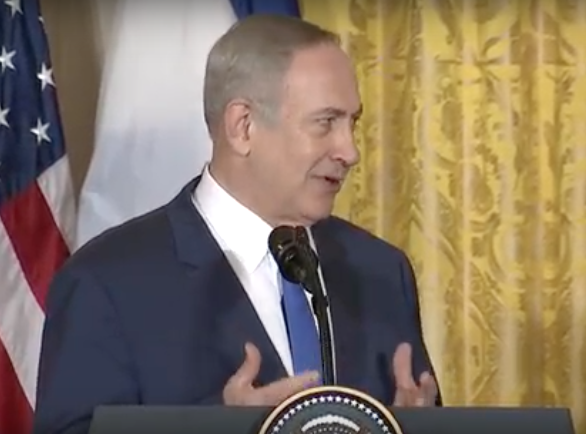
(Screenshot from White House video)
It would be good news if true. But most likely it’s not. While one stage in the Syrian conflict is coming to an end, another is beginning, and this time the results could be even worse.
The reason is Israel, until now the odd man in the latest Mideast wars. Despite intervening sporadically on the rebel side in Syria, the Jewish state generally held itself aloof from the conflict in the belief that events were breaking its way regardless of whether it stepped in or not. After all, why go to war when your enemies are doing a fine job of tearing each other apart on their own?
With President Bashar al-Assad expected to step down eventually, Israel figured that it only had to wait and watch as a hostile regime collapsed under its own weight as it thrashed about unable to restore order to Syria. Never in the Arab-Israeli hundred years’ war had Israel seemed stronger and the Arabs weaker and in greater disarray.
But then the unthinkable happened. Assad not only survived but prevailed. Backed by Russia, Iran and the Lebanese Shi‘ite militia Hezbollah, he has bottled up Al Qaeda in East Ghouta and Idlib province in the extreme northwest and is racing to lift ISIS’s siege on Deir-Ezzor along the Euphrates. If successful, the effect will be to clear a path straight through to the Iraqi border some 30 miles to the east.
U.S. military enclaves may remain in the northeast and in the southern border town of Al-Tanf. But it’s hard to see how they’ll have much of an impact as the Damascus regime tightens its grip on the country as a whole.
Israeli Outrage
But rather than making a wider war less likely, the upshot is to make it even more. Having bet on the wrong horse, Prime Minister Benjamin Netanyahu now finds himself facing a nightmare scenario in which Iran takes advantage of Assad’s winning streak to extend its reach from Iraq and Syria into Lebanon beyond. It’s not just a question of political influence, but of the emergence of a powerful Iranian-led military bloc.
Eleven years after fighting a vicious 34-day war in southern Lebanon, Israel thus finds itself facing not only Hezbollah but the Syrian Arab Army, Iran’s Islamic Revolutionary Guards, and Iraqi Shi‘ite militias – all backed by Russian military might – in a front extending across its entire northern border. All are battle-hardened after years of combat, better armed, better led, and more self-confident to boot. Israel finds itself confronting a new threat that is many times more powerful than Hezbollah (or Syria) alone.
Israeli consternation is not to be underestimated. One news outlet says the official attitude is one of “grave concern” while an anonymous government minister heaped blame on the U.S. for sacrificing Israeli interests:
“The United States threw Israel under the bus for the second time in a row. The first time was the nuclear agreement with Iran, the second time is now that the United States ignores the fact that Iran is obtaining territorial continuity to the Mediterranean Sea and Israel’s northern border. What is most worrisome is that this time, it was President Donald Trump who threw us to the four winds – though viewed as Israel’s great friend. It turns out that when it comes to actions and not just talk, he didn’t deliver the goods.”
Netanyahu is meanwhile off to the Black Sea resort of Sochi to confer with Russian President Vladimir Putin while, in Washington, Israeli military and intelligence officials are meeting with top Trump officials such as National Security Adviser H.R. McMaster and special Mideast envoy Jason Greenblatt.
Israel has also engaged in saber-rattling with regard to a missile factory that it says Iran is building in the Syrian port city of Baniyas. Gadi Eisenkot, the Israeli military’s chief of staff, said that stopping efforts by Iran, Syria, and Hezbollah to equip themselves with accurate missiles capable of striking deep inside the Jewish state “is our top priority.”
Adds Avigdor Lieberman, Israel’s hard-right defense minister: “We know what needs to be done…. We won’t ignore the establishment of Iranian weapons factories in Lebanon.”
Neocon Chorus
Words like that should not be taken lightly. Meanwhile, influential neoconservatives are joining the me-too chorus. At the Atlantic Council – the hawkish Washington think tank partly funded by the United Arab Emirates and pro-Saudi interests that functioned as an arm of Hillary Clinton’s 2016 presidential campaign – former Obama administration official Frederic C. Hof recently argued that the U.S. wouldn’t be in such a pickle if it had invaded Syria years ago:
“A Syrian opposition recognized by Washington in December 2012 as the ‘legitimate representative of the Syrian people’ should have been tasked with preparing for post-ISIS governance, and assisted to that end by an American-organized, multi-national effort. An all-Syrian stabilization force should have been built in a protected eastern Syria to pacify the area, facilitate humanitarian aid, and spur reconstruction.”
But now the U.S. is seemingly “indifferent” to what comes next once Islamic State is gone. As a consequence, Hof said, the Trump administration is effectively “install[ing] Iran as Syria’s suzerain, with the Assad entourage sifting through the country’s ruins for spoils and setting the stage for successive waves and varieties of extremism arising in response.” The only solution, according to Hof, is a radical strategic change “to prevent Iran and Assad doing their worst for the security of the United States, its allies, and its partners.”
With the Zionists and their neocon yes-men agreeing that something must be done, it seems that something WILL be done sooner rather than later.
Of course, a few complications could get in the way. One involves Russian President Vladimir Putin who, despite his close alliance with Assad, enjoys a solid working relationship with Israel and is none too eager to see war break out between the two countries. Another is the Syrian government in Damascus, which, under the leadership of the careful and cautious Assad, is none too eager to rush into a conflict that could conceivably prove even more ruinous than the one it is trying to finish up.
A Sick Kingdom
But even sober politicians like Putin and Assad may be unable to cope with the forces raging across the Middle East. The sectarian war that the Saudis unleashed more than a decade ago with U.S, help shows no signs of letting up. The kingdom is mired in an anti-Shi‘ite crusade in Yemen that it is desperate to escape, but doesn’t know how. It has suppressed a Shi‘ite uprising in Awamiyah, a city of 25,000 people in its own oil-rich Eastern Province, killing dozens according to Iranian sources and flattening an entire neighborhood, but dissent continues to bubble up ominously.
Saudi Arabia also has imposed an economic blockade on Qatar, and it is backing a repressive regime in Bahrain that has imposed a reign of terror on the country’s 70-percent Shi‘ite majority. Riyadh continues to engage in a dangerous war of words with Iran, which the royal family believes is engaged in an Elders of Zion-like Shi‘ite conspiracy to dismember the kingdom and wrest away control of Mecca and Medina.
The more paranoid Saudi leaders become, the more threatening Saudi Arabia grows – and the more resolved Iran becomes to make the most of its victory in Syria by fulfilling the ancient Persian goal of opening a corridor to the Mediterranean Sea. Aggression on one side leads to counter-aggression on the other, a process of mutual escalation that seems impossible to reverse.
Finally, there is the question of political stability – or, rather, an increasing lack thereof. In Iran, newly re-elected President Hassan Rouhani is locked in a growing confrontation with hardline Shi‘ite Islamists with little appetite for compromise.
In Saudi Arabia, power is in the hands of Crown Prince Muhammad bin Salman, a rambunctious 31-year-old who launched the disastrous war in Yemen in March 2015 – and then disappeared on a vacation in the Maldives as U.S. officials tried desperately to reach him by phone – and who more recently unveiled an ambitious economic reform program that so far has done nothing to stem the kingdom’s alarming decline. Despite vows to diversify the economy, non-oil revenue actually shrank by 17 percent this spring while foreign reserves have fallen by nearly a third since 2014. But that didn’t stop MbS, as he’s known, from committing himself to $110 billion in U.S. arms purchases in May or his father, King Salman, from spending a reported $100 million on a summer vacation in Morocco.
Saudi Arabia is thus becoming the sick man of the Middle East, one whose collapse could trigger a “geopolitical tsunami” sweeping across much of the region.
Trump’s Imbalance
Then there is the United States, where politics are even more unsettled. As President Trump careens from one disaster to another, foreign policy has grown both unpredictable and bellicose. One day, America’s second popular-vote-losing president in 16 years is calling for regime change in Tehran, the next he’s threatening Pyongyang with “fire and fury,” and then he’s blustering about some unspecified “military option” with regard to Venezuela.
The fact that Trump has so far demonstrated little follow-through is hardly reassuring. Sooner or later, rash rhetoric can only lead to rash actions, if not on America’s part then someone else’s. The shakier Trump grows, the greater the likelihood that he will engage in some risky adventure in order to strengthen his grip.
A number of forces are thus converging: political instability in Tehran, Riyadh and Washington, a growing thirst for more war on the part of Israel and the U.S. foreign-policy establishment, and a growing defensiveness on the part of a “Shi‘ite crescent” stretching from Yemen to southern Tehran. The United States, Turkey, Saudi Arabia, and others have already plunged Syria into death and destruction by sponsoring a murderous Sunni Salafist assault on one of the most diverse populations in the Middle East. The big question now is whether, with Israeli help, they are about to impose another.
Given the vicious cycle of violence in the Middle East, one that the U.S. has done its level best to worsen at every step of the way, it’s hard not to believe that even worse may be ahead.
Daniel Lazare is the author of several books including The Frozen Republic: How the Constitution Is Paralyzing Democracy (Harcourt Brace).
Netanyahu to meet Putin amid Syrian army advances
Press TV | August 20, 2017
Israeli Prime Minister Benjamin Netanyahu is about to meet Russian President Vladimir Putin in Sochi on Wednesday in the face of the Syrian army advances against militants, including those backed by Tel Aviv.
In a statement released on Saturday, Netanyahu’s office said the two sides would “discuss the latest developments in the region” during their meeting in the Black Sea resort.
The main issues that are expected to be raised at the meeting include Israel’s worries about a ceasefire agreement in Syria and a foothold which Tel Aviv thinks Iran is finding in the Arab country.
Last week, the Israeli premier claimed that Iran was increasing its presence in Syria as the Daesh terrorist group was being driven out of the country.
“I’ll give you a summary in one sentence—ISIS (Daesh) going out, Iran coming in,” Netanyahu said, summarizing a briefing with Yossi Cohen, the head of Israel’s Mossad spy agency.
Later this week, an Israeli military delegation, headed by Cohen, will visit Washington for talks with senior White House and American officials.
Over the past few months, Daesh has retreated from much of the areas under its control amid sweeping gains made by Syrian army soldiers and allied fighters against the terror outfit.
Bouthaina Shaaban, political and media adviser to Syrian President Bashar al-Assad, said on Friday that the war on Syria had reached its “penultimate stage” as foreign powers that backed militant groups were changing their policies.
Iran has been providing advisory support to the Syrian military in its counter-terrorism operations.
On the contrary, Israel has been regularly attacking positions held by pro-Damascus forces in Syria, claiming that the attacks are retaliatory. Syria says the Israeli raids are meant to shore up the Takfiri terrorists.
There are also reports that Israel has been providing medical treatment to the extremists wounded in Syria and supplying arms to them.
Back in June, United Nations UN Secretary General Antonio Guterres warned that the growing interactions between Israeli armed forces and Syria militants could lead to escalation.
Crying Wolf on Iran’s ‘Radical Empire’
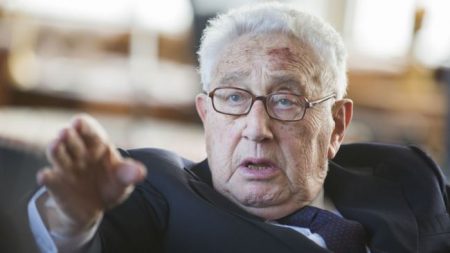
By David Macilwain | American Herald Tribune | August 10, 2017
At 94, Kissinger is living proof that bad spirit doesn’t mellow with age, yet still finds a market. Speaking at a forum alongside others with similarly dubious credentials in June – the “Margaret Thatcher Conference on Security 2017”, Dr Kissinger talked of his admiration for the “Iron Maiden”, and of how they shared a similar vision of a world controlled by London and Washington; an Atlanticist NATO vision.
Unlike Thatcher, Kissinger’s appraisal of “Putin’s Russia” reflected a certain sympathy for Russia’s position, and evident approval of Russia as a “vital element of European security”, but his view is hopelessly myopic:
“Is the wisest course to pressure Russia, and if necessary to punish it, until it accepts Western views of its internal and global order? Or is scope left for a political process that overcomes, or at least mitigates, the mutual alienation in pursuit of an agreed concept of world order?
Is the Russian border to be treated as a permanent zone of confrontation, or can it be shaped into a zone of potential cooperation, and what are the criteria for such a process? These are the questions of European order that need systematic consideration. Either concept requires a defence capability which removes temptation for Russian military pressure.”
I guess he means a THAAD capability… and the “agreed concept of World Order” means Russia should submit to the US world order. The deployment of the US missile defence system in Poland and Romania has already destroyed the possibility of any such agreement with Russia, just as the current deployment in South Korea has pre-empted any honest agreement with China over North Korea.
It was however Kissinger’s presentation of the crisis over Syria and Iraq which is of most interest. In common with much of the US establishment as well as that of Israel and Saudi Arabia, Kissinger sees Iran’s hands all over the region, while being blind to those of the US and its allies. Iraq has not been destroyed as a result of America’s “intervention”, motivated by a ruthless quest for oil and strategic control; by removing Saddam Hussein, America inadvertently facilitated Iranian influence on Baghdad, which is now a puppet of Tehran.
Even the “rise of ISIS” can be blamed on Iran, as a reaction to the alleged sectarian policies of the Baghdad government, in the same way that President Assad has been blamed for “allowing” IS to take over part of Syria. It’s necessary to point out that both assertions are egregious lies.
Into this fog of misinformation coming from the heart of Imperial power in London however, Kissinger inadvertently shone some light, exposing the workings of the “North Atlantic” deep state.
In a remark that might have been dismissed as the musings of a senescent Iranophobe still hoping to outlive the Islamic Republic, Kissinger claimed that the destruction of ISIS could lead to “the emergence of a radical Iranian empire” – stretching from Tehran to Beirut. He framed it like this:
“The outside world’s war with Isis can serve as an illustration. Most non-Isis powers—including Shia Iran and the leading Sunni states—agree on the need to destroy it. But which entity is supposed to inherit its territory? A coalition of Sunnis? Or a sphere of influence dominated by Iran? The answer is elusive because Russia and the Nato countries support opposing factions. If the Isis territory is occupied by Iran’s Revolutionary Guards or Shia forces trained and directed by it, the result could be a territorial belt reaching from Tehran to Beirut, which could mark the emergence of an Iranian radical empire.”
Leaving aside some details, such as his failure to mention that the “territory” to be “inherited” already belongs to Syria, so the answer to his disingenuous question is anything but “elusive”, we might notice that this is hardly a new idea. Not only has the threat of an “Iranian empire” been the excuse for Israeli belligerence and unprovoked aggression in Lebanon and Syria for decades, but there is convincing evidence that the creation of the “Islamic State” and the covert support for Da’esh/IS forces was a conspiracy specifically aimed at Iran.
The DIA document from 2012 that described this conspiracy, whose veracity was confirmed by former DIA chief Lt. Gen. Michael Flynn, has been quoted so often that it hardly needs repeating:
“8.C. If the situation unravels (following the movement of AQI into Syria) there is the possibility of establishing a declared or undeclared salafist principality in Eastern Syria (Hasaka and Deir al Zour), and this is exactly what the supporting powers to the opposition want, in order to isolate the Syrian Regime, which is considered the strategic depth of the Shia expansion (Iraq and Iran)”
Some useful extra analysis on this conspiracy – and what else could we call it? – is provided by Nafeez Ahmed here, and of course by Flynn himself in his August 2015 interview with Mehdi Hasan on Al Jazeera.
Well now the situation IS “unravelling” for the US and its co-conspirators, as the forces that came in the Da’esh Trojan Horse are nearly routed and Syria’s Russian and Iranian allies decide how to deal with their increasingly desperate back-up crew. With Syrian forces advancing on Deir al Zour from the North and West, and Iraqi forces closing in from the East, the years of planning and billions invested in the American project to cut off Iran look set to be wasted.
Crying wolf on Tehran’s “radical empire” just isn’t going to work again!
Facing Defeat in Syria, ISIS Inexplicably Expands Globally
By Tony Cartalucci – New Eastern Outlook – 11.08.2017
Throughout human history, when a military force and its economic center has been defeated, it contracts, then collapses. For the first time in human history, the self-proclaimed “Islamic State” (ISIS), has managed to reverse this fundamental aspect of reality – but not without help.
Facing defeat in Syria as government forces backed by its Russian and Iranian allies close in on the terrorist organization, stripping it of territory it seized, it has managed to spread far beyond Syria’s borders, establishing itself in Libya, Afghanistan, and even as far as Southeast Asia where it has seized an entire city in the Philippines’ south, and carried out attacks and conducting activities everywhere from Indonesia and Malaysia to allegedly Thailand’s deep south.
It should be remembered, according to Western governments and their media, the territory ISIS holds in Syria is allegedly providing it with the summation of its financial resources and thus the source of its fighting capacity. According to official statements, the US and its European allies allege that ISIS fuels its fighting capacity with “taxes” and extortion as well as black market oil sales – all of which are derived from territory it holds in Syria.
The Washington Post in a 2015 article titled, “How the Islamic State makes its money,” would note:
Weapons, vehicles, employee salaries, propaganda videos, international travel — all of these things cost money. The recent terrorism attacks in Paris, which the Islamic State has claimed as its own work, suggest the terrorist organization hasn’t been hurting for funding. David Cohen, the Treasury Department’s Undersecretary for Terrorism and Financial Intelligence, described the Islamic State last October as “probably the best-funded terrorist organization we have confronted” — deep pockets that have allowed the group to carry out deadly campaigns in Iraq, Syria and other countries.
To explain where ISIS actually makes its money, the Washington Post claims:
Unlike many terrorist groups, which finance themselves mainly through wealthy donors, the Islamic State has used its control over a territory that is roughly the size of the U.K. and home to millions of people to develop diversified revenue channels that make it more resilient to U.S. offensives.
The Washington Post would also claim:
Its main methods of generating money appear to be the sale of oil and antiquities, as well as taxation and extortion. And the group’s financial resources have grown quickly as it has captured more territory and resources: According to estimates by the Rand Corporation, the Islamic State’s total revenue rose from a little less than $1 million per month in late 2008 and early 2009 to perhaps $1 million to $3 million per day in 2014.
With this territory quickly shrinking and the intensity of fighting against what remains of ISIS in Syria and Iraq expanding, it is seemingly inexplicable as to how ISIS is expanding globally, instead of contracting and collapsing.
The Washington Post’s already implausible thesis regarding ISIS finances – based on official statements from the US Treasury Department and US corporate-funded policy think tanks like Rand – appears to be the only thing contracting and collapsing.
ISIS Enjoys Global Reach Many Nation-States Lack
Regarding just how expansive ISIS’ global activities are, US Secretary of State Rex Tillerson himself would claim in an August 1, 2017 statement that:
I think our next steps on the global war to defeat ISIS are to recognize ISIS is a global issue. We already see elements of ISIS in the Philippines, as you’re aware, gaining a foothold. Some of these fighters have gone to the Philippines from Syria and Iraq. We are in conversations with the Philippine Government, with Indonesia, with Malaysia, with Singapore, with Australia, as partners to recognize this threat, try to get ahead of this threat, and help them with training – training their own law enforcement capabilities, sharing of intelligence, and provide them wherewithal to anticipate what may be coming their direction.
Tillerson made these remarks after noting ISIS’ shrinking holdings in both Syria and Iraq. He claimed in regards to Iraq:
More than 70 percent of Iraqi territory that was once held by ISIS has been liberated and recovered. ISIS has been unable to retake any territory that it has been – that has been liberated, and almost 2 million Iraqis have returned home. And this is really the measure of success, I think, is when conditions are such that people feel like they can return to their homes.
Regarding Syria, Tillerson would claim:
Similarly, over in Syria, we’re assisting with the liberation of Raqqa, which is moving at a faster pace than we originally anticipated.
The steps outlined by Tillerson to combat ISIS sidestep strategic fundamentals like identifying, isolating, and eliminating the economic and financial source of the organization’s fighting capacity, and instead focus on an indefinite justification for global US military operations – particularly across Southeast Asia at a time when the region is incrementally uprooting American influence and replacing it with Eurasian alliances, networks, as well as military and economic blocs.
For ISIS – fueled by resources found only within the boundaries of its meager and shrinking territorial holdings in Syria and Iraq – to be simultaneously fighting the national armies of Syria and Iraq, backed by Iran, Russia, Lebanon’s Hezbollah, and allegedly a US-led coalition including dozens of countries, all while expanding its reach worldwide, including full-scale military operations in Southeast Asia, begs belief.
ISIS doing all of this with multi-billion dollar multinational state sponsorship, not only makes much more sense, it is the only explanation.
ISIS is State Sponsored
Until recently, ISIS territory butted directly against the borders of NATO-member Turkey. In fact, looking at any map of the Syrian-Iraqi conflict with ISIS revealed what appeared to be logistical trails leading directly out of Turkey and to a lesser extent, Jordan.
A 2014 report from Germany’s public broadcaster Deutsche Welle, revealed a torrent of supplies, men, and weapons flowing daily over the Turkish-Syrian border, headed directly toward ISIS territory, directly under the nose and with the complicity of Turkish officials.
The report titled, “‘IS’ supply channels through Turkey,” would note:
Every day, trucks laden with food, clothing, and other supplies cross the border from Turkey to Syria. It is unclear who is picking up the goods. The haulers believe most of the cargo is going to the “Islamic State” militia. Oil, weapons, and soldiers are also being smuggled over the border, and Kurdish volunteers are now patrolling the area in a bid to stem the supplies.
So obvious was the logistical support for ISIS flowing from Turkey, that ISIS flags were clearly visible from the Turkish border throughout DW’s footage.
It was only until Russia’s military intervention in Syria upon Damascus’ request, that these logistical routes were targeted and significant pressure could be placed on ISIS inside Syria, rolling back its fighting capacity.
ISIS enjoys a global reach few nation-states could achieve because it is financially, politically, and militarily backed by nations with the resources to obtain that global reach. This includes the US itself, NATO, and the Gulf Cooperation Council (GCC) which in turn includes nations like Saudi Arabia, the United Arab Emirates (UAE), and Qatar.
ISIS is America’s Foot in the Door in Southeast Asia
US Secretary of State Rex Tillerson’s comments regarding ISIS’ spread into Southeast Asia implied long-term US involvement in the region, including closer involvement with regional police and even military forces. In the Philippines, where US-Philippine relations were spiraling downward, the sudden appearance of ISIS there and the organization’s ability to seize an entire city led directly to justification for not only a continued US military presence in the country, but its expansion.
Other nations across Southeast Asia – including Indonesia, Malaysia, and Thailand – have been incrementally pushing US influence out of the region in favor of stronger and more stable ties with each other and with neighboring China.
Thailand for instance, has begun replacing aging US military hardware with weapon systems from Russia, China, and Europe. Thailand has also begun joint military exercises with China, ending America’s post-Vietnam War monopoly. Thailand and Indonesia have also begun striking a series of economic and infrastructure deals with China, including immense expansions of their respective national railways.
As each nation has taken steps to move the US out of Asia, the US has increased pressure on each respective nation. It has done this through US-funded fronts posing as nongovernmental organizations (NGOs) and US-backed opposition movements. It also appears to be doing this through the introduction and expansion of ISIS activity in the region.
It should be remembered that it was the US itself that created Al Qaeda in the mountains of Afghanistan to fight the Soviets in the 1980s.
If the situation unravels there is the possibility of establishing a declared or undeclared Salafist principality in eastern Syria (Hasaka and Der Zor), and this is exactly what the supporting powers to the opposition want, in order to isolate the Syrian regime, which is considered the strategic depth of the Shia expansion (Iraq and Iran).
Saudi Arabia wades into Shi’ite politics in Iraq
By M K Bhadrakumar | Indian Punchline | August 1, 2017
The dramatic appearance of the Iraqi Shi’ite firebrand politician Muqtada Al-Sadr in Jeddah on Sunday and his meeting with the Saudi Crown Prince Mohammed bin Salman opens an exciting page in the Saudi-Iranian regional rivalries. The theatre is shifting to Iraq.
Briefly, what is unfolding is a determined Saudi attempt to reset the power calculus in post-ISIS Iraq by moulding a new political alignment that principally aims at undermining the pre-eminent influence that Iran has enjoyed over its neighbour in the past decade or so following the Shi’ite empowerment in the downstream of the US invasion of 2003.
Iran’s main platform on the Iraqi political landscape has been the umbrella Shi’ite coalition known as the Islamic Supreme Council in Iraq (ISCI), which Tehran had created as far back as 1982, originally as a Shi’ite resistance movement against Saddam Hussein and most recently since the middle of the last decade following Saddam’s overthrow as a united front to contest the democratic elections in Iraq with an agenda to preserve the Shi’ite leadership of the government.
To cut a long story short, ISCI is unravelling due to latent rivalries between various constituent groups. (Shi’ite politics has been traditionally very fractious, including in Iran.) Now, the split is also on account of a strong undercurrent of resentment over Iran’s dominance over Iraqi politics. (For the benefit of the uninitiated, again, the potency of Iraqi nationalism – a legacy of the Saddam era, paradoxically – subsuming the ethnic and sectarian divides in the country should never be underestimated.)
Importantly, the new generation of the powerful Hakim family led by Ammar Al-Hakim has moved out of the ISCI and has shifted allegiance from Iran’s Ayatollah Khamenei to Iraq’s Grand Ayatollah Ali Al-Sistani. Equally, Muqtada al-Sadr who has stepped out of Iran’s orbit has assumed a nationalistic, non-sectarian platform in the recent years. Again, within the ruling Islamic Dawa Party, which is the main constituent of the ISCI, there is an internal power struggle between the incumbent PM Haidar Al-Abadi and the former PM Nouri al-Maliki. (Currently, Maliki is a favourite of Iran; interestingly, Al-Abadi recently visited Saudi Arabia during which an announcement was made that the two countries have formed a ‘coordination council’ to bolster strategic relations aimed at healing troubled ties with ‘other Arab states’.)
Enter Saudi Arabia. Quite obviously, Saudis see a window of opportunity to go for Iran’s jugular veins by breaking up the ISCI irretrievably and instead propping up a new composite non-sectarian coalition involving the Shi’ite factions who resent Iran’s hegemony. No doubt, it is an audacious attempt to bring together – you’ve guessed it – Muqtada al-Sadr, Ammar Al-Hakim and Al-Abadi – on the same page.
The Crown Prince MBS is the mastermind behind this audacious Saudi move to manipulate the Shi’ite politics in Iraq. Arguably, the Saudi game plan has some positive streaks in it insofar as it envisages a non-sectarian realignment in Iraqi politics by encouraging a regrouping of the Shi’ite factions that give primacy to Iraqi nationalism over the identity politics they pursued up until recently. In turn, MBS would probably persuade these Shi’ite factions to work with the Iraqi Sunni factions and the Kurds. (By the way, Saudis recently opened a consulate in Erbil, the capital of Kurdistan in northern Iraq.)
Cynics would say that Saudis are having a devious agenda to: a) break up Shi’ite unity in Iraq; b) empower the Sunni groups as a ruling elite; and, c) create a schism between ‘Arab Shias’ and ‘Persian Shias’. The jury is out. Time only will tell how these shenanigans play out. To be sure, MBS’s initiative to manipulate Iraqi politics must be enjoying the support of the US and Israel, since it ultimately aims at isolating Iran and mitigates to an extent Iran’s spectacular ‘victory’ in the Syrian conflict.
Will Iran throw in the towel and walk away? Certainly not. Iran’s trump card is the battle-hardened Shi’ite militia known as the Al-Hashd Al-Shaabi, which is estimated to number over 120000 and is a Hezbollah-like army that is disciplined, fired up ideologically, and weaned in the politics of ‘resistance’. By the way, Qassem Soleimani, the charismatic commander of the Quds Force of the Iranian Revolutionary Guard Corps, was quoted as saying last week: “Daesh (ISIS) was stopped by the entry of Al-Hashd Al-Shaabi into the Iraqi army. The Iraqi army was transformed into a Hezbollah army.”
Now, that is a statement of fact. And, the ground reality is that today, in the chaotic war conditions in Iraq, power ultimately flows through the barrel of the gun. Stalin would have asked MBS as to how many divisions Al-Haikm, Al-Sadr and Al-Abadi together have under their command? Will the number come to even one half of the strength of Al-Hashd Al-Shaabi, the Iraqi Hezbollah, which Iran trained and equipped? Unlikely. Could they have taken on the ISIS and defeated it? No way.
Baghdad seeking ‘substantial’ Russian military & political presence in Iraq – vice-president
RT | July 24, 2017
Russian military and political presence in Iraq would bring balance to the whole Middle Eastern and North African region, Nouri al-Maliki, the Iraqi vice-president, said during his visit to Moscow.
“It’s well known that Russia has historically strong relations with Iraq, therefore we would like Russia to have a substantial presence in our country, both politically and militarily,” al-Maliki said during his meeting with the speaker of Russia’s upper house of parliament, Valentina Matviyenko.
“This way, a balance would be established that would benefit the region, its peoples and its countries,” he added.
The vice president said that Baghdad wants to boost relations with Moscow as it believes “in Russia’s role in solving most of the key international issues as well as improving stability and balance in our region and worldwide.”
Matviyenko, in turn, praised the commitment of the current Iraqi authorities to widening their cooperation with Moscow.
“Russia is also determined to expand its interaction with Iraq both politically and economically as well as in the military-technical sphere, and, of course, on the parliamentary level,” she said.
In his talks with Russia’s Foreign Minister, Sergey Lavrov, earlier Monday, al-Maliki stressed that a Russian presence in Iraq would bring the balance which couldn’t be “undermined in a political sense in favor of any external party.”
“Today we need Russia’s greater involvement in Iraqi affairs, especially in the energy field. Now when we are done with Islamic State (IS, formerly ISIS/ISIL), Iraq needs investments in energy and trade,” he said.
Earlier in July, the Iraqi authorities announced that the last IS stronghold in the country, Mosul, had been fully liberated from the terrorists, following an eight-months-long campaign backed by the US-led coalition.
Al-Maliki told Lavrov that Moscow and Baghdad “should enhance… cooperation in countering terrorism in the region.”
“We believe that both our countries are targets for terrorists and those who stand behind them,” al-Maliki said.
Moscow supports the efforts of the Iraqi authorities to “normalize the situation in the country, first of all aiming at eradicating the terrorist threat,” Lavrov said.
It’s vital that Baghdad’s struggle isn’t carried out in isolation, but is carried on in the context of international efforts to eradicate the terrorist threat across the globe, including in Iraq, Syria, Libya, Yemen and other countries, the Russian FM added.
Al-Maliki is also travelling to St. Petersburg, where he’s expected to meet with Russian President Vladimir Putin on Tuesday.
Deconstructing Trump’s Iran sanctions
By M K Bhadrakumar | Indian Punchline | July 20, 2017
There is an old impish yarn that Moses was stunned to see the two cats he’d put in the Ark trooping out with a bunch of kittens at the end of the tumultuous existential journey. Seeing the old sage’s puzzled look, the adult male shot back, ‘You thought we were fighting?’ This in some ways captures the noisy, implausible games that Iran and the United States play with each other, growling at each other and making us feel worried at times.
President Donald Trump is having a difficult time to differentiate his Iran policies from Barack Obama’s. The Trump administration has twice certified to the Congress that Iran is complying with the nuclear deal – an agreement he vowed to tear up. But, while doing so on Monday, with an eye on the Israeli lobby, it separately imposed sanctions against a clutch of Iranian personalities and entities – so that the optics look appropriately ‘tough’.
Tehran had conveyed a red line to Washington in the weekend that there shall be no sanctions against the Islamic Revolutionary Guards Corps (which is spearheading Iran’s operations against ISIS in Iraq and Syria). The Trump administration understood perfectly well what it implied – namely, that things can overnight hot up for the US on the ground on the Syrian-Iraqi theatre. (For the uninitiated, IRGC-backed militia and American military advisors tacitly collaborate in the liberation of Mosul.)
Tehran understands that Trump is a bluff master. Read the Iranian Foreign Ministry statement here. Clearly, no one is losing sleep in Tehran. Iran’s missile programme is indigenous; nor will US sanctions frighten IRGC’s elite Qud’s Force under the command of its charismatic general Qassem Soleimani to give up the ‘axis of resistance’ in Syria and Lebanon (and Gaza.)
In fact, Majlis passed a finance bill Tuesday increasing the budget allocation for the missile programme and Quds Force each by $260 million.
The Middle East is witnessing a long sunset of the US hegemony. And Iran senses it. So, Tehran is playing its cards astutely through an admixture of strategic defiance and taunts with unspoken overtures seeking meaningful conversation.
Read the transcript, here, of a fascinating interview by National Interest magazine with Iranian FM Mohammed Javed Zarif who is visiting New York. (Zarif already addressed the CFR and was interviewed by CNN’s Fareed Zakariah and the PBS, amongst others.)
Indeed, Zarif virtually choreographed an Iran policy for Trump. Look at his tantalizing remarks:
- “It took the U.S. longer to clear the purchase of Airbus airplanes than it took for the purchase of Boeing airplanes.”
- “If it comes to a major violation, or what in the terms of the nuclear deal is called significant nonperformance, then Iran has other options available, including withdrawing from the deal.”
- “We need to be more careful about the signaling, because we’ve seen that wrong signaling in the past few weeks in our region, particularly after the Riyadh summit, has caused a rather serious backlash in the region—not between U.S. allies and Iran, but among U.S. allies.”
- “At this stage we are content with simply implementing that (nuclear) agreement… we wanted that agreement to be the foundation and not the ceiling. But in order for that to serve as a solid foundation, we want to make sure that the obligations by all sides have been fully and faithfully implemented. And if we get that, then we have an opening to further progress.”
- “We don’t see the situation in our region as a winning or losing battle… we believe that the situation in today’s world is so interconnected that we cannot have winners and losers; we either win together or lose together. Obviously, if an administration or a government or a country defines its interests in terms of exclusion of others, then it is defining the problem in a way that is not amenable to a solution.”
- “We have had a consistent policy of fighting extremism and terrorism, whether it was in Afghanistan during the reign of the Taliban, or, even during the time that the United States was in occupation of Iraq, against terrorist elements who were instigating terror inside Iraq.”
- “Well, it all depends on the approach that the United States will try, the current administration will try to adopt vis-à-vis Iran. It has to look at Iran as the only country in the region where people stand in line for ten hours to vote. It has to put aside those self-serving assumptions that some members of this administration have repeatedly stated.”
- “We have a very sober understanding of the situation in the region where we are located, and we hope that the United States can also have such a sober understanding.”
Iran is doing just fine. The genius to optimally put diplomacy to use, with maximum cost-effectiveness, has been Iran’s strategic asset in the politics of the Middle East.
Featured Video
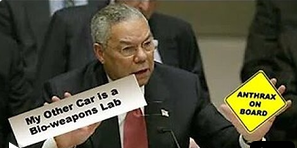
From Anthrax to Iraq
or go to
Aletho News Archives – Video-Images
Book Review
New paperback: Butchered by “Healthcare”
Lies are Unbekoming | October 20, 2026
 Butchered by “Healthcare” is Robert Yoho’s plain-spoken account of how American medicine stopped being a profession and became an industry. 341 pages. Over a thousand references. Thirty-eight chapters.
“Screening Tests Are Useless”, on tests that find diseases that would never have hurt you. “The FDA Protects the Big Drug Companies”, on an agency funded by the companies it regulates. “The Journals’ Sins Are the Editors’ Sins”, on ghostwritten studies and captured peer review. “Opioids and ‘Pain Management’”, on how a generation was prescribed its way into addiction. “Prozac and Relatives” and “Antipsychotics Are Disastrous”, on what psychiatry does to adults and children. “Surgery: Money Before Patients”. “Failed Cancer Treatments”. “Futile CPR and Overprescribing”. “Billing Scams & Specialty Warfare”. “Hospitals Are Sharks”. Each with a Patient Tips section at the end on how to survive it.
If you have ever walked out of a doctor’s office with a prescription you didn’t ask for, or watched a parent put through a treatment that made them worse, this is the book you want on your shelf before the next appointment. … Full review
Butchered by “Healthcare” is available on Lulu now.
Blog Roll
 Aletho News
- Iraq shuts key border crossing with Iran under US pressure: Report
- Undersea Internet cables could be targeted in retaliation for attacks on Iran: IRGC deputy chief
- EU sending ‘biased’ observers to interfere in Serbian election – president
- White House envoy declares kinetic action against Yemen ‘fruitless’
- Ukraine deployed thousands of microdrones in Iraqi Kurdistan: Tasnim
- Iran calls for emergency UNSC meeting over Trump’s ‘brazen’ bomb talk, Israeli threats
- Iranian sources reveal details of Russia-China Hormuz proposal
- Plan for more US-Israel integration puts our military tech at risk
- Another Round Against Iran Will Break What Is Left of the Gulf
- SVR Report on Ukraine’s Mexican Drug Gang Links Could Pressure Zelensky, Won’t Change US Policy
- If Americans Knew
- An error has occurred; the feed is probably down. Try again later.
- No Tricks Zone
- E-Cars Reduce CO2 Emissions By Only 41% Compared To Internal Combustion Engine Vehicles
- Predictions Made By Renowned Climate Professor Over Past Decades Have Been Proven To Be Poor
- New Study Suggests Large Regions Of The Pacific Ocean Have Been Cooling For The Last 80 Years
- Germany’s Green Energy Debacle: High Energy Costs Force Kahla Porzellan to Close After 182 Years!
- New Study: 50 Years Of The Most Aggressive ‘Net Zero’ Policies Can Only Affect The Global Climate By 0.03°C
- US September “Heat” Was No Record…Many Records Set Decades Ago
- Latest European Green Energy Debacle; Portugal’s Largest Flagship Solar Park Insolvent!
- Green Energy Debacle: German Expert Professor Fritz Vahrenholt Warns Of Severe Economic And Social Consequences
- Two More Paleo Reconstructions Affirm Meters-Higher Sea Levels Across Ireland, Brazil 7000-6000 Years Ago
- New Study: Earth And Venus Surface Warmth Largely Explained By Convection And Lapse Rate, Not CO2 Or Radiation

