Egypt’s Parliament rejects plans for Palestinian resettlement after Trump’s call
MEMO | January 27, 2025
Tens of thousands of Palestinians return to north Gaza after one year of displacement

(Photo credit: MEE/Ahmed Aziz)
The Cradle | January 27, 2025
Tens of thousands of Palestinians began returning to the northern Gaza Strip via the Netzarim corridor on 27 January after over a year of displacement and a genocidal Israeli war.
Video footage documented the first moments that the displaced civilians flooded through the Netzarim corridor to return to their homes in the north.
“Vehicles continue to enter via the Netzarim corridor through Salah al-Din Street after undergoing electronic inspection [in accordance with the ceasefire agreement],” Al Jazeera’s correspondent reported on 27 January.
Hundreds of thousands of Palestinians are expected to return for the first time since being displaced at the start of the war in October 2023 and in the months that followed.
“The scenes of the return of the masses of our people to the areas from which they were forced to flee, despite their destroyed homes, confirm the greatness of our people and their steadfastness in their land, despite the depth of the pain and tragedy,” Hamas said in a statement.
Member of the Hamas political bureau Ezzat al-Rishq said the return of Palestinians to their homes “shatters all the dreams and illusions of the occupation in displacing [the Palestinian] people.”
Israel had been blocking the return of the displaced after the second round of prisoner exchanges took place on Saturday – demanding the return of a female Israeli soldier Arbel Yehud as part of the swap and accusing the resistance movement of obstructing the deal. Yehud is being held by the Palestinian Islamic Jihad (PIJ) movement.
It was agreed over the weekend that she would be released on Thursday in exchange for Israel allowing the return of the displaced to northern Gaza, which, along with other areas in the enclave, was destroyed and ethnically cleansed throughout the war.
Israeli authorities released 200 Palestinians from Israeli prisons on 25 January as part of the ceasefire agreement with Hamas. The resistance movement released four female Israeli soldiers as part of the deal earlier that day.
One hundred fourteen Palestinian prisoners were transferred from Ofer Prison in the occupied West Bank for release in Ramallah, 16 were returned to Gaza, and 70 were exiled outside Palestine, WAFA news agency reported. Egypt will host them for 48 hours before they are sent to Tunisia, Algeria, and Turkiye – which all agreed to receive them.
In Lebanon, civilians amass to secure liberation
By Khalil Harb | The Cradle | January 27, 2025
Ignoring a foreign-imposed ceasefire ‘extension,’ southern Lebanese residents are reclaiming their villages from Israeli occupation, exposing the failures of both the invasion and US mediation – and it’s happening in both Gaza and Lebanon at the same time.
The image that Israel sought to project – both to its settlers and to the wider Arab world – of a resistance subdued, a nation defeated, and a broken will crumbled at dawn on 26 January as the 60-day deadline for the implementation of the ceasefire with Hezbollah approached.
The shattering moment came as the Lebanese people triumphantly returned to their recently occupied villages with unrelenting resolve, putting an end to two months of perceived acquiescence and Israeli ambitions to extend its occupation of the country beyond the truce.
Scrambling to attach legitimacy to Israel’s continuing violations beyond the ceasefire deadline, the White House issued a very brief statement on Sunday evening, announcing that the agreement would remain in effect until 18 February.
Within hours, the Lebanese presidency’s X account posted: “There is no truth to the news about Israel informing Lebanon that it will remain at five border points for 15 days.”
Israel’s miscalculated strategy
The occupation state, once again miscalculating the realities on the ground, appeared to have banked on its extensive aggression in southern Lebanon, coupled with a brutal two-month rampage through southern villages under the guise of implementing UN Security Council Resolution 1701, to craft a facade of victory.
During this time, villages south of the Litani River – spared military occupation during the war thanks to the fierce resistance – were ravaged through relentless bombing and destruction right up until the deadline. Tel Aviv seemed confident this violence, shielded by the ceasefire agreement, would entrench its control and bolster its narrative of dominance – a narrative it had deceived itself into believing.
The arrogance of Israel’s leadership, from Prime Minister Benjamin Netanyahu to his far-right political allies and opposition leaders, underestimated the resilience of the Lebanese. The illusion that the war and its aftermath had crushed the will of the southern villagers or forced new terms upon Hezbollah was put to an unanticipated test.
During Lebanon’s observance of the ceasefire – marked by the deployment of its army south of the Litani and Hezbollah’s adherence to truce terms – Israel misread this restraint as weakness. Toward the end of the truce period, Israeli leaders openly discussed prolonged occupation of southern Lebanon, citing security concerns for northern settlers who had yet to return home.
What Israel did not foresee was the convergence of two historical moments: the Lebanese reclaiming their villages and Palestinians in Gaza defying displacement by returning northward from the strip. This dual movement after two ceasefire agreements, powered by an unyielding indigenous attachment to the land despite a genocidal campaign against its natives, exposed the failure of Israeli calculations and those of its allies in the west and West Asia.
A ceasefire undermined by violations
The recklessness of the US-led armistice committee, chaired by US General Jasper Jeffers, compounded the situation. By treating Israel’s numerous violations of the ceasefire lightly, the committee allowed Tel Aviv to interpret the agreement as it pleased.
Under this pretext, Israeli forces executed airstrikes, demolished entire residential neighborhoods, and bulldozed agricultural and forest areas, electrical network lines, water wells, and numerous roads. The occupation army uprooted infrastructure and disrupted civilian life in southern Lebanon at a scale rivaling the destruction during the 15-month war itself.
According to estimates by Lebanese authorities, there were over 800 violations during the ceasefire, yet the armistice committee offered no meaningful condemnation. Civilians attempting to return home were targeted indiscriminately; as of Sunday night, the Lebanese Ministry of Health recorded 24 more martyrs and over 134 wounded across 21 southern villages, many of them women and children, in addition to the nearly 100 lives lost since the ceasefire began.
Complicit silence of ‘mediators’
Israel’s actions, enabled by international complicity, emboldened it to extend its occupation and deepen the suffering of the Lebanese. Meanwhile, General Jeffers, tasked with overseeing the ceasefire and implementing Resolution 1701, remained a bystander to these crimes.
His silence showed, yet again, Washington’s inherent bias, which – far from being a neutral mediator – has historically aligned with Tel Aviv’s interests. This raises a pertinent question: can the US genuinely claim impartiality in Lebanon’s political and security affairs?
A political source close to the resistance in Lebanon, speaking to The Cradle, says this bias risks destabilizing the country and rendering the truce meaningless.
The resistance, represented by Hezbollah, set things straight with its statement last Thursday, which warned against “a continued violation of Lebanese sovereignty.”
Hezbollah insisted that these violations must be dealt with “by the state using all means and methods guaranteed by international conventions … to reclaim the land.”
“While we will follow the developments of the situation, which are supposed to culminate in a complete withdrawal in the coming days, we will not accept any violation of the agreement and commitments, and any attempt to evade them under flimsy pretexts.”
Hezbollah’s warnings realized
Sunday’s events confirmed Hezbollah’s warnings. As civilians re-entered their villages en masse, the Lebanese Armed Forces (LAF) followed, deploying in areas where Israeli troops were reluctant to surrender. This mass mobilization dismantled Israel’s scorched-earth strategy, which sought to make the region uninhabitable and reconstruction efforts near impossible.
Israeli Prime Minister Benjamin Netanyahu’s government, desperate to balance internal political pressures and its failed Gaza offensive, miscalculated again. Instead of breaking the Lebanese spirit, it was met with a formidable display of unity and defiance.
In exchange for the Lebanese commitment to implement the requirements of the ceasefire, Hezbollah parliamentary representative Ali Fayyad says that this was met with “Israeli treachery, international complicity, and indifference.”
A source close to the resistance also tells The Cradle that the presence of Israeli occupation forces on even a single inch of Lebanese territory serves as a justification for continued resistance.
The source elaborates that the Netanyahu government, by attempting to circumvent the truce deadline, is pursuing several interconnected objectives. Chief among them is the strategy to intensify pressure on Beirut, both politically and militarily, with the aim of forcing it into submission to Israeli demands.
Additionally, Israel seeks to establish a so-called “burned zone” along the border, creating a buffer area that would further entrench its occupation. This maneuvering, the source adds, also serves Netanyahu’s domestic agenda.
By maintaining a foothold in southern Lebanon, he aims to deflect criticism from opposition figures within Israel who are pressuring him to avoid a full withdrawal. Moreover, Netanyahu is using the situation to attempt a rehabilitation of his government’s tattered image.
After the Gaza ceasefire exposed severe cracks in Israel’s political and military apparatus – especially as Palestinian resistance fighters emerged with renewed confidence and resilience – the embattled Israeli prime minister is desperate to project strength, particularly in the Lebanese context, as a way to recover from these reputational blows.
Unified resistance
This synchronized resistance across Lebanon and Palestine serves as a reminder of the region’s enduring struggle against occupation. As Israeli commentators acknowledge divisions within US policy circles – some supporting Israel’s attempts to prolong its occupation while others insist on adherence to withdrawal terms – Netanyahu’s agenda remains in disarray.
Reports of him lobbying President Donald Trump to permit the retention of five military sites in southern Lebanon show his desperation, but the people of Lebanon have already rendered this strategy futile.
The Lebanese resistance, bolstered by the actions of its citizens, has proven yet again that the occupation can and will be challenged.
Civilians liberated roughly 30 towns on Sunday, paving the way for the Lebanese army’s advance and signaling an unyielding determination to reclaim their sovereignty. While Israel may seek to manipulate international dynamics, the people of Lebanon have drawn a clear line: their land, their will, their victory.
Israel Considers Sending Weapons Seized in Lebanon to Ukraine
By Kyle Anzalone | The Libertarian Institute | January 26, 2025
Tel Aviv may be transferring Russian-made weapons that Israeli forces seized in southern Lebanon to Ukraine to be used in the fight against Russia. The potential arms shipments come following high-level meetings between Israeli and Ukrainian officials.
The potential arms shipments to Ukraine were first discussed by the Ukrainian Embassy in Israel, as was revealed on Facebook Tuesday. “During the meeting, the Ambassador thanked the interlocutor for a previously submitted proposal in the Knesset – to hand over weapons of Russian production to Ukraine seized by the IDF in Lebanon,” the post explained. “It is noted that this initiative would be an important step in recognizing the common threats facing both countries.”
On Wednesday, Israeli President Isaac Herzog met with Ukrainian President Volodymyr Zelensky at the World Economic Forum in Davos. “Among the main topics of our discussion were shared challenges, collaboration – particularly in the security sphere – and ways to achieve a just peace for Ukraine,” the Ukrainian leader posted on X.
Last year, Israeli forces invaded southern Lebanon and have been occupying much of the territory and preventing civilians from returning to their homes. During the operations against Hezbollah, Israeli forces are reported to have captured Russian-made weapons, including the Draganov sniper rifles, SPG-9 launchers, Kornet antitank missile, as well as Metis, Konkurs, Fagot, and Sagger missiles.
The Ukrainian Embassy said the increased ties between Russia and Iran are driving the potential arms shipments from Israel to Ukraine. “The sides also discussed the current joint challenges for both countries, in particular the military cooperation between Iran and Russia, which poses a threat to the national security of both Ukraine and Israel,” the Facebook post noted.
It’s unclear how large of a weapons cache Israeli forces have seized from Hezbollah. The Telegraph reports as many as 60% of the weapons were manufactured in Russia or the former USSR. The outlet also cited multiple Russian bloggers who reported that the weapons shipments from Israel to Ukraine are already underway.
State Department Reports Record Foreign Arms Sales in 2024
By Kyle Anzalone | The Libertarian Institute | January 26, 2025
The State Department reports that US arms deals sold over $300 billion in weapons to foreign countries last year. The record-high sales include over $20 billion in arms paid for with US aid.
The State Department’s statement on 2024 arms sales explained that “the total value of transferred defense articles and services and security cooperation activities conducted under the Foreign Military Sales system was $117.9 billion.”
Compared to 2023, the State Department says last year’s totals represented an increase of 45.7%, adding, “This is the highest ever annual total of sales and assistance provided to our allies and partners.” According to the statement, $21 billion in the FMS was paid for with US aid.
In addition to the FMS, US arms deals brokered $200 billion in other transactions. “The total authorized value for privately contracted Direct Commercial Sales (DCS) authorizations for FY2024 was $200.8 billion,” the statement explained. “This represents a 27.5% increase, up from $157.5 billion in FY2023.”
Combined, the FMS and DCS sales total over $318 billion.
Most of the weapon sales went to US allies and partners in Europe, the Middle East or East Asia. In Europe, NATO countries continued to buy weapons at a rapid pace as they transferred older systems to Ukraine for the proxy war against Russia. China is the focus of American arm sales in East Asia as Washington prepares to fight a war with Beijing over Taiwan.
In the Middle East, Israel bought, often with US aid, billions in weapons from American arms deals. Tel Aviv is conducting what multiple international human rights organizations have identified as a genocide in Gaza. During the Biden administration, the State Department was flooded with hundreds of reports that American weapons were being used to kill civilians in Gaza.
The State Department asserted that the US arms transfers occurred in “accordance with the U.S. Conventional Arms Transfer Policy, and weighs political, social, human rights, civilian protection, economic, military, nonproliferation, technology security, and end use factors.”
However, the US military aid and arms sales to Israel violate multiple American laws as Israel is committing war crimes with US weapons, the IDF has blocked aid from reaching Gaza, and Tel Aviv has an undeclared nuclear weapons program.
Israeli forces fatally shoot 2-year-old Palestinian girl in the head near Jenin

Laila Mohammad Ayman Khatib, two, was shot and killed by Israeli forces while she ate dinner with her family near Jenin on January 25. (Photo: Courtesy of the Khatib family)
Defense for Children Palestine | January 26, 2025
Ramallah — Israeli forces shot and killed a Palestinian toddler near Jenin last night.
Laila Mohammad Ayman Khatib, two, was shot and killed by Israeli forces around 8:30 p.m. on January 25 while she was in the living room in her family’s home in the Palestinian town of Muthallath Al-Shuhada, south of Jenin in the northern occupied West Bank, according to documentation collected by Defense for Children International – Palestine. Laila was having dinner with her mother, grandparents, and aunts when sudden Israeli gunfire erupted without warning. Israeli forces fired four bullets through the living room window, one of which struck Laila in the back of the head. Laila’s grandfather carried her out of the house and brought her to Al-Razi Hospital in Jenin, where she received emergency surgery. Laila was pronounced dead around 10 p.m.
“Israeli forces regularly and routinely carry out military operations with complete contempt for Palestinian life,” said Ayed Abu Eqtaish, accountability program director at DCIP. “Little Laila was having dinner with her family when Israeli forces, unprompted, fired live ammunition into their living room, killing her. It is outrageous that the Israeli military has been permitted by world leaders to kill Palestinian children with impunity in flagrant violations of international law.”
Laila’s mother and aunt sustained injuries from shrapnel during the attack, according to information collected by DCIP.
When Laila’s grandfather exited the house carrying her, he saw Israeli snipers stationed in a Palestinian home across the street from their house. No residents of Muthallath Al-Shuhada were aware of an Israeli military presence at the time of the attack, and later learned that Israeli special forces had infiltrated the Palestinian home. Israeli forces remained in the town until about 11 p.m.
Jenin, its refugee camp, and the surrounding villages have been under an ongoing Israeli military attack dubbed “Operation Iron Wall” since January 21, 2025.
Since the beginning of Operation Iron Wall, 16 Palestinians have been killed, including Laila and 16-year-old Motaz Abu Tabeekh. This operation has also been accompanied by Israeli drone strikes, widespread destruction of infrastructure and homes in the Jenin refugee camp, and the bulldozing of roads. Additionally, hundreds of Palestinians families have been forcibly displaced from their homes due to the continued military assault.
Israeli forces have killed eight Palestinian children in the occupied West Bank in 2025, according to documentation collected by DCIP. Five children were killed by Israeli drone strikes and three children were shot and killed with live ammunition.
Trump calls for ethnic cleansing of Gaza’s population to Egypt, Jordan
The Cradle | January 26, 2025
While flying on Air Force One on 26 January, US President Donald Trump told reporters that the residents of Gaza should be “cleaned out” and ethnically cleansed to neighboring Arab countries after Israel’s US-backed bombing campaign turned the enclave into a “demolition site.”
“I’d like Egypt to take people, and I’d like Jordan to take people. You’re talking about a million and a half people, and we can just clean out the whole thing,” Trump said.
“You know, over the centuries, it’s had many, many conflicts. And I don’t know, something has to happen. It’s literally a demolition site, almost everything is demolished, and people are dying there, so I’d rather get involved with some of the Arab nations and build housing at a different location where they can maybe live in peace for a change,” the president added.
“I said to [the Jordanian King], I’d love you to take on more because I’m looking at the whole Gaza Strip right now, and it’s a mess, it’s a real mess. I’d like him to take people … I’d like Egypt to take people [from Gaza],” Trump continued, saying he would discuss it with Egyptian President Abdel Fattah el-Sisi.
The Palestinian Islamic Jihad (PIJ) movement condemned the inflammatory comments in an official statement: “Trump’s statements are consistent with the worst of the agenda of the extreme Israeli right and a continuation of the denial of the existence of our people … We call on all countries, especially the Egyptian and Jordanian governments, to reject Trump’s plan, and we affirm that our people will thwart this scheme.”
The US president’s son-in-law and powerful businessman, Jared Kushner, has previously advocated developing new communities in Gaza due to its prime location and beaches on the Mediterranean Sea.
Israeli businessmen close to Israeli Prime Minister Benjamin Netanyahu have advocated for the development of Gaza as a modern residential community and tax-free business and manufacturing zone, presumably to be built after all or most Palestinians have been expelled.
In the wake of a ceasefire between Hamas and Israel that took effect on 19 January, hundreds of thousands of displaced Palestinians are seeking to return to their homes, or what is left of them.
It is unclear whether the ceasefire will hold or whether Israel will seek to resume the war, as Prime Minister Benjamin Netanyahu has stated he will.
Trump’s comments, including his claim that he wants to save Palestinian lives, echoed the recommendations of a leaked Israeli Ministry of Information report issued on 13 October 2023, just a week after Hamas’s Operation Al-Aqsa Flood and the beginning of Israel’s massive bombing campaign that has now left Gaza largely uninhabitable.
The plan recommended the ethnic cleansing of Gaza using humanitarian justifications. The document recommends beginning a dedicated campaign that will “motivate” Gazans “to agree to the plan,” and make them give up their land.
Gazans should be convinced that “Allah made sure that you lost this land because of the leadership of Hamas – there is no choice but to move to another place with the help of Your Muslim brothers,” the document reads.
Further, the plan states the government must launch a public relations campaign that will promote the transfer of Palestinians to Arab and western states in a way that does not promote hostility to Israel or damage its reputation.
The deportation of the population from Gaza must be presented as a necessary humanitarian measure to receive international support. Such a deportation could be justified if it will lead to “fewer casualties among the civilian population compared to the expected number of casualties if they remain,” the document says.
The document also states that the US should be leveraged to pressure Egypt to take in the residents of Gaza and to encourage other European countries, and in particular Greece, Spain, and Canada, to help take in and settle the refugees who will be evacuated from Gaza.
Finally, the document claims that if the population of Gaza remains, there will be “many Arab deaths” during the expected occupation of Gaza by the Israeli army, and this will damage Israel’s international image even more than the deportation of the population. For all these reasons, the recommendation of the Ministry of Intelligence is to promote the transfer of all Palestinians in Gaza to the Sinai permanently.
Swiss police arrest director of Electronic Intifada news outlet
Al Mayadeen | January 26, 2025
Swiss authorities have detained Ali Abunimah, a Palestinian-American journalist and co-founder of the pro-Palestine news outlet The Electronic Intifada (EI).
Abunimah was reportedly questioned by Swiss police for an hour upon his arrival at Zurich airport on Friday before being granted entry into the city.
Reports suggest he was arrested the following day, ahead of a scheduled speaking event.
“Abunimah’s arrest appears to be part of a growing backlash from Western governments against expressions of solidarity with the Palestinian people,” the Electronic Intifada said.
The Chicago-based independent publication voiced its solidarity with Abunimah, stating, “Speaking out against injustice in Palestine is not a crime. Journalism is not a crime.”
In posts on his X account, the journalist condemned the Israeli genocidal assault on the Gaza Strip and expressed support for the Palestinian resistance against the occupation.
His latest article, published on The Electronic Intifada on January 18, was titled “How Gaza’s Resistance Defeated Israel.”
The American-Arab Anti-Discrimination Committee (ADC) emphasized that Abunimah has been a consistent advocate against “Israel’s” injustices in Palestine, highlighting that his arrest appears to be a direct result of his outspoken activism.
“Abunimah’s arrest is a stark reminder of the increasing attempts to stifle voices calling for justice and accountability,” it pointed out.
Belgian-Lebanese activist Dyab Abou Jahjah, founder of the Hind Rajab Foundation, described Abunimah as a “political prisoner” and demanded his immediate release.
Last year, British police raided the home of Asa Winstanley, an associate editor with EI, and seized his computers and phones.
Iran War Hawks Getting Wrecked In Trump Personnel Fight
By Ryan Grim | Drop Site News | January 24, 2025
A major whisper campaign is underway, led by neoconservatives in Washington panicked at President Donald Trump’s elevation of a string of foreign policy advisers who have spoken out against war with Iran. The first whack to the wounded war-hawk wing came when Mike Pompeo was blocked from a position in the White House, followed yesterday by the stripping of his security detail. That followed similar snubs to John Bolton and Iran hawk Brian Hook, both of which lost their security and have been kept out of the administration.
Hook’s firing was a comical display of Trumpian humiliation. Trump, on Truth Social, said that his
Presidential Personnel Office is actively in the process of identifying and removing over a thousand Presidential Appointees from the previous Administration, who are not aligned with our vision to Make America Great Again.
Jose Andres from the President’s Council on Sports, Fitness and Nutrition, Mark Milley from the National Infrastructure Advisory Council, Brian Hook from the Wilson Center for Scholars, and Keisha Lance Bottoms from the President’s Export Council—YOU’RE FIRED!
What’s so amusing about Trump’s description of Hook as a member of the “previous Administration,” and his being lumped in with Democrats and a hated figure like Milley, is that Hook was named by Trump in November to chair the State Department transition. Anti-war Republicans vowed at the time to make sure he never got a job himself in the second Trump administration and sources tell me that Trump fired him after learning about his long record of criticizing Trump and his bellicose war rhetoric. Now he’s out, and is privately leading the rearguard fight against Trump’s nominees.
Much of that fight is leaking out into the pages of the magazine Jewish Insider. If you followed the effort by AIPAC to shape Democratic primaries in 2022 and 2024 by blocking critics of Israel, you already know that JI was the place to go to learn where AIPAC would be spending money. Articles warned that pro-Israel groups were “alarmed” at the rise of this or that candidate, often for entirely innocuous statements—or sometimes for just being related to somebody they didn’t like.
The same playbook is being rolled out against Trump’s nominees. In an article headlined, “Rumored for a Trump posting, Elbridge Colby’s dovish views on Iran stand out,” JI warned that Colby “has notably opposed direct military action against Iran.” He got the posting anyway, and is now one of the top officials at the Pentagon. This week, Trump rolled out more than a dozen more top appointments, without a single neocon in the list, raising the alarm in JI again. (Read our profile of Colby.)
JI panicked about Michael DiMino, who previously worked for the CIA and the Pentagon, and was named to be deputy assistant secretary of defense for the Middle East. “Last year, [DiMino] dismissed Iran’s second ballistic missile attack on Israel as a ‘fairly moderate’ response and urged against bombing the Houthis in Yemen, instead calling for U.S. pressure on Israel to tamp down regional conflict,” JI warned. The paper also expressed concern that Dan Caldwell, another conservative veteran skeptical of war with Iran, seemed to be playing a role in getting like-minded people into the Pentagon: “A leading opponent of traditional Republican foreign policy who advocates for a vastly reduced U.S. presence in the Middle East has been quietly involved in the transition process at the Defense Department, according to four people familiar with the matter, underscoring a distinct ideological shift in the Pentagon as President Donald Trump builds his new administration.”
The fight over Trump’s nominees is directly connected to the potential strength of the “ceasefire” in Gaza. Trump is expected to tap his Mideast envoy and real estate buddy Steve Witkoff, who browbeat Netanyahu into agreeing to the ceasefire, to negotiate with Iran. In order to get Saudi-Israel normalization and a nuclear deal with Iran, Trump needs the genocide in Gaza to end, which connects the three issues, and is why Israel is deeply hostile to Witkoff’s expanding portfolio. Trump created confusion about Witkoff’s growing role in comments to the press that JI eagerly but inaccurately reported as a rebuke of Witkoff.
Meanwhile, 11 Americans on a medical mission are being blocked by Israel from leaving northern Gaza despite having completed their scheduled mission. “This is not just about us–it’s about accountability,” Shehzad Batliwala, an ophthalmologist based in Dallas, told me. “The principle at stake is whether the Israeli military can arbitrarily detain U.S. citizens engaged in humanitarian work without even as much as giving a legitimate reason.” Two senior Trump officials, including Witkoff, have raised the issue with the Israeli government, according to sources involved.
The team is on a mission with Rahma Worldwide, Dr. Batliwala said. “Many of us have critical responsibilities back home, including U.S. patients awaiting urgent care. For example, I have over 40 cataract surgeries scheduled next week.” A request for comment sent to the Israeli military by Drop Site has yet to be returned.
Who is Mohammed al-Tous, longest-serving Palestinian prisoner released by Israel?
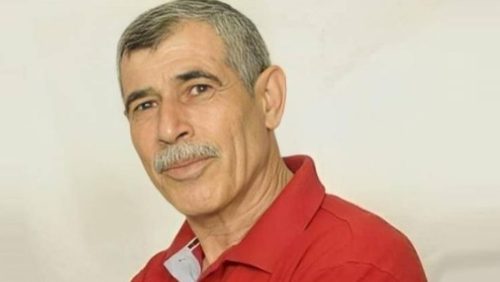
Longest-serving Palestinian prisoner Mohammed al-Tous (Photo via social media)
Press TV – January 25, 2025
Israel has freed the longest-serving Palestinian prisoner, Mohammed al-Tous, among the 200 inmates released as part of the second phase of a prisoner exchange deal with the Hamas resistance movement under the Gaza ceasefire.
In exchange for the prisoners, Hamas earlier on Saturday released four female Israeli soldiers, who were held in Gaza since October 7, 2023.
Tous, who had been in detention for nearly four decades, is a member of the Fatah movement founded by late Palestinian leader Yasser Arafat.
He joined Fatah in 1970 when he was only 14, and took part in several operations targeting Israeli forces and settlements between 1983 and 1985.
His activism led to multiple arrests, with his first imprisonment happening in 1970. After escaping from prison in 1975, he became a “wanted man” by Israel and was re-arrested four more times by 1985. An Israeli military court sentenced him to multiple life sentences.
Tous had been behind bars ever since.
While in prison, Tous emerged as a leader among inmates, advocating for the rights of Palestinian prisoners and participating in hunger strikes to protest against Israeli prison policies.
His resilience and commitment to the Palestinian cause have made him a symbol of resistance in the eyes of the Palestinian people.
Tous is also an accomplished author. His first book, Eye of the Mountain (2021), details his life, resistance activities, and perspectives on the Palestinian struggle. His latest work, Sweetness and Bitterness (2023), chronicles his ordeals in prison, offering insight into the challenges faced by Palestinians incarcerated in Israeli jails.
According to the Palestinian Prisoners’ Club advocacy group, the 69-year-old is recognized as the “dean” of prisoners in the occupied West Bank.
Tous was on the list of seventy detainees who were deported to Egypt on Saturday and who have not been able to meet their relatives in Gaza.
Several high-profile Palestinian fighters including Mohammad al-Ardah, who was part of a jailbreak in 2021, were also among them.
They are expected to be transferred from Egypt to countries such as Algeria, Tunisia, and Turkey.
Separately, a total of 114 inmates arrived in Ramallah and received a heroes’ welcome.
Masses of people congregated in the occupied West Bank city and celebrated the return of the released Palestinian prisoners.
The large crowd included people hoisting Palestinian flags, shouting slogans and documenting the scene with their phones. They surrounded a convoy of buses carrying the freed prisoners.
Moreover, sixteen freed Palestinian prisoners arrived in the Gaza Strip through the Karem Abu Salem crossing.
The released Palestinian prisoners were transferred to the European Gaza Hospital in Khan Younis, which is situated in the south of the Gaza Strip.
Israel has released a list of more than 700 Palestinian prisoners, who are to be released under the deal. More than 230 prisoners are serving life sentences and will be permanently sent to exile upon their release.
Hamas said in a statement on Saturday that Israel was forced to “open the doors of his cells to our heroic prisoners,” after more than 14 months of “unprecedented brutal aggression that targeted every inch of Gaza in its barbarity.”
Israel Is Blocking 11 American Doctors and Nurses From Leaving Gaza

The group of doctors trapped in Gaza. Photo courtesy of Rahma.
By Prem Thakker | Zeteo | January 25, 2025
Only days into Israel’s ceasefire with Hamas, 11 American doctors and nurses say the Israeli government is blocking them from leaving Gaza and returning to the United States.
The doctors, who entered Gaza on Jan. 9 with authorization and clearance from the Israeli government, were set to leave the enclave on Wednesday. But Israel denied their planned exit, telling the group they couldn’t leave due to an unspecified “incident” at a security checkpoint, affected doctors and a colleague in the US told Zeteo.
It’s unclear what incident Israel was referring to. COGAT, the Israeli agency that coordinates humanitarian aid entering Gaza, did not immediately answer specific questions about the group. One doctor said the only major incident the group was aware of involved Israeli forces firing on Palestinians returning to their homes in Rafah.
The group, part of the humanitarian organization Rahma, is currently stuck in northern Gaza and was also told by Israel they cannot even move to the south to leave the Strip “due to certain operational considerations that are currently in consideration regarding the activities on these days.”
Shehzad Batliwala, one of the trapped doctors, told Zeteo that many in the group are “needed to provide critical care to US citizens and others back home.”
The doctors and nurses hope they can leave in the coming days. After the delay, Batliwala said Israel initially told the group they wouldn’t be able to leave until next Tuesday, but has since suggested they may be able to leave on Sunday. In any case, the doctors and their advocates said they would remain skeptical until they’ve successfully left Gaza.
Another Team Prevented From Entering
At the same time, the doctors say Israel is also preventing another Rahma team of doctors, who are part of a larger convoy of health workers, from entering Gaza. They were also told that an “incident” occurred near the Kerem Shalom crossing on the Gaza-Israel border, leaving it closed for both entry and exit. They were forced to leave Israel and return to Jordan. It’s unclear if and when they may be allowed to enter.
“Denying entry to humanitarian workers, especially during a ceasefire period, makes no sense given the dire healthcare and humanitarian needs on the ground,” Batliwala said. “As someone currently in Gaza, I can confirm that there are patients urgently awaiting follow-up and surgical intervention, none of which is happening due to these restrictions.”

A young boy holds the hand of an injured man at the al-Ahli Baptist Hospital after an Israeli attack in Gaza on Jan. 16, 2025. Photo by Abdalrahman T. A. Abusalama/Anadolu via Getty Images
Dr. Adam Hamawy, a US Army combat surgeon veteran – whom Sen. Tammy Duckworth credits with saving her life after she was wounded two decades ago during the Iraq War – is among the convoy of medical professionals trying to enter Gaza. Hamawy, who was also among a team of doctors temporarily barred from leaving Gaza in May, told Zeteo that Israel has “continued to hinder entry and exit of medical and humanitarian workers since the beginning of this genocide.”
The convoy, led by the UN and Rahma, includes some 50 people. At least 14 are American, Hamawy said.
Test for Trump
Israel’s decision to block the groups underscores the fragility of the first phase of a long-awaited ceasefire agreement, the first test for newly-elected President Donald Trump in the region. While the bombs have largely stopped in Gaza, Israeli forces have still continued its killing – particularly in the West Bank. Among the tens of thousands of people Israeli forces have killed, hundreds have been medical workers and volunteers – including American World Central Kitchen worker Jacob Flickinger.
Israel’s actions also renew concerns about the US government’s commitment to ensuring the Israeli government protects Americans in both Gaza and the West Bank. In the last year, the US continued to send billions in US military aid and provide diplomatic cover despite Israel’s actions against US citizens, including the killing of 26-year-old American Ayşenur Ezgi Eygi, who was shot dead by an Israeli soldier in the occupied West Bank last September.
The State Department and White House did not respond to a request for comment. Zeteo also reached out to the offices of senators representing the states where the doctors trapped in Gaza hail, including Texas’ Ted Cruz and John Cornyn, California’s Alex Padilla and Adam Schiff, Florida’s Rick Scott and Ashley Moody, Colorado’s Michael Bennet and John Hickenlooper, Ohio’s Bernie Moreno, and Arizona’s Mark Kelly and Ruben Gallego.
Only Hickenlooper’s office responded, saying they are “in contact with a Colorado doctor in Gaza as well as with the US Embassy.”
Zionist group sending Trump list of pro-Palestine students for deportation: Report
Press TV – January 25, 2025
An American-Zionist group is reportedly compiling the names of foreign students on visas to hand to the new administration of US President Donald Trump for deportation over holding pro-Palestine demonstrations across university campuses.
The World Betar Movement has initiated a campaign to identify the foreign students in the United States who have participated in anti-Israel activities on college campuses, The New York Post said.
The group is preparing a list of names to provide to the Trump administration, aiming to facilitate the deportation of individuals who condemn Israeli genocide and support Palestinian resistance movements in the Gaza Strip.
The group has about 30 names of students from countries such as Jordan, Syria, Egypt, Canada, and the United Kingdom currently enrolled in some of the top US universities, including Columbia, UPenn, Michigan, Syracuse, UCLA, The New School for Social Research, Carnegie Mellon, and George Washington University, it said.
Accusing the pro-Palestine students of anti-Semitism, Ross Glick, director of the US chapter of Betar, said, “We have started lists of Jew-hating foreign nationals on visas who support Hamas.”
Stressing that Betar is utilizing facial recognition software and advanced database technology to compile the list, Glick said the initiative aligns with Trump’s campaign promise to revoke the student visas of individuals engaging in anti-Semitic activities.
The World Betar Movement is reportedly in contact with Trump administration officials to pursue legal action against foreign students and prevent what they view as the exploitation of the American academic system for anti-Israel purposes.
Trump on Friday issued an executive order allowing the deportation of those non-citizens, including foreign students, who have been supporting US-designated “terrorist” organizations of the Palestinian resistance movement Hamas and its Lebanese counterpart, Hezbollah, on American soil.
Pro-Palestine students at American and European universities have held widespread rallies and sit-ins across their campuses in support of Gaza since Hamas-led resistance groups launched Operation Al-Aqsa Flood into the Israeli-occupied territories on October 7, 2023, in response to the regime’s decades-long crimes against Palestinians.
Israel has killed at least 47,000 Palestinians, mostly women and children, and injured 111,000 other individuals in Gaza since the onset of its genocidal war against Gaza, also leaving thousands more missing and presumed dead under the rubble.
Israel was forced to agree to a ceasefire, which began on January 19, after it failed to achieve its declared objectives in the besieged territory.
Palestinians celebrated the ceasefire as a victory with some 2,000 Palestinian prisoners set to be released from Israeli prisons in exchange for Israeli captives held in Gaza.
Featured Video

The American Retreat from Vietnam
or go to
Aletho News Archives – Video-Images
From the Archives
Secret document reveals plans for civil war in Lebanon, Israeli false flags, and invasion
By Randi Nord | Geopolitics Alert | April 5, 2019
Beirut – During his visit with US Secretary of State, Mike Pompeo, Lebanese President Michael Aoun reportedly received a US-Israeli document detailing plans for creating a civil war in Lebanon with covert false flag operations and possible Israeli invasion.
Although the source of the document is Israeli and created in partnership with Washington, no one knows who presented it to Aoun. The Lebanese TV station, Al-Jadeed, initially reported the document on Lebanese TV and a video on its website. Geopolitics Alert translated the report for this article. … continue
Blog Roll
 Aletho News
- ‘Distance yourselves from Israel’: IRGC urges US population to question govt policies
- America’s Greenland deal has a radioactive backstory
- The RAF Fairford ‘terror plot’: Unpacking escalation in the UK echo-chamber
- EU Council Advances Chat Control 2.0 Scanning Proposal
- Ex-Greek MEP files complaint against Israeli spyware firm over alleged Pegasus surveillance
- Troubling ideas throughout the Torah, Talmud, Mishneh Torah and Tanya
- ‘Grave, alarming’: Iran mission on Trump’s UNGA ‘annihilation’ threats
- Najaf airport to reopen to Iranian flights within 24 hours: Ambassador
- From ‘How Will This End For Iran’ to ‘When America Walks Away’: A tale of two Economist covers
- Tehran blasts ‘baseless’ speculation linking Iran to alleged bomb plot at UK air base
- If Americans Knew
- US arms sales to Israel worth $21.6 billion in 20 months
- Three Palestinians Killed in Israeli Attacks on Gaza
- Revealed: German “Anti-Semitism Expert” Driving Crackdown on Palestine Solidarity is Former Israeli Spy
- Egypt’s Warning to Israel Before Oct 7
- Israel’s siege signals another cruel winter for 1.8 million Gazans – Daily Update
- Netanyahu Asked UAE Leader to Deny Report on Oct. 7 Warning in Secret Visit, Sources Say
- CNN Chief Int’l Correspondent Clarissa Ward on Journalists in Gaza
- Democratic Party Consultants Surround Troy Jackson with Pro-Israel Donors
- Christian Leader Responds To Netanyahu’s Claims Regarding Palestinian Christians
- In Gaza, ‘Whoever Survives the Bombing Won’t Survive the Rubble’
- No Tricks Zone
- New Study: Earth And Venus Surface Warmth Largely Explained By Convection And Lapse Rate, Not CO2 Or Radiation
- 2025 Nature Paper Claiming Worsening Global Drought Gets RETRACTED …Heavily Flawed
- New Study: ‘Global Drought Shows No Detectable Recent Acceleration Under Climate Warming’
- Economic Masterminds: German Socialists Suggest Taxing Productivity Gains Stemming From Using AI
- The South China Sea Has Not Been Cooperating With The Climate Change Narrative
- Energy Crisis: Germany Enters Heating Season With Historically Low Gas Reserve Fill Levels
- New Study: The Antarctic Ice Sheet Gained Mass From 2020-2024 Due To Staggering Snow And Ice Accumulation
- Study: Ocean Heating Rates From Thousands Of Years Ago ‘Dwarf’ Modern Ocean Heating Rates
- Climate Extremists Target, Attack Large-Scale Power Grid Infrastructure In Germany!
- New Study: Antarctic Ice Melt Has Contributed Less Than 1 Centimeter To Sea Level Rise In The Last 30 Years

