
Aid to Israel is now a highly polarizing issue, a poll conducted by the Chicago Council on Global Affairs and the pro-Zionist Israel Democracy Institute have found.
The survey taken last month found that the US government’s deferential treatment of Israel is completely out of line and unrepresentative of popular opinion.
On the question of whether to restrict US military aid to Israel, 50% of all Americans support ending such support, compared to 45% who oppose it. Among supporters of aid restrictions are 32% of registered Republicans, 62% of Democrats, and 52% of Independents. This is a drastic rise from historical opinion polls for all political persuasions right, left and center.
In respects to the Israel-Palestine conflict itself, only 32% of Americans believe the US government should be getting involved on Israel’s side.
A glaring distinction is made clear when both the US and the Jewish Israeli public were asked about potential solutions to the dispute. Last July, it was found that 56% of Americans and 69% of Israel’s Arab minority support a two state solution, which would allow the West Bank and Gaza to become an independent Palestinian state. Only 34% of Jews in Israel support this view.
Even more telling were the answers on a potential one state solution. A one state solution would incorporate Gaza and the West Bank and transform Israel into an American or European style multi-racial democracy where Arabs in occupied territories would enjoy equal rights to Jews. Even higher numbers of Americans (60%) support this resolution, as well as 56% of Israeli Arabs. Meanwhile, only a paltry 14% of Israeli Jews would even consider such an idea.
The only opinion Israeli Jews responded favorably to was to maintain the status quo (42%) in the conflict, which means the slow and illegal expansion of their regime as they ethnically cleanse and kill Palestinians. This view was only shared by 26% of Americans and 15% of Israeli Arabs.
It is not controversial to say that global Jewry is by far the most vocal and powerful advocate for racial pluralism, mass immigration, and multi-culturalism in the West. Yet, in the Jewish state, the idea of a “rainbow nation” is rejected by a super-majority, who are so inflexible that they do not even want Palestinians to have even the most sensible demand of an independent nation composed of the West Bank and Gaza Strip.
As this poll run by the Israel lobby shows, Zionism in the United States is rapidly losing ground among popular opinion. This has yet to make any significant mark on Washington consensus, where both Democrats and Republicans have repeatedly shown that American aid to Israel is unconditional.
September 15, 2021
Posted by aletho |
Ethnic Cleansing, Racism, Zionism | Israel, Palestine, United States, Zionism |
Leave a comment
![Afghan protesters shout slogans against the US and Israel during a protest in downtown Kabul on December 8, 2017 [WAKIL KOHSAR/AFP via Getty Images]](https://i2.wp.com/www.middleeastmonitor.com/wp-content/uploads/2021/09/GettyImages-888278700-scaled-e1631610540399.jpg?resize=1200%2C799&quality=85&strip=all&zoom=1&ssl=1)
Afghan protesters shout slogans against the US and Israel during a protest in downtown Kabul on December 8, 2017 [WAKIL KOHSAR/AFP via Getty Images]
Israelis are concerned about the shameful American withdrawal from Afghanistan and think that their government now needs to reassert its ability to protect its own interests in the region and beyond. The general feeling is that the withdrawal will now give Israel’s enemies more freedom to move, especially Iran, which will not hesitate to strengthen its relations with China, which in turn has clear interests in Afghanistan and the Arab Gulf. Events in Afghanistan have rung alarm bells for Israel and its allies in the region.
At the same time, Israelis believe that the US withdrawal from most of its strongholds in the Middle East and Central-South Asia — Iraq first and now Afghanistan, and perhaps Syria later — may push some regional states to move against Israel. The evaluation of America’s role in the Middle East is that US forces can no longer rely on using Arab countries for emergencies. A comprehensive view of the region puts Israel in a better position in terms of US interests, at least according to an uncertain Israeli assessment.
However, the fear remains that what happened in Afghanistan could be mirrored in the occupied West Bank, not least due to the exposure of American weakness. The strategic patience and steadfastness of the Taliban have created an inspiring narrative for the Palestinian Islamic Resistance Movement, Hamas.
In this context, Israelis are asking if events in Afghanistan could be replicated in the Palestinian arena, especially if Israel withdraws from parts of the West Bank in any deal with the Palestinians. Such an exit would almost certainly lead, at least in the short term, to instability, and encourage Hamas to try to expand its influence in the territory.
Although Israel and the occupied Palestinian territories are geographically distant from Afghanistan, the Israeli government claims that it will be required to respond to any development that threatens its security at home and abroad. In this case, it will take into account the current situation in the conflict with the Palestinians, and the de facto reality of a “one-state solution”, with all the negative political and social ramifications that it will have based on successive security warnings.
America’s exit from Afghanistan was embarrassing for Washington, but there were no demonstrations on US streets, either in support of or opposing the withdrawal. Any Israeli withdrawal from even a small part of the occupied West Bank, however, will cause a great stir. A lot of political determination and conviction will be required before such a move could be taken. Indeed, it could be beyond the current government, the survival of which would be threatened.
Israel expects the US withdrawal from Afghanistan to encourage its enemies to attack it. Although the Taliban movement does not pose a direct threat to Israel, it represents a concern for the colonial state, because it shares a border with Iran and the US withdrawal confirms the ongoing reduction of American intervention in the Middle East and beyond. Ideological and political differences aside, Israel knows that successive US presidents have shared a desire to end their involvement in the bloody wars in the Middle East and Central-South Asia. In doing so, believes Israel, America’s ability to challenge Iranian influence may create a domino effect tipping the scales of regional power at the expense of the Zionist state.
Nevertheless, there may be opportunities for Israel to enhance its regional position, because it is not only watching Afghanistan with concern but also, and perhaps more importantly, watching the positions of the Arab regimes that depend on the US for their security, in light of a growing mistrust in its ability to support them. Saudi Arabia and other countries in the region may approach Israel, as a possibly more reliable ally than the US, to fulfil their security needs, even without full normalisation of relations. Security cooperation between Israel and a number of Gulf States is already overt. It is thus likely that such Israeli cooperation with other Arab countries will increase.
Rapprochement and subsequent engagement with Israel may not be limited to “moderate” Arab countries. NATO, for example, could expand its security cooperation with the Zionist state, replacing the US with a willingness to get involved in regional affairs.
All of this is speculation at the moment in the wake of the US withdrawal from Afghanistan. Although not actually part of the Middle East, a Taliban-led Afghanistan is going to play a major role in reshaping the region and how changes might affect Israel.
September 14, 2021
Posted by aletho |
Ethnic Cleansing, Racism, Zionism, Wars for Israel | Afghanistan, Iran, Israel, Middle East, United States, Zionism |
Leave a comment
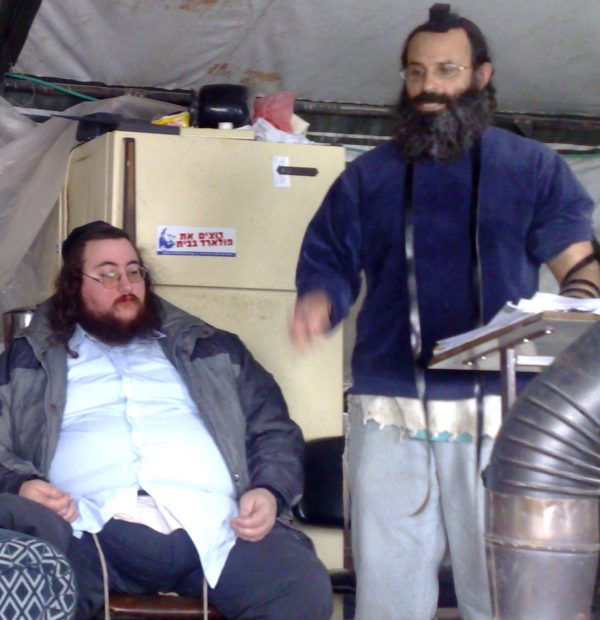
Notorious American-Israeli settler Justin Yaakov Fauci with Kahanist terrorist-turned-hate-preacher Gordon Yehuda Richter
The number of Jewish American moving into illegal settlements in the Israeli-occupied West Bank has increased dramatically, according to recent data from Tel-Aviv’s Central Bureau of Statistics.
Out of the 2,296 US citizens who migrated to the occupation state last year, 191 moved into illegal settlements. This represents nearly a threefold increase from the previous year when less than three per cent settled in Palestinian territory.
American Jews are also the most likely to settle in occupied territory compared with fellow Jews from other parts of the world. While they accounted for just over ten per cent of all the newcomers arriving in Israel last year, they made up nearly a third of those opting to settle in the West Bank.
This disparity is said to be due to the American Jewish community being more orthodox and tending to hold right-wing supremacist views, such as that all of the territory from the River Jordan to the Mediterranean Sea was granted to Jews by God.
Another reason is that the Jewish organisation subcontracted to handle the logistics of immigration from the US is the private Nefesh b’Nefesh. The group is said to encourage American Jews to settle in the occupied West Bank. About a quarter of the communities highlighted on its website are located in illegal settlements, such as Efrat, Ma’aleh Adumim and Elkana. It makes no mention of the fact that these places are not within Israel.
The ugly reality of the takeover of Palestinian land by settlers arriving from the US grabbed international attention earlier this year when an American-born Israeli, Yaakov Fauci, was captured on video trying to evict the Palestinian El-Kurd family from their home in the Sheik Jarrah neighbourhood of occupied East Jerusalem.
“If I don’t steal it, someone else is going to steal it,” said Fauci in a video that went viral and sparked international condemnation. He was born in Long Island, New York, and was recruited by Nahalat Shimon International, a US-based settler organisation seeking to change the demographics of occupied East Jerusalem.
September 13, 2021
Posted by aletho |
Ethnic Cleansing, Racism, Zionism, Illegal Occupation, War Crimes | Israel, Palestine, United States, Zionism |
Leave a comment
Unaware that he was on a hot mic and being broadcast live on a TV station, Israeli health minister Nitzan Horowitz admitted that vaccine passports were primarily about coercing skeptical people to get the vaccine.
“Imposing “green pass” rules on certain venues is needed only to pressure members of the public to get vaccinated, and not for medical reasons, Israeli Health Minister Nitzan Horowitz said on Sunday, ahead of the weekly Cabinet meeting,” reports Jewish News Syndicate.
Unaware that his words were being broadcast live to the nation on Channel 12, Horowitz told Interior Minister Ayelet Shaked that not only should the green pass be removed as a requirement to dine at outdoor restaurants, but also, “For swimming pools, too, not just in restaurants.”
“Epidemiologically, it’s true,” said Horowitz, adding, “The thing is, I’m telling you, our problem is people who don’t get vaccinated. We need [to influence] them a bit; otherwise, we won’t get out of this [pandemic situation].”
The health minister went on to acknowledge that the system wasn’t even being enforced in most venues.
“There is a kind of universality to the ‘green pass’ system, other than at malls, where I think it should be imposed, [because] now it’s clear that it applies nowhere,” he said.
Israel was once lauded for its successful vaccine rollout and the speed with which it introduced vaccine passports.
The green pass was heralded as an “early vision of how we leave lockdown.” However, the country recently reported its highest ever number of daily COVID cases, with nearly 11,000 infections being recorded.
Although the early threat that the unvaccinated would be banned from entering numerous public venues convinced many younger people to get the vaccine, once it rolled out, the ‘green pass’ system was rarely even enforced and was subsequently scrapped at the end of May.
But once cases started rising again later that summer, Israel’s vaccine passport system was reintroduced and expanded.
Meanwhile, Sweden, which never imposed a hard lockdown, recently banned travelers arriving from Israel from entering the country.
September 13, 2021
Posted by aletho |
Civil Liberties, Deception, Science and Pseudo-Science | Covid-19, COVID-19 Vaccine, Human rights, Israel |
Leave a comment
A new report says a recent decision by the US Navy’s 5th Fleet to launch a drone task force is a step towards the establishment of a joint maritime unit comprising Persian Gulf Arab countries and Israel for proxy missions in the region.
On Wednesday, the 5th Fleet based in Bahrain announced that it will launch the new task force that incorporates airborne, sailing and underwater drones after years of maritime attacks linked to ongoing tensions with Iran.
US Navy officials declined to identify which systems they would introduce from their headquarters in Bahrain, but said the coming months would see the drones stretch their capabilities across the region.
“We want to put more systems out in the maritime domain above, on and below the sea,” said Vice Adm. Brad Cooper, who leads the 5th Fleet. “We want more eyes on what’s happening out there.”
“These measures are in line with the launch of a joint maritime unit between Persian Gulf Arab countries and the Zionist regime. Using the equipment announced, the unit is supposed to play a role in proxy missions thanks to the support of the United States,” Iran’s Nour News agency wrote on Saturday.
“Successive failures in costly military campaigns in West Asia have led to a new US national security strategy, under which the American military focus in the region will change in favor of the development of presence in East Asia and the Chinese Sea,” it added.
According to the report, Washington is expected to hand over part of the missions of its military units in West Asia to Arab states and Israel to make its absence in West Asia and the Persian Gulf not conspicuous.
On September 1, the Tel Aviv regime officially moved into the US Central Command’s (CENTCOM) area of responsibility, taking over from the European Command (EUCOM).
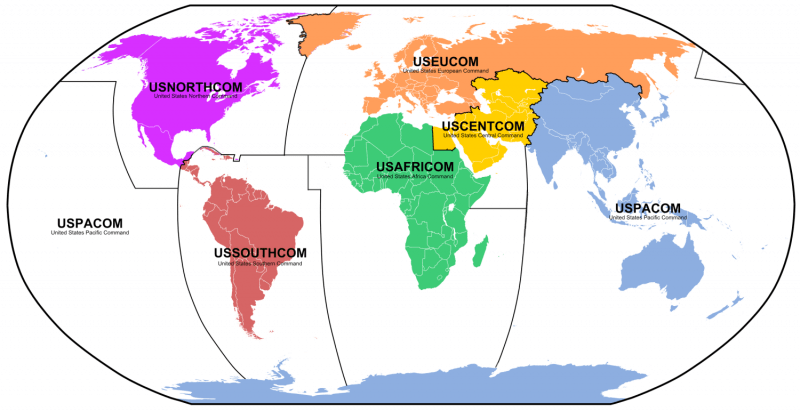
Nour News said the move paved the way for Israel to design and implement evil acts in the region with the help of some of the Persian Gulf Arab states.
“The new strategy, which lays the ground for the pursuit of the new national security doctrine, began by creating artificial tensions in the region based on a pre-designed scenario,” it added.
In late July, the US, the UK and Israel blamed Iran for a deadly drone attack on an Israeli-managed oil tanker, the Mercer Street, off the coast of Oman.
A few days later, Reuters claimed that “Iran-backed forces” were believed to have seized the Panama-flagged Asphalt Princess tanker off the coast of the United Arab Emirates (UAE).
The Associated Press, citing information from MarineTraffic.com, reported that four tankers – the Queen Ematha, the Golden Brilliant, Jag Pooja and Abyss – broadcast over the Automatic Identification System (AIS) that their vessels were “not under command.”
Later, however, it emerged that all those contradictory reports of maritime incidents were circulated by the Zionists to justify their own evil acts in the region and portray Iran as the country that is causing insecurity, Nour News said.
“The depth of the Zionists’ lies became more evident after the Golden Brilliant docked at Iran’s Bandar Abbas port days after rumors about its possible hijacking.”
Press TV’s website can also be accessed at the following alternate addresses:
September 11, 2021
Posted by aletho |
Ethnic Cleansing, Racism, Zionism, False Flag Terrorism, Militarism | Bahrain, Iran, Israel, Middle East, United States, Zionism |
Leave a comment
Remarking on the occasion of on the International Day against Nuclear Tests, Iran’s UN envoy underlines the need for the disarmament of the world’s nuclear weapon possessors, most importantly the US and Israel.
Majid Takht Ravanchi, who was addressing a United Nations General Assembly meeting held to mark the day, said that the United States was the world’s nuclear-weapon state that had carried out the majority of tests using the non-conventional weapons since 1945.
Throughout the period, “about 2,000 tests have been carried out, 1,054 of which by the US,” he told the Wednesday meeting, adding, “These sinister tests have been used as preliminary steps towards the production, proliferation, and even use of nuclear weapons.”
“The devastating consequences of nuclear tests reverberate across generations, with widespread and profound impacts on not only the people but also our planet,” the envoy reminded.
He further urged the international community against the continued tolerance of ownership of such weapons by the Israeli regime—the US’s most treasured ally in the Middle East that is in possession of hundreds of nuclear warheads.
Takht Ravanchi placed emphasis on the fact that humanity’s very survival depends on the international community’s resolve to stand up to the deployment of nuclear weapons and its commitment to the weapons’ ultimate destruction.
“Given the bitter experience of the past, it is our conviction that nuclear disarmament is and must remain a top priority for the international community. The very survival of humankind depends on our unwavering concurrence that nuclear weapons should never be deployed and, furthermore, permanently destroyed. Therefore, we highlight that the moratoria to stop nuclear tests does not substitute a legally binding obligation,” the Iranian envoy stated.
He, meanwhile, hailed entry into force of the Treaty on the Prohibition of Nuclear Weapons (TPNW) that took effect in January, calling the development a step in the direction of nuclear non-proliferation and disarmament.
September 9, 2021
Posted by aletho |
Militarism, Timeless or most popular, War Crimes | Iran, Israel, United States |
Leave a comment
An upcoming Israeli film that sympathetically portrays a group of Jewish terrorists who attempted to murder millions of German civilians by poisoning their water supply is enjoying uncritical publicity in Zionist media.
The film, “Plan A,” is based on a true story that director Yoav Paz extensively researched through recently unveiled testimony as well as the book Li Nakam Veshilem (Vengeance and Retribution are Mine) by historian Dina Porat.
Following the end of the second world war, a group of approximately 50 Jews led by communist partisan and Israeli national poet Abba Kovner formed a group called “Nakam,” or “the avengers.”
The group concocted a scheme to infiltrate post-war Europe and kill millions of German citizens by adding arsenic to their drinking water — a plot they called “Plan A.” Were that to fail, they had a “Plan B” where they would poison German soldiers held in Allied prisoner of war camps. According to Kovner’s testimony, the future first president of Israel Chaim Weizmann aided his organization in the operation.
“Plan A” failed when British security forces intercepted members of Nakam and they were forced to throw their supply of poison overboard of their ships. Individuals in the Zionist movement also believed that a terrorist attack of such a magnitude would’ve caused diplomatic problems for the soon to be founded Zionist state and may have tipped the British off.
Eventually they succeeded in partially achieving “Plan B.” They infiltrated the American run Langwasser internment camp and were able to poison thousands of captive German soldiers by putting arsenic in their bread. While many were seriously ill, the New York Times claimed at the time that there were no known deaths, though this incident has no been closely investigated. The criminals in question were thwarted in their other operations but released after a few months.
According to Paz and his brother and co-writer Doran, the point of their movie is not to examine “right and wrong” or “black and white,” but instead to make Jewish viewers sympathize with the Nakam’s mindset and actions.
Stephen Applebaum at Jewish News appears to come away with the message the directors were trying to convey, “Putting yourself in the shoes of the Avengers today is a queasy sensation. Their suffering and loss is made palpable in the film, but so is the suffering, loss and horror they planned to inflict on millions. What would you have done? Hopefully, none of us will ever need to find out.”
Though “Plan A” is in English and has a relatively well-known cast, including German actor August Diehl and “Bladerunner 2049’s” Sylvia Hoeks, there are not many reviews for the upcoming feature set to debut in America and Europe on September 13th.
Cath Clarke at The Guardian is so far the single exception, but she focuses on the film’s technical failures rather than the dark message suggesting that Jews should consider indiscriminately killing people from ethnic groups they have grievances or grudges against. A film promoting such a dangerous message in any other racial and historical context would’ve undoubtedly garnered much more controversy.
September 9, 2021
Posted by aletho |
Ethnic Cleansing, Racism, Zionism, Film Review, Timeless or most popular, War Crimes | Israel, Zionism |
Leave a comment

Colonel Mamadi Doumbouya along with US Africa Command soldiers
By Lucas Leiroz | September 8, 2021
A recent coup in Guinea has left the world surprised and unanswered about what is really happening in the region. The military overthrew the president and seized power after some controversies involving alleged attempts by the former leader to perpetuate himself in power. Regardless of political factors on the domestic scene, the coup appears to have great international relevance, as it strongly harms Russian interests in Guinea.
On Sunday, Guinea’s armed forces arrested the country’s then president, Alpha Conde, and announced the dissolution of the government. According to witnesses, during the president’s detention, at least two people were injured in an intense firefight in and around the presidential palace, located in Conakry, the country’s capital. The military official who led the coup was Colonel Mamadi Doumbouya, who, in statements to the local media, said that there will be a major reform in the country, with the formation of a new government, promulgation of a new constitution and beginning of a military administration.
Doumbouya heads a dissident military group that calls itself the “National Committee of Reconciliation and Development” (CNRD, in its French acronym). So far, little is known about such organization, which appears to have been formed a few days before the coup and does not seem to have a formal ideology or agenda to be defended, just joining soldiers dissatisfied with Conde’s government. The CNRD released videos proving that the former president is alive and safe, but there is still not enough information to affirm the conditions under which he is being treated.
To understand the case, we must pay attention to the background of the coup. Alpha Conde was elected for a third presidential term in October 2020 and was declared president the following month, in November. The opposition claimed fraud during the elections and initiated a crisis of legitimacy. The point most criticized by his opponents was Conde’s decision to amend the constitution so that he could be perpetuated in power. Guinea’s constitution forbade a president to run for office three times in a row, but Conde made a change in the legal text in order to be able to run and defeat his opponents. Despite being a complicated and controversial legal maneuver, Conde gained strong popular support and his permanence in power was the preference of most of the Guinea’s people, according to surveys carried out at the time.
On the other hand, the leader of the coup, Colonel Doumbouya, was until then a rather obscure figure to the national political scenario. Doumbouya is a former member of the French Foreign Legion, having served in military operations in Afghanistan and African countries. He received military training in Israel before returning to his country and assuming command of the special forces. There are photos circulating on the internet showing Doumbouya along with US Africa Command soldiers at the US embassy in Guinea – the circumstances are unknown but reveal some degree of connection between military dissidents and foreign agents.
The reason that explains why the strong opposition occurred between Condé and Doumbouya may be precisely in their foreign connections. Guinea is one of the largest aluminum and bauxite suppliers in the world. The coup strongly impacted the metals industry, which reached record highs in the price of aluminum. And one of the main aluminum and bauxite explorers in Guinea is the Russian company Rusal, which has been operating in the country for two decades and is responsible for managing several local firms and industries.
Obviously, there wasn’t a coup d’état just to stop Rusal’s actions in Guinea. The tension is due to the level of collaboration between the African country and Russia. Conde was interested in taking advantage of the partnership in the aluminum and bauxite business to increase economic cooperation and seek more Russian investments in Guinea. In June of this year, Conde sent a delegation of officials to Russia, during the 24th St. Petersburg International Economic Forum, with the intention of starting a bilateral dialogue to attract more investment in Guinea, mainly in the infrastructure sector, which is a strategic point for the implementation of national development policies. In fact, Conde saw Russia as an opportunity for strategic international cooperation between two emerging nations, just as other African countries have seen in China, for example.
Certainly, no Western country will publicly support the coup, but the unstable situation in national politics will already be enough to prevent Russian investments in Guinea, so Guinea has been “neutralized” in this regard. Perhaps, in addition to Latin America, Africa is also in Washington’s plans since the US has lost strength in Asia. If this is confirmed, it is possible that in the near future we will see new coups taking place in other African states.
Lucas Leiroz is a research fellow in international law at the Federal University of Rio de Janeiro.
September 8, 2021
Posted by aletho |
Economics | Africa, Guinea, Israel, Russia, United States |
Leave a comment
- Who Were the Israelis Living Next to Mohammed Atta?
- What was in the Van on the New Jersey Shore?
- How did Two Hijackers Land on Watch List Weeks Before 9/11?
- Who Shut Down Fox News’ Carl Cameron?
On the afternoon of September 11, 2001, an FBI bulletin known as a BOLO – “be on lookout” – was issued with regard to three suspicious men who that morning were seen leaving the New Jersey waterfront minutes after the first plane hit World Trade Center 1. Law enforcement officers across the New York-New Jersey area were warned in the radio dispatch to watch for a “vehicle possibly related to New York terrorist attack”:
White, 2000 Chevrolet van… with ‘Urban Moving Systems’ sign on back seen at Liberty State Park, Jersey City, NJ, at the time of first impact of jetliner into World Trade Center… Three individuals with van were seen celebrating after initial impact and subsequent explosion. FBI Newark Field Office requests that, if the van is located, hold for prints and detain individuals.
At 3:56 p.m., twenty-five minutes after the issuance of the FBI BOLO, officers with the East Rutherford Police Department stopped the commercial moving van through a trace on the plates. According to the police report, Officer Scott DeCarlo and Sgt. Dennis Rivelli approached the stopped van, demanding that the driver exit the vehicle. The driver, 23-year-old Sivan Kurzberg, refused and “was asked several more times [but] appeared to be fumbling with a black leather fanny pouch type of bag”. With guns drawn, the police then “physically removed” Kurzberg, while four other men – two more men had apparently joined the group since the morning – were also removed from the van, handcuffed, placed on the grass median and read their Miranda rights. They had not been told the reasons for their arrest. Yet, according to DeCarlo’s report, “this officer was told without question by the driver [Sivan Kurzberg], ‘We are Israeli. We are not your problem. Your problems are our problems. The Palestinians are the problem.’” Another of the five Israelis, again without prompting, told Officer DeCarlo – falsely – that “we were on the West Side Highway in New York City during the incident”.
From inside the vehicle the officers, who were quickly joined by agents from the FBI, retrieved multiple passports and $4,700 in cash stuffed in a sock. According to New Jersey’s Bergen Record, which on September 12 reported the arrest of the five Israelis, an investigator high up in the Bergen County law enforcement hierarchy stated that officers had also discovered in the vehicle “maps of the city … with certain places highlighted. It looked like they’re hooked in with this”, the source told the Record, referring to the 9/11 attacks. “It looked like they knew what was going to happen when they were at Liberty State Park.”
The five men were indeed Israeli citizens. They claimed to be in the country working as movers for Urban Moving Systems Inc., which maintained a warehouse and office in Weehawken, New Jersey. They were held for 71 days in a federal detention center in Brooklyn, New York, during which time they were repeatedly interrogated by FBI and CIA counterterrorism teams, who referred to the men as the “high-fivers” for their celebratory behavior on the New Jersey waterfront. Some were placed in solitary confinement for at least forty days; some were given as many as seven liedetector tests. One of the Israelis, Paul Kurzberg, brother of Sivan, refused to take a lie-detector test for ten weeks. Then he failed it.
Meanwhile, two days after the men were picked up, the owner of Urban Moving Systems, Dominik Suter, a 31- year-old Israeli national, abandoned his business and fled the United States for Israel. Suter’s departure was abrupt, leaving behind coffee cups, sandwiches, cell phones and computers strewn on office tables and thousands of dollars of goods in storage. Suter was later placed on the same FBI suspect list as 9/11 lead hijacker Mohammed Atta and other hijackers and suspected al-Qaeda sympathizers, suggesting that U.S. authorities felt Suter may have known something about the attacks. The suspicion, as the investigation unfolded, was that the men working for Urban Moving Systems were spies. Who exactly was handling them, and who or what they were targeting, was as yet uncertain.
It was New York’s venerable Jewish weekly The Forward that broke this story in the spring of 2002, after months of footwork. The Forward reported that the FBI had finally concluded that at least two of the men were agents working for the Mossad, the Israeli intelligence agency, and that Urban Moving Systems, the ostensible employer of the five Israelis, was a front operation. Two former CIA officers confirmed this to me, noting that movers’ vans are a common intelligence cover. The Forward also noted that the Israeli government itself admitted that the men were spies. A “former high-ranking American intelligence official”, who said he was “regularly briefed on the investigation by two separate law enforcement officials”, told reporter Marc Perelman that after American authorities confronted Jerusalem at the end of 2001, the Israeli government “acknowledged the operation and apologized for not coordinating it with Washington”. Today, Perelman stands by his reporting. I asked him if his sources in the Mossad denied the story. “Nobody stopped talking to me”, he said. In June 2002, ABC News’ 20/20 followed up with its own investigation into the matter, coming to the same conclusion as The Forward. Vincent Cannistraro, former chief of operations for counterterrorism with the CIA, told 20/20 that some of the names of the five men appeared as hits in searches of an FBI national intelligence database. Cannistraro told me that the question that most troubled FBI agents in the weeks and months after 9/11 was whether the Israelis had arrived at the site of their “celebration” with foreknowledge of the attack to come. From the beginning, “the FBI investigation operated on the premise that the Israelis had foreknowledge”, according to Cannistraro. A second former CIA counterterrorism officer who closely followed the case, but who spoke on condition of anonymity, told me that investigators were pursuing two theories. “One story was that [the Israelis] appeared at Liberty State Park very quickly after the first plane hit. The other was that they were at the park location already”. Either way, investigators wanted to know exactly what the men were expecting when they got there.
Before such issues had been fully explored, however, the investigation was shut down. Following what ABC News reported were “high-level negotiations between Israeli and U.S. government officials”, a settlement was reached in the case of the five Urban Moving Systems suspects. Intense political pressure apparently had been brought to bear. The reputable Israeli daily Ha’aretz reported that by the last week of October 2001,some six weeks after the men had been detained, Deputy Secretary of State Richard Armitage and two unidentified “prominent New York congressmen” were lobbying heavily for their release. According to a source at ABC News close to the 20/20 report, high-profile criminal lawyer Alan Dershowitz also stepped in as a negotiator on behalf of the men to smooth out differences with the U.S. government. (Dershowitz declined to comment for this article.) And so, at the end of November 2001, for reasons that only noted they had been working in the country illegally as movers, in violation of their visas, the men were flown home to Israel.
Today, the crucial questions raised by this matter remain unanswered. There is sufficient reason – from news reports, statements by former intelligence officials, an array of circumstantial evidence, and the reported acknowledgment by the Israeli government – to believe that in the months before 9/11, Israel was running an active spy network inside the United States, with Muslim extremists as the target. Given Israel’s concerns about Islamic terrorism as well as its long history of spying on U.S. soil, this does not come entirely as a shock. What’s incendiary is the idea – supported, though not proven, by several pieces of evidence – that the Israelis did learn something about 9/11 in advance but failed to share all of what they knew with American officials. The questions are disturbing enough to warrant a Congressional investigation.
Yet none of this information found its way into Congress’s joint committee report on the attacks, and it was not even tangentially referenced in the nearly 600 pages of the 9/11 Commission’s final report. Nor would a single major media outlet track the revelations of The Forward and ABC News to investigate further. “There weren’t even stories saying it was bullshit”, says The Forward’s Perelman. “Honestly, I was surprised”. Instead, the story disappeared into the welter of anti-Israel 9/11 conspiracy theories.
It’s no small boon to the U.S. government that the story of 9/11-related Israeli espionage has been thus relegated: the story doesn’t fit in the clean lines of the official narrative of the attacks. It brings up concerns not only about Israel’s obligation not to spy inside the borders of the United States, its major benefactor, but about its possible failure to have provided the U.S. adequate warning of an impending devastating attack on American soil.
Furthermore, the available evidence undermines the carefully cultivated image of sanctity that defines the U.S.- Israel relationship. These are all factors that help explain the story’s disappearance – and they are compelling reasons to revisit it now.
Torpedoing the FBI Probe
All five future hijackers of American Airlines Flight 77, which rammed the Pentagon, maintained addresses or were active within a six-mile radius of towns associated with the Israelis employed at Urban Moving Systems. Hudson and Bergen counties, the areas where the Israelis were allegedly conducting surveillance, were a central staging ground for the hijackers of Flight 77 and their fellow al-Qaeda operatives. Mohammed Atta maintained a mail-drop address and visited friends in northern New Jersey; his contacts there included Hani Hanjour, the suicide pilot for Flight 77, and Majed Moqed, one of the strongmen who backed Hanjour in the seizing of the plane. Could the Israelis, with or without knowledge of the terrorists’ plans, have been tracking the men who were soon to hijack Flight 77?
In public statements, both the Israeli government and the FBI have denied that the Urban Moving Systems men were involved in an intelligence operation in the United States. “No evidence recovered suggested any of these Israelis had prior knowledge of the 9/11 attack, and these Israelis are not suspected of working for Mossad”, FBI spokesman Jim Margolin told me. (The Israeli embassy did not respond to questions for this article.)
According to the source at ABC News, FBI investigators chafed at the denials from their higher-ups. “There is a lot of frustration inside the bureau about this case”, the source told me. “They feel the higher echelons torpedoed the investigation into the Israeli New Jersey cell. Leads were not fully investigated.” Among those lost leads was the figure of Dominik Suter, whom the U.S. authorities apparently never attempted to contact.
Intelligence expert and author James Bamford told me there was similar frustration within the CIA: “People I’ve talked to at the CIA were outraged at what was going on. They thought it was outrageous that there hadn’t been a real investigation, that the facts were hanging out there without any conclusion.”
However, what was “absolutely certain”, according to Vincent Cannistraro, was that the five Israelis formed part of a surveillance network in the New York – New Jersey area. The network’s purpose was to track radical Islamic extremists and/or supporters of militant Palestinian groups like Hamas and Islamic Jihad. The former CIA counterterrorism officer who spoke anonymously told me that FBI investigators determined that the suspect Israelis were serving as Arabic speaking linguists “running technical operations” in northern New Jersey’s extensive Muslim communities.
The former CIA officer said the operations included taps on telephones, placement of microphones in rooms and mobile surveillance. The source at ABC News agreed: “Our conclusion was that they were Arab linguists involved in monitoring operations, i.e., electronic surveillance. People at FBI concur with this”. The ABC News source added, “What we heard was that the Israelis may have picked up chatter that something was going to happen on the morning of 9/11”. The former CIA counterterrorism officer told me: “There was no question but that [the order to close down the investigation] came from the White House. It was immediately assumed at CIA headquarters that this basically was going to be a cover-up so that the Israelis would not be implicated in any way in 9/11. Bear in mind that this was a political issue, not a law enforcement or intelligence issue. If somebody says we don’t want the Israelis implicated in this – we know that they’ve been spying the hell out of us, we know that they possibly had information in advance of the attacks, but this would be a political nightmare to deal with.”
Israel’s “Art Student Spies”
There is a second piece of evidence that suggests Israeli operatives were spying on al-Qaeda in the United States. It is writ in the peculiar tale of the Israeli “art students”, detailed by this reporter for Salon.com in 2002, following the leaking of an internal memo circulated by the Drug Enforcement Administration’s Office of Security Programs. The June 2001 memo, issued three months before the 9/11 attacks, reported that more than 120 young Israeli citizens, posing as art students and peddling cheap paintings, had been repeatedly – and seemingly inexplicably – attempting to penetrate DEA offices and other law enforcement and Defense Department offices across the country. The DEA report stated that the Israelis may have been engaged in “an organized intelligence gathering activity”, but to what end, U.S. investigators, in June 2001, could not determine. The memo briefly floated the possibility that the Israelis were engaged in trafficking the drug ecstasy. According to the memo, “the most activity [was] reported in the state of Florida” during the first half of 2001, where the town of Hollywood appeared to be “a central point for these individuals with several having addresses in this area”.
In retrospect, the fact that a large number of “art students” operated out of Hollywood is intriguing, to say the least. During 2001, the city, just north of Miami, was a hotbed of al-Qaeda activity and served as one of the chief staging grounds for the hijacking of the World Trade Center planes and the Pennsylvania plane; it was home to fifteen of the nineteen future hijackers, nine in Hollywood and six in the surrounding area. Among the 120 suspected Israeli spies posing as art students, more than thirty lived in the Hollywood area, ten in Hollywood proper. As noted in the DEA report, many of these young men and women had training as intelligence and electronic intercept officers in the Israeli military – training and experience far beyond the compulsory service mandated by Israeli law. Their “traveling in the U.S. selling art seem[ed] not to fit their background”, according to the DEA report.
One “art student” was a former Israeli military intelligence officer named Hanan Serfaty, who rented two Hollywood apartments close to the mail drop and apartment of Mohammed Atta and four other hijackers. Serfaty was moving large amounts of cash: he carried bank slips showing more than $100,000 deposited from December 2000 through the first quarter of 2001; other bank slips showed withdrawals for about $80,000 during the same period. Serfaty’s apartments, serving as crash pads for at least two other “art students”, were located at 4220 Sheridan Street and 701 South 21st Avenue. Lead hijacker Mohammed Atta’s mail drop was at 3389 Sheridan Street – approximately 2,700 feet from Serfaty’s Sheridan Street apartment. Both Atta and Marwan al-Shehhi, the suicide pilot on United Airlines Flight 175, which smashed into World Trade Center 2, lived in a rented apartment at 1818 Jackson Street, some 1,800 feet from Serfaty’s South 21st Avenue apartment.
In fact, an improbable series of coincidences emerges from a close reading of the 2001 DEA memo, the 9/11 Commission’s staff statements and final report, FBI and Justice Department watch lists, hijacker timelines compiled by major media and statements by local, state and federal law enforcement personnel. In at least six urban centers, suspected Israeli spies and 9/11 hijackers and/or al-Qaeda–connected suspects lived and operated near one another, in some cases less than half a mile apart, for various periods during 2000–01 in the run-up to the attacks. In addition to northern New Jersey and Hollywood, Florida, these centers included Arlington and Fredericksburg, Virginia; Atlanta; Oklahoma City; Los Angeles; and San Diego.
Israeli “art students” also lived close to terror suspects in and around Dallas, Texas. A 25-year-old “art student” named Michael Calmanovic, arrested and questioned by Texas-based DEA officers in April 2001, maintained a mail drop at 3575 North Beltline Road, less than a thousand feet from the 4045 North Beltline Road apartment of Ahmed Khalefa, an FBI terror suspect. Dallas and its environs, especially the town of Richardson, Texas, throbbed with “art student” activity. Richardson is notable as the home of the Holy Land Foundation, an Islamic charity designated as a terrorist funder by the European Union and U.S. government in December 2001. Sources in 2002 told The Forward, in a report unrelated to the question of the “art students”, that “Israeli intelligence played a key role in helping the Bush administration to crack down on Islamic charities suspected of funneling money to terrorist groups, most notably the Richardson, Texas-based Holy Land Foundation, last December [2001]”. It’s plausible that the intelligence prompting the shutdown of the Holy Land Foundation came from “art student” spies in the Richardson area.
Others among the “art students” had specific backgrounds in electronic surveillance or military intelligence, or were associated with Israeli wiretapping and surveillance firms, which prompted further concerns among U.S. investigators. DEA agents described Michael Calmanovic, for example, as “a recently discharged electronic intercept operator for the Israeli military”. Lior Baram, questioned near Hollywood, Fla., in January 2001, said he had served two years in Israeli intelligence “working with classified information”. Hanan Serfaty, who maintained the Hollywood apartments near Atta and his cohorts, served in the Israeli military between the ages of 18 and 21. Serfaty refused to disclose his activities between the ages of 21 and 24, including his activities since arriving in the U.S.A. in 2000. The French daily Le Monde meanwhile reported that six “art students” were apparently using cell phones that had been purchased by a former Israeli vice consul in the U.S.A.
Suspected Israeli spy Tomer Ben Dor, questioned at Dallas-Fort Worth Airport in May 2001, worked for the Israeli wiretapping and electronic eavesdropping company NICE Systems Ltd. (NICE Systems’ American subsidiary, NICE Systems Inc., is located in Rutherford, New Jersey, not far from the East Rutherford site where the five Israeli “movers” were arrested on the afternoon of September 11.) Ben Dor carried in his luggage a print-out of a computer file that referred to “DEA Groups”. How he acquired information about so-called “DEA Groups” – via, for example, his own employment with an Israeli wiretapping company – was never determined, according to DEA documents.
“Art student” Michal Gal, arrested by DEA investigators in Irving, Texas, in the spring of 2001, was released on a $10,000 cash bond posted by Ophir Baer, an employee of the Israeli telecommunications software company Amdocs Inc., which provides phone-billing technology to clients that include some of the largest phone companies in the United States as well as U.S. government agencies. Amdocs, whose executive board has been heavily stocked with retired and current members of the Israeli government and military, has been investigated at least twice in the last decade by U.S. authorities on charges of espionage-related leaks of data that the company assured was secure. (The company strenuously denies any wrong-doing.)
According to the former CIA counterterrorism officer with knowledge of investigations into 9/11-related Israeli espionage, when law enforcement officials examined the “art students” phenomenon, they came to the tentative conclusion that “the Israelis likely had a huge spy operation in the U.S. and that they had succeeded in identifying a number of the hijackers”. The German daily Die Zeit reached the same conclusion in 2002, reporting that “Mossad agents in the U.S. were in all probability surveilling at least four of the 19 hijackers”.
The Fox News Channel also reported that U.S. investigators suspected that Israelis were spying on Muslim militants in the United States. “There is no indication that the Israelis were involved in the 9/11 attacks, but investigators suspect that the Israelis may have gathered intelligence about the attacks in advance, and not shared it”, Fox correspondent Carl Cameron reported in a December 2001 series that was the first major exposé of allegations of 9/11-related Israeli espionage. “A highly placed investigator said there are ‘tie-ins’. But when asked for details, he flatly refused to describe them, saying, ‘evidence linking these Israelis to 9/11 is classified. I cannot tell you about evidence that has been gathered. It’s classified information.’”
One element of the allegations has never been clearly understood: if the “art students” were indeed spies targeting Muslim extremists that included al-Qaeda, why would they also be surveilling DEA agents in such a compromising manner? Why, in other words, would foreign spies bumble into federal offices by the scores and risk exposing their operation? An explanation is that a number of the art students were, in fact, young Israelis engaged in a mere art scam and unknowingly provided cover for real spies. Investigative journalist John Sugg, who as senior editor for the Creative Loafing newspaper chain reported on the “art students” in 2002, told me that investigators he spoke to within FBI felt the “art student” ring functioned as a wide-ranging cover that was counterintuitive in its obviousness. DEA investigators, for example, uncovered evidence connecting the Israeli “art students” to known ecstasy trafficking operations in New York and Florida. This was, according to Sugg, planted information. “The explanation was that when our FBI guys started getting interested in these folks [the art students] – when they got too close to what the real purpose was – the Israelis threw in an ecstasy angle”, Sugg told me. “The argument being that if our guys thought the Israelis were involved in a smuggling ring, then they wouldn’t see the real purpose of the operation”. Sugg, who is writing a book that explores the tale of the “art students”, told me that several sources within the FBI, and at least one source formerly with Israeli intelligence, suggested that “the bumbling aspect of the art student thing was intentional.”
When I reported on the matter for Salon.com in 2002, a veteran U.S. intelligence operative with experience subcontracting both for the CIA and the NSA suggested a similar possibility. “It was a noisy operation”, the veteran intelligence operative said. The operative referred me to the film Victor, Victoria. “It was about a woman playing a man playing a woman. Perhaps you should think about this from that aspect and ask yourself if you wanted to have something that was in your face, that didn’t make sense, that couldn’t possibly be them”. The intelligence operative added, “Think of it this way: how could the experts think this could actually be something of any value? Wouldn’t they dismiss what they were seeing?”
U.S. and Israeli officials, dismissing charges of espionage as an “urban myth”, have publicly claimed that the Israeli “art students” were guilty only of working on U.S. soil without proper credentials. The stern denials issued by the Justice Department were widely publicized in the Washington Post and elsewhere, and the endnote from officialdom and in establishment media by the spring of 2002 was that the “art students” had been rounded up and deported simply because of harmless visa violations. The FBI, for its part, refused to confirm or deny the “art students” espionage story. “Regarding FBI investigations into Israeli art students”, spokesman Jim Margolin told me, “the FBI cannot comment on any of those investigations.” As with the New Jersey Israelis, the investigation into the Israeli “art students” appears to have been halted by orders from on high. The veteran CIA/NSA intelligence operative told me in 2002 that there was “a great press to discredit the story, discredit the connections, prevent [investigators] from going any further. People were told to stand down. You name the agency, they were told to stand down”. The operative added, “People who were perceived to be gumshoes on [this matter] suddenly found themselves hammered from all different directions. The interest from the middle bureaucracy was not that there had been a security breach but that someone had bothered to investigate the breach. That was where the terror was”.
Choking Off the Press Coverage
There was similar pressure brought against the media venues that ventured to report out the allegations of 9/11- related Israeli espionage. A former ABC News employee high up in the network newsroom told me that when ABC News ran its June 2002 exposé on the celebratory New Jersey Israelis, “Enormous pressure was brought to bear by pro-Israeli organizations” – and this pressure began months before the piece was even close to airing. The source said that ABC News colleagues wondered, “how they [the pro-Israel organizations] found out we were doing the story. Pro-Israeli people were calling the president of ABC News. Barbara Walters was getting bombarded by calls. The story was a hard sell but ABC News came through – the management insulated [reporters] from the pressure”.
The experience of Carl Cameron, chief Washington correspondent at Fox News Channel and the first mainstream U.S. reporter to present the allegations of Israeli surveillance of the 9/11 hijackers, was perhaps more typical, both in its particulars and aftermath. The attack against Cameron and Fox News was spearheaded by a pro-Israel lobby group called the Committee for Accuracy in Middle East Reporting in America (CAMERA), which operated in tandem with the two most highly visible powerhouse Israel lobbyists, the Anti-Defamation League (ADL) and the American Israel Public Affairs Committee (itself currently embroiled in a spy scandal connected to the Defense Department and Israeli Embassy). “CAMERA peppered the shit out of us”, Carl Cameron told me in 2002, referring to an e-mail bombardment that eventually crashed the Fox News.com servers. Cameron himself received 700 pages of almost identical e-mail messages from hundreds of citizens (though he suspected these were spam identities). CAMERA spokesman Alex Safian later told me that Cameron’s upbringing in Iran, where his father traveled as an archeologist, had rendered the reporter “very sympathetic to the Arab side”. Safian added, “I think Cameron, personally, has a thing about Israel” – coded language implying that Cameron was an anti-Semite. Cameron was outraged at the accusation.
According to a source at Fox News Channel, the president of the ADL, Abraham Foxman, telephoned executives at Fox News’ parent, News Corp., to demand a sit-down in the wake of the Cameron reportage. The source said that Foxman told the News Corp. executives, “Look, you guys have generally been pretty fair to Israel. What are you doing putting this stuff out there? You’re killing us”. The Fox News source continued, “As good old boys will do over coffee in Manhattan, it was like, well, what can we do about this? Finally, Fox News said, ‘Stop the e-mailing. Stop slamming us. Stop being in our face, and we’ll stop being in your face – by way of taking our story down off the web. We will not retract it; we will not disavow it; we stand by it. But we will at least take it off the web.’” Following this meeting, within four days of the posting of Cameron’s series on Fox News.com, the transcripts disappeared, replaced by the message, “This story no longer exists”.
What Did Mossad Know and Tell the U.S.?
Whether or not Israeli spies had detailed foreknowledge of the 9/11 attacks, the Israeli authorities knew enough to warn the U.S. government in the summer of 2001 that an attack was on the horizon. The British Sunday Telegraph reported on September 16, 2001, that two senior agents with the Mossad were dispatched to Washington in August 2001 “to alert the CIA and FBI to the existence of a cell of as many as 200 terrorists said to be preparing a big operation”. The Telegraph quoted a “senior Israeli security official” as saying the Mossad experts had “no specific information about what was being planned”. Still, the official told the Telegraph, the Mossad contacts had “linked the plot to Osama bin Laden”. Likewise, Die Zeit correspondent Oliver Schröm reported that on August 23, 2001, the Mossad “handed its American counterpart a list of names of terrorists who were staying in the U.S. and were presumably planning to launch an attack in the foreseeable future”. Fox News’ Carl Cameron, in May 2002, also reported warnings by Israel: “Based on its own intelligence, the Israeli government provided ‘general’ information to the United States in the second week of August that an al-Qaeda attack was imminent”. The U.S. government later claimed these warnings were not specific enough to allow any mitigating action to be taken. Mossad expert Gordon Thomas, author of Gideon’s Spies, says German intelligence sources told him that as late as August 2001 Israeli spies in the United States had made surveillance contacts with “known supporters of bin Laden in the U.S.A. It was those surveillance contacts that later raised the question: how much prior knowledge did Mossad have and at what stage?”
According to Die Zeit, the Mossad did provide the U.S. government with the names of suspected terrorists Khalid al-Mihdhar and Nawaf al-Hazmi, who would eventually hijack the Pentagon plane. It is worth noting that Mihdhar and Hazmi were among the hijackers who operated in close proximity to Israeli “art students” in Hollywood, Florida, and to the Urban Moving Systems Israelis in northern New Jersey. Moreover, Hazmi and at least three “art students” visited Oklahoma City on almost the same dates, from April 1 through April 4, 2001. On August 24, 2001, a day after the Mossad’s briefing, Mihdhar and Hazmi were placed by the CIA on a terrorist watch list; additionally, it was only after the Mossad warning, as reported by Die Zeit, that the CIA, on August 27, informed the FBI of the presence of the two terrorists. But by then the cell was already in hiding, preparing for attack.
The CIA, along with the 9/11 Commission in its adoption of the CIA story, claims that Mihdhar and Hazmi were placed on the watch list solely due to the agency’s own efforts, with no help from Mossad. Their explanation of how the pair came to be placed on the watch list, however, is far from credible and may have served as a cover story to obscure the Mossad briefing [See accompanying story on page 8 – “The Kuala Lumpur Deceit”]. This brings up the possibility that the CIA may have known about the existence of the alleged Israeli agents and their mission, but sought, naturally, to keep it quiet. A second, more troubling scenario, is that the CIA may have subcontracted to Mossad, given that the agency was both prohibited by law from conducting intelligence operations on U.S. soil, and lacked a pool of competent Arabic-fluent field officers. In such a scenario, the CIA would either have worked actively with the Israelis or quietly abetted an independent operation on U.S. soil. In his 9/11 investigative book, The Looming Tower, author Lawrence Wright notes that FBI counterterrorism agents, infuriated at the CIA’s failure to fully share information about Mihdhar and Hazmi, speculated that “the agency was shielding Mihdhar and Hazmi because it hoped to recruit them”. The two al-Qaeda men, Wright notes, “must have seemed like attractive opportunities; however, once they entered the United States they were the province of the FBI…” Wright further observes that the CIA’s reticence to share its information was due to a fear “that prosecutions resulting from specific intelligence might compromise its relationship with foreign services”
When in the spring of 2002 the scenario of CIA’s domestic subcontracting to foreign intelligence was posed to the veteran CIA/NSA intelligence operative, with whom I spoke extensively, the operative didn’t reject it out of hand. The operative noted that in recent years the CIA’s human intelligence assets, known as “humint” – spooks on the ground who conduct surveillances, make contacts, and infiltrate the enemy – had been “eviscerated” in favor of the NSA’s far less perilous “sigint”, or signals intelligence program, the remote interception of electronic communications. As a result, “U.S. intelligence finds itself going back to sources that you may not necessarily like to go back to, but are required to”, the veteran intelligence operative said. “We don’t like the fact, but our humint structures are gone. Israeli intel’s humint is as strong as ever. If you have an intel gap, those gaps are not closed overnight. It takes years and years of diligent work, a high degree of security, talented and dedicated people, willing management and a steady hand. It is not a fun business, and it’s certainly not one without its dangers. If you lose that capability, well… organizations find themselves having to make a pact with the devil. The problem [in U.S. intel] is very great”.
If such an understanding did exist between CIA and Mossad with regard to al-Qaeda’s U.S. operatives, the complicity would explain a number of oddities: it would explain the CIA’s nearly incoherent, and perhaps purposely deceptive, reconstruction of events as to how Mihdhar and Hazmi joined the watch list; it might even explain the apparent brazenness of the Israeli New Jersey cell celebrating on the morning of 9/11 (protected under the CIA wing, they were free to behave as they pleased). It would also explain the assertion in one of the leading Israeli dailies, Yedioth Ahronoth, that in the months prior to 9/11, when the Israeli “art students” were being identified and rounded up, the CIA “actively promoted their expulsion”. The implication in the Yedioth Ahronoth article was that the CIA was simply being careless, not trying to spirit the Israelis safely out of the country. At this point we cannot be certain.
Israeli spying against the U.S. is of course hotly denied by both governments. In 2002, responding to my own questions about the “art students”, Israeli embassy spokesman Mark Regev issued a blanket denial. “Israel does not spy on the United States”, Regev told me. The pronouncements from officialdom are strictly pro forma, as it is no secret that spying by Israel on the United States has been wide-ranging and unabashed. A 1996 General Accounting Office report, for example, found that Israel “conducts the most aggressive espionage operation against the United States of any U.S. ally”. More recently, a former intelligence official told the Los Angeles Times in 2004 that “[t]here is a huge, aggressive, ongoing set of Israeli activities directed against the United States”. It is also routine that Israeli spying is ignored or downplayed by the U.S. government (the case of convicted spy Jonathan Pollard, sentenced to life in prison in 1986, is a dramatic exception). According to the American Prospect, over the last 20 years at least six sealed indictments have been issued against individuals allegedly spying “on Israel’s behalf”, but the cases were resolved “through diplomatic and intelligence channels” rather than a public airing in the courts. Career Justice Department and intelligence officials who track Israeli espionage told the Prospect of “long-standing frustration among investigators and prosecutors who feel that cases that could have been made successfully against Israeli spies were never brought to trial, or that the investigations were shut down prematurely”.
The Questions That Await Answers
Remarkably, the Urban Moving Systems Israelis, when interrogated by the FBI, explained their motives for “celebration” on the New Jersey waterfront – a celebration that consisted of cheering, smiling, shooting film with still and video cameras and, according to the FBI, “high-fiving” – in the Machiavellian light of geopolitics. “Their explanation of why they were happy”, FBI spokesman Margolin told me, “was that the United States would now have to commit itself to fighting [Middle East] terrorism, that Americans would have an understanding and empathy for Israel’s circumstances, and that the attacks were ultimately a good thing for Israel”. When reporters on the morning of 9/11 asked former Israeli Prime Minister Benjamin Netanyahu about the effect the attacks would have on IsraeliAmerican relations, he responded with a similar gut analysis: “It’s very good”, he remarked. Then he amended the statement: “Well, not very good, but it will generate immediate sympathy [for Israel from Americans]”.
What is perhaps most damning is that the Israelis’ celebration on the New Jersey waterfront occurred in the first sixteen minutes after the initial crash, when no one was aware this was a terrorist attack. In other words, from the time the first plane hit the north tower, at 8:46 a.m., to the time the second plane hit the south tower, at 9:02 a.m., the overwhelming assumption of news outlets and government officials was that the plane’s impact was simply a terrible accident. It was only after the second plane hit that suspicions were aroused. Yet if the men were cheering for political reasons, as they reportedly told the FBI, they obviously believed they were witnessing a terrorist act, and not an accident.
After returning safely to Israel in the late autumn of 2001, three of the five New Jersey Israelis spoke on a national talk show that winter. Oded Ellner, who on the afternoon of September 11 had, like his compatriots, protested to arresting officer Sgt. Dennis Rivelli that “we’re Israeli”, admitted to the interviewer: “We are coming from a country that experiences terror daily. Our purpose was to document the event”. By his own admission, then, Ellner stood on the New Jersey waterfront documenting with film and video a terrorist act before anyone knew it was a terrorist act.
One obvious question among many comes to mind: If these men were trained as professional spies, why did they exhibit such outright oafishness at the moment of truth on the waterfront? The ABC network source close to the 20/20 report noted one of the more disturbing explanations proffered by counterintelligence investigators at the FBI: “The Israelis felt that in some way their intelligence had worked out – i.e., they were celebrating their own acumen and ability as intelligence agents”.
The questions abound: Did the Urban Moving Systems Israelis, ready to “document the event”, arrive at the waterfront before the first plane came in from the north? And if they arrived right after, why did they believe it was a terrorist attack? What about the strange tale of the “art students”? Could they have been mere hustlers, as they claimed, who ended up repeatedly crossing paths with federal agents and living next door to most of the 9/11 hijackers by coincidence? Did the Israeli authorities find out more about the impending attacks than they shared with their U.S. counterparts? Or did the Israeli spies on the ground only intercept vague chatter that, in their view, did not warrant breaking cover to share the information? On the other hand, did the U.S. government receive more advance information about the attacks from Israeli authorities than it is willing to admit? What about the 9/11 Commission’s eliding of reported Israeli warnings that may have led to the watchlisting of Mihdhar and Hazmi? Were the Israeli warnings purposely washed from the historical record? Did the CIA know more about pre-9/11 Israeli spying than it has admitted?
The unfortunate fact is that the truth may never be uncovered, not by officialdom, and certainly not by a passive press. James Bamford, who in a coup of reporting during the 1980s revealed the inner workings of the NSA in The Puzzle Palace, points to the “key problem”: “The Israelis were all sent out of the country”, he says. “There’s no nexus left. The FBI just can’t go knocking on doors in Israel. They need to work with the State Department. They need letters rogatory, where you ask a government of a foreign country to get answers from citizens in that country”. The Israeli government will not likely comply.
So any investigation “is now that much more complicated”, says Bamford. He recalls a story he produced for ABC News concerning two murder suspects – U.S. citizens – who fled to Israel and fought extradition for ten years. “The Israelis did nothing about it until I went to Israel, knocking on doors, and finally found the two suspects. I think it’d be a great idea to go over and knock on their doors”, says Bamford.
The suspects are gone. The trail is cold. Yet many of the key facts and promising leads sit freely on the web, in the archives, safe in the news-morgues at 20/20 and The Forward and Die Zeit. An investigator close to the matter says it reminds him of the Antonioni film “Blow-Up”, a movie about a photographer who discovers the evidence of a covered-up murder hidden before his very eyes in the frame of an enlarged photograph. It’s a mystery that no one appears eager to solve.
Christopher Ketcham is a freelance journalist who has written for Harper’s and Salon. Many of his writings, including his groundbreaking story on the Israeli art students, can be read on his website: christopherketcham.com, as can the Shea memo.
September 8, 2021
Posted by aletho |
Deception, False Flag Terrorism, Timeless or most popular | 9/11, CIA, FBI, Israel, United States |
Leave a comment

In the early hours of this morning, six Palestinians escaped from Israel’s Gilboa Prison after they dug a tunnel out of the high-security prison.
Five of the prisoners were members of the Islamic Jihad movement, and one was a former commander of Fatah. They are all from the city of Jenin and were all serving life terms. Israeli media said that three of the escapees had previously attempted to escape from Israeli jails.
But who are they?
Zakaria Zubeidi

Zubeidi, 49, from Jenin refugee camp, was a former commander of Fatah’s Al-Aqsa Martyrs Brigades. In 2006, Zubeidi was elected a member of Fatah’s Revolutionary Council. He was detained by Israeli forces in Ramallah on 27 February 2019 and accused of being affiliated with the Al-Aqsa Martyrs Brigades. He has not been sentenced to any crime.
Munadil Nafaya

Nafaya, from Ya’bad town near Jenin city, was detained by Israeli forces in 2006 before being released in 2015. He was rearrested in 2016 and again in 2020 and accused of membership in Islamic Jihad’s armed wing and involvement in staging attacks against Israeli occupation forces.
Nafaya has not yet received a final sentence.
Yaqoub Qadiri

Yaqoub Qadiri, 39, from Bir Al-Basha village northwest of Jenin city, was wanted by Israeli occupation forces since 2000.
Qadiri stood against the occupation’s massacre in the Jenin refugee camp in 2002. On 18 October 2003, he was detained and handed two life sentences.
In 2014, he along with other detainees attempted to escape from Shatta prison but were unsuccessful.
Iham Kahamji

Kahmaji, 35, from Kafr Dan village near Jenin city, was wanted by Israeli occupation forces since 2003. He was detained on 4 July 2006 and handed two life terms.
Mahmoud Al-Arida

Mahmoud Al-Arida, 46, from Arraba town southwest of Jenin city, was first detained in 1992 before being released in 1996.
He was detained again in September 1996 and handed a life sentence after being accused of being a member of Islamic Jihad’s military wing and carrying out attacks against Israeli occupation forces.
Mohammad Al-Arida

Mohammad Al-Arida, 39, from Arraba town, was arrested on 7 January 2002, before being released in March of the same year.
He was rearrested on 16 May 2002 in Ramallah city and handed three life terms.
September 6, 2021
Posted by aletho |
Ethnic Cleansing, Racism, Zionism, Subjugation - Torture | Israel, Palestine |
Leave a comment
As we’ve been detailing of late, the goalposts in ultra-vaxxed Israel keep perpetually moving after health authorities’ recent initiative to demand all citizens get a third COVID jab. This even as this past week witnessed the small Mediterranean country reach yet more daily case records.
Despite the WHO coming out against countries giving their populations booster shots at this point, Israel has as of Friday issued a third dose to 2.5 million Israelis. Given the likelihood that this too will fail to blunt the growing numbers of infections, naturally the question is: so what next?
You can’t make this up, health authorities are providing this “answer”: “Israel’s national coronavirus czar on Saturday called for the country to begin making preparations to eventually administer fourth doses of the coronavirus vaccine,” The Times of Israel reports.
The ‘coronavirus czar’, Professor Salman Zarka made the statements to Kan national broadcaster:
“Given that that the virus is here and will continue to be here, we also need to prepare for a fourth injection.”
As if bluntly admitting that the country will continue with the very simplistic strategy of ‘throwing more shots’ at the problem, Zarka added, “This is our life from now on, in waves.”
This also all but ensures that the controversial “Green Pass” system will also likely continue expanding and being “updated” indefinitely. Already authorities have said that this form of a ‘vaccine passport’ which gives the holder entry to specified public venues like restaurants, gyms, and publish worship spaces, is subject to expiration depending on if the holder received their second or third dose of the vaccine.
Now Israelis can look forward to a “pass” that will be dependent on getting a fourth vaccine.
Presumably if a forth jab is in the works, the Green Pass will at the same time eventually be voided for people only on their third dose of COVID-19 vaccine.
Unvaccinated after two doses? Israel was also the first to start talking openly about the “pandemic of the vaxxed”…
Given the pass is good for six months since the last jab, this means Israelis might be ordered to get a fourth shot in a mere half-year… and on and on it will go, apparently.
We give it a mere months if not weeks before officials start floating a 5th future shot, or even a 6th. There will be no end.
September 4, 2021
Posted by aletho |
Science and Pseudo-Science, Timeless or most popular | COVID-19 Vaccine, Israel |
Leave a comment
The killing of four young Palestinians by Israeli occupation soldiers in the Jenin refugee camp in the northern West Bank, on August 16, is a consequential event, the repercussions of which are sure to be felt in the coming weeks and months.
The four Palestinians – Saleh Mohammed Ammar, 19, Raed Ziad Abu Seif, 21, Nour Jarrar, 19, and Amjad Hussainiya, 20 – were either newly born or mere toddlers when the Israeli army invaded Jenin in April 2002. The objective, then, based on statements by Israeli officials and army generals, was to teach Jenin a lesson, one they hoped would be understood by other resisting Palestinian areas throughout the occupied West Bank.
In my book, Searching Jenin, published a few months after what is now known as the ‘Massacre of Jenin’ or the ‘Battle of Jenin’, I tried to convey the revolutionary spirit of this place. Although, in some ways, the camp was a representation of the wider Palestinian struggle, in other aspects it was a unique phenomenon, deserving of a thorough analysis and understanding.
By the end of that battle, Israel seemed to have entirely eliminated the armed resistance of Jenin. Hundreds of fighters and civilians were killed and wounded, hundreds more arrested and numerous homes destroyed. Even voices sympathetic to the Palestinian struggle have underestimated Jenin’s ability to resurrect its resistance under seemingly impossible circumstances.
Writing in the Israeli newspaper, Haaretz, on June 10, 2016, Gideon Levy and Alex Levac described the state of affairs in the small camp. “Jenin, always the most militant of the refugee camps, was battered and destroyed, suppressed and bloodied, by Israel. These days its spirit seems to be broken. Every person is dealing with his own fate, his own private struggle for survival,” they wrote. The title of their article was “Jenin, Once the Most Militant of Palestinian Refugee Camps, Waves a White Flag”.
Being suppressed and shattered by an overwhelming force, however, is entirely different from “raising the white flag”. In fact, this truism does not just apply to Jenin but to the entirety of occupied Palestine, where Palestinians, at times, find themselves fighting on multiple fronts: Israeli occupation, armed illegal Jewish settlers, and the co-opted Palestinian Authority.
However, May 2021 changed so much. The Israeli attempt at ethnically cleansing Palestinian families from the Sheikh Jarrah neighborhood in East Jerusalem, the subsequent war on Gaza and the unprecedented uprising of unity, bringing all Palestinians, everywhere, together, lifted Jenin and other Palestinian areas from their state of despondency. The stiff resistance in Gaza, in particular, has had a direct impact on the various fighting groups in the West Bank, which were either disbanded or marginalized.
An unprecedented scene in Ramallah, on May 17, tells the whole story. Tens of fighters, belonging to the Al-Aqsa Martyrs Brigades, which is affiliated with the Fatah movement – the political party that dominates Mahmoud Abbas’ PA – marched on the streets of Ramallah, where the Authority is situated, in a relatively calm environment. The fighters chanted against the Israeli occupation and their ‘collaborators’ before clashing with Israeli soldiers, who were manning the Qalandiya military checkpoint.
This event was quite unusual, for it ushered in the return of a phenomenon that Israel, with the help of its ‘collaborators’, had crushed during the Second Palestinian Intifada – or uprising – between 2000-2005.
The Israeli military understands that the May war and uprising have triggered an unwelcomed transition in Palestinian society. Long-suppressed, occupied Palestinians are ready to rebel, eager to move on, beyond octogenarian Abbas and his corrupt clique, past the stifling factionalism and self-serving political discourses. The questions are how, where and when.
This is precisely why Israel is back in Jenin, once more trying to teach the nearly 12,000 refugees there a lesson, one that is also meant for Palestinians throughout the West Bank. Israel believes that if the nascent armed resistance in Jenin is suppressed now, the rest of the West Bank will remain ‘quiet’.
According to Palestinian journalist, Atef Daghlas, the Israeli occupation forces killed ten Palestinians during their frequent nightly raids on Jenin. Eight of the victims have been killed since the end of the Gaza war alone. There are two main reasons behind the increased number of casualties among the Palestinians in the last few months: first, the increased number of Israeli raids – where occupation soldiers, often disguising themselves as Palestinians, enter the camp at night and attempt to capture young Palestinian fighters; second, because of the growing number of youth enlisting in various resistance groups. According to Daghlas, the rifles carried by these youth are purchased by the young men themselves, as opposed to being supplied by a group or a faction.
“Blood for blood, bullet for bullet, fire for fire,” were some of the chants that echoed in the Jenin town and its adjacent refugee camp, when the Palestinian residents carried the bodies of two of the four killed youth, before burying them in the ever-crowded martyrs’ graveyard. The fact that Jenin is, once more, openly championing the armed struggle option is sending alarm bells throughout occupied Palestine. Israel is now worried that an armed Intifada is in the making, and Abbas knows very well that any kind of Intifada would spell doom for his Authority.
It is obvious that what is currently taking place in Jenin is indicative of something much larger. Israel knows this, thus the exaggerated violence against the camp. In fact, two of the bodies of killed Palestinians are yet to be returned to their families for proper burial. Israel often resorts to this tactic as a bargaining chip, and to increase the psychological pressure on Palestinian communities, especially those who dare resist.
It might be relevant to note that the Jenin refugee camp was officially formed in 1953, a few years after the Nakba of 1948, the year when historic Palestine was destroyed and the State of Israel was created. Since then, generation after generation, Jenin’s youth continue fighting and dying for their freedom.
It turns out that Jenin never waved the white flag, after all, and that the battle which began in 2002 – in fact in 1948 – was never truly finished.
Ramzy Baroud is a journalist and the Editor of The Palestine Chronicle. He is the author of five books. His latest is “These Chains Will Be Broken: Palestinian Stories of Struggle and Defiance in Israeli Prisons” (Clarity Press).
August 31, 2021
Posted by aletho |
Ethnic Cleansing, Racism, Zionism, Solidarity and Activism | Human rights, Israel, Palestine, West Bank, Zionism |
Leave a comment
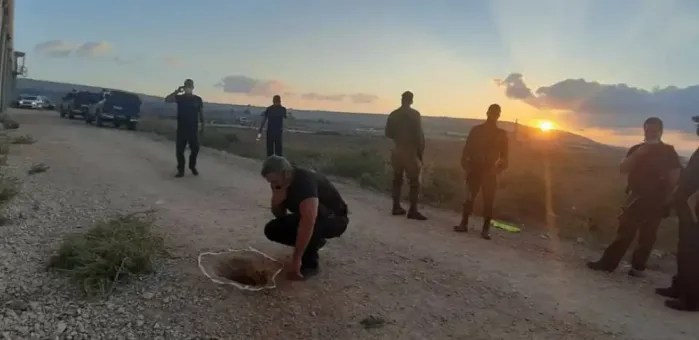

 Aletho News
