The US Military-Industrial Complex’s Worst Nightmare: The S-300 May Destroy and Expose the F-35
By Federico Pieraccini | American Herald Tribune | September 30, 2018
The tragic episode that caused the death of 15 Russian air force personnel has had immediate repercussions on the situation in Syria and the Middle East. On September 24, Russian Defense Minister Sergei Shoigu informed allies and opponents that the delivery of the S-300 air-defense systems to the Syrian Arab Republic had been approved by President Vladimir Putin. The delivery had been delayed and then suspended as a result of Israeli pressure back in 2013.
In one sense, the delivery of S-300 batteries to Syria is cause for concern more for Washington than for Tel Aviv. Israel has several F-35 and has claimed to have used them in Syria to strike alleged Iranian weapons transfers to Hezbollah. With the S-300 systems deployed in an updated version and incorporated into the Russian command, control and communications (C3) system, there is a serious risk (for Washington) that Israel, now incapable of changing the course of events in Syria, could attempt a desperate maneuver.
It is no secret that Greece purchased S-300s from Russia years ago, and that NATO and Israel have trained numerous times against the Russian air-defense system. Senior IDF officials have often insisted that they are capable taking out the S-300s, having apparently discovered their weaknesses.
Tel Aviv’s warning that it will attack and destroy the S-300 battery should not be taken as an idle threat. It is enough to look at the recent downing of Russia’s Il-20 surveillance aircraft to understand how reckless a desperate Israel is prepared to be. Moreover, more than one IDF commander has over the years reiterated that a Syrian S-300 would be considered a legitimate target if threatening Israeli aircraft.
At this point, it is necessary to add some additional information and clarify some points. Greece’s S-300s are old, out of maintenance, and have not had their electronics updated. Such modern and complex systems as the S-300s and S-400s require maintenance, upgrades, and often replacement of parts to improve hardware. All this is missing from the Greek batteries. Secondly, it is the operator who uses the system (using radar, targeting, aiming, locking and so forth) that often makes the difference in terms of overall effectiveness. Furthermore, the system is fully integrated into the Russian C3 system, something that renders useless any previous experience gleaned from wargaming the Greek S-300s. No Western country knows the real capabilities and capacity of Syrian air defense when augmented and integrated with Russian systems. This is a secret that Damascus and Moscow will continue to keep well guarded. Yet two years ago, during the operations to free Aleppo, a senior Russian military officer warned (presumably alluding to fifth-generation stealth aircraft like the F-35 and F-22) that the range and effectiveness of the Russian systems may come as a surprise.
The following are the words of Russian defense minister Sergei Shoigu concerning the deployment of the S-300 to Syria and its integration with other Russian systems:
“Russia will jam satellite navigation, onboard radars and communication systems of combat aircraft, which attack targets in the Syrian territory, in the Mediterranean Sea bordering with Syria. We are convinced that the implementation of these measures will cool hotheads and prevent ill-considered actions threatening our servicemen. Otherwise, we will respond in line with the current situation. Syrian troops and military air defense units will be equipped with automatic control systems, which have been supplied to the Russian Armed Forces. This will ensure the centralized management of the Syrian air defense forces and facilities, monitoring the situation in the airspace and prompt target designation. Most importantly, it will be used to identify the Russian aircraft by the Syrian air defense forces.”
If the Israelis will follow through with their reckless attempts to eliminate the S-300 (if they can find them in the first place, given that they are mobile), they will risk their F-35s being brought down. The US military-industrial complex would suffer irreparable damage. This would also explain why Israel (and probably the US) has for more than five years put enormous pressure on Moscow not to deliver the S-300 to Syria and Iran. The US State Department’s reaction over the future purchase by Turkey and India of the S-400 confirms the anxiety that US senior officials as well as generals are experiencing over the prospect of allies opting for the Russian systems. This would allow for a comparison with weapons these allies purchased from the US, leading to the discovery of vulnerabilities and the realization of the US weapons’ relative inferiority.
Given Tel Aviv’s tendency to place its own interests above all others, it would not be surprising to find them using the possibility of attacking the S-300 with their F-35s as a weapon to blackmail Washington into getting more involved in the conflict. For the United States, there are two scenarios to avoid. The first is a direct involvement in the conflict with Russia in Syria, which is now unthinkable and impractical. The second – much more worrying for military planners – concerns the possibility of the F-35’s capabilities and secrets being compromised or even being shown not to be a match against air-defense systems nearly half a century old.
An illuminating example of how the United States operates its most advanced aircraft in the region was given in eastern Syria around Deir ez-Zor. In this part of Syria, there is no threat from any advanced air-defense systems, so the US is often free to employ its F-22 in certain circumstances. The Russian military has repeatedly shown radar evidence that unequivocally shows that when Russian Su-35s appear in the same skies as the F-22, the US Air Force simply avoids any confrontation and quickly withdraws such fifth-generation assets as the F-22. The F-35 is not even ready in its naval variant, and has yet to be deployed on a US aircraft carrier near the Middle Eastern theater or the Persian Gulf; nor is it present in any US military base in the region. The US simply does not even consider using the F-35 in Syria, nor would it risk its use against Russian air defenses. Israel is the only country that so far may have already used these aircraft in Syria; but this was before the S-300 came onto the scene.
The F-35 program has already cost hundreds of billions of dollars and will soon reach the exorbitant and surreal figure of over 1 trillion dollars. It has already been sold to dozens of countries bound by decades-long agreements. The F-35 has been developed as a multi-role fighter and is expected to be the future backbone of NATO and her allies. Its development began more than 10 years ago and, despite the countless problems that still exist, it is already airborne and combat-ready, as the Israelis insist. From the US point of view, its employment in operations is played down and otherwise concealed. The less data available to opponents, the better; though the real reason may lie in a strong fear of any revelation of potential weaknesses of the aircraft damaging future sales. At this time, the Pentagon’s marketing of the F-35 is based on the evaluations provided by Lockheed Martin, the manufacturer, and on the tests carried out by the military who commissioned it to Lockheed Martin. Obviously, both Lockheed Martin and the US Air Force have no interest in revealing any weaknesses or shortcomings, especially publicly. Corruption is a big thing in Washington, contrary to common assumptions.
The combination of Israel’s ego, its inability to change the course of events in Syria, coupled with the loss of its ability to fly throughout the Middle East with impunity due to Syria now being equipped with a superior air defense – all these factors could push Israel into acting desperately by using the F-35 to take out the S-300 battery. Washington finds itself in the unenviable position of probably having no leverage with Israel over the matter ever since losing any ability to steer events in Syria.
With the Russian air-defense systems potentially being spread out to the four corners of the world, including China, India, Saudi Arabia, Qatar, and who knows how many other countries waiting in the queue, Russia continues to increase its export capacity and military prestige as it demonstrates its control of most of the Syria’s skies. With the introduction of the the S-500 pending, one can imagine the sleepless nights being spent by those in the Pentagon and Lockheed Martin’s headquarters worrying about the possibility of an F-35 being taken down by an S-300 system manufactured in 1969.
Syrian FM Accuses Israel of Supporting Terrorists in Country’s South
Sputnik – 30.09.2018
UNITED NATIONS – Israel supported terrorist groups in southern Syria through “direct military intervention” and repeated attacks against the Arab republic, Syrian Foreign Minister Walid Muallem said on Saturday.
“Israel even supported terrorist groups that operated in southern Syria protecting them through direct military intervention and launching repeated attacks on Syrian territories,” Muallem said, addressing the 73rd UN General Assembly.
During his speech, he also reiterated Damascus’ determination to fully liberate the Israel-occupied Golan Heights up to the line of June 4, 1967, “just as we liberated southern Syria from terrorists.”
Muallem called on the international community to compel Israel to abide by UN Security Council resolutions, including the one on the Golan Heights.
The diplomat also urged the international community to “help the Palestinian people establish their own independent state with Jerusalem as its capital and facilitate the return of Palestinian refugees to their land.”
He also characterized as null and void Israel’s “racist” nation state law and the US decision to relocate its embassy from Tel Aviv to Jerusalem.
Israel took control of the Golan Heights during the Six-Day War of 1967, while the Israeli parliament later announced that the territory belonged to Israel. However, the United Nations urged Israel to leave the land. Some of the territory was later returned to Syria.
The Debate – Israel Anti-Iran Stunt
PressTV | September 28, 2018
The Israeli Prime Minister has addressed the UN General Assembly. Anything unique about his address: the props were there, but there were more of them, and the target of the props: Iran, Iran, Iran. Was he successful in his pitch, that Iran had a Secret Iranian Nuclear Facility? We will look at his statements on Iran, how he said Iran “took this radioactive material and spread it around Tehran like Nutella, when it is Israel that possesses Nuclear weapons and yet it won’t allow for any inspections.
Watch Live: http://www.presstv.com/live.html
YouTube: https://www.youtube.com/user/videosptv/
Twitter: http://twitter.com/PressTV
Israel Lobbying for $900Mln in US Financial Aid – Document

CC BY 2.0 / zeevveez / Unites States of Israel
Sputnik – 29.09.2018
WASHINGTON – The Israeli government is lobbying in Washington, DC for $900 million in US financial aid, a lobbying registration form revealed.
“We will lobby the United States federal government, including the White House, the United States Senate, the United States House of Representatives, the United States Department of State, the United States Department of the Treasury, the United States Department of Commerce and the USAID to provide more than $900 million in financial aid to Israel,” the registration form by the Israeli government said on Friday.
The Israeli government said it has hired the American Federal Lobbying Firm to lobby on its behalf and protect its interests in Washington DC, according to the form.
US President Donald Trump during his address to the 73rd session of the UN General Assembly on Tuesday said the United States will be reviewing all of its foreign assistance programs and will only be contributing aid to countries that are respectful and friendly.
Israeli troops abduct 11 & 12 year old children from Nabi Saleh village
IMEMC News – September 29, 2018
On Friday afternoon, Israeli troops invaded the village of Nabi Saleh, known as one of the centers of non-violent resistance in the West Bank, and arrested three children – two of them age 11, and the other age 12.
 Samer Tamimi, 11 years old, the son of local non-violent activist Manal Tamimi, was kidnapped by Israeli soldiers along with two other children: Mohammad Abdul Lateef Tamimi, 11, and Ahmad Tamimi, 12, years old.
The children were abducted by the soldiers and taken to an unknown destination without any attempt by the soldiers to communicate with the parents of the three boys.
The abduction of children by Israeli soldiers is a common practice of the Israeli soldiers, with children as young as six years old grabbed and brutalized by the soldiers, taken to military bases, and interrogated for hours with no adult or advocate present.
According to the group Defense for Children International, around 500-700 Palestinian children are arrested, detained and prosecuted in the Israeli military court system each year. The majority of Palestinian child detainees are charged with throwing stones, and three out of four experience physical violence during arrest, transfer or interrogation. No Israeli child comes into contact with the military court system.
The majority of children are detained from their West Bank homes during the middle of the night by heavily armed Israeli soldiers. Several hours after their arrest, children arrive at an interrogation and detention center alone, sleep deprived and often bruised and scared. Interrogations tend to be coercive, including a variety of verbal abuse, threats and physical violence that ultimately result in a confession.
Unlike Israeli children living in illegal settlements in the West Bank, Palestinian children are not accompanied by a parent and are generally interrogated without the benefit of legal advice, or being informed of their right to silence. They are overwhelmingly accused of throwing stones, an offense that can lead to a potential maximum sentence of 10 to 20 years depending on a child’s age.
Samer has two older brothers, Mohammad, 19, and Osama, 22, who have been incarcerated for months in Israeli military prisons under so-called ‘administrative detention’, with no charges filed against them.
In a 2015 documentary by Al Jazeera, the mother of Samer, Manal Tamimi, told reporters, “I don’t want my children to be afraid – I try to hide my fear, as a mother, because I want them to be strong. Being afraid [while living] under occupation – you won’t be able to do anything. You will lose your life. But at the same time, I see how they are losing their childhood. I don’t want to have to talk to them about knowing their rights if they are arrested, about the tear gas – I want to talk with them about their future, about normal things. It’s kind of…. Refusing to die in silence…..My resistance is about life, about hope, about dreams, about a beautiful future.”
In the video, Manal also addresses those who would criticize her and other mothers in her village for allowing their children to participate in the non-violent weekly protests in their village. She says, “People who criticize us by saying that we are putting our children in danger – it’s not us who are putting our children in danger. It doesn’t matter what I do, they will be in danger all the time. There is a fear that the army will invade the house in the middle of the night, that they will shoot tear gas in the house, that my children will be abducted or even killed. This is life under occupation.”
Hamas: We will remain adherent to option of resistance
Palestine Information Center – September 28, 2018
GAZA – On the 18th anniversary of the Aqsa Intifada (uprising), the Hamas Movement has reiterated its adherence to the option of resistance against the occupation and its support for the March of Return until its intended goals are achieved.
“The reasons for the outbreak of the Aqsa Intifada still exist and escalate as the enemy persists in its crimes under the protection of imperialist powers,” Hamas stated on Friday.
Hamas also expressed its confidence that the Palestinian people would continue defending the Aqsa Mosque and remain vigilant about the dangers threatening it.
The Movement underlined that resisting the occupation is a legitimate right guaranteed by all divine laws and international conventions as a mean to restore the usurped national rights.
It pointed out that “the Aqsa Intifada proved the failure of the settlement process and that the Israeli occupation state only understands the language of force.”
Hamas also highlighted in its statement the issue of the stalled inter-Palestinian reconciliation, calling on the Palestinian Authority leadership to end its sanctions on Gaza and honor the 2011 Cairo agreement and the 2017 Beirut agreement in order to heal the rift in the Palestinian arena.
Moscow Warns Tel Aviv against Potential Strikes On Lebanon
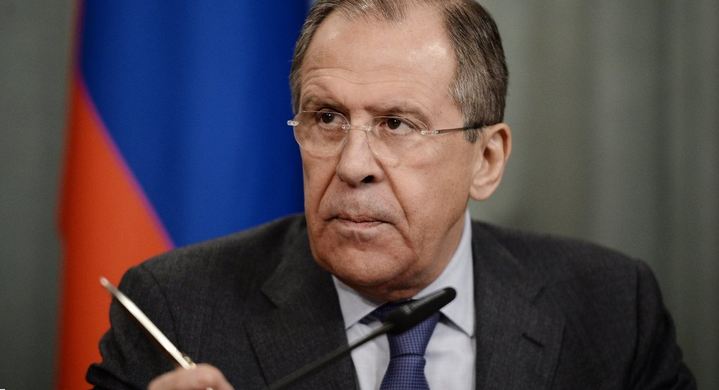
Russian Foreign Minister Sergey Lavrov
Al-Manar | September 29, 2018
Russia warns the Zionist entity against any potential strikes on Lebanon, Russian Foreign Minister Sergey Lavrov said on Friday, stressing that this would be a gross violation of international law.
“This would certainly be a gross violation of international law and we would be very much against such any action,” Lavrov said.
“We warn against any violation of the [UN] Security Council resolutions, and attack and actually even the use of Lebanese air space is a violation of the resolutions of the UN Security Council,” the diplomat stressed.
US Intel Officials Publicly Contradict Netanyahu’s UN Speech On ‘New’ Iran Atomic Facility
By Tyler Durden | ZeroHedge | September 28, 2018
Netanyahu’s Thursday UN General Assembly speech predictably included the familiar props and visuals condemning Iran over what the Israeli prime minister says is a continuing nuclear program it is hiding from the world’s view.
Like pretty much all prior Netanyahu speeches focusing on Iran, he held up a physical “evidence” to illustrate his points as he spoke — this time it was a “proof” that Iran has yet another secret warehouse holding nuclear-related material in the form of an aerial photograph of the Iranian capital marked with a red arrow pointing to a large building.
Though this was perhaps a step up from the cartoon bomb performance at the UNGA in 2012, the act is now a fixture and entirely predictable after many others spanning years, barely eliciting much media excitement compared to six years ago.
But unlike the last number of similar speeches, US intelligence officials have told Reuters that the claims are not true.
“I am disclosing for the first time that Iran has another secret facility in Tehran, a secret atomic warehouse for storing massive amounts of equipment and materiel from Iran’s secret nuclear program,” Netanyahu said as if breathlessly leading a breaking news press conference.
He said the site had previously held some 15 kilograms (33 pounds) of radioactive material that has since been moved in a curiously specific claim that would now seem very hard if not impossible to prove — given that… well it’s all been moved according to the claims. He called on the UN atomic agency to initiate immediate inspection with Geiger counters.
“Since we raided the atomic archive, they’ve been busy cleaning out the atomic warehouse. Just last month they removed 15 kilograms of radioactive material. You know what they did with it?” he said. “They took it out and they spread it around Tehran in an effort to hide the evidence.”
And on Twitter the Israeli prime minister began making a public appeal in parallel to his speech, asking people to “Google it” and offering the coordinates “35.5022 51.2997. It’s Iran’s secret nuclear warehouse in Tehran. Look for it and share it asking people to.”
Iranian officials were quick to seize upon his once again attempting to persuade through ample use of props and visuals, with Foreign Minister Javad Zarif mocking, “No arts & craft show will ever obfuscate that Israel is only regime in our region with a *secret* and *undeclared* nuclear weapons program – including an *actual atomic arsenal*. Time for Israel to fess up and open its illegal nuclear weapons program to international inspectors.”
And elsewhere foreign ministry spokesman Bahram Qassemi said, “The world will only laugh loudly at this type of false, meaningless and unnecessary speech and false shows,” according to Fars news.
Considering this usual run of events anytime Netanyahu addresses the UN, the only surprise came later in the day, when Reuters cited US intelligence officials who immediately contradicted the content of his speech.
Reuters called the claims of the freshly revealed purported atomic facility “nothing new” to the Americans, according to an unnamed intelligence source:
A US official, speaking on condition of anonymity, said the United States is aware of the facility Netanyahu announced and described it as a ‘warehouse’ used to store ‘records and archives’ from Iran’s [civilian] nuclear program.
And further citing a second intelligence official, the report continued:
A second US intelligence official called Netanyahu’s comments ‘somewhat misleading. First, we have known about this facility for some time, and it’s full of file cabinets and paper, not aluminum tubes for centrifuges, and second, so far as anyone knows, there is nothing in it that would allow Iran to break out of the JCPOA any faster than it otherwise could.’
A separate Israeli media report also noted the contradiction between Netanyahu’s speech and US intelligence: “The claims gainsay the remarks made by Netanyahu, who said that the site, which sits a short distance from Shourabad, contained some 15 kg (33 pounds) of radioactive material that has since been moved.”
Thus it appears the media — including Israeli media — aren’t so lockstep in uncritically repeating Netanyahu’s talking points anymore.
Also on Thursday the Israeli Defense Forces (IDF) made more claims connected with the UN speech, tweeting satellite images via its official account that claim Iran is establishing at least three missile factories inside Lebanon in partnership with Hezbollah, specifically in dense civilian neighborhoods of Beirut.
Israel has lately vowed to continue attacking Iranian forces stationed in Syria, and Thursday’s media information and propaganda blitz portend it is prepping for more rounds of strikes.
With Russia threatening response and now set to deliver the S-300 air defense system to Syria, it could be that Israel sets its sights on these purported Hezbollah “missile factories” on Lebanese soil.
NDP will be judged by the friends they keep in Israel
By Yves Engler · September 28, 2018
Who exactly is the NDP making friends with in Israel?
In refusing to heed a call from 200 well-known musicians, academics, trade unionists and NDP members to withdraw from the Canada-Israel Interparliamentary Group (CIIG) the party leadership cites the need for “dialogue”. But, when Jagmeet Singh, Hélène Laverdière, Murray Rankin and others call for “dialogue” they don’t specify who they are talking to.
A quick Google search of CIIG’s Israeli partner — the Israel-Canada Inter-Parliamentary Friendship Group — shows that all 13 of its members have expressed views or proposed laws that most NDP members would consider odious. Below is a snapshot of the Israel-Canada Inter-Parliamentary Friendship Group members — none of whom are from parties that represent Palestinian citizens of Israel — that Canadian MPs are creating relationships with:
Robert Ilatov proposed a bill in May to stop “harassment by left-wing operatives of Israeli soldiers” by criminalizing those who film Israeli troops repressing Palestinians. The bill states: “Anyone who filmed, photographed, and/or recorded soldiers in the course of their duties, with the intention of undermining the spirit of IDF soldiers and residents of Israel, shall be liable to five years imprisonment.” Born and raised in the former Soviet Union, Ilatov also sponsored a bill to strictly limit the call to prayer from mosques and, in another attack against the 20-25% of Muslim and Christian Israelis, said it should be mandatory for judges to sing Israel’s national anthem and adhere to “the idea of the State of Israel as a Jewish state.”
Yisrael Eichler called the assimilation of US Jews a “quiet Holocaust” and labelled criticism of men who refuse to sit next to women on El Al flights “anti-Semitic” and a form of “terrorism”. In 2009 Eichler demanded a “stop [to] this wave that is turning Israel into a refuge for Russian and African non-Jews as well as criminals who flee from their native countries.” In an anti-Jewish outburst, Eichler called a fellow Knesset member “a Jewboy who tattles on his fellow Jews.”
Yoav Ben Tzur told the Knesset in 2017: “it is time to stop being afraid. It is time to apply the law to Judea and Samaria [illegally occupied Palestinian West Bank] as an inseparable part of the state of Israel.” In a stunt that required a major military mobilization and led to a Palestinian being killed, Tzur was part of a mass prayer at Joseph’s Tomb near the occupied Palestinian city of Nablus.
Yitzchak Vaknin told the Centre for Israel and Jewish affairs in 2013: “I do not support negotiations on Jerusalem at all. Jerusalem is our capital and of course we are forbidden to speak on Jerusalem because if we speak about Jerusalem then we can discuss any other city in Israel.” In 2011 Vaknin co-sponsored a bill to annex the illegal Jewish settlements of Beitar Illit, Ma’ale Adumim, Giv’at Ze’ev, Gush Etzion and Efrat to the municipality of Jerusalem. Vaknin also co-sponsored two bills to forbid gay pride parades and in 2014 Vaknin called South Africa’s Chief Rabbi Warren Goldstein “erev rav”, a derogatory term translated as “mixed multitude” or “mixed mob” of non-Jews who followed the Biblical Hebrews from Egypt and made their lives miserable.
Elazar Stern told Belgian newspaper L’Echo in January that “all embassies should be” in Jerusalem and that Europe should “stop supporting Palestinian terrorism.” Stern co-sponsored a recent bill calling on Israel to withhold some Palestinian customs duties it gathers as the occupying power.
Nachman Shai repeatedly justified the killing of Palestinians during his time as the Israeli military’s chief spokesman between 1988 and 1991. In 2015 he ran to chair the explicitly racist Jewish National Fund/Keren Kayemeth LeIsrael and called the term leftist “a stain.”
Tali Ploskov proposed a bill to deter Israeli human rights groups that give tours detailing the mistreatment of Palestinians by increasing the penalty on unlicensed tour guides. She also co-sponsored a bill designed to fight the “legal intifada” by raising the fees for Palestinians to petition Israel’s top court and another law empowering the Minister of the Interior to revoke the residency status of Palestinians in occupied Jerusalem for “Breach of Allegiance”.
Mickey Levy, then commander of the Jerusalem police, ordered the 2002 execution of a Palestinian who had been captured and disarmed before he could detonate a suicide vest. Levy said Israel should stop returning the bodies of Palestinians they kill in acts of resistance and that their families should be expelled to Gaza “if they have relatives there.” When Arab Knesset member Hanin Zoabi called Israeli soldiers “murderers” in 2016, reports the Jerusalem Post, Levy “rushed at Zoabi, nearly reaching her before he was stopped by Knesset ushers, shouting ‘You are filth!’ several times.”
Oded Forer initiated the April impeachment of Haneen Zoabi from the Knesset and legislation to disqualify Arab Knesset candidates for “calling Israel racist and calling upon countries to boycott and sanction it.” Saying “the [Arab] Joint List continues to prove that its MKs do not belong in the Knesset,” Forer claimed “the Knesset has become a place for terrorists and their supporters to sit in without fear.” Forer also submitted a bill — largely targeting tenured professors — that could impose up to 10 years in prison for those who incite violence against the state.Forer said: “the expansion of incitement to public events has become a real danger. Calls for incitement and for harm to be caused to the State of Israel should not be heard among the masses and certainly not in events and places financed with the money of Israeli taxpayers.”
Meirav Ben-Ari said the government should “help” Jews living in a Tel Aviv neighbourhood with many Africans. “You go to the south of Tel Aviv, it’s a different state,” Ben-Ari said. “It’s like Sudan mixed with Eritrea mixed with Darfur.” Ben-Ari added that she doesn’t go there because it’s too dangerous. In 2015 she called for the prosecution of an Arab member of the Knesset. “A member of Knesset who acts against the Knesset and the State of Israel, his immunity should be reconsidered.”
Sharren Haskel wrote recently about “Palestinians’ desire to obliterate the Jewish future in the Middle East” and told CBC she “would love to see Canada move its embassy” to Jerusalem. In July Haskel initiated a government program “to prevent miscegenation” (romantic relationships between Jews and non-Jews). Using a Hebrew word that literally translates as “assimilation,” but is commonly used as a euphemism for miscegenation, she told Israel Hayom paper: “Young [Jewish] men and women from all over the world will arrive and form relationships with local young men and women, in order to prevent assimilation and strengthen the connection to Judaism.”
In this article I detail some of the views of the two chairs of the Israel-Canada Inter-Parliamentary Friendship Group. The more openly racist and anti-Palestinian of the two, Anat Berko just put forward a bill to jail individuals who display Palestinian flags at demonstrations and expressed support for a former soldier who shot and killed a wounded Palestinian in Hebron in 2016.
Which is the best way for the NDP to promote justice and peace? To accept and normalize such views and policies by making friends with these politicians? Or to withdraw from the CIIG to send a message that the State of Israel is currently on a path that is unacceptable to the NDP and its members?
Please ask Randall.Garrison@parl.gc.ca,murray. rankin@parl.gc.ca, cheryl.hardcastle@parl.gc.ca, gord.johns@parl.gc.ca and peter.julian@parl.gc.ca to withdraw from the Canada–Israel Interparliamentary Group.
United against Precision
By Gilad Atzmon | September 28, 2018
Yesterday PM Netanyahu, speaking at the UN, insisted that Israel has found the ‘secret atomic warehouse’ where Iran is allegedly “storing massive amounts of equipment and materiel from Iran’s secret nuclear weapons programme.” Netanyahu failed to provide any evidence to support his claim, nor did he try to substantiate his comic assertion that Iranian government officials, in an attempt to dispose of 15kg of radioactive material, had spread the material around the streets of Tehran.
This is even funnier when you consider that the rest of the world knows exactly where Israel’s nukes factory is. The rest of the world also knows that it is actually Israel that doesn’t allow anyone into its WMD plant in Dimona, Rehovot or anywhere else.
Not for the first time, Netanyahu also brought some visual aids to illustrate his claims, seeming to believe that those who dwell outside of his ghetto are in desperate need of visual explanations.
The thing that surprised me the most was that Netanyahu was upset about the existence of Hezbollah’s underground precision missile production facilities in Beirut. I had thought that Israel would be delighted to find out that the Hezbollah are attempting at precision so they can hit military, logistic and strategic targets and avoid unnecessary killings of innocent civilians.
I guess that despite my intense efforts and my dedication to the study of the Jewish national project I still struggle to grasp the depth Netanyahu’s rationale.

Israel in no position to level nuclear accusation at Iran: Zarif
Press TV – September 28, 2018
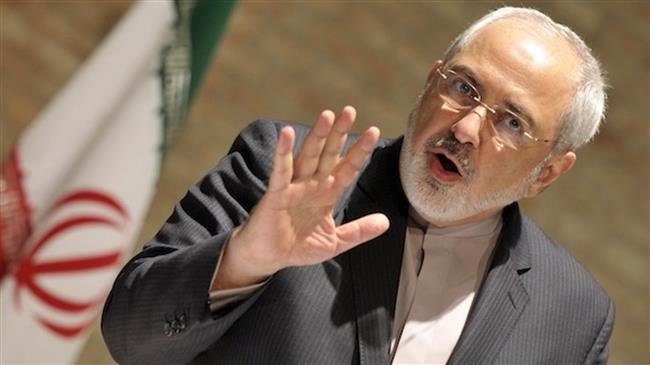
Iranian Foreign Minister Mohammad Javad Zarif has lashed out at Israeli Prime Minister Benjamin Netanyahu for his baseless claims against Iran at his UN speech, saying Tel Aviv is in no position to level such accusations against Tehran.
“Netanyahu must explain how Israel, as the only possessor of nuclear weapons in the Middle East region, can put itself in a position to level such brazen accusations against a country whose [nuclear] program has been repeatedly declared peaceful by the International Atomic Energy Agency (IAEA),” Zarif told IRNA on Thursday.
The senior Iranian diplomat’s comments came after the Israeli prime minister once again took the stage at the UN on Thursday to put on another spectacle about Iran’s nuclear program, repeating his threadbare allegation that the country is working to develop nuclear weapons at “secret” sites.
Zarif said Netanyahu’s move is only aimed at deflecting attention from the fact that the Israeli regime is “the biggest threat to the Middle East” given that he stands by a nuclear weapons facility and threatens other states with atomic annihilation, Zarif noted.
“The Tel Aviv regime will never manage to achieve anything by playing such games,” the Iranian foreign minister added.
“We have seen in recent days the extent of the US’ isolation at the UN General Assembly and the Security Council as a result of the policies Netanyahu has imposed on Washington. Now imagine how isolated the Israelis themselves are when they have managed to haul the US into such isolation,” Zarif stated.
Meanwhile, Iranian Foreign Ministry Spokesman Bahram Qassemi strongly dismissed Netanyahu’s UN show as “ridiculous” and a fabricated scenario aimed at making up for the failed US and Israeli smear campaign against Iran at the UN General Assembly.
“The occupying regime [of Israel] must know that in the new era, the world will only laugh out loud at such false, inconsiderate and empty remarks and fake shows,” Qassemi told journalists on Thursday.
He referred to the IAEA as the only body responsible for dealing with nuclear issues, saying that 12 reports issued by the UN atomic watchdog and verified by the global community and all relevant parties have so far confirmed Iran’s commitment to its obligations under the 2015 nuclear deal, officially known as Joint Comprehensive Plan of Action (JCPOA).
Featured Video

Why Hamas Really Attacked Israel on Oct. 7
or go to
Aletho News Archives – Video-Images
From the Archives
Israel: Strategic Ally or Liability?
By Stephen Sniegoski | My Catbird Seat | June 12, 2010
The claim that Israel serves as a valuable ally for the United States is made by both pro-Zionists and much of the anti-war and anti-Zionist Left that is influenced by Noam Chomsky. As a result of the Gaza flotilla massacre, which has caused a world-wide uproar against Israel, the value of Israel to the United States is being publicly questioned in more mainstream foreign policy forums. … continue
Blog Roll
 Aletho News
- Why Hamas Really Attacked Israel on Oct. 7
- Declassified UK exposes British man who fought for ‘Israel’ in Gaza
- West’s death cult in a theater near you
- How the Yandex ‘Russian bots’ lie fell apart
- Burnham’s ‘Russia did Brexit’ ruse crumbles
- Estonia making movies and games to encourage war against Russia
- Four in five new UK jobs taken by foreigners – report
- Here’s what Trump’s latest U-turn really means for Russia and Ukraine
- The Houthis Are Not an Iranian Proxy
- Europe’s Energy Hypocrisy, Russian LNG Profits and US Dependence
- If Americans Knew
- Activists Abused By Israel Return to New Freedom Flotilla Mission
- 60 Minutes won’t tell the full truth about Israeli settler violence
- Nearly 50,000 women, girls killed or severely injured in Gaza since October 2023: UN Women
- ADL is working with AI companies to suppress alleged ‘antisemitism’
- Israeli occupation forces using social media surveillance unit to target hundreds of Palestinians in the West Bank
- Israel’s New – and Terrifying – Security Doctrine
- Israeli Attacks Kill Five in Gaza, Including a four-year-old and a woman
- Air Force Major Who Called for Trump’s Impeachment Held in Solitary Confinement
- It’s a Genocide, I’m Into It’: Seinfeld Mocks Protest over Palestinian Children Killed
- Universities fire dozens amid pressure from Zionist billionaires
- No Tricks Zone
- New Study Suggests Large Regions Of The Pacific Ocean Have Been Cooling For The Last 80 Years
- Germany’s Green Energy Debacle: High Energy Costs Force Kahla Porzellan to Close After 182 Years!
- New Study: 50 Years Of The Most Aggressive ‘Net Zero’ Policies Can Only Affect The Global Climate By 0.03°C
- US September “Heat” Was No Record…Many Records Set Decades Ago
- Latest European Green Energy Debacle; Portugal’s Largest Flagship Solar Park Insolvent!
- Green Energy Debacle: German Expert Professor Fritz Vahrenholt Warns Of Severe Economic And Social Consequences
- Two More Paleo Reconstructions Affirm Meters-Higher Sea Levels Across Ireland, Brazil 7000-6000 Years Ago
- New Study: Earth And Venus Surface Warmth Largely Explained By Convection And Lapse Rate, Not CO2 Or Radiation
- 2025 Nature Paper Claiming Worsening Global Drought Gets RETRACTED …Heavily Flawed
- New Study: ‘Global Drought Shows No Detectable Recent Acceleration Under Climate Warming’

