As local and international criticism continued to mount against the Ramallah-based Palestinian Authority’s (PA) tightening noose on freedoms of expression in the occupied West Bank, seven Palestinian journalists imprisoned by the PA have begun a hunger strike after being detained under the controversial Cyber Crimes Law, approved by Palestinian President Mahmoud Abbas last month.
Palestinian journalists Mamduh Hamamra, a correspondent for Al-Quds News, Al-Aqsa TV correspondent Tariq Abu Zeid, and freelance journalist Qutaiba Qassem all declared a hunger strike immediately after their detentions were extended by up to 15 days on Thursday, according to a statement released by Omar Nazzal, a member of the Palestinian Journalists’ Syndicate and former prisoner of Israel.
Issam Abdin, a lawyer and head of advocacy at Palestinian NGO al-Haq, confirmed to Ma’an News Agency that four more Palestinian journalists –Al-Quds News correspondent Ahmad Halayqa, Shehab News Agency correspondent Amer Abu Arafa, and reporters Islam Salim and Thaer al-Fakhouri — had declared a hunger strike on Thursday to protest their detention.
The journalists had all been detained several days prior for allegedly violating the terms of the new law, according to Abdin.
All seven of the journalists reportedly work for media outlets that were among 30 sites blocked by the PA in June — all of which were reportedly affiliated with the Hamas movement, the ruling party in the besieged Gaza Strip which has been embroiled in a bitter ten-year rivalry with the Fateh-led PA, or Abbas’ longtime political rival, Muhammad Dahlan.
While the move to block the websites in the West Bank was condemned at the time as an unprecedented violation of press freedoms in the Palestinian territory, Abbas took the crackdown on media to another level last month by passing the Cyber Crimes Law by presidential decree.
‘A draconian law’
In a statement on Thursday, Nazzal said that at least six of the imprisoned journalists — omitting al-Fakhouri — were being detained over allegations of violating Article 20 of the Cyber Crimes Law.
The article states that an individual could face at least one year in prison or be fined at least $1,410 for “creating or managing a website or an information technology platform that would endanger the integrity of the Palestinian state, the public order, or the internal or external security of the State.”
Meanwhile, “any person who propagates the kinds of news mentioned above by any means, including broadcasting or publishing them” faces up to one year in prison or a fine ranging from $282 to $1,410, according to the new law.
Abdin said that these “loose articles,” through which individuals would face imprisonment simply for publishing certain articles on their social media accounts, set the groundwork for arresting Palestinian journalists and “destroying the freedom of journalism work in Palestine.”
Nadim Nashif, the cofounder and director of Palestinian and Arab digital advocacy group 7amleh, called the law “terrible” and “draconian.”
“It’s the worst law in the PA’s history,” Nashif said. “It allows the PA to arrest anyone under unclear definitions.”
Nashif noted that not only did the law criminalize the creation, publication, and propagation of certain information deemed dangerous by the PA, it also ruled that individuals found to have bypassed PA blocks on websites through proxy servers or Virtual Private Networks (VPNs) could face three-month prison sentences.
Nashif said that the law had dragged the West Bank “backwards.”
Despite Israel’s decade-long occupation of the West Bank and the more than 10-year political split with Hamas, “generally, the media and websites were left alone,” Nashif said. “They were not part of this political fight.”
“The PA is kind of breaking the last spaces of freedom of speech,” he said.
Palestinian journalists trapped between Hamas-PA divide
Rights groups were quick to condemn the detention of the journalists, claiming that the new law was aimed at rooting out political dissent against Abbas and the PA — likely under the auspices of the PA’s widely condemned security coordination with the Israeli state, although the PA has repeatedly stated that it has halted this policy since July.
According to prisoners’ rights group Addameer, a PA security official had initially said that at least five of the imprisoned journalists were arrested for “leaking information and communicating with hostile parties.”
However, Addameer added, the Palestinian Journalists’ Syndicate contacted Palestinian security forces on Wednesday morning and were told that the journalists were detained “in order to pressure Hamas to release another journalist detained in the Gaza Strip,” referring to Fouad Jaradeh, a correspondent for official PA news channel Palestine TV who has been imprisoned in Gaza for more than two months.
Both Hamas and the PA have been criticized for carrying out retaliatory acts on individuals affiliated with the opposing group, most notably in the shape of politically motivated arrests and imprisonment.
Abdin said that Palestinian journalists have been “plunged into the Hamas-Fateh division,” as both groups have targeted journalists in order to quash opposition that could affect their political hold in the Gaza Strip and the West Bank respectively.
The Palestinian Center for Development and Media Freedoms (MADA) said in a statement on Wednesday that the journalists’ arrests were “part of a marked escalation of violations against media freedoms” in both the West Bank and Gaza.
However, the new law and Abbas’ moves to stifle dissent against the PA are “not just problematic for journalists,” Nashif said. “Any activist or individual who the PA thinks is an opponent can now be arrested without any clear reason.”
The PA has also been accused of conducting sweeping detention campaigns targeting Hamas-affiliated residents of the West Bank, while the PA has escalated measures in recent months to pressure Hamas to relinquish control of the Gaza Strip.
A study by Palestinian think tank al-Shabaka documented the consequences of the PA’s security campaigns, “whose ostensible purpose were to establish law and order,” but have been perceived by locals as criminalizing resistance against Israel.
‘It’s illegal under Palestinian law’
Abdin pointed out that both the website blocking and the new cyber crimes law violated Article 27 of Palestinian Basic Law, which protects the press freedoms of Palestinian citizens, including their right to establish, print, publish, and distribute all forms of media. The law also guarantees protections for citizens who are working within the field of journalism.
The article also prohibits censorship of the media, stating that “no warning, suspension, confiscation, cancellation, or restriction shall be imposed upon the media,” unless a law violating these terms passed a legal ruling.
Abbas, however, has not received permission from the judiciary to approve these far-reaching restrictions on the press, according to Abdin.
Since Hamas won parliamentary elections in 2006, the Palestinian Legislative Council has not convened in Ramallah, meaning that the vast majority of laws passed by the PA in the past ten years have been passed by Abbas, who extended his presidency indefinitely in 2009, via presidential decrees.
Al-Haq has pointed out that the new legislation violates international law, including Article 19 of the International Covenant on Civil and Political Rights (ICCPR).
Rights groups, activists, and journalists have demanded that the PA amend the law to abide by pre-existing Palestinian legislation, rescind its blockage of news sites, and end its practice of routinely arresting Palestinian activists, writers, journalists, and others for their political opinions.
AIPAC, the American Israel Public Affairs Committee, is a powerful Washington DC lobbying organization. In this 2016 video, AIPAC describes how it has successfully worked to create U.S. laws against boycotting Israel over its multitudinous violations of human rights and international law.
The video doesn’t mention the anti-boycott legislation working its way through Congress right now (S.720 / H.R. 1697) that AIPAC helped draft: iak.salsalabs.org/antiboycottbill
Such anti-boycott laws hurt everyone.
They interfere with Americans’ fundamental consumer rights and freedom of speech, often harm American businesses and thereby the U.S. economy, and damage American international relations.
They prevent peace and perpetuate violence in the Middle East. By helping to sustain Israel’s enormous power over Palestinians, they cause Israeli leaders to believe two things: they can ignore international law, and they don’t need to negotiate with Palestinians in good faith to reach a fair and lasting peaceful resolution.
Ultimately, AIPAC’s actions have hurt Palestinians, Israelis, Americans, and the many of others impacted by the Israeli-Palestinian conflict and by Israel’s various wars against its neighbors.
During a meeting with a U.S. delegation, Israel’s Prime Minister Benjamin Netanyahu expressed interest in partitioning Iraq.
The Prime Minister told the group of 33 congressmen that he favored the establishment of an independent Kurdish state in the Arab country. Israel has a longstanding relationship with the Kurds, who remains one of its few non-Arab allies in the area.
The Jerusalem Post reported that a source who attended the meeting said Netanyahu referred to the Kurds as “brave, pro-Western people who share our values.”
Netanyahu previously spoke on the issue in 2014 when he said in a speech that Israel should “support the Kurdish aspiration for independence.”
Two months ago Iranian Parliament Speaker Ali Larijani warned about bids to break up Iraq, saying the partitioning of Arab countries serves the interests of Israel. “The Zionist regime seeks Iraq’s disintegration,” Larijani accused during a meeting with Iraqi Prime Minister Haider al-Abadi in Tehran.
A report published in the New Yorker magazine in 2004 said Israeli military and intelligence operatives were active in Kurdish areas and providing training for commando units.
According to the report, Israel has been expanding its presence in Kurdistan and encouraging Kurds, its allies in the region, to create an independent state.
The village of Grafton, Wisconsin, chose to honor the USS Liberty by naming its new library after the ship. The complaints that followed filled the local newspapers and airwaves for months. This is the story of the USS Liberty Memorial Public Library and the controversy that followed.
After a long pause to stop the flow of blood, 1988 marked the tenth year of the great Wisconsin library wars.
The first blows were struck in 1979 when supporters of Israel in Milwaukee decided to flex their political muscle. In a test of power (some would say to flaunt it), spokesmen for Israel renamed the library at the University of Wisconsin in Milwaukee after an Israeli political leader.
“Let this place be known forever as the Golda Meir Library,” they proclaimed.
To no surprise, a great hue and cry developed almost overnight as students, faculty, and local citizens recorded their outrage.
Golda Meir
Golda Meir, born Goldie Mabovitch in Poland in 1898, had lived in Milwaukee between her 8th and 21st year. She studied at the Milwaukee Teachers Seminary of Milwaukee, later taught school briefly in Milwaukee, and then moved to Palestine in 1919 to join the growing Jewish community there.
Golda Meir was respected by her fans, not for charm, tact, or diplomatic skill, but for her stubborn Israeli intransigence.
When she became prime minister in 1969, Time magazine said of her: “The essence of the woman is conviction, without compromise, and expressed with all the subtlety of a Centurion tank. She seldom loses an argument….”
Austrian Chancellor Bruno Kreisky, himself a Jew, described her as “a tough, obstinate, unintelligent woman, without discernment, wisdom or poise.”
Yet, among Arabs and many Americans, Golda Meir is best remembered and often despised for her hard line against the Palestinian population, and for her insistence that Israel had no “Palestinian problem” because, she said, “It was not as though there was a Palestinian people and we came and threw them out and took their country away from them. They did not exist.”
The First Great Library War
Opponents of the Golda Meir name argued that this was a public institution created with public money and should not be named by special interests or for a foreign leader. The existing name, “The University of Wisconsin Library,” was more suitable, they said, and should be kept. Otherwise it should be named for an American.
“The Golda Meir name should not be used because it is controversial and offensive to a large segment of the population,” they argued to deaf ears. “Golda Meir is a symbol of hate in the Arab-American community and to many Americans,” they said.
Others said privately that they were opposed to the name but were afraid to speak out because the Israeli partisans were “powerful in the community.”
Arab students complained that the partisans lack sensitivity, ignore Arab feelings, and regard Arabs as less than human.
Students picketed in protest. A meeting of Regents held to formalize the name was disrupted by student protesters, and at one point a Jewish professor attacked the pickets, beating them with a cane.
The pro-Israel faction, however, withered their opponents with their ultimate weapon. “All opposition to the name comes from anti-Semites,” they said. “Arabs and anti-Semites object to the name,” they said, “because of their hatred for Jews and Israel. We can never yield to anti-Semites.”
The argument was picked up and echoed everywhere. Soon everyone opposed to the name became increasingly seen as zealots, racists, Nazis, and unthinking radical extremists. The argument, though apparently without substance, was effective. It won the war. The name sticks.
Arab students report that they wince whenever they enter the building.
The Second War
Just 18 miles due north of the Milwaukee campus on the shore of Lake Michigan the town of Grafton, population 8,500, decided recently to replace the aging and overcrowded town library. Jim Grant was elected president of the town council on his pledge to work toward creating the new library.
Unlike the Golda Meir library, the Grafton library was to be built almost entirely with private donations. Soon the new library committee had pledges for well over half the $1-million cost, including an $83,000 federal contribution and a $250,000 pledge from the brothers Ted and Ben Grob, who own a Grafton machine tool business.
Since the Grob’s contribution was the largest single gift, the library board offered the Grob brothers the opportunity to name the new library–expecting them to name it “Grob.” But that didn’t happen.
The Grobs, who had recently read a book about the Liberty and a transcript of a speech by a survivor, surprised everyone.
“Name it The USS Liberty Memorial Library,” they said, “in honor of the 34 Americans who died when Israel attacked the USS Liberty in 1967.”
Surprised, the town council and the town library board considered the name. Members who hesitated were asked to read the book that the Grobs had read. And soon both the council and the board gave their unanimous approval to the new name.
Enter Israel
A few days later an angry letter arrived from one Gideon Goldenholz, rabbi of the Beth El Ner Tamid Synagogue in nearby Mequon.
Sharpening a weapon that had served well in the Golda Meir library skirmishes, Goldenholz called the proposal “a cynical act” which carries “a hint of anti-Semitism” and is therefore “insulting to Jews.”
“The USS Liberty incident has become a rallying point for anti- Israel and anti-Semetic (sic) people and groups,” wrote James Fromstein for the Milwaukee Jewish Council, an umbrella group that represents Goldenholz’s synagogue and 21 other Milwaukee Jewish organizations. “As such, it is… considered offensive… to Jewish people everywhere,” he said, raising a trusted bludgeon from previous wars.
A few days later Fromstein appeared at Grant’s door with two television trucks, three newsmen from Milwaukee, and an aide. Grant, however, would not be intimidated. “We are very comfortable with the name,” he said.
“The name caters to Arabs and anti-Semites,” Fromstein insisted. After all, his aide added, Arabs are “only nomads,” while anti-Semites must be opposed on principal. After an hour of fruitless argument, Fromstein departed amid promises of “further action” and some lightly veiled threats of economic and other sanctions. “We can never yield to anti-Semites,” he insisted.
“The name sticks,” Grant said.
A Combined Media Blitz
Soon Jim Grant discovered that someone was checking into his background, verifying his military record, and otherwise searching for some fodder for a scandal. Librarian Kathy Kafka learned that persons unknown were attempting to verify her academic record.
Almost immediately Grant learned that the $83,000 federal commitment had been “postponed” because of complaints about the “anti-Semitic” name.
Phone calls and letters from Israeli spokesmen in Milwaukee urged local donors to withdraw their contributions because of the “anti-Semitic” influence.
Next, a solid barrage of stories about the library appeared in five area newspapers and the Chicago Tribune, along with frequent and highly caustic mention on area television news and talk shows.
The Milwaukee Jewish Chronicle set the tone early with a headline that proclaimed, “Jews battle extremists on library name.” “Rename the library,” demanded a Chronicle editorial. “New Library divides Wisconsin town,” wrote the Tribune. Milwaukee Magazine complained editorially about “The Gift of Grob.”
“Library name rightly condemned,” editorialized the Milwaukee Journal. “Where is the outrage in Grafton? Why is there no outcry?” complained the Journal when the first editorial failed to spark an outcry. “The Grafton library has aligned itself with the bigots and hate-mongers,” the Journal complained, recycling another battered tool from the Golda Meir trenches.
“Why,” survivors asked, “is it OK to have memorials for USS Stark, Maine, Arizona, and a hundred other ships without protest from the countries that attacked them, while any mention of the USS Liberty brings an avalanche of organized protest from Israel?” No one could answer the question, but the protests continued without pause.
Journal reporter Michael Krenn, asked by town officials to interview a survivor of the attack, declined. “That is not my story,” Krenn insisted. Krenn was interested only in bashing devils.
Rarely did anything favoring the library become part of “Krenn’s story.” Supporting statements came in from Rabbi Elmer Berger, Reverend Humphrey Walz and Admiral Thomas Moorer, among others, but none of this ever made it into “Krenn’s story.” Articles about the Liberty by experts on the subject including Admiral Moorer were submitted for publication, but none were printed or acknowledged.
When survivors Joe Meadors and John Hrankowski visited Grafton with former congressman Pete McCloskey to answer townspeople’s questions, the Journal did not find the event worthy of coverage until forced to do so days later when readers complained. The well-attended event displayed nearly total support for the new library name, and it was covered by reporter Krenn, but this was “not his story” so he chose not to write about it.
And the reports that did appear typically failed to mention the most noteworthy details, such as public support for the library name by Grafton’s State Assemblywoman Susan Vergeront and McCloskey’s spirited denunciation of the “anti-Semite” charge.
“How can a memorial for American sailors who died in the service of their country possibly be anti-Semitic?” McCloskey demanded to know as the crowd roared its approval.
Even an account by the Journal’s ombudsman, while acknowledging that their coverage was badly done, continued to ignore Grafton’s viewpoint and reasserted the “anti-Semite” influence.
At last count the Journal was on record with nineteen heavily slanted “news” stories, five angry editorials and one incomplete ombudsman’s report, all suggesting that the library, the ship, the town council, and everyone involved is somehow allied with or unwitting stooges of anti-Semites and other loonies.
“This is the most outrageous, egregious, biased, and unprofessional reporting I have seen in 20 years in the business,” remarked a California editor of a major newspaper who was sufficiently moved to call Krenn and tell him so. But still the smears and innuendo continue.
When two spokesmen from Grafton responded to a request for a television interview in Milwaukee, they were unexpectedly confronted on camera by two spokesmen for Israel, prepared to debate. Although Grafton emerged victorious, it was a tense hour.
“You were set up,” whispered a sympathetic station employee, clearly pleased with the unexpected outcome. “This was to have been an ambush.”
When library board chairman Carol Schneider agreed to a television interview, she found herself confronted by a hostile interviewer who did his professional best to humiliate her on camera.
Complaints Come From Outside
Most of the blitz, however, comes from outside the town. For instance, one of the first shots fired was a paid advertisement in the Ozaukee County Guide signed by 17 clergymen, all from outside of Grafton, which appealed to the fair minded citizens to rise up against their leaders and demand a new name. The clergymen were concerned, they wrote, about “harassment of minorities, hate letters and phone calls to rabbis and desecration of synagogues” which, they said, “have once again raised their ugly heads.” “Neo Nazis and other hate groups use the symbol of the USS Liberty to promote their cause,” the clergymen wrote.
No matter that no harassment, hate letters, phone calls or desecration had occurred. No matter that no sign of anti-Semitism or “extremist” influence had been uncovered. No matter that none of the clergymen knew anything about the case except what they had been told by spokesmen for Israel who persuaded them to lend their names.
In another attack from the hinterlands, two churches in nearby Mequon circulated petitions in Grafton seeking opposition to the library name. After several days work, they collected 79 signatures, including only seven from Grafton. Library supporters easily collected 616 signatures in an afternoon, all from Grafton.
In a rare protest from within the town, the pastor of the Grafton Catholic Church issued a statement. A new name must be found, he said, because “the incident is used by extremists to further anti-Semitism. The USS Liberty has become a symbol of hate.”
Asked later for his source of information, the good father confessed that he knew only what he had read in the Journal and been told in a phone call from an out-of-town Rabbi. Without checking further, he urged his parish to oppose the library because he felt he should respond to the influence of “anti-Semites.”
“I may have been hasty,” he confessed later.
To the dismay of most Grafton schoolteachers, two teachers living outside Grafton attempted on their own to cancel a teachers’ commitment to raise money for the library. Two teachers then circulated questionnaires to their classes asking, “Should Nazis be allowed to name our new library?” No matter that no Nazis could be found.
“No, no, no,” chirped the cherubs.
Soon, prompted by guidance unknown, the Grafton High School Valedictorian publicly articulated the reasons Nazis and other weirdos should not be allowed to name the town’s temple of knowledge.
Phony Radicals, Phony Issues
These things are reported in all the area newspapers, usually in a way that suggests that a small band of extremists controls city hall in defiance of a majority who would, if they could, unseat the radicals. Despite their spirited search, however, no radical has ever been identified.
That does not deter the opponents, however. Anti-Semitism is the most effective weapon in their arsenal, and it must be continually dragged out and fired whether any proper targets can be seen or not.
In a frantic search for anti-Semites, one reporter learned that a magazine that the Anti-Defamation League of B’nai B’rith considers anti- Semitic sometimes writes about the USS Liberty. Worse, he learned that one of the Grob brothers has seen the magazine.
Proof at last! To the Milwaukee Jewish Council, the magazine’s interest in the Liberty is enough to justify their entire campaign. No matter that dozens of esteemed journalists, at least five Pulitzer prizewinners, scores of leading newspapers, and at least 30 book authors have also written sympathetically about the Liberty. No matter that Liberty survivors have no connection with the suspect magazine and actively shun its attentions. To spokesmen for Israel, the USS Liberty has become a “symbol of hate” and “must be opposed” because people they consider “anti-Semites” have written about it.
Suddenly what looked like a “genuine” anti-Semite appeared. A man driving a car with Illinois license plates spent a day marching at Grafton’s main intersection with a large sign reading, “Support the USS Liberty – Israel is America’s enemy.” That evening the man went from door to door spouting offensive anti-Jewish rhetoric and appealing to Grafton residents to support the name because they shouldn’t take any more guff “from the Jews.”
When Grafton citizens investigated, they found that the man was actually opposed to the library. The entire performance was a carefully orchestrated charade designed to make library supporters appear to be anti- Semitic radicals.
“They will never give up!”
The library now looks certain to go ahead on schedule.
“But they will never give up,” warns a war-weary veteran of the Golda Meir conflict. “A year or five years or ten years from now they will be back to try to change the name. Sooner or later they will win. And if Grafton is not careful they will probably change it to something like ‘Menachem Begin’ or ‘Ariel Sharon.'”
“They persist in throwing stones from their glass house,” he said, “so the best defense is a counter-attack. Start a drive to change the Golda Meir Library back to its original name.”
James M. Ennes was a lieutenant on the bridge of the USS Liberty when the ship was attacked. His book about the attack, Assault on the Liberty (Random House, 1980; Ballantine, 1987) has been called the most important book of the year by two leading reviewers, and was named “editor’s choice” when reviewed in the Washington Post. It is routinely removed from bookshelves, however, when area spokesmen for Israel complain to booksellers that they have stocked a book that is “anti-Israel” and “offensive to Jewish people everywhere.”
The Secretary General of the Lebanese Hezbollah movement says Israel is not able to launch a new war on Lebanon, because it knows that Hezbollah is much more powerful than 2006 and any such war would cost Tel Aviv dearly.
Sayyed Hassan Nasrallah made the remarks in a speech on the anniversary of Israel’s defeat in the 33-day military onslaught against Lebanon back in the summer of 2006.
During his speech, Nasrallah noted that the main reason behind the victory of Hezbollah fighters in the war with Israel was their patience, steadfastness, valor and faith.
Stressing the rise in Hezbollah’s power since the war in 2006, Nasrallah noted that the resistance group is ready to counter any further act of aggression, warning that in case of new Israeli aggression, Israel will face a 100 times tougher response than the one its forces saw during the 2006 war.
Nasrallah added that Israeli analysts were still analyzing the results of that war, because it destroyed their self-confidence and they have admitted to their defeat in the summer war in 2006.
Everything that Israelis say about the power of Hezbollah is because of their defeat in summer 2006 war, Nasrallah said.
The Hezbollah chief stated that Israelis wanted to destroy Hezbollah, but after 11 years, they say Hezbollah has become stronger and more powerful and this shows that they have failed to achieve the goals they pursued through 2006 war.
Elsewhere in his speech, Nasrallah explained that Hezbollah only fights outside the Lebanese borders and will not use force in domestic developments of the country.
He added that in return for its victories, Hezbollah does not seek personal, party, or tribal interests, noting that today, the resistance movement is more powerful than ever and the enemy has reached the conclusion that any new aggression against Lebanon will be very costly.
Rejecting any chance of a new Israeli aggression against Lebanon, Nasrallah noted that the time of toying with Lebanon is over and Israelis themselves have owned up to the high cost of such a war and have said that war with Lebanon should not take place.
They wanted to crush the resistance in 2006 war, but they failed to achieve this goal, Nasrallah said.
The Hezbollah chief added that not only Israel, but all those parties which seek to crush Hezbollah at the present time will fail to achieve this goal.
Nasrallah said that due to its inability to wage new war on Lebanon, Israel wants to collectively punish the entire Lebanese nation, and it is putting high pressure on the administration of US President Donald Trump, but they will fail to achieve anything as in the past.
About 1,200 Lebanese, most of them civilians, lost their lives during Israel’s 33-day war on Lebanon back in the summer of 2006.
According to the 629-page Winograd Report by the Israeli regime itself, Hezbollah fighters involved in defending Lebanon against the Israeli war defeated the enemy and Tel Aviv was compelled to withdraw without having achieved any of its objectives.
UN Security Council Resolution 1701, which brokered a ceasefire in the 2006 war, calls on Israel to respect Lebanon’s sovereignty and territorial integrity.
Speaking in an exclusive interview with Lebanon-based Arabic-language al-Manar television network on Jul 14, head of Hezbollah’s Executive Council Sayyed Hashem Safieddine stated that the resistance movement will “surprise” Israel in any future war, relying on its enhanced military capabilities.
Safieddine stressed that Hezbollah has been changing and developing new military capabilities, and Israeli reports on Hezbollah’s weaponry are “inaccurate as the enemy intelligence agencies can never reach veracious data in this context.”
It was a pleasure meeting you at the Dumfries Agricultural Show. If you recall, we talked briefly about Mrs May’s perverse plan to celebrate the centenary of the Balfour Declaration “with pride” and invite Israel’s PM Netanyahu to the jollifications.
The infamous Declaration was a pledge contrived by Zionists inside and outside the British Government. It was in effect a ‘promissory note’ to the Zionist movement for their help in bringing the US into WW1; and it was made with utter disregard to the consequences for the majority Arab population in Palestine. Worse, it amounted to a betrayal of our Arab allies, cutting across an earlier promise for their help against the Turks. There was strong opposition in Parliament even from Lord Montague, the only Jew in the Cabinet. Lord Sydenham remarked:
What we have done, by concessions not to the Jewish people but to a Zionist extreme section, is to start a running sore in the East, and no-one can tell how far that sore will extend.
Well, we know now. And it’s high time the wound was healed.
The Declaration by Balfour, a Zionist convert, needs to be read in parallel with The Jerusalem Declaration on Christian Zionism, a joint statement by the heads of Palestinian Christian churches which rejects Christian Zionist doctrine as false teaching that corrupts the biblical message of love, justice and reconciliation.
We further reject the contemporary alliance of Christian Zionist leaders and organizations with elements in the governments of Israel and the United States [they could have added the UK] that are presently imposing their unilateral pre-emptive borders and domination over Palestine…. We reject the teachings of Christian Zionism that facilitate and support these policies as they advance racial exclusivity and perpetual war.
Justice groups are urging the British Government to mark the centenary of the Balfour Declaration in November by saying sorry instead of toasting the blunder in champagne. Mrs May could do some real good here. She could, at a stroke, help quell the destructive turmoil in the Middle East and begin repairing Britain’s tattered image. She could even open new trade routes into Islamic markets, vitally important as we leave the EU. By apologising on our behalf for 100 years of agony inflicted on lovely people in a lovely part of the world Mrs May could take a giant step for mankind on the world stage.
But no, she’s pressing ahead with the revelry. And her principal guest, the ruthless Israeli prime minister, is on many a wanted list for war crimes and crimes against humanity. He’s also under investigation in his own country for corruption. This is not just poor judgment on Mrs May’s part but insanely provocative when a UN report recently branded Israel an apartheid regime. It’s even more regrettable considering the desperate cry for help a few weeks ago from the National Coalition of Christian Organizations in Palestine in an open letter to the World Council of Churches and the ecumenical movement, signed by over 30 organisations in Jerusalem, the West Bank and Gaza. You can read this disturbing document here.
They issued a similar cry for help 10 years ago but the tyranny of the occupying forces has gone from very bad to much worse. Their latest message is frighteningly stark:
Things are beyond urgent. We are on the verge of a catastrophic collapse. The current status-quo is unsustainable. This could be our last chance to achieve a just peace. As a Palestinian Christian community, this could be our last opportunity to save the Christian presence in this land.
“The name of the game: Erasing Palestine”(Miko Peled)
I was encouraged to hear you say that you visited Occupied Palestine independently rather than accept the usual propaganda tour organised by Conservative Friends of Israel and the Israeli government. Nevertheless, claims by the CFoI that 80 percent of Conservative MPs and MEPs are signed up members is alarming and puts us almost on a par with US Congress which is controlled by the Israel lobby through AIPAC. It is ludicrous that a foreign military power which has no respect for international law and rejects weapons conventions and safeguards can exert such influence on foreign policy in the US and UK. Pandering to Israel has been immensely costly in blood and treasure and damaging to our reputation.
Everyone outside the Westminster bubble knows perfectly well that there can be no peace in the Holy Land without justice. Everyone knows that international law and countless UN resolutions still wait to be enforced. Everyone knows that Israel won’t comply unless sanctions are imposed. Everyone knows that the siege on Gaza won’t be lifted until warships are sent.
Miko Peled, son of an Israeli general, former Israeli soldier and now a leading voice in the struggle for Palestinian freedom, tells us that “by 1993 the Israelis had achieved their mission to make the conquest of the West Bank irreversible [and] the Israeli government knew for certain that a Palestinian state could not be established in the West Bank”. What’s more, everyone now knows that the US is not an honest broker and peace won’t come from sham ‘negotiations’ between the weak and the all-powerful. Everyone knows who is the real threat to peace in the Middle East. And everyone knows that Her Majesty’s Government’s hand-wringing and empty words serve no purpose except to prolong the daily misery and buy time for Israel to complete its criminal scheme to make the occupation permanent.
Mrs May praises Israel for being “a thriving democracy, a beacon of tolerance”, when it is obviously neither. She says our two countries share “common values” when we obviously don’t; and given the Israeli regime’s incessant crimes against humanity and cruelty to the indigenous people it terrorises such a remark is insulting to anyone who lives by Christian values. She even claims that Israel is a country where people of all religions “are free and equal in the eyes of the law” and “Israel guarantees the rights of people of all religions, races and sexualities, and it wants to enable everyone to flourish”. This is arrant nonsense. The lady needs to tone down her misguided adoration of the rogue regime.
She also needs to call off attempts to criminalise the successful BDS (boycott, divestment and sanctions) campaign calling it wrong and warning that her government will “have no truck with those who subscribe to it”. Article 19 of the Universal Declaration of Human Rights bestows on everyone “the right to freedom of opinion and expression; this right includes freedom to hold opinions without interference and to seek, receive and impart information and ideas through any media and regardless of frontiers”.
As the Secretary of State for Scotland, the senior Central Government figure hereabouts and a member of the Cabinet, you have the ear of the PM on heavyweight matters of state — such as this. I hope you’ll allow me, please, to pursue the through your goodself (keeping my MP Alister Jack informed). I do not wish to receive the usual proforma reply from the Foreign Office about the UK’s adherence to the 2-state solution — a futile position, as anyone paying attention to the situation has known for years. What I do hope for is reasons why HMG is still exporting weaponry to Israel when it is used against the Palestinians to maintain the illegal occupation, why no move is made to break the 10-year blockade of Gaza which has brought nearly 2 million citizens to the brink of a humanitarian catastrophe, why HMG keeps rewarding Israel for its other never-ending crimes, its contempt for international law, its disregard for the provisions of the UN Charter, and its continued breaches of the EU-Israel Agreement. And why Mrs May seeks to appeal against the recent court decision defending our right to boycott Israel. Does she not realise that HMG’s inaction leaves civil society no choice but to resort to BDS?
In particular I’d like to know, please, Mrs May’s reaction to the desperate plea from the Christian churches in the Holy Land, and I hope you’ll bring to her notice that letter to the WCC if she hasn’t already seen it. She wears her Christianity on her sleeve, is seen regularly attending church etc, but her faith credentials will be in question if she ignores the contents of the letter.
Whether the questions raised here are tiresomely ducked as usual or given the consideration they deserve, the story will find wide circulation. This request is therefore sent as an open letter.
Israeli Prime Minister Benjamin Netanyahu greets people during his arrival at James Spriggs Payne Airport in Monrovia, Liberia on 4 June 2017 [Prime Ministry of Israel/Anadolu Agency]
By Helmi Al-Asmar | Al-Araby Al-Jadeed* | August 10, 2017
With the exception of the popular efforts made by the Conference for Palestinians Abroad to hinder the rabid Israeli efforts to hold a major conference next October entitled the Israeli-African Summit in Togo, we have barely seen any official or popular Arab efforts in this direction. This is despite the great danger posed by convening such a summit, which Israel has been laying the foundations for for several years, in light of the almost complete absence of the Arabs, which is an unprecedented development in Israel’s tireless efforts to bypass the wide wall of isolation and moral rejection it faces in Africa. It aims to present itself as a trusted partner for the continent’s nations.
The Conference for Palestinians Abroad viewed this summit, rightly so, as an insult to the struggles of the African nations and a disregard for their generations’ fair fight for liberation from colonisation and racism. It is also an attempt on the occupation government’s part to portray itself as a trusted partner for the African countries in order to fabricate its reality. It is not coming to Africa in order to spread love and unity, but instead aims to make Africa a market for the lethal products it produces and a place to export its mercenaries to help the dictators of the continent.
This is despite the fact that the African nations’ true interests and their efforts towards sustainable development, prosperity and growth do not align with the colonial racist occupation government in Palestine, given its record of hostility and terrorism. This is documented by several international and independent reports, including the ESCWA report regarding the escalations of the Israeli apartheid policies issued this year.
In addition to this, Israel, which commits war crimes, mass killings, flagrant violations and intimidation methods, as well as confiscates the Palestinian people’s land and resources and sponsors illegal extremist settler gangs, does not have the right to be a partner to developing nations seeking advancement, prosperity and the combat of terrorism.
The efforts of the Conference for Palestinians Abroad are focused on mobilising governments, official and popular institutions, parties, civil society organisations, public figures, community leaders and the media across Africa and the entire world, in order to rally the efforts against the Israeli government’s actions. These actions are an attempt on Israel’s part to promote itself in the continent in a misleading manner, ignoring the principles of justice, the peoples’ rights and international laws and conventions. The conference summoned its efforts and began taking action, contacting concerned parties, especially the influential forces in the African nations in order to confront Israel’s attempts of exploitation and deception.
These are commendable efforts but of course they are not enough to stop this hateful and racist emergence in Africa. Putting an end to the conference is the duty of all African countries, organisations, committees, and people specifically, and generally the duty of the Arab and Muslim countries. This is because Israel’s presence in the continent will not be in the best interest of the African people, but rather in Israel’s interest as it exports death, mercenaries and tyranny to all the countries of the world. It also supports the totalitarian regimes that commit the ugliest forms of aggression, looting and pillage. Therefore, resisting this conference and sabotaging it by all means available is the duty of all nations on Earth.
It is worth mentioning in this regard that the only Arab action against the convention of this summit was by the President of the Palestinian Authority, Mahmoud Abbas, during his visit to Khartoum in July 2016. In his meeting with Sudanese President Omar Al-Bashir, Abbas raised the issue of developing the Arab strategy in the African continent and cooperating in order to stop Israel’s attempts to achieve a breakthrough in Africa.
We do not expect Sudan or the PA to do anything now, as it is too late and their political/diplomatic capabilities are limited. Moreover, their problems and misfortunes are too many to count, according to the former Egyptian Ambassador to Angola, Sao Tome and Niger, Belal Al-Masry, who, in an important article published on the Democratic Arab Centre website, listed five reasons why the Israeli summit in Africa is dangerous. These points should be considered and reflected upon, the most important of which is the fact that the conference’s purpose is to restore and develop the African voting bloc in order to use it to support Israel’s international status.
Israel views the countries of the African continent as a voting bloc consisting of at least 50 votes. This was confirmed by the Israeli Prime Minister Benjamin Netanyahu to seven African leaders with whom he met in Rwanda in July 2016. He also reiterated this in his speech to the Economic Community of West African States (ECOWAS) Summit in Monrovia in June 2017. Hence, his statement regarding Israel having a bright future in the UN during his speech before the UN General Assembly at its regular session in September 2016, wasn’t too far from the truth. He also stated that his main diplomatic goal was to stop the African states from automatically voting against Israel at the UN and that the day he would achieve this isn’t too far. Therefore, holding the Israeli summit in Africa will mark the end of the Egyptian and Arab role, in general, in Africa and Israel will join the international forces competing for influence in the African continent. These countries include China, the United States, France, India, Russia, Iran and recently, Turkey.
It is not an overstatement to say that the Israeli conference in Togo will pave the way for Israel to reoccupy Africa, or at least a large part of it, politically, economically and militarily. This will further strengthen Israel’s international and regional standing and increase the suffering of the Palestinian people, who are paying the price for the fragmentation of the Arab system and their preoccupation with resisting the effects of the Arab Spring revolutions.
Secretary-General of the Organization of American States Luis Almagro used his one-day visit to Israel to condemn Venezuela’s leftist government while expressing “pride that Israel is a friend of the Americas,” praising what he called Tel Aviv’s record of respecting human rights and democracy.
The tour seemed less like the diplomacy of a “supra-president” representing the Western Hemisphere, and more like a roadshow for the OAS chief to reiterate Trump administration talking points.
“As friends, Israel and the Americas share key values such as democracy and human rights. We have opportunities to learn from each other,” he told a gathering of World Jewish Congress members in Jerusalem. Despite Tel Aviv’s globally unrecognized claims that the ancient city is its “national capital,” Jerusalem remains under illegal occupation.
The themes of democracy and human rights were repeated multiple times by the secretary-general during his time with Israeli officials, usually in such contexts as “Israeli … our essential partner in the Middle East — due to its commitment to democracy and to human rights.”
Israeli authorities face routine criticism from world legal bodies like the U.N. for their disregard of human rights standards, especially in their discriminatory treatment of the Palestinian population.
“Israel is a democratic state in which the institutions function,” Almagro told Haaretz. “The functionality of institutions and the balance of powers are fundamental for us and are the paradigm of the health of a democracy.”
Israeli institutions systematically deny the people of Palestine their right to self-determination, imposing stringent restrictions on their movement, travel, and trade. Israeli security forces have been criticized by rights organizations for resorting to excessive force, including extrajudicial killings, on a regular basis, while unarmed Palestinian demonstrators — adults and children — face imprisonment, torture, and abuse for taking part in protests against occupation activities. The construction of massive settlements deep in the occupied West Bank likewise is illegal under international law.
Almagro’s tone jars dramatically with his opinion five years ago as foreign minister of Uruguay, admitting in an interview that he voted on U.N. resolutions condemning Israeli settlements and human rights violations “with both hands” while arguing that the Israeli occupation’s crimes were irrefutable from a legal standpoint.
On the subject of Venezuela, Almagro struck an emphatic tone consistent with his prior calls to remove the country’s government through “regime change” efforts.
“It is a dictatorship, there’s no other definition for Venezuela today,” Almagro told Israeli daily Haaretz.
Seemingly oblivious to the irony in his words, he then condemned the left for having “flinched on democracy and human rights” in the South American nation.
Opining about U.S. unilateral sanctions on Venezuela, Almagro said, “no country feels comfortable in this situation … but that does not mean the sanctions don’t hit hard and hit those specific places that most affect the regime.”
Since becoming secretary-general of the OAS, Almagro has become a partisan of Venezuela’s right-wing opposition, railing against alleged abuses by the “ruling regime” and issuing thousands of tweets against the Bolivarian government, accompanied by calls for foreign intervention in the country.
In contrast, Almagro has been relatively silent in respect to the Western Hemisphere’s most pressing human rights crises — such as the Mexican government’s crackdowns on social movements resisting neoliberal structural reforms, assassinations of social movement leaders and paramilitary attacks on rural and Indigenous communities throughout Latin America, and the parliamentary coup against Brazilian President Dilma Rousseff.
The OAS chief’s contradictory messages underscore Bolivian President Evo Morales’ description of Almagro’s “submission to the North American empire.”
In an exceptional episode, little-known and never acknowledged in the Western mainstream media, Israel secretly negotiated a billion dollar buy-out of North Korea’s missile export program to the Middle East. […]
Supporters of the effort believe Israel could have forged ties with North Korea and aided the “rogue” nation’s rapprochement with the West — detractors dismiss the idea as foolish fantasy.
While Israel recognized China in 1950, it had never established relations with North Korea. Perhaps as a result, perhaps unrelatedly, the latter provided Libya, Iran, Syria and other countries in the region hostile to Israel with advanced missile technology.
Tensions between the two countries remained frosty at best, and outright hostile at worst, until the early 1990s.
The severe economic crisis that befell North Korea at that time, and the terminal illness of founder and President Kim Il-sung, opened up doors on both sides for potential conciliation.
Efforts began in earnest September 1992, when Eytan Bentsur, the then-Foreign Ministry’s deputy director-general, proposed to Pyongyang that Israel would purchase a defunct gold mine in North Korea in exchange for the country freezing or limiting its arms deals with Iran.
The offer was top secret — not even the head of the Foreign Ministry’s Asia department was informed.
On November 1, 1992, five Israelis, including Bentsur, and two geologists flew to Pyongyang to assess the mine. They received a fairly warm welcome upon arrival, staying for several days in the government’s official guesthouse, being flown around the country in Il-sung’s private helicopter and entertained grandly. A meeting with Kim’s son-in-law, responsible for the country’s arms exports, was set up.
What Bentsur et al didn’t know was they weren’t the only Israelis in Pyongyang at that time. A second delegation, headed by Mossad chief Efraim Halevy, was also visiting the capital.
Perhaps predictably, it’s unknown what Mossad’s representatives did during their trip — conversely, the Foreign Ministry contingent was taken to the Unsan gold mine. Bentsur and colleagues were certain North Korea was genuinely open to rapprochement at the time, a view he holds to this day — and government representatives did express a willingness to allow Israel to open a diplomatic mission in Pyongyang, and host an official visit from President Shimon Peres.
For their part, Israeli representatives made clear any relationship between the two was contingent on arms exports to the Middle East ceasing.
In the initial weeks after the trip, there was much optimism that a deal could be struck, and Pyongyang seemed genuinely interested in warming relations with the US and other Western powers.
However, Mossad chief Halevy quickly concluded the regime was going to continue selling missiles to Israel’s enemies, a deal was improbable, and it would be advisable to jettison their ambitions.
Nonetheless, in January 1993, North Korea invited Peres and Bentsur to Pyongyang, but Prime Minister Yitzak Rabin, who agreed with Havely, refused.
Those who believe a deal could’ve been struck are adamant Mossad played the key role in derailing negotiations. Bentsur suggests the agency lobbied the CIA into pressuring US Secretary of State Warren Christopher to call for a halt to all talks.
Others are more circumspect. In an interview with local media, Moshe Yegar, the then-Foreign Ministry’s Asia chief, said the “ugly” episode was a “fiasco from every angle” and “nonsense of the first order.” He believes there was “absolutely no way” Israel could have ever gotten Pyongyang to play ball. … Full article
“Free trade” has become a euphemism for “whatever power wants,” no matter how tangentially tied to transferring goods across international borders.
In an extreme example, Ottawa recently said its Free Trade Agreement (FTA) with Israel trumps Canada’s Food and Drugs Act since accurately labelling two wines might undermine a half-century long, illegal, military occupation.
Of little connection to international trade, the North American Free Trade Agreement — and subsequent FTAs — has granted foreign corporations the ability to bypass domestic courts and sue governments in secret tribunals for pursuing policies that interfere with their profit making. Over 75 cases have been brought before the Investor State Dispute Settlement section of NAFTA, which has resulted in tens of millions of dollars paid to companies impacted by Ottawa banning the export of toxic PCB wastes or the import of suspected neurotoxin gasoline additive MMT.
Strengthening this dynamic, Canada’s “free trade” deal with the European Union (CETA) empowers companies to sue municipalities if they expand public services. For instance, a municipality unhappy with private water delivery could face a suit if they tried to remunicipalize (or de-privatize) this service.
CETA, TPP, WTO and other self-described “free trade” agreements also extend patent and copyright protections (monopolies), which stifle competition, a pillar of free trade ideology. CETA’s increased patent protections are expected to drive up already high Canadian pharmaceutical drug costs by between $850 million and $1.65 billion a year. Negotiations to “modernize NAFTA” could end up granting big pharma perks that would effectively block Canada’s ability to set up universal pharmacare. Similarly, the yet to be signed TPP strengthens patents and would increase the length of copyright in Canada from 50 to 70 years after the death of an author.
It is little exaggeration to say politicians have come to employ the term “free trade” to mean “whatever powerful corporations want.” But, the Trudeau Liberals recently broadened the term’s definition even further. In a move to make “free trade” mean “whatever powerful interests want,” they announced that Canada’s FTA with Israel supercedes this country’s Food and Drugs Act.
After David Kattenburg repeatedly complained about inaccurate labels on two wines sold in Ontario, the Canadian Food Inspection Agency (CFIA) notified the Liquor Control Board of Ontario (LCBO) that it “would not be acceptable and would be considered misleading” to declare Israel as the country of origin for wines produced in the Occupied Palestinian Territories. Quoting from official Canadian policy, CFIA noted that “the government of Canada does not recognize Israel’s sovereignty over the territories occupied in 1967.”
In response to pressure from the Israeli embassy, Centre for Israel and Jewish Affairs and B’nai Brith, CFIA quickly reversed its decision. “We did not fully consider the Canada-Israel Free Trade Agreement,” a terse CFIA statement explained. “These wines adhere to the Agreement and therefore we can confirm that the products in question can be sold as currently labelled.”
In other words, the government is publicly proclaiming that the FTA trumps Canada’s consumer protections. But, this is little more than a pretext to avoid a conflict with B’nai B’rith, CIJA and Israeli officials, according to Canadian Centre for Policy Alternatives Trade and Investment Research Project director Scott Sinclair. “This trade-related rationale does not stand up to scrutiny,” Sinclair writes. “The Canadian government, the CFIA and the LCBO are well within their legal and trade treaty rights to insist that products from the occupied territories be clearly labelled as such. There is nothing in the CIFTA [Canada–Israel FTA] that prevents this. The decision to reverse the CFIA’s ruling was political. The whole trade argument is a red herring, simply an excuse to provide cover for the CFIA to backtrack under pressure.”
In another commentary on the government “backtracking under pressure,” Peter Larson points out that CIFTA grants Israel an important concession that seeks to sidestep Canada’s commitments under international law. The agreement says, “unless otherwise specified, ‘territory’ means with respect to Israel the territory where its customs laws are applied,” but omits “in accordance with international law,” which is in many of Canada’s other free trade agreements. This omission seeks to allow goods produced on land occupied in contravention of the 4th Geneva Convention and Statute of Rome to benefit from CIFTA.
David Kattenburg and his lawyer Dmitri Lascaris will be challenging CFIA’s decision in court. On Monday they filed an appeal of the wine labelling and released a statement to the media.
The Council of Canadians and Canadian Centre for Policy Alternatives have recently added their voices to those criticizing CFIA’s decision. The NDP’s trade critic has yet to comment.
Kattenburg and Lascaris’ court challenge offers NDP leadership candidates Niki Ashton, Charlie Angus, Guy Caron and Jagmeet Singh a good opportunity to express their opposition to defining “free trade” as “whatever power wants.”
Henry Kissinger, 94, is no longer a policy-maker but his pontificating provides hints as to the thinking of his successors in Washington. In a long August 2 article on CapX, he pontificated on various subjects including the Middle East, where he elaborately missed the point by failing to mention Israel even once.
He seemed worried by the imminent defeat of Isis. “Most non-Isis powers—including Shia Iran and the leading Sunni states—agree on the need to destroy it,” he observed. Most, but perhaps not all. Israel’s attitude is ambiguous to say the least, since Isis has served very effectively to wreak chaos in Arab lands, blurring the borders between Iraq and Syria as a step toward the breakup of these Arab nationalist States into small rival entities, leaving Israel as dominant regional power.
Without Isis, then what? “But which entity is supposed to inherit its territory? A coalition of Sunnis? Or a sphere of influence dominated by Iran?” It is taken for granted that there can be no restoration of the relatively multi-religious States of Iraq and Syria. The region must be permanently doomed as a battlefield in the religious war between Shia and Sunni Muslims.
For Israeli leaders, watching the two sides kill each other has always offered the consolation of strengthening Israel. But this advantage (unmentioned by Kissinger) would be lost if the war is won by one side or the other. “If the Isis territory is occupied by Iran’s Revolutionary Guards or Shia forces trained and directed by it, the result could be a territorial belt reaching from Tehran to Beirut, which could mark the emergence of an Iranian radical empire.”
One can ask in what way Iranian influence must amount to a “radical empire”, and how this would be worse than the enormous stretch of radical Saudi influence from the Balkans to the Philippines, financed by petrodollars. But the United States cannot let history take its course without attempting to manipulate it. The West (meaning in the case mainly Washington and Tel Aviv) “must decide what outcome is compatible with an emerging world order and how it defines it. It cannot commit to a choice based on religious groupings in the abstract since they are themselves divided. Its support must aim for stability and against whatever grouping most threatens stability.”
What is stability? It is not peace. At best, it could be called “balance of power”. In practice, U.S.-promoted “stability” is a euphemism for “let them keep killing each other and don’t let either side win.” This policy dictated U.S. support for Saddam Hussein’s aggression against Iran, in a long war clearly under the sign of “let them kill each other.” When that slaughter came to an end, the United States rewarded Saddam by bombing and finally invading his country and having him executed.
Another name for the same strategy is “the even playing field”, which was used to justify supporting the Muslim side in Bosnia to prevent the Serbs from prevailing and ending the war on terms essentially the same as those the United States eventually accepted. Meanwhile, thousands died.
As long as the United States pursues “stability” in the Middle East, the mutual slaughter will continue, as Israel looks on, and the U.S. Congress passes resolutions more or less written by AIPAC.
Diana Johnstone is author of Fools’ Crusade: Yugoslavia, NATO and Western Delusions (2002), and Queen of Chaos: the Misadventures of Hillary Clinton (2016), as well of the introduction and conclusion to her father’s memoir, From MAD to Madness: Inside Pentagon Nuclear War Planning, by Paul H. Johnstone (Clarity Press, 2017).
Look for an array of of short, snappy, professionally made social media videos to expose injustice, racism, and numerous other issues in the coming months.
But don’t expect them to expose Israel’s oppression of Palestinians, or the role of the Israel lobby in pushing for war.
In fact, if past actions are any indication, the videos may instead extoll the virtues of Israel, despite the country’s ongoing record of human rights abuses, systemic discrimination, and violent militarism.
A new digital media company known as ATTN: is forming partnerships with traditional media companies and others to produce “social issues” videos with a potential reach of well over 1.5 billion video views per month.
ATTN: stands for “attention.” The colon is part of the official name. The company was founded in 2014 with $4 million seed money that quickly grew to $22 million. By 2016 it was reportedly already getting over 400 million monthly video views and receiving more than 2 billion monthly impressions.
The media partnerships are with ABC News and the Tribune Media Company, which are eager to reach younger, Internet-focused audiences, and are expected to increase ATTN:’s already extensive reach.
The videos will be disseminated on social media sites such as Facebook, Instagram, and Twitter and will especially target younger audiences who rarely watch TV news programs. ATTN: sees its main audience as what it calls “mature millenials” – people in the 25-34 year-old range. While the segments will be designed for social media, they may also appear on ABC News’ TV broadcasts.
This is part of a larger strategy in which ATTN: is working with clients such as HBO, Bloomberg, and REI to produce videos that will drive consumers to their companies.
‘Issues-driven to make a social impact’
ATTN: calls itself “an issues-driven media company.Reuters reports that ATTN: “produces video and news pieces focused on a variety of political and social issues such as abortion and anti-Semitism.” Its commercial angle, as an Ad Weekarticle put it, is to produce “socially-minded branded content.”
The New York Times reports that the company is “targeting progressive-leaning young people,” and its work is reliably leftish. Its website announces: “At our core, ATTN: believes in informing people to make a social impact.” The Los Angeles Business Journalcalls it a “politically liberal news and advocacy site,” and its collection of videos largely bear this out.
There is one subject area, however, in which its progressive stance seems to be missing: Israel’s treatment of Palestinians. Past actions suggest that the company and its founders may be what are known as “PEPs – Progressive Except Palestine.”
PEPs typically oppose racism and oppression and support indigenous peoples, equal rights, justice, freedom, and the rights of prisoners – except when it comes to Palestinians.*
On that topic, they support Israel’s “right to exist,” (i.e. its right to ethnically cleanse the indigenous population and discriminate against Muslims and Christians) and tend to overlook, minimize, or even justify its periodic slaughters in Gaza; its vast imprisonment of men, women, and children, often without even a semblance of judicial process; its confiscation of farmers’ land; demolition of family homes; its seemingly never-ending military occupation; and its systemic discrimination against Palestinians and other non-Jews.
Invisible Palestinians
ATTN:, despite its record of covering almost every current social justice issue, sometimes multiple times, seems to have ignored Israel’s oppression of Palestinians. In fact, what articles and videos ATTN: has produced on the subject praise Israel and ignore the Palestinians entirely.
An ATTN: video praising Israel describes “an idyllic secluded greenhouse nestled in the mountains of Galilee.” The ‘social issues’ video, which has received over 5.3 million views on Facebook, fails to mention the plight of Palestinians in Galilee.
One example is “The Major Way Israel Is Putting America to Shame on Marijuana,” which states: “The Israeli government’s stance on medical marijuana research and the country’s cultural landscape make it far friendlier to marijuana than the puritanical policies of the U.S. government.” The piece, quite likely, is helpful to Israeli companies marketing marijuana to the U.S.
The article discusses “an idyllic secluded greenhouse nestled in the mountains of Galilee,” but does not mention that the Galilee is notorious for the Israeli governmental policies that discriminate against the Christian population and that are increasingly squeezing Palestinians out.
Salah Sawaid stands on the last area of arable land available to the village of Ramya in the Galilee. An Israeli court ruled that the Palestinian village must be bulldozed. (Photo Jonathan Cook)
The article quotes an Israeli who says: “The Jewish people also feel a responsibility to perform ‘tikkun olam,’ repairing the world and improving the human condition.” The Israeli links Israel’s policies on medical marijuana to “its social and culture valuation of life, as characterized in the Talmud.”
While Israel’s marijuana policies may be as enlightened as the article says, the claim about Israeli culture’s “valuation of life” seems more questionable, given Israeli policies and practices.
In fact, Israel’s numerous aggressive wars and invasions of the Palestinian Territories and surrounding countries, its consistent killing of large numbers of civilians, the fact that Israelis who have killed Palestinians in cold blood are rarely or minimally punished, and the sometimes very explicit statements by some Israeli personages suggest that Israel’s “valuation of life” often only applies to Israeli life.
ATTN:’s mention of the Talmud ignores the uncomfortable fact that like probably all religious texts, the Talmud’s messages are mixed. Among the Talmud’s many benevolent passages are some that are deeply problematic, and these are particularly relevant to extremist portions of the Israeli public and leadership.
Israeli author Israel Shahak, who was endorsed by progressive icons Noam Chomsky and Edward Said, translates some of these passages in his books, and reports that some religious teachings have very different meanings than are commonly portrayed:
“In numerous cases general terms such as “thy fellow,” “stranger,” or even “man” are taken to have an exclusivist chauvinistic meaning. The famous verse “thou shalt love thy fellow as thyself” (Leviticus, 19:18) is understood by classical (and present-day Orthodox) Judaism as an injunction to love one’s fellow Jew, not any fellow human. Similarly, the verse “neither shalt thou stand against the blood of thy fellow” (ibid., 16) is supposed to mean that one must not stand idly by when the life (“blood”) of a fellow Jew is in danger; but, as will be seen in Chapter 5, a Jew is in general forbidden to save the life of a Gentile, because “he is not thy fellow.” (Shahak’s book, Jewish History, Jewish Religion,, can be downloaded or read online here.)
Israel’s alleged “valuation of life” is hard to square with the statement by Israel’s former chief rabbi, Mordechai Elyahu, who called for the Israeli army to mass-murder Palestinians: “If they don’t stop after we kill 100, then we must kill 1000. And if they don’t stop after 1000, then we must kill 10,000. If they still don’t stop we must kill 100,000. Even a million.”
Some booklets distributed by the Israel Defense Forces rabbinate called for the killing of civilians. The chief rabbi taught that soldiers who “show mercy” toward the enemy in wartime will be “damned.” A book by two Israeli rabbis, The King’s Torah, teaches that killing infants is permissible.
Writer Stephen Lendman reports that some Israeli rabbis teach that “the ten commandments don’t apply to non-Jews. So killing them in defending the homeland is acceptable, and according to the chairman of the Jewish Rabbinic Council: ‘There is no such thing as enemy civilians in war time. The law of our Torah is to have mercy on our soldiers and to save them…. A thousand non-Jewish lives are not worth a Jew’s fingernail.’”
Similar statements by Israeli officials are reported frequently in the Israeli media, even on the filtered English language websites. They are also sometimes taught in the United States. Chabad Rabbi Manis Friedman, “world-renowned author, lecturer and philosopher; and co-founder of Bais Chana Institute of Jewish Studies,” wrote:
“I don’t believe in western morality, i.e. don’t kill civilians or children, don’t destroy holy sites, don’t fight during holiday seasons, don’t bomb cemeteries, don’t shoot until they shoot first because it is immoral.
“The only way to fight a moral war is the Jewish way: Destroy their holy sites. Kill men, women and children (and cattle).
Friedman wrote that “living by Torah values will make us a light unto the nations.”
Again, ATTN: misses the situation for Palestinians
The video, which got over 30 million views on Facebook, tells how Israel’s desalinization work is superior to the U.S., while leaving out the fact that the U.S. gives Israel $10 million per day. According to the video Israel now has “a surplus of water.”
The laudatory video repeats some of the founding myths of Israel, while omitting the fact that Israel gets much of its water by taking it from the Palestinian Occupied Territories and its neighbors. Reporter Charlotte Silver writes in her investigative article “Israel’s water miracle that wasn’t“:
Israel credits its use of desalination plants and drip-irrigation with enabling the desert to bloom – the iconic image reinforcing the still-lingering notion that the land of historic Palestine was a dry one, while further impressing Israel’s world audience with the young country’s wizardry with water.
Less attention is given to the Knesset report commissioned in 2002, nearly four decades after Israel’s national water carrier began diverting the Jordan river to Israeli citrus orchards in the Negev region. The report concluded that the region’s ongoing water crisis – a desiccated Jordan river and shrinking Dead Sea – was “primarily man-made”.
In 2014 Israeli Prime Minister Benjamin Netanyahu met with California Governor Jerry Brown and bragged that, unlike California, “Israel doesn’t have a water problem.”
Silver writes: “The visit – and the message it carried – are just the latest in the PR ploys aptly called ‘bluewashing’. Israel doesn’t have a ‘water problem’ because it steals water from Palestinians.”
Since it occupied the West Bank in 1967, Israel has laid hands on Palestinian water resources through discriminatory water-sharing agreements that prevented Palestinians from maintaining or developing their water infrastructure through its illegal planning and permit regime. As a result, thousands of Palestinians are unable to access sufficient water supplies and became water-dependent on Israel.
By building on the myth of a water-scarce region – Ramallah has more rainfall than London – Israel has deliberately denied Palestinians control over their water resources and successfully set the ground for water domination, granting itself a further tool to exercise its hegemony over the occupied population and territory.
ATTN: founders Matthew Segal and Jarrett Moreno
Entrepreneurs Matthew Segal and Jarrett Moreno founded ATTN: in 2014. (Photo from the OurTime.org “Generation Now Inaugural Youth Ball,” January 19, 2013. The two also co-founded Our Time.)
At 32 and 31, ATTN: co-founders Matthew Segal and Jarrett Moreno are part of the generation they’re hoping to influence. Both seem to be Israel partisans.
An ATTN: article by Segal (who will now also be an ABC on-air contributor) criticizes the nonviolent movement known as BDS (boycott, divest, sanction), which is attempting to use financial pressure to push Israel to end its violations of Palestinian human rights and of international law.
In his article Segal claims that BDS is a “catalyst” for antisemitism. He quotes the pro-Israel Simon Wiesenthal Center’s claim that BDS is a “thinly-disguised effort to coordinate and complement the violent strategy of Palestinian, Arab, and Muslim ‘rejectionists’ who have refused to make peace with Israel,” which reverses reality (see also this , this, and this).
Segal quotes Jewish students who oppose BDS, but provides no information from the diverse collection of students who support it, many of whom are also Jewish, and ignores the Israeli violence against and subjugation of Palestinians that elicited the BDS movement.
The video highlights an unsubstantiated claim by the ADL that anti-Semitic incidents in the United States jumped 86 percent in one year,” superimposing the statement on a photo of Jewish children in Israel.
The video claims that anti-Semitism on the left is due to “anti-Israel sentiment,” and includes a warning by the UK’s Mark Gardner about the alleged prevalence of anti-semitism.
What the scare video doesn’t reveal is that The ADL and Mark Gardner are pro-Israel partisans who conflate criticism of Israel with “anti-Semitism,” and that this conflation is part of an ongoing campaign to change the meaning of the word.
What Jarrett Moreno missed on his visit to Israel
ATTN: co-founder Jarrett Moreno shows a similar pro-Israel bias.
In 2013 he posted a series of Instagram photos during a trip to Israel. As an individual responsible for an organization that claims to be socially concerned and against racism, Moreno shows a surprising lack of awareness about Israel’s past and present oppression of Palestinians.
In one of his posts, Moreno is wearing a hat with an Israeli flag emblem on it and writes: “An American feeling at home in the ancient city of Tzfat.”
Another name for Tzfat is Sefad or Safad. It’s an ancient, religiously mixed site (some have speculated that it was the location of Jesus’ Sermon on the Mount, although most today believe this to have been at another nearby location.)
In 1945 Safad’s population of 12,000 was approximately 80 percent Palestinian. In 2003 the Palestinian population was under one percent. Jewish, Muslims and Christians having been forced out by Israel’s founding war and its policies since.
In 2010 an Israeli journalist called it “the most racist city in Israel.” Its 18 senior rabbis had ordered residents not to rent to non-Jews and some Palestinian homes were attacked to chants of “Death to the Arabs.” In 2016 Safed’s chief rabbi posted on Facebook that the Israeli army should stop arresting Palestinians and instead should “execute them and leave no one alive.”
Another Instagram post says: “Iced coffee & goofy smiles in #Israel #KiryatGat”.
Former San Francisco Chronicle journalist Henry Norr gave some background on this city in his 2008 article “The Nakba, Intel, and Kiryat Gat“:
Sixty years ago, there was no Kiryat Gat. The land it now occupies was divided between two Palestinian villages, al-Faluja and ‘Iraq al-Manshiya. While the area is well within the Green Line, Israel’s 1949-67 border, its history is in one way unique: Israeli forces never captured it during the 1948-49 war. Egyptian forces occupied it in late May 1948, and although later Israeli counter-offensives broke up their front and laid siege to the two villages — known at the time as the “Faluja pocket” — the 4,000 Egyptian troops deployed there (including a young officer named Gamal Abdel Nasser, soon to become president of his country) held out until Egypt and Israel agreed to an armistice on 24 February 1949.
That’s when the Nakba befell al-Faluja and ‘Iraq al-Manshiya.*
Stranded and surrounded, the Egyptians were in no position to stay in the area. To their credit, however, they insisted as a condition of their withdrawal that Israel guarantee the safety of the civilians in the area — about 2,000 locals and some 1,100 refugees from other parts of Palestine.
In principle, Israel accepted the Egyptians’ demand. In an exchange of letters that were filed with the United Nations and appended to the main armistice agreement, the two governments agreed that civilians who wished to remain in al-Faluja and ‘Iraq al-Manshiya would be permitted to do so, and that “All of these civilians shall be fully secure in their persons, abodes, property and personal effects.”
Within days, however, it was clear that the agreement wasn’t worth the paper it was written on. Under the direction of Yitzhak Rabin (later Prime Minister of Israel), and probably with the direct approval of founding Prime Minister David Ben-Gurion, according to historian Benny Morris, Israeli troops promptly mounted “a short, sharp, well-orchestrated campaign of low-key violence and psychological warfare designed to intimidate the inhabitants into flight.”
Residents of al-Faluja flee in 1949. (Palestine Remembered) Members of an American Quaker relief mission who were in the area at the time kept a diary of the violence they observed, such as the case of a man brought to them with “two bloody eyes, a torn ear, and a face pounded until it was blue.” And UN observers reported not only beatings and robberies, but also cases of attempted rape and “promiscuous firing” on civilians by Israeli soldiers.
What Morris labels “low-key,” however, probably didn’t seem so to the victims. He himself quotes a survivor’s testimony that the Israeli army “created a situation of terror, entered the houses and beat the people with rifle butts.”
Members of an American Quaker relief mission who were in the area at the time kept a diary detailing the violence they observed, such as the case of a man brought to them with “two bloody eyes, a torn ear, and a face pounded until it was blue.” And UN observers reporting to Ralph Bunche, the distinguished African-American diplomat then serving as chief UN mediator in Palestine, noted not only beatings and robberies, but also cases of attempted rape and “promiscuous firing” on civilians by Israeli soldiers.
Israel supporters, of course, are quick to dismiss even such eyewitness accounts as exaggerations if not outright fabrications. But even the most ardent Zionist can’t easily dismiss one other source who documented what happened in the Faluja pocket: Israel’s own foreign minister at the time, Moshe Sharett. Observing the blatant contradiction between the solemn diplomatic commitment his government had just undertaken and the behavior of its forces on the ground, he worried that it might jeopardize Israel’s campaign to gain UN membership. On 6 March 1949, just ten days after the agreement with the Egyptians, he fired off an angry memo to the Israeli army, charging that its actions in al-Faluja and ‘Iraq al-Manshiya were throwing into question “our sincerity as a party to an international agreement.” Noting that Israel was trying to argue at the UN that it was not responsible for the Palestinian refugee problem, he wrote, “From this perspective, the sincerity of our professions is tested by our behavior in these villages. … Every intentional pressure aimed at uprooting [the local population] is tantamount to a planned act of eviction on our part.”
Sharett objected not only to the overt violence, but also to what he said was a “whispering propaganda campaign” conducted covertly by the Israeli army, threatening the civilians with “attacks and acts of vengeance by the army” if they didn’t leave the area. “This whispering propaganda is not being done of itself,” Sharett continued. “There is no doubt that here there is a calculated action aimed at increasing the number of those going to the Hebron Hills [then controlled by Jordan] as if of their own free will, and, if possible, to bring about the evacuation of the whole civilian population” of the Faluja pocket.
… By mid-March all of al-Faluja’s residents had abandoned their homes; the residents of ‘Iraq al-Manshiya held out longer, but after several shootings by Israeli sentries, the last of them — some 1,160 people — left in Red Cross-organized convoys on 21 and 22 April.
Five days later, Rabin ordered the demolition of both villages.
In sum, they fell victim to the same tactics Israeli forces had perfected during the ethnic cleansing of the rest of their new state over the previous year. The only thing unusual about al-Faluja and ‘Iraq al-Manshiya was that Israel had formally promised not to do what it did, that so many Westerners were on hand to document the process, and that even a top Israeli official provided confirmation of their accounts.
Gaza enters the picture, sort of
Jarrett Moreno (right) with Israeli Guy Amir (posted on Instagram July 27, 2014)
In 2014, the year after Moreno’s trip, Israel invaded Gaza, yet again (its previous major invasion had been 2008-9). Moreno, now back in the U.S., responded with a July 27 Instagram photo of himself with an Israeli friend. He comments:
“Thinking of my friend Guy Amir and many thousands of Israelis who dropped school and work to respond to more than a decade of rocket attacks from Hamas.”
In the “decade of rocket attacks” that Moreno mentions, rockets from Gaza had killed 23 Israelis. Moreno doesn’t mention that during the same period, Israeli forces had killed about 4,000 Gazans and injured tens of thousands.
Moreno’s post goes on to say:
Hoping for safety and peace for my friends through the Middle East, the citizens of Gaza + Israel, and Jews who’ve been victims of violent protest around the world.”
A boy sits amid the rubble of his destroyed house in the Gaza Strip, July 2014. Israeli forces damaged or destroyed thousands of homes, displacing an estimated quarter of a million people.
The Red Cross reported in 2010 that the Israeli blockade had caused a steady rise in chronic malnutrition among the 1.5 million people living in Gaza.
While Moreno’s post suggests that Israelis and Gazans were suffering equally, the reality was far from equal.
Gazans were living in what many have described as an open air concentration camp in which food, medicines, building supplies, and the ability to come and go were severely restricted by Israel. Children were suffering malnutrition and some died from treatable conditions.
During Israel’s “Operation Protective Edge” invasion of Gaza, the period when Moreno posted, Israelis killed more than 2,100 Palestinians (three-quarters were civilians); Palestinians killed 72 Israelis (six were civilians).
The day before Moreno’s post, Israeli forces had killed a two-and-a-half year old, an 18-month-old, a seven-year-old, a five year-old, two one-year olds, an eleven-year-old, and a four-year-old among the at least 494 Palestinian children killed by Israel during the invasion. No Israeli children were killed.
A few months later Moreno posted a grinning selfie:
The bottom line
So far, ATTN:’s marketing strategy has paid off.
Its Facebook page has 4.7 million followers; one video alone got over 60 million views. A spokesperson says the company is “benefiting from a trust halo.”
Matthew Segal’s net worth is now reportedly $2.1 million. (Jarrett Moreno’s is unknown but is likely similar.)
ATTN: proclaims that it covers ‘important issues and calls to action, breaks down complex issues for its viewers, and starts conversations around issues that matter with hundreds of millions of people every month.’
Its promo video has a clip of Joe Biden noting “the power of social media and the power of communicating a view.”
Given ATTN:’s record so far and the views of its founders, this ‘social issues’ powerhouse that plans to ‘make an impact’ does not bode well for Palestinian men, women, and children – or for the Israelis who oppose their government’s actions and have long called for the U.S. to “stop Israel.”
If ATTN: continues its present course, both may continue to lose out – as well as Americans, whose politicians from both parties, give Israel massive amounts of our tax money, year after year.
* Conservatives seem to have a similar phenomenon – where for some people ‘America First’ changes to ‘America Second’ when Israel comes into the picture, and fiscal conservatism turns into massive hand-outs when money to Israel is involved. Politicians from both parties who desire donations from Israel partisans and who desire favorable coverage from pro-Israel media – which includes almost everyone, from Elizabeth Warren to Ted Cruz – are a mainstay of both groups.
Former Pfizer chief toxicologist Helmut Sterz presents a critical examination of the development, approval, and global rollout of mRNA COVID-19 vaccines—particularly those produced by Pfizer/BioNTech. The Vaccine Mafia details the failure of pharmaceutical companies, regulatory authorities, politicians, and international organizations to follow established scientific and ethical standards during the pandemic. Drawing on the author’s decades of experience in pharmaceutical toxicology, Sterz reveals the many ways the vaccines’ inadequate or omitted preclinical safety testing put the world’s population at risk.
Sterz demonstrates how “emergency” approvals allowed manufacturers to bypass long-standing international guidelines governing toxicity testing, especially with regard to reproductive and cancer risks. They also allowed governments and health authorities to ignore or conceal evidence of serious adverse effects that occurred, including myocarditis, reproductive harm, and other long-term health risks.
This site is provided as a research and reference tool. Although we make every reasonable effort to ensure that the information and data provided at this site are useful, accurate, and current, we cannot guarantee that the information and data provided here will be error-free. By using this site, you assume all responsibility for and risk arising from your use of and reliance upon the contents of this site.
This site and the information available through it do not, and are not intended to constitute legal advice. Should you require legal advice, you should consult your own attorney.
Nothing within this site or linked to by this site constitutes investment advice or medical advice.
Materials accessible from or added to this site by third parties, such as comments posted, are strictly the responsibility of the third party who added such materials or made them accessible and we neither endorse nor undertake to control, monitor, edit or assume responsibility for any such third-party material.
The posting of stories, commentaries, reports, documents and links (embedded or otherwise) on this site does not in any way, shape or form, implied or otherwise, necessarily express or suggest endorsement or support of any of such posted material or parts therein.
The word “alleged” is deemed to occur before the word “fraud.” Since the rule of law still applies. To peasants, at least.
Fair Use
This site contains copyrighted material the use of which has not always been specifically authorized by the copyright owner. We are making such material available in our efforts to advance understanding of environmental, political, human rights, economic, democracy, scientific, and social justice issues, etc. We believe this constitutes a ‘fair use’ of any such copyrighted material as provided for in section 107 of the US Copyright Law. In accordance with Title 17 U.S.C. Section 107, the material on this site is distributed without profit to those who have expressed a prior interest in receiving the included information for research and educational purposes. For more info go to: http://www.law.cornell.edu/uscode/17/107.shtml. If you wish to use copyrighted material from this site for purposes of your own that go beyond ‘fair use’, you must obtain permission from the copyright owner.
DMCA Contact
This is information for anyone that wishes to challenge our “fair use” of copyrighted material.
If you are a legal copyright holder or a designated agent for such and you believe that content residing on or accessible through our website infringes a copyright and falls outside the boundaries of “Fair Use”, please send a notice of infringement by contacting atheonews@gmail.com.
We will respond and take necessary action immediately.
If notice is given of an alleged copyright violation we will act expeditiously to remove or disable access to the material(s) in question.
All 3rd party material posted on this website is copyright the respective owners / authors. Aletho News makes no claim of copyright on such material.
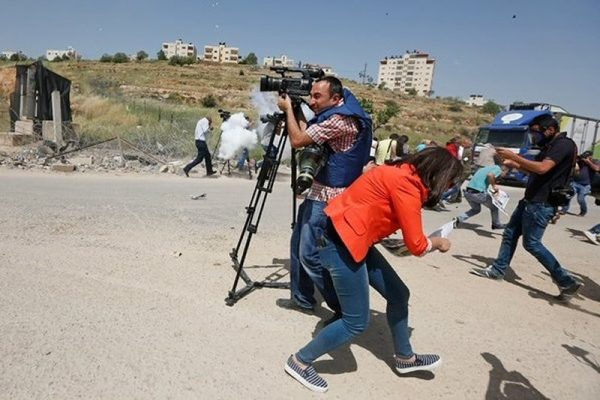
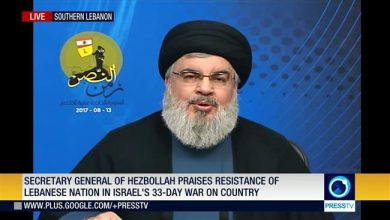

 Secretary-General of the Organization of American States Luis Almagro used his one-day visit to Israel to condemn Venezuela’s leftist government while expressing “pride that Israel is a friend of the Americas,” praising what he called Tel Aviv’s record of respecting human rights and democracy.



 Aletho News

