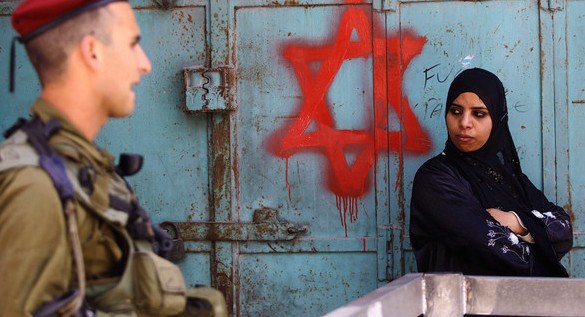
Poll: Most Americans Aren’t Zionists But Democratic and Republican Party Platforms Are
By Grant Smith | al-awda.org
|

|
|
Roll of Shame
By Craig Murray | June 24, 2017
These are the 15 countries which shamefully voted against a UN General Assembly Resolution on Thursday which proposed to seek an opinion from the International Court of Justice on Britain’s continued colonial possession of the Chagos Islands. In the most absolute example of ethnic cleansing in modern history, less than 50 years ago the UK deported by force the entire population of the Chagos Islands to make way for the US military base on Diego Garcia, and to this day refuses to allow them to return.
The Dirty 15
USA
UK
Israel
Australia
New Zealand
The above are of course arguably the five countries in the world most profoundly implicated in the usurpation and destruction of native populations
Afghanistan
Albania
Bulgaria
Croatia
Hungary
Japan
Lithuania
Maldives
Montenegro
South Korea
This second small group is dominated by countries with a particularly close security relationship with the United States on which they place particular reliance in relation to a perceived threat.
It must however be heartening that the US and UK could round up so very few supporters for their utterly immoral stance. It is particularly worth noting that none of the major players within the EU backed the UK.
The US and UK are also remarkably silent on the blockade of Qatar by their ally Saudi Arabia. The release of Saudi demands including the closing down of Al Jazeera TV and other media outlets including the excellent Middleeasteye.net show the Saudis’ true motives. Frankly I am shocked by the failure of the mainstream media in the West seriously to question the ludicrous Saudi claim that this attack on Qatar is over support for terrorism.
Mohammed Bin Salman was appointed by his father the King as Crown Prince in Saudi Arabia on 21 June. Bin Salman has been directing the major affairs of the state for the last three years. The ferocity of the prosecution of the war in Yemen is very much his baby. Bin Salman’s master plan, which he has driven through with much skill, is for a far more aggressive Saudi Arabia leading the conservative forces in the Middle East, above all in fierce opposition to Iran and Shia interests. To this end he has forged a conservative alliance incorporating Saudi Arabia, Israel, Egypt and the United States.
US and UK involvement in the war in Yemen goes beyond the enthusiastic supply of the bombs and aircraft which have killed thousands of children. Both have had special forces on the ground, and the CIA has yet again been deeply implicated in the detention, extreme torture and murder of opponents.
The Bin Salman plan is dressed up as “pro-Western” and media hacks paint him as a “reformer” because he wishes to expand a network of McDonalds in the Kingdom. But as Iran slowly does reform, and sticks meticulously to the terms of the internationally guaranteed nuclear agreement, Saudi paranoia towards its regional “rival” becomes ever more dangerous. The Iranians deserve respect for the moderation with which they reacted to the Saudi sponsored terror attack on their parliament itself. But such provocations will increase.
Saudi support for ISIL, Al Qaeda, Al Nusra and the numerous other jihadist groups will only increase as Saudi Arabia seeks to deploy them in its sectarian war against the Shia and their allies. For that reason there is no prospect of terrorist violence in Syria declining. Indeed the United States shooting down of a Syrian jet in “self-defence” was almost certainly an indication that the Syrians were at the time targeting jihadist forces reinforced by US special forces. Israeli bombing and missile sorties against Syrian regime targets in support of jihadist rebels are finally being regularly reported in mainstream media.
I do not hold up Qatar or its ruling aristocracy as a paragon of virtue. But it seeks a more pacific relationship with Iran, and has more developed economic relationships including on shared offshore fields. Qatar has also consistently shown greater interest in the plight of the Palestinians, and more scepticism towards Israel, than Bin Salman is happy with. Qatar also has problems with the brutal military dictatorship of Egypt.
Most worryingly to Saudi Arabia, these slightly more liberal attitudes are closer to the views of the “arab street”, where there is disquiet at Saudi Arabia’s obvious but officially denied relationship with Israel. Qatar also has a media which can reflect these views to a wider Arab audience. Even though, following previous Saudi threats, al Jazeera’s content has been toned down, the Saudis see the station as an intolerable direct threat.
There is public fatigue in the West with regard to the affairs of the Middle East. This is a mistake as the situation is more dangerous than ever. The UK and USA both look likely to support the Saudis and Israel in their determination for conflict with Iran. The EU and Russia – and anybody not harbouring a death wish – will be working to keep the Iranian nuclear deal together. Bin Salman has chosen his time well, with slightly crazed right wing regimes in Washington, London and Tel Aviv willing to back his adventurism. The blockade of Qatar is but a symptom of something much more dangerous.
UN rejects Israel claims of Hezbollah operating under cover of NGO
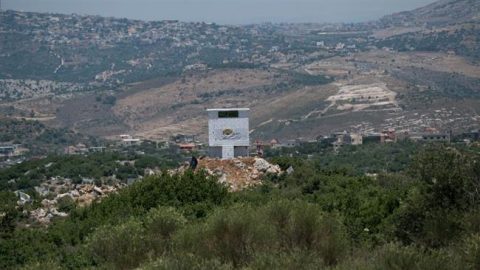
The picture released on June 22, 2017 shows an installation of the Lebanese environmental NGO Green Without Borders which Israel alleges to be used by Hezbollah fighters.
Press TV – June 24, 2017
The United Nations has dismissed Israeli accusations that Lebanon’s Hezbollah resistance movement is setting up observation posts on the border under the guise of an environmental NGO.
Earlier this week, the Israeli military published photographs and footage showing what it claimed to be Hezbollah observation posts established on behalf of “Green Without Borders” near the frontier with the occupied territories.
Israel’s Ambassador to the UN Danny Danon sent a letter of protest to the UN Security Council, denouncing the alleged “dangerous provocation” and accusing Hezbollah of carrying out undercover reconnaissance activities.
The council should “demand that the government of Lebanon dismantle these observation posts immediately, and prevent any future activity of Hezbollah and its affiliates in southern Lebanon, particularly near the Blue Line,” he said, referring to the UN-drawn boundary between Lebanon and the occupied lands.
On Friday, however, UN spokeswoman Eri Kaneko rejected Tel Aviv’s allegation against Hezbollah and said that members of Green Without Borders had only planted trees in the area over the past years.
She stressed that the United Nations Interim Force in Lebanon (UNIFIL) “has not observed any unauthorized armed persons at the locations or found any basis to report a violation of [Security Council] Resolution 1701,” passed at the end of the 33-day Israeli war on Lebanon in the summer of 2006.
UNIFIL remains in contact with the Lebanese armed forces on monitoring the border to ensure there are no violations “and to avoid any misunderstandings or tensions that could endanger the cessation of hostilities.”
The 33-day war, which killed more than 1,200 Lebanese, ended on August 14, 2006, after a UN-brokered ceasefire went into effect.
Since then, UNIFIL has also been charged with monitoring the cessation of hostilities.
Israel’s claims come while it frequently violates Resolution 1701 by invading Lebanon’s airspace.
The Lebanese army and Hezbollah have on numerous occasions reported border breaches by Israeli troops attempting to install espionage devices and tracking equipment in Lebanese territory.
Lieberman: Not a single Palestinian refugee will return to their lands in Israel
Ma’an – June 23, 2017
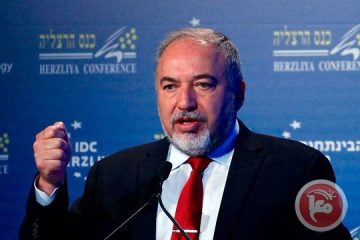
BETHLEHEM – During a speech at Israel’s Herzliya conference, aimed at discussing the country’s national policies, ultraright Israeli Defense Minister Avigdor Lieberman rejected the possibility of Palestinian refugees from historic Palestine, which Israel was built on, being able to return to their lands within the 1967 borders, a right that is upheld by United Nations Resolution 194.
“We will not agree to the return of a single refugee to within the ‘67 borders,” Lieberman reportedly said. “There will never be another Prime Minister who makes propositions to Palestinians like Ehud Olmert did,” he added, referring to a 2008 peace proposal introduced by the former prime minister.
The right of return for Palestinian refugees is a central demand among Palestinians and their leadership. The demand also represents a powerful symbolic connection to their lands and homes they were displaced from, as many Palestinians still possess original keys to their homes that were consumed by the state of Israel 69 years ago.
According to Israeli media, Lieberman also said that an end to the decades-long Israeli-Palestinian conflict would “not solve the problems – it will make them worse,” and noted that Israel should first “reach a regional agreement with moderate Sunni states, and only then an agreement with the Palestinians.”
He also went on to question the legitimacy of Palestinian citizens of Israel being part of the Israeli parliament, the Knesset, noting that the Joint List political bloc — representing parties led by Palestinian citizens of Israel in the Knesset — refused to acquiesce to Zionist ideologies.
“The only place they don’t want to leave is Israel. Why? Because it’s good for them here,” he said, referring to Palestinian citizens of Israel, making up approximately 20 percent of the population, whose families lived on the lands of historic Palestine before the creation of the state of Israel.
According to the Palestinian Central Bureau of Statistics (PCBS), 66 percent of Palestinians who were living in British-Mandate Palestine in 1948 were expelled from historic Palestine and displaced from their homes and lands during the creation of Israel, referred to as the Nakba, or catastrophe, among Palestinians.
On the topic of Gaza, Lieberman reportedly said “I don’t think we need to get into it. It won’t end soon,” before calling the dire humanitarian situation in the besieged Palestinian territory an “intra-Palestinian crisis,” echoing statements made by US Ambassador to the UN Nikki Haley who placed full blame of the dire humanitarian situation in the besieged Gaza Strip on Hamas, and absolved Israel of any responsibility for the ongoing crisis.
Lieberman also accused Palestinian President Mahmoud Abbas of attempting to influence Hamas to go to war with Israel by exacerbating the crisis in Gaza by cutting Palestinian Authority (PA) payments for electricity supplied to Gaza from Israel.
“Abbas is going to increase cuts and soon stop the payment of salaries in Gaza and the transfer of fuel to the strip as a two-pronged strategy: Hurt Hamas and drag it to war with Israel,” he reportedly said.
Lieberman’s statements came amid an attempted renewal of the Israeli-Palestinian peace process by right-wing US President Donald Trump.
Most recently, on Wednesday evening, a meeting was held between Abbas and Trump’s son-in-law and senior advisor Jared Kushner in the central occupied West Bank city of Ramallah to discuss reviving peace talks with Israel.
Executive Committee Member of the Palestine Liberation Organization (PLO) Wasel Abu Yousif said in statement at the time that reviving a political process requires certain determinants based on international law: a time limit for ending the 50-year Israeli occupation of the Palestinian territory must be set to establish a Palestinian state along the 1967 borders with East Jerusalem as its capital, and Palestinian refugees must be granted the right of return to the homes and villages from which they were expelled.
However, Israeli leaders have been public on their rejection of the Palestinian Authority (PA) taking over East Jerusalem, which was officially annexed by Israel in 1980, and have regularly voiced their opposition to the return of Palestinian refugees or even the halting of illegal Israeli settlement expansions in the occupied Palestinian territory.
Naftali Bennett, Israel’s right-wing education minister, has also introduced a bill in the Israeli parliament that would prevent any future divisions of Jerusalem, by mending Israel’s Basic Law on Jerusalem to necessitate the approval of 80 of the 120 Knesset members to make any changes to the law, instead of the regular majority vote.
“The purpose of this law is to unify Jerusalem forever,” Bennett reportedly said, adding that his legislation would make it “impossible” to divide Jerusalem.
While the PA and the international community do not recognize the legality of the occupation of East Jerusalem, Gaza, and the West Bank since 1967, many Palestinians consider that all historic Palestine has been occupied since the creation of the state of Israel in 1948.
A growing number of activists have criticized a two-state solution to the Israeli-Palestinian conflict as unsustainable and unlikely to bring durable peace given the existing political context, proposing instead a binational state with equal rights for Israelis and Palestinians.
Palestine: Another Desperate Cry for Help

By Stuart Littlewood | American Herald tribune | June 23, 2017
The National Coalition of Christian Organizations in Palestine (NCCOP) has just issued a final plea for help in the form of an open letter to the World Council of Churches and the ecumenical movement. It is signed by over 30 organisations in Jerusalem, the West Bank and Gaza and can be read in full here.
The problem is well known to everyone who’s paying attention. The letter recaps for us: “We are still suffering from 100 years of injustice and oppression that were inflicted on the Palestinian people beginning with the unlawful Balfour declaration, intensified through the Nakba [Palestinian ‘catastrophe’] and the influx of refugees, followed by the Israeli occupation of the West Bank including East Jerusalem and Gaza and the fragmentation of our people and our land through policies of isolation and confiscation, and the building of Jewish-only settlements and the Apartheid Wall.
“A hundred years later and there is still no justice! Discrimination and inequality, military occupation and systematic oppression are the rule…. Despite all the promises, endless summits, UN resolutions, religious and lay leader’s callings – Palestinians are still yearning for their freedom and independence, and seeking justice and equality.”
The letter harks back to the Amman Call of 2007. “We are concerned that ten years later the situation is worse…. the Amman Call did not achieve its goal of a just peace and we must ask ourselves today – why?”
Concern is also expressed at Israel’s “systemic assault on Palestinian creative resistance” (by which they mean BDS – boycott, divestment and sanctions), and on their partners worldwide who use BDS to persuade Israel to end the occupation.
“While we are grateful for the ‘costly solidarity’ articulated in the Amman Call and exercised by many churches around the world, we are concerned that some churches have weakened their positions in the last ten years as a result of pressure. Many still hide behind the cover of political neutrality, not wishing to offend their religious dialogue partners.”
So now they ask us to do the following:
1. Call things as they are: recognize Israel as an apartheid state in terms of international law and the UN ESCWA report which said: “Israel is guilty of imposing an apartheid regime on the Palestinian people”. They are concerned that States and churches continue dealing with Israel as if the situation were normal, ignoring the reality of occupation, discrimination and daily deaths. Churches united to end apartheid in South Africa, the WCC playing a pivotal role, and they are expected to do the same again in Palestine
2. Unequivocally condemn the Balfour declaration as unjust, and demand the UK asks forgiveness and compensates the Palestinian people for their losses. Unfortunately Zionist stooges in high places, like Theresa May, have said they will be celebrating the centenary of the Balfour Declaration “with pride” and inviting Mr Netanyahu along for the fun.
3. Take the strongest possible stand against any theology or Christian group that justifies the occupation and favours one nation over the other based on ethnicity or a covenant.
4. Take a stand against religious extremism and any attempt to create a religious state in Palestine or the region.
5. Challenge our religious dialogue partners, and withdraw from the partnership if they won’t condemn the occupation.
6. Encourage church leaders and pilgrims to visit Bethlehem and other Palestinian cities using Palestinian travel agencies, not Israeli.
7. In response to Israel’s war on BDS, defend the Palestinians’ right to resist non-violently, and support economic measures that pressure Israel to stop the occupation. Go further and include sport, cultural and academic measures until Israel complies with international law and UN resolutions.
8. Create lobby groups in defence of Palestinian Christians.
9. Urgently create a strategy within the WCC, like the programme “To Combat Racism”, to co-ordinate lobbying, advocacy and other activities aimed at achieving justice and peace and maintaining the presence of the Palestinian Christians.
“We fully grasp the pressure church leaders are facing here and abroad not to speak the truth, and it is because of this that we are raising this call,” says the NCCOP.
Their message ends with these ominous words: “Things are beyond urgent. We are on the verge of a catastrophic collapse. The current status-quo is unsustainable. This could be our last chance to achieve a just peace. As a Palestinian Christian community, this could be our last opportunity to save the Christian presence in this land.”
As I’m writing news has come in of a legal victory against the UK Government for trying to stifle BDS. The Government recently issued guidance to stop divestment campaigns against Israeli and international firms implicated in Israel’s violations of international law, and to protect the UK’s defence industry. Pension holders, for example, could have been forced into investing in companies complicit in human rights abuses contrary to their conscience and beliefs.
Thanks to action by the Palestine Solidarity Campaign the court held that the Government had acted improperly by seeking to use pension law to pursue its own foreign and defence policy. Parts of the guidance are now held to be unlawful and no longer applicable local government in their pension decisions.
Other last-gasp appeals
The Amman Call mentioned earlier was issued exactly ten years ago at the WCC’s International Peace Conference “Churches together for Peace and Justice in the Middle East” held in Amman, Jordan. It contained a number of imperatives.
- Enough is enough. No more words without deeds. It is time for action.
- The Churches are part of the conflict, because they cannot remain silent while there is still suffering.
- There is no military solution to the conflict, UN resolutions are the basis for peace and the Geneva conventions are applicable to the rights and responsibilities of the affected people.
- Palestinians have the right of self-determination and the right of return.
- Jerusalem must be an open, accessible, inclusive and shared city for the two peoples and three religions.
- Israeli settlements in the occupied Palestinian territories are illegal, and constitute an obstacle to peace, and Israel’s “Separation Barrier” is a grave breach of international law and must be removed.
The Kairos Document of 2009 called itself a “cry of hope in the absence of all hope”. They said they had “reached a dead end” in the tragedy of the Palestinian people and the decision-makers “content themselves with managing the crisis rather than committing themselves to the serious task of finding a way to resolve it”. The faithful were asking: What is the international community doing? What are the political leaders in Palestine, in Israel and in the Arab world doing? What is the Church doing? “The problem is not just a political one. It is a policy in which human beings are destroyed, and this must be of concern to the Church.”
Kairos told the international community to stop practising “double standards” and start implementing international resolutions. “Selective application of international law threatens to leave us vulnerable to a law of the jungle. It legitimizes the claims by certain armed groups and states that the international community only understands the logic of force.” So Kairos was calling for a system of economic sanctions and boycott to be applied against Israel – not as a revenge tactic but action to reach a just and definitive peace.
It also urged churches to revisit the fundamentalist positions that support the evil policies imposed on the Palestinian people, and to stop providing theological cover for the injustices they suffer.
Local action
These heart-rending pleas are all very well but churches are hard to mobilise. Some have flirted with BDS but only after much internal wrangling. Others have allowed themselves to be put off by interference from their interfaith partners.
What can we ordinary mortals do?
Well, I pop into churches randomly and ask what links they have with the Holy Land. They usually stare at me in blank amazement and an awkward silence follows. I therefore recommend a national campaign to visit all churches throughout the land and ask that same question. Shame them.
But you never quite know when you’re up against the ‘enemy within’ – the Christian Zionist. Many readers will remember The Jerusalem Declaration on Christian Zionism by the Patriarch and Local Heads of Churches in Jerusalem in 2006.
It says among other things:
- We categorically reject Christian Zionist doctrines as false teaching that corrupts the biblical message.
- We reject the alliance of Christian Zionist leaders and organizations with elements in the governments of Israel and the United States [add the UK] that are presently imposing their unilateral pre-emptive borders and domination over Palestine.
- We reject the teachings of Christian Zionism that support these policies as they promote racial exclusivity and perpetual war.
- We call upon all Churches that remain silent, to break their silence and speak for reconciliation with justice in the Holy Land.
- We call upon all people to reject Christian Zionism and other ideologies that privilege one people at the expense of others.
- We are committed to non-violent resistance as the most effective means to end the illegal occupation.
- And, of course, Palestinians are one people, both Muslim and Christian. Don’t anyone forget that.
Memorise it.
Did you ever hear any of the 26 Church of England bishops sitting in the House of Lords roundly condemn the British government’s unshakable support for the rogue regime in Israel that’s causing all this misery? No, they’re scared to death of ruffling the feathers of their ‘inter-faith dialogue’ partners and being branded antisemitic. And yes, the Church does have its fearless heroes but they are few and far between and not always tolerated. The Anglican Church by and large doesn’t give a damn about their brethren in the Holy Land or the military jackboot on their necks. And, by extension, they don’t give a four-x whether, in another 10 years, there will be any Christians left in the place where Christianity was born. No, maybe they will care, but by then it will be too late.
If I had my way every clergyman and every political leader calling him/herself a Christian would have the Jerusalem Declaration tattooed on their rump.
I’d like to invite some of them to spend a week with priests in the front line in Jenin, Nablus or Hebron for a real taste of life under brutal Israeli occupation; then queue for hours at daybreak with Palestinian workers in the obscene human holding pens at the Bethlehem checkpoint as they struggle to get to work… and home again; then watch Israeli bulldozers evict Palestinian families and destroy their homes for no good reason; then join Gaza fishermen as they try to earn a living while getting shot at in their own waters by Israeli gunboats; then stay with a Gaza family in the rubble, experience living with only 2 hours’ electricity a day, with the kids going to school in shifts and studying by candlelight; then sit down with Hamas ministers to learn what it’s like running this tiny, overcrowded enclave after 10 years of cruel blockade; then visit Gaza’s hospitals to see first-hand the crisis in medical equipment and spares; then watch the groups of young, uniformed Israeli gunslingers swaggering through the Old City of Jerusalem making that beautiful place so ugly….
The opportunities to learn the nasty truth about today’s Holy Land are endless.
And when they return home…. who knows, they might just feel pricked to do something about it. At least they could ensure every parish in England twins itself with a parish in the West Bank to offer solidarity and provide moral and material support.
Largest Israeli Public Transportation Company Loses Netherlands Contract Worth 190 Million Euros Following Campaign by BDS Activists
IMEMC News & Agencies – June 23, 2017
Last month, Egged Bus Systems (EBS), a subsidiary of Egged Israel Transport Cooperative Society, Israel’s largest public transportation operator, lost a bid for a decade-long contract to run public transportation in the North-Holland region of the Netherlands, which includes the country’s capital, Amsterdam. This contract was valued at 19.1 million euros a year, with a total worth of 190.1 million euros.
Egged Bus Systems lost this lucrative bid after Dutch BDS activists launched a campaign charging its Israeli parent company with facilitating grave violations of Palestinian human rights and international humanitarian law.
Specifically, Egged Cooperative operates Jewish-only buses to and between almost all of Israel’s illegal settlements built on stolen Palestinian land in the militarily occupied West Bank, including remote outposts and East Jerusalem.
Egged buses traveling on Israeli settlement bus routes bar access to Palestinians. They use an extensive network of roads built to seamlessly connect illegal settlements on both sides of the illegal Israeli separation Wall to cities within present-day Israel.
The company thus supports and profits from a racist, segregated bus system that actively facilitates the maintenance and expansion of Israel’s illegal settlements, which are themselves considered war crimes under international law.
A spokesperson for DocP, a coalition of Dutch BDS activists for Palestinian rights, said,
We are very happy with this result, with the fact that our regional government rejected Egged’s bid to run North-Holland’s public transportation system.
People can now step into a bus in Amsterdam without helping pay for Israeli apartheid buses that discriminate against Palestinians. Without helping normalize coming and going from Tel Aviv to illegal Jewish-only settlements built on stolen Palestinian land.
There is nothing normal about the daily oppression faced by Palestinians, and I’m heartened that our Dutch BDS campaigns are growing in popular support and showing results.
Riya Hassan, Europe’s campaigns officer for the Palestinian Boycott, Divestment and Sanctions National Committee (BNC) said:
Congratulations to all the activists, organizations and collectives in the Netherlands who successfully built on their earlier BDS campaigns to exclude from their communities a powerful Israeli transportation company that profits from segregated busing, segregated roads and segregated Israeli settlements illegally built on stolen Palestinian land.
You have helped ensure that the regional council of North-Holland adheres to its own obligations under international law by not aiding and abetting Israel’s serious violations of Palestinian rights.
Egged Cooperative has also been accused of putting its Palestinian drivers in harm’s way, and not doing enough to protect them from violent Israeli extremists. In 2014, 100 Palestinian Egged bus drivers resigned fearing attacks by Israeli settlers and after Palestinian Jerusalem-line bus driver Yusuf Hassan al-Ramouni was found dead and hanging in an Egged bus.
Egged Bus Systems was one of four companies bidding for the lucrative public transportation contract in the Netherlands. The winning company Connexxion, a Dutch public transportation company, will provide buses and run public transportation in North-Holland for the next 10-years, beginning in July 2018.
Connexxion is itself owned by Veolia, a French corporate giant which was complicit in the Israeli occupation until an extensive BDS campaign cost it tenders around the world estimated to be worth over $20 billion, causing it to exit the Israeli market. Veolia and Connexxion have ended their complicity with Israel’s violations of Palestinian human rights, but have yet to pay reparations to the Palestinian communities they harmed, and campaigners are still demanding that they do so.
The Legitimacy of Family Compensation for Palestinians Killed, Injured, and Imprisoned

By Kathryn Shihadah | If Americans Knew | June 19, 2017
JTA reports on what would seem to be a no-brainer: a bill requiring that aid money to the PA be withheld if the PA continues its Martyrs Fund or “pay to slay” policy. Of course nothing is quite as simple as meets the eye.
WASHINGTON (JTA) — Top Senate Democrats said they were closer to signing on to a Republican-backed bill that would slash aid to the Palestinian Authority if it did not stop subsidizing Palestinians jailed for attacks on Israel. [Ed. note: Info on bill is here]
Senate Minority Leader Charles Schumer told attendants at the Orthodox Union’s annual Washington action day on Thursday that he would support the Taylor Force Act or legislation similar to it if the Trump administration is unable to get the Palestinian Authority to stop the payments. [Ed. note: Senator Schumer is a major advocate for Israel; see video.]
“Abbas has to stop making payments to terrorists and their families, and all elected officials should call them out,” Schumer said.
Also edging closer to endorsing the legislation was Senator Ben Cardin, top Democrat on the Senate Foreign Relations Committee.
The United States now gives the Palestinian Authority about $500 million in annual aid. The bill, which was introduced by Republican Senators Ted Cruz and Lindsey Graham, would only leave the portion for security assistance — about $60 million in 2013. Cruz also attended the Orthodox Union event.
“We’re going to find a way to pass the Taylor Force Act,” Senator Cardin said, suggesting that he wanted changes to the bill before he could fully endorse it. The measure was named for the American killed in a 2016 stabbing attack in Tel Aviv.
The Taylor Force Bill “prohibits certain assistance…from being made available for the West Bank and Gaza” unless the State Department is satisfied that the PA is working to end violence against US and Israeli citizens, is publicly condemning such acts and cooperating in investigating them, and has “terminated payments for acts of terrorism.” (Here is a list of cosponsors of the bill.)
If the bill becomes law, the US may withhold 88% of aid to the Palestinian Authority until it complies.
Economics of occupation
Israel has also withheld money from the PA in the past—tax revenues that are collected by Israel but that actually belong to the Palestinians, about $125 million per month. For example, funds were held back by Israel in November 2012 as a punishment for the UN vote which brought de facto recognition of Palestine’s statehood, and again in January 2015 as a penalty for Palestine’s application to join the ICC.
The transfers are an important revenue source for the cash-strapped Palestinian government.
Palestinians already suffer economically from the hardship of a brutal fifty-year occupation. According to a study by the UN Conference on Trade and Development, agriculture and industry have suffered huge losses. One reason is the inaccessibility of “Area C,” which accounts for over 60% of West Bank land (66% of its grazing land) and is off-limits to Palestinians. The report estimates that “the occupation of Area C costs the Palestinian economy the equivalent of 35% OF GDP.”
Gaza is also barred from half of its farmland and 85% of its fishery resources. Over 2.5 million productive trees have been vandalized or uprooted since 1967; 82% of Palestinian groundwater has been confiscated by Israel, and must be bought back by Palestinians at inflated prices.
Even tourism has been “annexed”: Israel has “rebranded” popular West Bank sites as being in the “Holy Land,” obscuring their Palestinian identity. Israeli tour guides control most visitors, making it easy to take a day trip to Bethlehem, but then stay in an Israeli hotel.
Adding to its many economic advantages, Israel garners $10 million a day in aid from the United States, compared to the $500 million per year that Palestine receives now and is in danger of losing.
Israel uses its huge aid budget to finance the occupation and fight wars with Gaza—both of which are illegal according to international law and condemned by almost every country in the world. Its assaults on women and children, as well as noncombatant men, is well documented. For example, the Middle East Children’s Alliance reported that “1,518 Palestinian children were killed by Israel’s occupation forces from the outbreak of the second Intifada in September 2000 up to April 2013… meanwhile the number of children injured by the Israelis since the start of the Second Intifada against Israel’s occupation has now reached 6,000. That number means that one Palestinian child was killed by Israel every 3 days for almost 13 years.”
However, Israeli leaders argue that the “hate-filled climate” against Israel was created not by occupation and war, but by “fiery speeches” by Palestinian leaders and “venomous” Facebook posts.
Compensation in the event of death or injury
Payment to the family of a service member killed or injured in the line of duty is a common practice. In America, for example, families receive a one-time payment to help surviving members deal with financial hardships connected with the loss of their loved one. This “death gratuity” is currently $100K.
Israel too has a compensation program for families of IDF soldiers killed or injured in the line of duty.
Because the Palestinian Territories are forbidden from having armed forces, their resistance against the occupation is carried out by civilians. In the event of their death, injury, or imprisonment their families face the same type of struggles that any service member’s family would face, and the Palestinian Authority provides for them through the so-called “Martyrs Fund.”
Prime Minister Benjamin Netanyahu plans to withhold revenue from the PA until the fund is dismantled, as he considers these payments “an incentive for murder.”
Republican Senator Lindsey Graham, leading sponsor of the Taylor Force bill, fails to make the connection between the US and Israeli compensation programs and the Palestinian Martyrs Fund, declaring that “the practice is inconsistent with American values, inconsistent with peace, and inconsistent with decency.”
Not a reward for violence
Nasser Tarayreh, whose son was killed after stabbing an Israeli girl, explains, “I don’t think anyone is willing to sacrifice his life for money. And for us as a family, all the money in the world won’t replace my son.” In fact, the money would be needed to provide shelter soon, as their home was scheduled for demolition—an Israeli practice in retribution against the families of attackers. Nasser will receive $350 a month from the Martyr’s Fund.
Many “martyrs” were not killers or attackers, but were themselves killed while walking to school, participating in a peaceful demonstration, or sleeping in their beds. If they died as a result of Israel’s brutality, they bear the title of martyr.
The fund also compensates families of prisoners and detainees. Samidoun Palestinian Prisoner Solidarity Network reported that “the Israeli occupation arrested 6,440 Palestinians in 2016, including 1,332 children and 164 women,” in addition to members of the Palestinian Legislative Council and journalists.
The fund had a budget of $170 million in 2016 and makes monthly payments to about 35,000 Palestinian families. Qadora Fares, who works with the system, explains, “This is a kind of social protection for the family. The children of the prisoners and martyrs and wounded have the right to go to schools, hospitals and get food.”
Fox News reported that the Washington Post strongly condemned the support of victims’ families in the Palestinian resistance. Fox quoted the WP as saying, “The PA is running a bounty system. Payments to terrorists and their families are enshrined in Palestinian law, provided for in the PA budget, and indirectly supported by foreign aid…incentivizing the murder of civilians is barbarism…”
It should be noted that this quote is not from a WP journalist, but part of an opinion piece by Israel partisan Thane Rosenbaum. Ironically, Rosenbaum authored Payback: The Case for Revenge, a book presenting the theory that “if the law won’t set things right, which it so often fails to do, then it’s ok, indeed moral, for us to do so ourselves”—a theory with which many Palestinians would, to Rosenbaum’s dismay, agree. Rosenbaum has elsewhere implied that a child whose father works for Hamas is actually a target by association, and that therefore it is morally acceptable to kill children.
Daniel Larison of the American Conservative said in his review of Payback, “Rosenbaum’s argument is extremely similar to the justifications that terrorist groups use when they target civilians in their own attacks…It is very important to reject this logic no matter where it comes from or whose cause in a conflict it is being used to advance, because this is the logic that has been used to justify countless atrocities down through the years.”
Origin of violence
In an interview for the Institute for Palestine Studies, Palestinian psychiatrist Eyad al Sarraj explained that many Palestinians who turn to violence have themselves witnessed great violence perpetrated on their families. “During the first intifada, studies showed that 55 percent of the children had witnessed their fathers being humiliated or beaten by Israeli soldiers.
“The psychological impact of this is stunning. The father, normally the authority figure, comes to be seen as somebody who is helpless, who can’t even protect himself–let alone his children. So children became more militant, more violent… The militant ones believe that if they die as suicide fighters in the struggle for justice, they are conquering defeat and death itself.” Sarraj continued, “they wouldn’t turn their bodies into bombs if they had F-16s, Apache helicopters, tanks, or a tiny fraction of the weapons Israel gets from the United States.”
Sarraj describes violence as a manifestation of a deep-seated issue: “Suicide bombings and all these forms of violence–I’m talking as a doctor here–are only the symptoms, the reaction to this chronic and systematic process of humiliating people in effort to destroy their hope and dignity. That is the illness, and unless it is resolved and treated, there will be more and more symptoms of the pathology.”
Sarraj expressed deep opposition to Palestinian violence, but distinguished between the martyrs and their families: “As a Palestinian, as an Arab, as a Muslim, and as a human being, I feel obliged to support them. I cannot leave their children in poverty–I have to do what I can to leave them some hope and dignity.”
The face of the Fund
One story that illustrates both the tragedy that qualifies Palestinians for the Martyrs Fund and the experience that produces even more martyrs, is that of Abu Jameh. At dinnertime on July 20th 2014, Israeli planes bombed an apartment building in Gaza, killing 24 members of a family—a woman, her son, four of her daughters-in-law, and 18 of her grandchildren. One member of Hamas was also present for the meal. Abu Jameh who survived but was injured, lost his pregnant wife and six of his seven children. He reflected, “there is nothing left. It is the end for us,” and added later, “I will marry again four times, and I will have 10 sons with each wife, and they will all be in the resistance.”
Emmanuel Nahshon, Israeli Foreign Ministry spokesman got it wrong when he stated, “Terror has become a comfortable business for families.”
Israel revisits Qalqilya expansion plan

Image of an Israeli military bulldozer demolishing a Palestinian home in Qalqilya, West Bank [Apaimages]
MEMO June 19, 2017
Israel’s Channel 2 said the Israeli government will reconsider a previous decision to allow the expansion of the occupied Palestinian city of Qalqilya in the north of the West Bank.
The plan would see 14,000 new apartments built on 2,500 dunams (2.5 square kilometres) in Israeli-controlled Area C surrounding the city and would potentially double the city’s population from 50,000 to 110,000.
The Israeli Prime Minister’s Office said the plan was proposed during the visit of US President Donald Trump to the region in May.
Qalqilya, which is surrounded by illegal Israeli settlements, is overcrowded.
Channel 2 reported that the plan has stirred widespread controversy in Tel Aviv, especially among settlers who claimed it would “harm the settlers’ quality of life and security”.
The area owned by the people of Qalqilya is classified as Area C under the Oslo agreement signed between Israel and the PLO in 1992. Under this classification, the land is under Israeli security and administrative control.
Read: Israel to approve 2,500 new settlement units in occupied West Bank
Featured Video
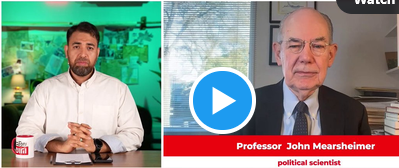
John Mearsheimer Talking Iran with Iran
or go to
Aletho News Archives – Video-Images
New Book
The silver that medicine dropped — four thousand years of clinical use, four decades to erase.
Colloidal Silver — First Edition, 2026, Paperback
Lies are Unbekoming | October 16, 2026
Silver was medicine. Not alternative medicine. Not folk medicine. Medicine. In surgery. In obstetrics. In the burn ward. In water treatment. In the household medicine chest. Every physician before 1938 knew this.
By the 1870s, silver nitrate was standard in surgical wound care across the leading hospitals of Britain, Germany, and the United States. Colloidal silver preparations — Collargol, Argyrol, Protargol — entered European and American practice through the 1890s and early 1900s and became standard antiseptics in military field medicine. By the time Fleming grew his first penicillin mould in 1928, silver was the first-line antimicrobial of the Western pharmacopoeia. The Lancet and the British Medical Journal carried the clinical reports in volume. The practice ran continuously through the Victorian era, the Edwardian era, the First World War, the interwar period. By 1980, almost all of it was gone.
What has not been treated at book length, until now, is how a four-thousand-year clinical record disappeared from mainstream medicine within four decades of the Flexner Report — and what the honest account of silver looks like once that record is reassembled.
Colloidal Silver reconstructs the pre-1938 record from The Lancet, the British Medical Journal, and the primary literature of the era; recovers Robert Becker’s bioelectric framework from the regeneration research the pharmaceutical model buried; and places silver inside a practical terrain-paradigm guide to its current place — in water, on the body, inside the body, and in the chronic conditions where antibiotics have failed. … continue
Blog Roll
 Aletho News
- Pharma- and Gates-Funded GAVI Seeks to Assure Parents
- John Mearsheimer Talking Iran with Iran
- Inside Bill C-22, Canada’s Patriot Act.
- China’s FM: Palestinian cause is ‘greatest injustice of the century’
- US sympathy for Palestinians surpasses support for Israelis
- Israeli rabbi permits occupiers to steal Palestinian olive harvest in West Bank
- Spanish firm sells Latvia vehicles equipped with Israeli tech despite arms embargo
- Saudi Arabia under fire… Yemen is burning down the House of Saud
- Israeli Spy Pollard stole the files, today’s it’s delivered through official channels
- Why Iran Didn’t Walk Away
- If Americans Knew
- NPR investigation finds evidence of widespread fraud at mall kiosks tied to Israeli skincare brand
- Tucker Carlson exposes Israeli Lies about the Oct 7th attack, Charlie Kirk, and the U.S.
- Israel has detained thousands of Palestinian children since Oct 7th – over half spent time in solitary, many uncharged
- Israeli Analysis: Is Netanyahu Planning an ‘October Surprise’ Attack Before Israel’s Election?
- Israeli settlers brutally attack Palestinians and Washington Post female photographer, 65
- Words Have Changed, Occupation Continues: The Reality of the Gaza Ceasefire
- Gaza’s child amputees are growing faster than their prosthetics allow
- Israel keeps Palestinians struggling just to survive–Daily Update
- Israeli firm used online ads to run vast spy operation, researchers say
- No, the world zionist movement is not an antisemitic conspiracy theory
- No Tricks Zone
- New Study Suggests Large Regions Of The Pacific Ocean Have Been Cooling For The Last 80 Years
- Germany’s Green Energy Debacle: High Energy Costs Force Kahla Porzellan to Close After 182 Years!
- New Study: 50 Years Of The Most Aggressive ‘Net Zero’ Policies Can Only Affect The Global Climate By 0.03°C
- US September “Heat” Was No Record…Many Records Set Decades Ago
- Latest European Green Energy Debacle; Portugal’s Largest Flagship Solar Park Insolvent!
- Green Energy Debacle: German Expert Professor Fritz Vahrenholt Warns Of Severe Economic And Social Consequences
- Two More Paleo Reconstructions Affirm Meters-Higher Sea Levels Across Ireland, Brazil 7000-6000 Years Ago
- New Study: Earth And Venus Surface Warmth Largely Explained By Convection And Lapse Rate, Not CO2 Or Radiation
- 2025 Nature Paper Claiming Worsening Global Drought Gets RETRACTED …Heavily Flawed
- New Study: ‘Global Drought Shows No Detectable Recent Acceleration Under Climate Warming’

