Hebron, Occupied Palestine – On Sunday 13 April 2014 in the early afternoon, Israeli settlers with assistance from the Israeli occupation forces started moving into the so-called Rajabi building in Hebron. After seven years of litigation, on 11 March 2014, the Israeli Supreme Court handed over the building to the settlers despite previous court rulings that said that the relevant purchase documents and power of attorneys had been forged.
Early this morning, the Israeli Minister of Defence Moshe Ya’alon approved the settlers to move into the building. As a result, three families entered the building later the day and started preparing the building for occupation. The settlers were observed cleaning the house, bringing in pieces of furniture and fixing the windows. The occupation forces provided the settlers with power generators and water tanks to help them in their efforts as the building is not connected to the electricity or water grid. According to Israeli sources, the settlers are to hold a Passover Seder dinner on the site during the upcoming holiday and ten more families are to move into the building after the end of the Passover.
Local Palestinians voiced their fears that the creation of a new settlement will cause further violations of their rights and violence against them. During 2007 and 2008, when settlers were dwelling in the building, the community witnessed multiple attacks by the settlers as well as routine house searches and arbitrary detentions by the occupation forces. Following their eviction by the Israeli police and army in December 2008, the settlers went on a rampage torching Palestinian property and assaulting Palestinians.
Osarin, Occupied Palestine – In the last month, the Israeli army has arrested 10 boys under the age of 16 from Osarin village. As of today, they all remain in the prison.
This is the latest in a long line of tactics employed by the Israeli military to intimidate the people of Osarin and the surrounding villages. According to a member of the village’s local council, the Israeli army approached the village around six months ago demanding that Osarin and three other neighboring villages sell three dunams (3,000 square meters) of land to the Israeli government. The threat was that if they did not comply the army would simply take the land. Despite this pressure, the people of the village collectively chose to refuse and have had to live with the consequences of this choice ever since.
The land the army asked for originally was intended to build three watchtowers, one of which would be just outside Osarin. The other two would be near the villages of Yatma and Qabalan, who also had demands from the Israeli army to sell their land. In total the army was trying to obtain 320 dunams of important farmland, containing olive trees, other crops and grazing areas from the three villages.
The village’s decision to refuse was met with a new plan by the army to build a wall on either side of the main road (route 505), running adjacent to the village, all the way to Za’tara checkpoint. This would be roughly 10km in length and would unsurprisingly require the confiscation of land on either side of the road, which belongs to the village of Osarin. The reasoning for this intrusion into Palestinian land was allegations that boys from the village had been throwing stones onto the main road, where settlers from the illegal settlements pass by in their cars and sometimes on foot. In fact, the Israeli army used these allegations to call a meeting with four villages, one of which was Osarin, the others being Beita, Beit Furik and Madama. In this meeting the army told the representatives from the villages that unless the alleged stone throwing ceased they would make all four of the villages into closed military zones. In other words, force out the inhabitants of all four villages and make it impossible for them to return.
While the Israeli army demands that children stop throwing stones, they are also at the same time increasing attacks on the civilian population of Osarin. During these periods physical force has been used, including punching individuals with no just cause and firing live ammunition into the air to intimidate the local population. Also during these incursions, the roads are closed around the village even when ambulances need to either enter or leave the village, endangering lives in the process.
The village has attempted to go through the court system to block the Israeli authorities’ plans for the area, but has lost each court battle numerous times. This is despite the fact that the village is located in Area B (Palestine Authority and Israeli control) and therefore any seizure of land, including for the purposes of military building construction, is illegal. The area has long been an area of high activity for the Israeli military, where in November 2013 witnesses report that military training took place involving up to 1,000 Israeli soldiers. During the week-long action villagers were told to stay in at night, creating a curfew, and at times local groups of boys were used to provide training with how to deal with stone throwing.
When a local representative was asked if he felt matters had gotten worse in terms of Israeli military interference and intimidation, his answer was an unequivocal yes. The construction of the wall along either side of Route 505 has yet to begin but will most probably commence in the near future. In the meantime, arrests of children and physical violence towards the villagers continue.
At Tuwani – On April 9, children from the Palestinian villages of Tuba and Maghayir Al Abeed were attacked by settlers coming from the Israeli illegal outpost of Havat Ma’on. The children were walking to school, accompanied by the Israeli military escort that has the duty to protect them everyday on their way to and from school, as established in 2004 by the Children Rights Committee of the Knesset. During the 2013-2014 school year the misconduct this military escort has exposed the children to dangerous risks in numerous occasions.
In order to reach the school in the village of At Tuwani, the Palestinian children coming from the nearby byvillages of Tuba and Maghayir Al Abeed, aged between 6 and 17 years, usually walk through the shortest route, about 20 minutes walking, that passes between the Israeli settlement of Ma’on and the illegal outpost of Havat Ma’on (Hill 833). This route is the main road linking their villages and At Tuwani.
On the morning of April 9 at 7:40 am, two Israeli children coming from the illegal outpost of Havat Ma’on attacked the Palestinian children by trowing them stones with slingshots. Two Palestinian girls, aged 12 and 14, were hit on their legs by the stones and were injured. At the moment of the attack the Israeli soldiers were not walking with the children as they are supposed to, but were all inside the military vehicle, following behind the group of children.
Everyday international volunteers monitor the regular implementation of the IDF escort for an average number of 16 children, aged between 6 and 17 years old, coming from the villages of Tuba and Maghayir al Abeed. August 25 marked the beginning of the school year 2013-2014 and 132 days of school have been recorded so far. The escort was not present in 5 mornings and 6 afternoons, forcing the children to walk a longer and still dangerous path that takes them about one hour to reach the school. During the current school year international volunteers registered that in 30% of the cases the military escort was late (27% during the previous school year 2012-2013), causing children the loss of about 8 hours of lessons (17 in 2012-2013). In addition, in 50% of the cases (52% in 2012-2013) the military escort arrived late after school, forcing the children to wait in a dangerous place (the gathering one), close to both the settlement and the outpost, for a total time of about 12 hours (19 in 2012-2013). In contravention to the escort’s protective mandate, in 96% of the cases (i.e. 127 out of 132 recorded cases in which the escort was present) the Israeli military failed to fully complete the escort and the soldiers did not accompany the children to the end of the established path (78% in 2012-2013). Furthermore thus far in 2013-2014 school year, in 82% (37% in 2012-2013) of the cases the escort didn’t walk with the children, as established in the agreement between the Israel Civil Administration’s District Coordination Office (DCO) and the mayor of At Tuwani.
For further information on the military escort in the past years, it is available the report “The Dangerous Road to Education. Palestinian Students Suffer Under Settler Violence and Military Negligence” at: http://goo.gl/CXfi9
Operation Dove has maintained an international presence in At Tuwani and the South Hebron Hills since 2004.
For further information:
Operation Dove, 054 99 25 773
[Note: According to the Fourth Geneva Convention, the Hague Regulations, the International Court of Justice, and several United Nations resolutions, all Israeli settlements and outposts in the Occupied Palestinian Territories are illegal. Most settlement outposts, including Havat Ma’on (Hill 833), are considered illegal also under Israeli law.]
Urif, Occupied Palestine – On Sunday 30th March on the road to Madama (near Nablus), 25-year-old Nidal, from the village of Urif, was fixing his car when a settler with a handgun shot him in the leg. 12 years ago, in the same area, Nidal and two friends were kidnapped and held for 17 hours by settlers from a nearby illegal settlement.
At approximately 9:00 pm, Nidal and a friend attempted to drive from their village of Urif to the city of Nablus. Before reaching the Huwarra checkpoint, they discovered that one of the tires on the car had a puncture. While they were fixing the tire, another car arrived on the other side of the road and stopped across from them.Nidal assumed it was a Palestinian stopping to offer his help, as he walked over to the car he realized that it was a settler, carrying a handgun. The settler shot Nidal in the calf and fled the area.
Nidal was losing a lot of blood, so his friend drove to the hospital without fixing the puncture, damaging the car. They arrived at Rafidia hosptial approximately15 minutes after the event. Nidal stayed in hospital for two days and will need to rest for at least three weeks to heal correctly.
This not the first time Nidal has suffered from settler violence. Twelve years ago, Nidal was 13-year-old and was playing outside Urif School with two friends. A group of settlers from what would become the illegal settlement of Yezhar arrived at the school and kidnapped the three children. The families and the Palestinian Authority worked hard to have the children released; while they were illegally detained settlers beat the children.
They were held in the settlement for 17 hours, denied food, water, and access to the bathroom. Eventually the President of the Palestinian Authority made a call for their release, and after 17 hours the Israeli army entered the settlement and finally released the children back to their families.
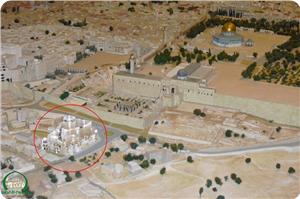
The Israeli Ministry of the Interior approved on Friday a plan to demolish a large section of the historic Palestinian neighborhood of Silwan, in East Jerusalem, to construct an archaeological center proposed by a nationalist right-wing ethno-religous organization which aims to expand Jewish settlement on Palestinian land in east Jerusalem.
The people of Silwan have faced colonization efforts for the last dozen years – from approved Israeli government projects that involve demolitions of residents’ homes, to forced evictions from their ancestral homes by armed Israeli settlers who force their way in to the houses and push the Palestinian families into the street.
Numerous forced evictions have been documented by the Silwan Information Center but the Israeli police have refused to take any action against the settlers. Instead, they have, on multiple occasions, forcibly removed the tents of residents who camped out on the street in front of their homes after their homes had been taken over by Jewish settlers.
In the project approved on Friday, the right-wing Israeli settlement organization Elad will run the center, which is set to be constructed across from the ‘Dung Gate’ entrance to the Old City of Jerusalem. Elad also runs the controversial ‘City of David’ Israeli national park nearby, which was also constructed over an alarming number of demolished Palestinian homes in Silwan. This is the only instance in which a private organization has been granted control of a national park in Israel.
Elad’s mission statement is to “strengthen the Jewish connection to Jerusalem, and this in the means of tours, guidance, populating, and publishing material.”
According to the Silwan Information Center, “In practice, Elad feverishly worked to gain ownership of houses and lands in the village and particularly in Wadi Hilweh [in Silwan].”
In its approval of the new project, the Israeli Ministry of the Interior said that, “As a tourist attraction, this will contribute to the development of the city of Jerusalem.” When completed, the multi-level building will take up 16,000 square metres (172,160 square feet).
In response to previous archaeological projects by Elad, the Palestinian Authority’s archaeological and cultural heritage expert stated, “The sort of archaeology being carried out in Jerusalem, specifically in East Jerusalem and the Silwan area, is motivated by hidden agendas and has nothing to do with scientific objectives. It is done secretly, without taking into consideration international standards, and casts great doubts on the objectives of these excavations.”
Journalist Emily Hauser, of the Jewish Daily Forward, wrote last month, after the Israeli government handed over control of the southern part of the Western Wall to Elad, “Elad’s mission sits hand in glove with the larger government goal of tightening control over the entirety of 21st century Jerusalem, making the possibility of sharing the city with a future Palestinian state infeasible.
Jerusalem-based archaeological NGO Emek Shaveh has found that Elad’s decisions about where and how to excavate in the area are rooted in political considerations about establishing an Israeli presence and staying one step ahead of the diplomatic process, with the understanding that “’local and international public opinion will not create pressure against them.’”
Bruqin, Occupied Palestine – On the 1st of April, at approximately 5.30 AM, a bulldozer and eight military jeeps arrived in the village of Bruqin close to the city of Nablus. The bulldozer first destroyed a farmers shed, killing the ten rabbits inside. The destruction continued as a caravan belonging to another farmer was also demolished, and finally later the same night, a building belonging to a farmer in the nearby village of Beit Furik was also destroyed.
This is just one of many nights where Palestinian property has been demolished by the Israeli army. Inside the village of Bruqin a girl’s school, recently financed by US Aid, is threatened by a demolition order.
The mayor of Bruqin spoke to an ISM activist after the demolitions:
“I talked to some Israeli settlers one week ago, and told them that we could live in peace, together. But they replied that they want another 700 dunums of land from Bruqin. So, I don’t think that they want peace. If you really want peace, you wouldn’t take what’s mine”.
The resistance in Bruqin against the illegal expansion of settlements continues. The day after the demolitions, men, women and children of the village went out on the hills close to a nearby illegal settlement and planted olive trees.
There has been a lot of negative media attention in the last few months on Sodastream, an Israeli fizzy drinks company with a factory in the illegal Israeli settlement of Mishor Adumim. A partnership between Oxfam and Scarlett Johansson ended recently after an international campaign put pressure on the charity to end its relationship with Johansson because she was undertaking ongoing work for Sodastream.
However, a high profile US public relations (PR) firm, which boasts of its “ethical business practices”, is providing services to both Sodastream and Oxfam America. Fenton Communications states on its site that “We do not take on clients that we do not believe in ourselves” and claims that it works “for companies and foundations advocating social change”. Fenton’s corporate social responsibility rhetoric and greenwash doesn’t bear more than a few minutes of scrutiny. The PR firm has a client list which includes large multinationals such as General Mills and Unilever. General Mills jointly own the General Mills (Pillsbury) plant in the Atarot settlement Industrial zone, while Unilever only pulled out of the Barkan settlement industrial zone after years of pressure from the boycott, divestment and sanctions movement. Both companies are also responsible for selling, marketing and lobbying hard for processed foods globally, which are damaging to people’s health. One of Fenton’s other clients is Oxfam America.
In response to the public campaign about Scarlett Johansson, Oxfam stated: “While Oxfam respects the independence of our ambassadors, Ms. Johansson’s role promoting the company SodaStream is incompatible with her role as an Oxfam Global Ambassador… Oxfam is opposed to all trade from Israeli settlements, which are illegal under international law.” Why then does Oxfam America find it acceptable to work with a PR firm that includes Sodastream on its client list?
It is not surprising that Sodastream feels the need for a PR firm. The company sells consumer products, marketing them as ‘green’. It relies on maintaining a positive public image. The international boycott campaign against the company has been growing apace and is taking its toll. Sodastream has reported a loss in the last three quarters and its share price is suffering.
Why not contact Oxfam encouraging them not to work with a PR firm doing business with a company working in Israel’s settlements:
RAMALLAH – Letters of accession for 15 international multilateral treaties and conventions were handed to the relevant parties on Wednesday after being signed by President Mahmoud Abbas a day earlier, Palestinian officials said.
“I presented the letters signed by Abbas this morning to UN special envoy Robert Serry, as well as to the representatives of the Netherlands and Switzerland,” Palestinian foreign minister Riyad al-Malki said.
He said the Palestinians had begun the “technical process” required to obtain membership of some 15 international conventions and covenants, including the Fourth Geneva Convention.
“This action does not detract from the importance of negotiations. We are still committed to these talks,” he said.
In July, the PLO agreed to postpone accession to international bodies in exchange for the release of 104 Palestinians prisoners jailed before the Oslo Accords.
“Since Israel failed to release the last group of prisoners, the State of Palestine is no longer obliged to postpone its rights to accede to multilateral treaties and conventions,” the PLO said in a statement Wednesday.
“Despite the escalation of oppressive Israeli policies such as the killing of Palestinian civilians, settlement construction, raids on vulnerable communities, arbitrary arrests and detentions, home demolitions and the removal of residency rights, we remained committed to the negotiations process and supported US efforts,” it added.
Earlier, Israeli Tourism Minster Uzi Landau warned of punitive action if the PLO pursued efforts to join UN agencies and threatened that Israel could annex territory in the occupied West Bank in response.
Israel could also hurt the Palestinians economically by acting “to block financial aid to them,” the minister added.
Abbas signed letters of accession for the following treaties and conventions:
1. The Four Geneva Conventions of 12 August 1949 and the First Additional Protocol
2. The Vienna Convention on Diplomatic Relations
3. The Vienna Convention on Consular Relations
4. The Convention on the Rights of the Child and the Optional Protocol to the Convention on the Rights of the Child on the Involvement of Children in armed conflict
5. The Convention on the Elimination of All Forms of Discrimination against Women
6. The Hague Convention (IV) respecting the Laws and Customs of War on Land and its annex: Regulations Concerning the Laws and Customs of War on Land
7. The Convention on the Rights of Persons with Disabilities
8. The Vienna Convention on the Law of Treaties
9. The International Convention on the Elimination of All Forms of Racial Discrimination
10. The Convention against Torture and Other Cruel, Inhuman or Degrading Treatment or Punishment
11. The United Nations Convention against Corruption
12. The Convention on the Prevention and Punishment of the Crime of Genocide
13. The International Convention on the Suppression and Punishment of the Crime of Apartheid
14. The International Covenant on Civil and Political Rights
15. The International Covenant on Economic, Social and Cultural Rights
Hope for continued peace efforts
Meanwhile, a senior official said Wednesday that the PLO wants US efforts to salvage the peace process to continue.
“We hope (US Secretary of State John) Kerry’s efforts will be renewed in the coming days,” Yasser Abed Rabbo, secretary general of the Palestine Liberation Organization’s executive committee, told reporters in Ramallah.
“Kerry knows the reality. We don’t want these efforts to finish.”
Abbas’ announcement that the PLO had taken steps to join UN agencies angered Israel and prompted Kerry to cancel a trip to Ramallah on Wednesday.
The announcement was a blow to Kerry’s frenetic efforts to resolve a dispute over Palestinian prisoners and find a way to extend the fragile peace talks beyond a looming April 29 deadline.
Abed Rabbo said the Palestinian move was “a response to Israel’s flagrant violation of the agreement” under which it would release prisoners if the Palestinians refrained from seeking further UN recognition.
“The government of Israel did not release the prisoners, without any reason or even any excuse for not doing so,” Abed Rabbo said.
The senior Palestinian official suggested that they would not be quitting talks before the deadline.
“The Palestinian leadership respects its commitments and wants the political process to continue, but we want a real political process, without tricks,” he said.
“We will continue our efforts with the US administration, and will do everything we can to remove all obstacles.”
The negotiations have faltered over several issues, notably Israel’s settlement expansion in occupied Palestinian territory, with the PLO demanding a freeze on settlement construction, including in East Jerusalem.
Attempt by settlers to begin construction of walking path on Tel Rumeida. The blue fence is on the
settlement, and the new stake on right is in a washed out area that would link the settler path to
an existing path along the outside of the fence surrounding the settler archaeological dig.
On 24 March 2014, settlers attempted to begin construction of a walking path outside the fenced “archaeological” dig near the Abu Haikal home on Tel Rumeida. The settlers pounded in metal stakes in an area just below the fence erected by Israelis around what was once the orchard of the Abu Haikal family, and is now an archaeological site to which Palestinians, including Palestinian archaeological experts, are denied access. The stakes are a first step in an apparent attempt to link the settlement of Tel Rumeida to the fenced area of the archaeological dig.
Palestinians living in the building adjacent to the land on which the settlers were trespassing called the police, who ordered the settlers to stop. However, the following day, 25 March, soldiers arrived at the home of the Abu Haikal family and threatened them with arrest.
Feryal Abu Haikal had just finished hosting a group of neighbors, along with the Palestinian Liaison Officer and an officer from the Hebron Governor’s office, when soldiers arrived at her home and began to dispute the ownership of some of the land on Tel Rumeida, showing her a map that contained false information. The soldiers told Feryal Abu Haikal that no visitors are allowed on the land surrounding her home, and threatened to arrest and deport any internationals there, including members of the Abu Haikal family.
For background on the settler archaeological dig on Tel Rumeida click here
To see a map of multiple land-grab efforts by settlers in Hebron click here.
This week the UN celebrated World Water Day – a day to remember the billion people who are unable to meet their needs for safe, clean water due to drought, poverty and official neglect.
But it’s also a day to remember, and fight for, 2.1 million Palestinians who suffer something different – an artificial water scarcity deliberately created and sustained by Israel’s military occupation, and the private Israeli water company Mekorot.
Increased international pressure brings hope that the tide may be finally turning for Palestinians striving for water justice in the West Bank and Gaza – in particular, recent investment and partnership decisions against Mekarot, which runs Israel’s discriminatory water policy in the West Bank.
Waterless in Gaza and East Jerusalem
The situation in Gaza is especially dire. The tiny, densely populated territory relies entirely on its depleted, saltwater-contaminated and sewage-polluted aquifer, and the water it produces is unfit for consumption. Water has to be bought, expensively, in bottles or from mobile tanks.
Moreover restrictions on fuel imports mean that Gaza’s single power station spends most of its time idle – and so long as it’s not running water and sewage cannot be pumped. So the taps are dry, toilets are blocked, and sewage pollution gets worse.
Not that Palestinian residents of East Jerusalem have it a lot better. As reported on 17th March, the city suffered a long water cut beginning on 4th March leaving Ras Shehada, Ras Khamis, Dahyat A’salam and the Shuafat refugee camp – cut off from the rest of the city by the separation wall – with no running water.
The reason is simple – old and inadequate water infrastructure, which there are no plans to improve or renew.
Oslo II Accords – the Palestinians were shafted
For West Bank as a whole the facts speak for themselves. The Oslo II Accords dealt Palestinians a singularly poor hand – limiting the volume of water it could produce, as well as imposing severe restrictions on the development and maintenance of Palestinian water infrastructure.
The Accords allow Palestinians to abstract only 118 million cubic meters (mcm) per year from boreholes, wells, springs and precipitation in the West Bank. But Israel is allowed to take four times as much – 483 mcm per year – from the same Palestinian resources.
So not only does Israel now occupy 80% of the area of historic Palestine, but it – via the water company Mekarot – also takes 80% of the water resources from the 20% of the land that is left to the Palestinians.
Sold down the river
But it gets worse. Oslo II’s draconian restrictions on water development imposed by Israel mean that Palestinians can only actually abstract 87 mcm in the West Bank, of the 118 mcm they are allowed.
The acute water deficit is made up by the supply of piped water from Israel. Mekarot currently sells the Palestinian Water Authority some 60 mcm per year – at full price.
As reported by Amira Hass in Ha’aretz, “in that agreement Israel imposed a scandalously uneven, humiliating and infuriating division of the water resources”.
While Palestinian water is piped into Israel at no cost, a fraction of it is then piped back again, and paid for. In this way Israel is extracting from Palestinians both their water, and their money.
In some cases Palestinians are forced to pay ten times more for their water than the price in Tel Aviv – as in the village of Sussia on South Mount Hebron, where they have to drive to the nearby town to buy over-priced water (see photo), even though a water main passes directly through the village on its way to an Israeli settlement.
Water plenty, and water famine
According to the UN Human Rights Council, this all translates into a wide disparity between water use by Palestinians and by settlers in the West Bank. Settlers enjoy 400 litres per capita per day (l/c/d) while some Palestinians survive on a little as 10 l/c/d.
All Palestinian populations receive water volumes far below the level recommended by the World Health Organization of 100 – 250 l/c/d. According to the UNHRC:
“Settlements benefit from enough water to run farms and orchards, and for swimming pools and spas, while Palestinians often struggle to access the minimum water requirements.
“Some settlements consume around 400 l/c/d, whereas Palestinian consumption is 73 l/c/d, and as little as 10-20 l/c/d for Bedouin communities which depend on expensive and low quality tanker water.”
These very low levels of water provision fail to meet the water needs of many Palestinian communities – leaving them with often contaminated water, and not enough of it.
While Palestinian water use may just exceed 70 l/c/d in the relatively well served urban centers of the West Bank, it drops much lower in rural areas that have no access to piped water and depend on wells and rainwater collection.
An estimated 113,000 Palestinians in the West Bank have no piped water supply, while hundreds of thousands more have only intermittent supply, especially in the summer.
Additional restrictions
The restrictions and limitations imposed on Palestinians to access their own resources and develop them have exacerbated the already severe water shortages among Palestinian communities.
Among the restrictions are limits on the size of supply pipe, intended to limit flows as a form of rationing. Typically 30% of the water leaks from Palestinian supply pipes – because Israel refuses to allow their renewal
In ‘Area C’, which covers 60% of the area of the West Bank, Palestinian farmers and communities are not allowed to connect to the water network that serves the growing settlements – and are forbidden even to dig out cisterns.
The international community considers the establishment of Israeli settlements in the Israeli-occupied territories illegal under international law, as set out in the report of the fact finding mission of the United Nations Office of the High Commissioner for Human Rights.
Yet the construction of new illegal Israeli settlements and ‘outposts’, and the expansion of existing ones, is proceeding apace – and further reducing the quantity of water allocated to Palestinians.
Your water or your life
As reported by the UN in March 2012, another threat arises from settlers seizing springs by force: “Palestinians have increasingly lost access to water sources in the West Bank as a result of the takeover of springs by Israeli settlers, who have used threats, intimidation and fences to ensure control of water points close to the settlements.”
The UN Office for the Coordination of Humanitarian Affairs (OCHA) examined 60 springs on Palestinian land close to Israeli settlements. They found that:
“In 22 of the water sources, Palestinians have been deterred from accessing the springs by acts of intimidation, threats and violence perpetrated by Israeli settlers, while in the eight springs under full settler control, Palestinian access has been prevented by physical obstacles, including the fencing of the spring area, and its ‘de facto annexation’ to the settlement.”
Violence and destruction may also come directly from the occupation authorities. “Destruction of water infrastructure, including rainwater cisterns, by Israeli authorities has increased since the beginning of 2010; double in 2012 compared to 2011.
“The denial of water is used to trigger displacement, particularly in areas slated for settlement expansion, especially since these communities are mostly farmers and herders who depend on water for their livelihoods.
“A number of testimonies highlighted that the cutting off from water resources often precedes dispossession of lands for new settlement projects.”
Mekorot – at the heart of Israel’s water apartheid
All Israeli settlements in the West Bank are connected to piped water supplied by Israeli water company Mekorot, which took over responsibility for the water resources of the West Bank from the occupying forces in 1982.
Thus it Mekarot which is both the on-the-ground enforcer, and the economic beneficiary, of the West Bank’s ‘water apartheid’.
As the UN Human Rights Council reports: “In the Jordan Valley, deep water drillings by the Israeli national water company Mekorot and the agro-industrial company Mehadrin have caused Palestinian wells and springs to dry up. Eighty per cent of the total water resources drilled in the area is consumed by Israel and the settlements.”
“The lack of availability of Palestinian water resources has led to chronic shortages among Palestinian communities in Area C and a dependence on Mekorot … Mekorot supplies almost half the water consumed by Palestinian communities.
Restricted access
The UNHRC also reported that Palestinians do not have access to the cheaper ‘recycled water’ available to Israeli settlements, and have to buy more expensive drinking water even for irrigation purposes.
This injustice and inequity of access to water supply has always been a source of tension, especially when Palestinian villagers see water pipes leading to Israeli colonies passing through their land without supplying their village with water – as reported above at Sussia.
“The Mission heard of situations where villagers must travel several kilometres to get water when closer water resources serve neighbouring settlements”, reported UNHRC.
And even when they do get water, they receive second class treatment. “In the event of a water shortage, valves supplying Palestinian communities are turned off; this does not happen for settlements.
‘Week of Action Against Mekorot’
Mekorot violates international law and colludes in resource grabbing -including pillaging water resources in Palestine. It supplies this pillaged water to illegal Israeli settlements, and engages in systematic discrimination and denial of water to the Palestinian population.
For this reason Palestinian organizations including PENGON / Friends of the Earth Palestine have co-organised a ‘Stop Mekorot‘ week of action starting today, on World Water Day.
The campaign aims to intensify pressure on governments and companies to boycott Mekorot and hold the company accountable for its discriminatory water policies and practices in Palestine.
On March 20, the environmental federation Friends of the Earth International announced its support for the campaign against the discriminatory practices of Mekorot – joining the global call on governments, public and private utility companies and investors worldwide to avoid or terminate all contracts and cooperation agreements with Mekorot.
Campaign successes
In December 2013 the largest drinking water supplier in the Netherlands, Vitens, set a precedent when it decided that its commitment to international law meant it had to withdraw from a cooperation agreement with Mekorot. According to the company:
“Vitens attaches great importance to integrity and adhering to international laws and regulations. Following consultation with stakeholders, the company came to the realization that it is extremely difficult to continue joint work on projects, as they cannot be separated from the political environment.”
The decision followed a campaign by local trade unions and human rights groups which highlighted Mekorot’s role in Israel’s theft of Palestinian water resources – and raised the prospect that Mekorot might export its discriminatory water policies to Argentina.
Palestinians must have their rightful share of available resources and be granted full authority to manage them properly. Equitable and wise use of available resources among all people is the only basis for lasting peace in the region.
And until then the deliberate, systematic, purposeful water discrimination and resource theft carried out in Occupied Palestine by the Occupation and Mekorot must be recognised for what they are – crimes against humanity. The perpetrators must be punished accordingly.
Occupied Palestine – Yesterday the Hares Boys, who are being charged with 20 counts of attempted murder with no evidence whatsoever, have been in an Israeli prison for one year. Now is more important than ever to fully understand the circumstances surrounding the unlawful arrest and imprisonment of Mohammad Suleiman, Ammar Souf, Mohammed Kleib, Tamer Souf, and Ali Shamlawi.
The car accident
At around 18:30 on Thursday 14 March 2013, a car crashed into the back of a truck on Road 5 in Salfit Governorate, occupied Palestine. The driver and her 3 daughters were injured, one of them – seriously. The driver, Adva Biton, was going back to the illegal Israeli settler colony of Yakir when the accident occurred. She later claimed the accident was due to Palestinian youth throwing stones at her car. The driver of the truck, having testified immediately after the accident that he had pulled over because of a flat tyre, later changed his mind and said he had seen stones by the road.
There were no witnesses to the car accident. Nobody had seen any children or youth throwing stones that day.
The arrests
In the early hours of Friday 15 March 2013, masked Israeli soldiers, some with attack dogs, stormed the village of Hares, which is close to Road 5. More than 50 soldiers broke the doors of the villagers’ houses, demanding the whereabouts of their teenage sons. Ten boys were arrested that night, blindfolded, handcuffed, and transferred to an unknown location. The families were not informed of their sons’ alleged wrongdoings.
Two days later, a second wave of violent arrests took place. At around 3 o’clock in the morning, the Israeli army, accompanied by the Shabak (the Israeli secret service), entered the homes of 3 Palestinian adolescents. They had a piece of paper with their names in Hebrew. After forcing all the family members into one room, taking away their phones so that they wouldn’t call for help, and interrogating them, the soldiers handcuffed their sons, all aged 16-17.
“Kiss and hug your mother goodbye,” a Shabak agent told one boy. “You may never see her again.”
A week later, Israeli army jeeps again entered the village and arrested several boys, who had just come back home from school. The soldiers lined all of them up, including a 6-year-old, and threatened at gunpoint their uncle who pleaded for the soldiers to at least release the youngest children. The army then randomly chose 3 boys, handcuffed them behind their backs, blindfolded them, and took them away. The families were not informed about either the allegations against their children, or their exact location.
In total, 19 boys from the neighbouring villages of Hares and Kifl Hares were arrested in relation to the settler car accident. None of them had previously had any history of stone-throwing. After violent interrogations, most of the minors were released, except for five, who remain in Megiddo, an Israeli adult prison.
These are the Hares Boys.
The interrogation
The arrested boys were subjected to a series of abuse and ill-treatment that accounts as torture. Upon detention, they were kept in solitary confinement for up to two weeks. One boy, since released, described his cell: a windowless hole 1m wide and 2m long; there was no mattress or blanket to sleep on; toilet facilities were dirty; the six lights were kept on continuously, leading to the boy losing track of the time of the day; the food made him feel ill. The boy was denied lawyer; he was interrogated violently three times during three days, and eventually released after found not guilty at the trial.
Other boys have also told their lawyers of very similar treatment. They “confessed” of stone-throwing after being repeatedly abused in prison and during interrogations.
The charges
The five boys from Hares are charged with 25 counts of attempted murder each, apparently 1 count for every alleged stone thrown at passing cars. The Israeli military prosecution insists that the boys consciously “intended to kill”; the boys can face the maximum punishment for attempted murder: 25 years to life imprisonment.
The prosecution’s case relies on the boys’ “confessions”, which have been obtained under torture, and 61 “witnesses,” some of which claim that their cars have been damaged by stones on that same day on Road 5. The latter only appeared after the car accident got a lot of media coverage as a “terrorist act”, and the Israeli prime minister Benyamin Natanyahu announced, after the boys’ arrest, that he “caught the terrorists that did it”. Other “witnesses” include the police and the Shabak, who were not even present at that location at the time. It is not clear whether the 61 “witnesses” have been properly questioned and their claims verified with, for example, hospital admission data, or even if the alleged damage to their vehicles has been photographed or otherwise documented. Such information is not even available to the boys’ attorneys.
The implications
If the boys are convicted, this case would set a legal precedent which would allow the Israeli military to convict any Palestinian child or youngster for attempted murder in cases of stone-throwing.
The boys are now 16-17 years old. If the Israeli military get their way, the boys would only return to their homes and their families at the age of 41 – at best. Five young lives ruined with no evidence of their guilt is a spit in the face to our common principles of justice as human beings.
WHAT’S WRONG WITH THIS?
Almost every stage of this case that could go wrong, did. Local and international law has been mostly dismissed; principles of justice barely fading in the horizon; respect for human beings non-existent.
Consider this:
The Hares Boys, as well as thousands of other Palestinian youngsters, are treated in the Israeli military court system as adults. According to international human rights law in general, and the UN Convention on the Rights of the Child in particular, adults are people over 18 years of age. Israel treats even 9-year-olds as adults.
The racist system of “justice”: no matter the alleged crime, Palestinians are forced to go through the military courts and are tried under military law, while Israelis fall into the civil court system for the same crimes.
Violently arresting children at night without giving any explanation to their families about the reasons behind it, nor informing them about their children’s whereabouts goes against Israel’s own laws which state that minors are to be accompanied by an adult family member when detained or arrested.
The denial of lawyer for several days (in some cases weeks) after detention also accounts as a major violation of Israel’s own rules.
Children being put into solitary confinement for days on end is a form of torture; It is a severe punishment before the verdict.
Abusive interrogations of scared minors is considered torture.
The boys were arrested despite a total lack of evidence against them and condemned by the Israeli media as “terrorists”, which goes against the universal presumption of innocence (innocent until found guilty) and delivers a guilty verdict in the highly bombastic public trial, putting pressure on the judges to do likewise.
For more detailed accounts of the initial arrests and interrogations, please see IWPS Human Rights Reports from the ground:
At-Tuwani, Occupied Palestine – On Sunday March 16, during the Jewish holiday of Purim, Israeli settlers attacked Palestinians and Internationals on Palestinian fields near Mitzpe Yair illegal outpost.
In the morning, four Palestinian shepherds from the village of Qawawis were grazing their flocks south of the Israeli outpost of Mitzpe Yair, when a settler arrived armed with an iron pipe to threaten them shouting. At 9:18 am two Internationals arrived together with two further Palestinian shepherds. The armed Israeli settler then left when he saw that they were filming the scene.
At 9:28 am eight settlers arrived from the illegal outpost – one was still armed with the iron pipe – and four of them violently chased away the flocks, pushing them toward the valley underlying the outpost. Palestinian shepherds followed the settlers in order not to lose their flocks accompanied by Internationals. The Palestinians immediately called the Israeli police.
At 9:48 am the settlers came back to the outpost. In the meantime, an additional International and two Palestinian members of the South Hebron Hills Popular Committee arrived at the scene. At 10:00 am one of the settlers tried to chase away one of the newly-arrived Palestinians, a member of the Israeli human rights organization B’Tselem. As this happened, an Israeli policeman and three Israeli soldiers arrived by foot. At 10:20 am, as the policeman began interrogating the attendants, a further three settlers arrived. Those interrogated were the Palestinian shepherd Nail Abuaram (who filmed everything with a B’Tselem camera) and one International.
At 10:45 am, the policeman lead Abuaram and one of the Internationals to Kiryat Arba police station to give testimony of the harassments. They arrived at the station at noon.
The International was asked for the camera footage of the incident, interrogated and finally released at around 2:50 pm. Abuaram was interrogated alone for a couple of hours and was threaten of arrest until he accepted to sign a paper stating that he will not get closer than 450 meters to the area where the harassment took place for a period of 15 days. He was later released around 6:00 pm after signing the paper. The Israeli police forced the settler who attacked the Palestinians with an iron pipe to stay 200 meters far from the spot where the harassment took place for a period of 15 days.
Palestinian communities of the South Hebron Hills area are strongly involved in using nonviolence as a way to resist the Israeli occupation.
Operation Dove has maintained an international presence in At-Tuwani and the South Hebron Hills since 2004.
[Note: According to the Fourth Geneva Convention, the Hague Regulations, the International Court of Justice, and several United Nations resolutions, all Israeli settlements and outposts in the Occupied Palestinian Territories are illegal. Most settlement outposts, including Havat Ma’on (Hill 833), are considered illegal also under Israeli law.]
Almost immediately after the proxy war erupted, ISIS-tier footage of the torture and murder of Russians in Ukrainian custody emerged.
On July 6th, the New York Times published an astonishing investigation: In Ukraine, Killings of Surrendering Russians Divide an American-Led Unit. The article documents in grim detail how Chosen Company, an international volunteer battalion for Kiev, routinely executes Russian prisoners of war. It is the very first mainstream admission that this practice – a brazen breach of the Geneva Conventions, and a grave war crime – is widespread among Ukraine’s fighters, both foreign and homegrown. … continue
This site is provided as a research and reference tool. Although we make every reasonable effort to ensure that the information and data provided at this site are useful, accurate, and current, we cannot guarantee that the information and data provided here will be error-free. By using this site, you assume all responsibility for and risk arising from your use of and reliance upon the contents of this site.
This site and the information available through it do not, and are not intended to constitute legal advice. Should you require legal advice, you should consult your own attorney.
Nothing within this site or linked to by this site constitutes investment advice or medical advice.
Materials accessible from or added to this site by third parties, such as comments posted, are strictly the responsibility of the third party who added such materials or made them accessible and we neither endorse nor undertake to control, monitor, edit or assume responsibility for any such third-party material.
The posting of stories, commentaries, reports, documents and links (embedded or otherwise) on this site does not in any way, shape or form, implied or otherwise, necessarily express or suggest endorsement or support of any of such posted material or parts therein.
The word “alleged” is deemed to occur before the word “fraud.” Since the rule of law still applies. To peasants, at least.
Fair Use
This site contains copyrighted material the use of which has not always been specifically authorized by the copyright owner. We are making such material available in our efforts to advance understanding of environmental, political, human rights, economic, democracy, scientific, and social justice issues, etc. We believe this constitutes a ‘fair use’ of any such copyrighted material as provided for in section 107 of the US Copyright Law. In accordance with Title 17 U.S.C. Section 107, the material on this site is distributed without profit to those who have expressed a prior interest in receiving the included information for research and educational purposes. For more info go to: http://www.law.cornell.edu/uscode/17/107.shtml. If you wish to use copyrighted material from this site for purposes of your own that go beyond ‘fair use’, you must obtain permission from the copyright owner.
DMCA Contact
This is information for anyone that wishes to challenge our “fair use” of copyrighted material.
If you are a legal copyright holder or a designated agent for such and you believe that content residing on or accessible through our website infringes a copyright and falls outside the boundaries of “Fair Use”, please send a notice of infringement by contacting atheonews@gmail.com.
We will respond and take necessary action immediately.
If notice is given of an alleged copyright violation we will act expeditiously to remove or disable access to the material(s) in question.
All 3rd party material posted on this website is copyright the respective owners / authors. Aletho News makes no claim of copyright on such material.