Most Jews want to perform Jewish rituals in Al-Aqsa Mosque
MEMO | March 13, 2014
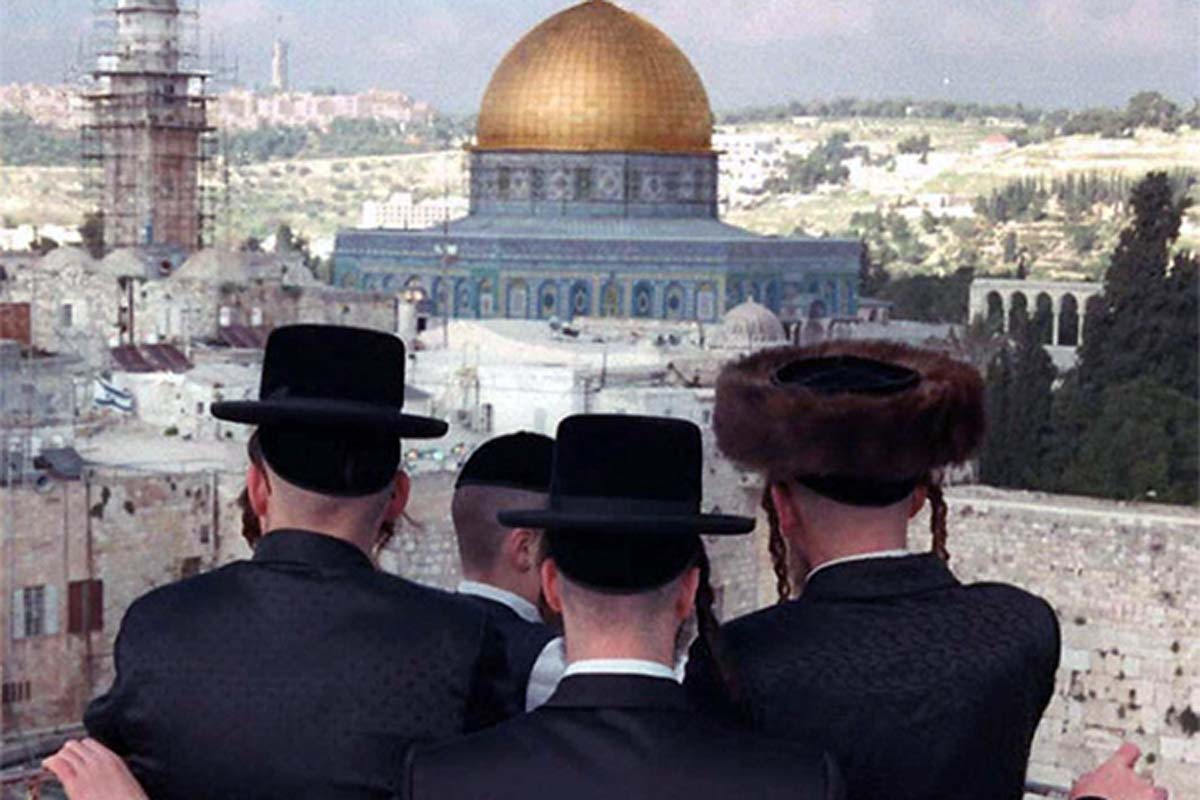 Some 78 per cent of religious Jews want to enter Al-Aqsa Mosque compared to only 18 per cent from the national Haredim, a new poll has revealed.
Published by Maagar Mohot and conducted in cooperation with the Temple Organisations, the survey showed that 45 per cent of secular Jews wanted to enter Al-Aqsa Mosque.
About 80 per cent of the national religious Jews believe that entering Al-Aqsa Mosque has to keep up with the teachings of Judaism, which stipulate carrying out religious rituals upon accessing certain places inside the mosque.
Regarding tourism visits to the mosque, the poll showed that 68 per cent of the national religious Jews want to enter Al-Aqsa as tourists, compared with 60 per cent of secular Jews and 20 per cent of Haredim.
The poll showed that 73 per cent of national religious Jews support building a Jewish temple in Al-Aqsa Mosque.
Commenting on the results of the poll, Al-Aqsa Foundation for Waqf and Islamic Heritage said that this reaffirms that all facets of Israeli society want to invade Al-Aqsa Mosque and build a Jewish Temple in its place.
Related articles


AL-KHALIL: Palestinian property rights under attack; setters attempt multiple land-grabs in Hebron
CPTnet | March 13, 2013
 |
| The Al-Rajabi building. Photo EAPPI |
Settlers have won a victory in their ongoing attempt to grab land for a new settlement in Hebron. On 11 March 2014, the Israeli Supreme Court agreed to hand over the Al-Rajabi building in the Old City of Hebron to settlers, despite the grim humanitarian impacts of the decision on Palestinians living in the neighborhood. The Hebron Rehabilitation Committee (HRC) has appealed to the international community to speak out against this violation of Palestinian property rights, and to use all means available to prevent the creation of a new settlement in the Old City of Hebron.
Settlers claimed ownership of Al-Rajabi house on 19 September 2007, when a group of them stormed into the building in the middle of the night. In November 2008, the court found that the settler’s purchase documents were forged and evicted them, placing the building under military control pending a final decision. In reaction, Hebron settlers set fire to Palestinian homes, farms, olive trees, and vehicles in the area. Six Palestinians were injured, two with live ammunition. On 11 March 2014, the Israeli Supreme Court ruled that the Palestinian owner of the building must, against his will, accept payment from Israeli settlers in the amount specified in the forged sale documents.
A thirty minute walk from the Al Rajabi building settlers are using “archaeology” to rewrite the history of the city and take control of two large plots of land on top of the hilly neighborhood of Tel Rumeida. On 5 January, Israeli settlers and soldiers uprooted fifty almond trees belonging to the Abu Heikal family, and began digging on two plots of land that surround the family’s home, and which the family has leased and cultivated for sixty-five years.
Since January, the settlers have used heavy earth-moving equipment to remove truckloads of soil from the orchard. Tall metal fences now cut the Abu Heikal home off from the orchard, leaving the house accessible by only a narrow drive. Fencing off the land, which soldiers have declared a “closed military zone,” has also isolated portions of the Tel Rumeida neighborhood, making it difficult for residents to walk to shops and the nearby mosque.
 |
| Israelis have unearthed and desecrated what Palestinian archaeological experts believe are three Muslim graves, constructed on bedrock with stones pointing toward Mecca. Pictured is second of three Muslim graves unearthed by settlers digging on Tel Rumeida. In this photo, the grave has been partially removed. |
 |
| This public footpath has been fenced off and replaced with a longer path with a gate at each end, leading to these steep and precarious dirt steps |
According to Hamed Salem, chairperson of Birzeit University’s archaeology department, the dig is illegal and is merely an attempt to “advance the settler’s political agenda by using archaeology to justify their presence in Hebron.” An archaeologist from the Palestinian Ministry of Antiquities recently attempted to inspect the site but was denied access. The Israeli Culture Ministry and Civil Administration are financing the dig, and expect it to cost an estimated NIS seven million. Residents of Tel Rumeida fear that because such a large sum has been allocated there may be plans for much greater destruction of surrounding ancient olive trees and orchards. The Abu Heikal family is currently challenging the legality of the excavation in the Israeli Civil Court system.
Roughly midway between the Al Rajabi building and Tel Rumeida, near the Ibrahimi Mosque, settlers are attempting to gain control of five buildings: the Bouderi House and the Tomb of Abner, both directly outside the entrance to the Ibrahimi Mosque, the Ashhab Shops, across the street from the Gutnick Center, which is directly in front of the Ibrahimi Mosque, the Abu Rajab house near Checkpoint 209, and the Al-Sharif House, the front door of which opens onto the street just below the Ibrahimi Mosque. In recent months settlers and soldiers seeking to access the Al-Sharif building have attempted to open the house from the front directly below the mosque by breaking open a welded door, and have repeatedly invaded the home of the Al-Atrash family, which shares an enclosed courtyard with the Al Sharif building. If settlers are allowed to occupy these seven sites the humanitarian impacts on residents of Hebron’s Old City neighborhoods will be devastating. The targeted properties are links in a chain that, if completed, would effectively encircle the Ibrahimi Mosque and link the four existing settlements inside the Old City to the larger settlement of Kiryat Arba, which borders the Old City. This connection would cut off Palestinian neighborhoods and homes from access to schools and services, and would put all of the Old City under increased risk of settler incursions and violence. Currently about 500 settlers live in the four downtown Hebron settlements of Beit Hadassah, Avraham Avinu, Beit Romano, and Tel Rumeida. An additional 7,000 live in Kiryat Arba.
Related article
Scandal of billion dollar deals between Saudi Arabia and Veolia
Ard Kanaan News Agency | March 12, 2014
Veolia is a French company specialising in environmental work in the fields of water, recycling, energy and transportation. The company has recently had a lot of media coverage given its contribution to supporting Israeli settlements.
The company has been registered by international activists concerned with the Palestinian cause on the Boycott, Divestment, and Sanctions (BDS) list since 2005, “due to their immoral work serving the occupation in various areas in Palestine”.
Currently it is involved in a railway project in Jerusalem that links the illegal West Bank settlements and Jerusalem which is considered one of the occupation’s main means and an important step in the context of the Judaisation of Jerusalem project and the expansion of settlements in the city. It not only transports Israelis passing through, but also facilitates access between the new Israeli settlements and the settlers as a means of easing settlements and outlining a mechanism and infrastructure for its expansion. This is considered a violation of the Geneva Accords which prohibit the occupation from transporting its citizens to occupied territories, so this is not only a clear violation of Palestinian rights, but also a violation of international agreements made in this regard.
Veolia’s activity ranges between environment workshops, water and transportation, as it works through one of its subsidiaries (T.M. M.) and Tovlan Landfill, near Jericho, as a report by Corporate Watch Research Group, specialising in monitoring the work of international companies, stated the violations made by Veolia with regards to the management of the landfill. Veolia buries the waste of 21 settlements in the landfill near the Jordanian border, this has many health and environmental “side effects” on neighbouring Arab villages such as Fasayil and Abu Al `Ajaj, leading to the displacement of the residents of the latter, the population dropping to 200 residents from thousands in 1999, the year the landfill was established.
There are also those who leave their homes during the summer only to return in winter when the smell from the landfill is not as strong. The livestock, which is the main source of income for locals, also suffered big losses.
The residents of these villages are also deprived of electricity, while the residents in settlements have electricity and water at discounted rates in order to motivate them to live in settlements. The recycling of the waste in the landfill contributes to the provision of electric energy by means of renewable energy.
Who works in the landfill? Palestinians work in the landfill and they are deprived of any labour rights, as their wages are half the minimum wages set for Israeli workers and they are deprived of work and health insurance.
The company also has shares in the bus routes, such as route 109 and 110, which provide transportation for settlers on Highway 433 in the West Bank running through the settlements. The occupation enforces apartheid/segregation rules on highway 433, as Palestinians are not allowed to use the highway.
Veolia is also involved in facilitating Israeli exclusion operations, as well as facilitating the transfer of settlement waste, transporting it to Palestinian areas and causing many long-term health and geographic problems. This has encouraged the indirect expulsion of Palestinians, all of which has contributed to the process of racial segregation in transportation in those areas.
Similarly, it has recently provided water and sanitation services to many of the Israeli occupation’s settlements in the occupied West Bank, including the Modi’in Ilit settlement located between Jerusalem and Tel Aviv in the occupied Palestinian territories.
This means that three out of Veolia’s four subsidiaries – water, waste and transportation – actively work to support settlements.
Veolia’s activities are considered a flagrant violation of international law, specifically Article 49 of the Fourth Geneva Convention which states that “Individual or mass forcible transfers, as well as deportations of protected persons from occupied territory to the territory of the Occupying Power or to that of any other country, occupied or not, are prohibited, regardless of their motive.”
International law also prohibits Israel from using occupied land for its own benefit and, therefore, burying waste from the settlements in the occupied territories is a violation of United Nations Resolution 63/201 dated January 28, 2009, which:
“Calls upon Israel, the occupying Power, not to exploit, damage, cause loss or depletion of, or endanger the natural resources in the Occupied Palestinian Territory, including East Jerusalem, and in the occupied Syrian Golan.
Calls upon Israel, the occupying Power, to comply strictly with its obligations under international law, including international humanitarian law, with respect to the alteration of the character and status of the Occupied Palestinian Territory, including East Jerusalem.
Also calls upon Israel, the occupying Power, to cease the dumping of all kinds of waste materials in the Occupied Palestinian Territory, including East Jerusalem, and in the occupied Syrian Golan.”
In addition to violating international law, Veolia’s acts violate the resolution of the Arab summit in Khartoum, in March 2006, which provides for the following:
The condemnation of the project aiming to link West Jerusalem to the occupied West Bank through occupied East Jerusalem and the stressing of the illegality of this project. It also calls on the two French companies [Alstom and Veolia] to immediately withdraw from the project and demands punitive measures be taken against them if they don’t comply. The Arab Summit also urged the French government to take the necessary measures in this respect to honour its obligations under international law.
To top this all off, Veolia’s activity in the occupied territories contradicts the company’s declared goals and strategies which aim to “reduce the negative environmental impacts of waste” and “help raise the citizens’ standard of living.”
It is clear that Veolia selectively applies these goals, as it only aims to raise the standard of living of the settlers, at the expense of the Palestinians and in violation of international treaties and the most basic human rights.
This company’s long history of racism and the oppression of the Palestinians’ rights was enough to convince the public opinion in different parts of the world to boycott it.
The campaign to reduce the company’s activity and completely boycott it was successful in impacting its work, which has suffered due to losses estimated at more than $12 billion over the past six years in order to prevent the renewal or signing of new contracts in many countries worldwide. These include Australia, Sweden, Norway, Netherlands, Ireland, Scotland and finally England. In addition to this, a coalition of boroughs in south-west London refused to bid on the tender offered by Veolia for a £1 billion waste removal deal last April. In January 2009, Veolia lost a contract worth €3.5 billion Euros to run the metro in Stockholm.
In addition to the efforts made globally to boycott this company and reduce its activity, French company Alstom, a company working in partnership with Veolia on the Jerusalem railway project, linking Jerusalem and the settlements, lost the second phase of the Saudi Haramain Railway project, which connects Mecca and Medina in Saudi Arabia. This is in spite of the fact that the company had previously won the contract for the first phase. The value of the second phase contract is about $10 billion.
Since the end of 2008, the BDS National Committee, along with its partners, have made popular, official and media efforts in order to convince the Saudi authorities to exclude Alstom from the Haramain Railway deal due to its involvement in the Israeli occupation’s projects aiming to Judaise Jerusalem. Many letters and documents to this effect were sent to official parties in Saudi Arabia from the BDS Committee, as well as several official, popular, Palestinian, Islamic and international parties in the context of a coordinated campaign targeting this company.
Veolia in Saudi Arabia
Despite all of the information mentioned above, all the background information, business links, relations with the Israeli occupation and settlement operations, as well as its direct involvement in facilitating the expansion of settlements and the Judaisation of Jerusalem, and in spite of the boycott exercised by British and other organisations and governorates against Veolia, it has continued to operate and make outrageous profits in Saudi Arabia for years.
The company’s work in Saudi Arabia is narrowed down to the fields of water, sanitation and water desalination. It exists in Saudi Arabia through the Veolia Water Solutions & Technologies, Saudi Industries Ltd, with branches in Riyadh, Jeddah and Dammam. Veolia also operates in Saudi Arabia under the Sidem Saudi Ltd, one of Veolia Water Solutions & Technologies, Saudi Industries Ltd’s subsidiaries, which has branches in Jeddah, Khobar and Jubail. Sidem specialises in designing and building large desalination plants.
Veolia Water Solutions & Technologies, Saudi Industries Ltd has landed many large contracts with the Saudi government in recent years. The two contracts worth noting are the desalination plant contract with the Power and Water Utility Company for Jubail and Yanbu, signed in 2007, and the management, operation and maintenance of the water and sanitation sector deal in the Saudi capital Riyadh, signed in 2008.
In 2007, Veolia signed a contract with the Power and Water Utility Company for Jubail and Yanbu to establish one of the largest water desalination plants in the world worth $945 million. One year before signing the deal, Saudi Arabia signed the Arab Summit resolution in Khartoum.
Furthermore, Veolia has landed 62 water desalination contracts in Saudi Arabia since 2007. In 2008, Veolia signed a large contract with the National Water Company to manage, operate and maintain the water and sanitation in the Saudi capital Riyadh. Veolia expects this deal to achieve a $60 million profit.
In December 2011, Veolia signed a contract with the King Fahd University of Petroleum and Minerals to establish research centres in the Dhahran Techno Valley.
While Alstom – Veolia’s partner in the Judaisation of Jerusalem project and the Jerusalem railway project, connecting Jerusalem to the settlements – lost the second phase of the Haramain Railway project worth about $10 billion, Veolia (in full partnership with Alstom) is signing contracts worth billions of dollars in Saudi Arabia, despite its blatant violation of international law and the rights of the Palestinians.
Veolia has been working in Israel before it entered the Saudi market, and its involvement in settlements began very early on, before it made any deals with the Saudi government.
It is both embarrassing and astonishing that Veolia’s involvement in the settlements was not taken into account when it was awarded these huge business deals in Saudi Arabia and that the vast global BDS campaign against Alstom and Veolia in 2011 did not impact Veolia’s operations in Saudi Arabia, as the company signed an agreement with the King Fahd University of Petroleum and Minerals in December of the same year.
It is also shameful that at a time when international companies and parties are taking a stance against this company for violating the most basic human rights in Palestine and its participation in the brutal Israeli occupation and settlement, the Saudi government is signing contracts with the same company in various business areas. This in a country which is supposedly a leader in the belief in Palestinian rights, as well as protecting such liberties and condemning all human rights violations during this serious Palestinian tragedy.
A company with such a shameful history of working to enhance Israeli settlements should not find a work environment that opens the doors to trading in a country like Saudi Arabia, which has a long history of supporting the Palestinian cause.
While Veolia is losing billions of dollars in contracts in Stockholm and London, it is signing a billion dollar deal in Jubail and making profits of up to $60 million dollars in Riyadh!
The least that is expected of Saudi Arabia is not to sign contracts with Veolia, to pressure the company and make it choose between carrying out its responsibilities in accordance with international law, stop supporting the settlements and violating the rights of the Palestinians or to get out of Saudi Arabia and cease all forms of business with it.
Translation by MEMO
Al-Aqsa vs. Israel: The Lurking Danger Beneath
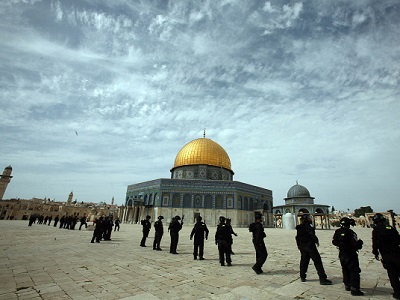
While the danger of Al-Aqsa Mosque collapsing is very real, it is a representation of the mentality that rules Israel. (Photo: Mahfouz Abu Turk)
By Ramzy Baroud | Palestine Chronicle | March 12, 2014
Something sinister is brewing around and below al-Aqsa Mosque in occupied East Jerusalem, and it has the hallmark of a familiar Israeli campaign to strip the Mosque of its Muslim Arab identity. This time around, however, the stakes are much higher.
The status of al-Aqsa mosque is unparalleled within the context of Muslim heritage in Palestine itself. It is also the third holiest Muslim shrine anywhere. But equally as important, it is a symbol of faith, resistance and defiance. Its story of struggle and perseverance goes hand in hand with the very modern Palestinian struggle for rights, freedom and identity. Praying at al-Aqsa at times seems like an impossible feat. Many Palestinians lost life or limbs simply trying to gain access to the mosque.
In a statement released on March 7, the Palestinian Ministry of Awqaf and Religious Affairs said Israeli forces carried out 30 attacks against Al-Aqsa Mosque and other holy sites during the month of February alone. Most of the attacks targeted Al-Aqsa itself. While the recurring violations at Al-Aqsa were led by Jewish settlers, according to the statement, they have done so under the watchful eye, protection and support of the Israeli police and army.
Most alarming about these attacks is their political context, which indicates that a great degree of coordination is underway between politicians, security forces and Jewish settlers.
In anticipation of a Palestinian backlash, on March 04, an Israeli court sentenced Islamic leader Sheikh Rade Saleh to eight months in prison for ‘incitement’. The Sheikh is the most outspoken Palestinian leader regarding the danger facing Al-Aqsa. Why silence Sheik Saleh now when the attacks against al-Aqsa are at an all time high?
It was on February 25, 1994, that US-born Jewish extremist Baruch Goldstein stormed into the Ibrahimi Mosque in the Palestinian city of al-Khalil (Hebron) and opened fire. The aim was to kill as many Arabs as he could.
At that moment, nearly 800 Muslim worshipers were kneeling down during the dawn prayer in the holiest month of the Muslim Calendar; Ramadan. He killed up to 30 people and wounded over 120. Exactly 20 years later, the Israeli army stormed al-Aqsa Mosque, the third holiest Muslim site, and opened fire. The timing was no accident.
Like the rest of the West Bank, Al-Khalil is facing the dual challenge of armed Jewish settlers and Israeli occupation soldiers; the latter enforcing the military occupation, while providing further protection to the settlers. The settlers, extremists from the illegal settlement of Kiryat Arba, often attack Palestinian residents of the town with complete impunity. Interestingly, many of Kiryat Arba settlers are Americans, as was Baruch Goldstein.
It was not enough that Israeli soldiers within the vicinity of the Ibrahimi Mosque allowed Goldstein – armed with a Galil rifle and other weapons – access to the mosque, but they opened fire on worshipers as they tried to flee the scene. Israeli soldiers killed 24 more and injured others. Goldstein, now a hero in the eyes of many in Israel, is often blamed solely for the massacre in al-Khalil. But in fact, it was a mutual effort between Goldstein and the Israeli army.
This symbiotic relationship between the army and settlers, which dates back to the early days of the Israeli occupation of Jerusalem, the West Bank and Gaza in 1967, continues.
While Israeli bulldozers dig into Palestinian land during the day, leveling mounds of ground and destroying olive groves for settlement expansion, heavy machinery burrows beneath the Old City of al-Quds, Jerusalem, at night. The Israelis are looking for evidence of what they believe to be ancient Jewish temples, presumably destroyed in 586BC and AD70. To fulfil “prophecy”, Jewish extremists believe that a third temple must be built. But of course, there is the inconvenient fact that on that particular spot exists one of Islam’s holiest sites: The Noble Sanctuary, or al-Haram al-Sharif. It has been an exclusively Muslim prayer site for the last 1,300 years.
The Noble Sanctuary, located in Jerusalem’s Old City, is the home of Al-Aqsa Mosque and the Dome of the Rock. The site has been under constant threat, attacks, acts of arson and military violence for nearly five decades. The few Muslim clergy – belonging to the Islamic Trust which manages the area, along with the custodianship of Jordan – are mindful of the ever-lurking Israeli threat that oftentimes turns deadly. It was no surprise that late Israeli leader Ariel Sharon chose that exact place to carry out his proactive ‘tour’ of al-Aqsa compound in 2000. Many unarmed Palestinians, mostly worshipers, died on that day. Thousands more were lost in the following months and years as the entirety of the occupied territories and Palestinian towns inside Israel exploded with unprecedented fury. Sharon was later elected Prime Minister of Israel.
That same dangerous combination – rightwing politicians allied with religious zealots – is at work once more. They are eying Al-Aqsa for annexation, the same way the Israeli government is laboring to permanently annex large swathes of the occupied West Bank, to preclude any future settlement with the Palestinian Authority of Mahmoud Abbas.
The Israeli Knesset (Parliament) chose the 20th anniversary of the Goldstein massacre of Palestinians in al-Khalil to begin a debate concerning the status of Al-Aqsa compound. Right-wingers – which constitute the bulk in the government of Prime Minister Benjamin Netanyahu – want the Israeli government to enforce its ‘sovereignty’ over the Muslim site, which is administered by Jordan per the Jordanian-Israeli peace treaty of 1994. Israeli MP Moshe Feiglin, is the man behind the move, but he is not alone. Feiglin is a member of Netanyahu’s Likud party, and has strong backing within the party, the government and the Knesset.
A major backer of Feiglin’s initiative is Miri Regev, also a far-right Likud member. Regev is demanding that the government establish separate prayer times for both Jews and Muslims in Al-Aqsa Compound. The model she wishes to duplicate is no other than the Ibrahimi Mosque. “We will reach a situation where the Temple Mount will be like the Cave of the Patriarchs, days for Jews and days for Muslims,” she said.
Of course, Regev omitted the fact that 20 years ago to the day, a Jewish extremist and Israeli troops killed and wounded hundreds of Palestinians kneeling for prayer.
On the next day following the Israeli government debate, a thundering sound was heard around 3 AM in the Wadi Hilweh neighborhood of Silwan, located south of the Old City of Jerusalem. Residents heard the “sounds of heavy duty machines digging under their houses throughout the night,” Ma’an reported. Then, a large wall suddenly collapsed, while a few houses sustained damage. The Israeli underground network of tunnels is growing, as some of these tunnels connect Wadi Hilweh to the Western Wall to Al-Aqsa.
While the danger of Al-Aqsa Mosque collapsing is very real, it is a representation of the mentality that rules Israel: one of annexation and military occupation, with no regard whatsoever to Palestine’s holiest site, also revered by over 1.6 billion Muslims around the world.
– Ramzy Baroud is an internationally-syndicated columnist, a media consultant, an author and the editor of PalestineChronicle.com. His latest book is “My Father Was a Freedom Fighter: Gaza’s Untold Story” (Pluto Press, London).
Check The Label – Boycott Israeli Produce
By Friends of Al-Aqsa November 7, 2013

The need to boycott Israel is growing
The call for boycotting Israel has grown significantly in recent years. The main purpose of this global campaign is to bring Israel to account for its human rights violations against Palestinians. The reason such civil action is necessary is because governments around the world with the power to intervene have repeatedly failed to utilise international legal apparatus in to hold Israel to account for its crimes.
However, successful boycott campaigns have revealed that ordinary people do have the power to act and respond to Palestinian calls for intervention. The destruction of Palestinian infrastructure through Israeli military assaults, routine demolitions of essential resources such as water wells, and blocking access to farmlands; means that Palestinians are unable to freely harvest their lands and bring their produce onto the markets. It is well documented that farmers are attacked by extremist settlers, and shot at by army personnel. Entire initiatives such as the Olive Cooperative have been built in response to these attacks, so that international solidarity activists can go to Palestine simply to help farmers harvest their crops and document the violent assaults some face on a daily basis.
Fishermen off the coast of Gaza face similar deadly assaults, this time from Israel’s naval vessels. Thus, peaceful farming or fishing is now a luxury for Palestinians, yet Israel is exporting its own produce globally and reaping the financial rewards for it. Its exploitation of stolen Palestinian lands in the West Bank should not be allowed to enter European markets and the boycott campaigns seek to highlight this.
The boycott of illegal settlement produce is becoming established. However, there is now also a move to boycott Israeli produce too, as Israeli companies have been found to breach EU food labelling regulations by labelling settlements goods as ‘produce of Israel’. By doing this, they mislead consumers into believing that the goods are legitimately farmed in Israel, instead of illegitimately farmed on stolen Palestinian land, often exploiting Palestinian labour.
Recent statistics reveal that illegal settlements profit from exporting their produce to Europe to the tune of 230 million Euros a year. When compared to Palestinian exports, this is fifteen times greater in value. Thus, the EU imports 100 times more produce per illegal Israeli settler than it does per legitimate Palestinian resident of the West Bank.
The success of the boycott campaigns reflects the feeling on the ground. Ordinary Brits do not want to be a part of Israel’s racist and illegal occupation policies, and they do not wish to support the illegal settlements by buying their produce.
British Politicians Oppose Boycott
Both the Conservatives and the Labour Party have both come out against boycott of Israel.
David Cameron stated in October 2012:
In a speech by David Cameron at the annual dinner of the United Jewish Israel Appeal, Cameron said on boycotting:
“And to those in Britain’s universities and trades unions who want to boycott Israel and consign it to an international ghetto, I say not only will this Government never allow you to shut down 60 years worth of vibrant exchange and partnership that does so much to make both our countries stronger but I also say this: we know what you are doing – trying to delegitimise the State of Israel – and we will not have it.”
The Labour Shadow Foreign Secretary, Douglas Alexander, recently stated ”it is not Labour policy to support boycotts. We would like to see even stronger economic ties with Israel’. His comments were reported on twitter following a London meeting on 7 February 2013.
European Consumer Labelling laws
The EU is considering making it illegal for Israel to sell produce from the illegal settlements labelled as ‘produce of Israel’. This would be a marked step towards obstructing settlements from profiting from the land they have stolen.
Produce to Boycott
Products to look out for are: dates, citrus fruits and herbs, and manufactured products including cosmetics, carbonation devices, plastics, textile products and toys.
Recently, Morrisons supermarket was found to be selling medjoul dates labelled as ‘Produce of Israel’ but which were in fact from illegal settlements.


1) Every time you go shopping, ‘Check the Label’ on the produce you buy. Ensure they are not from Israel, West Bank or Jordan Valley. If you do see produce from these places, take a photo and send it to info@checkthelabel.org.uk detailing the store and location.
2) If you find produce from Israel, West Bank or Jordan Valley ask to speak to the store Manager and explain that the produce are from illegal Israeli Settlements as they are grown on land that has been stolen from Palestinians. Ask for them to be removed from the shelves and for them not to be stocked again. Please also ask for the suppliers name if it is not clear as this is useful information. Email your experience to info@checkthelabel.org.uk
3) If you do not want to approach the Manager whilst you are shopping, contact the stores Head office on their customer service number/email explaining your concern.
Contact Details
Tesco
Tesco Customer Service Centre, Baird Avenue, Dundee, DD1 9NF
08457 22 55 33


Sainsbury’s
Sainsbury’s Supermarkets Ltd, 33 Holborn, London, EC1N 2HT
0800 636 262


Waitrose
0800 188 884
customersupport@waitrose.co.uk
Morrisons
Customer service enquiries – 0845 611 6111
General or corporate enquiries – 0845 611 5000
By Post: Customer Service Department, Wm Morrison Supermarkets PLC, Hilmore House, Gain Lane, Bradford, BD3 7DL


Asda
General Enquiries: 0800 952 0101
Write to: Customer Service, ASDA House, Southbank, Great Wilson Street, Leeds LS11 5AD
Aldi
Holly Lane, Atherstone, Warwickshire CV9 2SQ
0844 406 8800


Lidl
0870 444 1234
Related Articles:
Israeli firms shed crocodile tears for Palestinian workers
Protests In Gaza And 40 European Cities Demand End To International Trade With Israeli Agribusiness
British businessman promises to resign as chairman of Israeli settlement exporter
Campaigners call on Sainsbury’s to ban trade with Israeli agricultural companies
Palestinians struggle to farm in West Bank
| Cultural Boycott as a Political Tool; Impact and Importance |

Jewish settlers beat Israeli activist protecting Palestinians
Ma’an – 09/02/2014
BETHLEHEM – Footage released by a rights group on Saturday appears to show Jewish settlers beating an Israeli activist as he tries to defend Palestinian farmers while Israeli soldiers look on.
The videos released by joint Israeli-Palestinian human rights group Ta’ayush show an Israeli activist who has accompanied Palestinians to their farm lands in the village of Khirbet Shuweika in the South Hebron Hills being assaulted by Jewish settlers.
The videos, which could not be independently verified, also show that after the settlers have beaten the activist, an Israeli soldier approaches the settlers but pats one of them on the back and does not attempt to detain or reprimand them in anyway.
According to Israeli alternative news website +972, the assault occurred around 11 a.m. on Saturday.
An Israeli activist affiliated with Ta’ayush had accompanied local Palestinians after they had been prevented from reaching their lands numerous times in recent weeks by local settlers, even though Israeli authorities recognize the area as private Palestinian land.
The Jewish settlers were from the nearby Eshtemoa outpost, and according to an activist affiliated with the group, none of them were detained by Israeli forces.
Following the attack, the activist went to the Kiryat Arba police station and Israeli authorities said an investigation would be launched into the incident.
Israeli news site Haaretz quoted an IDF spokesperson as saying that the video was “tendentiously edited,” and that Israeli soldiers on the scene had acted to “distance” the settlers and call on police to investigate the incident, as per protocol, according to +972.
In 2013, there were 399 incidents of settler violence against Palestinians in the occupied West Bank, according to the UN Office for the Coordination of Humanitarian Affairs.
In the last week alone, hundreds of olive trees across the West Bank have been chopped in a number of incidents targeting Palestinian farmers’ livelihoods.
Related articles


An ugly ending to Oxfam-Johansson saga
By Jonathon Cook | January 30, 2014
Here is Oxfam’s official and very brief statement on the ending of its eight-year relationship with Scarlett Johansson, who served as a “global ambassador”. It seems clear that Oxfam – very belatedly – gave her an ultimatum following her recent decision to accept another ambassadorship, this time promoting SodaStream, whose factory is in an illegal settlement in the West Bank.
Oxfam states Johansson’s “role promoting the company SodaStream is incompatible with her role as an Oxfam Global Ambassador”. It was either us or them. Johansson stepped down, making clear she prefers to work for a company that breaks international law over an organisation concerned with humanitarian issues.
Oxfam’s dithering and its final efforts to allow Johansson to present this as a resignation rather than a dismissal reinforces the point I made yesterday about how money talks, even for Oxfam. The charity needs pretty ambassadors to raise funds and to gain media attention. Treating Johansson harshly, even now when the relationship is over, might put off other Hollywood starlets who hope to burnish their humanitarian credentials – at least as long as the work doesn’t interfere with their opportunities to make money, even when it comes at the expense of other people’s freedom.
No one comes out of this affair looking good.
www.oxfam.org/en/pressroom/reactions/oxfam-accepts-resignation-scarlett-johansson
European pension funds increase Israel boycott pressure
MEMO | January 20, 2014
ABP, the world’s third-largest pension fund, said the fund might exclude the stocks ‘as a last resort’ if the Israeli banks fail to act
According to a report in The Financial Times today, three major European pension funds with a combined total of almost €500 billion of assets are “reviewing their holdings in Israeli banks over concerns that the banks finance illegal Israeli settlements in Palestinian-occupied territories.”
The three investors are Dutch ABP, the world’s third-largest pension fund, Nordea Investment Management, and DNB Asset Management. In addition, Norwegian pension fund KLP has confirmed it will be examining “dilemmas linked to financing [of Israeli settlements].”
An ABP spokesperson said the fund might exclude the stocks “as a last resort” if the banks fail to act. Nordea, meanwhile, is expected to meet the Israeli banks in March and take a decision on a possible withdrawal of investment at a meeting in May.
As the FT highlights, “the reviews come after PGGM, the second-largest Dutch pension fund, two weeks ago became the first big investor to dump its holdings in five large Israeli banks : Bank Hapoalim, Bank Leumi, First International Bank of Israel, Israel Discount Bank and Mizrahi Tefahot.”
The news comes two days after Israeli television broadcast remarks by the government’s top negotiator and Justice Minister Tzipi Livni, who warned that a “crisis” in the peace process will see Israel hit by a “wave” of boycott pressure. Last week, Shas party chair Aryeh Deri urged financial assistance to business owners in the West Bank “hurt by international boycotts”.
Related article
Israelis set West Bank mosque on fire, as UN report reveals rise in settler violence
Al-Akhbar | January 15, 2014

A group of Israeli settlers set fire to a West Bank mosque and sprayed it with racist graffiti, Ma’an news agency reported on Wednesday.
The “price tag” attack comes as a United Nations report revealed that settler attacks on Palestinians have almost quadrupled in eight years.
Ayoub Abu Hijlah, the mayor of the northern village of Deir Istiya, told Ma’an that the settlers entered the village before dawn to set fire to the mosque’s door, causing minor damages.
The settlers also scrawled threatening graffiti on the walls of the mosque, including “Arabs out!” and “Best regards from Qusra,” in an allusion to an incident in early January in which a group of settlers was apprehended by Palestinian villagers as they intended to destroy their crops.
Another tag read: “The righteous shall rejoice when he seeth the vengeance: He shall wash his feet in the blood of the wicked.”
Palestinian Authority official Ghassan Daghlas said that residents managed to extinguish the blaze before it spread to the interior of the mosque.
Most price tag attacks against Palestinians are never prosecuted, and many take place in full view of Israeli troops. According to rights organization Yesh Din, indictments were only filed in 8.5 percent of 825 completed police investigations it monitored.
The UN Office for the Coordination of Humanitarian Affairs (OCHA) report, relayed by the Associated Press, recorded 2,100 settler attacks since 2006, from 115 attacks that year to 399 in 2013.
OCHA figures estimated that in eight years, 10 Palestinians were killed by settlers, and more than 1,700 Palestinians were injured by settlers or by troops in clashes.
Israeli settlements in the West Bank and East Jerusalem are illegal under international law.
The Israeli army no longer even pretends it’s trying
The army admits its observers noticed the masked Israeli bandits descending on Qusra – and did nothing
By Yossi Gurvitz | Yesh Din | January 13, 2014
 A case of man bites dog: On Tuesday, January 7th, in the village of Qusra, Palestinians united in order to defend themselves from a group of Israeli marauders, taking the latter captive, and turning them over to the authorities. The rare event drew significant media attention.
However one point did not get the attention it required: The IDF told Haaretz (Hebrew) that “an observation post identified the settlers, some of whom were hooded, descending towards the village, but then eye contact with them was lost.”
You get that? The IDF identified a group of masked people heading toward a Palestinian village, and in response it did… nothing. The army entered the picture only after the raiders’ plans had been disrupted, in order to return them to their homes. That is, as far as the Israeli army – which effectively is the sovereign over the West Bank – is concerned, it is perfectly reasonable that masked men will pass by its apathetic eyes to raid a Palestinian village.
Had the villagers of Qusra not congregated to protect their persons and property, the incident would have ended with more damage to Palestinian property and perhaps more wounding of Palestinians – and it seems the IDF would not have cared that much. Now let’s try and imagine the opposite scenario: Masked Palestinians creep toward a settlement. Do you think in this case the IDF observer would consider it sufficient to inform command that it had “lost eye contact” with the suspicious masked group?
Once, the IDF – which according to international treaties and HCJ instructions is entrusted with protecting the Palestinian population in the Occupied Territories – would at least pretend to try to protect them from the settlers’ daily terrorism. Seems it has stopped even pretending.
Perhaps because the truth is much worse: this blog has reported numerous incidents of IDF troops providing protection to Jewish marauders while they have attacked Palestinian villages. The following footage, taken by B’Tselem staff, brings the incident to life. The soldiers react with apathy to the masked Jewish civilians stoning Palestinians – and when the Palestinians try to react in defense, the soldiers fire tear gas canisters at them.
So it goes.
Related article

Kifl Hares: Closure of village and settler harassment
International Solidarity Movement | January 12, 2014
Kifl Hares, Occupied Palestine – On Friday, 10th January 2014, at approximately 4 o’clock in the morning a group of twenty settlers from nearby illegal settlements entered the Palestinian village of Kifl Hares. Some of them arrived in cars, others on foot. The settlers made noise and broke windows of parked cars. Palestinians on their way to the mosque for the first prayers were harassed and settlers in cars tried to run them over. Children were frightened and the villagers were afraid to leave their homes.
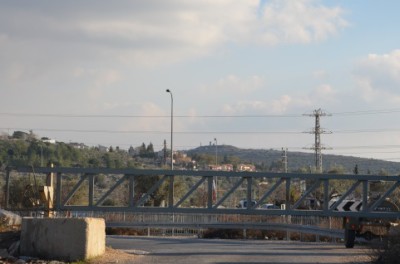 Previously, on Tuesday 7th January, the Israeli army closed the gate at the main entrance to the village, which leads to the main road. When villagers asked the reason for this, the soldiers stationed in a watchtower nearby answered that the gate would be closed indefinitely for security reasons.
On Thursday, 9th January, an emergency occurred, when an ambulance attempted to take an elderly lady living near the entrance to a hospital in Nablus. The residents requested that the Israeli soldiers open the gate for just five minutes so that the ambulance could reach the main road. The Israeli forces refused and the paramedic had to carry the lady by hand on a stretcher from her house to the other side of the gate. This delayed her arrival at hospital.
The gate has been opened only once in the past few days. This happened on Friday, when the settlers entered the village, implying that the Israeli forces knew of the settler attack.
Illegal settlers and Jewish tourists have entered Kifl Hares on many occasions. The village is located in the northern West Bank in the Salfit district and close to Ariel, the largest of the illegal settlements. The pretext for the incursions into Kifl Hares is a pilgrimage to three disputed tombs. The centuries-old tombs belonging to the village are also important for Muslims. Large numbers of settlers arrive on visits organized by the DCO and with Israeli army protection. Settlers and Jewish tourists from all over the world arrive by bus, frequently during the night. During the incursions, Israeli forces declare the village a closed military zone and Palestinians are required to stay in their homes until the settlers have left. This event occurs around twenty times a year. Nevertheless settlers also come weekly without army protection to pray in the tombs and often to harass or attack villagers. Several years ago Palestinian youth would resist these incursions by throwing stones at the illegal settlers and Israeli forces. This resistance was invariably responded to with night raids and arrests that resulted in imprisonment for up to five years. Since then villagers have been afraid to resist these settler attacks.
Related articles


Dutch pension fund divests from Israeli banks over illegal settlements
Al-Akhbar | January 8, 2014
Dutch pension asset manager PGGM, one of the largest in the country, said on Wednesday it was divesting from five Israeli banks because they finance illegal settlements.
The announcement comes a month after a major Dutch water supplier ended a partnership with an Israeli water company which supplies Israeli towns and settlements in the occupied West Bank.
“PGGM recently decided to no longer invest in five Israeli banks,” said the company, which manages about 153 billion euros in funds.
“The reason for this was their involvement in financing Israeli settlements in occupied Palestinian territories,” PGGM said in a statement.
PGGM said there was “a concern, as the settlements in the Palestinian territories are considered illegal under humanitarian law,” and regarded by international observers as an “important obstacle to a peaceful (two-state) solution of the Israel-Palestinian conflict.”
It said it would no longer do business with the Hapoalim and Leumi banks, the First National Bank of Israel, the Israel Discount Bank and the Mizrahi Tefahot Bank.
PGGM added it based its decision on a 2004 UN International Court of Justice ruling that the Jewish settlements were in breach of the Geneva Convention relating to occupying powers transferring their own citizens into occupied territories.
The group said it had been discussing the issue with the Israeli banks “for several years” but that the banks “have limited to no possibilities to end their involvement in the financing of settlements in the occupied Palestinian territories.”
“Therefore, it was concluded that engagement as a tool to bring about change will not be effective in this case,” PGGM said.
All investment in the banks ended on January 1 “as concerns remain and changes are not expected in the foreseeable future,” it added.
PGGM’s investments in Israeli banks amount to a few tens of millions of euros, Israeli newspaper Haaretz reported.
“But its decision is liable to damage the banks’ image, and could lead other business concerns in Europe to follow suit,” the paper said.
Palestinians welcomed the PGGM’s decision to divest from the banks, Wafa news agency reported.
Palestinian Authority Parliament Member Qais Abdul Karim, said in a statement that he hoped such action would inspire other members of the European Union to follow suit and force Israel to abide by international law.
“Israel should understand that it will pay a heavy price if it continues to occupy Palestinian land and ignore international resolutions,” Wafa quoted him as saying.
In September, Dutch engineering firm Royal HaskoningDHV withdrew from the construction of a sewage treatment plant in East Jerusalem, citing the Israeli’s project’s violation of international law.
Last month, Dutch water supplier Vitens ended a partnership with Israeli water company Mekorot due to the “political context.”
The decision came days after a visit to the Mekorot offices in Israel by Dutch trade minister Lilianne Ploumen was abruptly cancelled.
The visit was part of a larger tour of Israel by Prime Minister Mark Rutte that was marred by a dispute over a Dutch-made security scanner intended to check goods leaving Gaza for the West Bank.
Rutte was to have inaugurated the scanner on the isolated territory’s border with Occupied Palestine, but the ceremony was broken off after Israel said it did not want Gazan goods going to the West Bank.
Israel’s defense ministry wants to isolate the two Palestinian regions, while Dutch officials had hoped the scanner might boost commerce between them.
Israeli deputy Foreign minister Zeev Elkin last month said he was “blindsided” by Vitens’ pullout “and a few more European companies have made similar decisions in the past months, which have blindsided us exactly in parallel with the peace process.”
Zeev, speaking to Israeli military radio, said that peace initiatives should mean “that people don’t breathe down our neck”, but “unfortunately this doesn’t work.”
Since peace talks between Israeli and Palestinian officials began in July, Israel has announced the construction of thousands of settler homes in the West Bank and East Jerusalem, sparking tensions in already difficult negotiations.
(AFP, Al-Akhbar)
Related article
Featured Video

“Historic Russia”: The Land Putin Will Not Give Back
or go to
Aletho News Archives – Video-Images
From the Archive
How Ukraine Tortured and Slaughtered Donbass
By Kit Klarenberg | Al Mayadeen | July 11, 2024
Almost immediately after the proxy war erupted, ISIS-tier footage of the torture and murder of Russians in Ukrainian custody emerged.
On July 6th, the New York Times published an astonishing investigation: In Ukraine, Killings of Surrendering Russians Divide an American-Led Unit. The article documents in grim detail how Chosen Company, an international volunteer battalion for Kiev, routinely executes Russian prisoners of war. It is the very first mainstream admission that this practice – a brazen breach of the Geneva Conventions, and a grave war crime – is widespread among Ukraine’s fighters, both foreign and homegrown. … continue
Blog Roll
 Aletho News
- Record Oil, Empty Tanks: The UAE’s Miracle Recovery
- Burnham tackles Britain’s poverty with aggression in Yemen
- Peace in Ukraine: the easy way – or the hard way
- Trump & the Rrrrussians
- US taxpayer money laundered back through Ukraine – Musk
- Before COVID, an NIH lab chief proposed making a SARS-like bat virus more infectious
- Gates, Bourla on Trial in Netherlands Accused of ‘Great Reset’ Scheme at Vaccine Injury Hearing
- BRITAIN’S WARNING: PREPARE FOR WAR
- “Historic Russia”: The Land Putin Will Not Give Back
- How the Cambridge Analytica scandal still haunts Mark Zuckerberg
- If Americans Knew
- An error has occurred; the feed is probably down. Try again later.
- No Tricks Zone
- Two New Studies Find Thwaites Glacier Melt Cannot Be Driven By Human Activity Or A Warming Ocean
- E-Cars Reduce CO2 Emissions By Only 41% Compared To Internal Combustion Engine Vehicles
- Predictions Made By Renowned Climate Professor Over Past Decades Have Been Proven To Be Poor
- New Study Suggests Large Regions Of The Pacific Ocean Have Been Cooling For The Last 80 Years
- Germany’s Green Energy Debacle: High Energy Costs Force Kahla Porzellan to Close After 182 Years!
- New Study: 50 Years Of The Most Aggressive ‘Net Zero’ Policies Can Only Affect The Global Climate By 0.03°C
- US September “Heat” Was No Record…Many Records Set Decades Ago
- Latest European Green Energy Debacle; Portugal’s Largest Flagship Solar Park Insolvent!
- Green Energy Debacle: German Expert Professor Fritz Vahrenholt Warns Of Severe Economic And Social Consequences
- Two More Paleo Reconstructions Affirm Meters-Higher Sea Levels Across Ireland, Brazil 7000-6000 Years Ago

