Israel’s president-elect Reuven Rivlin in his own words
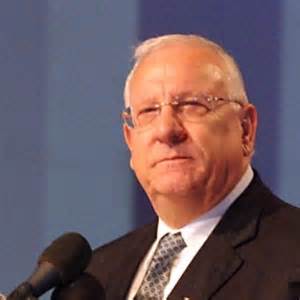
‘I have a vision that suddenly all the Jewish people will come to live here… And if there were 10 million Jews here, we wouldn’t have to give up on anything.’
MEMO | June 11, 2014
Reuven Rivlin was elected yesterday the tenth president of Israel. He has previously served as Speaker of the Knesset (2003-’06, 2009-’13), and has been a Member of Knesset since 1988. Hailing from PM Netanyahu’s Likud party, Rivlin also served as a minister in Ariel Sharon’s government (2001-’03). He will replace Shimon Peres when the latter’s term ends in July.
“I whole-heartedly believe that the land of Israel is ours in its entirety.”
“The communities in Judea and Samaria [Ed. referring to West Bank settlements] do not threaten our existence, they guarantee our existence.”
“Today, almost 20 years after Oslo, we can see clearly that the idea of separating the [Israeli and Palestinian] nations failed.”
“For some reason the settlement enterprise is being accused of being an obstacle to peace. Personally, I explain at each possible forum that the obstacle to peace is the objection by the Arabs to it and the fact that they do not want us here”.
Israeli citizens who marry Palestinians need to move to “the other side“.
“Dividing Jerusalem will bring disaster for the city. It cannot be that every time something is built in Jerusalem, the international community censures it. This constant criticism is a mark of disgrace for the international community.”
“We will not apologize – not for conquering Katamon or Jaffa or Tzfat, nor for liberating Hebron, and not for building Jerusalem our capital.”
“The residents here [in Migron settlement] are not thieves and are not trying to banish people from their land. They came here innocently, with the encouragement of the State of Israel.”
“There is no consensus in Israel regarding the two state formula. We will not, under any circumstances, allow the establishment of a neighbouring state that will be a genuine threat on our existence.”
“Zionism from its outset was a settlement movement. If we stop going on this path, how can we justify the faith that all of Zion belongs to us?”
“There are red lines that I as a democrat, say you cannot cross. I see it as defiance against Israel and Jerusalem as its capital as well as another protest against the historical narrative, a matter already pending before the High Court.” (Responding to a MK Tibi-proposed bill recognising Jerusalem as the capital of a Palestinian state)
“I have a vision that suddenly all the Jewish people [from around the world] will come to live here… And if there were 10 million Jews here, we wouldn’t have to give up on anything.”
“If the Nakba is a tragedy, then the establishment of the State of Israel is a tragedy. The Palestinians experienced a catastrophe that was brought on by their leaders, but the establishment of the State of Israel is not the reason for it.”
“Terrorism is trying to paralyze and silence democracies fighting against it, exactly as was manifest in the world’s reaction to Israel’s counter-terrorist offensive Cast Lead in light of the Goldstone Report.”
“We miss [Rehavam Ze’evi’s] clear, ideological voice, his leadership, his larger than life presence.”
Palestinian wedding interrupted by Israeli stun grenades, 1 hurt
Ma’an – 07/06/2014

JERUSALEM – A Palestinian man was injured late Friday after being hit by an Israeli stun grenade during a wedding in East Jerusalem, a local popular committee spokesman said.
Muhammad Abu al-Hummus told Ma’an that Israeli forces unexpectedly raided the village of al-Issawiya and fired stun grenades while crowds of Palestinians were participating in a traditional wedding march.
One man was hit directly in the forehead with a stun grenade and taken to the hospital, Abu al-Hummus said.
He added that no protests were taking place as the Israeli forces entered the town.
Up to 80,000 Palestinians in Jerusalem without running water for three months

MEMO | May 29, 2014
Israeli water utility company Hagihon has stopped the regular supply of running water to a number of Palestinian neighbourhoods in occupied East Jerusalem, according to a statement issued by Israeli human rights organisation B’Tselem.
The affected neighbourhoods are the Shu’fat Refugee Camp, Ras Khamis, Ras Sh’hadeh and Dahiyat As-Salam. They have all been isolated from the rest of Jerusalem by the Separation Wall.
B’Tselem stated that: “Some homes in these neighbourhoods have been completely cut off from the water supply; others receive water intermittently; and as for the rest, the water pressure in the pipes is so low that the water does not reach the faucets.”
The result, B’Tselem said, is that “an estimated 60,000 to 80,000 Palestinians – mostly permanent residents of Israel – have been left without a regular water supply.”
Trying to solve their problem, the residents spent three weeks applying to Hagihon and to the Jerusalem Municipality, seeking to have running water restored.
However, B’Tselem pointed out that the applications of the affected residents were ignored. Therefore, the Association for Civil Rights in Israel (ACRI) petitioned the High Court of Justice on 25 March 2014 seeking to have the water supply renewed without delay.
“On 2 April 2014, the Court instructed the State of Israel to respond to ACRI’s petition within 60 days, setting the deadline for the first week of June,” B’Tselem said.
In the meantime, the residents of these neighbourhoods have had no regular running water. B’Tselem reported residents walking at least one kilometre to get the needed daily supplies of water from relatives’ houses, sometimes repeating this journey several times a day.
Israel postpones moving its ministries to Jerusalem for five years
MEMO | May 19, 2014
The Israeli government has decided to postpone moving its ministerial offices to Jerusalem for five additional years; Israel’s Haaretz newspaper reported.
The newspaper pointed out that the government took the decision during its weekly cabinet meeting, chaired by Prime Minister Benjamin Netanyahu, who endorsed the decision.
The paper noted that the government has decided to postpone the move due to two factors; one the fear of the international reaction possibly an angry nature and the need to prepare the city to receive the vast number of employees who will have to relocate their residence there.
Haaretz said that transferring the ministerial offices and headquarters to Jerusalem is one of the most dangerous settlement projects in the city and paves the way for increasing the number of settlers in East Jerusalem.
Meanwhile, Jerusalem mayor, Nir Barkat called to modify the resolution and move the government’s offices to Jerusalem soon, considering the government’s decision to postpone the move a serious insult to the city.
Israeli forces ‘attack Palestinian woman, daughter’ in Silwan
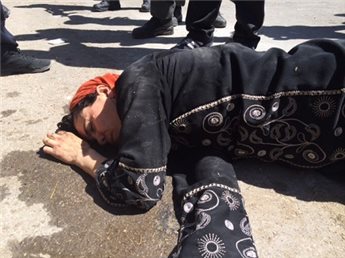
Umm Qalawoon al-Tawil lying unconscious outside her home after Israeli officers attacked her
Ma’an – 01/05/2014
JERUSALEM – Israeli forces attacked a Palestinian woman and her teenage daughter in the Wadi Hilweh quarter south of the Old City of Jerusalem on Thursday, Palestinians in Silwan neighborhood said.
Director of the Silwan-based Wadi Hilweh Information Center Jawad Siyam told Ma’an that Israeli officers broke into the home of Umm Kalawoon al-Tawil and “brutally” beat her and her 15-year-old daughter Layla.
Siyam highlighted that Israeli officers continued to beat al-Tawil while they dragged her out of her apartment to a playground in the neighborhood until she passed out.
Fistfights broke out between local residents and Israeli officers while an ambulance evacuated al-Tawil to al-Maqasid hospital in Jerusalem for treatment.
An Israeli police spokesman said he was unaware of any detentions in the area.
‘Israel planning new Jewish temple near al-Aqsa Mosque’
Press TV – April 11, 2014
Israeli officials have unveiled the model of a Jewish temple near the al-Aqsa Mosque Compound in East al-Quds (Jerusalem).
Palestinian activists say the model of the so-called third Jewish temple has a big hall and can accommodate hundreds of visitors each day.
Israeli authorities hope the project could attract tens of thousands of local and foreign tourists every year.
The al-Aqsa Foundation for Endowment and heritage says the move is a direct threat to the mosque.
The organization argues that the project is aimed at building enough support to make a Jewish temple on al-Aqsa site.
Palestinian groups have already warned of large-scale Israeli excavations near al-Aqsa’s southern gate.
On February 25, the Israeli parliament, Knesset, discussed a plan to annex al-Aqsa Mosque Compound.
The Organization of Islamic Cooperation has condemned the debate as a “dangerous escalation,” calling it part of Israel’s goal to “Judaize Jerusalem.”
The Israeli Knesset is set to discuss a proposal later this week to place the so-called Temple Mount, where Al-Aqsa Mosque is located, under Israeli sovereignty.
Palestinians have denounced the plan as desecration. They say it is part of the Israeli regime’s ongoing attempts to distort Arab and Islamic history.
Over the past decades, Israel has tried to change the demographic makeup of al-Quds by constructing illegal settlements, destroying historical sites and expelling the local Palestinian population.
Livni: Israel will surround Abbas until he surrenders to our terms
MEMO | April 7, 2014
 Israel will surround the Palestinian President Mahmoud Abbas until he accepts the Israeli terms and recognises Israel as a Jewish state, Israel’s top negotiator, Justice Minister Tzipi Livni said yesterday.
Livni told Israel’s Channel 10 that Israel will not release Palestinian prisoners who committed violent acts against Israeli citizens. “Israel will not release Palestinian prisoners with blood on their hands,” Livni said.
Livni claimed that several Arab countries have told Israel they will not transfer funds to Abbas pointing out that she had visited friendly Arab countries 11 times in the past 50 days.
“The city of Jerusalem is the capital of the state of Israel and the Arab and Islamic countries do not object to that,” Livni claimed.

Christians: Israel violates Palestinian religious freedoms each Easter
Ma’an – April 6, 2012
BETHLEHEM – A group of Christians from East Jerusalem on Sunday said that Israel’s restrictions on Palestinian mobility resulted in violations of religious freedoms.
The statement, signed “Palestinian Christian Organizations in Occupied East Jerusalem,” complained that Christians are often denied access to the Church of the Holy Sepulchre during the Easter holidays.
Each Easter, checkpoints are erected “at the Gates and in the alley, thus preventing the worshipers from free access to the Via Dolorosa, the Church of the Holy Sepulchre, and the vicinity of the Christian Quarter.”
Israel’s restrictions on Palestinian Christians are a part of larger strategy of Judaization in Jerusalem, the statement said.
“The restrictive measures constitute grave violation on the freedom of worship, and amount to discrimination against Christians because the occupation authorities want to negate Christian presence and create the impression of a Jewish-only city.”
Both Christians and Muslims are often “unable to worship freely and to be with their families and friends” during religious holidays because of Israel’s actions, the statement went on to note.
The organizations called on Christians to make attempts to attend Easter celebrations in Jerusalem despite the countless restrictions.
In a report published in 2012, the US State Department made similar observations.
“Strict closures and curfews imposed by the Israeli government negatively affected residents’ ability to practice their religion at holy sites, including the Church of the Holy Sepulchre and Al-Aqsa Mosque in Jerusalem, as well as the Church of the Nativity in Bethlehem,” the report said.
“The separation barrier significantly impeded Bethlehem-area Christians from reaching the Church of the Holy Sepulchre in Jerusalem and made visits to Christian sites in Bethany (al-Eizariya) and Bethlehem difficult for Palestinian Christians who live on the Jerusalem side of the barrier.”
East Jerusalem, including the historic Old City, was occupied by Israeli forces in 1967 and later annexed in a move not recognized by the international community.
Israeli Government Approves ‘Archaeology Center’ in Palestinian Neighborhood
By Celine Hagbard | IMEMC News | April 05, 2014
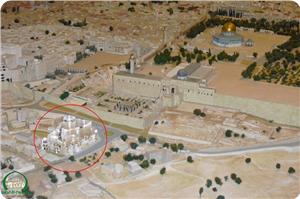
The Israeli Ministry of the Interior approved on Friday a plan to demolish a large section of the historic Palestinian neighborhood of Silwan, in East Jerusalem, to construct an archaeological center proposed by a nationalist right-wing ethno-religous organization which aims to expand Jewish settlement on Palestinian land in east Jerusalem.
The people of Silwan have faced colonization efforts for the last dozen years – from approved Israeli government projects that involve demolitions of residents’ homes, to forced evictions from their ancestral homes by armed Israeli settlers who force their way in to the houses and push the Palestinian families into the street.
 Numerous forced evictions have been documented by the Silwan Information Center but the Israeli police have refused to take any action against the settlers. Instead, they have, on multiple occasions, forcibly removed the tents of residents who camped out on the street in front of their homes after their homes had been taken over by Jewish settlers.
In the project approved on Friday, the right-wing Israeli settlement organization Elad will run the center, which is set to be constructed across from the ‘Dung Gate’ entrance to the Old City of Jerusalem. Elad also runs the controversial ‘City of David’ Israeli national park nearby, which was also constructed over an alarming number of demolished Palestinian homes in Silwan. This is the only instance in which a private organization has been granted control of a national park in Israel.
Elad’s mission statement is to “strengthen the Jewish connection to Jerusalem, and this in the means of tours, guidance, populating, and publishing material.”
According to the Silwan Information Center, “In practice, Elad feverishly worked to gain ownership of houses and lands in the village and particularly in Wadi Hilweh [in Silwan].”
In its approval of the new project, the Israeli Ministry of the Interior said that, “As a tourist attraction, this will contribute to the development of the city of Jerusalem.” When completed, the multi-level building will take up 16,000 square metres (172,160 square feet).
In response to previous archaeological projects by Elad, the Palestinian Authority’s archaeological and cultural heritage expert stated, “The sort of archaeology being carried out in Jerusalem, specifically in East Jerusalem and the Silwan area, is motivated by hidden agendas and has nothing to do with scientific objectives. It is done secretly, without taking into consideration international standards, and casts great doubts on the objectives of these excavations.”
Journalist Emily Hauser, of the Jewish Daily Forward, wrote last month, after the Israeli government handed over control of the southern part of the Western Wall to Elad, “Elad’s mission sits hand in glove with the larger government goal of tightening control over the entirety of 21st century Jerusalem, making the possibility of sharing the city with a future Palestinian state infeasible.
Jerusalem-based archaeological NGO Emek Shaveh has found that Elad’s decisions about where and how to excavate in the area are rooted in political considerations about establishing an Israeli presence and staying one step ahead of the diplomatic process, with the understanding that “’local and international public opinion will not create pressure against them.’”
Related article
Ex-Israeli PM Olmert guilty of “filthy” corruption: court
Al-Akhbar | March 31, 2014

Tel Aviv district court on Monday convicted former prime minister Ehud Olmert in a trial for corruption linked to a major property development in Jerusalem, Israeli media reports said.
The ruling marks the first time a former Israeli premier has been convicted of bribery in what has been called one of the worst corruption scandals in the country’s history.
According to public Channel 1 television, Olmert was convicted on two counts of receiving bribes linked to construction of Jerusalem’s massive Holyland residential complex dating from when he was the city’s mayor.
Olmert, 68, who could face up to 10 years in prison when sentencing is handed down at a later date, will appeal the verdict, his spokesman Jacob Galanti said.
In 2012, Olmert was acquitted of major charges in separate cases involving his links to a US businessman while he was Jerusalem mayor and an Israeli cabinet minister.
Handing down the conviction on Monday, Judge David Rosen told Tel Aviv District Court the case “exposed governance that grew more corrupt and rotten over the years”, with bribes paid to public officials.
“We’re talking about corrupt and filthy practices,” David Rosen said while reading out the verdict, his remarks playing out across all Israeli media.
He also spoke of a “corrupt political system which has decayed over the years… and in which hundreds of thousands of shekels were transferred to elected officials.”
Rosen also said the former premier had lied to the court in a bid to “blacken the name” of the state’s witness.
Olmert, who is remembered in Lebanon for spearheading the 2006 assault on the country that killed over 1,200 people, reportedly sat expressionless throughout the verdict.
In 2010, Olmert was named the key suspect in the so-called Holyland affair on suspicion that he received bribes totaling some 1.5 million shekels ($430,000, 312,000 euros at today’s exchange rate), although the prosecution later reduced the sum received by about half.
He was mayor of Jerusalem from 1993 to 2003, after which he served as a cabinet minister, holding the trade and industry portfolio as well as several others, before becoming premier in 2006.
He resigned from the premiership in September 2008 after police recommended that he be indicted in several graft cases.
In July 2012, a Jerusalem court found Olmert guilty of breach of trust in a closely watched corruption case, but cleared him on two more serious charges related to the alleged receipt of cash-stuffed envelopes and multiple billing for trips abroad.
He was fined $19,000 and given a suspended jail sentence for graft.
The conviction related to favors that Olmert granted a former colleague while serving as the trade and industry minister.
(AFP, Reuters Al-Akhbar)
Featured Video

Houthis Keep Advancing as the Red Sea Crisis Deepens
or go to
Aletho News Archives – Video-Images
From the Archives
15 Saudi ‘hijackers’ were CIA agents working for US: Scholar
Press TV – April 13, 2016
Fifteen of the 9/11 “hijackers” from Saudi Arabia were CIA agents working for the United States government, which was seeking to destroy the Middle East for Israel and to double the American military budget, says Dr. Kevin Barrett, an American academic who has been studying the events of 9/11 since late 2003…. continue
Blog Roll
 Aletho News
- Russia Just Struck the Eyes of NATO’s War Machine in Ukraine
- Russia summons UK charge d’affaires over Kiev drone support
- NATO member warns bloc seeking pretext for war with Russia
- Macgregor: We Haven’t Seen the Worst of the Iran War Yet
- ‘We are not like everyone else’ laws that bind other nations do not apply to Israel, says Likud lawmaker
- Report: Saudi Arabia seeks allies’ assistance as missiles deplete amid war on Yemen
- Fuel Crisis Deepens: Pakistan Warns Tanker Attack in Red Sea Would Be an ‘Act of War’
- ‘Bucha massacre’ a false flag orchestrated by UK – Moscow
- China Rejects Outside Pressure on Trade Ties After New US Russia Sanctions Bill
- Houthis Keep Advancing as the Red Sea Crisis Deepens
- If Americans Knew
- Why do we let Zionists decide what we can and can’t say?
- US welcomes Israeli, Iranian delegations to UN, but not Palestinians – Daily Update
- Biden’s Genocide Accomplices Targeted by New Accountability Campaign
- AIPAC’s Network Has Already Spent $67.2 Million to Shape the Midterm Elections
- Jewish Supremacist Manufacturing a Civilizational Threat to License Bigotry
- US bans Palestinian president from speaking at the UN
- Israeli Forces Detain Journalist Alaa al-Rimawi amid Widespread West Bank Raids
- Even a pro-Israel Congress member has put a hold on 40,000 one-ton bombs to Israel
- As Gaza crumbles, Israel preps new ground invasion – Daily Update
- ‘We are not like everyone else’ laws that bind other nations do not apply to Israel, says Likud lawmaker
- No Tricks Zone
- New Study: ‘Global Drought Shows No Detectable Recent Acceleration Under Climate Warming’
- Economic Masterminds: German Socialists Suggest Taxing Productivity Gains Stemming From Using AI
- The South China Sea Has Not Been Cooperating With The Climate Change Narrative
- Energy Crisis: Germany Enters Heating Season With Historically Low Gas Reserve Fill Levels
- New Study: The Antarctic Ice Sheet Gained Mass From 2020-2024 Due To Staggering Snow And Ice Accumulation
- Study: Ocean Heating Rates From Thousands Of Years Ago ‘Dwarf’ Modern Ocean Heating Rates
- Climate Extremists Target, Attack Large-Scale Power Grid Infrastructure In Germany!
- New Study: Antarctic Ice Melt Has Contributed Less Than 1 Centimeter To Sea Level Rise In The Last 30 Years
- Fear Of Debate: Alarmist German Climate Scientist Calls On Mainstream Media To Discredit Skeptic Voices
- End-Of-August Arctic Sea Ice Extent Hasn’t Fallen In 20 Years, Official Data Show!
 Aletho News