John Brennan Sworn in as CIA Director Using Constitution Lacking Bill of Rights
Emptywheel | March 8, 2013
According to the White House, John Brennan was sworn in as CIA Director on a “first draft” of the Constitution including notations from George Washington, dating to 1787.
Vice President Joe Biden swears in CIA Director John Brennan in the Roosevelt Room of the White House, March 8, 2013. Members of Brennan’s family stand with him. Brennan was sworn in with his hand on an original draft of the Constitution, dating from 1787, which has George Washington’s personal handwriting and annotations on it.
That means, when Brennan vowed to protect and defend the Constitution, he was swearing on one that did not include the First, Fourth, Fifth, or Sixth Amendments — or any of the other Amendments now included in our Constitution. The Bill of Rights did not become part of our Constitution until 1791, 4 years after the Constitution that Brennan took his oath on.
I really don’t mean to be an asshole about this. But these vows always carry a great deal of symbolism. And whether he meant to invoke this symbolism or not, the moment at which Brennan took over the CIA happened to exclude (in symbolic form, though presumably not legally) the key limits on governmental power that protect American citizens.
Update: Olivier Knox describes how the White House pushed the symbolism of this.
Hours after CIA Director John Brennan took the oath of office – behind closed doors, far away from the press, perhaps befitting his status as America’s top spy – the White House took pains to emphasize the symbolism of the ceremony.
“There’s one piece of this that I wanted to note for you,” spokesman Josh Earnest told reporters gathered for their daily briefing. “Director Brennan was sworn in with his hand on an original draft of the Constitution that had George Washington’s personal handwriting and annotations on it, dating from 1787.”
Earnest said Brennan had asked for a document from the National Archives that would demonstrate the U.S. is a nation of laws.
“Director Brennan told the president that he made the request to the archives because he wanted to reaffirm his commitment to the rule of law as he took the oath of office as director of the CIA,” Earnest said.
Update: I’m assuming this copy of the Constitution is the one Brennan used.
Iran’s “rejection of talks” with the US
Iran Affairs | February 08, 2013
The media are full of reports about how Iran’s Supreme Leader Ayatullah Khamenei has ‘rejected talks’ with the US, trying to portray Iran as the unreasonably intransigent party in this standoff. But if you check the events just prior to this bit of news, you get a better sense of what actually happened:
JAN 31st 2013: Iran informs IAEA of plans to add 3,000 faster centrifuges to its main uranium enrichment facility
Feb 2: VP Joe Biden: “We have made it clear at the outset that we would be prepared to meet bilaterally with the Iranian leadership”
Feb 3: Iranian FM Salehi: “No red lines for talks”, “But we have to make sure … that the other side comes with authentic intentions with a fair and real intention to resolve the issue.”
Feb 6: Treasury Under Secretary David Cohen announces new sanctions on Iran to take effect.
Feb 7th: Iranian Supreme Leader: “You (US) should know that pressure and negotiations are not compatible and our nation will not be intimidated by these actions”
(Chronology by BibiJon)
Related article
- Khamenei rejects talks with US under pressure (alethonews.wordpress.com)
Bahrainis’ New Demand: USA Stop Arming Killers
By Yusuf Fernandez | Al-Manar | July 16, 2012
On July 7, Bahraini people took to the streets in several towns and villages to stage anti-government rallies and express their anger at the US for meddling with their country´s internal affairs. Bahrain hosts the US Fifth Fleet, which patrols the Persian Gulf and Arabian Sea, and is among the Persian Gulf countries that receive weapons and military systems from the United States.
For more than one year now, demonstrations have been taking place day after day across Bahrain against the brutal regime of King Hamad Al-Khalifa. Dozens of protesters have been killed since the revolution started. The Bahraini police and army killed at least thirty people during the mass demonstrations of this year to demand political and social rights.
Over 1,000 people have been detained and many of them have been tortured. Thousands of public sector workers have been fired for allegedly taking part in protests against the regime.
Recently, a military tribunal in Manama sentenced twenty doctors to prison terms of up to 15 years. The doctors faced shameful charges, including hiding weapons in hospitals, “occupying a hospital,” and acting to overthrow the regime. No credible evidence against the doctors was presented in the court and they suffered abuse and torture in prison and were denied full access to their lawyers.
US weapons for Bahrain
The US has been for a long time the major supplier of weapons to the Bahraini regime. A TomDispatch analysis of the Pentagon documents showed that “since the 1990s, the United States has transferred large quantities of military material, ranging from trucks and aircraft to machine-gun parts and millions of rounds of live ammunition, to Bahrain´s security forces”.
According to data from the Defense Security Cooperation Agency, the US has sent Bahrain dozens of tanks, armoured personnel carriers, and helicopter gunships. The US has also supplied the Bahrain Army with thousands of .38 caliber pistols and millions of rounds of ammunition, including .50 caliber ammunition for sniper rifles, machine guns etc. In 2010, Washington sold over $200 million worth of weapons to Bahrain, up from $88 million in 2009.
Despite all the above-mentioned violations of human rights, the US Defense Department recently agreed to provide the Bahraini government with another $53 million worth of weapons, the first provision since the revolution began. The resumption of military sales took place shortly after a visit to Washington by Bahrain Crown Prince Salman Hamid al-Khalifa. There, he met Vice President Joe Biden, Secretary of State Hillary Clinton and Defense Secretary Leon Panetta.
According to ForeignPolicy.com’s The Cable Blog, the US-Bahraini arms deal includes six harbor patrol boats, communications equipment for Bahrain’s US-made air-defense system, ground-based radars, air-to-air-missile systems, Seahawk helicopters, parts for F-16 fighter engines, Cobra helicopters, and night-vision equipment.
The agreement also includes 44 armored vehicles of the type used to crush the demonstrations. It is noteworthy to point out that US weapons have been used by Bahraini security forces for cracking down on pro-democracy protesters since last year.
Senator Patrick Leahy (D – VT) has criticized the resumption of arms to Bahrain. Although he claimed to be pleased because no tear gas will be included in this sale, Leahy thinks that the deal still sends “the wrong message.” Brian Dooley, director of the Washington-based charity Human Rights First, also condemned the arms sale as a “reward” for the Bahraini dictatorial regime.
No matter how the US Administration tries to sell its decision, it will be seen as a clear support for the Al-Khalifa dictatorship. “‘You really should be nicer to the people you are oppressing; oh, by the way, here are the weapons you were expecting’ is what Manama will hear from Washington”, complained Mohammed al-Maskati, a Bahraini human rights activist: “It is a direct message that we support the authorities and we don’t support democracy in Bahrain, we don’t support protestors in Bahrain.”
According to a recent report by Julian Barnes and Adam Entous in the Wall Street Journal, the US has positioned itself against democracy in Bahrain. “Starting with Bahrain, the administration has moved a few notches toward emphasizing stability over majority rule,” according to a US official quoted by the Journal. “Everybody realized that Bahrain was just too important to fail.” This means that the US Administration is directly working against democracy and freedom in Bahrain.
In order to cover this reality, American officials have been using a rhetorical and hypocritical language. They have often called for “restraint” on both sides, Bahraini pro-democracy protesters and the dictatorial regime which is killing Bahraini people. A recent State Department statement praised Bahrain for its “reforms” and urged more. It also condemned the civilian protesters for their “violence” against police and demanded that they “refrain from incitement.”
The deputy chief of mission at the US Embassy in Manama, Stephanie Williams, has visited the injured Bahraini security forces, who took part in the crackdown on Bahraini protesters. The main opposition group in Bahrain, Al Wefaq, issued a statement, censuring the visit claiming that it “indicates that Washington ignores the suppression campaign led by the Bahraini government against peaceful popular protests”.
Therefore, Bahraini people now consider that the US government is partly responsible for the tyranny under which people have been suffering for a very long time. This will likely produce anger and hatred toward the United States. Echoing this reality, a recent New York Times article was titled: “As Hopes for Reform Fade in Bahrain, Protestors Turn Anger on United States.”
According to the article, “For months, the protests have aimed at the ruling monarchy, but recently they have focused on a new target…. the young protestors added a new demand, written on a placard in English, so the Americans might see: “USA Stop arming the killers.”
Related articles
- FP Passport: Bahrain activist jailed for Tweet against prime minister – Foreign Policy (blog) (foreignpolicy.com)
- Obama and Clinton Resume Arms Sales to the Torturers of Bahrain (firedoglake.com)
Somnambulant in Cartagena
By ROBERT SANDELS | CounterPunch | April 27, 2012
“I watched Obama closely at the famous ‘summit gathering.’ Fatigue sometimes overcame him, he involuntarily closed his eyes and occasionally slept with his eyes open.”
– Fidel Castro [1]
The Sixth Summit of the Americas, held April 14 and 15 in Cartagena de Indias, Colombia was supposed to be about what President Barak Obama wanted to talk about; instead it was about everything he didn’t want to hear.
The theme of the summit was “Connecting the Americas: Partners for Prosperity,” but what most of the 33 leaders present wanted to discuss with Obama was decriminalizing drugs, supporting Argentina’s claim to sovereignty over the Islas Malvinas (Falkland Islands) and an end to US exclusion of Cuba from the summits.
Having no good answers on these and other matters Obama shut down, — if Fidel observed correctly — put his mouth on auto pilot, recited the words to the anthem about free trade, national security, and prosperity for all and then refused to sign the final declaration.
The US agenda of prosperity through promotion of market capitalism, asymmetric free trade agreements, privatizations, unfettered flow of capital, and excessive protection of intellectual property rights is currently out of favor in most of the region.
Free trade of the kind pedaled by Bill Clinton and George W. Bush is no longer a regional issue. In a sense, all of these summits have been pointless if one recalls their main purpose. When Clinton convened the first one in Miami in 1994, it was not to address the forever problems of the region but to follow up on the successful negotiation of a dubious free-trade agreement with Mexico (NAFTA) by extending US commercial and financial penetration into the rest of the region under a Free Trade Area of the Americas (FTAA). That drive was stopped cold at Mar del Plata, Argentina during the 2005 summit.
Led by Brazil, – the largest regional economy and the “B” in the BRICS — many leaders in Cartagena saw Obama’s free trade and monetary obsessions as his way to help resolve US economic problems but not theirs. The cheap-dollar strategy may help US exports, job growth and narrow its trade deficit but those gains are seen as other people’s losses.
Meanwhile, the Federal Reserve makes nearly interest-free dollars available to financial institutions that then can engage in the lucrative carry trade – moving cheap dollars to places like Brazil where, perforce, interest rates are higher.
Brazil’s President Dilma Rouseff has complained to Obama’s face that the Fed’s actions have caused a “monetary tsunami” and are driving up Brazil’s currency. [2] The central bank has tried to reduce upward pressure on the Brazilian real through capital controls and dollar purchases, a situation that seems at odds with Obama’s “partnership for prosperity.”
Cuba: the Phantom of the Summit
Most or all the delegates (except Obama and his faithful Canadian companion Stephen Harper) wanted an end to the US policy of excluding Cuba from the summits and to the 50-year old blockade of the island. The Bolivarian Alliance for the Peoples of Our America (ALBA), which includes Bolivia, Cuba, Ecuador and Venezuela, had already formally demanded that Cuba be invited to Cartagena. Ecuador’s President Evo Morales reported that it was not just ALBA but Rouseff and other leaders in the Caribbean and South America who were saying, “there will not be another summit without Cuba.” [3]
In his speech opening the Cartagena summit, host President Juan Manuel Santos said that another summit without Cuba was ”unacceptable.” [4]
Of all the speeches and rumors of speeches in this hermetically sealed summit perhaps Santos’ remarks were the most striking. Here was a conservative president of one of the few loyal US allies left in Latin America, the recipient of billions in US aid to fight a proxy war on Colombia’s coca leaves under Clinton’s 1999 Plan Colombia, one of the few countries to sign a free trade pact with the United States and host to US troops on seven Colombian military bases telling Obama that his views on Cuba were based on an “outmoded ideology.” It was a “cold war anachronism,” he said. [5]
The Cuba issue could not have taken Obama by surprise. What did he expect after it was pounded into him when the previous summit foundered on the issue? At the 2009 summit in Port of Spain, Trinidad and Tobago, his colleagues wanted to talk about readmitting Cuba to the OAS. The summit ended with no agreement on the final declaration, which only the host government signed, but there was consensus that Cuba could re-apply for admission. That is not going to happen because Cuba does not want to rejoin the OAS and even if it did, Obama could impose the majority-crushing one-country veto arguing that Cuba isn’t democratic.
The constant harping about the lack of democracy in Cuba seems especially odd considering that the US government has never paid attention to the annual lopsided vote in the UN condemning the blockade. And in this very summit there was little exercise of majority rule when the United States and Canada blocked agreement on a final declaration because it contained inconvenient resolutions.
Obama, in office only a few weeks when he went to Port of Spain in April 2009, was well regarded in the region. He talked about cooperation and admitted that mistakes were made by his predecessors. He was generally praised for dropping Bush’s harsh restrictions on Cuban-American travel to Cuba. He has tried to live on those meager crumbs ever since, pretending that by reverting to the travel rules in play under Clinton he was “easing” Cuba policy when in reality the policy has remained the destruction of the Cuban revolution.
Soon after Port of Spain, however, Obama supported the June 2009 Honduran coup that followed the arrest and defenestration of President Jose Manuel Zelaya — who of course was democratically elected. Then as now Obama never tired of calling upon Cuban President Raul Castro to hold elections, without which, the island could never attend a Summit of the Americas.
Honduran President Porfirio Lobo, the direct beneficiary of that coup, attended the summit.
The lesson of Port of Spain was that John F. Kennedy’s 1962 expulsion of Cuba from the OAS was now reversed. The lesson of Cartagena was that there wouldn’t be any more of these summits without Cuba.
Who said summits are pointless?
A war on the war on drugs
Latin American leaders of all political hues have been murmuring recently about legalization or decriminalization of drugs. Guatemala’s President Otto Perez Molina is probably the furthest to the right in that group, which includes ex-presidents Cesar Gaviria of Colombia, and Ernesto Zedillo and Vicente Fox of Mexico and current Mexican President Felipe Calderon, who, against a background of some 50,000 deaths in his militarized war on drugs, has lately suggested the idea should be on the table.
Appearing slightly flexible on the issue, Obama told Univision News, “I don’t mind a debate around issues like decriminalization,” but added, “I personally don’t agree that’s a solution to the problem.” [6]
Whether or not there was a debate on drugs during the closed-door sessions, Vice President Joe Biden had already made the rounds in Mexico and Central America to promise there would be no legalization while Obama was in office.
And, as if to drive the point home, the summit had barely closed when General Douglas Fraser, chief of the US Southern Command, (Was there a democratic vote among the peoples of the region to include themselves in a US military zone?) made it clear that what Obama doesn’t like, the United States doesn’t like. The general called for greater cooperation from the region on planning for the naval side of the war on drugs. It seems that Operation Hammer, which will cover the Caribbean coast of Central America and the Pacific coast of South America, is about to begin and he wants “the naval forces of all the region” to get with the plan. [7]
If Obama’s views on legalization were not clearly spelled out in Cartagena, they are in his 2012 National Drug Control Strategy, which “rejects the false choice between an enforcement-centric ‘war on drugs’ and the extreme notion of drug legalization.” [8]
His 2012 budget to pay for that strategy authorizes $15.1 billion for traditional enforcement methods and $10.1 billion for prevention and treatment. The Marijuana News and Information blog notes that the percentage for enforcement is the same or higher than what Bush proposed spending. [9]
While hinting at flexibility on the drug issue, Obama announced at the summit that the United States was increasing funds for the foreign war on drugs led by “our Central American friends” and pledged more than $130 million dollars for it in 2012. [10]
As for the Malvinas, President Cristina Fernandez de Kirchner argued for inclusion in the final declaration of Argentina’s claims of sovereignty.
Pressed to declare himself, Obama pleaded neutrality. That’s a “no.”
There was a certain airy dismissiveness about Obamas demeanor at the summit. He danced away from the serious issues and, apparently forgetting he was the U.S. president, said, “I’m not somebody who brings to the table here a lot of baggage from the past, and I want to look at these issues in a new and fresh way.” [11]
That was a curious, even astonishing statement by a man who has willingly shouldered a good deal of imperial baggage. Of course the baggage is his to dump or carry: 54 years of it since Dwight Eisenhower tried to block Fidel from taking power, 51 years of it since the Bay of Pigs, 50 years of it since JFK got Cuba kicked out of the OAS and now nearly four years of Obama continuing the blockade, instituting his own cyber warfare against Cuba and continuing to pay Cubans to act as agents of US policy inside the island.
What baggage has he not made his own?
The other summit
Obama’s election-year intransigence on the issues at Cartagena has badly damaged and probably sunk the Americas summitry and with it maybe even the OAS. The best thing for Obama is to let the summits die and blame it on Fidel and Raul Castro (also on Santos, Rouseff, Morales, Rafael Correa, among many others).
Waiting to take its place is the Community of Latin American and Caribbean States (CELAC), inaugurated in Caracas last December as an OAS without the United States and Canada.
Behind it is ALBA, which held its own, little noticed meeting in Caracas just before the Cartagena summit. It was the summit that most of the Cartagena delegates most likely would have preferred. Its final declaration supported Argentina on the Malvinas, condemned the blockade of Cuba and called the exclusion of Cuba from the Americas summits “unacceptable.” [12]
“Perhaps,” wrote Fidel, “CELAC will become what it should be, a hemispheric political organization without the United States and Canada. The decadent and unsustainable empire has earned the right to rest in peace.” [13]
Robert Sandels is a writer for Cuba-L and CounterPunch.
Notes.
[1] Fidel Castro, Reflexiones, Granma, 04/17/12,
http://www.granma.cu/espanol/reflexiones/17abril-reflexiones.html.
[2[Reuters, 04/14/12,
<http://www.vancouversun.com/news/Scandal+mars+Obama+wooing+Latin+America+wi
th+video/6473757/story.html>.
[3] ALBA-TCP website, http://www.alianzabolivariana.org/modules.php?
name=News&file=article&sid=8495.
[4] La Jornada (Mexico), 04/14/12,
http://www.lajornadajalisco.com.mx/2012/04/14/inaceptable-una-nueva-cumbre-s
in-cuba-santos/.
[5] Ibid.
[6] Interview, Univision News, 04/14/12,
http://univisionnews.tumblr.com/post/21081359245/obama-dont-mind-debating-le
galization-of-drugs.
[7] United States Southern Command website, 04/18/12,
http://www.southcom.mil/newsroom/Pages/Western-Hemisphere-Defense,
-Security-Leaders-Gather-to-Discuss-Transnational-Organized-Crime-in-Central
-America.aspx.
[8] White House,
http://www.whitehouse.gov/ondcp/2012-national-drug-control-strategy.
[9] Marijuana News and Information, 04/20/12,
http://www.theweedblog.com/obamas-2012-drug-strategy-is-a-reminder-the-feds-
are-addicted-to-the-drug-war/.
[10] Xinhua, 04/14/12,
http://news.xinhuanet.com/english/world/2012-04/15/c_131527076.htm.
[11] Washington Post, 04/15/12,
http://www.washingtonpost.com/world/the_americas/obama-concludes-summit-of-t
he-americas-on-the-defensive-about-inviting-cuba/2012/04/15/gIQAVrgAKT_story
.html.
[12] Granma Internacional, 04/18/12,
http://www.granma.cu/ingles/cuba-i/18abr-17gobierno.html.
[13] Fidel Castro, Reflexiones, Granma Internacional, 04/17/12,
http://www.granma.cu/espanol/reflexiones/17abril-reflexiones.html.
Two Cheers for Netanyahu
Exposure of Obama Complete
By John Walsh | March 19, 2010
Joe Biden got torpedoed in Israel last week, no question about it. Not as bad as the lethal attack on the USS Liberty, but pretty nasty nonetheless. Biden, however, soldiered on, conferring with his boss for some 90 minutes and leaving the food cold at the Netanyahu homestead.
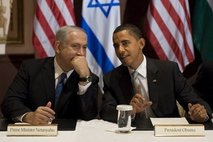 Bibi’s humiliation of Biden and Obama brought out the whole of the punditry, some of it going so far as to criticize the Zionist state. Even Tom Friedman waxed indignant, counseling that the hapless Veep should have packed up and gone home. But, like Biden, Friedman is certain to get over it just as surely as he recanted recently when he had the poor judgment to utter a kind word about China. Uri Avnery captured the Biden fiasco best, observing that a weakling with spit on his face calls it rain. And Pat Buchanan observed that Biden remained in “full pander mode” even as Israel kicked its American poodle. But by midweek the falsehoods had begun to take hold and the punditry was starting to rewrite the story, with Maureen Dowd spinning the incident as a smackdown of Bibi by Barack who had finally “lost his temper.” This insight rivaled her accompanying characterization of Israeli colonies in East Jerusalem as “a domestic zoning issue.” And by Wednesday, op-eds in the Wall Street Journal and elsewhere were blaming the whole incident on Barry for bringing up the “settlement” issue in the first place. Finally toward week’s end on Thursday the Washington Post revealed that Barry and Bibi had reached a secret understanding that the settlement construction could continue so long as they remained out of public view. Sic semper Obama.
Netanyahu, however, deserves the undying gratitude of every real progressive in the U.S. This past year has been like a dance of the seven veils for Obama. They had been all teased away, save for one. The veil of peace, the veil of civil liberties, the veil of environmentalism, single-payer, nuclear disarmament (ripped away by a big new budget for nukes), opposition to the banksters – stripped away one by one. The only remaining vestment was opposition to Israel’s colonies. And Bibi tore that one off between breakfast and (delayed) dinner, leaving Obama standing as naked as Ishtar or Salome.
So thanks, Bibi, for finishing the job. Now that it’s done we can expect all those who aggressively championed candidate Obama to broadcast effusive apologies for so doing. Let us never forget that Obama was not just the candidate of the Democrats but the hands down choice of the most “progressive” wing of the Party, its dream candidate. By revealing Obama for what he is, the limitations of the Dems are laid bare. Obama is all we can expect from them, and it is not much.
By now Obama’s backers surely recognize that they should not have urged him on us, just because he was so “cool” in schooling and appearance, or because all their friends liked him. Surely by now they realize that they were not voting for prom king but for the Emperor of the U.S.
With Obama’s exposure completed by Bibi, we can expect an apology from the leaders of PDA like Norman Solomon, from the message controllers at The Nation, from other gate keepers in the progressive” movement, from Tom Hayden, Medea Benjamin, Phyllis Bennis and other leaders of UFPJ and the official peace movement, even perhaps from MoveOn.org. Surely they will be in print soon, promising no more pigs in a poke that turn out to be rats when let out of the bag. At the least they will apologize profusely for imposing Obama on us.
I can hardly wait to hear from them.
John V. Walsh can be reached at john.endwar@gmail.com.
Featured Video

Chinese jet fuel and the myth of energy independence
or go to
Aletho News Archives – Video-Images
Book Review
Former Insiders Criticize Iran Policy as U.S. Hegemony
By GARETH PORTER | CounterPunch | February 27, 2013
“Going to Tehran” arguably represents the most important work on the subject of U.S.-Iran relations to be published thus far.
Flynt Leverett and Hillary Mann Leverett tackle not only U.S. policy toward Iran but the broader context of Middle East policy with a systematic analytical perspective informed by personal experience, as well as very extensive documentation.
More importantly, however, their exposé required a degree of courage that may be unparalleled in the writing of former U.S. national security officials about issues on which they worked. They have chosen not just to criticise U.S. policy toward Iran but to analyse that policy as a problem of U.S. hegemony. … continue
Blog Roll
 Aletho News
- What is fueling unrest across the EU?
- Why no power can undermine Iran’s eternal dominance over the Strait of Hormuz
- Is The War Against Iran Over?
- Iran war will leave long-term ‘scar’ on Wall Street, investors warn
- How Iran decimated US power projection in West Asia: Military lessons of 40-day war
- Iran’s report details US-Israeli war crimes in targeting schools, hospitals, livelihoods
- NATO’s Slow Fracture: How Trump’s Iran War Exposed the Instrument of Hegemony
- Chinese jet fuel and the myth of energy independence
- Ukraine Sea Drone Fired From Libya Hit Russian Tanker in Mediterranean
- IRGC: Iranian forces launched no attacks during ceasefire hours
- If Americans Knew
- Military aid to Israel emerges as the latest political litmus test for Democrats
- The only Palestinian children’s rights organization closes following years-long Israeli campaign against it
- ‘I Can’t Forget the Smell’: Lebanese Reel After Israel Kills Over 300 in Single Day
- DNC Shoots Down Resolutions Calling Out AIPAC and Limiting Arms to Israel
- TCN: Is Israel Blackmailing President Trump?
- Israel killed at least 303 Lebanese yesterday – who were they? Daily Update
- Amnesty: Urgent – Protect Lebanese civilians from brutal escalation in Israeli attacks
- Is The War Against Iran Over?
- Inside the Israeli army’s propaganda wing
- Hundreds of Gaza Amputees Stranded in Legal Limbo
- No Tricks Zone
- New Study: No Linear Warming Or Glacier Retreat Along Northern Antarctic Peninsula Since 1980s
- An Inconvenient Tree: Uncovered In Alps… Europe Much Warmer Than Today 6000 Years Ago
- New Study Reports A 60% Slowdown In Greenland’s Ice Loss Rate In The Last Decade
- Low Intensity Tornado Wrecks Major Solar Farm, Creating A Potential Toxic Dump
- New Study Finds Warming Saves Lives…Cold Temperatures 12 Times More Deadly Than Excess Heat
- German Science Blog Accuses PIK Climate Institute Of Hallucinating Climate Tipping Points
- Devastating Assessment Of Comirnaty Vaccine By Former Senior Pfizer Europe Toxicologist
- New Study: CO2 Is ‘Effectively Negligible’ As An Explanatory Climate Change Factor Since 2000
- Former Pfizer Toxicologist Dr. Helmut Sterz Tells Bundestag Hearing Pfizer Vaccine Should Have Never Been Approved
- Energy Expert: Germany’s Nuclear Phaseout Was A “500 Billion Euro Mistake”
 Aletho News